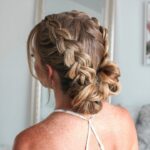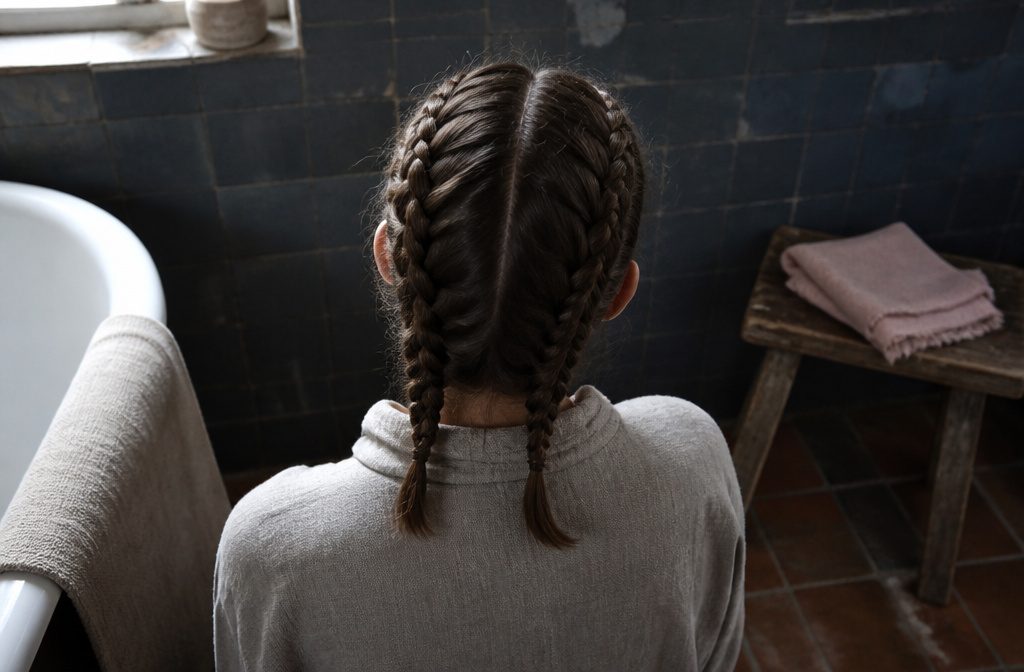
Double french braids are two French braids that run parallel from the hairline down both sides of a center part.
The hard part is keeping even tension when your arms are behind your head, which is why you start at the nape with two plain crossovers before you add scalp hair.
Day-old hair holds better than freshly washed, and finger-width sections keep the pattern uniform all the way down.
Part Your Hair Down the Middle and Clip One Side Away
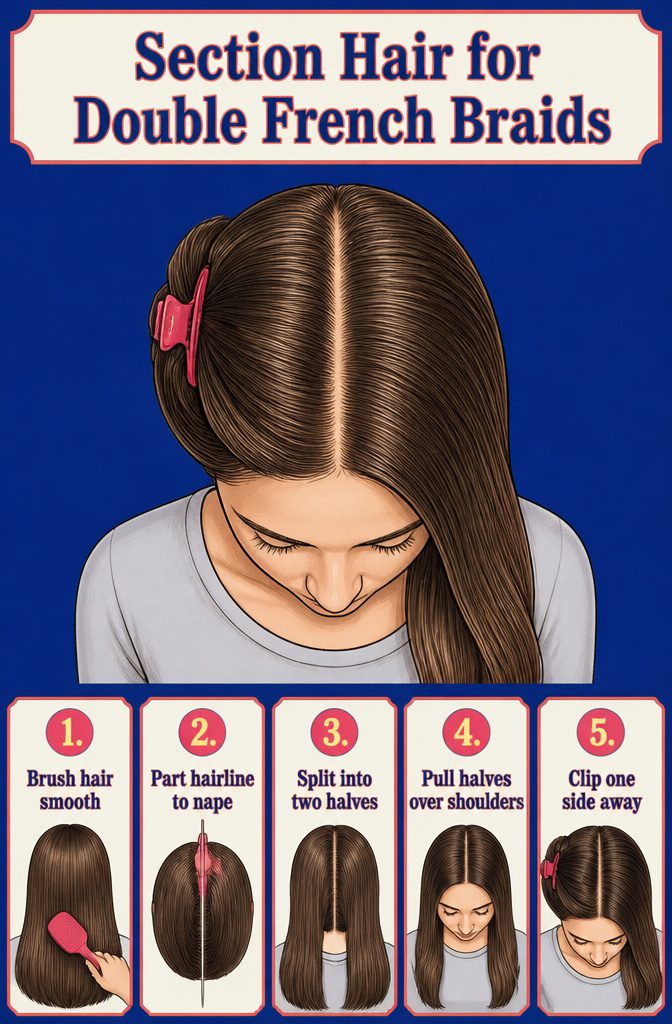
Brush the hair, then run the tail of a rat-tail comb from the hairline straight back to the nape. The part should run the full distance, hairline to nape, or hair from the wrong side drifts into your braid.
A crooked line shows in the finished style. A messy or zigzag part suits a bohemian look, provided it still splits the halves cleanly.
Pull both halves over your shoulders and clip one side out of the way.
A hair band on the loose side works too. With that half pinned, you braid the other without wrestling one big mass of hair, and the two braids stay separate and manageable.
Take a Small Front Section and Divide It Into Three Strands
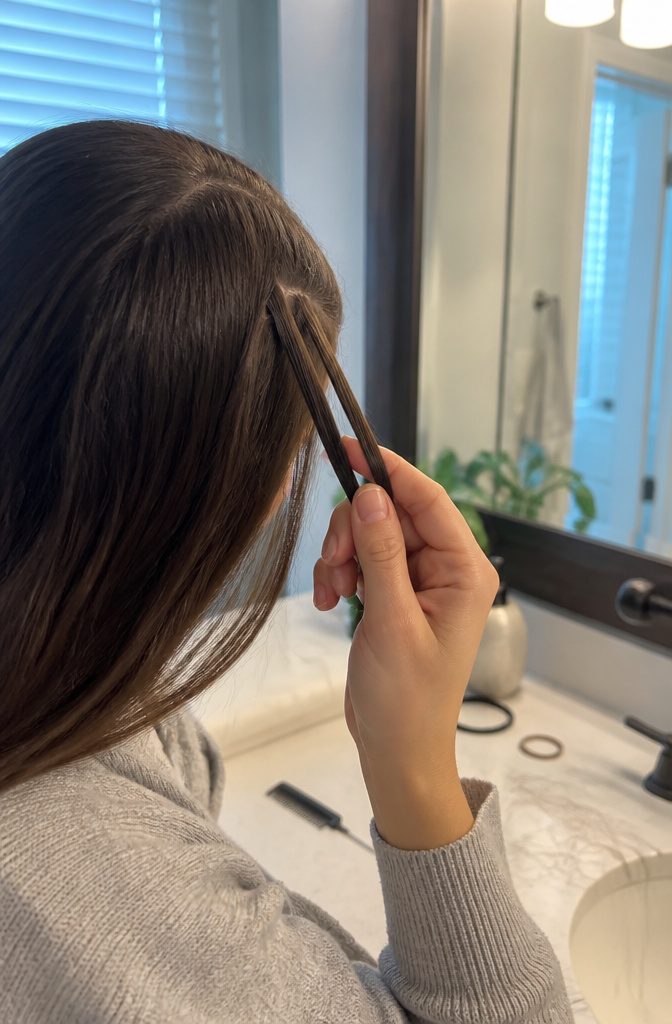
Take a starter section about 0.5 inches (1.3 cm) wide, right at the hairline near your face.
Think a finger-width slice: small enough to control with one hand, big enough to hold when you start crossing. Split it into three strands of equal thickness, using a comb tail or your fingertips to keep the divisions clean.
Equal strands matter more here than at any later step. This tiny section is the foundation, and an uneven start shows up as a lumpy braid down the full length.
If one strand looks thinner, slide a few hairs over from its neighbor before the first crossover. Redoing the starter twice costs less than living with a bumpy braid.
Cross the Outside Strands Over the Middle
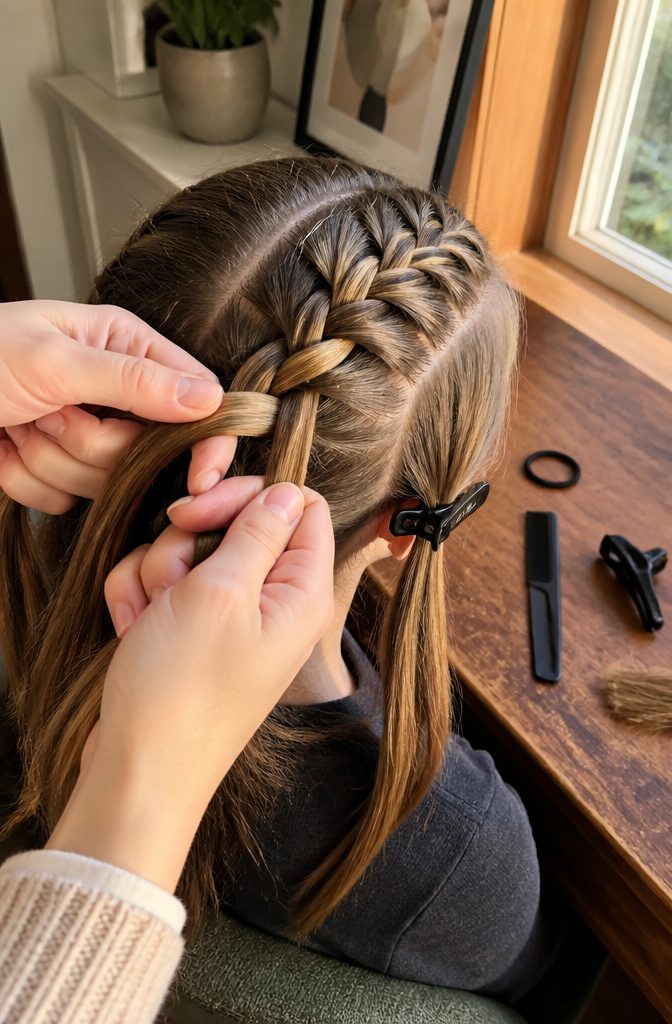
A French braid begins as a plain three-strand braid.
Cross one outside strand over the middle, then the other outside strand over the new middle, and keep the strands in your fingers at equal thickness. Uneven strands show up later as lumps, so fix them before the first cross.
Make two full crossovers with no added hair, then bring in scalp hair on the third.
Starting with the right or the left both work, and I’d pick whichever hand feels steadier and use that order on both braids so the sides match.
Add Hair From the Scalp as You Continue Braiding
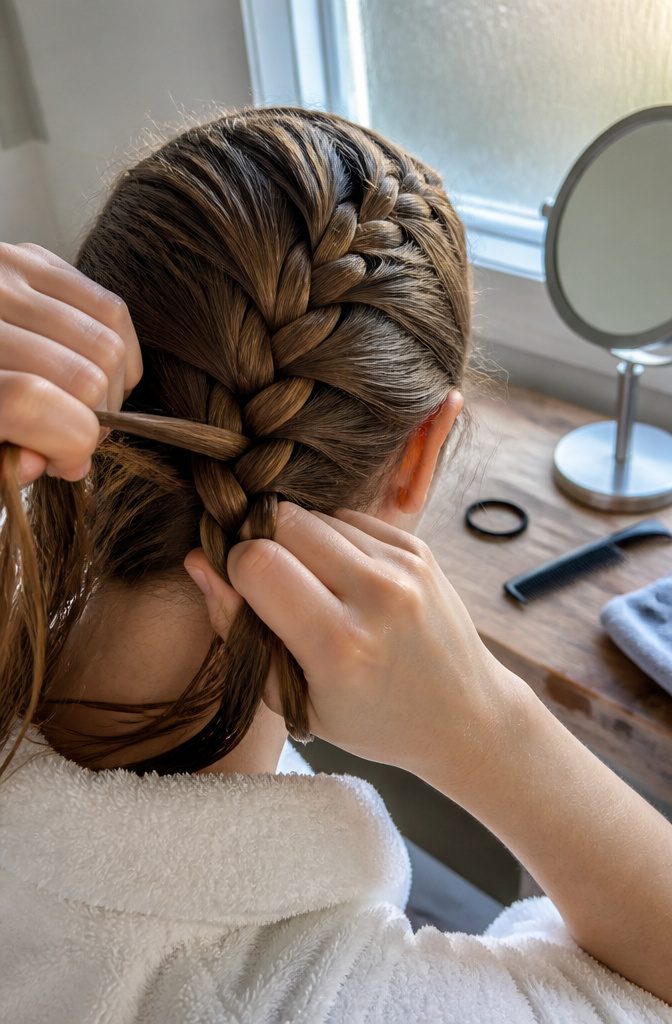
Start adding hair on the third crossover. Before each outside strand crosses the middle, pick up a small section of loose hair from the scalp, fold it into that strand, then cross it over.
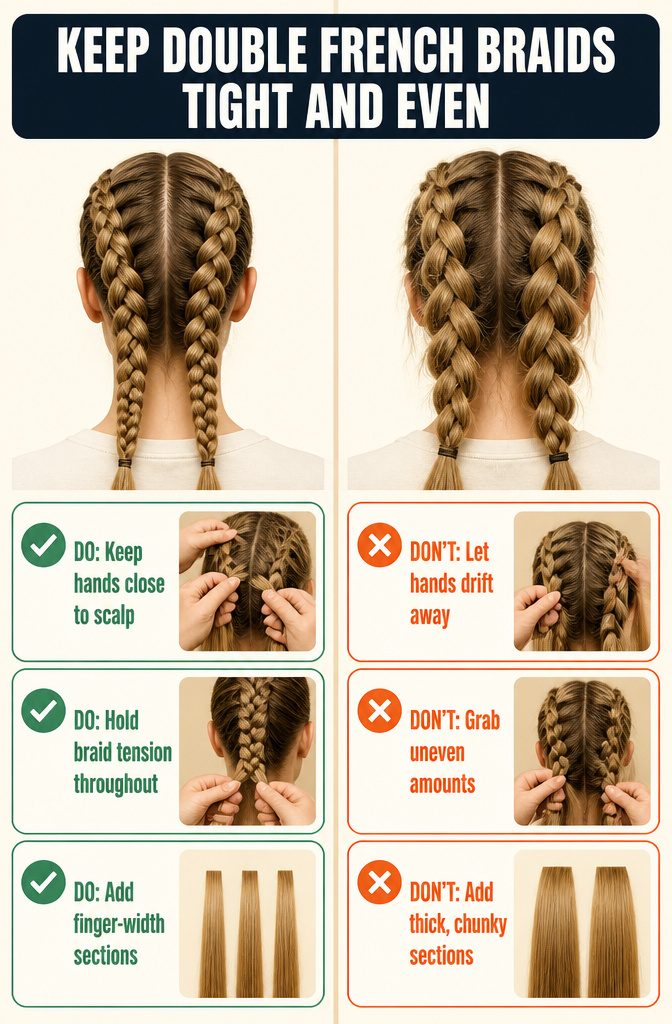
Aim for finger-width slices; big chunks make a loose, chunky braid, and I’d take too little hair over too much every time. Add the same amount each time, or the braid turns uneven.
Keep your hands close to the scalp, because tension drops the farther your fingers drift. Pull new hair from the front hairline and along the center part, separating each section in a horizontal line.
If your arms tire, hold the braid in one hand and shake out the other. It won’t unravel in ten seconds.
Stop Adding Hair at Ear Level and Finish With a Regular Braid
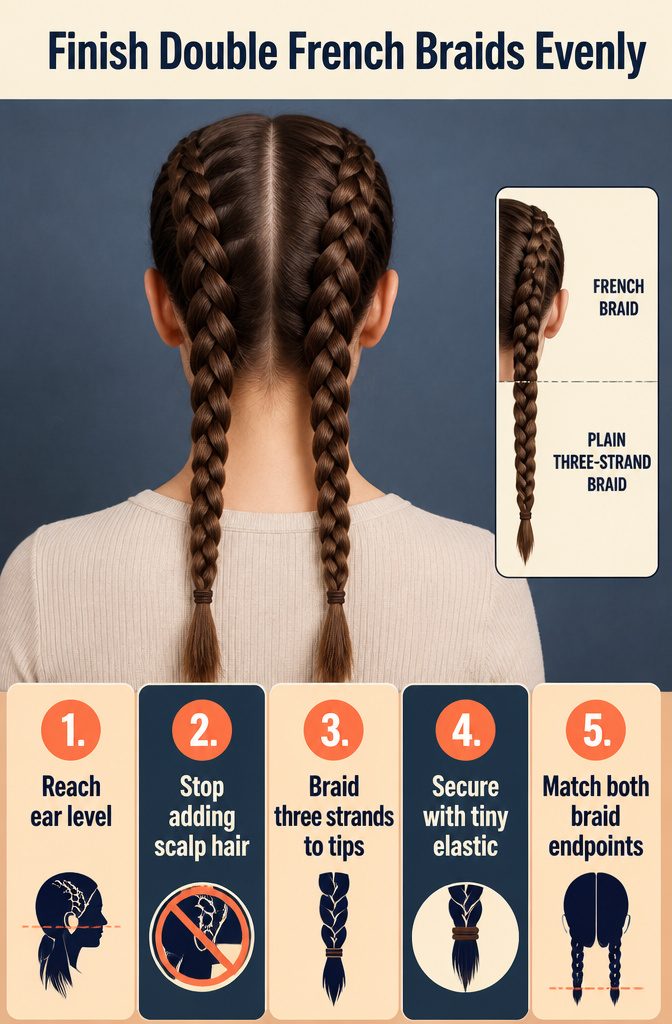
Ear level is your checkpoint. By the ear, or at the nape, there is no loose scalp hair left to add, so stop adding and work a plain three-strand braid down to the tips.
Pull the strands apart as you cross them so this lower stretch stays as snug as the French section above it.
Tie off with a tiny elastic. Use matching elastics and stop both braids at the same place, so the pair reads as even from the front.
If the second side feels crooked compared to the first, that is normal. Check it in a mirror and adjust the tension before you call it done.
Repeat the Same Steps on the Other Side
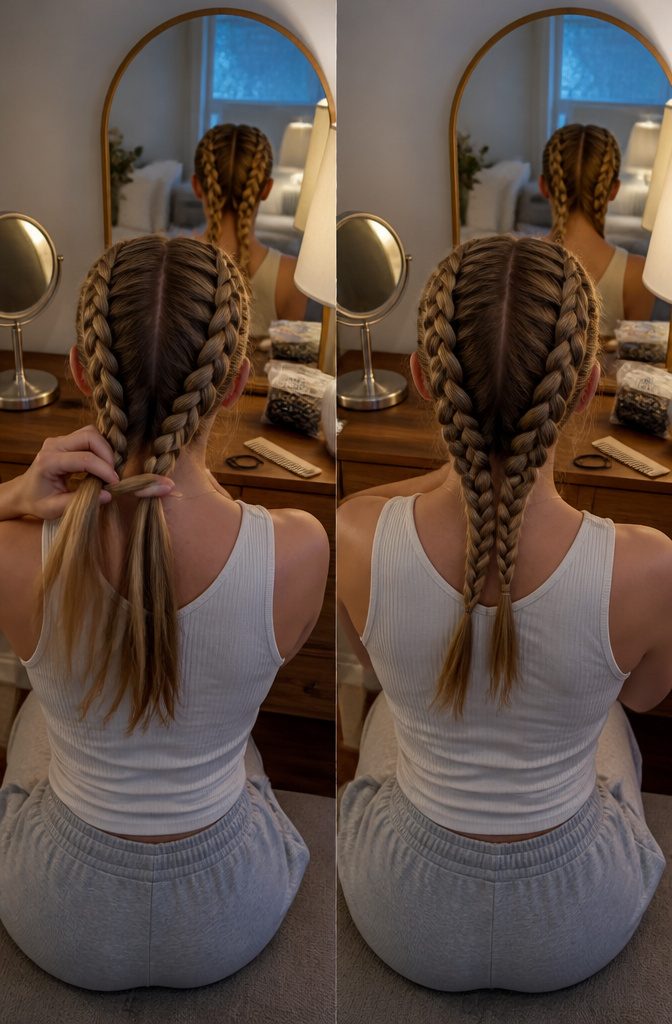
Release the clip and braid the second side the same way as the first, mirrored, starting at the front hairline and working back.
Tie it off with an elastic a little past the point where the last of the hair has been picked up.
The two braids should meet at the middle of the back of your head and come out about the same size.
Check both in a mirror before you pin or style anything. The second side is usually the weaker one, since your arms are tired and the angle is awkward.
If one braid sits looser or thicker, tighten it by redoing the last few stitches. I’d rather redo that braid than pin a lopsided pair into place.
Start With Day-Old Hair for Better Grip
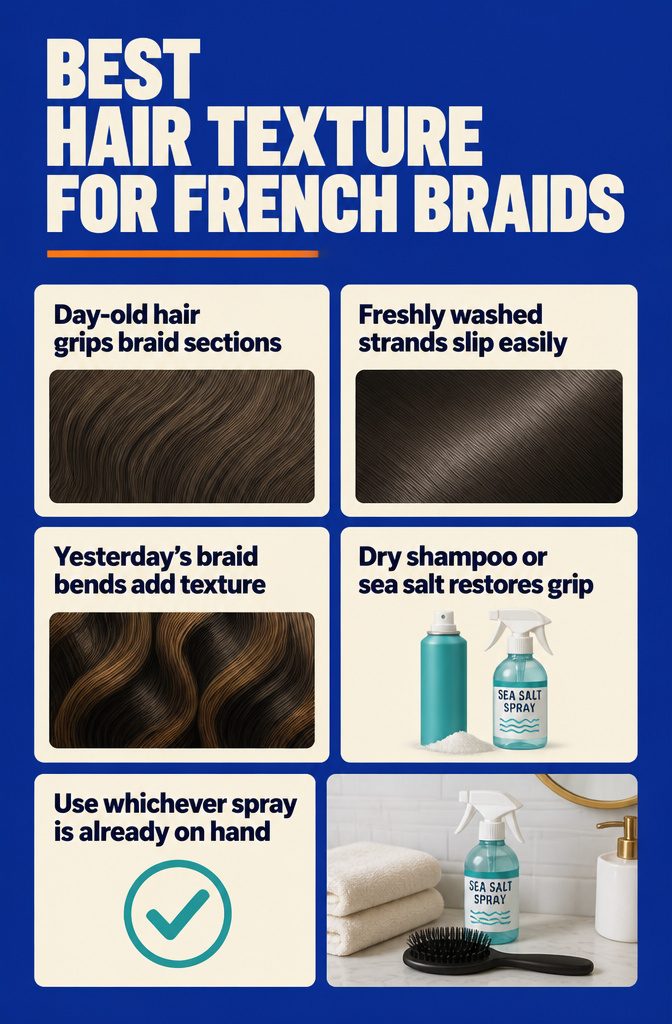
Freshly washed hair is too slippery to hold a braid, and strands tend to slip out of your fingers as you cross them.
Second-day hair has a slightly gritty texture that keeps each section where you put it, so day-old hair is the best starting point for double french braids.
Hair still carrying braids or curls from the day before works especially well, because the bends are already in it.
If you washed this morning, you can add the grip back.
A few spritzes of dry shampoo or sea salt spray through the roots and lengths give clean hair that same grit. I’d use whichever one is already on your shelf, since both do the same job here.
Use a Mirror to Check the Back While Braiding Your Own Hair
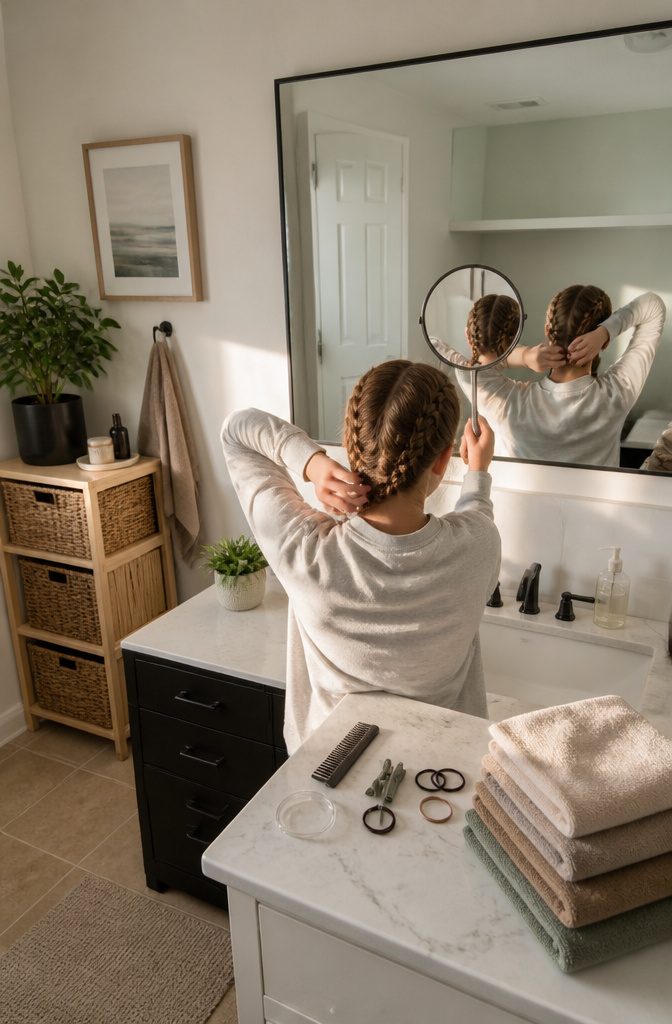
Braiding your own hair asks for a large mirror paired with a handheld one held behind you so you can see the back sections as you work.
Position the large mirror on a wall or prop it on a counter, then angle the handheld mirror to catch the reflection of the nape and crown.
The double reflection shows where your hands are and whether the sections stay even.
Some people find braiding their own hair easier than working on someone else, though practicing on another person first can help you learn the crossover motion without worrying about arm position.
When you braid your own hair, the method that tends to work best starts at the nape with two regular crossovers before you begin adding hair from the scalp.
Those first two crossovers anchor the braid and give you something to hold while you lift sections with your fingers.
Keep both arms on one side rather than holding them over your head, which tires your shoulders and makes it harder to keep the tension even.
Keep the Braid Tight and Add Even Amounts of Hair
Keep the Braid Tight and Add Even Amounts of Hair
A loose braid lets hair slip out as you work your way down. I keep my hands close to my scalp the entire time, which holds tension better than working with your fingers further out.
The moment your hands drift away from your head, the braid loosens and the whole thing starts to sag.
Another place this goes wrong is uneven starter sections. If you grab a thick chunk on one crossover and a thin wisp on the next, the braid looks lumpy instead of uniform.
I take finger-width slices each time I add hair. Small sections give you cleaner braids, and adding the same amount every time keeps the pattern consistent all the way down.
Big chunks make the braid chunky and loose, and you lose the neat lines that make a French braid look polished.
Finish With Hairspray or Widen the Braids by Pulling the Edges
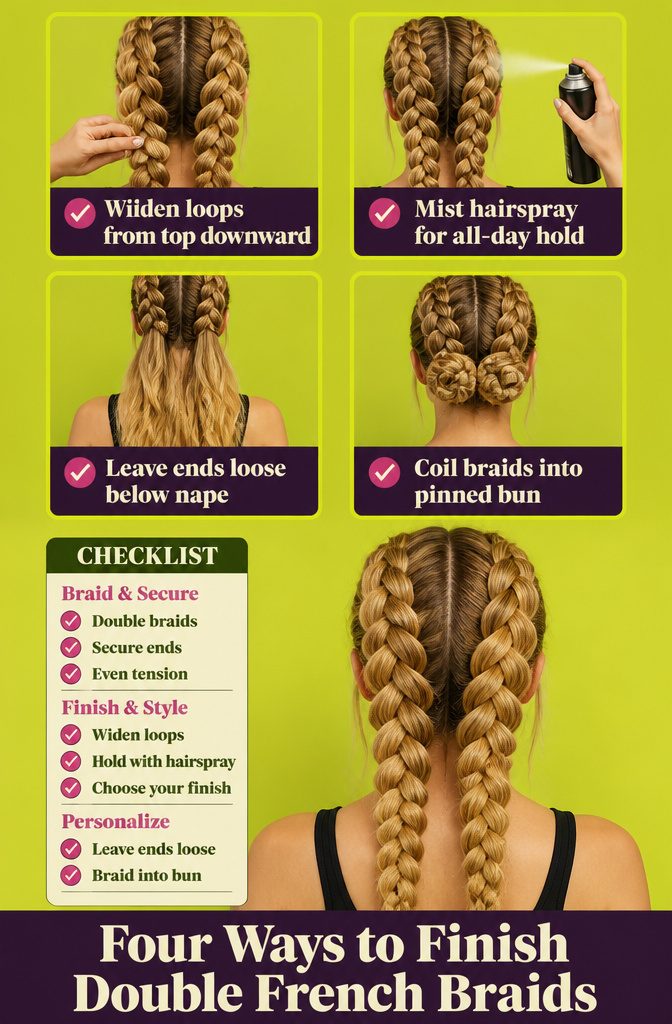
Once the second braid is secured, you can leave them as they are or adjust the finish depending on the look you want.
Your options:
- Gently pull the outer loops of each braid to widen them and make them look fuller. This works best if you work from top to bottom, tugging outward on small sections at a time rather than yanking the whole thing at once.
- Mist with hairspray if you need the braids to hold through a full day or a workout. Skip it if you prefer softer movement.
- Stop braiding at the nape and leave the rest of your hair loose, so you can curl or straighten the ends hanging over your shoulders.
- Wrap each braid into a bun at the back of your head by coiling the tail and pinning it in place with bobby pins. Pin the second braid on top of the first bun.
The Double French Braid and Twist Variation
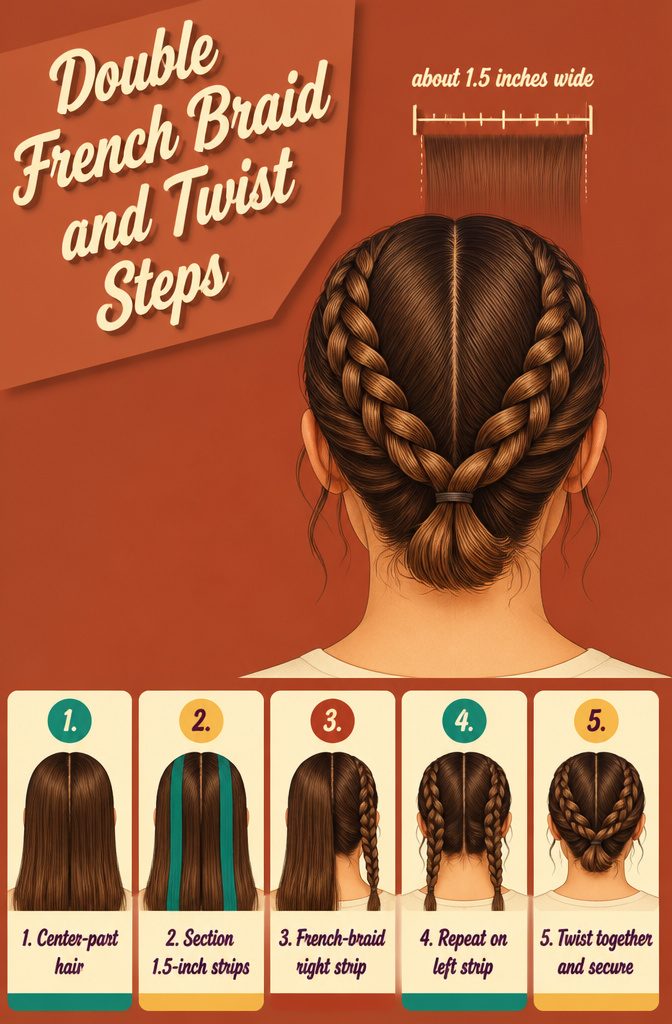
Sansa’s braided look takes about 5 minutes at a medium skill level, and it grips best on second-day hair, like leftover curls or braids.
- Center-part your hair, then section off a strip about 1.5 inches wide on each side of the part.
- French-braid the right strip back to the crown, continue down as a simple braid, and tie it off loosely.
- Repeat on the left strip.
- Twist the two braids around each other and secure them together with a second elastic.
- Add hairspray if you like.
A curling wand on the top layer only adds texture and leaves the underlayer alone.
Frequently Asked Questions
How do you do two French braids on yourself?
Part your hair down the center from hairline to nape, clip one side away, and braid each side separately starting at the front hairline.
Use a large mirror with a handheld one angled behind you to see the back sections as you work.
Stop adding hair at ear level when no loose scalp hair remains, then finish each braid as a regular three-strand braid to the ends.
How long does it take to do double French braids?
A simple double French braid takes about 5 minutes at a medium skill level.
The Sansa twist variation, which adds a step where you wrap the two braids together, also takes around 5 minutes. Your first few attempts will take longer as you learn to control the tension and keep your sections even.
What are two French braids called?
Two French braids are called double French braids or French braid pigtails. Both terms describe the same style, where you part your hair down the middle and work one French braid on each side of your head.
How do you do a French plait?
Take a small section at the hairline and divide it into 3 strands, then cross the outside strands over the middle twice with no added hair.
On the third crossover, start picking up finger-width sections of loose hair from the scalp and folding them into each outside strand before you cross it over the middle.
Continue adding hair with each crossover until you reach the nape, then finish as a regular braid.