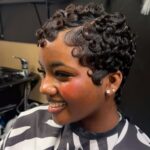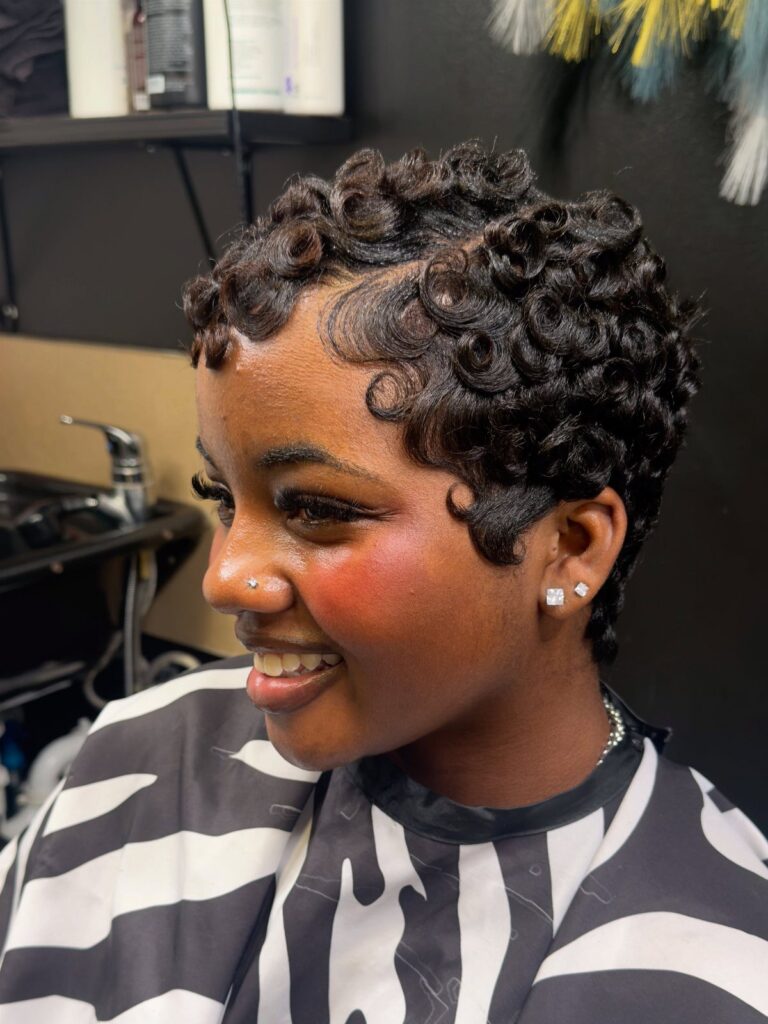
A curly pixie can sit rounded close to the head, fall asymmetric across the forehead, or layer into feathered movement that follows your face, and the difference comes down to how much texture you want and where.
1. Face-Framing Curls
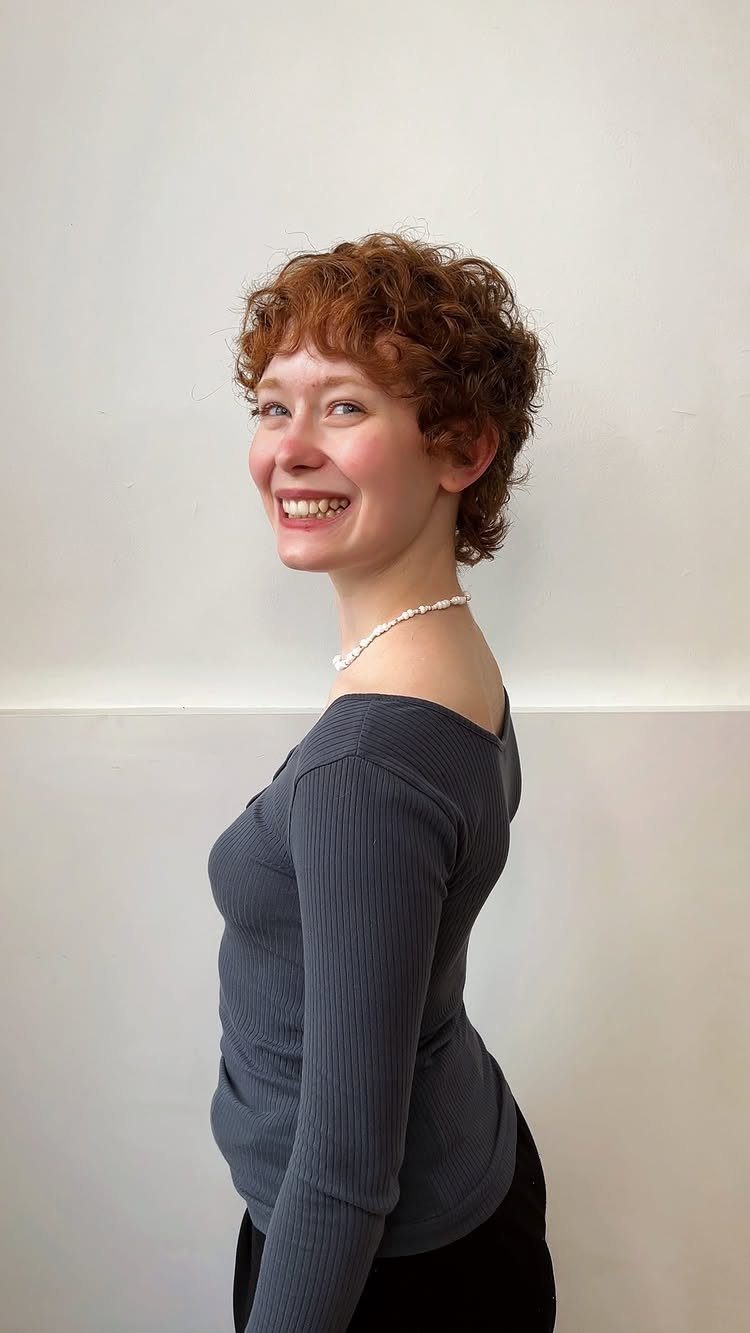
Short curls that frame your features do the same work longer layers would: they break up the outline and draw attention inward. The result sits somewhere between structured and soft.
For anyone used to tucking hair behind their ears, this keeps a little of that movement without adding length at the neck.
A curl cream or light gel holds the shape after you scrunch it in, and the front pieces usually dry faster than the rest.
If your curls tighten when they’re short, ask for slightly longer pieces near the temples so they bounce where you want them.
2. Side-Swept Bangs
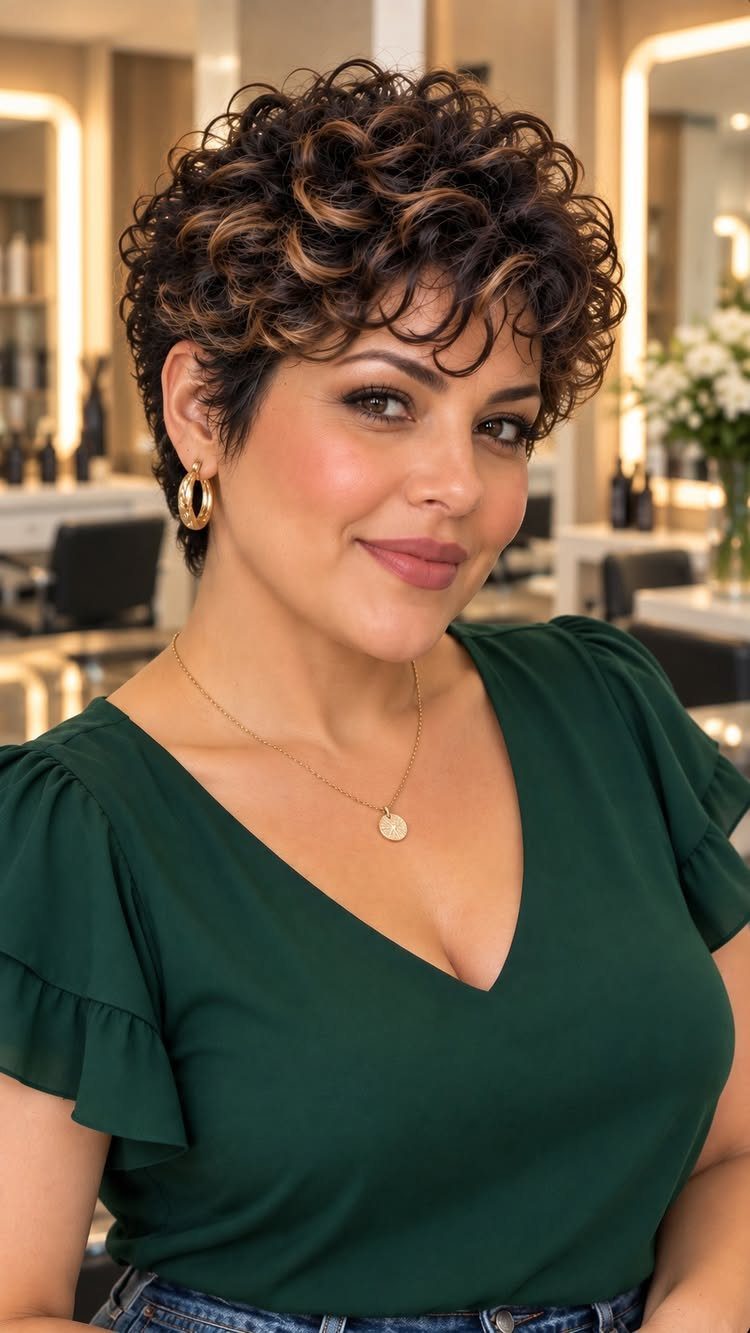
Bangs that sweep to one side pull the eye across the forehead instead of straight down, which reads as movement even when the rest of the cut holds close to the head.
This works particularly well if you part off-center already.
The longer side gets the attention, and the shorter side keeps things from feeling heavy. A leave-in conditioner smooths frizz without weighing down the curl, and most people can finger-comb this into place in under a minute.
Expect a trim every 5 to 6 weeks if you want to keep the proportions sharp.
3. Tight Coils
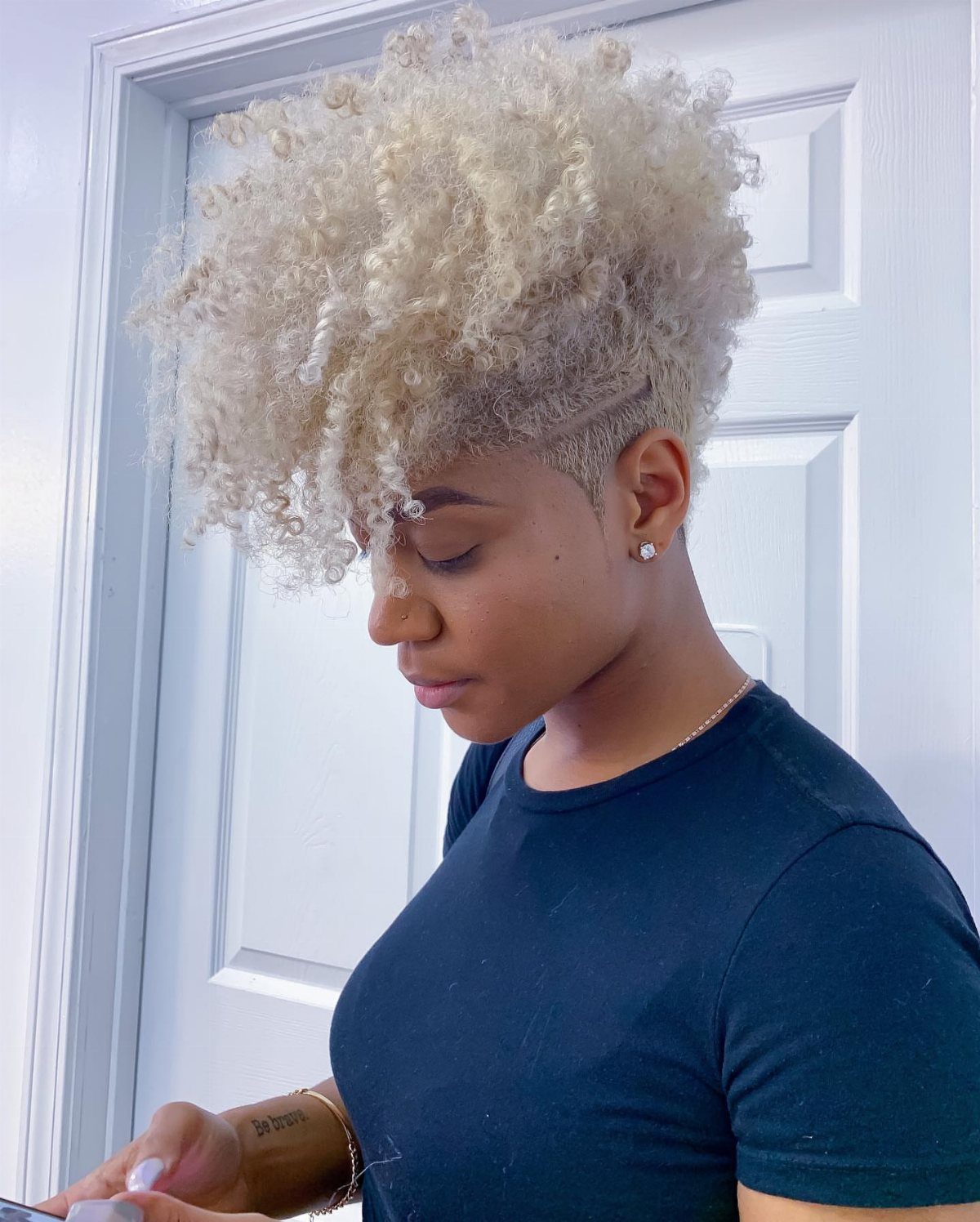
Tight curls at this length can stack into a rounded shape that feels too uniform, so soft layering through the top and sides gives each coil room to move on its own.
The shaved sides keep the silhouette narrow, which balances the volume on top. A curl custard or mousse applied to damp hair defines each coil without crunch, and diffusing on low heat cuts down the air-dry time.
When your curls shrink substantially, the finished length will sit closer to the scalp than it looks when wet.
4. Tapered Back Curls
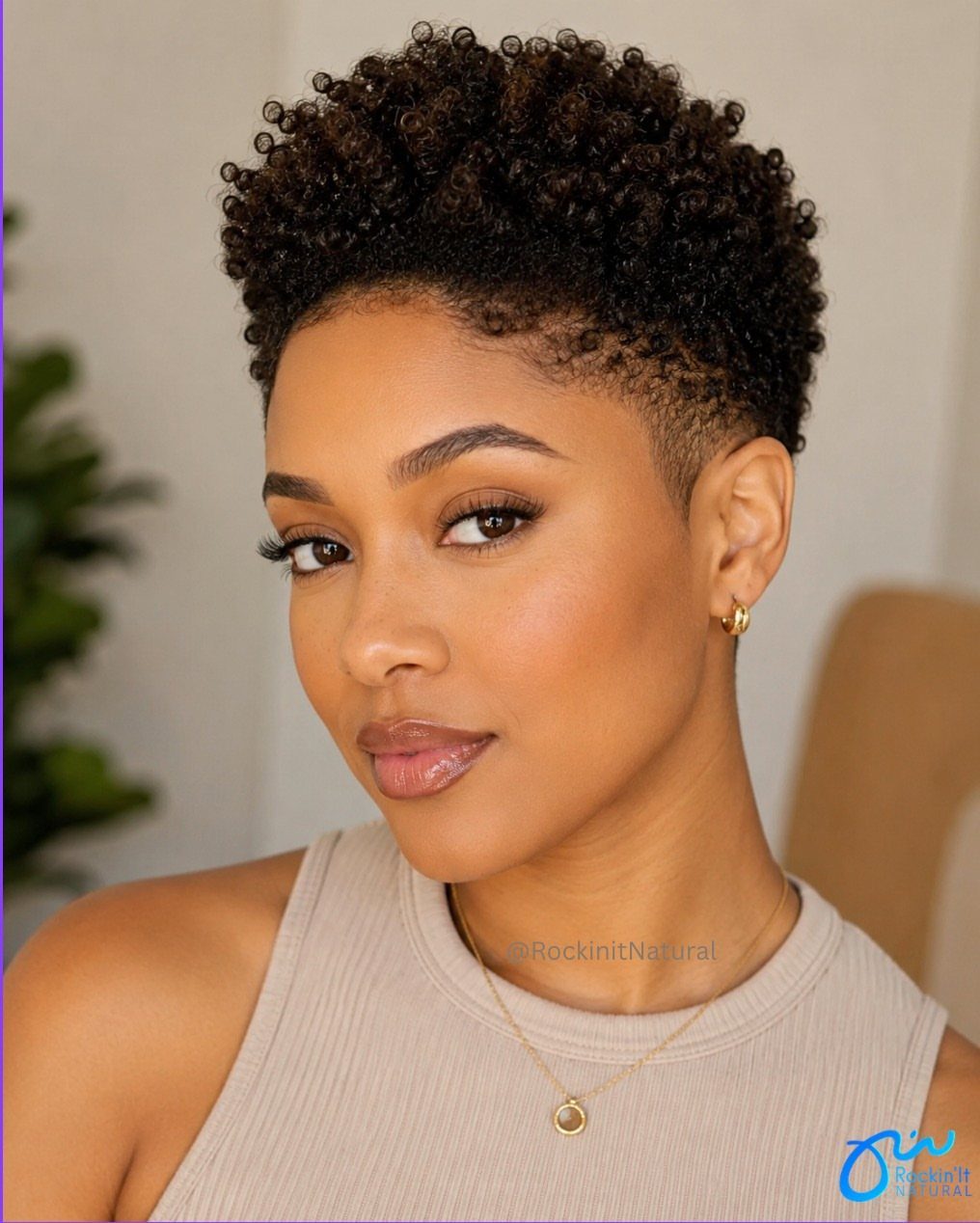
The cut is fuller at the crown and gradually shorter toward the nape, which gives you height where it matters and a clean line at the back.
The taper can be clipper-short or just scissor-tapered, depending on how much contrast you want.
This style needs less product than an all-over curly pixie because the tapered section doesn’t hold curl. A light styling cream through the top is usually enough, and the back air-dries flat.
Plan on a regular shape-up so the taper stays crisp.
5. Textured Curly Pixie
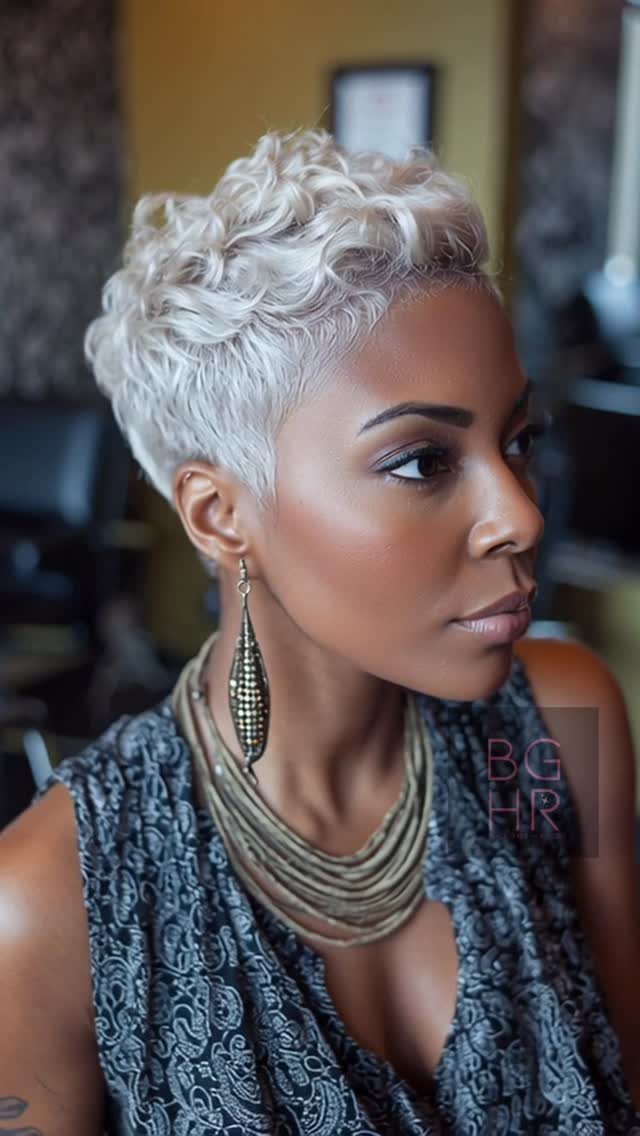
The curls here sit in different directions instead of following one uniform pattern, which gives the cut a looser, less polished feel. That texture comes from both the cut and the way you style it.
A texturizing spray or sea salt spray on damp hair adds separation, and scrunching while you diffuse encourages the curls to land wherever they fall.
The platinum tone makes every curl more visible, so this cut shows off the shape more than darker colors would.
Color this light requires regular toner so it doesn’t turn brassy.
6. Shaggy Coil Layers
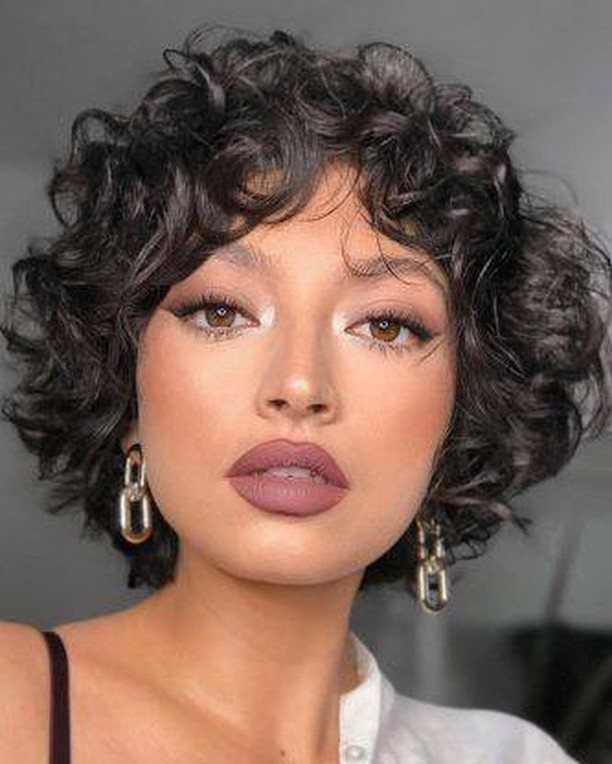
Layers cut at different lengths let each coil fall where it wants instead of stacking into one solid shape. The result is looser around the edges and reads as casual rather than tailored.
A curl-defining cream smoothed through damp hair holds the coil without stiffness, and air-drying works as well as diffusing. The layers that frame your features soften the jawline, which suits round or square face shapes especially well.
If your curls loosen when they’re longer, this cut can handle pieces that fall past the ear and still look intentional.
Coily Hair (Type 4) – Type 4 coils create sculptural, statement-making silhouettes that pair beautifully with fades or undercuts. These textures benefit from more tailored cutting techniques to protect curl structure and enhance shape.
7. Side-Swept Volume
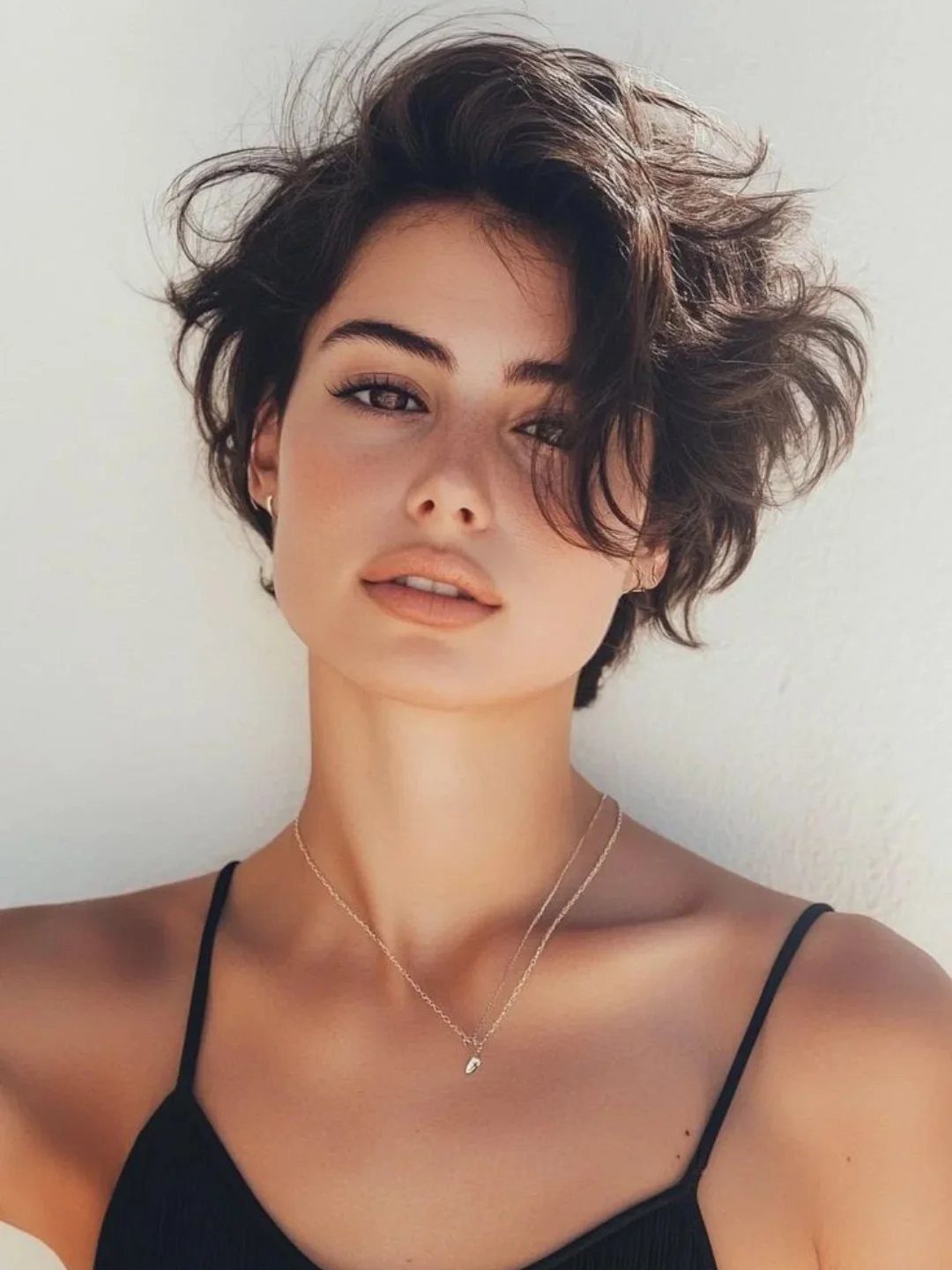
Volume swept hard to one side changes the shape your hair makes around your face. Instead of sitting evenly, the weight moves across your forehead and temple, which suits anyone with a center part they want to move away from.
Thick hair holds this without much help.
A medium-hold mousse on damp roots lifts the sweep, and a round brush while blow-drying directs it into place. Once it’s dry, it stays.
The look softens angular jawlines and adds width to narrow faces.
8. Sculpted Short Curls
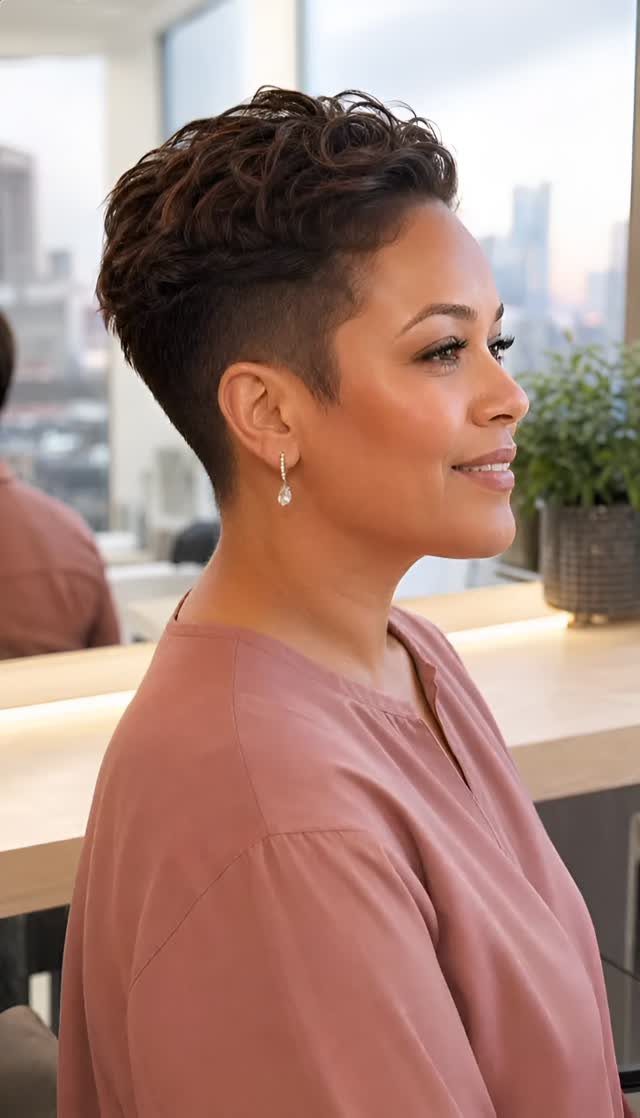
Graduating the length from back to front keeps curls tighter at the crown and lets them open up as they move forward. That progression makes the shape feel intentional instead of uniform.
A curl cream applied section by section defines each curl without clumping them together.
This cut works best when your curl pattern is consistent. Mixed textures can read as uneven rather than sculpted.
9. Defined Curl Pattern
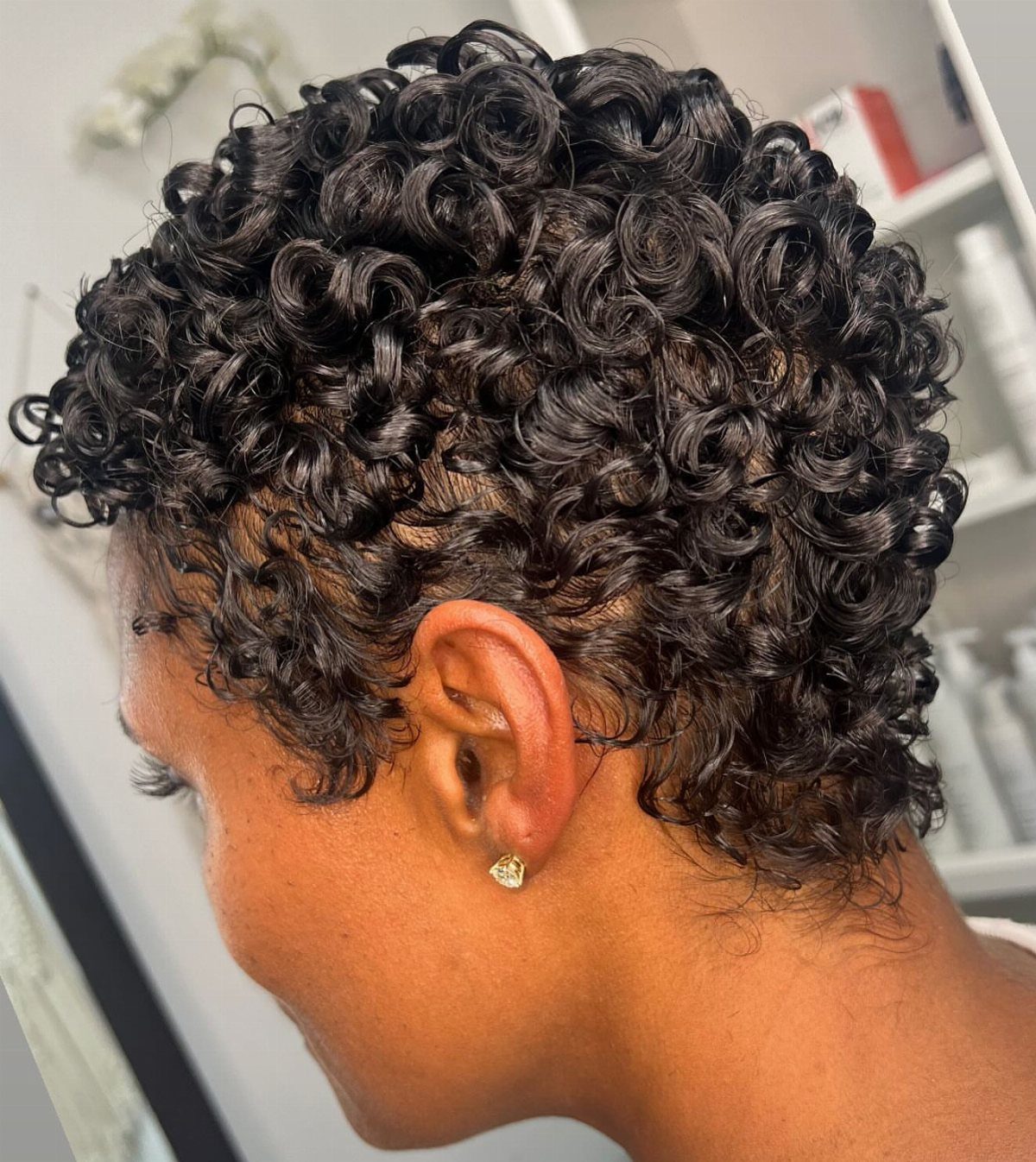
Keeping the back close and the curls longer toward the front puts the texture where you see it. The cropped nape stays out of the way, and the curls closest to your cheekbones do the styling work.
A leave-in conditioner smoothed through damp hair and then scrunched holds the curl without stiffness. Air-drying works, but diffusing on low heat cuts the time and tightens the pattern slightly.
If your curls shrink more than you expect, the front pieces may sit shorter than they look when wet.
10. Sun-Warmed Highlights
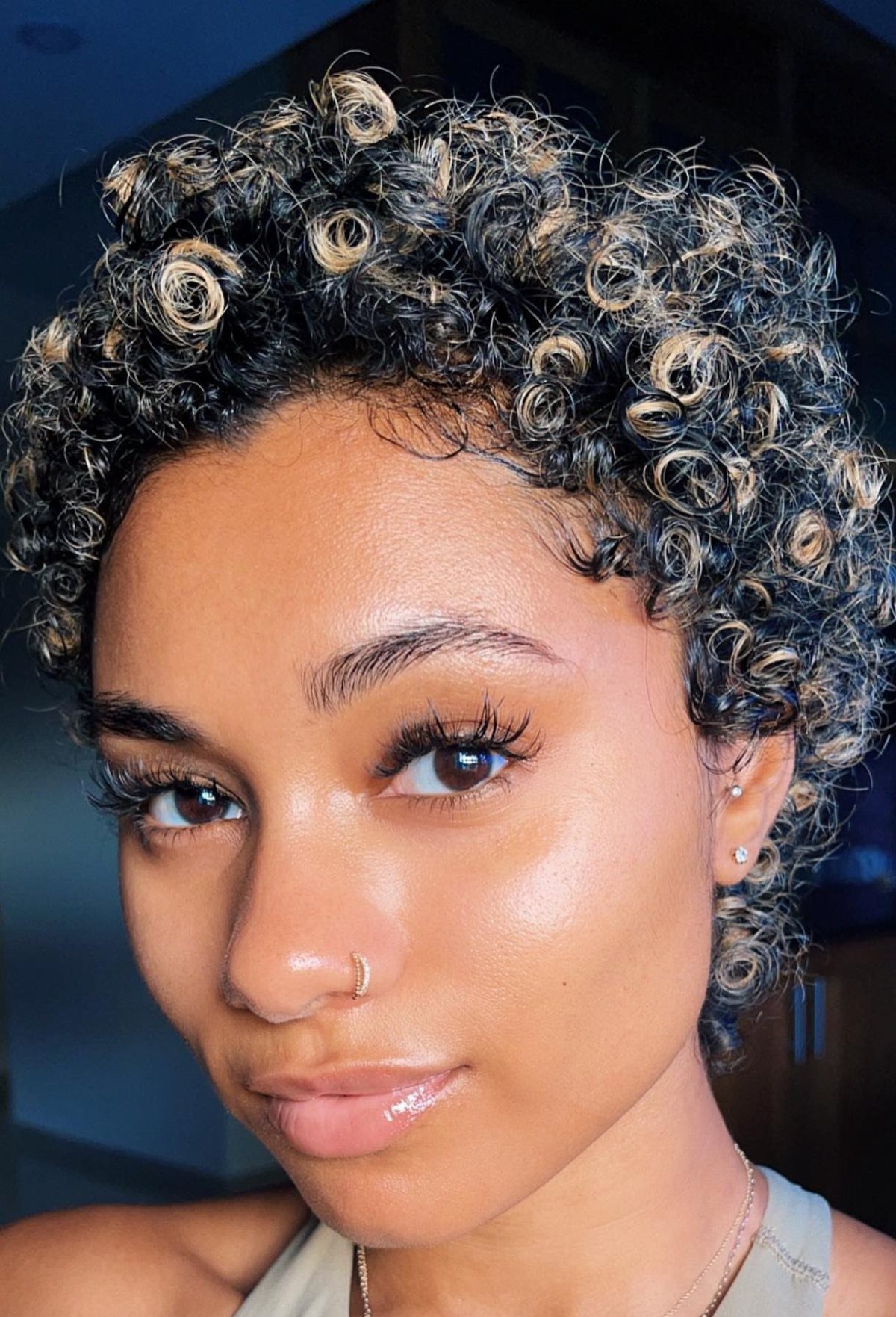
Lighter pieces placed through the curls catch light the way sun would, which adds dimension without changing the base color.
The highlights sit on the high points of each curl, so they show up more than they would on straight hair.
Foil or balayage both work.
Balayage gives you softer edges, foil gives you more contrast. A purple-toning shampoo every few washes keeps the blonde from turning yellow.
11. Sun-Kissed Red Curls
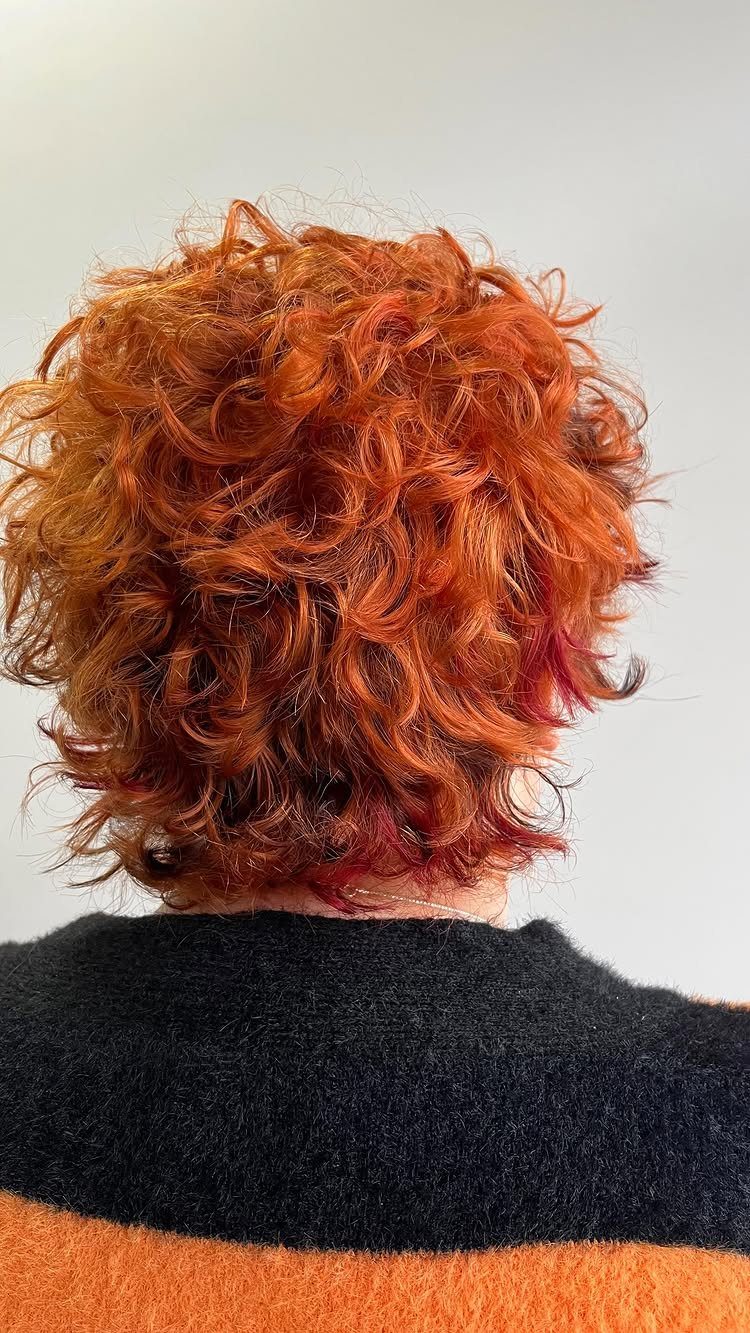
A deep red base with lighter copper or strawberry pieces running through it gives curls a layered color that moves when you do. The lighter sections sit on top, so they’re the first thing you notice.
Red fades faster than most colors, so a color-depositing conditioner once a week keeps the tone rich between salon visits. The highlights need less upkeep than the base because they’re meant to look lighter.
This suits medium to dark skin tones especially well because the warm tones echo naturally.
12. Bold Curly Layers
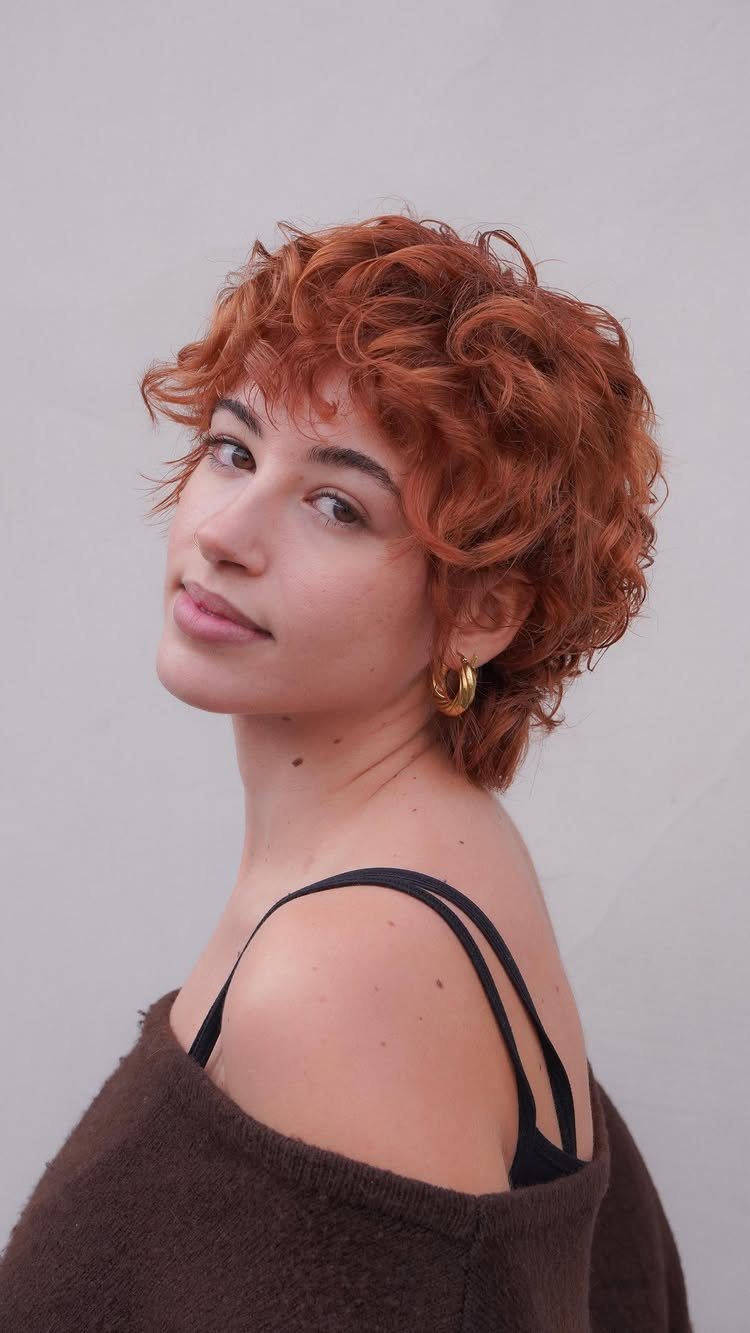
Layers cut to follow the curl direction let each piece move independently instead of stacking into one mass.
The taper at the back keeps the shape clean, and the longer layers on top soften the transition.
If your curls are loose, this cut can handle more length on top. Tighter curls need shorter layers or the volume gets away from the shape.
13. Airy Curls
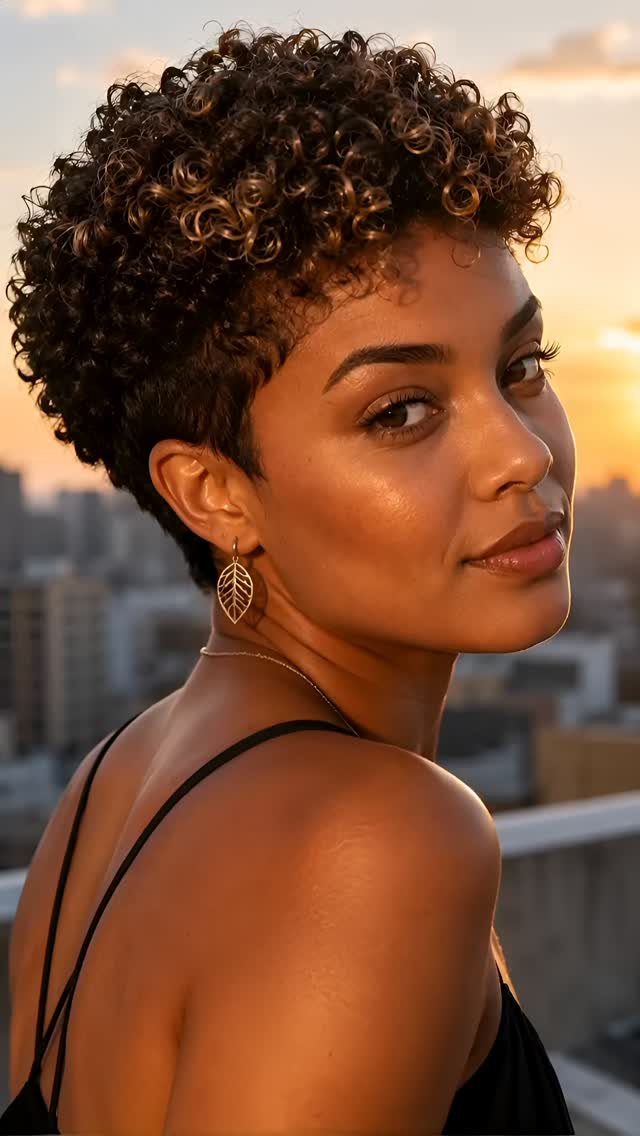
Volume without structure gives curls room to move instead of holding one shape. The result feels lighter than a tightly defined pixie, and the movement is looser around the edges.
A mousse applied to damp hair adds lift without weight, and diffusing with your head tipped forward encourages curls to dry away from the scalp.
The shape changes slightly each time you style it, which suits anyone who wants a low-maintenance cut that doesn’t look the same every day.
Humidity will add more volume, so this works best if you’re comfortable with a little unpredictability.
14. Defined Curly Pixie
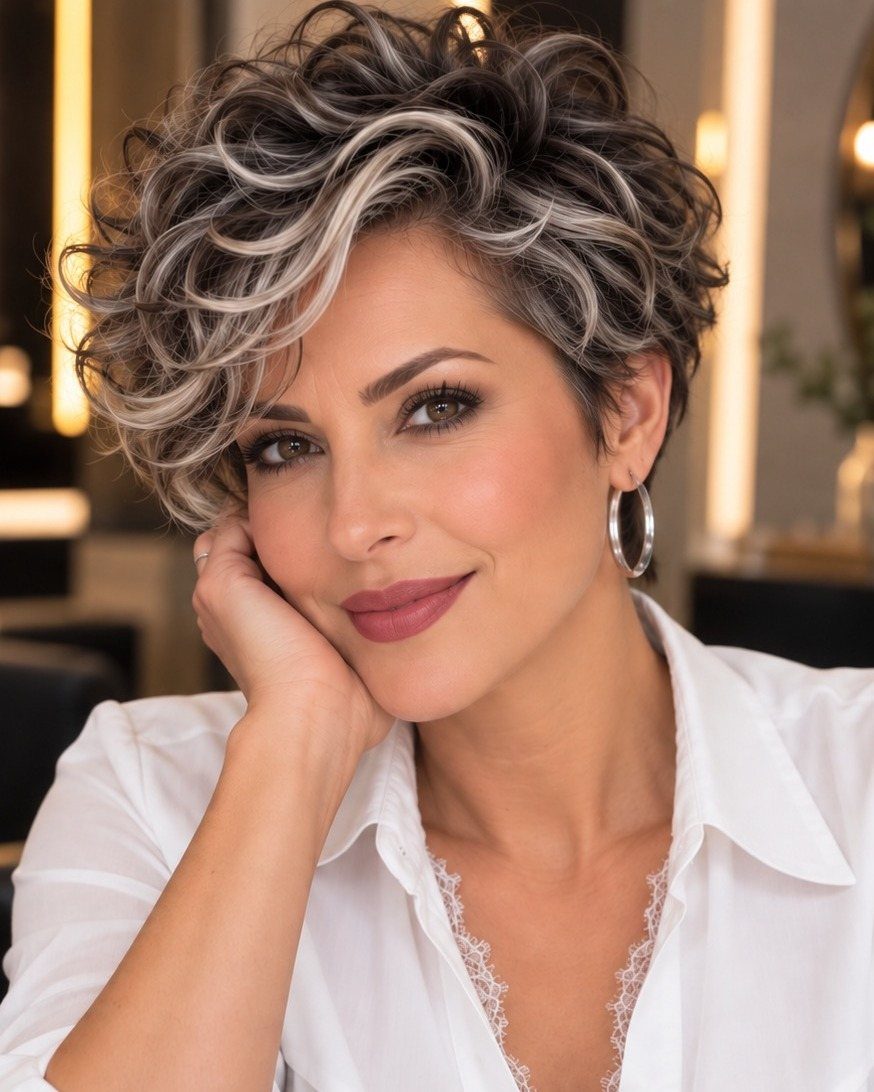
Light layers cut into a short curly pixie let each curl separate instead of clumping together. Cool-toned highlights catch light differently across each curl and make the texture read sharper.
The layers keep the shape from sitting too round, which flatters oval and heart-shaped faces especially well.
Silver needs regular toner to stay ash instead of drifting warm.
15. Asymmetric Curly Pixie
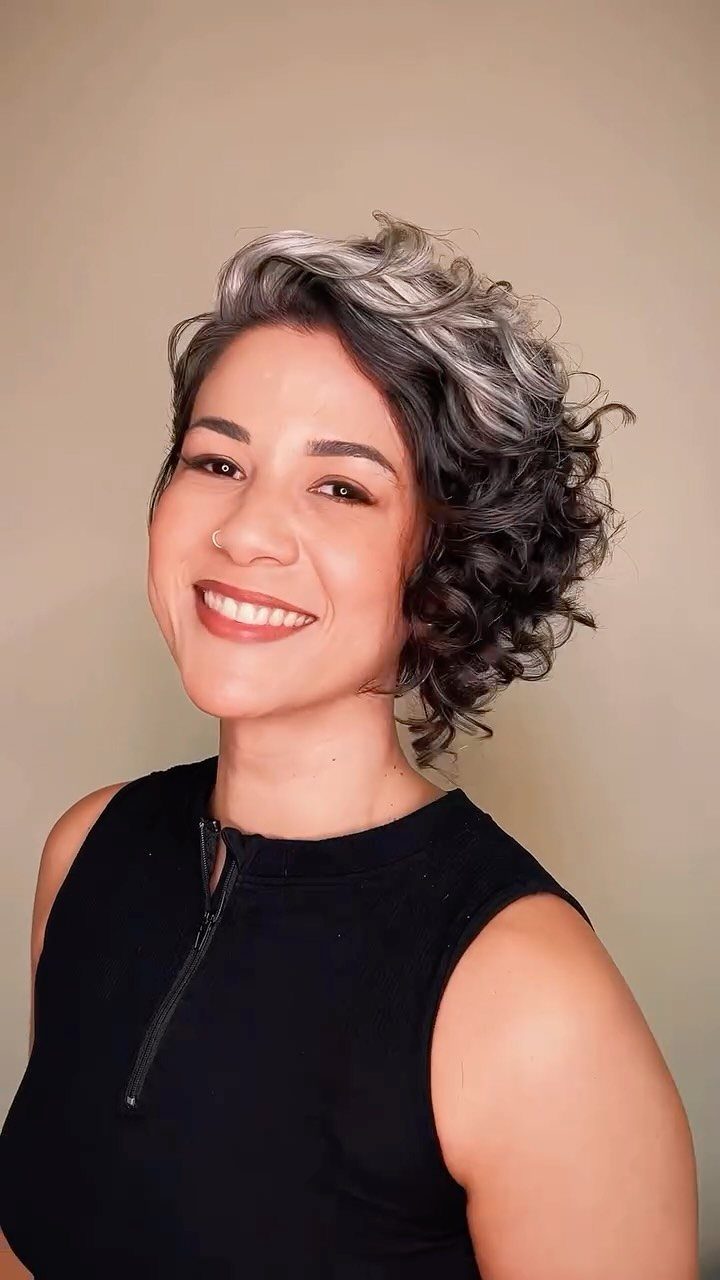
One side sits longer than the other, which shifts the weight and changes the way the curls frame your face. The asymmetry works best when the difference is obvious, not subtle.
An asymmetric curly pixie suits anyone who wants a cut that feels deliberate without being uniform.
Growing this out takes patience because the shorter side will need more time to catch up.
16. Short Curly Pixie
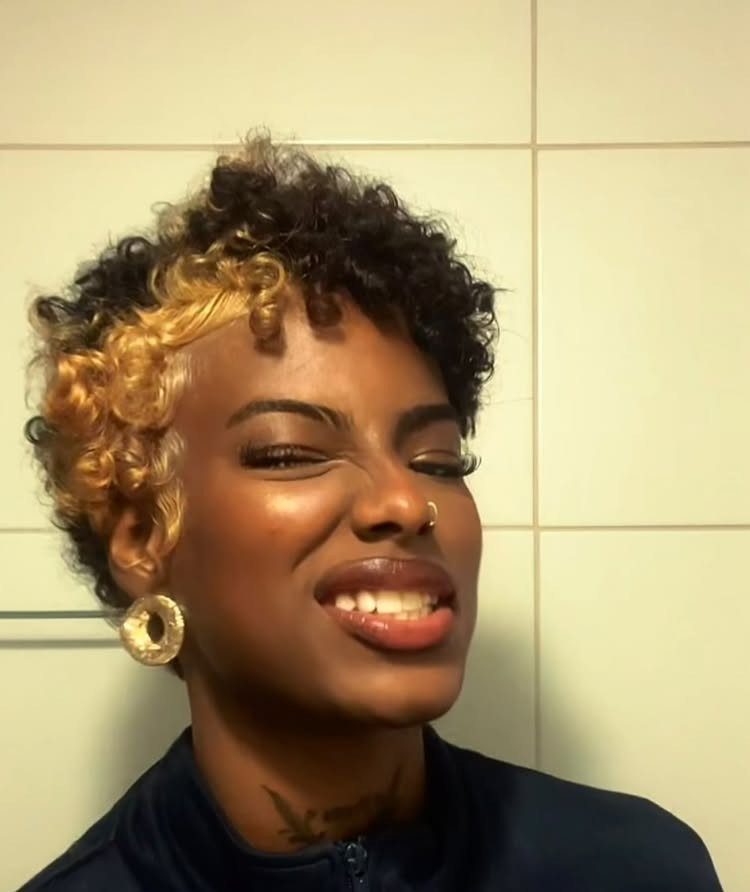
Keeping the length close to the scalp lets the natural volume do the work. The blonde highlights sit on top of dark roots, which adds dimension and makes the curls stand out more than a single color would.
A short curly pixie works well for thick hair because the short length keeps the volume manageable.
Blonde grows out with a visible line, so plan for root sessions.
17. Layered Curls
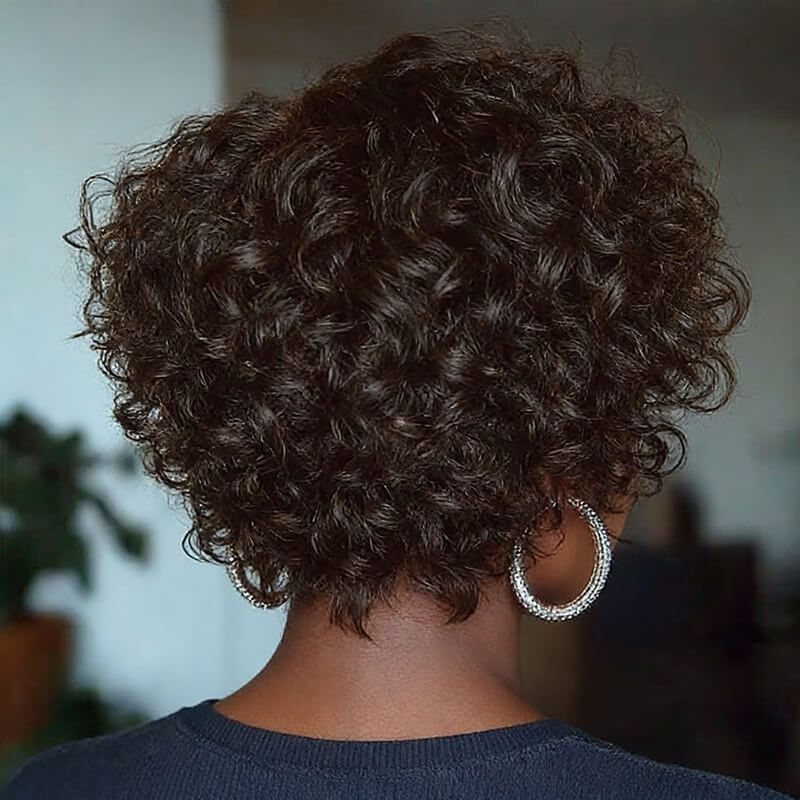
Rounded layers at the back create a shape that follows the curve of your head instead of sitting flat. The layering is subtle, so the curls read as one soft silhouette rather than distinct sections.
The back rounds out fast, so expect more frequent trims than you would with an all-over longer cut.
18. Purple-Toned Pixie
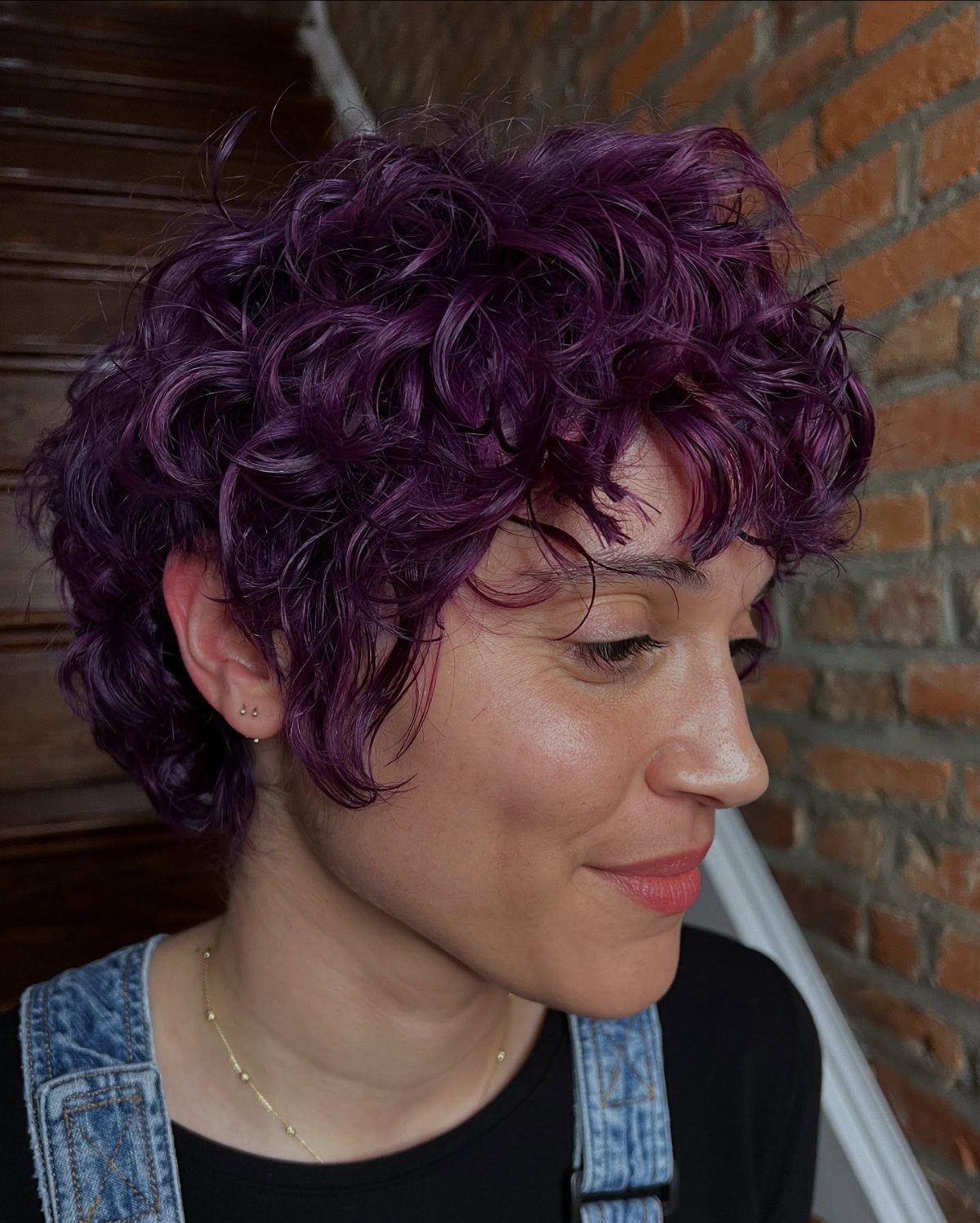
Rich purple tones on curly hair catch light differently than darker colors, which makes the texture more visible. The color sits evenly through the curls, so every piece reads as part of the whole.
A curl-defining cream on damp hair holds the pattern, and a color-safe conditioner keeps the purple from fading too quickly. Purple tones fade to mauve or silver, so the color shifts over time rather than disappearing all at once.
This suits anyone who wants a bold color that doesn’t require bleach if your base is already light enough.
19. Textured Undercut
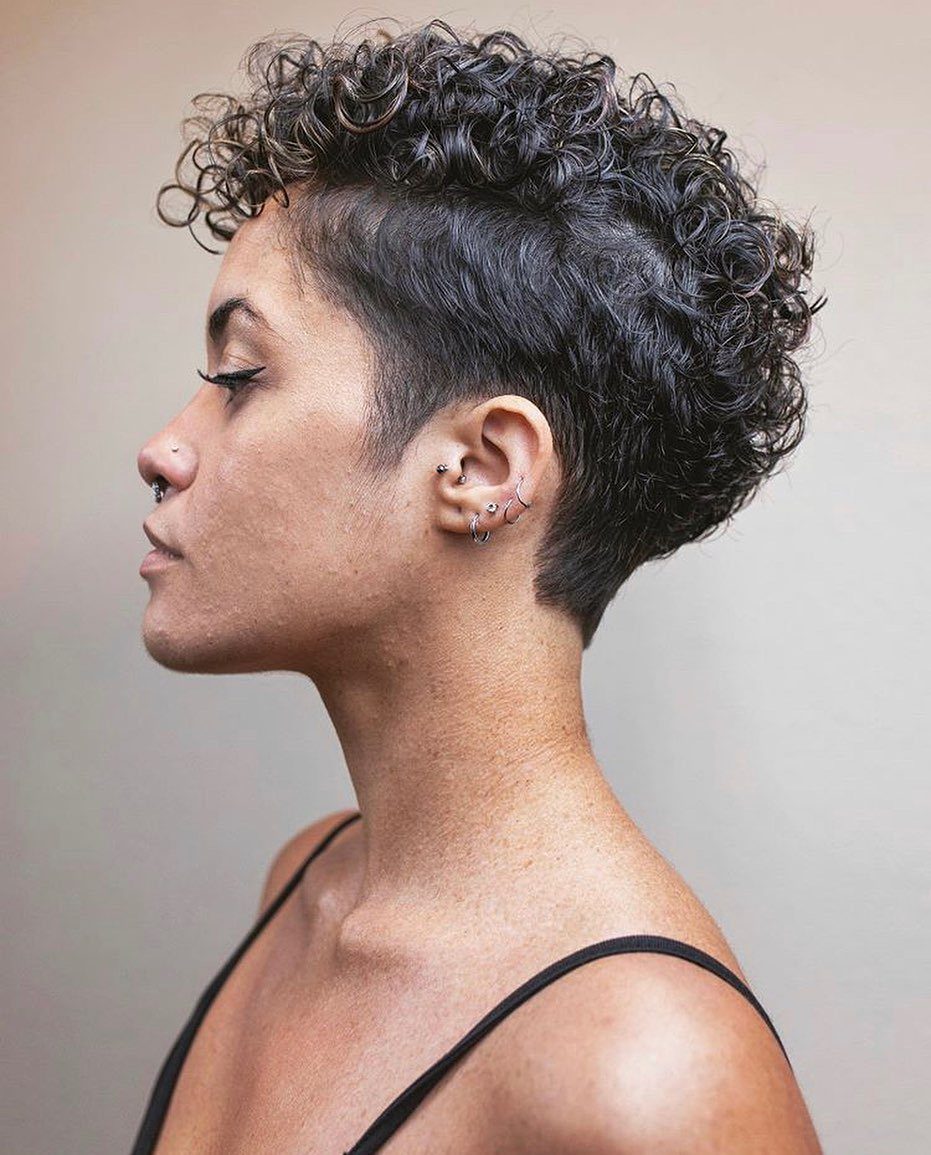
The undercut removes bulk where curly hair can sit heaviest, and the volume that remains on top reads fuller because there’s less competing with it. Fine curls gain definition when there’s less weight pulling them down.
The clipped sides need regular clipper touch-ups to stay sharp.
This works especially well if you want texture without spending time on it every morning.
20. Curly Crop
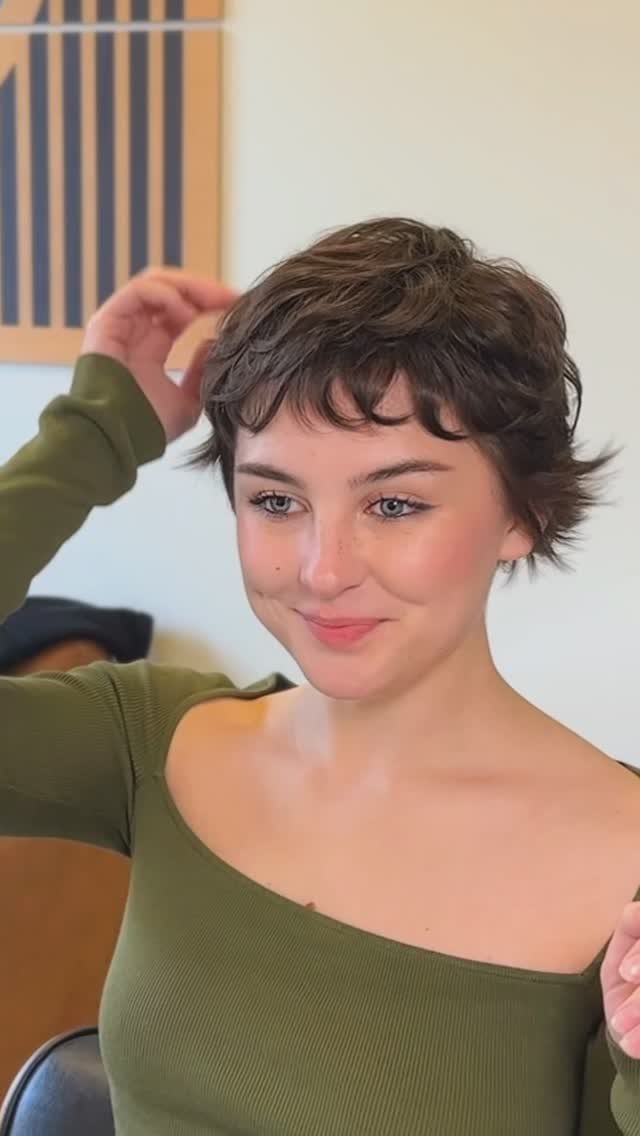
A crop cut close enough to show the curl but not so short that it disappears lets the texture do the work. The tousled finish comes from scrunching a spray wax through the hair, which gives separation without stiffness.
The fringe sits soft instead of heavy, which keeps the forehead open and suits round or square faces particularly well.
Piece-y texture like this looks casual but needs the right product to hold. Without it, the curls clump instead of separating.
21. Multidirectional Pixie
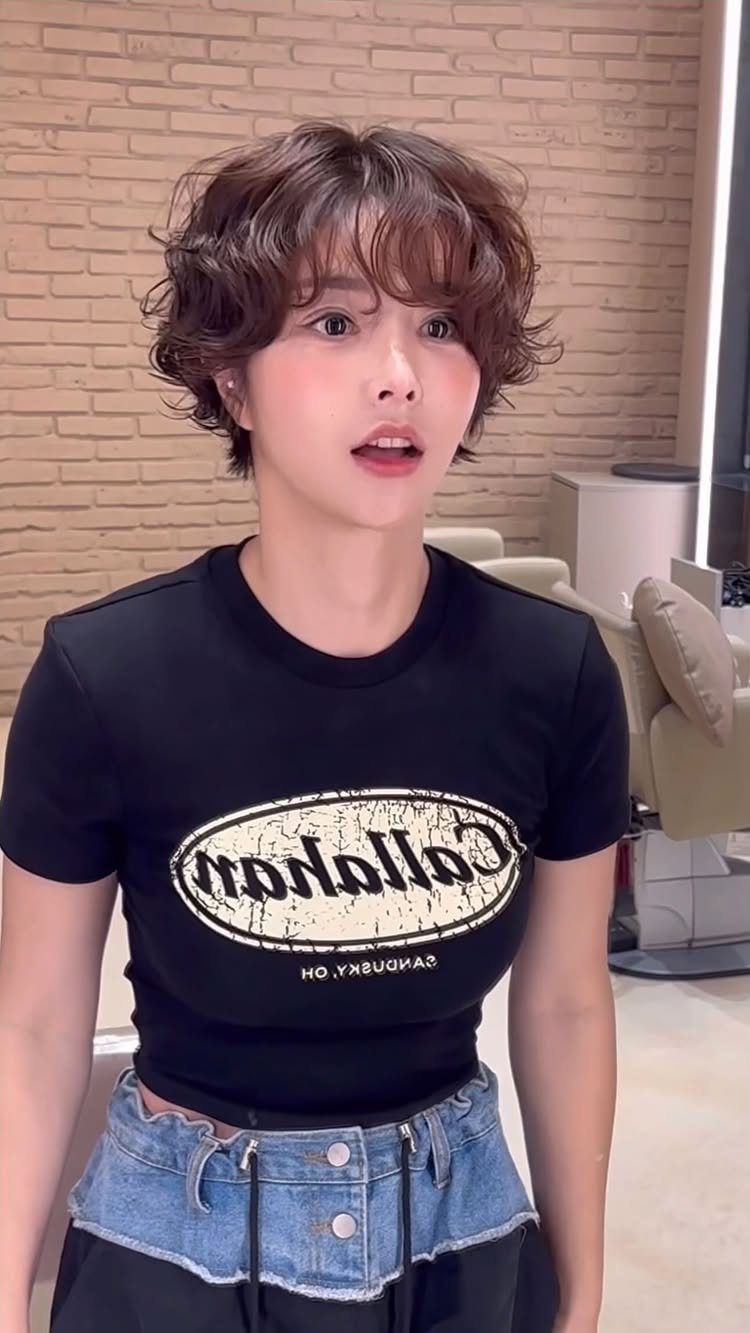
The multidirectional pixie’s movement comes from the way you dry it more than the way it’s cut.
Scrunching while you diffuse from different angles pushes curls in opposing directions. A light texturizing spray on damp hair keeps them from clumping together.
This reads as undone rather than polished, which suits anyone who wants a cut that doesn’t need precision styling every day.
22. Feathered Bangs Pixie
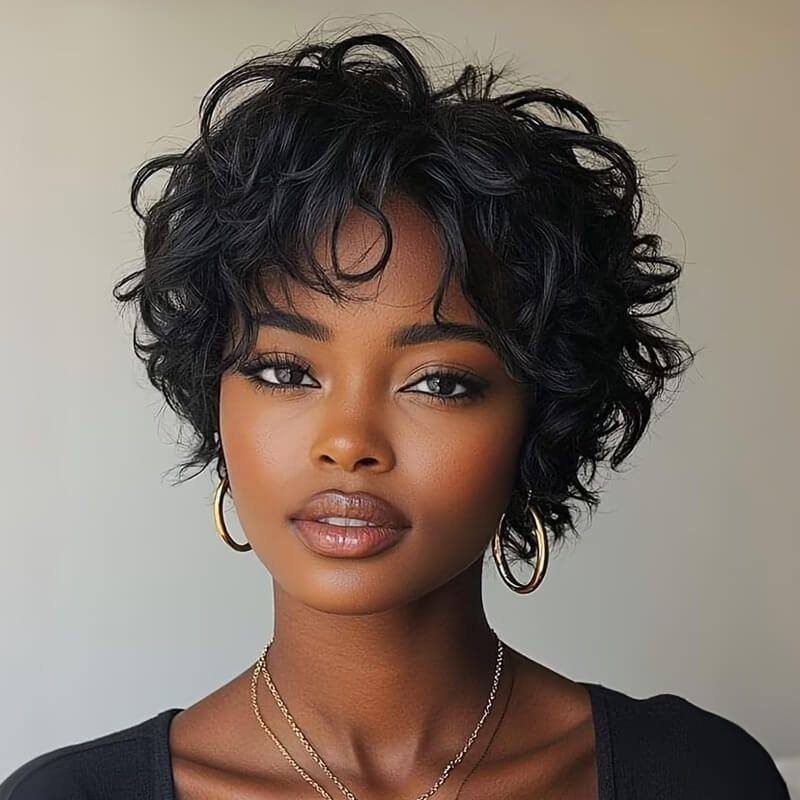
Feathered bangs soften the forehead without sitting heavy, and the curls that fall across it break up the line instead of creating one solid piece. The texture through the rest of the cut keeps the shape casual.
23. Curly Top Fade
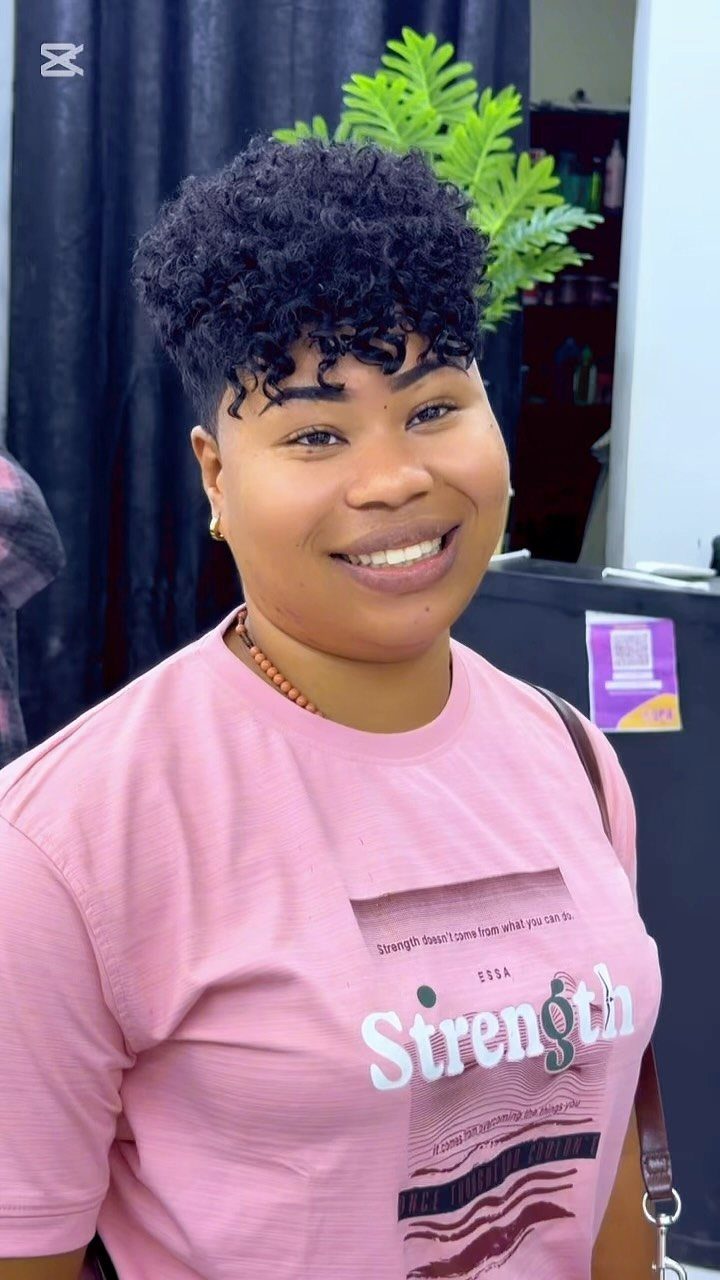
The fade keeps the sides and back close to the scalp while the curls on top hold all the volume. That contrast makes the curls look fuller than they would if the whole cut were one length.
A curl cream or light mousse on the top section defines the curls without adding weight to the faded parts.
24. Androgynous Crop
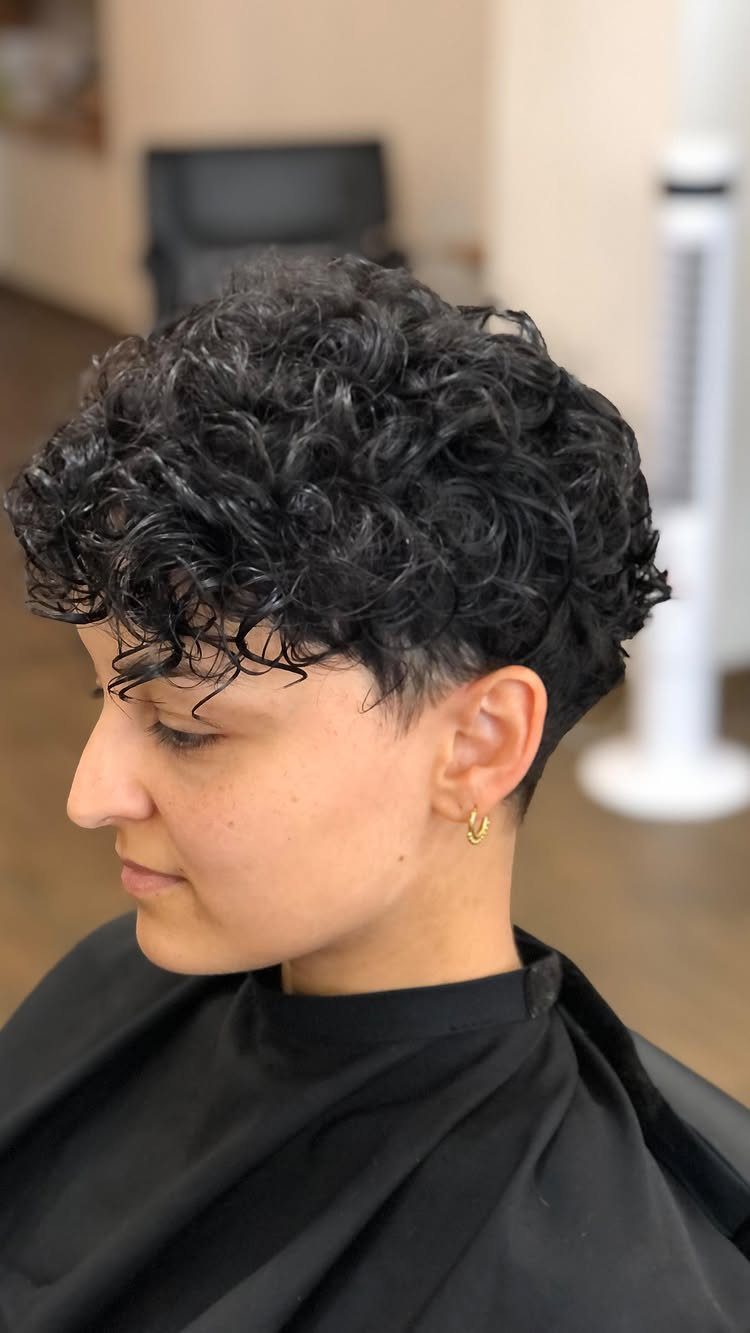
Cropping the sides close and keeping the curls dense on top removes any softness the cut might otherwise carry.
The shape holds best when the curls are tight and consistent.
If your curl pattern is loose, this cut can lose definition quickly.
25. Bright Curly Fringe
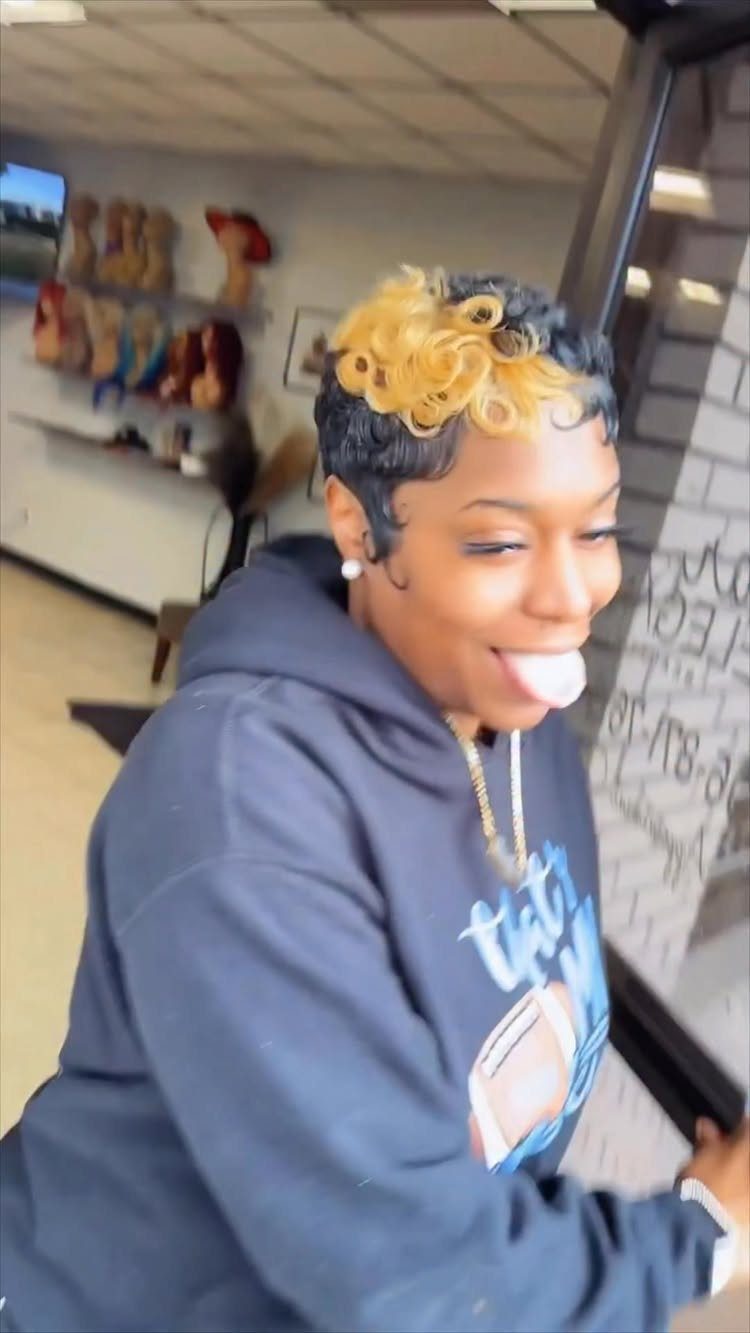
A vivid yellow-orange section across the front separates itself from the dark base and puts the color where it moves the most. The contrast makes the fringe the first thing you notice.
Bleach lifts the front section before the color goes on, and a semi-permanent dye keeps the tone bright without as much root commitment as permanent color would require.
The fringe fades to a lighter version of itself rather than disappearing completely.
This suits anyone who wants bold color in one place instead of all over.
26. Artistic Shaved Design
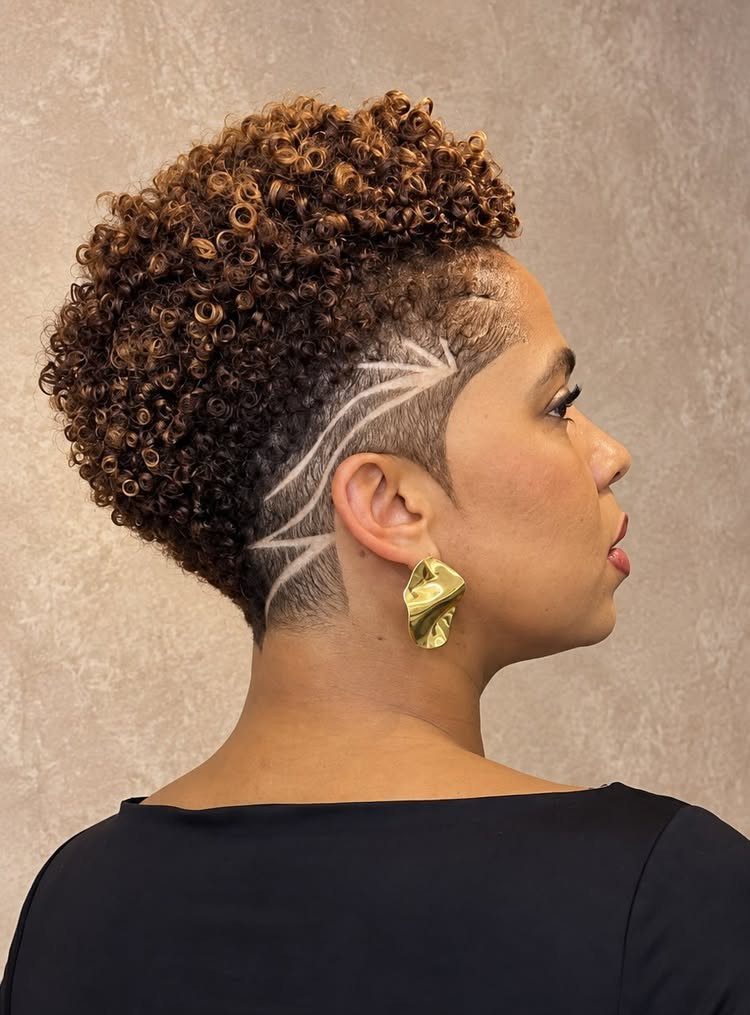
A white leaf pattern carved into closely shaved sides turns a functional undercut into something more deliberate. The design shows up best when the shaved section is fresh, so plan for regular clipper appointments.
The pattern fades as the hair grows, which means regular touch-ups or letting it grow out entirely. Temporary white hair color fills in the design if you want the contrast sharper than the shave alone gives you.
This works well if you already keep the sides short and want to add detail without changing the overall shape.
27. Copper Curly Pixie
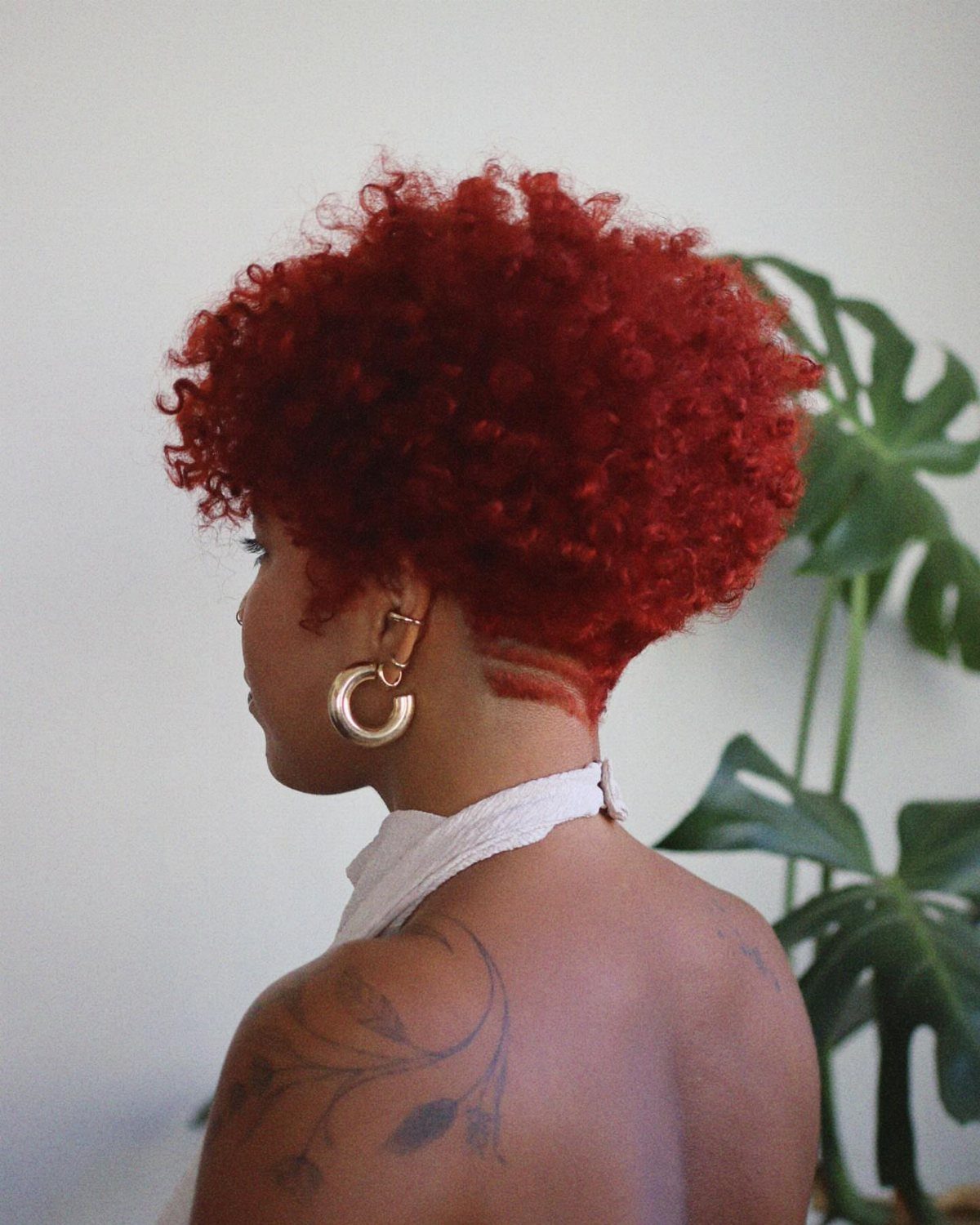
Bright red curls that sit full on top and taper to nothing at the nape give you volume where you see it and a clean line where you don’t.
The contrast between the two makes the curls look denser than they would if the whole cut were one length.
A diffuser on medium heat dries the curls without flattening them, and a curl cream smoothed through damp hair holds the shape. The tapered nape grows out quickly, so expect clippers every few weeks.
28. Silver Blonde Curls
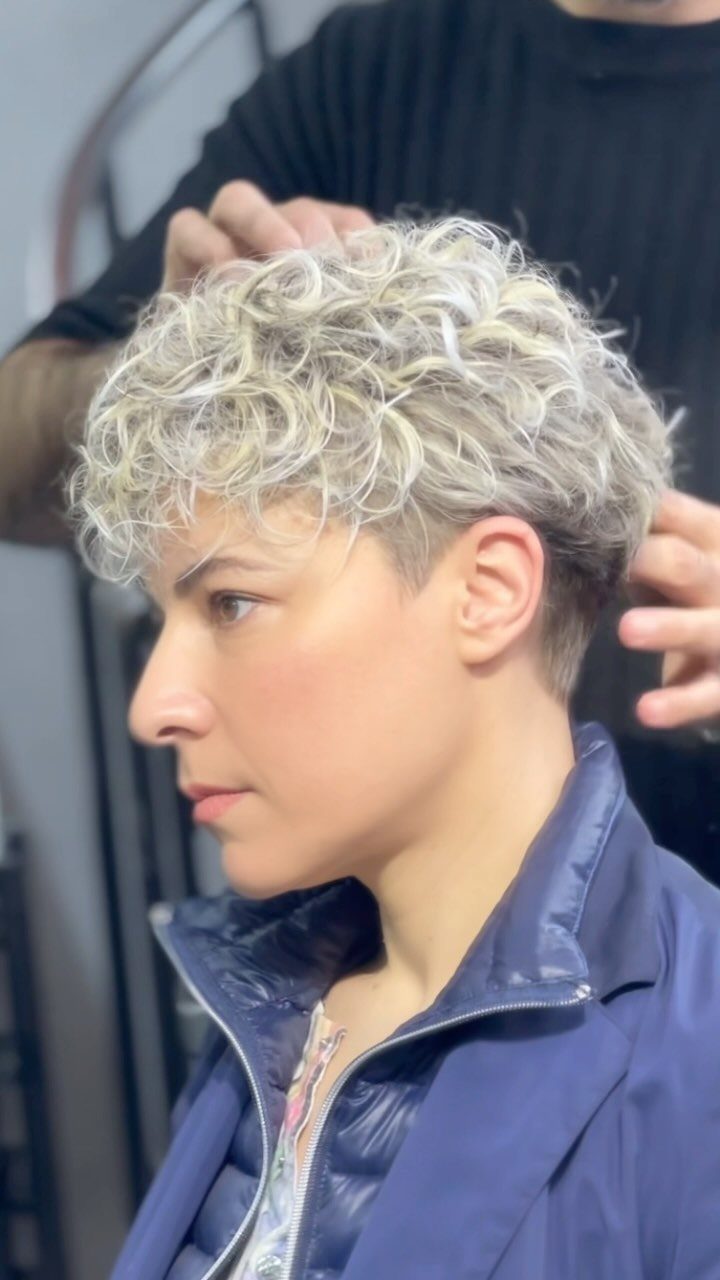
Dense silver-blonde curls over closely cropped sides put the texture on top and keep the shape clean at the edges.
This suits anyone with naturally light hair or hair that’s already been lightened, because lifting dark hair to silver takes multiple sessions.
29. Rounded Curly Pixie
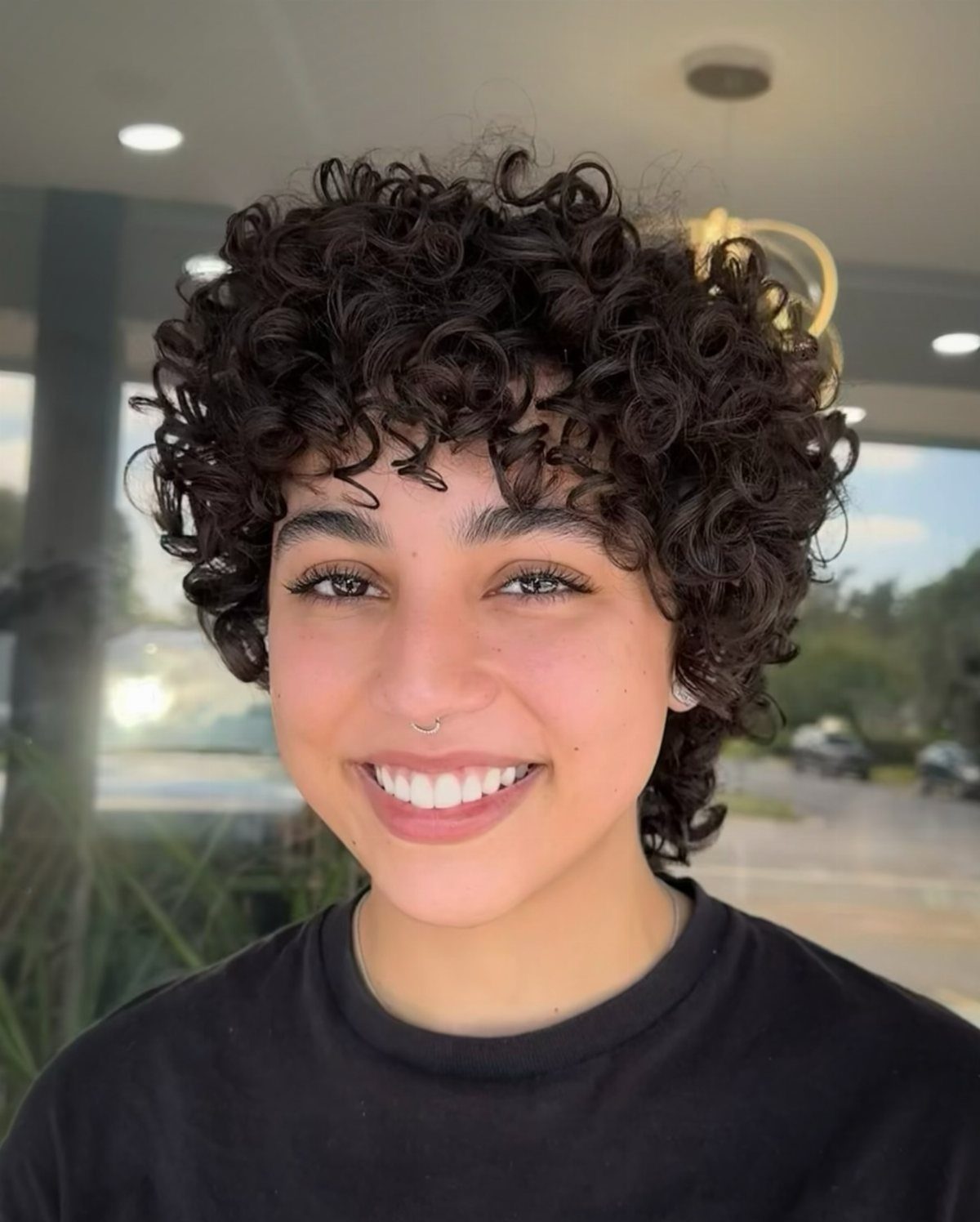
Tight curls cut to follow the shape of the head create an even, rounded silhouette that sits close without flattening.
The uniformity works best when the curl pattern is consistent all over, because mixed textures can read as uneven instead of smooth.
The shape holds without daily restyling, which makes this one of the lowest-maintenance options on the list.
30. Curly Pixie with Blonde Contrast
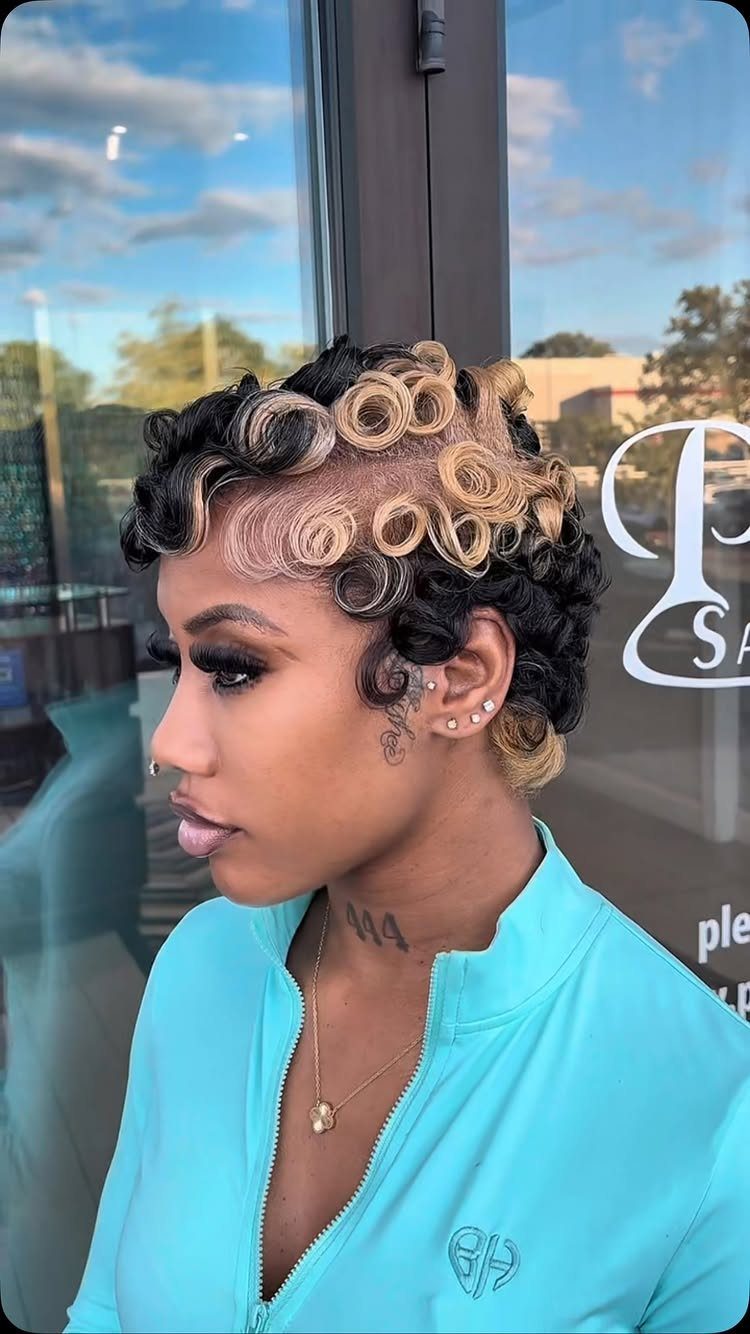
Blonde curls mixed into dark curls create a two-tone effect that shows up more on curly hair than it would on straight, because each curl catches light differently.
The contrast sits throughout the cut rather than concentrated in one section, so the color moves with the texture.
The blonde pieces need touch-ups as the roots grow, so plan for regular salon visits.
31. Copper Highlighted Pixie
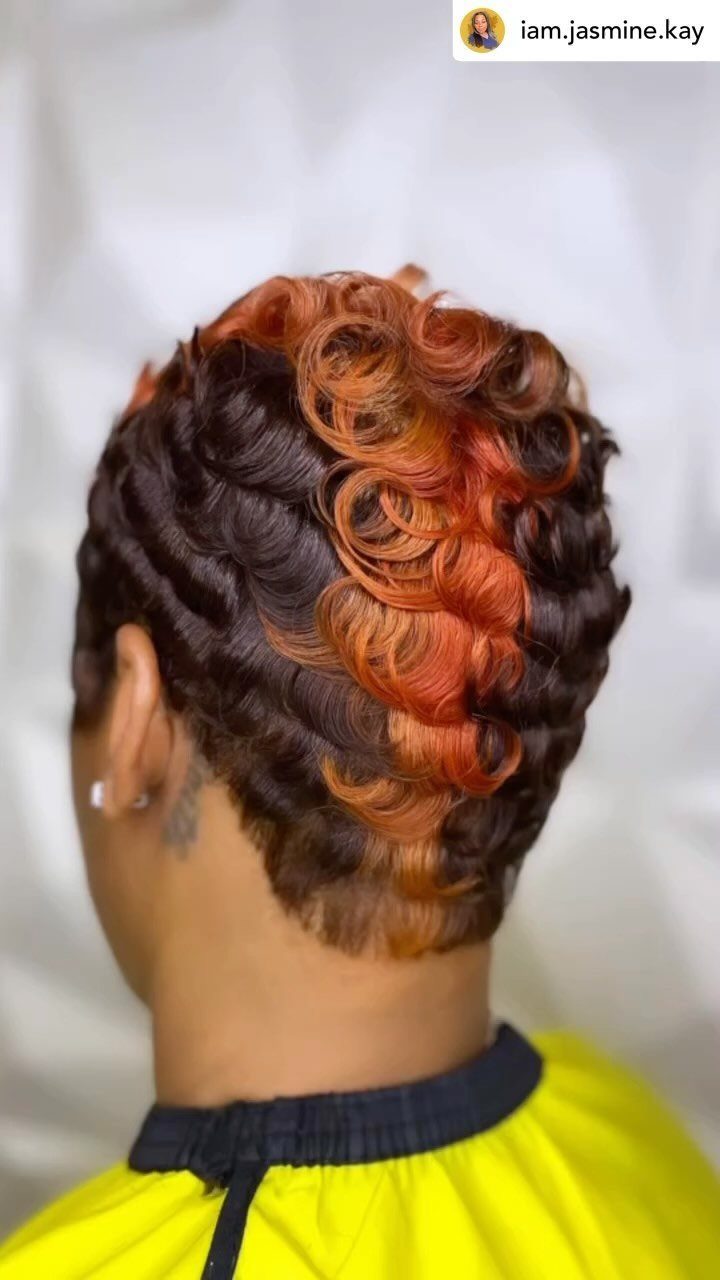
Copper-orange highlights placed through the back and sides warm up a dark base without covering it completely. The color sits where it moves most, so the contrast shows up as you turn your head.
The tapered nape keeps the back clean, and the copper adds dimension that a single color wouldn’t give you. The highlights need a lift session before the copper goes on, and the tone fades warm rather than dull.
You get the impact of color at the front and sides where it counts, and roots stay low-effort.
32. Mauve Highlighted Pixie
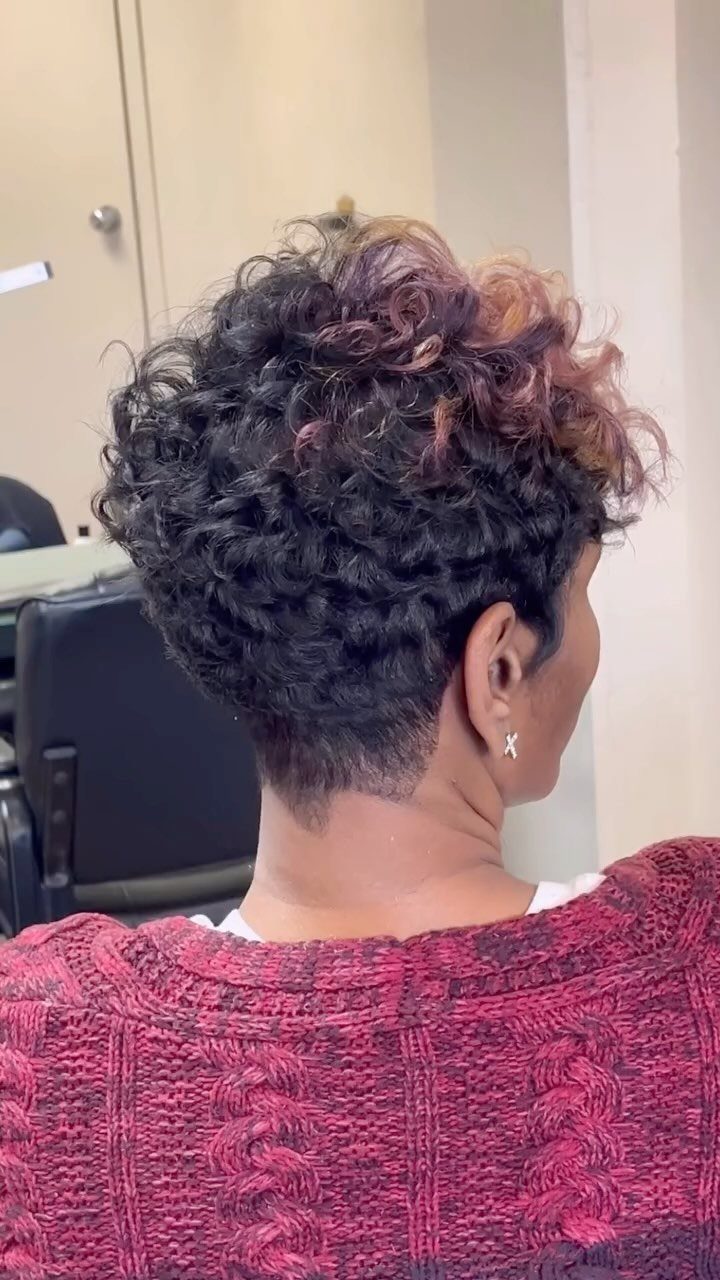
Mauve pieces scattered through the top layer soften dark curls without shifting the whole color. The highlights stay concentrated where they catch light, so the effect is subtle until you move.
The taper at the nape keeps the shape sharp, and the mauve fades to a softer lavender instead of turning muddy. Cool-toned highlights like this suit medium to deep skin tones particularly well because the contrast reads clearly.
Plan for toner touch-ups if you want the mauve to stay saturated.
33. Glossy Sculpted Waves
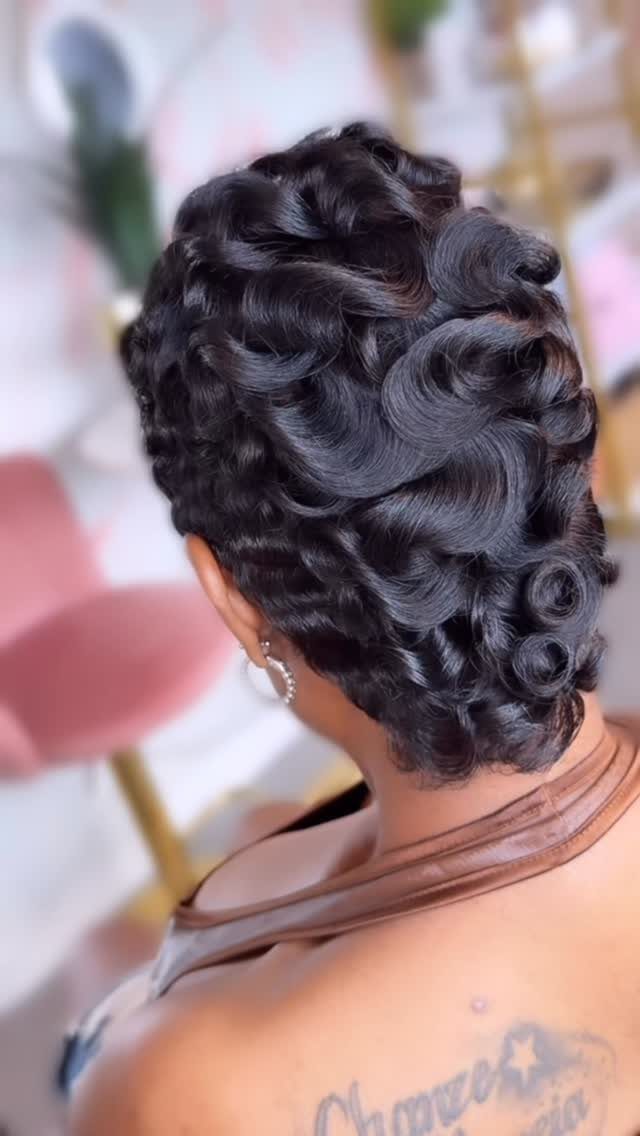
Styling short curls into defined waves instead of letting them dry naturally gives you a sleek finish that reads polished from every angle.
A curl cream smoothed through damp hair and then shaped with a small brush holds the pattern, and a finishing oil adds the gloss.
The waves sit close to the head, which flatters the back of the neck and keeps the shape from looking too soft. This takes more time than scrunching and diffusing, but the result holds longer and looks deliberate.
Choosing a Curl-aware Cut
On coils and tighter curl types, I cut dry or work from gently stretched hair so I can see the actual shape instead of guessing where it lands.
Avoid asking for heavy texturizing or thinning through the mid-lengths if your curls need consistent weight to form properly. Removing too much can disrupt the curl pattern and leave pieces that frizz instead of coiling.
A curly pixie holds more volume than a straight one cut to the same length, which means the shape moves and the silhouette reads fuller.
Varying the length from tapered sides to longer sections on top gives you room to work with that volume instead of fighting it.
Face Shape and Consultation
Crown volume offsets a narrower chin on heart-shaped faces, and soft bangs or side-swept layers pull attention to the eyes and cheekbones.
Longer layers at the top add vertical dimension to round faces, while keeping the sides tapered prevents the cut from widening.
Oval faces handle the most variation, from micro pixies to longer layered versions, and can carry fringe, asymmetry or added volume equally well.
Take in photos of pixies on textures like yours, and make sure you’ve got front, side and back angles so your stylist knows exactly what you’re after.
A curly-hair consultation gives you time to discuss how the cut can be tailored to your curl pattern and bone structure before any cutting starts.
Curl Styling and Upkeep
Sulfate-free shampoos clean without stripping moisture, which keeps curls from drying out between washes.
Sleeping on a satin or silk pillowcase cuts friction and keeps curls from matting overnight.
Frequently Asked Questions
Is pixie cut good for curly hair?
Curly hair works well in a pixie when the cut is shaped around your curl pattern. Short hair cuts down on styling time and drying time, and the weight comes off so curls spring higher.
A good stylist will cut curls dry or slightly stretched to avoid taking off more than you planned for once shrinkage happens.
What type of pixie cut would look best on a curly round face?
Longer layers at the top with height at the crown pull the eye upward instead of widening the face, and keeping the sides tapered or close avoids adding width where you don’t want it.
Asymmetric cuts also work because they break up the roundness with diagonal movement instead of mirroring it. Side-swept pieces draw attention across instead of down, which flatters a round face better than volume sitting evenly around the perimeter.
What are the trends for pixie cuts in 2026?
Texture and movement are showing up more than polished uniformity, with soft bends and curls styled to fall in different directions instead of one neat shape.
Long side bangs that sweep across the forehead are still in, and undercuts with fades continue to pair with fuller curls on top for contrast.
Curly pixies in general are being cut to highlight natural curl patterns rather than fighting them.
How does a curly pixie differ from a straight pixie cut?
A curly pixie needs shaping that accounts for shrinkage and curl pattern, so the stylist cuts with your natural texture in mind rather than treating it like straight hair that will sit where it’s cut.
Curly versions often look fuller and move more than straight pixies because the curls add dimension on their own. A dry cut lets the stylist see exactly how each section sits when the curl is fully formed.
What curl types work best with pixies?
Type 2 waves, Type 3 curls, and Type 4 coils all work when the cut is shaped for the specific pattern.
Looser waves need less precision and air-dry easily, while tighter curls benefit from dry cutting or gentle stretching before the trim to avoid cutting too much once shrinkage kicks in.
Tight coils hold angular shapes that look sharp with short sides, and cutting them needs a stylist who understands how to work with that texture without disrupting the pattern.
How do you style a curly pixie cut?
Apply a curl cream or mousse to damp hair, scrunch it in gently to encourage the curl pattern, and let it air-dry or diffuse on low heat.
Avoid over-manipulating the curls once they start to dry, because touching them too much breaks up the definition and adds frizz.
Products formulated for curls hold the shape without stiffness, and most curly pixies need less product than longer curly styles because there’s less hair to weigh down.
How often do you need to trim a curly pixie cut?
Plan on a trim every 6 to 12 weeks to keep the shape looking intentional, with shorter intervals if you have a fade or tapered nape that grows out quickly.
Avoid over-thinning during trims because curly hair needs some density to hold the curl pattern, and too much thinning can make the cut look sparse instead of full. Sleep on silk or satin to keep the shape from matting overnight.