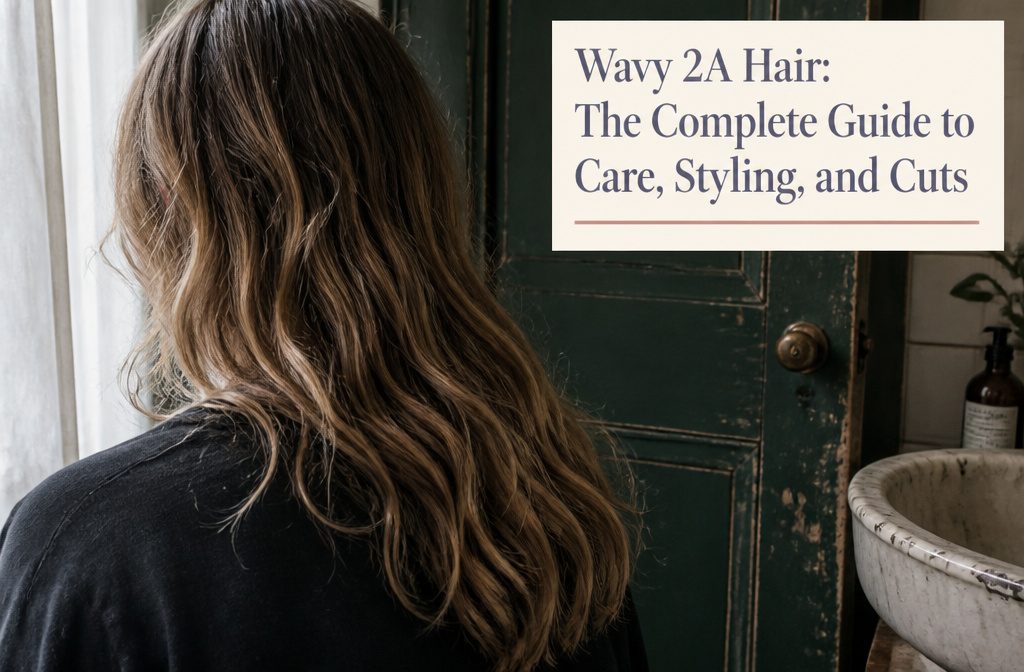
2A is the loosest wavy pattern on the Andre Walker scale: hair falls mostly straight for the first few inches, then bends into loose S-shaped waves from the mid-lengths down.
Fine strands flatten under heavy creams, oils and over-washing, so waves hold best with mousse or foam and washing just 2 to 3 times a week.
Spot 2A Hair
Spot 2A Hair
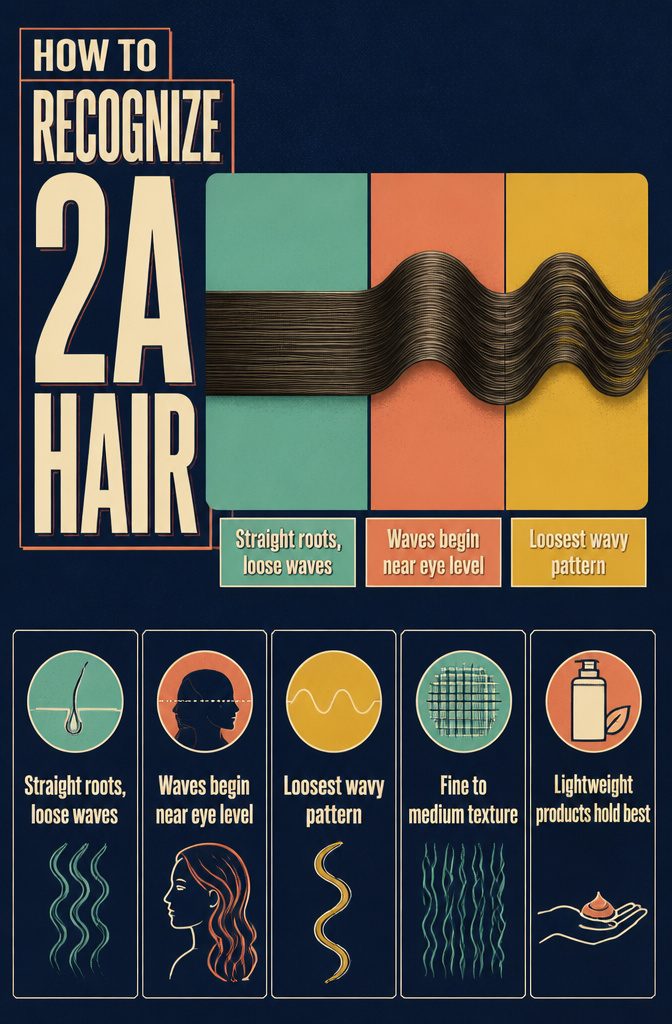
The detail that decides it sits at the roots: hair falls mostly straight for the first few inches, then forms loose S-shaped waves toward the mid-lengths or ends.
That straight-to-wavy progression is what separates 2A from truly straight hair, even when the waves are subtle enough that they get mistaken for it.
The Andre Walker system runs from 1A (pin-straight) through 4C (tightest coils). 2A is the loosest wavy pattern, sitting just past straight but well before defined curls.
Texture tends to be fine to medium, and the waves form large clumps that break apart easily as hair dries. Definition stays low, shrinkage from wet to dry is minimal, and roots go flat without help.
Mostly straight roots, with waves starting around eye level
That eye-level mark is where the bend typically shows up, though some 2A hair just flicks at the very ends.
A quick check: if your hair dries straight at the roots but bends toward the tips and holds a wave after scrunching or braiding while wet, you’re in 2A territory.
The pattern elongates through the day and struggles with heavy products, which is why lightweight styling becomes the difference between waves that hold and hair that goes limp.
What 2A Hair Struggles With
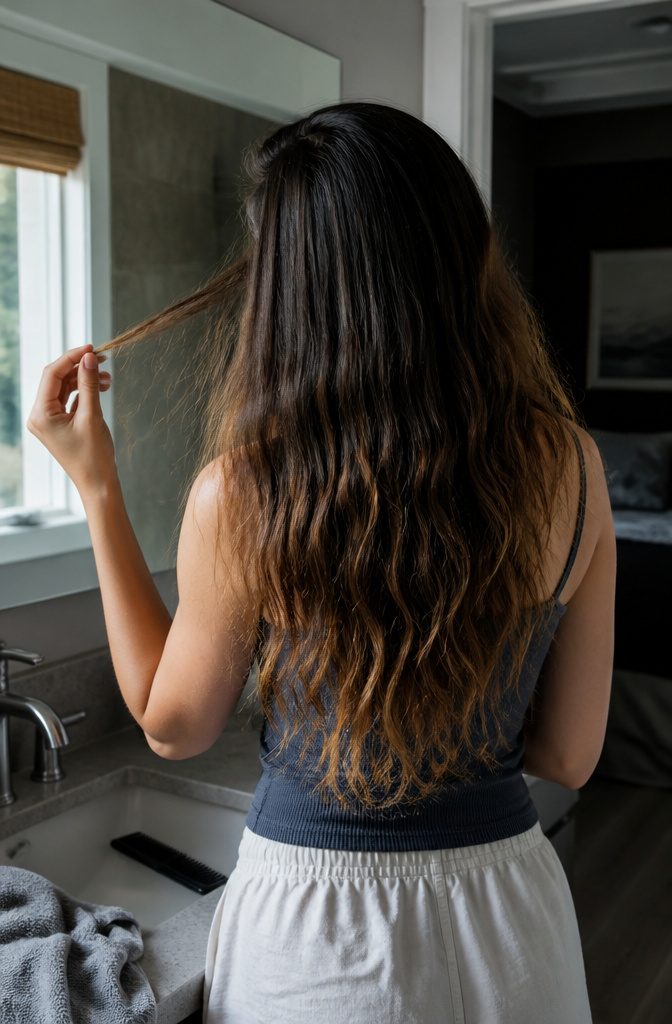
On 2A hair the bend sits mostly from the mid-lengths down, so roots fall flat and scalp oil struggles to travel past the waves.
That gives you oily roots over dry ends. Heavy creams and oils weigh fine strands down and straighten the wave, and I’d call them the biggest culprit, since buildup and limpness follow.
Over-washing strips the ends further. Heat and brushing add friction, which means frizz, tangles, split ends and breakage.
The pattern also varies from section to section, and air-drying with no product can look messy rather than tousled. Too much of anything, whether product, washing, heat or brushing, flattens a wave this delicate.
Wash and Condition Lightly
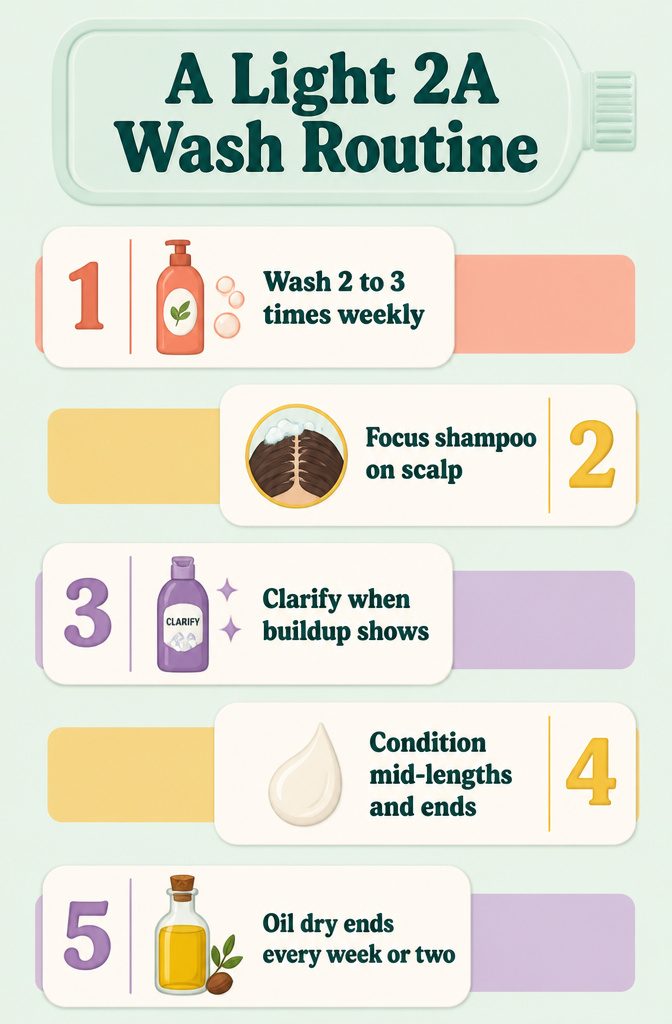
Wash 2A hair 2 to 3 times a week, leaning toward the higher end if your roots turn oily first. Over-washing dries hair out, while under-washing leaves roots greasy and flat.
Pick a sulfate-free, silicone-free shampoo and focus it on the scalp; the mid-lengths and ends are drier and need less. Switch to a clarifying shampoo when buildup shows.
Conditioner belongs only on mid-lengths and ends, a quarter-sized dollop or less if your hair is short. Pre-shampoo oiling every week or two, left on for 1 to 2 hours, is optional, and I’d keep it for dry ends.
Detangle Wet Hair
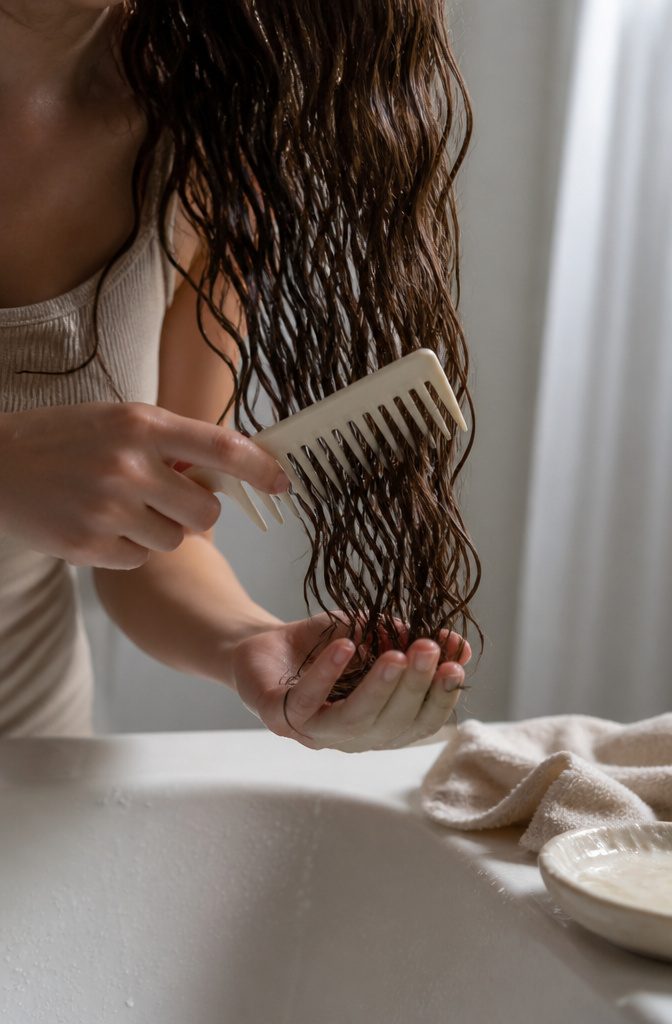
Fine 2A hair tangles easily, so detangle while the conditioner is still in. Start at the ends and work up toward the roots.
A wide-tooth comb is my pick because it clears knots without flattening the waves or adding frizz; fingers work too, and a detangling brush is fine on wet hair if you prefer one.
Save the vented ceramic brush for styling, where it adds volume and shapes the wave. A vented round brush spreads blow-dryer heat more evenly.
After rinsing, squeeze or scrunch out the water instead of rubbing with a terrycloth towel, which roughs up the cuticle and tangles the strands.
Lightweight Styling Products
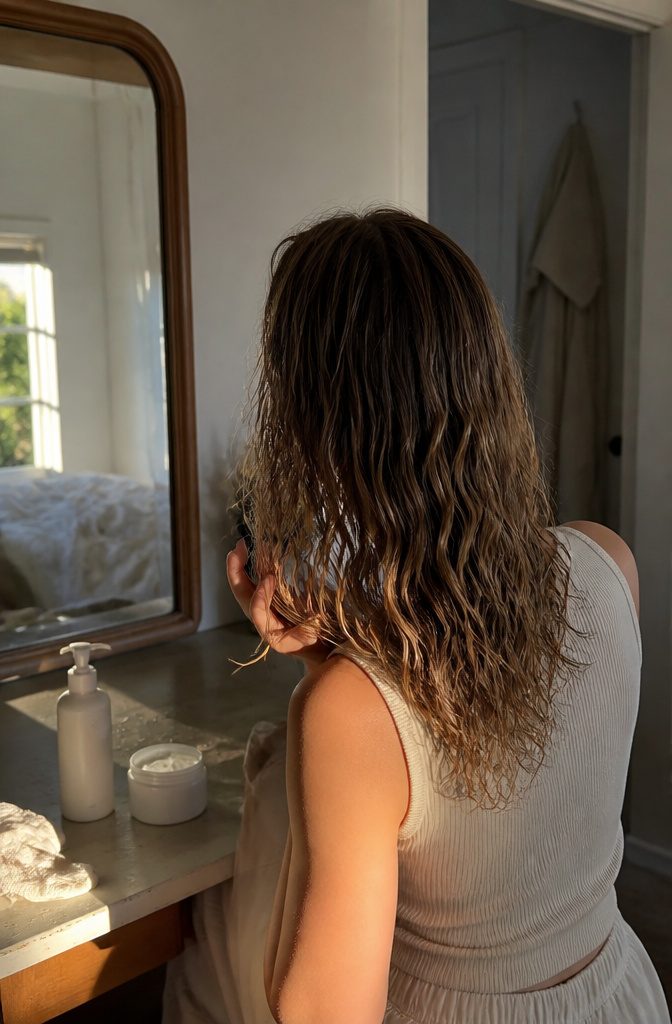
Mousse, foam, light gel, curl-defining products, texturizers and light creams all suit 2A. I’d start with mousse or foam, since they add lift instead of weight.
Apply whichever you pick to damp hair, not dripping, while the waves are still soft and moldable. Then scrunch or rope the product through so the wet wave clumps stay together instead of breaking apart.
Heavy creams, butters, oils and thick gels weigh 2A waves down, and the result is flatness and buildup.
Small amounts win, and I’d layer only a few products at a time. A few drops of oil and a lightweight conditioner are the ceiling for richness.
Dry and Set the Waves
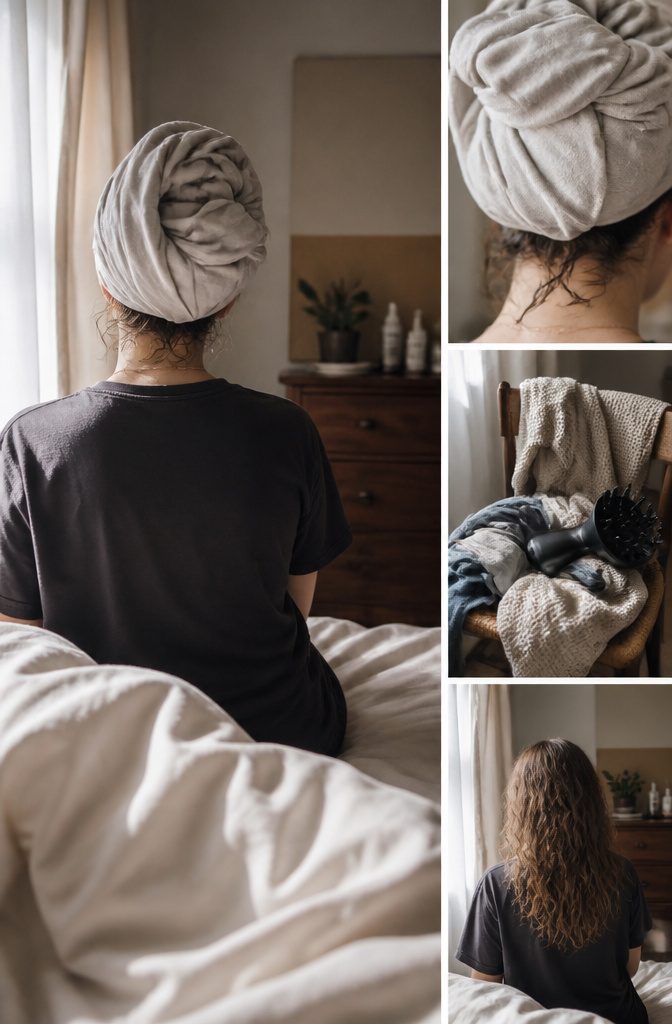
Air-drying is my default for 2A, since the waves are delicate enough that high speed or high heat breaks them up.
Skip the rubbing too, because a terrycloth towel stretches and tangles wet hair. Scrunch out the excess water first, then plop in a cotton T-shirt or microfiber towel for 10–20 minutes, with products already applied so frizz stays down.
When time is short, diffuse on low heat and low speed over a heat protectant, and finish with a cool shot to set the shape.
Keep scrunching upward while the hair is wet or damp, because that gentle squeeze coaxes the wave out. Once it’s dry, leave the brush alone.
Refresh and Protect Overnight
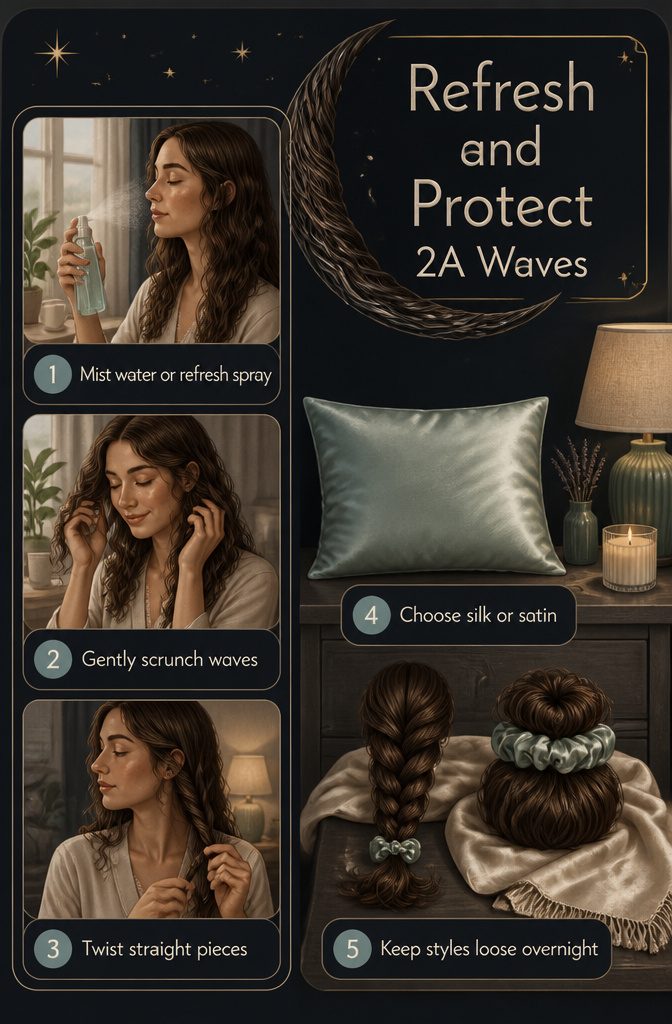
Day-two waves rarely need a rewash.
A light mist of water or a wave-refresh spray, then a gentle scrunch, brings the pattern back, and a twist around any pieces that have gone straight finishes the job. Wavy hair needs a reminder, not a reset.
Overnight is where the wave gets flattened. Cotton pillowcases pull moisture out of the strands and tug at them as you toss.
A silk or satin pillowcase fixes that, and a satin scarf works if you move a lot. With longer hair, I’d use a mini-pineapple or a loose braid, kept loose so it doesn’t crimp the bends.
Cuts and Styling Alternatives
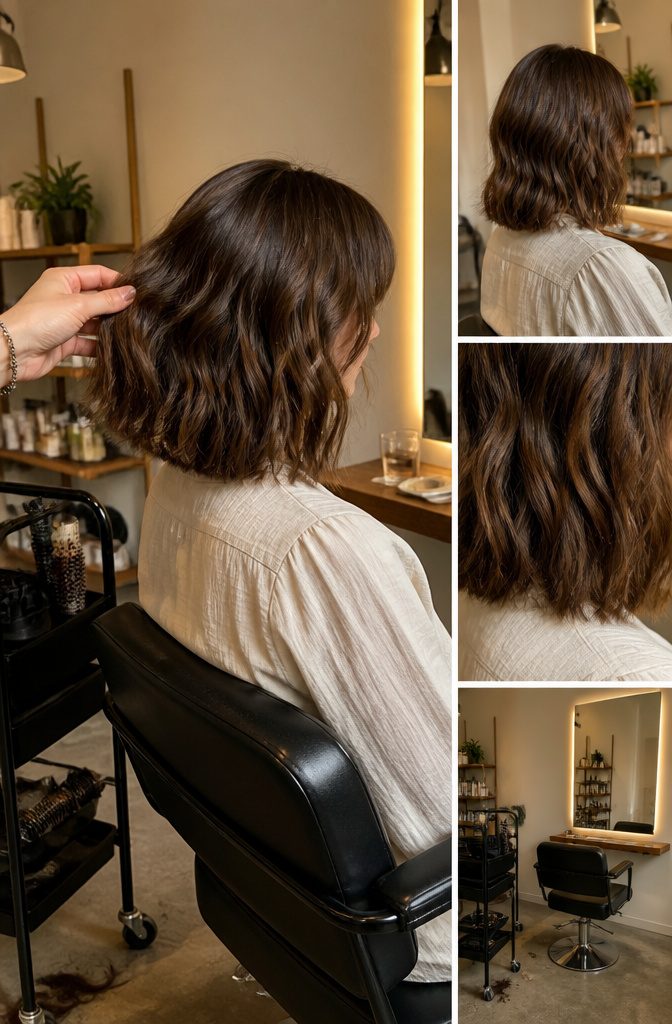
Long layers or a shag add movement where fine 2A hair tends to fall flat, and curtain bangs soften the face.
A blunt shoulder-length cut or blunt lob shows off the waves and cuts frizz; on fine hair I’d pick it over heavy layering. A deep side part gives the roots instant lift.
Overnight braids on damp hair add wave without heat: the tighter the braids, the wavier the result. A 1.5-inch curling iron adds bounce, but it needs a heat protectant, and round-brush blowouts and straighteners carry the same heat risk.
Keep a diffuser on its lowest setting. A soft perm is the only chemical option, and worth considering only with a stylist who knows wave patterns.
2A Versus 1C and 2B
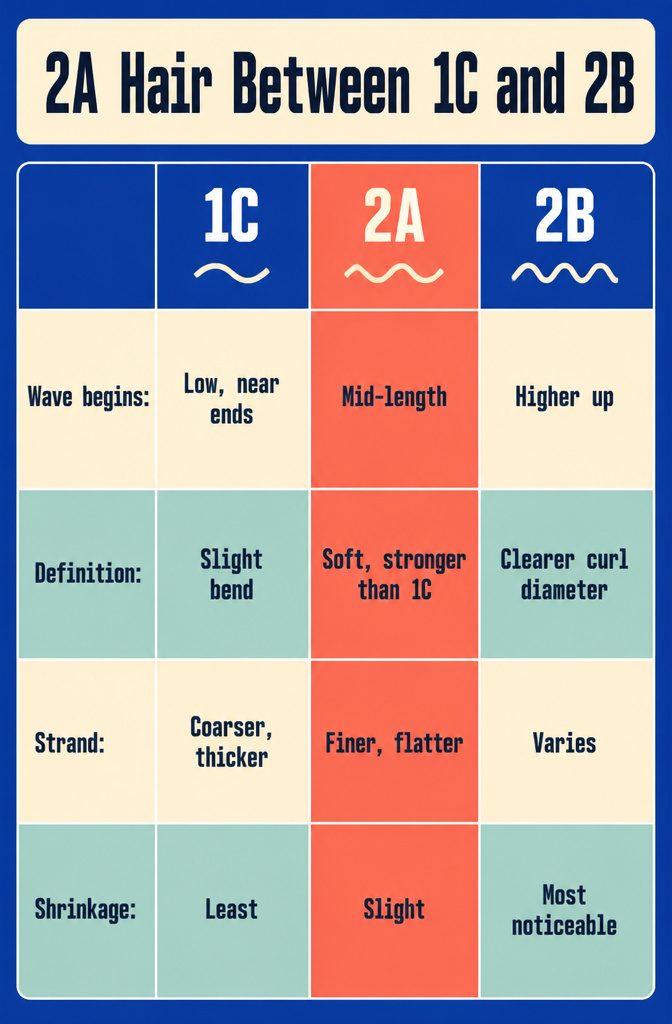
Where the wave begins is the quickest tell. On 1C it starts low, near the ends.
On 2B it starts higher, closer to the roots. 2A sits between, and the labels are descriptive markers rather than a measured curl diameter, so treat them as guides, not hard lines.
| 1C | 2A | 2B | |
|---|---|---|---|
| Wave begins | Low, near the ends | Mid-length | Higher up |
| Definition | Slight bend | Soft, but stronger than 1C | Clearer, with better curl diameter |
| Strand | Coarser, thicker | Finer, flatter | Varies |
| Shrinkage | Least | Slight | Most noticeable |
If your hair has fine, flat strands with a wave stronger than 1C, I’d call it 2A, even when the ends look straighter than the rest.
Fix Flat Roots
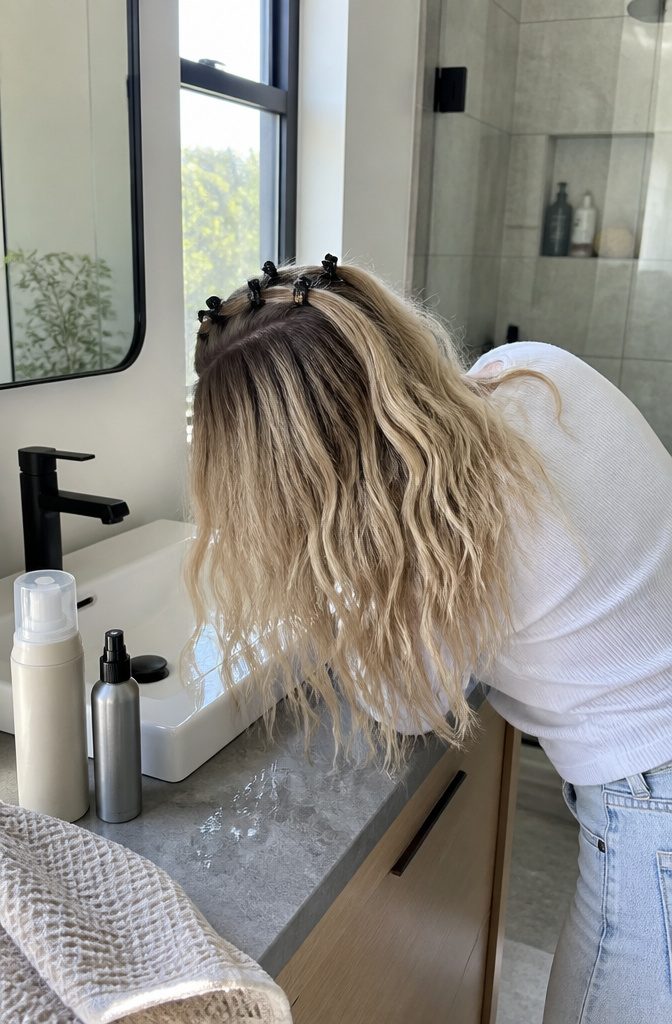
2A roots start nearly straight, so they collapse first. A water-based mousse worked through the roots gives lift, and a texturizing spray adds grip without weight.
Apply either to damp hair, then flip your head upside down to dry, or pin the roots up with clips while the hair air dries or diffuses.
A side part also helps by breaking up the flat line along the scalp. Layers add movement, though I’d keep them long, since cutting too short can remove the wave entirely.
Oil is the other culprit.
Clarify regularly and wash 2 to 3 times a week, scrubbing the scalp rather than the lengths. Between washes, dry shampoo keeps roots from going limp.
Frizz and Dry Ends
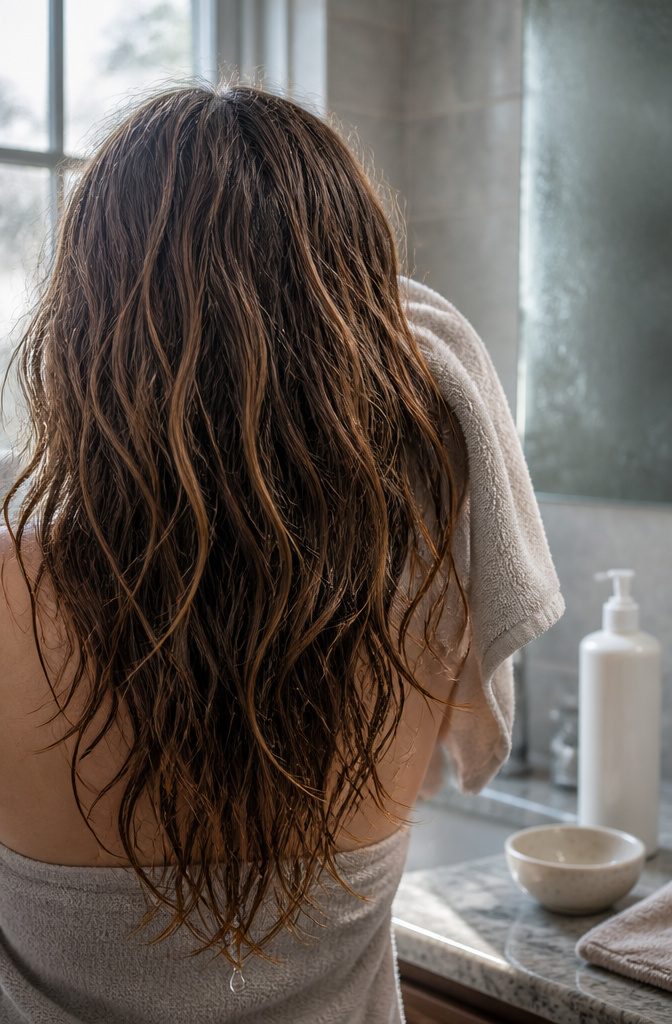
Frizz in 2A waves starts at the cuticle.
When it sits open, moisture escapes, and humidity, rough towel drying, or too little or too much moisture makes it worse. Fine waves need hydration, but the light kind: a rinse-out conditioner concentrated on the ends, then a lightweight leave-in.
Finish the shower with a cold rinse to close the cuticle and seal everything in. Blot with a soft towel rather than rubbing.
For ingredients, I look for coconut oil, ginger root extract, glycerin, and vitamin E, which add moisture without weight. Rich butters and heavy oils go the other way; they flatten 2A waves fast.
Porosity and Density
Curl pattern describes the shape of the wave, not what to put on it. I’d choose products by porosity, density, texture, and scalp moisture, because two people with 2A hair can need very different things.
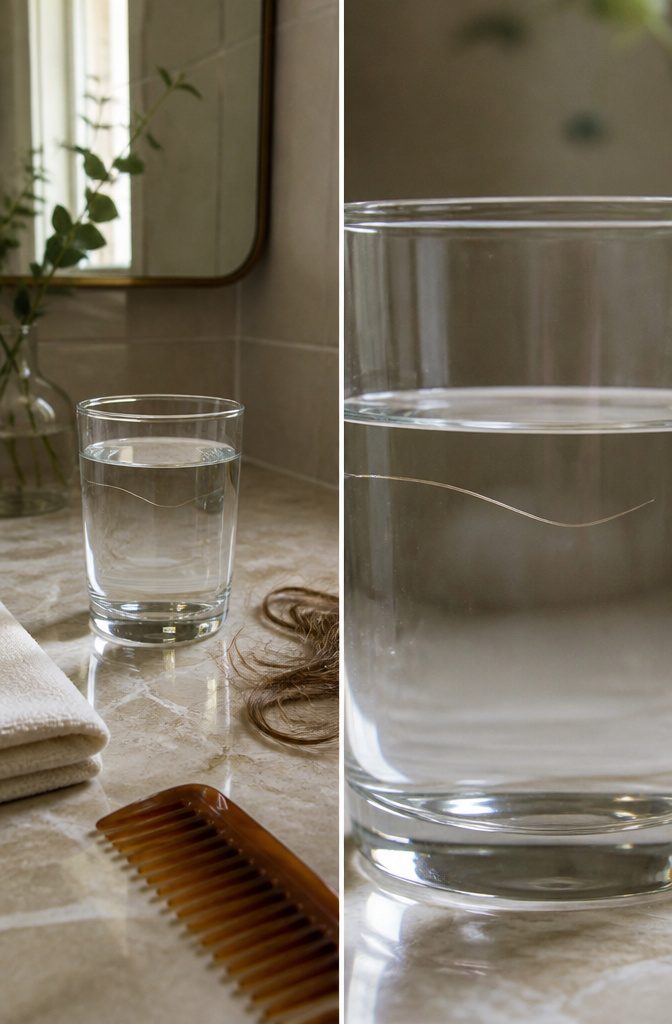
Porosity is how well a strand absorbs and holds moisture. High-porosity hair takes water in easily but struggles to keep it, while low-porosity hair resists absorbing it.
Wavy hair tends to fall in the medium-to-high range. To test yours, drop a clean strand into a cup of water: a strand that sinks is high porosity, and one that floats is low.
Check your scalp too.
A dry scalp can mean brittle hair, and an oily one brings greasiness and dandruff. Oily roots with dry ends are common in type 2.
Product Names and Prices
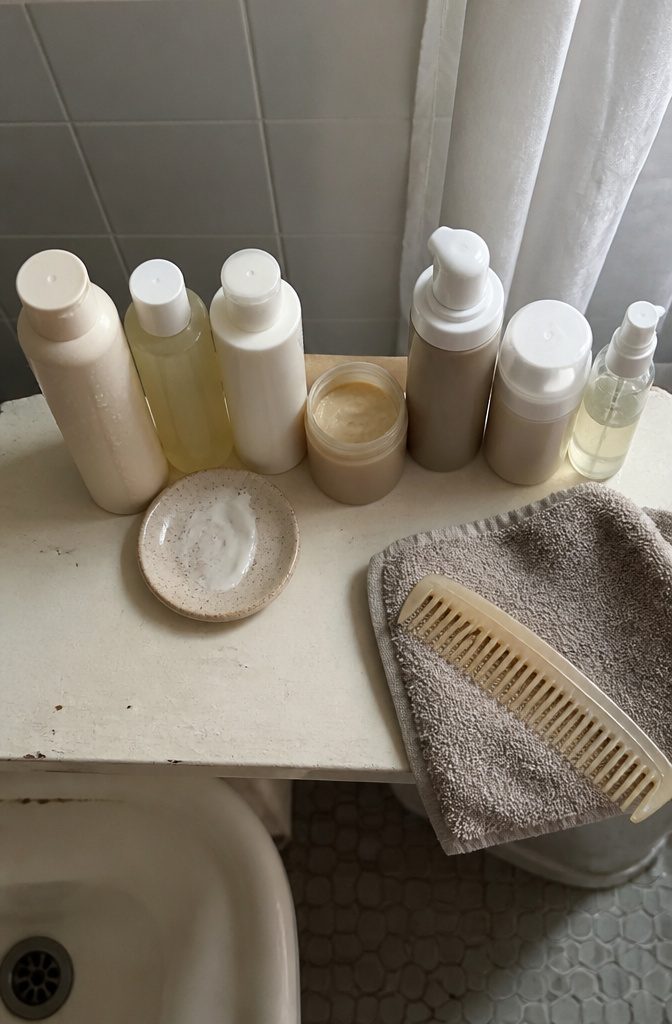
Here is what each product does, in the order I’d use them.
- Curlsmith Core Strength Shampoo adds protein, and Wash & Scrub Detox Shampoo clarifies. Alternate them each wash day.
- TWIST Hit Reset Light Clarifying Shampoo removes buildup without stripping. Weather or Not Element-Defying Conditioner costs $45.00.
- Curlsmith Multi-Tasking Conditioner doubles as a deep treatment if left on up to 30 minutes.
- Mielle Organics Babassu & Mint Deep Conditioner has a little protein for curl retention.
- Curlsmith Full Body Thickening Lotion and Bouncy Strength Volume Foam build body. Effortless Waves is light hold, Shine Gel is firm hold, and Flawless Finish Spray adds hold without weight.
- Cantu Moisturizing Curl Activator Cream, Kerotin Volumizing Mousse & Root Volumizer, EVOLVh SuperCurl Defining Cream and Curlsmith Bond Curl Rehab Salve fill out the rest.
I’d buy Hit Reset first, then the Mielle conditioner at $12.97, the cheapest priced pick here.
Frequently Asked Questions
How can I tell if I have 2A hair?
Look at where the bend starts. 2A hair falls mostly straight for the first few inches, then forms loose S-shaped waves toward the mid-lengths or ends.
It dries straight at the roots, bends toward the tips, and holds a wave after you scrunch or braid it while wet. Low definition, little shrinkage and flat roots are other signs.
Do I have 1C or 2A hair?
If your strands are fine and flat and the wave is stronger than 1C, you have 2A, even when the ends look straighter than the rest.
1C is straighter, coarser and thicker, with the bend starting low near the ends. The two look nearly identical, so texture is the best tiebreaker.
What are the best products for 2A hair?
Go lightweight. Mousse or foam is the best starting point, followed by light gel, curl-defining products, texturizers or light creams, all applied to damp hair.
Heavy creams, butters, oils and thick gels flatten the wave and build up. A lightweight conditioner and a few drops of oil are as rich as it should get.
How can I make 2A hair wavier?
Use curl-defining, volumizing or texturizing products on damp hair, then scrunch upward while it’s still wet.
Diffusing on low heat and low speed over a heat protectant helps set the shape, and a finishing spray adds hold. For a no-heat option, braid damp hair overnight: the tighter the braids, the wavier the result.
Is curl cream good for 2A hair?
Yes, as long as it’s a light one.
Work it through damp hair, scrunch, and let it air-dry or diffuse. Heavy creams weigh 2A waves down, so use a small amount.
Is SheaMoisture good for 2A hair?
Because rich butters can flatten fine 2A waves, apply it sparingly and mostly to the ends, and stop if your hair goes limp.
How often should I wash 2A hair?
Wash 2 to 3 times a week, going toward the higher end if your roots get oily first.
Put shampoo on the scalp and conditioner on the mid-lengths and ends. Washing more often strips the ends, and washing less leaves roots greasy and flat.
Can I use heat tools on 2A hair?
Yes, but sparingly.
Air-drying is the gentler default; when you need speed, diffuse on low heat and low speed over a heat protectant and finish with a cool shot. Curling irons, straighteners and round-brush blowouts all need a heat protectant too.
What is a good routine for 2A hair?
Wash 2 to 3 times a week with a sulfate-free shampoo on the scalp, and condition only the mid-lengths and ends.
Detangle with a wide-tooth comb while the conditioner is in, then squeeze out water instead of rubbing. Apply mousse or foam to damp hair, scrunch, and air-dry or diffuse on low.
What is an easy refresh routine for 2A waves?
Mist the hair with water or a wave-refresh spray, scrunch gently, and twist any pieces that have gone straight.
Day-two waves rarely need a full rewash. A silk or satin pillowcase at night keeps the pattern from flattening.
What are the best hairstyles for women with 2A hair?
Long layers, a shag, a blunt shoulder-length cut or lob, and curtain bangs all work.
Mid-length to long hair lets the waves flow, and on fine hair a blunt lob shows the pattern and cuts frizz better than heavy layering. A deep side part adds instant lift at the roots.
Are layers flattering on wavy 2A hair?
Yes.
Long layers add movement where fine 2A hair tends to fall flat. Keep them long, since cutting too short can remove the wave entirely.
What are the best hairstyles for men with wavy hair?
A textured crop, a loose quiff or a messy medium-length flow all suit wavy hair. Keep the cut relaxed so the waves add natural shape instead of being forced into place.
Can I perm wavy hair?
Yes, a soft perm is the only chemical option for 2A hair. It’s worth considering only with a stylist who knows wave patterns.
Is 2C hair wavy?
Yes, 2C is wavy, and it’s more defined than 2A. It can look close to curls, and the line between 2C and 3A is thin enough that many people with 3A hair call it wavy.