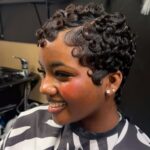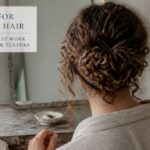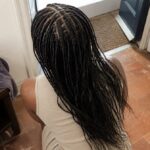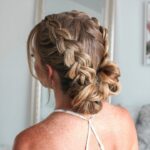
Braids range from a side braid or crown braid you can pin up alone at home to salon styles like micro braids, where every plait is tiny and the appointment runs long.
Some of these you can do yourself at home, others need a stylist who knows the pattern, especially styles like Pop Smoke braids or Fulani braids where the front section sets the whole look.
Medium-sized knotless braids put less strain on fine hair and won’t pull as hard at the scalp.
1. French Braid
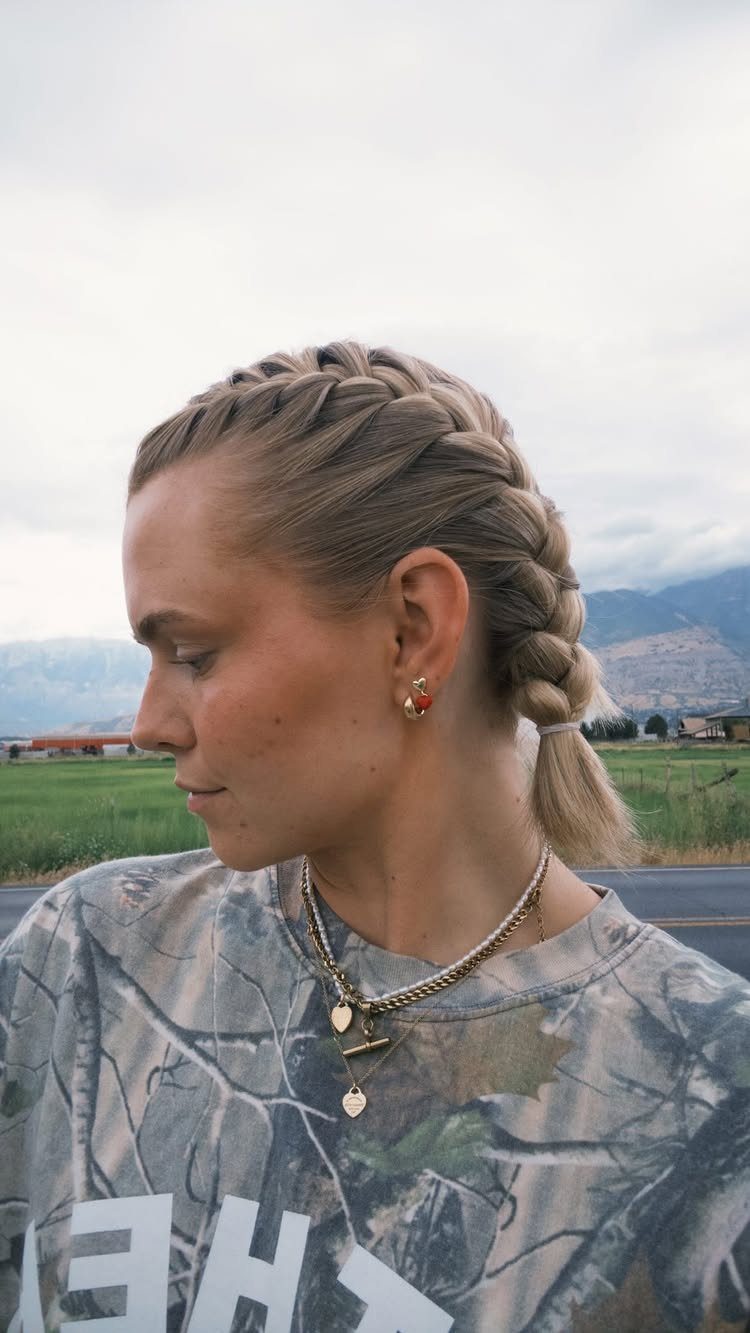
A French braid starts at the hairline and picks up a little more hair with each crossing, so the finished braid sits flat against the head instead of hanging off it.
I like that it carries straight into a low ponytail, as it does here. The braid keeps the top neat while the length stays loose below.
2. Box Braids
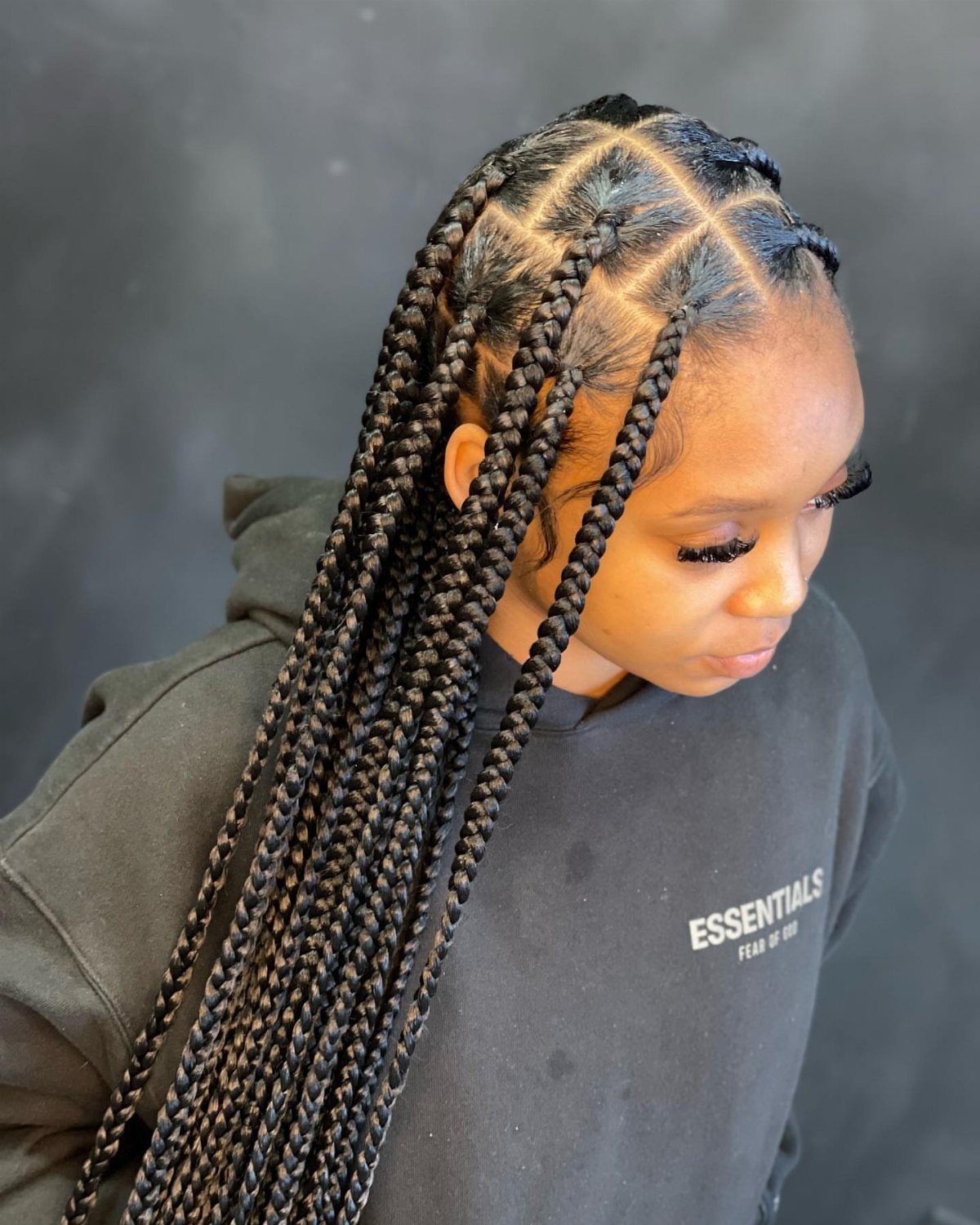
Square partings give box braids their name. Each braid grows from its own separate section, and the grid of squares on the scalp is part of the style.
Length shifts the look completely. Worn long, as here, they swing and drape over the shoulder, and I would ask a stylist for clean, even squares because the parting work shows more than anything else.
3. French Curl Braids
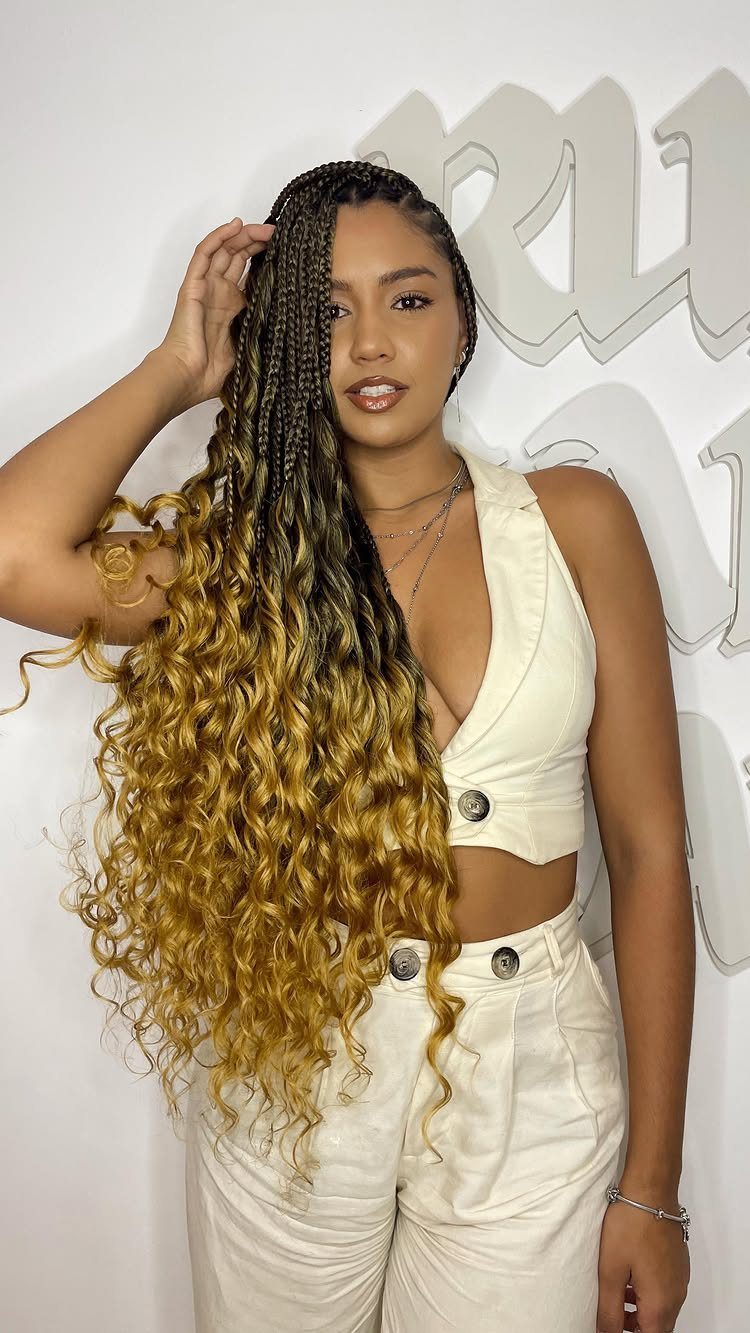
Loose curls at the ends turn a standard box braid into French curl braids. The braided length stays sleek, then the style softens into movement at the bottom.
Color is an easy place to play, since a contrasting shade on the curls stands out against dark braids. I’d choose this over plain box braids when you’re after movement.
4. Fishtail Braid
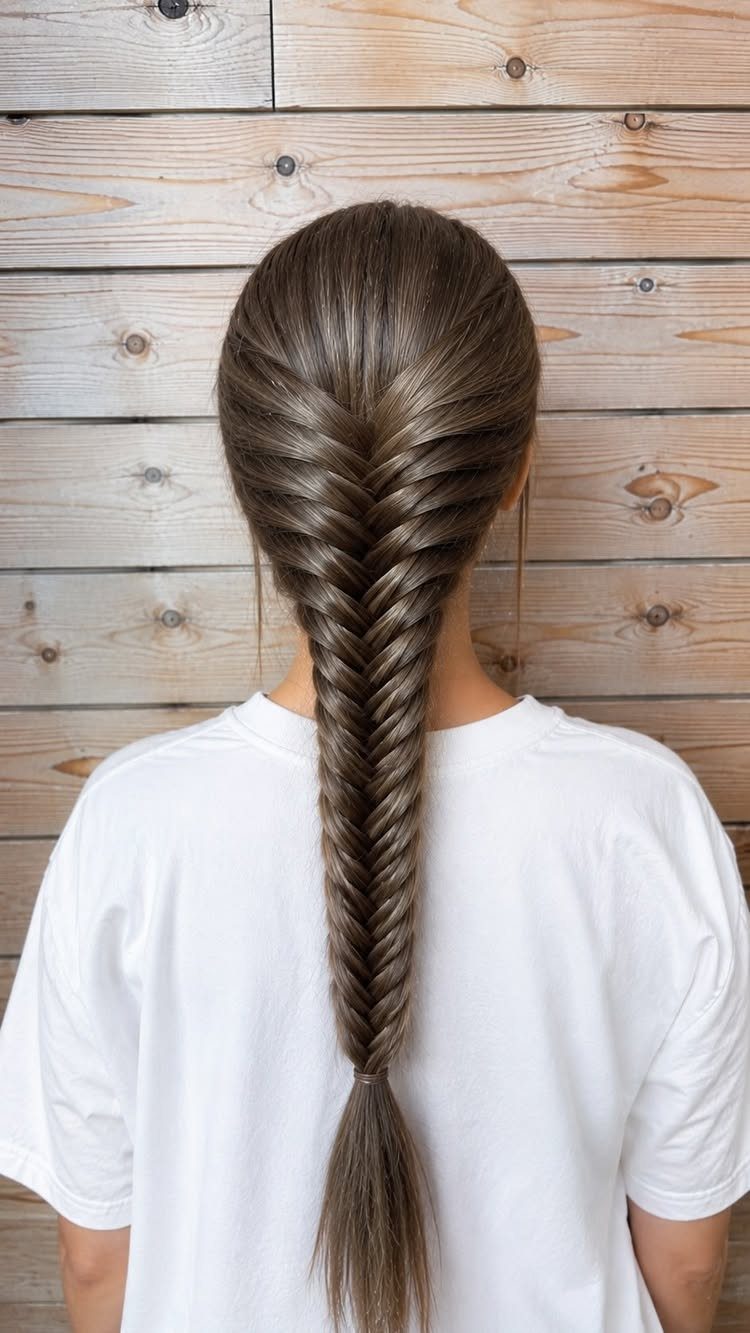
Despite the intricate look, a fishtail uses only 2 sections.
Small pieces give the tighter, more detailed pattern. Keep them thin, and the braid reads as a row of tiny interlocking Vs down the back.
5. Goddess Braids
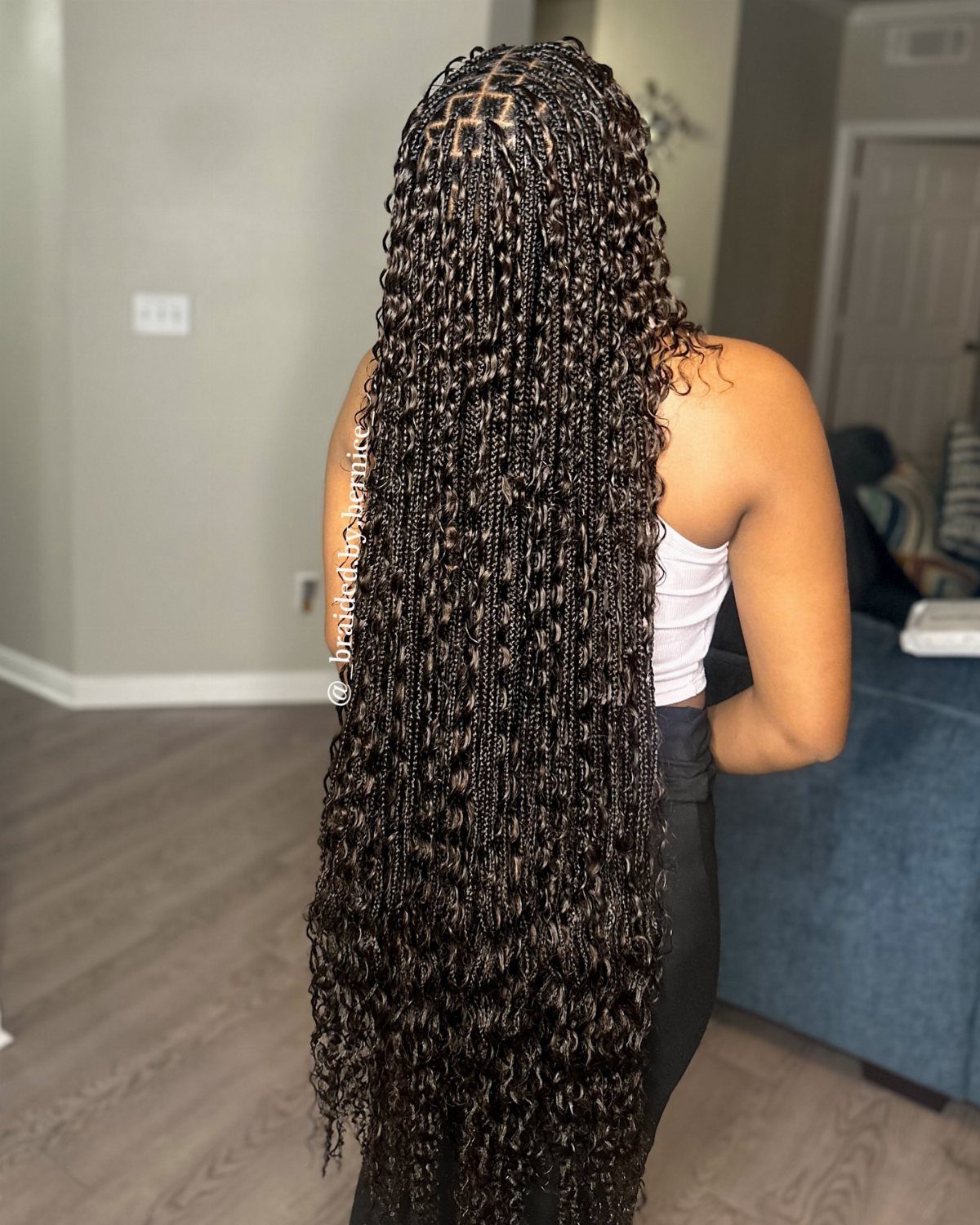
Braids with soft curls or waves running alongside them, or finishing the ends, make up goddess braids. You get the structure of a braid and the texture of loose hair in one look.
Bring the photo to your stylist and point to where you want the curl to begin.
6. Fulani Braids
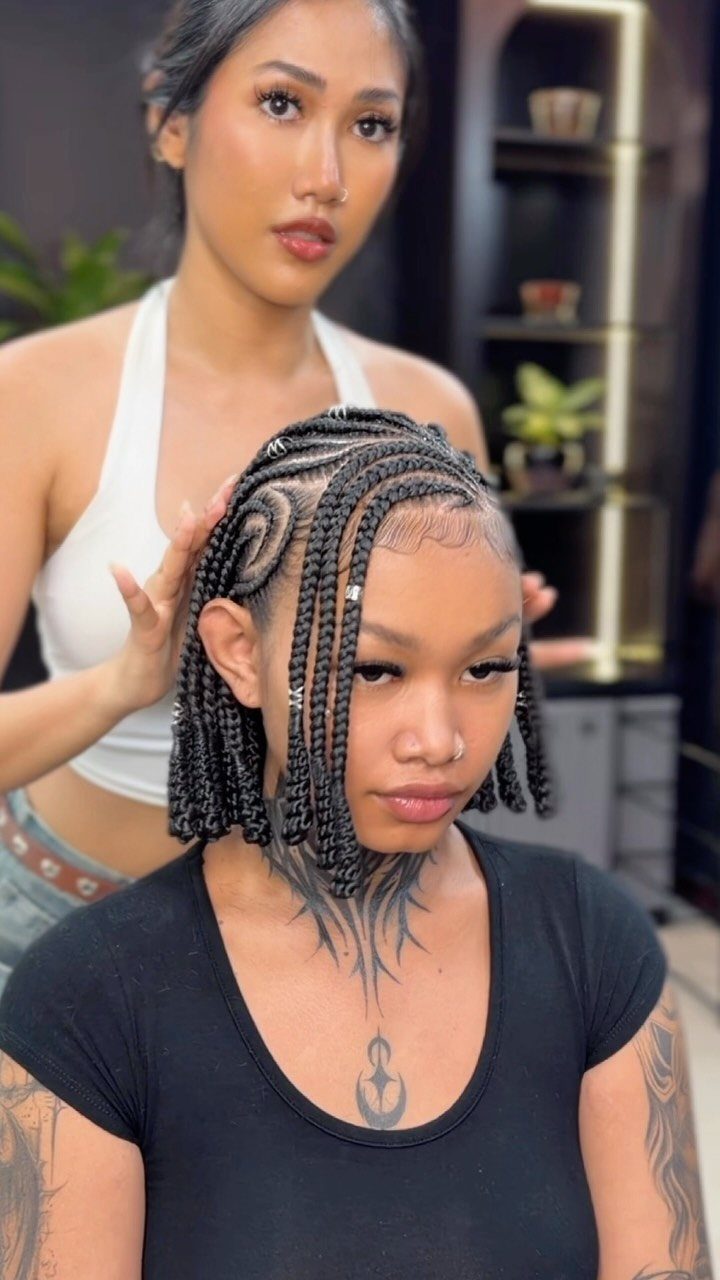
2 braid styles meet in Fulani braids: cornrows run along the hairline and crown, individual braids fall down the back and sides.
The scalp braids can curve, as they do here, which gives the front its shape. Ask for the front pattern by name or with a photo, since that part sets the whole look.
7. Knotless Braids
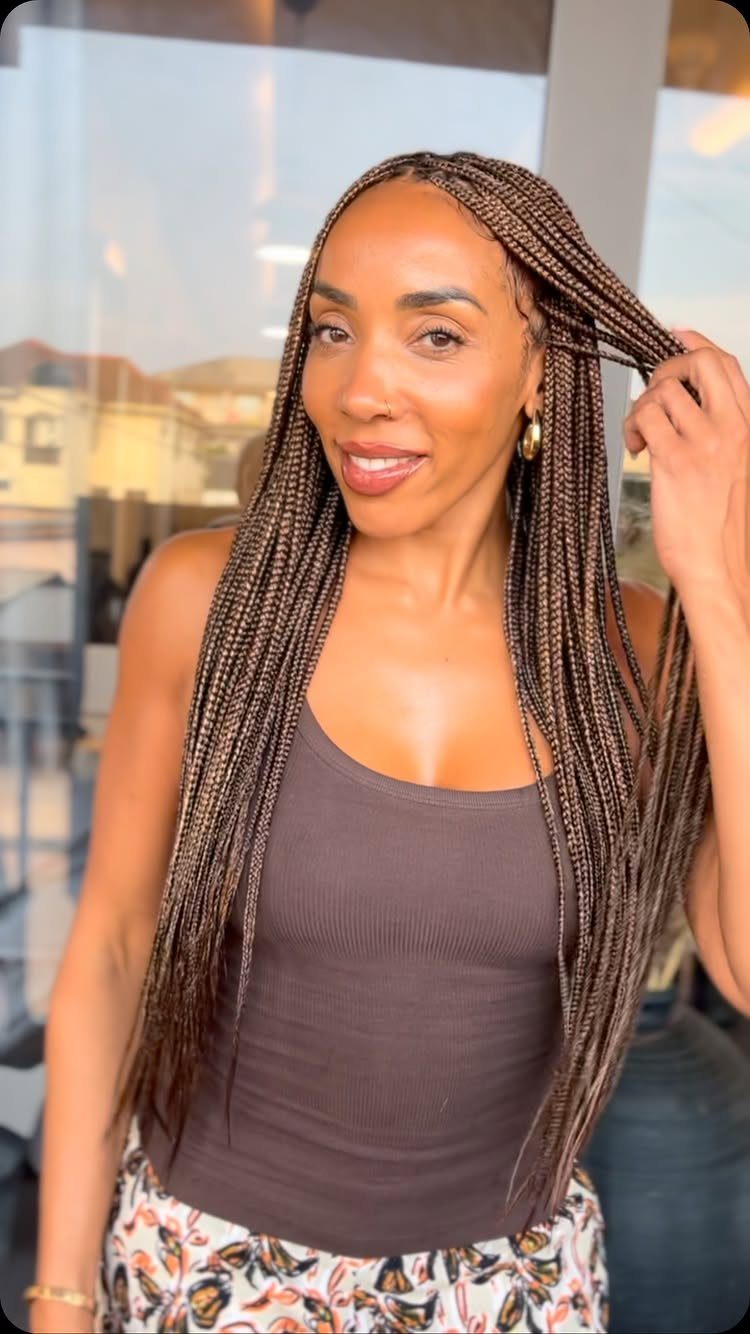
Knotless braids begin with your own hair. The braider adds extension hair a little at a time as the braid travels down, so there is no hard knot sitting at the root.
I’d choose them over standard box braids if you want the parts to look light and natural at the scalp. Ask for small, even sections, since the parting size sets how fine the whole style reads.
8. Pop Smoke Braids
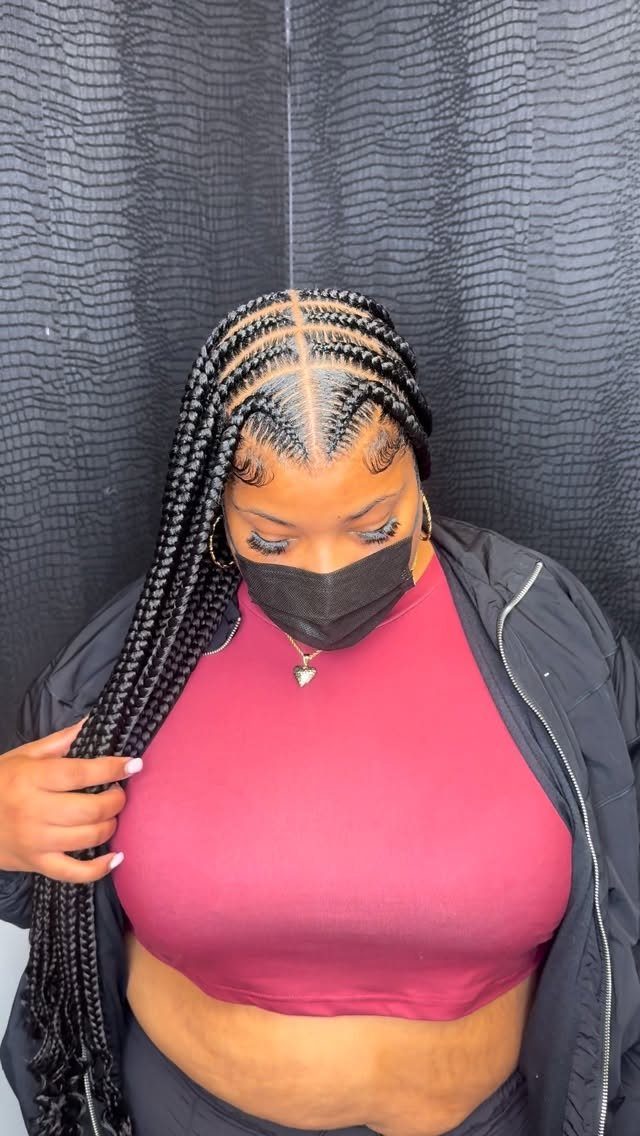
A knotless braid at its core, Pop Smoke braids are a current take on box braids. The center part and the curved sections at the front give the style its shape.
For the salon, bring this photo and point to the front pattern, because that is where the style differs from a plain box braid. Long, black and parted down the middle is the version I’d request.
9. Halo Braid
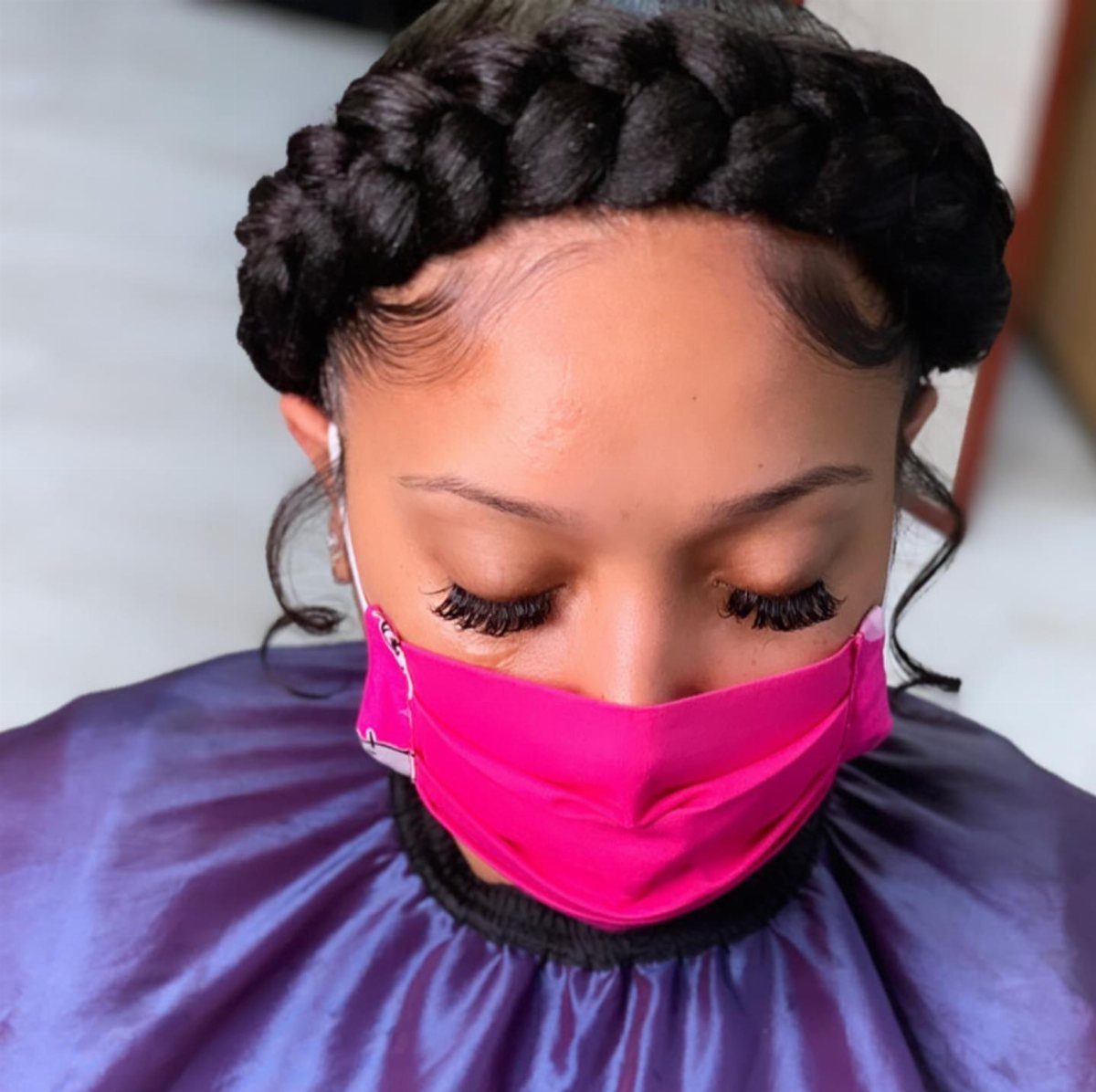
Wrapping one thick braid around the head makes a halo braid, a circle that frames the face and holds the rest of the hair out of the way.
I like it for anyone who braids at home and wants a finished look from a single braid. Keep the wrap even all the way around, because a lopsided circle is the first thing people notice.
10. Cornrows
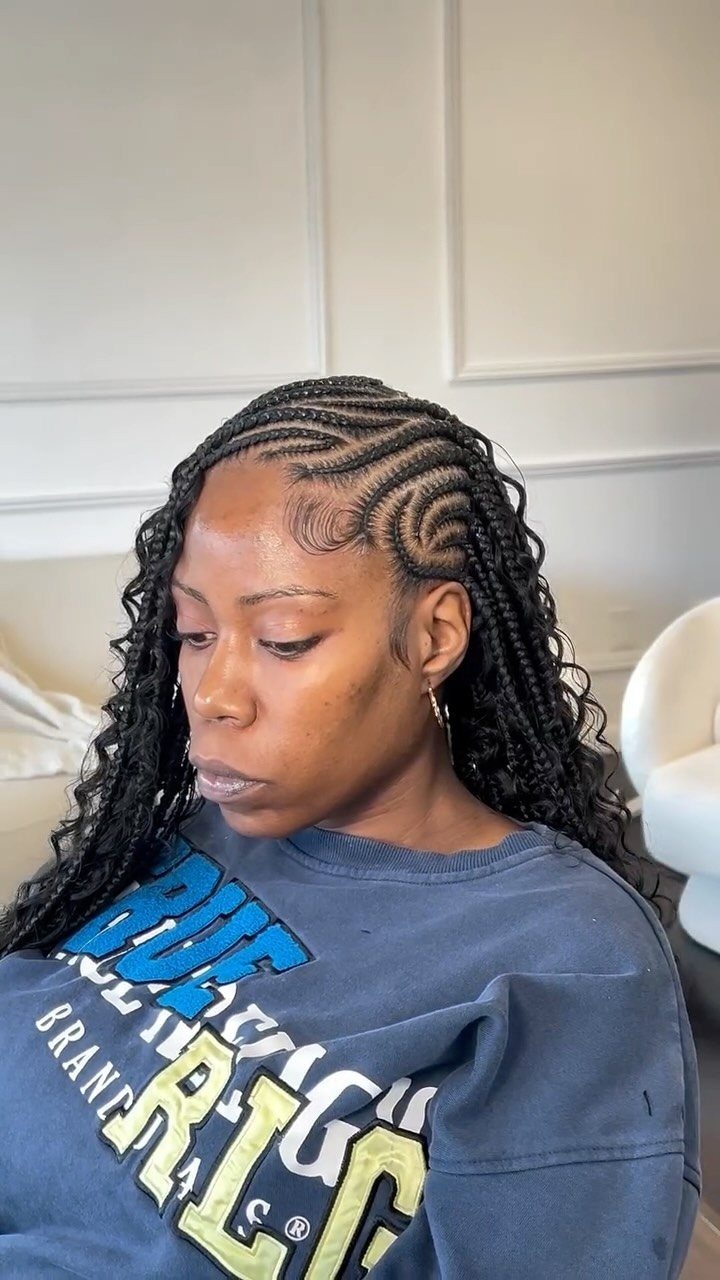
Cornrows lie flat against the scalp in rows, and those rows can run straight, curve or build into patterns.
A stylist can build a lot of shape into cornrows through the scalp parting alone, so curved lines are worth asking for by name.
Bring a picture of the exact pattern you want. Straight back is the simplest request, while curves and designs depend on the stylist’s skill.
11. Rope Braid
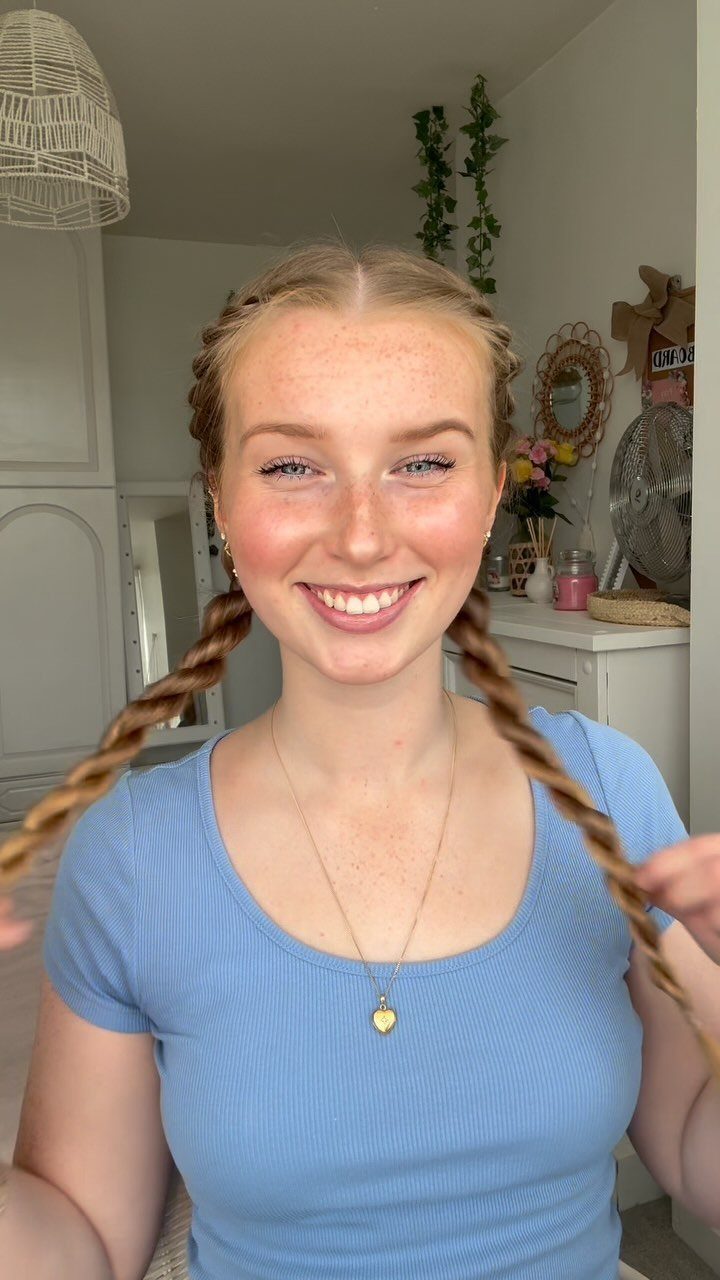
A rope braid is just 2 strands twisted around each other, with no third strand to weave in. That is why it looks neat but takes less skill than a three-strand plait.
A pair of them over the shoulders, as here, is an easy style to do at home. Twist each strand in one direction, then wrap the two around each other in the opposite direction so the braid holds.
12. Lemonade Braids
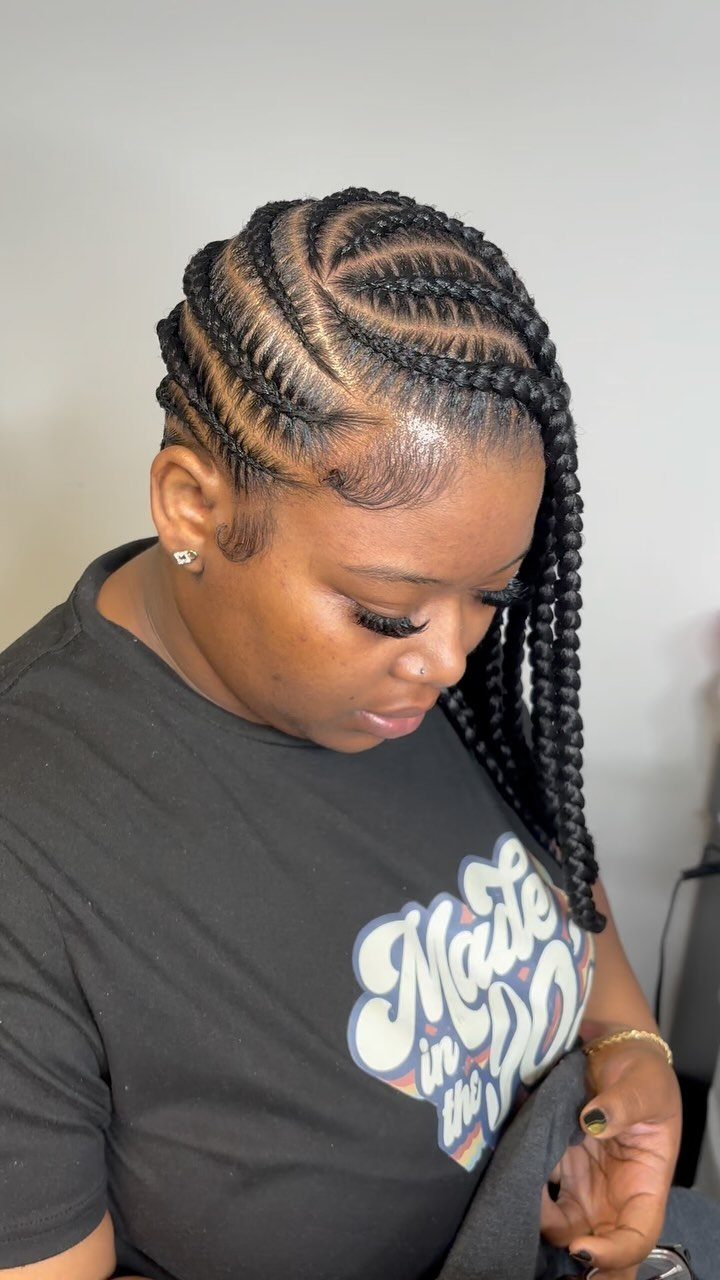
Lemonade braids are cornrows that all sweep to one side, usually from a deep side part. The long braids then fall over a single shoulder.
Placement of that part decides how dramatic the sweep looks, so show your stylist where you want it. Deeper reads bolder, and I prefer it for the asymmetry.
13. Senegalese Twists
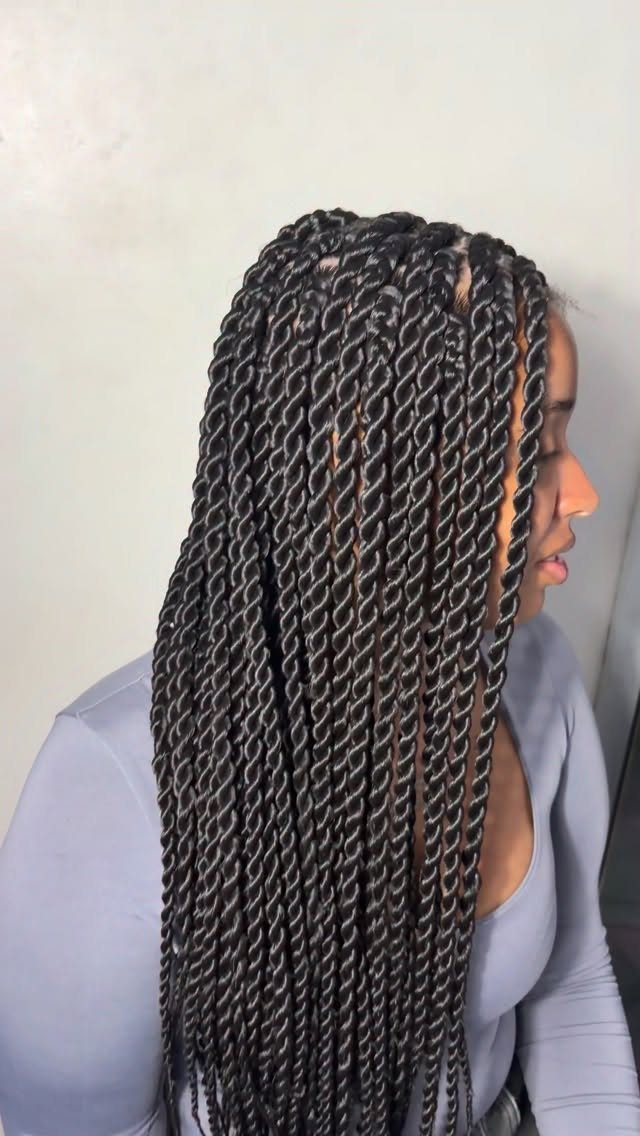
Each section of hair is divided into 2 strands that wrap around one another all the way to the ends. The result is a smooth, rope-like length instead of the flat weave of a three-strand braid.
At longer lengths Senegalese twists carry real weight, so ask for a size your scalp and edges can handle comfortably.
I’d ask the stylist for even sections, since uneven parts show most at the scalp. If you want a twist over a braid, this is the one I’d book.
14. Waterfall Braid
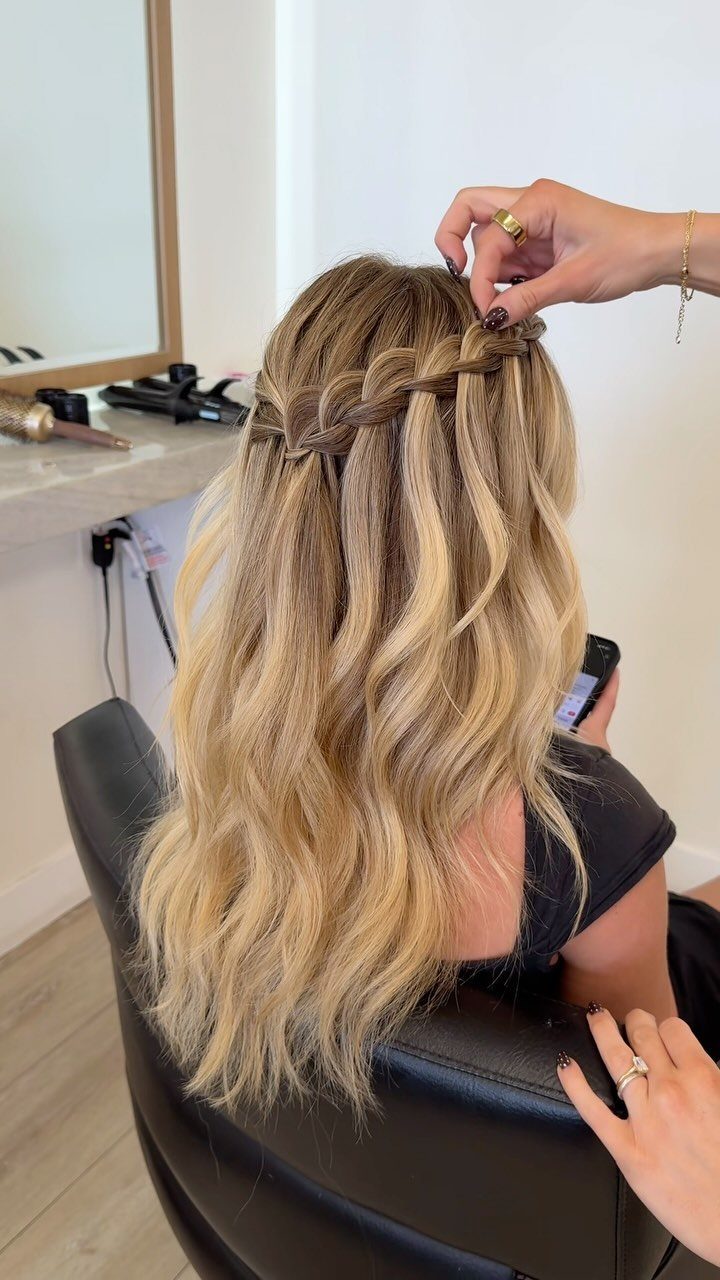
Dropping a strand instead of carrying it into the braid is what makes a waterfall braid. The dropped pieces hang loose below the braid and look like water spilling down.
Because the loose strands do the visual work, I like it on long hair worn down, where the cascade has room to fall.
Bring a photo to the stylist and point to where the braid should end, since that decides how much hair hangs free.
15. Mermaid Braid
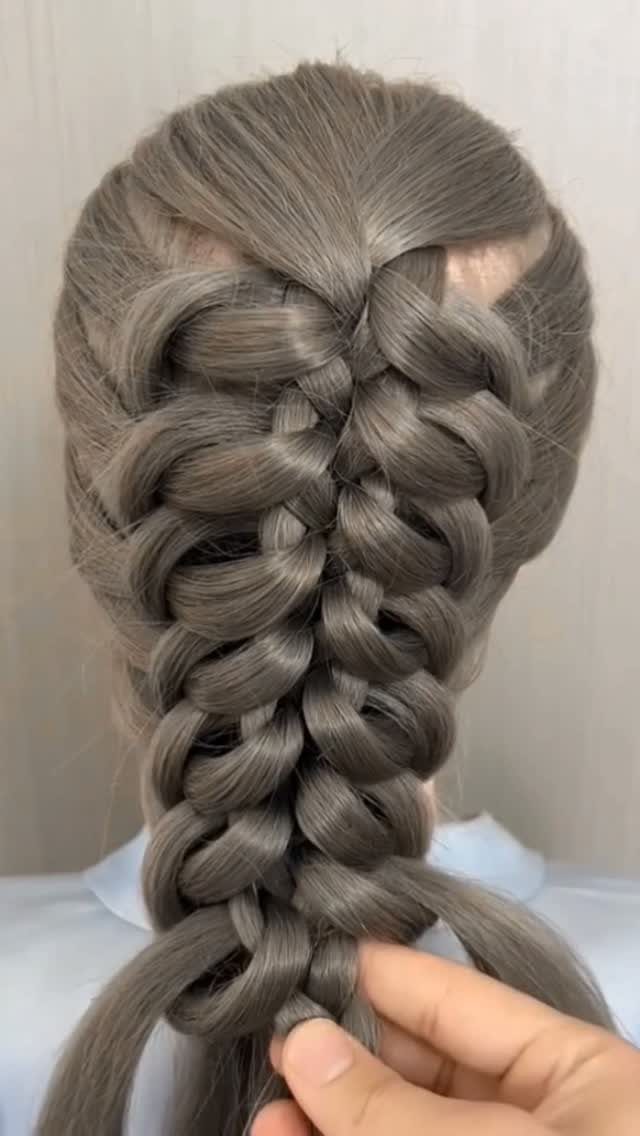
Volume is the point of a mermaid braid: a thick, full plait with loops and layers that look like they spill down the back.
A mermaid braid looks fullest against a plain top, with the braid held out from the bottom so the texture shows.
On fine hair, I’d expect to work harder for that thickness, so show your stylist the exact fullness you want before they start.
16. Braided Ponytail
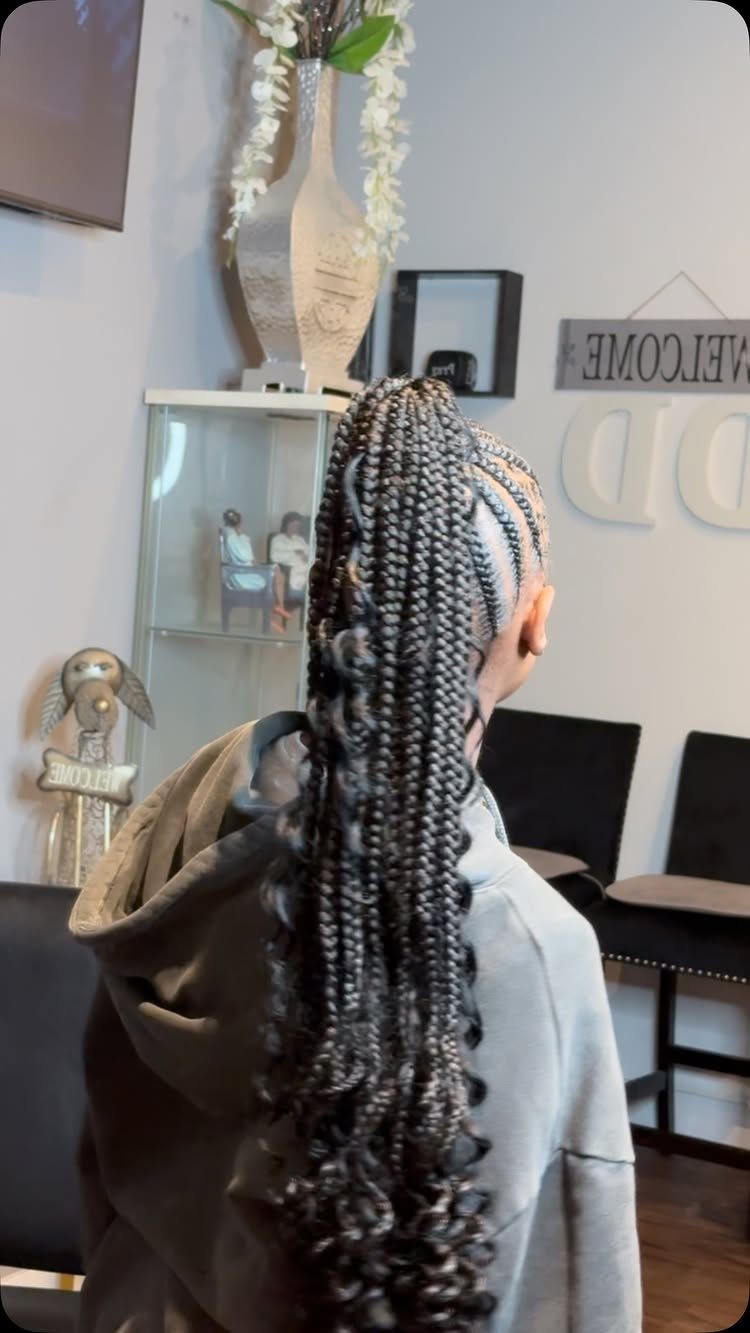
Gathering braids into a ponytail turns a long set into something you can lift off your neck. The braids hang from the tie, and the ponytail itself becomes the focal point.
Placement changes the mood.
High, as here, looks sharp and a little dressed up; lower sits softer and more casual. I’d go high for an event and low for every day.
17. Side Braid
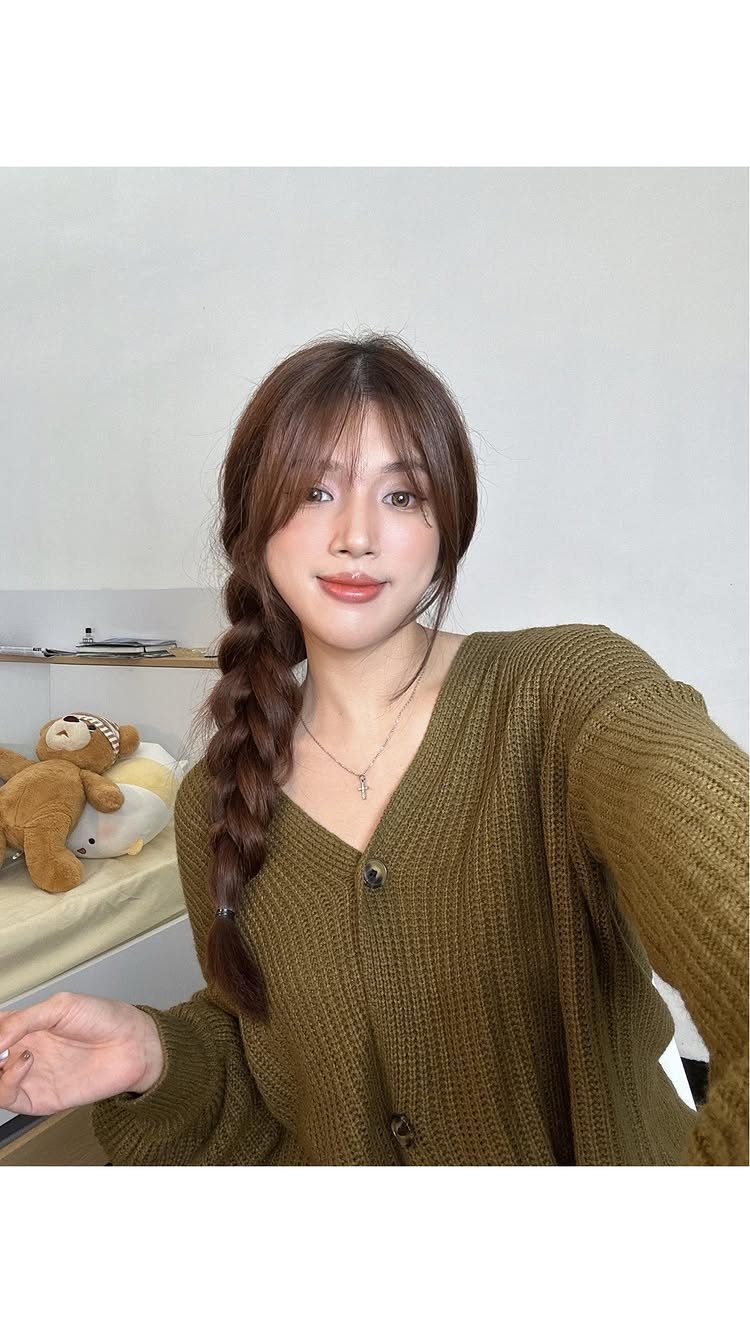
Pulling the braid over one shoulder frames the face on that side and leaves the other side open. Few styles are simpler to do alone at home than a side braid.
A long, loose plait like this one reads relaxed. I’d keep it slightly soft rather than tight, and tug a few pieces out near the face if you want a gentler outline.
18. Micro Braids
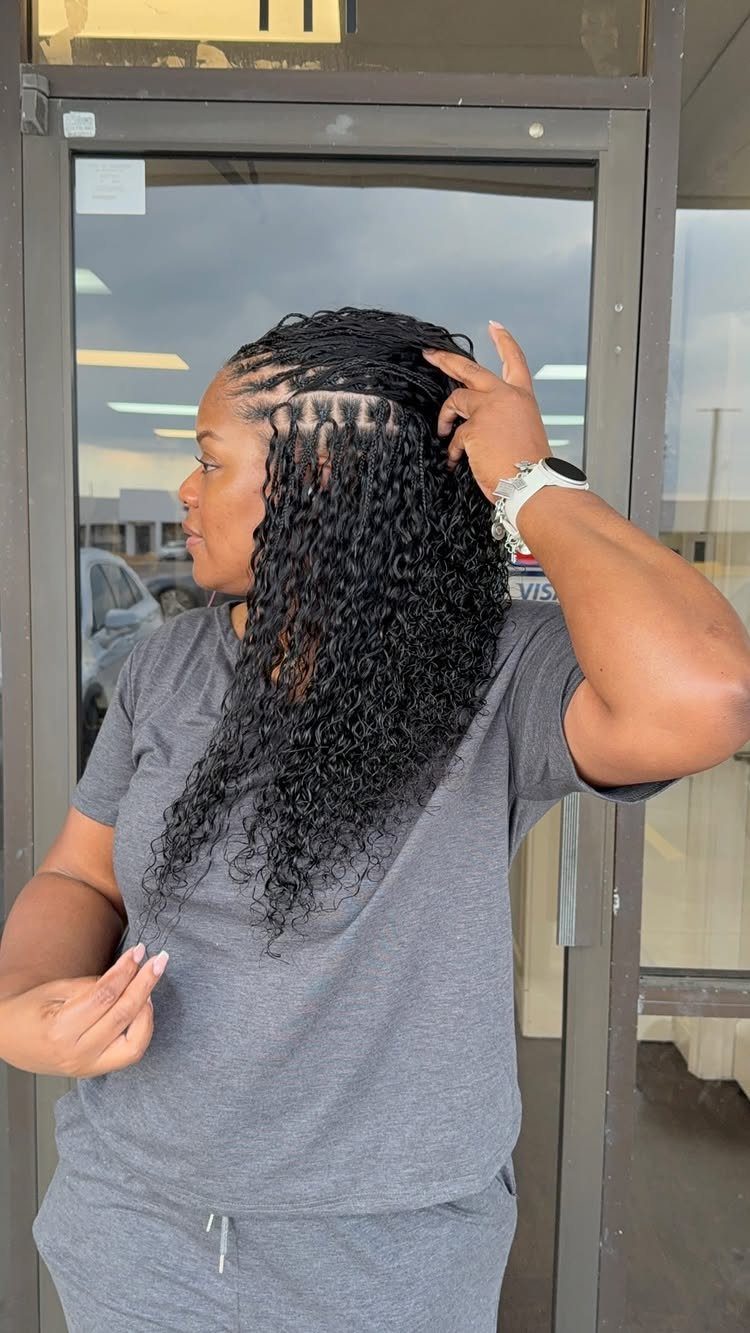
Micro braids are the smallest braids you can ask for, so a full head holds a very large number of fine plaits. That is why they flow and move more like loose hair than thicker braids do.
Expect a long appointment, since each braid is tiny.
Section size decides how fine micro braids look, so request tiny, uniform parts before the stylist starts. Curled ends, as here, are an easy add-on.
19. Crown Braid
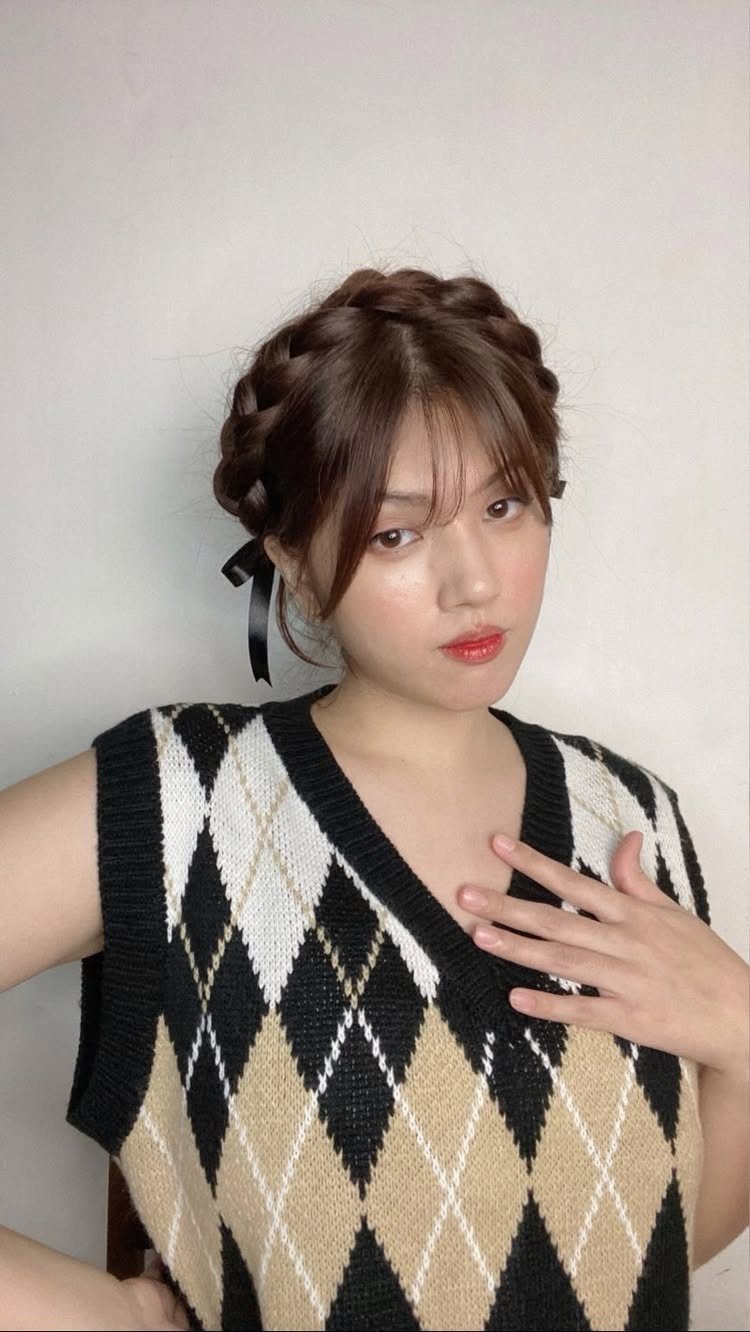
Pinning a braid around the crown lifts the hair up and off your face while keeping the length tucked in. The braid sits along your hairline like a headband made from your own hair.
For home stylists who want a result that looks more polished than a ponytail, the crown braid is the one I’d point to.
Start with one thick braid around the head, or work 2 braids from each side and pin them to meet at the back. Either way, the pins are doing the work, so tuck them under the braid where they won’t show.
Braids Preparation and Upkeep
Start with your own hair: wash, condition and fully detangle before the appointment, because braiding over tangles invites matting later.
If your style uses synthetic extension hair, rinse it first.
Follow with a lightweight serum, oil or mist on the scalp, since scalp care is the step people skip.
At night, a satin bonnet or a silk or satin pillowcase cuts the friction that causes frizz. Cotton does the opposite.
Tightness or discomfort means the style has to come out, no matter how fresh the braids still look.
When synthetic braiding hair makes your scalp itch or burn but you’d like to keep the style, a diluted apple cider vinegar rinse can calm things down.
Tension and Scalp Health
Braids should never hurt or pull. If the tension at your temples or nape makes you wince, say so while the stylist is still working, because asking for a section to be redone is far easier than repairing damage later.
Tight braids can injure the scalp and hairline, and over time that can lead to hair loss. Excess tension also stresses follicles and edges, often before you see anything on the surface.
Finer hair may be more vulnerable to small or heavy styles. With hair like that, my pick is medium-sized knotless braids, since they weigh less and tug less at the roots.
Expect a longer appointment and a steeper price, and know that they’re tough to install on your own.
Another thing to keep in mind with braided hairstyles is tension. Yes, braided styles can help protect hair, but when braids are done too tightly, they can actually have the opposite effect, causing damage to the hair follicle and scalp.
— Glamour
Frequently Asked Questions
What are different types of braids?
Braids fall into a few families. Flat styles sit against the head, like French braids and cornrows.
Extension styles include box, knotless and Fulani braids. Two-strand styles, like rope braids and Senegalese twists, are twisted rather than woven in three.
Decorative styles include fishtail, waterfall, halo and crown braids. Pick by how much time you have, whether you’ll do it at home or in a salon, and how long you want it to last.
What is the least damaging braid style?
Knotless braids are the gentlest choice I’d recommend.
Extension hair is fed in gradually instead of knotted at the root, so the tension on your scalp and edges stays low. The install takes longer, and doing it yourself is hard.
How long do braids last?
A salon install usually holds shape for 4–8 weeks.
Leaving them in longer can bring tension, dryness and breakage. Simple styles like a French braid or side braid last a day or two.
Is braiding good for your hair?
It can be.
Braids cut down on daily styling and friction, and they shield hair from breakage and weather. If it hurts during the install, say something right away.
Why do people braid hair?
People wear braids because they look good and need little upkeep once they’re in.
Braids also shield hair from heat tools, breakage and weather. The practice also carries deep cultural history, especially in West Africa.
How do I choose the right braid style for my hair type?
Start with texture and density. Finer hair does best in lighter, medium-sized styles like knotless braids, and very small or heavy braids can cause breakage.
Medium to coarser hair has more room to choose, including box braids, twists and micro braids that aren’t too tiny. Your scalp matters as well: if it’s sensitive, skip tiny braids and tight, heavy ponytails.
How do I take care of my braids?
Wash, condition and detangle your own hair before the appointment, and rinse synthetic extension hair before it goes in.
Wash your scalp every 1–2 weeks with diluted, sulfate-free shampoo. If your scalp feels tight, sore or starts flaking, take them out.