2 braids can hang loose as classic plaits, sit tight as cornrows, wrap around your head as a crown, coil into buns, or stack into a lattice weave.
If you need your hair to hold for days without redoing it, feed-in braids or a lattice weave stay put longer than French braids pinned up.
If you want the structure of a braid but softer edges, leave face-framing curls out or stop the braid mid-length and curl the loose ends.
Dutch braids sit raised on top of the scalp, cornrows can curve or zigzag in geometric patterns, and French braids can split into twin buns or join at the nape.
1. Two Quick Braids and Ponytail
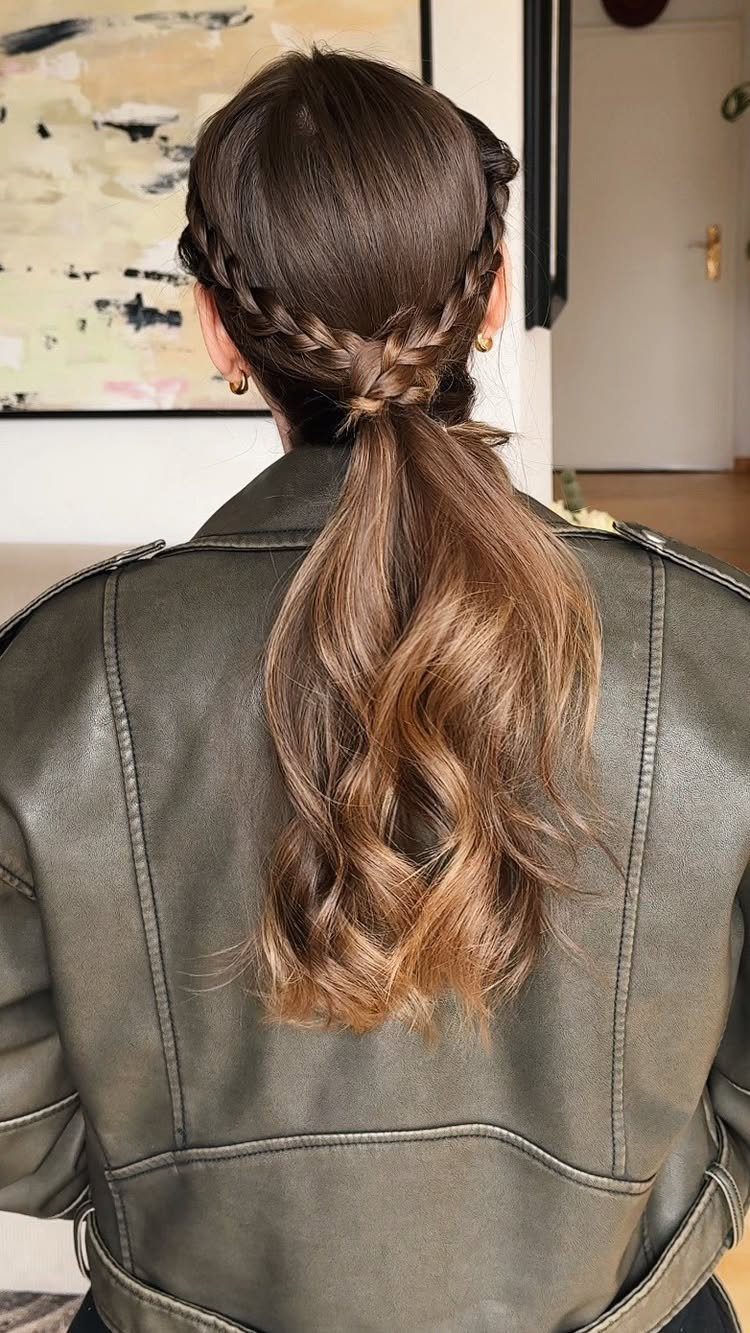
French braids on each side meet at the nape and flow into one ponytail. The braided sections sit close to your hairline and keep flyaways off your neck, while the ponytail stays soft.
Start each braid just above your temple and work down to where the ponytail begins. Secure both braids together with one elastic, then let the rest hang loose or wrap a small section of hair around the tie.
This keeps the style neat up top without pulling everything into a tight updo.
2. Side Bun with Double Loose Braid
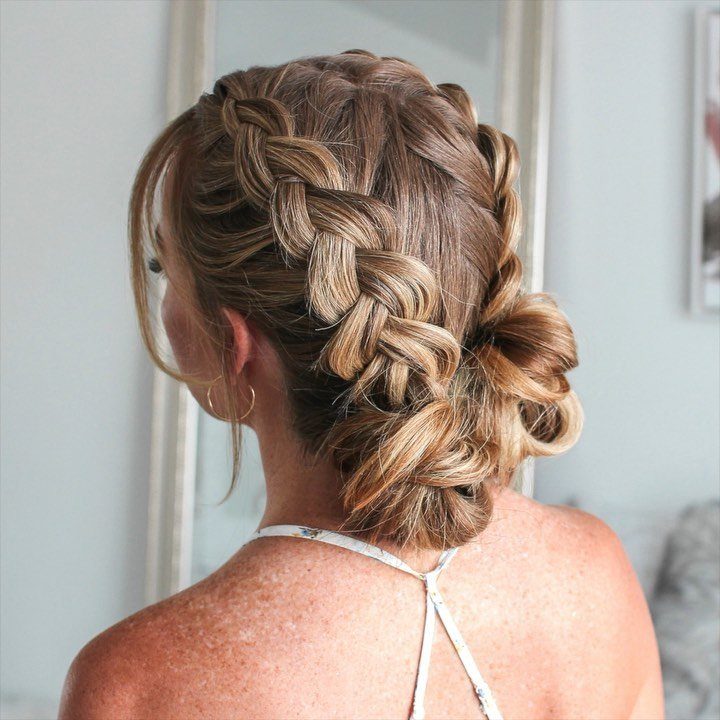
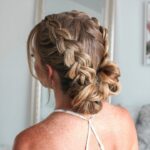
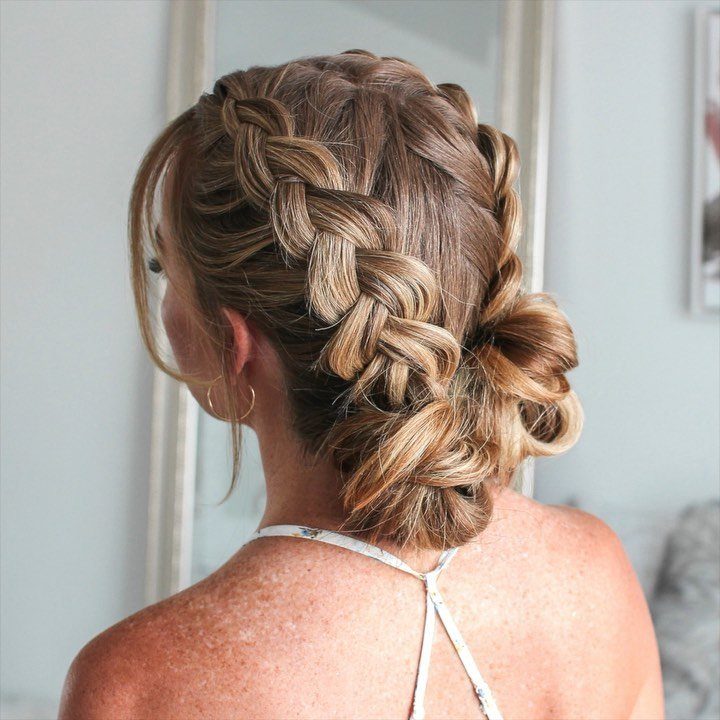
Two loose braids meet at one side and coil into a low bun.
The braids sit closer to the scalp than a standard three-strand plait, but they’re not pulled tight, so you get texture without the stiffness of a slicked-back updo.
Braid each side down to about ear level, then bring both ends over and pin them into a loose, messy bun on the left or right. Leave a few pieces out around your face for a softer look.
The side placement keeps it from looking too symmetrical.
3. Two Classic Braids
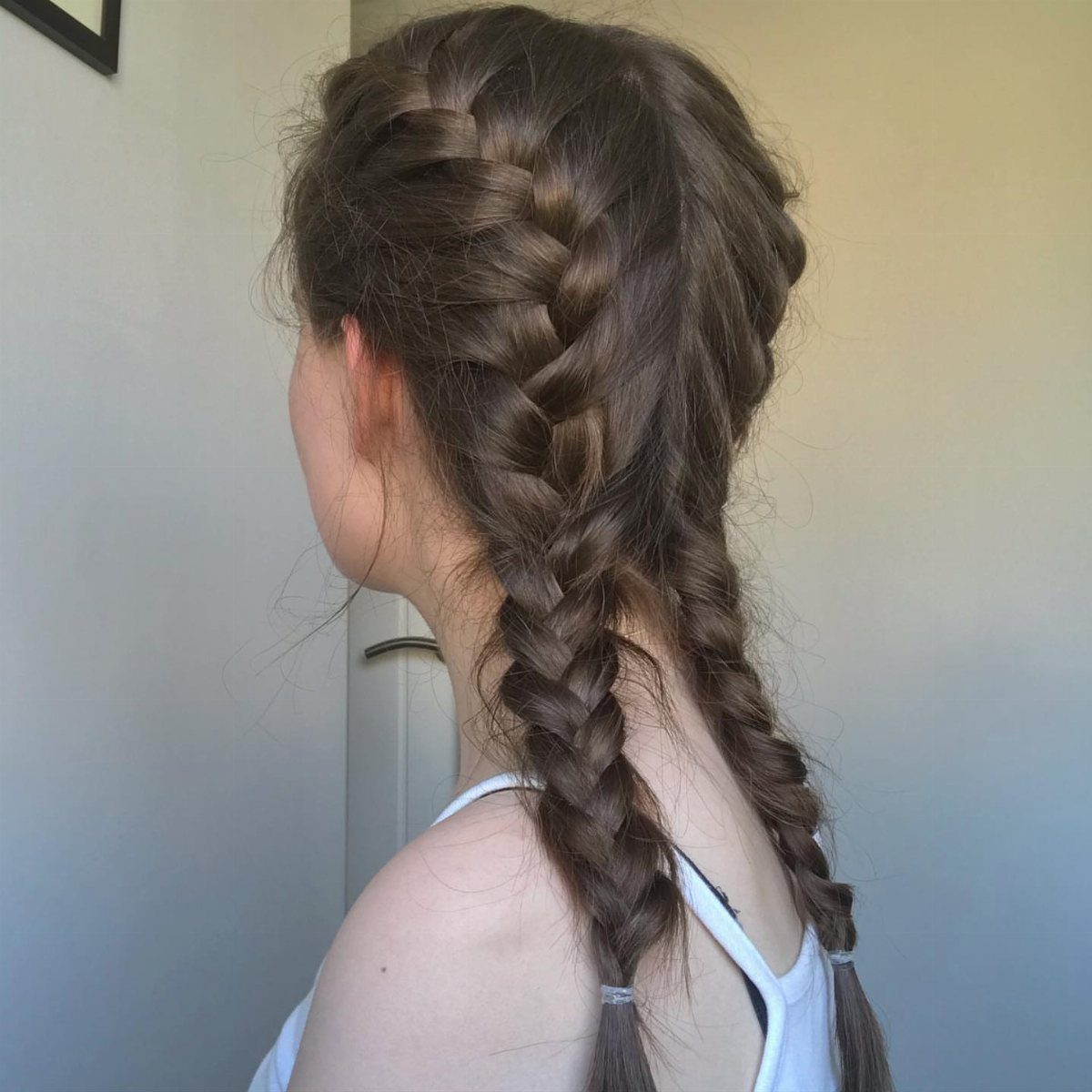
French braids start at the crown and run straight down your back. Each braid picks up new sections as you go, so the whole top layer of hair gets woven in.
Part your hair down the middle, then begin each braid close to the part and work your way down. Keep tension even so both braids match in width and tightness.
This suits thick hair especially well because the French braid technique spreads the weight evenly along the scalp.
4. Braided Pigtails
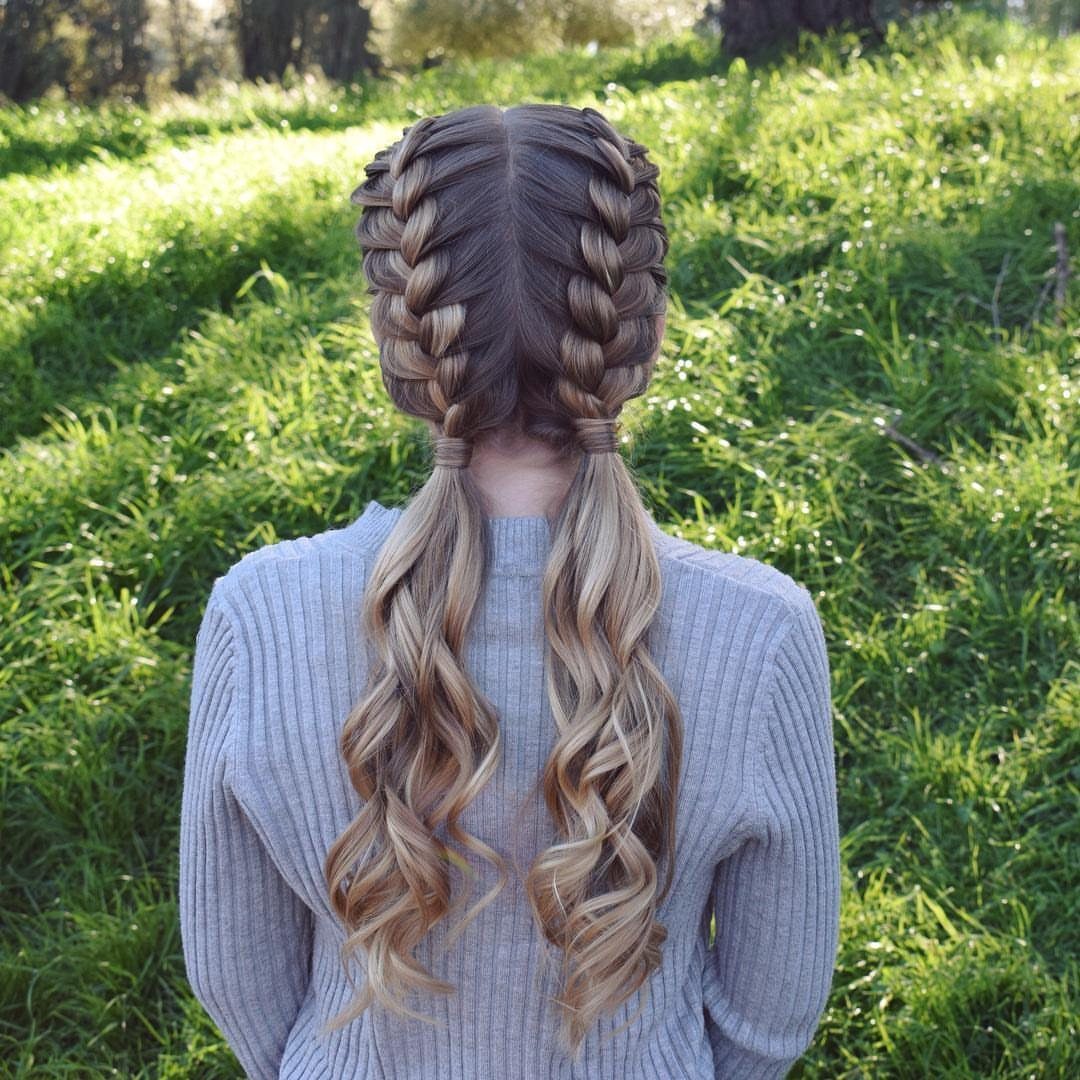
French braids stop mid-length and the remaining hair hangs loose as pigtails. You get the hold of a braid at the crown and movement below, which works well if your hair takes a curl or wave naturally.
Braid each side down to about ear level, then secure with a small elastic and leave the ends free. If your hair is straight, you can curl the pigtails with a wand or iron after braiding.
The loose ends keep this from looking too formal.
5. Two Extra Long Braids
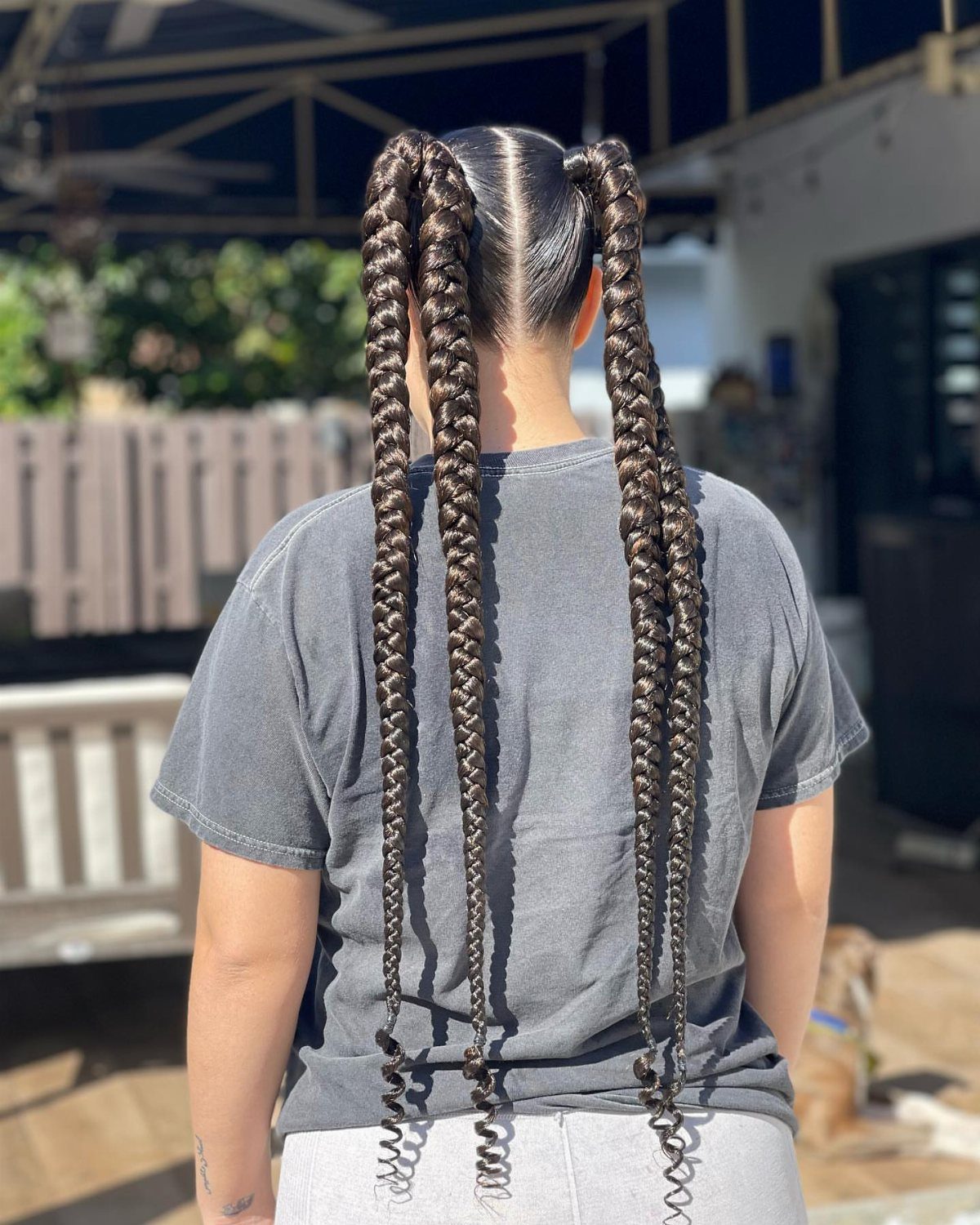
Simple three-strand braids suit hair that reaches past your waist. Thick hair holds the braid shape without needing much grip from the elastic, and the length itself becomes the focal point.
Part down the middle and braid each side all the way to the ends. If your hair is fine, pull a few strands loose from each braid after securing to add width.
Long braids like this stay out of your way but still make a statement.
6. French Braids in Flower Buns
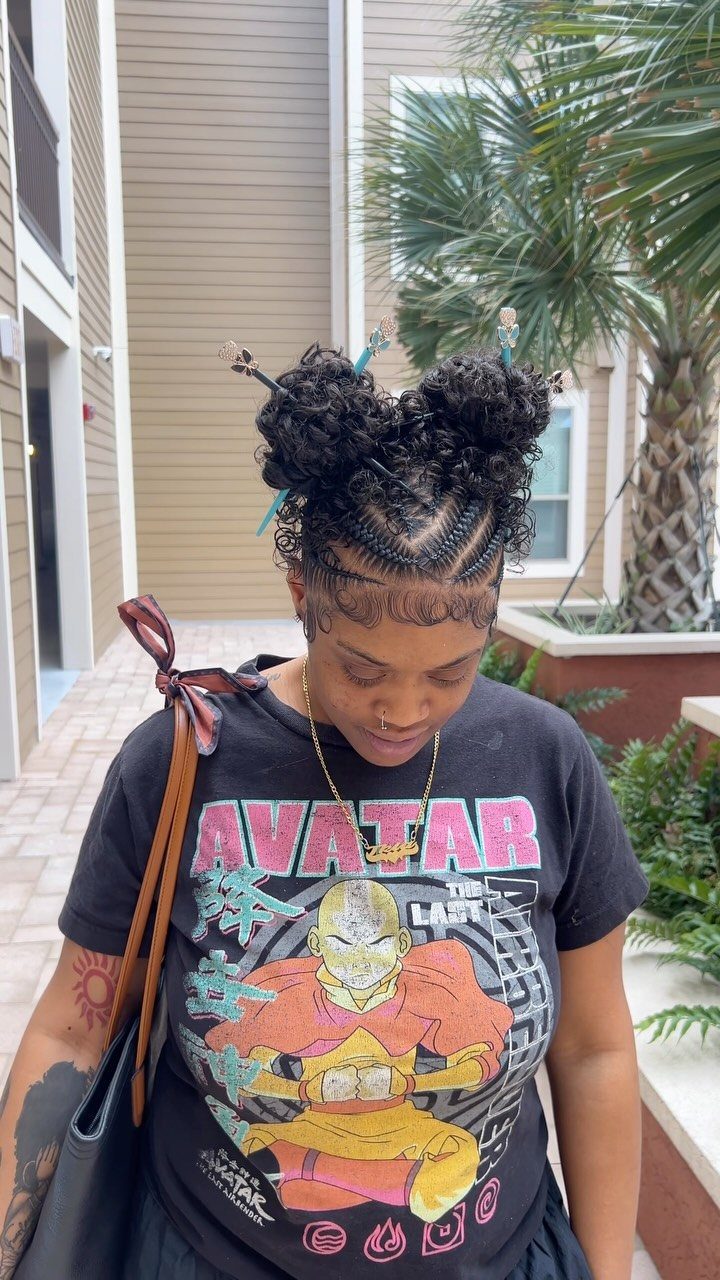
Side braids twist up into 2 buns that sit at the back of your head. Each bun is formed by coiling the braid and pinning it in place, which gives you a textured, looped shape instead of a smooth one.
Braid each side loosely, then wrap each braid into a circular bun and secure with bobby pins. Pancake the braids slightly before pinning so the buns look fuller.
This works well for second-day hair that needs polish without being slicked down.
7. French Braid Crown and Bun Updo
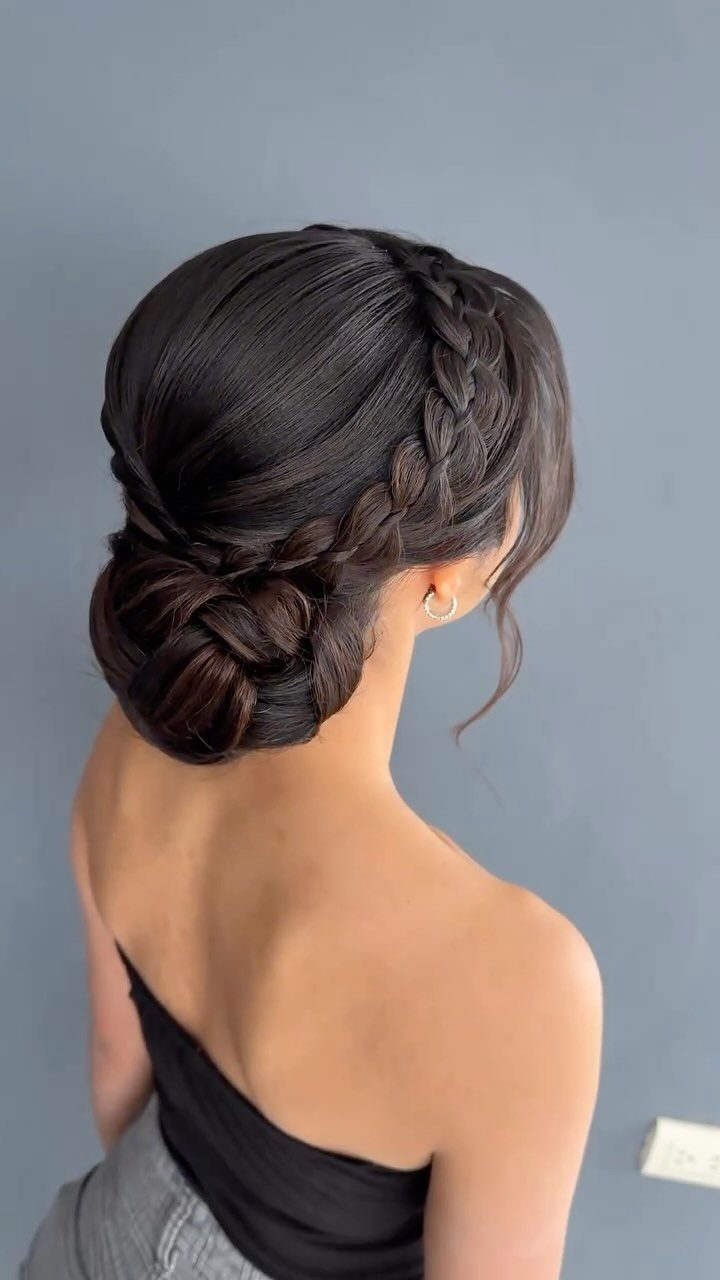
2 French braids start at each temple and wrap across the back of the head like a crown, then the ends are tucked and pinned into a low bun at the nape.
The braided crown keeps everything secure at the top, and the bun finishes it without leaving loose ends.
Start each braid near your hairline and curve them toward the back, meeting at the center. Pin the tails into a rolled or twisted bun.
This suits events where you need your hair to stay put for hours.
8. Half-Up Half-Down Y Braid
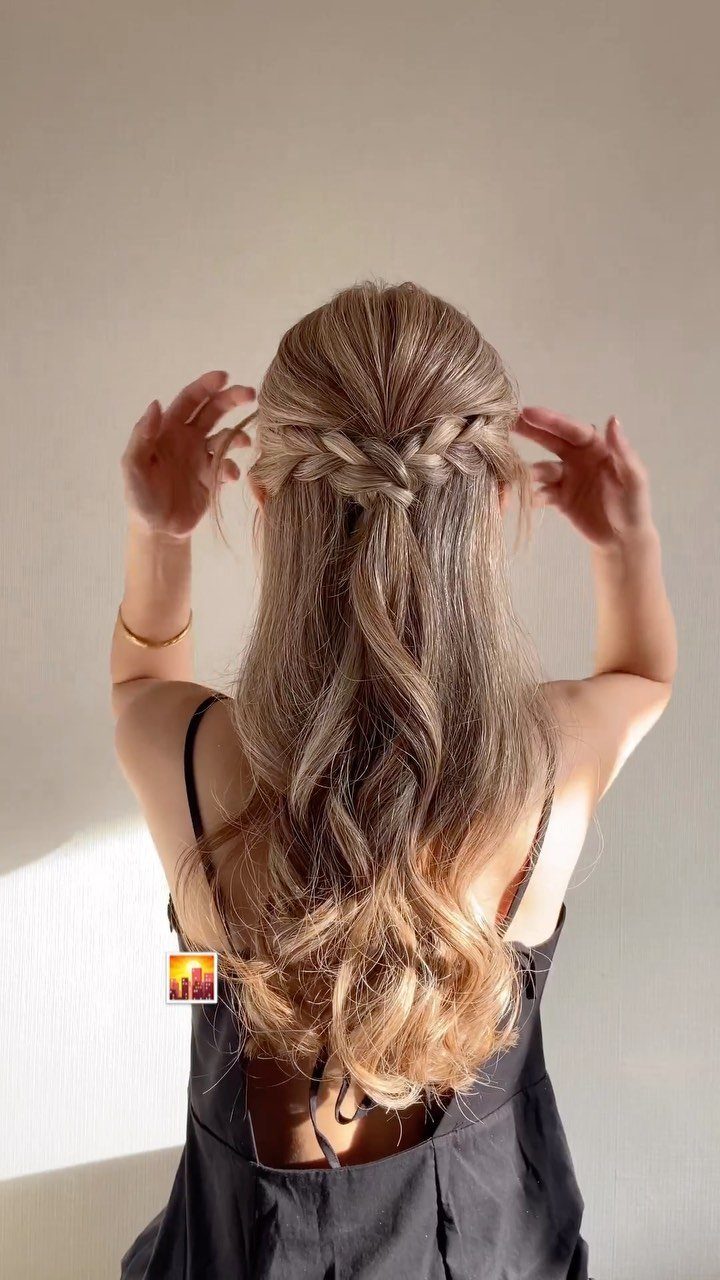
Two French braids begin at the crown and angle inward, joining into one regular braid down the back. The top half is braided and the bottom half hangs loose, so you get hold at the roots and movement below.
Braid each side down a few inches, then merge them into one braid and secure with an elastic. Leave the rest loose or add waves with a curling iron after braiding.
The Y shape keeps it from looking too heavy on one side.
9. Rapunzel Hair
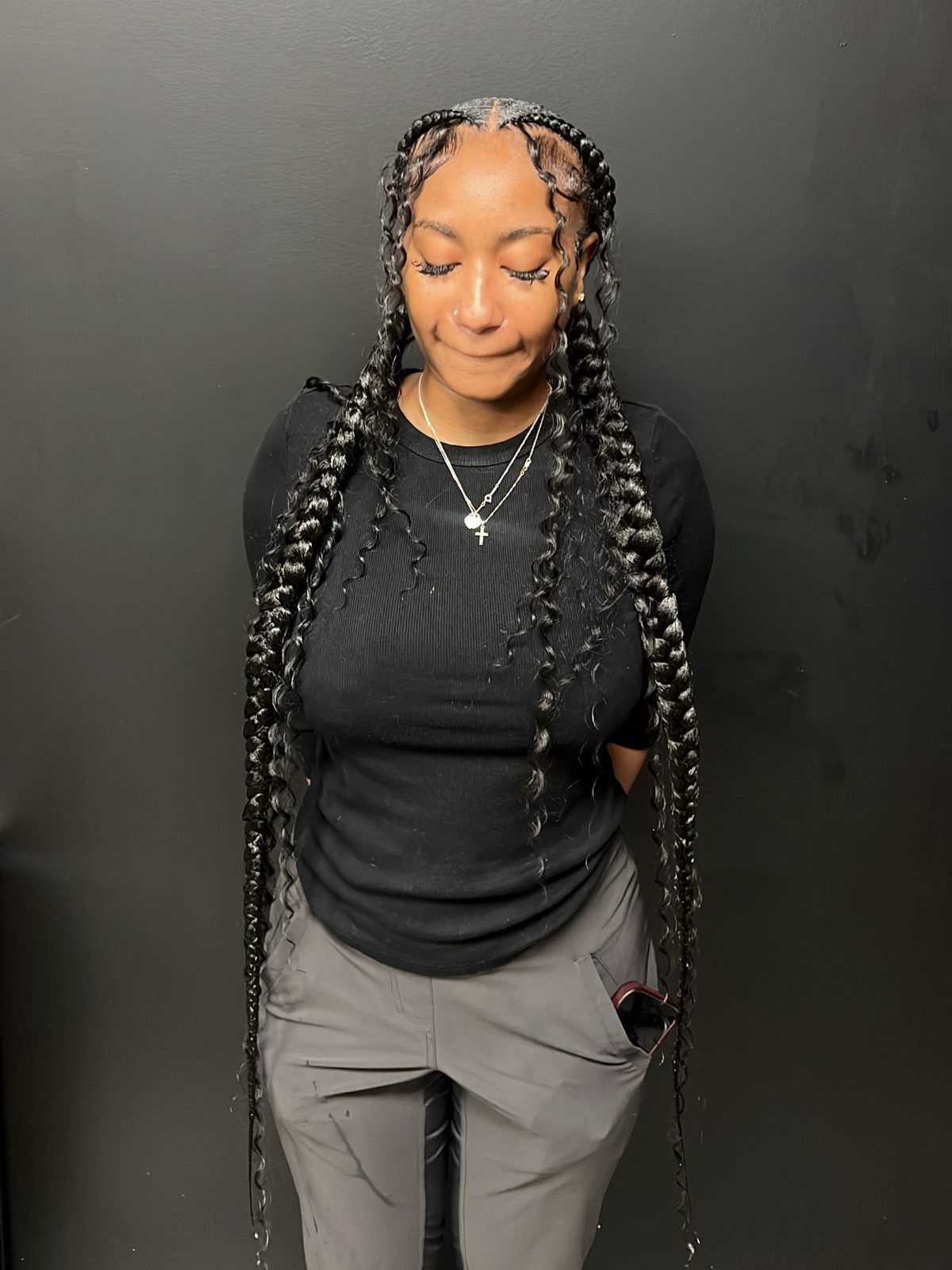
Loose braids sit low on each side and the ends are curled under or left wavy. The braids themselves are relaxed, not tight, so the hair still has volume and the curls add softness at the ends.
Braid each side loosely and secure with a small elastic, then curl the last few inches with a wand or iron. Pull a few face-framing pieces free before you start braiding.
The loose sections keep their texture instead of being pulled flat into the braid.
10. Pinned Up French Plaits
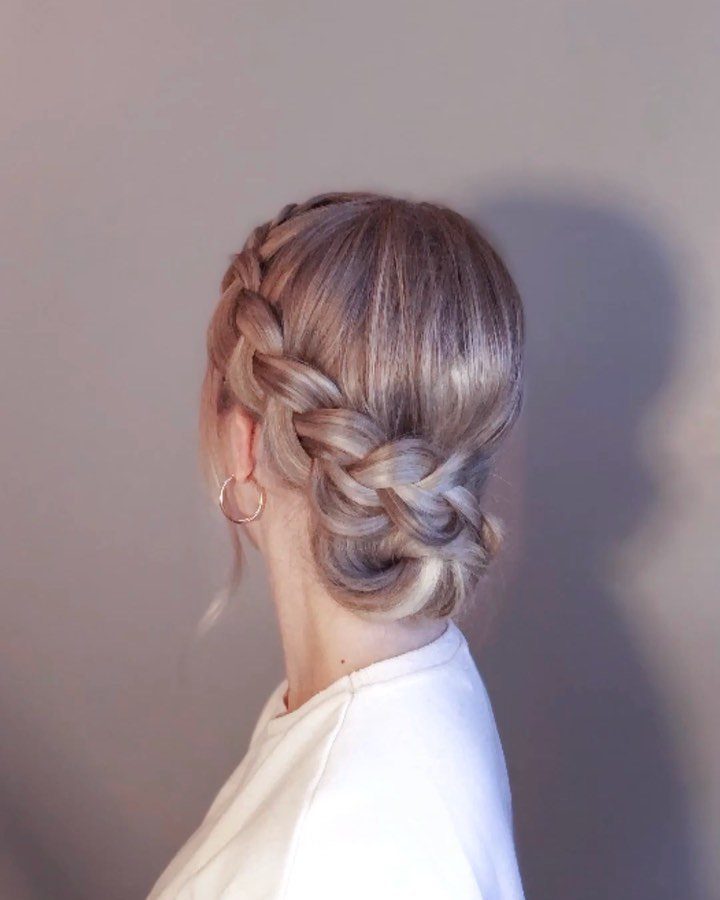
French braids on each side are pinned up across the back of the head into a low, rounded shape. The braids cross over each other and sit flat against the scalp, creating a woven crown effect without a bun.
Braid each side down to the nape, then pin the braids horizontally across the back, tucking the ends under. Use bobby pins that match your hair color so they disappear.
This suits medium to long hair that holds a pin well.
11. Lattice-Weave with High-Braided Ponytail
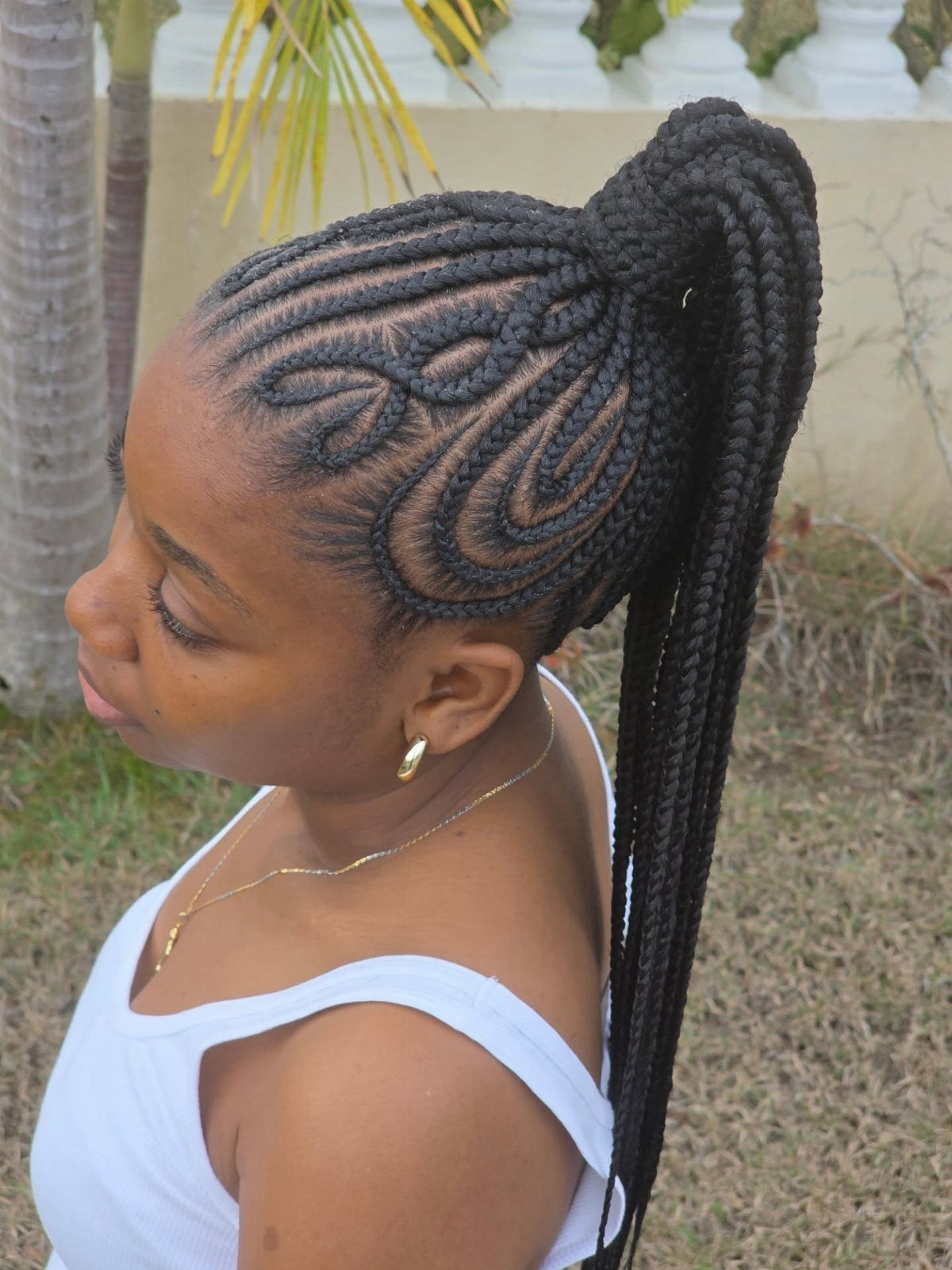
Cornrows woven in a lattice pattern across the scalp gather into one high ponytail. The lattice sits flat and tight at the roots, and the ponytail can be left as a single braid or split into smaller ones.
This style takes time and works best on natural hair with enough length to braid. The lattice pattern holds for days, so you can wear the ponytail high or wrap it into a bun without redoing the braids.
Edges stay smooth if you tie a silk scarf at night.
12. Braided Crown with Loose Curls
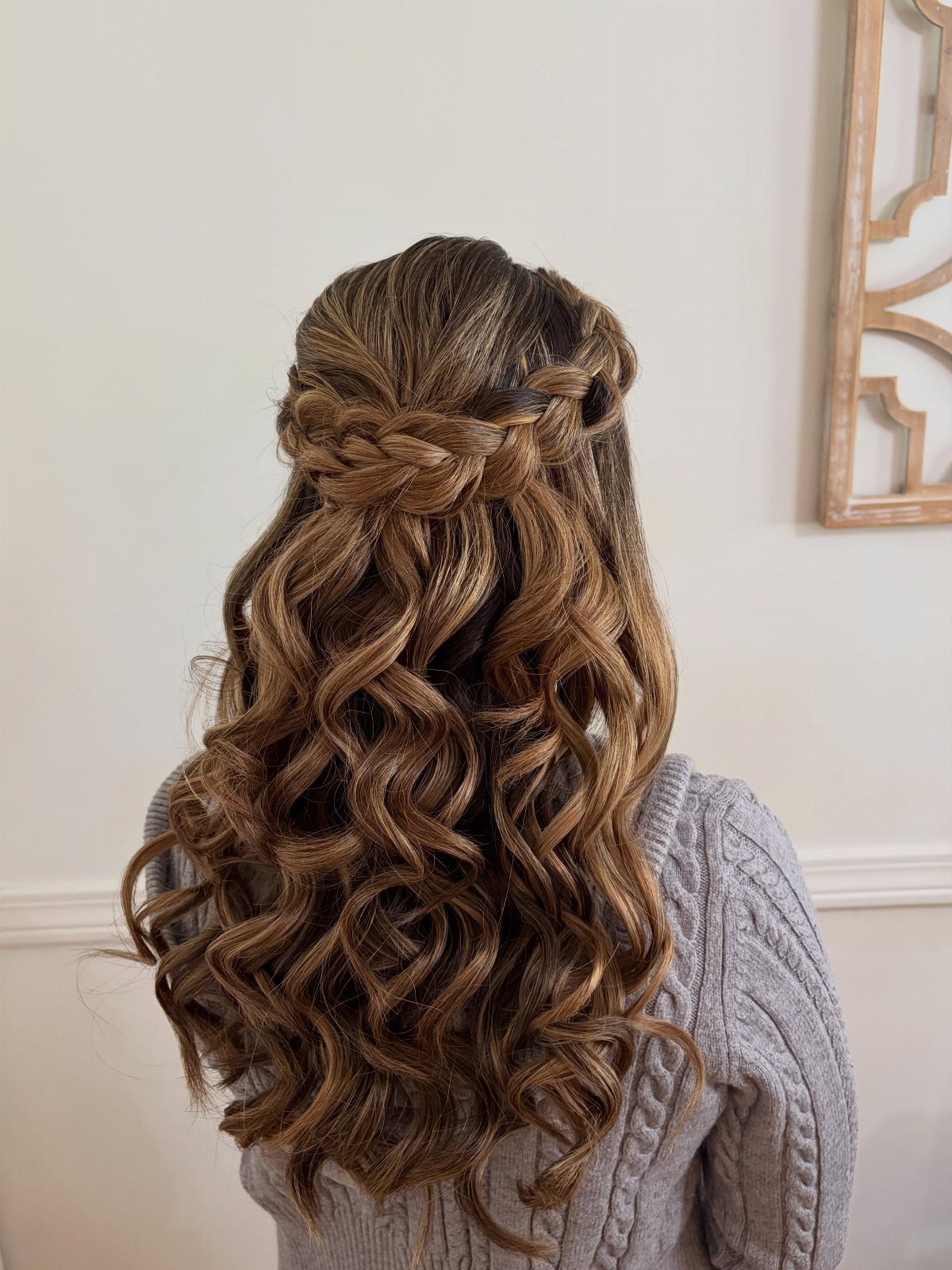
2 braids wrap across the top of the head like a headband, and the rest of the hair falls in loose curls. The braided section keeps hair off your face, while the curls give volume and movement below.
Braid a section from each side and pin them across the crown, tucking the ends under or securing them with bobby pins.
This balances structure up top with softness below.
13. Two Feed-In Braids
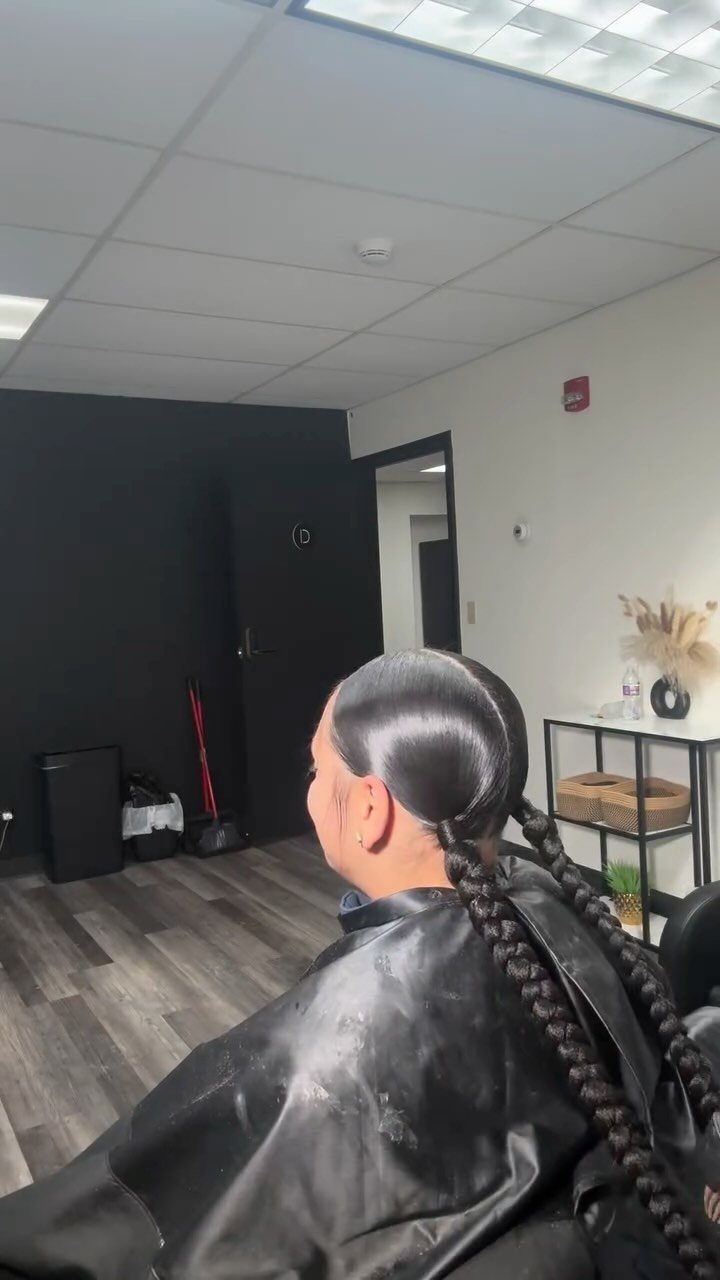
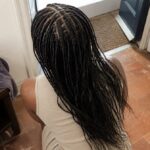
Feed-in braids start thin at the hairline and gradually add extension hair as you braid down, so the roots look natural and the length stays thick all the way to the ends.
The gradual build keeps tension off the scalp while giving you long, uniform braids.
A braider sections your hair down the middle and feeds in small pieces of extension hair with each pass. The edges are laid smooth with gel before braiding begins.
Wrap them at night and you get a good run before they need redoing.
14. Two Classic Braids
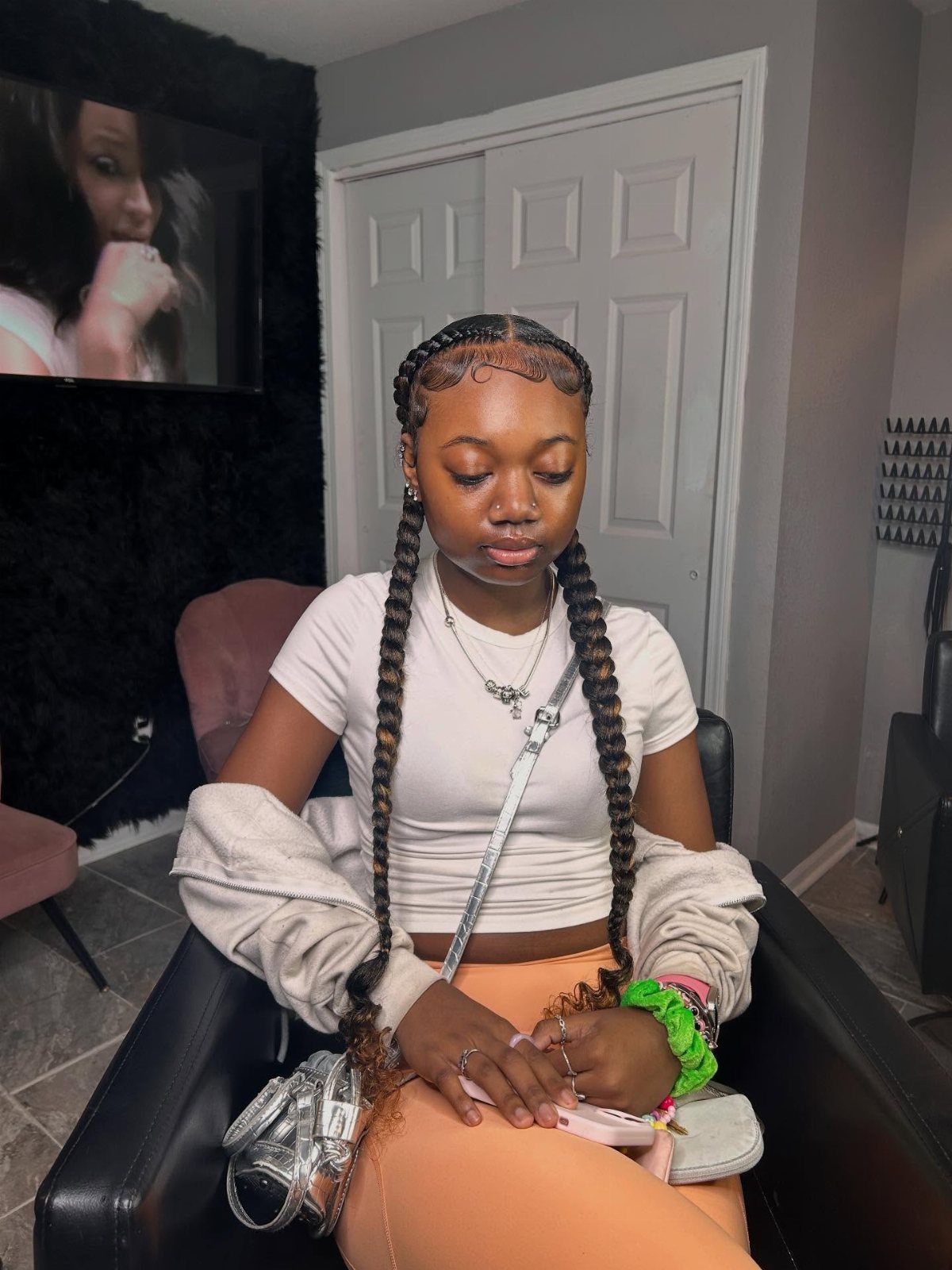
Center-parted three-strand braids run straight down without picking up new sections. Each braid stays separate and simple, which suits hair that’s one length and doesn’t need extra hold at the crown.
Part down the middle, gather each side, and braid from the nape to the ends. Secure with small elastics that won’t snag.
This works well when your hair is already smooth and goes fast.
15. Two Braids with Curled Ends
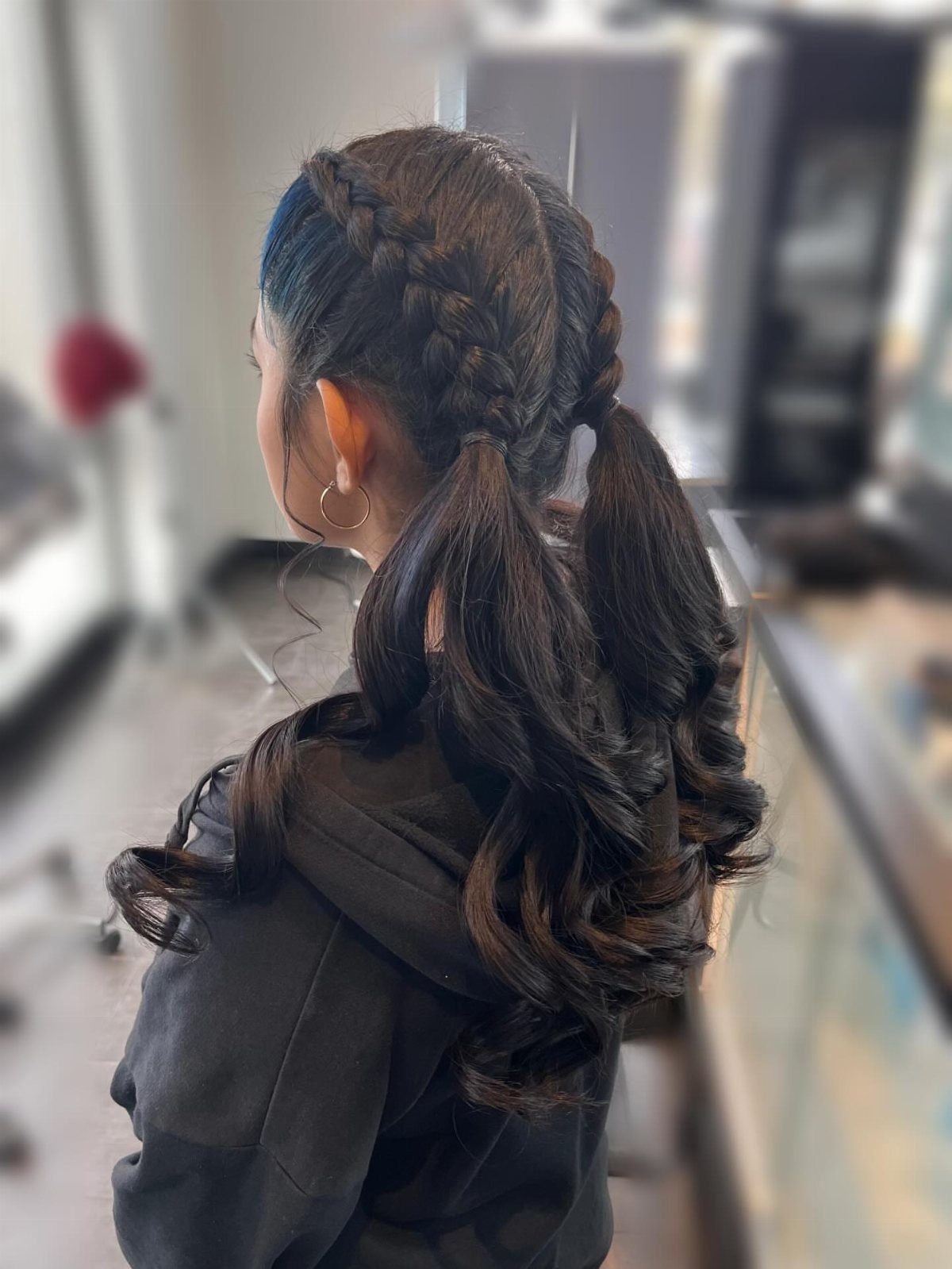
Dutch braids sit on top of the scalp and gather into low ponytails, then the ends are curled with a wand or iron. The braid gives structure up top, and the curls add volume where the braid stops.
Braid each side down to the nape using the Dutch method, secure with elastics, then curl the loose sections in small pieces. Leave the curls loose or brush them out for a softer wave.
The textured ends keep this from looking too sleek.
16. Cornrow Patterned Two Braids
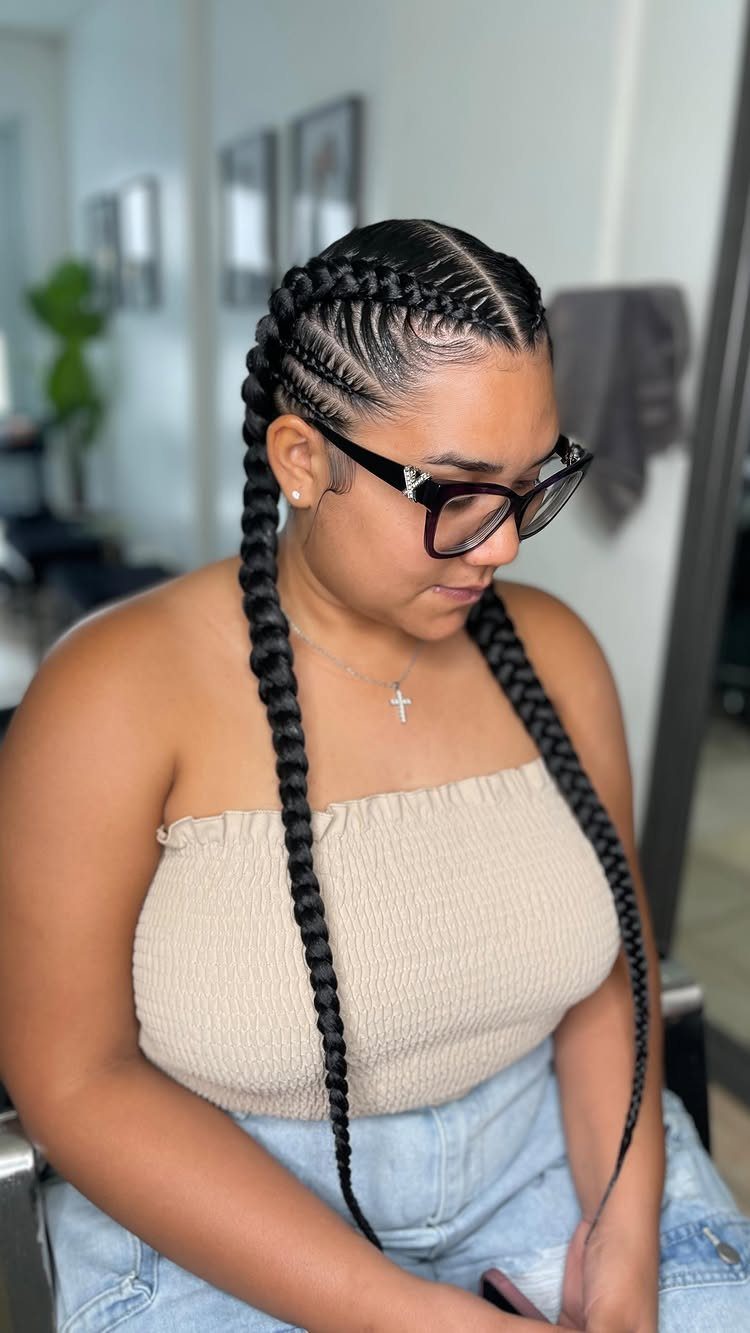
Cornrows curve and zigzag across the scalp before joining into 2 long braids at the back. The pattern can be simple or intricate, and it stays flat against your head so the braids themselves hang cleanly.
A braider maps out the pattern first, then cornrows each section and continues into a regular three-strand braid once the pattern is complete.
17. Two Braids with Face-Framing Strands
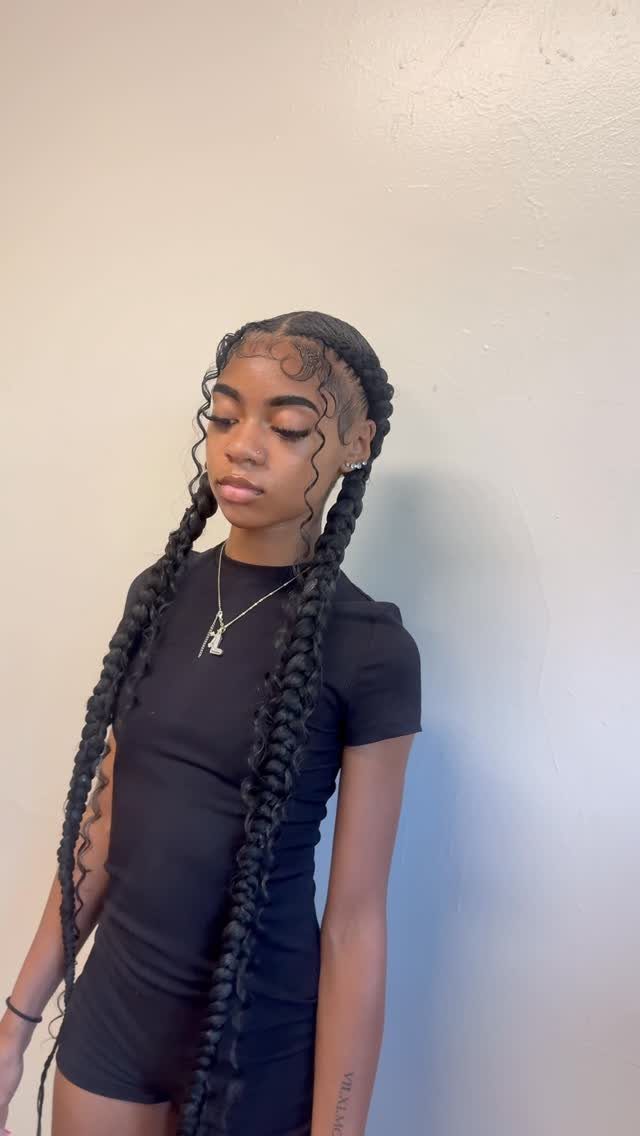
2 long braids are worn with small curled pieces left out at the front. The curls frame your face and soften the look, while the braids keep the rest of your hair controlled.
Braid each side starting just behind your temples, leaving a thin section free on each side. Curl those pieces with a small-barrel iron after the braids are done.
The face-framing strands add movement without undoing the structure.
18. Burgundy Two Braids
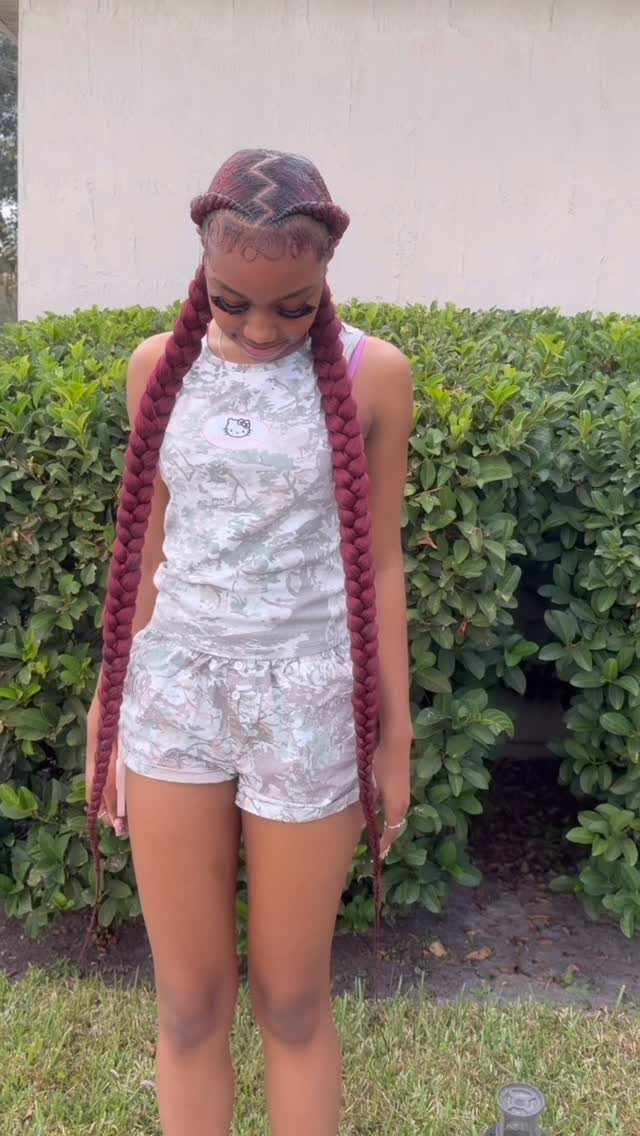
Burgundy extensions or dyed ends make 2 braids stand out, especially against darker roots. The color draws attention to the length and the zigzag part adds detail at the scalp.
Braid each side all the way down and secure at the ends. If you’re using extensions, match the burgundy tone to your natural undertones so the color looks intentional.
The contrast works best when the braids are long enough to show the full color shift.
Frequently Asked Questions
Which haircut is best for two braids?
2 braids work with any length past your shoulders, but the method changes with the cut.
French braids and feed-ins suit one-length hair because they gather everything from the crown down, while loose three-strand braids also work well on one-length hair since every section reaches the ends together.
Thick hair holds braid structure better, and fine hair benefits from pancaking or pulling strands loose after securing.
What is the two braids hairstyle called?
The name depends on the braid method and placement.
French braids gather hair as they travel from crown to ends, Dutch braids reverse the weave so each section lifts above the scalp, feed-in braids layer extension hair a little at a time, and classic three-strand braids go straight down without picking up anything new along the way.
Pigtails, cornrows, and crown braids describe where the braids sit or how they finish.
Can a 50 year old woman wear braids?
Yes. 2 braids suit any age, and the style you pick changes how formal or casual they look.
French braids pinned into a low bun or wrapped across the back read polished and work for events, while loose side braids or braided pigtails stay casual. The braid method and finish matter more than age.
What are Feed-in Braids vs. French Braids?
Feed-in braids use an underhand technique and add extension hair gradually so the roots stay thin and natural while the length builds, and French braids use an overhand technique that weaves your own hair from crown to ends without extensions.
Feed-ins sit raised on the scalp like Dutch braids, while French braids lie flatter. Feed-ins hold longer and suit protective styling, French braids go faster and work on shorter hair.
Why settle for just one French braid when you can pull off 2 French braids?
Two French braids balance the weight across your scalp instead of pulling everything to one side, and they suit thick hair especially well because each braid spreads the volume evenly.
Part down the middle and braid each side from crown to ends, keeping the tension matched so both braids look uniform. Ombre or colored ends show more clearly in two separate braids than in one.
How about pigtails?
French braid each side down to ear level, secure with small elastics, and leave the rest loose as pigtails.
The braided top holds flyaways and keeps the crown smooth, while the loose ends add movement and can be curled or left straight.
This works well if your hair takes a natural wave or if you want to curl the pigtails after braiding.