Shoulder-length cuts paired with natural wave run from minimal one-length shapes to scattered shag layers that start at the crown, and the difference is how much weight you’re willing to lose.
Layering lifts the root and lets each wave move instead of stacking into a triangle if your hair sits flat or heavy.
If it’s fine, too many layers turn texture into gaps, so subtle interior cuts or a blunt perimeter with feathered ends keep enough density for the wave to register.
Curtain bangs that part down the middle add movement at the face without the daily round-brush work full bangs require, and highlights placed where layers lift make each bend catch different tones.
1. Curly Cut
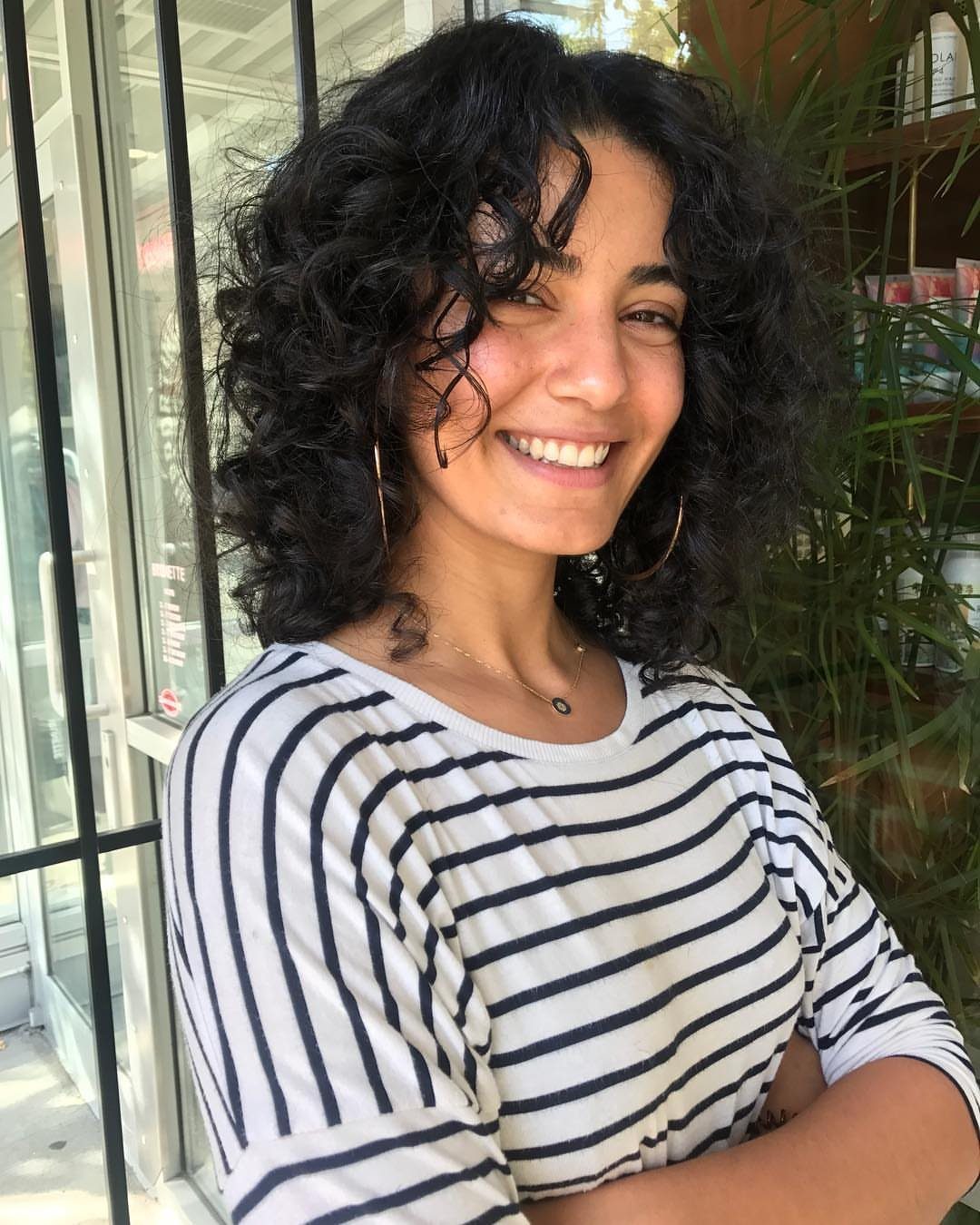
Layers cut to follow the natural curl pattern keep definition from root to end without adding bulk where it’s not wanted.
The length sits at the shoulder or just below, and the layering removes weight while letting each curl spring the way it wants to.
Dry cutting lets the stylist see how each curl sits naturally, which makes the shape more accurate.
Curls sit differently wet, and cutting dry means the shape you leave with is the shape you get at home. Between cuts, finger-coiling with a leave-in conditioner brings back any pieces that have stretched out.
2. Face-Framing Layers
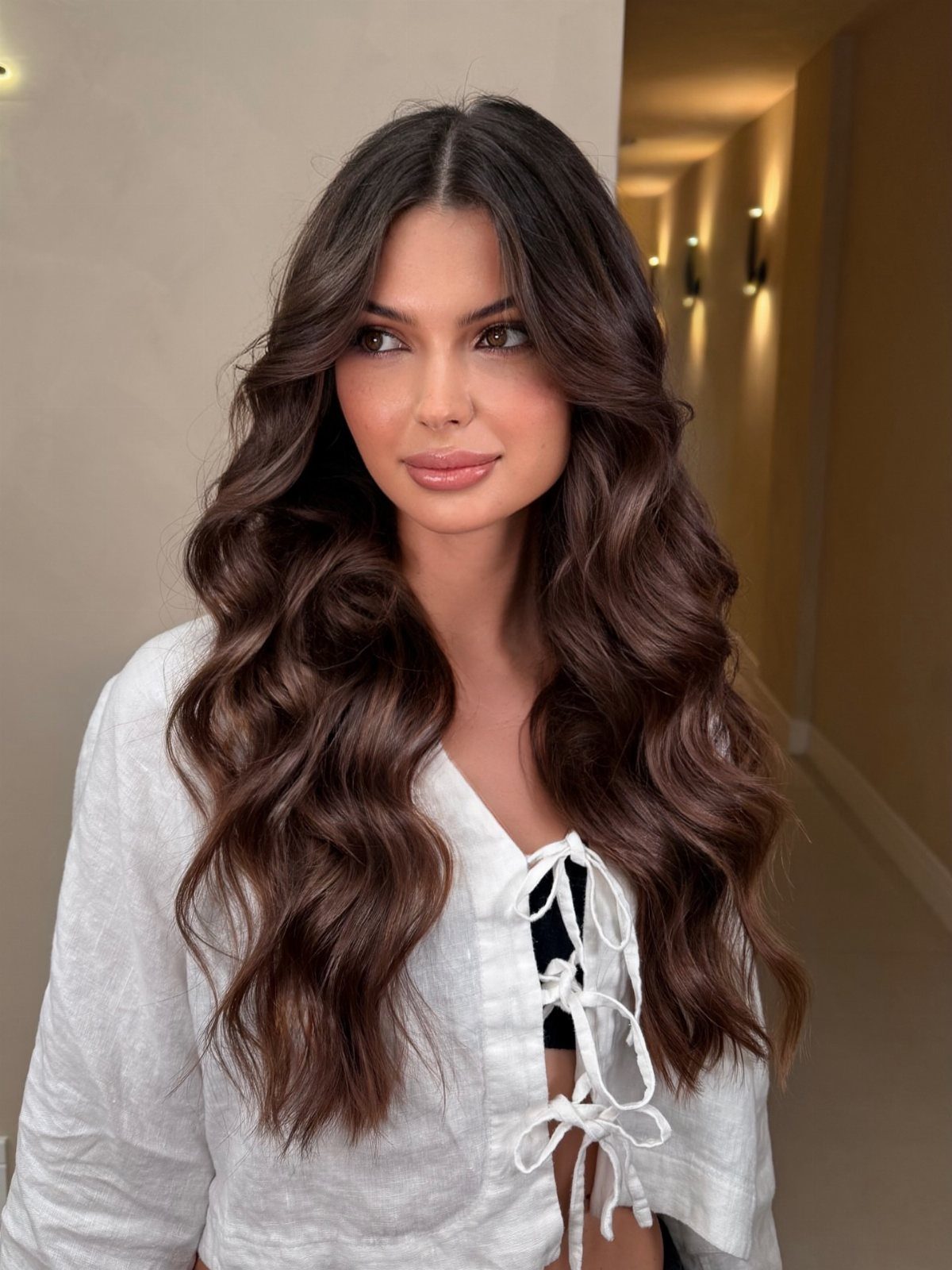
Layers starting at the cheekbone or jaw soften your face and leave the length intact. Everything else sits at nearly the same length, so updos and ponytails still work and the front has shape.
This helps when you’re growing out bangs or want a shift you can walk back later. Styling takes no extra time: the shorter pieces naturally fall forward, and waves or curls in that section show more movement than the rest.
3. Soft Shag
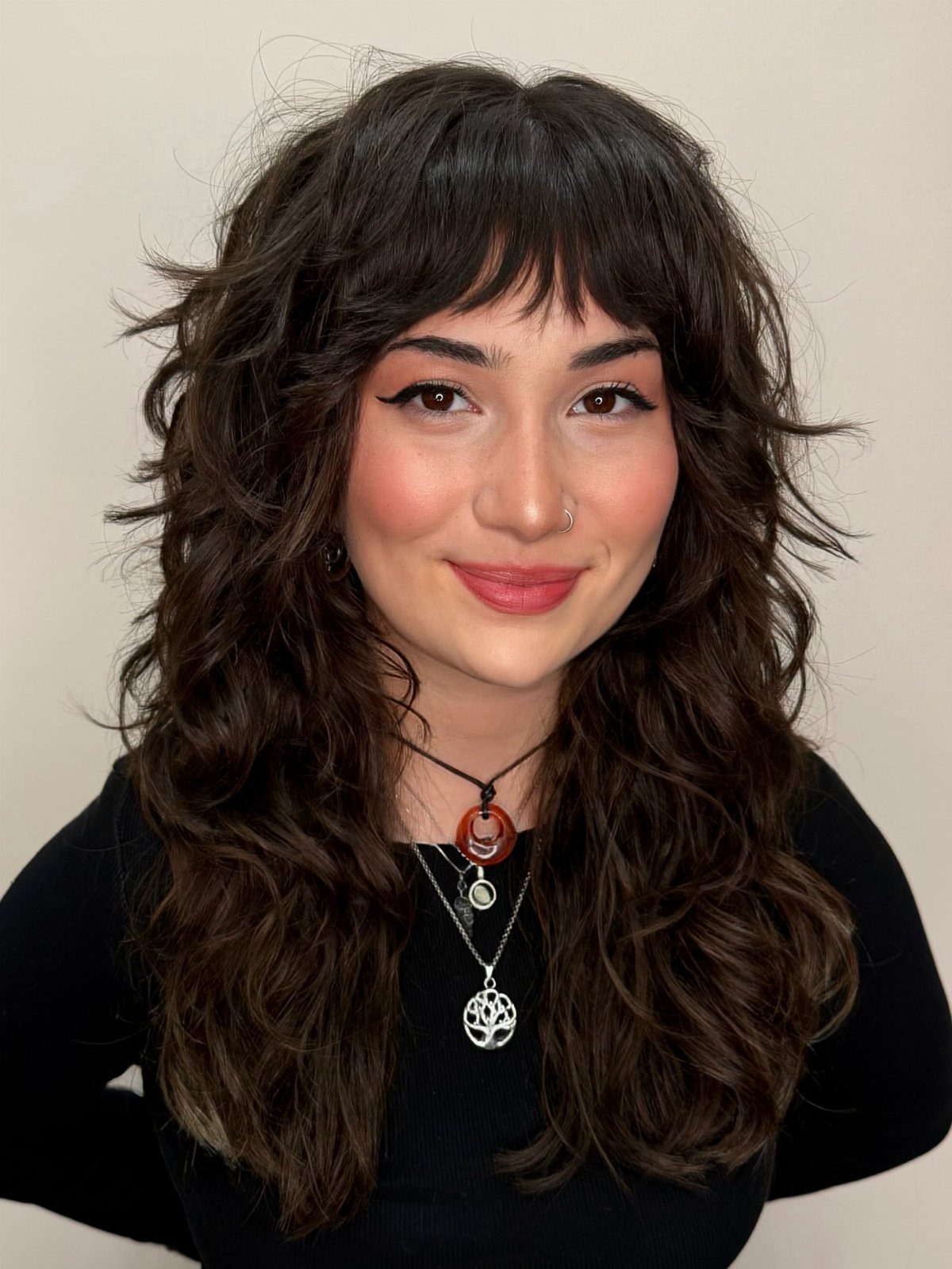
Choppy, uneven layers scattered through the cut give that intentionally undone look, and waves or loose curls carry it better than straight hair.
The layers start higher up, sometimes at the crown, and the ends are point-cut or razored so they don’t sit in a uniform line.
If your hair tends to lie flat, a shag adds lift without teasing or product.
If it’s thick and heavy, the layers take out weight and let the wave pattern move. Styling is usually air-drying with a texturizing spray or diffusing upside down for volume at the root.
4. Layered Lob
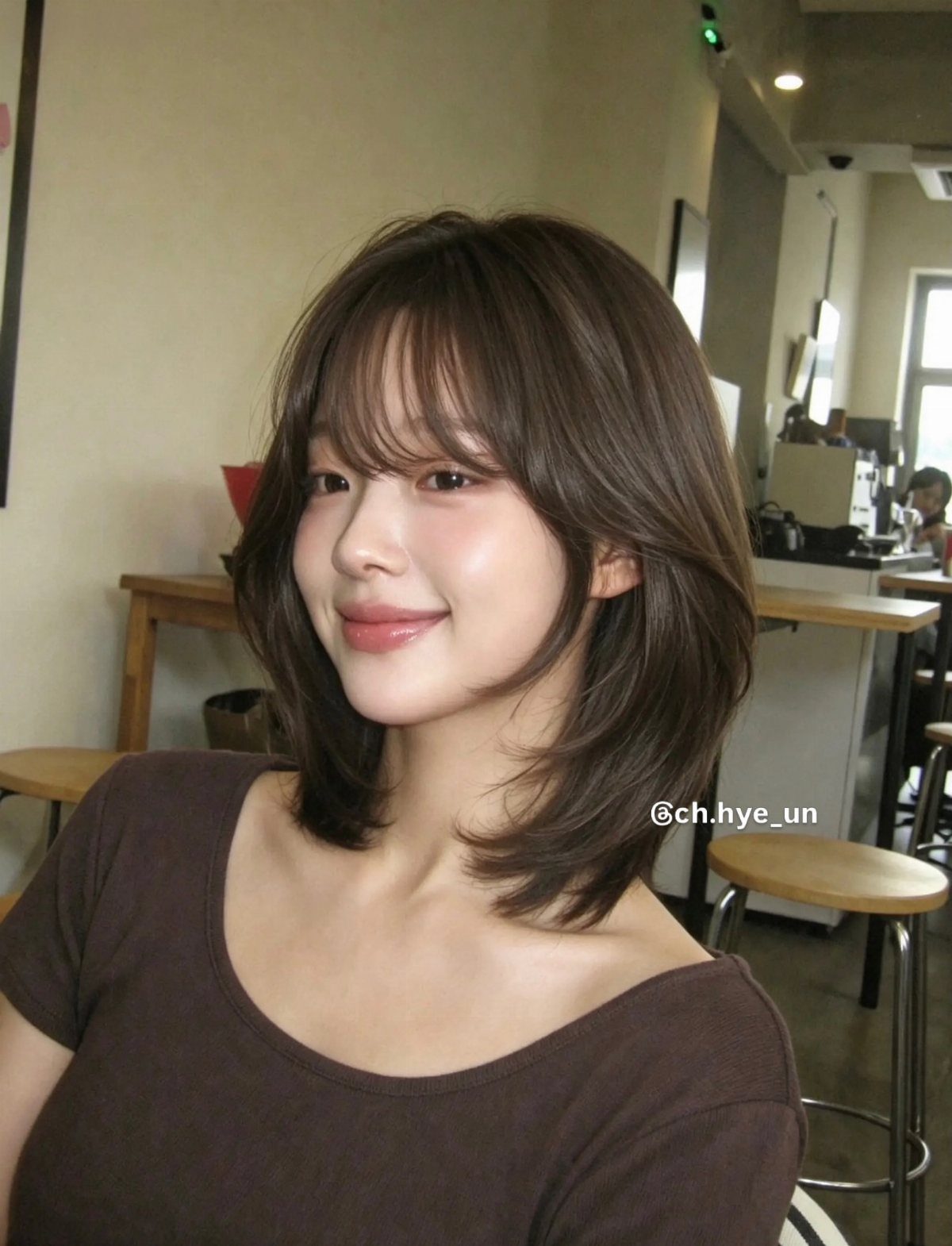
A lob that lands between the collarbone and shoulder uses interior layers so the shape doesn’t look heavy or triangular. The perimeter stays fairly blunt, so the cut reads as clean and polished even when waves loosen it up.
Length here matters: you can tuck it behind your ears or tie it back, and it stops before waves start pulling straight under their own weight.
If your hair is fine, subtle layering at the crown adds lift. If it’s thick, the layers prevent the bottom half from looking dense.
5. Shag with Curtain Bangs
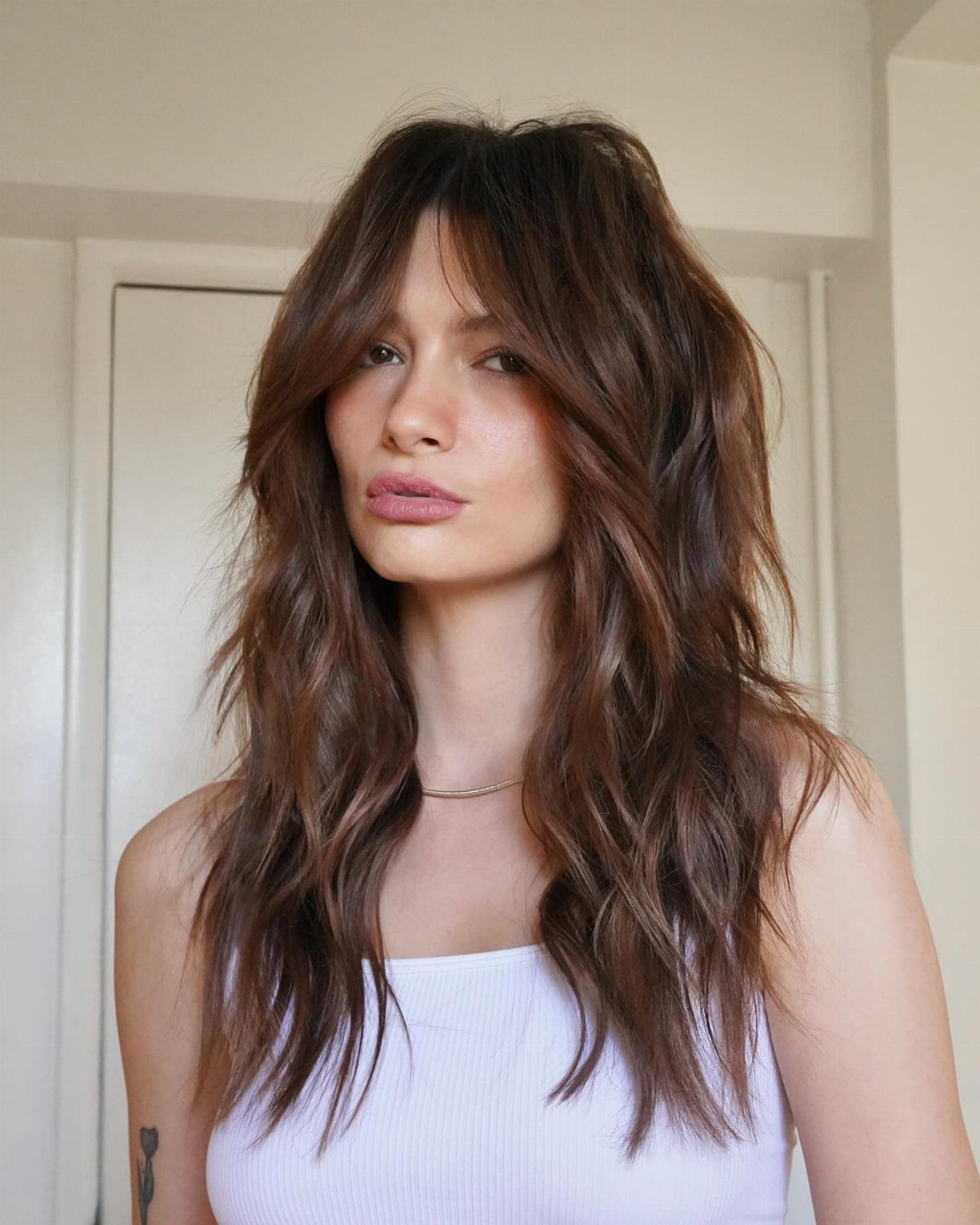
Combining the shag’s scattered layering with bangs that part down the middle gives you two levels of movement: the body of the cut breaks up one-length hair, and the bangs sit on either side of your forehead instead of covering it.
The bangs typically start around eyebrow length and angle down toward the cheekbones.
This cut looks good grown out, which helps if you’d rather skip frequent trims. The curtain bangs can be pinned back when you want them off your face, and the shag layers keep their shape as length comes in.
6. Wavy Shoulder-Length Haircut
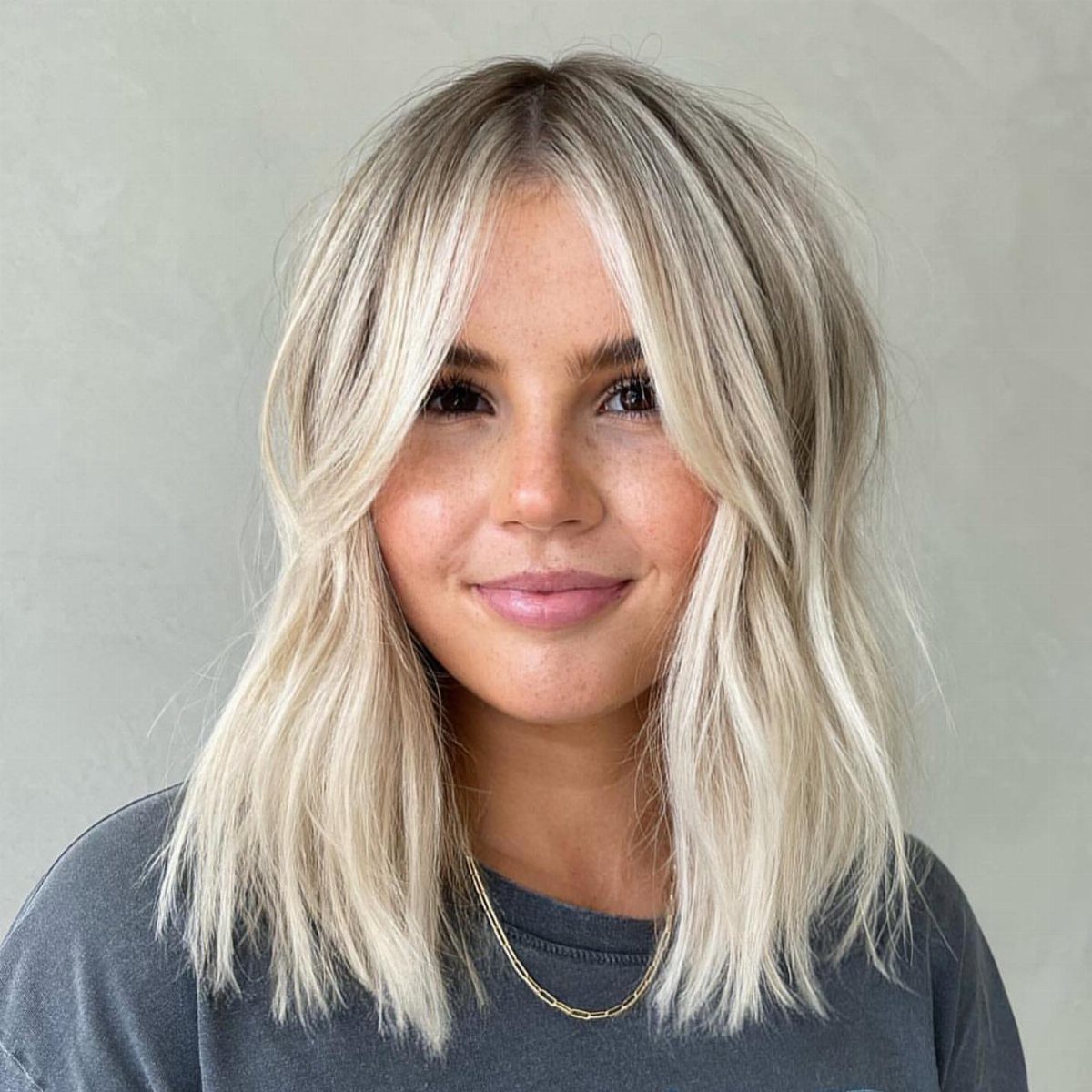
A medium-length cut that ends right at the shoulder works with your natural wave instead of fighting it.
The length stops the triangle shape that happens when waves stack up in short hair, but it also stops before the hair pulls itself straight.
Minimal layering keeps the cut simple, and the waves provide all the texture.
If you have fine hair, this length can look fuller than longer cuts because the weight isn’t dragging everything down. Styling is usually scrunching in mousse or sea salt spray and letting it air-dry or diffusing on low heat.
7. Tousled Waves
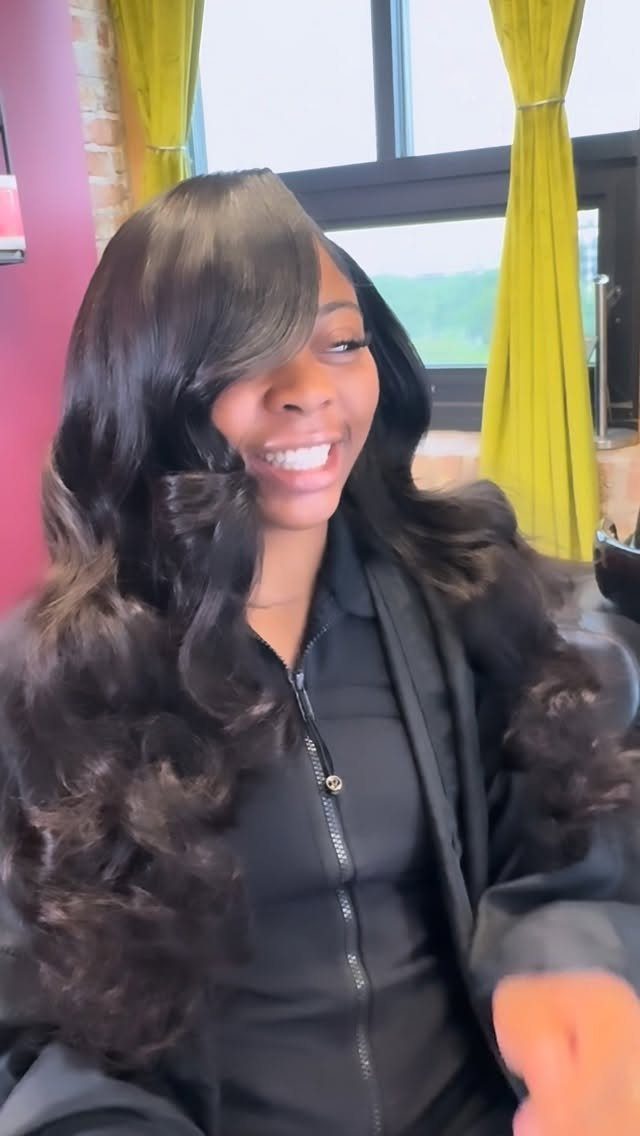
Imperfect bends and separated pieces give waves that look like you slept on damp hair and woke up with texture. Medium length keeps the pattern readable without the weight pulling it flat.
A 1.25" curling iron or wand, wrapped in alternating directions and brushed out with your fingers, gets you there fast.
Sea salt spray on damp hair before air-drying works if your hair holds a bend on its own. Skip this for polish: tousled reads casual, and trying to control every piece defeats the point.
8. Feathered Wavy Bob
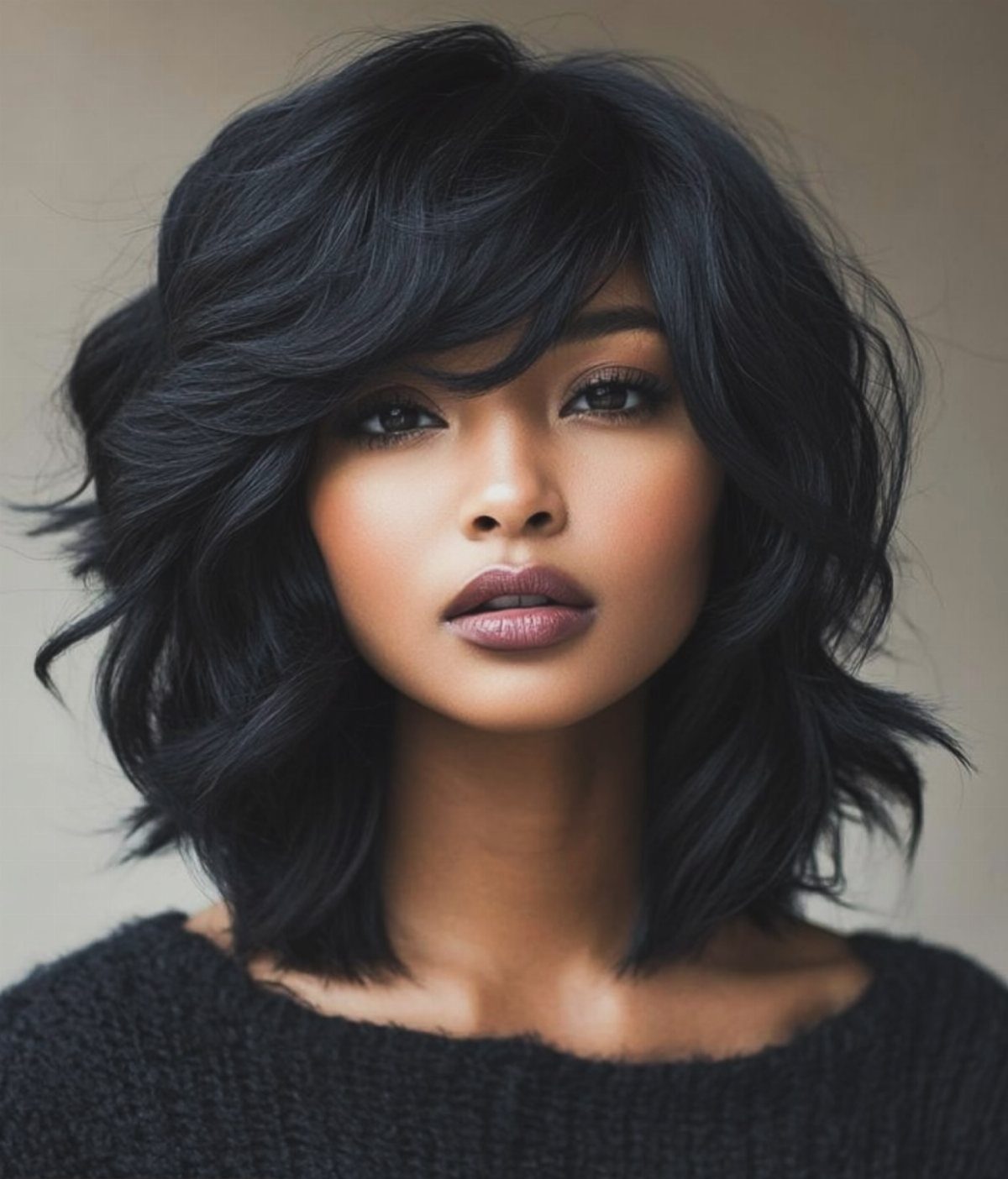
Point-cutting or razor work at the ends softens the perimeter so a bob doesn’t sit in one heavy line. Feathering breaks up the edge, and waves make that texture more visible than straight hair would.
A bob already adds volume by removing length that weighs hair down. Feathering takes it further: the varied ends let air in, so fine or flat hair looks fuller without product.
Styling is usually a round brush and blow-dryer or a flat iron bent loosely through mid-lengths. This cut needs regular shaping or the feathered ends grow out and the line turns blunt again.
9. Highlighted Layered Waves
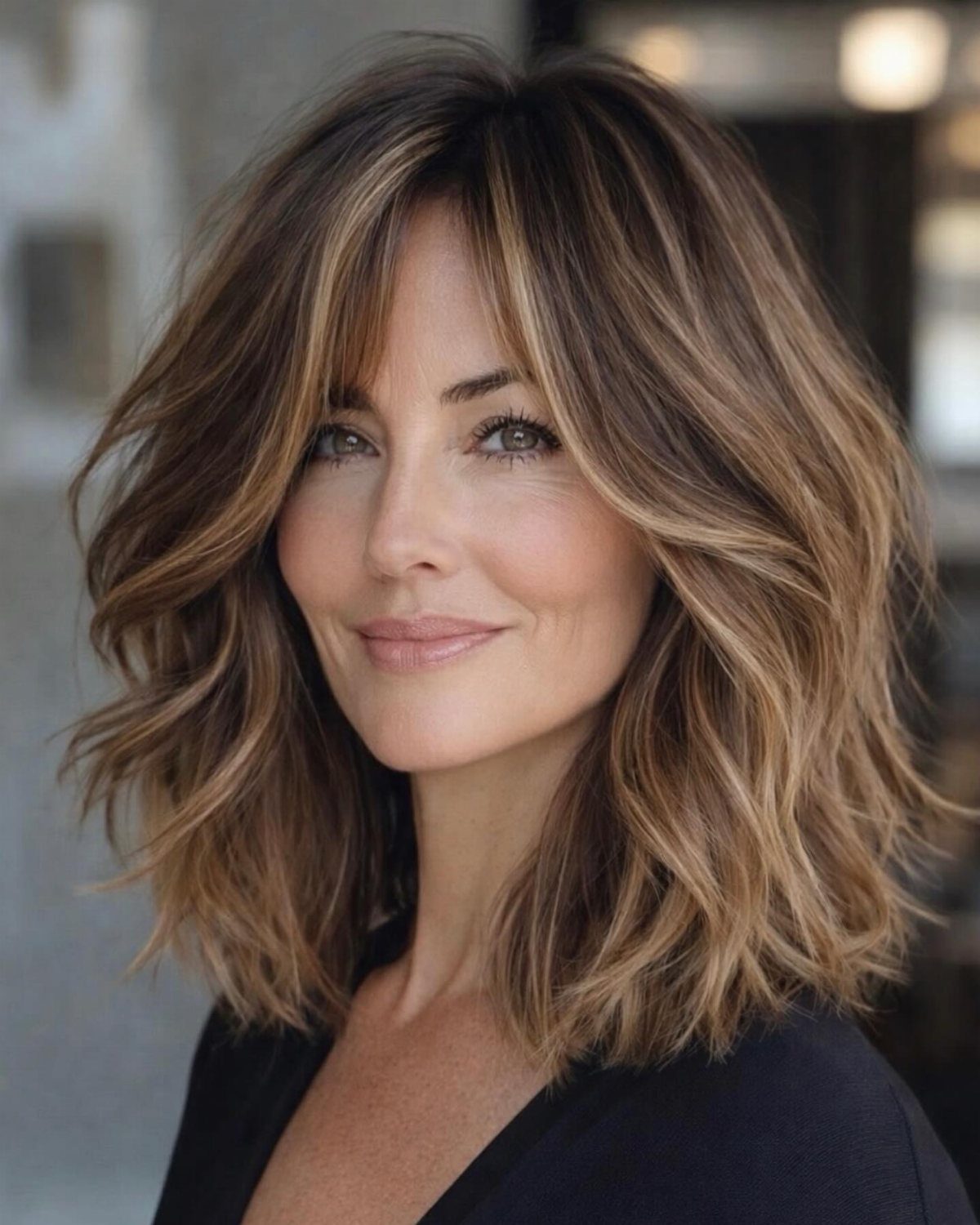
Lighter pieces scattered through brown hair make the wave pattern easier to see because each bend catches different tones. Layers keep the shape from sitting too uniform, and the highlights sit where the layers lift.
Balayage or foil highlights both work.
Balayage gives a softer blend, foils give more contrast. If your natural color is dark, lifting it enough for noticeable dimension takes time in the chair and toning afterward to keep it from pulling brassy.
Maintenance frequency depends on how fast your hair grows and how much regrowth you’re willing to live with.
10. Waves with Bangs
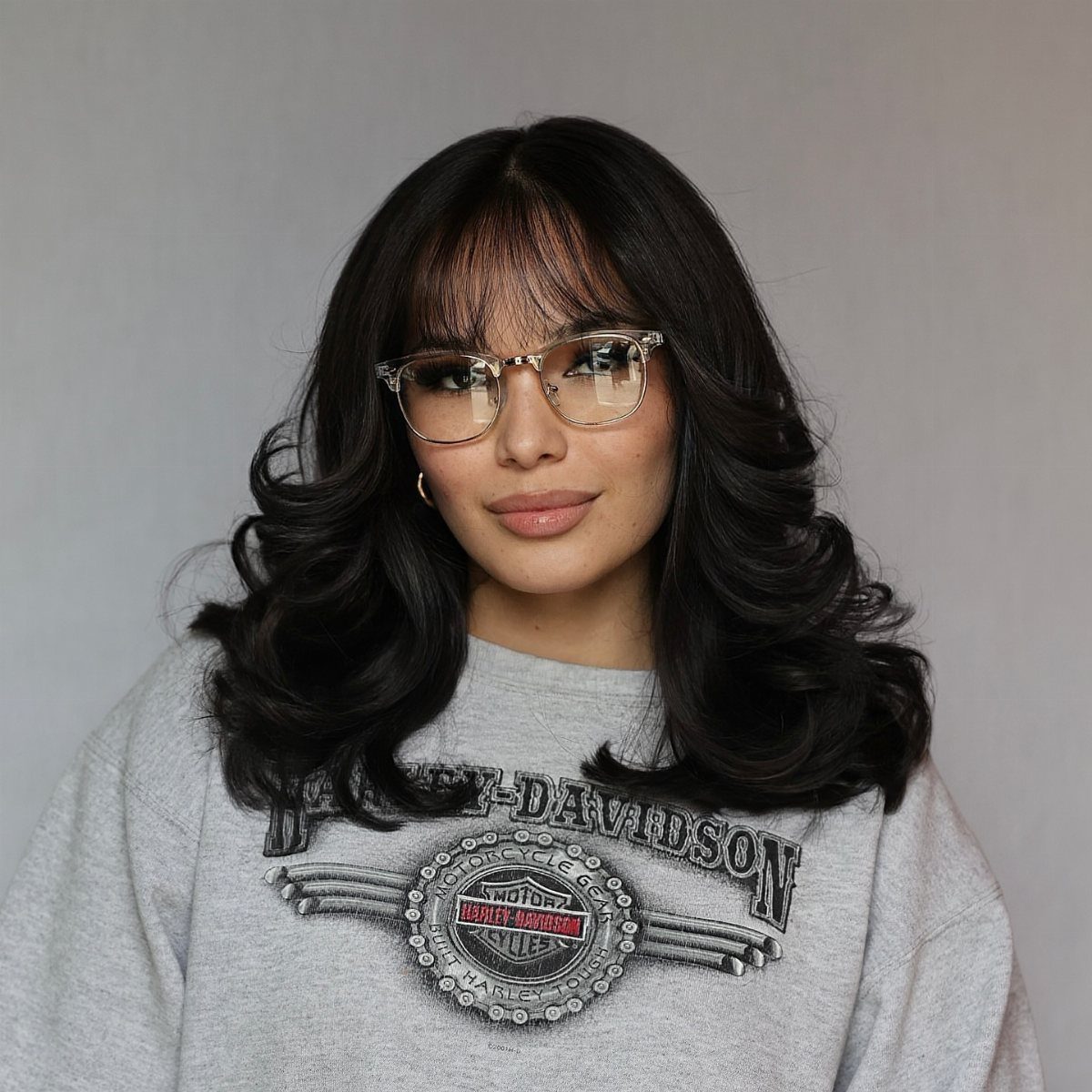
Full bangs that sit across your forehead change the proportions of your face more than any other framing option. Paired with shoulder-length waves, bangs draw attention up and give the cut a distinct line.
Bangs work best if your hair has enough density to look full across your forehead. If it’s fine or sparse, bangs can look thin and show scalp.
Wavy bangs need a round brush or flat iron most mornings to keep them from separating or curling the wrong way. Growing them out takes patience, and you’ll spend part of that time pinning them back.
Frizz and Bulk Management
Medium layers work through the middle of the strand, where the wave pattern needs the most definition.
Fine wavy hair needs subtle layering that keeps enough weight for the waves to register. Too much layering turns fine hair thin and stringy.
The right layering reduces frizz by letting each wave follow its natural direction instead of forcing it into a shape that fights the curl pattern.
Cut for Natural Wave Pattern
Wavy hair shrinks as it dries, which means a cut that looks right when wet can sit shorter or differently shaped once you leave the salon.
Blunt cuts make frizz more visible because every uneven piece stands out against a hard line. Soft layers or rounded shapes let the wave pattern move without adding bulk at the ends.
Fighting the wave direction creates frizz and makes pieces stick out where they shouldn’t.
One of the biggest misconceptions about cutting wavy hair is that it should be cut the same way as straight hair, says Shahid Dilshad Pasha, master trainer manager at Davines India. “If you ignore the natural pattern, the cut can look uneven once it dries.”
— Vogue
Frequently Asked Questions
What haircut should I get if I have wavy hair?
Layers cut to follow your natural wave pattern work best because they remove weight where it builds up and let each wave spring the way it wants to.
Medium length stops short of the point where hair pulls itself straight, and dry cutting shows the stylist how each curl sits naturally so the shape you leave with matches what you get at home.
How do I figure out what type of wavy hair I have?
2A shows a loose bend with minimal texture, 2B has more defined S-shaped waves through the length, and 2C waves are deeper and can start forming soft ringlets when hydrated.
The tighter and more defined the wave pattern, the higher the letter.
What is medium wavy haircuts?
Hair that falls somewhere between your chin and shoulders, where you get enough length to see the wave move but not so much that the weight straightens it out.
The medium range stops before waves stack into a triangle shape and keeps styling simple because the natural texture does the work.
How to get soft waves in hair?
A large barrel curling iron wrapped loosely with the ends left out gives you soft bends, or scrunch mousse or sea salt spray into damp hair and air-dry.
Once the iron cools, break up each section with your fingers so the curl loosens into that softer, lived-in shape.
What are the types of waves in hair?
Wavy hair divides into 3 types: 2A is light and loose, 2B is medium with more defined S-shapes, and 2C has deeper waves that can start forming ringlets.
Each type benefits from different levels of hydration and product weight to keep the pattern clear without frizz.