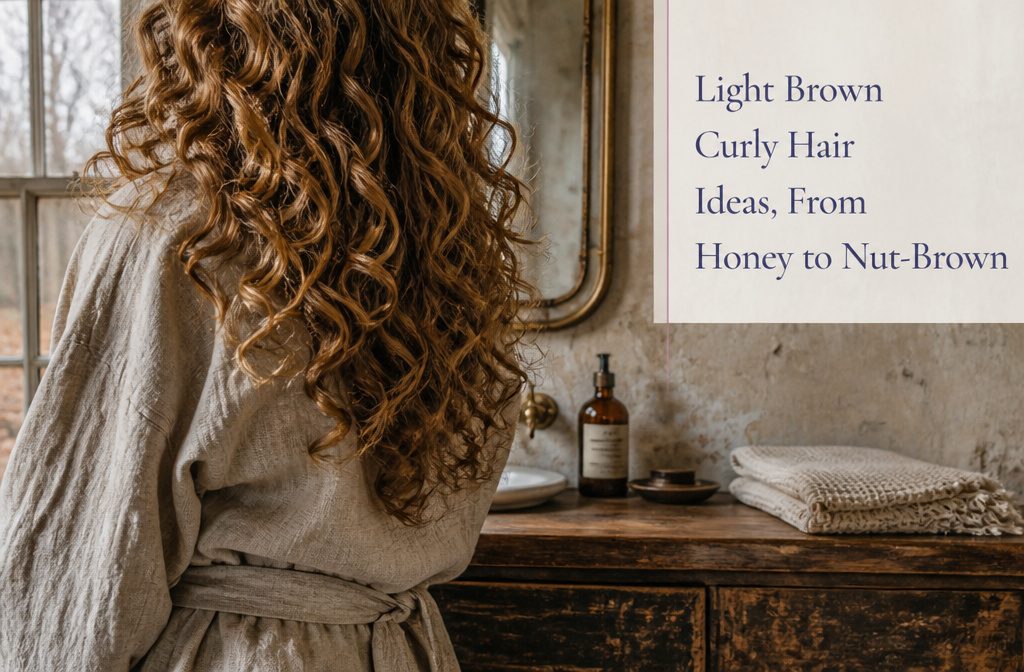
Light brown on curls ranges from honey gold to deep nut-brown, and the one you pick comes down to how much warmth or coolness you want against your natural base.
The choice gets harder when you factor in highlights, balayage or ombre, because curls show color differently than straight hair: each coil catches light on the outer curve and holds shadow underneath, so even a single shade reads as two or three tones at once.
1. Honey Brown
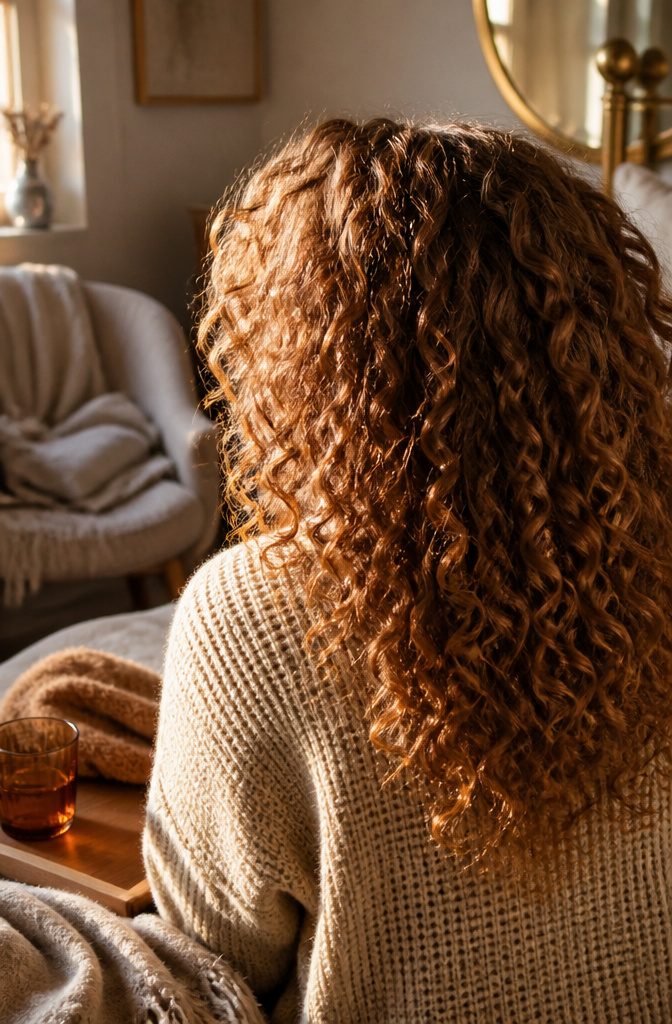
Honey brown sits in that warm, glittering range where light brown picks up amber and gold without tipping over into full blonde.
The color reads richest in natural light, which makes it a smart choice when you want something that feels alive during the shorter days of late fall and winter or when spring sun is finally back.
The warmth keeps curls from looking flat or one-dimensional, and the reflective quality means each ringlet catches light differently as you move.
The shade works especially well if your natural base is already in the medium brown range and you want to lift it without committing to high-contrast highlights.
Honey brown can be applied as an all-over color or concentrated through the mid-lengths and ends, where curls tend to show the most movement.
Either way, it brings enough variation in tone that you get dimension without needing multiple colors layered in.
2. Soft Curls in Light Brown
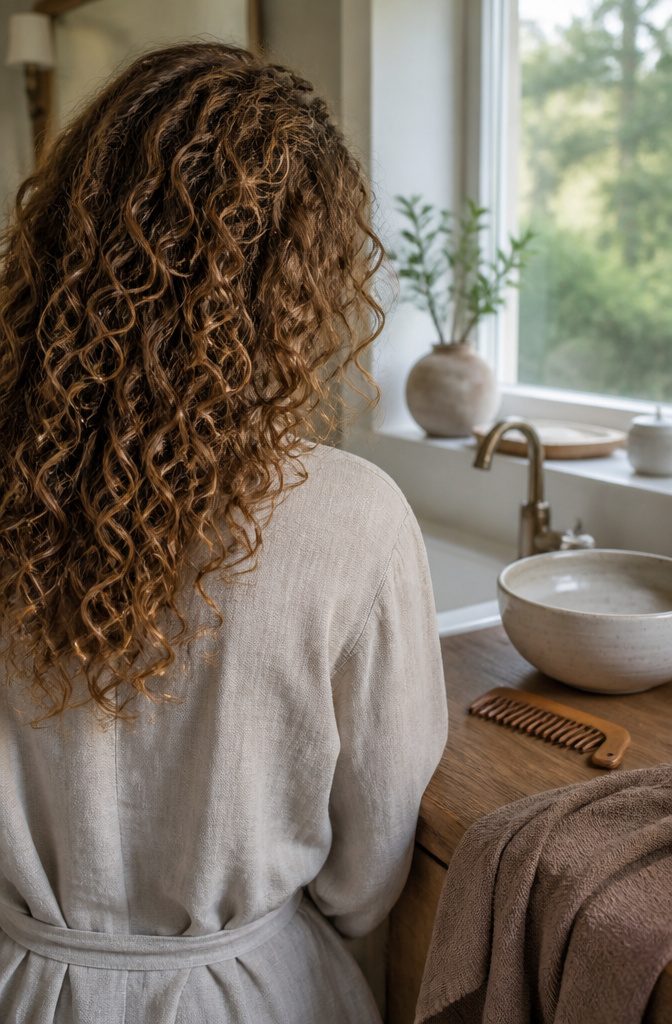
Light brown is where you start if coloring curly hair feels risky. The shade sits close enough to natural tones that if you decide it’s not working, you haven’t committed to anything dramatic.
Curly hair takes color differently than straight hair does, and until you’ve watched dye settle into your own curl pattern, you won’t know how the final result will read in daylight or how evenly it catches along each coil.
Starting lighter gives you room to go darker later with confidence.
If the brown takes well and you like the depth it adds, moving into richer or more saturated shades becomes a clear next step rather than a guess. The reverse is harder to walk back.
3. Blonde Highlights on Light Brown Curls
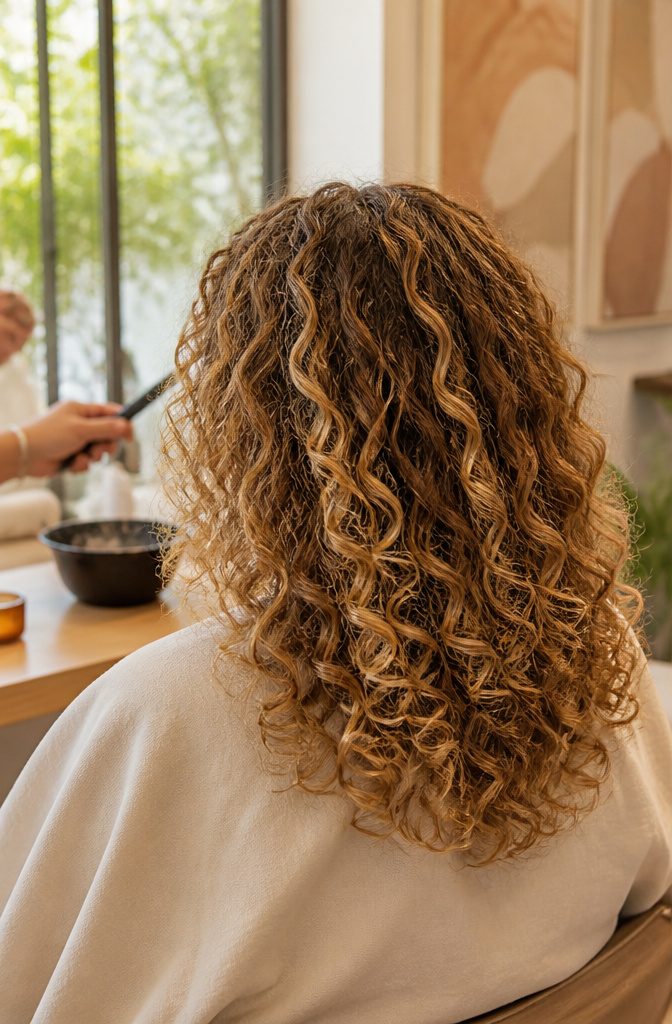
Blonde highlights soften the monochrome of all-brown curls and catch light in a way solid color never will.
The placement matters more than the shade: face-framing pieces that start an inch or two below the part read as bright and deliberate, while babylights scattered through the midlengths and ends look sun-kissed rather than color-chart planned.
Honey and butter tones stay warmer and read as caramel adjacent; champagne and wheat lean cooler and give more contrast if your base brown skews ashy.
The lift shows most when curls are dry and separated. Wet hair compresses the color into vertical stripes, but once the curl springs back you see flashes of blonde wrapped around each coil.
That movement is what makes the combination feel cheerful rather than static. Tighter curl patterns benefit from slightly wider highlights because ringlets hide narrow ribbons of color, and you want the blonde visible from more than one angle.
4. Light Brown Paired With Auburn
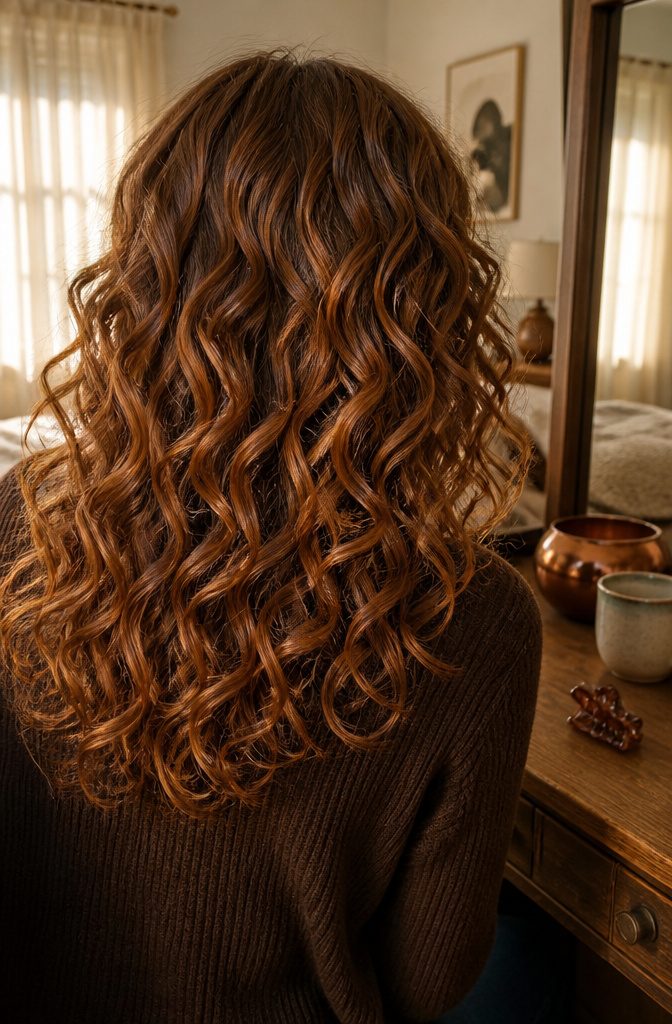
Auburn brings out the warmth curls need. Light brown gets elegant when you add auburn, and the combination looks better on curly hair than straight because the dimension moves with every bend.
Auburn sits warmer than most reds, closer to coppery brown than fire-truck bright, and that warmth keeps the light brown base from reading flat or mousy.
On curls, you see more surface area per inch of hair, so the two tones catch light from more angles and the auburn shows up as flashes of copper instead of a single solid stripe.
The shade works because curls already have natural shadow in the underside of each coil. Auburn in the mid-lengths and ends plays off that built-in contrast instead of fighting it, so the color looks deliberate rather than accidental.
5. Medium Ash Brown for a Chocolate Effect
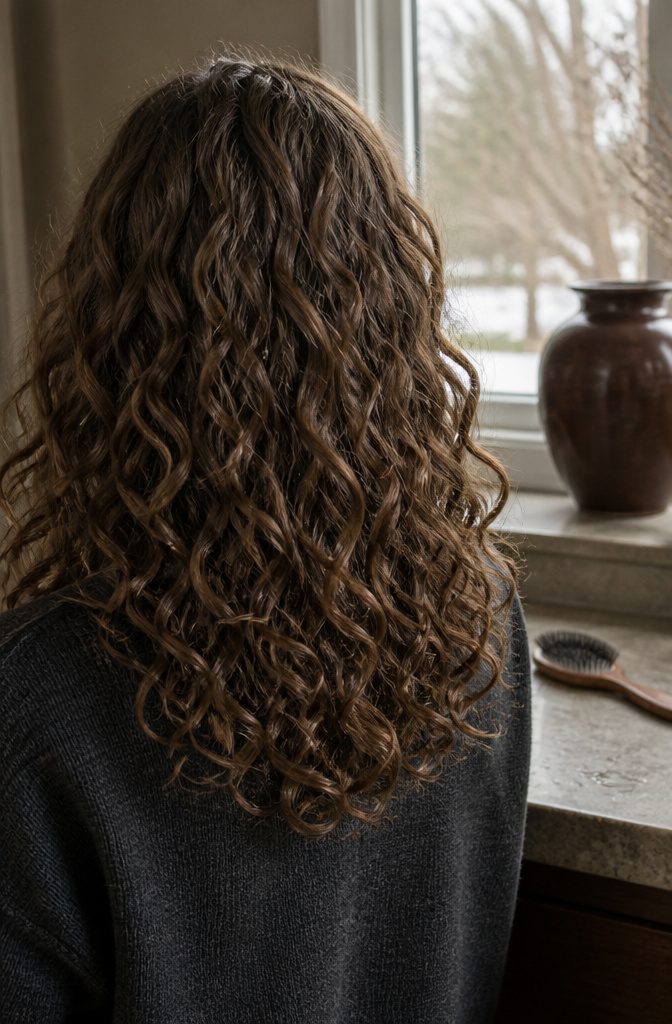
Medium ash combined with a standard light brown base deepens the color into chocolate brown without turning it heavy or flat.
The ash tones pull the warmth down just enough that the brown reads richer and more dimensional on curls, which catch light differently at every bend.
I like this combination because it avoids the red or brassy cast that straight light brown can pick up outdoors, and the cooler undertone suits a wide range of skin tones without looking washed out.
The chocolate effect works especially well on curly hair because the texture already creates natural shadow and highlight. Where one curl sits under another, the ash reads darker.
Where it catches light, the standard brown shows through. You get depth that looks intentional rather than accidental, and the color stays interesting even when your hair is pulled back or worn in a wash-and-go.
6. Medium Brown Balayage With Chocolate
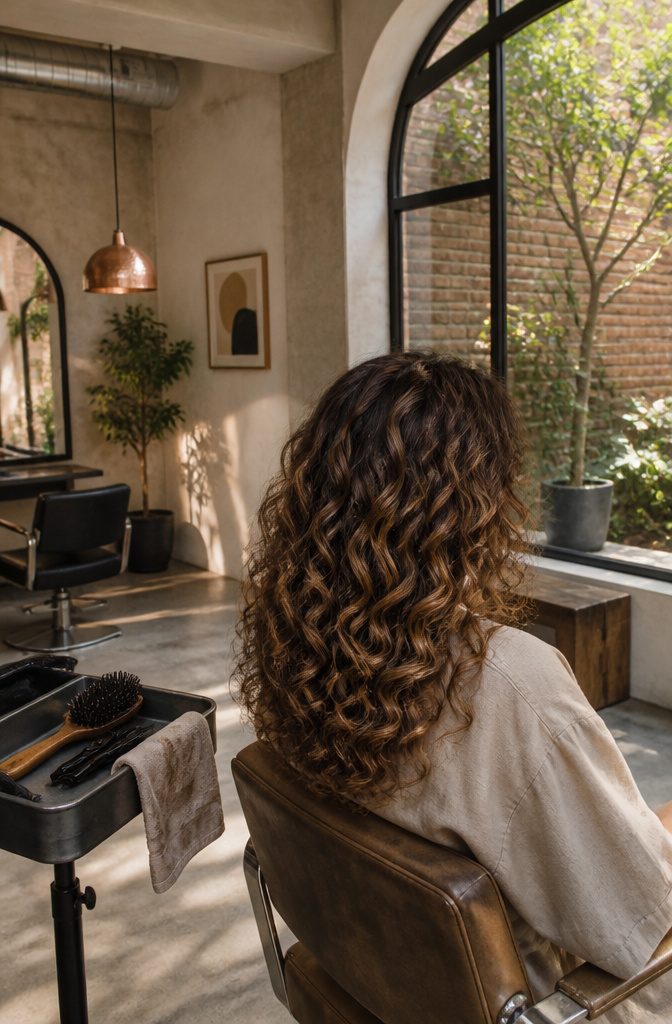
Medium brown paired with chocolate lowlights brings a richer contrast than most balayage formulas, which tend to sit close together in tone. The medium brown reads lighter and more neutral, closer to what you see in caramel or light walnut.
Chocolate is a few shades deeper and cooler, so the two side by side give curls a noticeable lift in dimension without the warm pull of honey or auburn.
Balayage placement matters more on curly hair than on straight because the curl itself already creates shadow.
The colorist usually sweeps chocolate through the underlayers and mid-lengths, leaving the surface lighter. That way, when the curl springs up, you catch flashes of the darker tone underneath rather than a flat wash of one color.
The look holds up well between appointments because the root stays medium rather than dark, so grow-out reads as blended rather than striped.
7. Coppery Brown Balayage for Volume
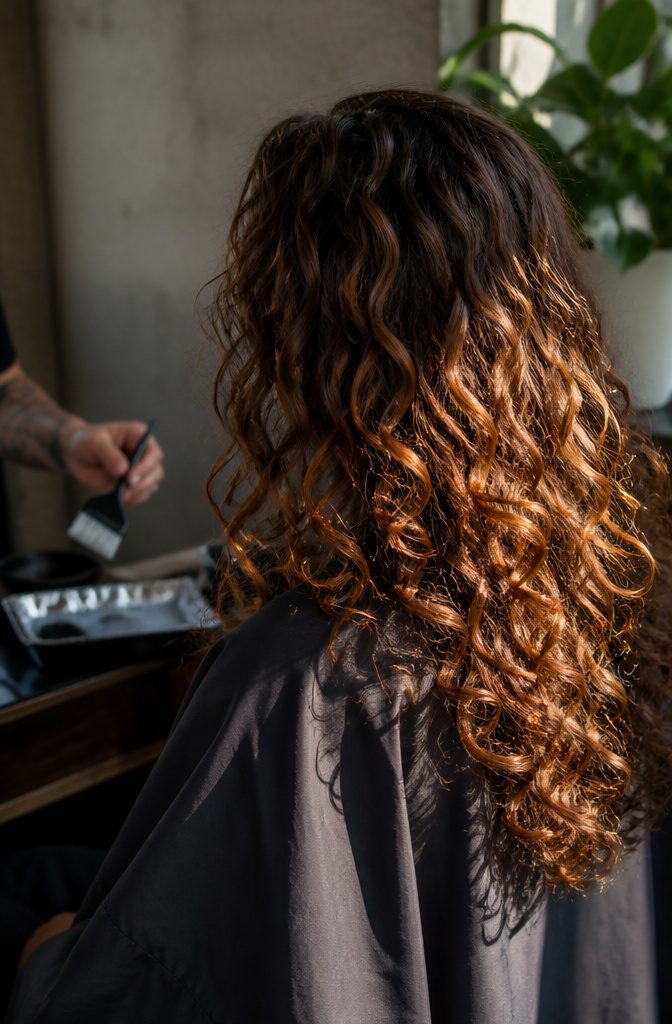
Balayage is painted on by hand, so the lighter copper sits on the outer curve of each curl instead of in stripes from root to tip.
On textured hair that placement reads as a glint on every high point, with deeper brown left underneath as shadow. The eye takes that contrast as volume, even when the cut hasn’t changed.
Cool brown tones around the face make it stand out and keep the copper from turning orange.
On light brown curly hair I’d pick this over flat all-over copper. Ask for soft, rooted copper on the surface curls so regrowth blends without a hard line.
8. Light Brown to Blonde Ombre on Long Hair
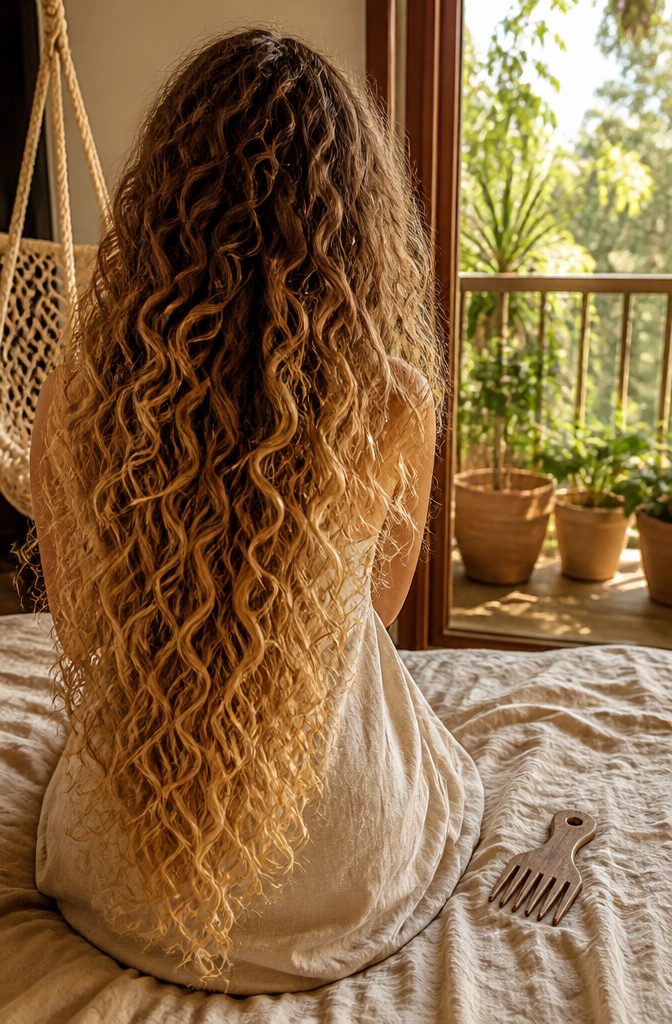
Length is what makes this ombre work. Light brown at the crown melting into blonde at the ends needs inches to spread across, and long hair gives the color room to fade so slowly that no line shows.
On shorter curls the same change gets squeezed into a small space and reads as a stripe.
Curl adds depth on top of that. Each spiral folds the lighter ends over the darker midlengths, so the blonde shows in flashes between light brown instead of as one flat block.
I’d ask the colorist to keep the blonde on the lower half and let the brown carry through the crown.
9. Grey Roots With White Trimmings for Contrast
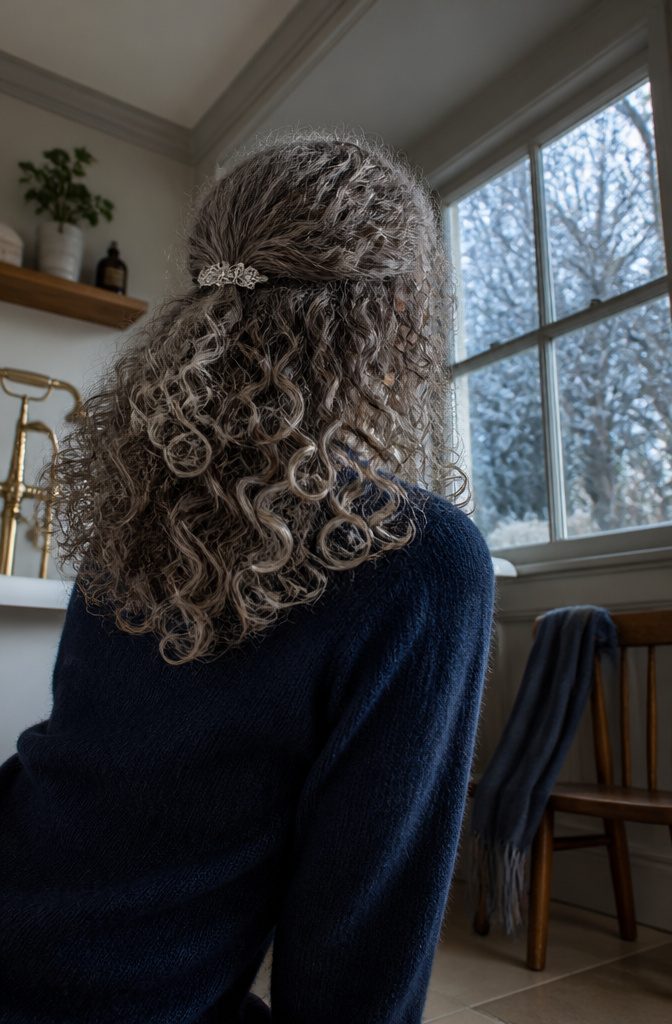
Grey at the root and white at the trimmings give curls a built-in gradient, and that contrast is where the dimension comes from.
Curls spring up and stack, so the two tones show in alternating pieces instead of one flat block. The look works at any length, from a chin-grazing cut to hair well past the shoulders.
Face framing comes from where the light tones land. White trimmings around the face and ends catch the eye first, while softer grey at the crown keeps the color from looking striped.
I’d leave a few of the lightest curls loose on each side so they spring along the cheekbones.
10. Hot Rich Cider in Nut-Brown
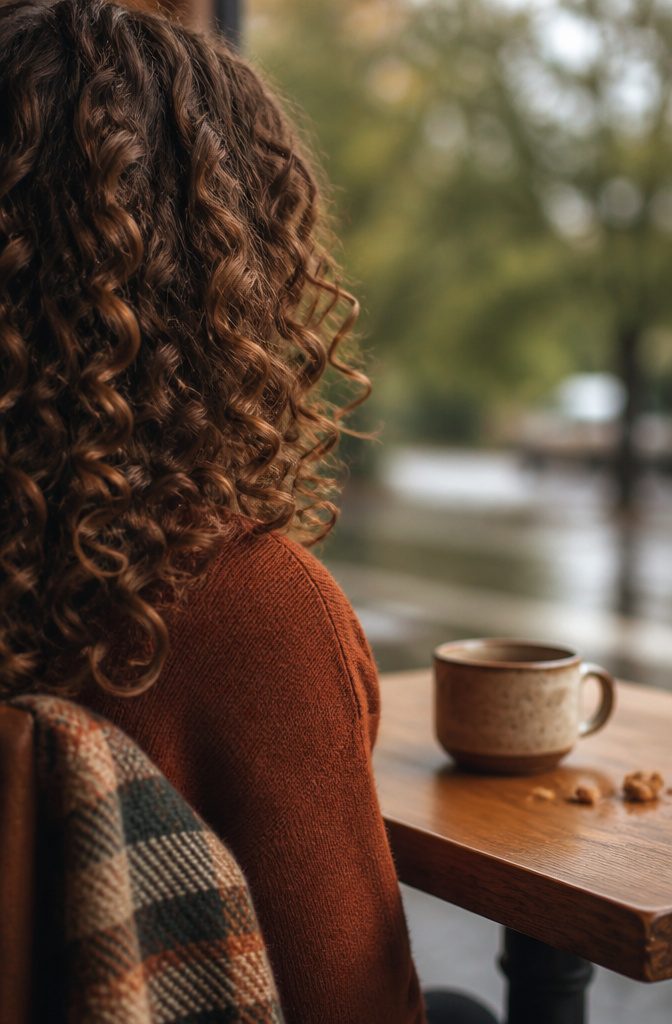
Nut-brown carries cool and warm tones at the same time, so neither one takes over.
On curls, that mix reads as depth rather than stripes. The pattern looks thicker because the eye finds several shades inside each curl instead of one flat color.
Stark contrast is what makes a color job look painted on, and this shade avoids it. The cool and warm hues sit close enough together to blend, which is why the result looks natural, fuller and dimensional all at once.
I’d pick it over a high-contrast highlight if you want people to notice your hair without being able to say what you had done. It gives up drama, since nobody will spot this shade from across the room.
11. Glossy Gold Starting With Grey Roots
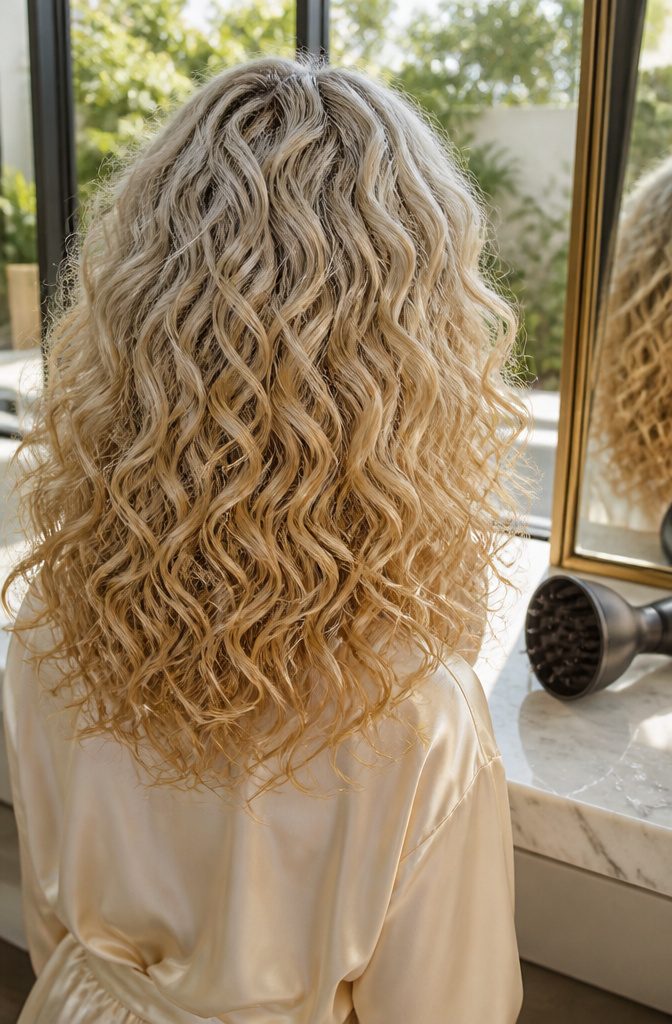
Grey roots set this look apart. The pale, cool base sits against warm gold lengths, and each tone makes the other read brighter.
That contrast is where the gloss comes from: the light catches both the silvery root and the smooth gold, so light brown curly hair like this shows depth from scalp to ends instead of one flat shade.
Styling is easy for the same reason. Since the shine of each color lifts every section of the curl, a loose scrunch looks finished without arranging strand by strand.
The warmth keeps the grey from looking stark, and the result reads sleek rather than faded. I’d pick this over a single-tone brown whenever depth matters more than uniformity.
Starting With Light Brown if You’re Unsure
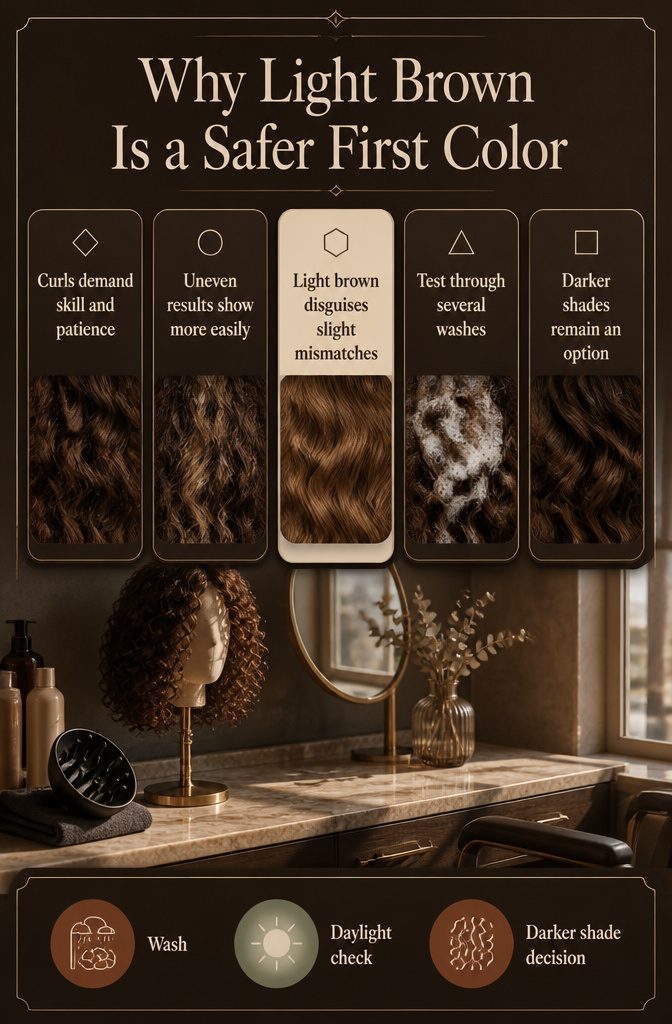
Curly hair punishes guesswork in a way straight hair doesn’t. Straight hair takes dye in one even pass, while curls ask for skill and patience, and a bad result is easy to get.
Light brown sits close to a natural shade, so an uneven patch or a tone that lands slightly off reads as natural variation instead of a mistake.
I’d treat that first color as a test run. Live with it through a few washes, and check it in daylight.
If it works, you can move to darker shades later with confidence; if it doesn’t, you’re a small step from where you began, and that is easier to fix than a leap to deep chocolate.
Frequently Asked Questions
What skin tone suits light brown hair?
Light brown curly hair works across a wide range of skin tones, especially when you adjust the undertone.
Warmer shades like honey brown and coppery balayage suit warm and olive complexions, while cooler ash-based browns and chocolate tones complement fair or cool-toned skin.
Match the warmth or coolness of the brown to your natural undertone, and the color will brighten your face instead of washing it out.
What is the prettiest brown hair color?
Honey brown and medium brown balayage with chocolate lowlights rank high for dimension and warmth on curly hair.
Honey brown catches light in a way that feels alive, while the balayage combination brings depth without looking flat. Both work because curls already create natural shadow, so these shades play into that texture instead of fighting it.
What is the best color for curly hair?
Light brown is the best starting point if you’re new to coloring curls, since it sits close to natural tones and forgives uneven application.
For dimension, balayage techniques like coppery brown or blonde highlights work better than single-process color because they let the curl’s natural shadow and light do the visual work.
Curls take dye differently than straight hair, so shades that add warmth or contrast without high maintenance tend to look best and last longer between appointments.