A braided ponytail can sit high at the crown, low at the nape, or swept to one side, and the braids themselves range from tight cornrows and stitch braids that last a week to loose goddess braids and quick fishtails you can redo the same night.
The right version depends on how long you want the style to hold, how much tension your scalp can take comfortably, and whether you’re working with your natural length or adding extensions.
Cornrows and stitch braids stay sharp for days but require a firm hand, while fishtail and mermaid braids work fast on a ponytail you already gathered and come apart the same night if you need them to.
1. Cornrow Braided Ponytail
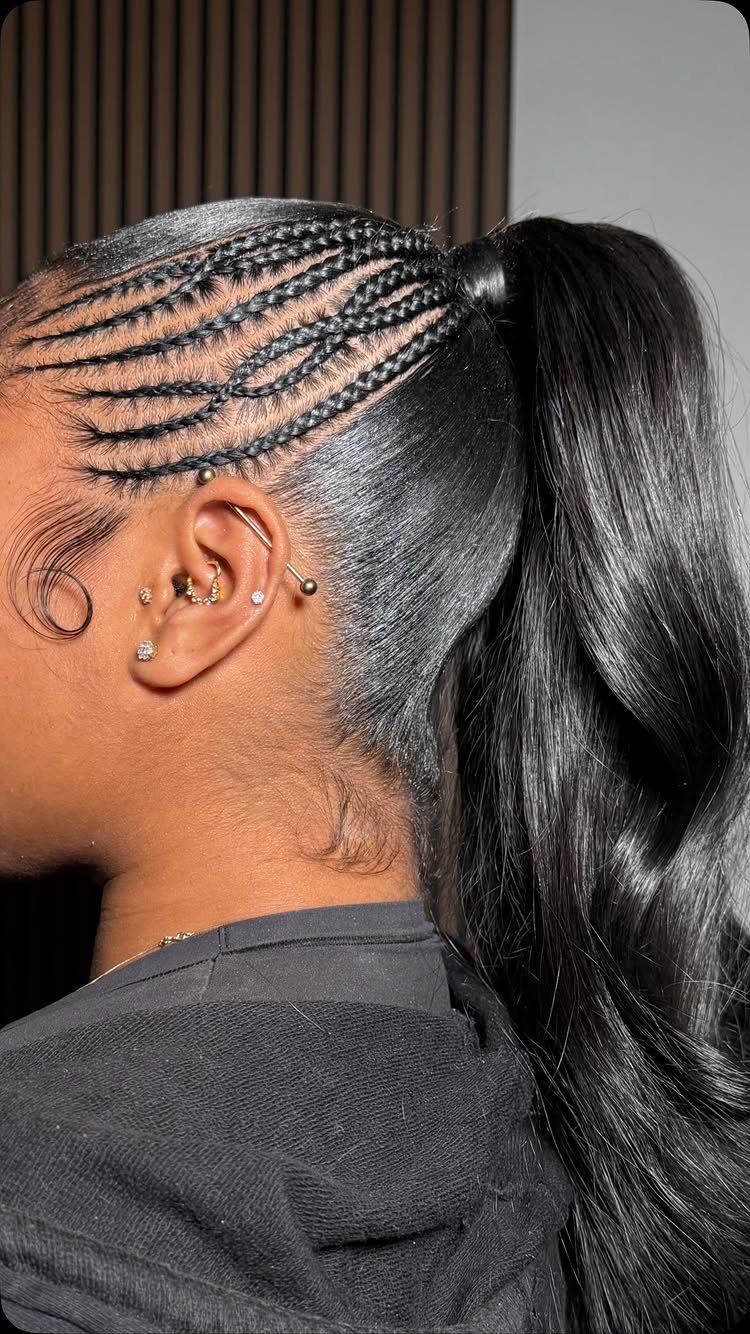
The cornrows run straight back from the hairline and gather at the crown, where the rest falls into a ponytail.
Once the rows are secured, you can leave the ponytail straight, add waves with a curling iron, or pull in a hairpiece for more length and body.
The scalp is braided tight and the ponytail hangs loose.
The cornrows hold for days, so you only restyle the ponytail each morning. Edges stay tucked, and the whole style works with medium to long hair or added length.
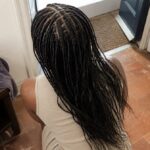
2. Box Braids Ponytail
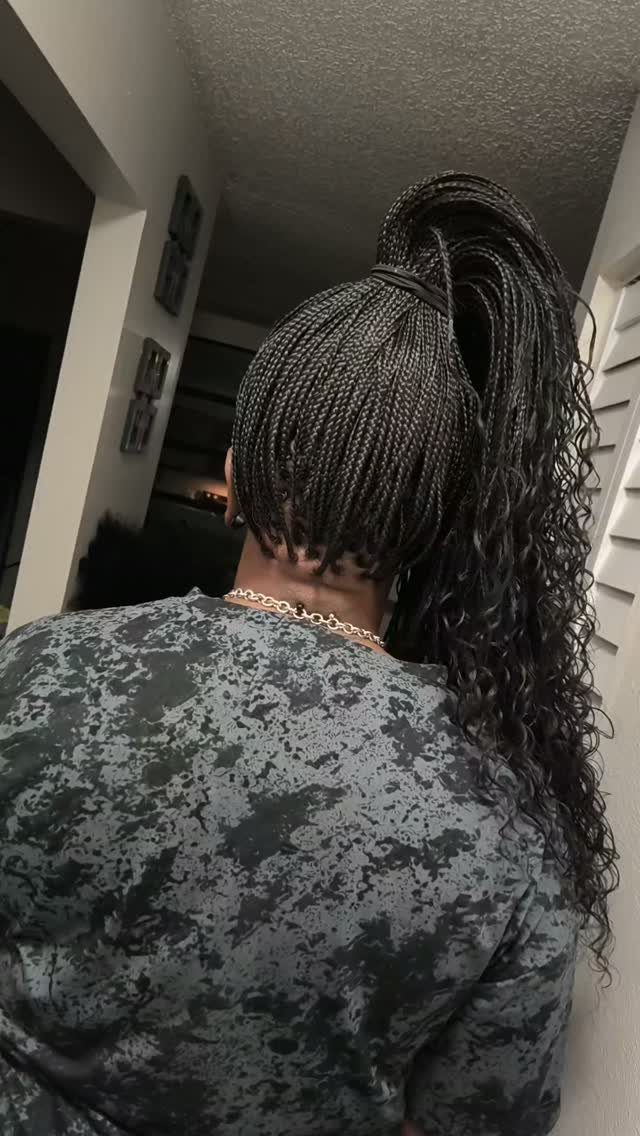
Individual box braids are installed across the entire head, then pulled up and secured with an elastic. The ponytail can sit high, low or anywhere between, and the braids hang loose from that point.
Box braids last a while, so the ponytail becomes a way to change the look without redoing the braids.
You can wear it sleek one day, curled the next, or switch the height. This works best when the braids are long enough to gather cleanly without short pieces escaping at the nape.
3. Fishtail Ponytail
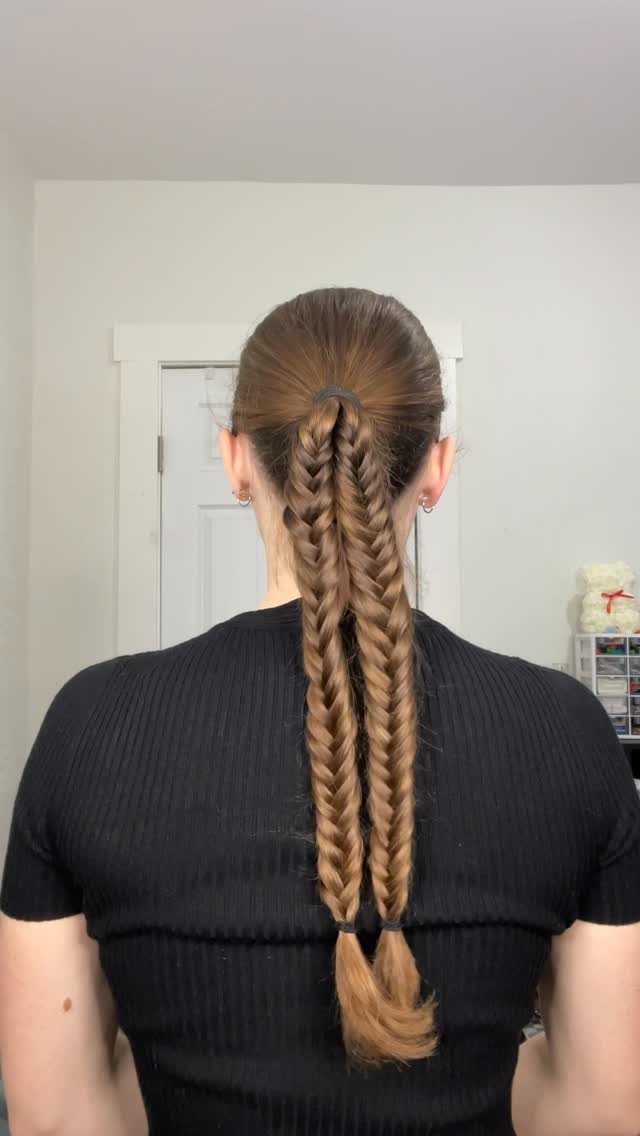
Two sections pull from opposite edges, crossing thin strands into the center one at a time. The weave sits flatter than a three-strand braid and shows more texture as it moves down the ponytail.
Start with a regular ponytail, then fishtail the length.
It takes longer than a standard braid because each pass only moves a small piece, but the result holds better and looks more finished. Hair one length or longer makes the pattern easier to read.
4. Jumbo Braided Ponytail
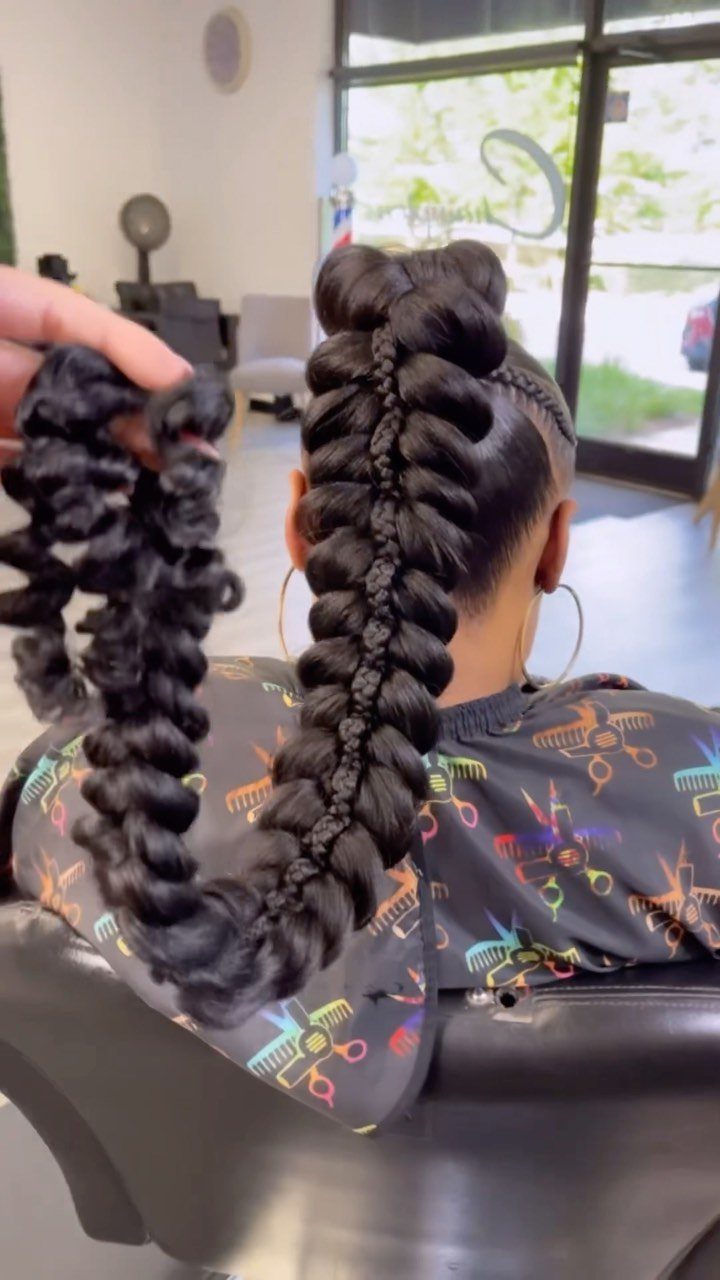
Thick sections create oversized braids that fill out the ponytail with fewer passes. The width makes the style fast to install and gives a bold silhouette.
Jumbo braids work well when you want fullness without a high braid count.
They suit medium to thick hair and can be done with or without extensions. Fewer braids mean less grip, so the style may loosen faster than smaller, tighter rows.
5. Low Braided Side Swoop
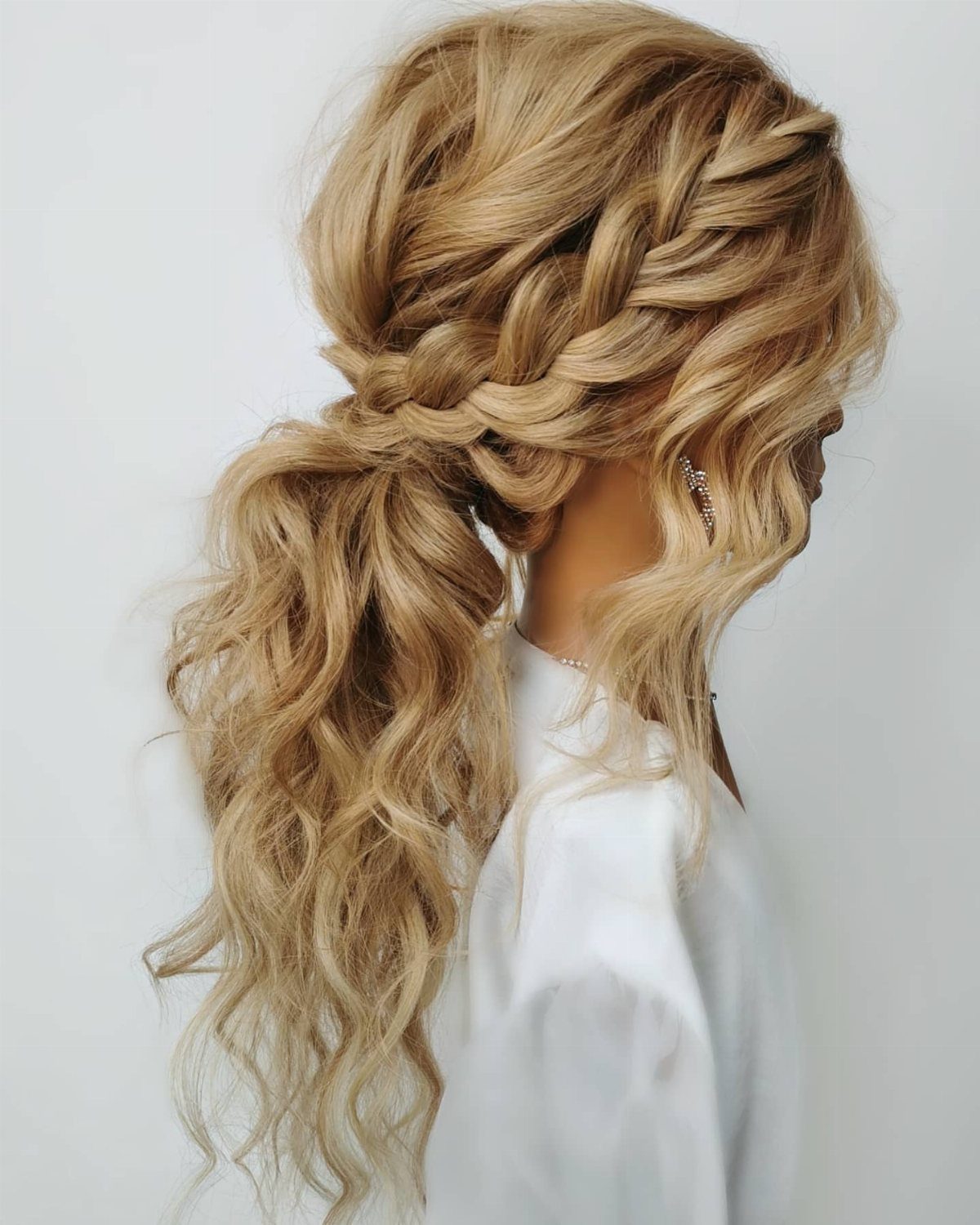
A side part leads into a braid that runs along the hairline or temple, then gathers at the nape and drapes over one shoulder. The ponytail sits low and off-center, which keeps the look soft and asymmetric.
This suits medium to long hair and works with straight, wavy or curly texture.
The braid can be a single French braid, a few small cornrows, or a rope twist, depending on how much structure you want. The side swoop flatters oval, round and heart-shaped faces by adding width at the jawline.
6. Sleek Braided Ponytail
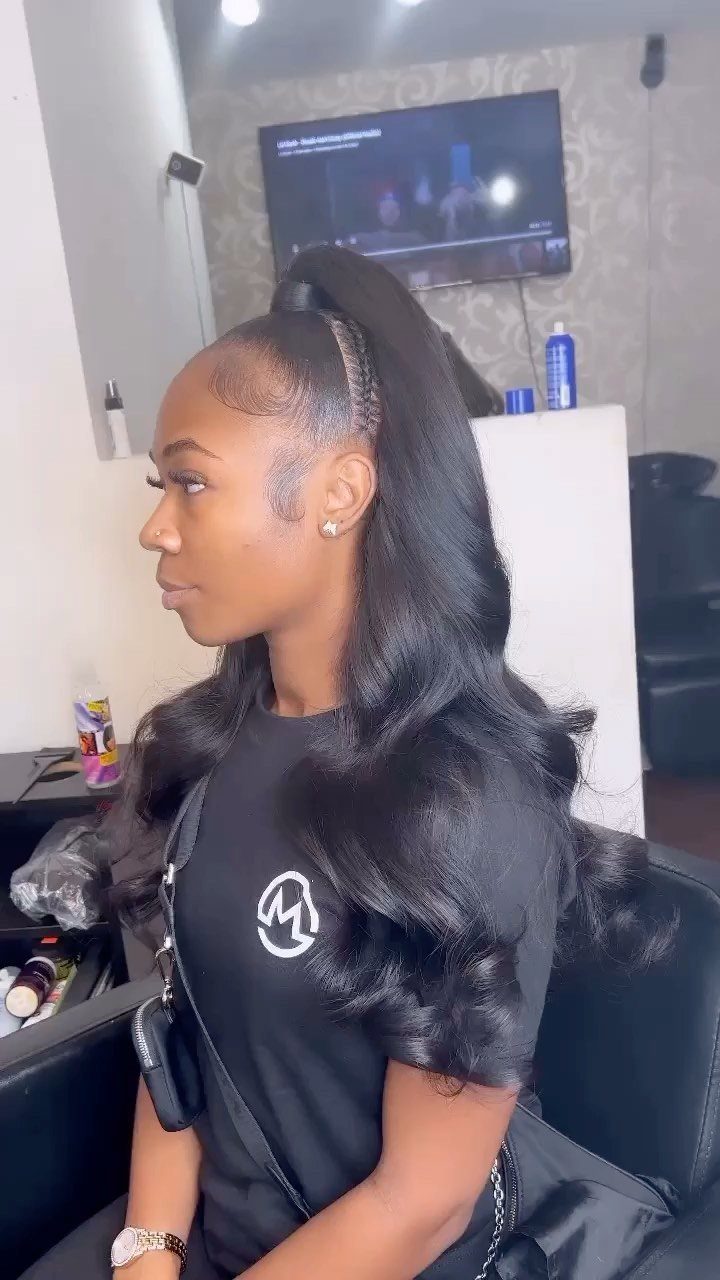
The scalp is brushed smooth with gel or edge control, then the hair is gathered into a ponytail with no flyaways or bumps.
The braids can start at the base of the ponytail or run from the hairline into it, and the finish stays polished.
A sleek base takes time. You need a firm-hold product, a fine-tooth comb or brush, and a scarf or edge brush to lay everything flat while the gel sets.
This suits straight, relaxed or blow-dried hair, and it works best when the hairline is dense enough to smooth without showing gaps.
7. Swoop Braided Ponytail
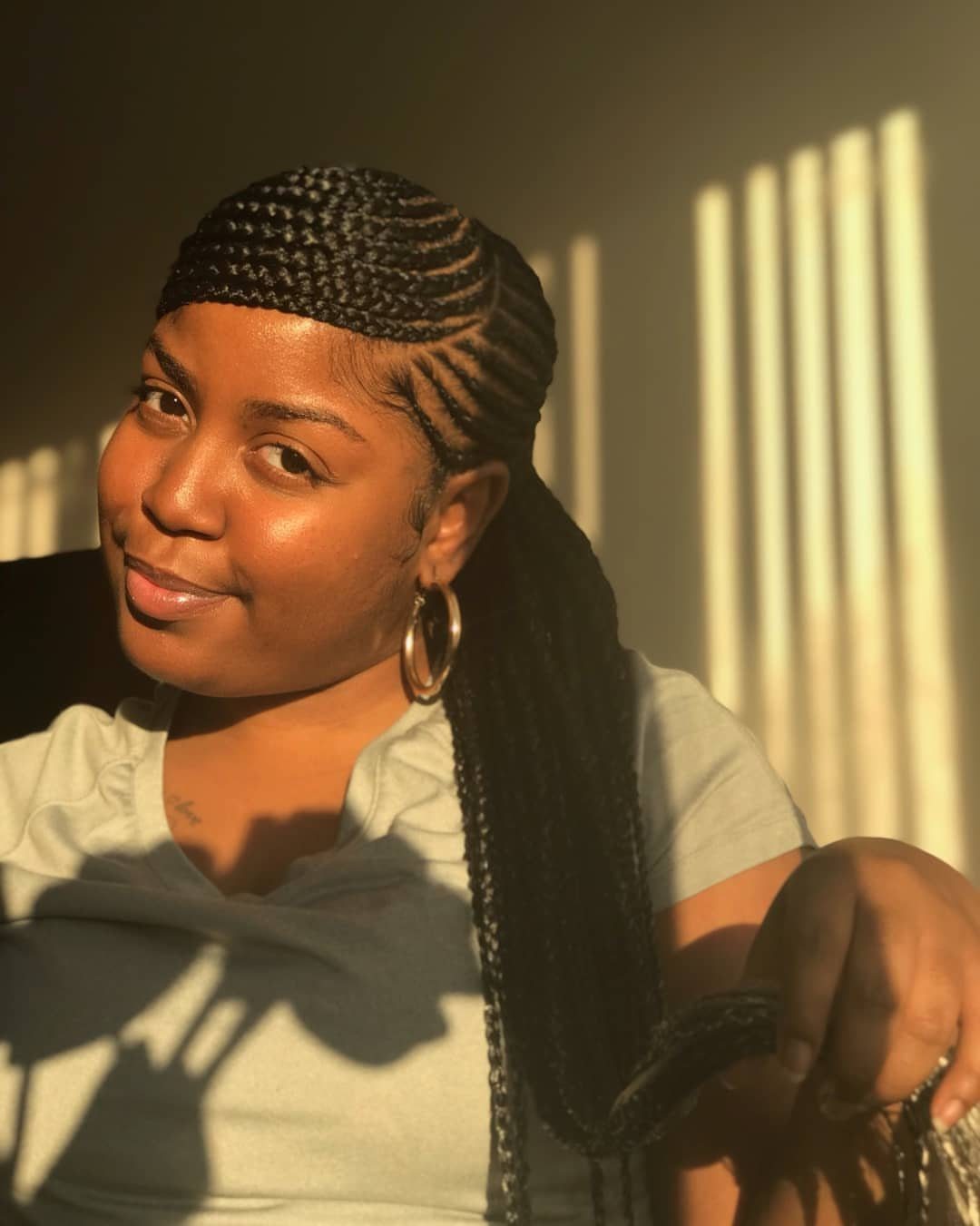
A curved section at the hairline is gelled flat and swept to the side, framing the face before everything else pulls back into a ponytail.
The swoop adds softness without changing the ponytail itself.
You control how deep the curve sits and whether it hugs the temple or sweeps wider toward the brow. This flatters square and rectangular faces by breaking up the straight line from forehead to jaw.
8. High Braided Ponytail
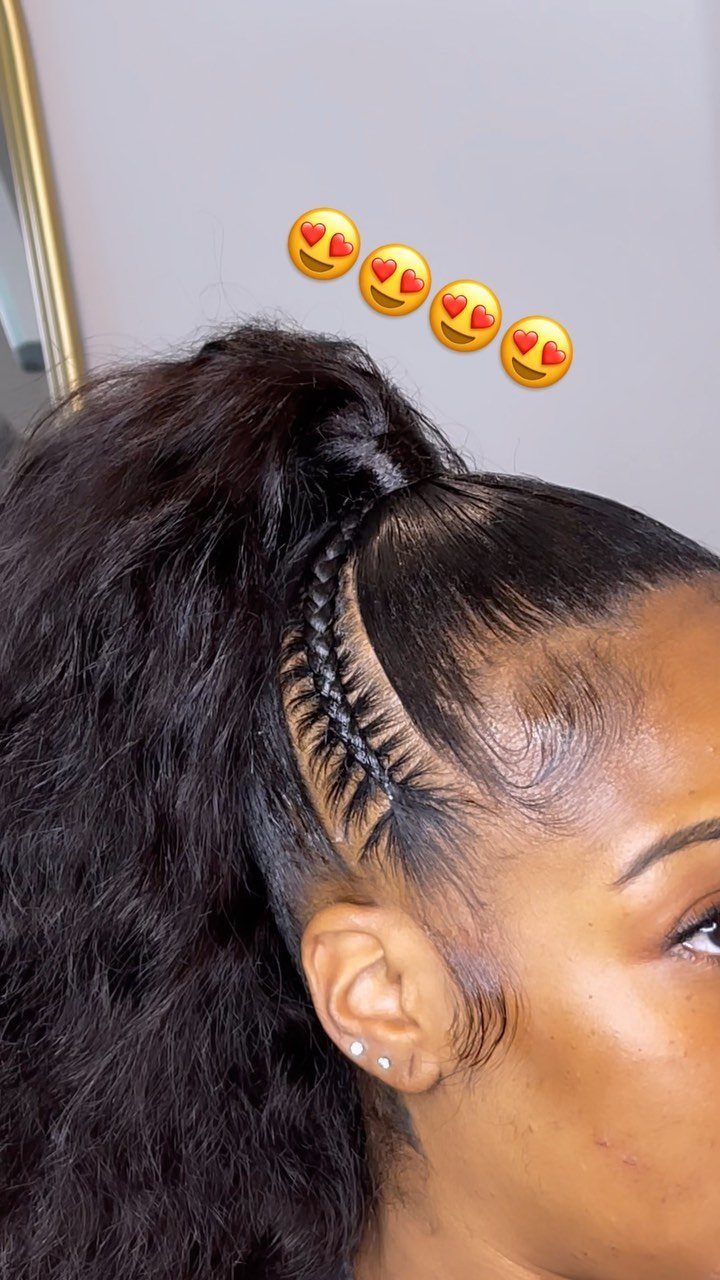
The ponytail sits at the crown or higher, lifting the braid off the shoulders. Cornrows or a single braid can run along the scalp to the base, then the tail hangs straight or curled.
Height gives the style more presence and works well when the ponytail needs to be visible from the front. The elastic needs to hold more weight than a low ponytail does, so double-wrap it or use a coated band.
9. Goddess Braid Ponytail
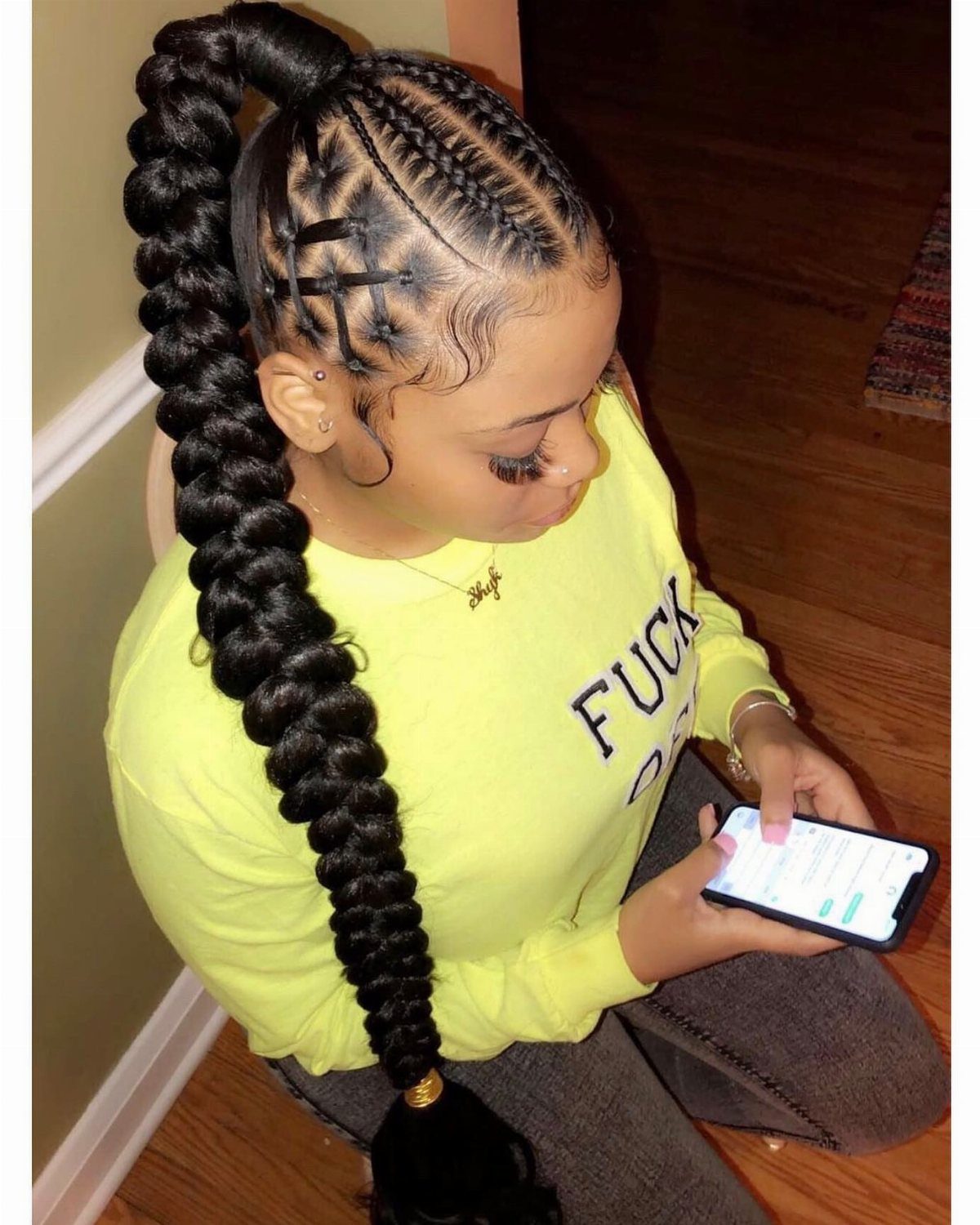
Goddess braids are wider and softer than standard cornrows, with looser tension and more texture showing through. They gather at the ponytail base, and the tail can be left curly, wrapped with hair, or finished with a braid.
The looser tension makes this gentler on the scalp and faster to install than smaller rows.
You can add synthetic curly hair for fullness or braid with your natural texture. The style holds for several days but loosens sooner than tighter cornrows.
10. Stitch Braids Ponytail
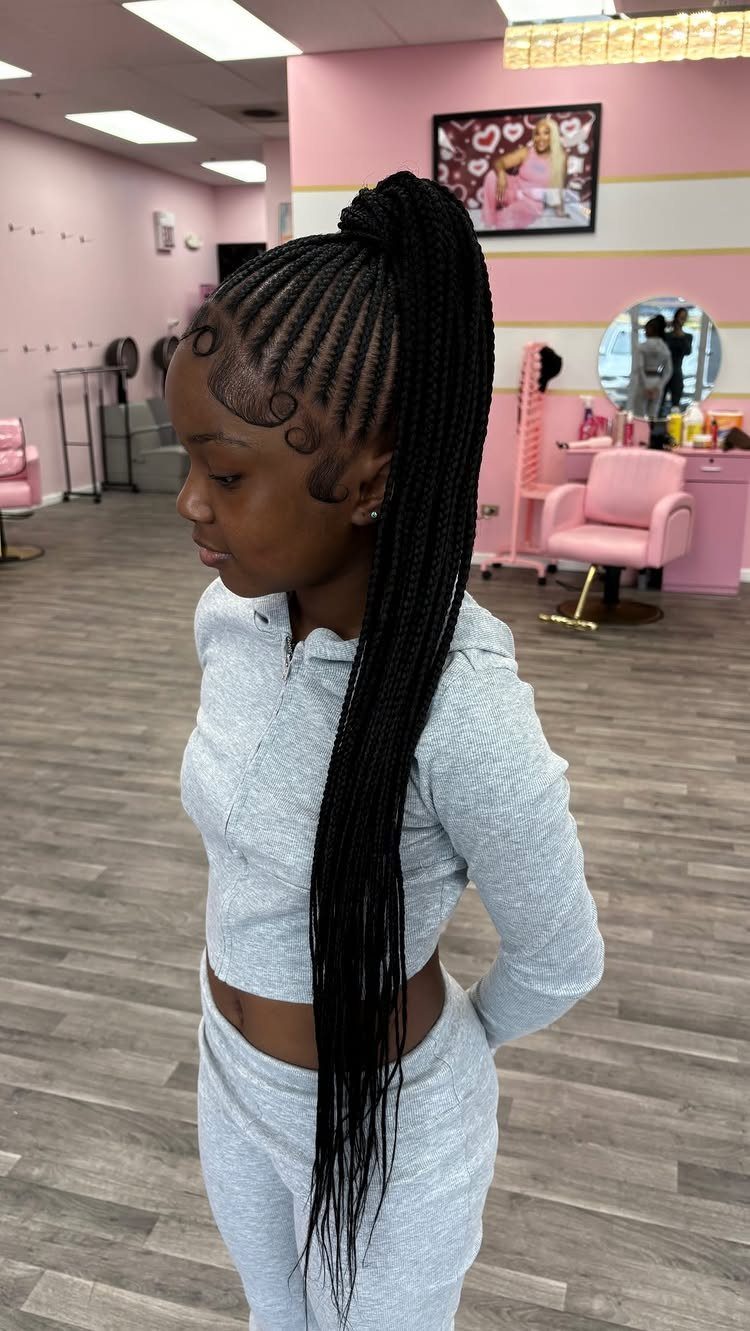
Thin horizontal lines are parted into each cornrow as it gets braided, creating a stitched look that runs from the hairline to the ponytail base. The pattern shows best on dark hair against a visible scalp.
Stitch braids take longer than plain cornrows because each section needs a clean, straight part.
The detail stays sharp for about a week before the parts start to blur. This works on short to long hair and suits people after a graphic, structured look.
11. Feed-in Ponytail Braids
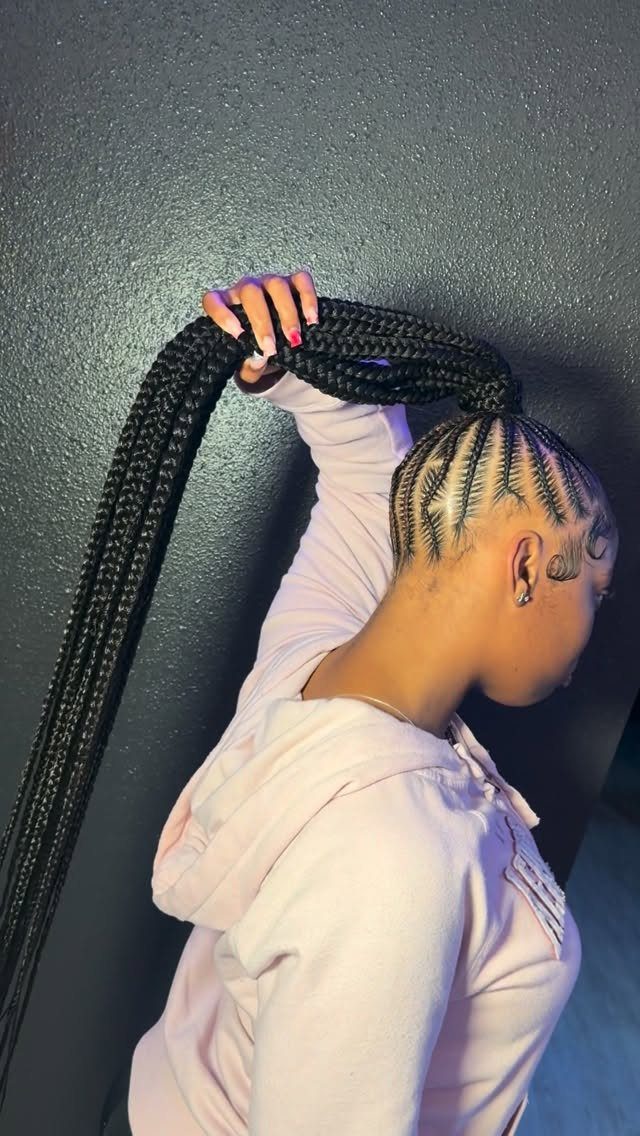
Extensions are added in small increments as each braid moves from the hairline toward the ponytail, so the braid starts thin and gradually thickens.
The joins stay invisible, and the ponytail looks full without a visible line where added hair begins.
Feed-ins take more time than box braids because the braider adds hair in stages rather than all at once.
The gradual build reduces tension at the root, which makes the style more comfortable and less likely to cause traction damage. The fade looks cleanest when the added hair matches your texture.
12. Braided Ponytail with Beads
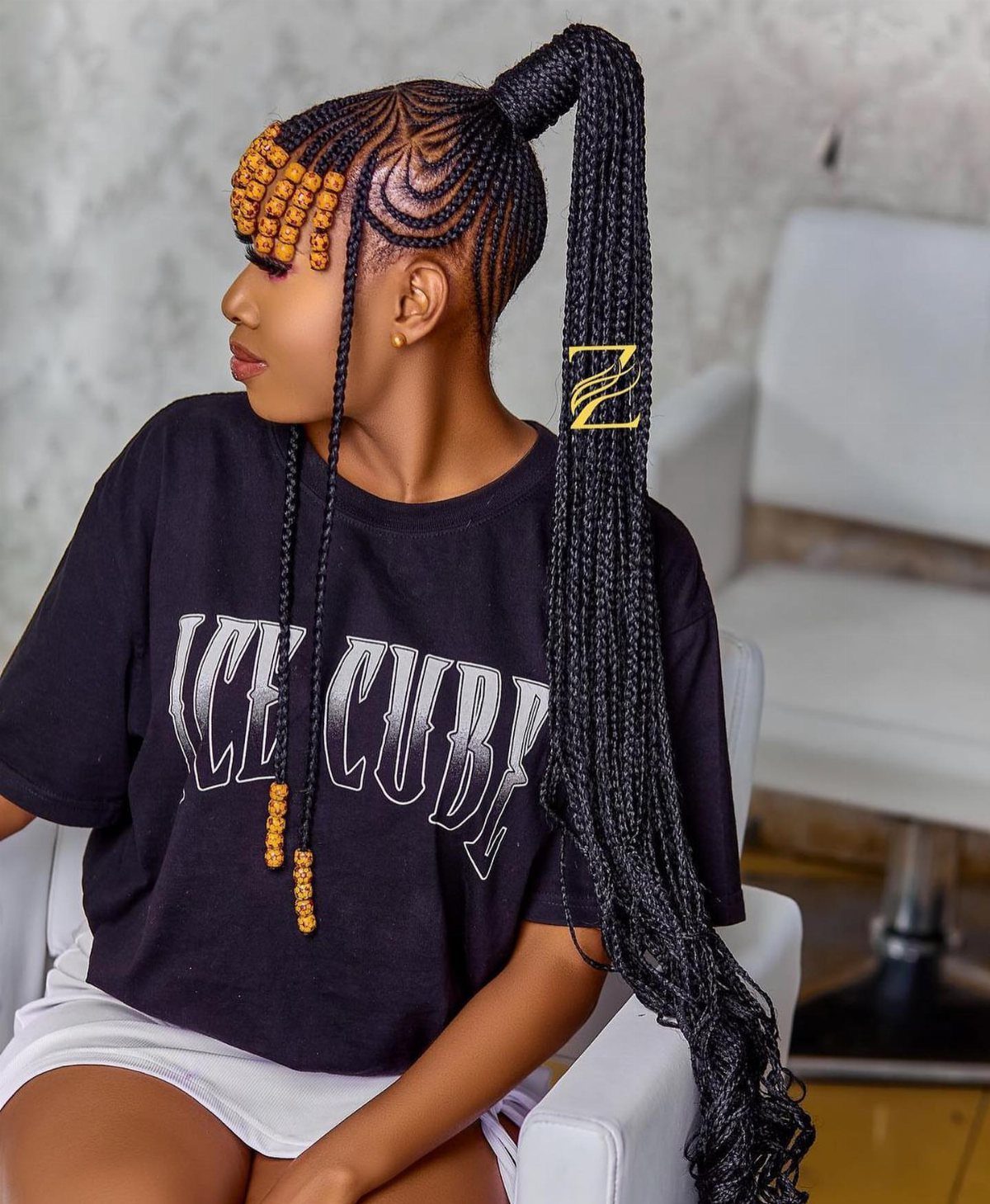
Beads slide onto individual braids before they join the ponytail, sitting near the scalp or spaced down the length. You can use wood, plastic, metal or glass, in one color or several.
Beads add weight, so the braids need to be tight enough to hold them without slipping.
Small beads work on thin braids, larger ones need thicker sections. The beads will click when you move, and you’ll need to remove them before washing so the braids stay intact.
13. French Braid Ponytail
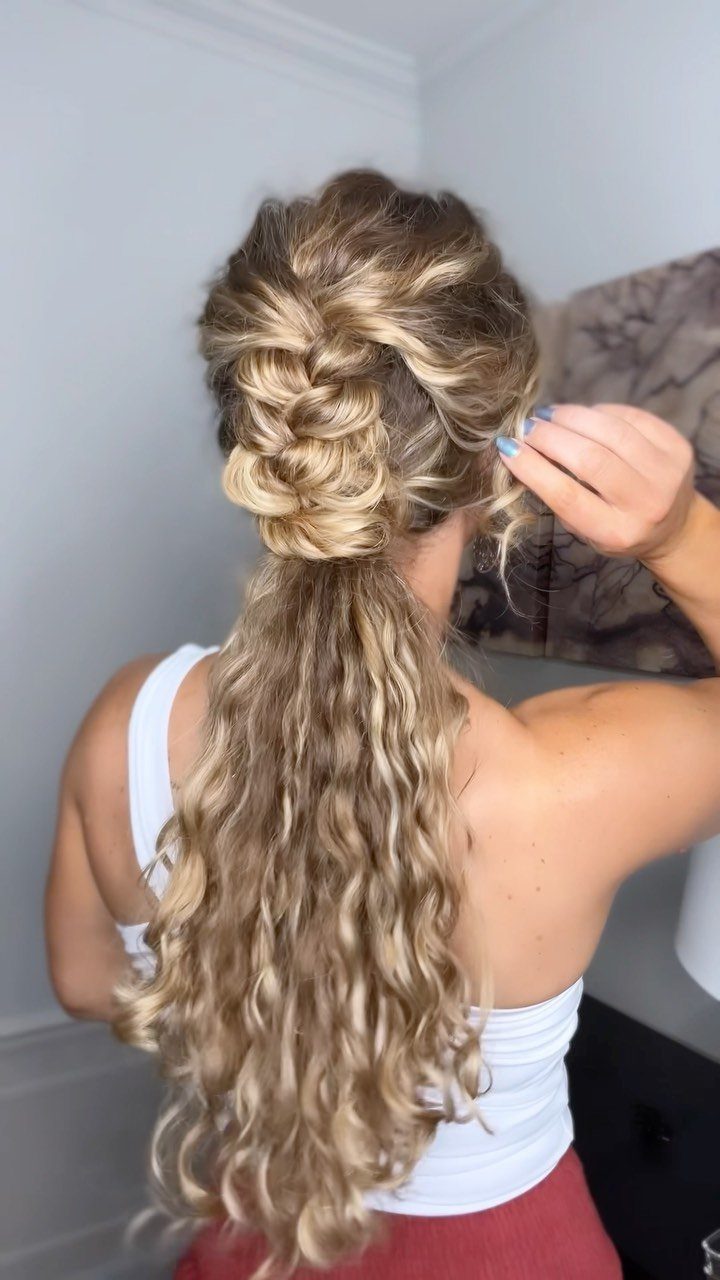
Hair gathers into a raised braid that builds toward the nape, picking up sections from the sides as it moves down, then the rest collects into a ponytail.
The braid sits on top of the scalp instead of flat against it.
Start at the crown, take 3 strands, then add a thin piece from each side with every cross.
Once you reach the nape, secure everything with an elastic. The ponytail can stay straight, get curled, or hold a second braid down its length.
14. Double Braid Ponytail
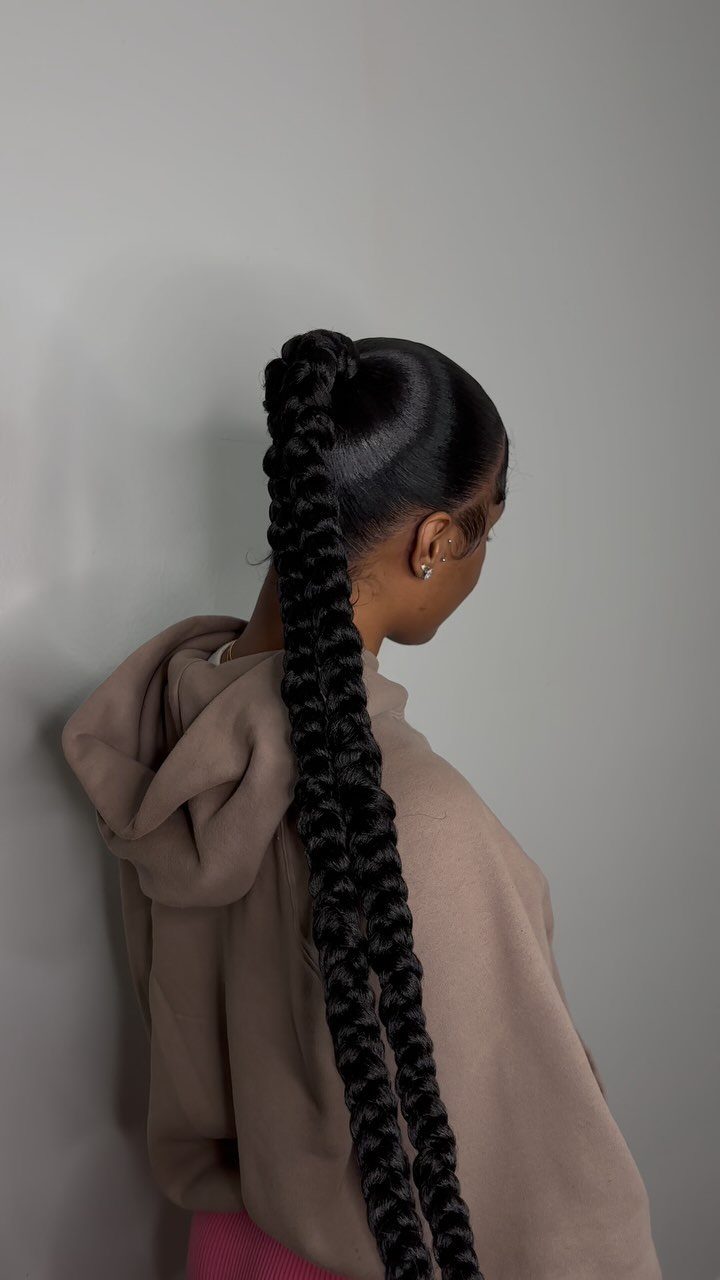
The ponytail divides into 2 separate braids that hang side by side. Each one gets its own 3-strand pattern, and together they add width without looking overly thick in a single column.
Gather the ponytail first, then split it down the middle and braid each half.
The 2 pieces stay distinct, so the eye reads texture and movement instead of one solid mass. This works with shoulder length or longer and suits anyone who wants more visual interest without changing the ponytail placement.
15. Twist Braids Ponytail
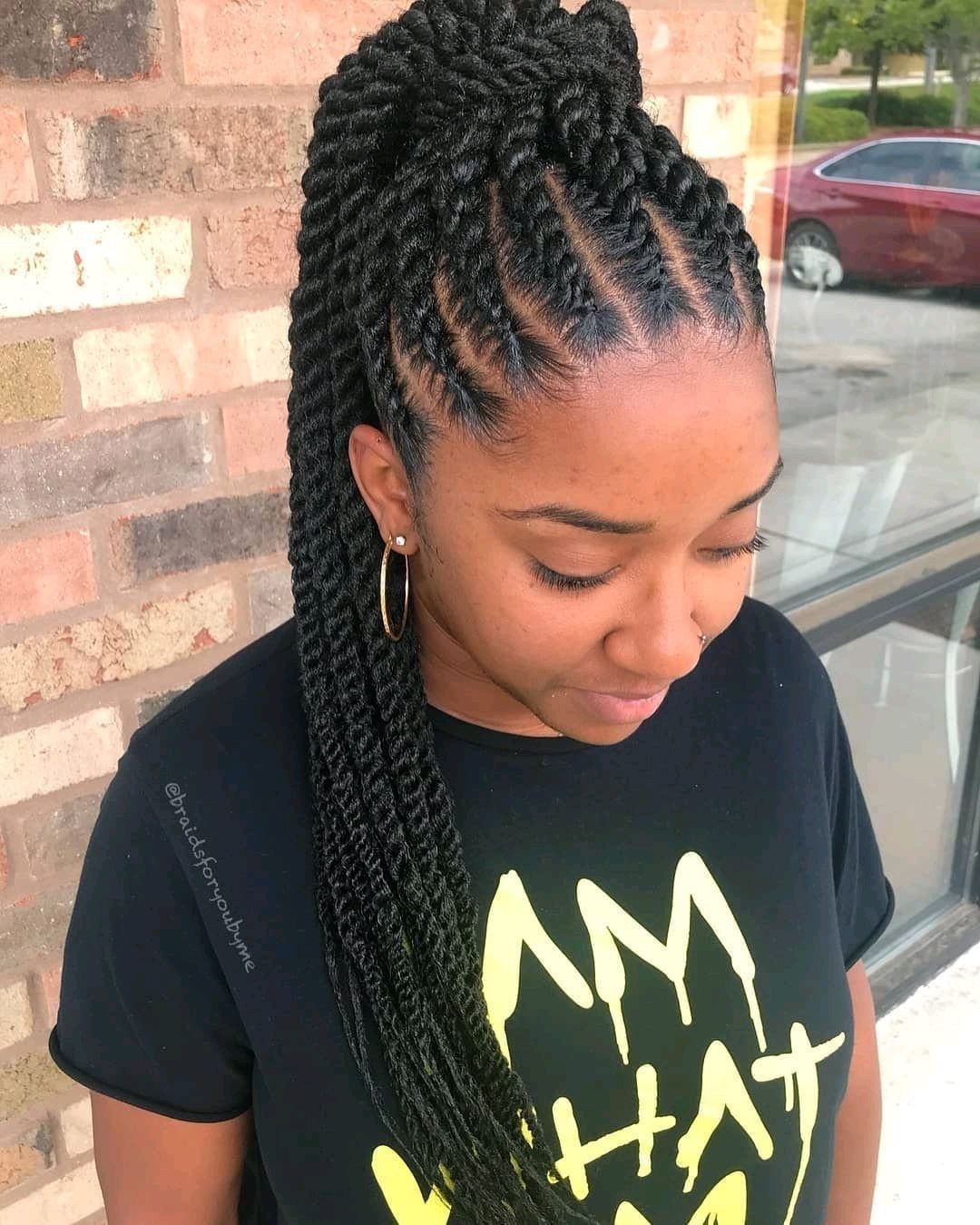
Each twist is formed by wrapping 2 strands around each other from root to tip, then all the twists pull into a ponytail. The result sits lighter and softer than box braids.
Twists install faster than braids because you only rotate 2 sections instead of crossing 3.
They hold for about a week, sometimes longer with edge control at the base. Medium to long hair works best, and you can add synthetic hair for length or fullness.
16. Spring Twist Ponytail
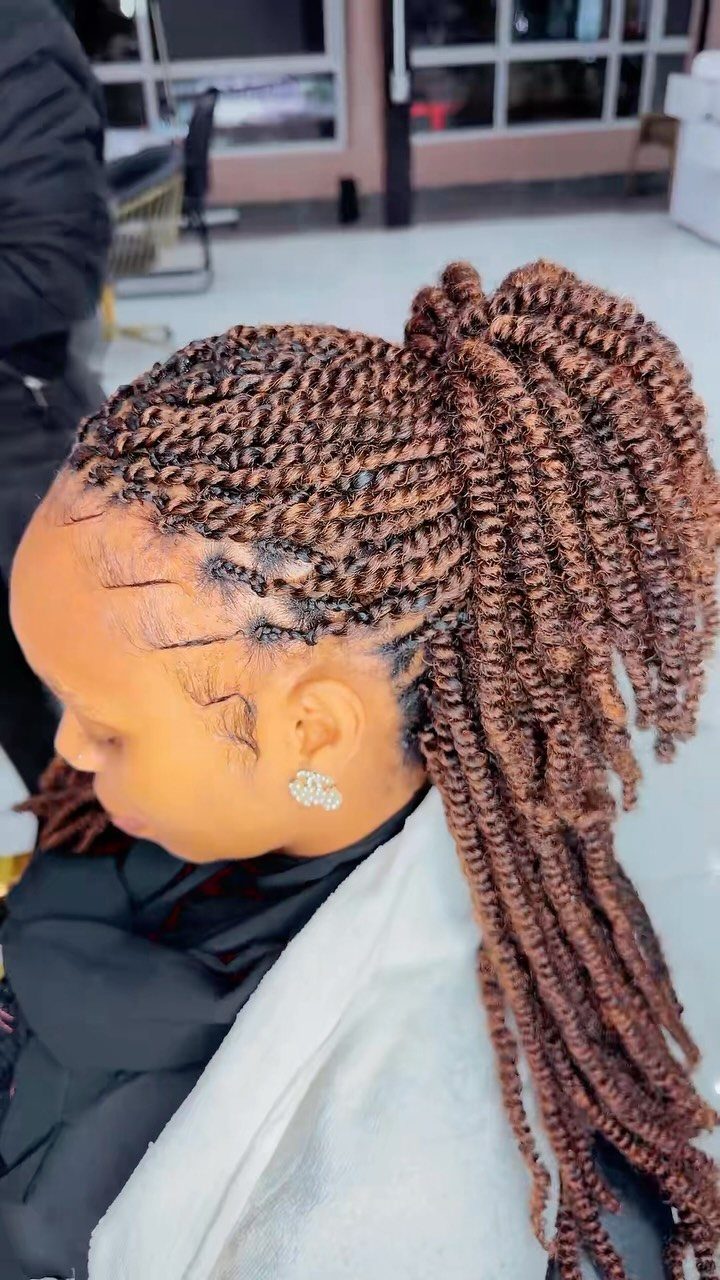
Pre-curled synthetic hair is installed in a 2-strand twist pattern, then gathered into a ponytail. The coils stay tight and bouncy, and the texture holds without heat or setting.
Spring twists are lighter than some other extension styles and dry faster after washing.
The curls soften over time but keep their shape for several weeks. This suits anyone looking for a low-manipulation protective style with built-in volume.
17. Mohawk Braid Ponytail
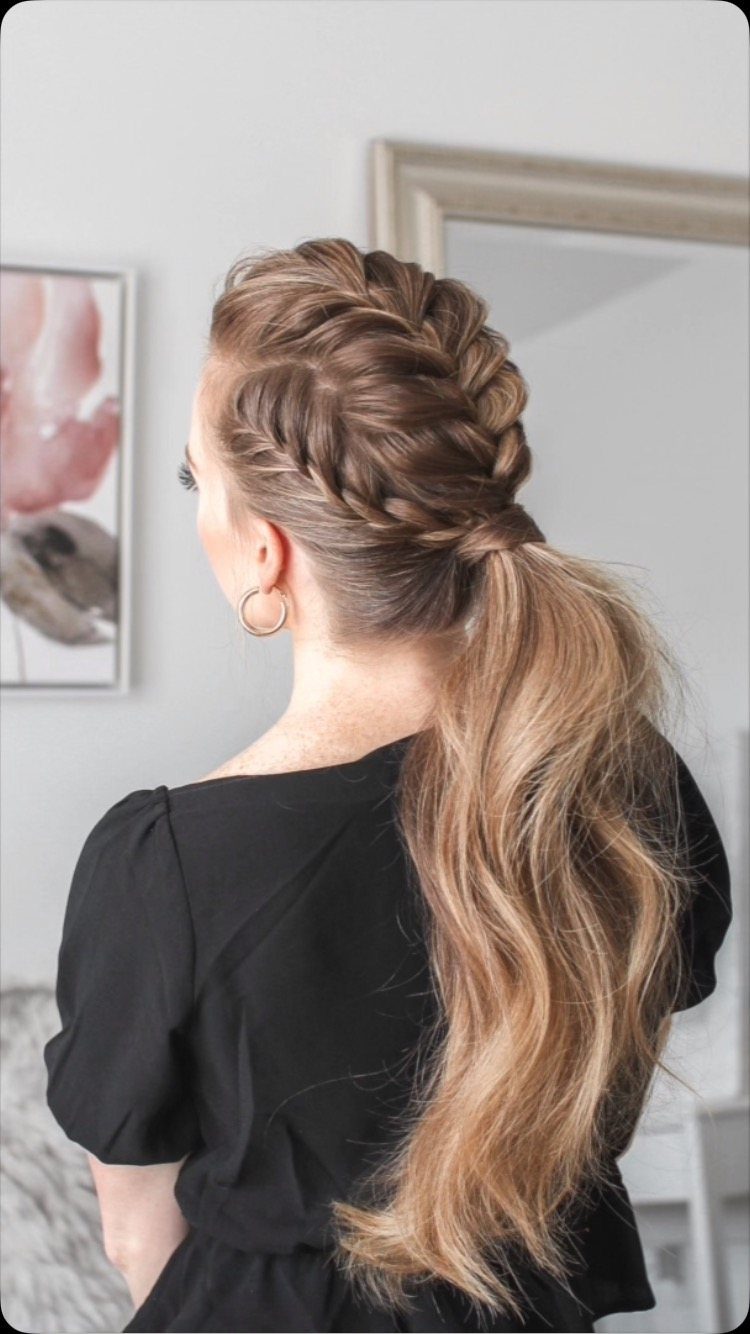
A single braid or series of cornrows runs down the center of the scalp from the hairline to the crown, with the sides shaved, slicked flat, or left shorter.
The ponytail collects at the end of the braid, and the contrast between the raised center and the sides gives the mohawk shape.
The center braid can be thick or thin, and the ponytail can sit high or lower depending on where the braid ends. This suits people comfortable with an asymmetric or edgier look.
18. Classic Three-strand Braid
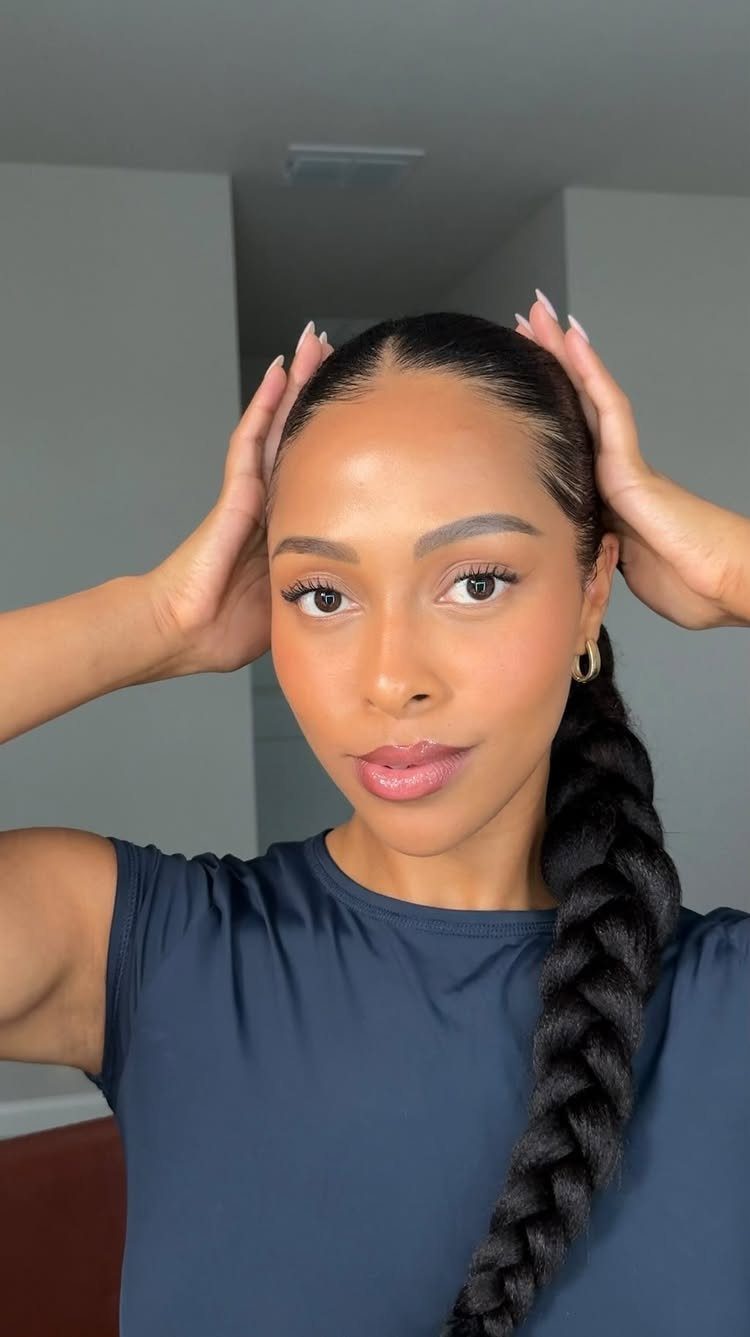
Hair pulls into a ponytail, then divides into 3 equal sections that cross in an alternating over-under pattern down the length. The braid finishes with an elastic at the bottom.
This is the simplest braid to learn and the fastest to finish.
It works on any hair type, length past the shoulders, and texture. The hold stays tightest when the hair is one length, but layers can still be braided if they are long enough to stay caught in each pass.
19. Curly Braided Ponytail
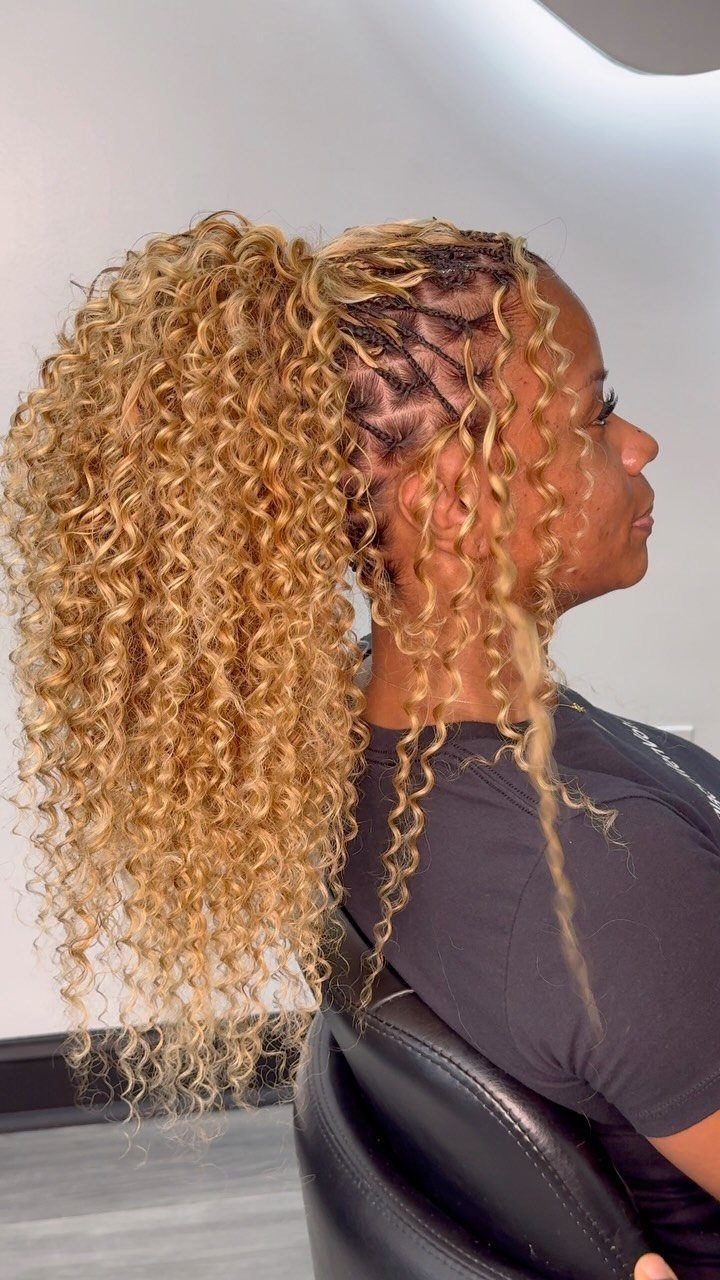
The braids gather everything into place, then you add texture to the ponytail itself with heat. The curls soften the structured top and add volume at the ends.
Curl the ponytail after the braids are done and secured. The curls will loosen through the day, but you can refresh them each morning without touching the scalp braids.
This works on natural hair or with extensions, and the curls can be tight or loose depending on the barrel size you use.
20. Fishbone Ponytail
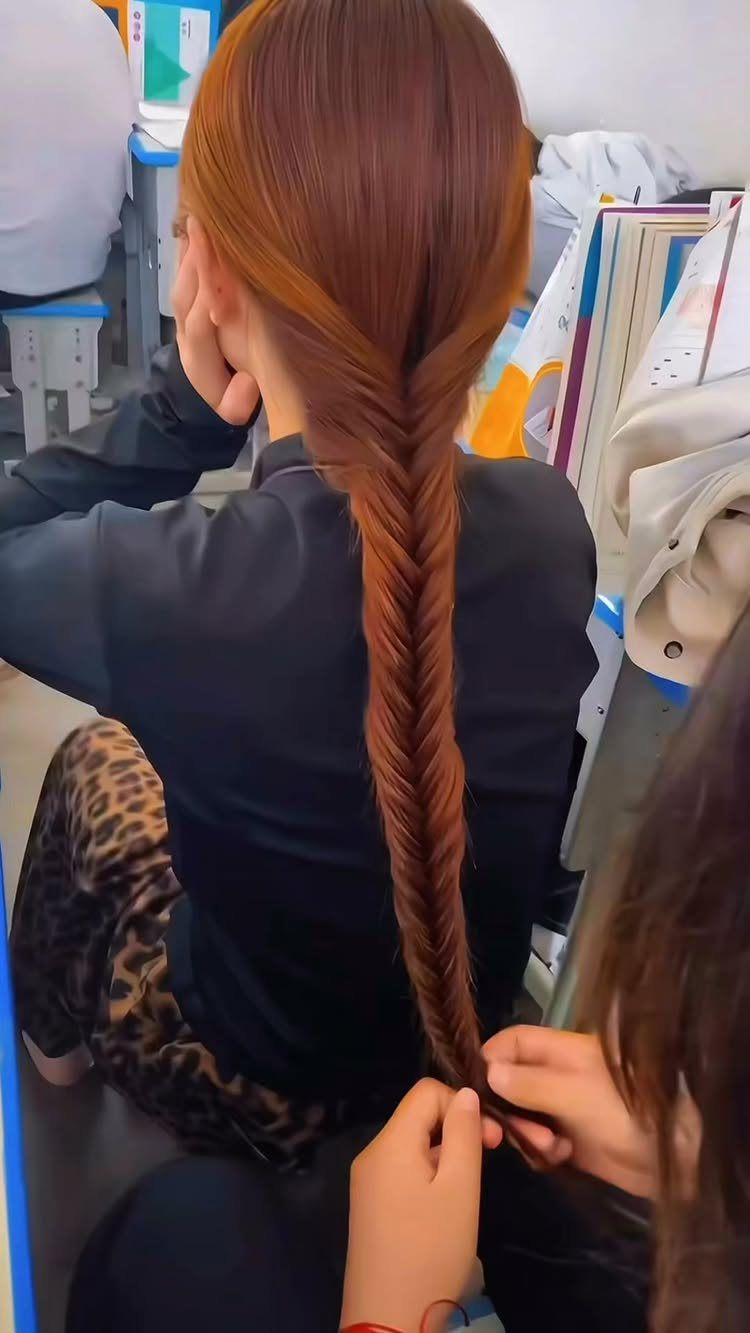
Sections pull from opposite sides and cross toward the center in a tight, alternating pattern that resembles a fish skeleton. The weave runs flat and shows defined zigzag lines down the ponytail.
Gather the ponytail first, then divide it into 2 halves. Pull a thin strand from the outer edge of one side and cross it into the opposite section, then repeat from the other edge.
The tighter you pull, the sharper the pattern reads. The clean, tight weave reads formal enough for events but stays put through a long day.
21. Lemonade Braids Ponytail
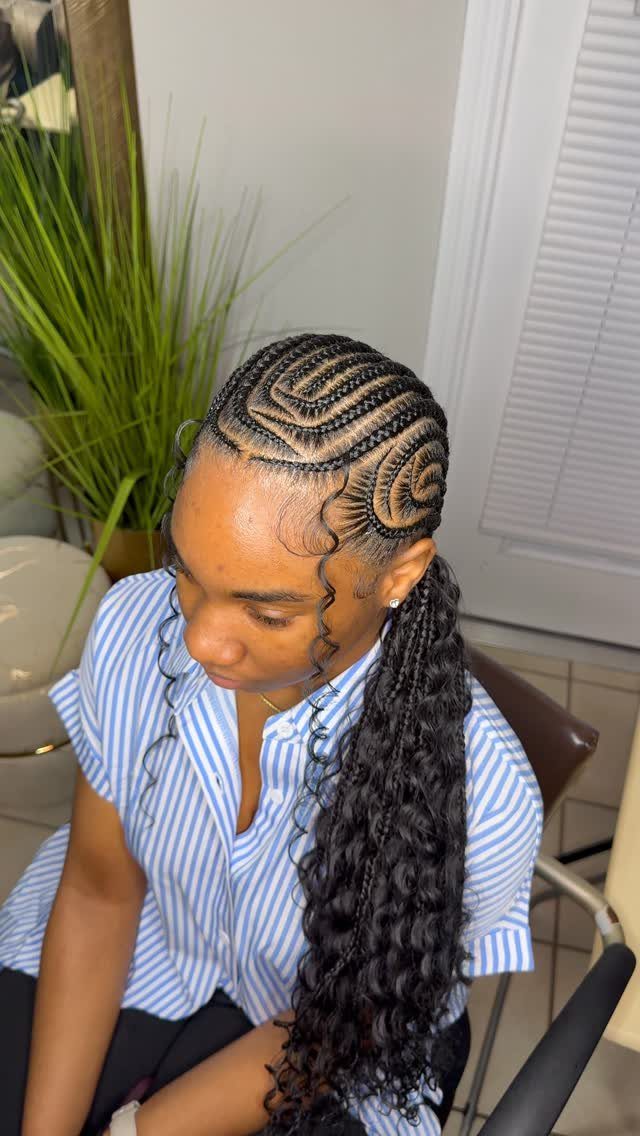
Cornrows sweep diagonally from one side toward the opposite ear or nape, then gather into a ponytail that sits low or mid-height. The side-swept lines sit close to the scalp and create a clean, directional look.
That slant draws the eye upward and outward, which balances a rounder face shape.
You can vary the braid thickness and finish the tail however you like: loose, curled or braided again. This takes longer than straight-back cornrows because each row follows a curve.
22. Mermaid Braid Ponytail
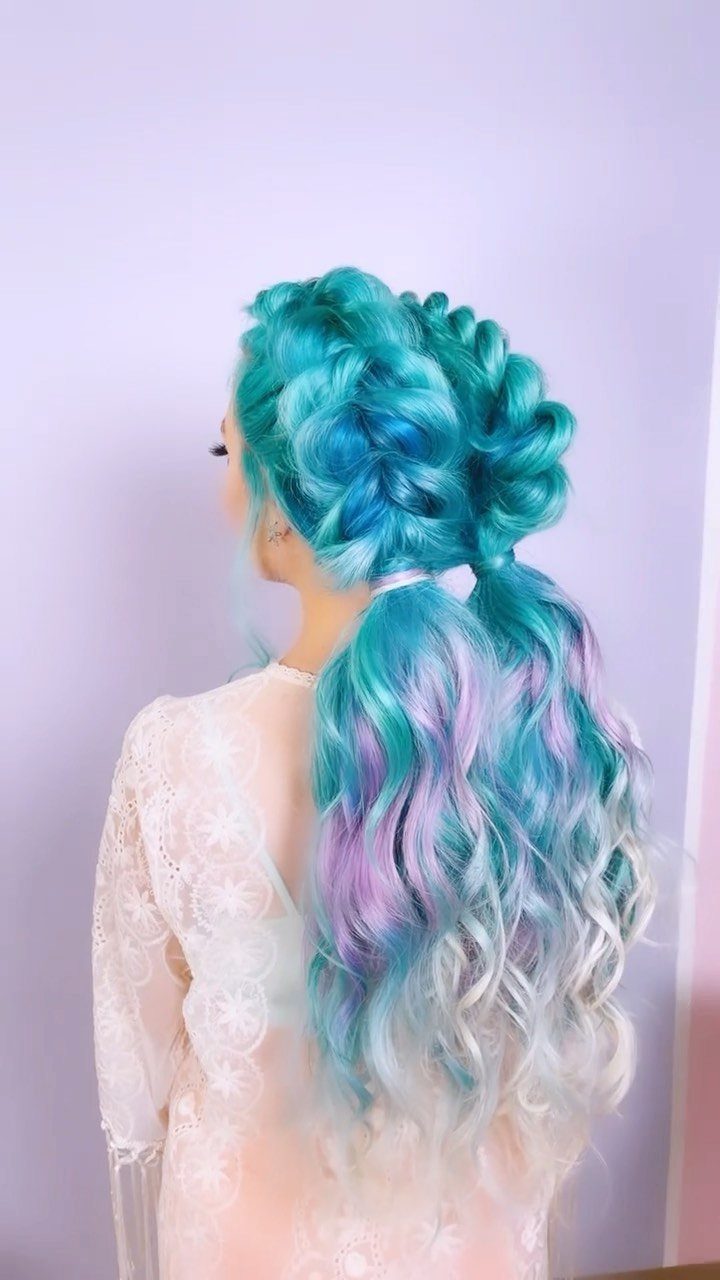
A loose, textured braid weaves down the ponytail with strands intentionally pulled or looped to create a soft, dimensional look. The braid sits fuller and less uniform than a standard 3-strand, and it suits wavy or curly hair.
After securing the ponytail, braid loosely and gently pull sections outward to widen the weave.
The pulled pieces create the layered, flowing effect. This works best on hair with some texture or wave, and it flatters anyone after a softer, less structured finish.
23. Braids with Weave Ponytail
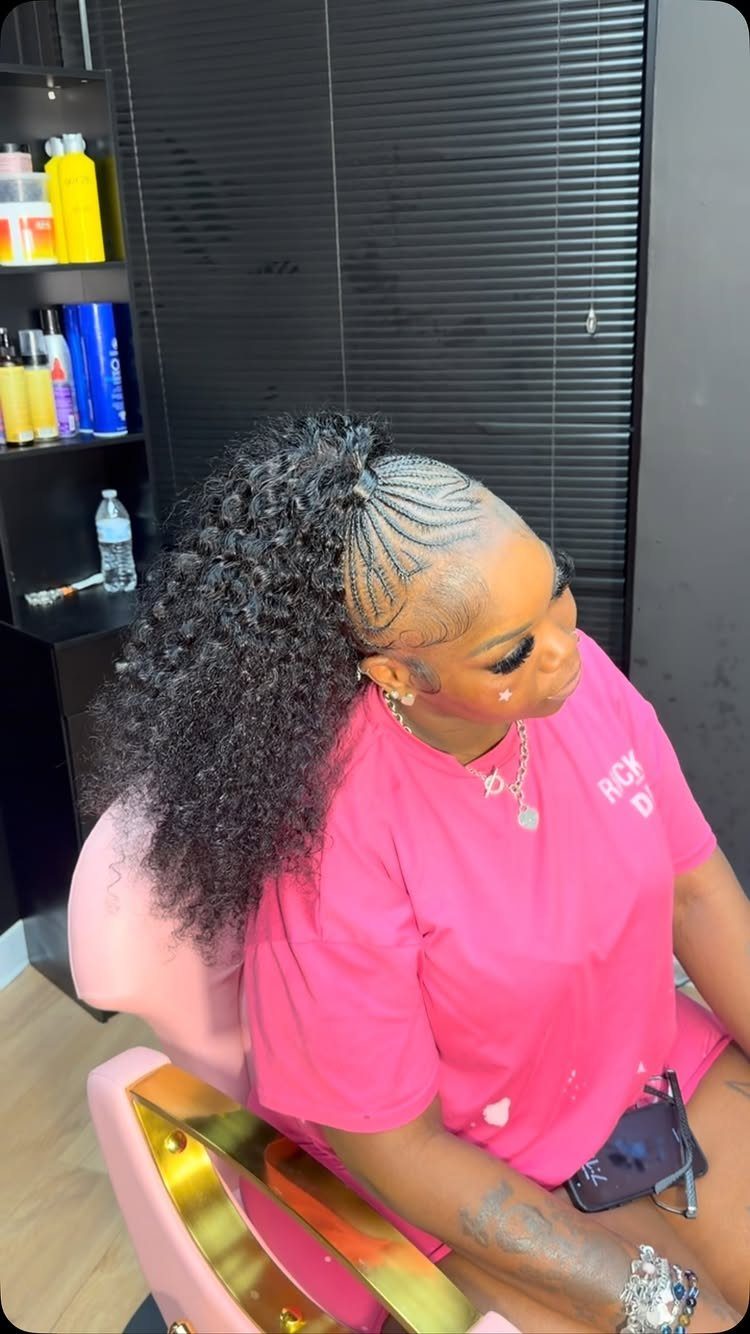
Cornrows or flat braids cover the front and sides of the scalp, then a curly or wavy weave ponytail attaches at the crown or nape. The braided sections stay tight and protective, while the ponytail adds length and fullness.
The weave can match your texture or contrast with it, and the attachment sits hidden under the last row of braids.
This gives you a protective base that lasts for weeks and a ponytail you can restyle, remove, or swap without redoing the cornrows.
Braided hairstyles not only celebrate the natural texture and versatility of Black hair, but they are also one of the most reliable protective options for supporting healthy growth.
24. Bubble Braided Ponytail
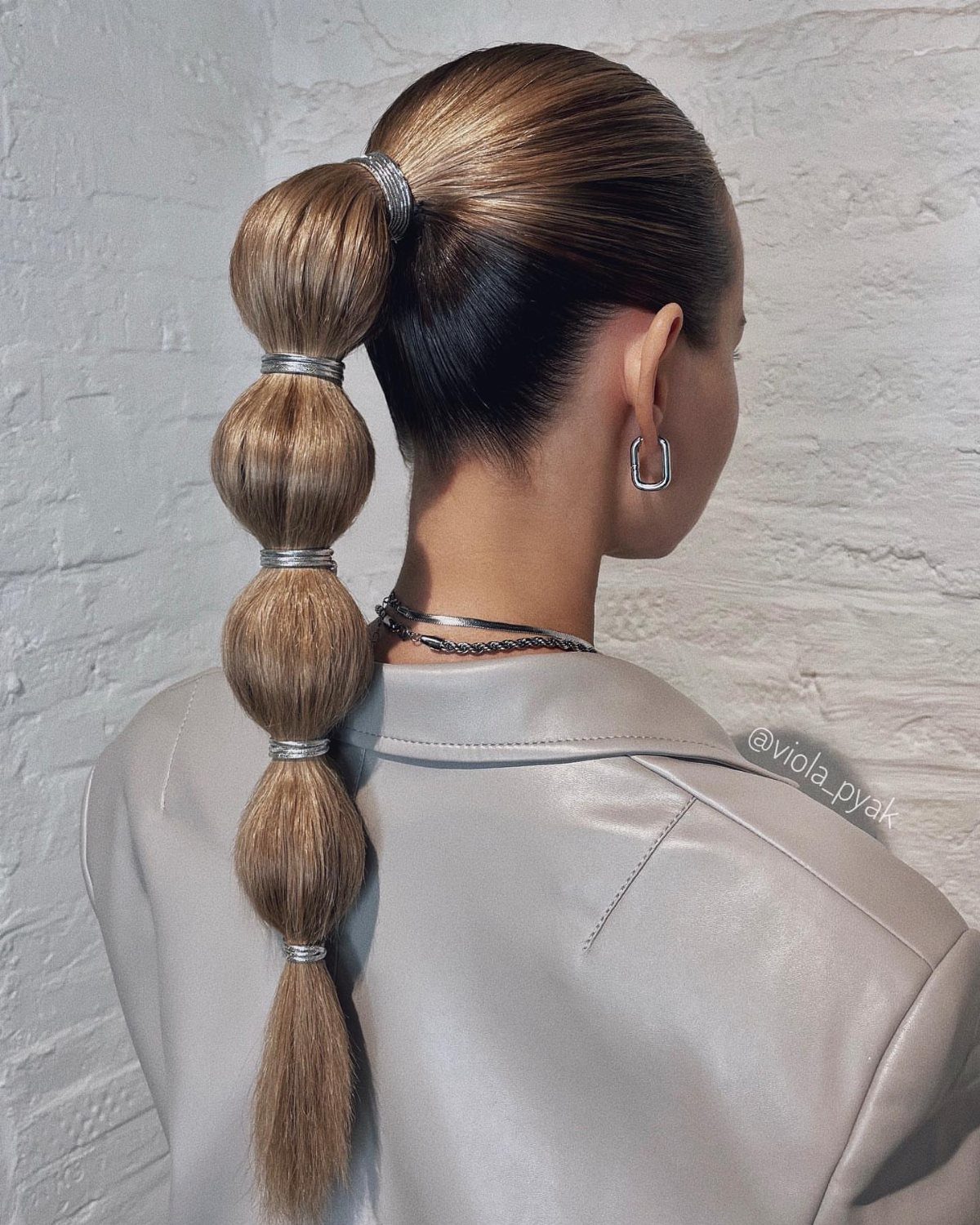
A ponytail is sectioned with elastics spaced evenly down its length, and each section between the bands is gently pulled outward to create rounded bubbles.
The pattern reads clean and graphic, and the bubbles can sit tight or loose depending on how much you tease each section.
Secure the ponytail, then place the first elastic a few inches down and pull the hair between the base and that band to widen it.
Repeat down the length. This works on straight, wavy or curly hair and suits medium to long ponytails.
25. Two Ponytail Braids
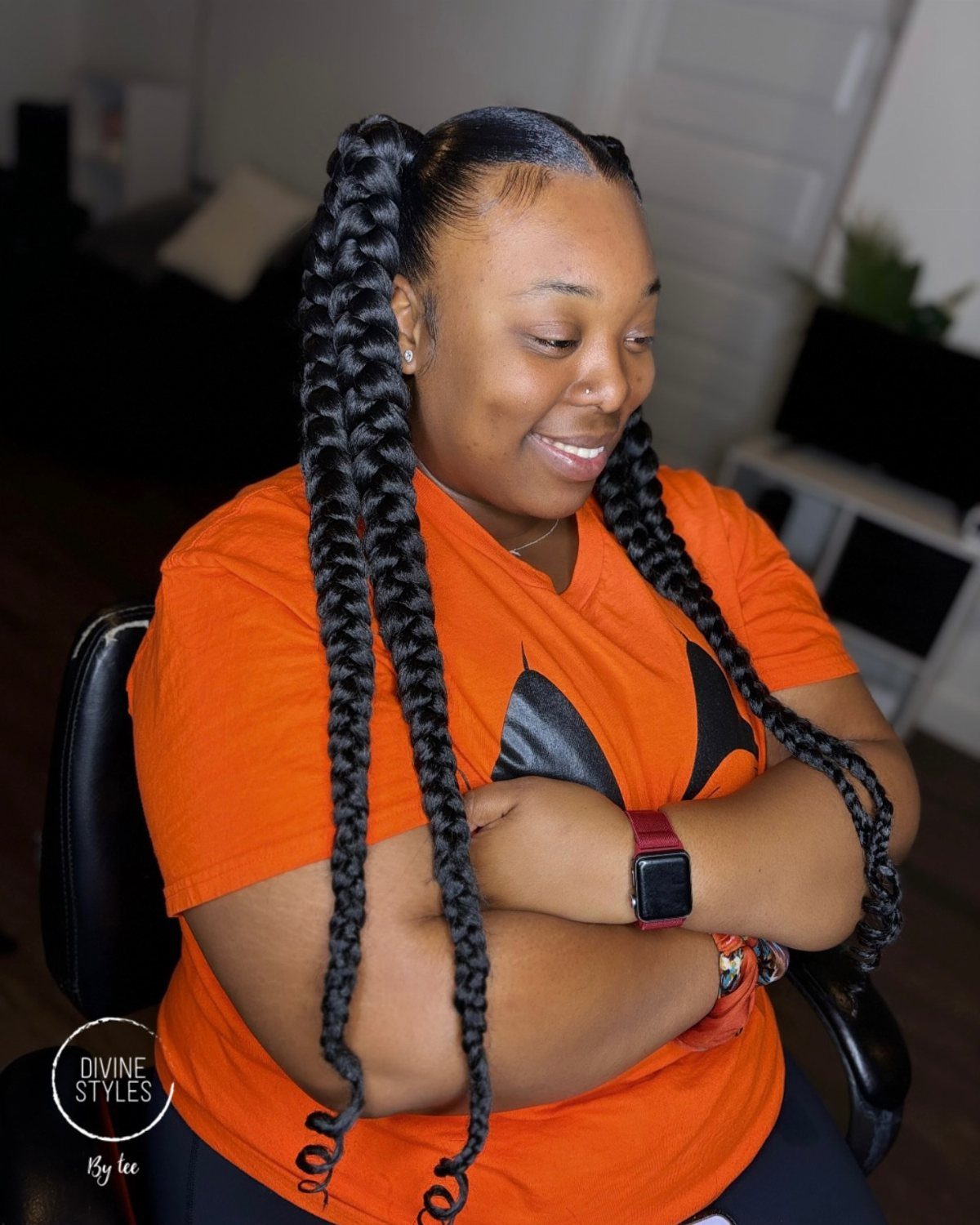
The hair parts down the center, and each side pulls into its own ponytail, then both get braided separately. The 2 pieces hang parallel and frame the face without blocking the neck.
This suits anyone who finds a single ponytail too heavy or wants a younger, more playful look.
The split takes weight off the elastic, so each one holds longer without slipping. Part straight down the back, secure both tails at the same height, then braid each one to the ends.
26. Colored Braided Ponytail
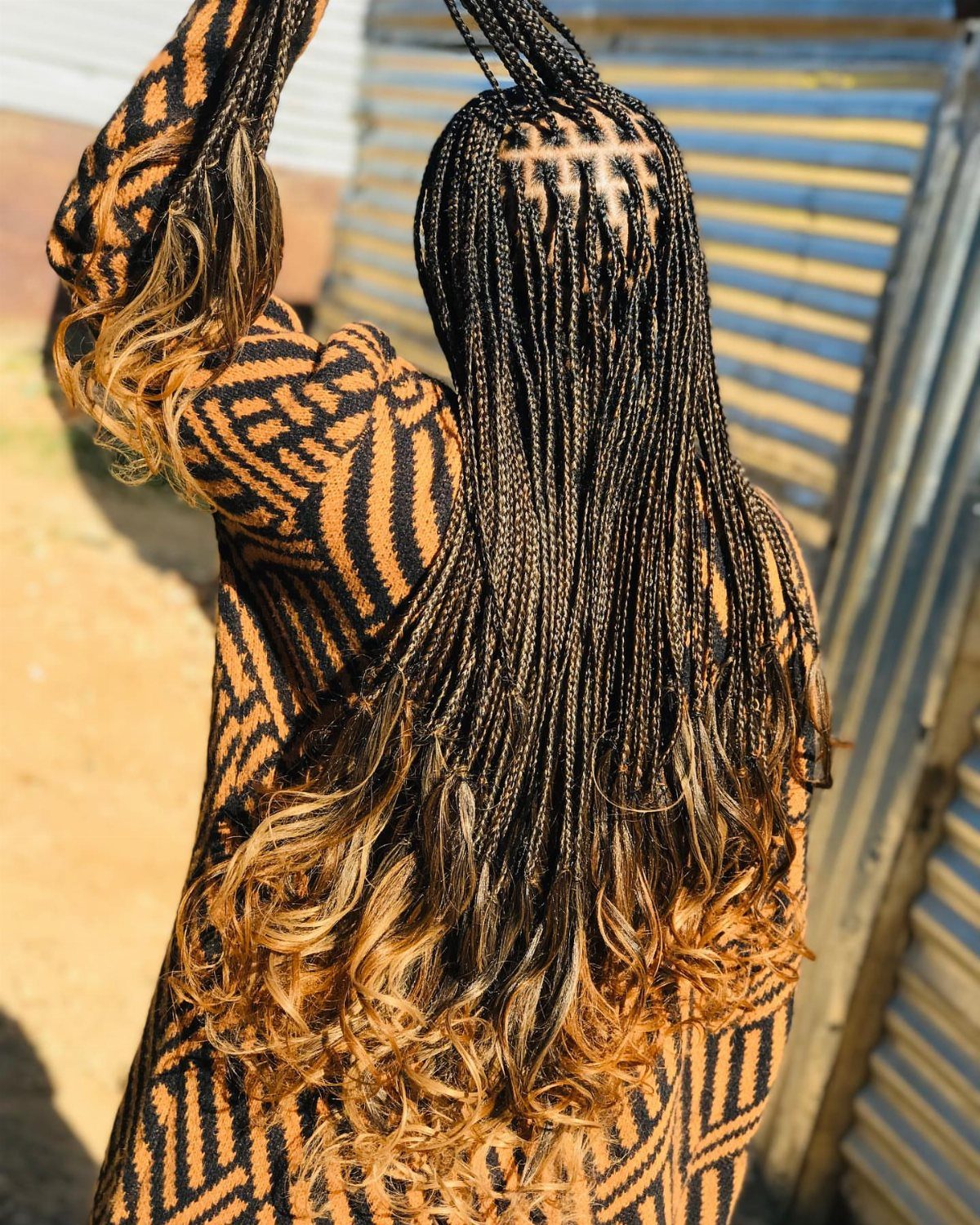
Extensions in a contrasting shade get braided in with your natural hair, so the ponytail reads lighter, warmer or brighter than the scalp. Caramel, honey, burgundy and auburn are common choices, but any color works.
The color shows best when the added hair sits close to your natural tone but one or two shades lighter or richer. Synthetic braiding hair holds color longer than human hair and costs less.
The ombré effect in the visible example starts dark at the base and warms to caramel at the ends, which keeps the roots protected and the color concentrated where movement shows it off.
27. Ombre Ponytail Braids
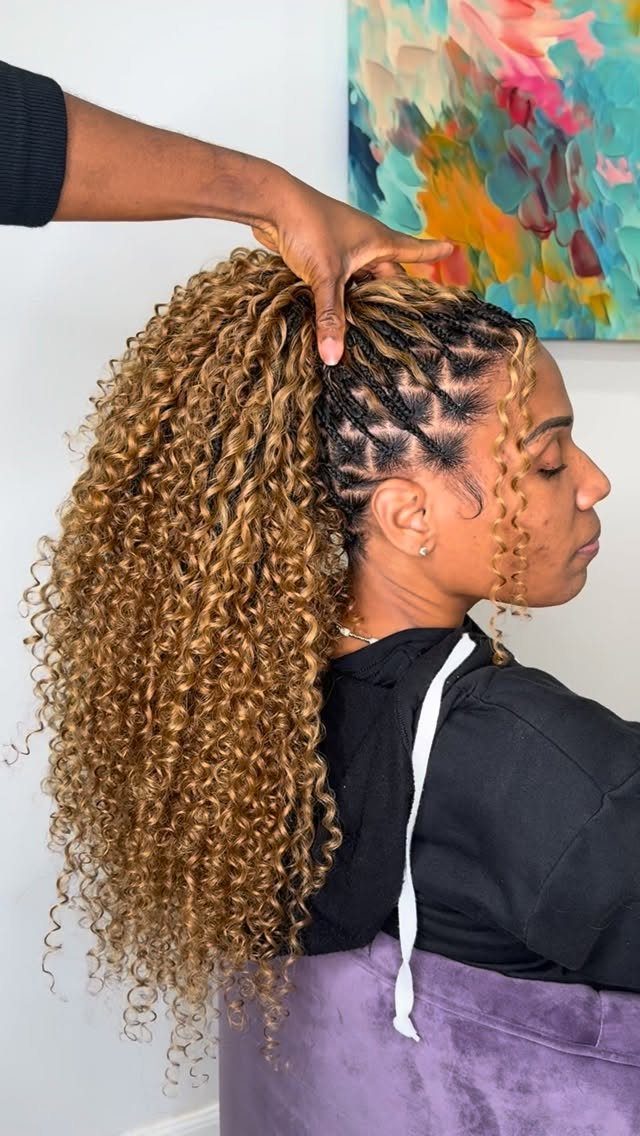
Braids start dark at the root and gradually lighten toward the tips, so the ponytail fades from one tone to another. The shift can move from black to brown, brown to blonde, or any pair of colors.
Buy pre-colored ombré braiding hair or blend 2 packs yourself, feeding the lighter shade in as the braid moves down.
The fade looks smoothest when the 2 colors sit close on the spectrum. This gives length and color without bleaching your natural hair, and the ponytail stays full from root to tip.
Protective Styling and Tension
Night protection matters. Wrap your hair or use a satin scarf before bed so friction from the pillow does not fuzz the braids or disturb the ponytail base.
When you pull everything up, use a large fabric-covered elastic instead of a thin band.
The wider surface spreads tension across more hair, which helps protect the edges. If the ponytail sits high and feels heavy, try a lower placement or a shorter tail to reduce the pull at the root.
A skilled braider will adjust tension as they work, tightening where the braid needs to hold and easing off near the hairline.
Extensions and Added Hair
Extensions let you change length, fullness or color without waiting for your hair to grow. Braiding hair blends into the style during installation, while clip-ins and drawstring ponytails attach after the braids are secured.
Braided ponytail extensions range from 22 to 32 inches, so you can match the proportion you are after. A wrap-around piece hides the elastic at the base and gives a cleaner finish.
To blend added hair with your natural ponytail, split the tail into 3 sections and work the extensions into each one before you braid.
More pieces mean more volume, so add a second ponytail if the first does not fill the silhouette you want.
Preparation and Finishing
If your hair is dry or has knots, get it soft and detangled before you begin. Apply gel or pomade at the roots and brush everything into place, checking for bumps as you go.
A snag-free elastic holds the ponytail without catching or breaking strands.
Once the braids are finished, you can gently pull the edges outward to loosen them and add volume. Start near the scalp and work down, widening each pass slightly without unraveling the pattern.
Dry or barely-damp hair takes gel or serum better when you want that tight, brushed-back finish. Set the edges with hairspray or a light gel to keep them smooth through the day.
Frequently Asked Questions
What are some popular black hair braided ponytail styles?
Feed-in ponytails, stitch braids swept back into a pony, and box braids gathered high or low cover formal and casual looks without losing their shape.
Cornrows that run straight back or sweep diagonally into a ponytail (lemonade braids) offer clean scalp protection, while goddess braids and spring twist ponytails sit softer and lighter.
Each style can be adjusted for height, texture and accessories depending on the look you want.
Do ponytails cause breakage?
Tying too tight or fixing the elastic in the same spot every day pulls against the same roots until they weaken.
Where is the most flattering ponytail placement?
A high ponytail at the crown lifts your features and gives the style more presence, while a low ponytail at the nape looks softer and more understated.
Try different heights to see what suits your face shape and the formality you need.
Does a ponytail make you look younger or older?
A high ponytail with curls or texture reads younger, while a sleek low ponytail looks more polished and mature.
Loose strands at the face or a braided ponytail with curly ends add softness and give a more youthful feel. The placement, texture and whether the scalp sits smooth or loose all shift how formal or playful the style reads.
How do I get my hair in a neat ponytail?
Brush first, tip your head back to keep the crown smooth, gather at the height you want, then wrap the elastic twice.
Use gel or edge control and a fine-tooth comb to smooth the scalp, then wrap a scarf over the gelled sections while they set. Wrapping a strand around the elastic hides the band and finishes the base cleanly.
How do you make a ponytail look fuller?
Add a curly or wavy weave ponytail at the crown or nape for instant length and volume, or layer in extensions during feed-in braids so the tail thickens gradually.
Curling the ponytail after the braids are secured adds volume at the ends without changing the scalp structure.
What braids make you look younger?
Face-framing braid patterns that curve along the hairline or sweep down beside the cheek soften angles and draw attention forward.
A braided ponytail with curls at the ends or loose texture through the tail reads more playful and youthful than a sleek, tight finish.
Height also matters: a high ponytail with movement and volume lifts your features and feels fresher than a low, slicked style.
What is the most protective hairstyle for black hair?
Feed-in braids reduce tension at the root by adding extensions in small increments, which makes them more comfortable and less likely to cause traction damage than box braids installed all at once.
Cornrows, goddess braids and twists all qualify as protective when the tension stays moderate and the scalp gets wrapped or covered at night.
Any style that tucks the ends away and lasts for days without daily manipulation protects the hair, but the gentler the install, the safer it stays for your edges.