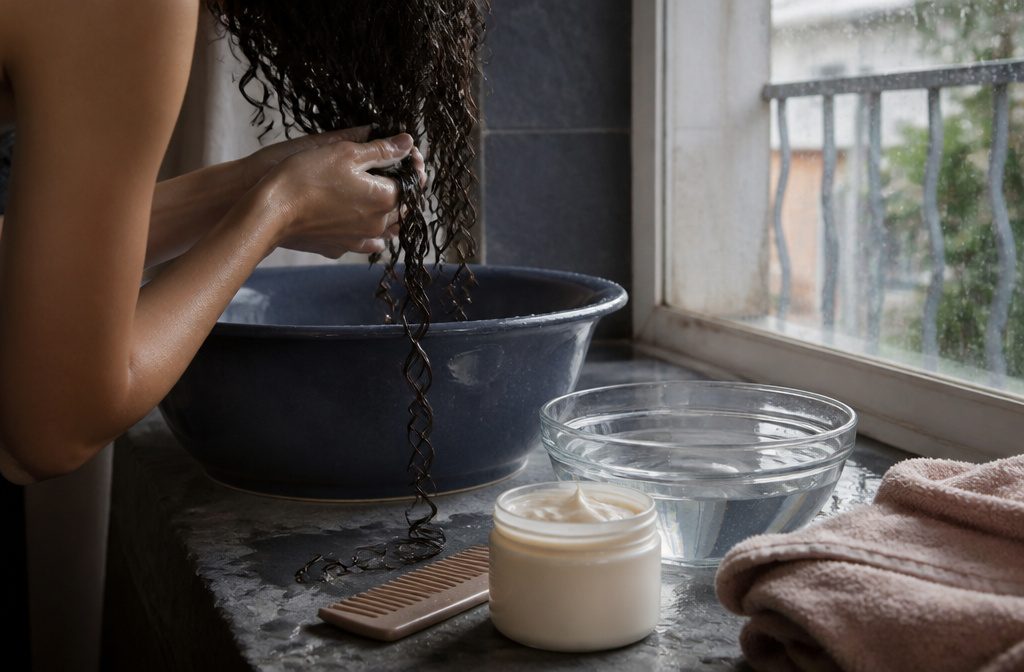
A haircare routine for curly hair means washing with a sulfate-free shampoo or co-wash, conditioning in sections, applying stylers to soaking wet hair, and drying without friction.
One frizzy result proves nothing: Lorraine Massey’s Curly Girl Method asks for 4 to 6 weeks on a simplified routine before you change anything, because curls need consistency to settle.
Choose a Cleanser and Wash
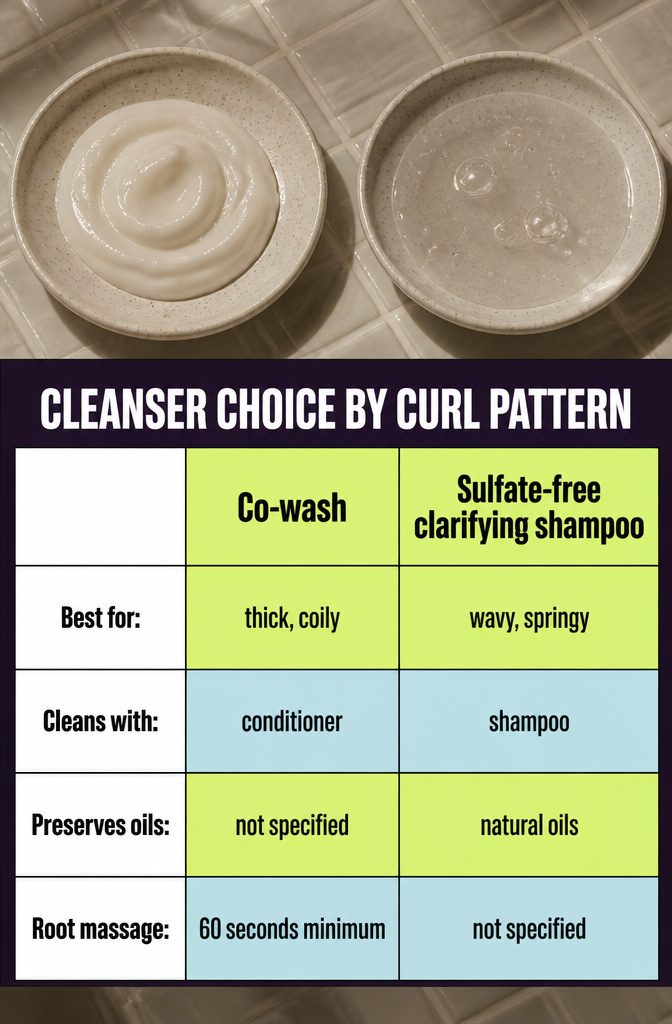
Thick, coily hair does best with a co-wash, which uses conditioner as the cleanser.
Wavy and springy curls do better with a sulfate-free clarifying shampoo that leaves natural oils in place. Massage a co-wash into the roots for at least 60 seconds, so the scalp actually gets cleaned.
Lorraine Massey, author of Curly Girl: The Handbook, built her method around a gentle everyday cleanser, and the form it takes is up to your hair:
Depending on your hair type, this cleanser might be a moisturizing shampoo or a creamy conditioner that you use as a cleanser.
Her method also starts with one sulfate-based reset wash, repeated after any accidental silicone or wax. If your products are clean, you may never need a second one.
Condition and Detangle
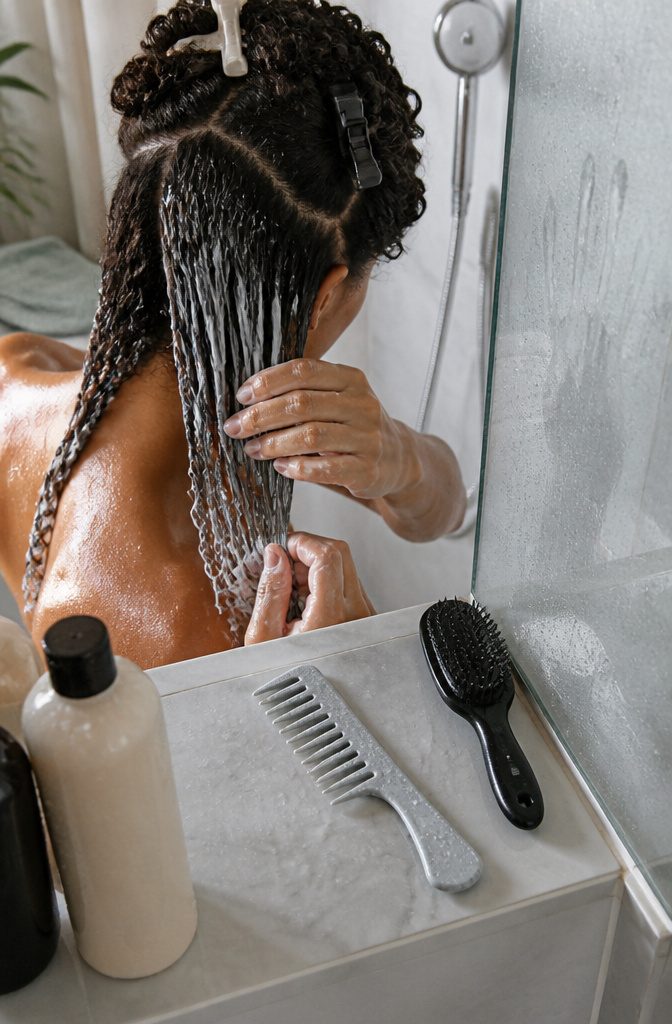
Part your hair into sections and coat each one with conditioner until the strands are fully saturated. The Curly Girl Method puts it on the bottom half of the hair and rinses out most or all of it.
Detangle with your fingers or a wide-tooth comb, starting at the ends and working up. Never brush dry curls, because it causes frizz and curl separation.
Fine, tangle-prone curls are the one exception. They can be too fragile for wet combing, so I’d dry-brush gently right before the shower, then comb again once conditioner is in.
Tighter textures often need a curl brush as well, for detangling while twisting or braiding. Stick to in-shower combing for the first six weeks, then adjust.
Treat or Add Moisture
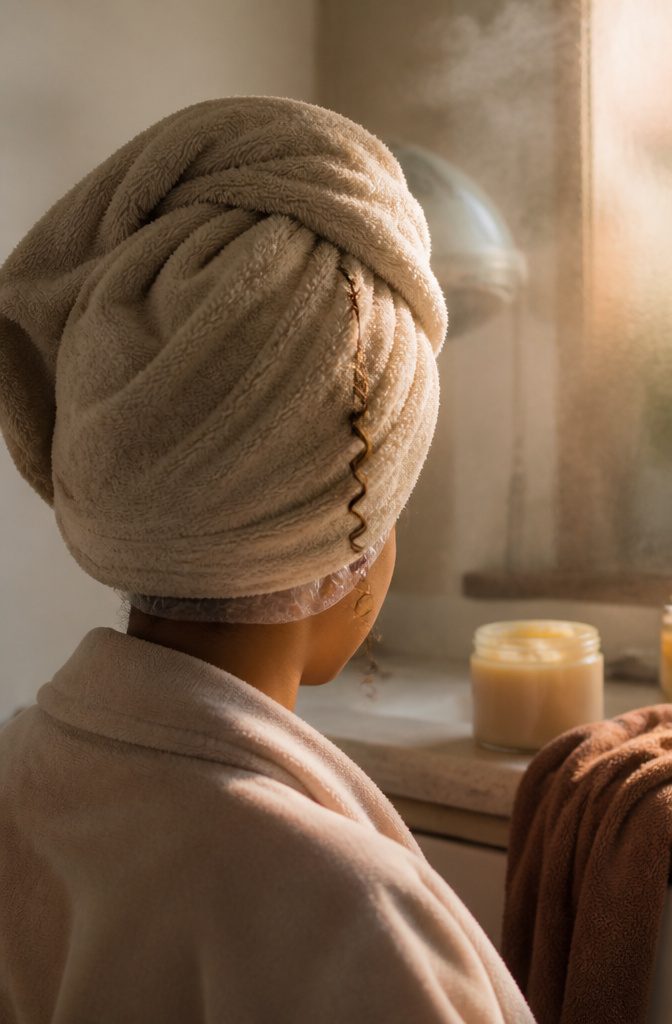
Work a conditioner-and-oil mask through damp hair, then cover it with a warm towel or shower cap for at least 20 minutes.
Garnier Fructis Curl Multi-Use Oil is an easy pick for the oil, since it doubles as a deep treatment and is rated for up to 72% less breakage in one use.
Heat does more than a towel alone, so 15–20 minutes under a hooded dryer or in steam is worth the time.
How often is a real choice.
Twice a month keeps a lower-maintenance routine hydrated, while weekly suits tighter textures, and I’d go weekly if your hair feels dry by midweek. After rinsing the mask, a leave-in conditioner keeps that moisture in place under your styler.
Style Wet Hair
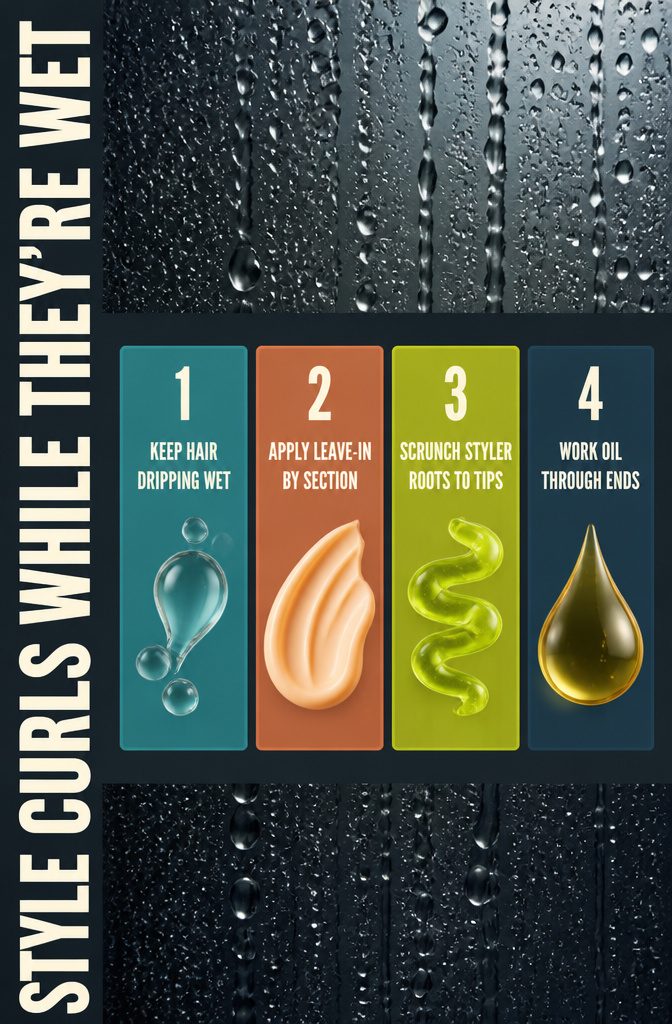
Style while hair is still dripping, one section at a time, before anything starts to dry.
For leave-in, a dime-sized amount covers shoulder length; go to a nickel or quarter for longer hair. Follow with curl cream, gel or mousse, using richer products on tighter coils and lighter ones on waves.
Fructis Curl Scrunch Controlling Gel is my pick for shrinkage-prone curls because it elongates as it defines. LA Hold Natural Styling Gel is another solid gel to try.
Scrunch a palmful in from roots to tips, even if it feels like too much on soaking wet hair. Fructis Curl Multi-Use Oil takes only a quarter-sized amount, worked through the mid-lengths and ends.
Run any new method more than once before you switch, since one frizzy result rarely proves the method is wrong.
Dry Gently
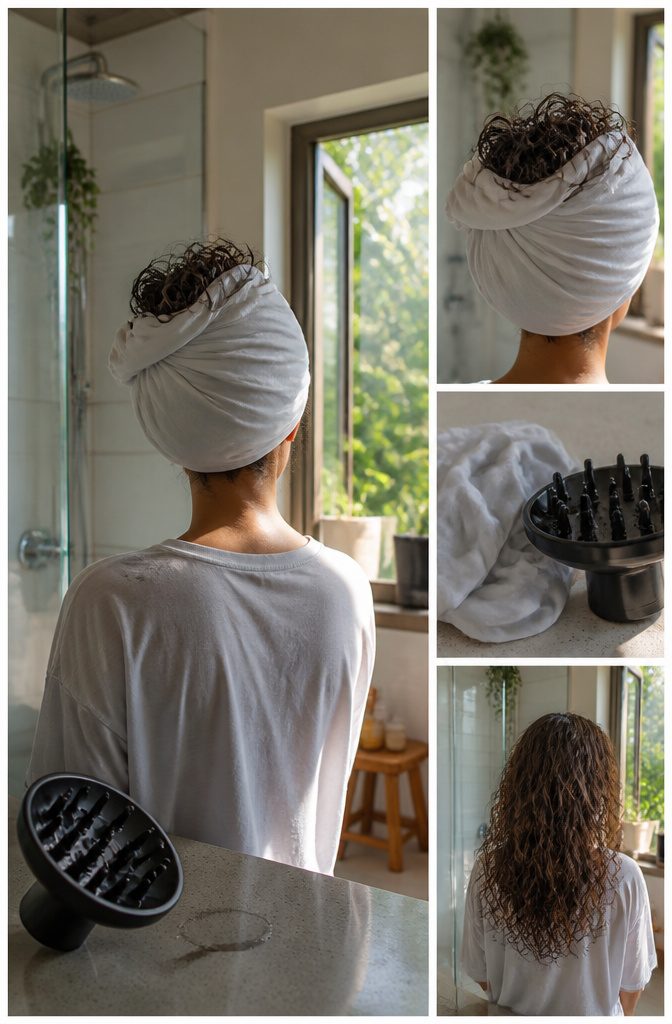
A cotton T-shirt or microfiber towel pulls water out without the friction of a regular terry towel, which roughs up the cuticle and leaves frizz and tangles.
Cup and scrunch each section instead of rubbing. Plopping follows the same logic: wrap the shirt or towel into a mound on top of your head and leave it for 5–15 minutes.
After that, I’d diffuse on low heat if you want volume and a faster finish, and air-dry if you want zero heat.
Both work, and curls are more fragile when wet than at any other point. Whichever you choose, keep your hands out of your hair.
Touching curls mid-dry breaks up the clumps and invites frizz. Once hair is fully dry, scrunch out the gel cast, then wait at least 2 hours before bed.
Finish and Maintain Curls
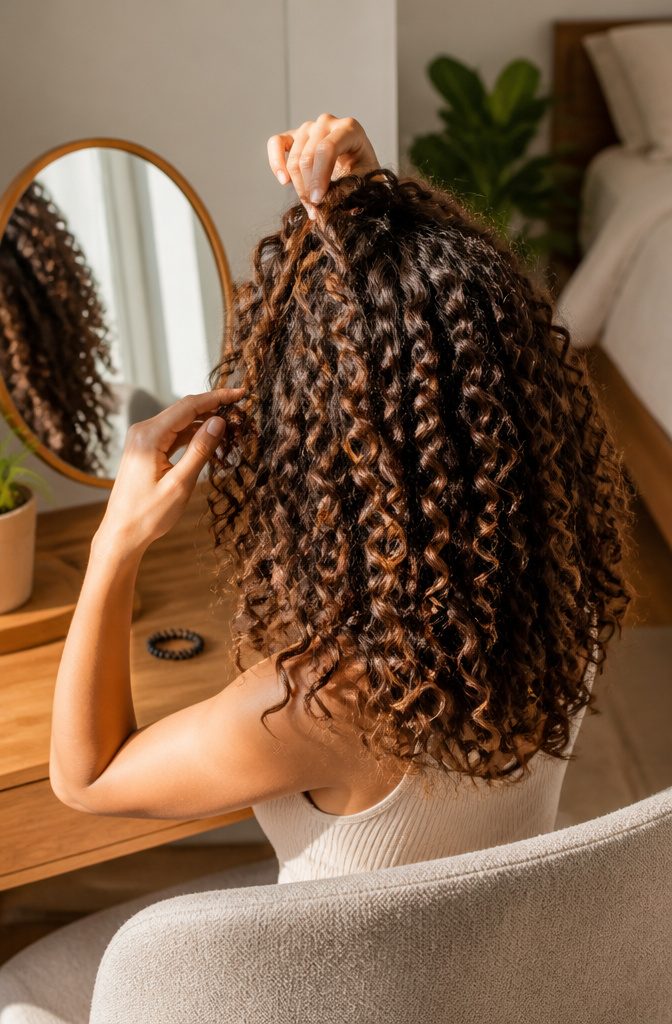
Wait until hair is 100 percent dry before you touch it.
Gel dries into a stiff cast, and breaking it is the whole job. Scrunch gently with your hands until the crunch gives way to softness, then pull individual curls apart with your fingers and fluff at the roots for lift.
I’d keep a brush out of this step, since it breaks up the clumps you just built.
Book a trim every 6–8 weeks with a stylist who knows how to cut curly hair.
Regular trims are the easiest way to deal with split ends, and the right cutter will shape the curls rather than fight them. Between appointments, keep ponytails and buns loose, because tight ones damage the hair.
Tailor It to Your Curl Type
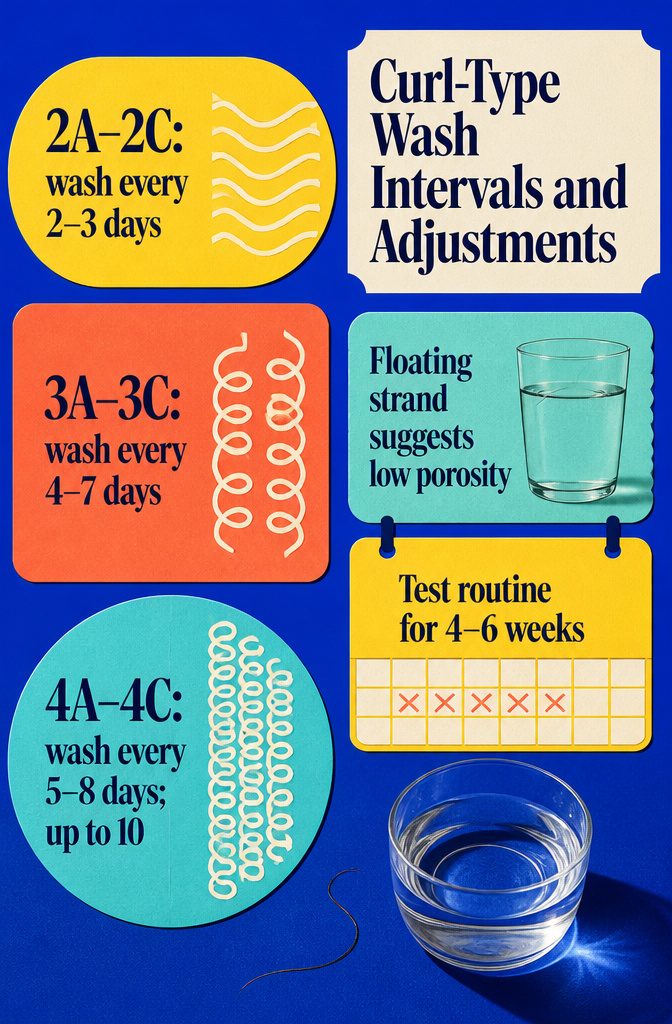
Start from these wash intervals, then adjust:
- 2A–2C: every 2–3 days with a lightweight shampoo, because waves get weighed down by oils and product.
- 3A–3C: every 4–7 days, which keeps more natural oil.
- 4A–4C: every 5–8 days, or even 10, with a quick co-wash between if needed.
- Porosity: drop a clean strand in a glass of water. Floating suggests low porosity; sinking suggests high.
- Time: about 30 minutes of active work, or 2–3 hours start to finish with drying.
- Patience: give a simplified routine 4 to 6 weeks before changing anything.
- Disagreements: wash frequency and diffusing versus air-drying both vary by person. I’d treat these numbers as starting points and test, since one routine rarely fits everyone.
Sleep and Refresh Between Washes
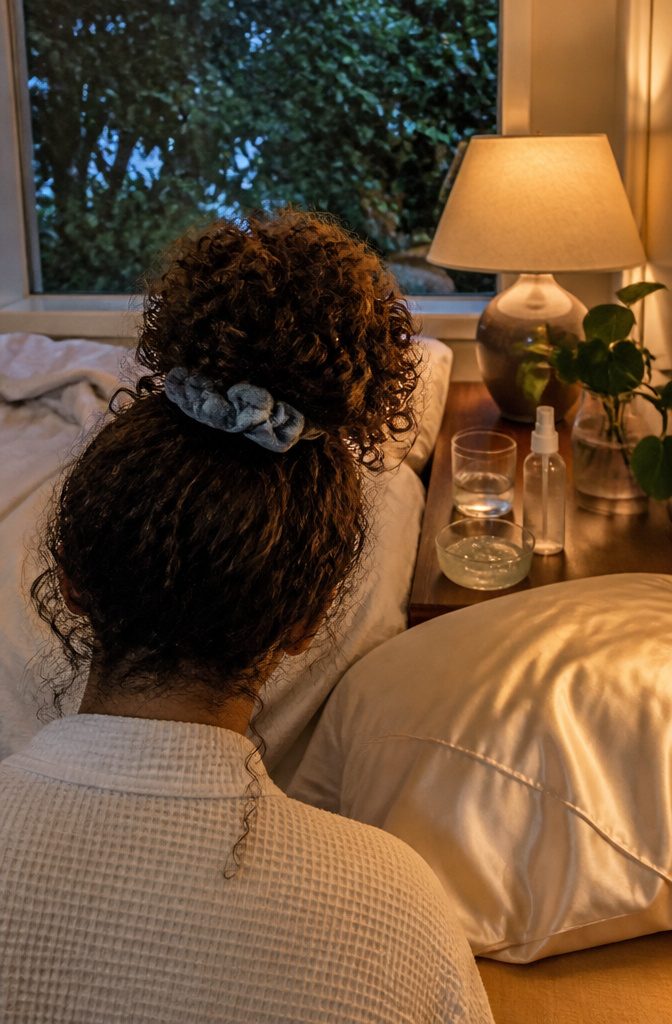
Before bed, gather your hair into a loose pineapple on top of your head, using a soft tie that doesn’t tug. Less friction means fewer kinks and less breakage overnight.
A satin or silk pillowcase beats cotton, and a silk scarf does the same job. I prefer the pillowcase because it works even when the scarf slips off.
Stretching a wash to 4–5 days is realistic.
Day 4 is the unpredictable one: sometimes the curls can still hang down, sometimes they can’t. Mist with curl-resetting spray, or use water and a little gel, and finger-coil only the pieces that have gone limp.
Fluff, then add dry shampoo at the roots. That takes about 8 minutes.
If the curls still look tired, pin them up. I’d skip a full wet reset, because it costs more time than it gives back.
Scalp Care and Protein
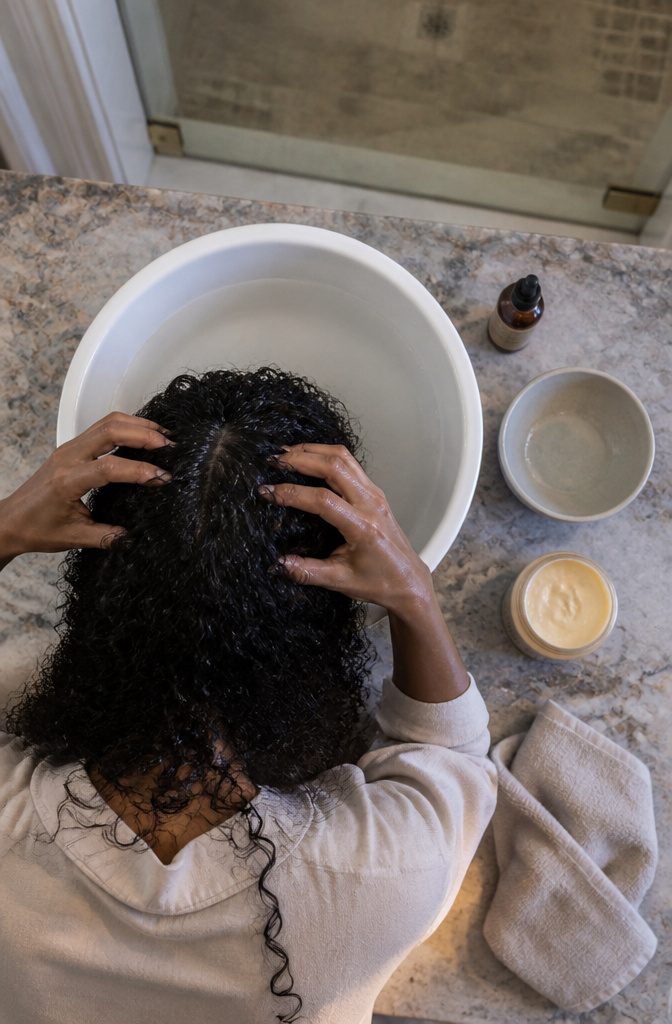
Scalp care and protein are optional, and I’d add them only when your hair gives you a reason.
An itchy scalp is the clearest cue: massage with your fingertips, not your nails, during the wash to loosen buildup. A scalp serum is worth trying if dryness or tightness keeps coming back.
Protein treatments suit curls that feel limp, stretchy or mushy when wet. If your hair turns stiff or brittle afterward, stop and go back to moisture.
An apple cider vinegar scalp rinse or a detox shampoo can clear buildup now and then. A good routine works fine without either.
Frequently Asked Questions
How often should I wash curly hair?
Most curly hair doesn’t need a daily wash. Start with every 2–3 days for 2A–2C waves, every 4–7 days for 3A–3C, and every 5–8 days (up to 10) for 4A–4C, with a quick co-wash in between if needed.
Tighter curls hold more natural oil, so they go longer between washes. Treat these as starting points and adjust to how your scalp and hair feel.
How do you wash your hair with conditioner?
Use a cleansing conditioner, work it into your roots with your fingertips, and massage for at least 60 seconds before rinsing.
The massage is what actually cleans the scalp. Co-washing suits thick, coily hair best.
Can you use shampoo on the Curly Girl Method?
Yes, as long as it’s sulfate-free.
Wavy and springy curls do well with a sulfate-free clarifying shampoo that leaves natural oils in place. The method also calls for one sulfate-based reset wash at the start, repeated only after accidental silicone or wax buildup.
How should I dry curly hair, and is air-drying okay?
Air-drying is fine, and so is diffusing on low heat. Squeeze and scrunch the water out with a cotton T-shirt or microfiber towel first, since a regular terry towel creates friction and frizz.
Diffusing gives more volume and a faster finish, while air-drying means no heat at all. Either way, keep your hands out of your hair while it dries.
What is hair plopping?
Plopping means wrapping wet, product-coated curls in a cotton T-shirt or microfiber towel, gathered into a mound on top of your head.
Leave it on for 5–15 minutes. The softer fabric absorbs excess water without the friction that roughs up the cuticle.
How long does the Curly Girl Method take to work?
Give a simplified routine 4 to 6 weeks before changing anything. One frizzy result rarely proves a method is wrong, so run each new approach more than once before you switch.
Can you brush your hair on the Curly Girl Method?
Not when it’s dry, because brushing dry curls causes frizz and curl separation.
Detangle in the shower with conditioner instead, using your fingers or a wide-tooth comb and working from the ends up. Fine, tangle-prone curls are the exception: a gentle dry-brush right before the shower can help.
How do I apply curl products?
Apply them to soaking wet hair, one section at a time, before anything starts to dry.
A dime-sized amount of leave-in covers shoulder-length hair, and longer hair takes a nickel or quarter. Follow with curl cream, gel or mousse, scrunched in from roots to tips; use richer products on tighter coils and lighter ones on waves.
What is the Curly Girl Method?
It’s a curl-care approach that enhances natural texture through gentle cleansers and gentle handling.
Lorraine Massey, author of Curly Girl: The Handbook, built it around a mild everyday cleanser, conditioner rinsed out of the lower half of the hair, and minimal heat.
Results vary by hair type, so expect some trial and error with products.
What products do I need for a curly hair routine?
At minimum: a gentle cleanser (a co-wash or sulfate-free shampoo), conditioner, a leave-in conditioner, and a styler such as curl cream, gel or mousse.
A conditioner-and-oil mask adds moisture every week or two, and a cotton T-shirt or microfiber towel handles drying. Tighter textures usually want richer products, while waves do better with lighter ones.
How do I maintain curls for a week?
A full week is a stretch; stretching a wash to 4–5 days is realistic. At night, gather your hair into a loose pineapple with a soft tie and sleep on a satin or silk pillowcase.
On day 4 or so, mist with curl-resetting spray (or water and a little gel), finger-coil any limp pieces, fluff, and add dry shampoo at the roots.
If the curls still look tired, pin them up rather than doing a full wet reset.