Wavy hair holds a cut well because the texture itself adds shape, but the wrong layers or length will either flatten the wave or let it turn into a triangle.
The choice comes down to how much weight your waves need to curl without dragging: fine hair wants a blunt or lightly layered cut that keeps the ends full, while thick hair needs internal layers carved out so the pattern can actually move.
A lob sits between the collarbone and shoulders and gives you the most room to grow between trims, usually 8 to 10 weeks before the shape starts looking boxy.
1. Shaggy Lob
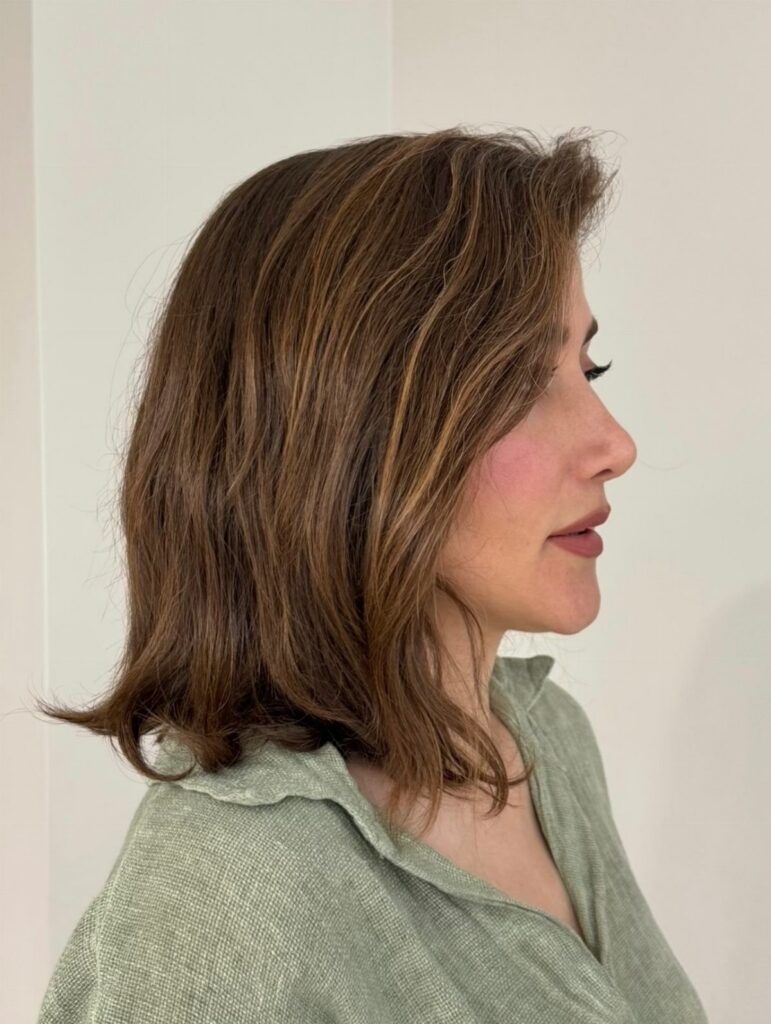
The lob keeps your length while letting layers and texture do the work.
Collarbone or slightly longer, this version relies on choppy layers through the bottom half and a bit of lived-in styling to let the wave show without fighting it.
Ask for a long bob cut with internal layers and ends that are point-cut for texture.
The texture keeps it from sitting flat and makes air-drying a real option. If your waves lean toward straight when humid, a light texturizing spray after washing will help them hold.
2. Bob Shag with Side Bangs
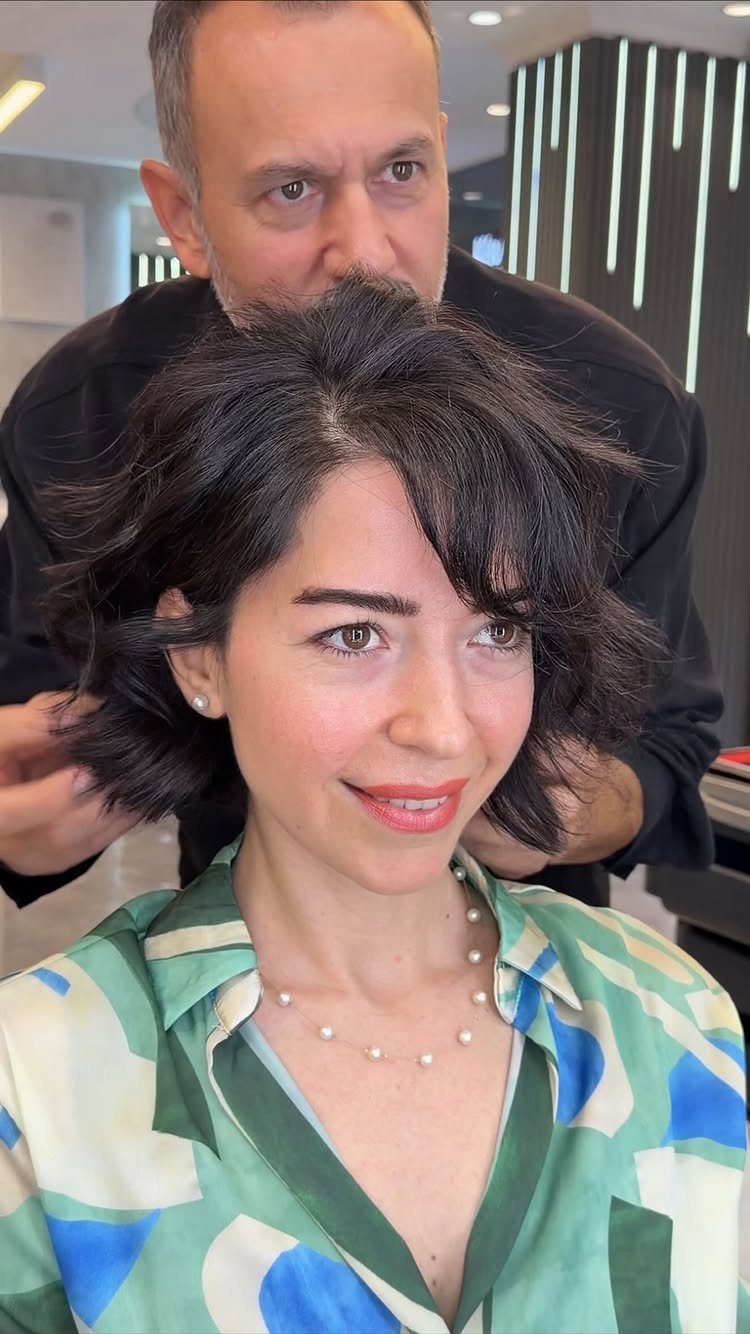
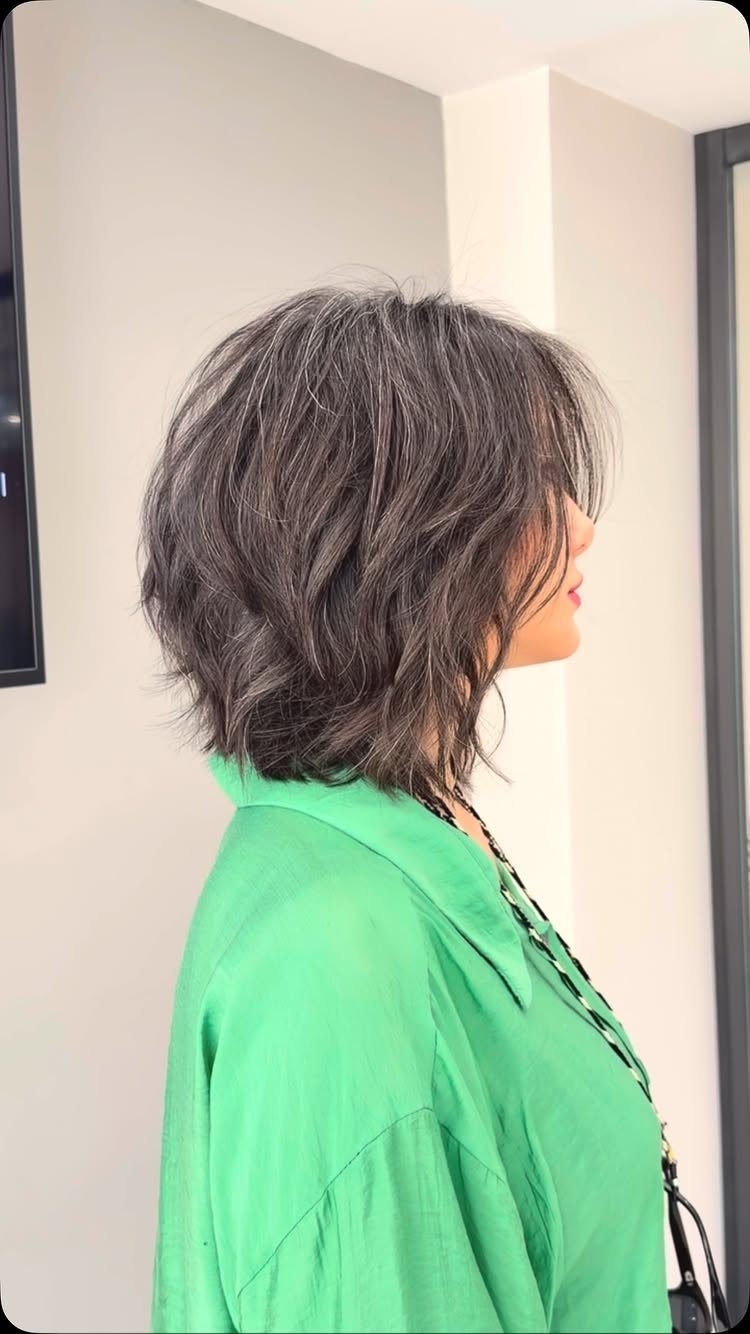
Thick wavy hair can sit heavy and hide its own pattern. A bob shag carves weight out of the interior and stacks short layers through the crown, so waves actually move instead of pulling themselves straight.
Side bangs break up the line and suit a round or square face.
This cut needs a trim every 6 to 8 weeks to keep the shape from growing out boxy. If you prefer low maintenance, a longer shag with fewer layers will give you more time between appointments.
3. Pixie Cut
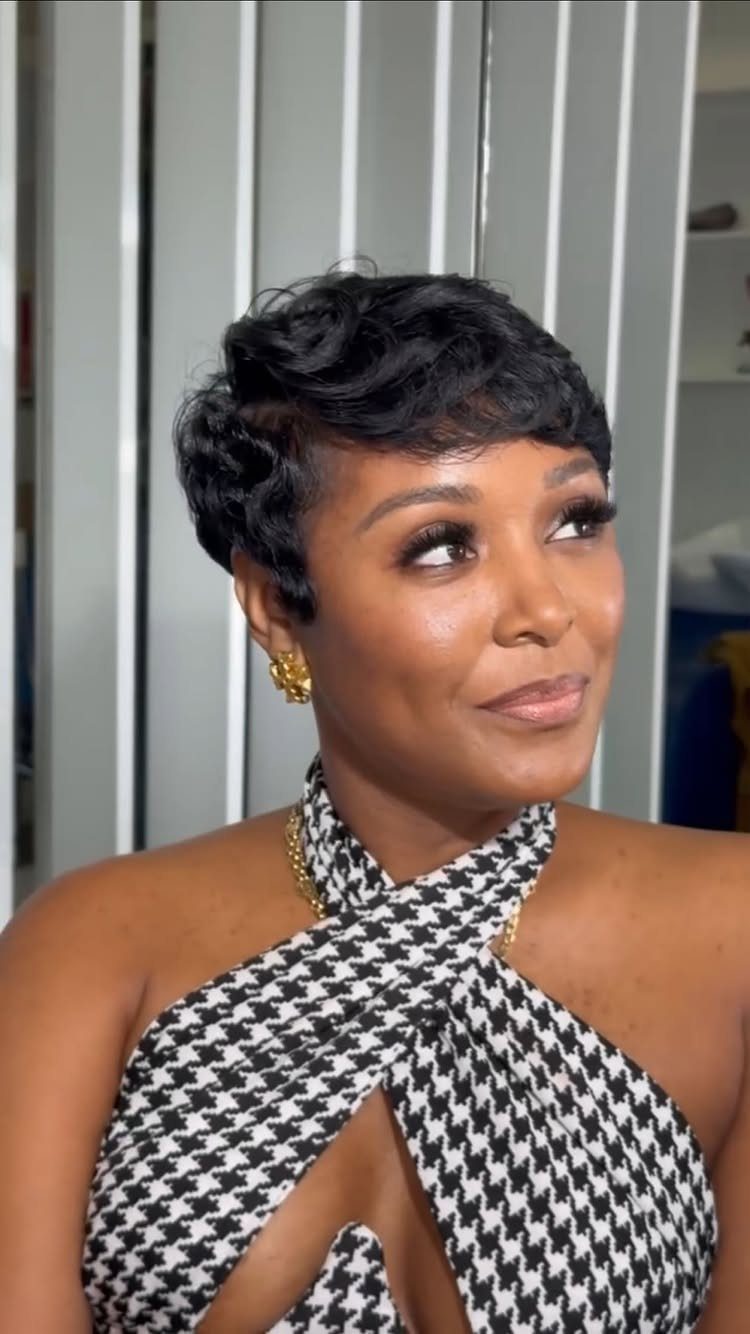
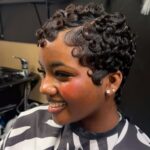
A pixie with natural wave gives you shape without heat tools. The short length lets the wave bend instead of weighing itself down, and you can scrunch in a lightweight mousse and leave it.
If your wave starts close to the root, this cut works in your favor.
If your texture needs coaxing, you’ll still reach for the diffuser or a small round brush most mornings. A longer pixie with side-swept bangs softens an angular face and gives you more styling options as it grows.
4. Butterfly Cut
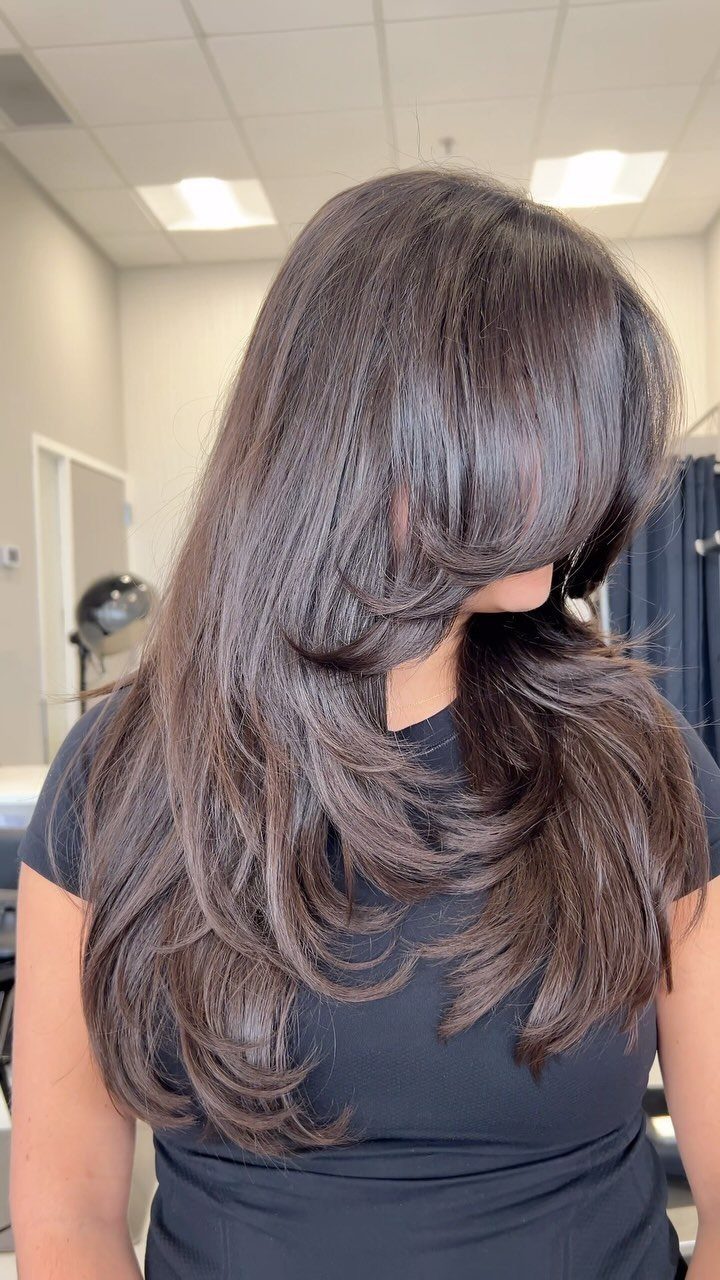
Layers start at the cheekbone and cascade longer toward the back, so wavy hair can curl without weight piling up at the bottom.
The butterfly cut keeps length while removing weight from the ends, so your waves lift instead of dragging.
Ask for face-framing layers and internal layering through the mid-lengths.
This suits oval and heart-shaped faces especially well. The trade-off is upkeep: the layers grow out noticeably, and you’ll want a trim every 8 to 10 weeks to keep the shape.
5. Choppy Wavy Bob

A choppy bob cuts blunt weight and lets wavy texture show. Point-cutting or razor texturizing through the ends gives each wave its own direction, and the shorter length keeps damaged ends off the table entirely.
This suits fine to medium hair that holds a wave but lacks volume.
If your hair is thick, ask for internal layering so it doesn’t turn into a triangle. The chin-length version works for most face shapes, and you can tuck one side behind your ear to change the look without restyling.
6. Long Layers
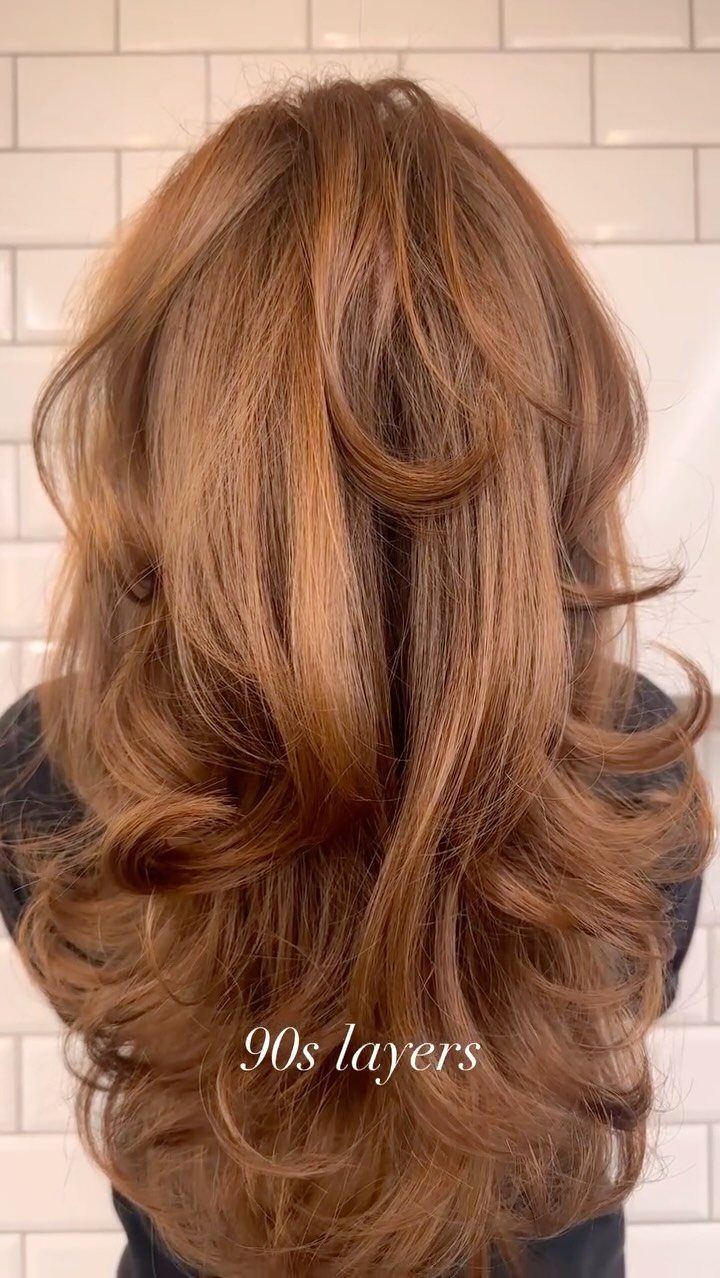
Long hair with layers cut through the mid-lengths and ends lets wavy texture do what it wants. The 90s version kept the layers voluminous and stacked, with more volume up top and curled or blown-out ends.
Ask for long layers starting at the collarbone or below, not the top of the head. The lower start keeps weight in the right place so your waves don’t flatten.
This suits round and oval faces and looks best when styled with a large-barrel curling iron or a round brush. If you air-dry, expect softer movement and less volume than the styled version.
7. Medium Length Layers
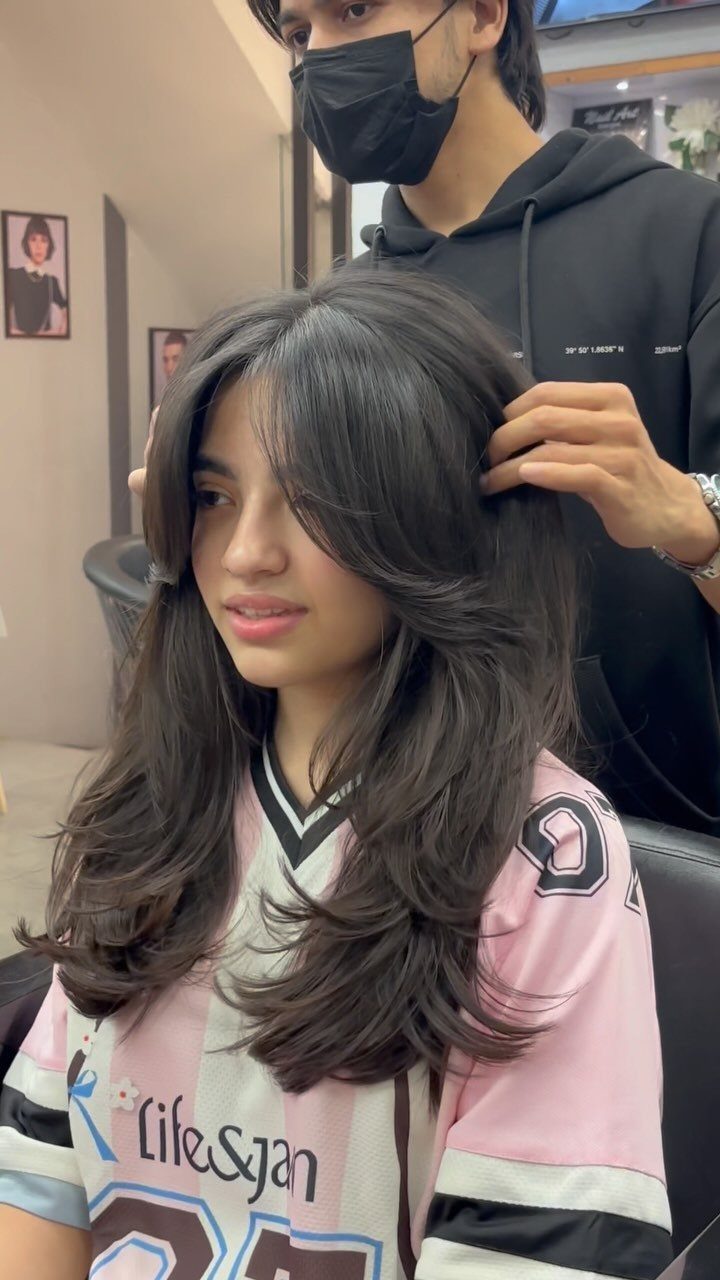
Face-framing layers start near the chin or cheekbone and blend gradually into your longer hair. Medium hair shows wave without dragging it flat, and the layers keep the sides from looking heavy.
Ask your stylist to keep the shortest layer long enough to tuck behind your ear if you prefer.
This cut works for most face shapes and gives you room to grow it out without a sharp line forming. Styling goes fast with a diffuser or none at all if you let it air-dry.
8. Loose Layered Waves
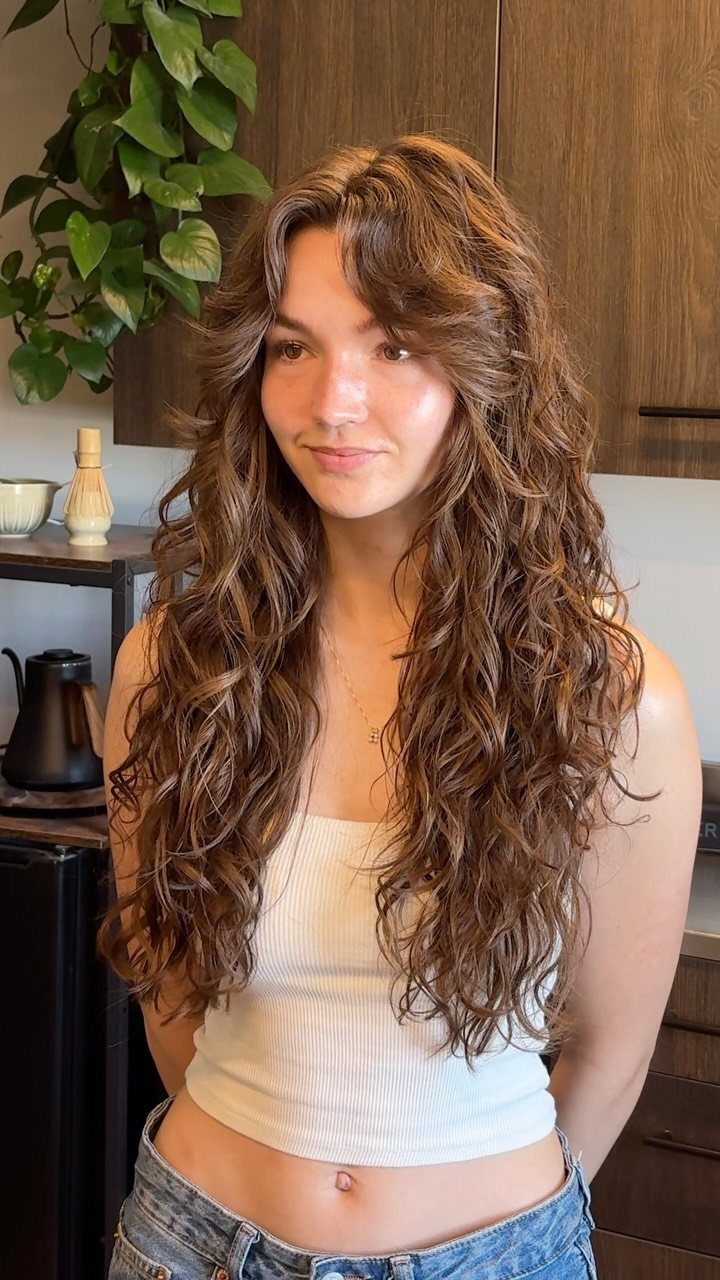
Long layers paired with wispy bangs soften an angular face and give wavy hair room to move. The bangs sit just above the brows or longer, so they blend into the layers instead of sitting separate.
If you skip heat tools, the waves will stay soft and the bangs will dry with a slight bend. A round brush and blow dryer give you more control if your texture is inconsistent.
9. Long Bob
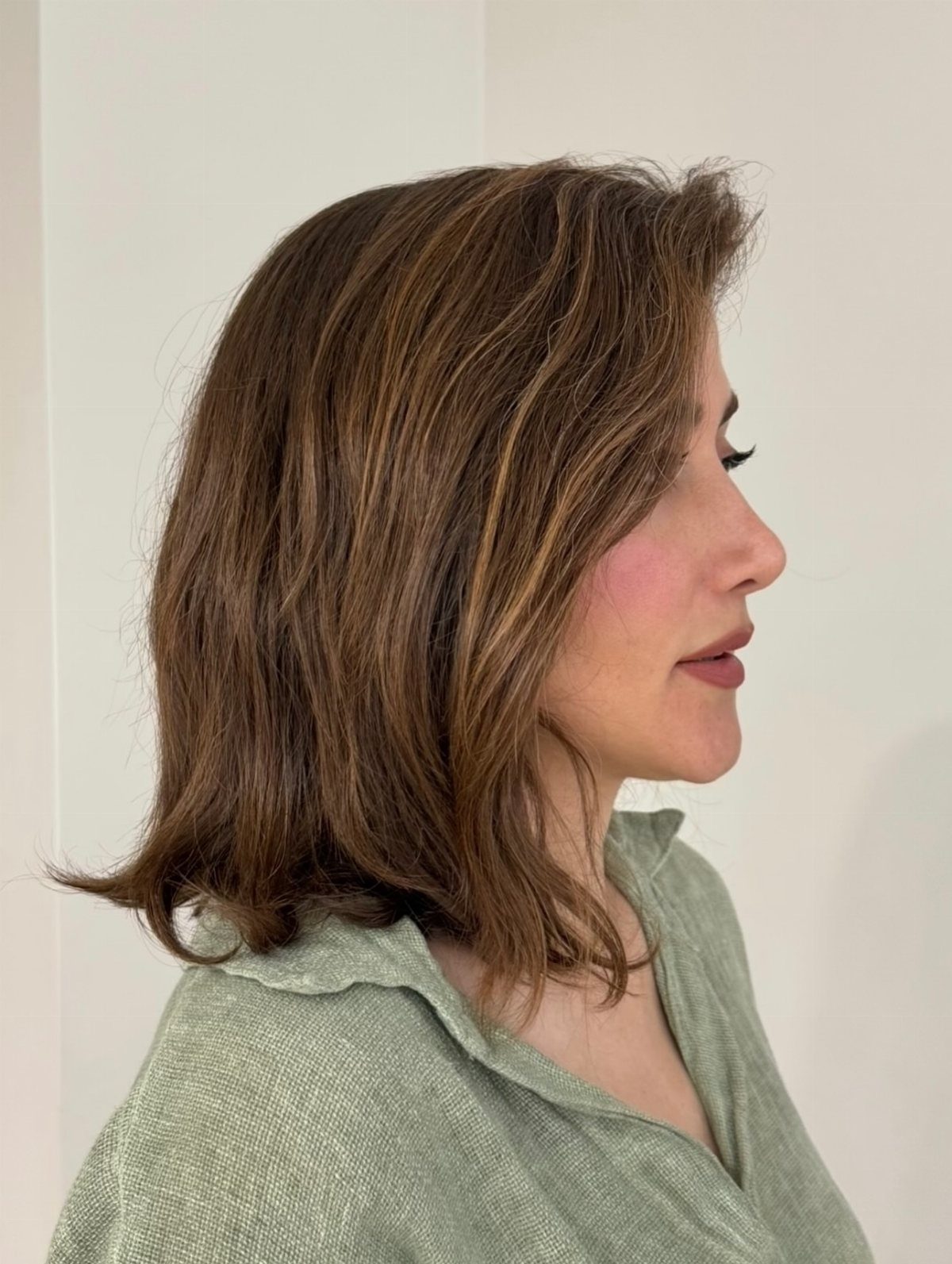
A long bob falls between the collarbone and shoulders, long enough to tie back but short enough to air-dry in under an hour. Wavy hair holds the shape without pulling straight, and the length suits most face shapes.
This cut grows out well and gives you plenty of time between trims.
If your waves are fine, ask for a blunt cut to keep the ends looking full. Thicker hair benefits from light internal layering so the bottom half doesn’t sit wide.
10. Lob with Long Layers
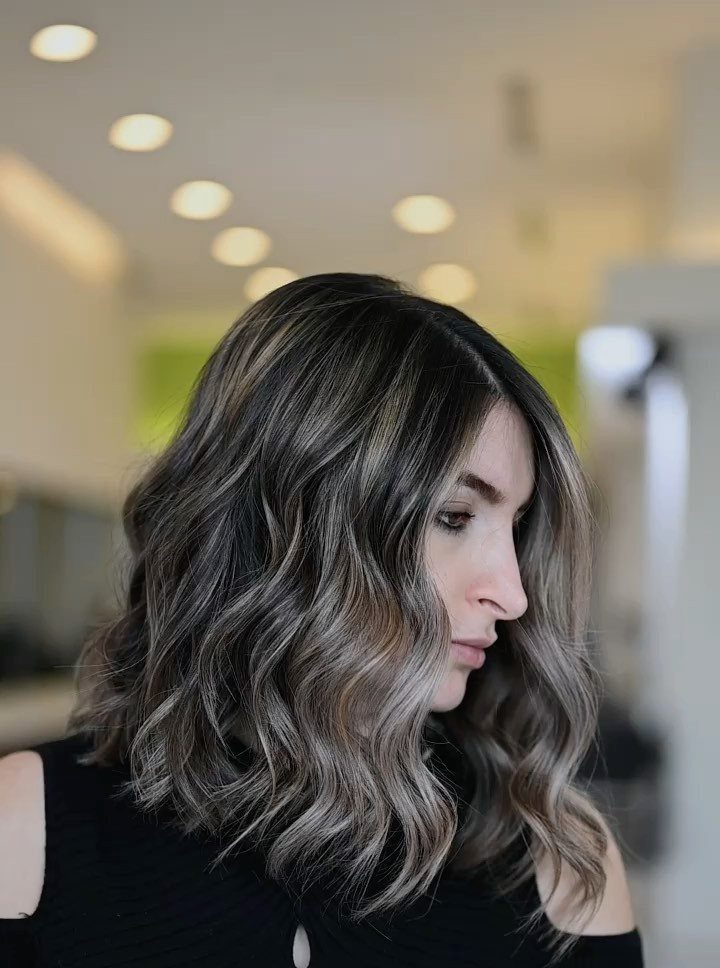
Piecey layers carve weight out of thick wavy hair without shortening the overall length. The layers start low, around the collarbone, so the top stays full and the ends move instead of clumping.
Ask for internal layers and point-cut ends to avoid a blocky grow-out. If you prefer a sleeker finish, a round brush through the front sections will smooth the wave without flattening it.
11. Edgy Angled Bob
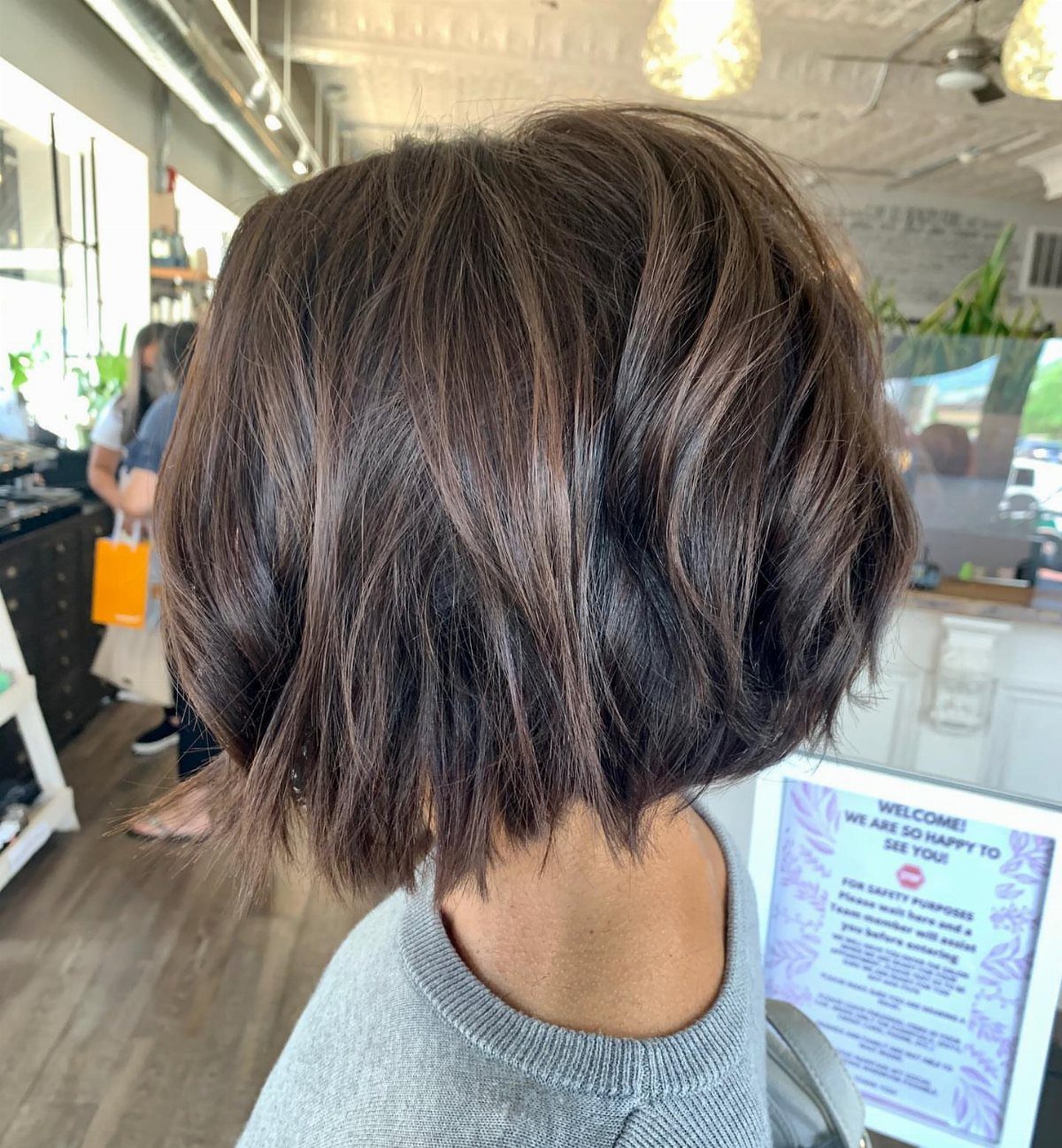
An angled bob keeps the front pieces long, often chin-length or past, while the back lifts to the nape or higher. The angle lets wavy hair stack and show texture instead of sitting flat.
This cut needs precise placement, so bring a photo and talk through how steep you want the angle. The back grows out quickly, so plan on regular trims.
12. Voluminous Waves
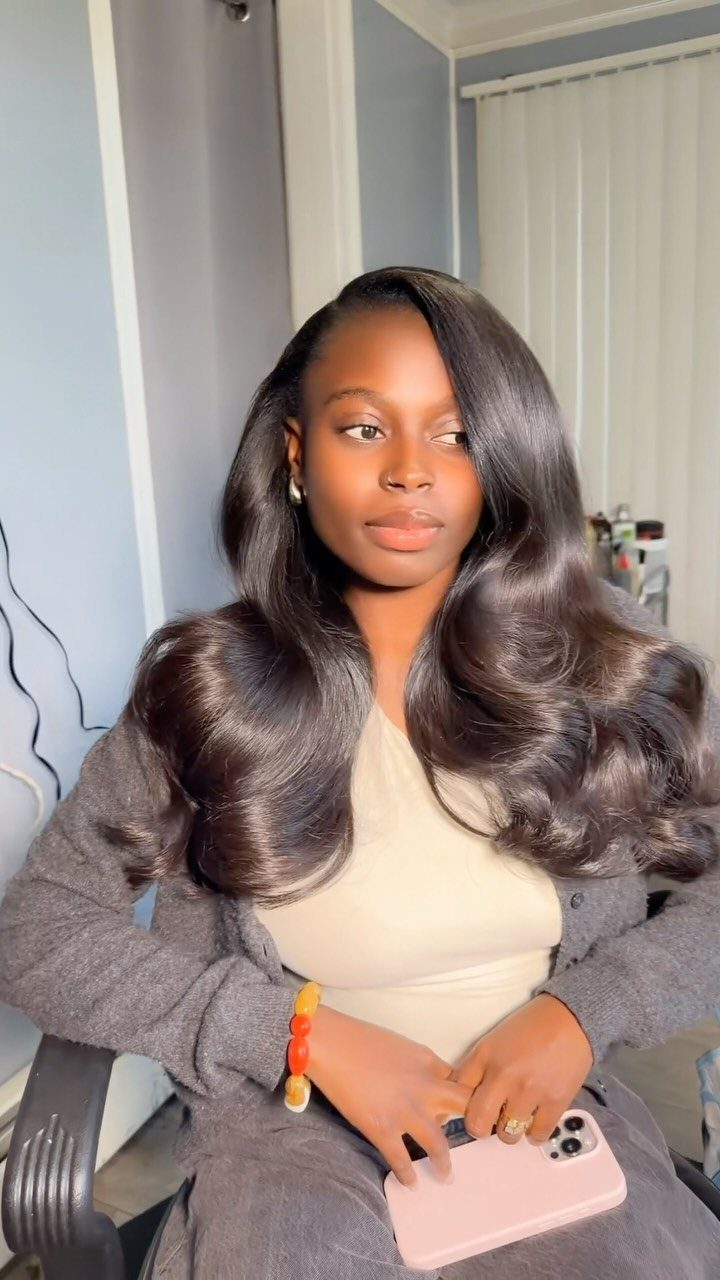
Layers stacked through the crown and mid-lengths give wavy hair lift and let each wave curl on its own instead of pulling the layer above it. The result is big, bouncy movement that starts near the root.
This cut works best on medium to thick hair that holds a wave naturally. Fine hair can look sparse with too many layers, so ask for fewer and longer if that’s your texture.
Styling takes a diffuser or a large-barrel curling iron to bring out the volume, and a light hairspray holds it without weighing the waves down.
13. 70s Glam

Short bangs cut straight across the forehead and long layers through the ends give you the 70s shape without the blowout.
The bangs sit above the brows or just touching, and the layers start mid-length so the top half keeps its weight.
Ask for blunt bangs and long, soft layers.
Wavy hair holds this cut well without daily heat styling. If your forehead is narrow, longer bangs that graze the brows will suit you better.
14. Shoulder-length Short Layers
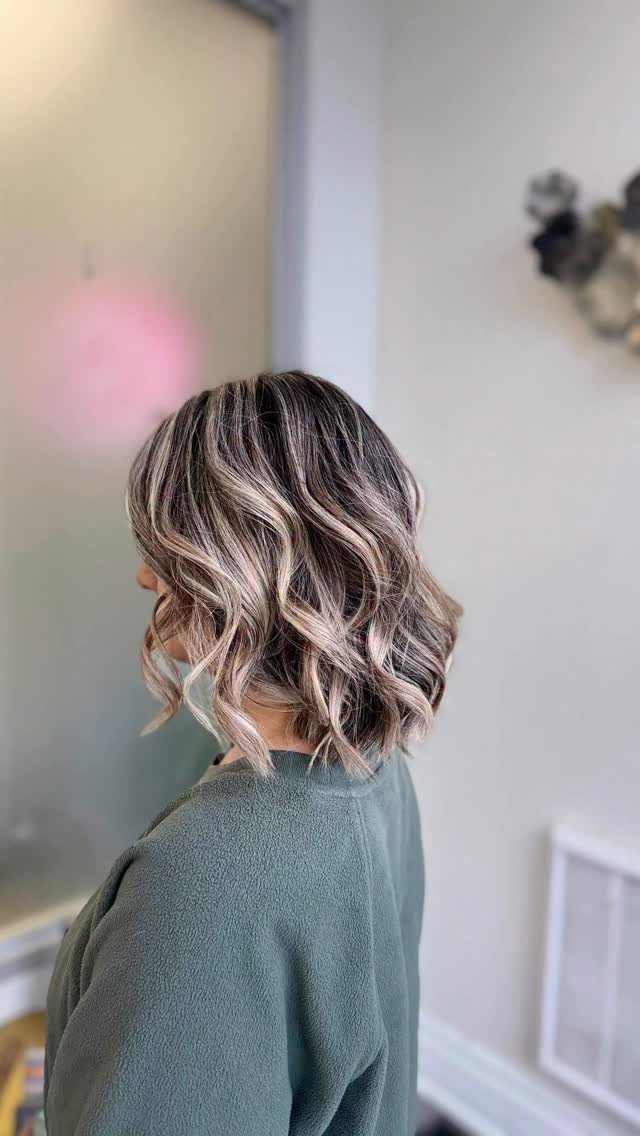
Shorter layers cut through the crown add lift and let shoulder-length waves stack instead of sitting flat.
This works well on thick wavy hair that tends to pull straight under its own weight. A diffuser brings out the volume, or you can scrunch in a mousse and air-dry for softer movement.
15. Bixie
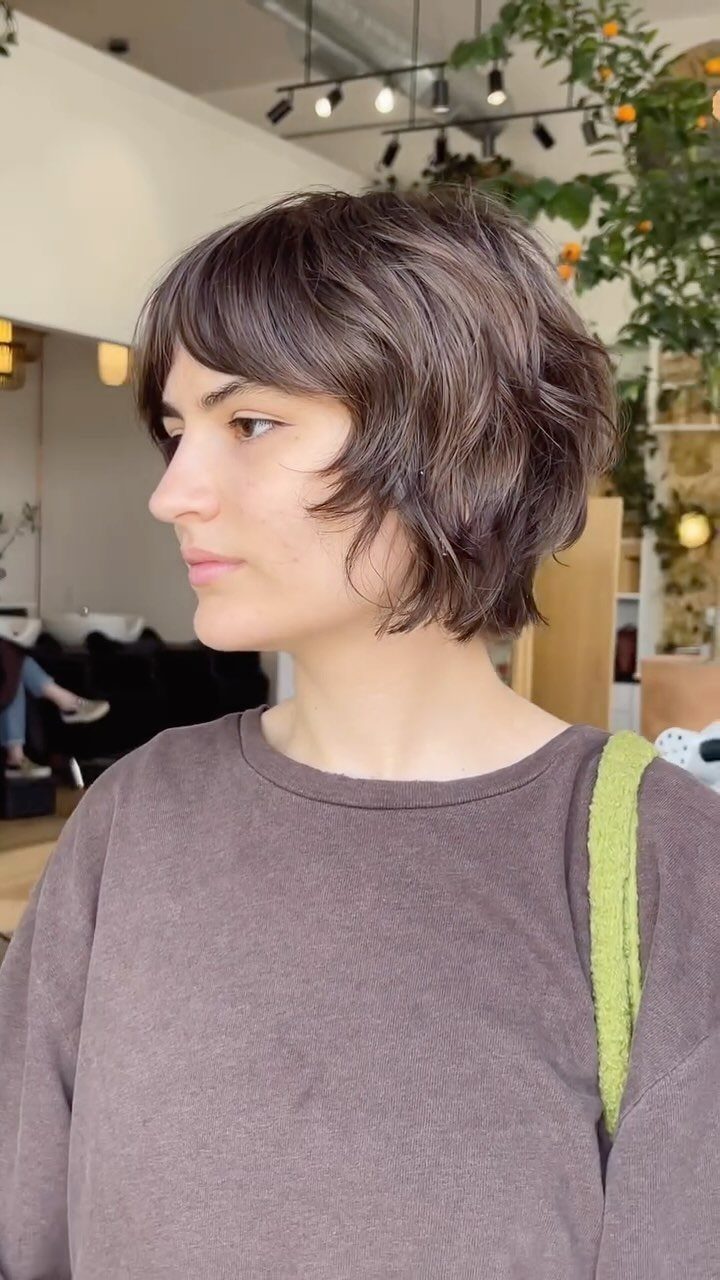
The bixie sits longer than a pixie but shorter than a bob, usually ending between the ear and the chin.
Texture through the ends keeps it from looking too neat, and the length gives wavy hair just enough room to bend without dragging.
Ask for a tapered nape and textured layers through the top and sides. If your wave pattern is loose, you may still need a curling iron to add movement on days when it dries straight.
16. Chin-length Bob

A chin-length bob with choppy, textured ends lets wavy hair curl without fighting the cut. The length keeps styling quick, and the texture prevents it from sitting too blunt or heavy.
Ask for point-cut or razor-textured ends and a length that hits right at the chin or slightly below. This suits most face shapes and grows out well if you decide to go longer.
17. Shoulder-length Lob
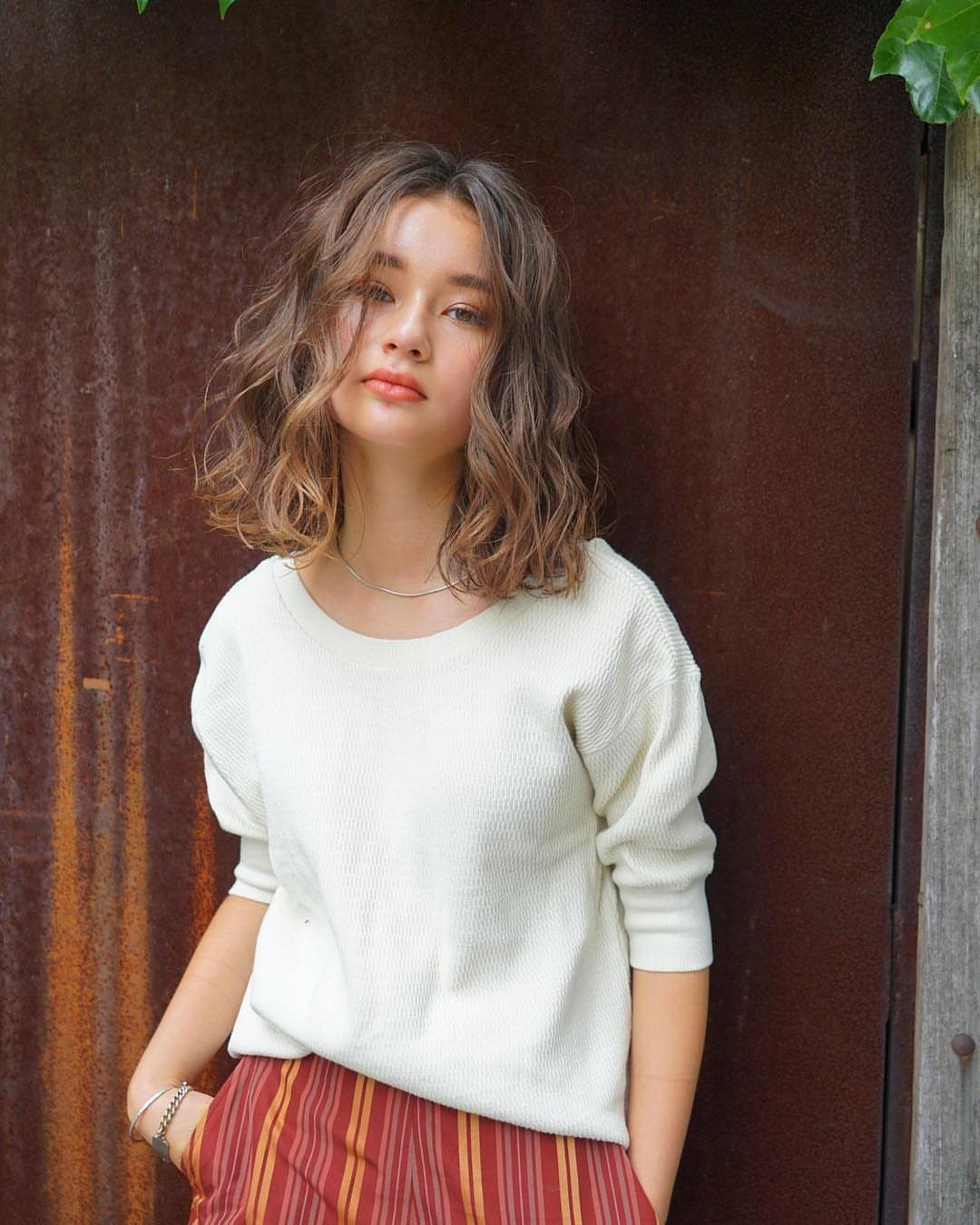
A shoulder-length lob with tousled waves and balayage highlights gives you movement and dimension without a full dye job. The highlights sit through the mid-lengths and ends, so regrowth is less obvious and you can go longer between salon visits.
Ask for a lob that grazes the shoulders and face-framing layers if you want softness around the jawline. Balayage works best on wavy hair because the texture shows off the color variation.
18. Inverted Lob
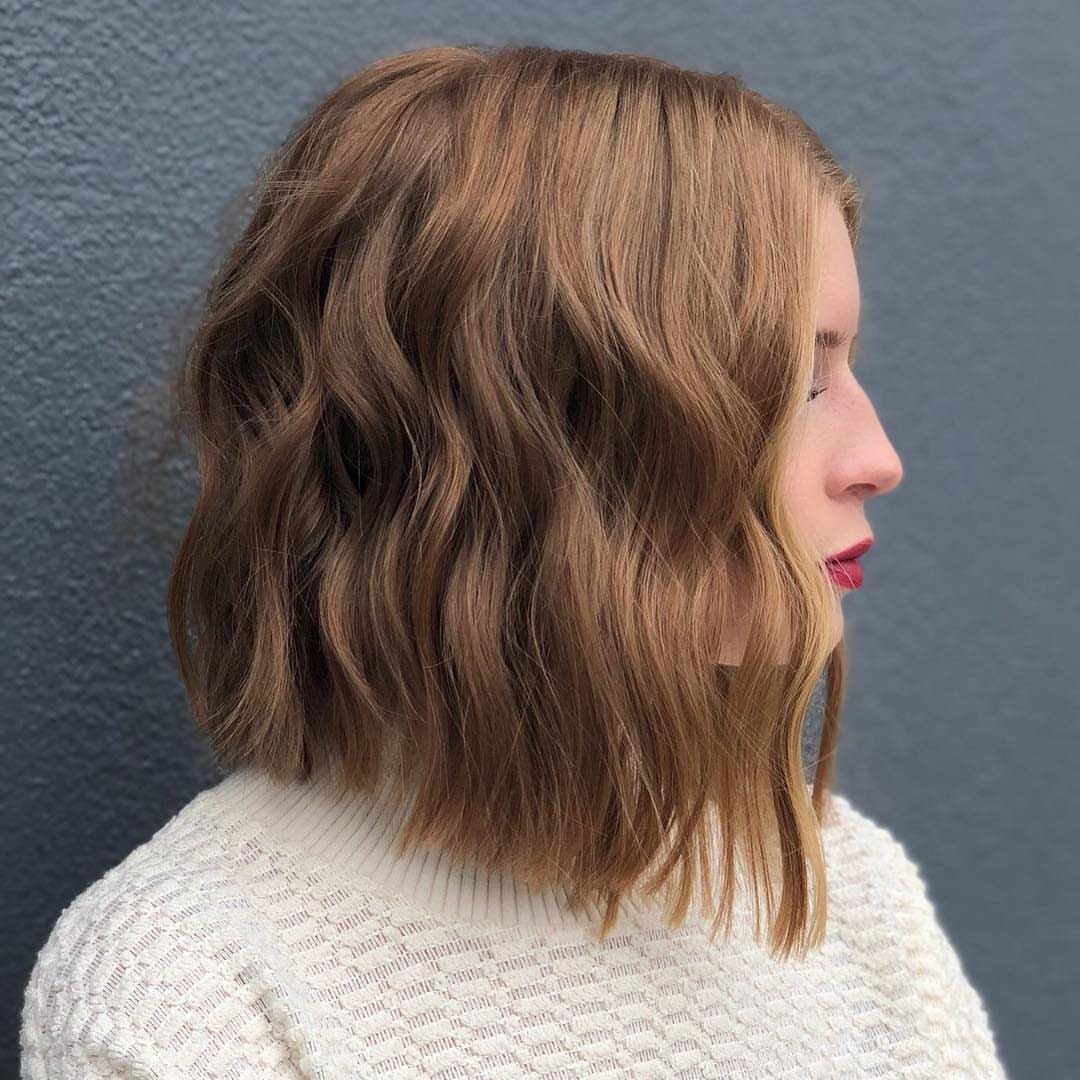
An inverted lob stacks shorter in the back and angles longer toward the front, so your longest pieces frame your face. The angle gives wavy hair lift at the crown and lets the front waves fall heavier.
The longer front pieces can be tucked behind your ear or left loose to change the shape without restyling.
19. Uniform Long Layers
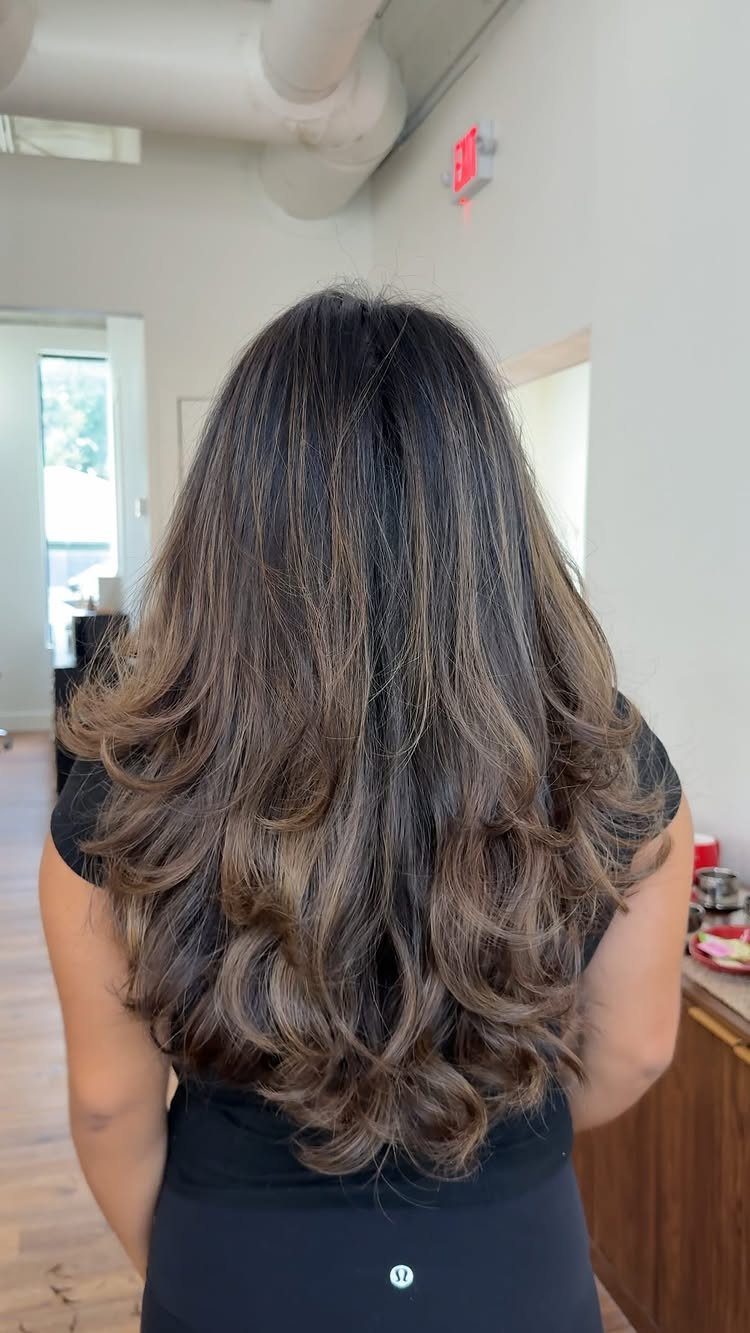
Long layers cut at one consistent length through the back give wavy hair shape without visible stacking. The layers blend so smoothly that the cut looks like one length until you move, and then the waves show their dimension.
This suits thick or fine hair equally well because the layers remove weight without creating gaps.
Ask for long layers cut straight across the back, starting below the shoulders. If your waves are loose, the cut will look subtle; tighter waves will show more movement.
Basically, to make your waves look their best, you’ll need a cut that caters to your wavy pattern, texture, and shape. 9 out of 10 times, that means a cut with some type of layering going on.
20. Bob with Textured Fringe

A wavy bob with textured fringe keeps the overall shape short while the bangs add softness around the forehead.
The fringe sits piecey and slightly uneven, so it blends into the rest of the cut instead of reading as a separate element.
Point-cut bangs soften the line where fringe meets the rest of the bob and keep texture from looking heavy. The texture keeps the bangs from sitting too heavy, and wavy hair holds the shape without daily heat styling.
21. Textured Lob
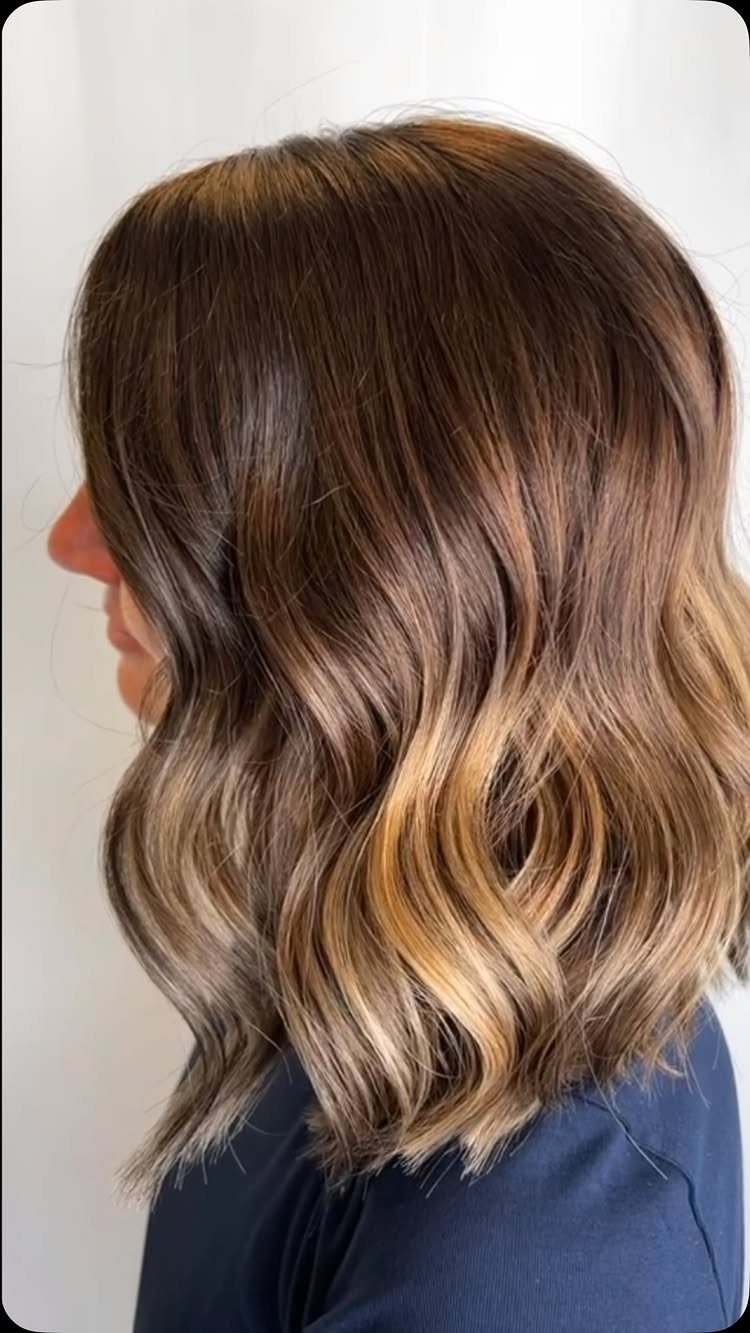
Thick wavy hair benefits from a lob with internal layering and highlights that break up the weight. The texture comes from how the layers are cut, not from styling, so air-drying still gives you movement.
Ask for a shoulder-length lob with layers cut through the interior and balayage or highlights placed through the mid-lengths. The color dimension makes the texture more visible, and the cut grows out well without losing its shape.
22. Classic Bob
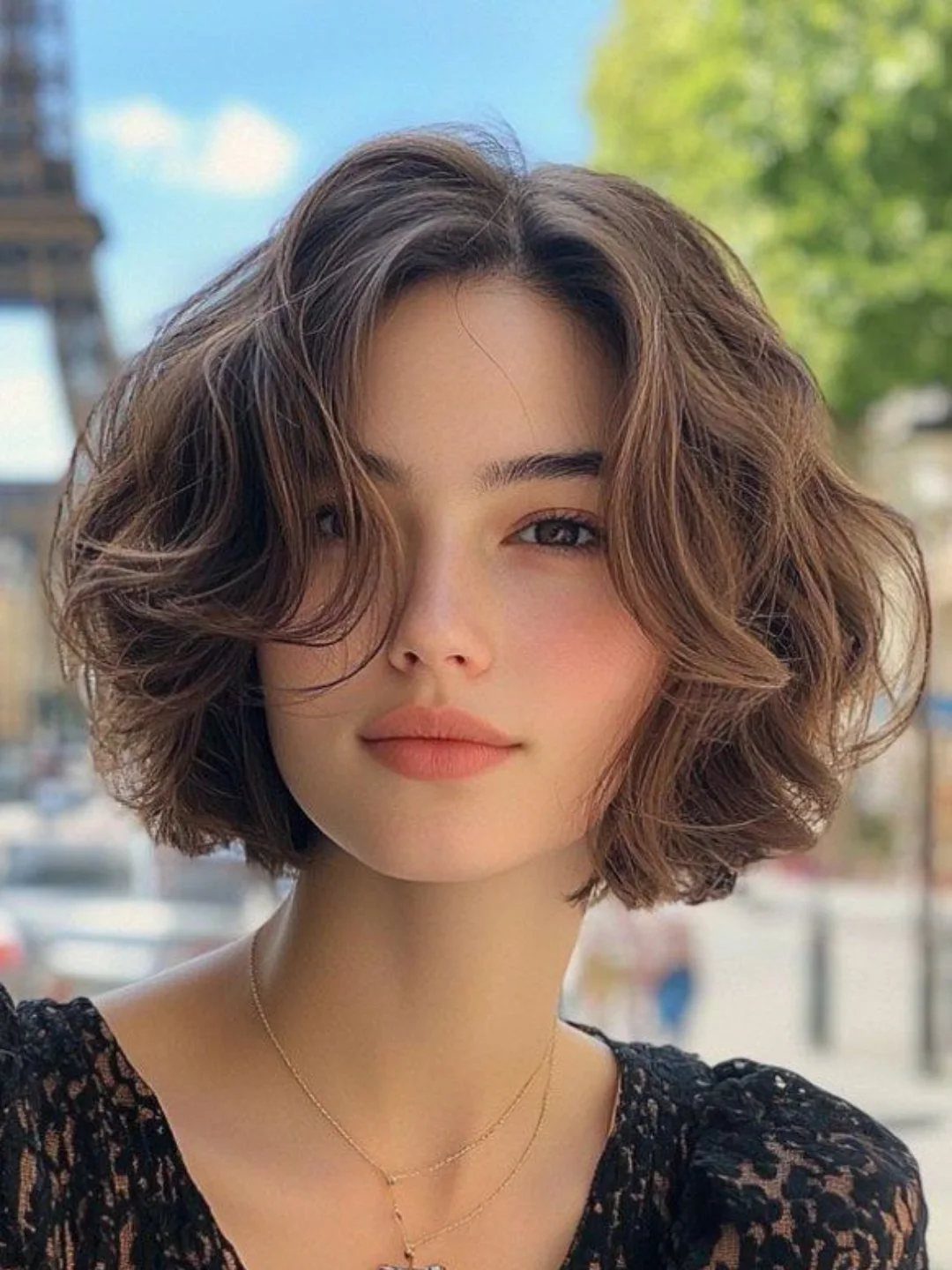
The length sits just at the jawline, short enough to keep styling minimal but long enough to tuck behind your ear when you want a different look.
If your waves are inconsistent, a light mousse scrunched in while damp will bring out the pattern without stiffness.
23. Medium Spiral Waves
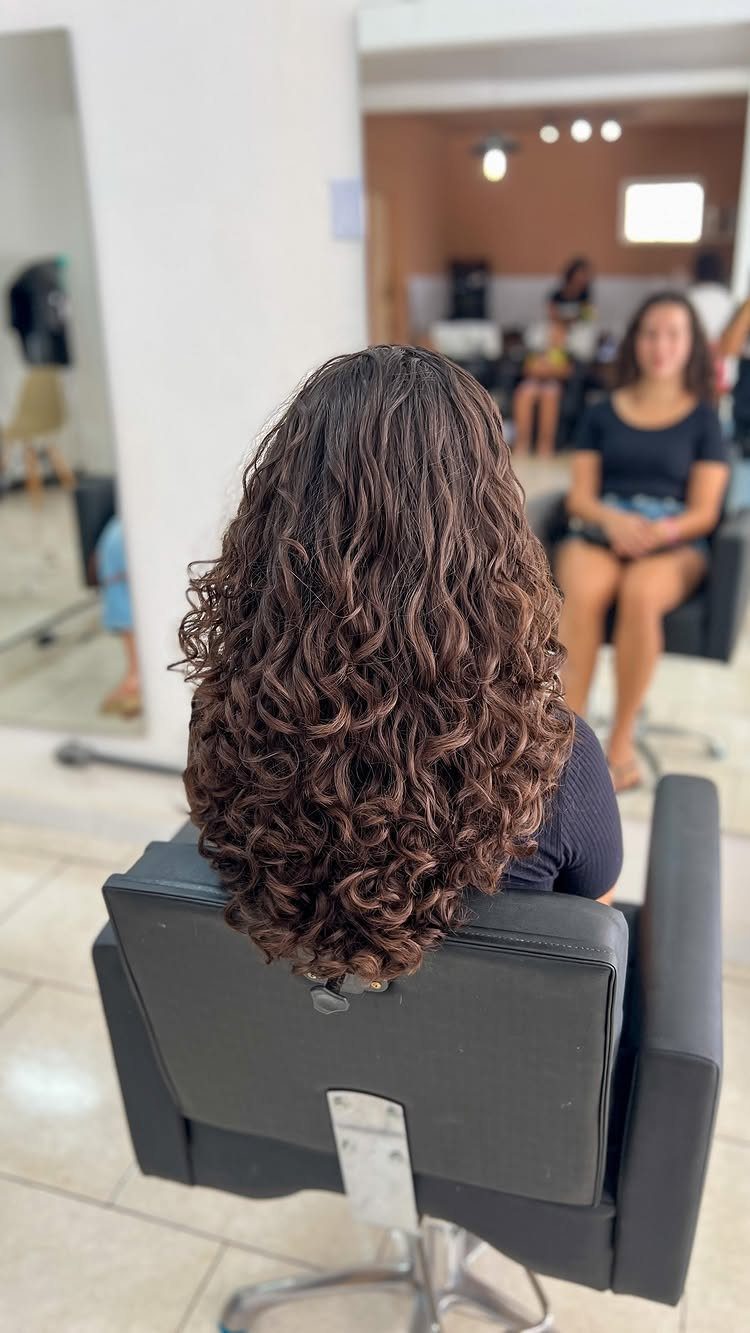
Rounded layers cut into shoulder-length hair let spiral waves stack and coil without pulling straight.
Ask for shoulder-length rounded layers and, if your waves are tight, a hydrating cream to define them without frizz. This cut needs regular trims to keep the rounded shape from growing out uneven.
24. Shoulder-length Wavy Style
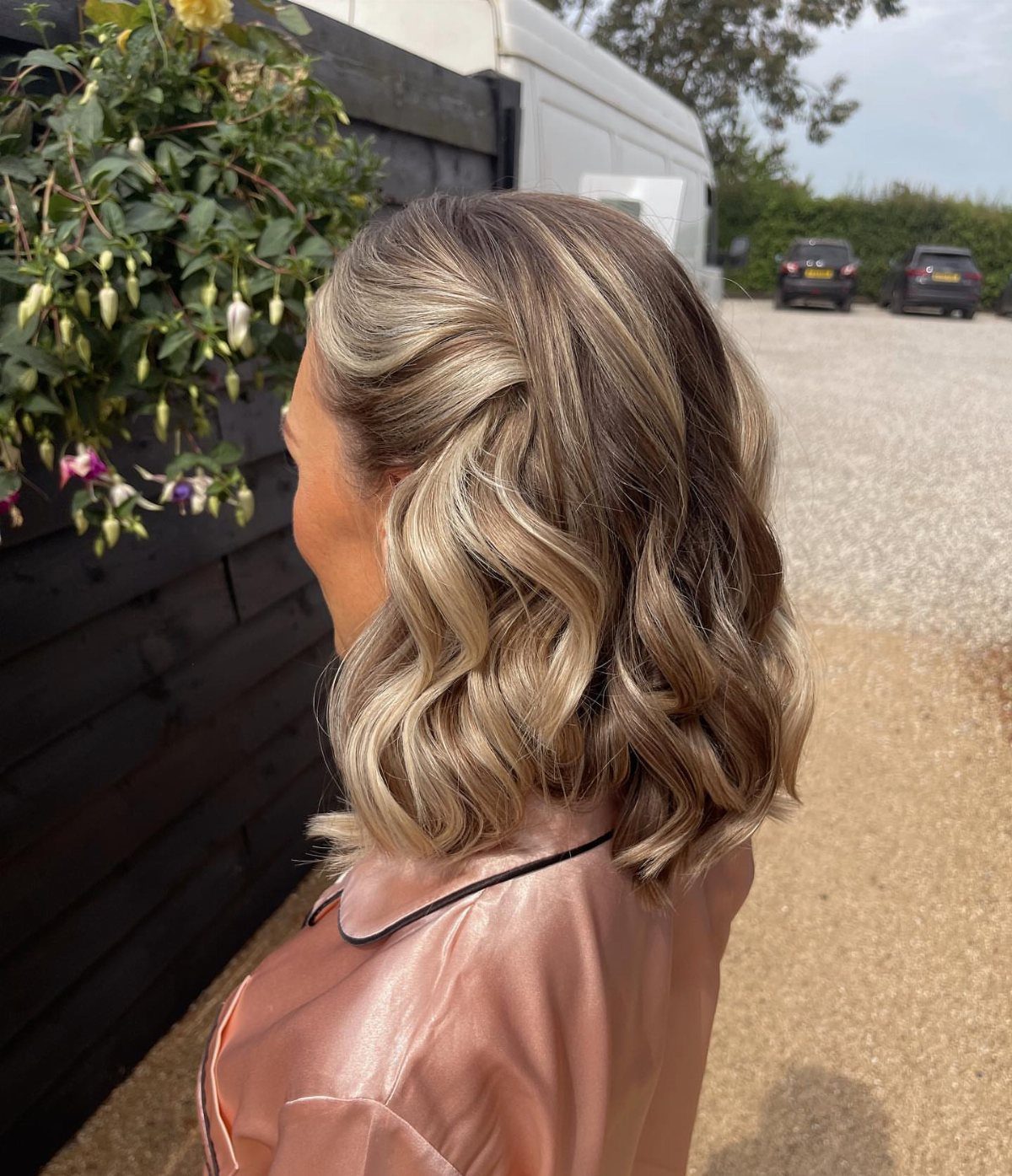
The color contrast makes each wave more visible, so the texture reads as intentional instead of in-between.
Ask for balayage or dimensional color placed where your waves start to bend. The cut itself can stay simple, a blunt or lightly layered shoulder-length style, and the color does the work of adding depth.
25. Medium Layered Hairstyle
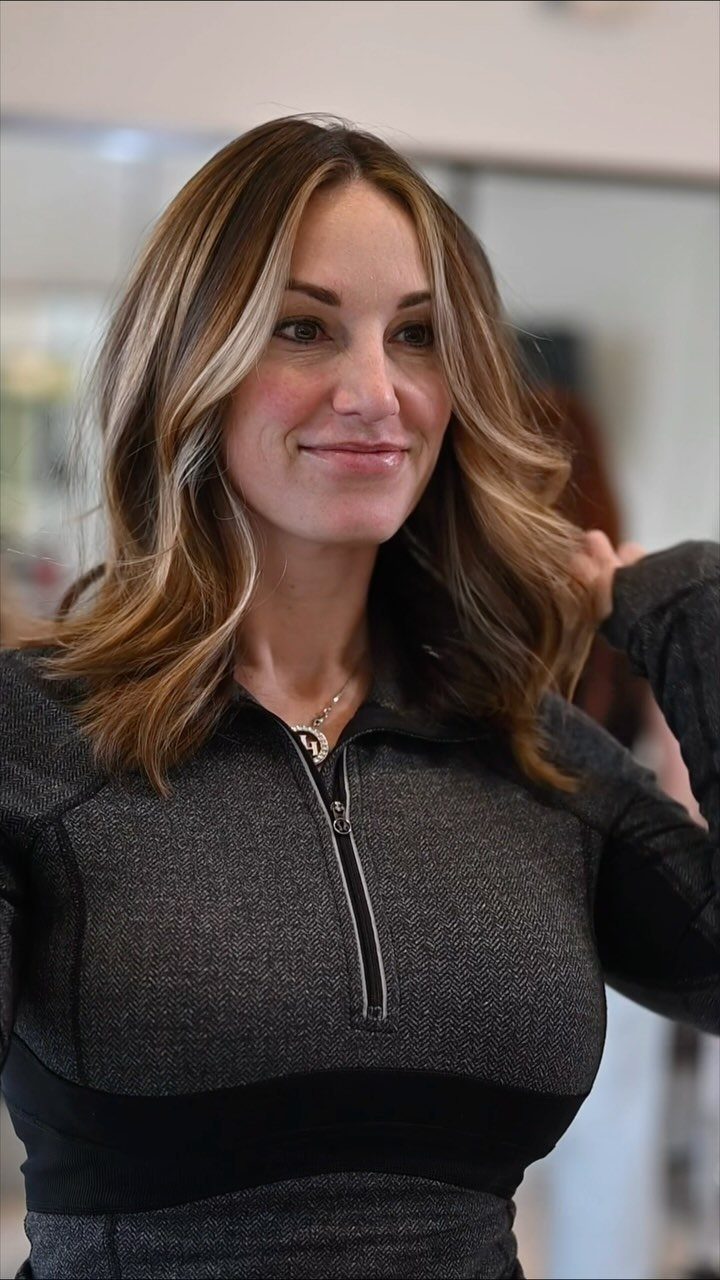
Medium-length layers let waves fall with movement instead of sitting flat. The highlights placed through the face-framing pieces add dimension where the light hits, so each wave reads as separate instead of blending into one mass.
Ask for layers that start around the cheekbone and blend down through the ends.
If your waves are loose, the layers will look soft and natural. Tighter waves show more volume and need less styling to bring out the texture.
26. Bob with Highlights
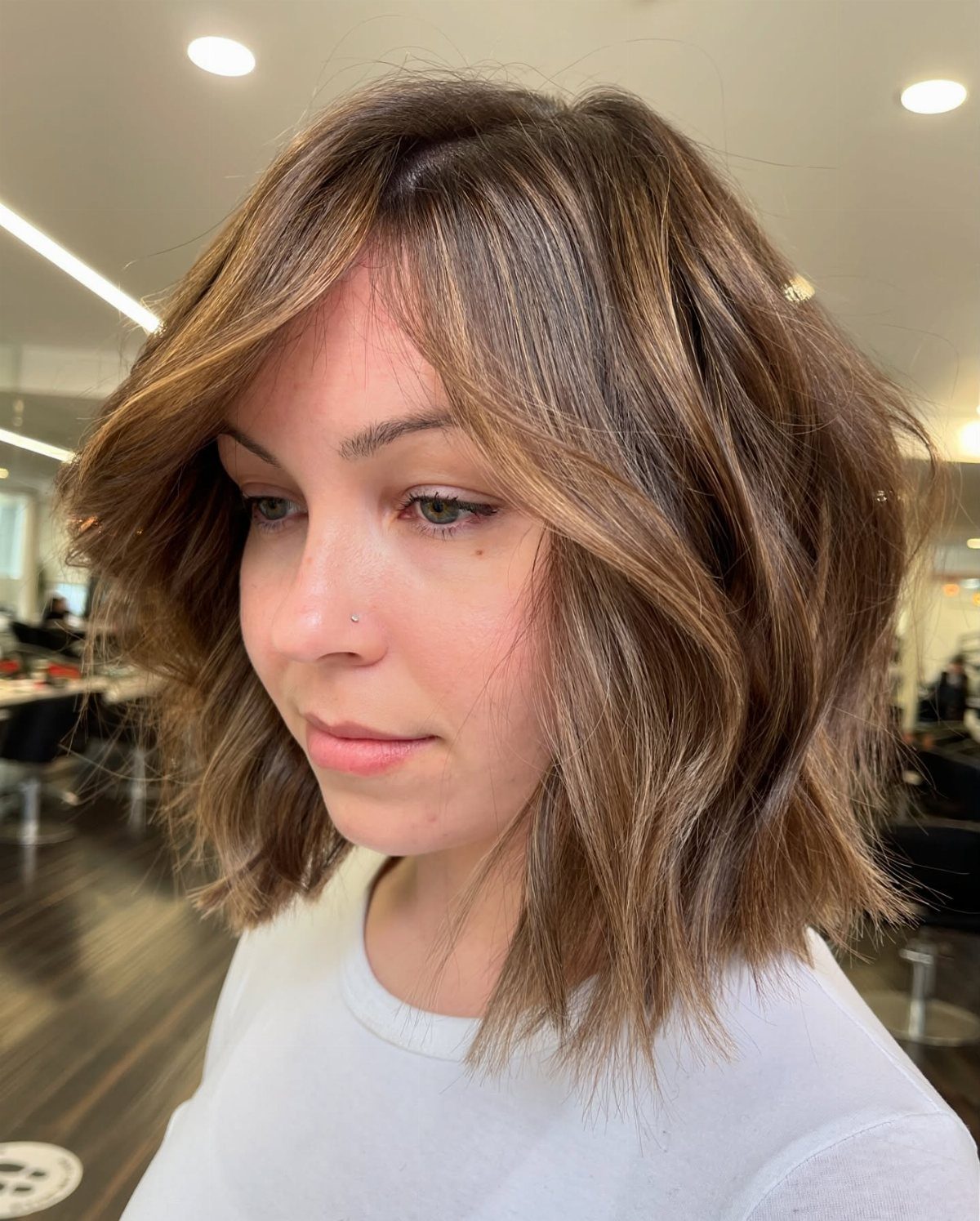
Highlights woven through a wavy bob make fine hair look fuller because the color variation creates the illusion of depth.
Piecey layers keep the ends from sitting too blunt, and the waves show off the color placement better than straight hair would.
Color grows out softer when it starts an inch or two down instead of right at the scalp.
Wet Versus Dry Cutting
Wet cuts give you precision when you want a blunt line or layers that sit at an exact length.
The hair stretches under tension, so the stylist estimates where each section will spring back once it dries. This suits fine hair when you need clean edges or defined layers that hold a shape.
Dry cutting lets the stylist see how each wave bends and where it naturally lifts or falls flat.
If you air-dry most days and want a cut that works with your texture as it is, a dry cut will match how you actually wear your hair.
Micro bangs also do better cut dry, since wavy hair springs shorter once the weight comes off. Cut wet, they can land higher than you planned.
Wavy Hair At-home Care
I get the best natural wave when I work curl cream through damp hair and scrunch it up from the ends. Let it dry without touching it again, and the waves will set without frizz.
Skip wash days without losing the pattern by using a curl-refreshing spray between shampoos. Over-washing strips moisture from wavy hair, which tends toward dryness already.
When I want the wave to sit flatter and softer, I reach for a heavier cream and let it air-dry instead of scrunching.
Frequently Asked Questions
Does wavy hair look frizzy?
Wavy hair can look frizzy if it lacks moisture or gets touched while drying. A curl-refreshing spray between washes keeps the pattern smooth without over-washing, which strips moisture and increases frizz.
How often should wavy hair be cut?
Most wavy cuts need a trim every 6 to 10 weeks depending on the style. Cuts with less layering or blunt ends give you more time between appointments.
How do I style my wavy hair?
Scrunch curl cream through damp hair from the ends up and let it dry without touching it for the best natural wave. Spray in a curl refresher on day 2 or 3 instead of shampooing every time.
Which is the best haircut for wavy hair?
No single cut works for everyone because the right shape depends on your wave pattern, hair thickness, and face shape.
Layers add movement and volume to most wavy hair, and shorter cuts remove weight so waves can bend instead of pulling straight. Match the cut to how your texture behaves and how much time you want to spend styling.
Are layers good for wavy hair?
Layers work well on thick or medium wavy hair because they remove weight and let each wave move instead of dragging down the layers above it.