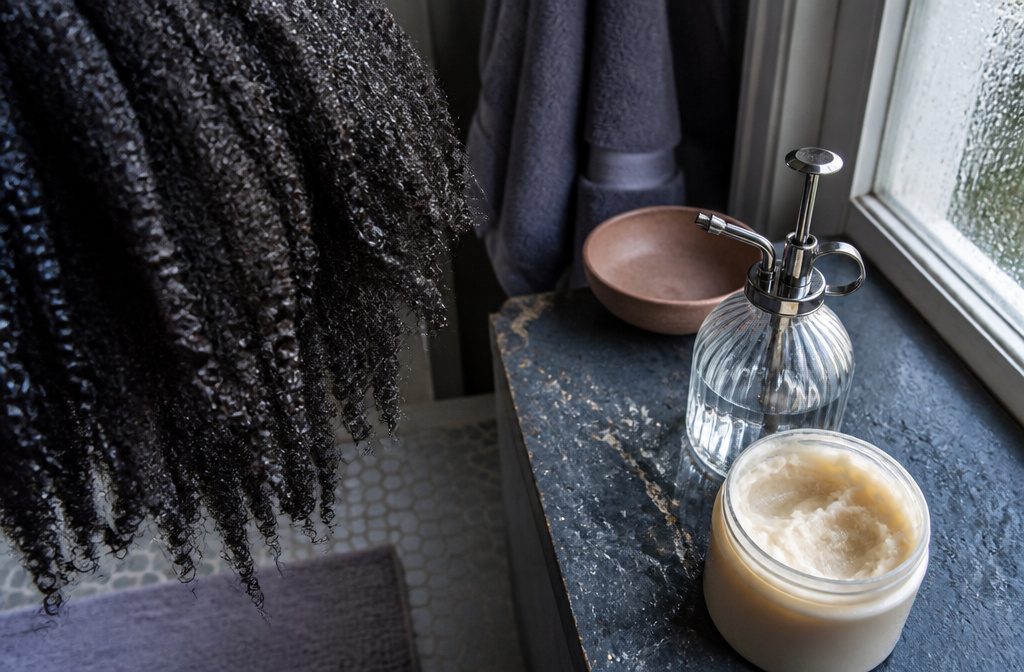
Moisturized 4C hair holds water inside the strand for days, not hours, and the difference comes down to sealing: mist with water, then lock it in with oil or butter, because water alone evaporates by mid-afternoon.
Most people skip the sealant or apply oil first, which leaves the cuticle dry no matter how much product goes on.
This article walks through the LOC and LCO methods, weekly deep conditioning schedules, and porosity tests that decide which oils actually work.
Why Natural Hair Becomes Dry and How It Holds Moisture
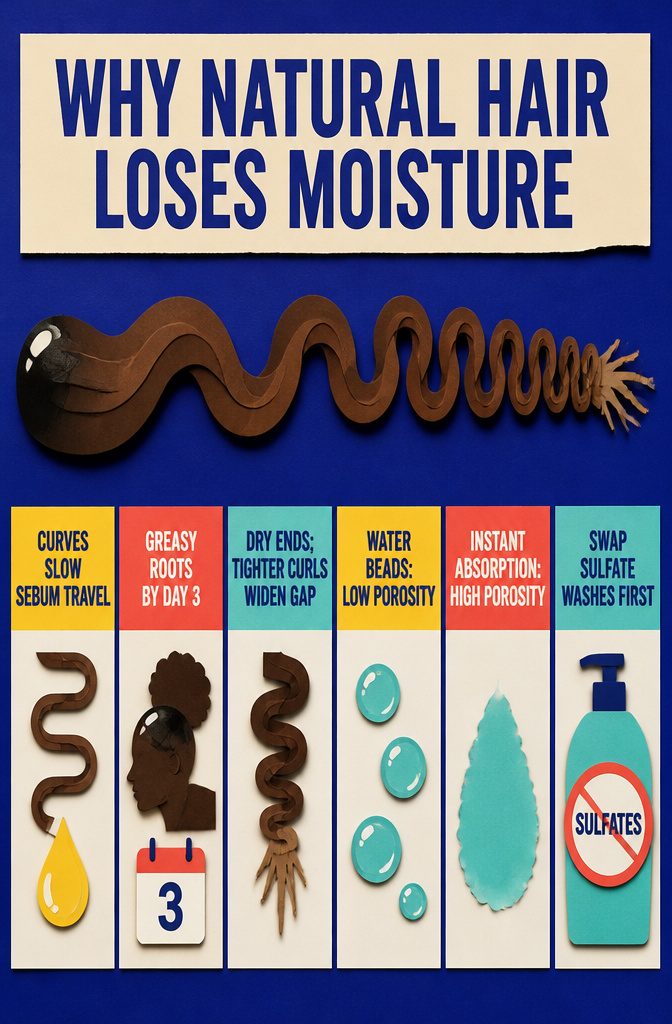
Sebum struggles on a curl. Twists and bends slow it down, so roots can look greasy by day 3 while the ends stay dry, and tighter patterns widen that gap.
Porosity decides what happens next.
Low porosity cuticles lie flat and resist water; high porosity cuticles lift and let it out as fast as it went in. Spray water on clean, dry hair: beading means low, instant absorption means high.
Sun, wind, chlorine, dry air, heat tools, color, relaxers and age all roughen the cuticle or cut oil, but shampoo comes first:
Shampoos that contain ingredients like sulfates and alcohol can strip strands of natural oils and leave hair dry and prone to breakage.
— Vogue
Swap sulfate washes before changing anything else.
1. Cleanse Without Stripping Natural Oils
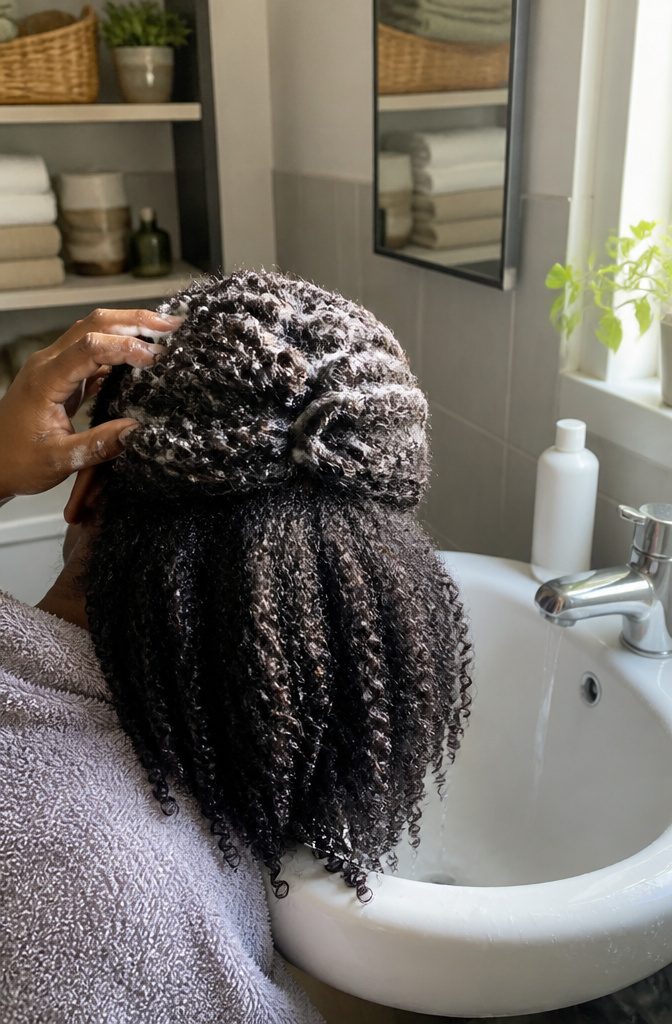
Squeaky clean means stripped. If your hair squeaks after rinsing, switch to a gentle, sulfate-free shampoo and work it into the scalp rather than the ends, which are the driest part.
Wash no more than once a week, and as rarely as once a month if your hair stays dry, especially with type 4 coils. I’d lengthen the gap before changing products.
Clarify monthly so buildup doesn’t block your leave-ins. Under braids or twists, cleanse the scalp with a light shampoo every 4 weeks.
2. Condition and Deep Condition
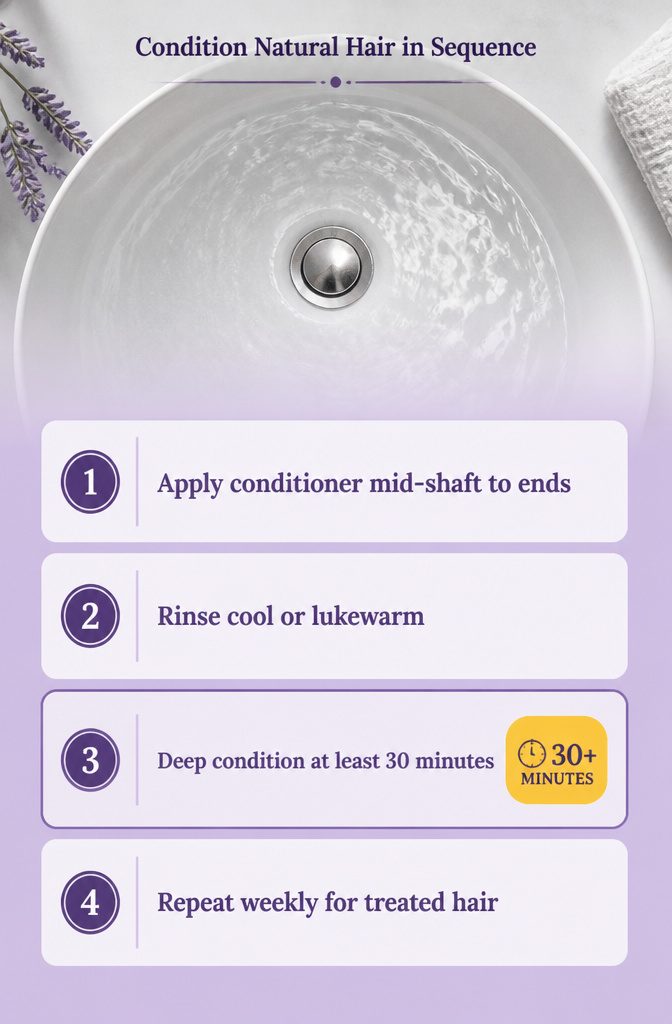
After cleansing, conditioner goes on wet hair from the mid-shaft down to the ends.
Skip the scalp unless it’s extremely dry. Rinse with cool or lukewarm water, since hot water adds to the dryness you’re trying to fix.
Deep conditioning schedules vary.
RevAir recommends once a week, Gisou says once or twice, and NaturAll Club says every two weeks. I’d go weekly if your hair is color-treated or heat-styled, and every 10 days to two weeks if it isn’t.
Monthly only suits hair that rarely feels dry. Whatever the rhythm, leave the deep conditioner on for at least 30 minutes, because a quick rinse-out doesn’t give it time to penetrate the strand.
3. Apply Water-Based Hydration or Leave-In Products
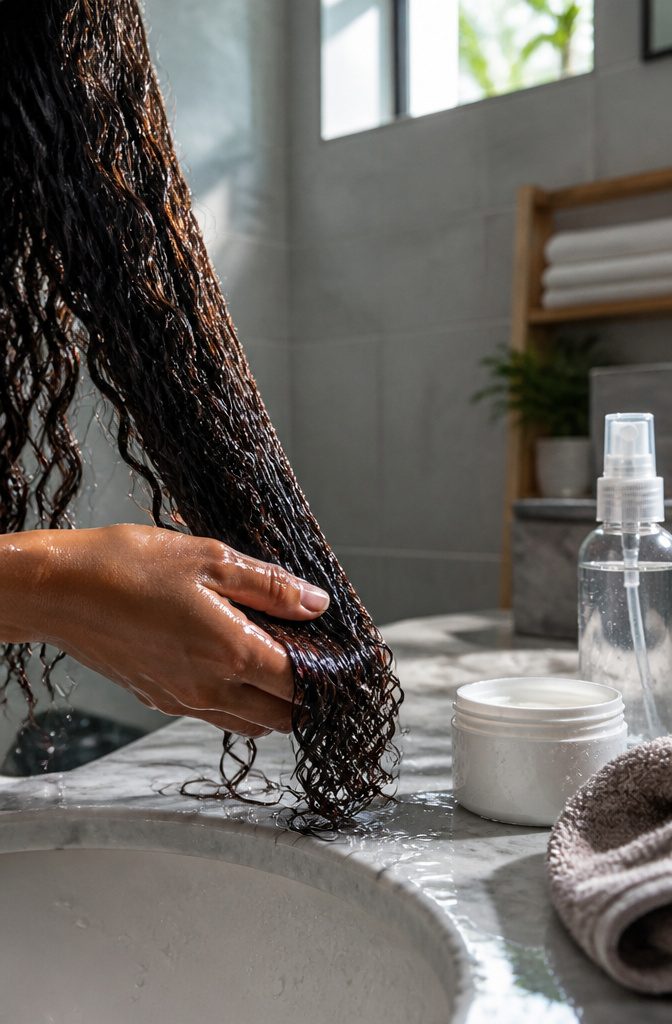
Look for water as the first or second ingredient on the label. That is what makes a moisturizer water-based, and leave-ins usually qualify because they hold so much of it.
You can apply products to soaking-wet, damp, or lightly refreshed hair, but I favor soaking wet for a leave-in. Carol’s Daughter suggests working it from mid-shaft to ends, and a quarter-sized amount is usually plenty.
Between washes, a spray-in conditioner or refresher revives tired curls.
A homemade aloe-water mix works too, or plain water with a hint of glycerin. The Tangle Teezer Fine Mist Spray Bottle lists at $14.99 and displays as $11.99, which is reasonable for a bottle you’ll refill constantly.
4. Seal Moisture With Oil, Butter, or Cream
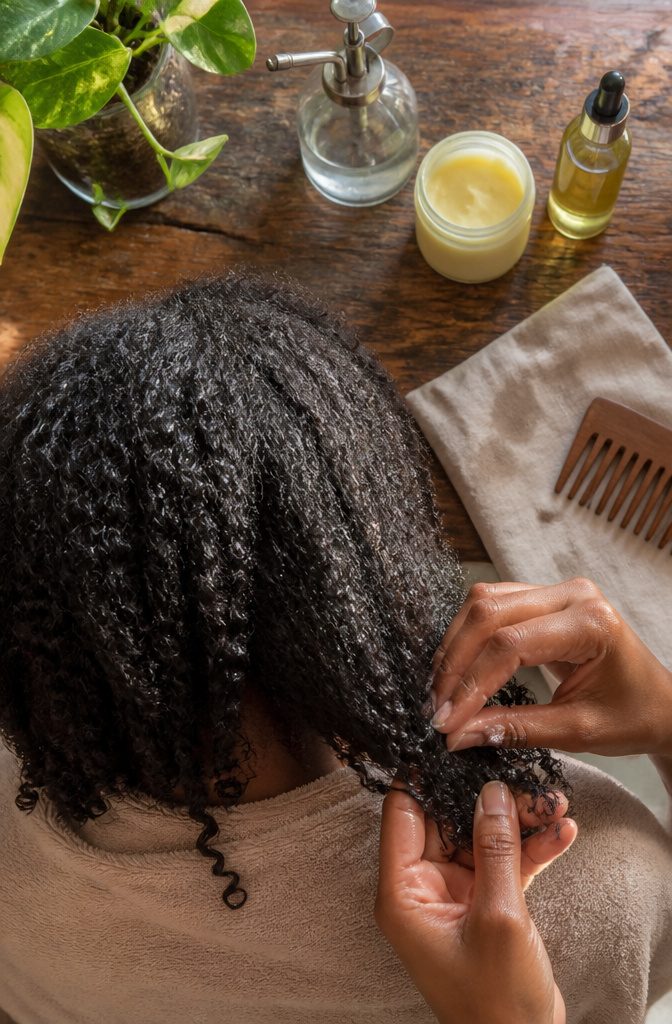
Water is the moisture; oil and butter only slow its escape. Oil is not moisture, and coconut oil alone will not moisturize a dry scalp, so mist with water first and seal afterward.
Without a sealant, that water evaporates within hours. With one, hair stays soft for days.
Pick the sealant by weight. Jojoba, grapeseed, and sweet almond are light enough for low porosity hair.
Shea butter, mango butter, and castor oil suit high porosity hair and 4A–4C textures. Coconut, olive, avocado, and argan oil also work as sealants.
On 2A–3B, a few drops on the ends is plenty. I’d skip daily scalp oiling, since it adds little and can weigh hair down.
5. Use LOC or LCO Layering Where Appropriate
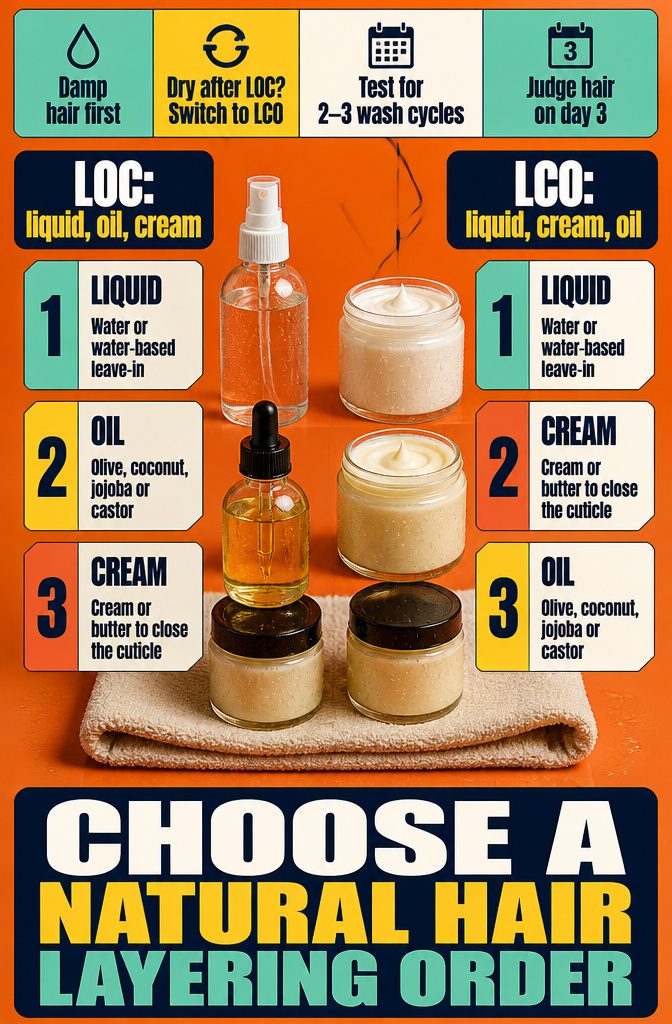
LOC stacks three layers on damp hair.
First comes a liquid, either plain water or a water-based leave-in. Next is an oil, such as olive, coconut, jojoba or castor, to hold that water in.
Last is a cream or butter to close the cuticle. LCO swaps the last two steps and puts the cream down before the oil.
Porosity, meaning how readily your strands absorb or repel water, decides which order behaves better on you.
If LOC leaves your hair dry, switch to LCO before you blame the products. I’d run each order for two or three wash cycles and judge by how the hair feels on day three, not day one.
6. Protect Hair While Styling, Sleeping, and Outdoors
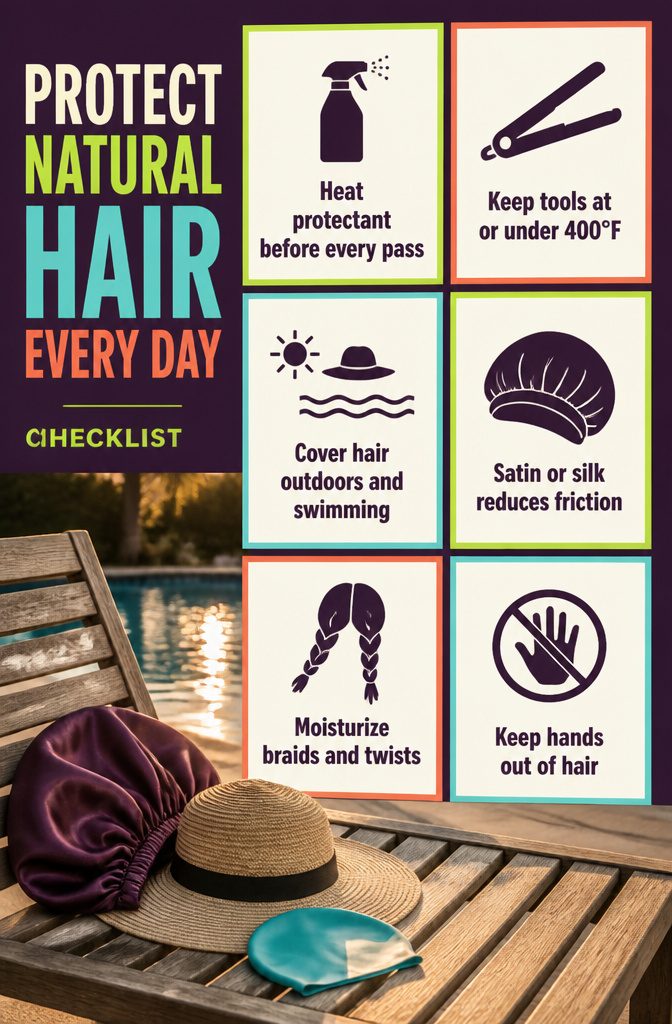
Apply a heat protectant before every pass of a hot tool, use the lowest setting that works, and keep it at or under 400°F, even though some irons and dryers reach 450°F. Avoid going over the same section twice, and stretch a style one more day before heating again.
Outdoors, a hat, scarf, or swim cap covers hair from wind, cold, sun, and chlorine, and a coat of conditioner or oil before a swim helps too.
At night, a satin or silk bonnet or pillowcase cuts the friction cotton creates as you turn.
Braids or twists give hair a break from daily handling, but keep moisturizing them while they’re in. Otherwise, keep your hands out of your hair.
7. Maintain Moisture Between Wash Days
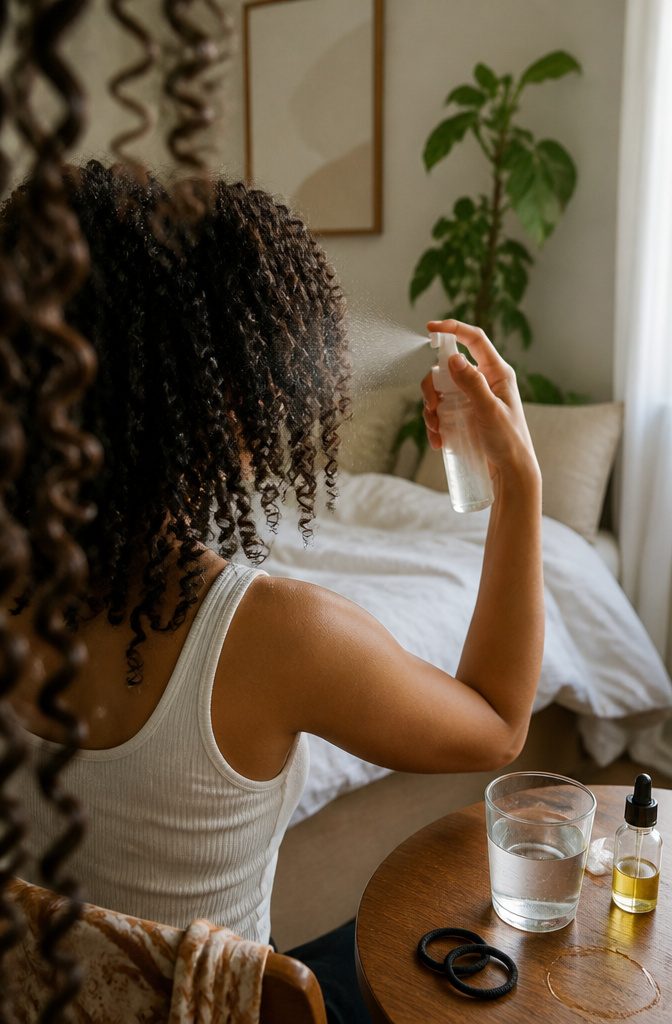
Water is the moisture and oil only seals it in, so a plain water spritz needs a few drops of oil on top, jojoba for example.
Mixing the water with aloe vera or a light oil in the bottle saves that second step. Mist in sections and spend the most time on the ends, which are the oldest and driest part of the strand.
A leave-in spray or curl refresher handles limp day-3 or day-4 curls: mist, scrunch, and let dry.
Hair that dries out fast does well with a daily spritz, while every other day is a fair starting point for everyone else. Add a mist only when your strands feel dry, especially in cold weather.
8. Treat Buildup, Damage, Split Ends, and Scalp Dryness
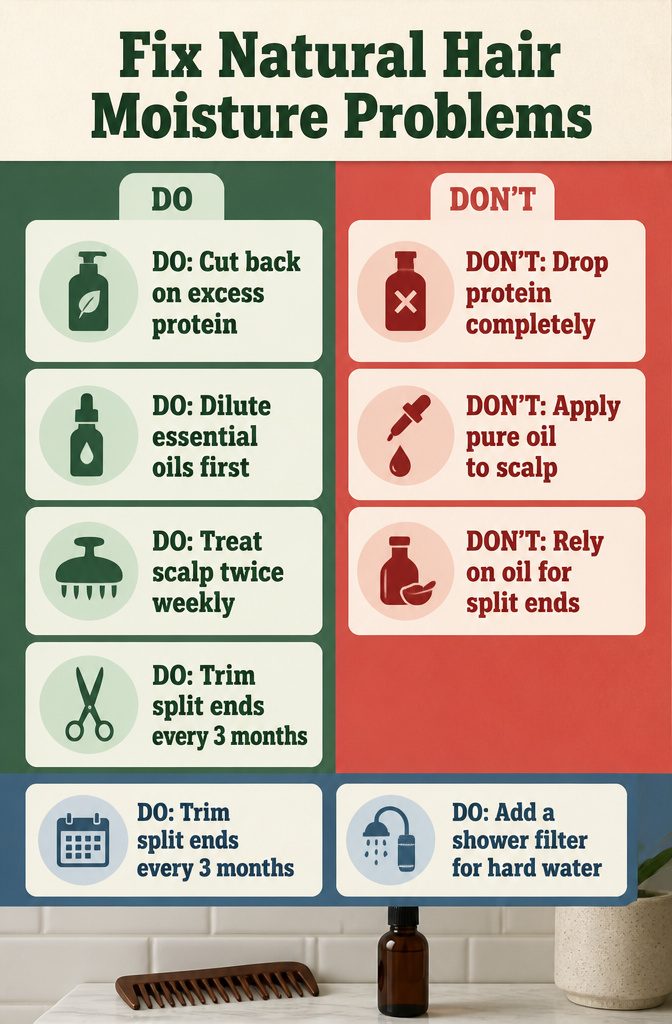
Stiff, hard, dry strands usually point to too much protein. Cut back on protein-rich products or use them less often, but don’t drop protein entirely.
Buildup you can’t see still blocks moisture. A scalp brush helps lift it, and an oil-based scalp product beats pure oil, which turns the bathroom into a mess.
Tea tree, lavender and peppermint are common picks, but dilute essential oils with water first. Apply a scalp treatment twice a week after shampooing and conditioning, because a dry, flaky scalp often means dry hair.
Split ends keep breaking the strand above them, so trim about every 3 months.
A dab of oil is only an emergency patch. If your water is hard, I’d add a shower filter.
9. Use Intensive or Optional Treatments When Needed
When dryness persists or you know damage has built up, step outside the weekly rhythm and treat hair more intensively.
Deep conditioning masks left on for an hour or overnight rebuild moisture reserves faster than the standard rinse-out conditioner, especially after chemical services, heat styling, or a stretch of low humidity.
Look for formulas built on honey, botanical oils like coconut and sunflower, and glycerin, which pull water into the strand and hold it there.
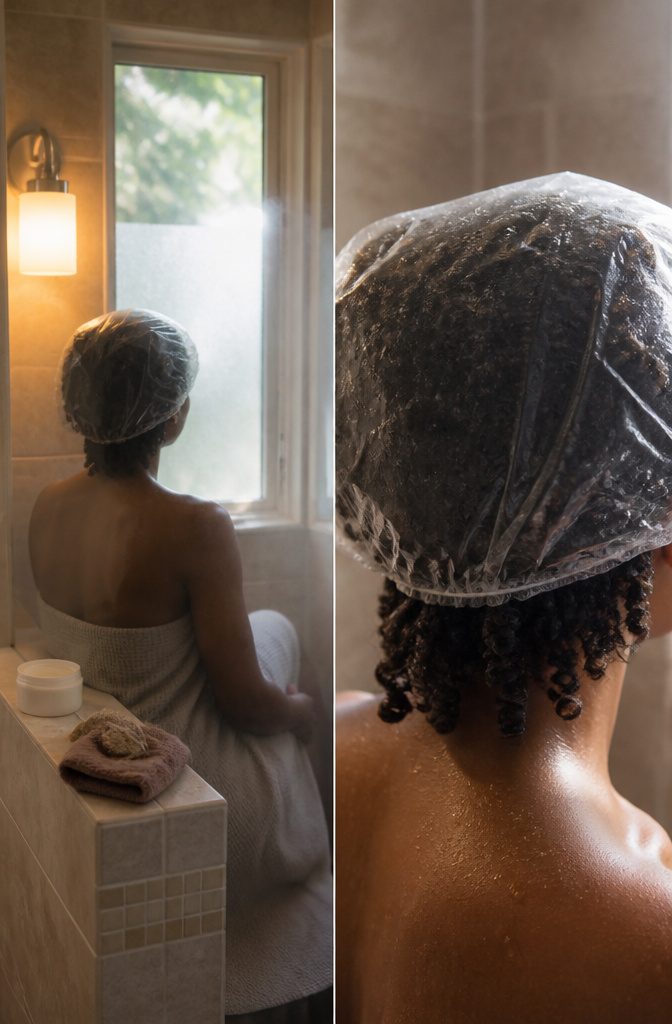
Steam treatments take a different route: apply a deep conditioner, cover with a shower cap, and sit in a steamy bathroom or under a hair steamer for 10–15 minutes.
The heat opens the cuticle temporarily so moisture penetrates deeper, then the cuticle seals again as hair cools.
Hot-oil treatments work similarly. Heat oil for 5 minutes, apply, and leave it overnight before washing to soften brittle ends and add slip.
Pre-pooing flips the usual order. The night before wash day, section hair and apply coconut oil from scalp to ends, coating every strand.
The oil penetrates the cuticle and keeps hair from swelling too much when water hits it, which reduces hygral fatigue and breakage during detangling. Cover overnight, then shampoo as usual the next morning.
The maximum hydration method is the most involved: apple cider vinegar, conditioner, bentonite clay, honey, coconut oil, leave-in, and gel applied daily for one week, then repeated every three days.
I reserve this for hair that feels chronically parched and has stopped responding to simpler routines.
Ingredients That Add and Hold Moisture
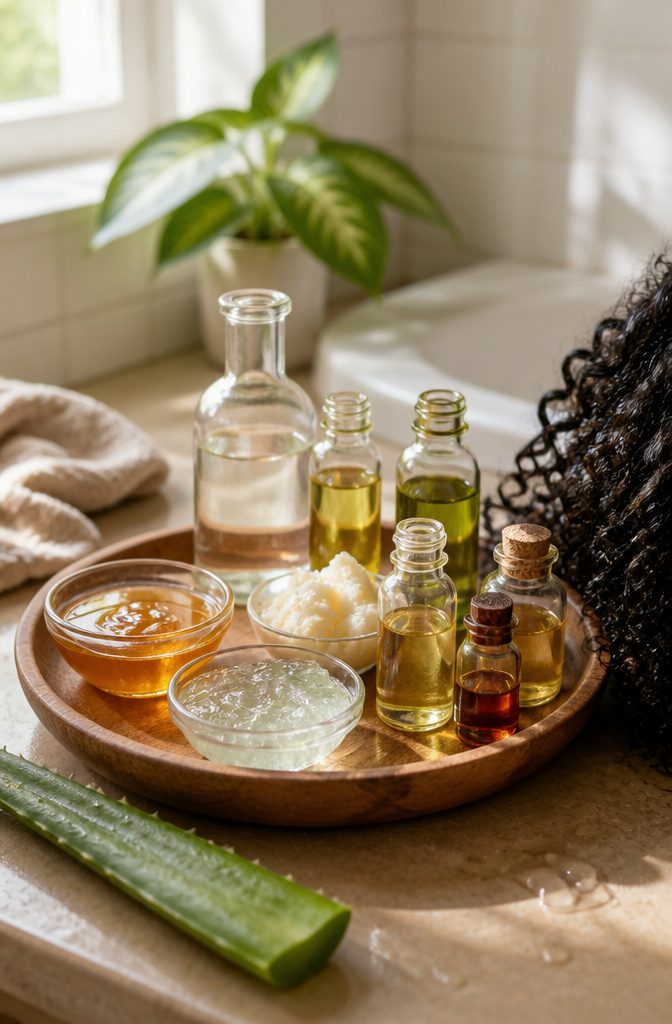
Humectants draw water in; oils and butters keep it from escaping. Moisturized natural hair needs both.
- Honey (humectant): also carries amino acids, vitamins and minerals.
- Glycerin (humectant): a little in a water spray bottle refreshes curls midweek.
- Aloe vera (humectant): shields strands from sun, wind and rain.
- Hyaluronic acid (humectant): hydrates without greasy residue.
- Coconut oil: penetrates the cuticle but sets hard when cool, so go light.
- Avocado oil: softens texture and adds shine.
- Olive oil: replenishes missing oils and adds shine.
- Almond oil: penetrates the shaft; sweet almond is light enough for low porosity.
- Jojoba oil: mimics sebum and absorbs cleanly.
- Castor oil: heavy and dense, my pick for dry 4A–4C hair.
- Shea butter: rich sealant for thicker textures.
How Porosity Affects Product Choice
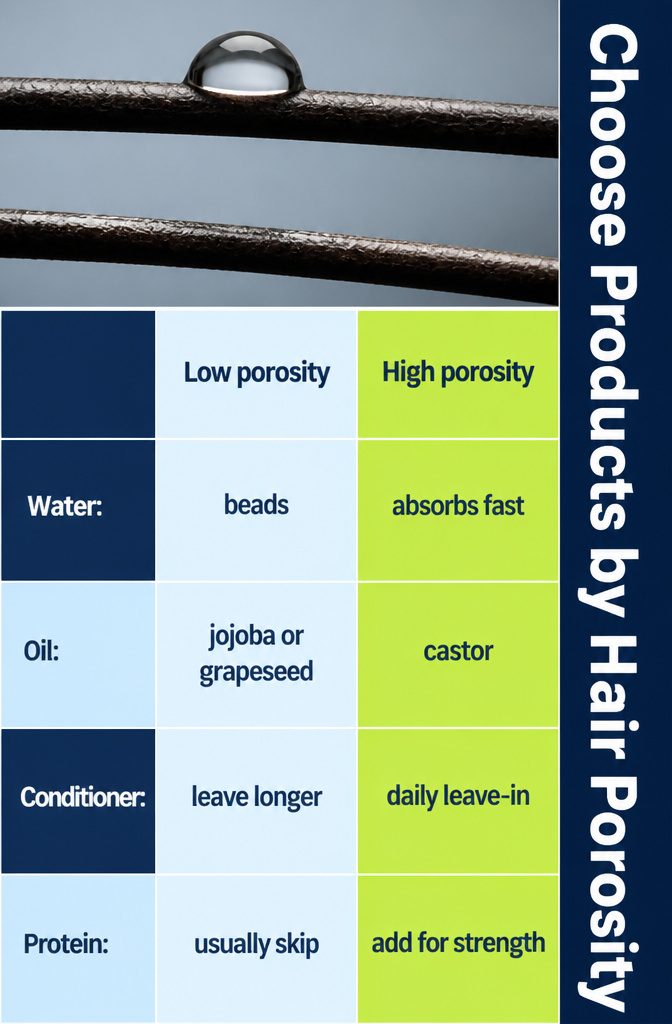
Porosity is how well your cuticle lets moisture in and keeps it there.
Low porosity hair has tight cuticles, so water struggles to enter but stays once inside. High porosity hair takes water fast and loses it just as fast.
To check yours, spray water on clean, dry hair. Beads sitting on top mean low porosity; instant absorption means high.
Low porosity hair responds to warm water or steam, a light hand, and jojoba or grapeseed oil, with conditioner left on longer.
Skip protein unless your hair truly needs it, since it can leave strands dry and stiff. High porosity hair wants a daily leave-in, castor oil or shea butter to seal, and some protein for strength.
Products I Use and Recommend
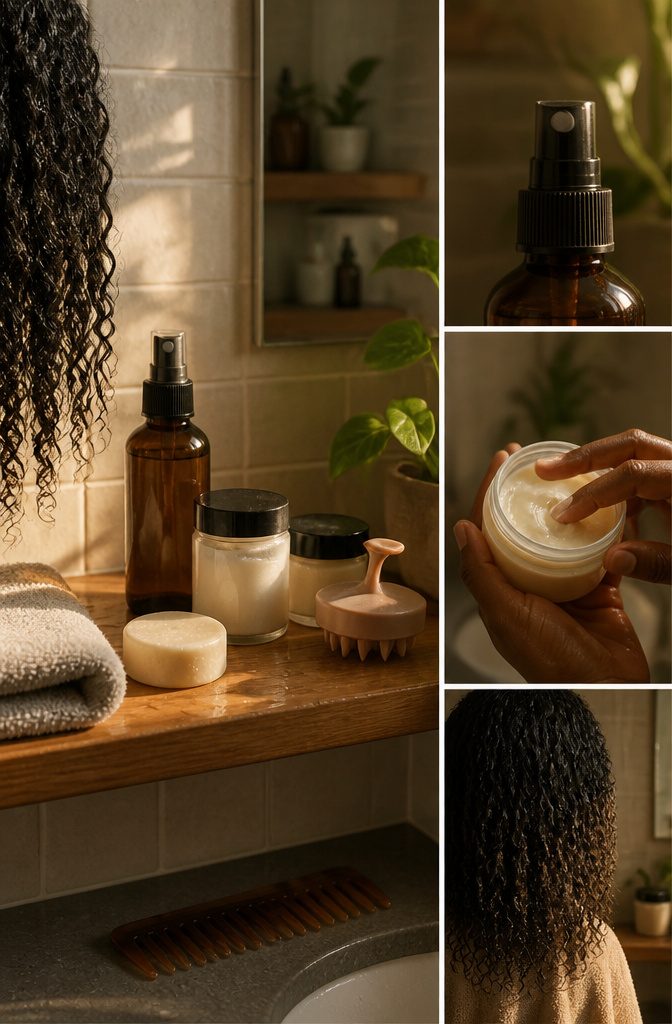
I’d sort the shortlist by the job each product does.
- Cantu Shea Butter Leave-In Conditioning Cream: the leave-in cream for the hydration step after washing.
- Shea Moisture Curl Enhancing Smoothie: a styling cream for defining curls on damp hair.
- Bobeam Shampoo Bar: a bar option for cleansing.
- Tangle Teezer Fine Mist Spray Bottle: $11.99, marked down from $14.99, for a light mist over dry hair between washes.
- The Scalp Exfoliator & Massager ($11.99): for scalp care on wash day.
- Babo Botanicals: free shipping on orders of $49 or more, so it pays to bundle.
- Carol’s Daughter, RevAir, NaturAll Club, Hairstory, Gisou and Kinky Tresses: brands worth browsing once the basics above are covered.
Frequently Asked Questions
Why is my natural hair so dry?
Curl pattern slows sebum from reaching the ends, leaving them dry even when roots look greasy.
Porosity, overwashing, heat tools, sulfates, chemical treatments, sun, wind, and dry air all strip moisture or roughen the cuticle. Swap to a sulfate-free shampoo and wash no more than once a week before changing anything else.
What are the best ingredients for moisturizing natural hair?
Humectants like honey, glycerin, aloe vera, and hyaluronic acid draw water into the strand.
Oils and butters like coconut, jojoba, castor, olive, almond, avocado, and shea butter seal that water in. Moisturized natural hair needs both, not just one.
What is the LOC method for moisturizing natural hair?
LOC layers a liquid or leave-in, then an oil, then a cream on damp hair to hold moisture in.
LCO swaps the last two steps and puts cream before oil. If LOC leaves your hair dry, switch to LCO before you blame the products, since porosity decides which order works better.
How often should I moisturize my hair?
Between washes, mist with water and seal with a few drops of oil whenever strands feel dry.
Hair that dries out fast does well with a daily spritz, while every other day is a fair starting point for everyone else. Deep condition weekly if your hair is color-treated or heat-styled, and every 10 days to 2 weeks otherwise.
Can you moisturize natural hair with just water?
Water is the moisture, but a plain water spritz evaporates within hours unless you seal it with oil or butter.
Mix the water with aloe vera or a light oil in the bottle, or mist first and follow with a few drops of jojoba on top.
What is the difference between hair hydration and hair moisture?
Hydration is water inside the hair fiber.
Moisture refers to products applied to the outside that prevent that water from escaping. Oil is not moisture, and coconut oil alone will not moisturize a dry scalp, so mist with water first and seal afterward.
How can I tell if my hair is dry or damaged?
Dry hair feels rough but bounces back when you stretch a strand.
Damaged hair is brittle, snaps when stretched, and does not recover with moisture alone. Damaged hair needs protein treatments alongside moisture; dry hair just needs hydration.
Can I use body lotion on my hair?
Body lotion is formulated for skin, not hair, and its ingredients and pH can cause buildup or dryness. Use a water-based leave-in conditioner or a curl refresher instead, since those are designed to hydrate and stay light.
How long does it take to see results from moisturizing my hair?
Softer, shinier hair may appear after one wash. Broader improvements in texture, curl definition, and breakage may take 4 to 8 weeks of consistency.
How can I protect my natural hair from heat damage?
Apply a heat protectant before every pass of a hot tool, keep it at or under 400°F, and avoid going over the same section twice.
Stretch a style one more day before heating again, and use heat-free styling regularly to give hair a break.
Do chemical treatments make natural hair dry?
Yes.
Color, relaxers, perms, and chemical smoothers can compromise the cuticle and increase dryness. Ask your hairdresser about ammonia-free color formulas or hand-painted techniques like balayage, which require bleaching less frequently.
How do you keep hair moisturized?
Use a sulfate-free shampoo, condition from mid-shaft to ends, deep condition weekly, apply a water-based leave-in, seal with oil or butter, and protect hair at night with a satin or silk bonnet or pillowcase.
Between washes, mist with water and seal with a few drops of oil when strands feel dry.
How can I moisturize my natural hair naturally?
Water is the foundation, so mist hair with plain water or a water-aloe mix, then seal with coconut, jojoba, olive, or castor oil.
Honey and glycerin work as humectants, and shea butter or avocado oil seals the cuticle. Deep condition with a honey-based mask left on for an hour or overnight.
What is the best moisturizer for natural hair?
Look for a water-based leave-in with humectants like honey, glycerin, or aloe vera as the first or second ingredient.
Follow with a sealant that matches your porosity: jojoba or grapeseed for low porosity, castor oil or shea butter for high porosity and 4A to 4C textures.