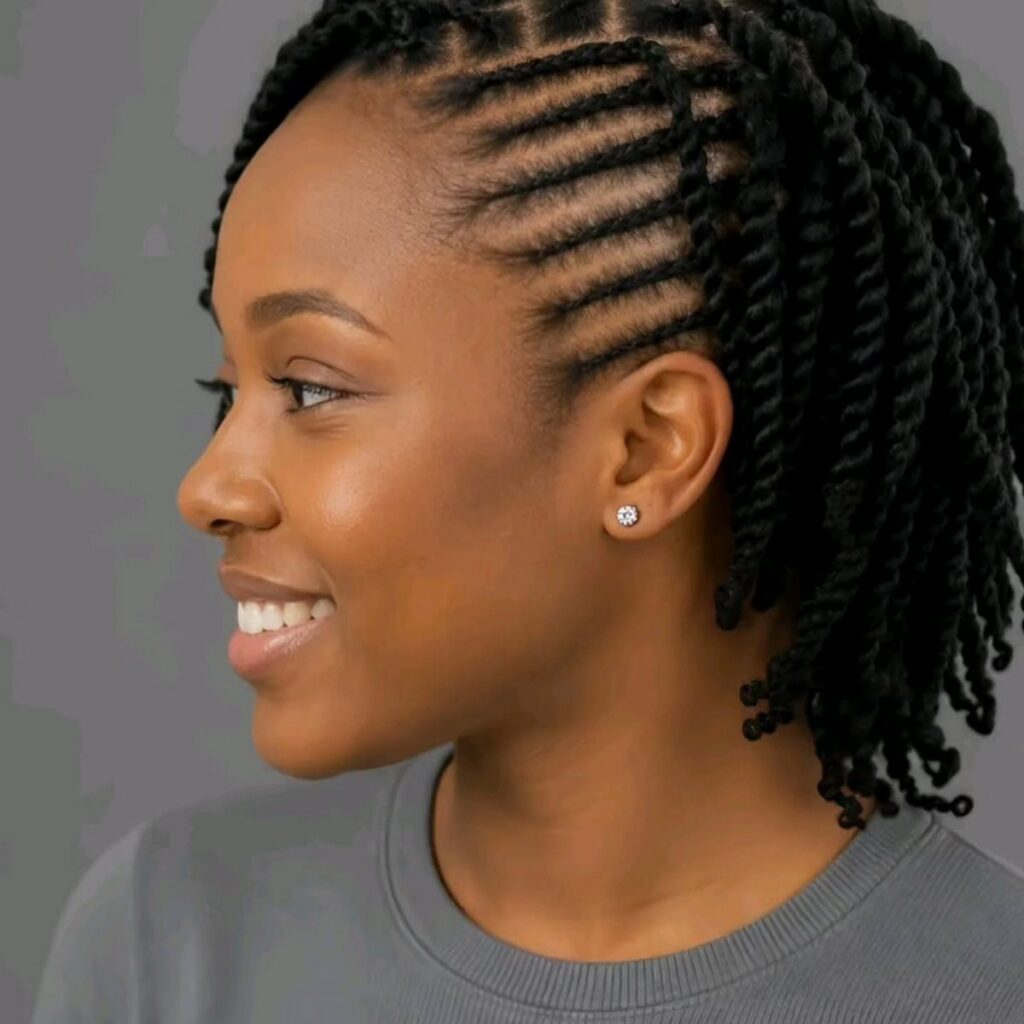
Twist styles range from finger-coiled sets on short natural hair with no extensions to long Marley, Havana and Senegalese installs, and wear time runs from 1 week to 3 months.
How long you can sit in the chair decides which one is yours: jumbo and medium sections finish fast, while mini twists mean a long appointment.
Anyone with a fragile hairline or relaxed hair should pass on the chunky, extension-free sets, since the full weight hangs from the roots.
1. Flat Twists
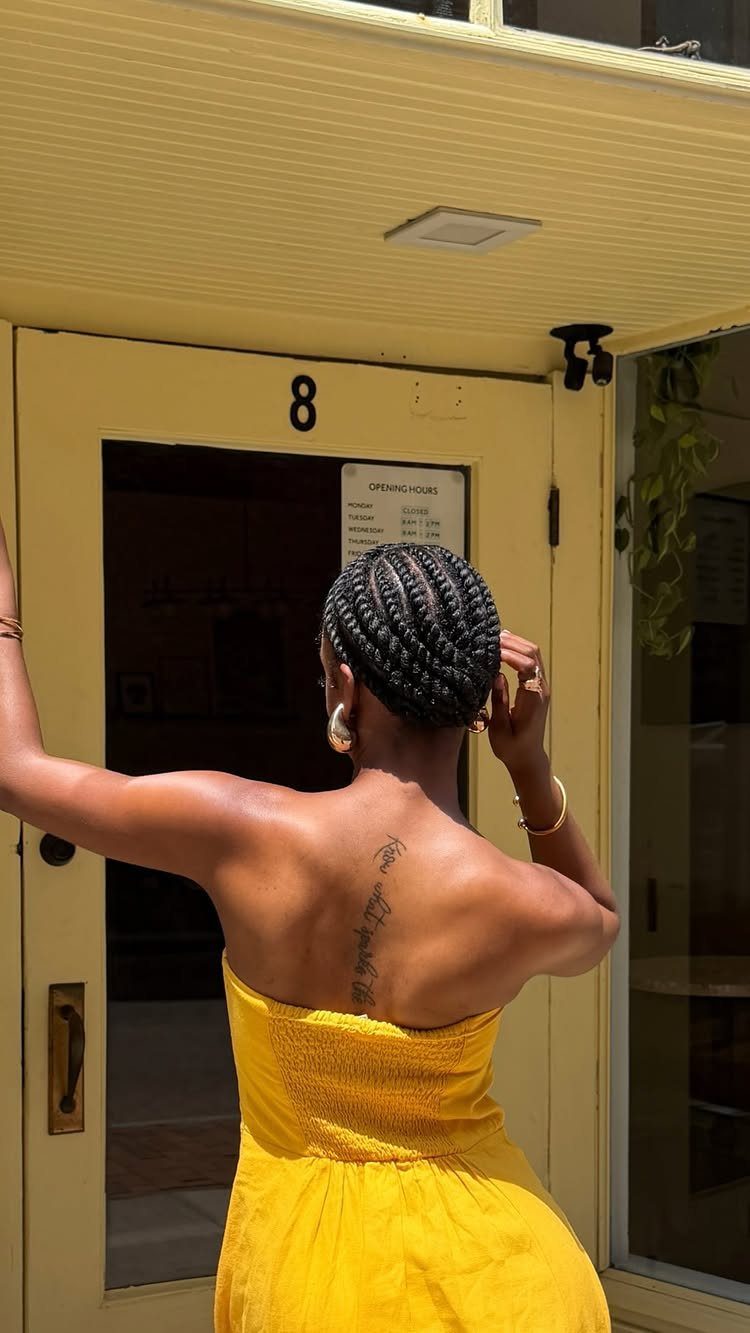
Cornrow-style technique, twist-style result: 2 strands wrap around each other while staying pressed against the scalp, so the style lies flat from root to end.
Close-set sections like these leave the head looking smooth and tidy, and they work well as a base for other looks.
I like flat twists for anyone who wants a style that reads polished without much to manage during the week.
Practice on a small section first if you are doing them at home. Even tension and straight parts are what make the rows look clean.
2. Jumbo Twists
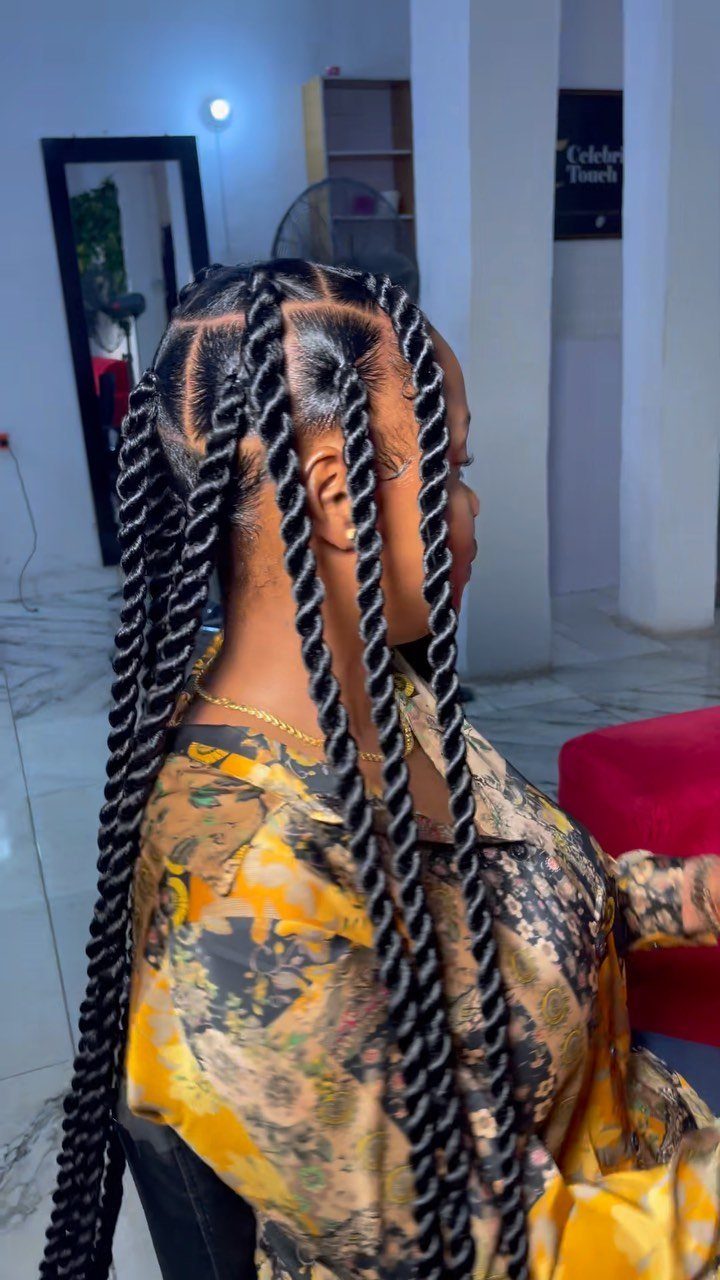
Size does the work here. Fewer, thicker twists mean a bold, full silhouette and a shorter wait in the chair than smaller sections would need, which is the reason I reach for this style first when volume is the goal.
Large parts also put a lot of weight on each section, so keep the bases from feeling tight. If a base pulls, it is too heavy for that part, and I would make the section smaller.
Dark twists like these look striking with simple gold jewelry.
3. Mini Twist Bob
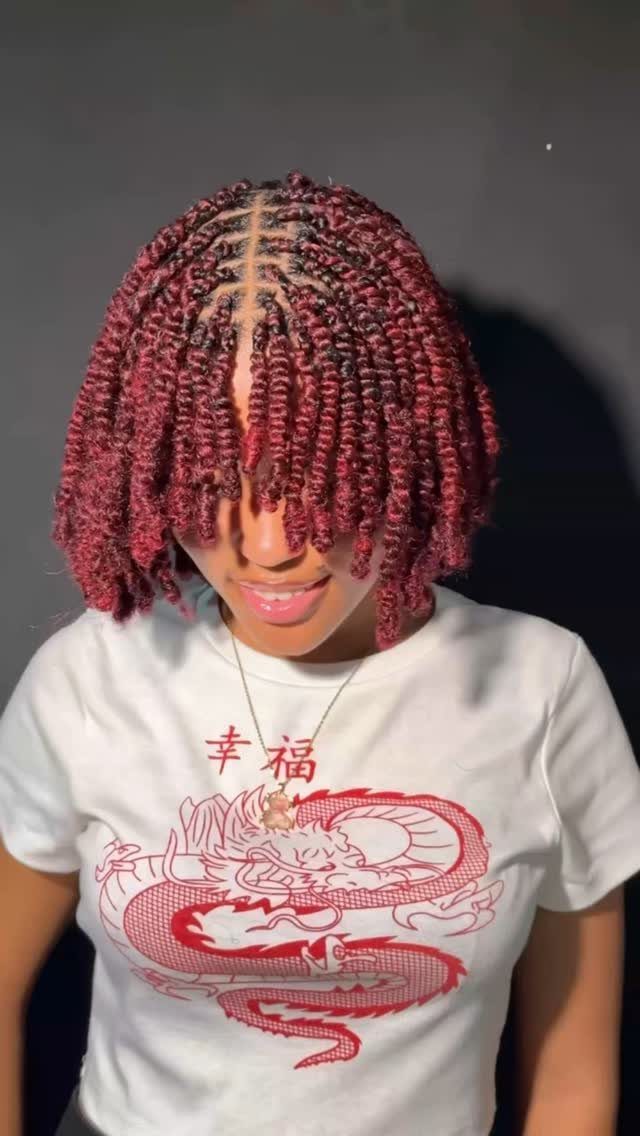
A bob is a smart way to wear mini twists if long hair feels like too much weight or too much work. The shape sits at the jaw, so it stays light and swings when you move.
Ask your stylist for a rounded, even length, since uneven ends show quickly on small twists. Burgundy gives a mini twist bob depth without needing a long install, and the color reads richer against the short, defined shape.
I would pick this over long minis for summer, when hair off the neck matters.
4. Jumbo Twist Bob
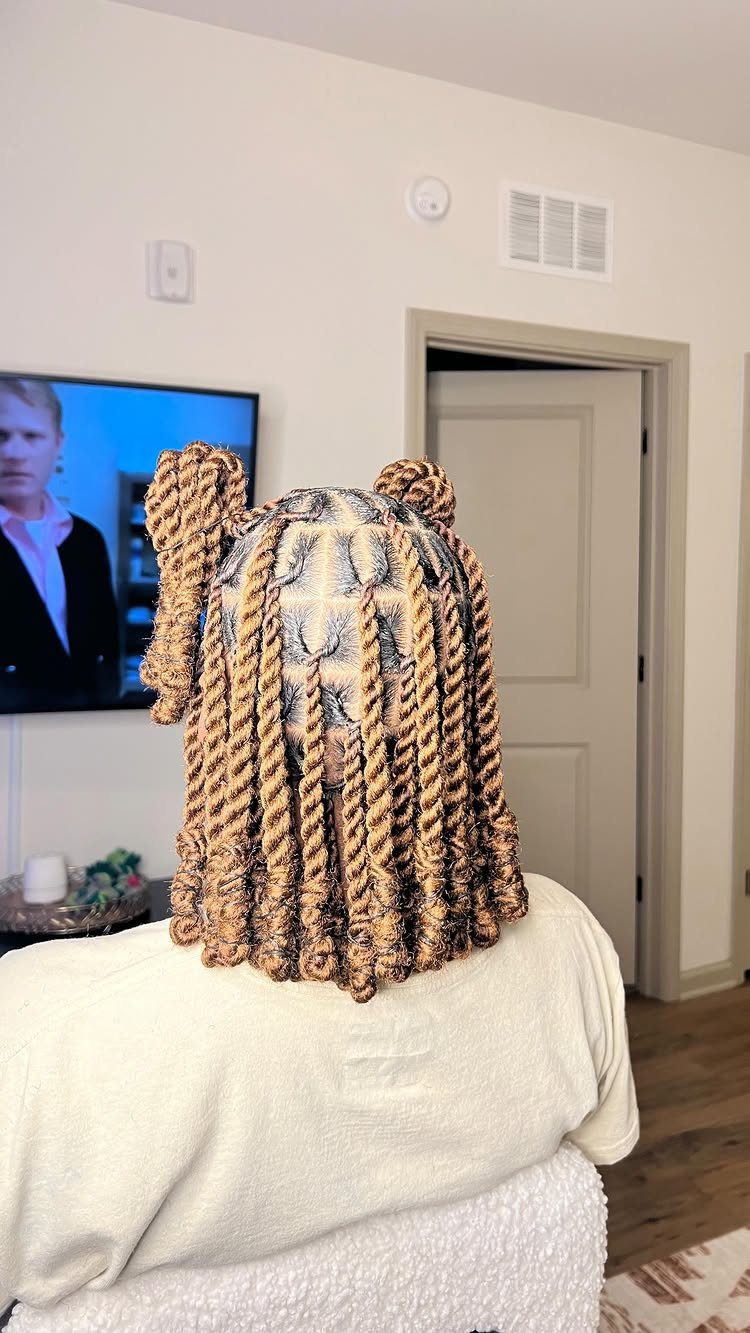
2 small buns on top turn a jumbo twist bob into something playful. Chunky twists hold that rounded shape well because each one has enough body to stand on its own.
Honey-brown is a warm shade that shows off the thickness of the twists. If the buns are the part you love, ask for the front sections to be left a bit longer so they gather easily.
Keep in mind that a bob this bulky sits away from the neck, which makes it easy to wear in heat.
5. Two-Strand Twists
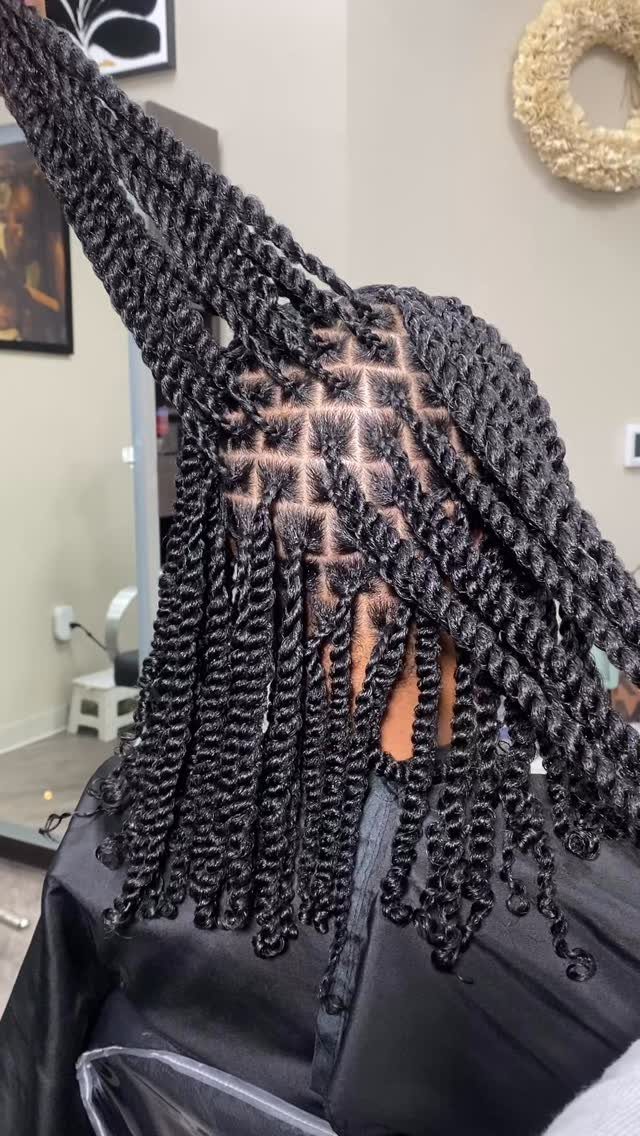
Hair you can style any direction is the reason I keep coming back to two-strand twists. The method is simple: divide a section in half, then wrap the 2 pieces around each other down to the ends.
Square parts keep the scalp looking neat, and a high ponytail shows them off. Curled ends add softness, so they work if you want a finish that is less blunt.
For beginners, this is the one to learn first. Nearly every other twist style builds on two-strand twists, so learning the basic technique pays off across the rest.
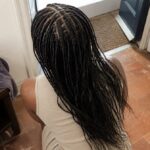
6. Senegalese Twists
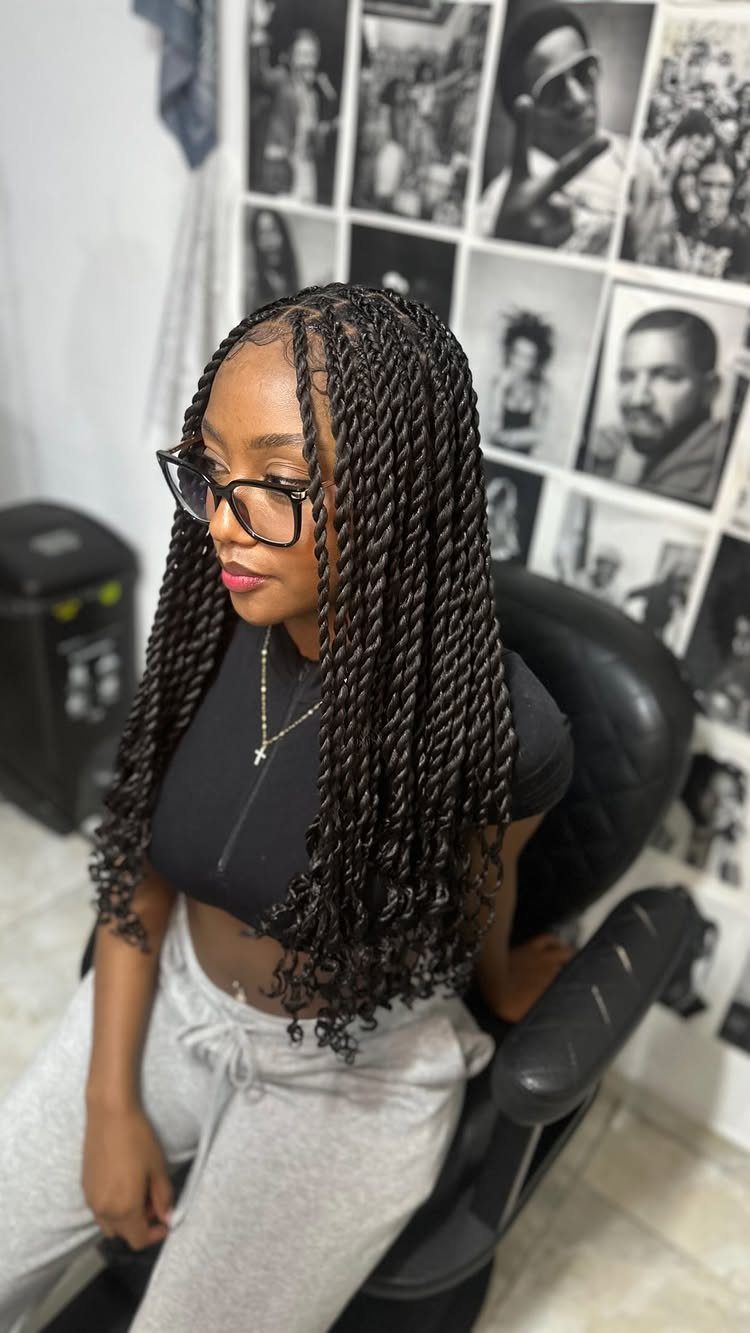
Smooth, rope-like texture is what separates Senegalese twists from looser styles. 2 sections wrap around each other from roots to ends, and the result is sleek, long and lightweight.
I like Senegalese twists with curly ends because the curl softens the length and keeps the style from looking too stiff. Black is the classic color and goes with nearly everything.
Expect a salon appointment if you want a neat finish. Getting each twist even takes patience.
7. Passion Twists
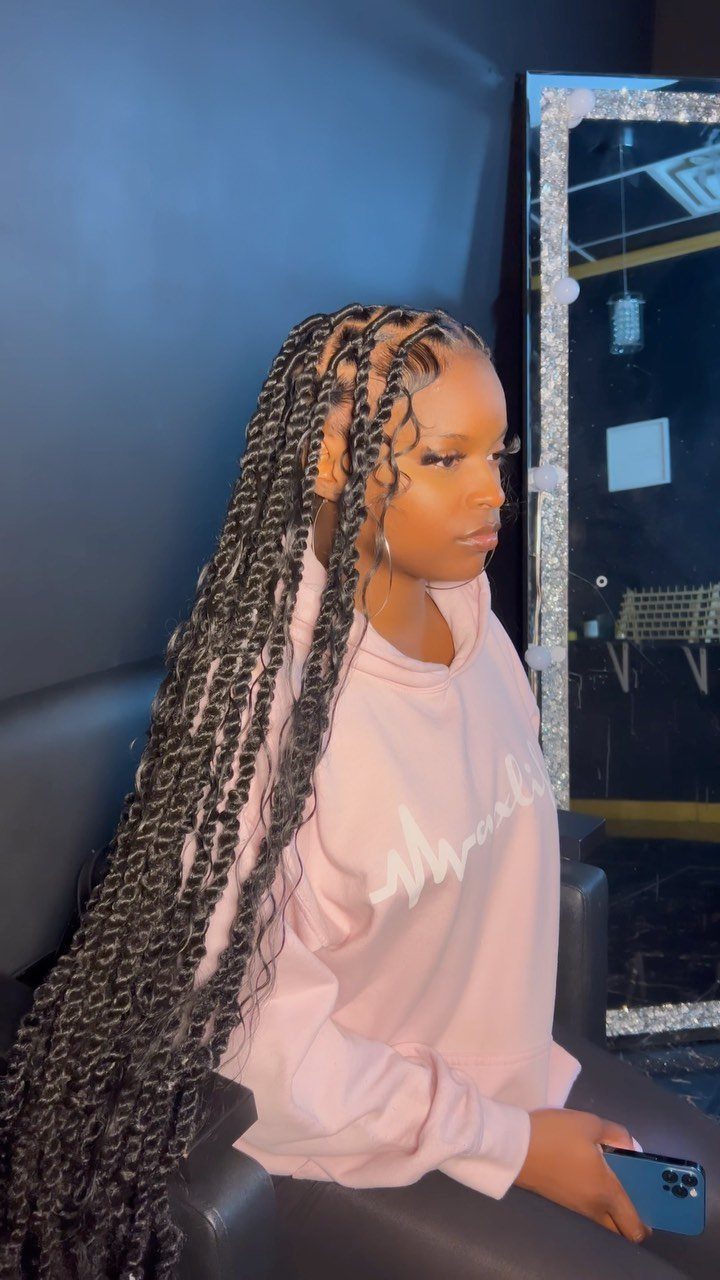
Water-wave extensions give passion twists their loose, wavy finish. Underneath it is still a two-strand twist, but the hair has movement where a smooth rope would stay straight.
Name the water-wave hair when you book, so your stylist brings the right extensions.
8. Curly Twists with Cuffs
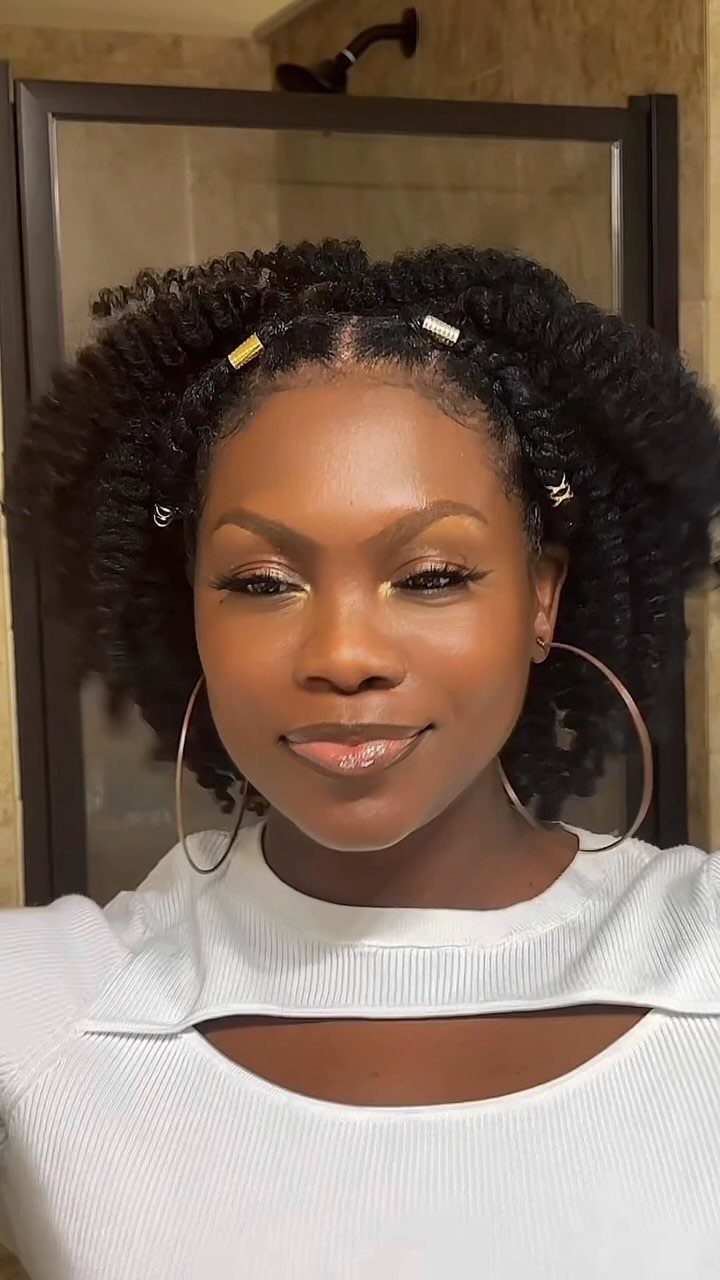
Small gold cuffs slid onto voluminous curly twists add detail without changing the style underneath. I would scatter a few across the set instead of putting one on every twist, which can start to look crowded.
Cuffs are an add-on, so you can wear the twists plain first and add metal later.
9. Twist Updo
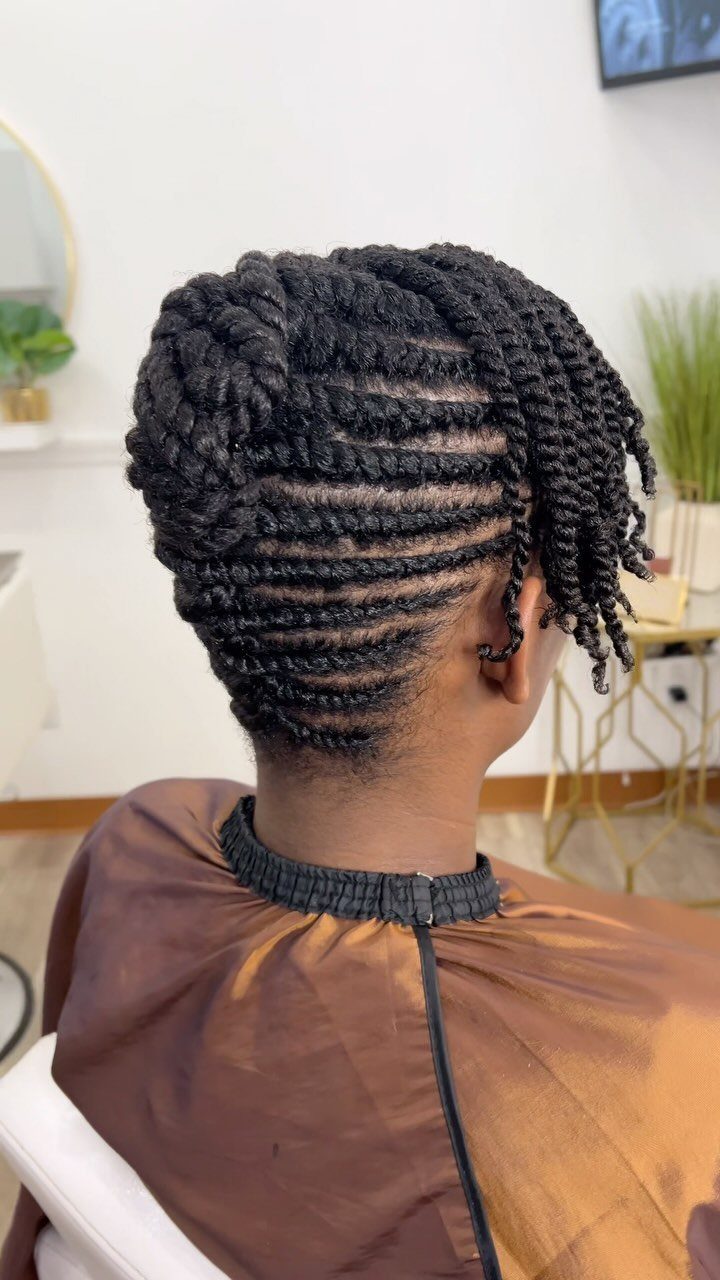
Low and rounded is the shape to ask for here. Flat twists run along the scalp, and the ends gather into a smooth updo that sits low on the head.
I like it for days when you want hair off your face and shoulders but still want a finished look.
Bring the photo and say "flat twists into a low updo" so there is no guesswork about where it should sit.
10. Marley Twists
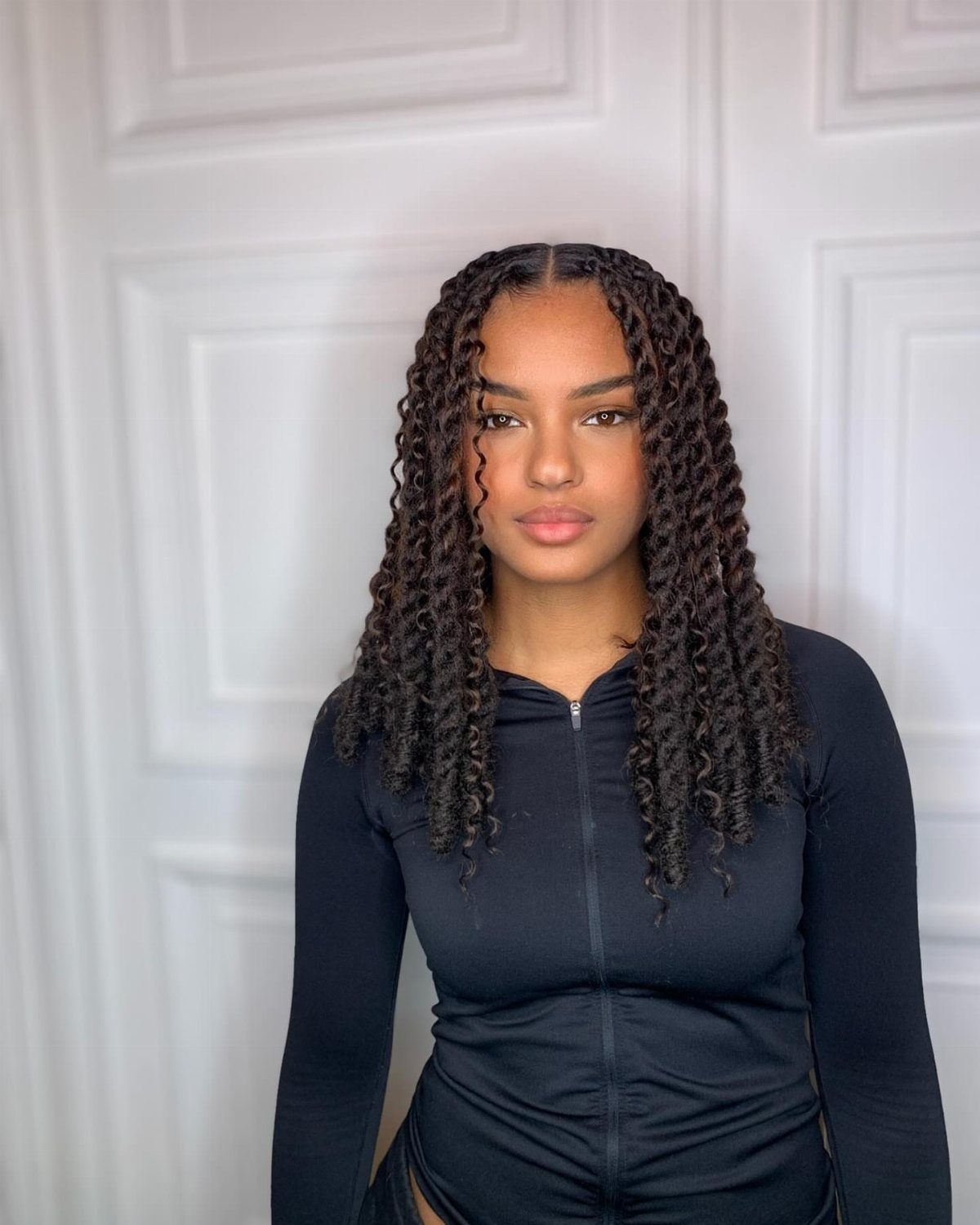
The hair gives this style its name. Marley twists are two-strand twists made with Marley braiding hair, so say "Marley" when you search or book, not just "twists."
Long and dark, as here, is the version I would save to a board first. Bring a photo and name the braiding hair along with the length.
11. Havana Twists
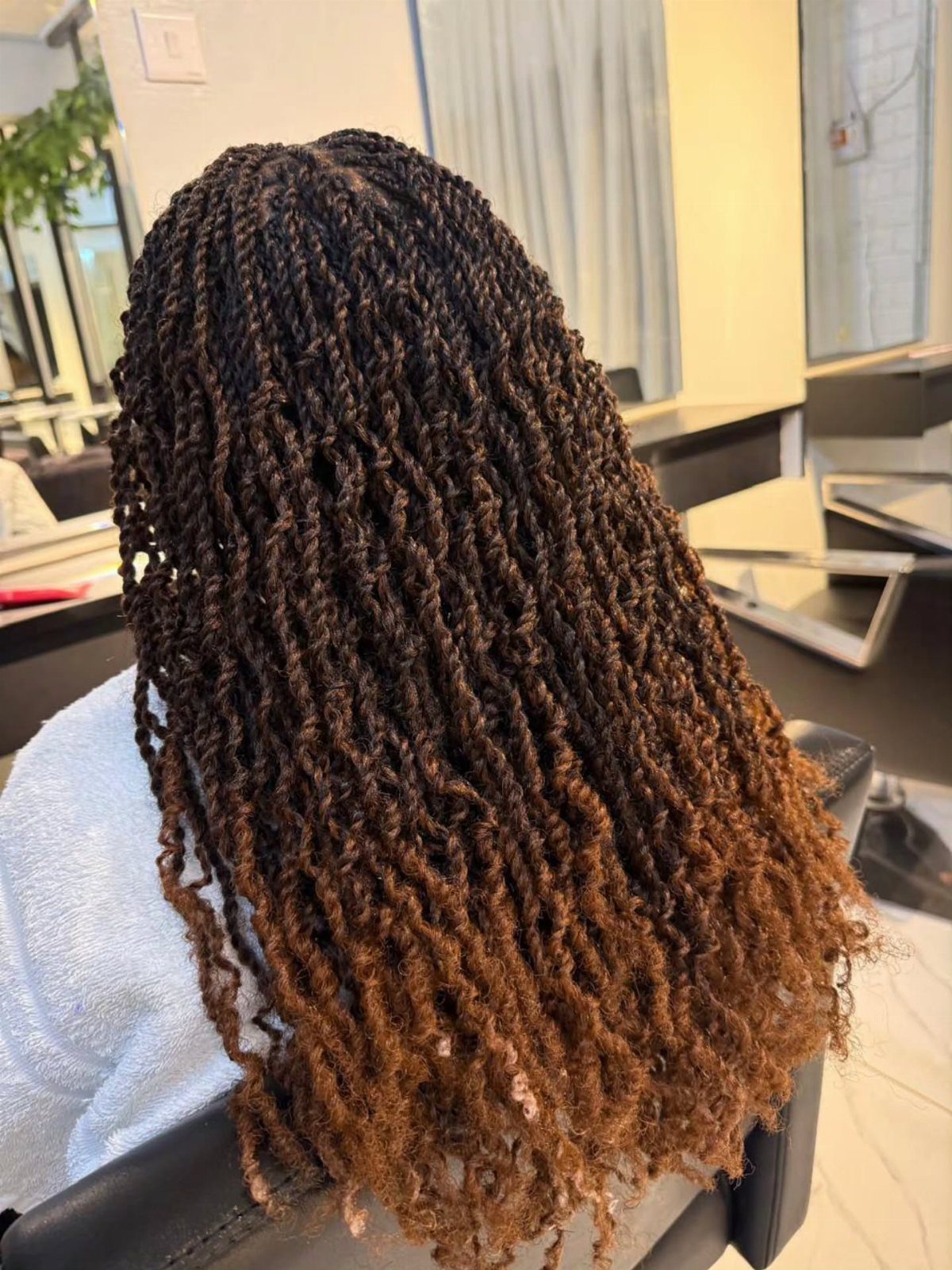
A Havana set is built on chunkier 2-strand twists, and the Havana braiding hair is what gives them that fat, rounded body. Mention the hair by name when you book, since it decides the look.
Brown ends like these read softer than jet black, and I prefer that warmth on thick twists.
12. Kinky Twists
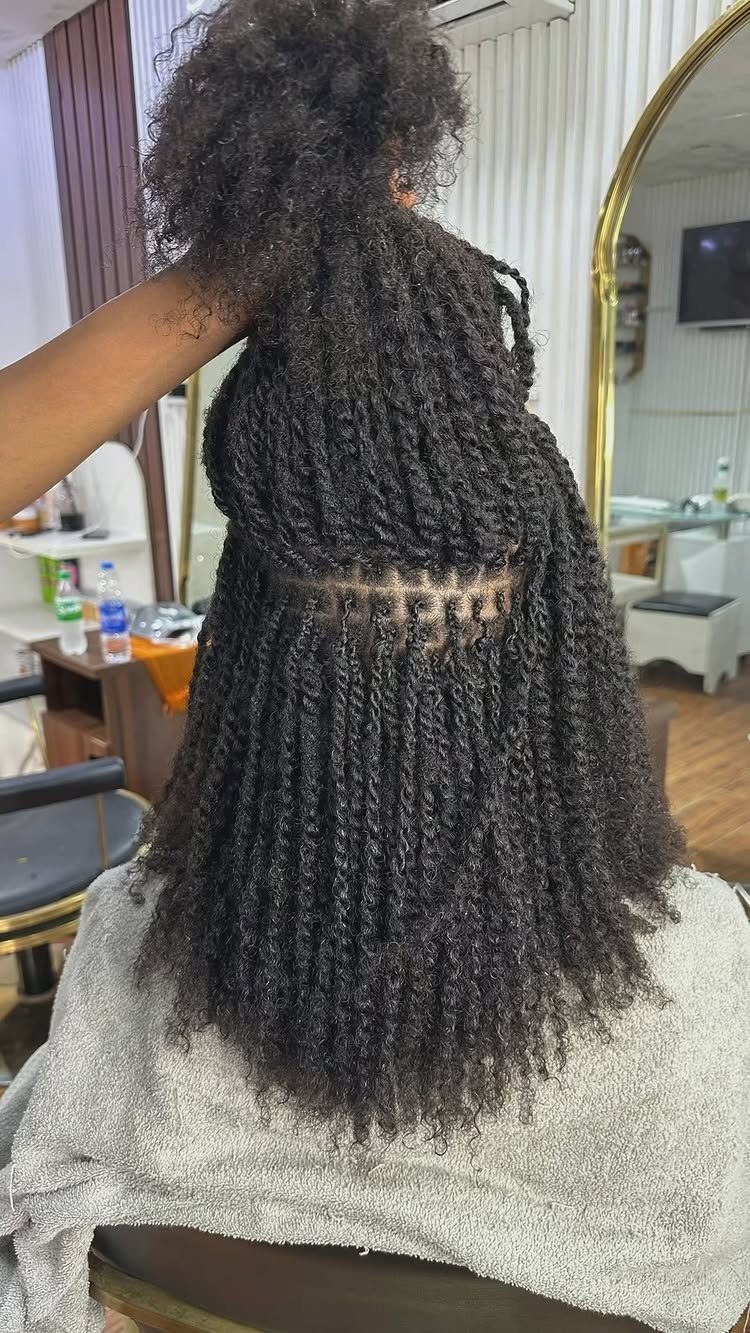
Four bundles built the volume on this set, according to the person who made it, and 3 bundles work too. I would choose 4 for a full look and 3 for something lighter.
Tight coils that resemble natural Afro hair are the draw of kinky twists, so pick this style if you want extensions that blend with that texture.
13. Mini Twists
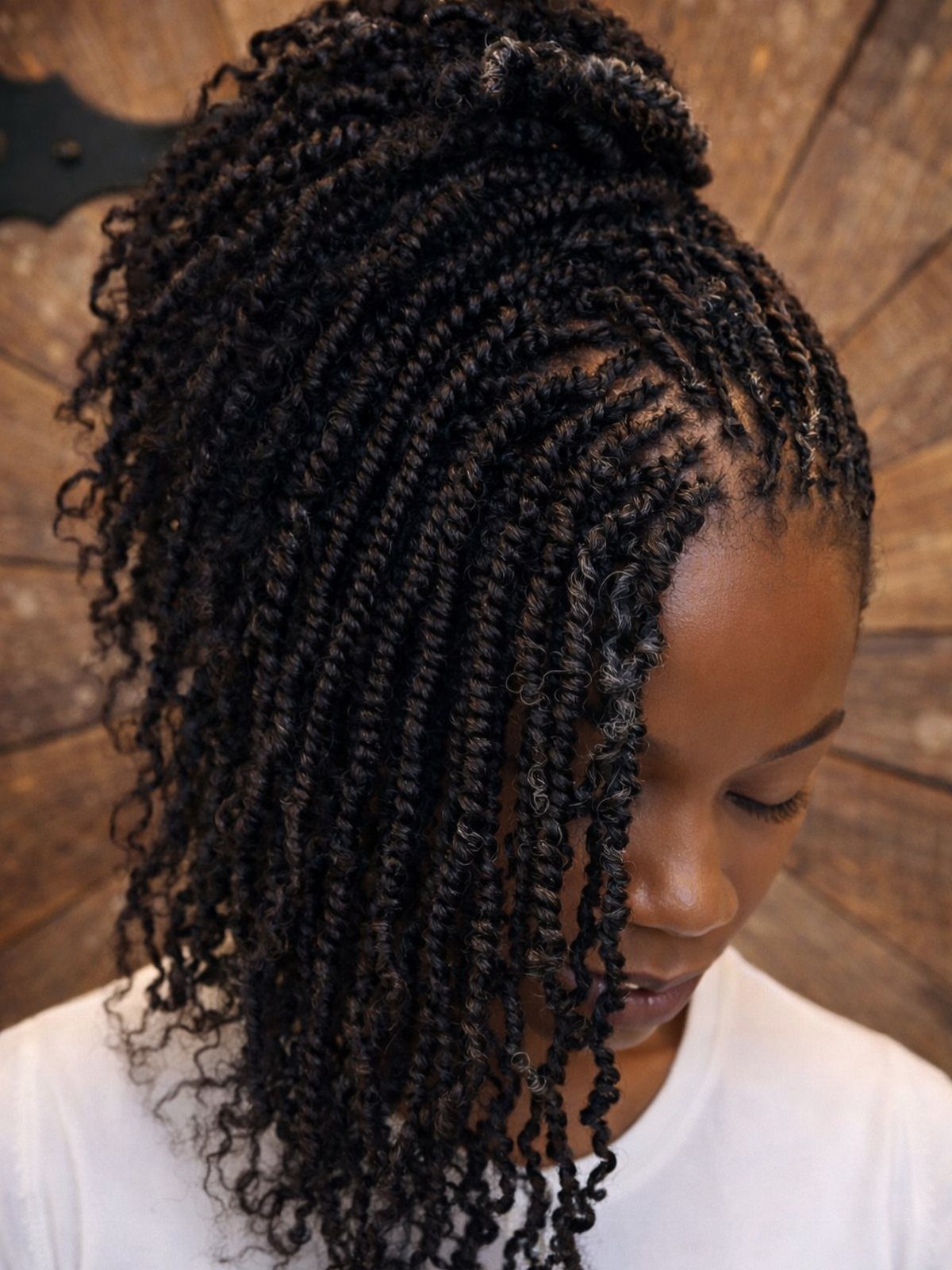
Curly ends are what keep mini twists from looking stiff, and they are the detail I would ask for if you plan to wear a few pieces gathered at the top.
Small sections twisted tightly mean a lot of twists, so expect a long sitting.
You can pin them up, leave them down or sweep them to one side, and they hold.
14. Rope Twists
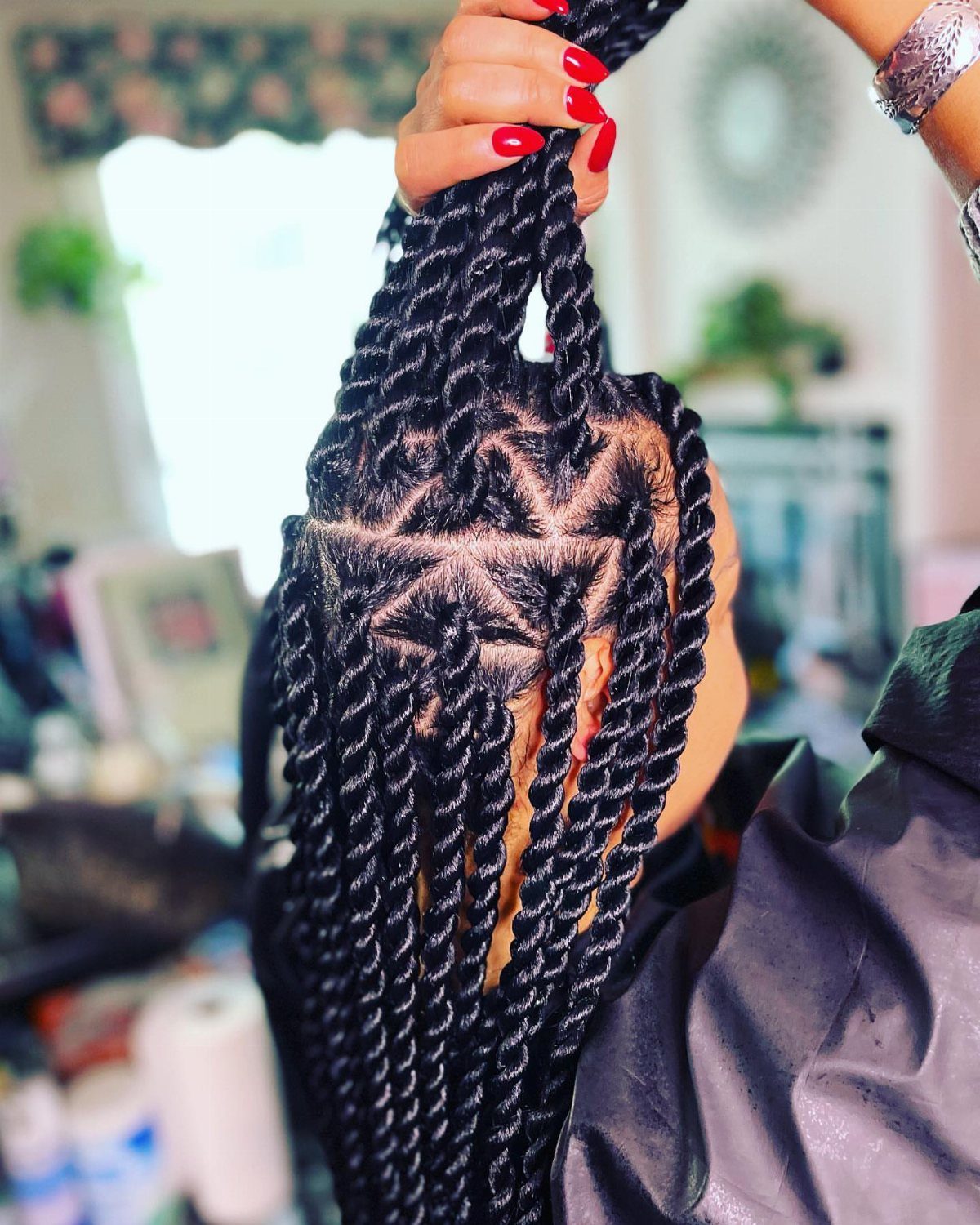
Smooth, tightly wound extensions give rope twists their neat, polished look, and clean geometric parting at the scalp makes it sharper. Ask for crisp, even parts before the first twist begins, since they frame everything else.
Bring a photo and use the name "rope twists" when you book.
15. Medium Twists
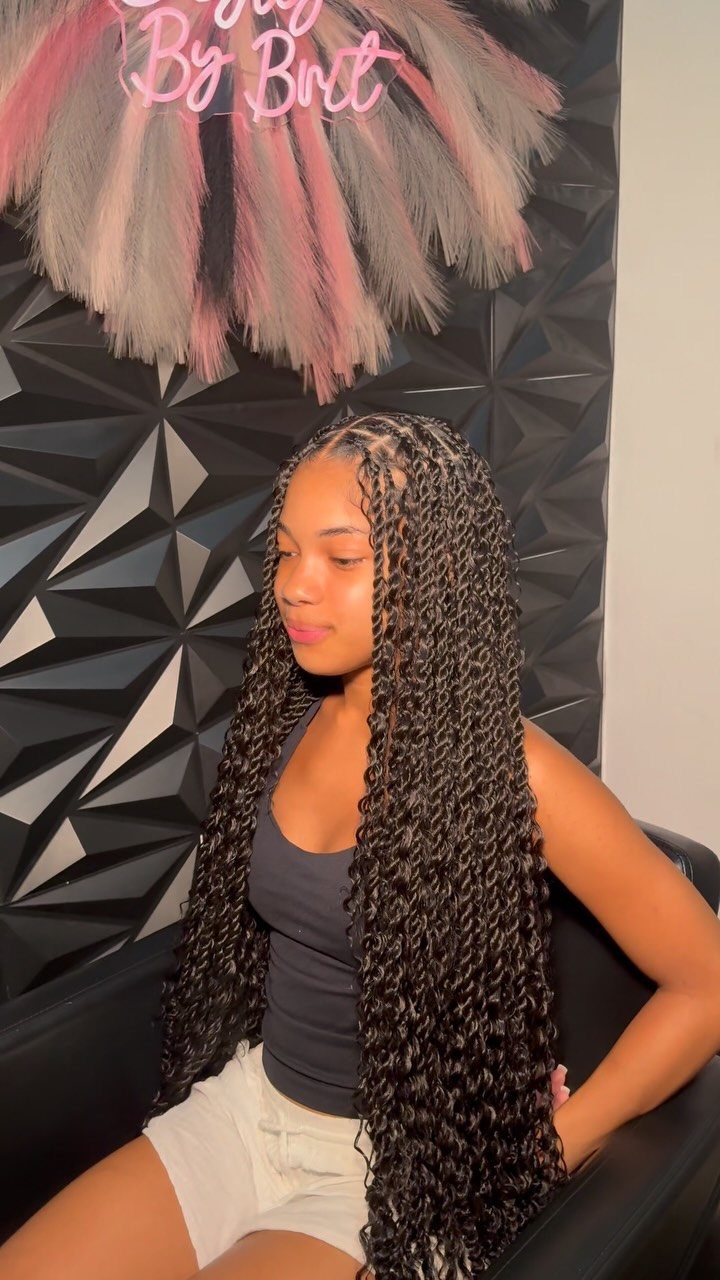
Medium is the safe middle of the twist family: thicker than minis, slimmer than jumbo, and easier to live with than either. Long, dark twists at this width keep a full shape without the heavy feel of oversized sections.
I would choose medium if you cannot decide on a size. It asks for less time in the chair than small twists and still looks detailed.
16. Straight Back Twists
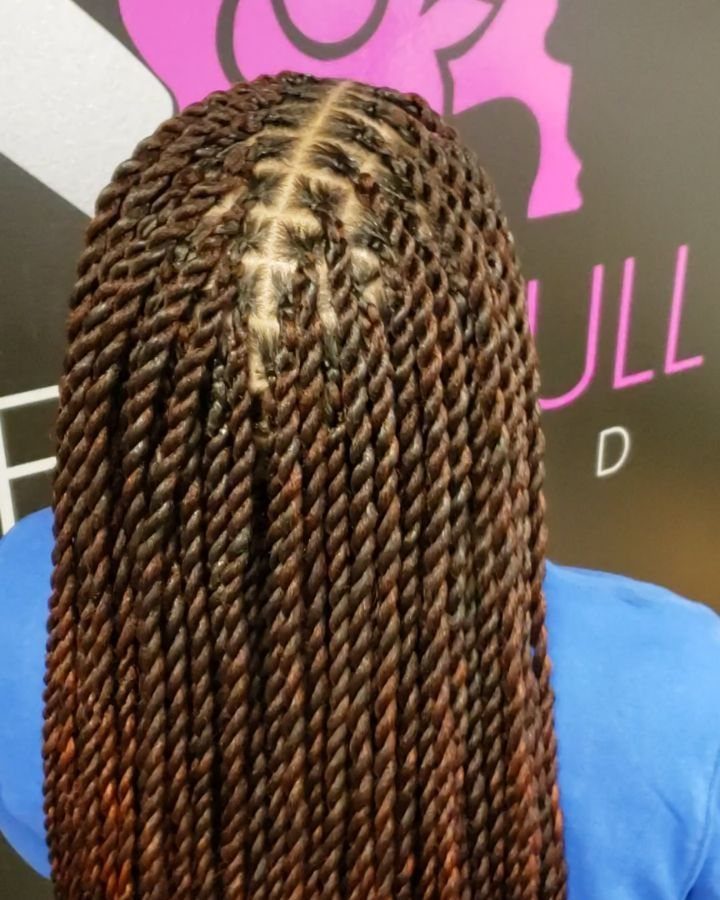
Every row runs from the hairline toward the back, so straight back twists look organized from any angle. The parts need to be clean, because the pattern is what you’re showing off.
Brown, as in this set, softens the structure a little. Say "straight back" when you book, along with the length you want, so your stylist knows to keep the rows parallel.
17. Diagonal Parting Twists
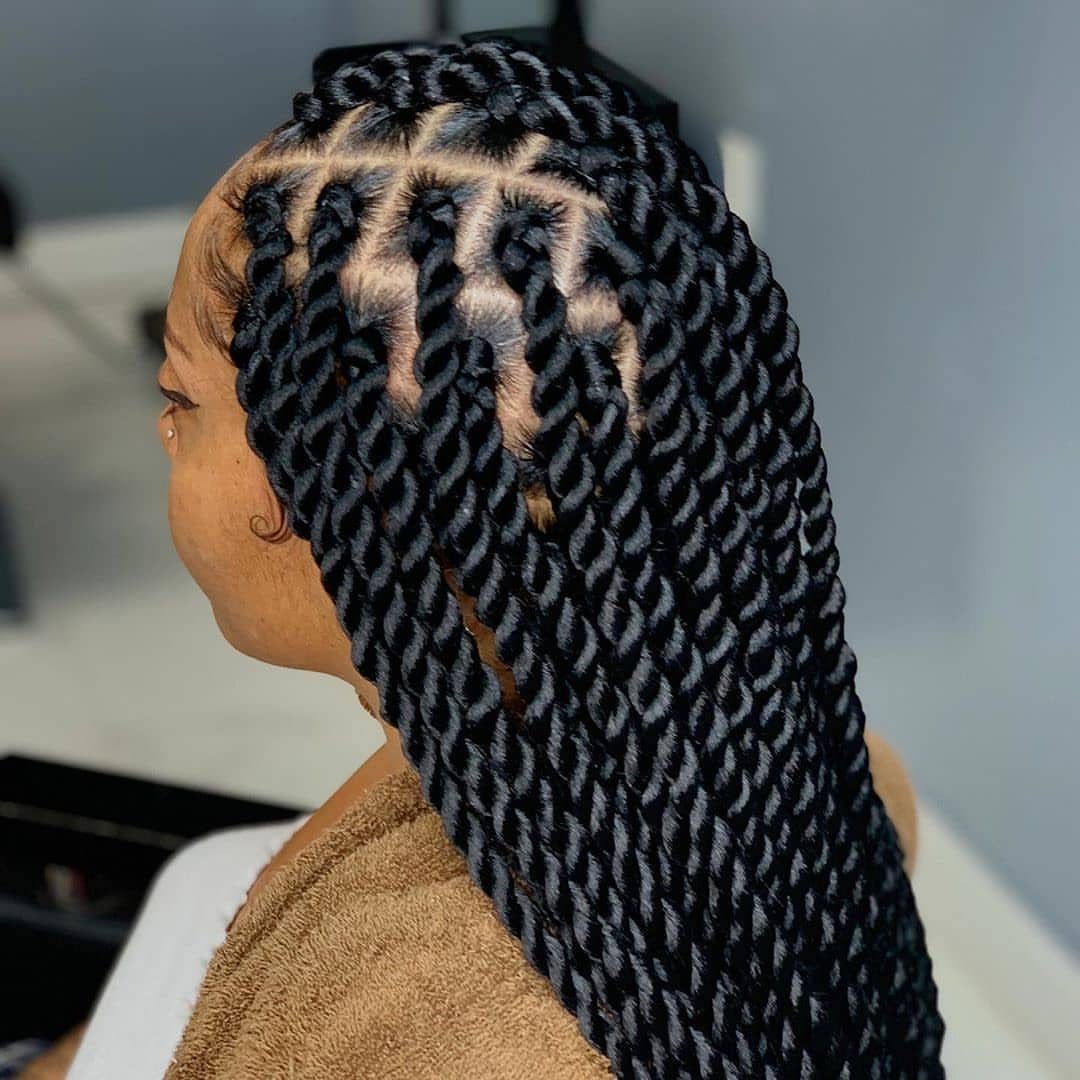
Angled parts change the whole feel of a twist set. Instead of rows running front to back, the sections slant across the scalp, which adds movement before a single twist swings.
Long black twists show the diagonal lines clearly. If the pattern is what you love, bring a photo and ask for "diagonal parts" by name, since your stylist will need to plan the direction from the start.
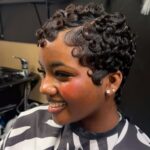
18. Short Finger Twists
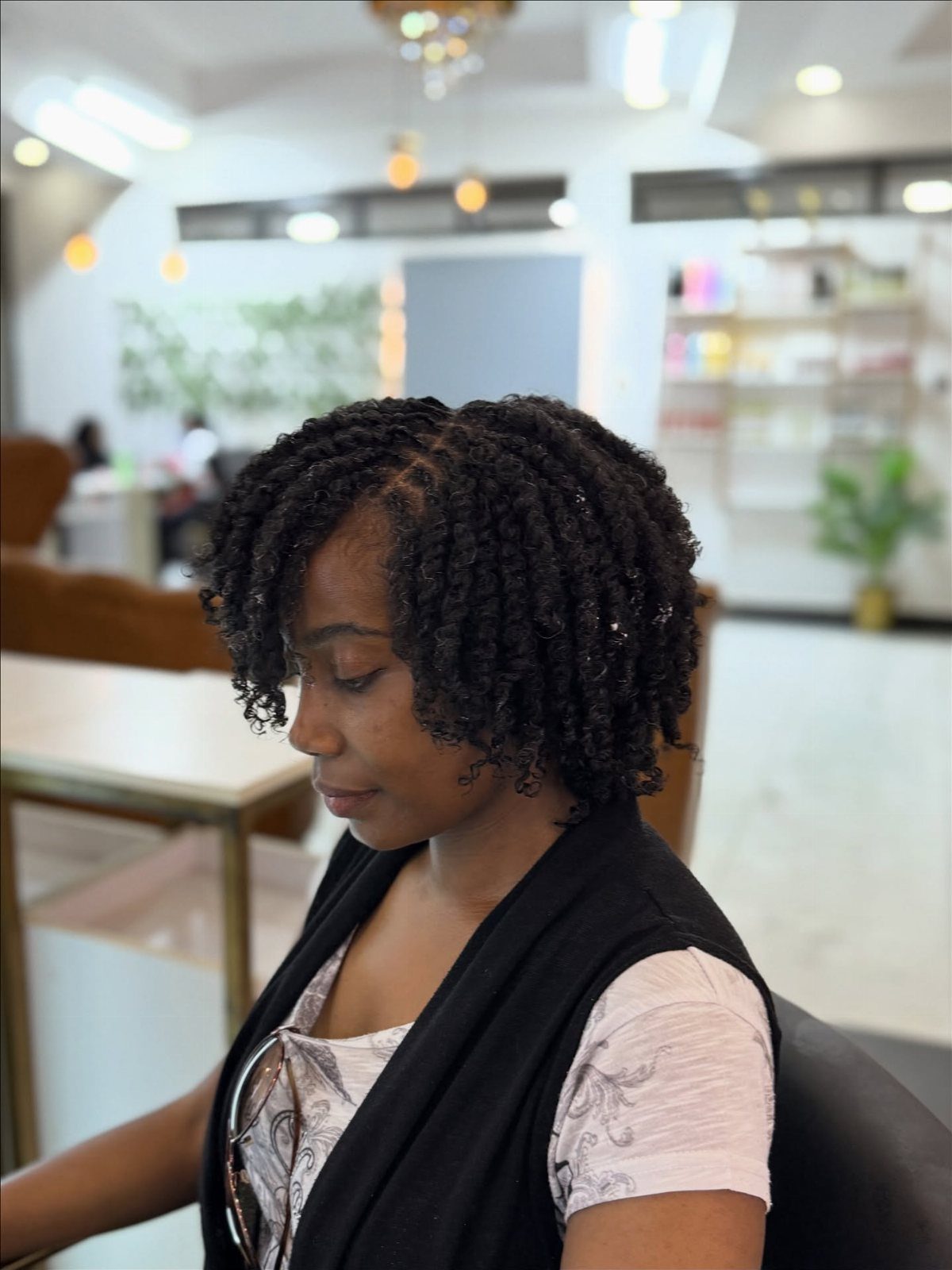
Short hair does not rule out twists. Finger twists suit short natural hair because you coil each small section around your finger, with no extensions needed, and the result is a compact, defined cap of texture.
Work on damp hair with a moisturizer, one section at a time. I like this for anyone growing out a cut who wants a tidy look in the meantime.
19. Mini Kinky Twist Ringlets
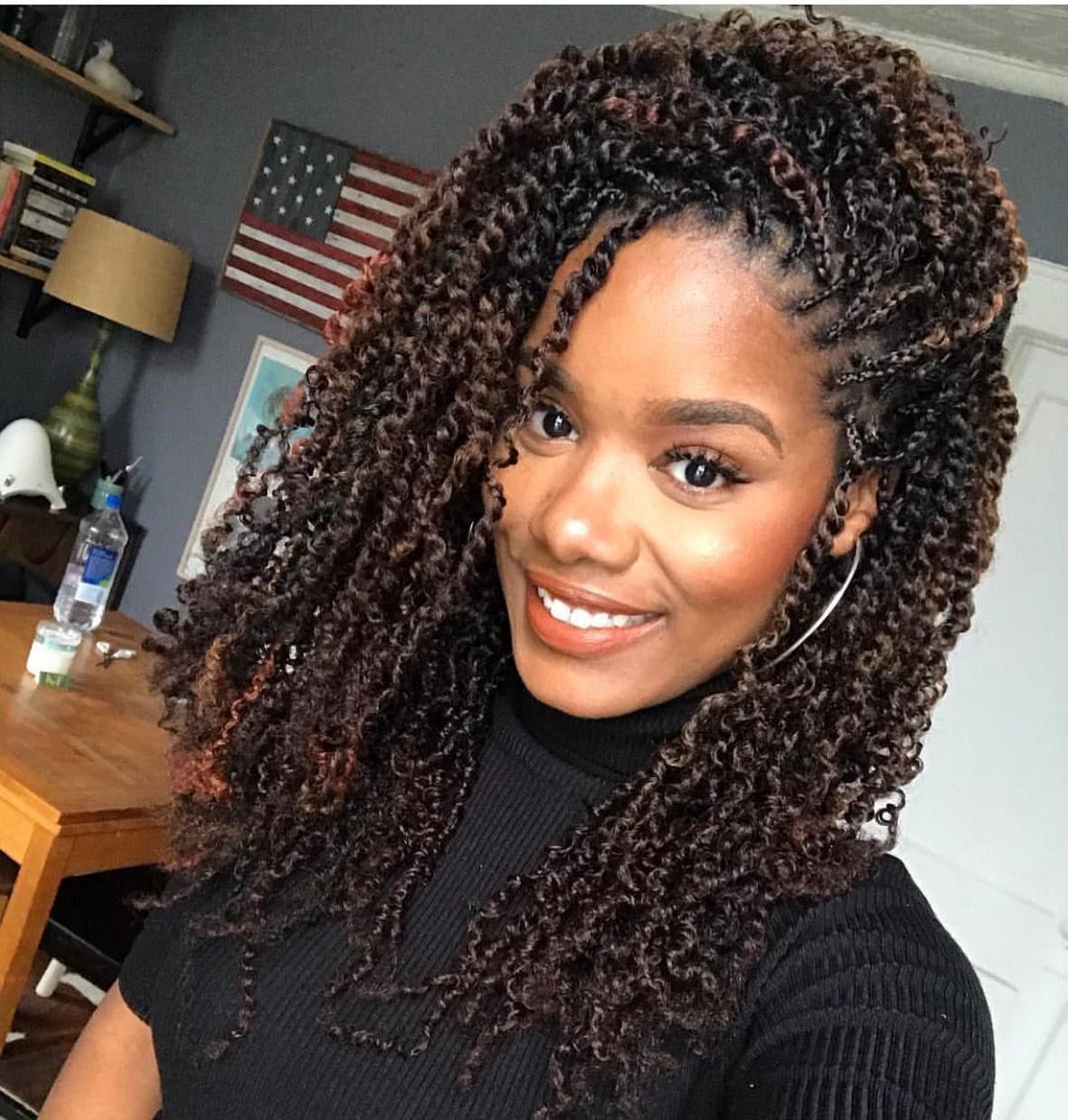
Springy ringlets at the ends soften mini kinky twists and add bounce where the style would otherwise sit straight. The coils make the length more playful without changing the twist method itself.
Ask for kinky twist hair that takes a curl well, or set the ends on perm rods after the twists are finished.
For movement, I pick these ringlets over blunt-cut kinky twists, since the tapered ends swing and bounce where a blunt edge just hangs.
20. Half-Up Mini Twists
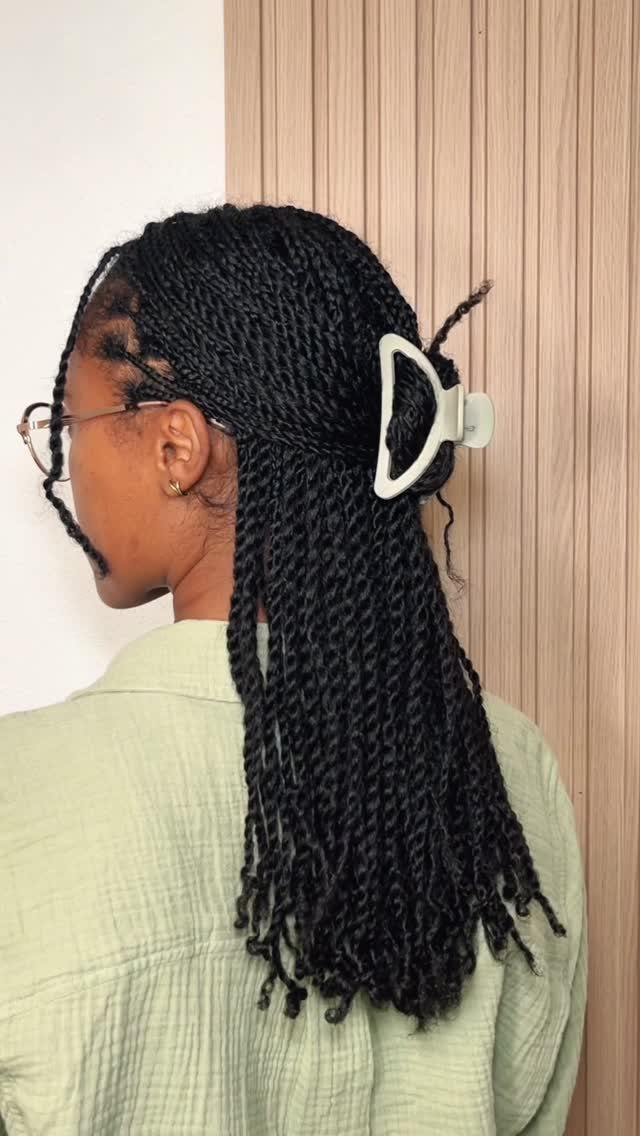
Gathering the top half with a claw clip turns mini twists into an updo that still shows length in the back. The clip holds without needing pins, and you can adjust the height by how much you gather.
A neutral clip, like the one here, blends into dark twists. I would reach for this when mini twists feel heavy and you want hair off your face without committing to a full updo.
21. Flat Twist Bangs Updo
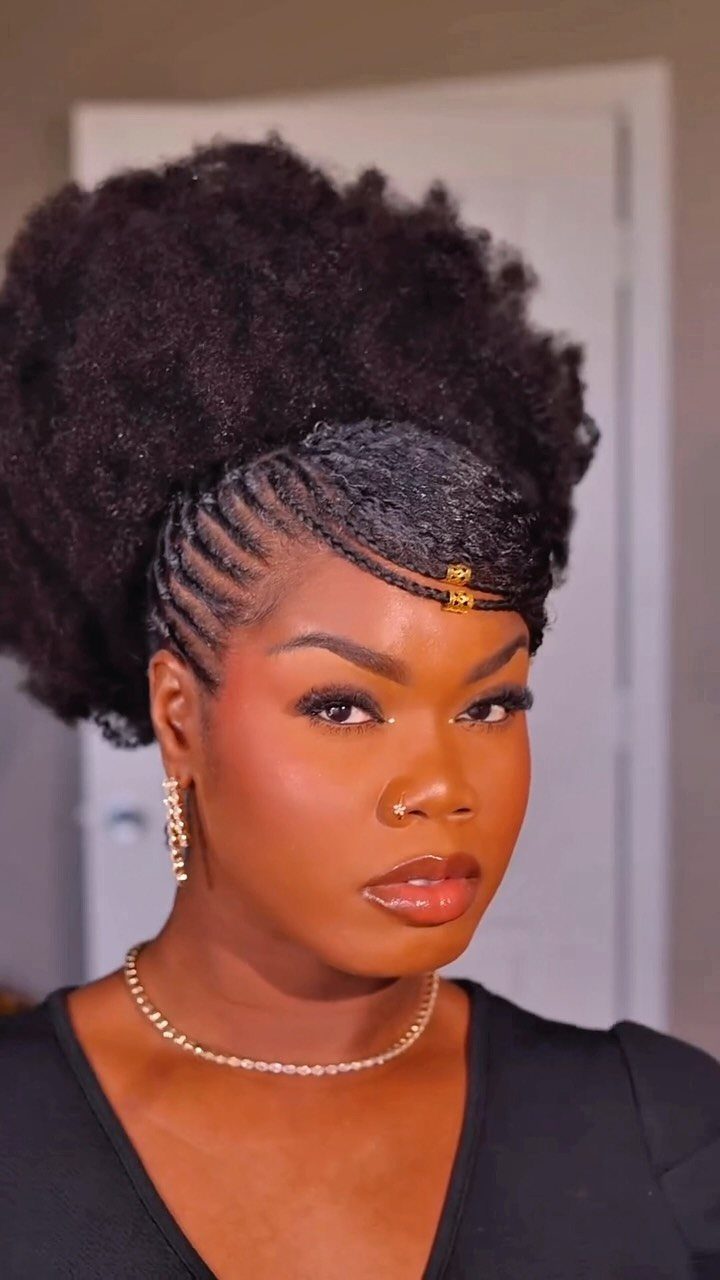
Flat twists hold the sides and back smooth, while the front is left out and twisted into full, textured bangs. The contrast between the sleek scalp and the volume up front is what makes this updo stand out.
Ask your stylist to flat-twist everything except the front section, then twist out the bangs for body. Gold jewelry complements the look without competing with the texture.
22. Straight Back Twists Bun
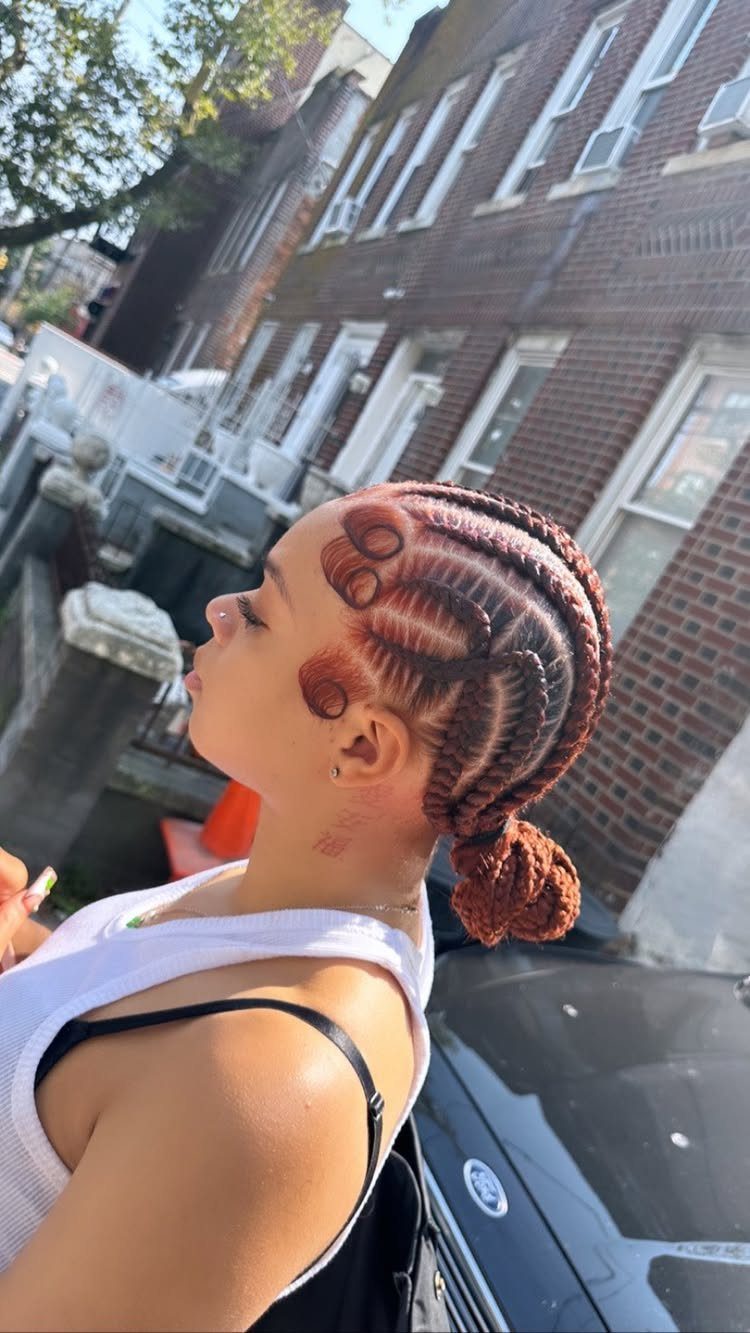
Straight-back twists run cleanly into a low bun, so the whole style stays polished and off the neck. Reddish-brown gives the twists warmth and reads softer than black in daylight.
Say "straight back into a bun" when you book, and name the color if you want something other than black. I like this for anyone who wants a finished look that holds through a long day.
23. Cornrow Twist Updo
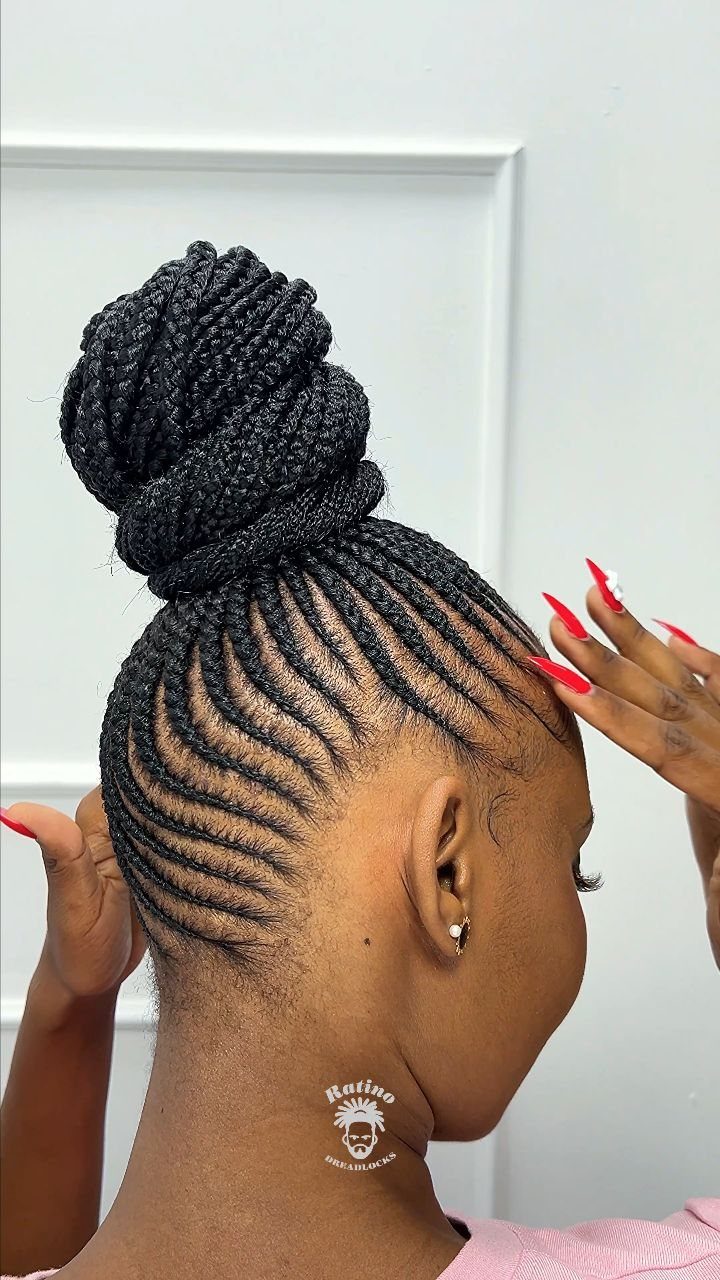
Cornrows curve along the scalp and feed into a large twisted bun at the crown, so the style combines two techniques into one sculptural shape. The bun sits high, which keeps it visible from the front.
Bring a photo and ask for "cornrows into a twist bun" so your stylist knows where the rows should end and the bun should begin. Plan on a long sitting, since getting the curves even takes precision.
24. Natural Chunky Twists
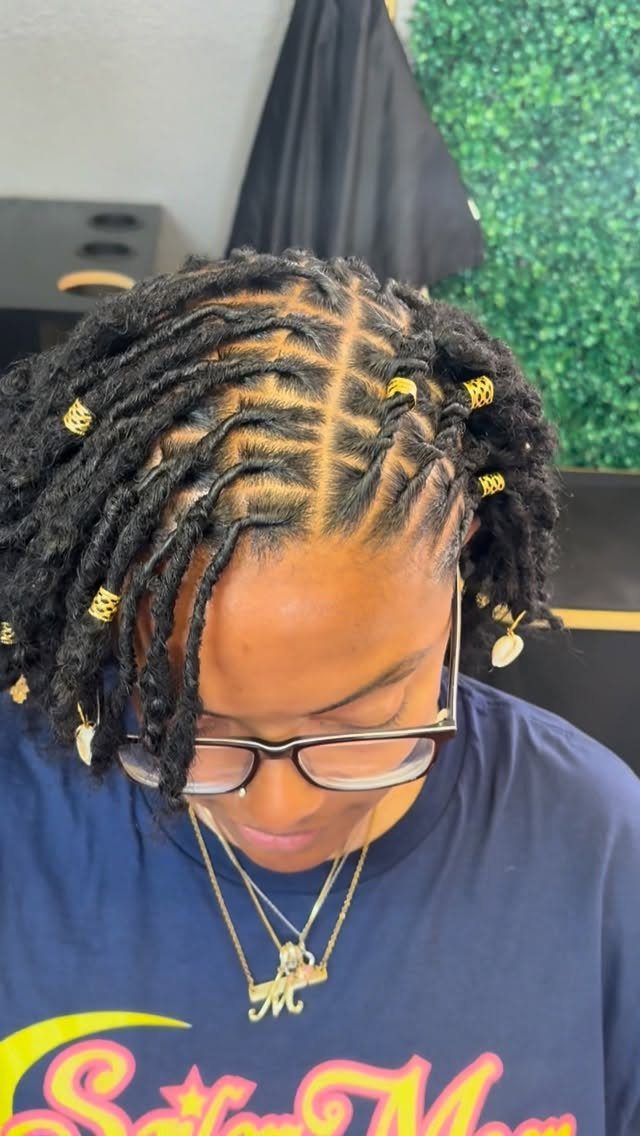
Thick sections twisted on natural hair with no extensions create a bold, textured look, but the weight pulls directly on the roots. Gold cuffs add detail, though the real concern is tension.
If your hairline is fragile or your hair has been relaxed, skip this style. The heaviness of chunky twists without the distribute of added hair puts too much strain on the base, and thinning around the edges is common.
25. Twist Crown with Color
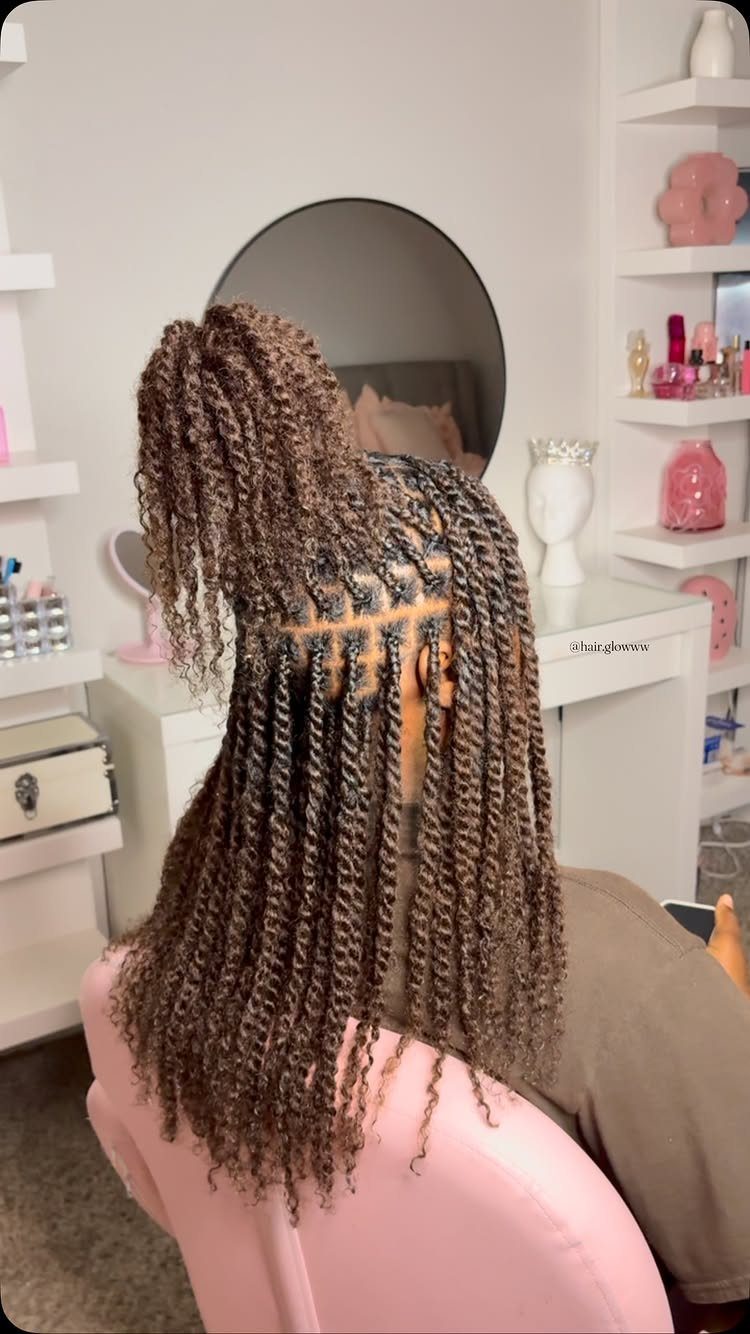
Highlights make a twist crown read as 2 ideas at once: the color catches light along each twist, and the raised shape gives it somewhere to show.
Gathering the twists high on the head keeps the length off your neck and shoulders.
Ask for the highlights to be placed through the twists so the color is visible in the crown, and bring a photo so your stylist can match the shade.
I would pick this over a plain crown when you want a protective style that still looks finished.
26. Twisted Ponytail
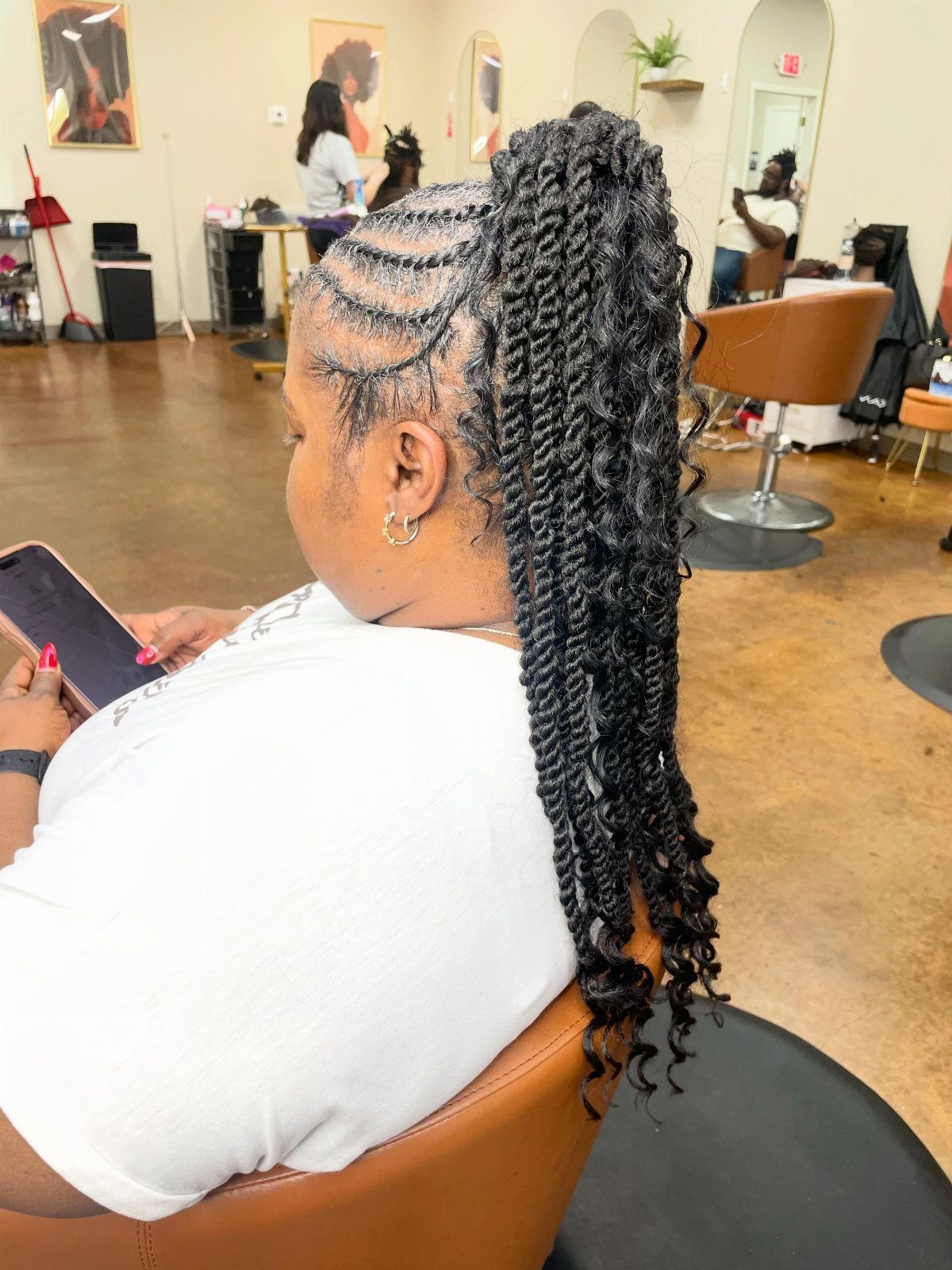
Pulled high and left long, a twisted ponytail shows off every inch of the twists while clearing them from your face.
The curved side parts here lead the eye up to the ponytail, and the braided sides keep the front sleek.
Name the pieces when you book: "curved side parts, braided sides, high twisted ponytail." I like this for anyone who wants length on display without wearing it all down.
Expect a longer sitting, since the side work adds time before the twists even begin.
27. Finger Twists
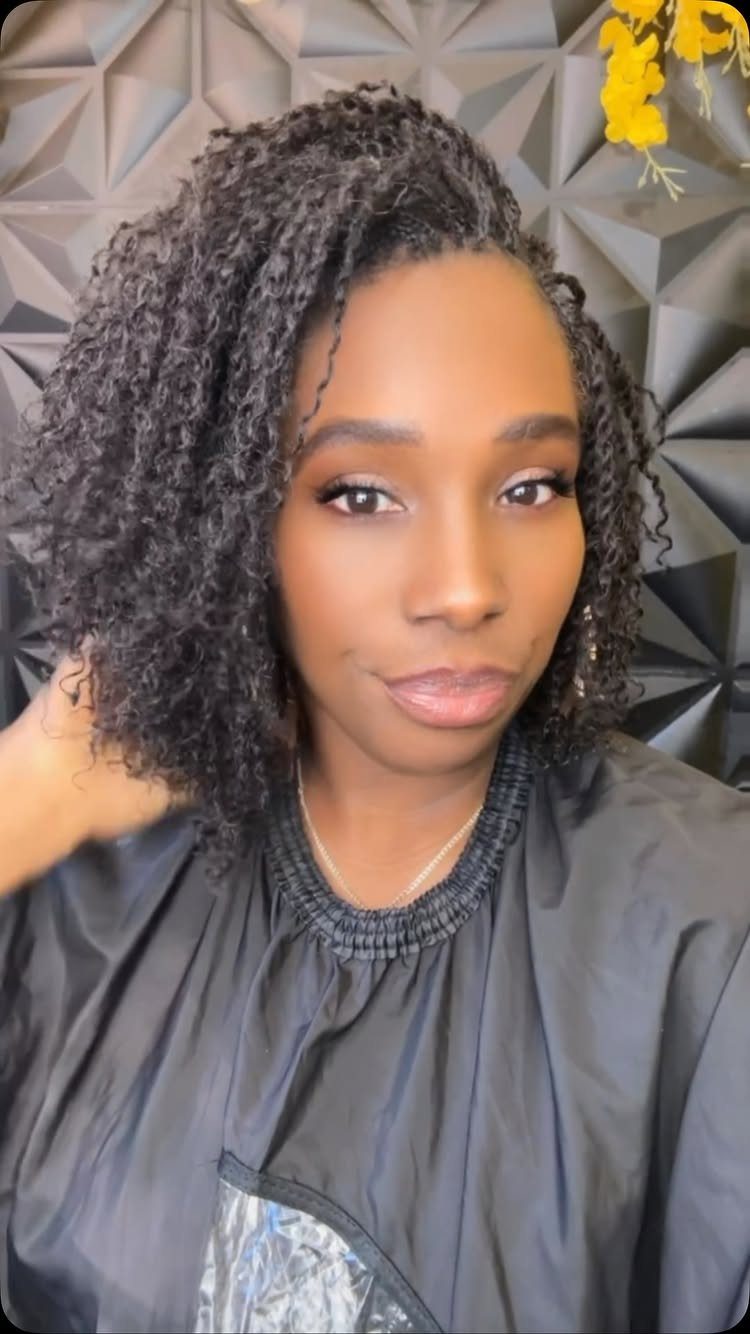
Coiling a small section around your finger is all it takes to form a finger twist, and no extensions are involved. The shoulder-length, defined coils here are built entirely from natural hair.
Work on damp, moisturized hair and keep each section small and even so the coils match. I would choose finger twists over two-strand twists when you want definition without bulk.
This is a style you can do at home, but expect it to take patience, because every coil is made by hand.
28. Box Twists
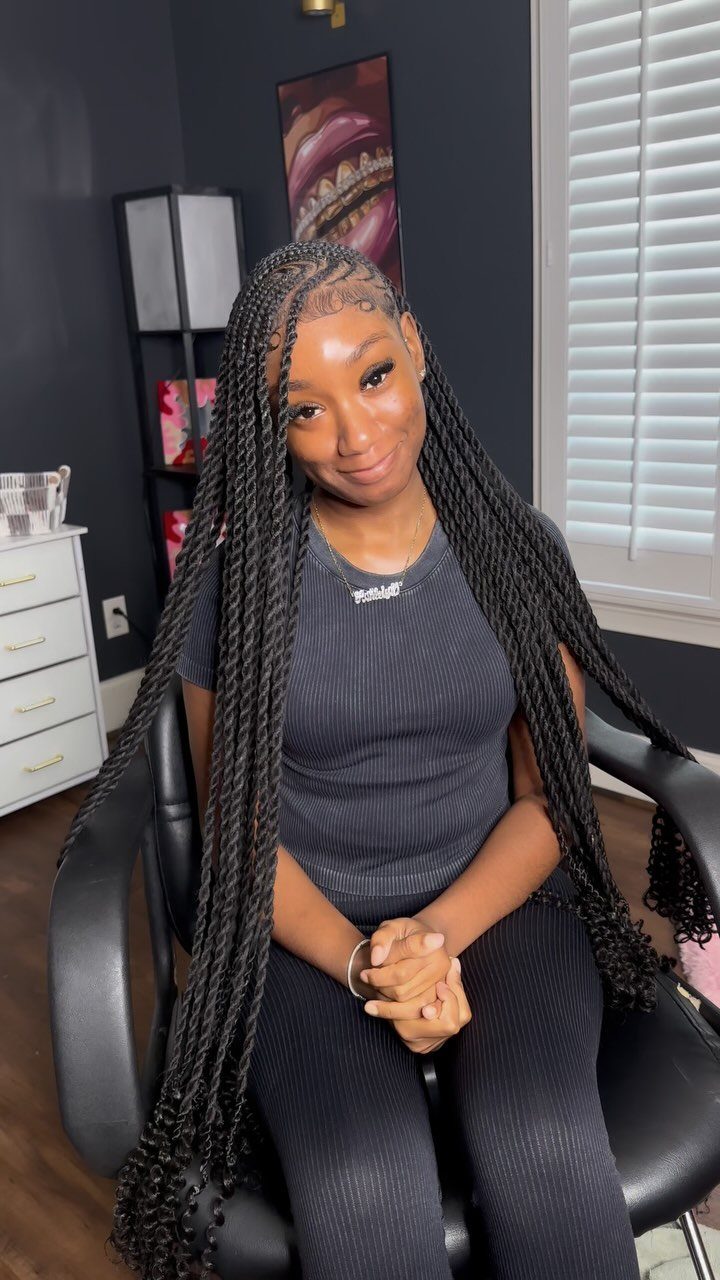
Box twists get their name from the parts: square or rectangular sections drawn across the scalp, with a twist hanging from each box. The pattern is the appeal, so the parts need to be crisp before any twisting starts.
Say "box twists" when you book, and bring a photo of the parting so your stylist can see how large you want the squares. On a set this long, the square parting pattern reads clearly from root to tip.
I would pick box parts over triangle ones if you want a scalp that looks organized in every direction.
Twist-out Preparation and Upkeep
Start with a co-wash, which means washing with conditioner only, to hold moisture in. Then let your hair air-dry a bit before you twist, especially if it is thick.
Damp hair is what I would choose for definition. Wet or towel-dried strands give clearer curls once the twists are separated and fluffed, while dry hair tends to give a softer result.
Make a T-shaped part to divide your hair into 4 sections, and part on the side where you want the finished style to fall.
Twist during the day instead of at night, so your hair can dry in the twists rather than sit damp against a pillow. Leave them in until they are completely dry before you unravel.
With regular moisture and the occasional large retwist, the style can last about a week.
Twist Style Benefits and Wear
Twists protect natural hair with minimal tension, help it hold moisture, and cut down on the daily handling that wears strands out. That makes them a good pick for a hair break.
You’ll also finish the whole head faster than you would with braids, and unraveling them at the end takes half the time.
If you are short on time for an install or a takedown, that decides it in favor of twists.
Depending on size and how you care for them, you can get anywhere from 1 week to 3 months of wear.
The style you choose and whether you add extensions set where you land, so decide on a takedown date before you start.
Taking the twists out gives you a second style. A set you wear for a week can end as a twist-out, so one install covers two looks.
Twists are quicker to complete than braids (and easier to take out), and they’re a fantastic option for protecting your natural hair with minimum tension while maintaining moisture.
Choosing Twist Size and Definition
Size sets how defined the curl looks.
Small, narrow twists are the scale to picture when you want fine, detailed definition.
Separation decides the rest.
Pull the twists apart a lot after unraveling and you get volume. Separate them very little and each strand keeps its definition.
You can also mix methods on one head.
Mix small and medium twists across the head, pull some apart for volume and leave others tight, or flat-twist the front and leave the back free-hanging. The varied curl patterns look more natural than one uniform size.
Frequently Asked Questions
What are some good hair twists for natural hair?
Start with two-strand twists: divide a section into 2 pieces, cross them over each other down the length, and you have the base move for nearly every other twist style.
Flat twists give a smooth, polished look because they stay pressed to the scalp from root to end.
Finger twists need no extensions, only damp, moisturized hair coiled around your finger. If you can’t settle on a size, medium twists sit between minis and jumbos and take less time in the chair than small ones.
Are twist outs good for natural hair?
Twist-outs work well on natural hair, and type 4 coils tend to hold the defined, stretched pattern the longest.
Smaller sections give a more defined pattern, while larger sections give a looser, wavier curl. One install can give you 2 looks, because a set worn for a week as twists can be unraveled and worn again as a twist-out.