Short wavy hairstyles sit anywhere from a close pixie to a shoulder-length lob, and the right one depends on your face shape, how much wave you’re starting with, and whether you’re willing to style it every day or let it air-dry.
If your hair already has natural wave, most of these cuts work with a little mousse or sea salt spray and air-drying.
Pixies need a trim every month or so to hold their shape, while bobs stretch to 6 to 8 weeks between cuts.
1. Shaggy Bob
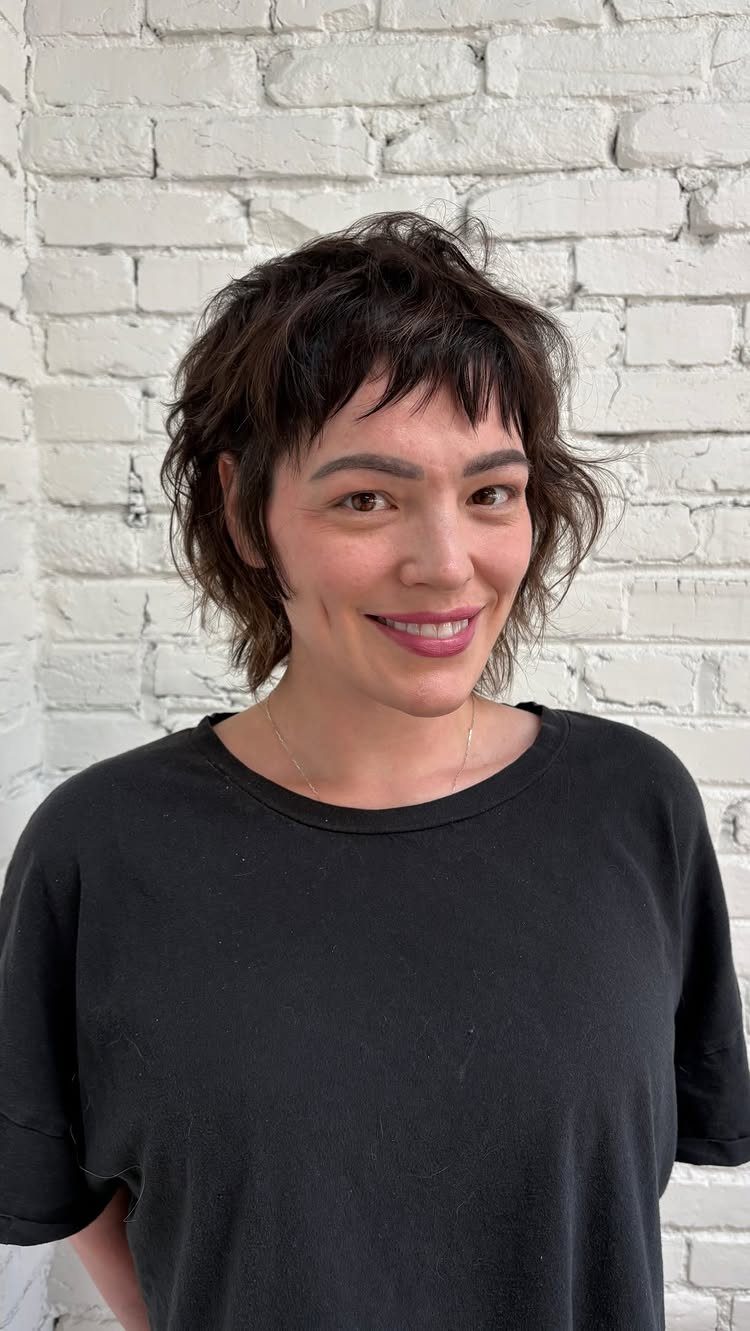
Choppy layers through a chin-length bob give you texture without much styling.
The cut looks intentionally undone, which helps if your natural wave already has some bend to it. Ask your stylist for layers all over, not just at the ends, and shorter, piece-y sections around the crown for lift.
If you have straighter hair, you’ll need to add the texture yourself with a texturizing spray or a light curl.
The shaggier the cut, the more movement you get, but trims will need to happen more often to keep it structured rather than stringy.
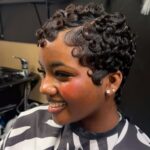
2. Pixie with Curly Bangs
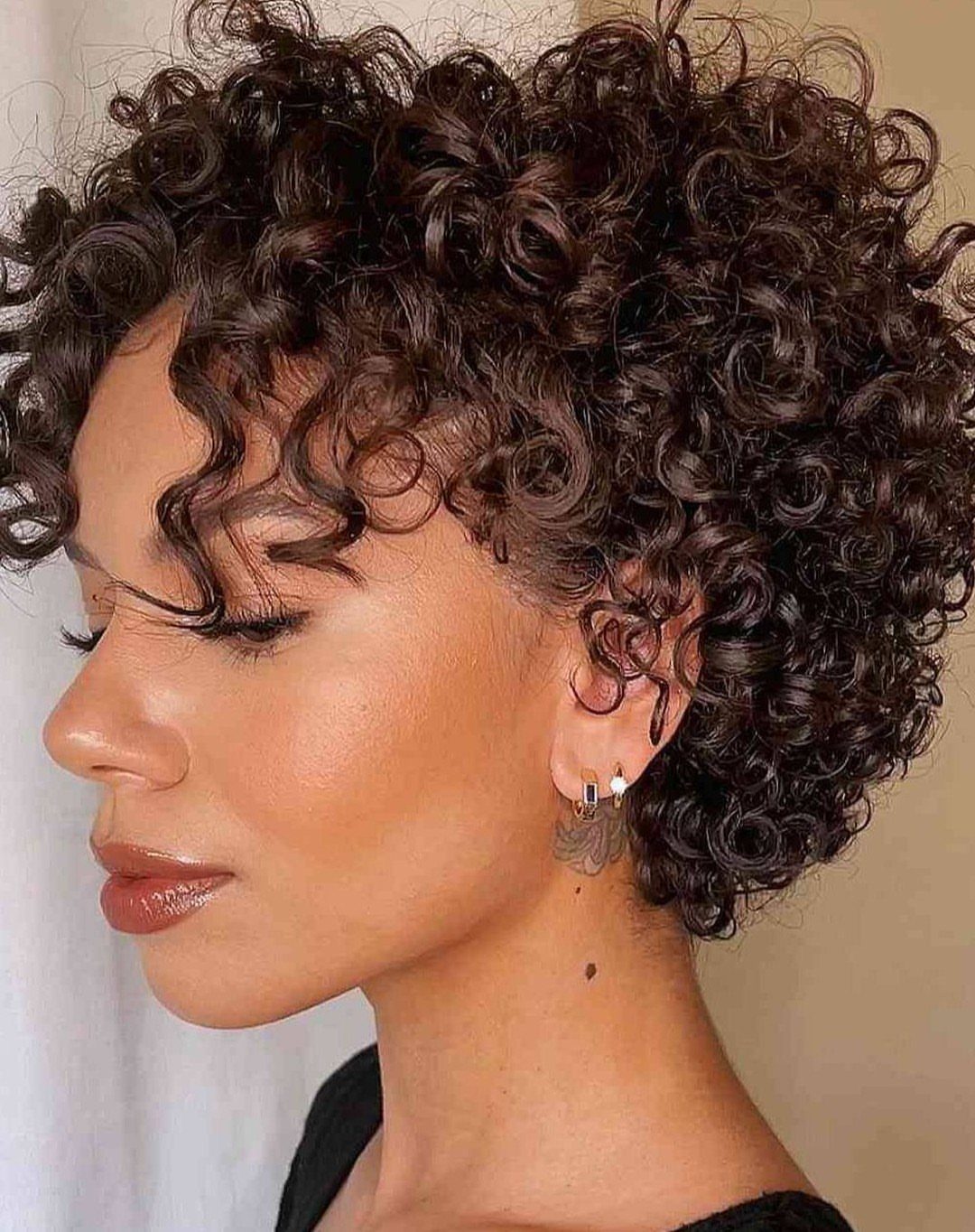
A pixie that keeps longer, curled sections around the forehead and temples gives you softness at the hairline while staying short everywhere else. The curls frame your face and break up the close-cropped back and sides.
If you already have some natural curl or wave, you’ll rely on it daily.
If your hair is straight, you’ll be curling those front pieces with a small-barrel iron or wand each morning, which adds a few minutes but keeps the back and sides fast.
3. Short Wavy Hair with Bangs
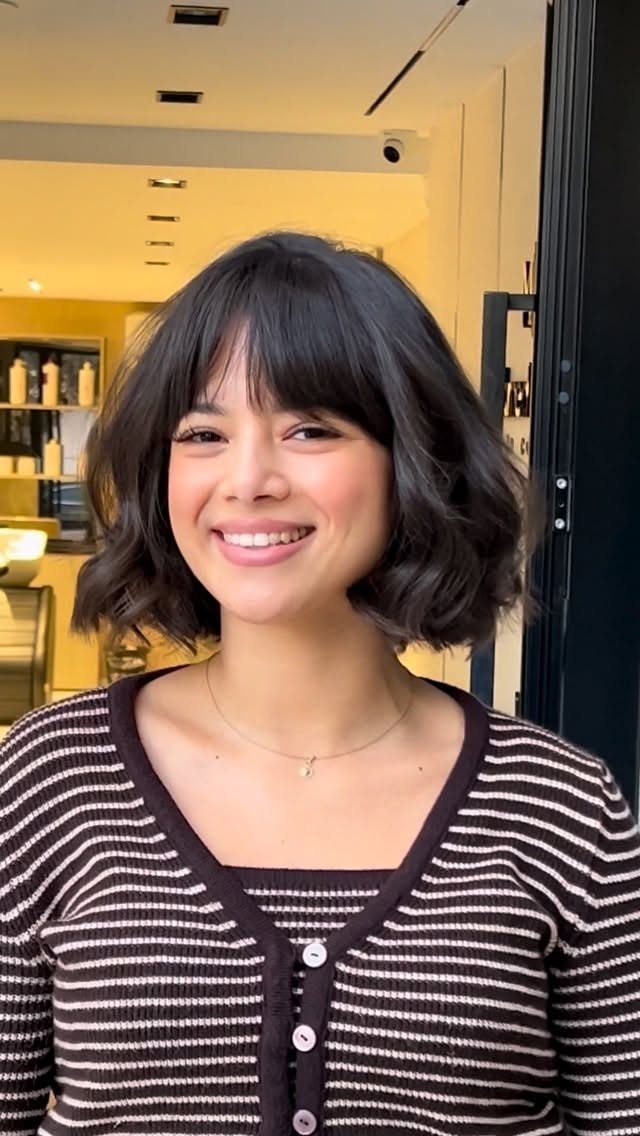
Bangs paired with a short wavy bob soften the front and give you something to style when the back and sides are simple.
The combination works if your waves start close to the root, since the bangs will take on the same texture as everything else.
Straight-across bangs look more deliberate, while side-swept or curtain bangs blend into the bob. You’ll trim the bangs more often than the back and sides to keep them clear of your eyes.
4. Wavy Bob with Bangs

Adding bangs to a wavy bob gives you options at the front: blunt for a sharper line, wispy for something softer, or side-swept if you want to keep them longer and out of the way.
The bangs follow your wave pattern, so if your hair bends or curls naturally, they will too.
For looser waves, tuck a round brush under the bangs while blow-drying to add a little curl. The bob itself stays simple, and the bangs are where you put the styling time.
5. Face-Framing Layers
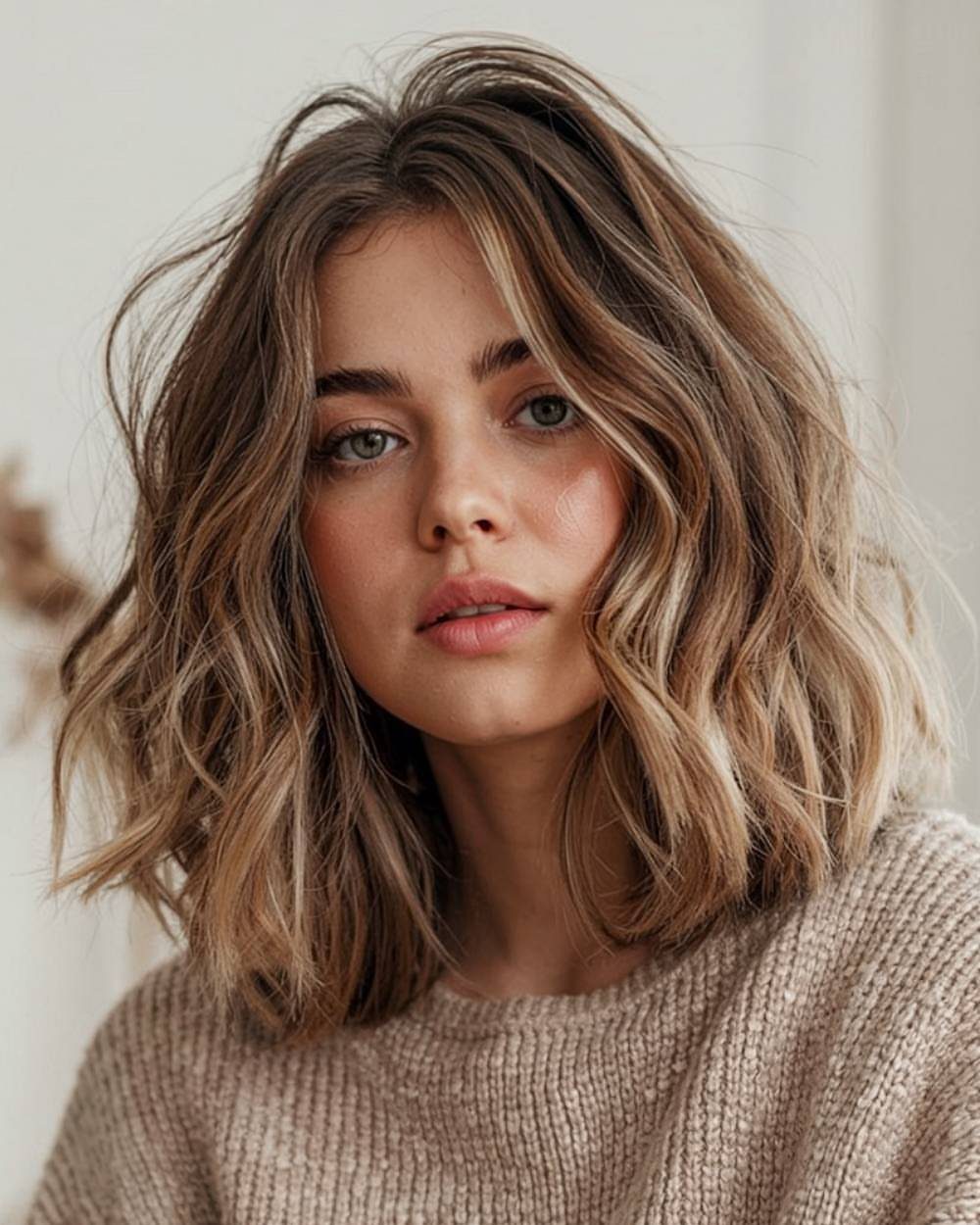
Shorter pieces cut around your cheekbones and jawline shape the wave right where it hits your face. The layers give the wave something to move around, and they highlight your features without shortening the back or sides.
This cut works across most face shapes because you can adjust where the shortest layer falls.
Rounder faces tend to look better with the shortest piece closer to the chin, while longer faces can handle layers that start higher, near the cheekbone.
Ask your stylist to cut the layers while your hair is dry so they see exactly how the wave will sit.
6. Wavy Shoulder-Length Cut
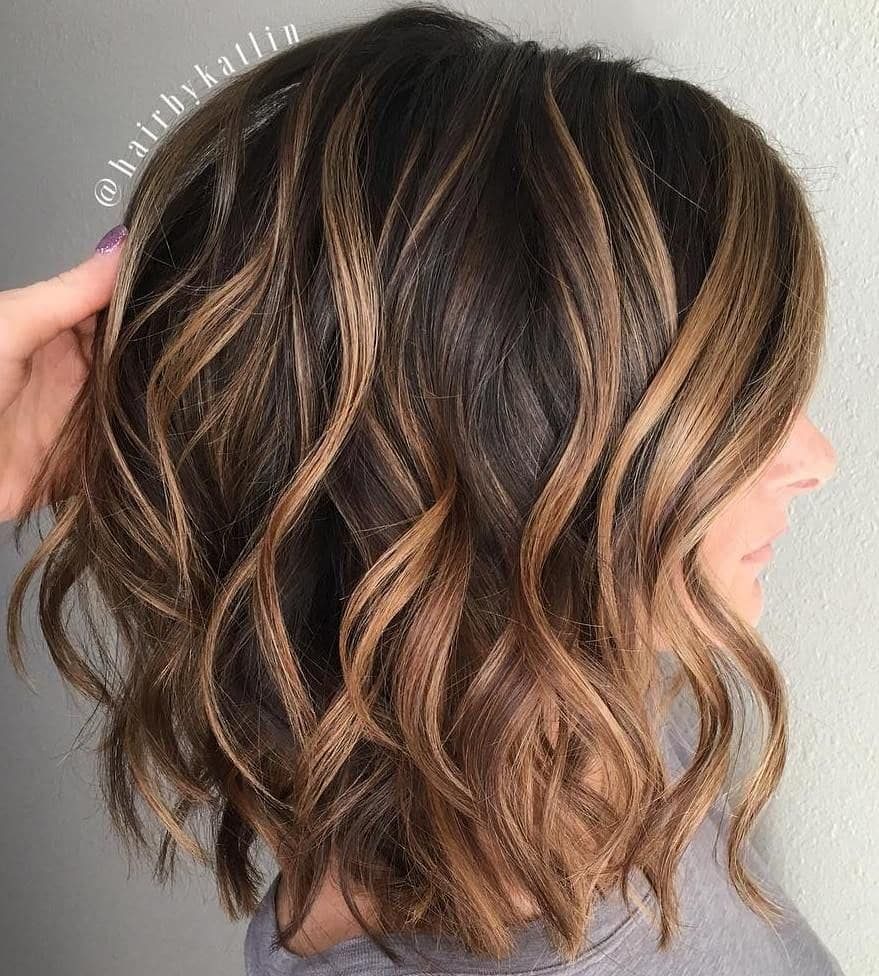
Shoulder-length wavy hair sits in the space between short and medium, long enough to pull back but still quick to dry and style.
The length gives your waves room to form fully without weighing them down the way longer hair can.
Most of the styling happens with product: a mousse or cream applied to damp hair, then air-dried or diffused.
If your waves need help, you can add a few curls with a 1-inch iron at the front and let the back do its own thing.
7. Curtain Bangs
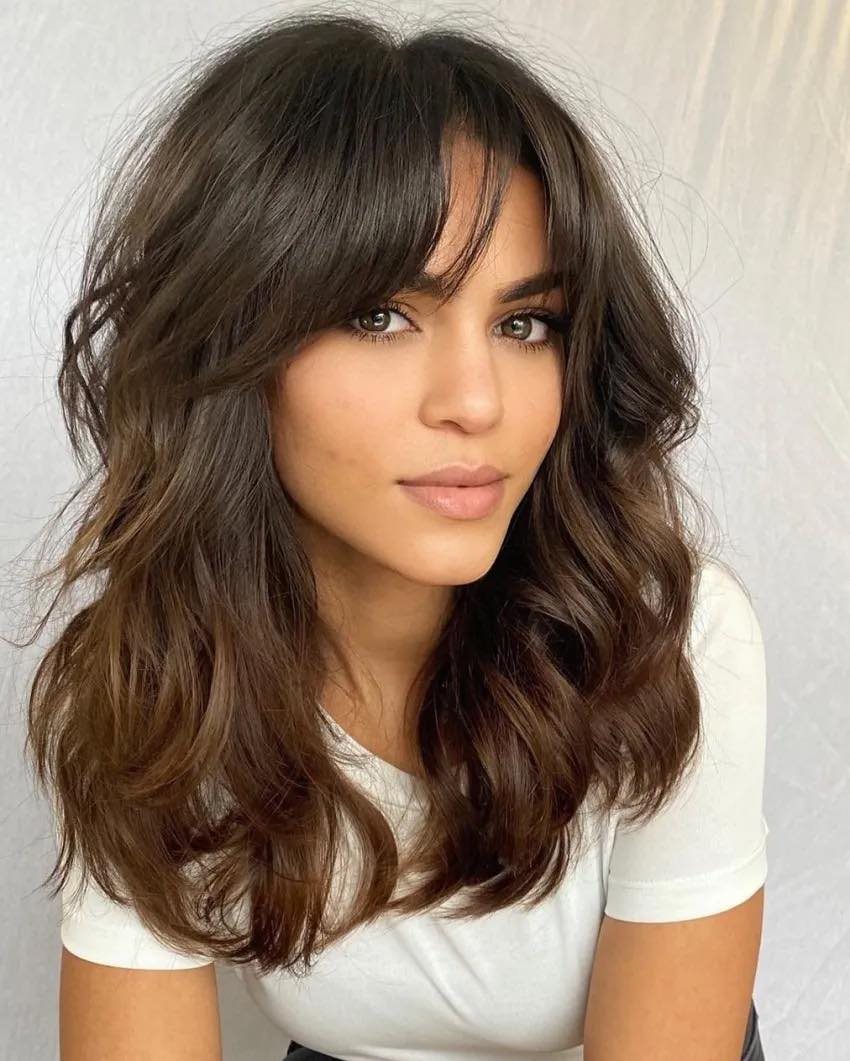
Parted down the center and falling to either side, curtain bangs open away from your face and blend into the rest of your wavy hair without a hard line.
The length usually lands somewhere between your cheekbone and chin, long enough to tuck behind your ears when you need them out of the way.
They work with most face shapes because the split softens your forehead and draws attention to your eyes.
If your hair is naturally wavy, the bangs will pick up that texture on their own. Straight hair needs a round brush or a quick curl at the ends to get the same bend.
8. Wavy Lob
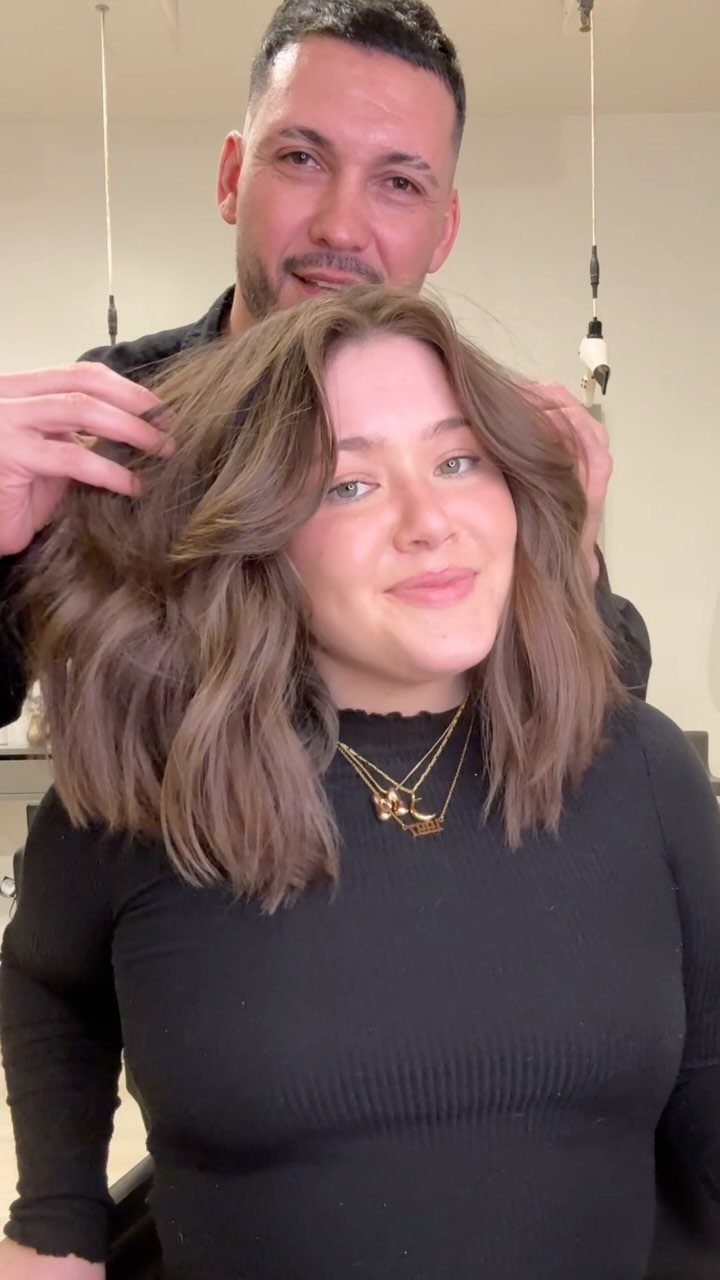
A lob is a longer bob, usually sitting between your collarbone and shoulders. The extra length gives your waves more room to develop, and it’s still short enough that you’re not spending much time on it.
Most women with a lob can get away with air-drying if their natural texture cooperates. If your waves fall flat, a little mousse or sea salt spray while the hair is damp helps hold the shape.
The length also means you can pull it back into a low ponytail or clip, which a chin-length bob won’t allow.
9. Layered Lob
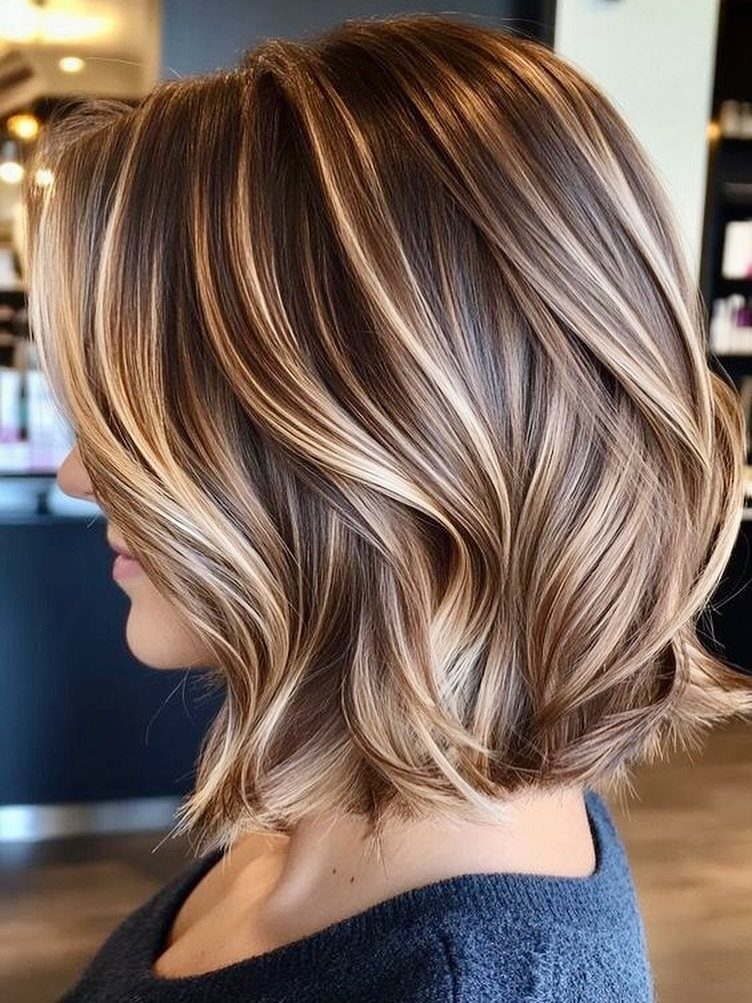
Layers inside a lob lift the weight off so waves stay loose instead of stacking flat. The shortest layer usually starts around your chin or collarbone, with the rest staggered down to the longest pieces at your shoulders.
Ask for the layers to be cut into damp or dry hair depending on how your stylist works, but make sure they see your natural wave pattern before they start.
Too many layers and the ends look thin, too few and the whole thing sits heavy. I stop when I can see space between waves but the perimeter still looks thick.
10. Curly Messy Bob

A bob cut to your jawline and styled with loose, undefined curls gives you a tousled look that reads as deliberate rather than unfinished. Let the curls fall where they land instead of forcing them into matching shapes.
Apply a curl cream or mousse to damp hair, scrunch it in, and either air-dry or diffuse.
Once it’s dry, break up any curls that clumped too much by running your fingers through them. The messier it looks, the better this cut works.
11. Wavy Pixie Bob
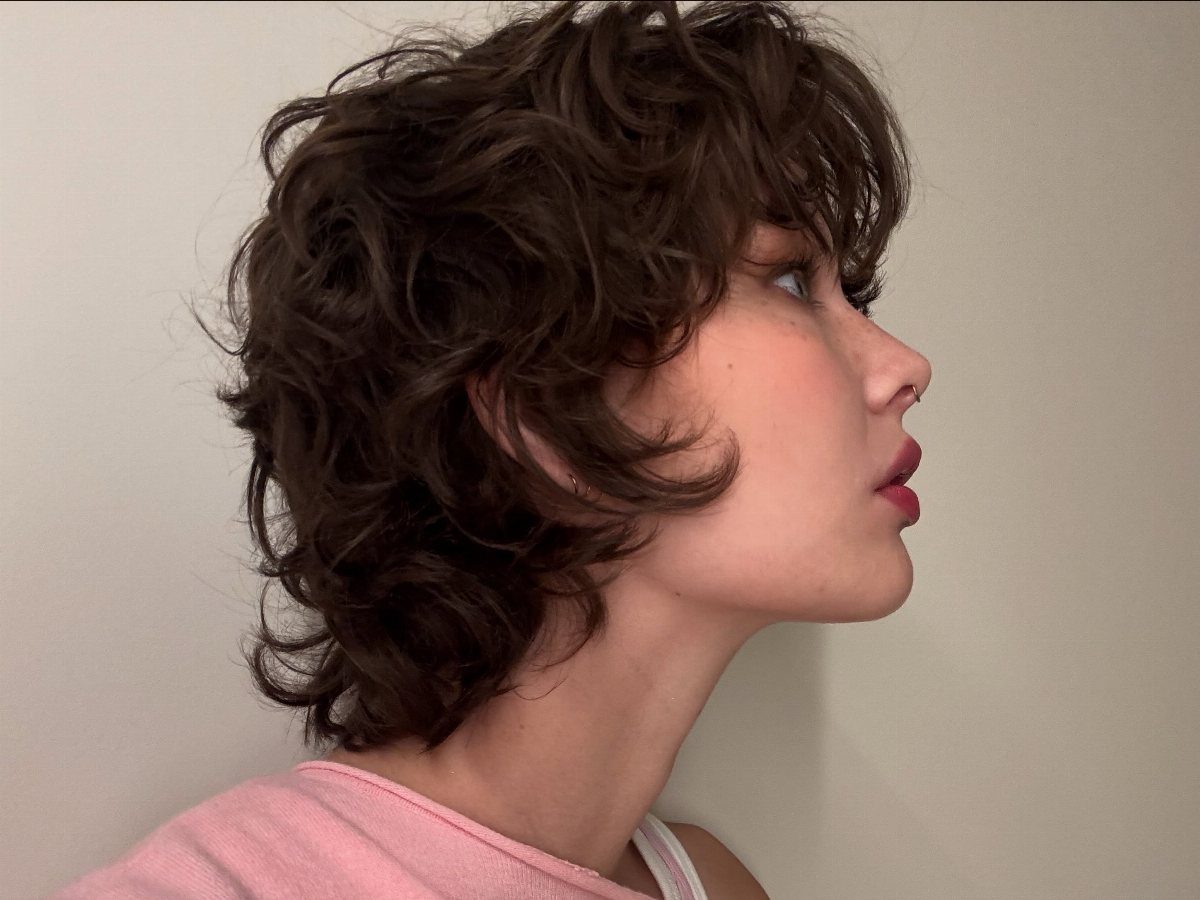
This cut sits somewhere between a pixie and a bob, short enough to expose your ears but long enough in front to reach your eyebrows or cheekbones. The wave softens what would otherwise be a very close crop.
You’ll style the longer pieces in front each day, either by scrunching in product or using a small curling iron if your hair doesn’t wave on its own.
The back and sides stay cropped short so you barely touch them in the morning.
12. Voluminous Waves
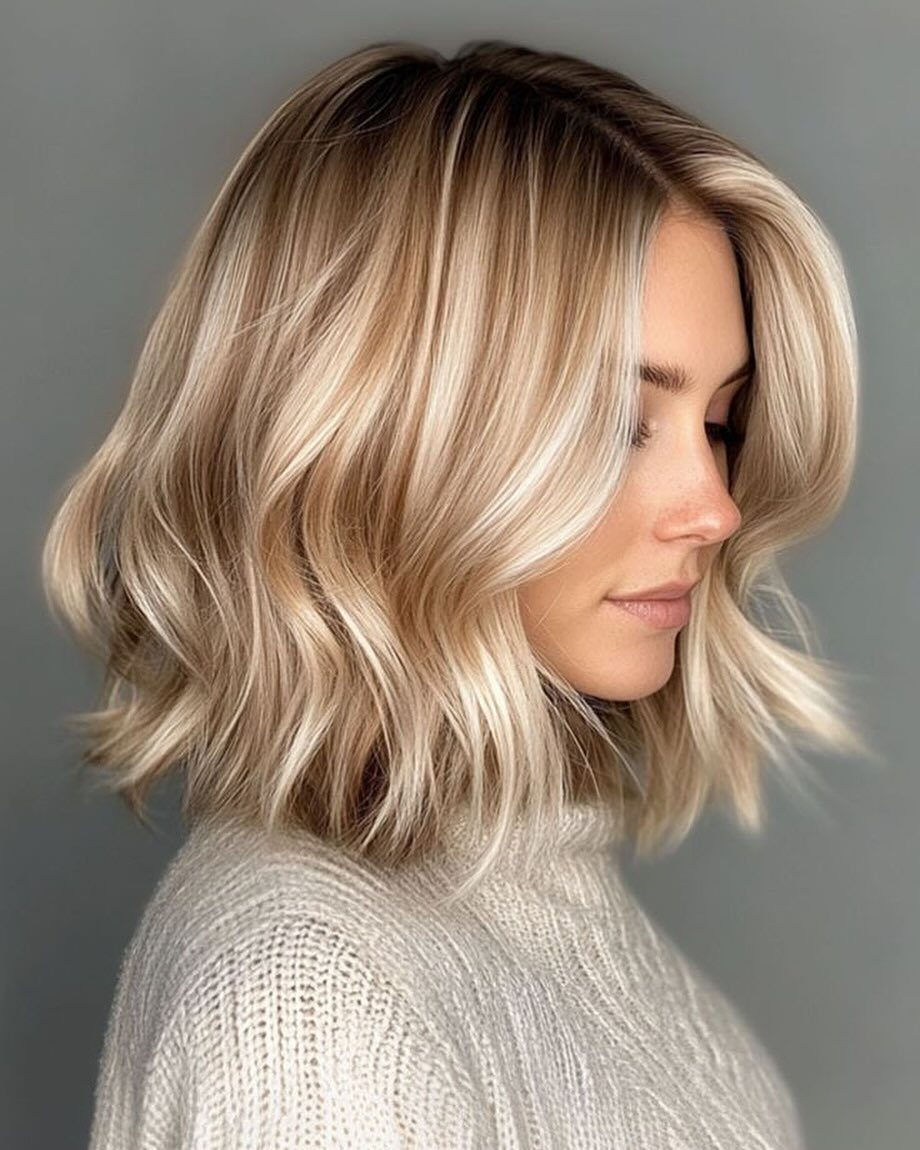
Big, full waves on a short bob require either naturally thick hair or a lot of styling effort.
The waves are loose and rounded rather than tight curls, and the volume comes from lifting at the root and adding body through the lengths.
If your hair is fine or flat, you’ll need a volumizing mousse, a round brush while blow-drying, and probably a curling iron to set the waves.
If your hair is already thick and wavy, a diffuser and some product may be enough. This one takes longer to style than most short cuts, but you can see where the time went.
13. Cropped Wavy Hair
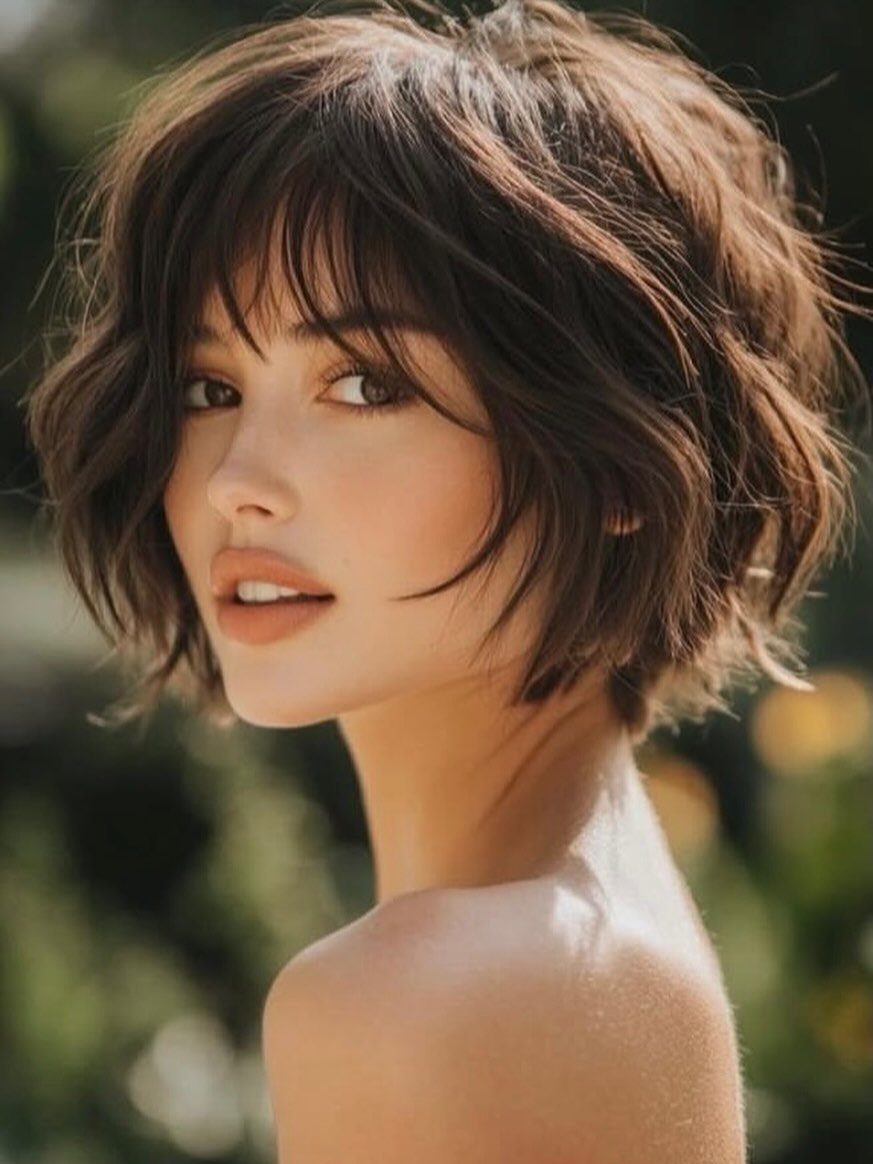
Short all over with enough length left to hold a soft wave, this cut stays close to your head without going fully pixie. The waves keep it from reading too severe.
If your hair waves naturally, a little mousse scrunched in while damp is usually enough.
Straighter hair will need a small-barrel curling iron on the longer sections to get any bend. The shorter the cut, the more often you’ll need trims to keep the shape clean.
Part straight, part curly, packed with natural volume and allover texture—with the wrong cut, short wavy hair can become a bit tough to deal with on the daily (not to mention grow out). Done right, though, and those loose ‘S’ curls will absolutely pop.
14. Wavy Bob

A bob cut somewhere around your chin with waves running through it gives you a straightforward, wearable short cut. The waves add movement without much effort if your hair already has texture.
If your natural wave is loose or inconsistent, you can smooth a curl cream through damp hair and let it air-dry, or add a few curls with a curling iron where you need more definition.
The blunt-ish shape keeps the ends looking thick even when the waves loosen up.
15. Side-Swept Bob
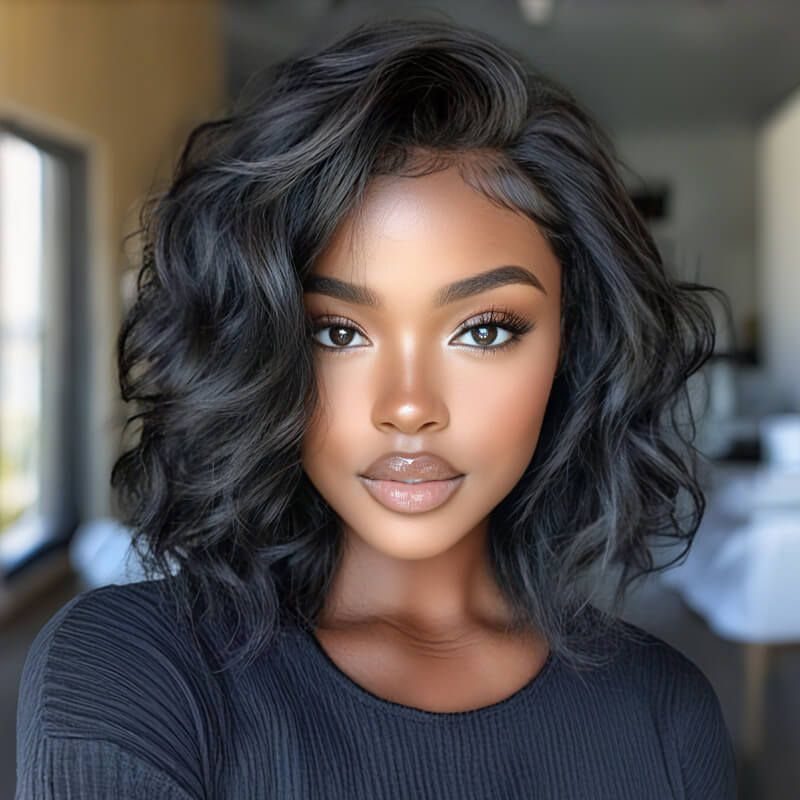
Part your bob deep to one side and push the longer portion across your forehead, and you get more volume on the heavier side while the other stays tucked behind your ear.
The waves follow the direction you set, so they curve across rather than falling straight down.
This works best on hair with some natural body, since flat hair won’t hold the side volume for long. A little texturizing spray at the root on the full side helps lift it away from your scalp.
16. Tousled Bob
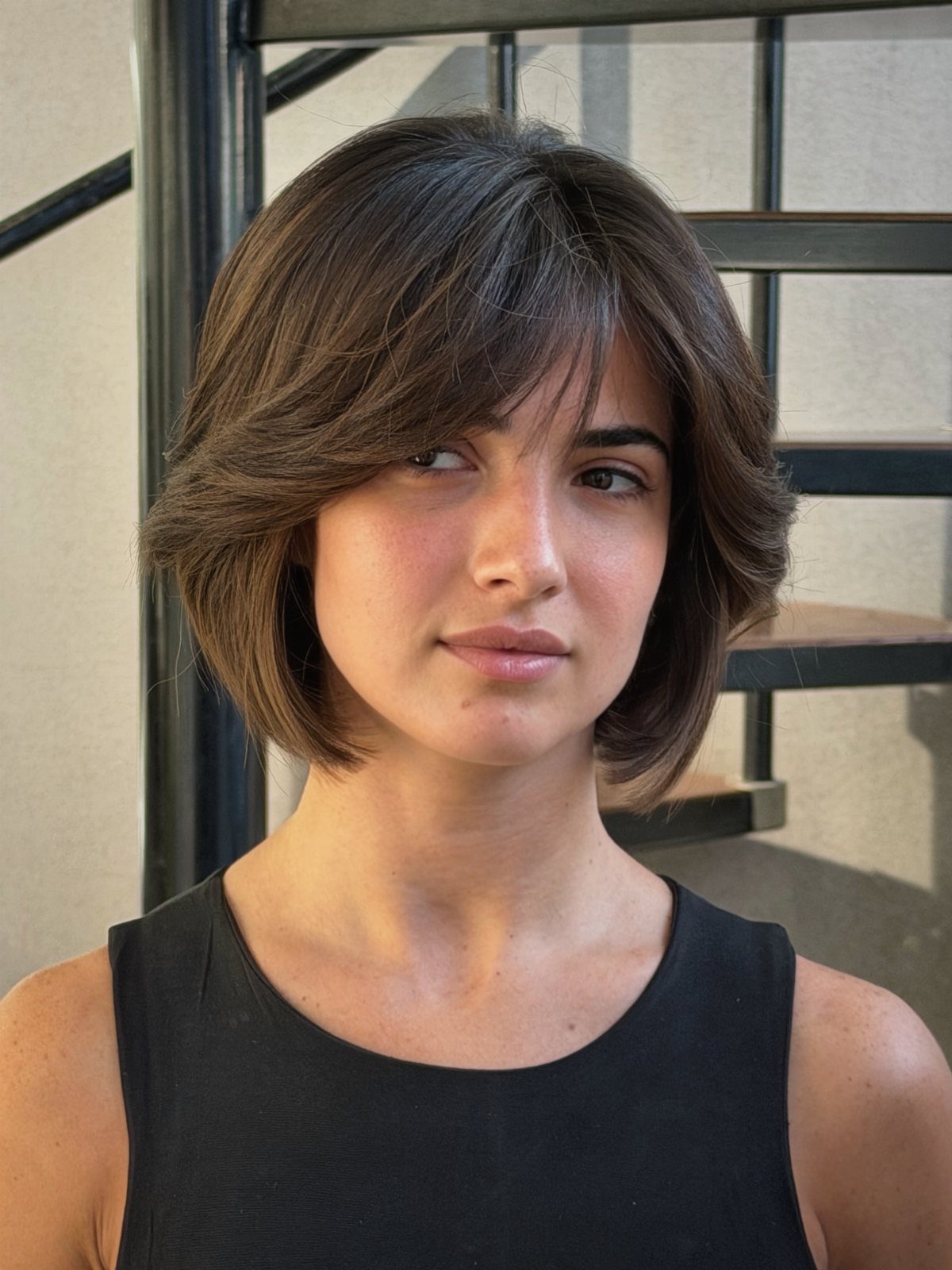
Loose, uneven waves styled to look like you didn’t spend much time on them give this bob a relaxed finish. The texture is intentional but not polished, and the waves don’t match each other in size or shape.
Scrunch sea salt spray or mousse into damp hair, then let it dry on its own or use a diffuser.
Once it’s dry, shake it out with your fingers to separate any clumps. The less uniform it looks, the better it reads.
17. Blunt Bob with Waves
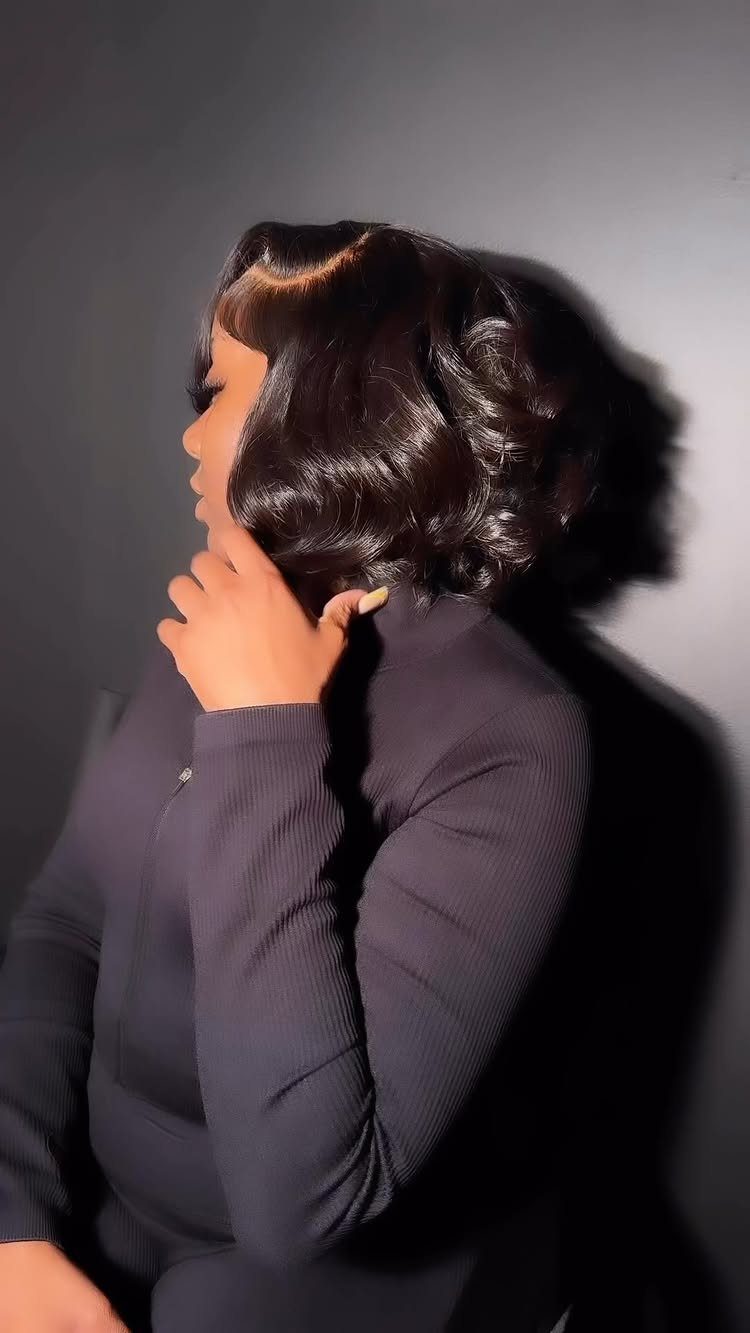
The perimeter of this bob is cut straight across, so all the hair ends at the same line, but the waves through the lengths soften what would otherwise be a very geometric cut.
The clean edge keeps it looking deliberate even when the waves are loose.
You need enough density for the blunt line to read as thick rather than stringy.
Fine hair can do this if it’s cut just above the shoulders where the hair is usually fuller. The waves can be natural or added with an iron, but the edge itself stays sharp only if you trim it regularly.
18. Wet-Look Bob
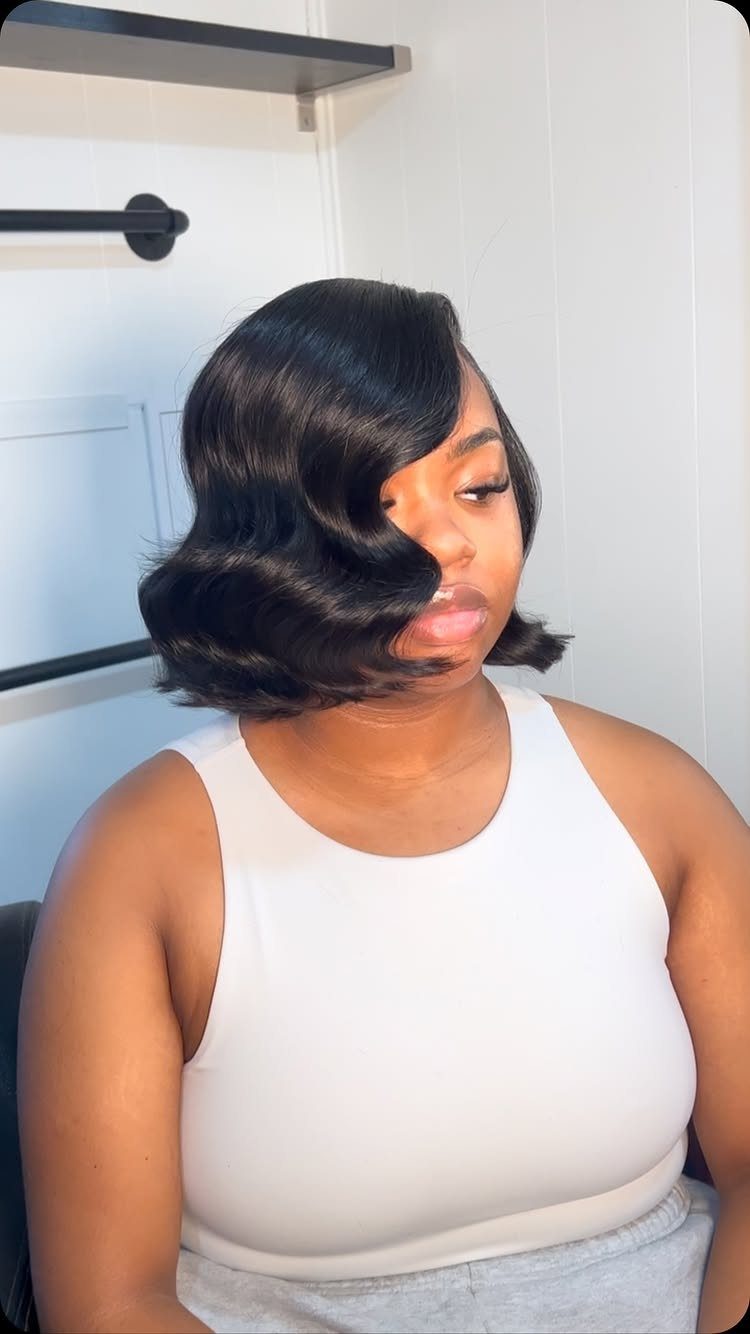
A gel or shine serum applied heavily to damp wavy hair and left to dry gives you smooth, glossy waves that look like they’re still wet.
The finish is slick and defined, with each wave shaped clearly instead of blending together.
Rake a strong-hold gel through your hair while it’s soaking wet, smooth it down with your hands or a brush, then let it air-dry or sit under a hooded dryer.
The gel sets the waves in place and adds the shine. Your hair will feel stiff until you scrunch out the crunchy cast, which leaves the waves soft but still shiny.
19. Wolf Cut
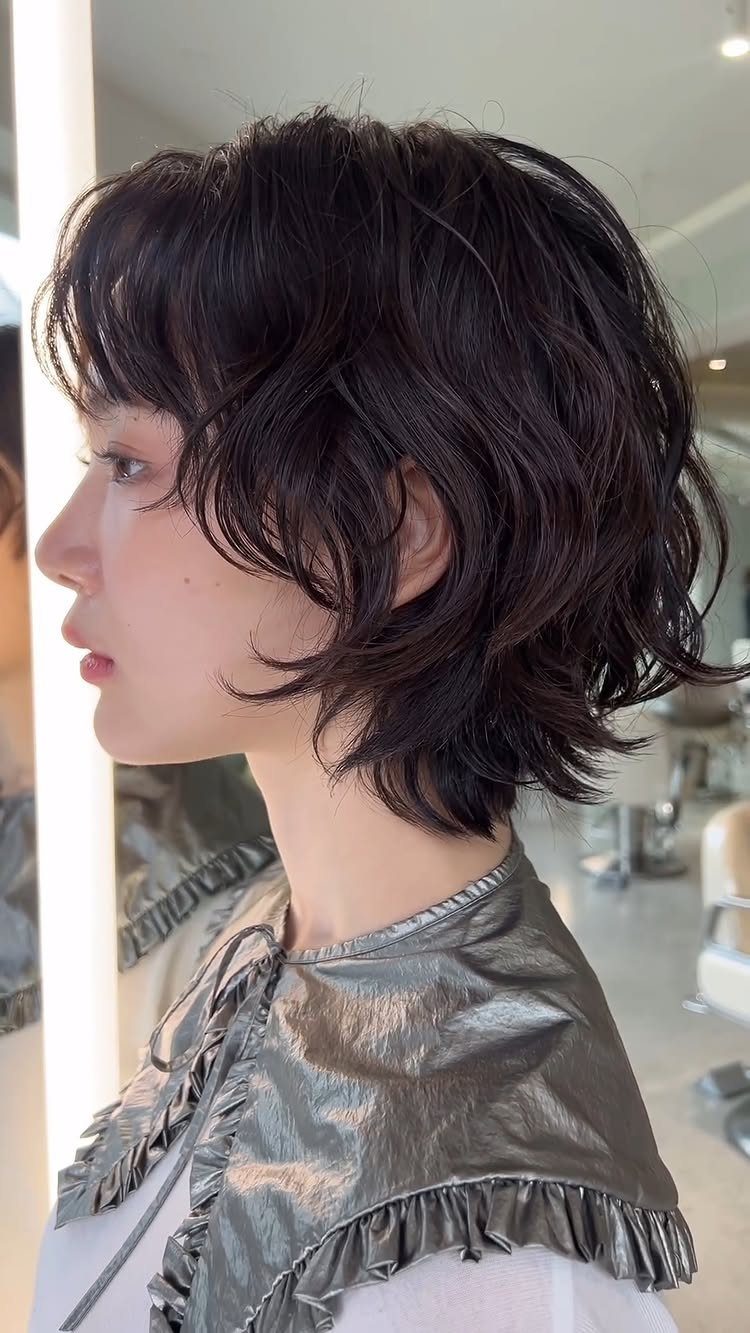
The crown is layered short to add height, while the back keeps longer lengths that taper down past your ears. The shorter top pieces frame your face and the longer sections in back give the cut its shaggy, uneven finish.
If your hair has natural wave, the texture will show up more at the crown where the layers are shortest.
Straight hair needs a texturizing spray and maybe a curling iron on the longer pieces to get the same disheveled look. You’ll trim the top more often than the back to keep the contrast between lengths visible.
20. Wavy Mullet
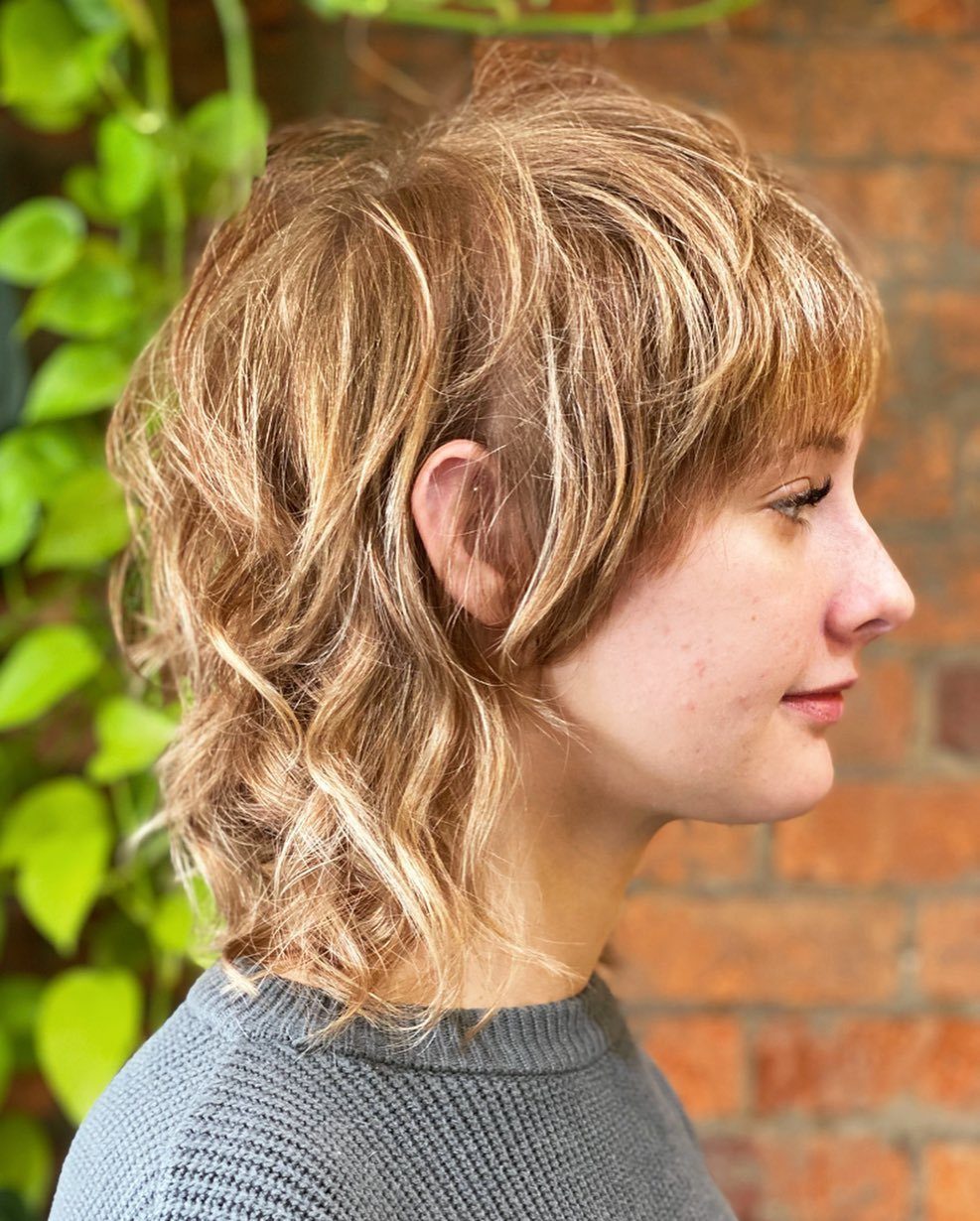
Short around the front and sides with longer pieces left at the nape, a mullet puts most of its length in back where your waves can form. The front stays cropped, often with bangs, so the contrast is immediate.
This cut depends on the wave showing up where the hair is longest. If your texture is loose or irregular, you’ll curl the back pieces with a small iron to get defined waves that separate from each other.
The short front means less daily styling there, but the back takes product and maybe heat to keep it from looking flat.
Tell Stylists Your Texture
The layering changes. A bob that looks right on straight hair can sit wrong on wavy hair if the layers don’t account for how the texture lifts and spreads.
If the stylist cuts an a-line bob with a blunt edge, ask for a bit of texture through the front to keep the wave from puffing out.
That gives you the shape of the bob but lets the texture do what it does without stacking flat or puffing out in the wrong places.
For a pixie, ask your stylist to texturize the ends so they taper into soft points instead of blunt tips. That keeps the short pieces from looking too heavy when your wave bends them.
If you don’t tell them you wear it wavy, they’ll cut it for straight hair and you’ll fight the shape every time you style it.
Short Hair Tradeoffs
Short hair takes less product and dries faster, but you’ll be back in the salon more often than you would with long hair. Most pixies need a cut every month or so, otherwise the shape falls apart.
Bobs go 6 to 8 weeks. Shags and short lobs can stretch to 8 to 10 weeks, sometimes longer depending on how fast your hair grows and how much the shape matters to you.
After a few weeks, the wave shifts and won’t fall the same way it did fresh from the salon. You’ll notice it first around your face and at the crown where the shortest layers are.
On day two or three, spray your hair until it’s damp, work in a little mousse or gel, and let it air dry.
The curl comes back and you skip the full wash routine. If the ends feel dry or rough, conditioner keeps them soft so the cut looks intentional instead of messy.
Frequently Asked Questions
What is the best haircut for short wavy hair?
The answer depends on your hair density and how much time you’ll spend styling.
Fine wavy hair holds its shape better with a blunt bob or pixie that keeps the ends thick, while thick wavy hair needs layers through a shag or textured pixie to lift the weight off.
Your wave pattern and face shape narrow it further: loose waves sit well in bobs and lobs, stronger waves work in shags and layered crops.
How can I make my short wavy hair look more defined?
Work a curl cream or mousse into damp hair, scrunch it upward with your hands, then air-dry or diffuse on low heat.
Once it starts to dry, leave the brush alone or you’ll pull the wave apart and invite frizz. A side part can also lift the roots and make the waves look fuller.
What is the easiest way to style short wavy hair daily?
Scrunch mousse or sea salt spray into damp hair and let it air-dry, or spray day-two hair until it’s damp, work in a little product, and let it dry again.
You get the wave back without starting over. Most short wavy cuts need almost no styling if the cut accounts for your texture.
How do I reduce frizz in short wavy hair?
Apply curl cream or mousse to damp hair, scrunch it in, and don’t brush once it starts drying.
Pat out extra water with a microfiber towel or an old T-shirt instead of terry cloth, which roughens the cuticle. Let it air-dry or diffuse on low, then smooth a drop of serum through the ends if they look dry.
Can short wavy hair look professional for work?
Yes, a blunt bob with waves, a side-swept bob, or a lob pulled back into a low ponytail reads as polished while keeping your natural texture.
The cut matters more than the wave: a clean shape with defined edges looks deliberate, and waves soften the line without making it casual.
How often should I style short wavy hair with heat tools?
Most short wavy cuts need heat only a few times a week, if at all. If your natural wave cooperates, mousse and air-drying give you enough shape without an iron.
Save the curling iron for the front pieces or for days when your wave falls flat, and use a heat protectant to keep the ends from drying out.