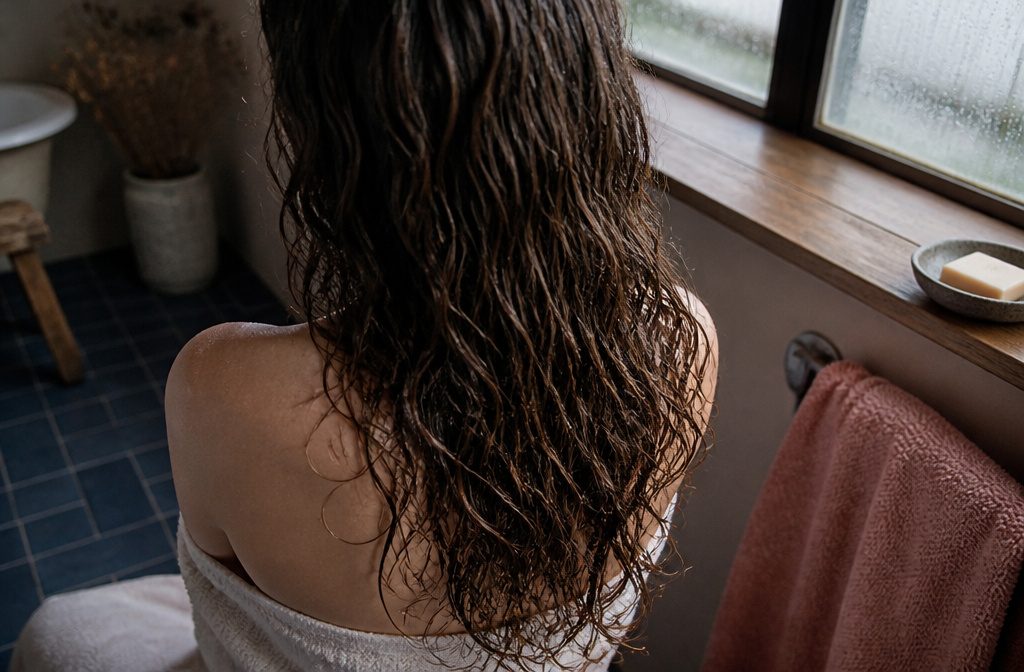
Defined, soft waves that hold through the day take about one shower’s worth of effort and a few $7-to-$60 products, with the part people botch being the drying.
Hair that is soaking dilutes gel and cream, so start damp, not dripping, and then leave the waves alone: every touch while wet breaks up the clumps you just set.
1. Prep and Detangle
Hair that is soaking dilutes gel and cream, so the product won’t hold the way it should.
After the shower, apply leave-in and let hair air-dry until it is damp, not dripping. Vogue sets the floor for freshly washed hair:
"You’ll want strands to be freshly washed and deeply conditioned, so get hair to be at least damp."
— Vogue
If strands dry out mid-style, a spray bottle of water brings them back.
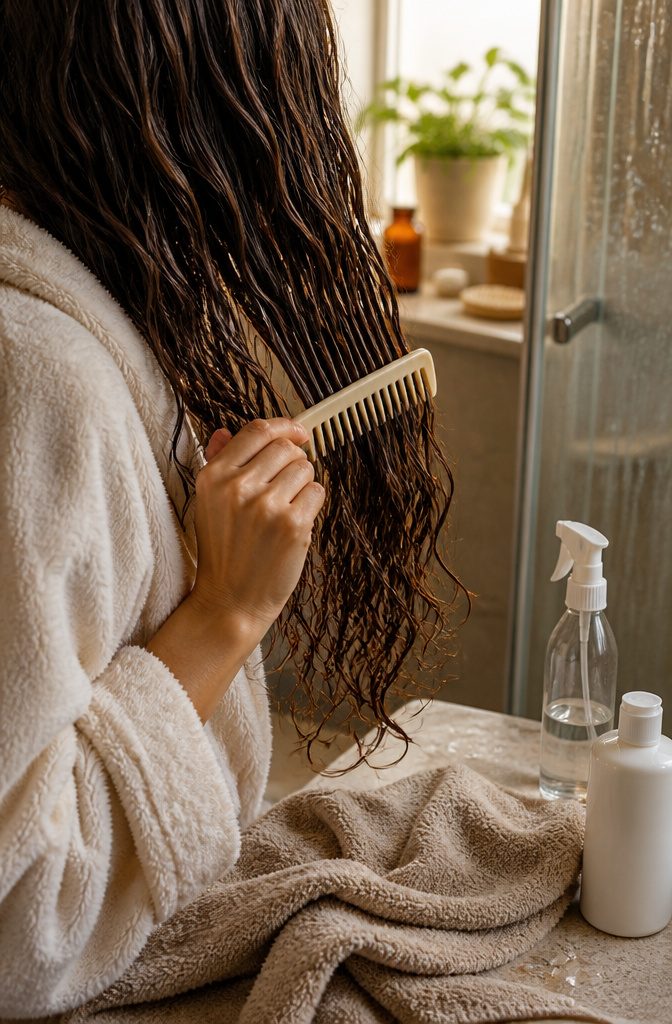
Detangle next, before any product goes on.
A wide-tooth comb is the tool wave-wig instructions call for, and it works just as well on natural hair. How wet you start also sets up the wet-versus-damp choice covered later.
2. Pick Your Products
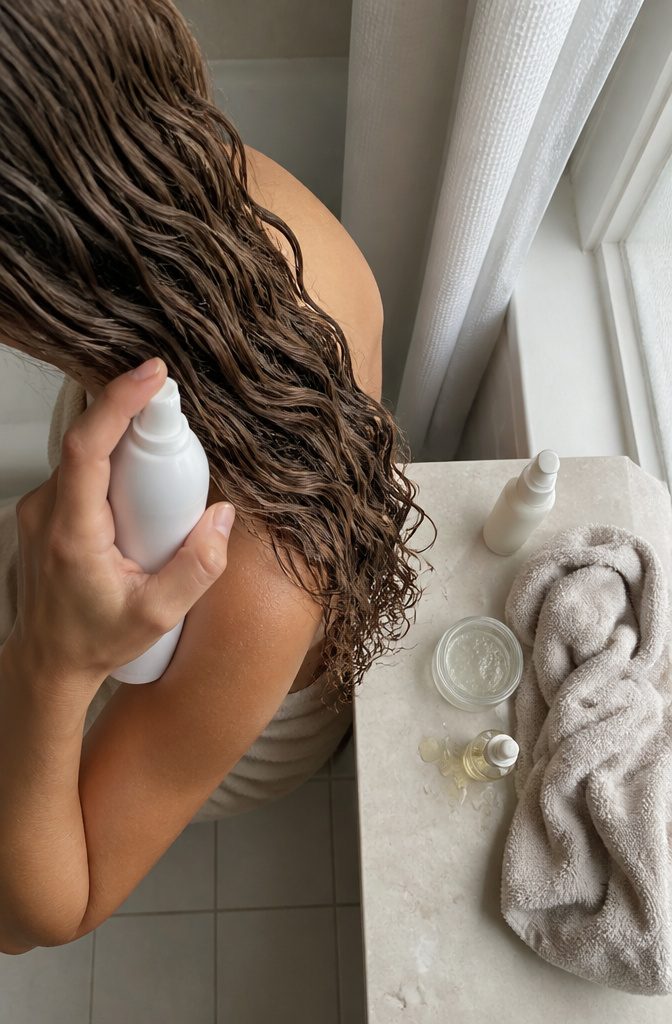
Four layering routes work on wet wavy hair, and they stack more than they compete:
- Curl cream: Verb Curl Cream locks in moisture and gives decent hold, with less of a slick look than gel.
- Leave-in plus gel: firmer hold. Only Curls pairs its Hydrating Curl Creme with its Enhancing Curl Gel.
- Mousse before gel: adds hold to waves without stiffness.
- Water and leave-in mix: use more water than conditioner to limit buildup.
- Price range: TRESemmé Extra Hold Gel is $7. Charlotte Mensah Manketti Oil Pomade is $60, and stirring a little into gel keeps it from going crunchy.
For waves, I’d go with leave-in, then mousse, then a thin layer of gel. Gel gives hold, cream gives softness, and too much gel at the ends turns them stiff.
3. Define the Waves
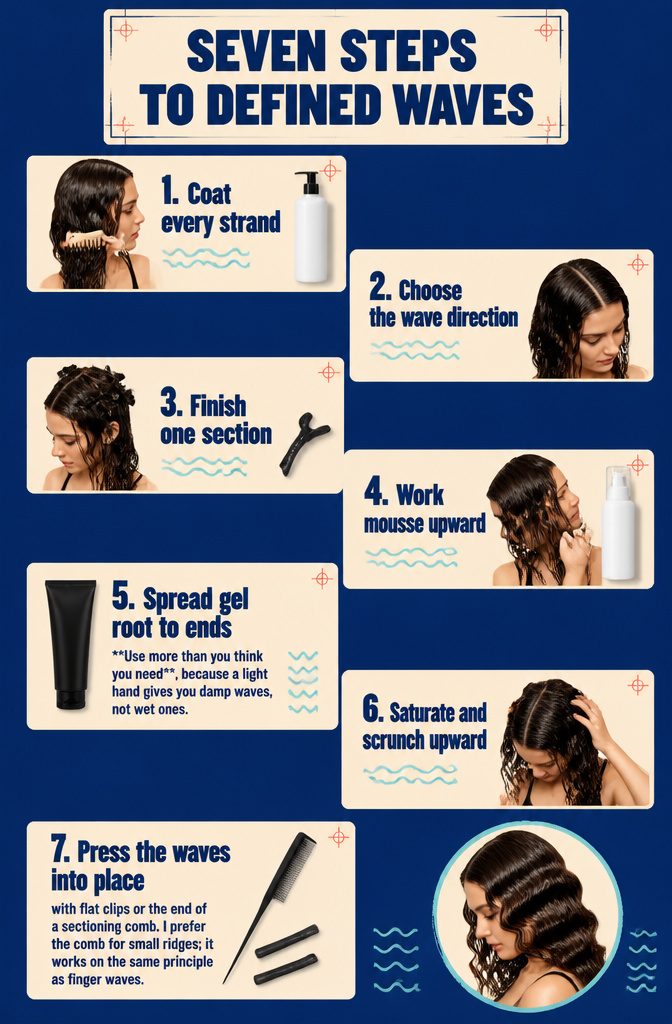
- Comb or brush the product through so it coats every strand evenly.
- Choose your direction: a part, or all the hair pushed forward or back. That choice sets how every wave falls.
- Divide the hair into sections and finish one before starting the next.
- Work mousse in from the ends toward the roots.
- Spread gel from root to ends. Use more than you think you need, because a light hand gives you damp waves, not wet ones.
- Saturate the section, then scrunch upward.
- Press the waves into place with flat clips or the end of a sectioning comb. I prefer the comb for small ridges; it works on the same principle as finger waves.
4. Let It Dry in Place
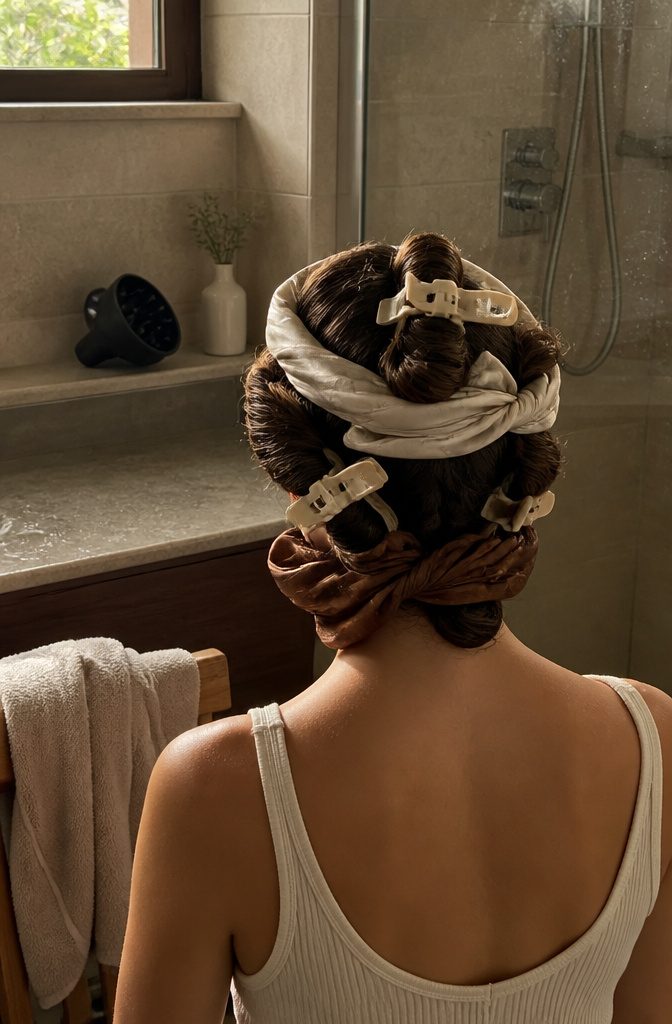
Air drying with as little disturbance as possible is the method to start with, because every touch while the hair is wet can break up the waves. Longer hair can be held in place with a hair band.
A gentler setup uses flat clips plus two silk scarves, one across the front and one at the back. Drying time swings with thickness and length, so judge by feel instead of the clock.
If you want a faster finish, use a diffuser, and keep it on low power and low heat. Reddit posters who use one say that setting makes a big difference.
For a slick, wet-look finish, brush the hair back and set it with hairspray. I’d pick that route only when sleek matters more than bounce.
5. Finish and Refresh
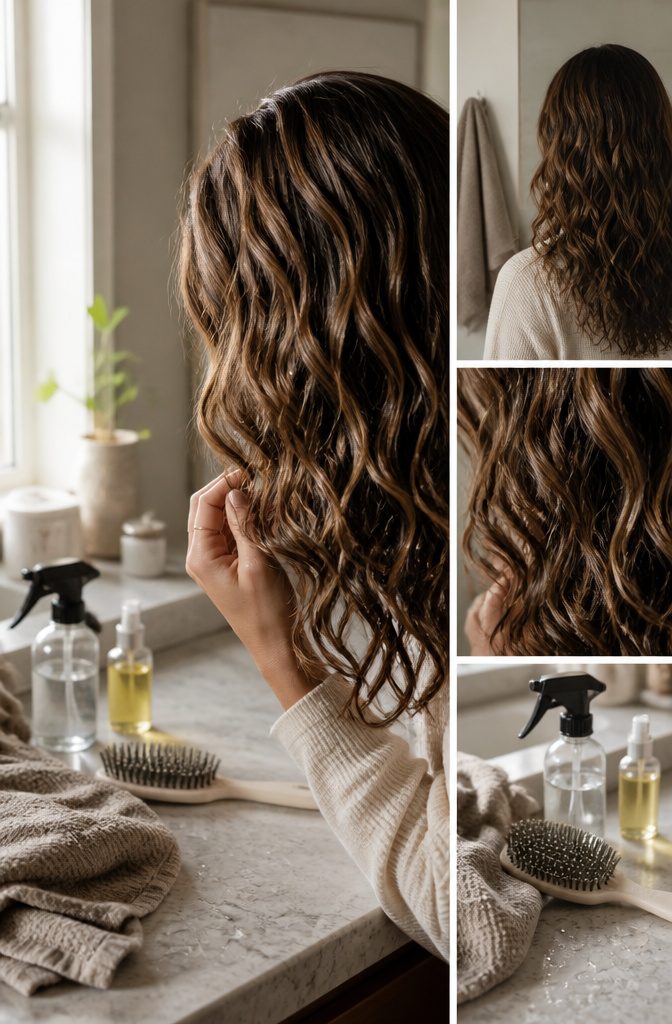
Once the hair is fully dry, break up the gel cast with your fingers, a gentle scrunch or a soft brush.
Brushing along the direction you set the hair adds controlled volume, but overworking it turns waves into frizz fast, so stop early.
Smooth a small dollop of anti-frizz cream over the top to calm flyaways. I like L’Oréal Paris Elnett Satin Extra Strong Hold Hairspray, Unscented, as the last step for its shine and hold.
By midday, mist with water mixed with leave-in conditioner.
If the waves slump, work a little gel into mousse for extra hold. A few drops of lightweight oil keep the shine without a greasy look, and keeping your hands out of your hair protects the definition.
6. Habits That Flatten Definition
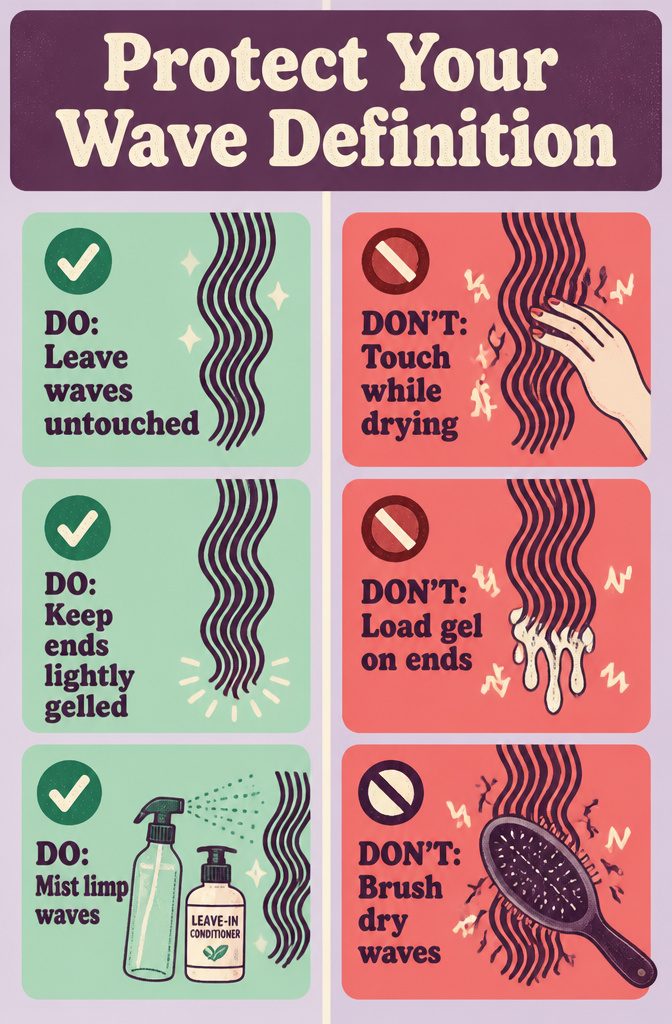
Three habits do the most damage to a set wave:
- Touching it while it dries. Every pass of your fingers roughs up the surface and breaks apart the clumps you just defined. Frizz follows.
- Loading gel onto the ends. Generous gel at the roots and mid-lengths adds shine and hold, but heavy product at the ends leaves them stiff. I’d rather see ends slightly under-gelled than crunchy.
- Brushing or scrunching hard after it dries. Rough handling pulls the clumps apart. If a wave goes limp, mist it with water and leave-in conditioner and let it settle instead.
Wet Versus Damp Styling
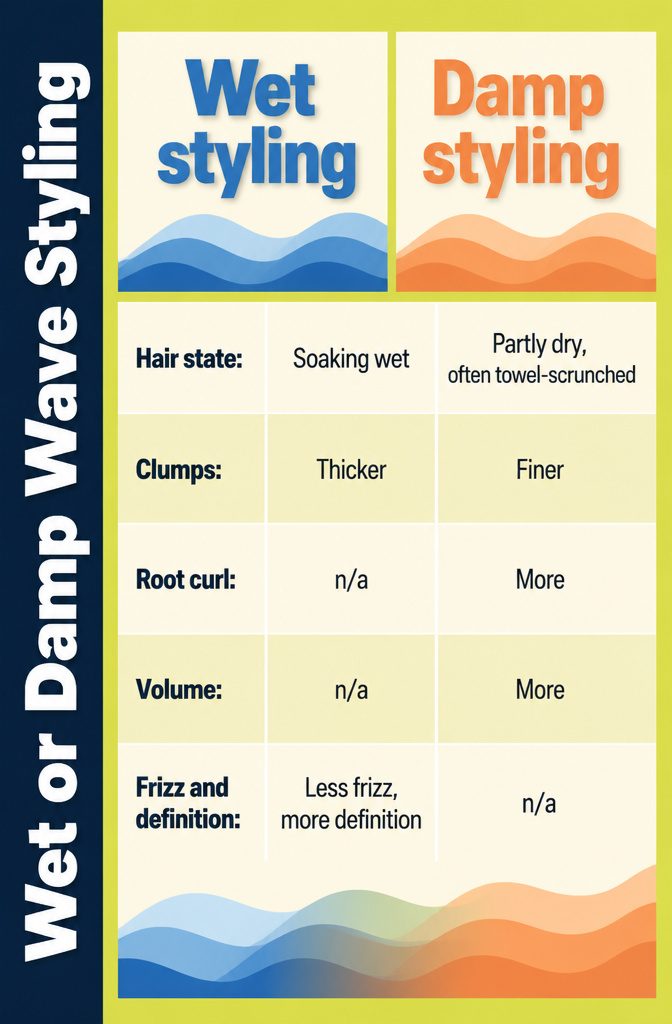
Wet styling can stretch out curls in more wavy textures, and that one difference decides most of the choice.
Go wet for thicker clumps and a smoother finish. Go damp for lift at the roots.
| Wet styling | Damp styling | |
|---|---|---|
| Hair state | Soaking wet | Partly dry, often scrunched with a microfiber towel |
| Clumps | Thicker | Finer |
| Root curl | n/a | More |
| Volume | n/a | More |
| Frizz and definition | Less frizz, more definition | n/a |
If you want both definition and root lift, I’d combine the two approaches.
For the wet route, keep your creme and gel in the shower and apply them right after rinsing out the conditioner. At the mirror, use a misting bottle to rewet as you go.
Wet Wavy Wigs and Bundles
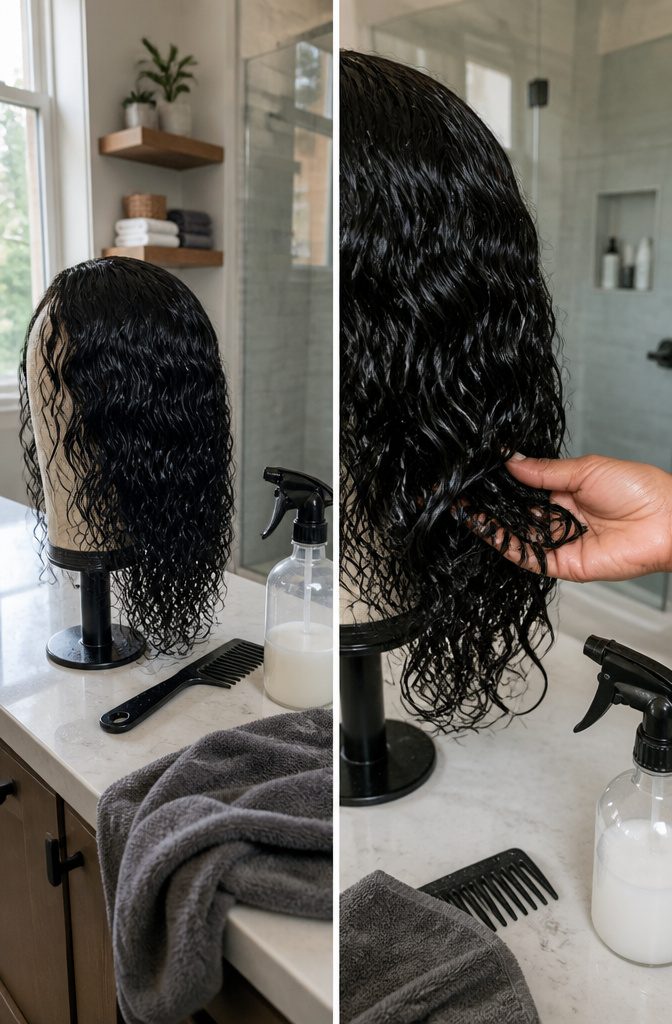
Wigs and bundles take the same routine as natural hair.
Detangle first, split the hair into sections, saturate each one with a water and leave-in mix, then scrunch upward. Let it air-dry, or diffuse on low if you’re short on time.
Never put a flat iron to a wet wig. Heat and moisture together can damage the hair and cause breakage, so blow-dry the wig completely before any flat ironing.
Color can fool you on a water wave wig.
Wet strands look deeper and darker than dry ones, but the shade hasn’t changed; it’s light reflecting off the wet surface. Judge the color once it’s dry, I’d say, before deciding it’s wrong.
Frequently Asked Questions
What is wet styling?
Wet styling means applying your products to soaking wet hair, right after rinsing out conditioner.
Keep your styling products in the shower and apply them immediately, or use a misting bottle at the mirror to rewet sections as you work. This method creates thicker clumps and less frizz than working with damp hair.
What is damp styling?
Damp styling applies products after your hair has partially dried, usually after scrunching with a microfiber towel.
It gives you more volume and lift at the roots than wet styling, with finer curl clumps. If your texture is more wavy than curly, damp styling prevents the weight of water from stretching out your waves.
Can you flat iron a wet and wavy wig?
No, never use a flat iron on a wet or damp wig.
Heat and moisture together damage the hair and cause breakage. Blow-dry the wig completely first, then flat iron it if you want a straighter look.
What products do you need for the wet hair look?
You need a moisturizing leave-in conditioner and a strong-hold gel, chosen for your hair type and texture.
For wavy hair, layer leave-in, then mousse, then gel for hold without stiffness. Finish with a few drops of lightweight oil for shine.
How do you do wet look wavy hair?
Start with damp hair, apply gel generously from root to ends, then scrunch upward and press the waves into place with flat clips or a sectioning comb.
Let it air-dry without touching it, break up the gel cast once dry, and finish with hairspray. Use more gel than you think you need for a true wet look.
Can you get wet and wavy hair wet?
Yes, wet and wavy hair is designed to activate when it gets wet.
Detangle the hair, spray it with a mix of water and leave-in conditioner, saturate each section, and scrunch upward to bring out the waves. Air-dry or diffuse on low heat to set the pattern.