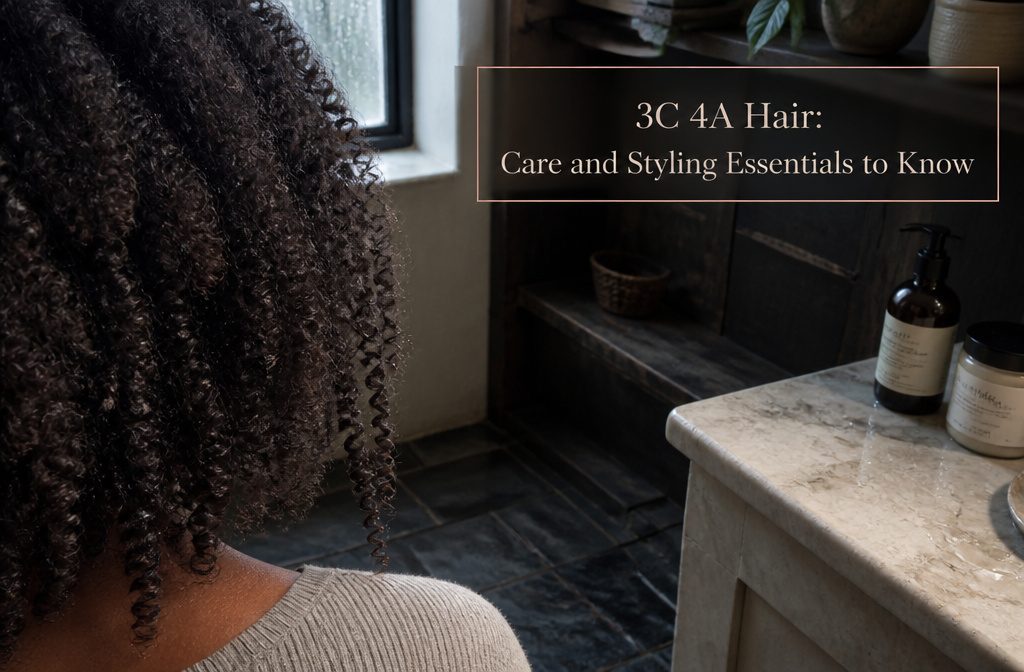
3C hair wraps into tight corkscrews about the width of a pencil, while 4A coils tighter still, closer to crochet-needle width.
The difference matters because 4A loses moisture faster and tangles more readily, which shifts what you need in a routine. Shrinkage alone can hit 75 percent with 4A when the hair dries, pulling shoulder-length wet coils up past your ears.
How the Hair-Typing System Works
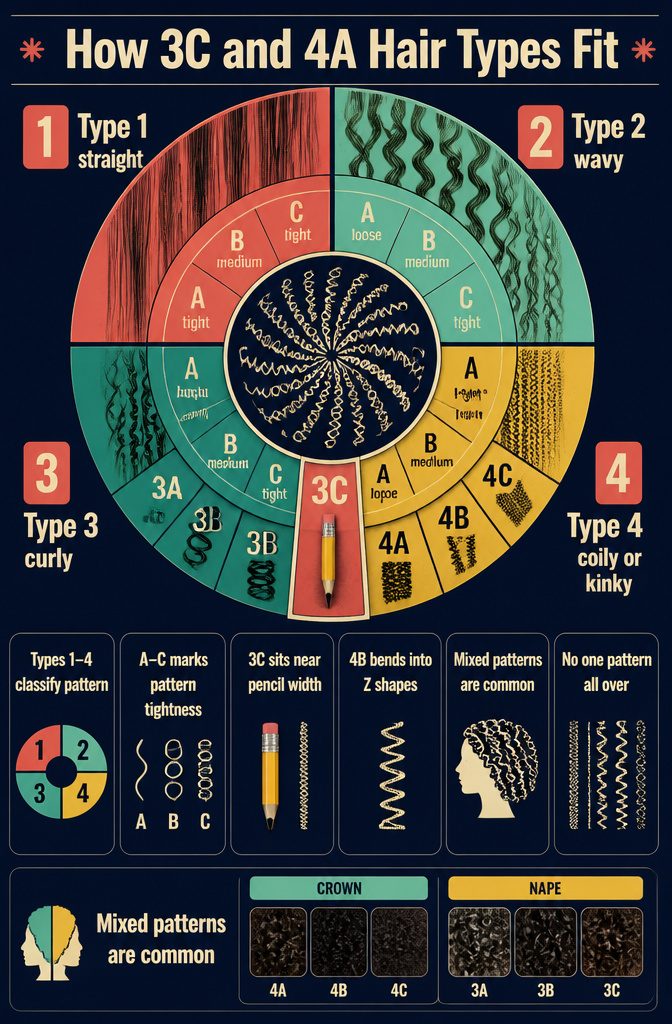
Hair gets sorted into Types 1 through 4, with letters A, B, and C added to describe how tight or loose the pattern sits.
Type 1 is straight. Type 2 is wavy.
Type 3 is curly, the kind that forms springy spirals. Type 4 is coily or kinky, where the strand zigs and zags or coils tightly enough that individual curls read more as texture than as separate ringlets.
The letter matters because 3A curls loop wide and loose, while 3B tightens into corkscrews. Type 3C was added later to fill the gap between 3B and 4A, landing somewhere around pencil circumference.
On the Type 4 side, 4A forms dense coils, 4B bends into Z shapes, and 4C packs the tightest, finest texture of the group.
Most people do not have one pattern all over.
The crown may read 4A while the nape sits closer to 3C, or one section does its own thing entirely. Go by whatever pattern covers most of your head and expect some stands to break ranks.
1. What 3C Hair Looks and Behaves Like
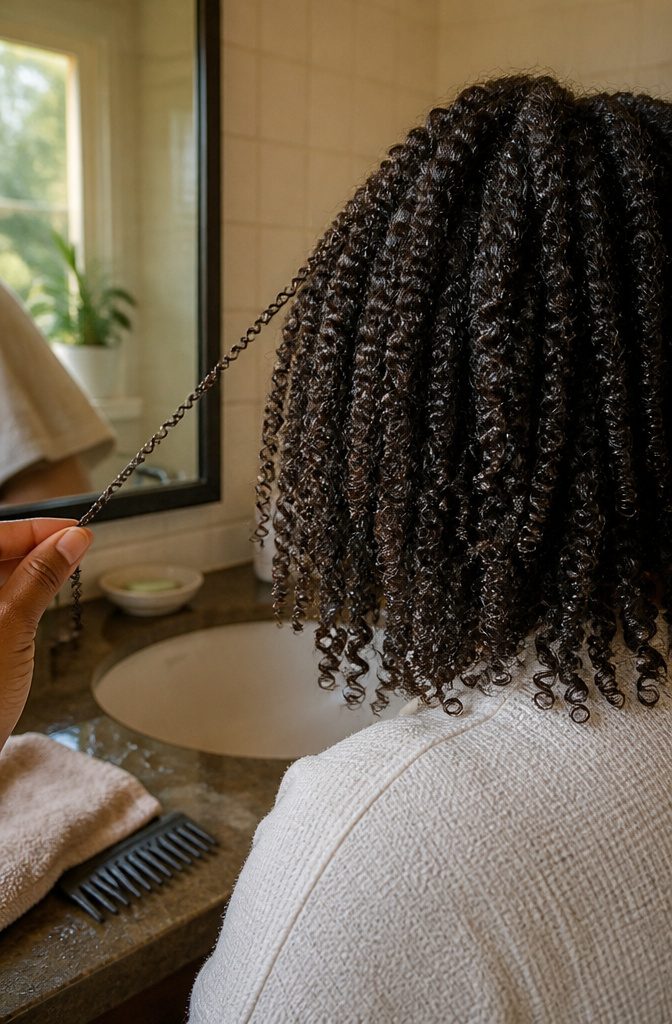
3C hair forms tight, corkscrew curls about the size of a pencil or straw, densely packed and full of volume.
The curls follow a clear S-shape when you pull one down, snapping back into a defined spiral the moment you let go. Shrinkage sits around 50%, which means what reaches your shoulders when wet can spring up to chin length dry.
The texture runs from fine to coarse, but most 3C hair feels soft to the touch despite its thickness.
Dryness and frizz are the usual struggles when moisture drops off, and tangles form quickly if you wait too long between detangling sessions. Breakage becomes a risk when the hair gets too dry or handled roughly.
The best way to confirm curl type is to check while your hair is soaking wet, since product, humidity and time since wash day all shift how the pattern looks.
2. What 4A Hair Looks and Behaves Like
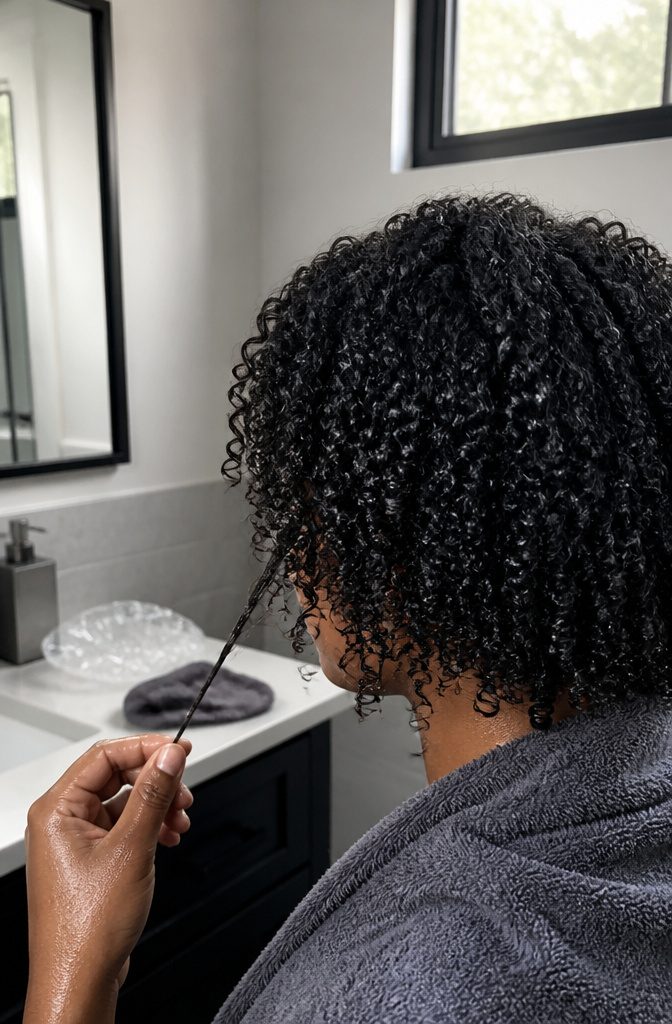
4A hair coils tightly in dense, well-defined S-shaped spirals that range from toothpick width to crochet-needle width. When you stretch a strand, the S shows clearly, but the coils spring back tight and sit close together.
The texture can be fine and delicate or wiry, and the density makes it look thick even when individual strands are fragile.
Shrinkage can reach up to 75 percent when the hair dries, which means what looks chin-length wet may sit above the ears once dry.
That shrinkage comes with fragility: 4A hair breaks and tangles easily if you pull too hard or skip moisture. The coil structure keeps sebum from traveling down the strand, so dryness shows up fast.
Gentle handling matters more here than with looser patterns, and products that seal in water rather than just coat the surface make the difference between defined coils and a matted mess by afternoon.
3. How to Tell Whether Hair Is 3C or 4A
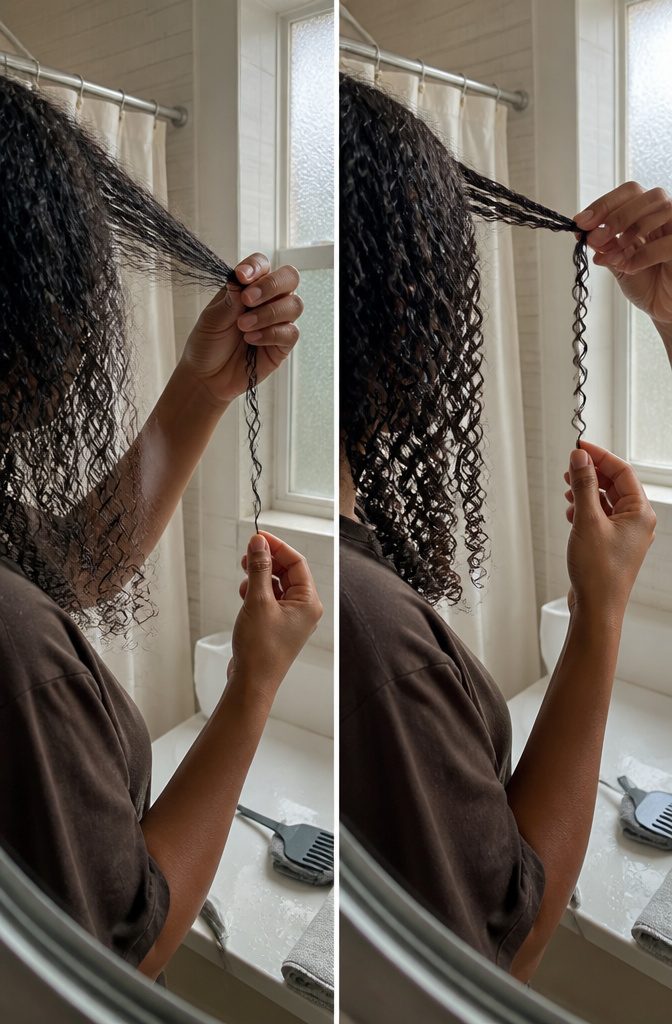
Pull a single strand when your hair is soaking wet.
That timing matters because wet hair shows the true pattern without shrinkage or product getting in the way. Look at the curl diameter first.
If the coil wraps around something the width of a pencil or straw, you’re likely looking at 3C. If it’s tighter and sits closer to the circumference of a crochet needle, that points toward 4A.
Next, stretch the strand gently. 3C holds an S or Z shape even when pulled, and the curl definition stays visible.
4A does the same but with a much tighter springback. If the pattern disappears completely when stretched, you’re probably working with a looser type.
One head usually carries more than one pattern, so focus on what shows up most.
The crown might be 4A while the sides lean 3C, and that’s normal. Use whichever pattern dominates to guide product and styling choices.
4. How 3C and 4A Differ
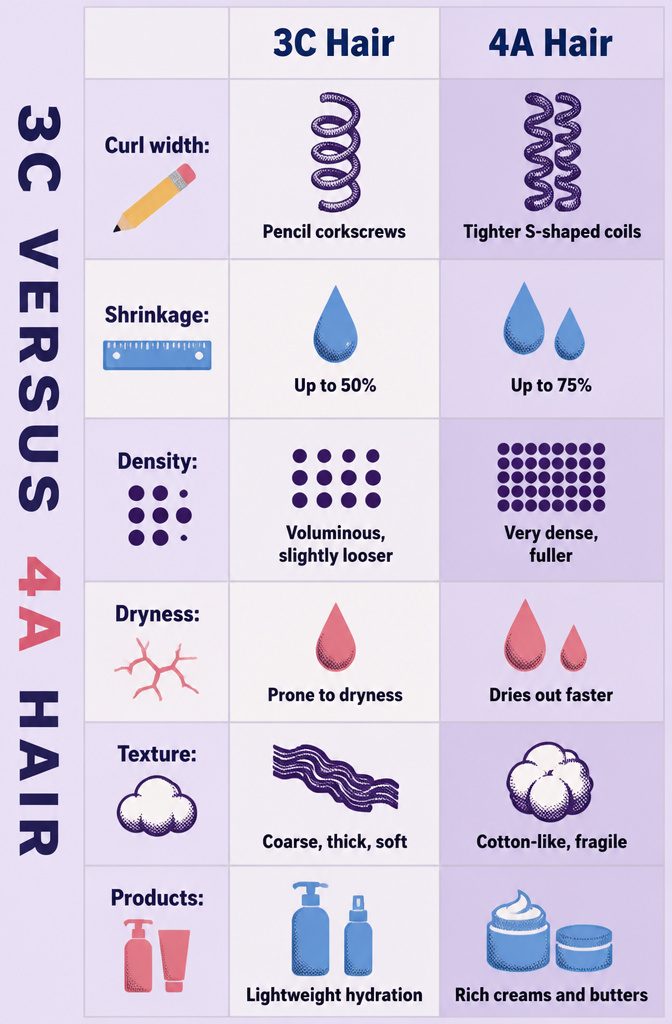
The curl pattern is the divider. 3C hair forms corkscrew curls about the width of a pencil, while 4A coils are tighter with a clear S-shape and more spring when you stretch them.
That shift brings changes in how the hair holds moisture, how much it shrinks, and what it needs to stay soft.
| Feature | 3C Hair | 4A Hair |
|---|---|---|
| Curl width | Pencil-width corkscrews | Tighter coils, more defined ringlets |
| Shrinkage | Up to 50% | Up to 75% |
| Density | Voluminous, slightly looser | Very dense, fuller appearance |
| Dryness | Prone to dryness | Dries out more, needs heavier moisture |
| Texture | Coarse and thick but soft | Cotton-like feel, more fragile |
| Styling products | Lightweight hydration, frizz control | Rich creams and butters |
4A requires more maintenance to stay defined. Both textures dry out easily, but 4A loses moisture faster and tangles more readily, so I lean toward butters over light leave-ins when working with it.
5. Moisture and Deep Conditioning
Both 3C and 4A hair run dry because the curl or coil pattern keeps natural oils from sliding down the strand.
The tighter the pattern, the harder it is for moisture to reach the ends, which means you need to bring hydration in from the outside.
Deep conditioning once a week is the backbone of any routine here.
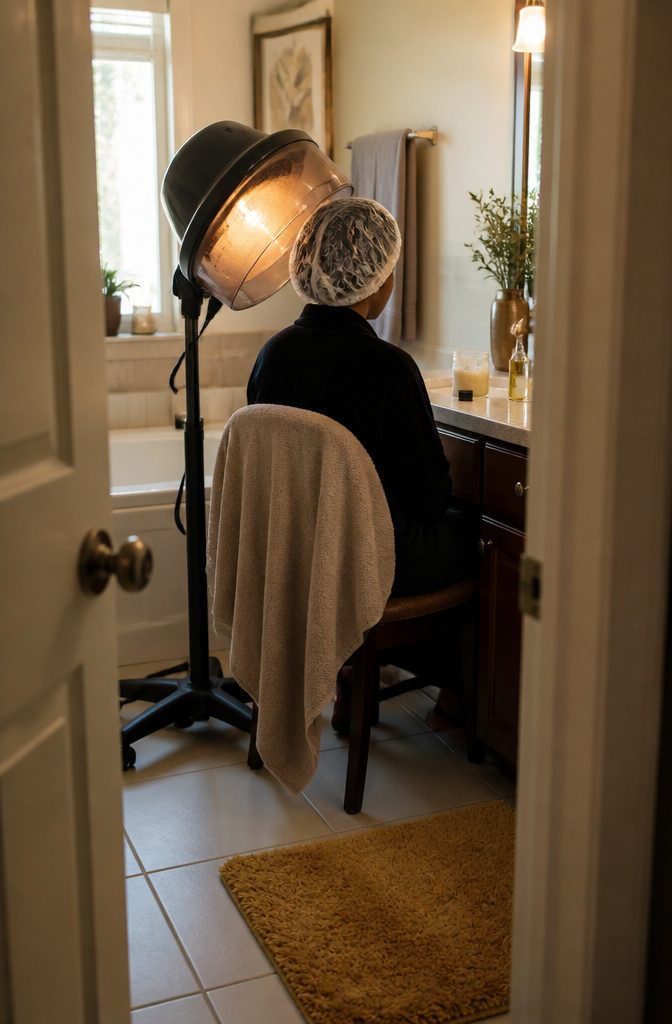
Coat strands generously with a mask that contains shea butter, mango butter, or coconut oil, then sit under a hooded dryer or wrap your head in a conditioning cap to hold in heat.
Twenty minutes minimum under heat lets the treatment actually penetrate instead of just sitting on top. I look for masks that list glycerin high in the ingredient panel, since it pulls water into the hair and holds it there.
Between deep treatments, regular conditioner after every wash keeps tangles manageable and frizz down.
Leave-in conditioner, a light oil like argan or coconut, and a curl cream or butter lock everything in and give you something to work with when you style. The drier your curls, the heavier the cream or butter you need.
6. Wash-Day Frequency and Cleansing
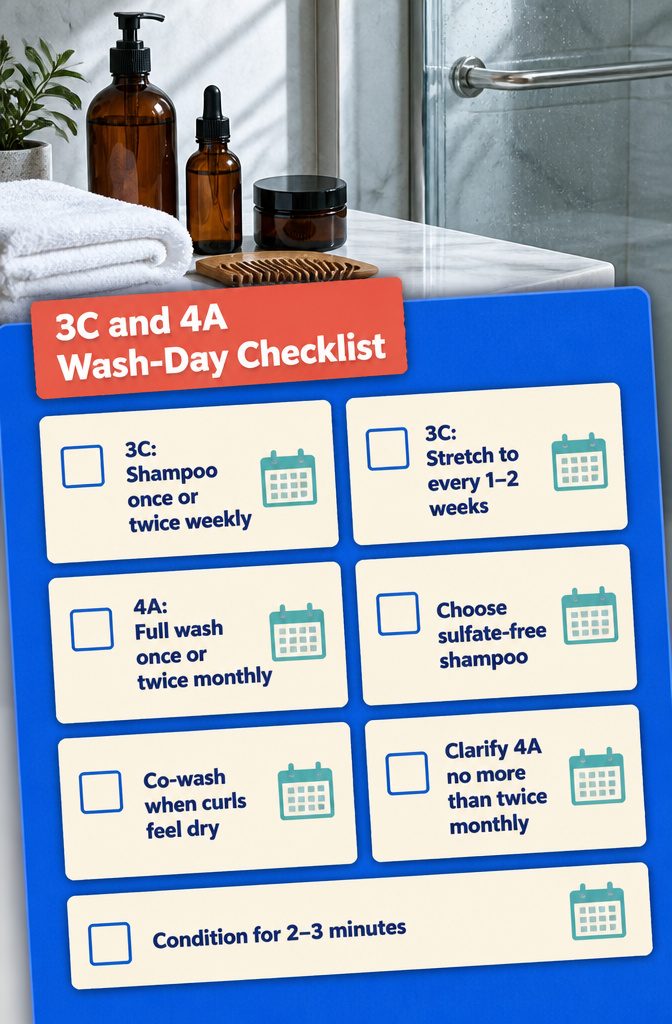
3C hair handles a shampoo schedule of once or twice a week, and it can stretch to every 1–2 weeks if your scalp stays comfortable.
Choose a sulfate-free formula, since sulfates strip natural oils, and co-wash midweek when the curls start to feel dry.
4A is more delicate and loses moisture fast, so kinky-curly hair does best with a full wash only once or twice a month. Co-washes can fill the gaps in between.
Leave-ins and deep conditioners leave buildup behind, and a clarifying shampoo clears it.
I’d keep it to no more than twice a month for 4A. After shampooing, let conditioner sit for 2–3 minutes before you rinse.
7. Gentle Detangling
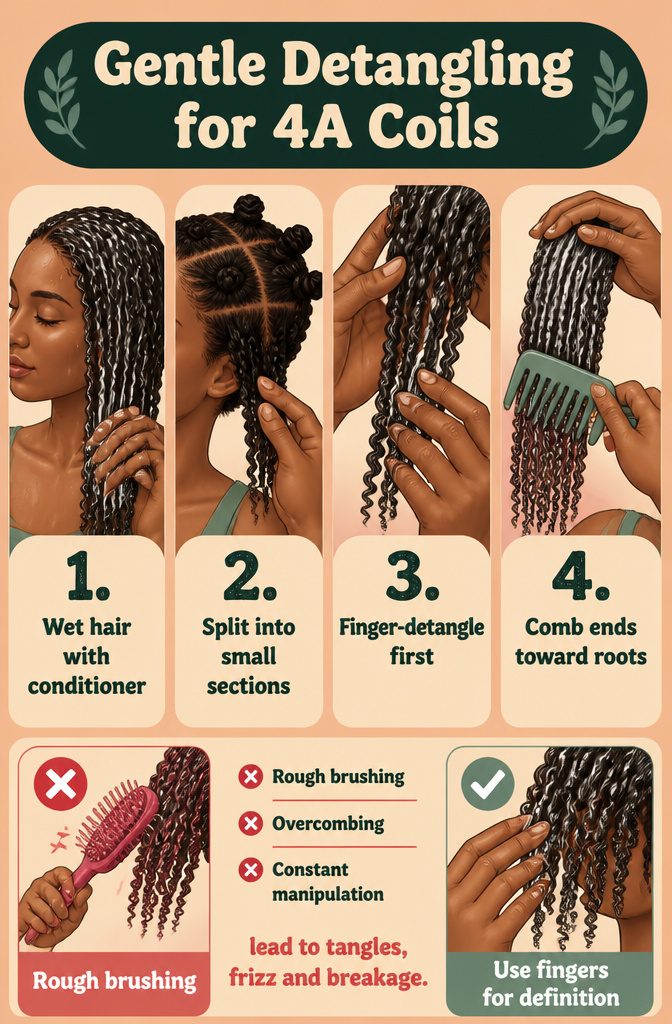
Detangle while the hair is wet and coated in conditioner. 4A coils are compact and break easily, so the slip from a conditioner or leave-in does most of the work.
Split the hair into small sections (the smaller, the better) and go through each with your fingers first, then a wide-tooth comb.
Start at the ends and work up toward the root, so knots don’t pile into one snarl at the bottom.
Rough brushing, overcombing and constant manipulation lead to tangles, frizz and breakage. Some owners on Reddit also report that a Denman-style brush shrinks 4A hair and thins out curl clumps, so I’d stick with fingers when definition matters.
8. How to Style and Define the Curls or Coils
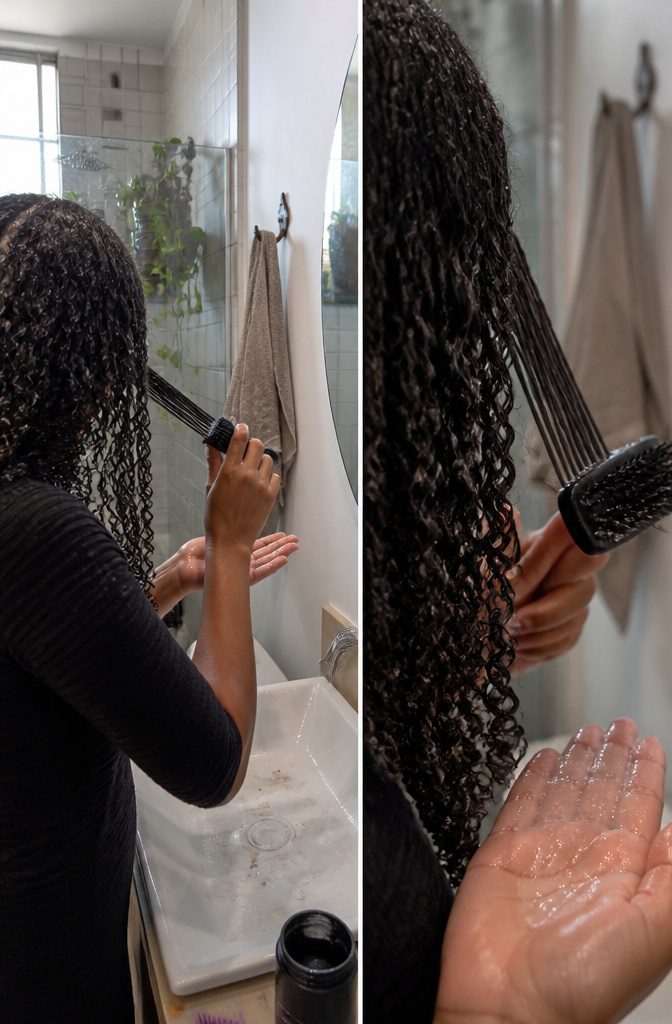
The best definition starts when the hair is soaking wet.
Applying product to saturated curls distributes it evenly, smooths frizz, and groups strands into juicy clumps that hold their shape longer. Some curlies dip sections directly into the sink before styling, which sounds extreme but delivers.
From there, divide the hair into small sections.
A Denman brush pulled through each section with a dollop of leave-in or curl cream defines the coils. The extra time pays off: definition lasts more than a week for many users who wash once or twice weekly.
Styling in the shower while conditioner still coats the hair works the same way. The slip helps the brush glide through, grouping curls without breakage.
The LOC method layers moisture so it actually stays.
Apply a leave-in conditioner first, follow with oil like argan or jojoba to seal, then finish with a curl cream or mousse. High-porosity hair especially benefits from this order because the oil locks the liquid in before it evaporates.
For me, gels are the only products with a strong enough hold to permanently lock in my wash-and-gos.
— POPSUGAR
Gel sets the whole routine. Uncle Funky’s Daughter Curly Magic Curl Stimulator and Innersense I Create Hold both deliver hold and shine without turning curls stiff.
Mielle Moisture RX Hawaiian Ginger Leave-In, Aussie Miracle Curls Mousse, and Xtreme Styling Gel round out the rotation for those chasing moisture, volume, and lasting definition at once.
For techniques beyond the wash-and-go, twist-outs and braid-outs stretch the curl and add definition.
Finger coiling wraps individual curls around a finger for uniform spirals, and shingling smooths product down each section for maximum clump. Diffusing on low heat speeds drying without disturbing the pattern; air-drying preserves it entirely but takes hours.
9. Heat Reduction and Protection
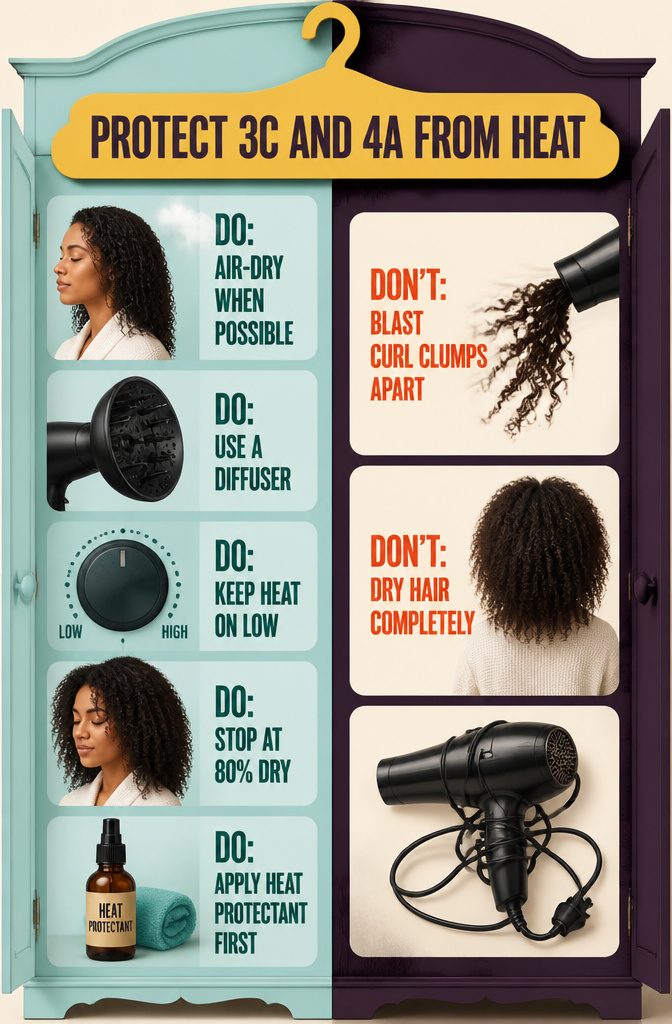
The safest route for textured hair is air-drying when your morning allows it.
Heat can leave 3C and 4A strands brittle, and some people have stopped diffusing altogether once they saw how much length and health their curls gained without it.
If you do need to speed things up, a few rules keep damage in check: never use a blow dryer without a diffuser, keep the heat setting on low, hold the diffuser gently so curl clumps aren’t blasted apart, and stop when your hair is only 80 percent dry.
The last bit of moisture finishes on its own and you skip the crispy, overworked texture that comes from pushing it all the way.
When heat is unavoidable, a heat protectant goes on first. Some people with low-porosity hair assume they need heat for everything, but plenty find beautiful definition without it once they learn what their own curls actually respond to.
10. Nighttime Protection

Nighttime Protection
A satin or silk bonnet is the simplest way to cut down on friction while you sleep. Tossing and turning pulls moisture out of the hair shaft and leaves you with frizz and tangles by morning.
Covering your curls with a bonnet or cap works better than a pillowcase alone, though swapping to satin pillowcases adds a second layer of defense for any strands that slip out.
The pineapple is my go-to when I want speed.
Gather the curls into a loose, high bunch at the top of your head and wrap with a satin scrunchie, not tight. In the morning, take it down and give the curls a few minutes to settle back into shape.
You can wear the pineapple on its own or add a satin cap over it for extra protection. If you’re dealing with a lot of tangling, changing up your nighttime routine makes more difference than any detangling product will.
11. Protective Styles and Length Retention
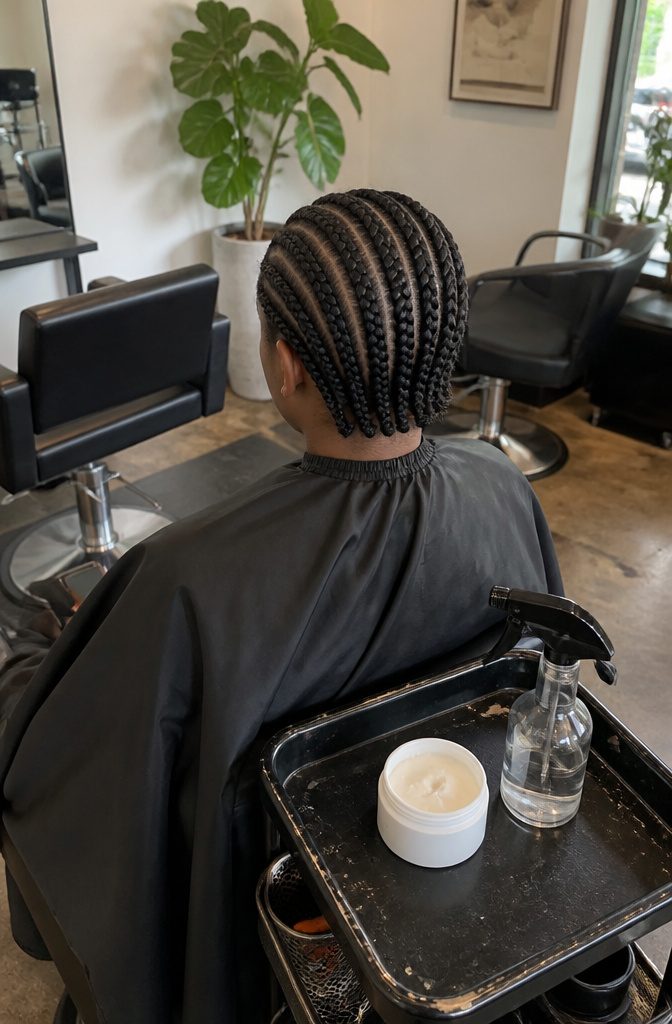
Cornrows, Bantu knots, Fulani braids and twists give six to eight weeks of low manipulation while your ends stay tucked and your curl pattern gets a break from daily styling.
The benefit is clear: less touching means less breakage, and keeping the hair in a set arrangement locks moisture in from whatever leave-in or cream you applied on install day.
Where protective styles go wrong is when they stay in too long or go in too tight.
After 8 weeks, oil and product residue build up and dry the hair out, and new growth at the roots can mat or tangle unless you keep adding moisture along the scalp.
Dusting the ends before you install removes fairy knots and split ends before they travel up the strand, which is how you actually keep length instead of trimming it all back later.
I would rather take off a quarter inch of damage now than lose two inches to a split that kept climbing.
Once the style is in, your job is to keep the scalp clean and the length moisturized without overworking it, because too much fussing defeats the point.
Porosity Testing
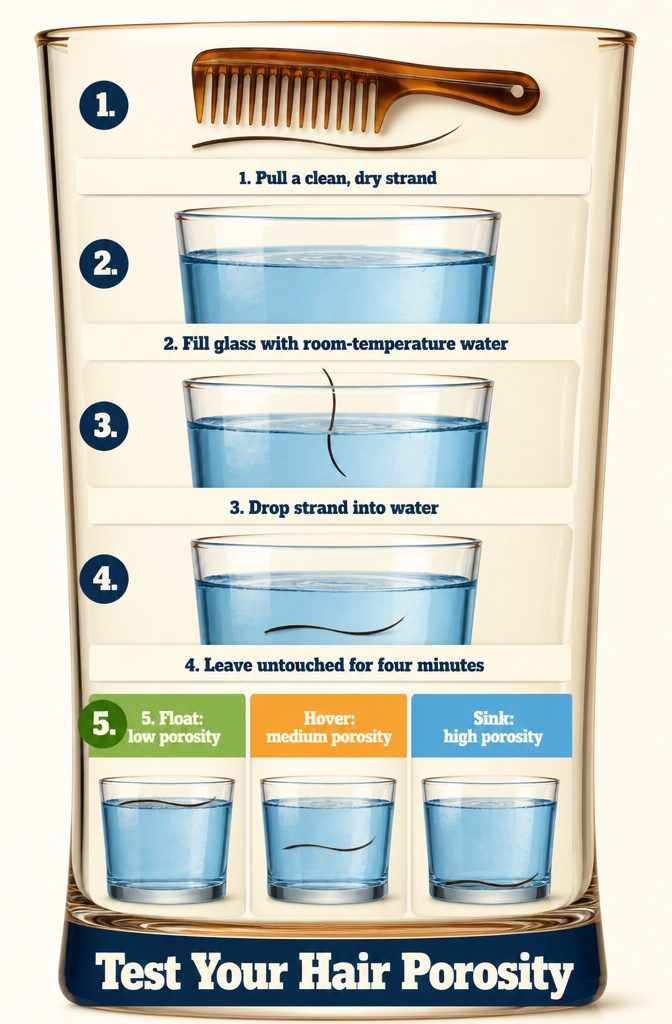
- Start with a clean, dry strand of hair pulled from your brush or comb.
- Fill a glass with room-temperature water.
- Drop the strand into the water and leave it untouched for four minutes.
- Check where the strand sits. If it floats on the surface, you have low porosity hair. The cuticle is tightly sealed, so moisture and product tend to bead up rather than absorb. If the strand sinks slowly or hovers partway down, you have medium porosity hair and a balanced cuticle that takes in moisture without losing it too quickly. If it sinks fast, you have high porosity hair with lifted cuticle scales that let water in and out easily.
- Porosity can vary across your head, especially with 3C 4A hair where the cuticle lifts naturally at each bend in the coil. The test gives you a starting point for choosing products that match how your hair holds water.
Trimming and Growth
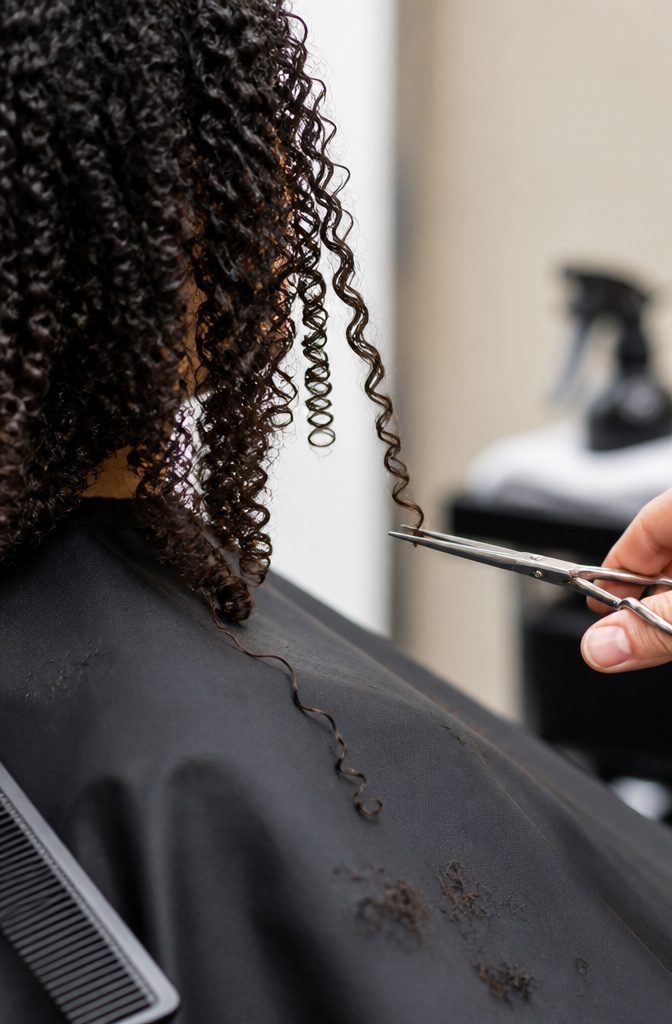
Regular trims are how you keep breakage from undoing months of growth. For looser curls closer to 3C, book every six to eight weeks; tighter 4A coils can stretch that to at least every three months.
The tighter the curl, the more prone it is to single-strand knots and splits that travel up the shaft, so those quarterly appointments matter even if length looks fine from a distance.
Skipping trims lets damage accumulate. A frayed end catches on neighboring strands, tangles more easily during detangling sessions, and eventually snaps higher up the strand than the original split.
You retain more length by removing a quarter inch on schedule than by avoiding scissors for six months and losing two inches to breakage. The math works in favor of the trim.
Frizz and Individual Results

Some frizz is part of 3C and 4A hair, and it adds volume and personality to a crown of curls.
Humidity and weather shift it from day to day, and no product controls all of that. Strong-hold products help definition last through damp days, but I wouldn’t treat a frizz-free finish as the measure of healthy hair.
Routines differ because hair does. A diffuser frizzes some heads and gives others the volume they want, and oil adds shine but can take spring out of the curl.
Pattern also changes with weather, handling and days since wash day. Change one product or method at a time and watch how your hair responds before you keep it.
Frequently Asked Questions
What’s the difference between 3C and 4A hair?
3C forms pencil-width corkscrews, while 4A forms tighter, more defined S-shaped coils.
4A also shrinks more (up to 75% versus about 50% for 3C), loses moisture faster, and needs richer creams and butters. 3C usually does well with lightweight hydration and frizz control.
What is 3C hair?
3C hair is a curly pattern made of tight, densely packed corkscrews about the width of a pencil or straw.
It is the tightest of the Type 3 patterns, sitting between 3B and 4A. The curls keep an S or Z shape when stretched, and the hair carries a lot of volume.
What is 4A hair?
4A is a Type 4 coily pattern with dense, well-defined S-shaped spirals, roughly toothpick to crochet-needle width.
It looks thick because the coils pack so closely, but the individual strands are fragile. It dries out fast because oil has trouble traveling down a coil this tight.
How do I know if my hair is 3C or 4A?
Pull out one strand while your hair is soaking wet and check the curl width.
Pencil or straw-width corkscrews that hold an S or Z shape when stretched point to 3C, while tighter, crochet-needle-width coils with fast springback point to 4A.
Wet hair shows the true pattern because shrinkage and product are out of the way.
Can you have both 3C and 4A hair?
Yes, and it’s common.
Many heads carry more than one pattern, such as 4A at the crown and 3C at the nape. Use whichever pattern covers most of your head to pick products and routines.
How often should you wash 3C and 4A hair?
3C hair does well with a shampoo once or twice a week, stretching to every 1–2 weeks if your scalp stays comfortable.
4A hair is more delicate and does best with a full wash only once or twice a month, with co-washes in between. Choose a sulfate-free formula for either pattern.
How should you care for 3C and 4A hair?
Deep condition once a week, wash with a sulfate-free shampoo, and detangle wet in small sections with your fingers and a wide-tooth comb.
Cover your hair with a satin bonnet at night and keep heat to a minimum. These patterns run dry because natural oils can’t slide down the strand, so moisture has to come from products.
What are the best styling tips for 3C and 4A hair?
Style on soaking-wet hair, in small sections, using the LOC method: leave-in conditioner, then an oil, then a cream.
Add a gel if you want hold that lasts. If you diffuse, use low heat and stop at about 80% dry so the curls don’t turn crispy.
What products should I use on 3C and 4A hair?
Build a routine around a leave-in conditioner, a light oil such as argan or jojoba, and a curl cream or butter, plus a gel for hold.
For weekly deep conditioning, look for masks with shea butter, mango butter, or coconut oil, and glycerin high on the ingredient list. Go lighter with creams on 3C and heavier with butters on 4A.
How long should you wear a protective style?
Six to eight weeks is the usual limit.
Past that, product and oil buildup dry out the hair, and new growth at the roots can mat or tangle. Installing too tightly causes problems too, so keep the scalp clean and moisturized while the style is in.
How do you grow 4A hair?
Growth comes down to cutting breakage so the length you grow stays on your head.
Keep the hair moisturized, detangle gently on wet hair, limit daily manipulation, and use protective styles without leaving them in too long. Trim at least every 3 months, since small splits travel up the strand and cost more length later.
How do you test the porosity of 3C and 4A hair?
Drop a clean, dry strand into a glass of room-temperature water and leave it for 4 minutes. If it floats, your porosity is low; if it hovers or sinks slowly, it’s medium; if it sinks fast, it’s high.
Porosity can differ from one part of your head to another, so treat the result as a starting point for choosing products.
What does long 3C 4A hair look like?
Expect it to look much shorter than its real length once it dries.
3C shrinks by about 50% and 4A by up to 75%, so hair that reaches your shoulders wet can spring up to chin length dry. Stretched styles like twist-outs and braid-outs show off more of the length.