How much length you have to work with decides which of these braids will hold.
The list runs from Straight Back Cornrows that stay put all week to a Short Bob with Box Braids cut in a blunt line, with Passion Twists in an updo, a Braided Top Bun, and Short Braids with Curled Ends filling in the middle.
1. Passion Twists Updo
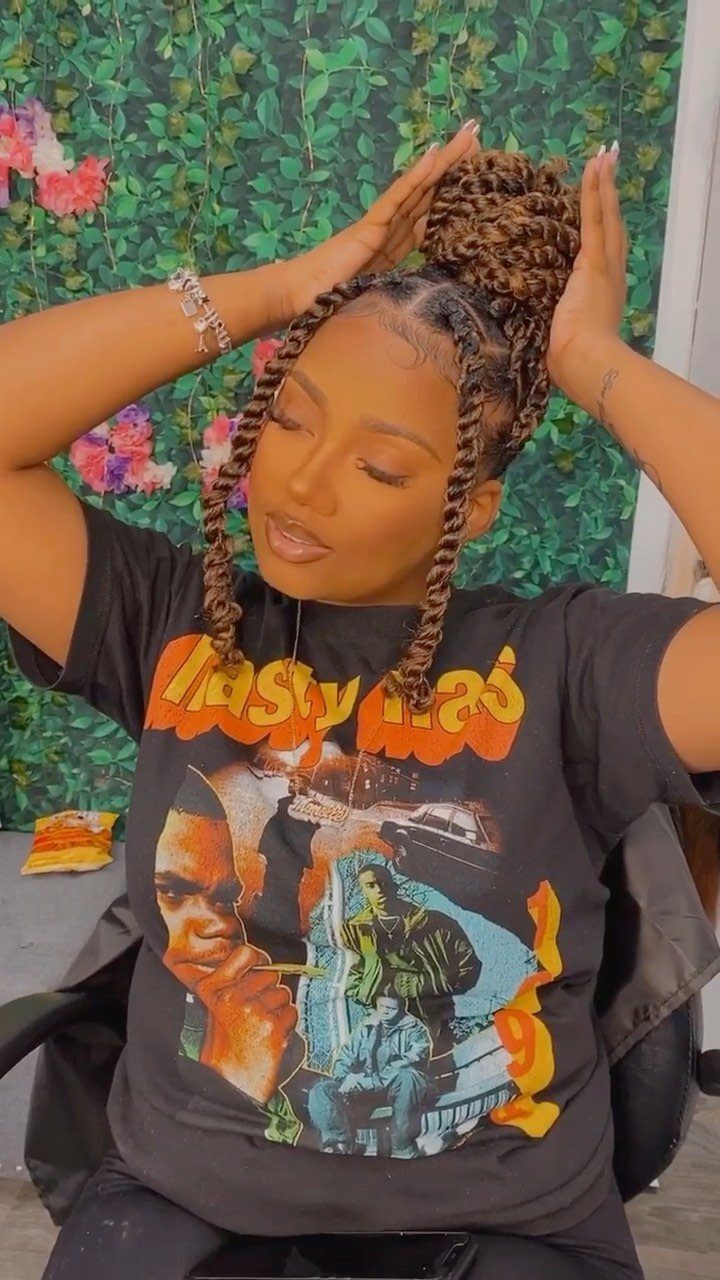
Passion twists gathered at the crown or nape turn protective styling into an updo that works for short and medium lengths alike.
The twists themselves stay loose and dimensional, which gives you more styling options than tighter box braids would at this length.
Pin sections as you go to keep the shape secure, and leave a few twists at the hairline to frame your face if the updo feels too severe pulled all the way back.
2. Colorful Half Up Half Down
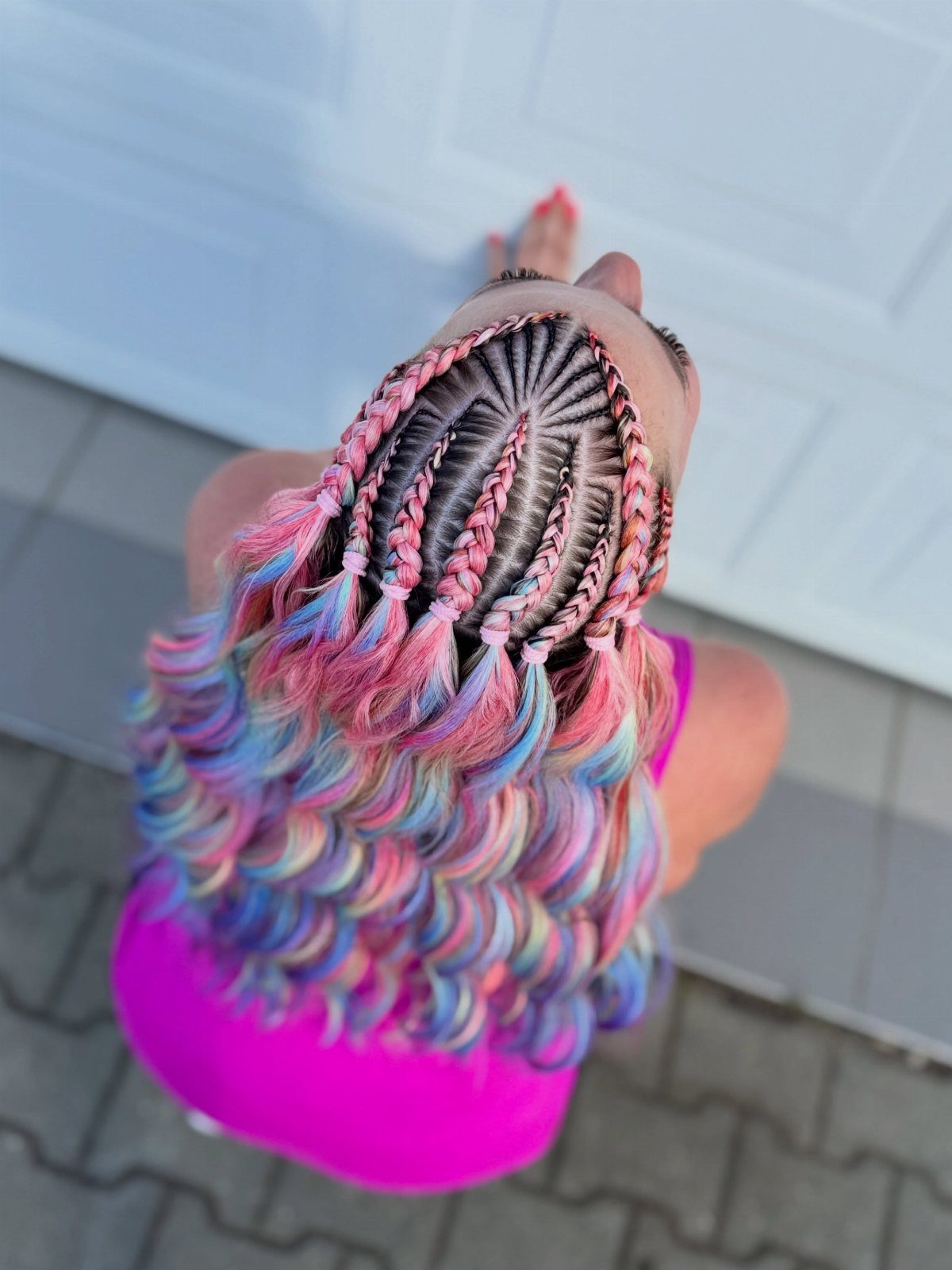
A half-up, half-down style lets you braid the top sections while leaving the rest loose, and adding color to both makes the split more visible.
Braided crown against loose curls below gives you two textures in one look, while the braid holds shorter layers off your face.
If your hair is too short to gather much length at the back, focus the braids along the sides and secure them just above your ears.
3. Straight Back Cornrows
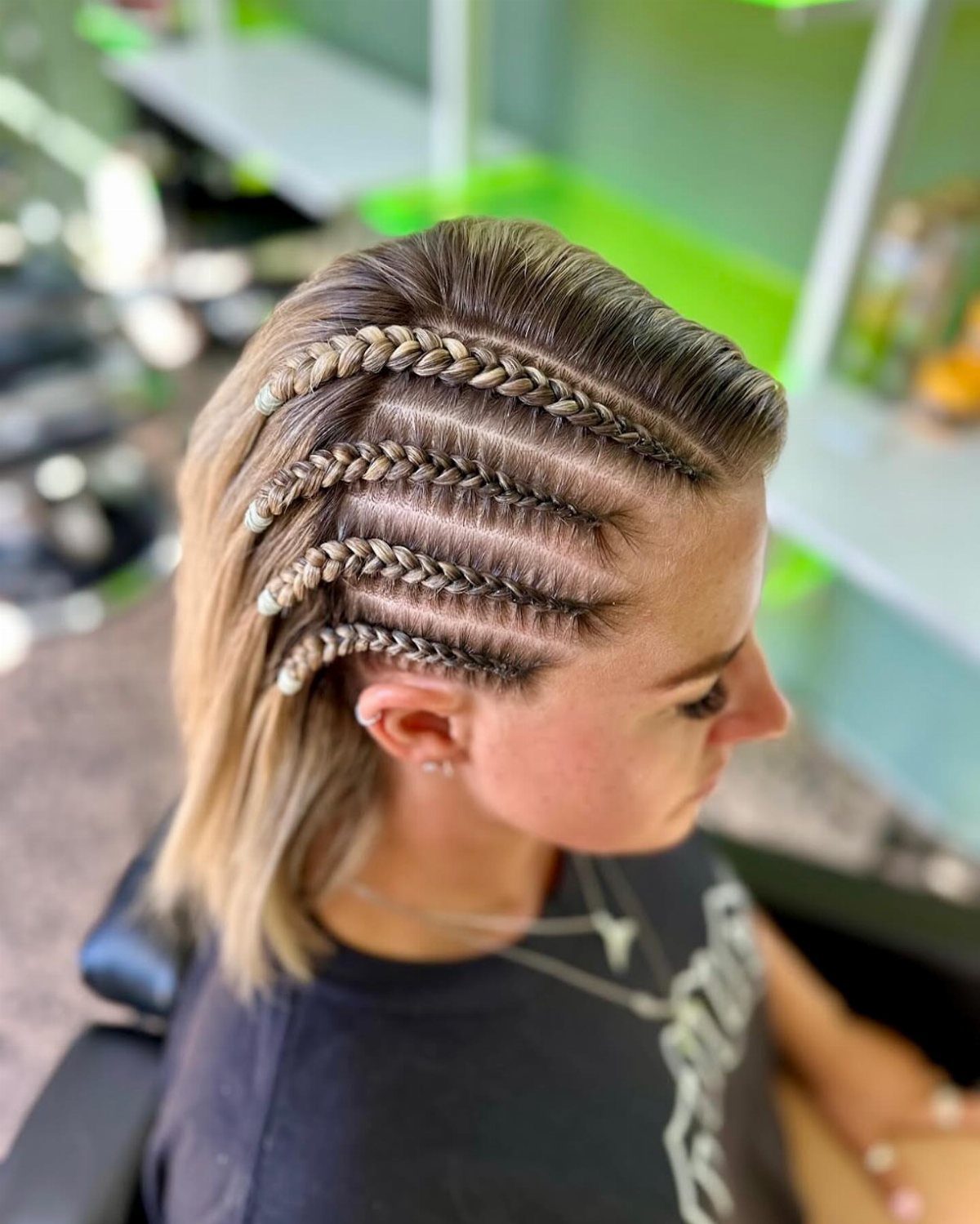
Cornrows that run straight back from the hairline to the nape sit flat and last longer than most braid styles at short lengths. Space the rows evenly for a uniform look, or cluster them tighter on one side for asymmetry.
Textured hair that holds tension well is where this style performs best. If your hair is fine or slippery, a light gel at the roots before you start will help the rows stay clean and tight through the week.
4. Short Bob with Box Braids
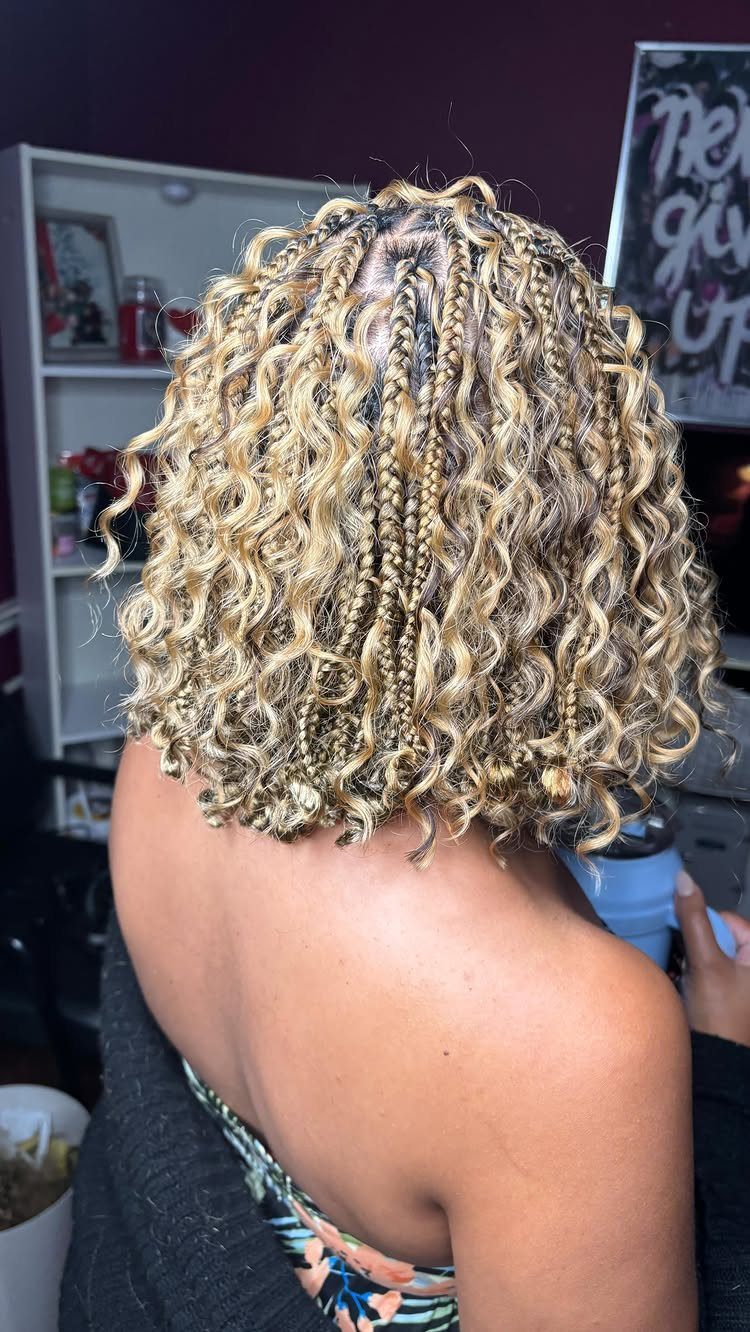
Box braids shaped into a bob give you the length and swing of a classic bob without cutting your natural hair.
The braids are installed to shoulder length or shorter, then trimmed into a blunt or angled line at the ends.
You can curl the ends with hot water to soften the blunt edge, or leave them straight for a sharper finish. For protective styling without the weight or upkeep of longer braids, this is a good middle option.
5. Headband Braid
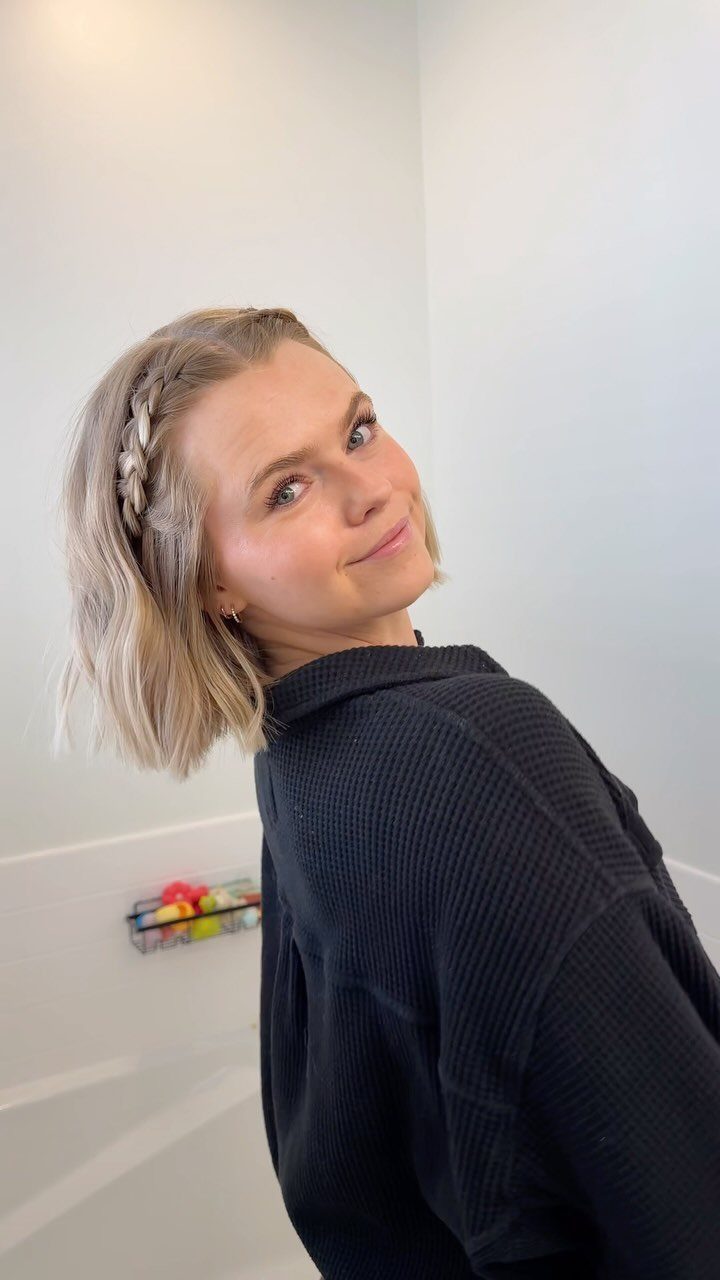
A narrow braid that runs from one side of the head to the other, just behind the hairline, works as a headband you don’t have to buy or adjust.
It keeps short layers pinned back and adds detail to a bob or pixie cut that might otherwise sit flat.
You can braid from ear to ear across the top, or angle it diagonally from temple to nape for a less symmetrical line. Pin the ends under the other layers of your hair, or tuck them behind your ear.
6. Waterfall Braid
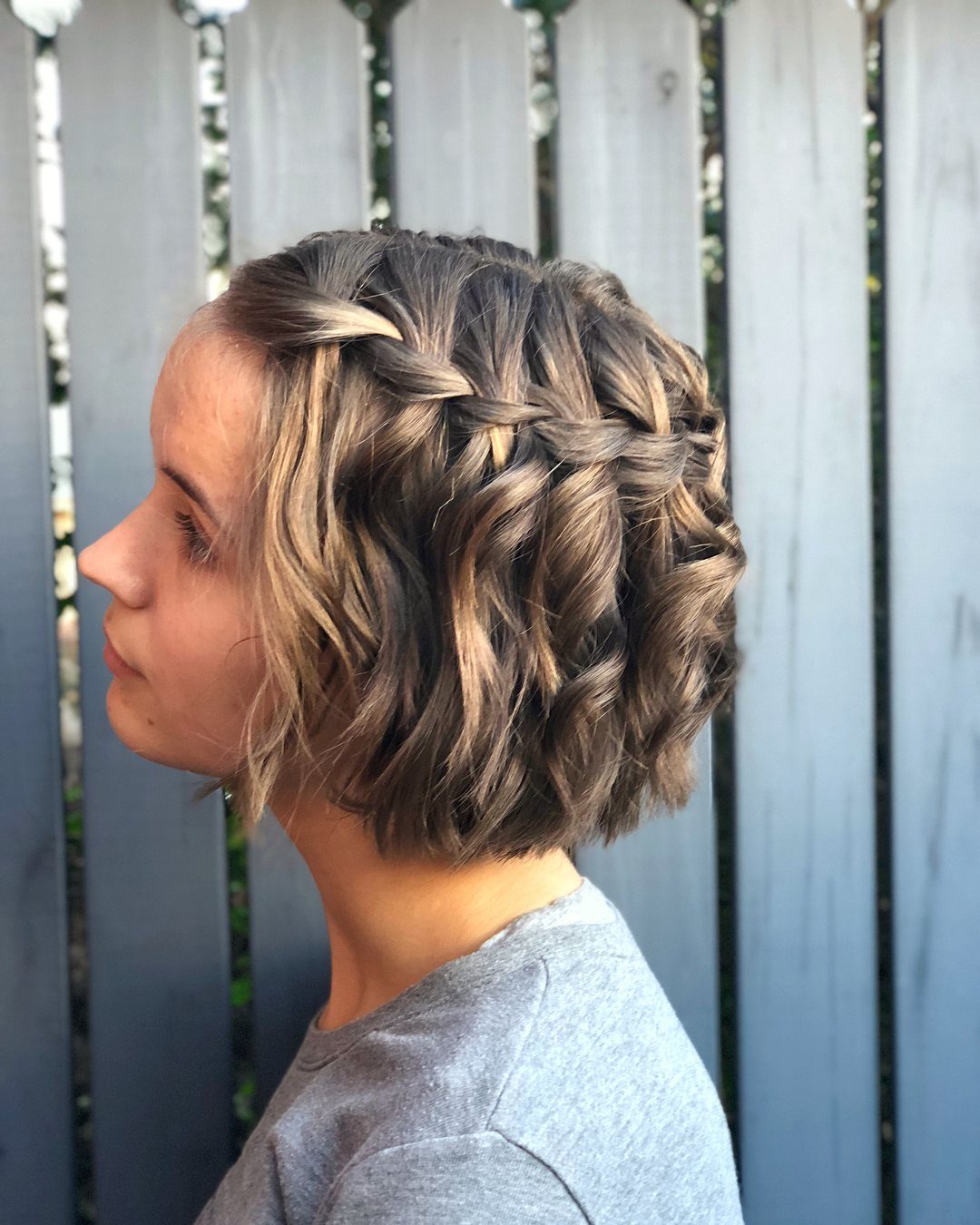
A waterfall braid drops sections of hair instead of weaving every strand in, so you get a braided band along the crown with loose pieces cascading through it.
On short hair, the effect is more subtle than it is at longer lengths, but the dropped sections still catch light and add movement to a one-length cut.
Dropped sections stay even only after some practice, so expect the first few tries to look uneven.
If you’re new to it, braid along the side of your head first where you can see what you’re doing, then move to the crown once the rhythm makes sense.
7. Side Braid Bob
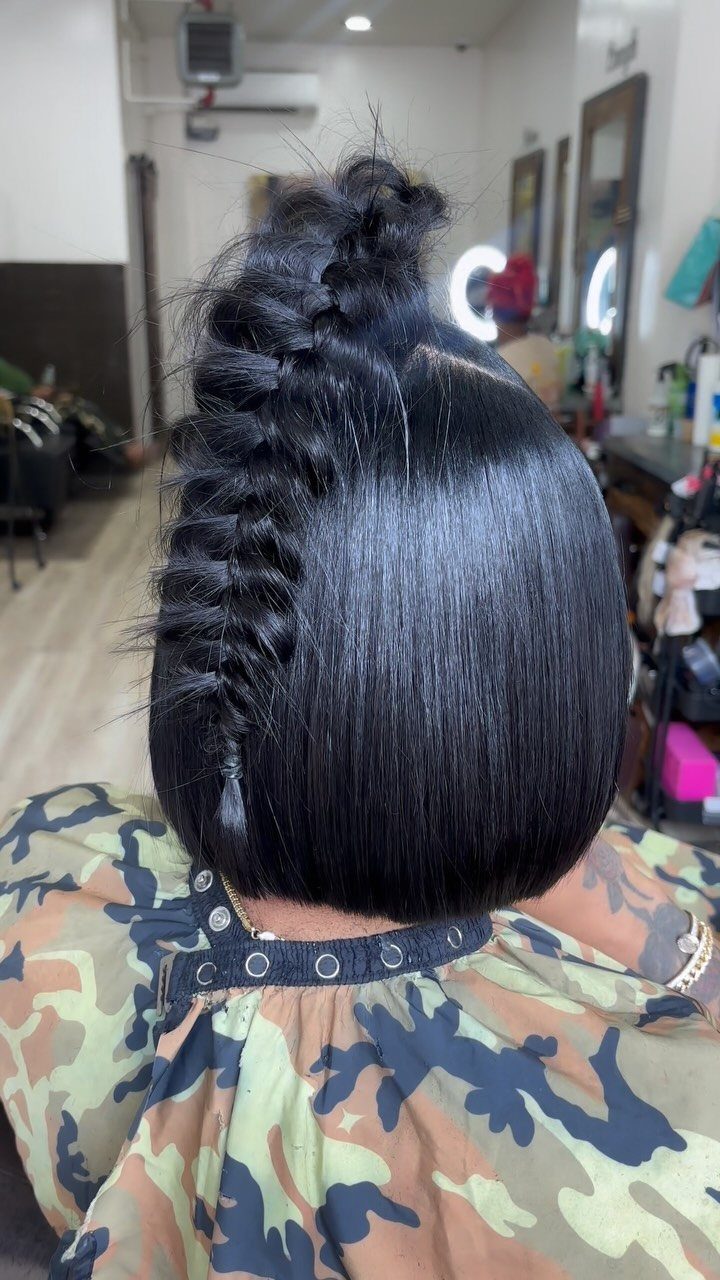
One thick braid running down the side of a short bob breaks up the solid line of a blunt cut without changing the overall length.
Keep the remaining hair smooth and sleek, and the braid reads as an accent instead of taking over the whole style.
Start the braid at the crown and work down, so the plait stays in view along the side of your head. If your bob is angled, the braid will follow that slope and end shorter at the back.
8. Braided Curly Crown
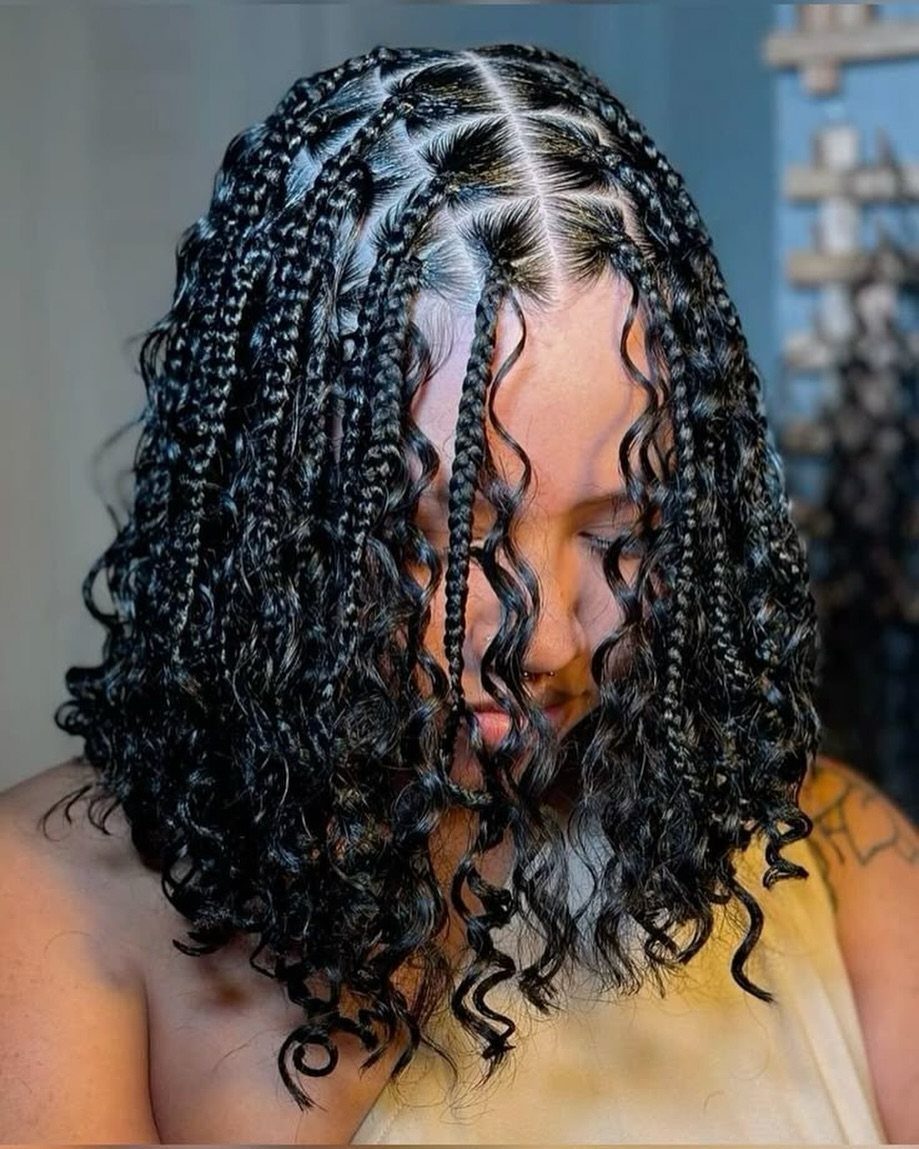
Thin braids across the crown hold shorter layers back while curls stay loose from the temples down. This keeps your face clear without flattening the volume curls naturally give you.
Braid close to the scalp so the plaits sit flat against your head, then let the rest fall where it wants to. If your curls tangle easily, braid damp hair with a light cream worked through before you start.
9. Braided Curly Crop
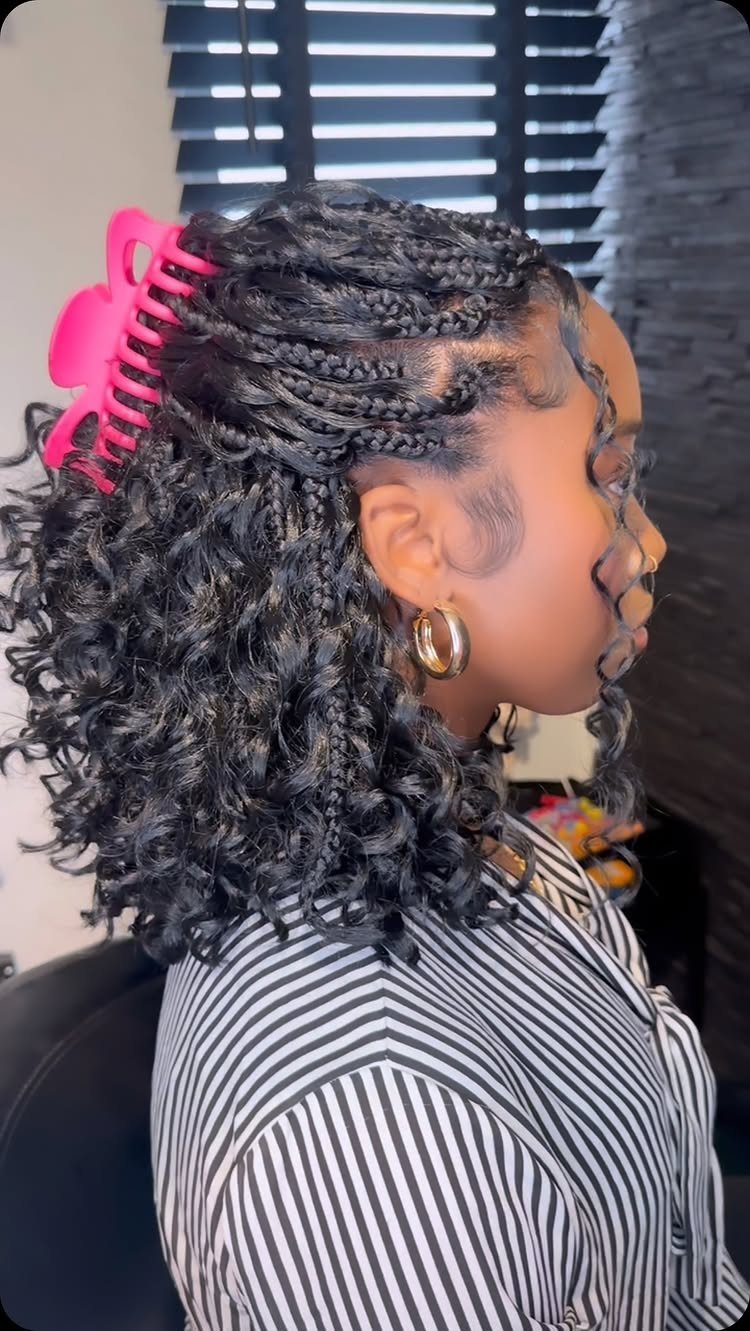
Small braids along the top and sides of a short cut give way to loose curls at the back and crown.
The braids add structure where a full head of curls might feel too round, and the curls keep the style from looking too neat or controlled.
Pin or clip one side if the curls fall forward. This style works best on textured hair that holds a braid without slipping.
10. Pink Braided Bob
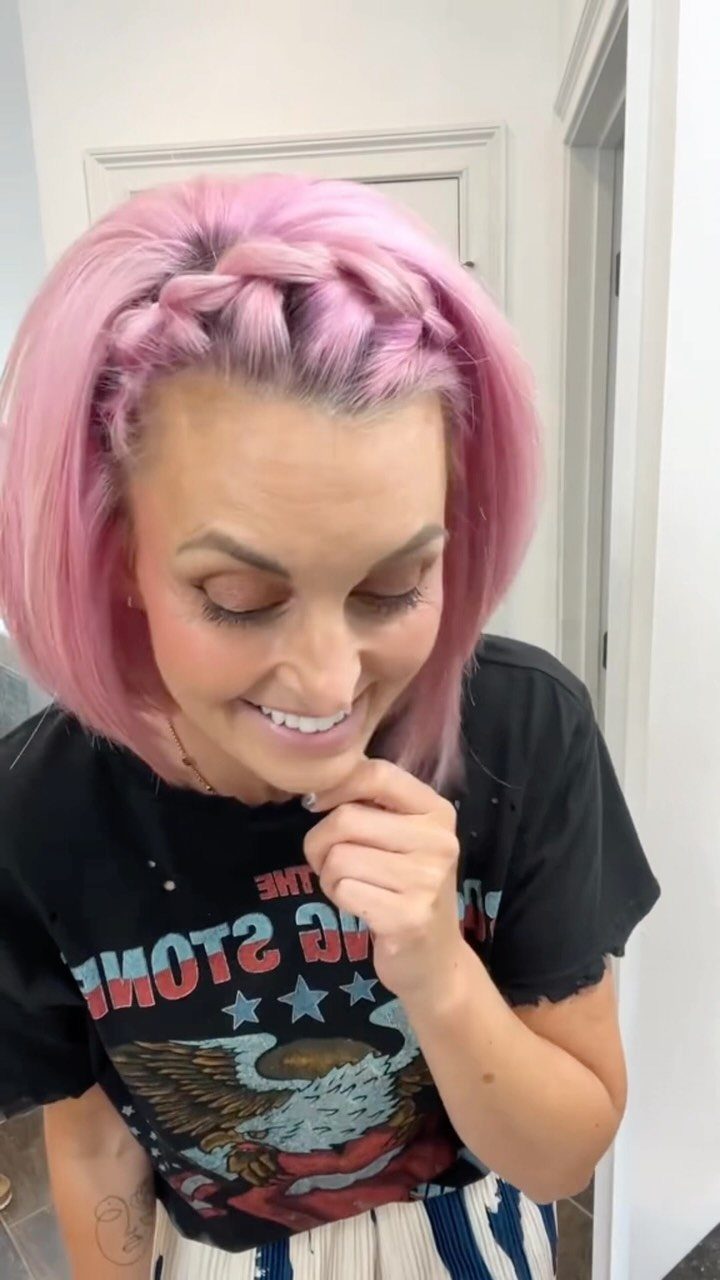
Several small braids gathered across the top of a pink bob add texture to a color that already stands out.
The braids run from the front hairline back toward the crown, while the rest of the bob stays loose and smooth.
On fine hair, braid sections that are slightly damp so they hold their shape longer.
11. Short Braided Pigtails
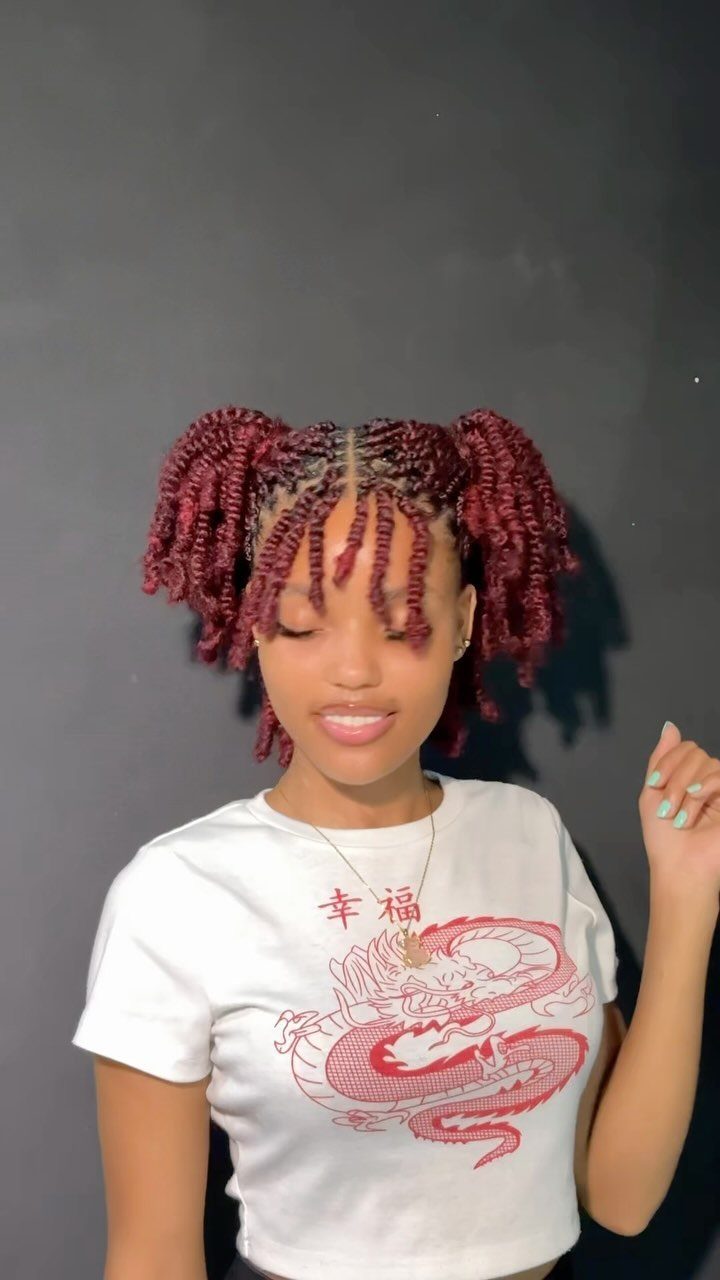
2 high pigtails made from short braids sit at the crown for a look that skews playful rather than polished.
The height and the split keep the style from reading too serious, and short braids mean less weight pulling at your scalp than longer ones would.
Secure each pigtail with a small elastic at the base, and wrap a braid around the elastic if you want to hide it. This works best when the braids are all roughly the same thickness.
12. Cornrows with Short Twists
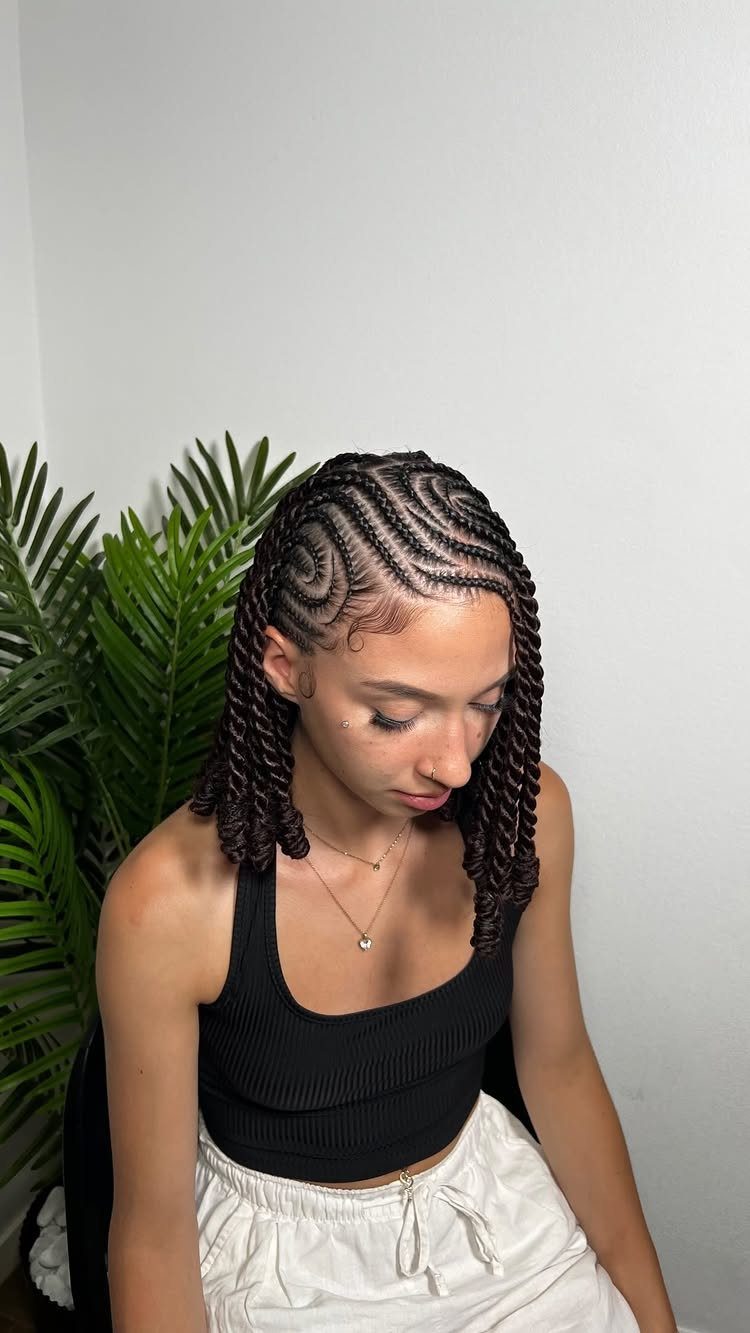
Cornrows that transition into short twists give you two textures in one protective style. The cornrows lie flat from the hairline back, then open into twists that hang a few inches from the scalp.
The twists are lighter and faster to install than longer ones, and the whole style dries quicker after washing. If your hair is fine, keep the cornrow sections small so the twists don’t look sparse at the ends.
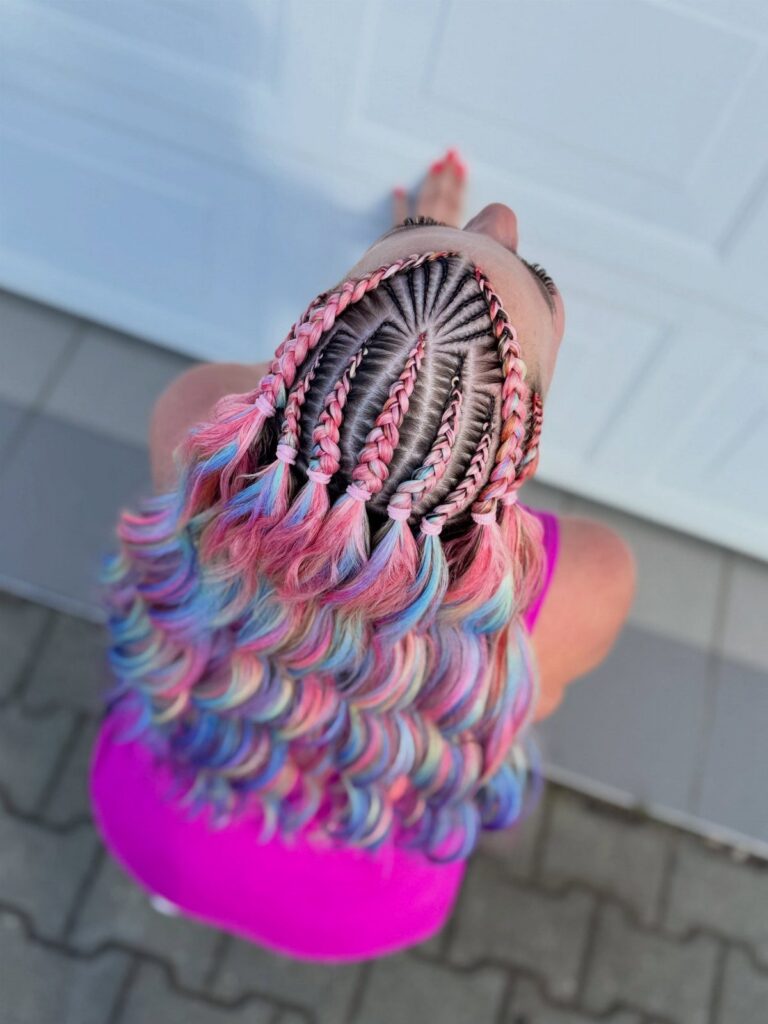
13. Short Braids with Curled Ends
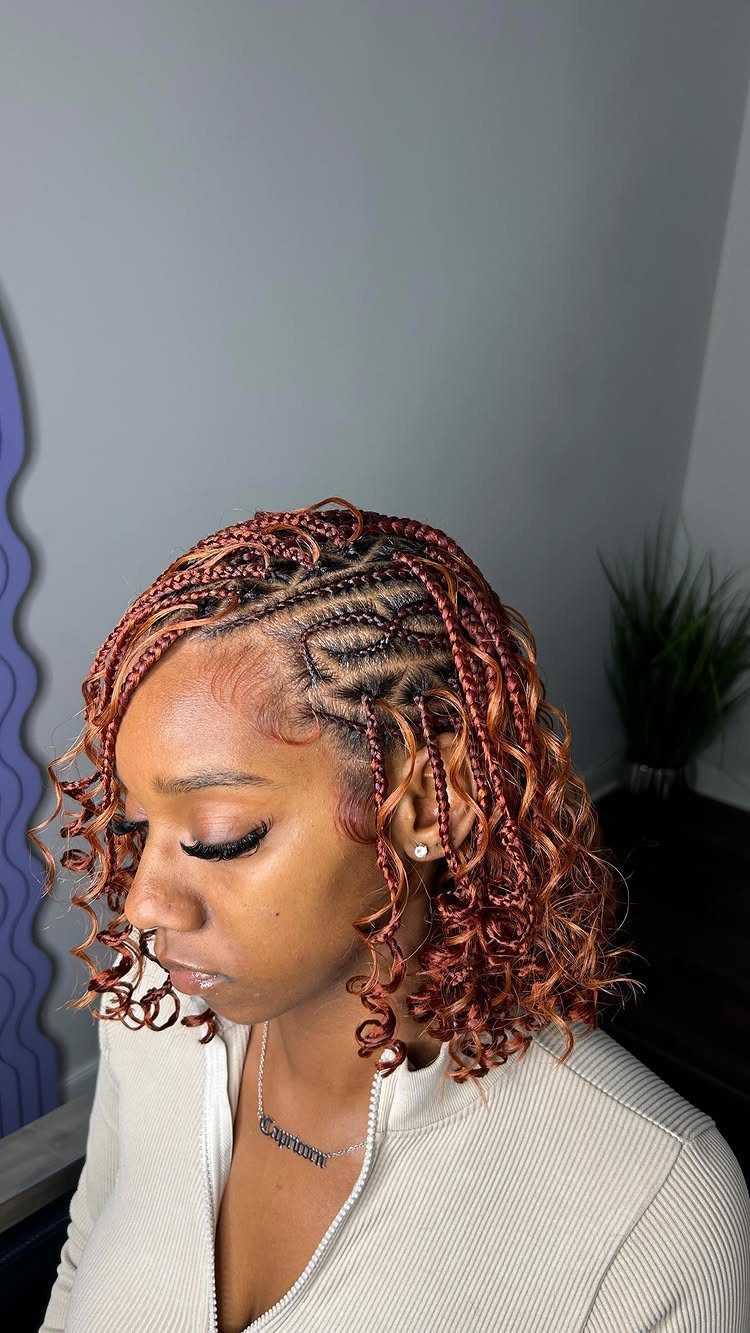
Small braids installed close to the scalp finish in tight curls at the ends, so you get a textured style that sits round and full without adding length.
The curls are usually set with perm rods or hot water on synthetic hair, which means they hold their shape through multiple washes.
If you’re working with natural hair, braid to the ends and curl them on flexi rods overnight. The curls soften the blunt edge where braids would otherwise stop.
While some of the best, most skilled braiders can grab and stitch styles together with only a couple of inches, Janelle Sands suggests waiting until your hair is between 1.5-2 inches long.
14. Braided Face-Framing Sections
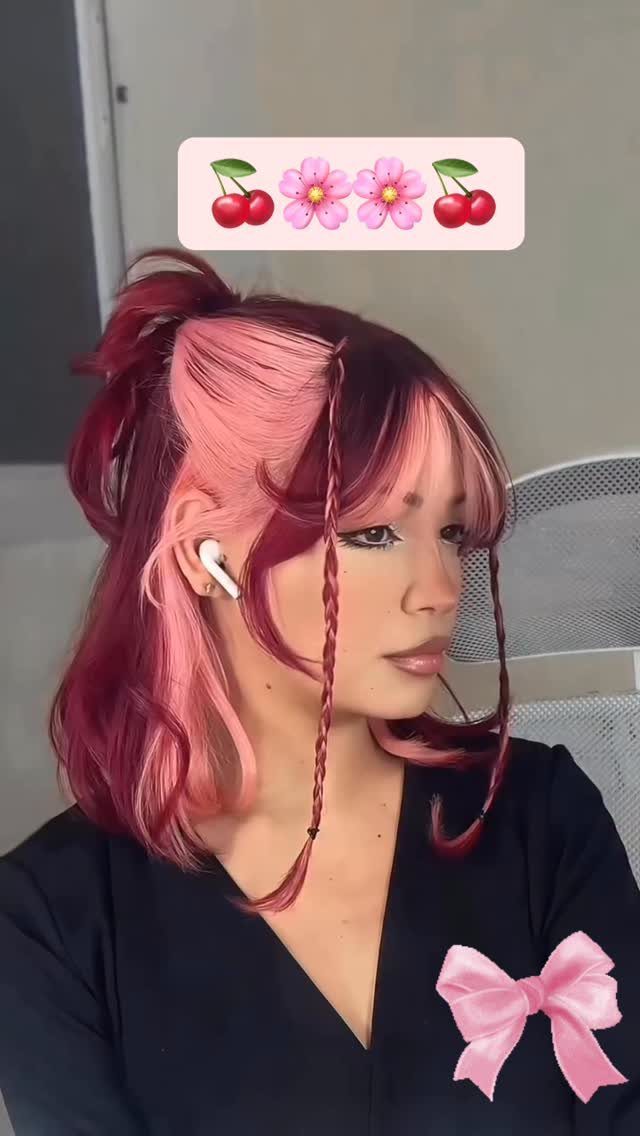
Thin braids along the temples and cheekbones pull attention to your face, while the rest of your hair stays loose or gathered at the crown.
This keeps short layers out of your eyes without braiding your whole head, and the braids add detail to a cut that might otherwise read as one solid block of color.
Secure the crown section with a small elastic if it’s long enough to gather. If your hair is too short to tie back, pin the braids behind your ears instead.
15. Braided Top Bun
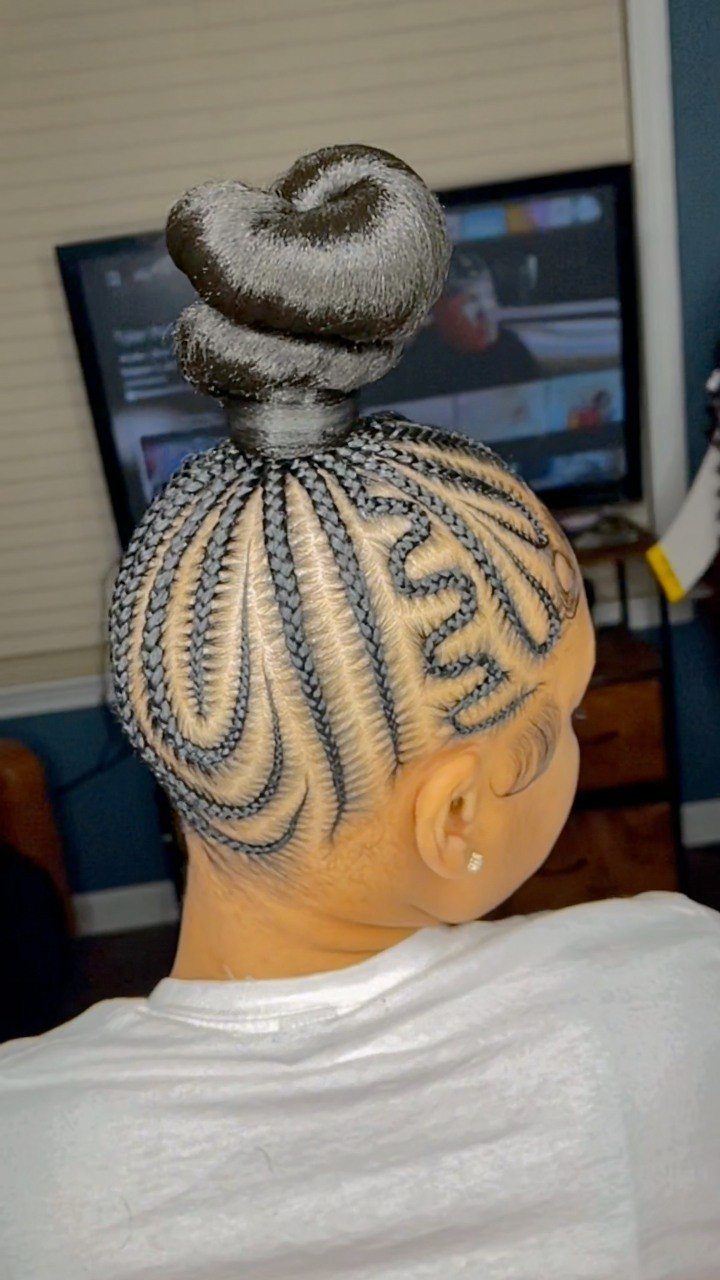
Cornrows from the front and sides meet at the crown or nape, where they’re gathered and wrapped into a small bun.
On short hair, the bun sits high at the crown and stays compact, and it lifts the style off your neck and holds through the day.
If your cornrows are too short to coil into a bun on their own, wrap them around a small foam donut to build height and fullness.
Frequently Asked Questions
How short is too short for braids?
Around 1.5–2 inches of natural hair is the shortest length one stylist suggests braiding.
If you want braids with extensions, another stylist recommends at least 4 inches. Hair shorter than that can’t hold the style on its own, so tension does the work, and tension is what leads to thinning edges and breakage.
How to prepare short hair for braids?
Cleanse, deep condition and trim before you braid.
A clarifying shampoo strips buildup, oil and leftover product so the braids start on clean hair, and a deep conditioner afterward keeps short strands supple enough to stay braided for weeks without breaking.
Give your scalp attention too, since a soothing scalp product helps prevent itching under the style.
What should I do when it’s time to take out braids?
Take the braids fully down first, working from the ends up with a little conditioner or oil on your fingers to loosen each knot, and only then shampoo.
After that, shampoo, apply a regular conditioner, and finish with a deep conditioning mask left on for the time listed on the label. Hair that has been braided for weeks needs that extra moisture after takedown.
What are some good natural hair braid styles for ladies?
Straight back cornrows are my pick for short natural hair: they sit flat, last longer than most braid styles at short lengths, and work best on textured hair that holds tension well.
If you want a lighter look, I’d go with small braids along the crown, which hold short layers away from your face and leave the curls below free.
Box braids cut into a bob are a good middle option if you want length and swing without the weight of longer braids.
What are different types of braids?
For short hair, the main options are cornrows, box braids, twists, waterfall braids and simple plaits worn as accents.
Cornrows lie flat against the scalp, box braids can be trimmed into a bob, and twists such as passion twists stay looser and more dimensional.
A waterfall braid drops sections as you go, which leaves loose pieces falling through a braided band.