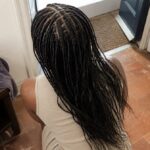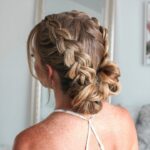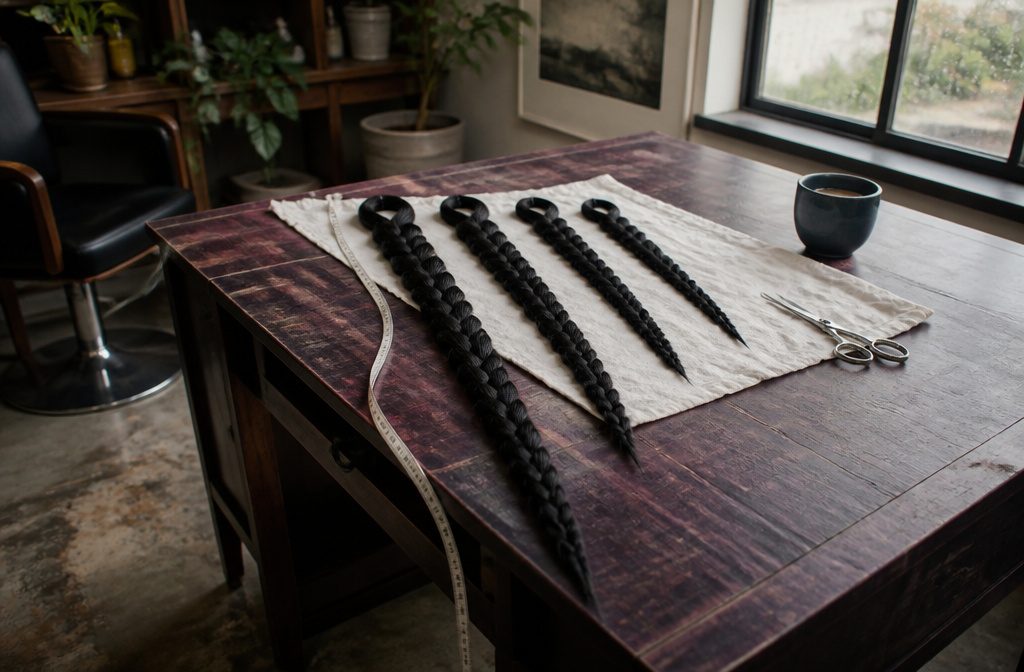
A braid length chart maps the installed length of braids in inches to their finished look, wear time, and weight on your scalp.
Brands measure differently: X-Pression prints the full 48-inch span tip to tip, so you divide in half for the actual 24-inch result, while Ruwa lists finished length directly on the pack.
Short Braids (10–16 Inches)
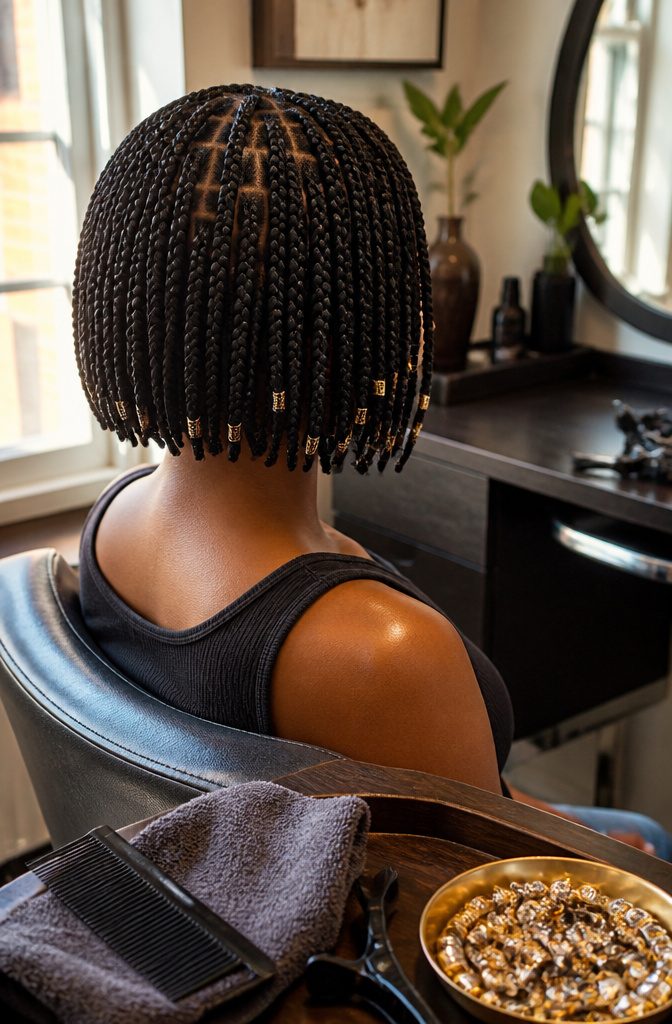
Braids at 10–16 inches fall somewhere between chin and bob length, and they are the lightest and easiest-to-maintain range on the chart.
Box braids and cornrows both work well at these lengths, giving you a classic, manageable shape without much morning effort. Beads or hair cuffs add a bold finishing touch, and short braids are a good place to try them.
If you’re getting your first set of braids, I’d start here, because a lightweight set is easy to live with while you learn how much upkeep you want.
Medium-Length Braids (18–24 Inches)
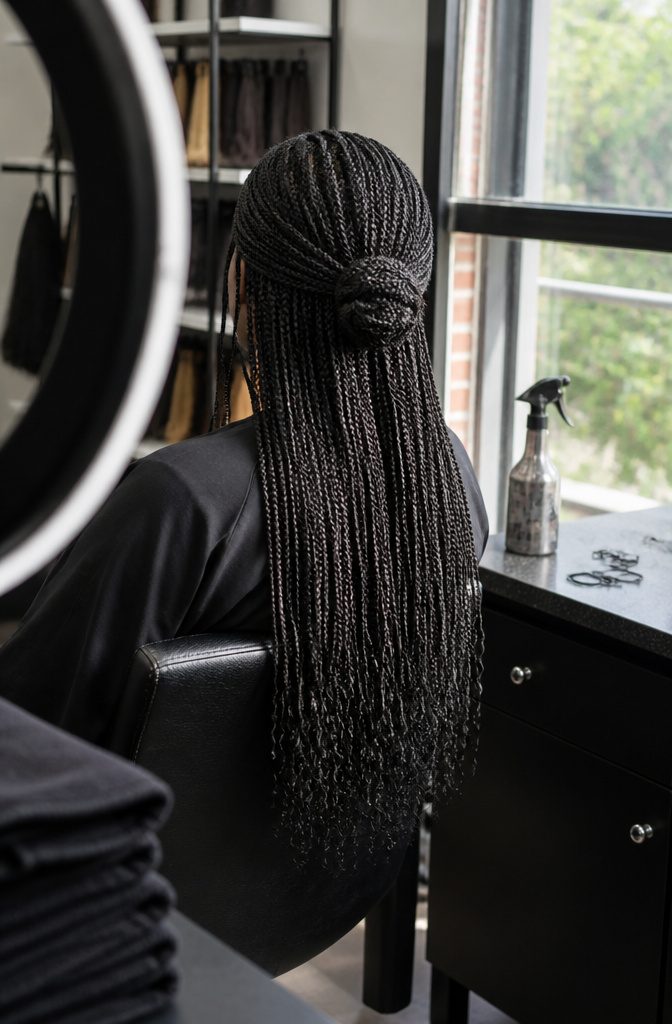
Medium-length braids land at 18–24 inches, and this is where you get shoulder-length styles that feel substantial without the weight or upkeep of longer installs.
The length offers enough hair to pull into updos, half-up styles, and ponytails while staying light enough for daily wear.
I like this range for knotless braids, Senegalese twists, and goddess braids because it gives you styling flexibility without committing to waist-length maintenance.
One thing to note is how measurement works. Expression braids list 48 inches on the pack, but that’s tip to tip, so you divide in half for the actual finished length of 24 inches.
Brands like X-Pression Ultra and Outre measure the same way. Ruwa, on the other hand, prints the finished length directly on the packaging, so an 18-inch or 24-inch pack gives you exactly that once braided.
Check which system your brand uses before ordering online, or you’ll end up with twice the length you wanted.
Long Braids (26 Inches and Above)
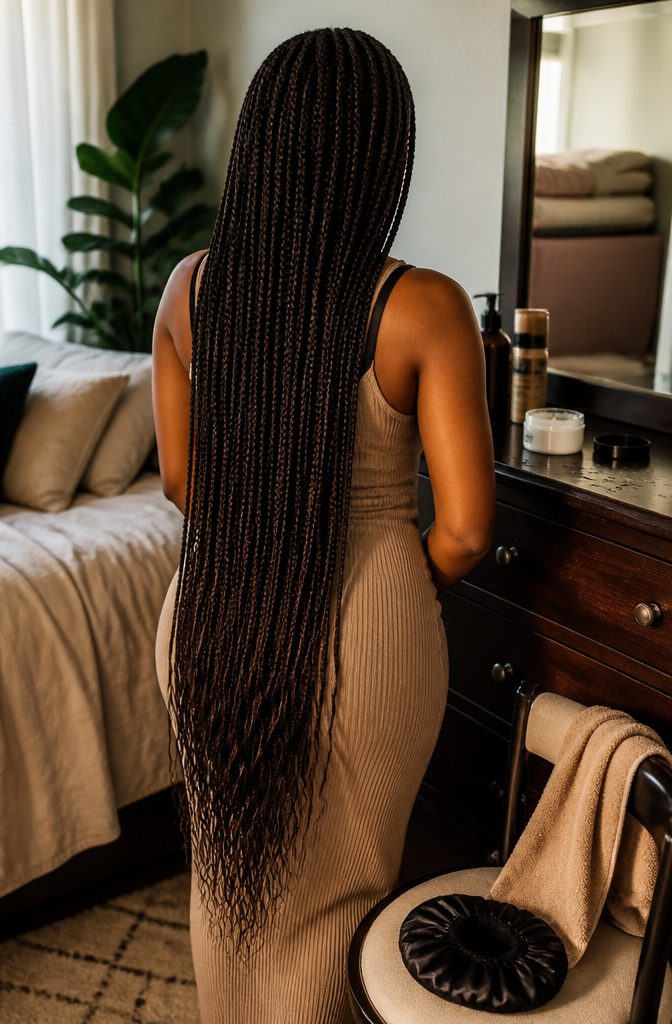
Long braids that reach 26 inches or past your waist change the entire feeling of the style. The length is what you see first, and it moves differently when you walk or turn your head.
The drama is real, but so is the weight. You’ll feel it across your scalp within the first few days, and if your edges are already fragile, the tension from carrying that much added hair can set you back.
Maintenance takes more time at this length because washing and drying require actual planning.
You can’t just rinse and go. Tangles form faster at the ends, and sleeping without a bonnet or scarf means friction damage you’ll notice within a week.
The upside is styling range: high buns, low ponytails, half-up styles, or leaving everything down all give you completely different looks with the same install.
If you’re ready to manage the weight and commit to the care routine, long braids give you options no other length can.
Micro and Small Box Braids
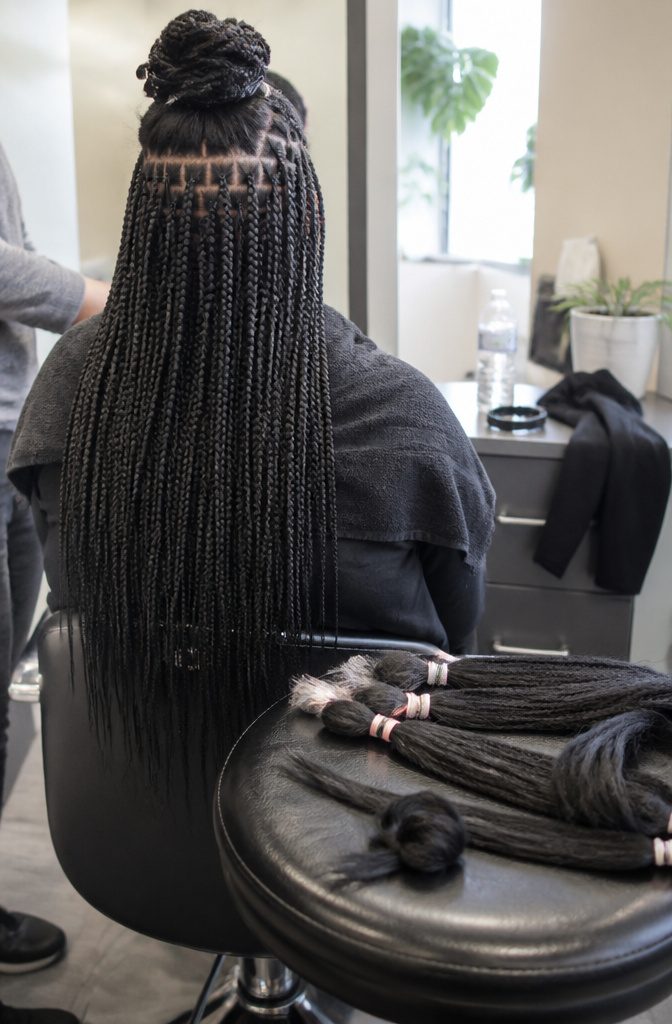
Micro braids are the thinnest singles you can install, delicate enough to move like your own strands and small enough to let you wash and moisturize your scalp without working around thick sections.
Because the partings are so tiny, micro braids can last up to three months, the longest wear time of any braid size. That access and longevity come at a cost.
Installation takes between 9–12 hours or more, often split across two or three salon days, and removal is just as slow. Salons charge $150–$450 for the service alone, not counting the 4–5 packs of pre-stretched hair you need for mid-back length.
The bigger problem is tension. Micro braids pull hardest at the hairline, and if the install is too tight or maintenance slips, that strain can thin your edges and lead to traction alopecia.
Small box braids sit about half the width of a pencil, which means less pull on your scalp than micros but still enough to damage your hairline if the braiding or upkeep goes wrong.
They take 7–8 hours to install, cost $140–$300, and last up to two and a half months.
The slightly larger size makes them easier to bun or pull into a high ponytail, so if you work out often or need your hair off your neck, small braids handle that better than anything thicker.
Medium Box Braids
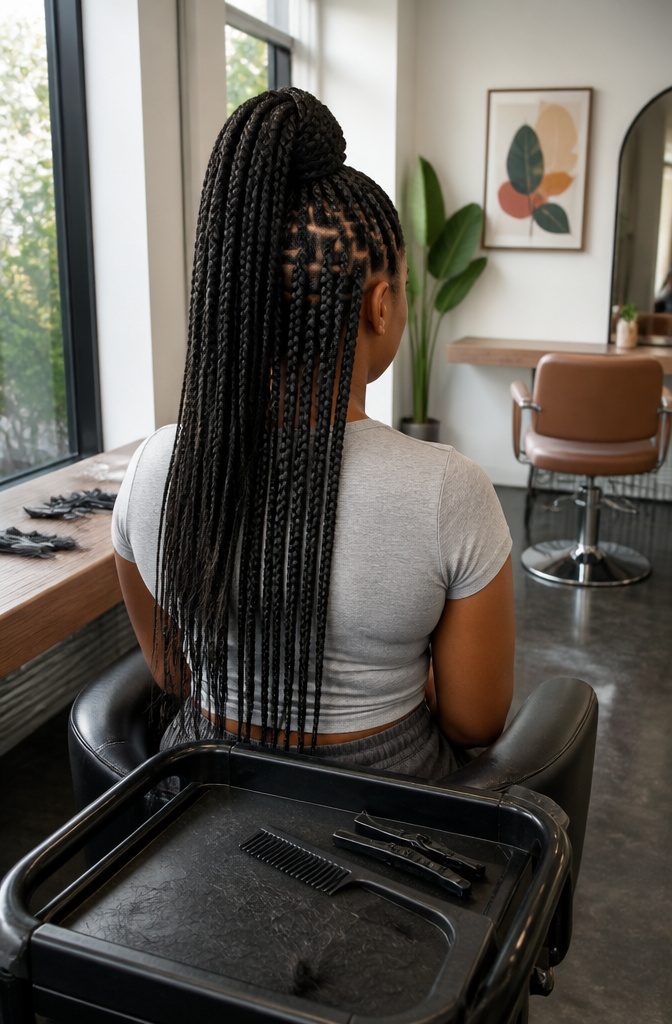
Medium box braids measure about 10 mm across, roughly the width of a standard No. 2 pencil. That dimension puts them between the finer, labor-intensive styles and the chunkier jumbo sizes that finish faster but limit how you can style them.
Installation takes 5–7 hours, which saves a few compared to smaller braids without giving up much in versatility.
You still have enough sections to pull hair into a high ponytail, experiment with partings, or leave some braids loose while pinning others back.
Cost runs $125–$265 depending on your city and the stylist’s experience, and the style holds for about two and a half months before the roots need attention. For mid-back length, plan on 9–11 single packs of pre-stretched braiding hair.
The trade-off I like here is tension: medium braids distribute weight better than micro styles, so your edges stay intact and your scalp has room to breathe during wash days.
That makes them a solid pick for anyone growing out natural hair or giving it a rest from heat.
Janet Jackson wore them waist-length in Poetic Justice, and they still anchor the look when you want long-term protection that doesn’t announce itself as either too fine or too chunky.
Large and Jumbo Box Braids
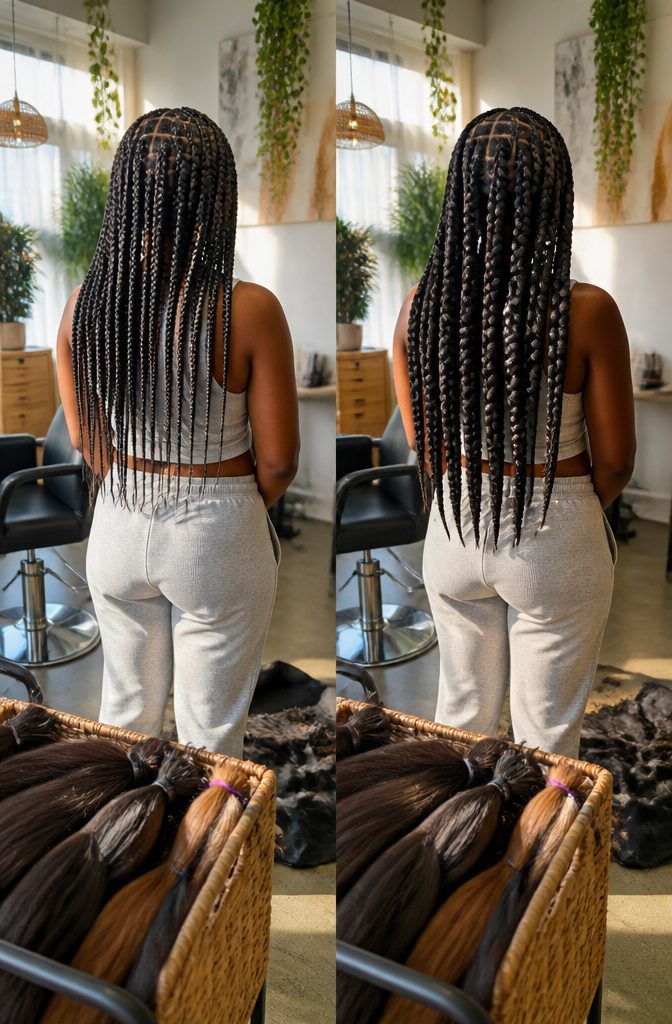
Large box braids sit at roughly the size of a marker and take 3–6 hours to install, faster than medium or small sizes but still a meaningful chair commitment.
I consider them ideal for someone who wants visible sections and a statement braid without the all-day appointment. Stylists typically charge $85–$225, and you’ll need 8–10 packs of pre-stretched hair for mid-back length.
Jumbo braids double the width again to about the size of two markers together. Installation drops to 45 minutes–3 hours, the quickest of any box braid size, and costs run $65–$175.
You’ll use 7–8 packs for mid-length. Both sizes give you fewer braids to manage each morning, but that also means fewer styling options and less access to your scalp for washing and moisturizing.
Wear time shortens to 6–8 weeks for large braids and up to 6 weeks for jumbo, so factor in more frequent reinstalls if you go this route.
Straight, Wavy, and Curly Textures
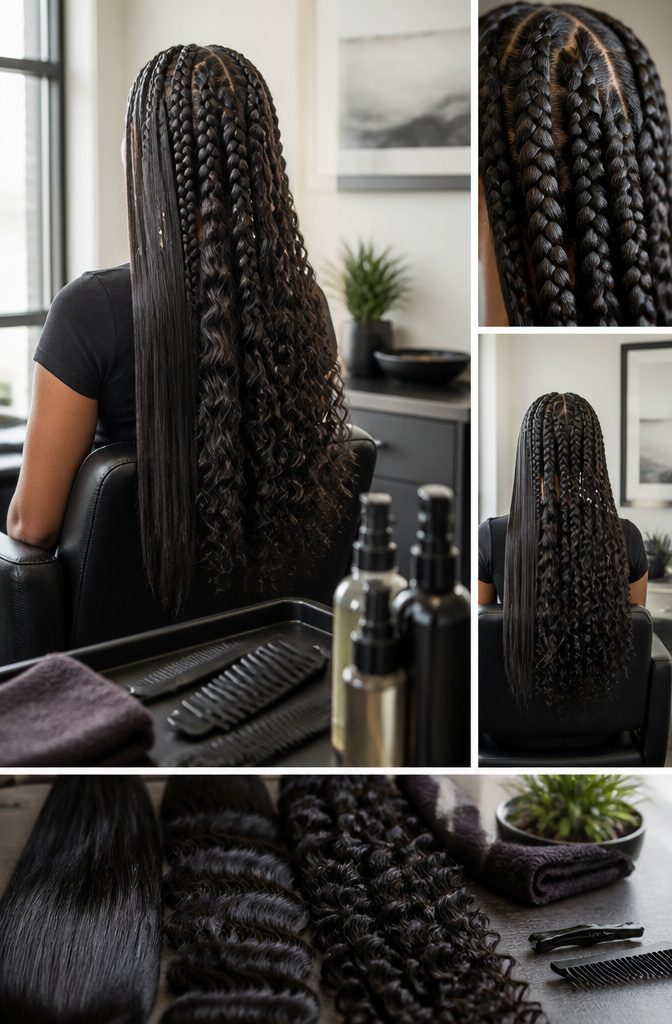
Straight extensions give the sleekest, most polished finish with minimal frizz, so I reach for them on cornrows, knotless braids, and goddess braids. A lightweight serum adds shine and keeps them smooth.
Wavy hair reads relaxed and soft, with added movement. It suits Senegalese twists, bohemian braids, and loose braids, and a curl-enhancing spray or mousse keeps the waves looking natural and beachy.
Curly texture makes braids fuller and more voluminous, with real depth and dimension.
Box braids, goddess braids, and jumbo twists are its best uses. A leave-in conditioner keeps the curls defined and frizz-free.
For the most natural blend, pick the texture closest to your own hair.
Light, Medium, and High Density
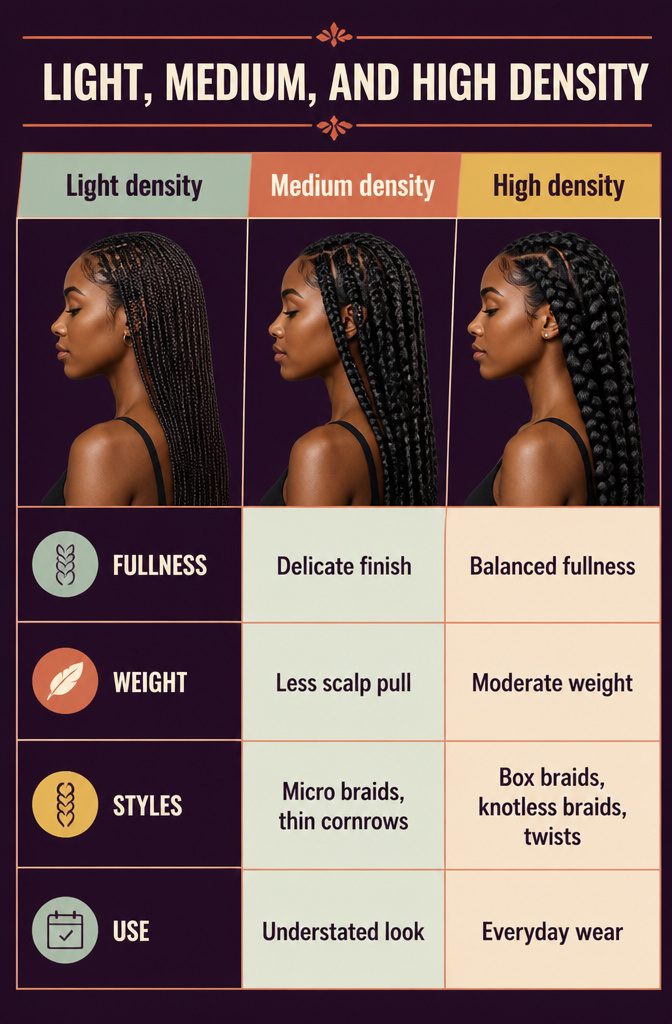
Density decides how full the braids look and how much weight sits on your scalp.
Light density creates a delicate, natural finish that works well for micro braids or thin cornrows. The hair feels comfortable because there’s less material pulling at the roots, and the style reads as understated rather than bold.
Medium density offers balanced fullness without excessive weight.
This option works for box braids, knotless braids, and twists, and it holds up well for everyday wear. Most people find it the most manageable density, especially if they’re new to braiding with extensions.
High density gives maximum volume, suited to jumbo braids or goddess braids where fullness is the point.
The look is dramatic, but it costs you in weight. If you choose high-density hair, styles worn up and off the neck help relieve some of the tension on the scalp.
Weight, Comfort, and Edge Tension
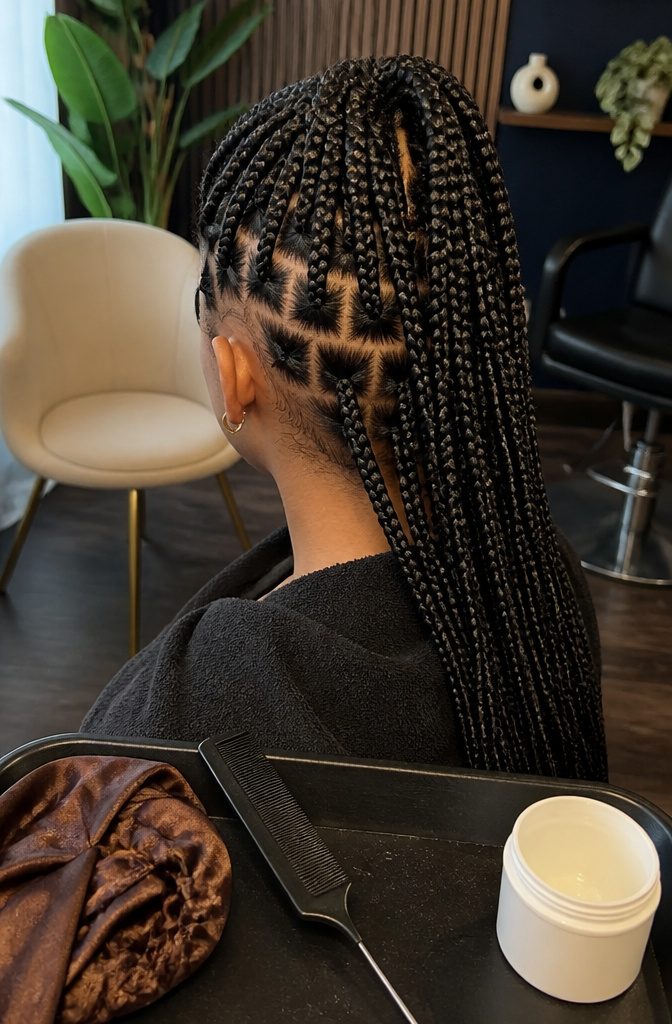
Braid size, length and density all meet at your scalp, and the strain on it is real.
Smaller braids create more tension at the hairline, especially when tightly installed, and that strain over weeks can thin edges if the style pulls too hard or stays in too long.
A good stylist knows this and will adjust tension during install, but the weight of the style itself still sits on your roots.
Long braids and high-density hair both add weight, so pairing waist-length braids with thick extensions can feel heavy by week three, particularly if you wear your hair down most days.
If you want to avoid placing too much tension on your hair, you’ll want to make sure that the parts aren’t smaller than the braids themselves. If a part is smaller than a braid it means your own hair underneath that braid is carrying more hair than it should.
— Un-Ruly
That ratio matters more than most of us realize when choosing braid size. Larger parts mean less volume overall but also less scalp access once the style is in, which can make moisturizing your scalp harder between wash days.
Maintenance and How Long Braids Last
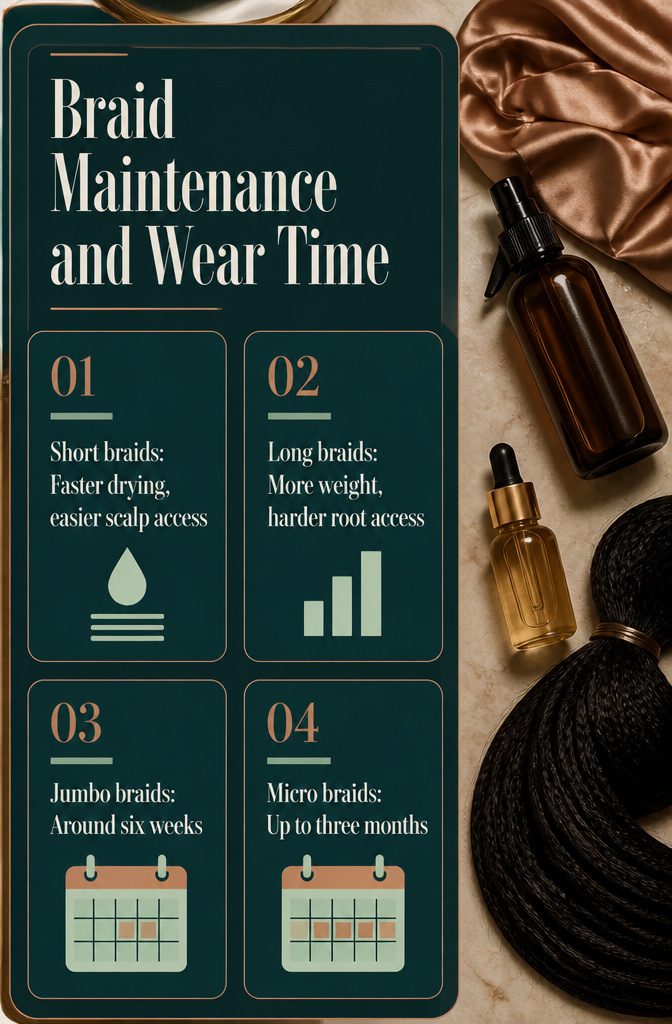
Short braids ask less of you. The length stays manageable through most of a shower, dries faster, and the scalp is easier to reach when you need to clean or moisturize it.
You can work oil or a leave-in spray onto the roots without threading your fingers through twenty inches of synthetic hair first. Long braids add weight and cover, which means more time spent lifting sections to get underneath.
Box-braid size affects how long the style holds.
Jumbo braids typically last around six weeks, while micro braids can go three months before the new growth becomes obvious enough to redo them. Medium-size braids sit in the middle, usually holding through eight weeks.
The trade is patience at install versus frequency of return trips. Smaller braids take longer to put in but buy you more weeks before maintenance.
Styling Options by Braid Size and Texture
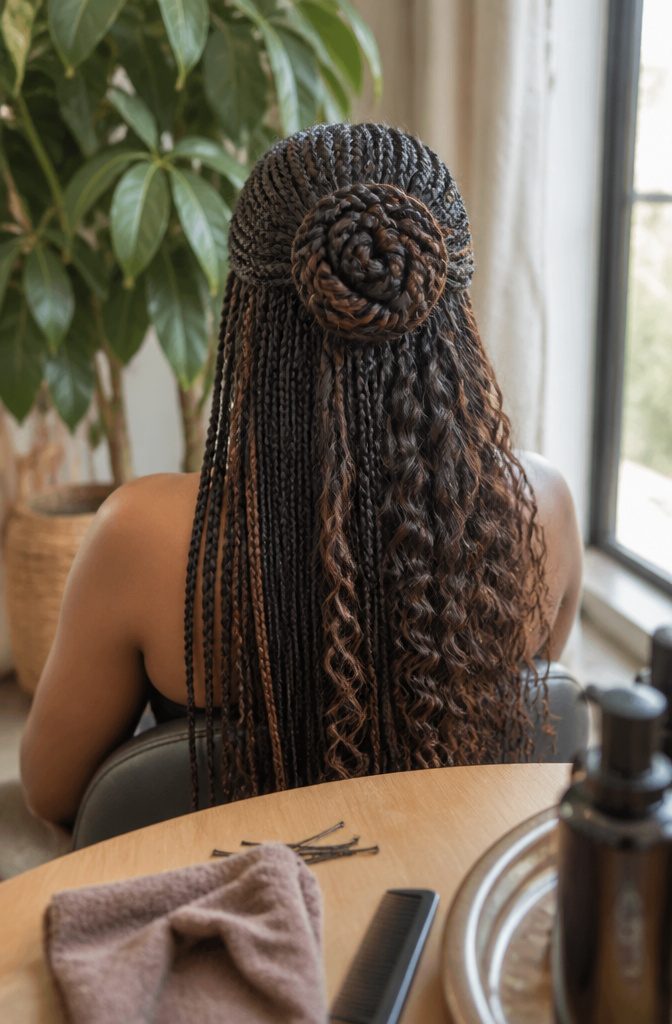
Braid size sets what you can do with the style before texture does.
Small braids hold up in intricate updos, because thin sections twist, pin and stack without bulk. Larger braids read bolder and look best worn down.
Texture decides the finish. Straight hair gives the sleek surface that cornrows, knotless braids and goddess braids call for, and a lightweight serum keeps it polished.
Wavy hair suits Senegalese twists, bohemian braids and loose braids, where movement is the point. Curly hair adds fullness to box braids, goddess braids and jumbo twists.
I’d choose size for the style you plan to wear, then texture for the finish, and match that texture to your own hair so the blend disappears at the root.
Frequently Asked Questions
How big are jumbo box braids?
Jumbo box braids are about the width of two markers held together, the chunkiest size on the chart.
Each section holds so much hair that installation takes only 45 minutes–3 hours and costs $65–$175. They last up to 6 weeks, and you’ll want 7–8 packs of hair for mid-length.
What is the difference between micro braids and small box braids?
Micro braids are thinner, more delicate and slower to install than small box braids, which are about half the width of a pencil. Micros take 9–12 hours or more, cost $150–$450 and can last up to three months.
Small braids take 7–8 hours, cost $140–$300 and last up to two and a half months. Micros pull hardest at the hairline, but small braids can still thin your edges if they’re installed too tightly.
How do I choose the right braid length, texture, and density?
Choose your length and size for the style you plan to wear, then pick the texture closest to your own hair so the braids look natural at the roots.
For length, 10–16 inches is the easiest to maintain, 18–24 inches gives the most styling flexibility, and 26 inches and above adds weight and upkeep.
For density, medium suits most braid styles and is the easiest for first-timers, light works for micro braids and thin cornrows, and high is best for jumbo or goddess braids if you don’t mind the extra weight.