Natural hair falls into four pattern groups based on how tightly it curls, but the category alone won’t tell you whether your strands are fragile or oily, since width, porosity and density all shift independently of curl.
Type 4C can shrink 75 percent of its stretched length, which is why a six-inch coil springs back to look like two.
1. Type 1: Straight Hair
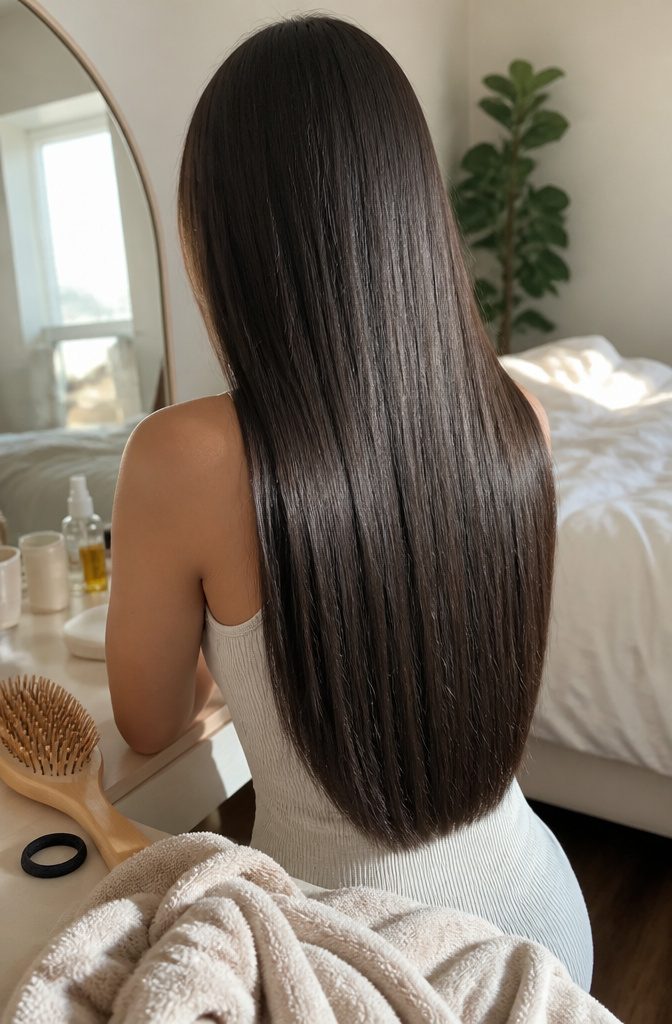
Type 1 hair has no natural bend. Strands fall from root to tip without a wave, and they won’t hold a curl without product or heat.
Oil is the trade-off: with no curves to slow it, it slides down the strand, so straight hair is shiny and strong but looks greasy after a few days.
Texture still varies, since strands can be fine, medium or coarse, but the pattern stays straight either way.
I’d skip heavy serums and butters on this type. A texture spray or dry shampoo adds body without weight, and it lets you wash less, which matters because over-washing can push the scalp to make even more oil.
Straight hair also seems to grow fastest, but only because there’s no shrinkage hiding the length.
2. Type 2: Wavy Hair
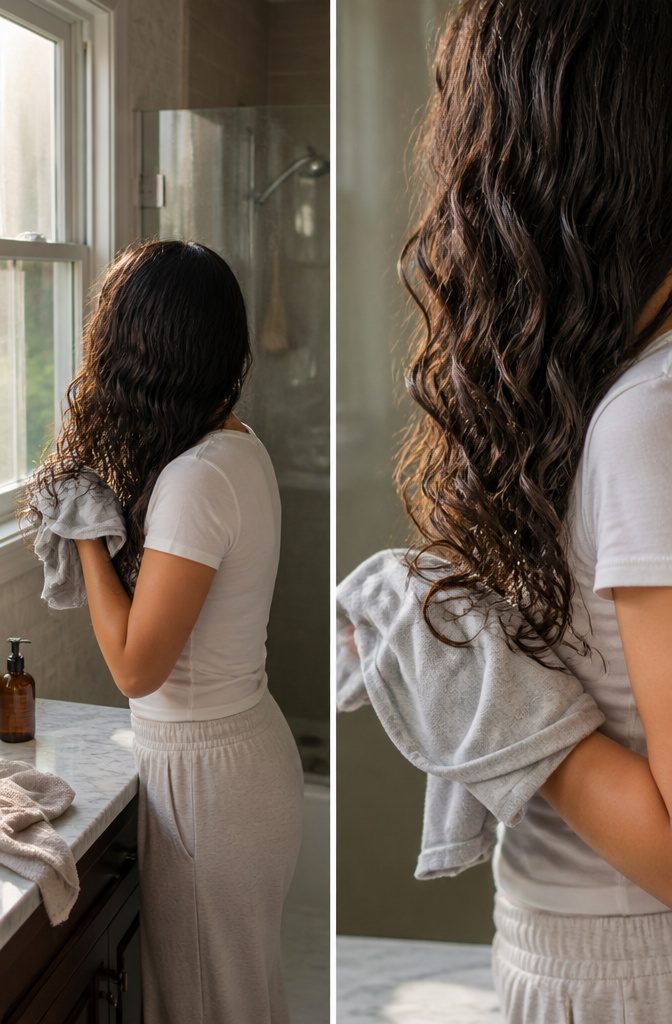
Type 2 hair falls in a loose to more defined S-shaped wave somewhere between straight and curly. The roots tend to start fairly straight, and waves begin a few inches down, moving through the mid-lengths to the ends.
That S-pattern gives natural volume and a bit of bounce, though it also brings frizz and a tendency to flatten under heavy products.
The subtypes split by how tight and where the wave starts. Type 2A is loose and beachy, with waves that kick in around eye level and stay undefined all the way down.
Type 2B shows more defined S-waves with better root lift. Type 2C has tighter S-shaped waves that start closer to the scalp and carry the most volume of the three.
Wavy hair has thicker individual strands than straight hair, which helps with body but makes it easier to weigh down.
I stick to lighter products like mousse or wave-defining gels, and I use a soft T-shirt or designated hair towel to squeeze water out rather than rubbing it dry. That keeps frizz in check without flattening the wave.
3. Type 3: Curly Hair
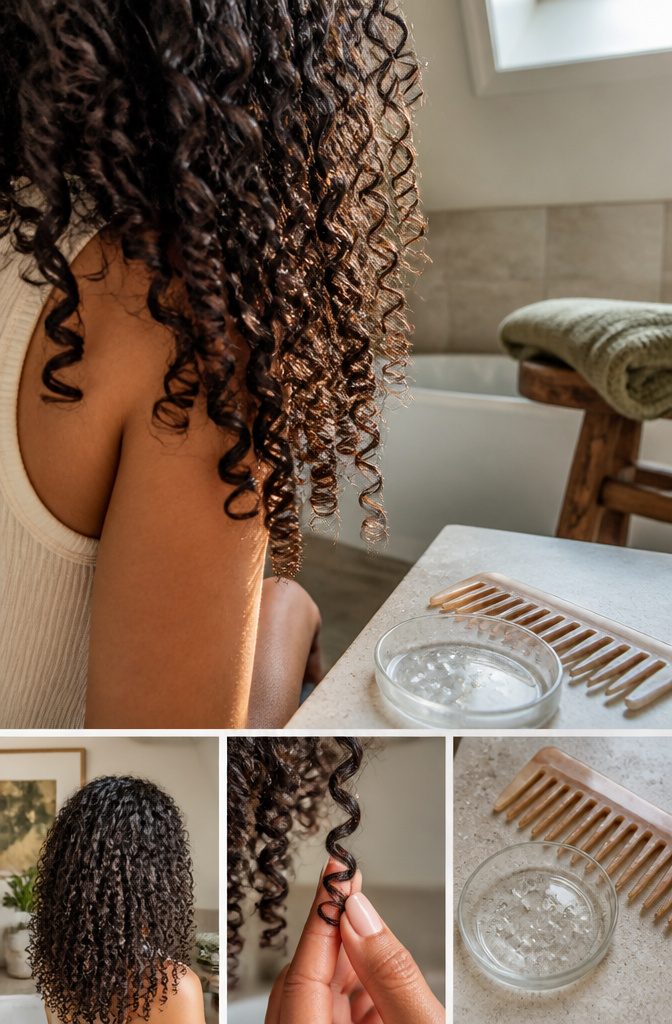
Type 3 hair forms defined curls, ringlets or spirals, and the subtype comes down to size. 3A curls are loose, about the width of a quarter or a stick of sidewalk chalk, and hold their shape with little product.
3B tightens to about the width of a penny, or a marker, with plenty of spring from the root. 3C is the corkscrew: about the circumference of a pencil, densely packed, with a defined C pattern.
Tighter ringlets need more moisture, which makes the ingredient list matter.
Avoid silicone and sulfates in your curl products, though. They may temporarily tame frizz, but they can dry out your hair over time and cause breakage.
Frizz relief that costs you breakage isn’t worth it, so check the label before you buy.
4. Type 4: Coily or Kinky Hair
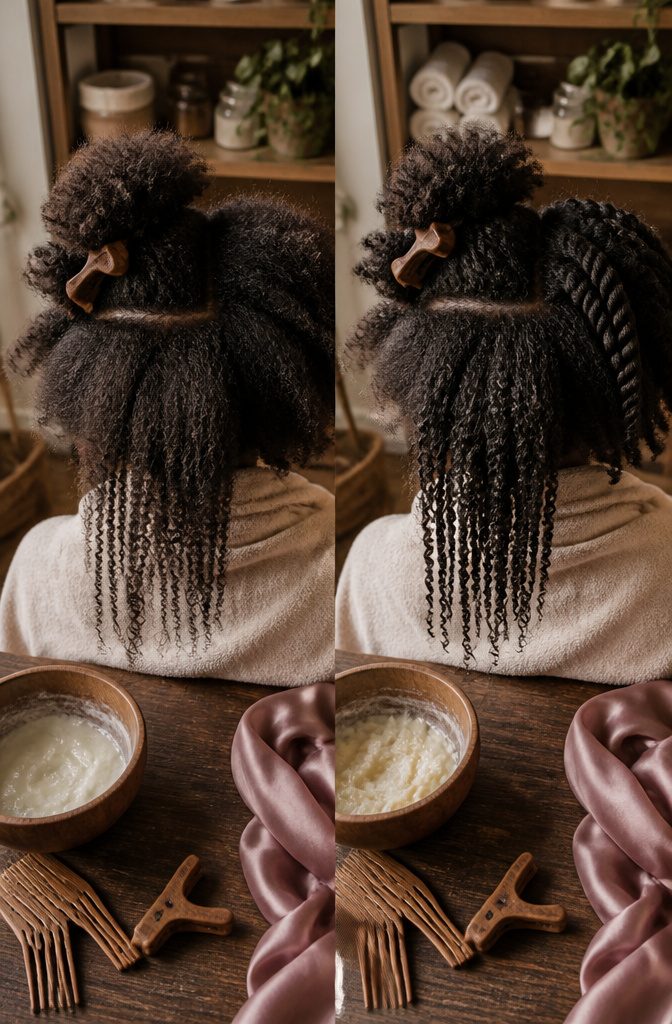
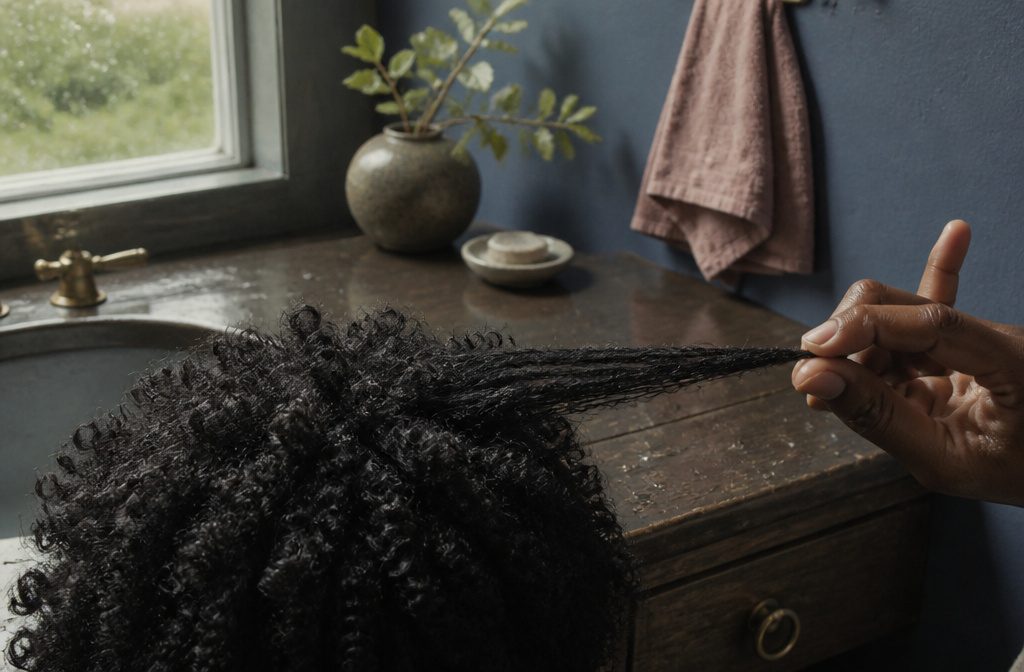
Type 4 hair coils tightly into S-shapes, Z-shaped zigzags, or dense spirals that shrink dramatically when wet.
The strands are fragile, and because natural oils struggle to travel down the tightly wound structure, dryness is the default unless you actively counter it.
Shrinkage can run anywhere from minimal in looser 4A coils to 75 percent or more in 4C hair, so what measures six inches stretched may spring back to look like two.
4A forms defined S-shaped coils about the circumference of a crochet needle.
Each curl spirals independently rather than interlocking with neighbors, which gives the pattern definition and reduces breakage risk compared to tighter textures. Yara Shahidi and Macy Gray both wear 4A.
The texture itself can be fine or wiry, and the few cuticle layers mean it breaks easily without moisture. A wash-and-go works here if you keep hydration high.
4B bends in sharp Z angles rather than smooth curves.
The coils are less defined, more densely packed, and shrink up to 70 percent of their unstretched length. Lauryn Hill and Esperanza Spalding both have 4B, and that cotton-candy volume is one of its hallmarks.
The angular bends make this texture more fragile than 4A, and single-strand knots form easily. Deep conditioning and lightweight oils that seal moisture without adding weight are the play here.
4C coils so tightly that the curl pattern can be hard to see unless you stretch the hair. The zigzag spirals are the smallest and most densely packed of all the types, and shrinkage hits 75 percent or more.
Coily hair is the most fragile texture and breaks the easiest, yet it takes protective styles like twists, braids, and bantu knots better than any other type.
Moisture matters more here than anywhere else: regular deep conditioning, protective styling, and gentle handling are what stand between healthy 4C hair and breakage.
5. Hair-Strand Texture: Fine, Medium, or Coarse
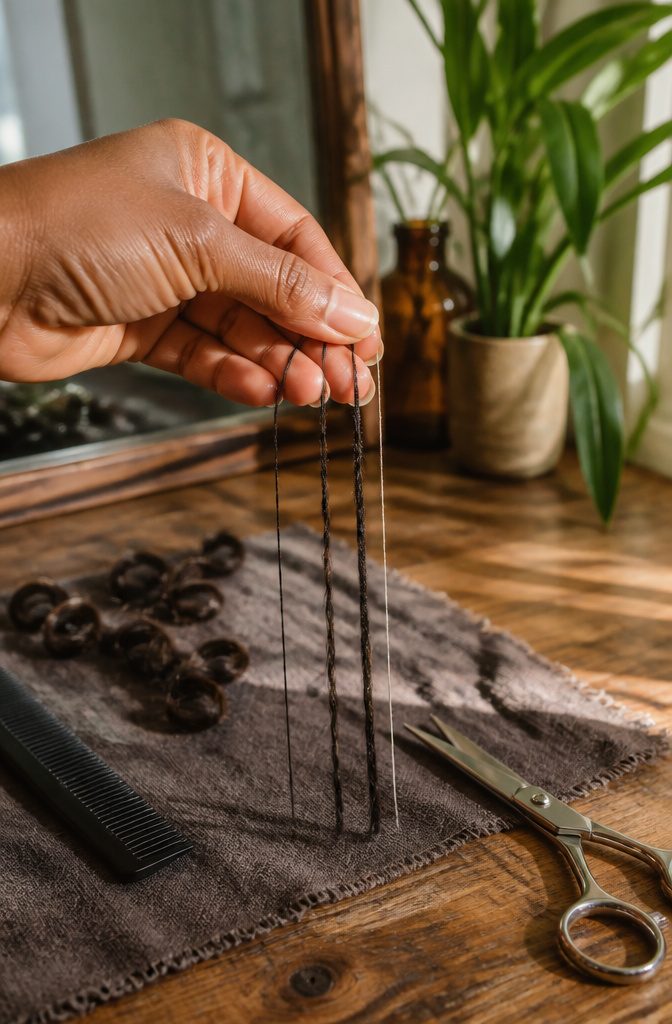
Strand texture is the width of one hair, and it says nothing about curl. Hold a single strand next to sewing thread: fine is thinner than the thread, medium is about the same, coarse is wider.
Because it’s a separate label from curl type, a 2a wavy head can have medium strands, and I wouldn’t assume any curl pattern comes with a particular width.
Texture changes how hair behaves. Fine hair is the hardest to style.
Medium is the easiest and holds curls longest. Coarse strands curl readily but bend less willingly, so a style can be slow to set and quick to lose its shape.
6. Lanugo, Vellus, and Terminal Hair Growth Forms
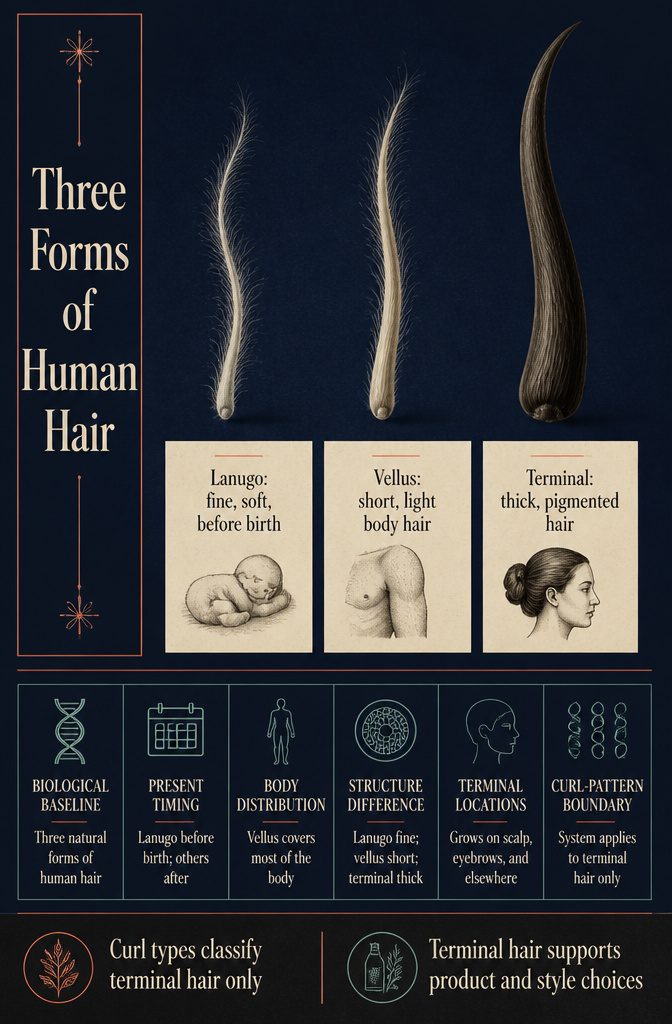
Before I get to curl patterns, there’s a separate biological category worth clearing up.
Human hair grows in three forms: lanugo, vellus, and terminal. Lanugo is fine and soft, present before birth.
Vellus is the short, light hair covering most of your body. Terminal hair is thick and pigmented, and it’s what grows on your scalp, eyebrows, and elsewhere.
When I talk about type 1, 2, 3, or 4 hair in the rest of this guide, I’m talking about terminal hair only.
The curl-pattern system doesn’t apply to vellus or lanugo. This isn’t another curl category to memorize; it’s just the biological baseline that explains what kind of hair you’re actually classifying.
Once you know you’re working with terminal hair, the type system becomes useful for picking products, styles, and extensions that match your pattern.
How to Identify Your Curl Pattern
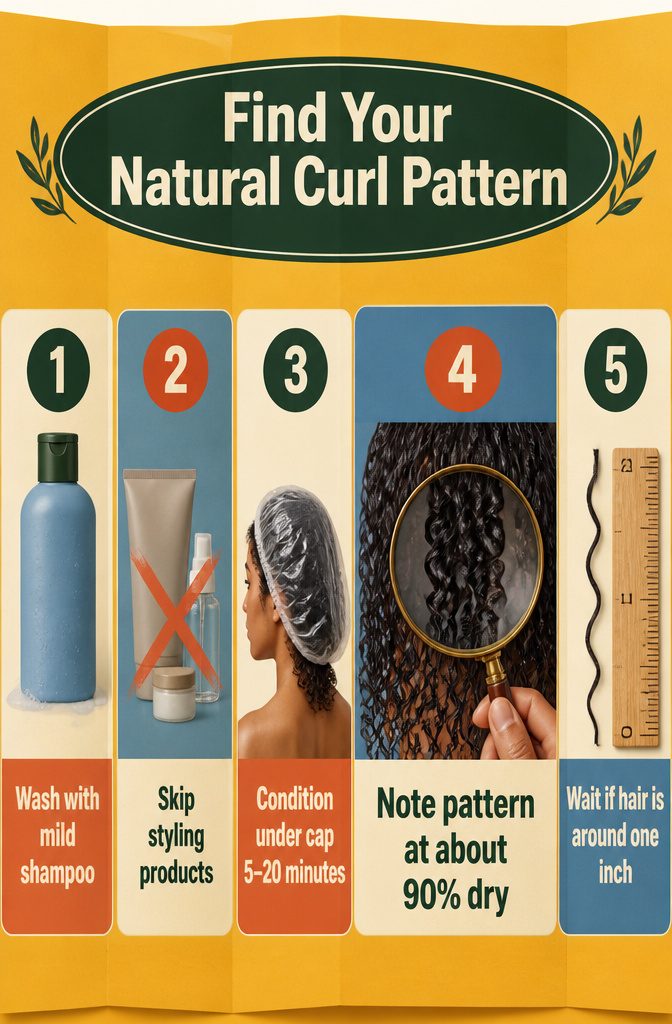
Start with clean hair and no product, so the natural shape shows. Any of these methods works:
- Air-dry: Wash with a mild shampoo, skip every styling product, and let the hair settle. The shape it dries into is your baseline.
- Deep conditioner: Blot damp hair, apply conditioner, and cover with a cap for 5–20 minutes. Rinse with cool water and note the pattern at about 90% dry. This is the method I’d pick, since hydrated hair shows true coil shape and size.
- Single strand: Pluck one hair and hold it under bright light. The curl or coil is easy to read up close.
- Wet hair: Look at the pattern while strands are soaked.
- Too short: If hair is around an inch or less, wait for a strand long enough to examine. Texture seldom changes, so you only need to do this once.
Why You May Have More Than One Pattern
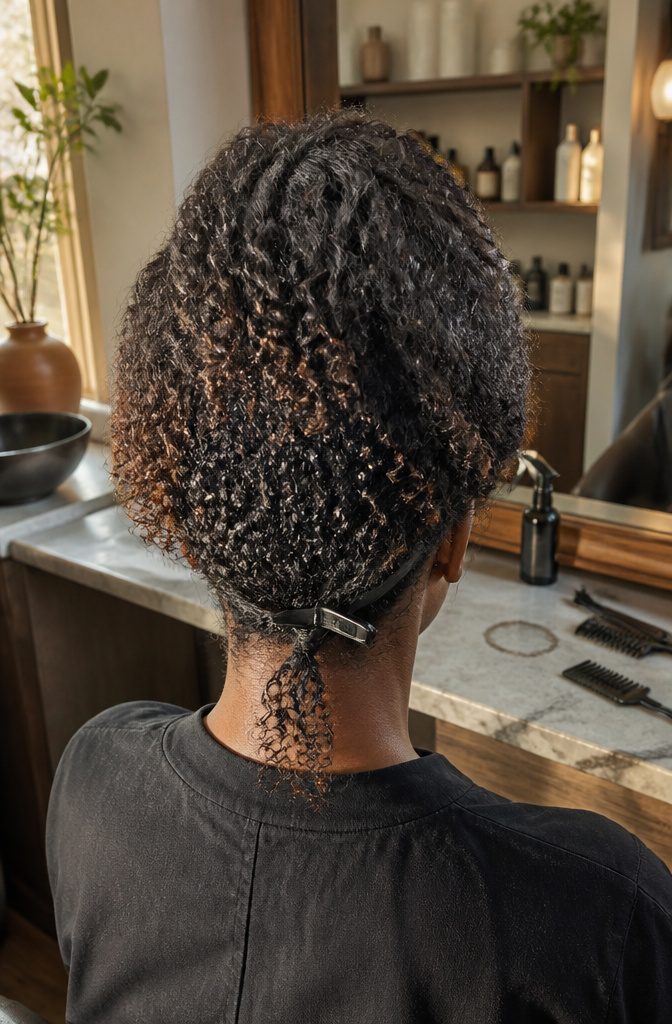
Few heads carry a single pattern.
The curls at your crown can run looser than the ones at your nape, and you can be born with several patterns side by side. That’s normal, and it rarely makes your routine harder.
Age, climate, hormones and hair color can all shift your texture over time, so the pattern you had at 20 may not be the one you have now.
Build your routine around the pattern that covers most of your head, then change one product or step at a time.
If one section needs more moisture than the rest, give just that section an extra round. A stylist can help you map the differences at your next appointment.
What Porosity and Density Mean for Your Hair
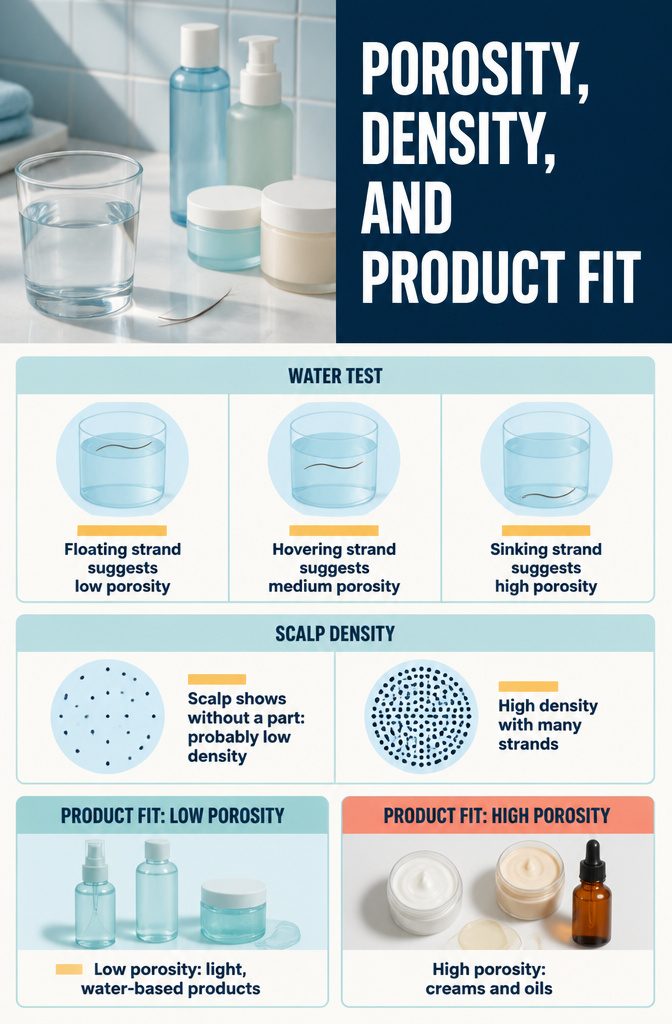
Porosity is how well your hair absorbs and holds moisture. Density is the number of strands per square inch of scalp, and if your scalp shows even without a part, yours is probably low.
For the water test, drop one clean strand into a glass of room-temperature water. Floating suggests low porosity, sinking to the bottom suggests high, and hovering in between suggests medium.
I treat the result as a hint, since the tests aren’t uniform (some let a low-porosity strand float and then sink) and neither is the product advice.
Low porosity tends to like light, water-based products; high porosity tends to like creams and oils. Low density does better with lightweight formulas, high density with richer ones.
Frequently Asked Questions
How many types of natural hair are there?
There are 4 main types based on curl pattern: Type 1 (straight), Type 2 (wavy), Type 3 (curly) and Type 4 (coily or kinky).
Types 2, 3 and 4 split further into A, B and C subtypes by how tight the pattern is. Strand texture (fine, medium, coarse) and the 3 hair growth forms are separate classifications, not extra curl types.
How do I identify my natural hair type?
Start with clean hair and no product, then look at the shape it settles into. You can air-dry it, or deep condition and check the pattern when hair is about 90% dry, which shows the true coil shape.
Hair that dries with no bend is Type 1, a loose S-shape is Type 2, defined curls are Type 3, and tight spirals or zigzags that shrink up are Type 4.
Do I have 4B or 4C hair?
Look at how the hair bends and how much it shrinks.
4B bends in sharp Z angles, has less defined coils, and shrinks up to 70% of its stretched length. 4C coils so tightly that the pattern is hard to see until you stretch the hair, and shrinkage reaches 75% or more.
What is the difference between hair type and hair texture?
Hair type is your curl pattern, such as wavy or coily.
Hair texture is the width of a single strand, either fine, medium or coarse. The two are independent, so a 2A wavy head can have medium strands.
What is hair porosity?
Porosity is how well your hair absorbs and holds moisture. To test it, drop one clean strand into a glass of room-temperature water: floating suggests low porosity, sinking suggests high, and hovering in the middle suggests medium.
Treat the result as a hint rather than a verdict, since these tests aren’t uniform.
Can I have more than one hair type or texture?
Yes, and it’s common. The curls at your crown can run looser than the ones at your nape, and age, climate, hormones and hair color can shift your texture over time.
Build your routine around the pattern that covers most of your head, then give any section that differs its own extra care.