Some of these styles take one elastic, others need a full day at the salon and last for weeks.
The method you pick depends on how much time you have each morning, whether your hair is already stretched or freshly washed, and how long you want the style to hold before you take it down or start over.
1. Bantu Knots
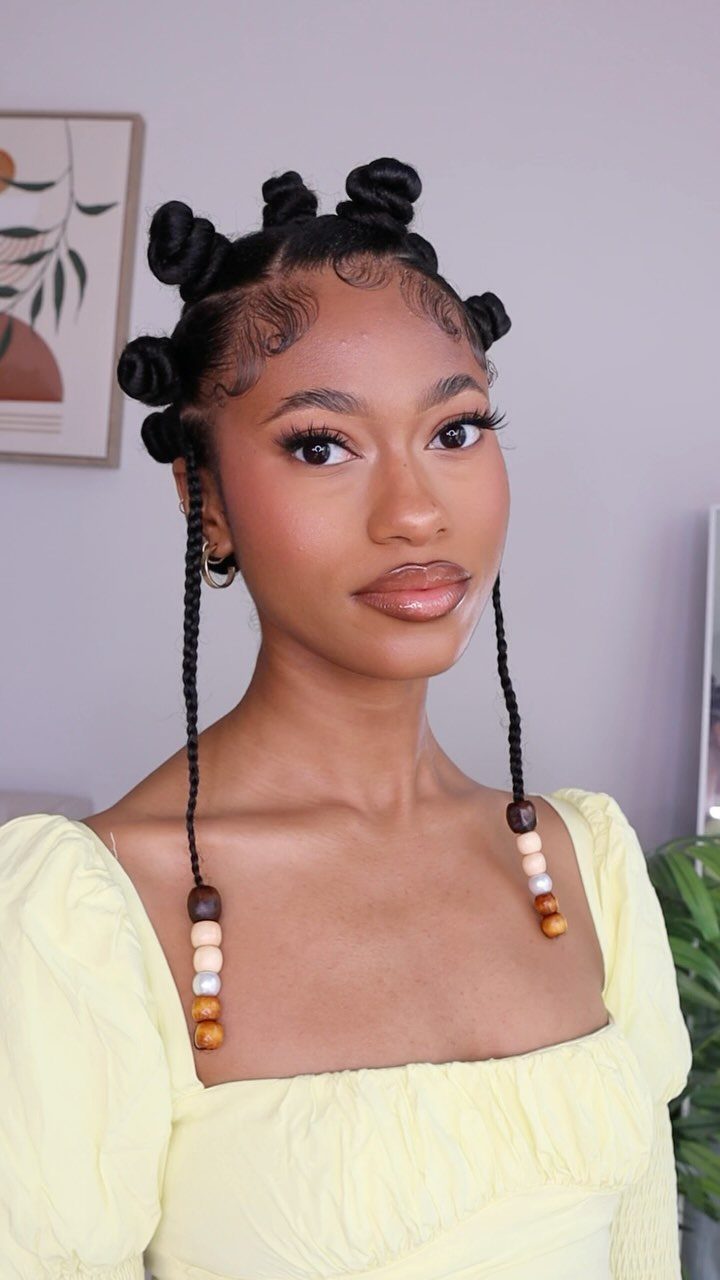
Twist small sections of hair, then wrap each one around itself into a coiled bun that sits close to your head.
The knots can stay in for a few days as a style on their own, or you can unravel them for a defined curl pattern that doesn’t drop.
They work on any texture and give you two looks from one round of styling. For the unraveled curls, sleep in the knots and take them down in the morning.
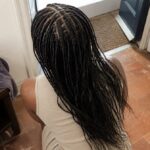
2. Box Braids in a Bun
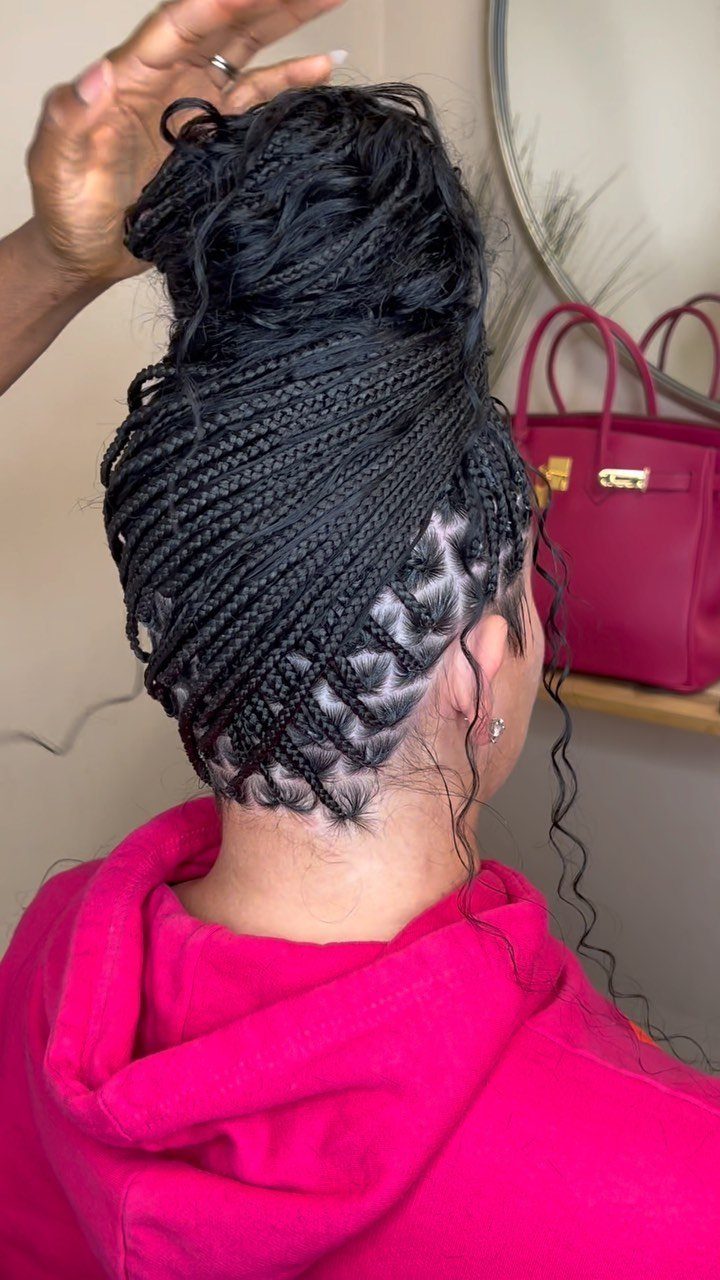
Box braids installed at a salon last for weeks, and pulling them into a high bun keeps them off your neck without adding new manipulation.
The bun sits where you secure it, and the length falls or wraps depending on how much hair was added.
If your braids are fresh and still tight at the root, a loose tie or coated elastic works better than a band that drags.
Cornrows along the perimeter, the way the back shows here, keep shorter pieces flat and give the bun a cleaner base.
3. Wash-and-Go
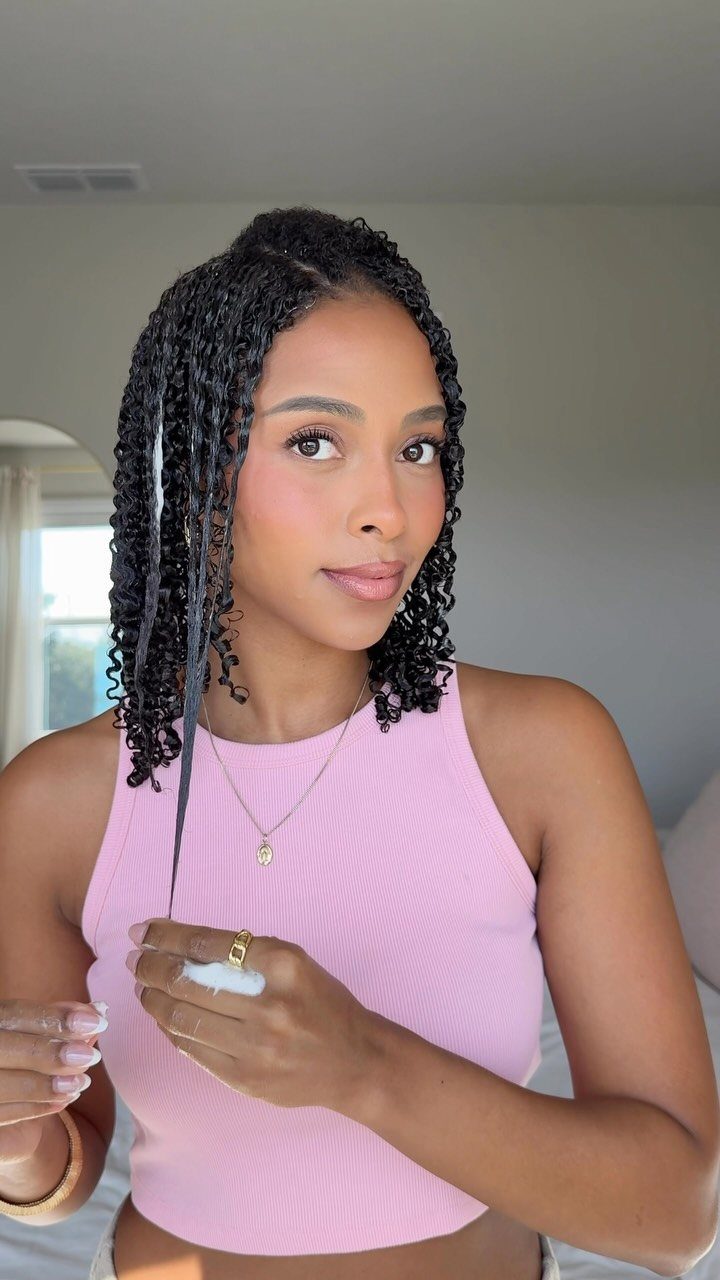
Apply leave-in conditioner and a curl-defining gel or cream to soaking-wet hair, then let it air-dry or diffuse on low heat. Bring out the curl or coil pattern you already have without stretching or manipulating it once product goes in.
Type 4a hair holds definition well with this method, but any texture from 3a to 4c can make it work if you use enough product and don’t touch the hair while it dries.
Expect shrinkage, and if frizz shows up by day two, mist with water and smooth a little more gel through the crown.
4. High Puff
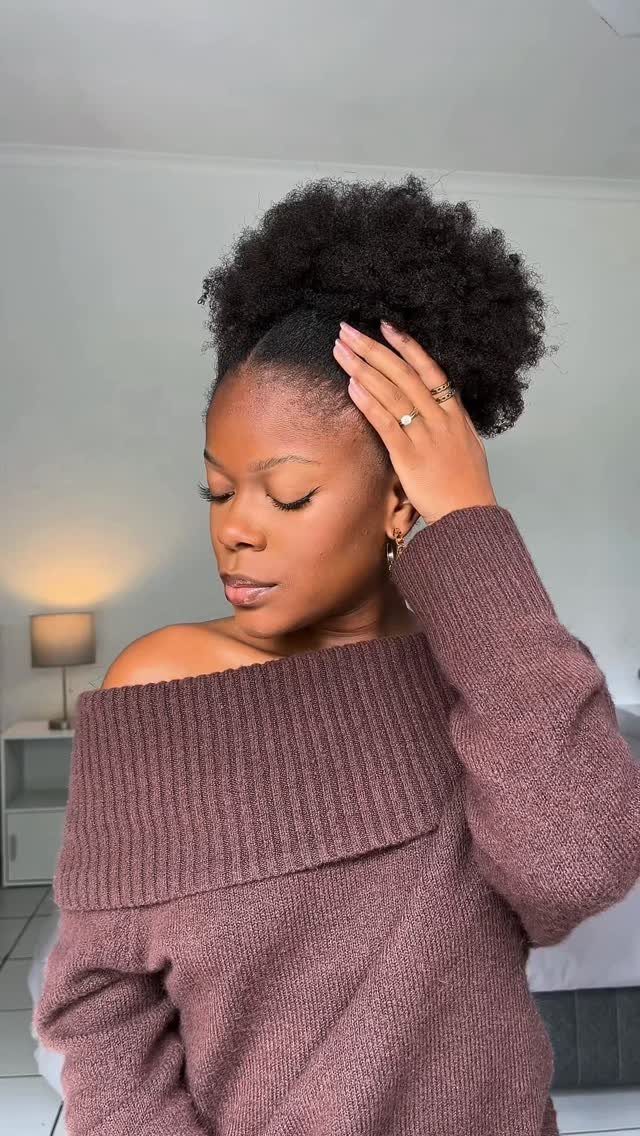
Pull all your hair up to the crown and secure it with a soft band or scrunchie, leaving the ends loose in a rounded puff.
The height and volume come from gathering the hair high and not slicking it down too tight at the roots.
If your edges are fragile or recovering from breakage, skip the gel and use a looser band that doesn’t pull. The puff sits better when hair is stretched first, either from an old twist-out or a quick blow-dry on cool.
5. Twist-Out
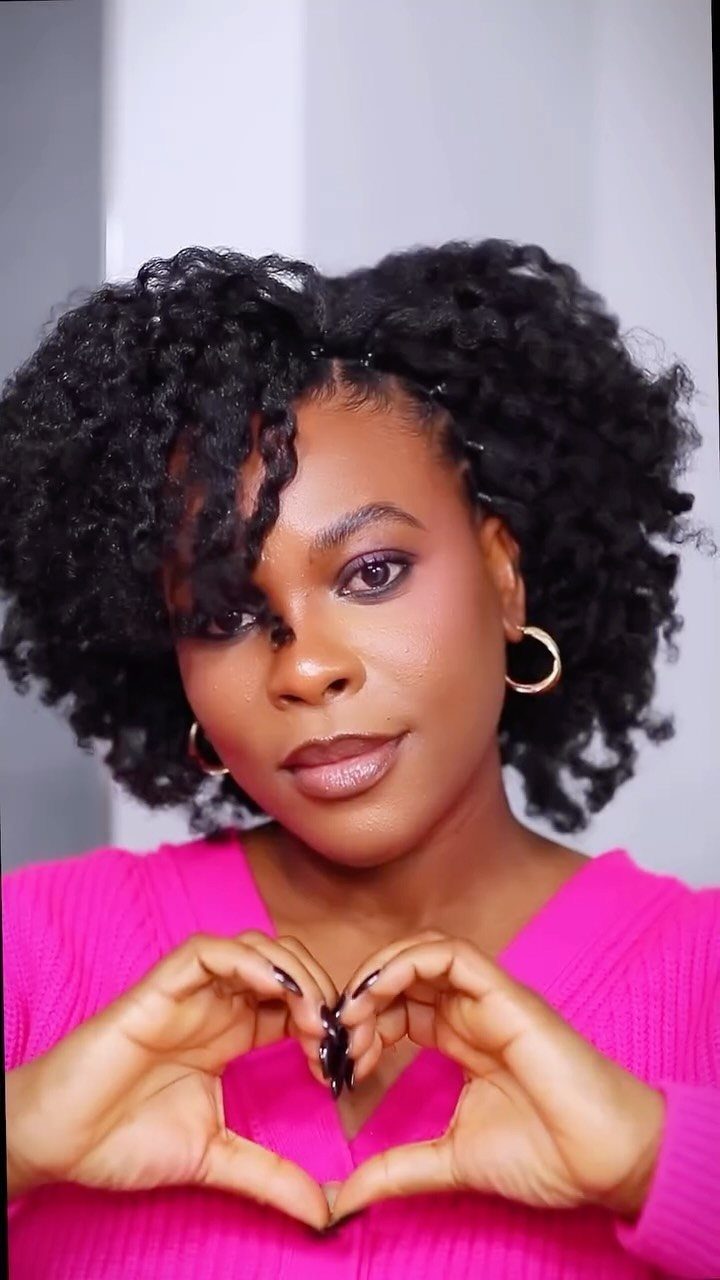
Section damp hair, apply a leave-in and curling cream, then twist each section into two-strand twists. Let them dry completely, overnight or under a dryer, then unravel them to release defined, elongated curls.
The result on 4c hair is softer and fuller than a wash-and-go, with less shrinkage and more control over the shape.
Finger-coil the ends of each twist before you let them dry for a curl that tapers instead of frizzing out at the bottom.
6. Twists
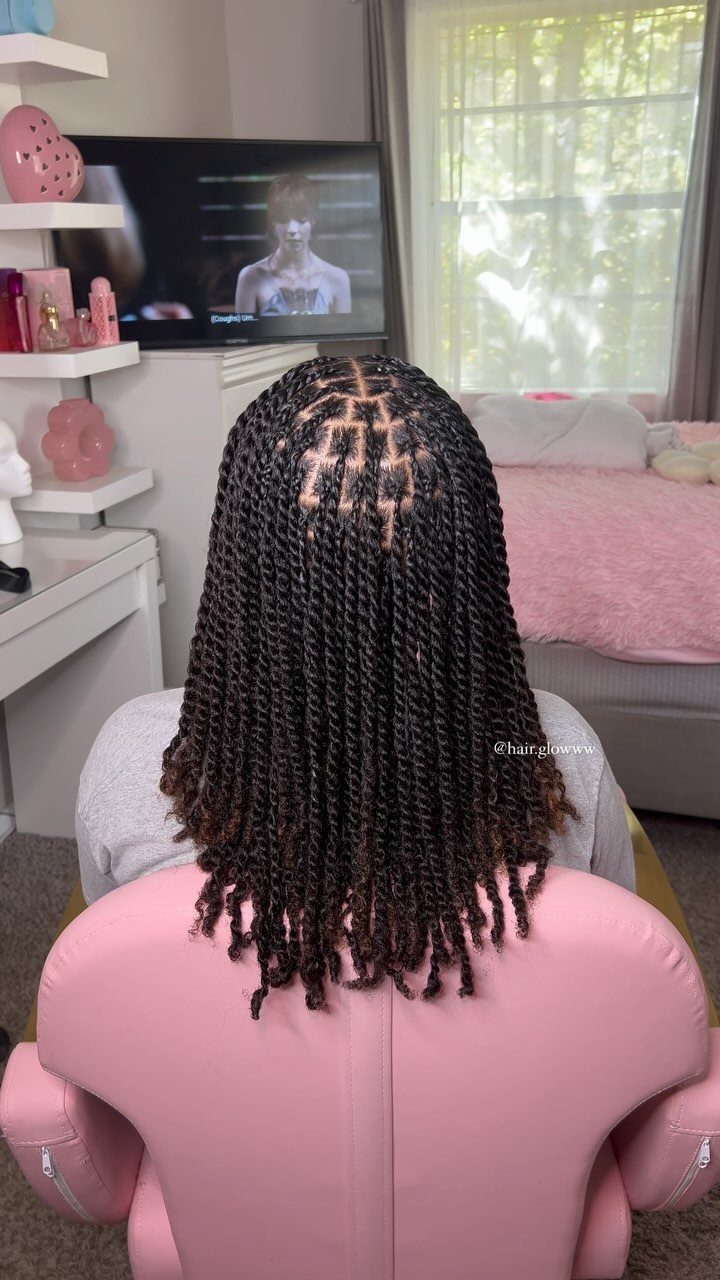
Two-strand twists divide the hair into small sections, each one twisted with its neighbor from root to tip.
They can be installed with just your natural hair or with added length, and they last several weeks depending on how you maintain them at night.
The parts can be square, diagonal, or freehand, and the size of each twist changes how long the install takes and how much the finished style weighs.
Twists give your hair a rest from daily styling and hold up well under a bonnet or scarf while you sleep.
7. Afro
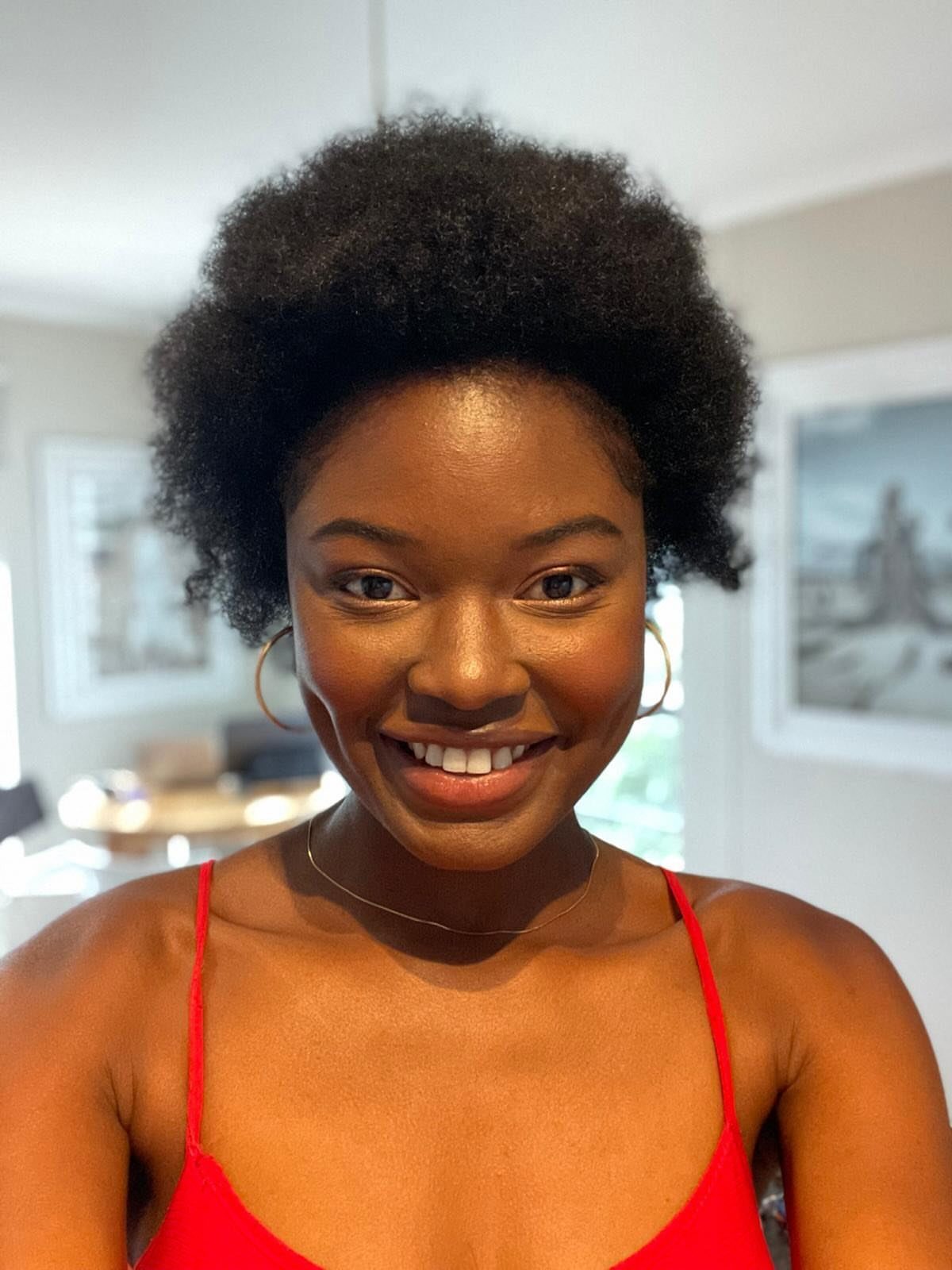
Pick out your natural texture at the roots to build volume and shape it into a rounded silhouette.
The lift comes from working through small sections with a wide-tooth pick or afro comb, detangling from the ends first and working your way up to the root.
Hair that’s been stretched slightly, either air-dried or lightly blown out, gives the pick room to move through without snagging. For a rounder shape, pick from all sides and taper the edges instead of just lifting from the top.
8. Headband
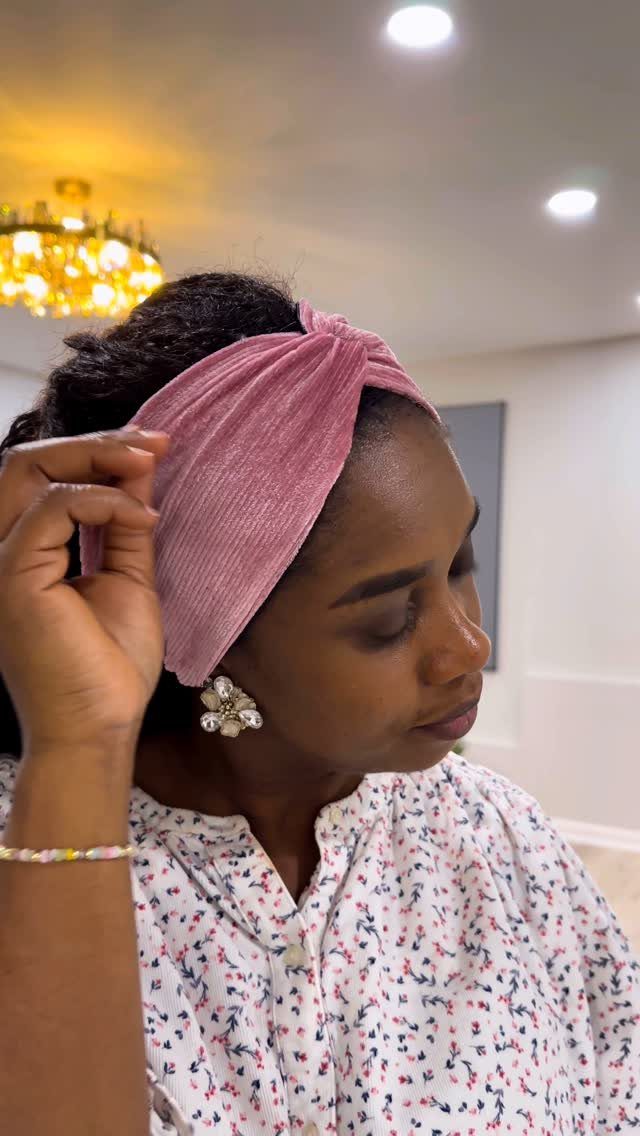
An oversized fabric headband covers the hairline and anchors textured hair without flattening it. The width hides any part or root growth, and the wrap adds color or pattern without requiring extra styling underneath.
Twisted or knotted bands stay put better than flat ones, and placing the band an inch or two back from your natural hairline gives more volume at the crown. This works over a wash-and-go, a puff, or hair worn loose.
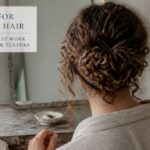
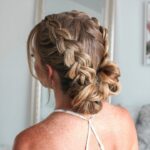
9. Low Bun
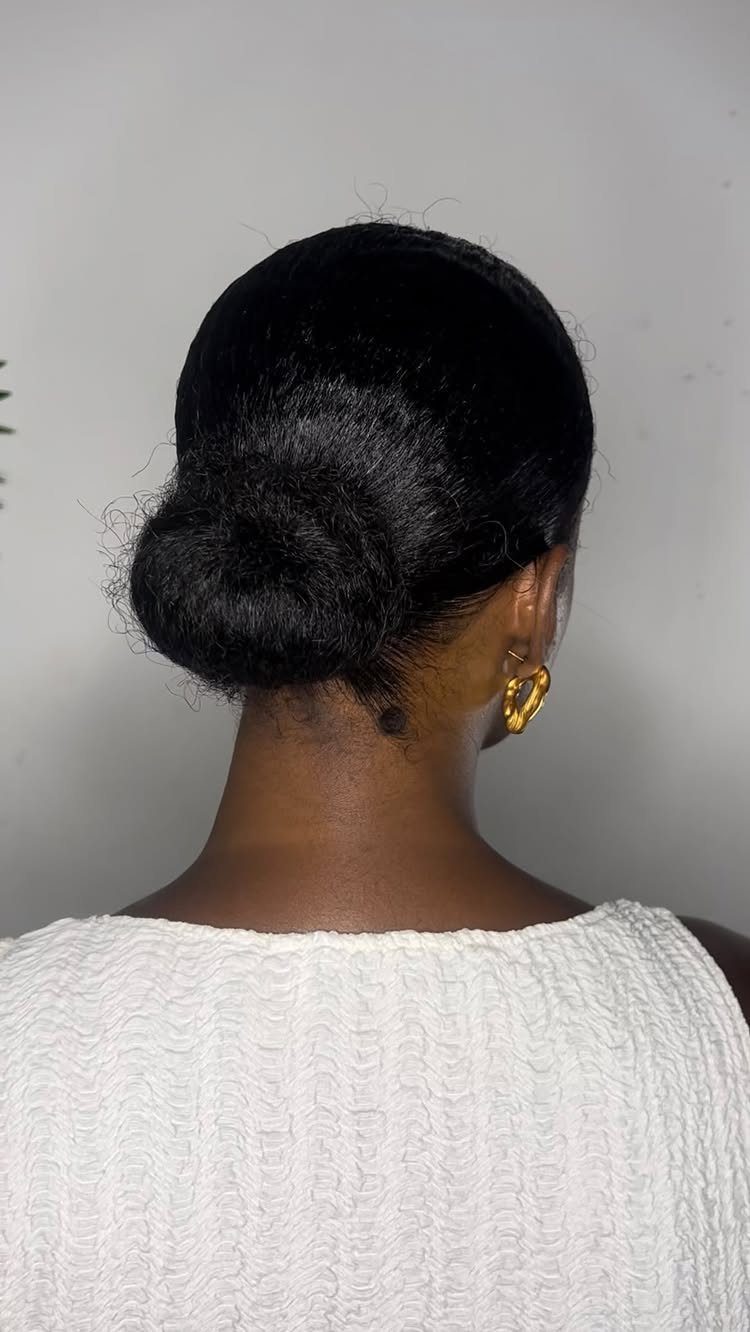
Gather hair at the nape and twist or wrap it into a bun that sits low on the head.
The bun can be smooth or textured depending on whether you brush the hair back or leave it loose, and you can braid or twist sections before wrapping them for more detail.
A low placement puts less tension on the hairline than a high bun, and it holds securely with one or two pins.
If your hair is shorter or very textured, twist it first so it coils into the bun instead of pulling apart.
10. Headwrap Updo
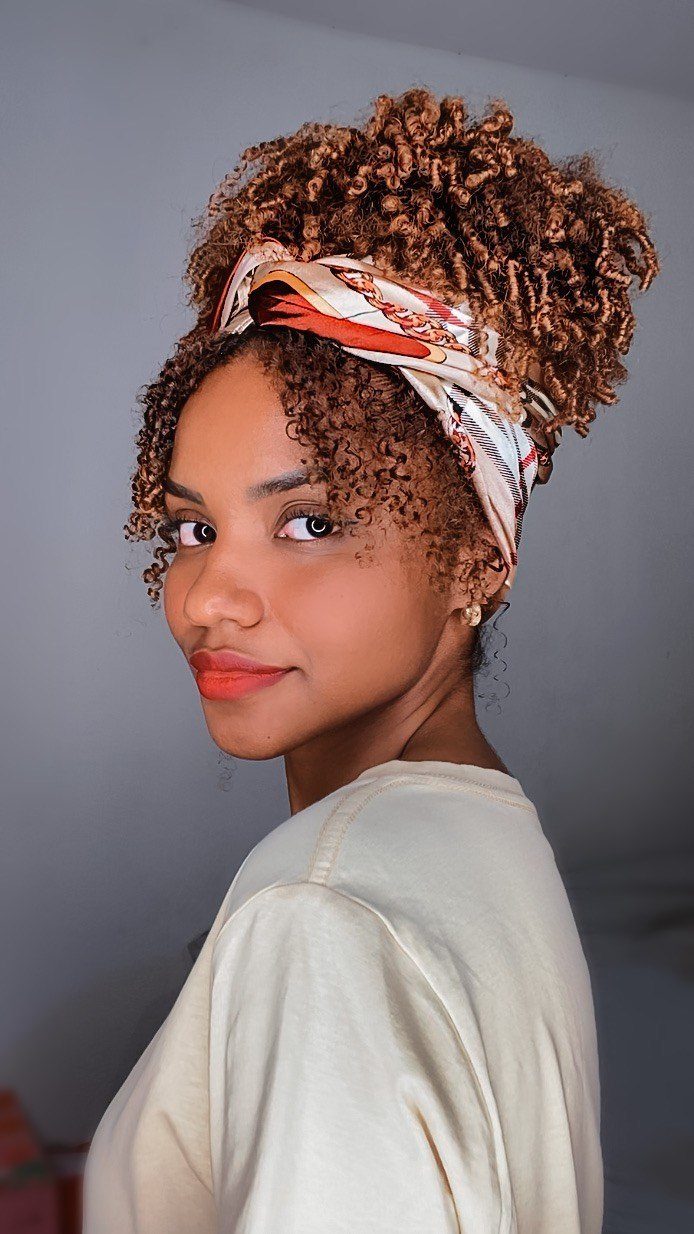
Gather your hair into a high puff, then wrap a patterned or solid-color fabric around the base, leaving the curls on top exposed.
The wrap covers the band and adds height, while the front section frames your face if you pull a few curls forward.
This gives you a finished look with minimal styling, and the wrap holds the puff in place without a second tie. Choose a fabric that’s wide enough to circle your head twice so the wrap stays secure all day.
11. Half-Up Pony
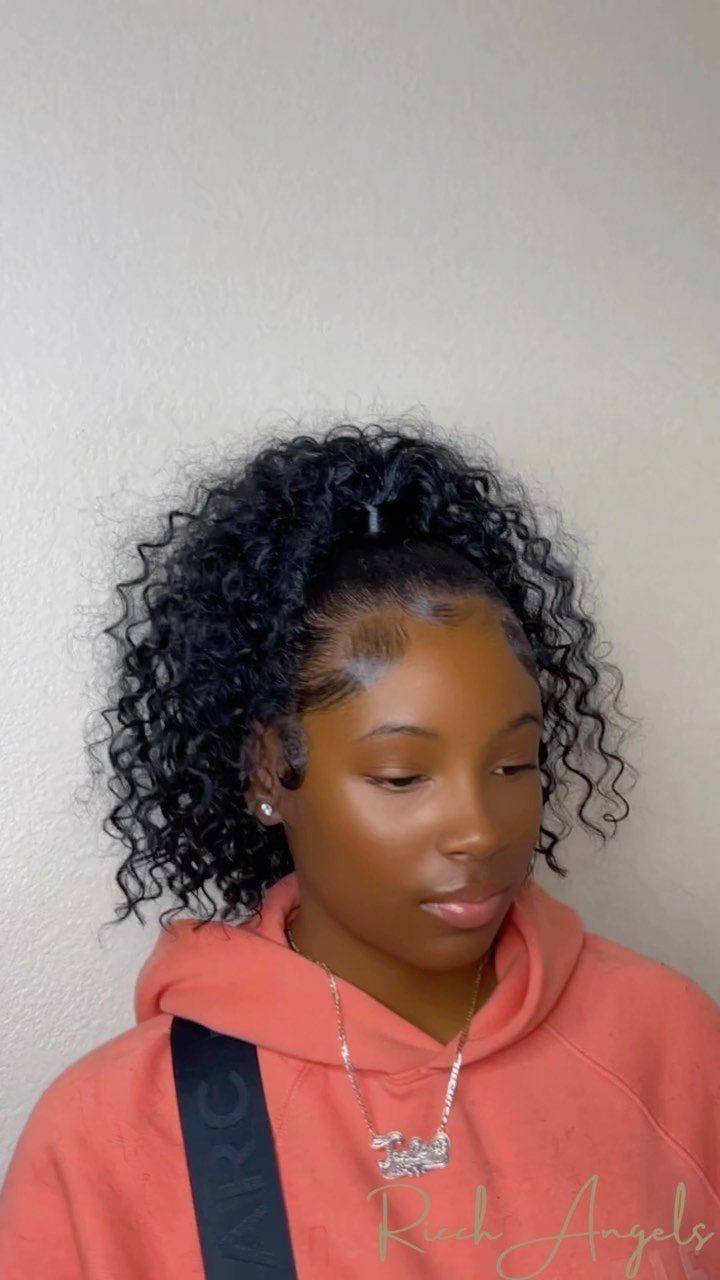
Gather the hair from your temples and crown into a ponytail at the back of your head, leaving the bottom half down.
The ponytail sits high enough to lift the hair away from your face, and the rest keeps its length and volume.
This style works on any curl pattern and takes one elastic. If your hair is layered, a few shorter pieces will fall out around your face, which gives the look more texture without needing to pull them forward on purpose.
12. Cornrows
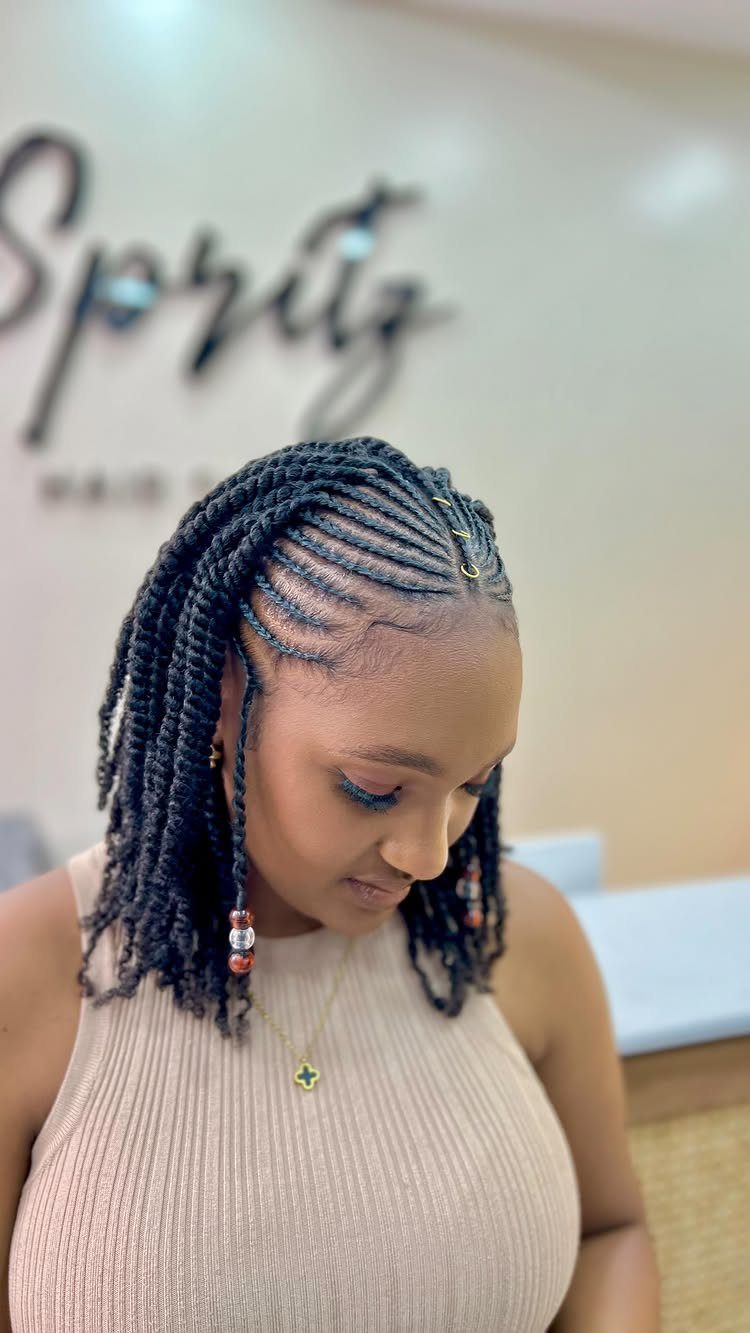
Braid hair tightly along the scalp in raised rows that follow straight lines, curves, or patterns depending on how you section and part.
The braids can stop at the nape or continue into loose braids that hang, and they last for weeks if you tie them down at night.
Cornrows give your hair a break from daily manipulation and keep it stretched, which can help retain length.
The tension has to be firm enough to hold but not tight enough to hurt, particularly along the hairline where pulling causes thinning over time.
13. Pineapple
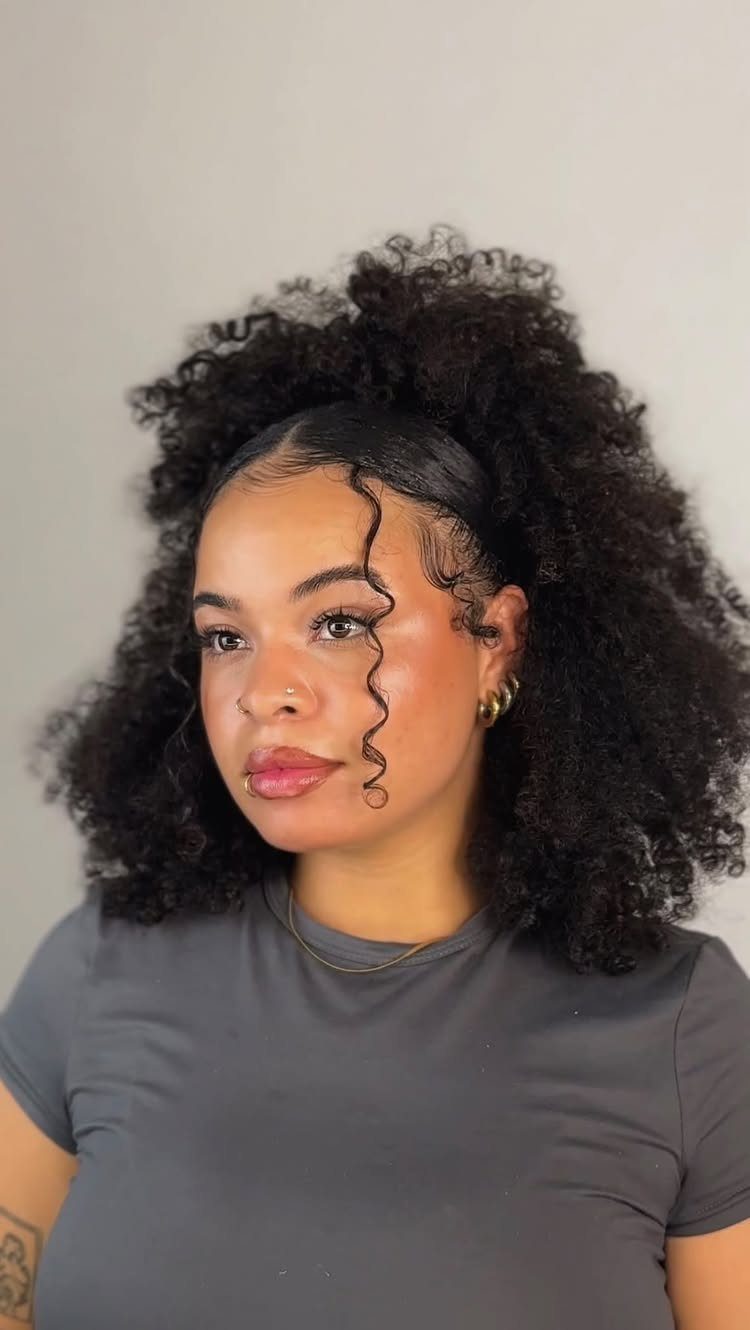
Gather your hair at the crown and tie it loosely so the curls fountain out in that rounded, pineapple silhouette.
The loose tie keeps the curl pattern intact overnight without flattening it, and you can wear it during the day as a casual updo.
This works best when your curls are already defined from a wash-and-go or twist-out. If the elastic is too tight or placed too far back, you’ll get a crease.
14. Finger Coils
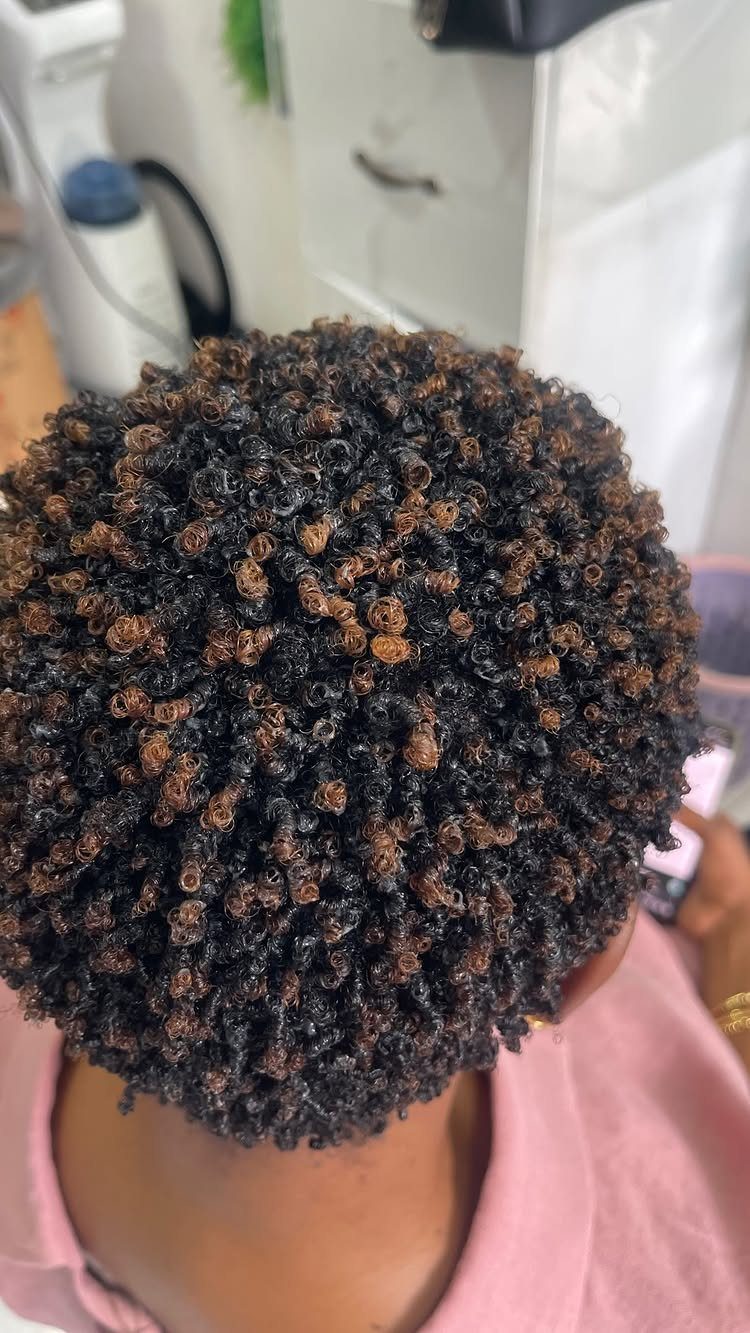
Wrap small sections of damp hair around your finger from root to tip, one coil at a time, until the whole head is covered in tight, uniform spirals.
Each coil dries into a defined curl that holds its shape for days.
This takes time, but the definition lasts longer than most other methods and works on any length.
Apply a curl cream or gel to each section before you coil it, and let the hair air-dry or sit under a hooded dryer.
15. Crown Braid
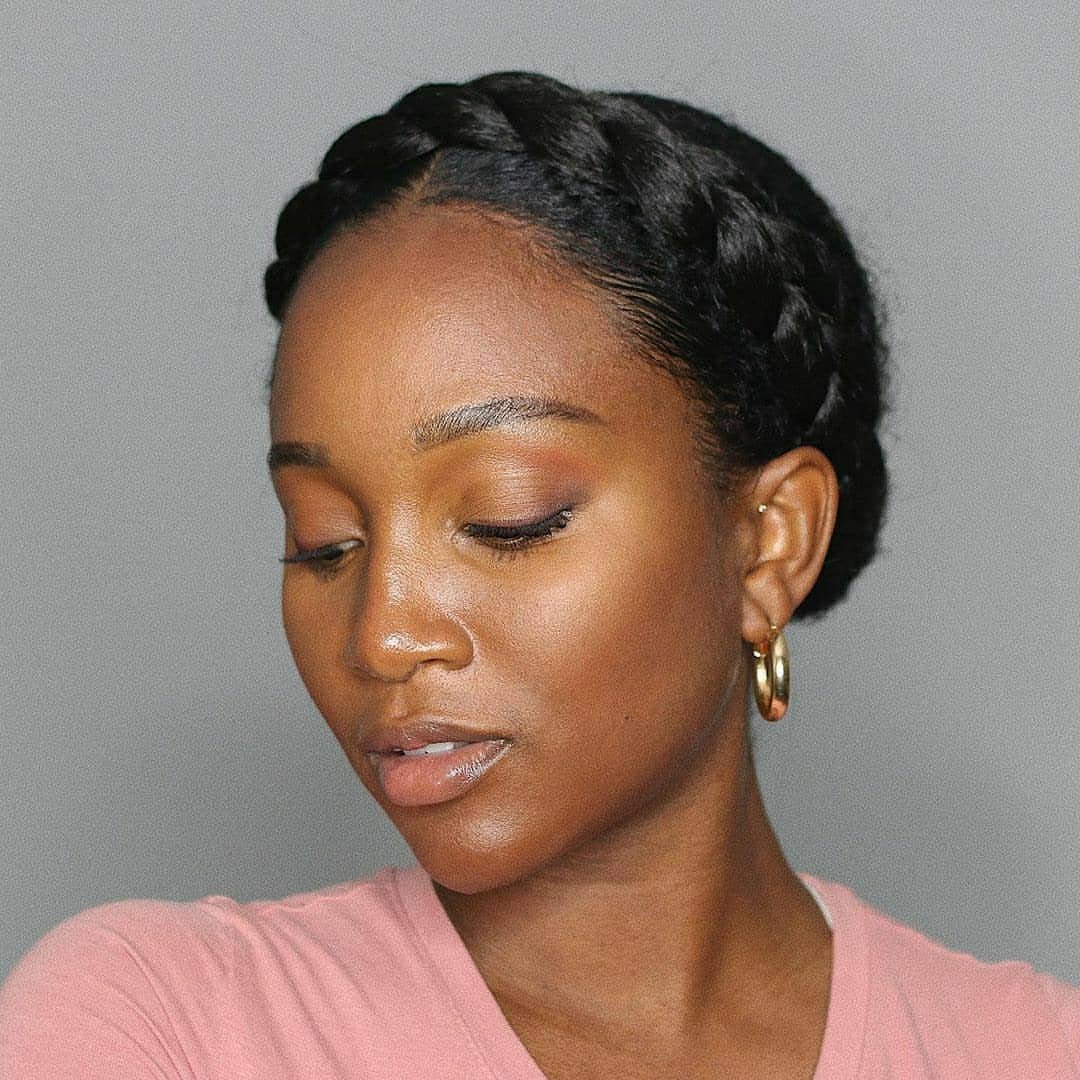
Braid one thick section of hair and wrap it around your head from ear to ear, pinning the ends to secure the circle.
The braid sits like a halo and works as a protective style that keeps ends tucked and edges smooth.
This holds better on stretched or blown-out hair, and you can braid your own hair or add extensions for more length and thickness. Tuck the tail under and pin it flat at the back to keep the crown smooth.
16. Deep Side Part
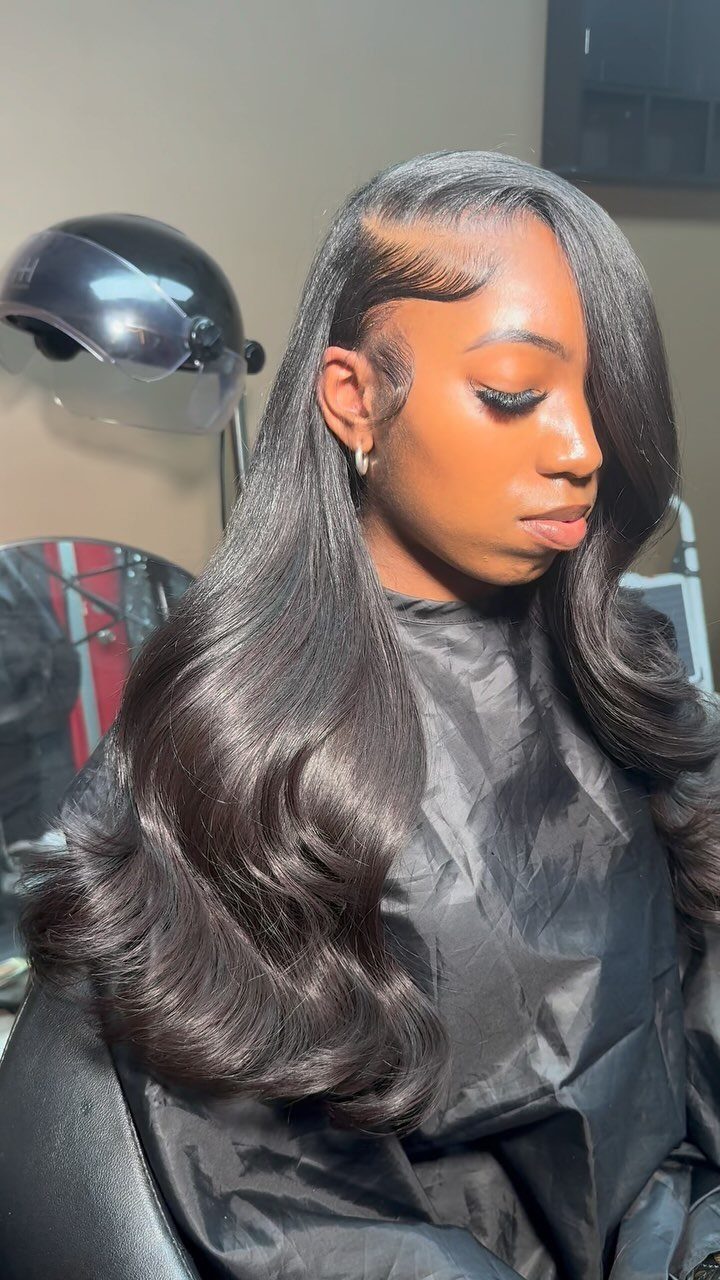
Shift your part several inches to one side so most of your hair falls across your face and shoulder on the heavier side. The asymmetry gives instant volume and a polished shape, and it works on any texture or length.
In this sew-in, 4 bundles of 18-inch hair were installed with the part set far to the left, giving the curls room to drape.
On your own natural hair, set the part while hair is wet and use a rattail comb to keep the line clean.
17. Flat Twists
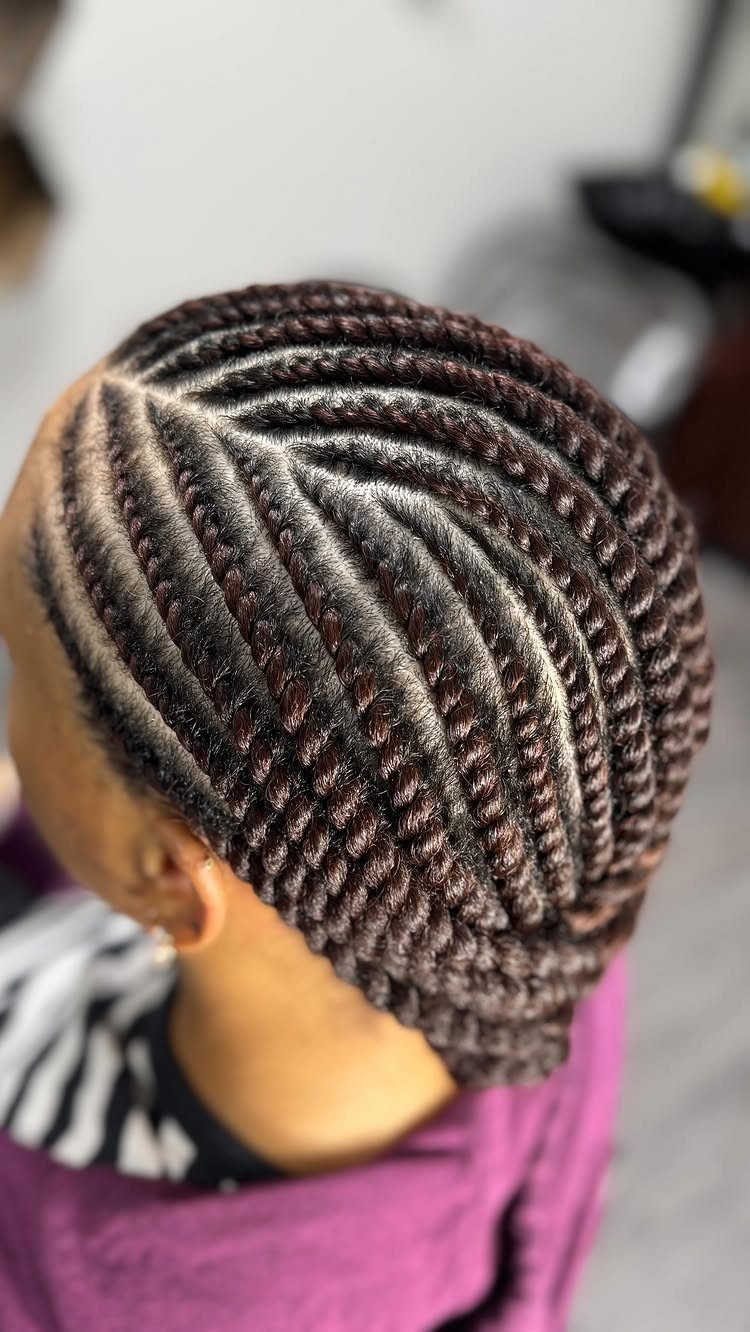
Section the hair and twist 2 strands together while laying them flat against the scalp, picking up more hair as you go the way you would with a cornrow.
The twists follow the shape of your head and can curve, angle, or run straight back depending on how you part.
They’re faster to install than cornrows and give the same stretched, sleek look at the root. Flat twists also unravel into a twist-out with more definition at the scalp than freestanding twists leave.
18. Half-Up Flat Twist
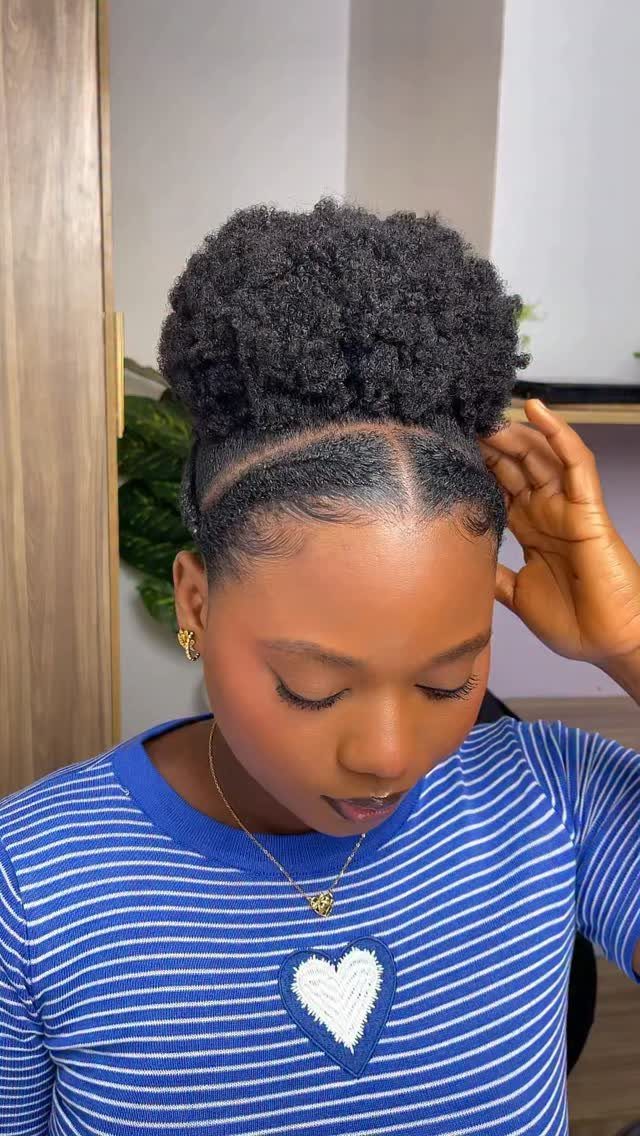
Flat-twist the front sections of your hair back toward the crown, then gather them with the rest of the top half into a high puff or ponytail.
The twists replace the need to slick down your edges, and they add texture along the scalp before the hair lifts into volume.
Start the twists at your hairline and stop where you want the puff to begin. This keeps tension off your edges while still giving you a clean, controlled shape at the front.
19. Bantu Knot-Out
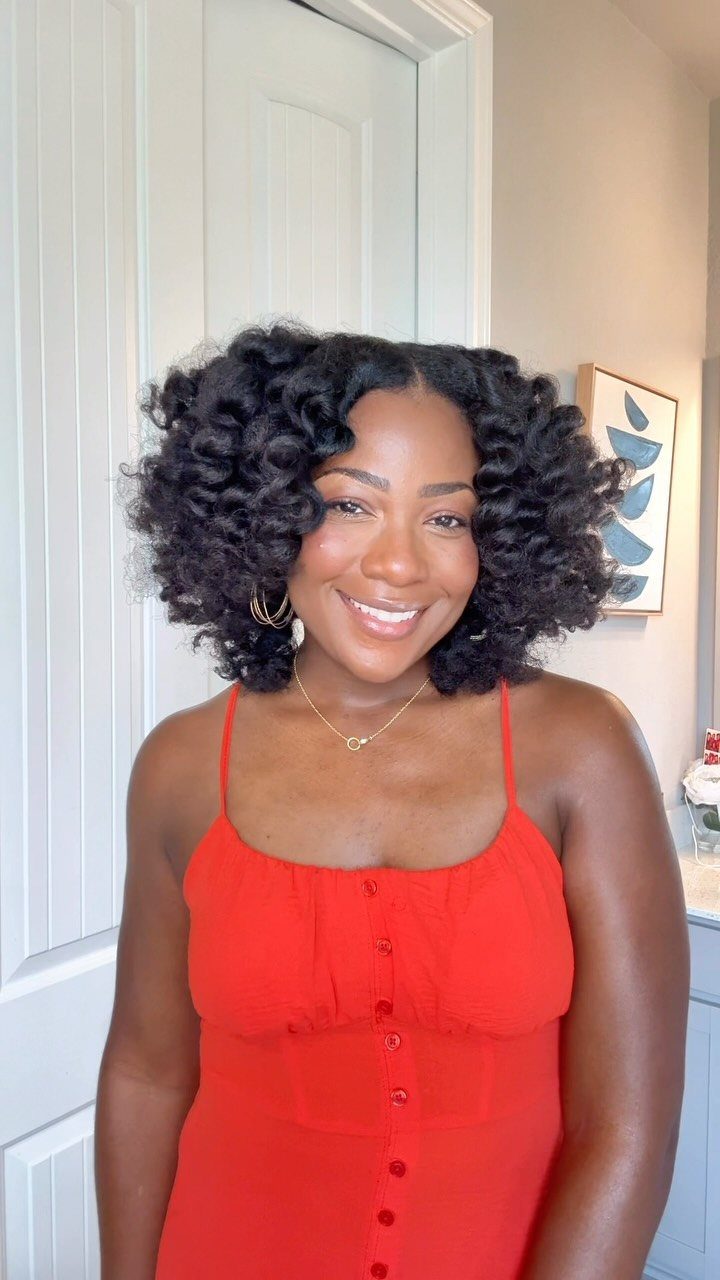
Unravel Bantu knots after they’ve set overnight, and each coil opens into a loose, springy curl with lift at the root. The curls are softer and fuller than the knots themselves, and the pattern holds for several days without retwisting.
Separate each curl gently with your fingers instead of combing through, or you’ll turn the definition into frizz. If the ends look tight, pull them slightly as you unravel to lengthen the curl.
20. Space Buns
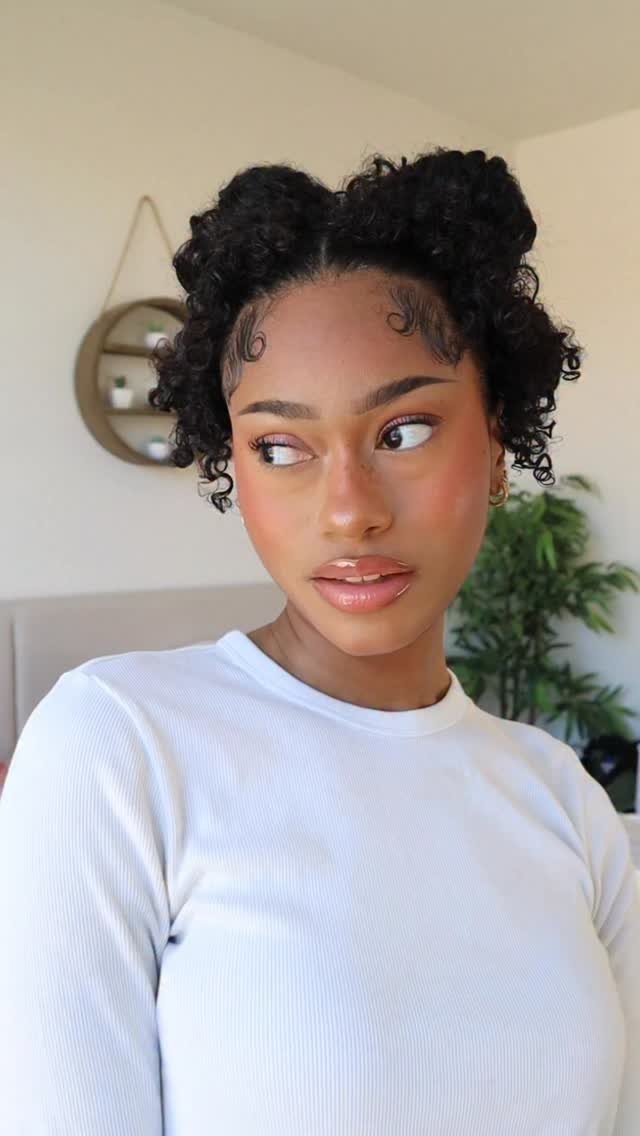
Part your hair down the center and gather each side into a high bun, leaving the buns rounded and textured instead of slicked smooth.
The two-bun shape sits playful and casual, and it works on any curl pattern that holds volume.
Twist each section before wrapping it into the bun so the hair coils instead of loosening, and use a soft elastic that won’t snag.
If shorter pieces fall out around your face, pin them back or leave them loose for framing.
21. Silk Scarf
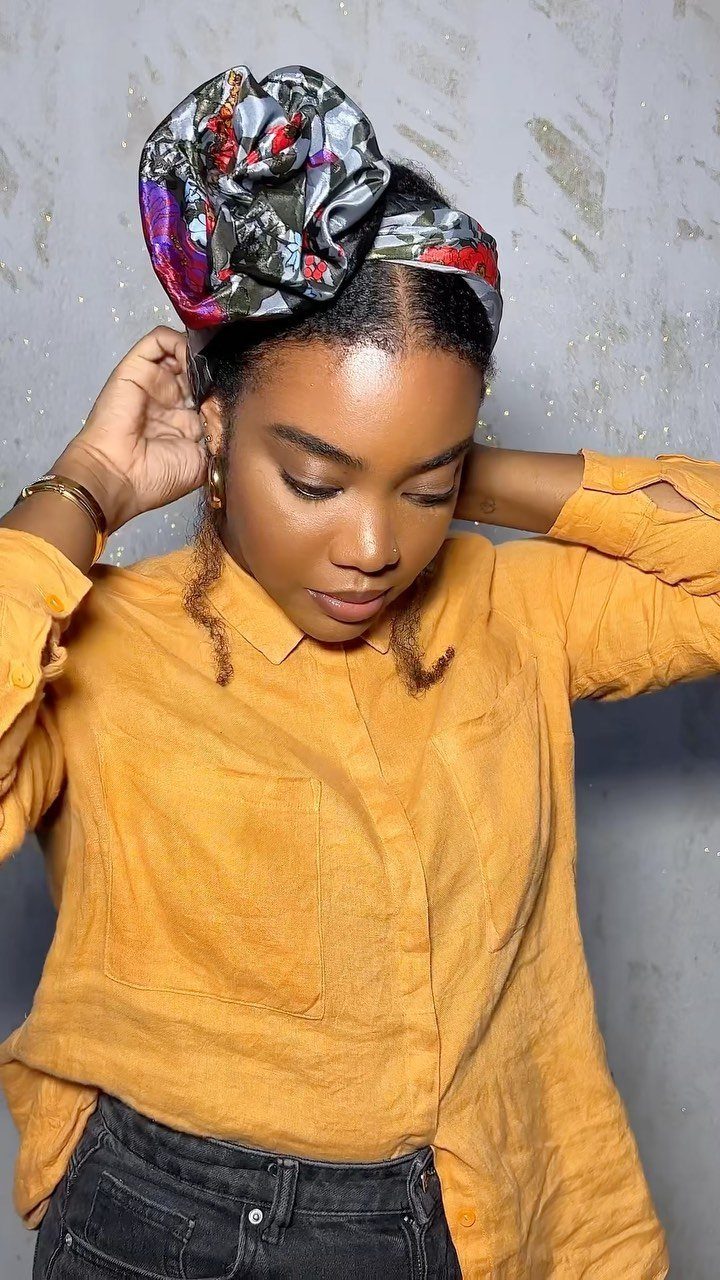
Tie a silk or satin scarf around your head like a headband, letting your curls show in front or covering the crown depending on where you place the knot.
The fabric adds color and protects your edges from friction at the same time.
A scarf with enough width covers the hairline without sitting too tight, and silk or satin won’t pull moisture out of textured hair the way cotton does.
22. Teeny Weeny Afro
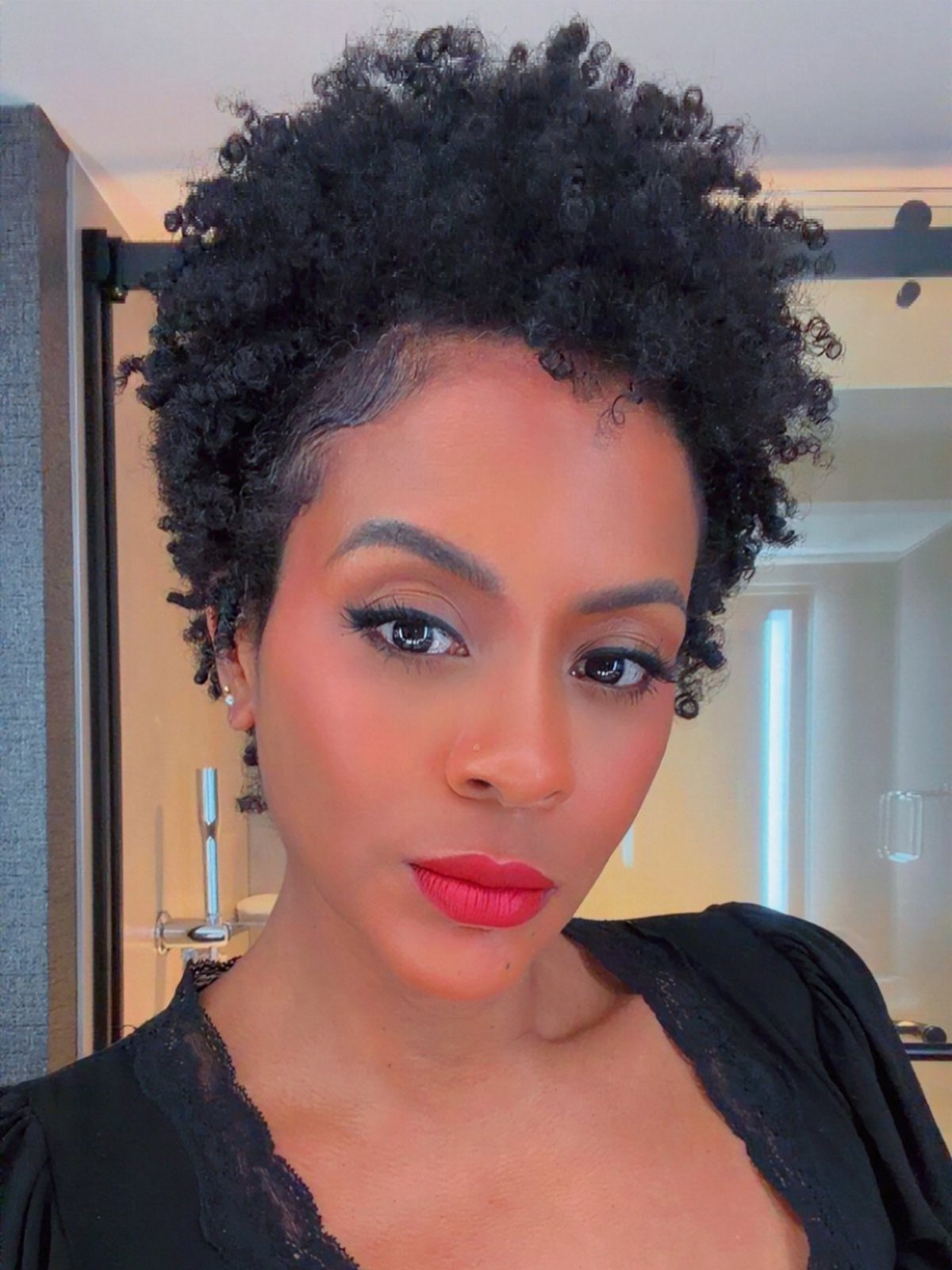
A short, rounded Afro cut close to the head takes minutes to style and shows off your natural curl pattern without length weighing it down.
Pick through it lightly to lift the roots, or leave it as it dries for a tighter shape.
This cut grows out evenly and stays low-maintenance, but it does need regular trims to keep the rounded silhouette. If your curls are tight, a little curl cream smooths frizz without flattening the texture.
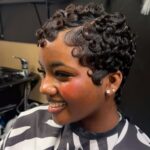
23. Side-Parted Pixie
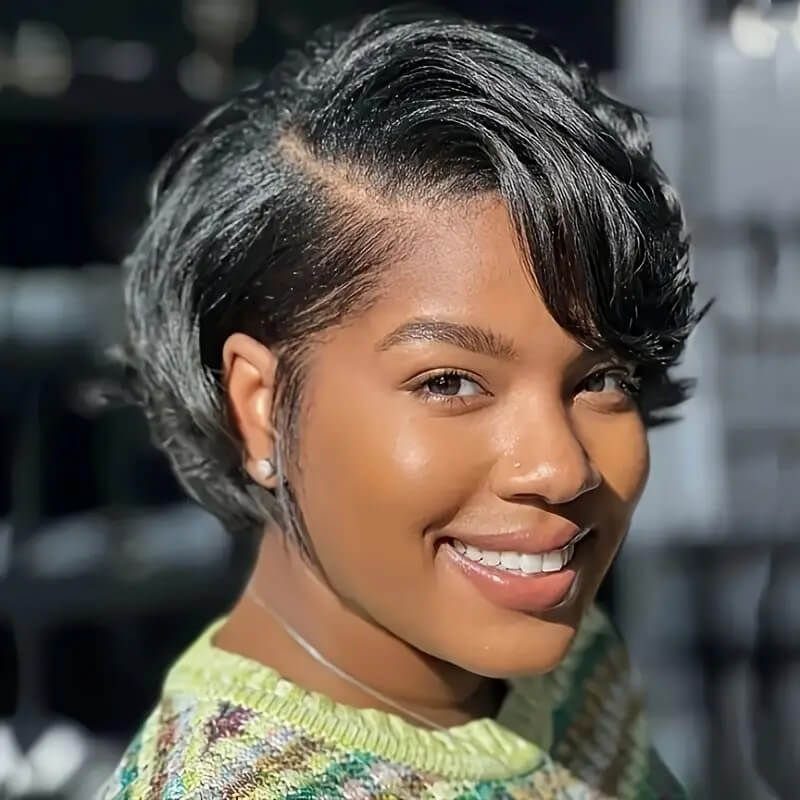
A pixie cut with a deep side part keeps one side short and close while the other sweeps across your forehead with more length and volume.
The asymmetry gives the cut shape, and the longer side can be slicked down or left textured depending on the day.
This works best on hair that’s been tapered at the back and sides so the top has room to move. A light pomade or edge control smooths the part line without making the hair stiff.
24. Half-Slicked Double Puffs
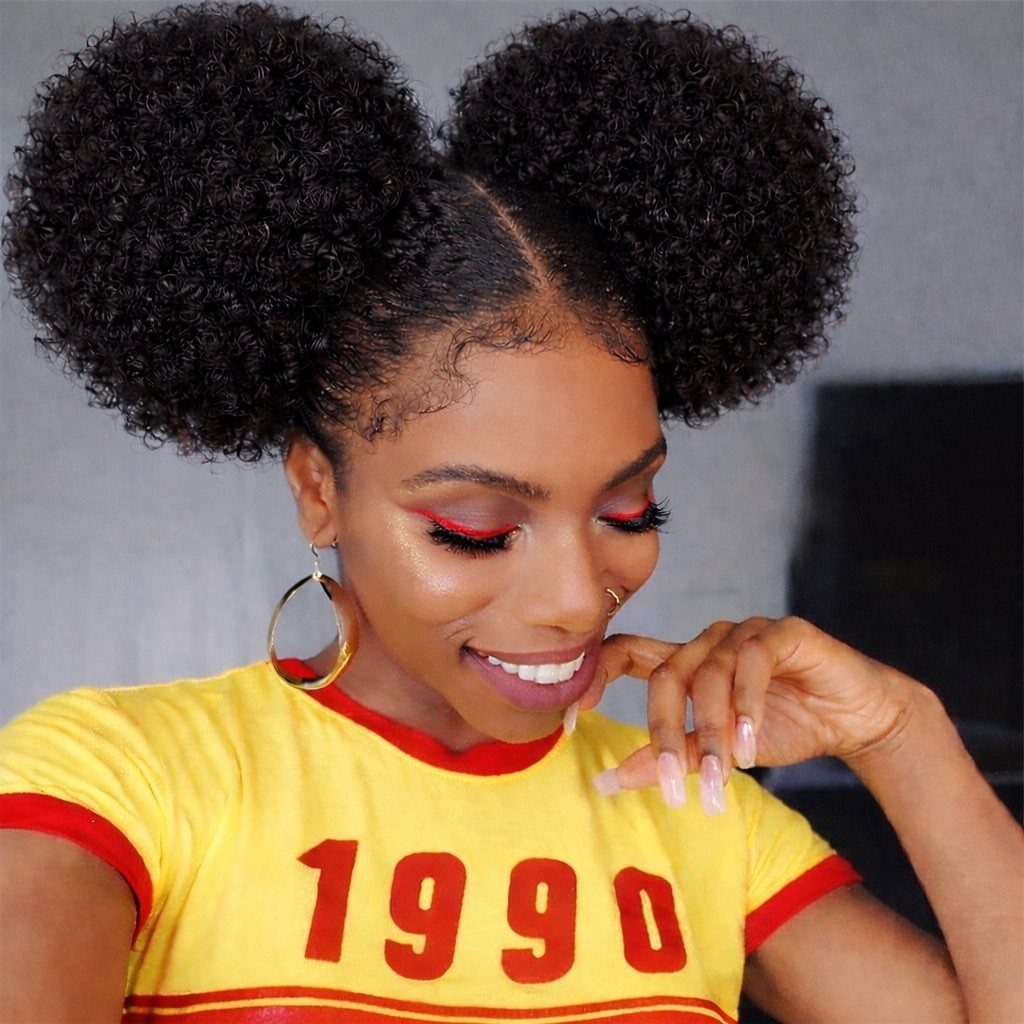
Slick the front and sides of your hair back with gel or edge control, then part it down the middle and gather each half into a puff at the crown.
The slicked sections give a clean base, and the puffs sit high with full, rounded volume.
Use a brush or your fingers to smooth the hair flat before tying, and secure each puff with a coated elastic so the tension doesn’t pull at your hairline.
25. Long Box Braids
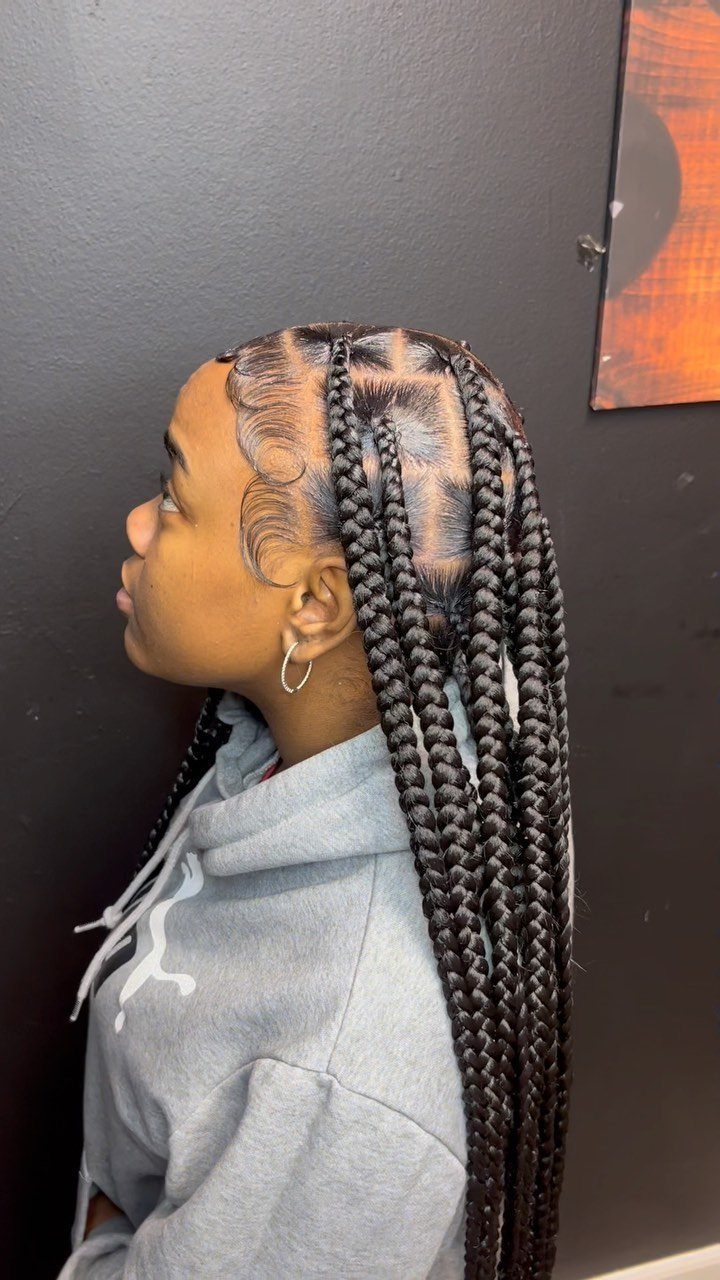
Individual braids are sectioned into small, square parts and extended with synthetic hair to waist length or longer. The braids hang loose and move freely, and the uniform size keeps the grid clean across your whole head.
Installation takes time and you’ll want to block out most of a day, but once they’re in they hold for weeks if you tie them down at night and keep your scalp moisturized.
This gives your natural hair a long break from heat and daily styling.
26. Voluminous Natural Curls
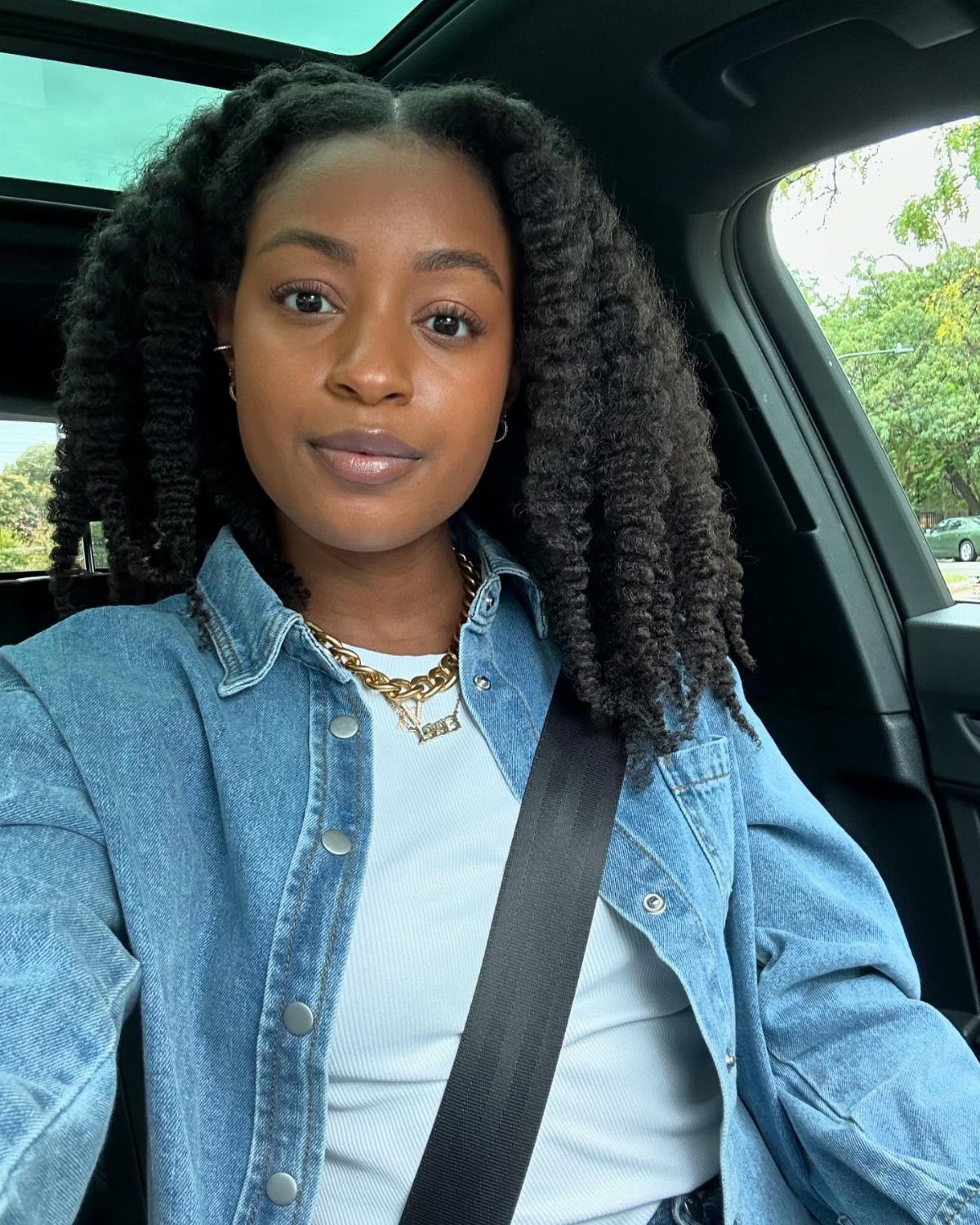
Wear your natural curl pattern loose and picked out at the roots for maximum volume.
The curls fall past your shoulders with lift at the crown, and the fullness comes from separating each curl after it dries instead of leaving it in clumps.
The voluminous natural curls style works on any curl type that holds its shape without product weighing it down.
27. Short Natural Curls
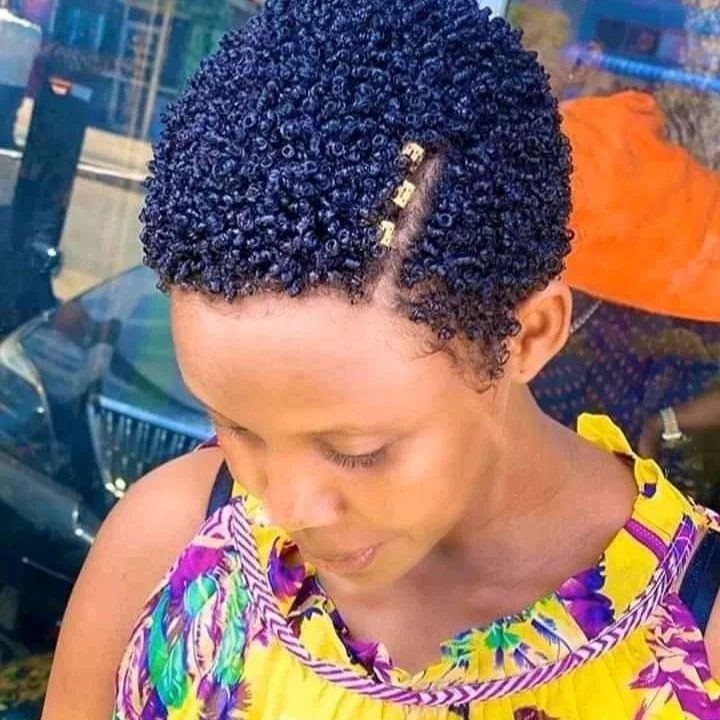
Curls are cut short enough to sit close to the head but long enough to keep their coil, usually chin length or above.
A side part and small clips add detail without covering the texture, and the rounded shape frames your face on all sides.
Short curls dry faster than long ones and need less product to stay defined. Use a curl-defining cream on damp hair and let it air-dry, or clip sections while they set if you want more volume on one side.
28. Twisted Updo
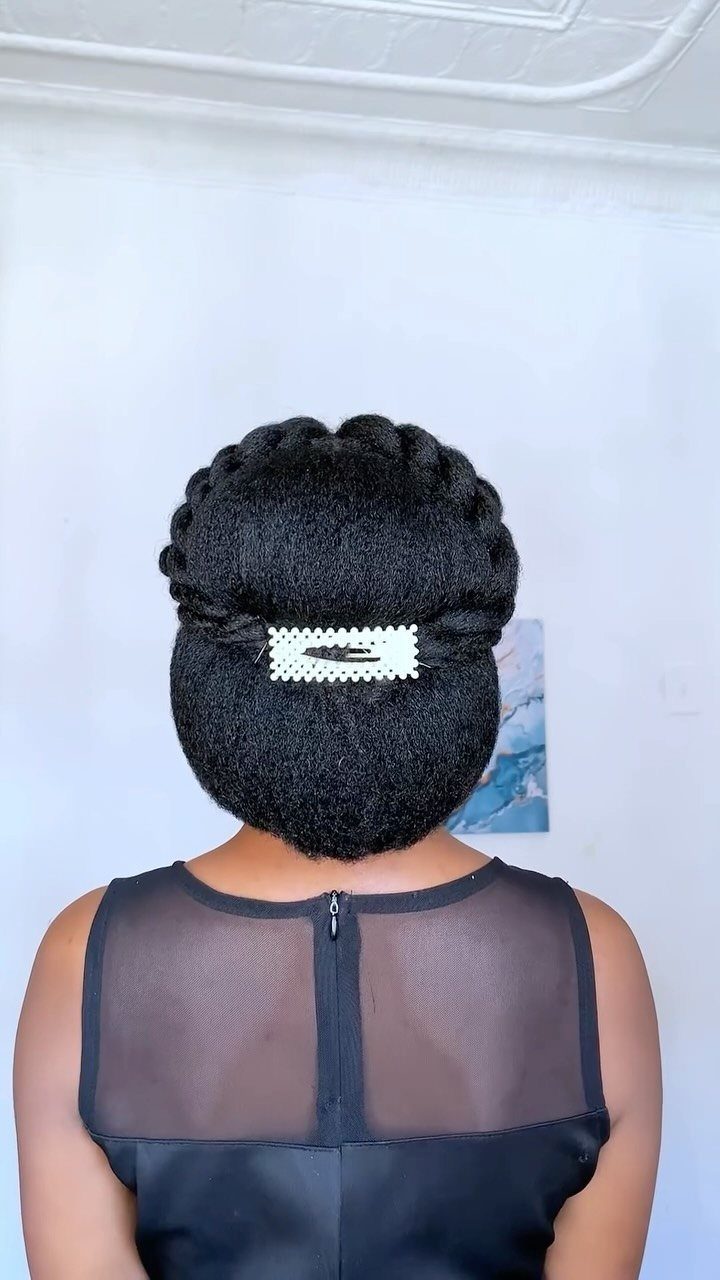
Twist small sections of hair and pin them in curved rows across the back of your head, building up into a rounded shape that sits at the crown.
The twists lie flat against your scalp at the base and stack to form the updo, with the ends tucked underneath and pinned.
You can add a decorative clip at the center or back to secure the style. The updo keeps ends protected and works for several days without needing to be redone.
29. Twisted Low Ponytail
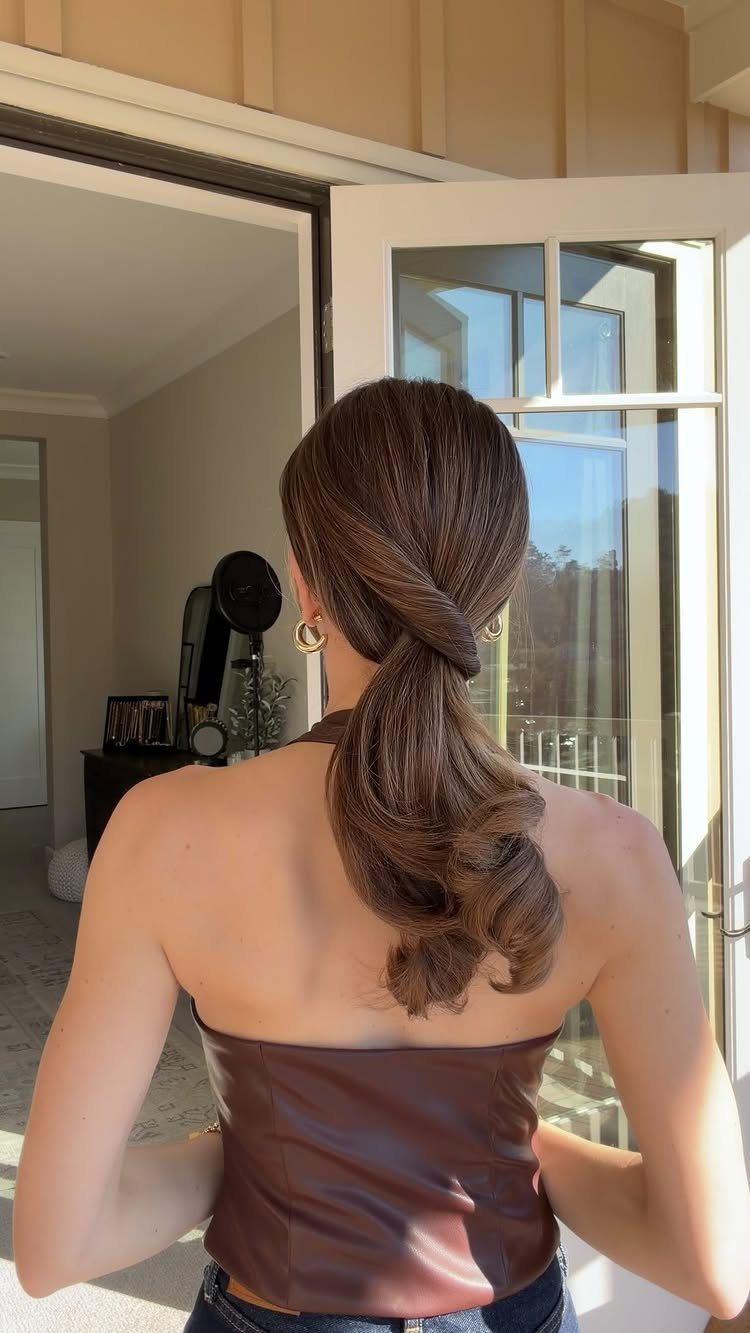
Twist a section at the crown and gather the rest of your hair into a low ponytail at the nape, leaving the curls below the elastic loose and textured.
The twist adds detail at the top without needing to braid, and the ponytail sits low enough to avoid pulling at your hairline.
Secure the twist with small pins before tying the ponytail, or twist both sides and meet them at the back. This takes one elastic and a few minutes, and it works on any length past your shoulders.
30. Curly Headwrap
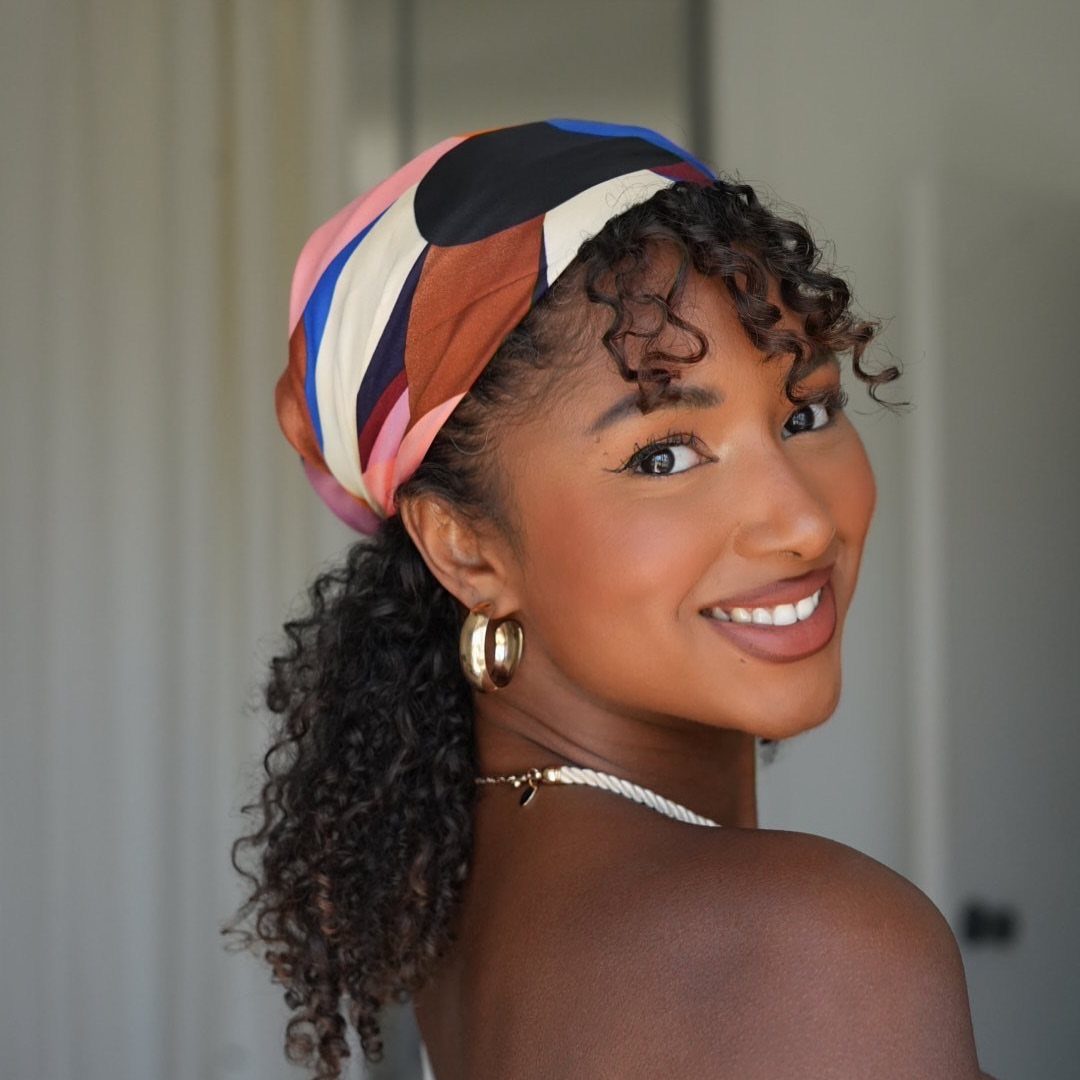
Wrap a patterned fabric across the crown and tie it at the back or side, leaving your curls out to frame your face and fall around your shoulders.
The wrap covers your hairline and adds color, and the curls stay loose and full underneath.
Choose a fabric that’s long enough to wrap around your head once with room to tie, and position the knot where it won’t press against your head when you lean back.
This works over a wash-and-go or second-day curls without needing to restyle them.
31. Short Tapered Curls
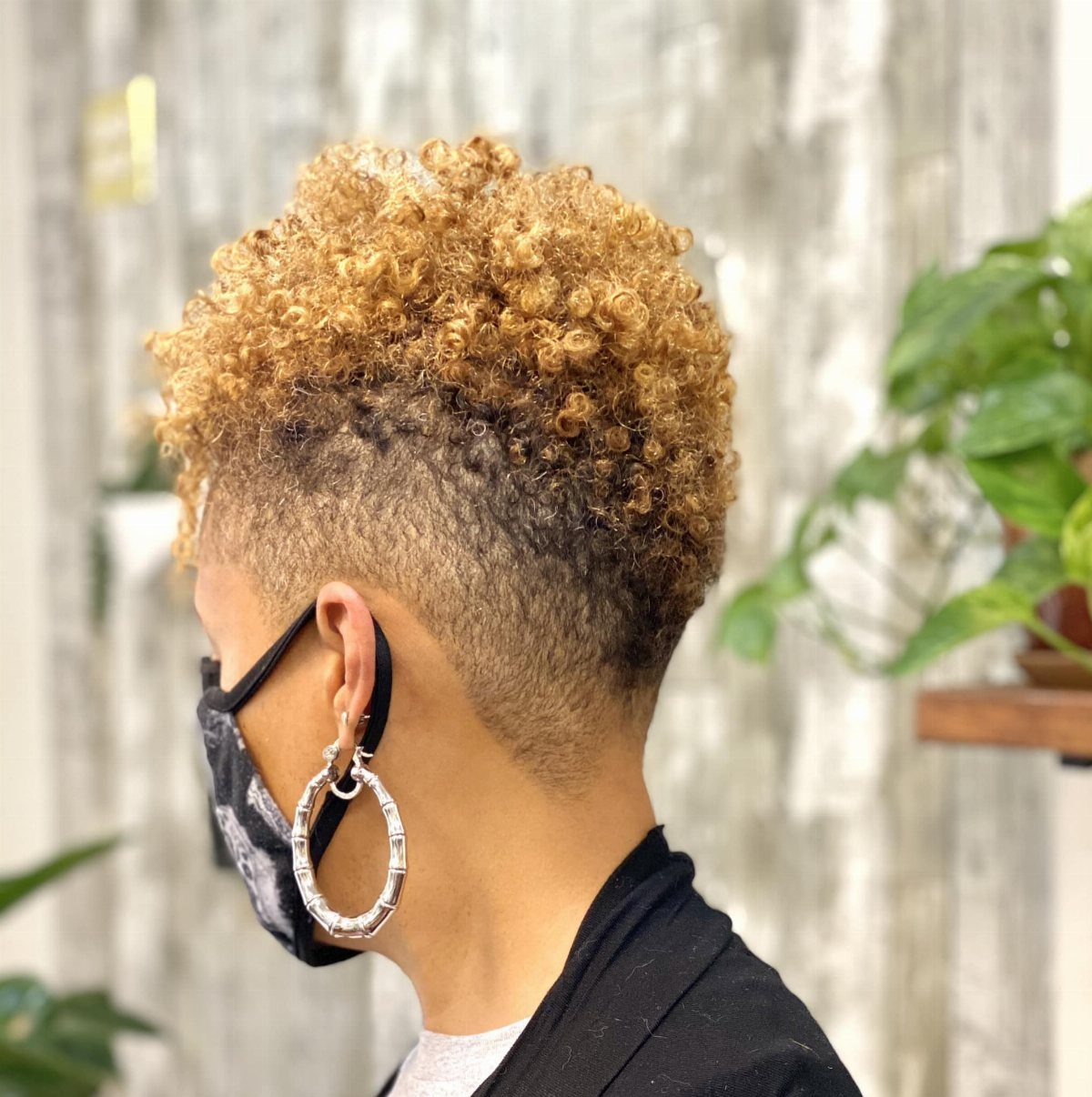
The curls stay full on top while the sides are cut close, giving you height at the crown and a clean taper down to the scalp.
The contrast between the 2 lengths makes the curl pattern on top stand out more, and the short sides keep the shape from looking heavy.
This cut works on any curl type tight enough to hold volume when it’s short.
A light curl cream keeps the top defined without weighing it down, and the taper grows in gradually so you can stretch time between trims if you need to.
Hair Texture and Style Fit
Type 3 hair curls, type 4 coils, and most heads carry more than one texture at once.
The curl pattern you see in one section might tighten or loosen in another, which means a single routine won’t always work from root to ends.
Curly and coily hair needs more moisture than straight hair because natural oils can’t travel as easily down a bend or spiral.
If your hair is fine or short, low-tension styles like a puff or twist-out put less stress on the root than tight braids or heavy extensions.
Hair-type labels give you a starting point for products and methods, but they’re not prescriptive.
What matters more is knowing whether your hair holds moisture, how much manipulation it tolerates, and which styles you can maintain without breaking or thinning your edges.
Preventing Breakage and Retaining Length
Breakage comes from over-manipulation, heat, and friction more than it comes from washing or trimming.
Protective styles and low-manipulation methods reduce how often you comb, pull, or restyle, which gives hair time to retain length instead of snapping at the ends.
Length retention is not the same as faster growth. Your hair grows at the rate it grows, but keeping the ends intact and minimizing breakage means you see more of that growth over time.
“Natural hairstyles do not inherently damage hair; rather, improper styling techniques, products, or tools cause damage, not the styles themselves,” says Ladosha Wright, a trichologist and RevAir’s resident expert.
— Glamour
Wash and Conditioning Care
Wash with warm water to open the cuticle, then rinse conditioner out with cold water to close it and lock moisture in.
Focus conditioner on the ends, which dry out faster than the roots, and leave it on for the time the bottle directs.
A clarifying shampoo removes product buildup, though once or twice a month is usually enough. Use it when your hair feels coated or styling products stop working the way they did when the bottle was new.
Deep condition every few weeks if your hair is dry, or use a leave-in conditioner between washes.
After conditioning, seal moisture in with an oil or butter so the water doesn’t evaporate. Over-conditioning makes hair limp and hard to style, so rinse thoroughly and don’t condition more often than your hair needs.
Frequently Asked Questions
What are some natural ways to style my hair?
Braids, twists, twist-outs, wash-and-gos, Bantu knots, puffs, buns, and headwraps all work with your natural texture instead of altering it.
Box braids and cornrows tuck your ends away for weeks at a time, twist-outs stretch your curl without heat, and a wash-and-go shows your natural pattern exactly as it grows.
What is the best hair style for natural hair?
There’s no single best style because natural hair offers more range than any other texture.
What Is Natural Hair?
Natural hair has not been chemically straightened, relaxed, permed, or texturized, and the term typically refers to hair in the Black community.
Most heads carry two or three textures at once, from loose curls at the front to tight coils at the crown.
How Are Hair Textures Related to Natural Hair?
Knowing your texture helps you choose products and care routines that actually work for your hair.
What Are Some Popular Natural Hair Styles?
Braids, twists, twist-outs, braid-outs, wash-and-gos, puffs, Bantu knots, cornrows, half-up styles, and short tapered cuts all show up regularly.
How Do You Treat Natural Hair?
You’ll burn through a few products before you land on the ones that work for your hair, and that’s normal.
What are low-manipulation natural hair styles?
Afros, two-strand twists, twist-outs, and roller sets need little maintenance once they’re set.
After styling, you only need to spray with leave-in or oil sheen and tie your hair down at night, which reduces breakage and split ends that come from over-manipulating the hair.
What are natural hairstyles for short hair and fine hair?
Wash-and-gos, pixie cuts, finger waves, styled baby hairs, straight bobs, low Afro cuts, and comb coils all work well on short or fine hair without adding tension at the hairline.
How to Go Natural?
Stop using chemical straighteners, relaxers, texturizers, and heat styling tools, then transition by cutting off treated hair or protecting it with wigs, weaves, or braids while your natural texture grows in.
A big chop gives you only healthy hair to work with from day one, or you can braid and twist through the transition and cut the relaxed ends as you go.