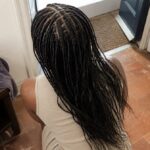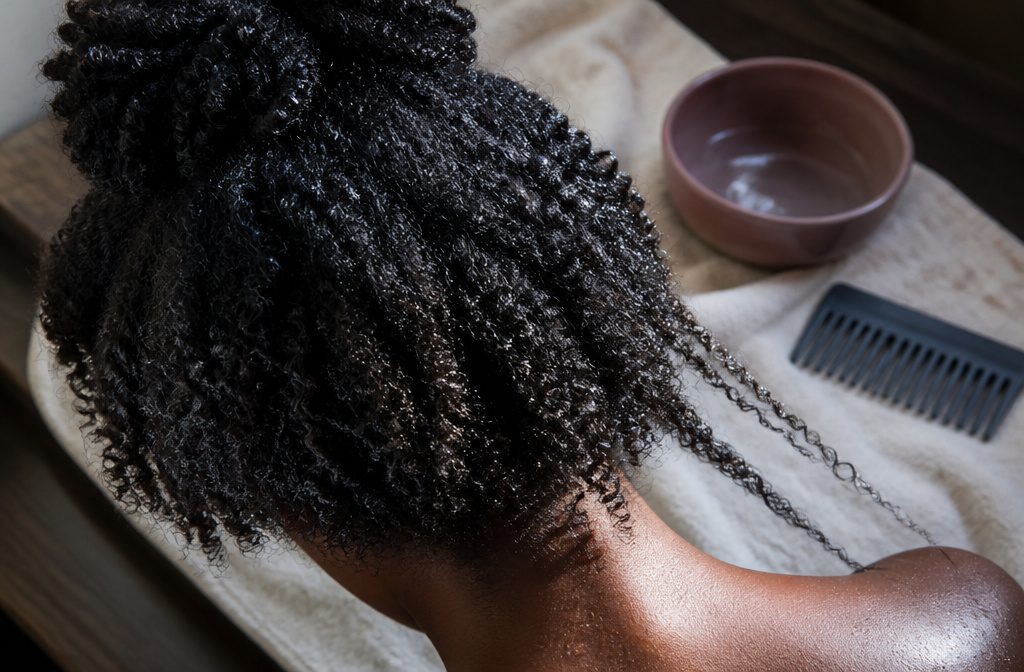
Type 4c hair is the tightest coil pattern in the Type 4 category, forming dense zigzags, waves and spirals that pack so closely the pattern can look invisible when dry.
Shrinkage reaches up to 75 percent, so 22 inches of hair can sit at 8 inches once it dries. Moisture makes the coils visible and soft; without it, the hair feels wiry and the length hides.
1. What Type 4C Hair Is
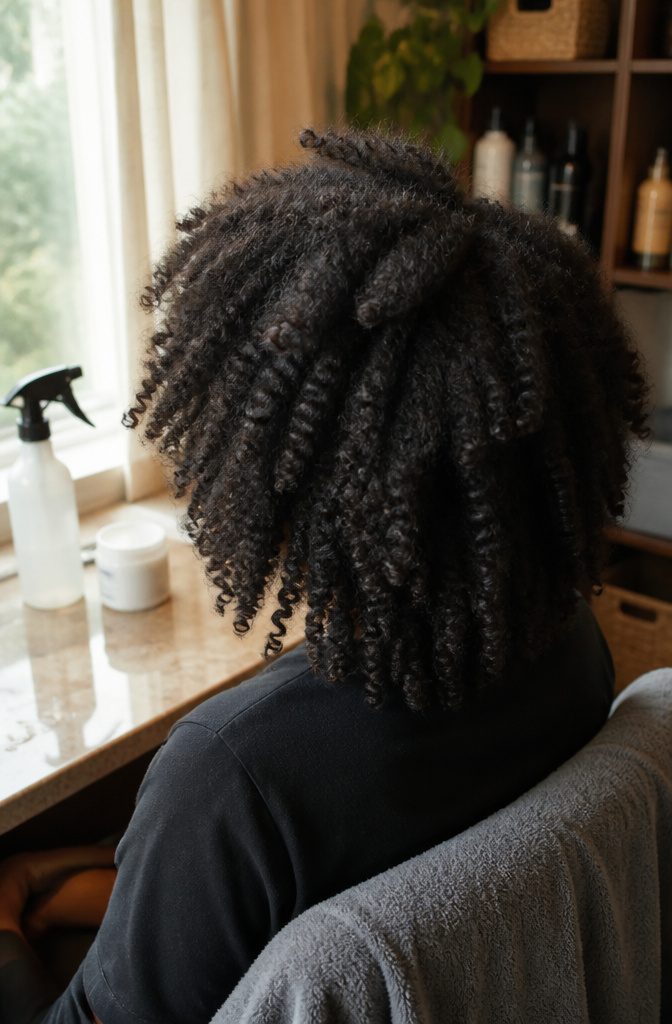
Type 4C hair has the tightest coil pattern in the Type 4 family. The strands form a dense cloud of tight spirals, zigzags and wave-like shapes that intertwine rather than following one clear curl direction.
I look for a mix of patterns throughout rather than uniform S-curves or Z-shapes, and the coils pack so tightly that the pattern can be hard to see when the hair is dry.
Individual strand width runs from 0.02 mm to 0.06 mm, fine to medium in thickness. Coil lengths range from tiny ringlets less than 0.5 inches long to springy spirals over 3 inches when stretched.
That variability means you can have both tight fractal-like coils and longer spring-shaped sections on the same head, which is why 4C hair reads as voluminous and cloud-like when grown out.
Moisture makes the pattern visible.
With enough moisture, hair that looked formless and felt dry turns into soft, defined coils. Without that moisture, shrinkage can reach up to 75 percent of actual length.
2. How 4C Differs From 4A and 4B
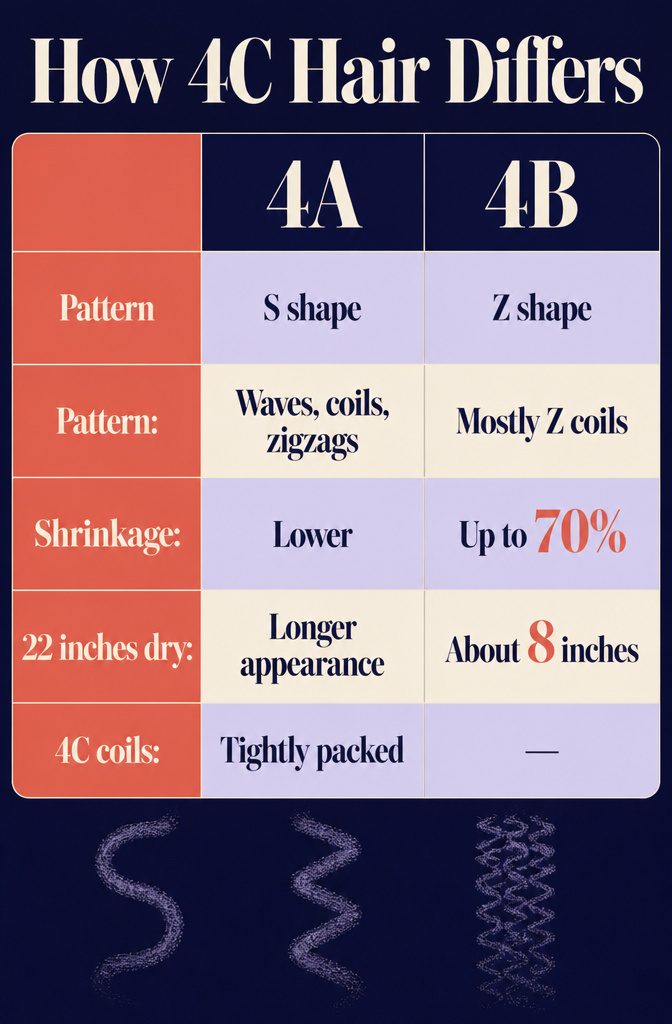
Pattern is the first giveaway. 4A forms an S, and 4B forms a Z you can follow strand by strand, which is why 4B is the easiest of the three to recognize on sight.
4C mixes waves, coils and zigzags along the same strand. The coils are packed so tightly that the pattern can look almost invisible until the hair is moisturized.
Shrinkage separates them by only a few points, but it adds up. 4B can pull up to 70 percent of its length, so 22 inches of hair may look like 8 once dry.
4C reaches up to 75 percent, and that extra stretch of hidden length is what makes 4C look shorter than the hair really is.
3. Why Moisture Is the Main Need
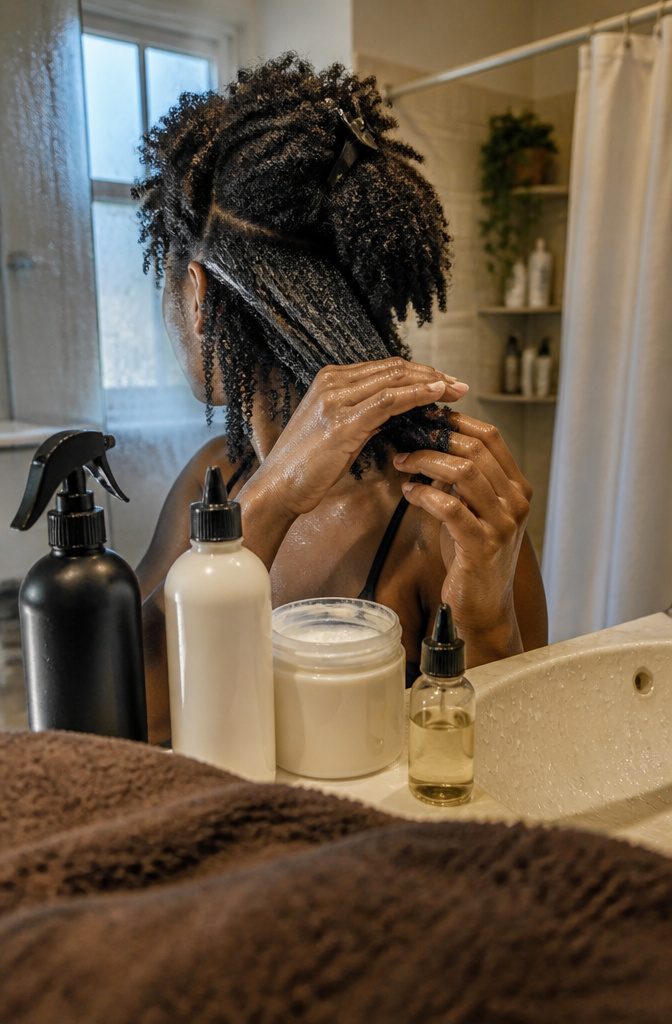
Tight coils slow the trip sebum takes down the hair shaft, so the lengths of type 4c hair often run dry while the scalp stays oily. Water-based products do the moisturizing, and oils only seal it in.
That is why LCO works: spritz a leave-in conditioner (the liquid), smooth on a rich cream, then finish with oil. I favor LCO, but LOC suits some porosities better, so try each for a few washes.
Start in the shower with a moisturizing shampoo like Shea Moisture’s Raw Shea Butter Moisture Retention Shampoo, and use a lot of conditioner.
Afterward, refresh the layers every 3–4 days. Twist with a thick curl pudding or curl cream.
4. How to Detangle Without Breakage
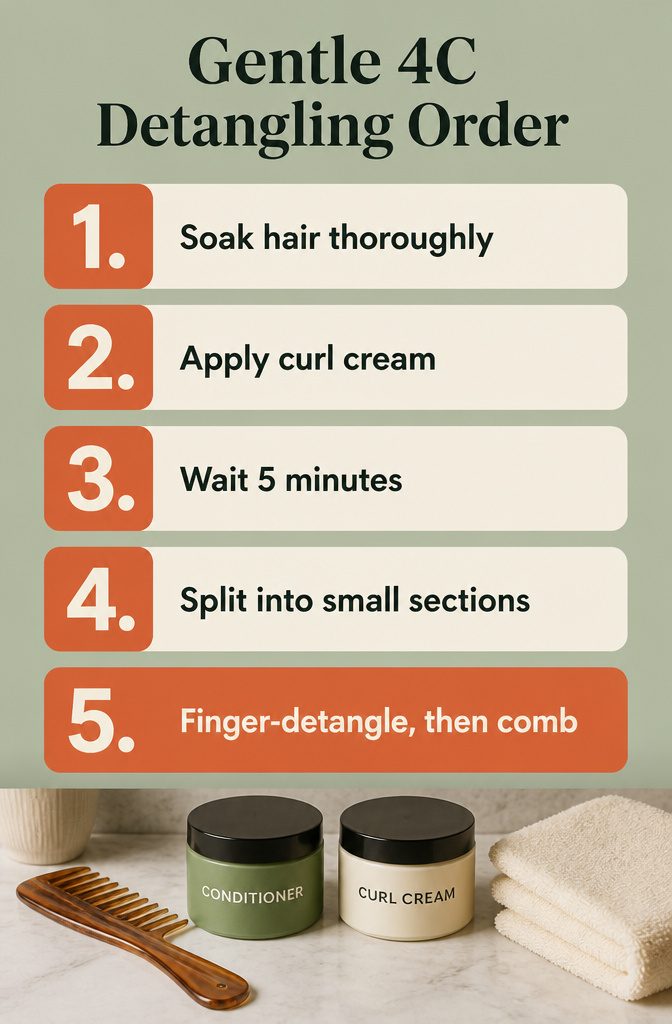
Type 4C strands are fragile and knot easily, so a rough pass with a brush is what snaps them. Detangle only when your hair is wet or coated in conditioner, because the slip lets knots release instead of tearing.
Split hair into small sections and use your fingers or a wide-tooth comb. Start at the ends and work up toward the roots, so you never drag a comb through a knot’s full length.
I favor fingers first, then the comb for whatever is left.
After working a curl cream or custard into soaking wet hair, give it 5 minutes to soak in before detangling. Treat the hair like a cashmere sweater.
5. Shrinkage and How Length Hides
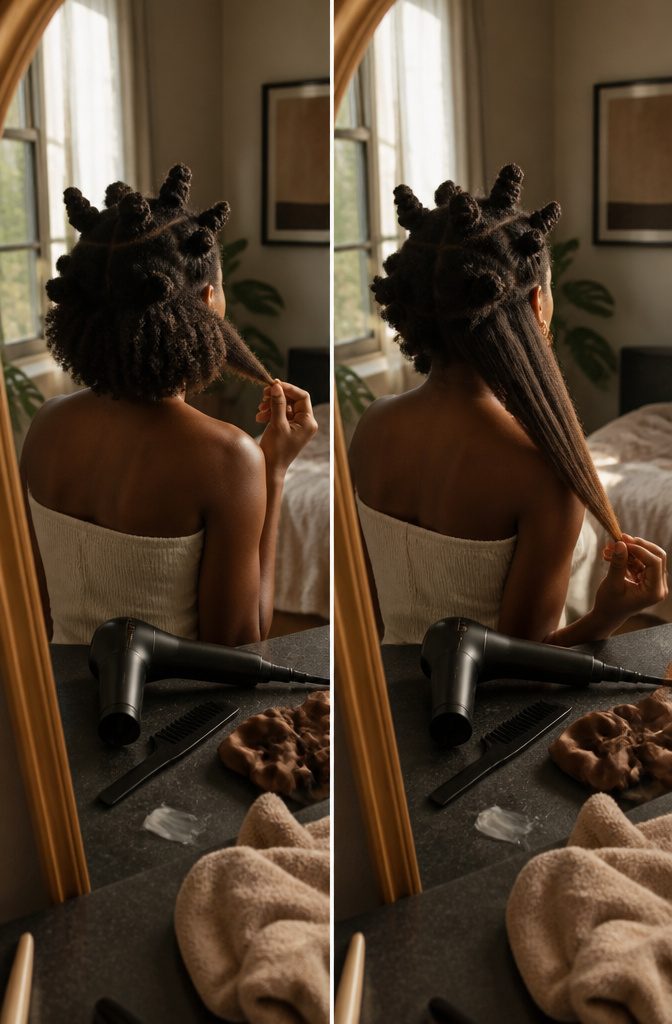
Dry type 4C hair can shrink by up to 75 percent, so a head of hair that looks short is often much longer than it appears.
A 22-inch length can sit at 8 inches once it dries. That gap is why some people decide their hair has stopped growing when it hasn’t.
To see the real length, stretch it.
Bantu knots are my pick for a heat-free stretch, and a blowout gives a smooth, full look that shows length for special events. Both are temporary, and the hair shrinks back with the next wash.
Box braids and Senegalese twists hold length on display for weeks while cutting down daily handling.
How much any of these stretches your hair varies with density and how tightly it coils, so judge by your own results, not a promised number.
Wash Routine and Timing
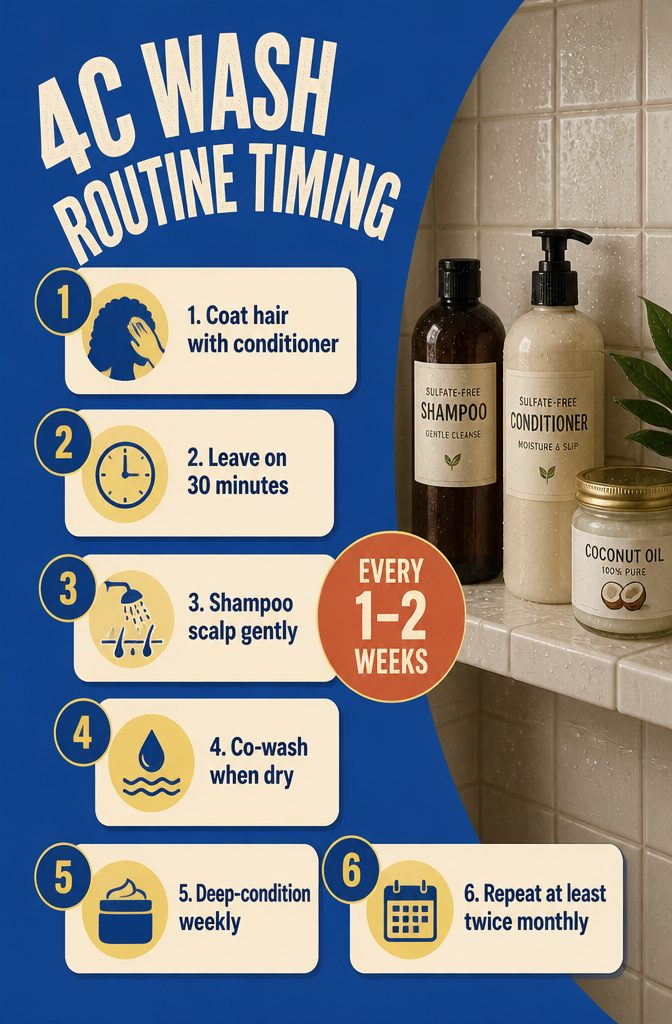
Wash schedules run from every 7–14 days to 2–4 times a month, with weekly co-washing filling the gaps. Wash too often and you strip oils and invite breakage; wait too long and buildup clogs the follicles.
I land on a sulfate-free shampoo every 1–2 weeks, plus a conditioner-only co-wash in between when the hair feels dry. Keep the water lukewarm, since hot water adds to breakage, and concentrate the lather on your scalp.
Before shampooing, coat your hair in a thick conditioner or an oil like coconut and leave it on for about 30 minutes. Deep condition weekly if your hair runs dry, and no less than twice a month.
6. Methods to Define the Curl Pattern
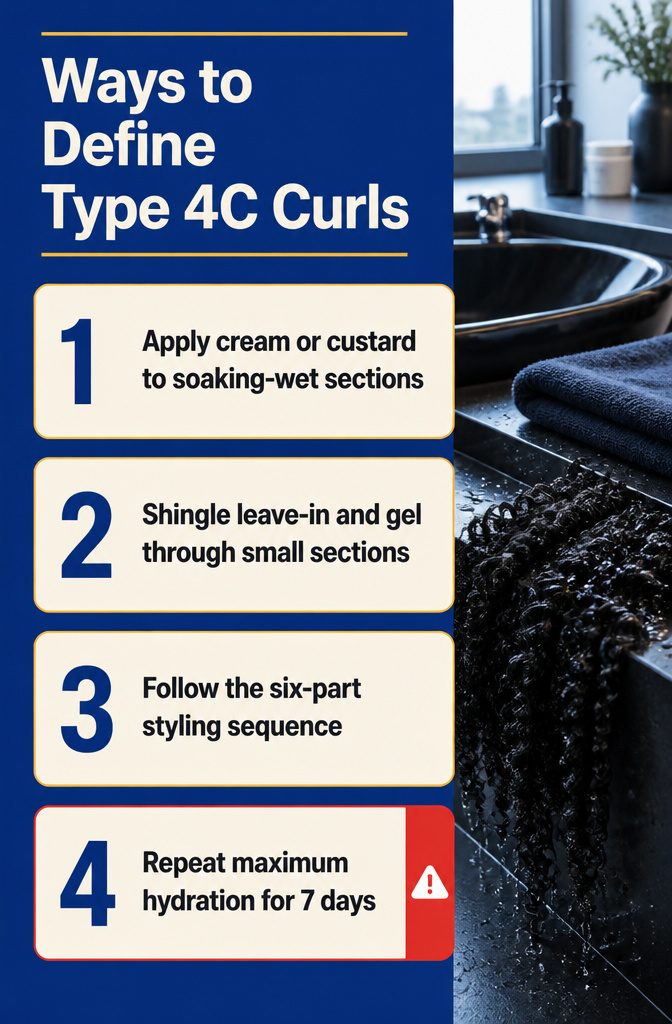
Four approaches come up again and again, and I’d start with the first one.
- Cream or custard: work Cantu Coconut Curling Cream or EcoStyler Argan Oil Gel into soaking-wet sections, wait 5 minutes, then detangle gently. Air dry or diffuse on medium heat. Thick products beat light gels, which absorb too fast.
- Shingling: apply leave-in, then gel on small sections, smoothing each curl with your fingers. Budget about 20 minutes and keep the hair wet throughout.
- Six-part sequence: section the hair, start at the bottom, mist with water, detangle with a wide-tooth comb, add mousse or gel, finger curl, then finish the rest.
- Maximum hydration: repeat the routine for 7 days in a row. I’d skip doing it long term, because it can cause breakage.
7. Protective and Low-Manipulation Styles
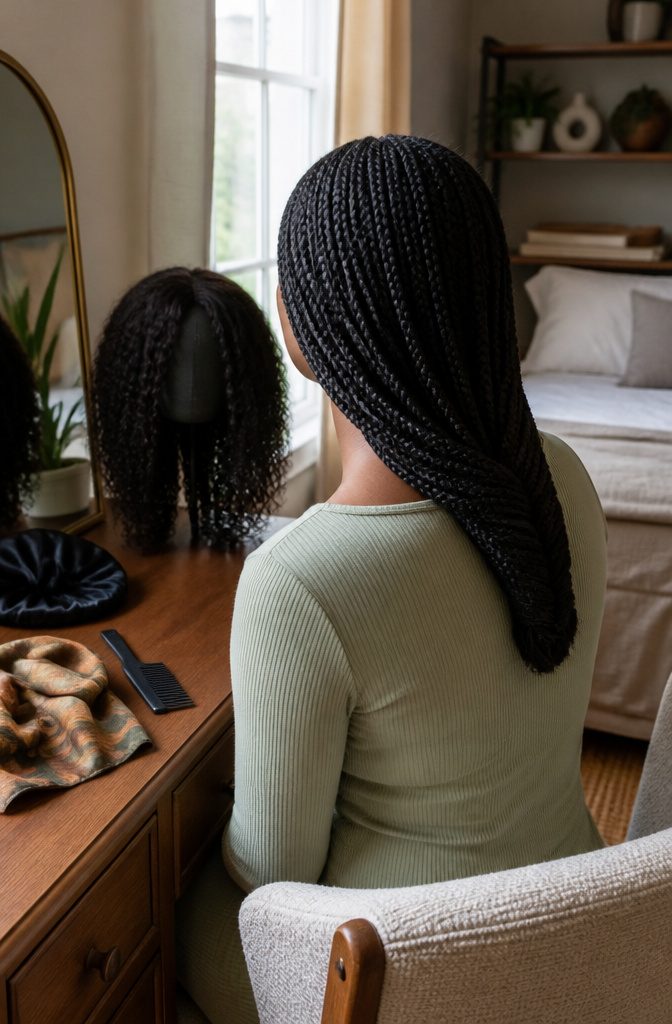
Every pass of a comb is a chance for 4C strands to snap, so the surest way to keep length is to handle your hair less.
Box braids and twists tuck the ends away and cut daily manipulation, and a style you leave alone is what retains length.
Wigs do the same job. Glueless human hair wigs go on without adhesive, which makes them my pick for beginners, and a half wig or V-part wig blends in a little of your own hair.
Twist-outs are the gentler everyday option; twist while the hair is damp. Add a silk or satin cap at night to cut friction.
Protein and Moisture Balance
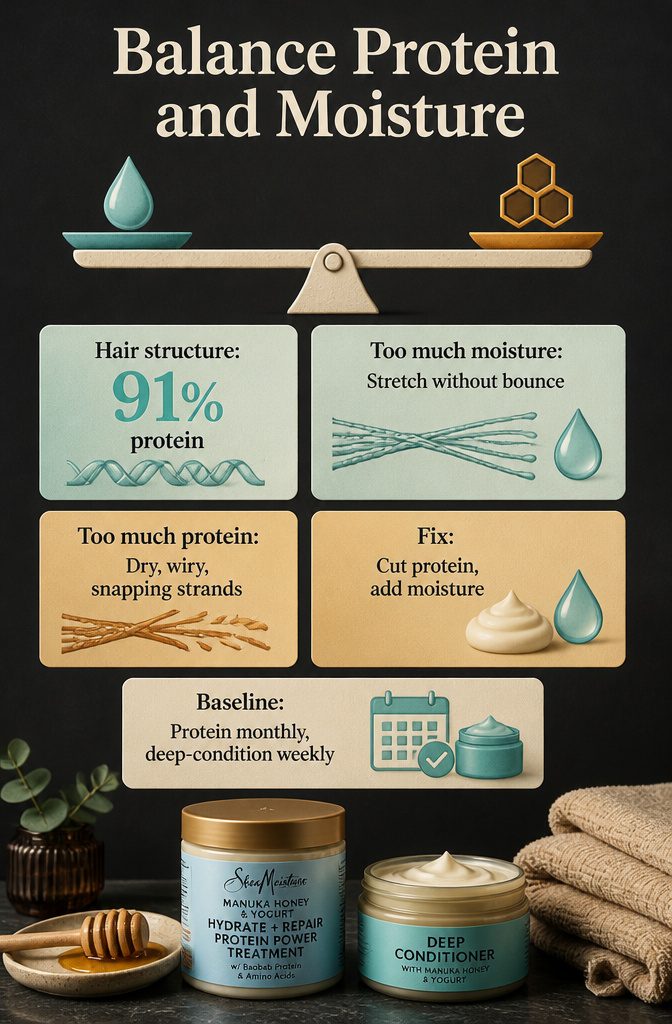
Hair is 91 percent protein, and your strands will tell you when the balance has tipped.
Hair that stretches and won’t bounce back has taken on too much moisture. Hair that snaps, or feels dry and wiry, has had too much protein, and the fix is to cut protein products and add moisturizing treatments.
Hair that feels weak is the signal to use a protein conditioner, but only then, not every wash. A monthly protein treatment is a sensible baseline, with a deep conditioner weekly for the moisture side.
SheaMoisture Manuka Honey & Yogurt Hydrate + Repair Protein Power Treatment suits fragile coils because its baobab protein and amino acids support elasticity while manuka honey and yogurt keep moisture in the mix.
Scalp Care and Growth Factors
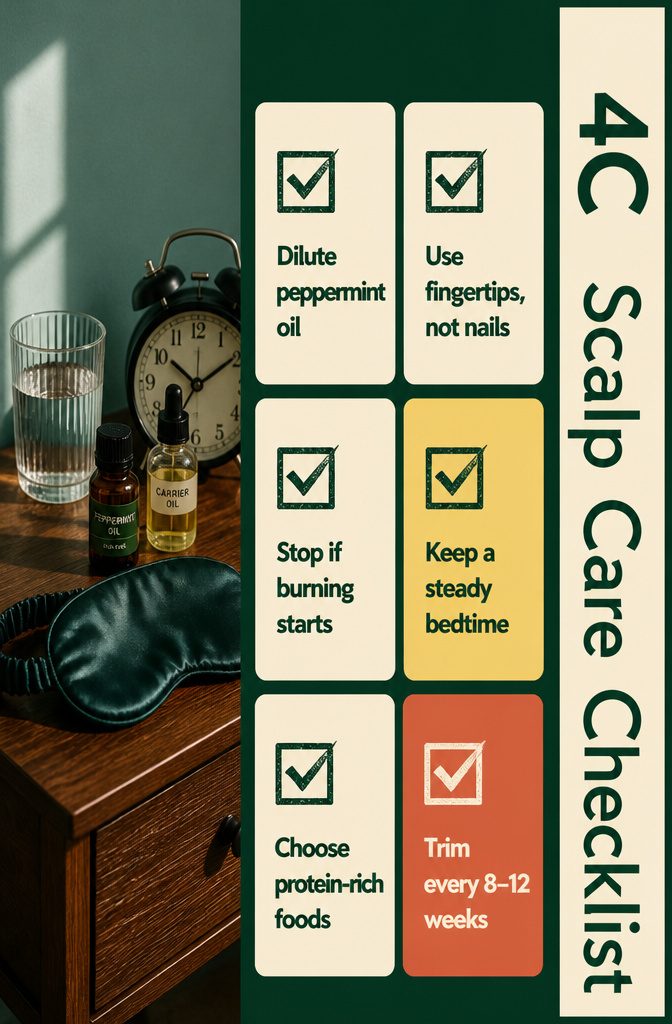
A scalp massage with peppermint oil, diluted in a carrier oil, is the easiest growth habit to add to a 4C routine.
Use your fingertips rather than your nails and work in slow circles for a few minutes. A cool tingle is normal; burning is not.
Sleep and stress show up in your hair. Poor rest and constant tension can slow growth and increase shedding, so I’d put a steady bedtime ahead of any new serum.
Food feeds the follicle too. Meat, liver, eggs, soybeans, yogurt, fish and dark vegetables are all good picks.
Trim every 8–12 weeks so split ends don’t travel up the strand and cost you length.
Frequently Asked Questions
How often should 4C hair be washed?
Wash type 4C hair with a sulfate-free shampoo every 1–2 weeks, with a conditioner-only co-wash in between when the hair feels dry.
Washing too often strips oils and invites breakage, while waiting too long lets buildup clog the follicles. Keep the water lukewarm and concentrate the lather on your scalp.
How to define 4C curly hair?
Work a thick curl cream like Cantu Coconut Curling Cream or EcoStyler Argan Oil Gel into soaking-wet sections, wait 5 minutes, then detangle gently.
Air dry or diffuse on medium heat. Thick products beat light gels, which absorb too fast for 4C strands.
Is 4C the tightest hair type?
Yes, type 4C hair has the tightest coil pattern in the Type 4 family.
The strands form a dense cloud of tight spirals, zigzags and wave-like shapes that intertwine rather than following one clear curl direction. Coil lengths range from tiny ringlets less than 0.5 inches long to springy spirals over 3 inches when stretched.
How do I tell if my hair is 4C or 4B?
4B forms a Z-pattern you can follow strand by strand, while 4C mixes waves, coils and zigzags along the same strand with coils packed so tightly the pattern can look almost invisible until moisturized.
Shrinkage separates them too: 4B can pull up to 70% of its length, and 4C reaches up to 75%.
Can you wear a wig with 4C hair?
Yes, wigs are a low-manipulation option that tucks your natural hair away while you experiment with different styles.
Glueless human hair wigs go on without adhesive, making them a good pick for beginners. A half wig or V-part wig lets a little of your own hair show through, so the join looks smoother.
What does 4C hair look like?
Type 4C hair looks like a dense cloud of tight spirals, zigzags and wave-like shapes that intertwine, with coils so tightly packed the pattern can be hard to see when dry.
With enough moisture, the hair settles into soft, defined coils. Without moisture, shrinkage can reach up to 75% of actual length, making the hair appear much shorter than it really is.
How to grow 4C hair faster and longer?
Reduce breakage with protective styles like box braids and twists that cut daily manipulation, trim every 8–12 weeks so split ends don’t travel up the strand, and massage your scalp with diluted peppermint oil to support growth.
A steady sleep schedule and a diet rich in meat, liver, eggs, soybeans, yogurt, fish and dark vegetables feed the follicle. A style you leave alone is what retains length.