Curtain bangs that taper from cheekbone level outward work on nearly every face shape because they frame without covering, while micro bangs stopping mid-forehead demand a shorter forehead and higher commitment to daily styling.
The fringe length, the way it parts and how much forehead it shows all shift which face shape the cut flatters and how many minutes you’ll spend with a round brush each morning.
1. Curtain Bangs with Waves

Curtain bangs split at the center and sweep outward to frame both sides of the face, blending into shoulder-length or longer waves.
The length starts around cheekbone level and angles longer toward the edges, which softens the line and gives you room to tuck hair behind your ears or leave it forward.
Ask for a center part with the shortest point hitting mid-cheek, then longer pieces that taper into the layers.
If your waves tend to clump, a bit of texturizing spray at the roots will separate the fringe without weighing it down. This cut grows out without a hard line, so you can stretch salon visits to 10 or 12 weeks.
2. Long Layered Waves with Bangs

Layers that start around chin or collarbone level connect the bangs to everything else and give the waves somewhere to move. Without them, long hair can pull flat on top and leave the fringe sitting separately.
The fringe here sweeps sideways rather than stopping blunt, which makes the transition smoother.
When you’re blow-drying, a round brush under the bangs and at the crown lifts both areas at once. If your hair is fine, layers also remove weight so the wave holds longer through the day.
3. Medium Wavy Hair with Bangs
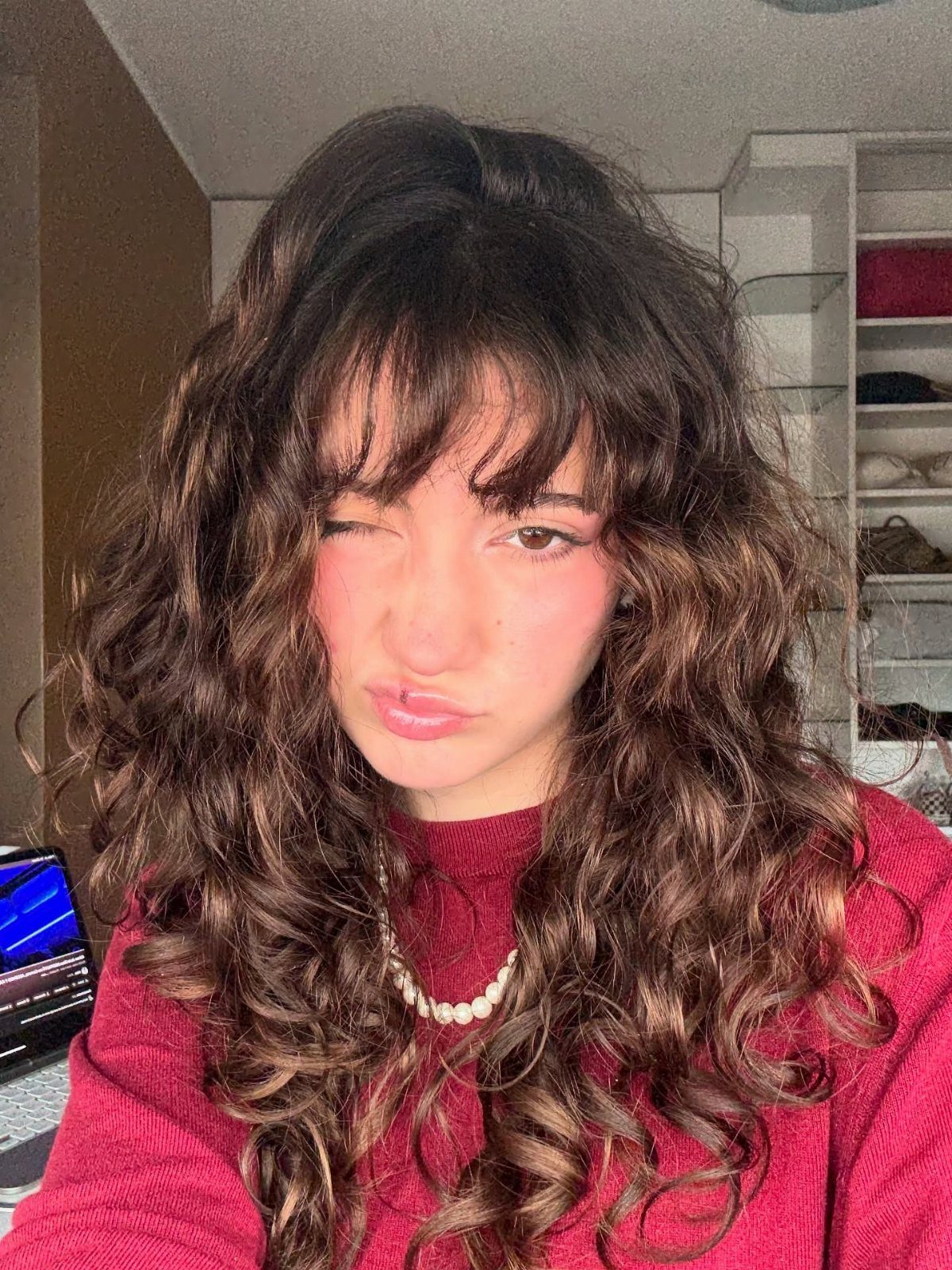
Medium length falls somewhere between collarbone and mid-shoulder, and adding bangs brings the focus up to the eyes and cheekbones. The fringe can be blunt, soft or side-swept depending on how much forehead you want to show.
This length is easier to air-dry than long hair because there’s less weight pulling the wave out.
A diffuser on low speed keeps the texture without adding frizz. If you flat-iron your bangs but leave the lengths wavy, the contrast reads as intentional rather than half-finished.
4. Wispy Bangs with Waves
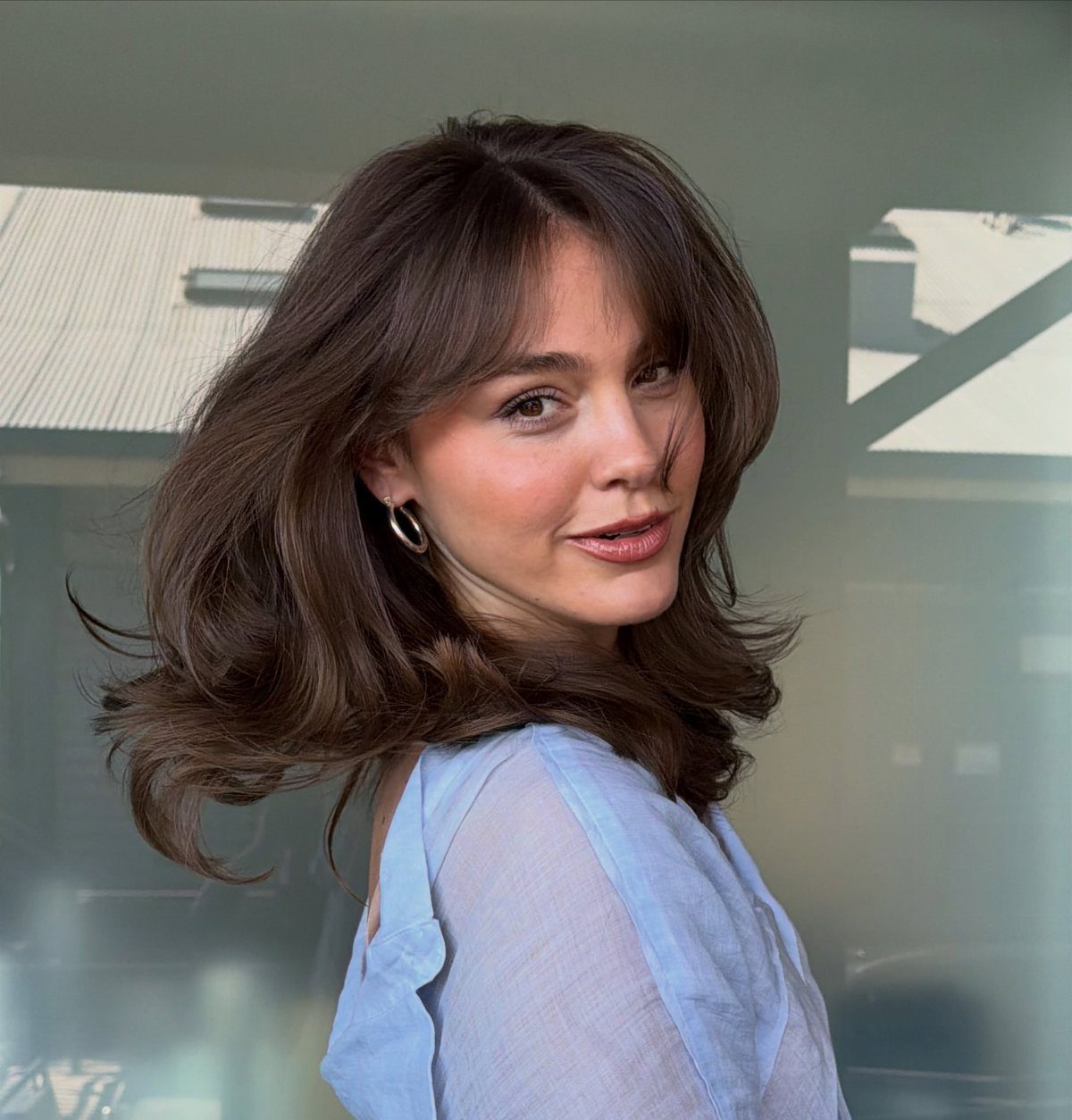
Wispy bangs are cut with a razor or point-cut with shears so the ends taper instead of stopping blunt.
The fringe is lighter and shows more forehead, which works well if you have a smaller face or want less commitment than a full straight-across bang.
Because the ends are thin, they dry faster and can look piece-y if you use too much product.
A small amount of leave-in cream is enough. If your hair is naturally wavy, the fringe will bend slightly rather than hanging completely straight, and that texture usually looks better than fighting it with a flat iron every morning.
5. Auburn Waves with Curtain Bangs
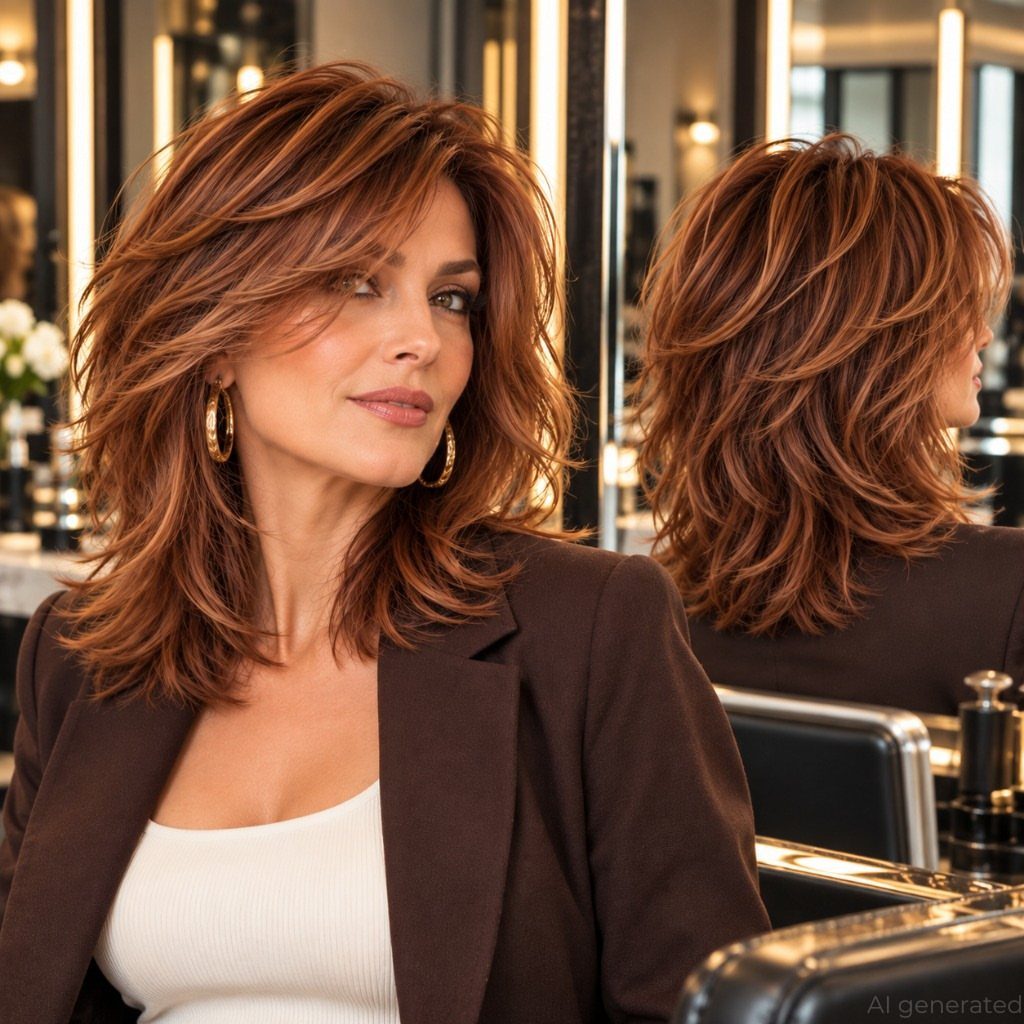
Auburn brings warmth without going fully red, and the color shows more variation when the hair is wavy because each bend catches light differently. Curtain bangs soften the face and let the color frame both sides.
If you’re coloring at home, a demi-permanent gloss in a copper or warm brown tone will deposit color without lifting your natural base, which means less damage and a longer window between touch-ups.
The curtain fringe works with a center or slightly off-center part, and because the pieces are longer at the edges, you can pin them back on days you prefer your face fully open.
6. Wavy Hair with Balayage Highlights
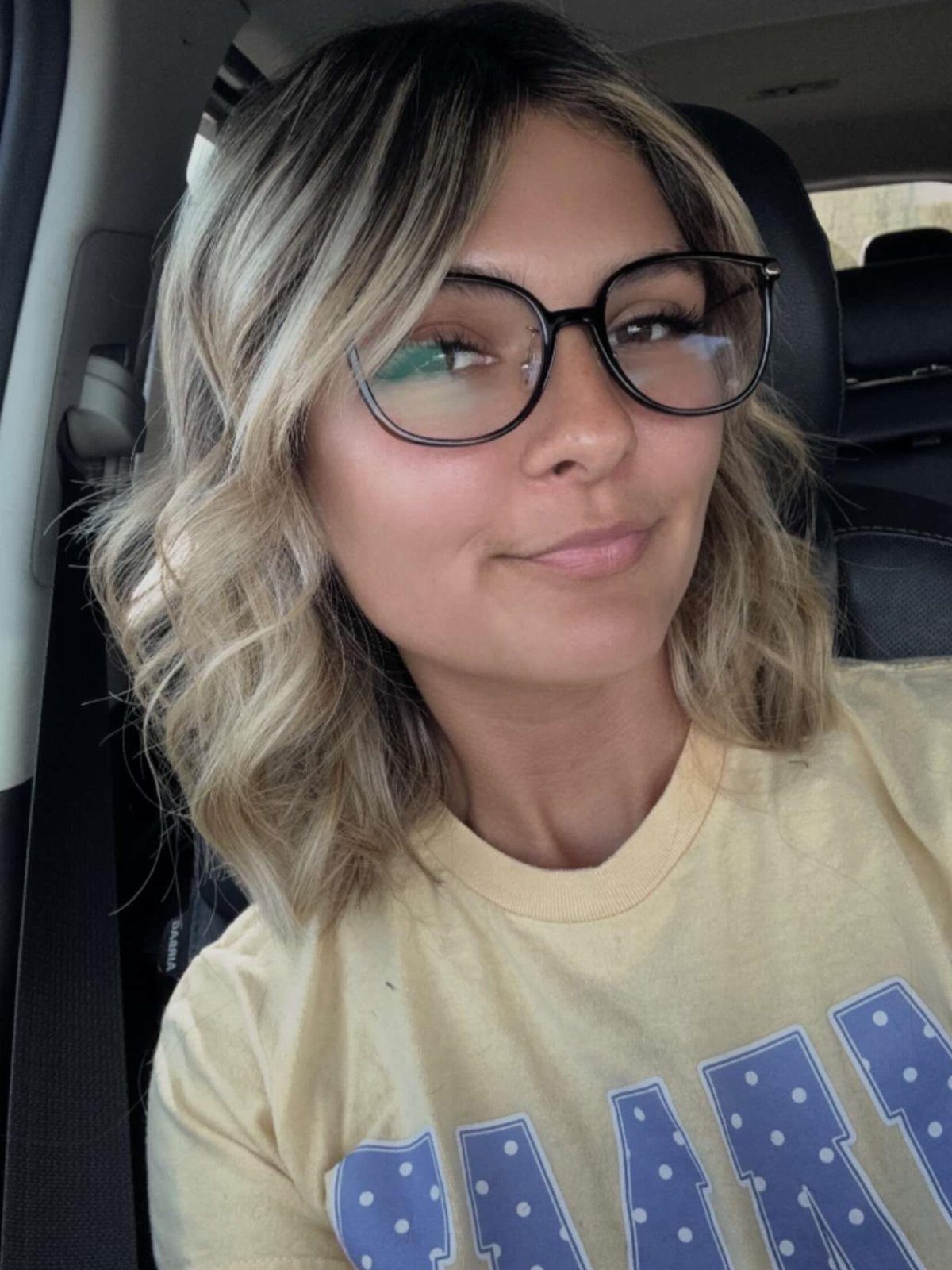
Balayage places lighter pieces where the sun would naturally hit, usually through the fringe and mid-lengths. On wavy hair, the highlights show more because the texture creates shadows that make the contrast sharper.
When the fringe is included in the balayage, a few lighter strands around the face brighten the whole look without needing a full head of foils.
If your waves are on the looser side, the color adds dimension that can make the hair look thicker. Toner fades faster than base color, so plan for a gloss appointment if you want to keep the tone cool.
7. Textured Bangs with Waves
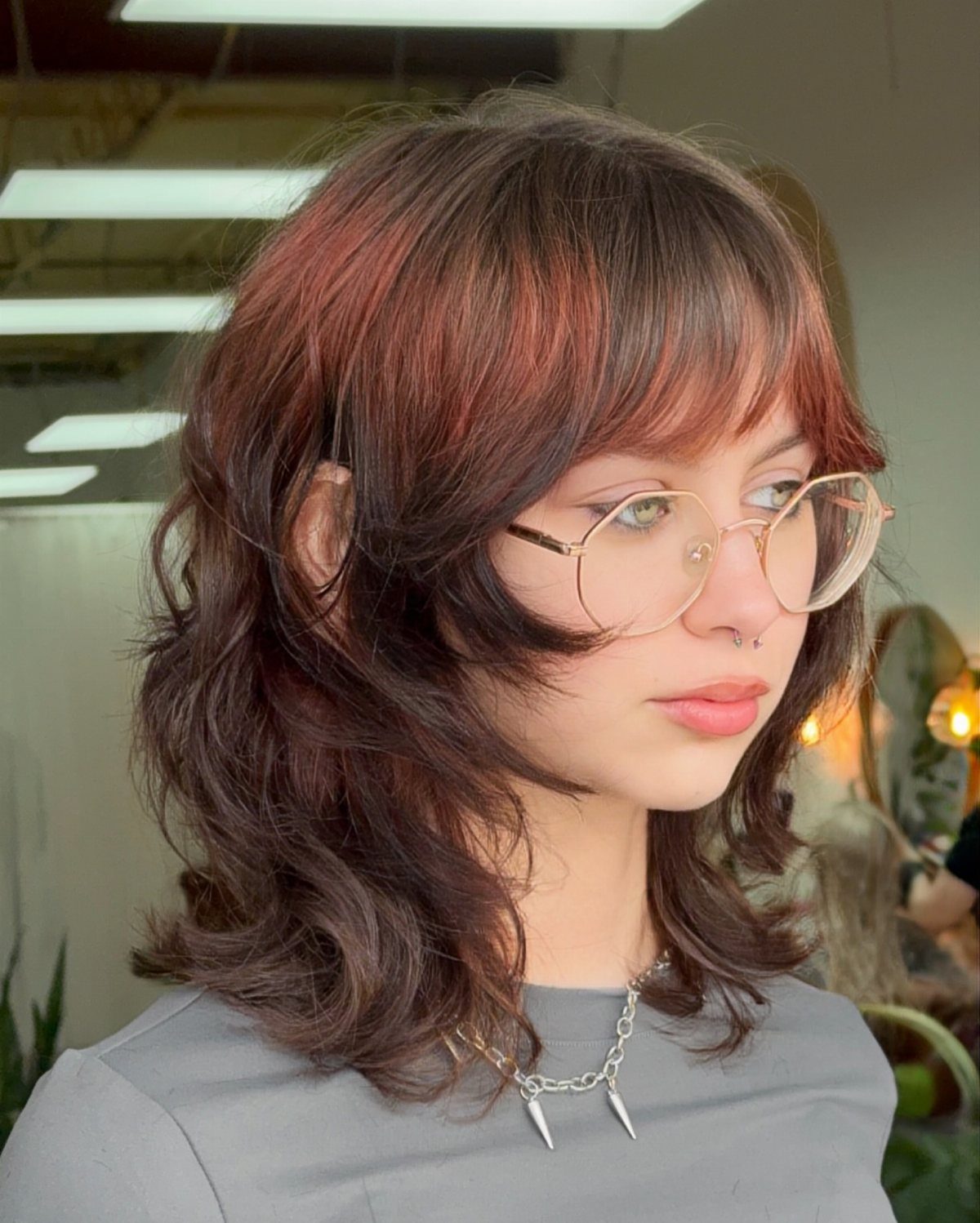
Point-cutting or razoring the fringe creates separation so each piece catches light on its own instead of sitting flat as one block.
The choppy finish reads sharper than soft bangs and pairs well with layers through the rest of the hair.
If your waves are on the tighter side, ask your stylist to thin the fringe vertically rather than horizontally so it doesn’t spring up too short when dry.
A matte paste or light pomade on the fingertips will define the pieces without making them look wet.
8. Side-swept Bangs with Waves
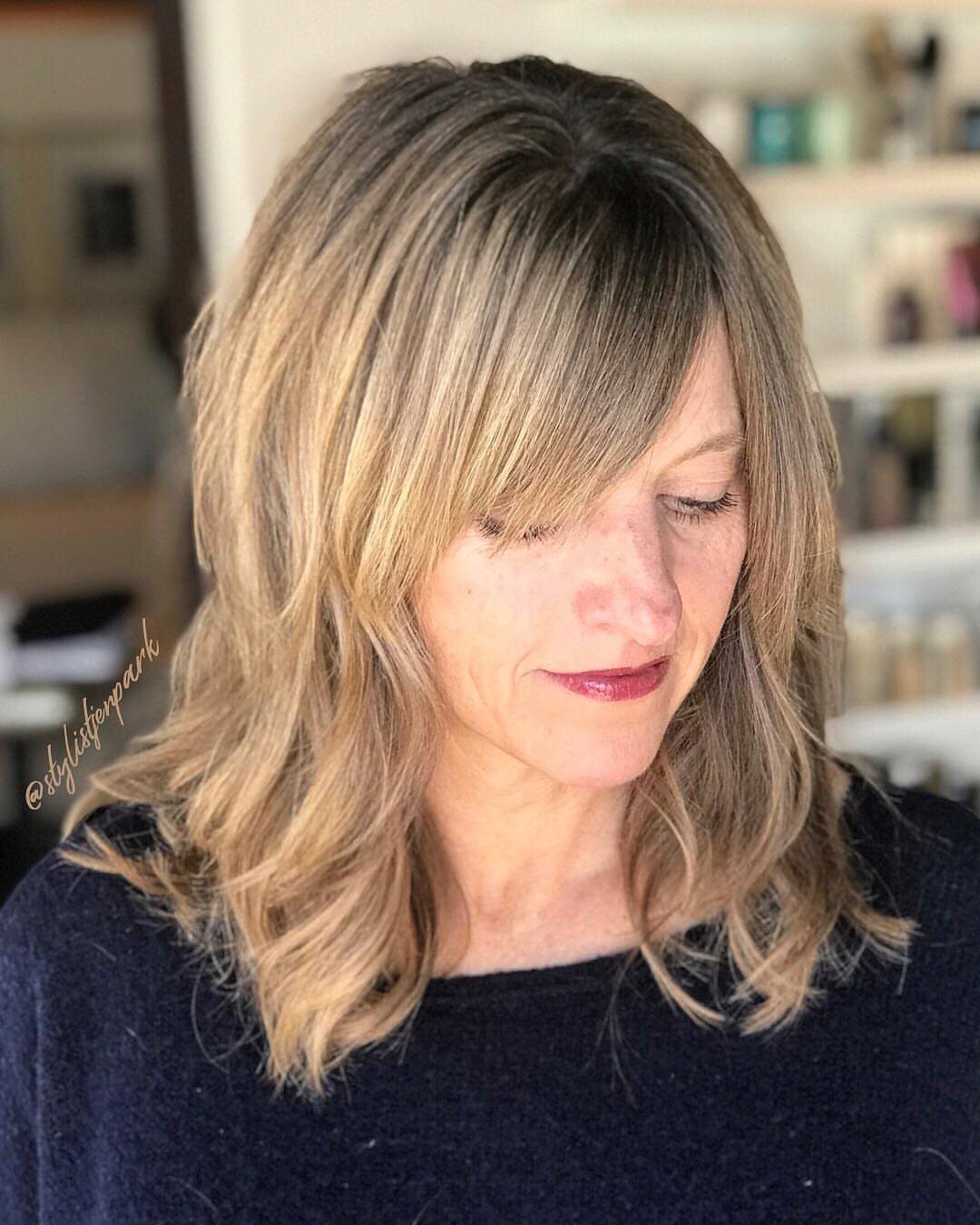
The fringe starts longer on one side and angles across the forehead, which opens up the face while still covering part of it. Because the bangs blend into the layers, there’s no hard line where the fringe ends.
I shape mine with a round brush while they’re still wet, pulling them to the side as I dry.
Once the sweep is trained, it holds without much work. This cut grows out gradually, so if you skip a trim you’ll just end up with longer face-framing layers rather than bangs in your eyes.
9. Wavy Hair with Feathered Bangs

Feathering means the fringe is cut so the ends taper and separate rather than stopping blunt. The result is lighter and shows more skin at the forehead, which keeps the look from feeling heavy.
Because the ends are fine, they move easily and won’t sit perfectly even from one day to the next.
If you prefer that kind of soft variation, this is a good fit. A small amount of mousse combed through while the hair is damp will hold the wave without making the fringe stiff.
10. Shoulder-length Curtain Bangs
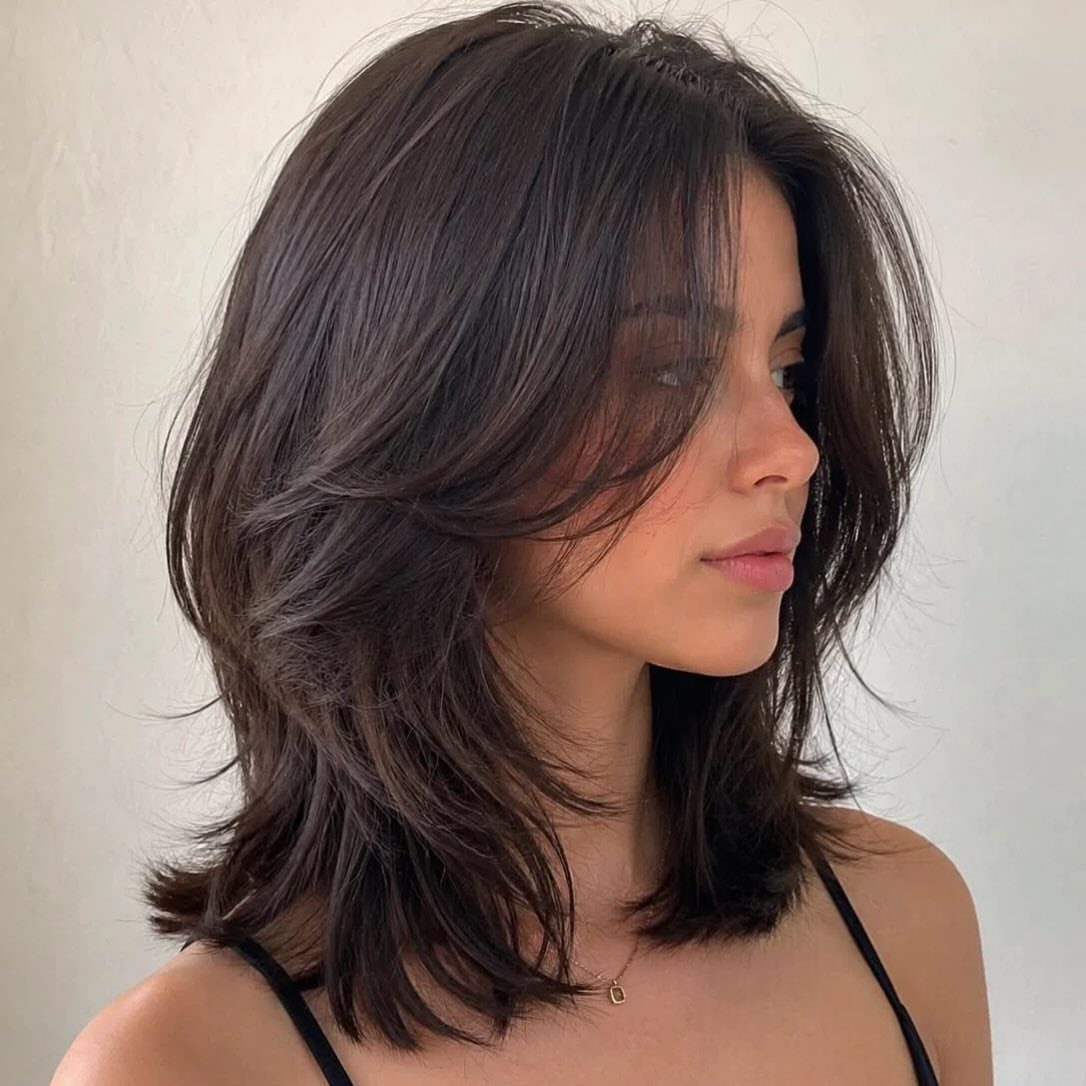
At shoulder length, the waves have enough weight to stay smooth without pulling completely straight, and the curtain fringe keeps the proportions balanced.
The bangs part in the center and taper longer toward the sides so they frame the face without covering it.
If your hair tends to flip out at the shoulders, a flat iron on just the last inch will straighten the ends and let the rest stay wavy.
The fringe air-dries well if you comb it forward while damp and let it fall into place.
11. Voluminous Curtain Bangs
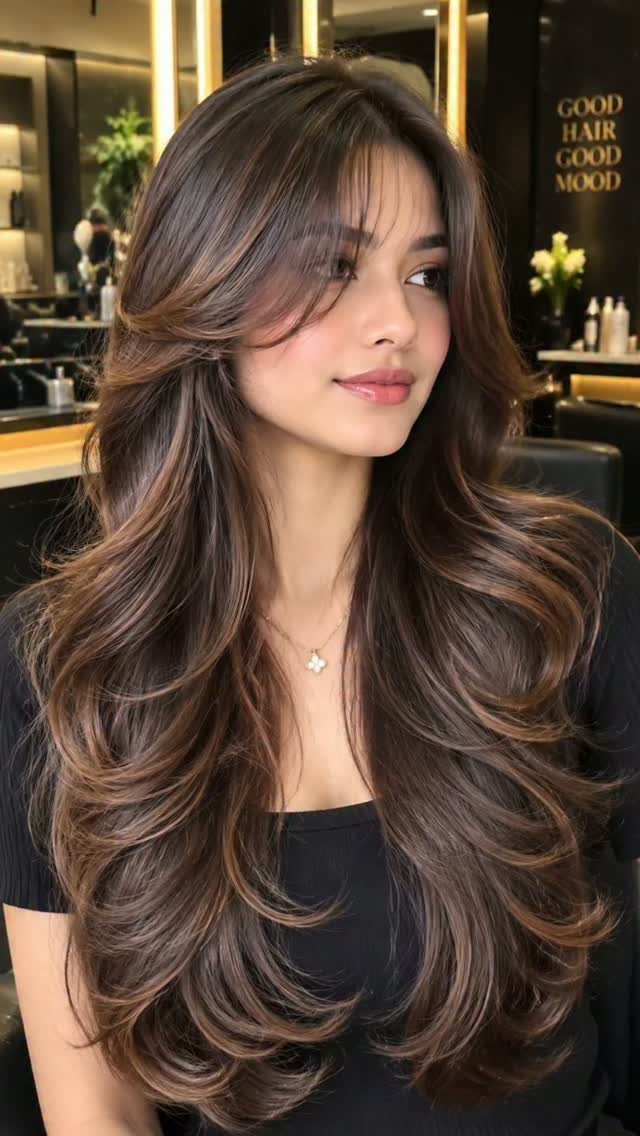
The volume makes the fringe more of a feature rather than something that just sits in place.
This works best on hair that has some natural body. If yours is fine or flat, a volumizing spray at the roots before you dry will give the bangs something to build on.
The rest of the hair can be wavy or curled so the texture matches the movement in the fringe.
12. Textured Curtain Bangs
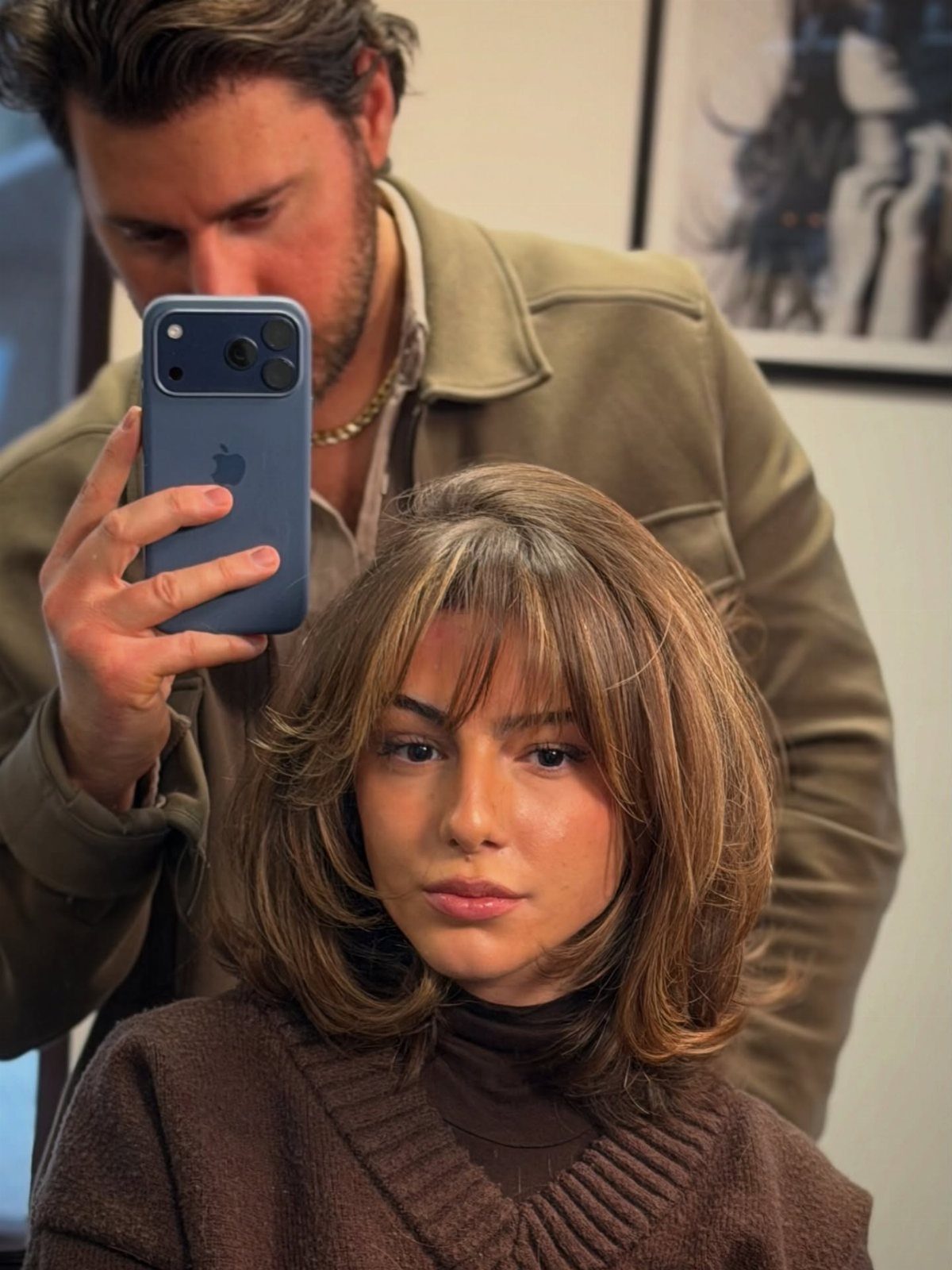
Texturizing through the fringe creates separation so the bangs don’t sit as one smooth curtain. The slightly uneven lengths add shape and make the whole cut look less precise, which works well with waves that have their own variation.
Texturizing spray or dry shampoo at the roots lifts the bangs and keeps them from clumping together.
If one side of the fringe sits heavier than the other, that asymmetry usually looks intentional rather than unfinished as long as the lengths aren’t drastically different.
13. Beachy Blonde Waves with Airy Bangs
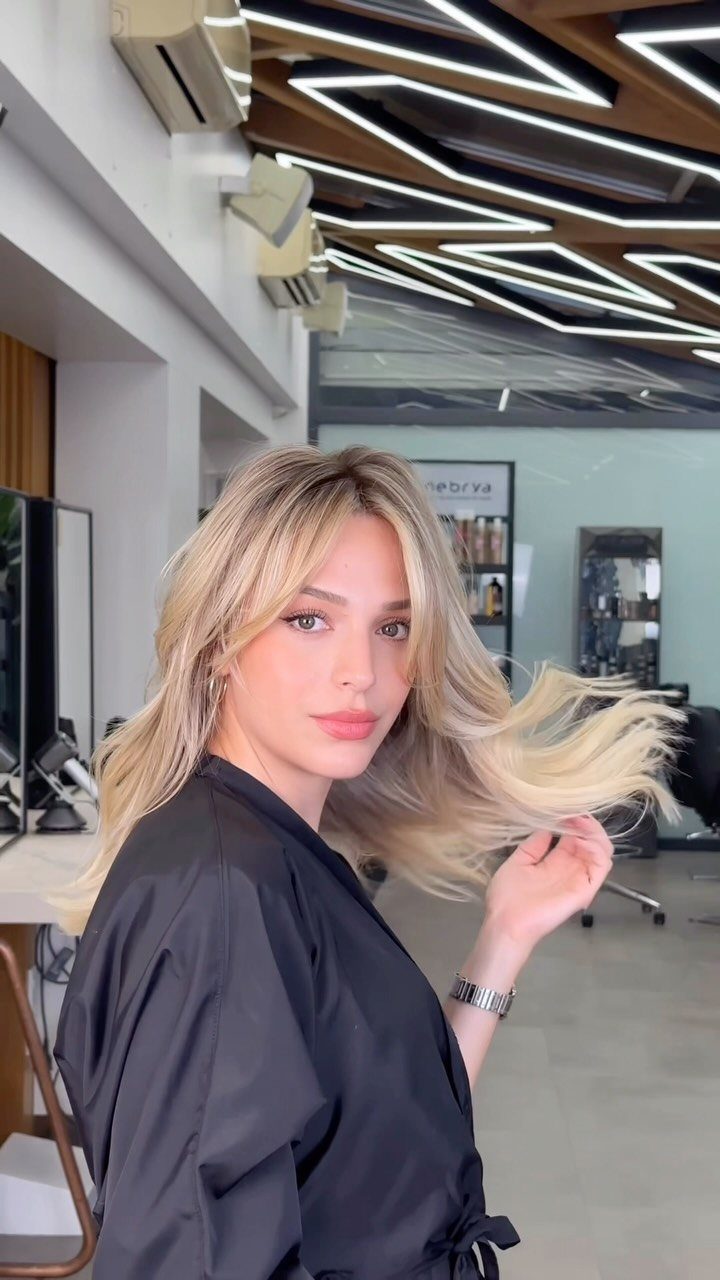
Blonde lightens the ends and lets the waves show more separation, while airy bangs keep the fringe from sitting heavy. The pieces are cut thin enough that you see forehead between them, which balances out the length and volume below.
If you’re lifting from a darker base, expect 2 or 3 sessions to get to this level without frying the ends.
A purple shampoo once a week keeps the tone from pulling orange. A quick comb through while wet, then hands off, and the bangs settle into shape on their own.
14. Wavy Shag
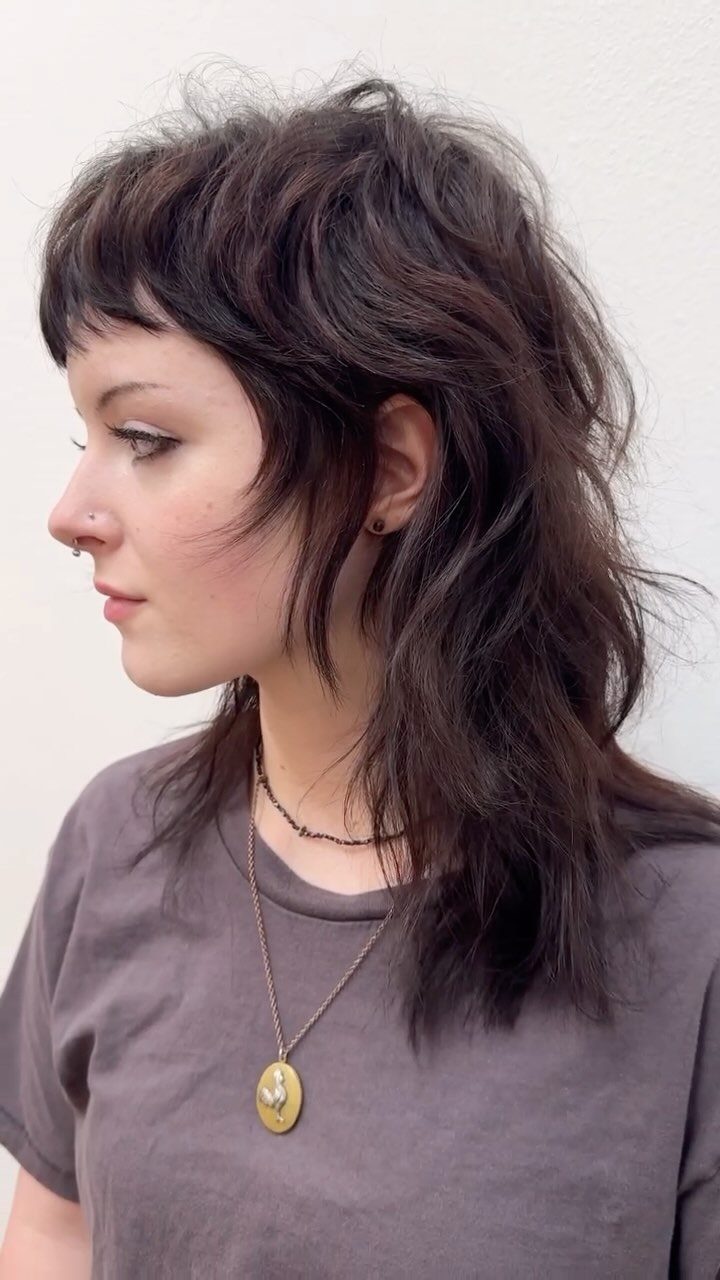
Layers cut at different lengths through the crown and sides give the hair room to stack and move outward instead of hanging flat.
The fringe is usually choppy or blunt and sits above the eyebrows, which makes the whole cut read as intentional texture rather than something that just grew out unevenly.
A shag works best on hair that already has some bend.
If yours is straight, you’ll need to add wave with a curling iron or braid it damp overnight. A few pumps at the base add height where you want it and skip the lengths that already move.
15. Soft Bangs with Face-framing Layers
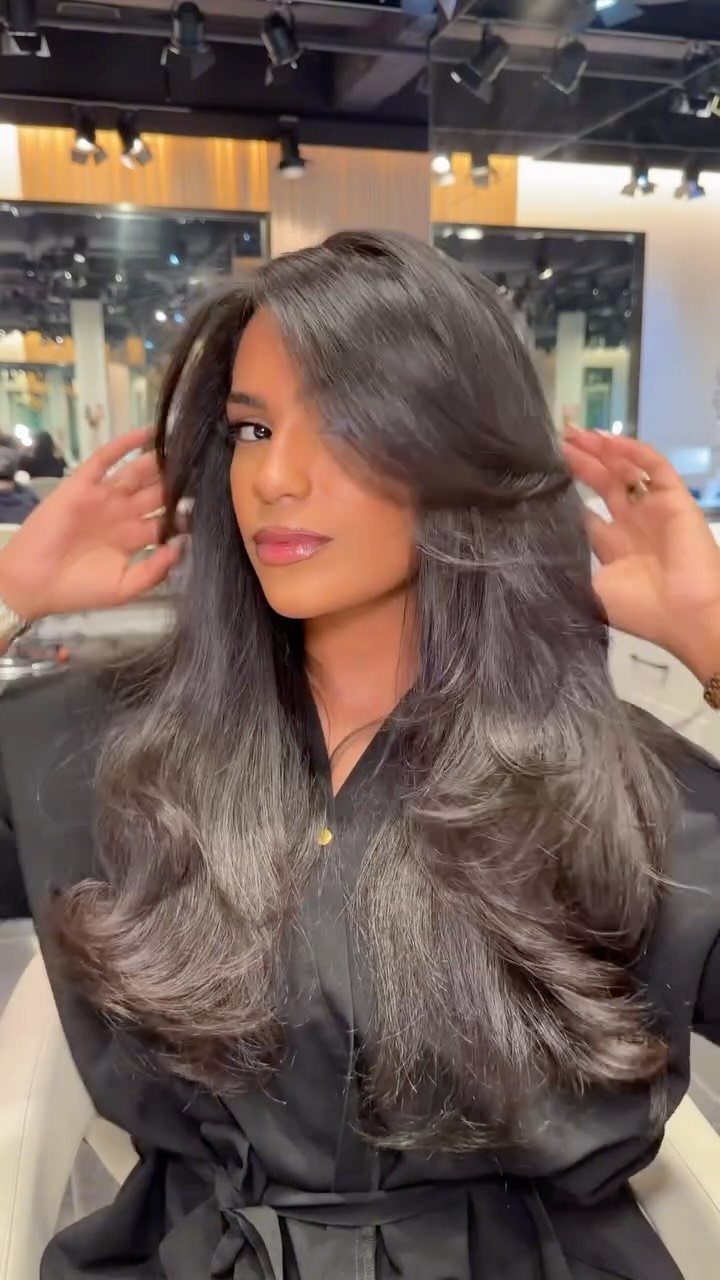
Layers that start near the cheekbones or jawline connect the bangs to the rest of the hair so the fringe doesn’t sit separately.
The bangs themselves are soft rather than blunt, which means the ends taper slightly and move more easily.
This cut grows out smoothly because the layers blend into each other.
A round brush under the fringe while blow-drying will lift the roots and keep the bangs from falling flat. If your hair is fine, the face-framing pieces add shape without needing much product.
16. Tousled Waves with Micro Bangs
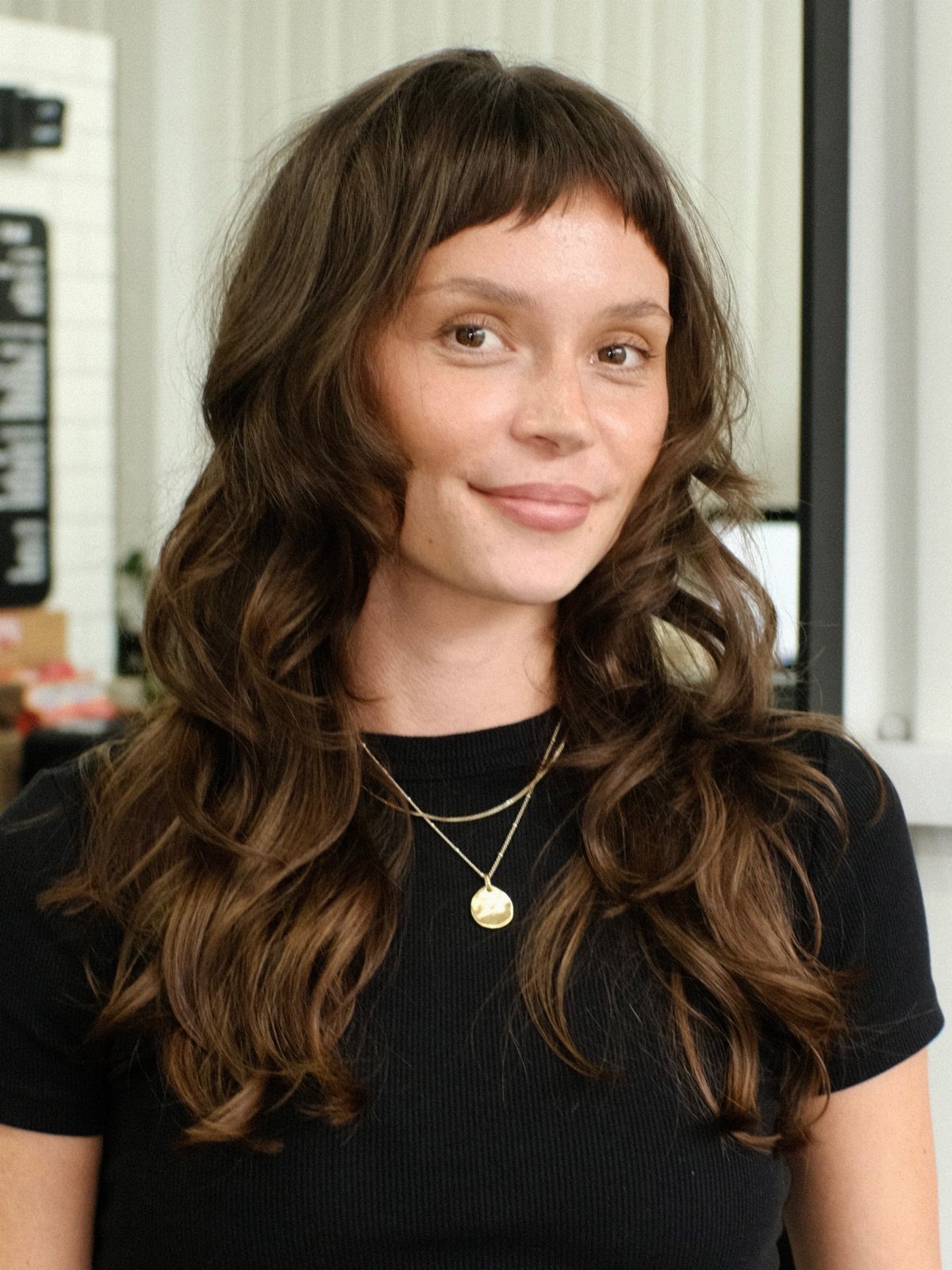
Micro bangs stop above the eyebrows, sometimes mid-forehead, and sit blunt or slightly textured. The short length makes the fringe a focal point, and pairing it with loose, tousled waves keeps the look from feeling too rigid.
This cut requires commitment because there’s no tucking the bangs behind your ears while they grow.
If your forehead is on the shorter side, the fringe can make it look smaller. A flat iron on low heat straightens the bangs without flattening the waves behind them.
17. Curly-wavy Hair with Curly Bangs
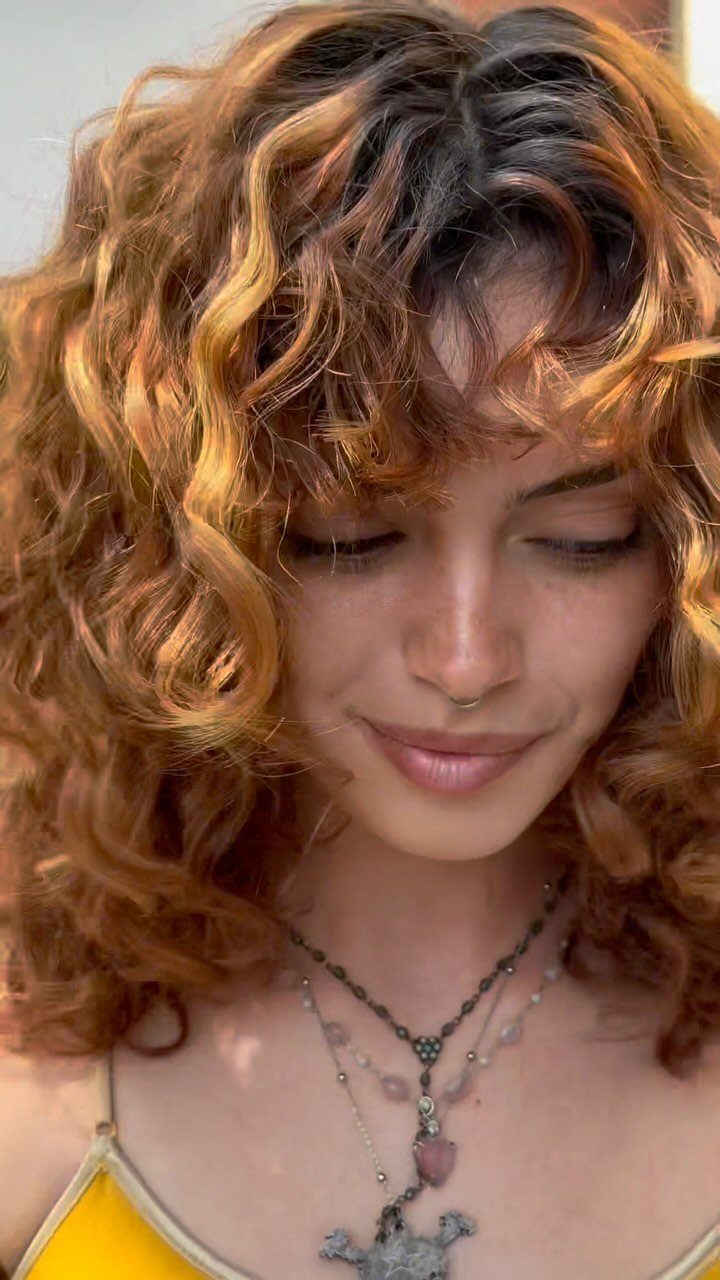
When your hair sits somewhere between a loose wave and a tight curl, cutting the fringe to match that texture keeps everything cohesive.
The bangs will spring up shorter when dry, so ask your stylist to cut them longer than you think you need.
A leave-in cream smooths frizz without weighing down the curl.
If you try to straighten the fringe while leaving the rest curly, the contrast usually looks unfinished rather than intentional. Let both dry the same way and the texture reads as one choice.
18. Wavy Bob with Curtain Bangs
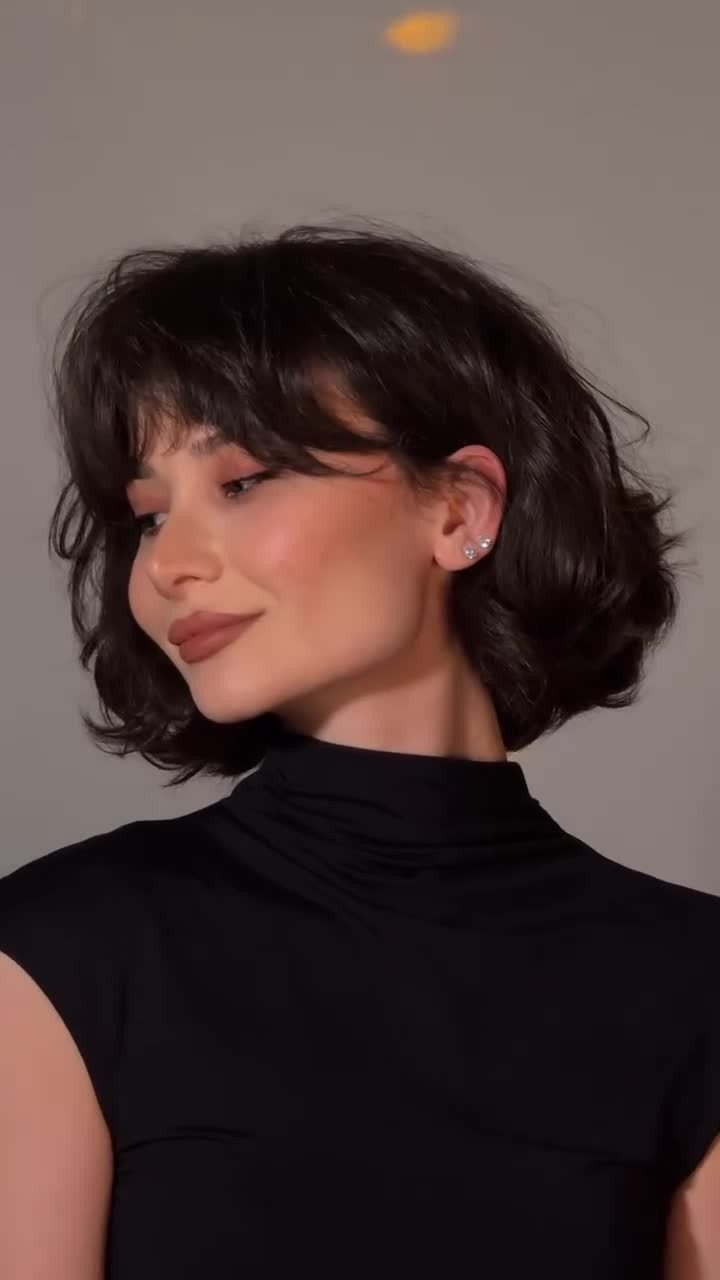
A bob that ends between the chin and shoulders gets a softer line when you add curtain bangs that part in the center and taper longer at the sides.
The shorter length means less weight pulling the wave out, so the texture holds through the day without much work.
If your hair is thick, thinning the interior will keep the bob from looking boxy. A flat iron on just the bottom inch smooths any pieces that flip out at the shoulders.
19. French-girl Bangs

The fringe lands at or just above the brows and reads more lived-in than sharp. The ends are soft, often piece-y, and the whole thing moves easily instead of holding one shape.
This cut works if you want bangs that don’t demand daily styling.
20. Bottleneck Bangs
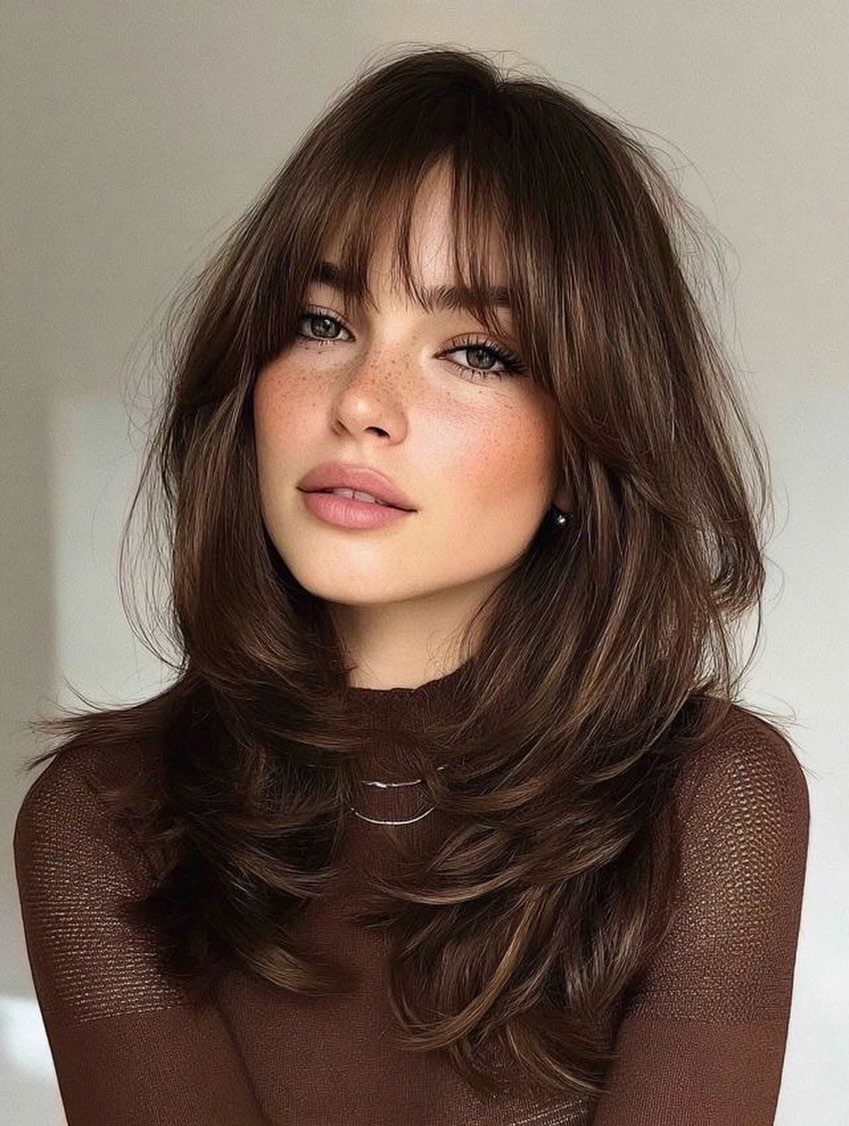
The fringe is narrow at the center and fans wider toward the temples. The longer side pieces blend into face-framing layers, so the transition is smooth rather than abrupt.
This cut suits oval or longer face shapes because the narrow center keeps the forehead visible while the wider sides balance the proportions.
If your face is round or square, the narrow top can make it look wider. Keep the shape current with regular trims.
21. Wavy Hair with Bardot Bangs

The fringe is cut full and parts in the center, then sweeps outward to frame both sides of the face.
The volume makes it a feature rather than something subtle, and it sits best on foreheads that are medium to wide.
If your hair is thick, the fringe can feel heavy unless your stylist thins it from underneath.
A round brush pulled outward while drying trains the sweep, and once it’s set, the shape holds without much work. This cut reads as polished rather than casual.
22. Wavy Pixie with Piecey Bangs

A pixie cut down to the ears or nape with textured fringe that separates into individual pieces. The bangs can sit forward across the forehead or be pushed to the side depending on what you want that day.
If your hair is naturally wavy, the pixie will have movement on its own and won’t sit flat.
23. Wavy Hair with Birkin Bangs

The fringe is cut thin and grazes the brows with soft separation between the pieces, so it looks airy rather than dense.
The lightness keeps the bangs from covering too much forehead, which opens up the face while still adding shape.
24. Wavy Hair with Rounded Bangs
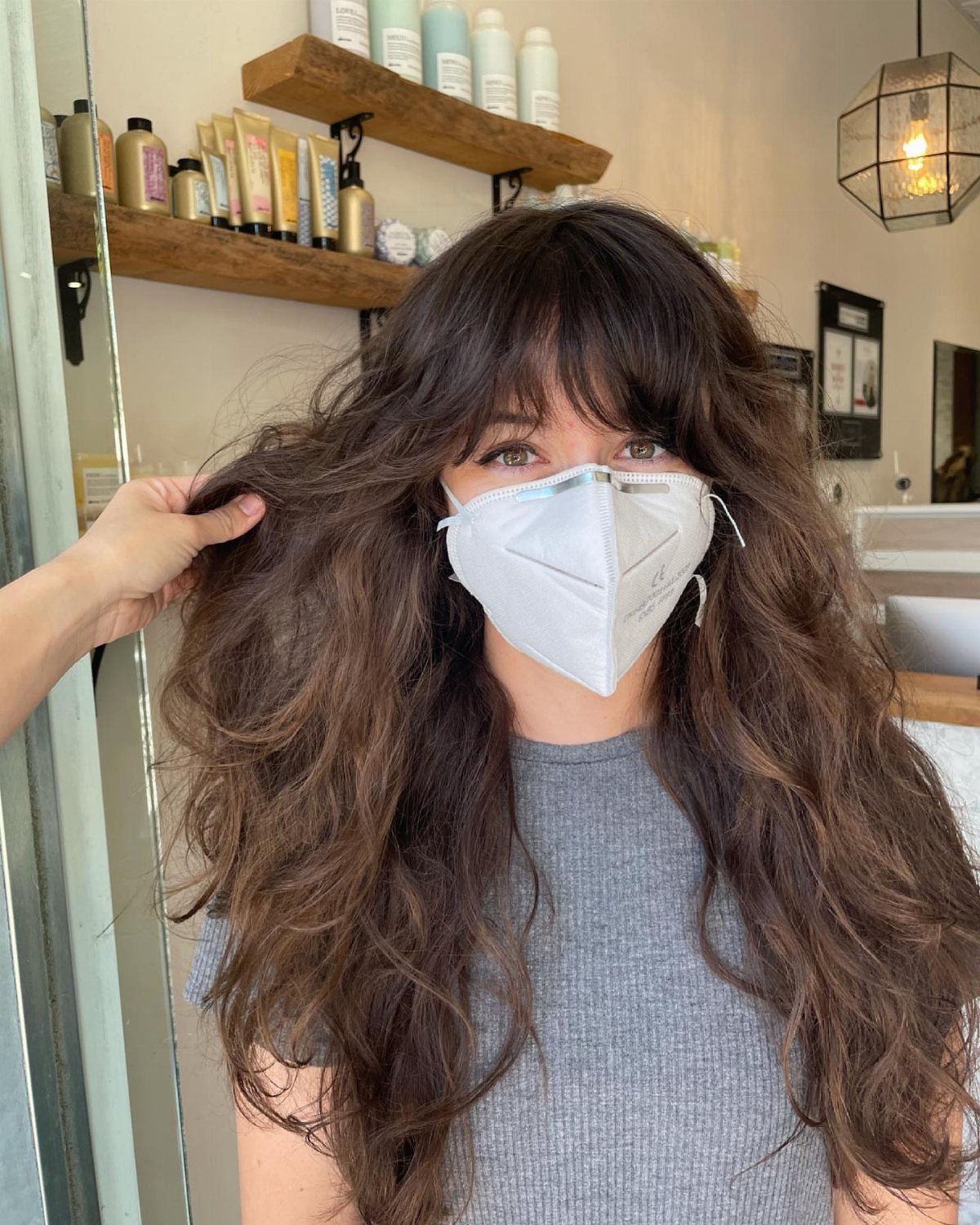
The fringe arcs softly outward from the center instead of cutting a straight line. The rounded shape softens the face and works well with waves that have their own bend.
This cut suits round or heart-shaped faces because the curve mirrors the face shape instead of contrasting it.
25. Wavy Hair with Thick Bangs
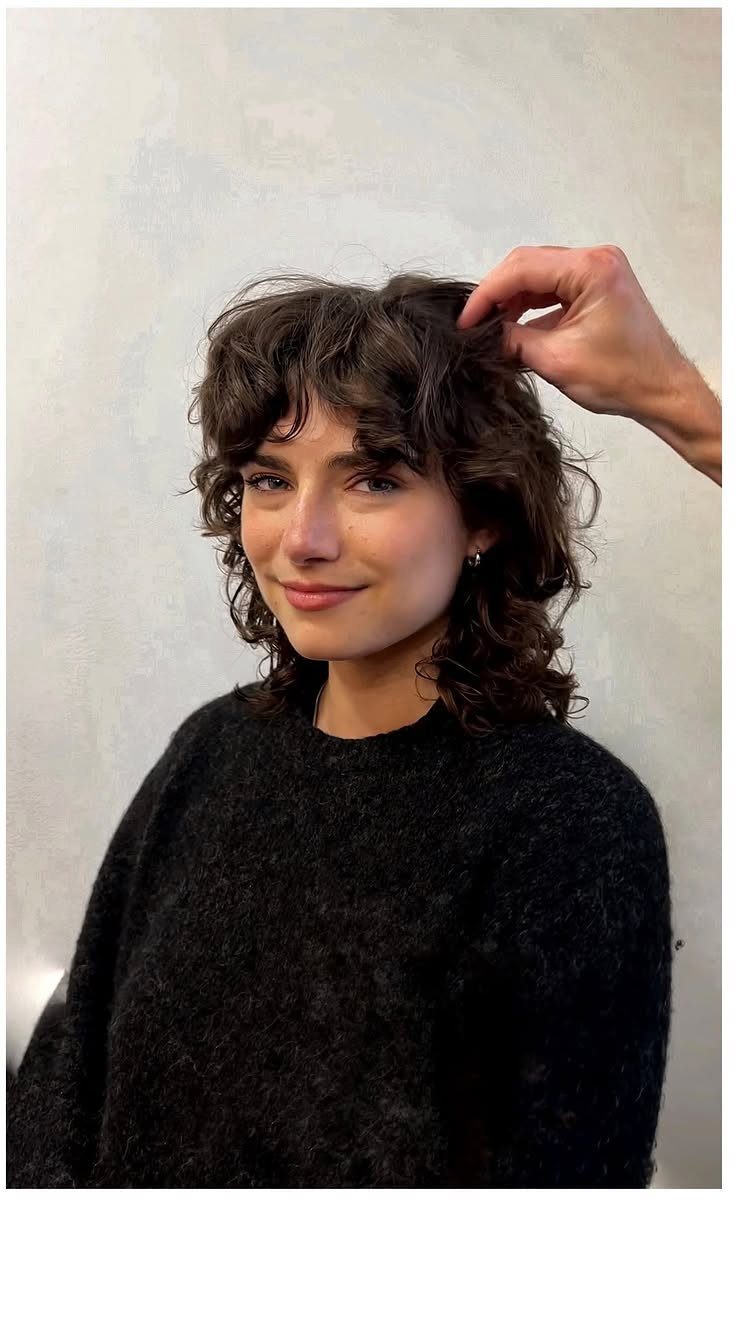
A blunt, full fringe cut straight across gives the waves below it more room to stand out because the weight at the top balances the movement underneath.
The density also covers more forehead, which suits longer face shapes better than round ones.
Thick bangs need regular trims to stay off the lashes.
Choosing Bangs for Face Shape
The vertical line draws the eye down and breaks up width.
Thick bangs cut straight across will balance the proportions.
Heart-shaped faces look best with shorter bangs that don’t extend past the temples, which keeps the upper face from feeling crowded.
Square faces soften when the bangs sweep to one side instead of cutting straight across. The diagonal breaks up the jawline and forehead without adding more width.
Oval faces can handle most bang styles because the proportions are already balanced. Pick a fringe that works with your wave pattern and the minutes you actually have in the morning.
Styling and Upkeep
Air-drying works if your hair holds texture on its own, but the bangs may need a round brush underneath while wet to lift them off the forehead.
Pull the brush forward or to the side depending on the shape, and the bangs will hold that line once they cool.
Lightweight mousse or leave-in cream keeps the waves from feeling coated. Anything rich or slippery goes on the lengths, not the forehead, or the fringe will clump and turn flat.
Powder at the root buys another day, but work it in completely or you’ll see chalky streaks. Your fringe will need a trim more often than the rest of the cut to stay where you want it.
Planning a Salon Consultation
Take a few reference images that match your own texture and cut length. Point out what you like in each one: the fringe length, how much forehead shows, whether the bangs part in the center or sweep to one side.
Tell your stylist you want bangs that work with your natural texture instead of requiring a flat iron every day. Tell your stylist how you dry your hair most days and how long you’ll realistically spend fixing the fringe.
Request a demonstration of how to style them at home so you know what tools and products to use.
If you’re unsure about the commitment, ask what the grow-out plan looks like and how often the fringe will need trimming to stay current.
Frequently Asked Questions
Can wavy hair have curtain bangs?
Wavy hair takes curtain bangs well because the center part and longer sides move with the texture rather than against it.
The waves make the fringe look softer and more lived-in than it would on straight hair. The taper blends into your layers so there’s no visible edge as it grows.
Do wavy bangs need to be styled every day?
Most wavy bangs need a few minutes of work each morning to keep them off your forehead or shaped the way you want.
Lifting the roots with a round brush while they dry sets the direction, and the wave remembers it once the hair cools.
Curtain or wispy styles can dry on their own if you comb them forward while wet, but thicker or blunt cuts usually want heat.
Can I air-dry wavy bangs?
Yes, if your hair holds texture on its own and the fringe is cut to work with that bend. Curtain bangs, wispy bangs, and soft tapered styles air-dry better than blunt bangs because the lighter ends move easily.
What are the lowest-maintenance bangs for wavy hair?
Curtain bangs, bottleneck bangs, and side-swept bangs are easier to manage because they blend into layers and grow out without a hard line.
The longer pieces mean you can tuck them behind your ears or let them fall forward depending on the day.
Those cuts ask for less upkeep and follow what your texture already does instead of forcing a different shape every morning.
How often should I trim curtain bangs?
Every 4 to 6 weeks keeps them at the exact length you started with, though if you’re okay with a slightly longer look, the angled sides grow out without a hard line.
Miss a trim and they turn into face-framing pieces instead of dropping over your eyes.
Are curtain bangs suitable for humid climates?
Yes, but the fringe may frizz or clump if you don’t use something that seals the cuticle.
A drop of anti-frizz serum or leave-in smooths them without making them heavy, and a diffuser on low locks the shape in without stirring up more frizz.
Dry shampoo adds another day if you rub it all the way in, but leave a trace and it shows as white powder.