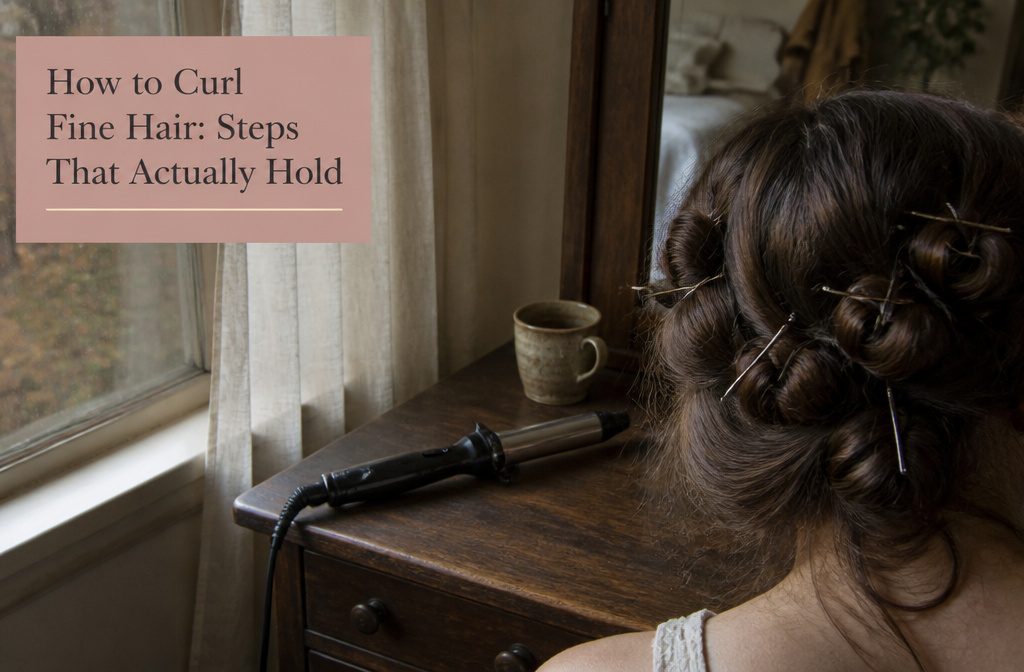
Fine hair holds curls when you start with a barrel under 1 inch, curl sections half an inch wide, and pin each one until it cools completely.
Most people lose the curl at prep: they style on freshly washed hair, which is too slippery to grip a shape, or they let go of the iron before the strand has cooled and set.
1. Prep for Grip
Prep for Grip
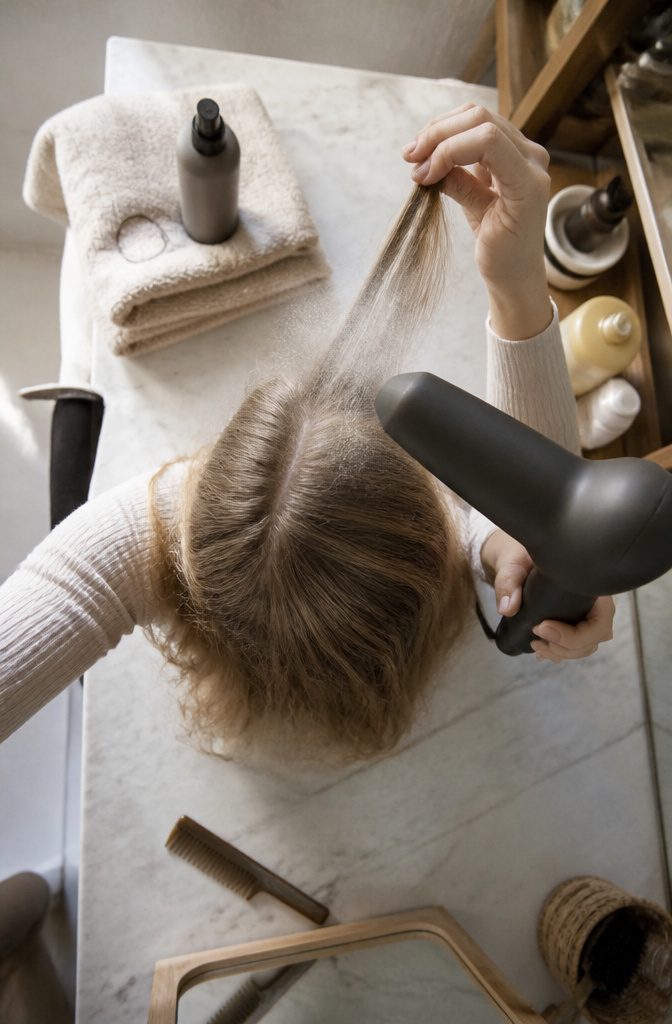
Skip the shampoo and conditioner for 1 to 3 days before you curl—fine hair needs a bit of natural texture and oil to hold onto a shape, and freshly washed hair is too soft and slippery.
Use a volumizing or lightweight shampoo like Native volumizing shampoo when you do wash, and space out those washes to every other or every third day.
Before you curl, check that hair is completely dry. Run a blow dryer on cool air over sections to reveal any damp spots—styling damp hair invites damage and kills curl life fast.
Add grip:
- Dry shampoo at the roots for texture without weight
- Mousse like Herbal Essences curl-boosting or TRESemmé extra hold, applied to damp hair and dried completely
- Texturizing spray or root-lifting spray on clean, dry hair
Too much product weighs fine hair down just as fast as residue does. Keep it light, keep it dry, and give yourself that second-day texture before the iron ever touches a strand.
2. Heat Protectant
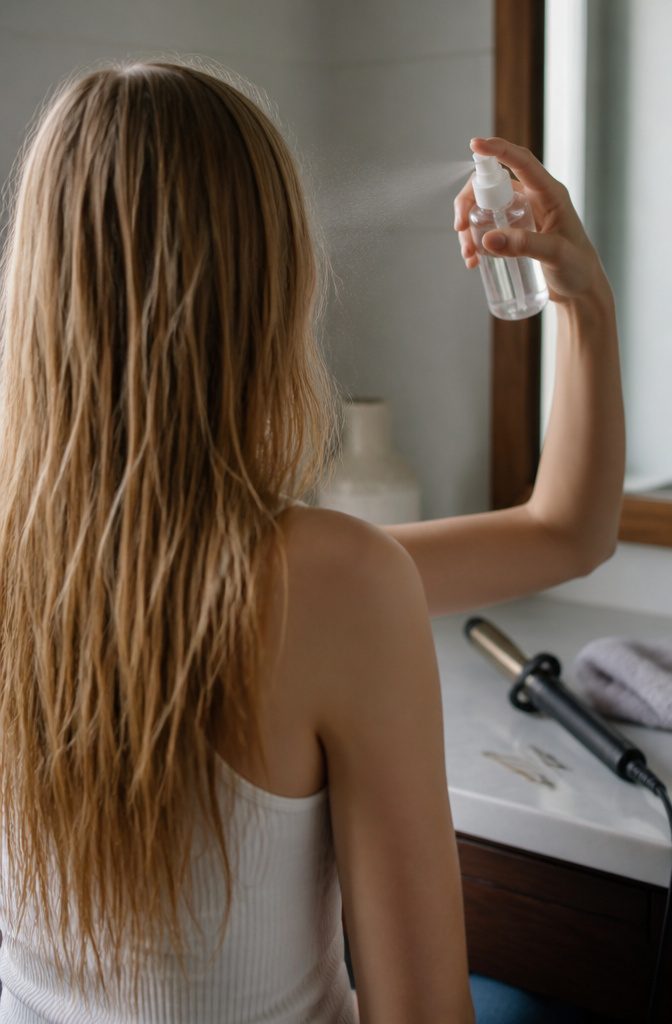
Fine hair heats through faster than coarse strands, so a lightweight heat protectant goes on before you pick up any hot tool.
The cuticle on fine hair is thinner and reaches its thermal limit quickly, which means structural damage can show up after fewer styling sessions than you’d expect.
A light mist distributed evenly is all you need—overdo it and the hair reads greasy or flat before you even start curling.
I look for formulas that protect without weight.
Pantene Pro-V heat primer, Hairitage Play It Cool, and Lauren Ashtyn Heat Protectant all come up as options that fine hair tolerates well. You need a barrier against heat, not a coating that collapses the curl.
The other half of protection is adjustable temperature.
Fine hair should stay between 280°F and 320°F, so any tool locked at a single high setting is working against you from the start. If the iron doesn’t offer multiple heat levels, it wasn’t built with fine hair in mind.
3. Choose the Tool and Setting
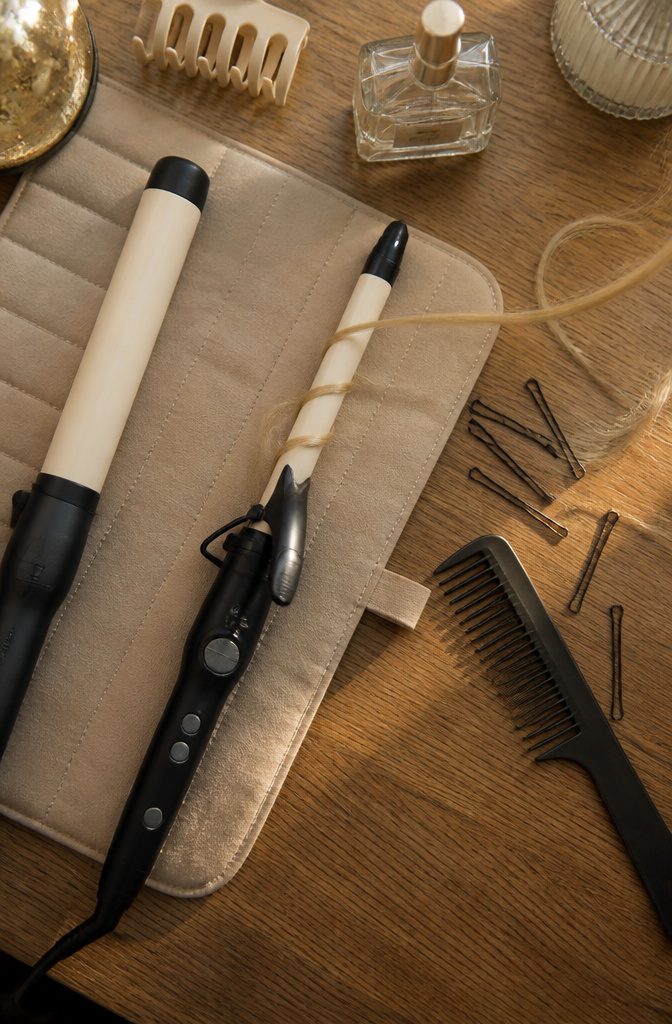
A barrel of 1 inch or smaller gives you the tightest starting curl, which means something is left even after fine hair relaxes.
Skinny tongs run 0.5 to 0.75 inch if you want real grip; a 1-inch barrel lands you in classic-volume territory. Anything larger and the weight of the hair pulls the curl out before it sets.
Ceramic irons heat evenly and lower the risk of damage while smoothing the cuticle, which helps the curl hold longer. Adjustable temperature matters more than most people think.
The Conair double ceramic and the Tyme Iron Air Pro Grade both let you dial in what you need; the TYMO CURLPRO PLUS checks its temperature 100 times per second, so you’re not guessing whether the barrel cooled between sections.
For healthy, untreated hair, you can push up to 450°F.
Dyed, processed, or split-prone hair should sit around 320°F. I’d start most people at 300°F–350°F and adjust from there, because too little heat and the curl drops in minutes, too much and fine hair flattens under the barrel.
4. Curl Small Sections
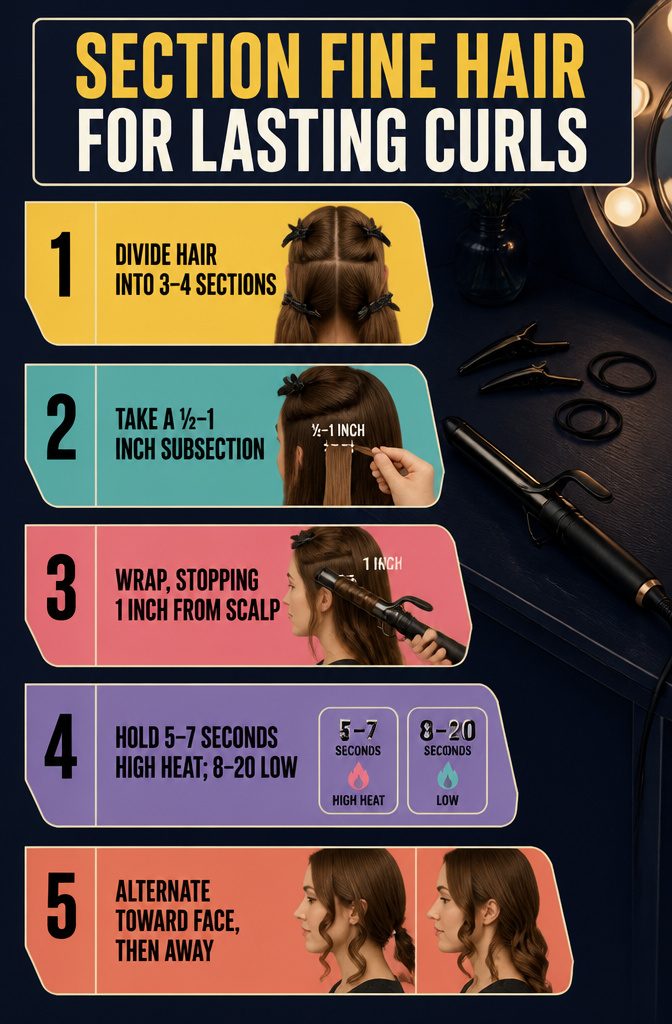
- Divide your hair into 3 or 4 sections using alligator clips or rubber bands. This keeps the work manageable and lets you concentrate on one area at a time.
- From one of those larger sections, take a subsection 1/2 inch to 1 inch wide. The 1-inch width ensures even heat distribution if you’re working with a small barrel.
The key to pseudo-curling short, fine hair is to break it off in sections. Rumor has it this is also the key to curling long, thick hair, but I will never know for sure.
— Bustle
Sectioning matters more when you have less to work with, and it prevents you from missing strands that would otherwise fall flat.
- Wrap the subsection around the barrel, stopping about 1 inch from your scalp. If you’re using a clamp iron, secure the end near the handle and roll upward. With a wand, start 1 inch from the scalp and wrap down to the ends.
- Hold for 5–7 seconds at higher heat, or 8 to 20 seconds if you’ve dialed the temperature lower. Trial a few curls to find what holds without damage.
- Alternate the direction you wrap each subsection. One piece wraps toward your face, the next away from it.
5. Cool and Pin Each Curl
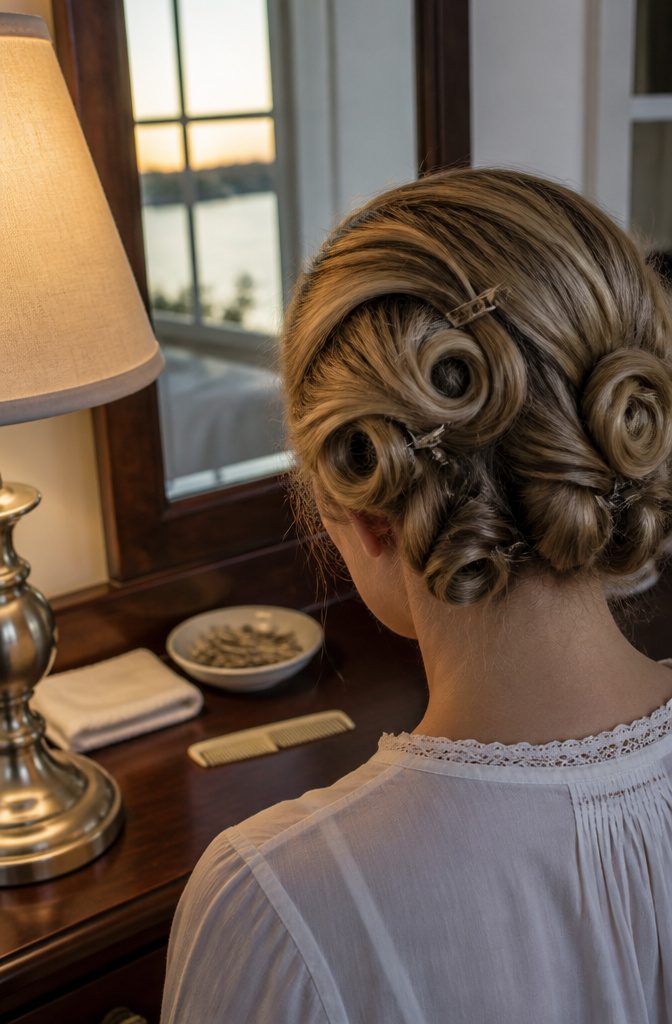
Fine hair sets as it cools, so the moment the barrel opens is when a curl is most fragile.
Catch each one in your palm and hold it for 10 seconds, or clip it up in its curled shape and leave it there.
Palm holding works for a few curls, but I prefer pinning for a full head because it frees both hands and the curl cools without being tugged on the way down.
Keep your fingers, brush and comb out of it until every curl is cool to the touch, which takes about 2 minutes. Tousling early is how fine curls drop.
6. Set With Light Hold
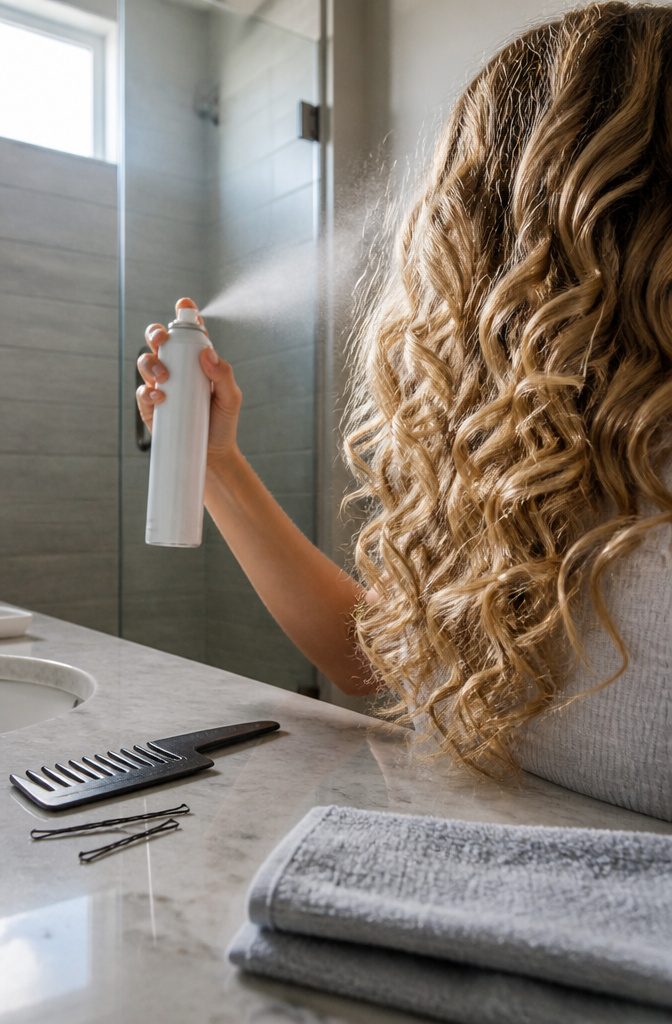
Fine hair holds a curl best when the spray is light and goes on after the curl has cooled.
Curls set as they cool, so I release each one, let it cool completely, then mist a flexible-hold hairspray over the whole head. Moroccanoil Luminous Hairspray and OGX Locking + Coconut Curls are two to try.
Strong-hold spray on hot curls is the other camp.
It locks a curl fast, but on fine hair it tends to leave crunch and weight. If your curls drop before you finish the next section, a quick light pass on each section as you go is the fix.
Texture spray sets the style without heaviness, and on humid days an anti-humidity spray goes on last. Stick to one light layer of each, because heavy or excess product flattens fine hair.
7. Separate, Soften, and Maintain
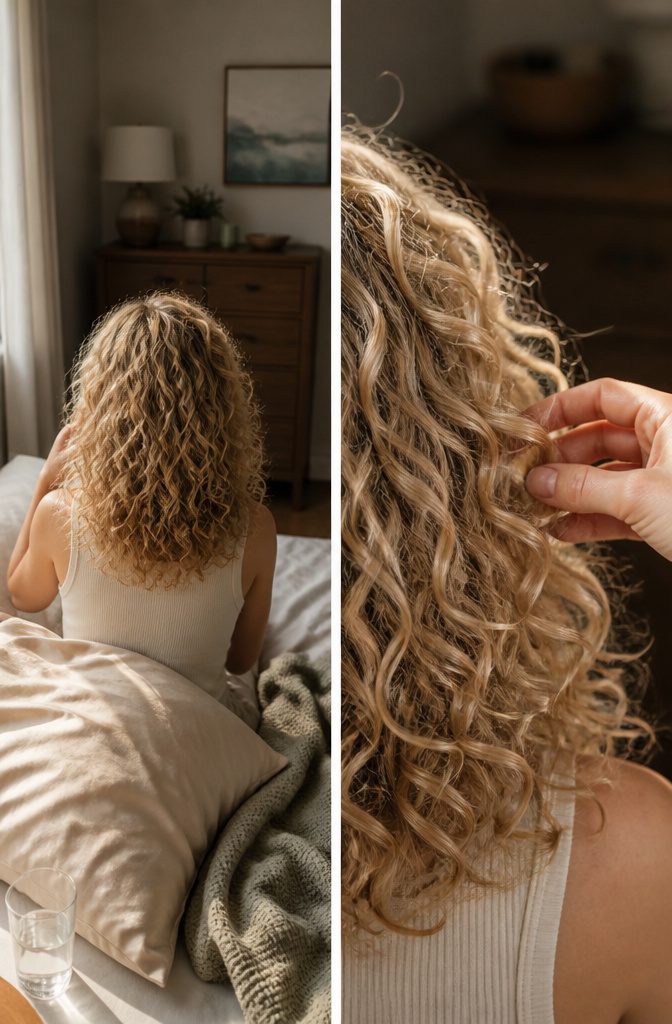
Wait two minutes, until each curl feels cool to the touch, before putting a hand in your hair.
Then use your fingers, not a brush: slide them down the strands to break up hairspray crunch, then lift upward to add volume and separate the curls.
Sleeping on curls is the risky part, because fine hair can turn puffy and unravel against a pillow.
If you do, I’d choose silk or satin, which cut friction and hold best. A 100% cotton case costs less and still beats linen or synthetic.
Humidity, steamy bathrooms and friction all loosen curls. Reheating a slipped curl every morning is a habit I’d drop, since constant high heat wears fine hair down.
Why Fine Hair Falls Flat
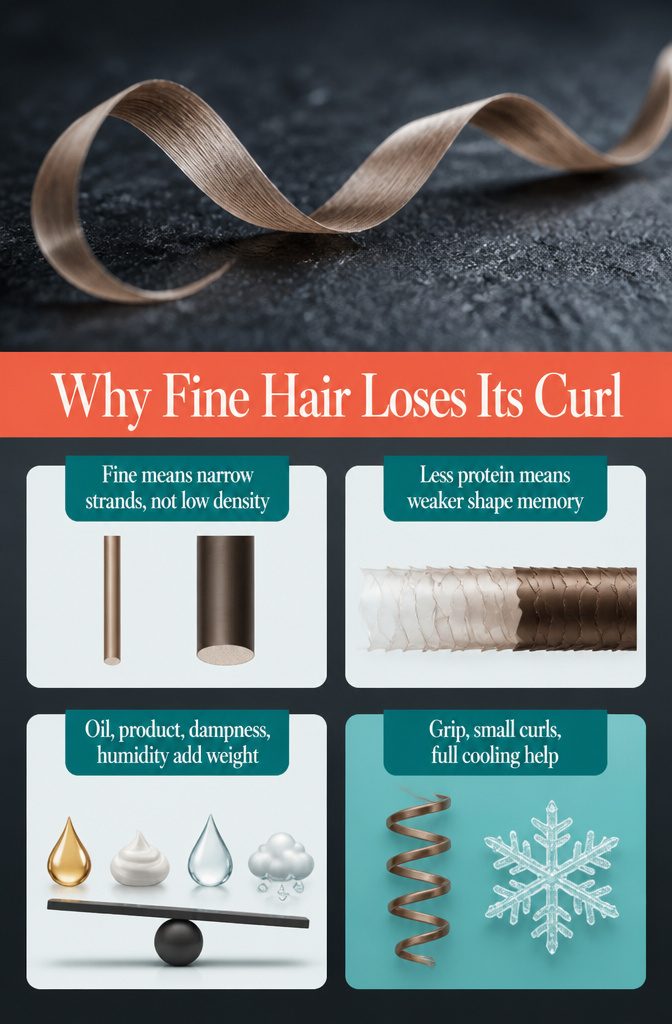
Fine describes the width of each strand, while thin describes density, or how many strands grow from your scalp.
You can have fine hair that is thick or fine hair that is thin, and only strand width explains why curls drop.
Each fine strand has less protein structure and a thinner, less rigid cuticle, so it has little shape memory, like a delicate ribbon next to sturdy fabric.
Natural oil, leftover product, damp hair and humid air all add weight, and gravity pulls the curl out.
Heat also passes through fine strands quickly, so overheating and under-curling are both easy. Grip, smaller curls and cooling each curl completely are the fixes, and I’d rank cooling first.
Heatless and Flat Iron Options
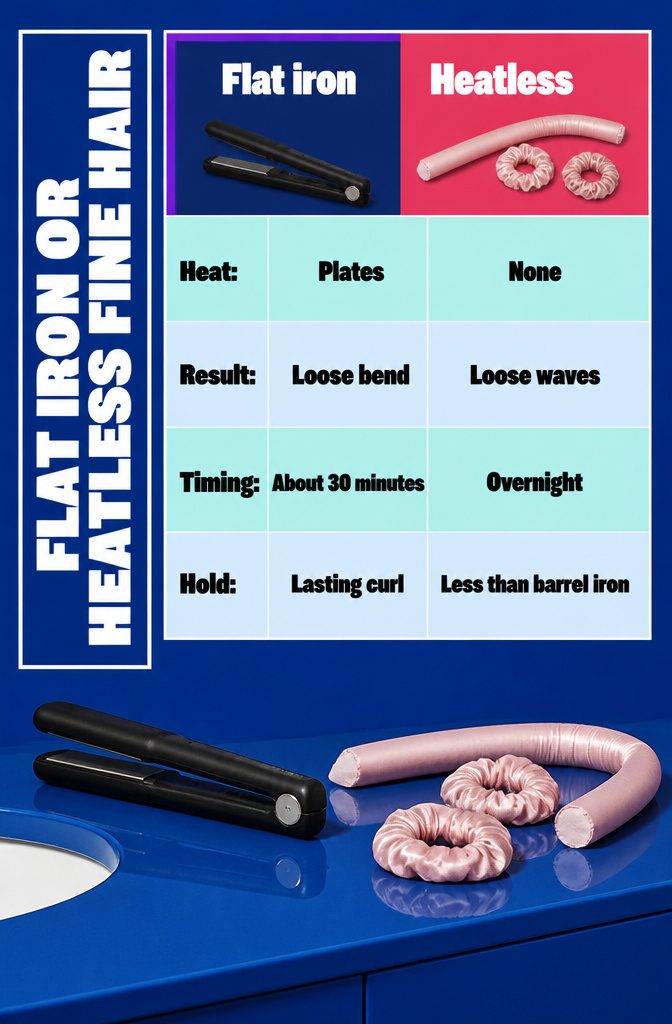
Short fine hair can skip the curling iron and use a flat iron.
Split it into 3 layers, starting at the bottom, and spray each section before the plates touch it. Keep every section no wider than 1.5 inches.
Curl the first one inward, release slightly, then curl the next one outward, alternating to the ends. You get a loose bend rather than a true curl, in about half an hour.
For no heat, the Kitsch The Satin set pairs a foam rod with 2 scrunchies.
Braiding damp hair overnight also gives loose waves by morning. Rollers and clipless wands add volume but hold less than a small to medium barrel iron, so I’d use them for body, not for lasting curl.
Cut, Bangs, and Backcombing
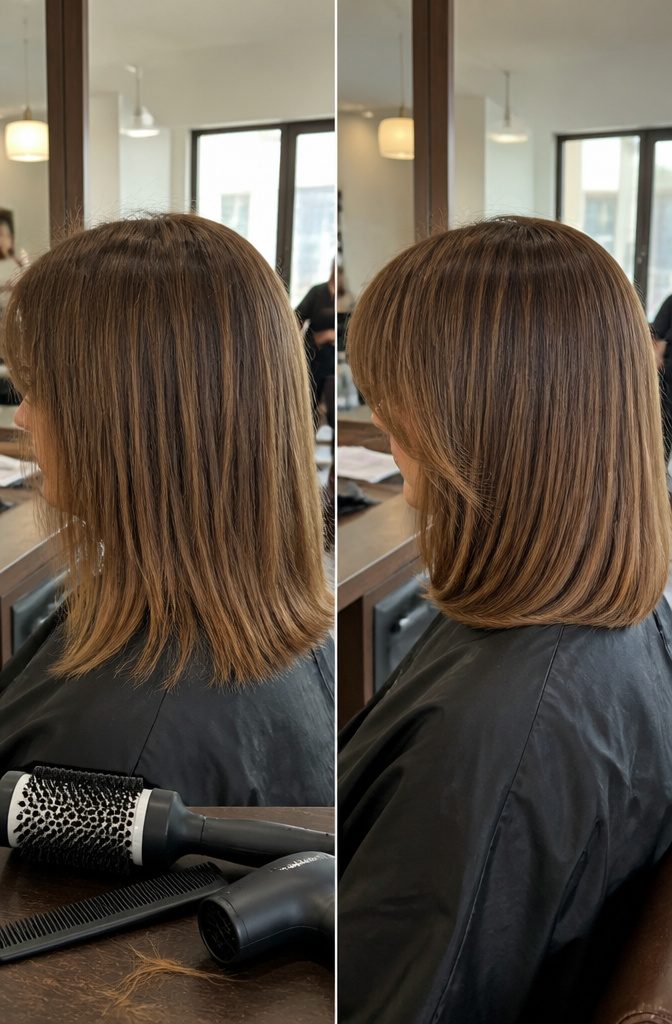
Ask your stylist for a single-length cut. Layers can make thin, straight hair look stringy, and fine hair needs every bit of thickness it has to hold a curl.
Before you curl, blow-dry with your head flipped upside down. It adds volume, and volume gives the iron something to grip.
Bangs need a different move from the rest of your hair. Curled in the same pattern, they sit oddly against the face.
I’d pull them diagonally across the face and curl them under, so bangs that sit on the right get drawn toward the left. The curl then blends with the rest of your hair, and the bangs still read as bangs.
Frequently Asked Questions
Why doesn’t fine hair hold a curl?
Fine hair has less protein structure and a thinner cuticle than coarse hair, so each strand lacks shape memory.
Natural oils, leftover product, damp hair, and humidity add weight that pulls curls out. Overheating or under-curling both break the hold, and gravity does the rest.
What is the best way to curl fine hair?
Use a barrel 1 inch or smaller, work in sections 1/2 to 1 inch wide, and curl at 300°F to 350°F for most hair types.
Hold each section on the barrel for 5 to 7 seconds, then let the curl cool completely in your hand or pinned up before touching it. Finish with a light layer of flexible-hold spray after all curls have cooled.
How do I make curls last in fine hair?
Skip washing for 1 to 3 days before curling, dry your hair completely, and add light texture with dry shampoo or mousse.
Curl small sections at the right heat, let each curl cool fully before releasing it, and mist with a lightweight spray once all curls are set. Avoid touching your hair until every curl feels cool.
Can certain hair products help fine hair hold curls better?
Yes.
Volumizing mousse, texturizing spray, and lightweight heat protectant add grip without adding weight. A flexible-hold hairspray sets the style after curls cool, and on humid days an anti-humidity spray helps lock everything in place.
What is the best hair curler for fine, thin hair?
Look for a ceramic iron with adjustable temperature and a barrel 1 inch or smaller.
The Conair double ceramic and Tyme Iron Air Pro Grade both offer temperature control, while the TYMO CURLPRO PLUS monitors heat 100 times per second to prevent overheating.
What not to do with fine, thin hair?
Don’t curl damp hair, load it with heavy product, or use high heat without adjusting for your hair type.
Avoid brushing or touching curls before they cool, and skip layers if your hair is both fine and thin, since they can make it look stringier instead of fuller.