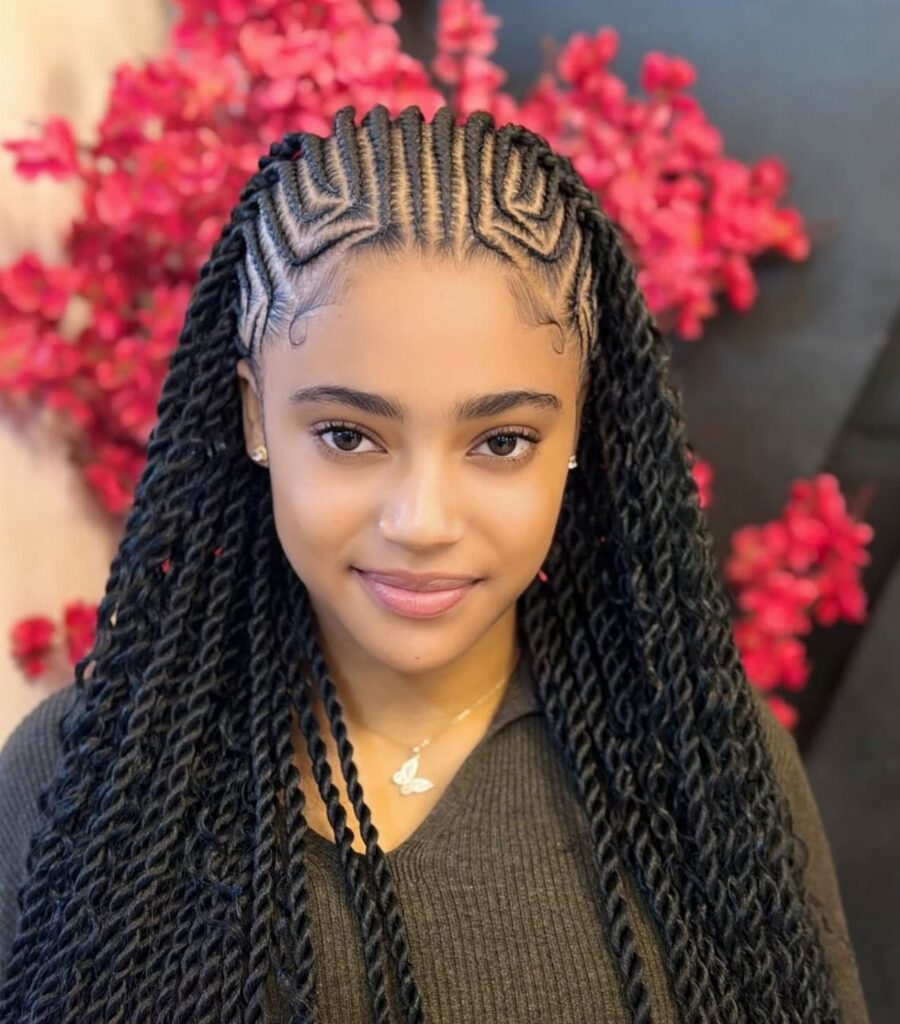
Installation time separates the fast styles from the full-day commits: Havana twists finish in a few hours, micro braids can take all day, and box braids land in a long afternoon.
3 things decide it: how much tension your scalp and edges can take, how long the style has to last, and whether you want it flat like Cornrow Braids or full and textured like Jumbo Braids or Boho Braids.
1. Braided Ponytail
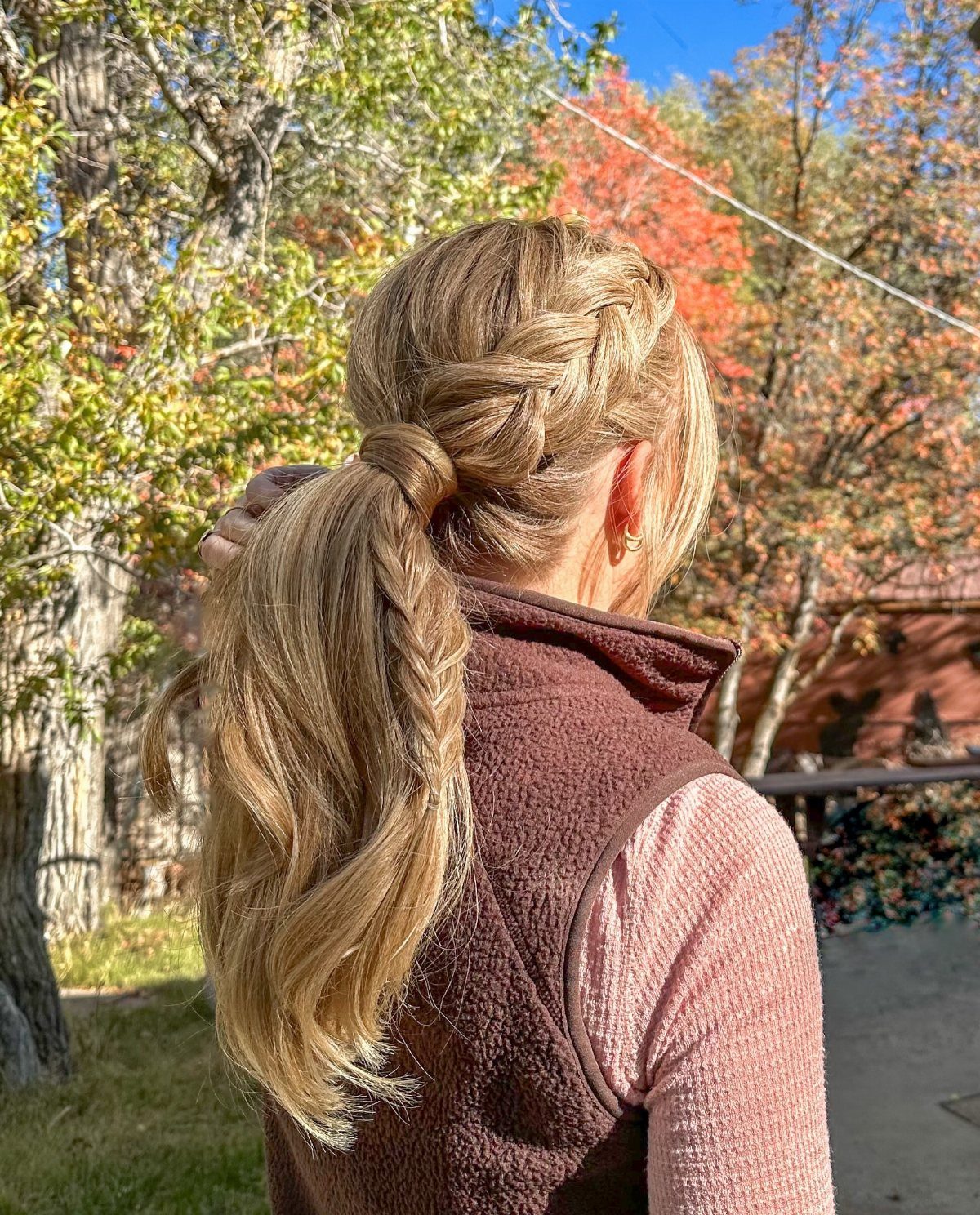
You take any braid or set of braids and gather them into a ponytail at the crown or nape. The height changes how formal it looks: high reads sporty, low sits more polished.
If your braids are thick, use a wider hair tie to avoid pulling at the base. Thin braids hold better with a wrapped elastic or a second pass through the tie.
This one works for braids off your neck but still visible from the front.
2. Cornrow Braids
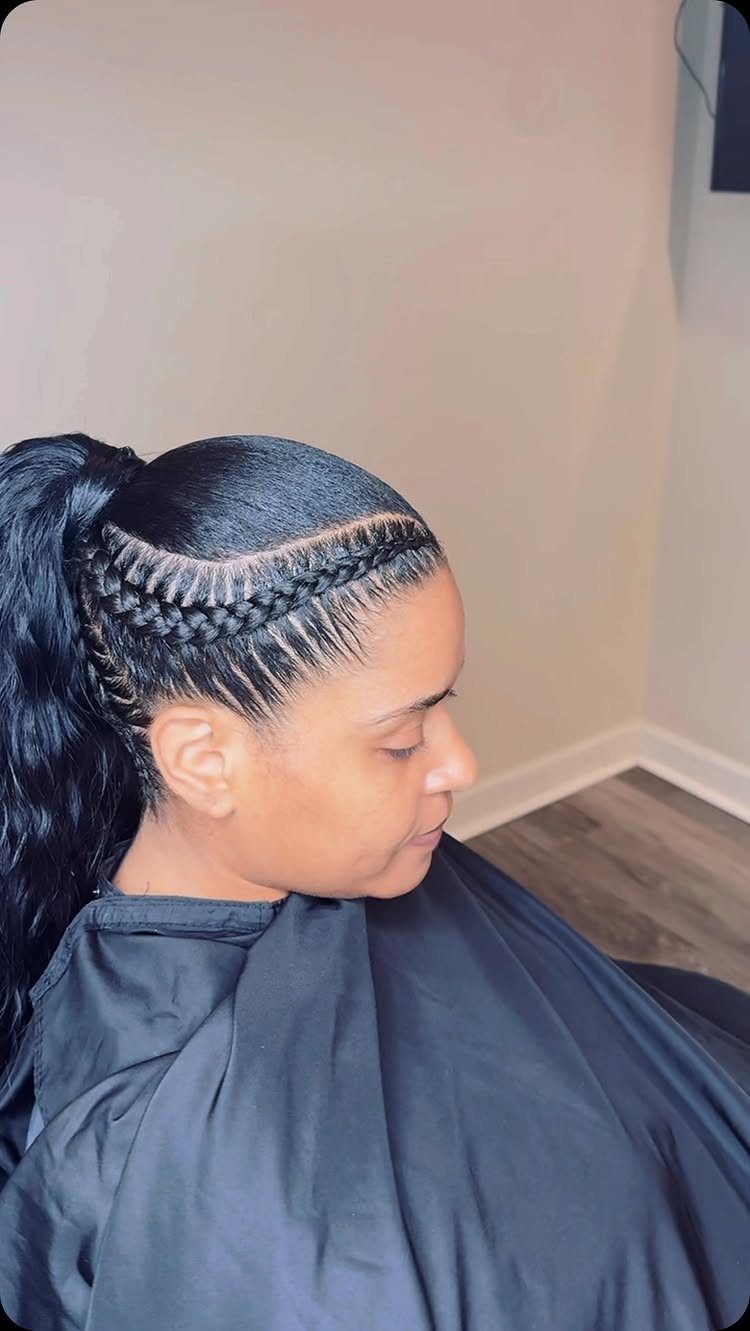
Cornrows sit close to the scalp, woven in tight rows that follow straight lines or curved patterns. The braids can run straight back, angle to one side, or form geometric designs across the head.
Tension matters: too tight and you risk traction alopecia, too loose and they lift within a week. A good braider keeps the pull even from root to end.
They last depending on your hair texture and how often you wash. Sleeping in a silk scarf helps the edges stay smooth.
3. Braided Bun
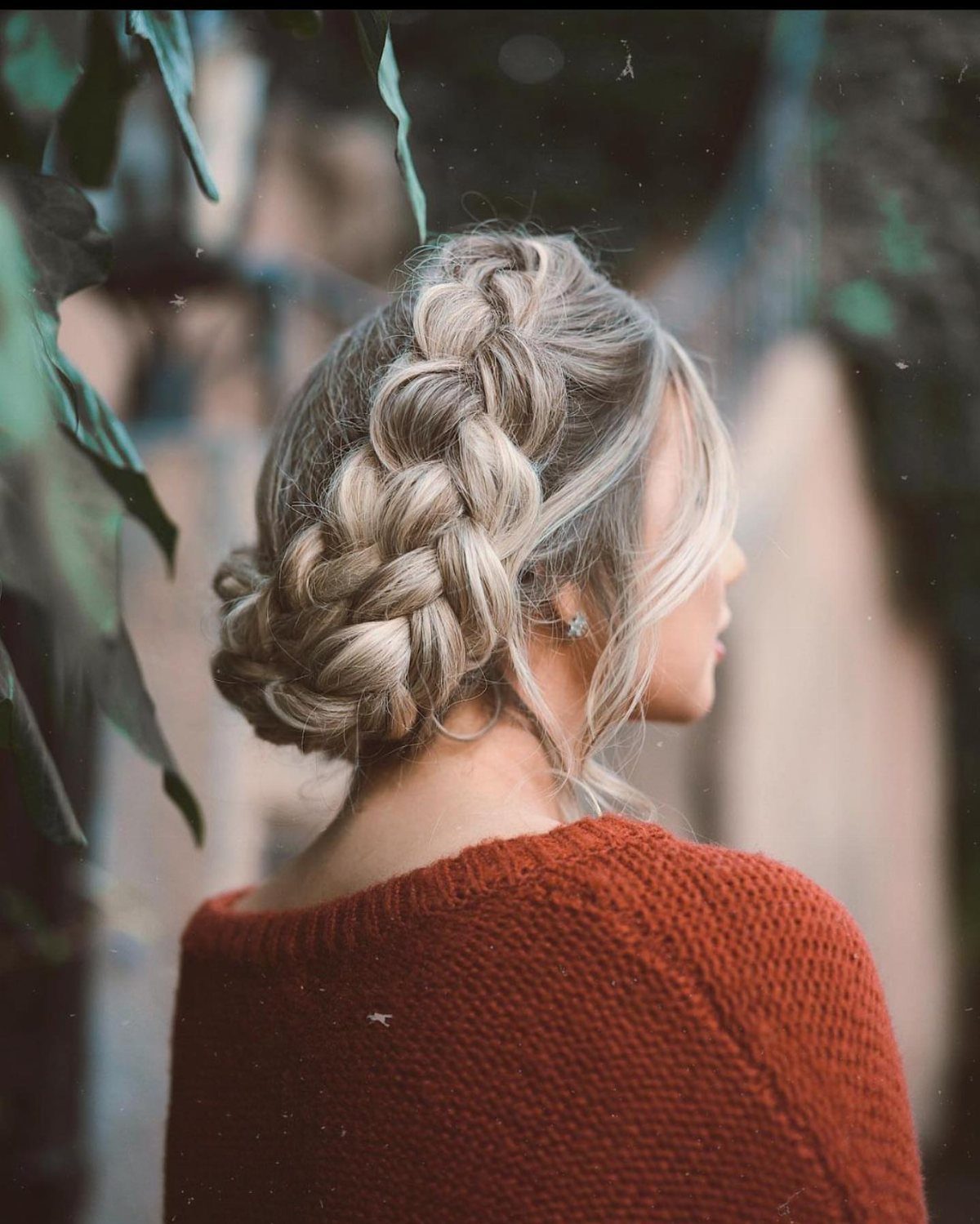
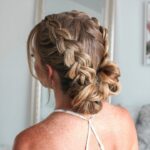
Take a single braid or multiple braids and coil them into a bun at the back or top of the head. The bun can sit high for a ballet look or low for something more casual.
Pin it with bobby pins that match your hair color, spacing them around the base so the weight distributes evenly. If the braid is thick, you may need extra pins to keep it secure all day.
This style keeps hair fully off your face and neck, which is useful in heat or during workouts.
4. Boho Braids
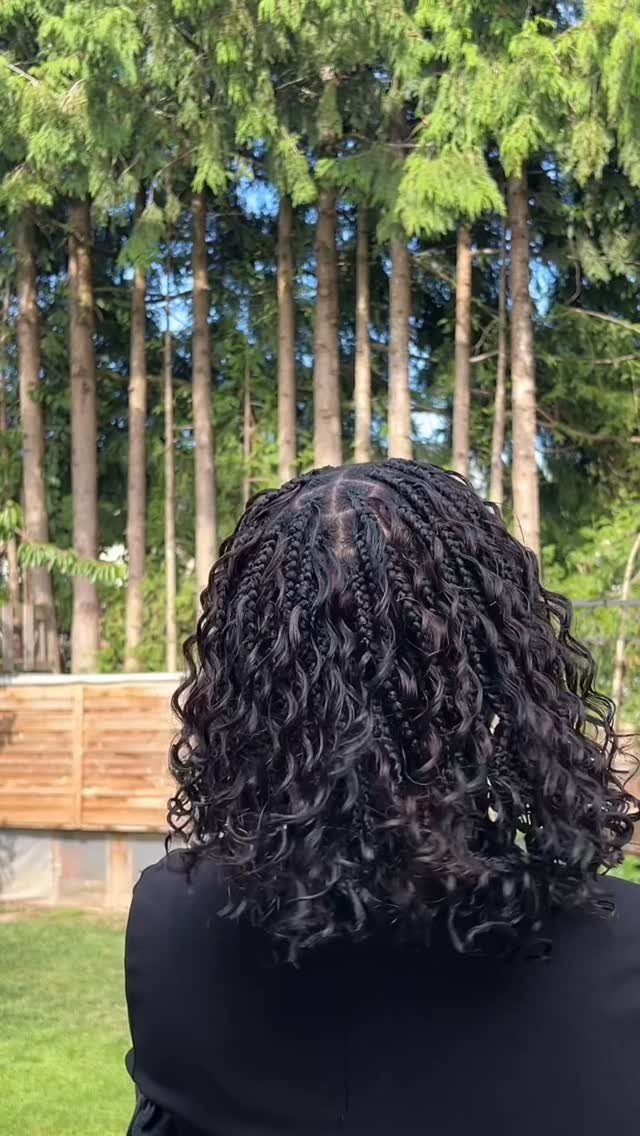
Boho braids mix structured sections with loose, curly pieces left out at random intervals. The curls soften the lines and give the style a more relaxed, undone look.
The loose curls can be your natural texture or added with curling hair extensions. The difference in texture between the smooth braids and the loose sections defines the style.
These work well for a protective style that still shows some movement. The curls do tangle more than fully braided sections, so finger-detangling every few days helps.
5. Big-Little Braids
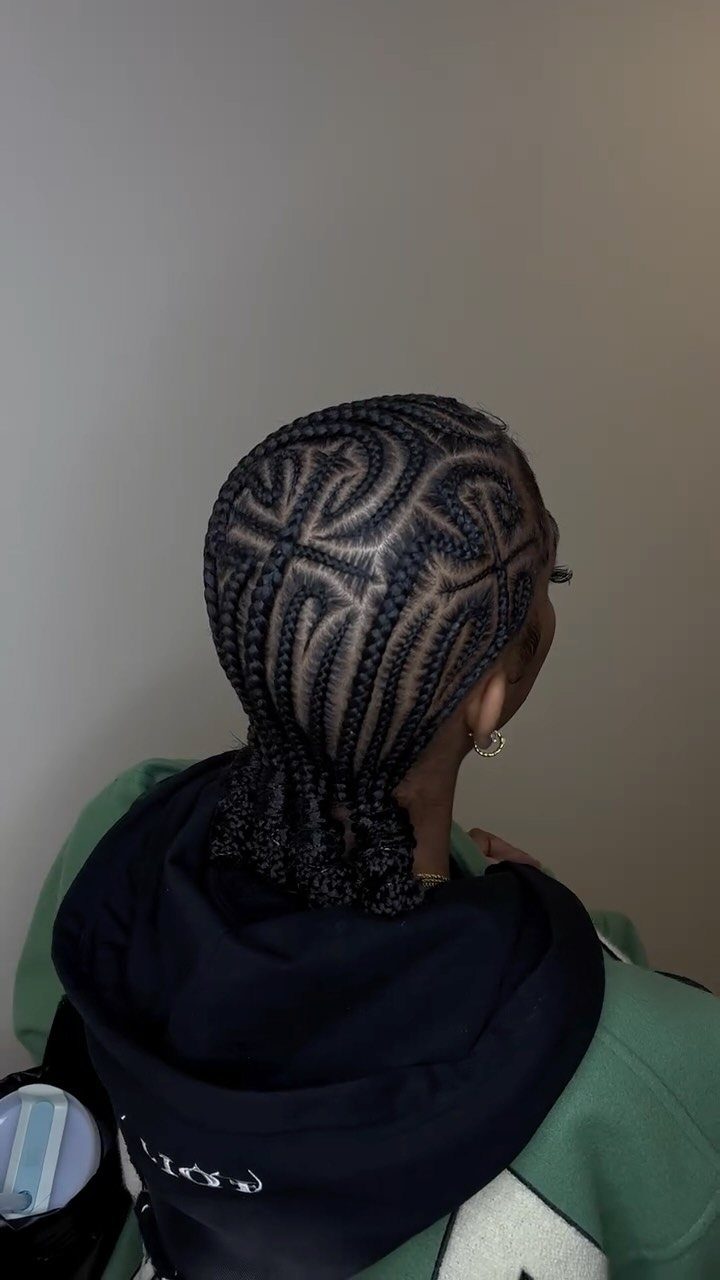
This style pairs chunky goddess braids with thinner cornrows, usually along the sides or front. The size contrast gives you clean, geometric sections without the time commitment of braiding everything small.
The smaller braids often feed into the larger ones at the back or nape, so the transition looks intentional rather than piecemeal. If you part the small braids in triangles or diamonds, the scalp pattern adds another layer of detail.
6. Layered Braided Bob
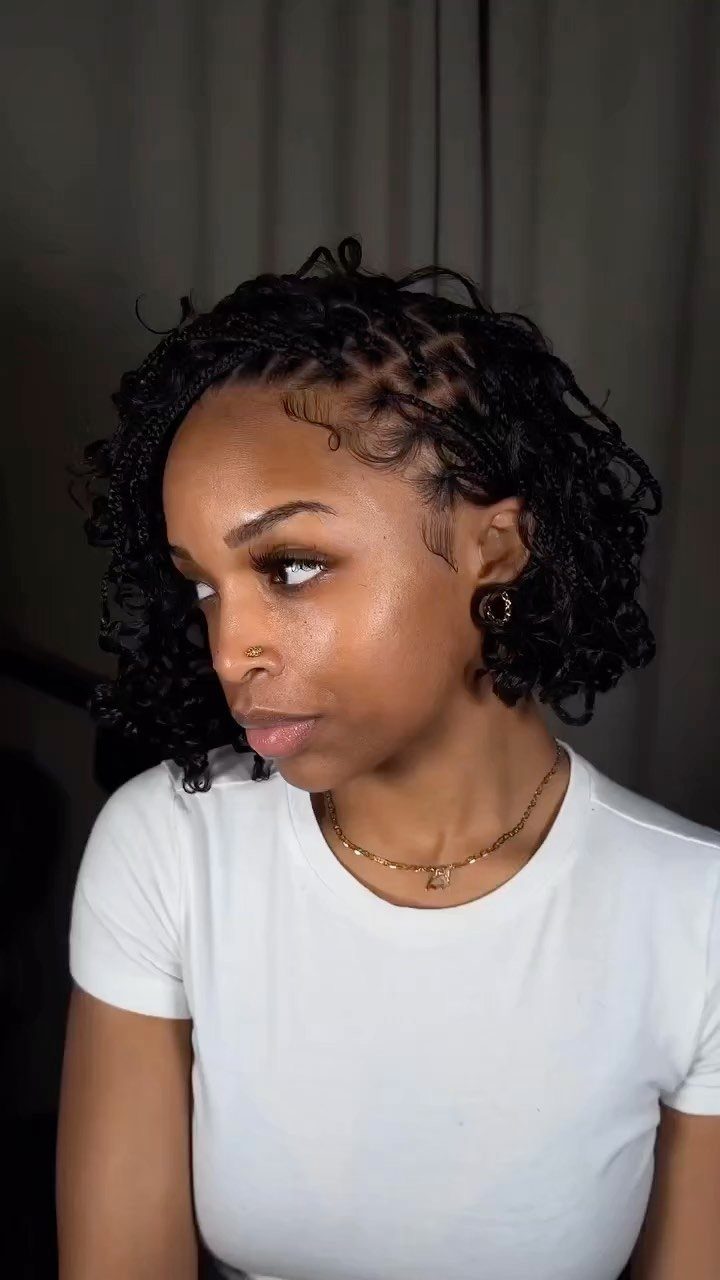
Box braids or individual plaits cut or installed at chin to shoulder length, arranged in layers so the ends stack rather than fall flat. The layers add volume and shape, particularly where they frame your face.
If you’re trimming existing braids, cut them dry so you can see the true length and angle. Cutting wet makes them spring shorter than you expect.
This length keeps the weight off your neck and works well if you’re between styles or testing out a shorter look before committing to a pixie or lob.
7. Micro Braids
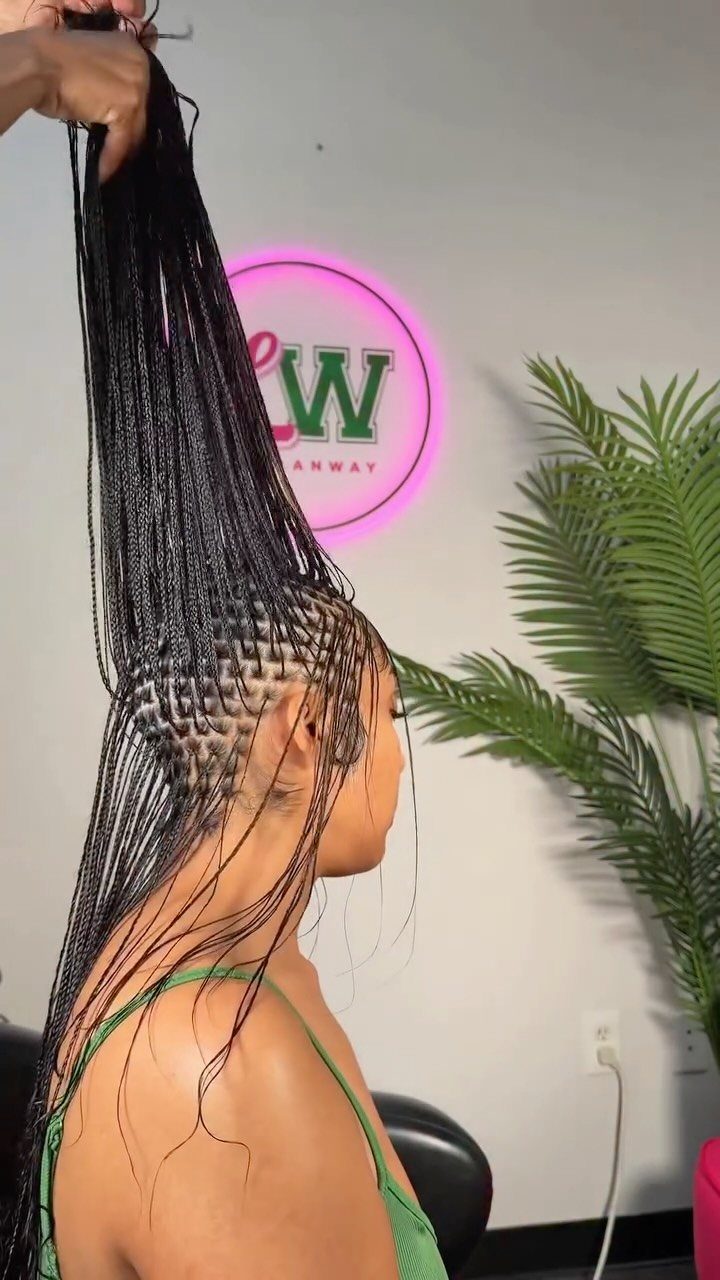
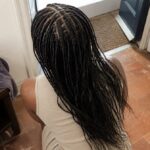
These braids divide the hair into very small sections, each plaited fine enough that you end up with dozens or even hundreds across the head. The smaller the section, the longer the install takes.
Once they’re in, micro braids hold up well with proper care. The fine size puts less weight on each root than thicker braids, which can help if you’re using them as a protective style.
They do tangle more easily than larger braids, so wrapping them at night and keeping the ends moisturized matters.
8. Jumbo Braids
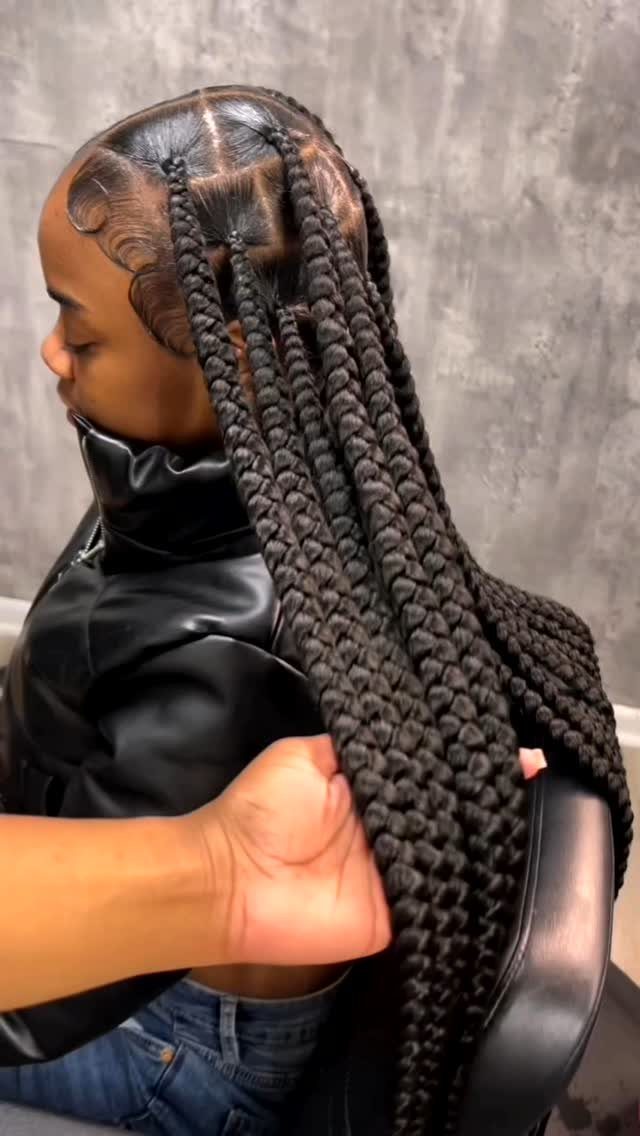
Thick braids made from wide sections of hair, often with added extension hair to build volume. The size makes the install faster than smaller braids, usually finishing in a few hours.
The weight sits heavier on your scalp, so if you have a sensitive hairline or fine edges, these can pull more than medium-sized braids. They also tend to frizz sooner because there’s more surface area exposed.
Good for a bold look if you need something fast and don’t expect it to last more than a few weeks.
9. Triangle Part Braids
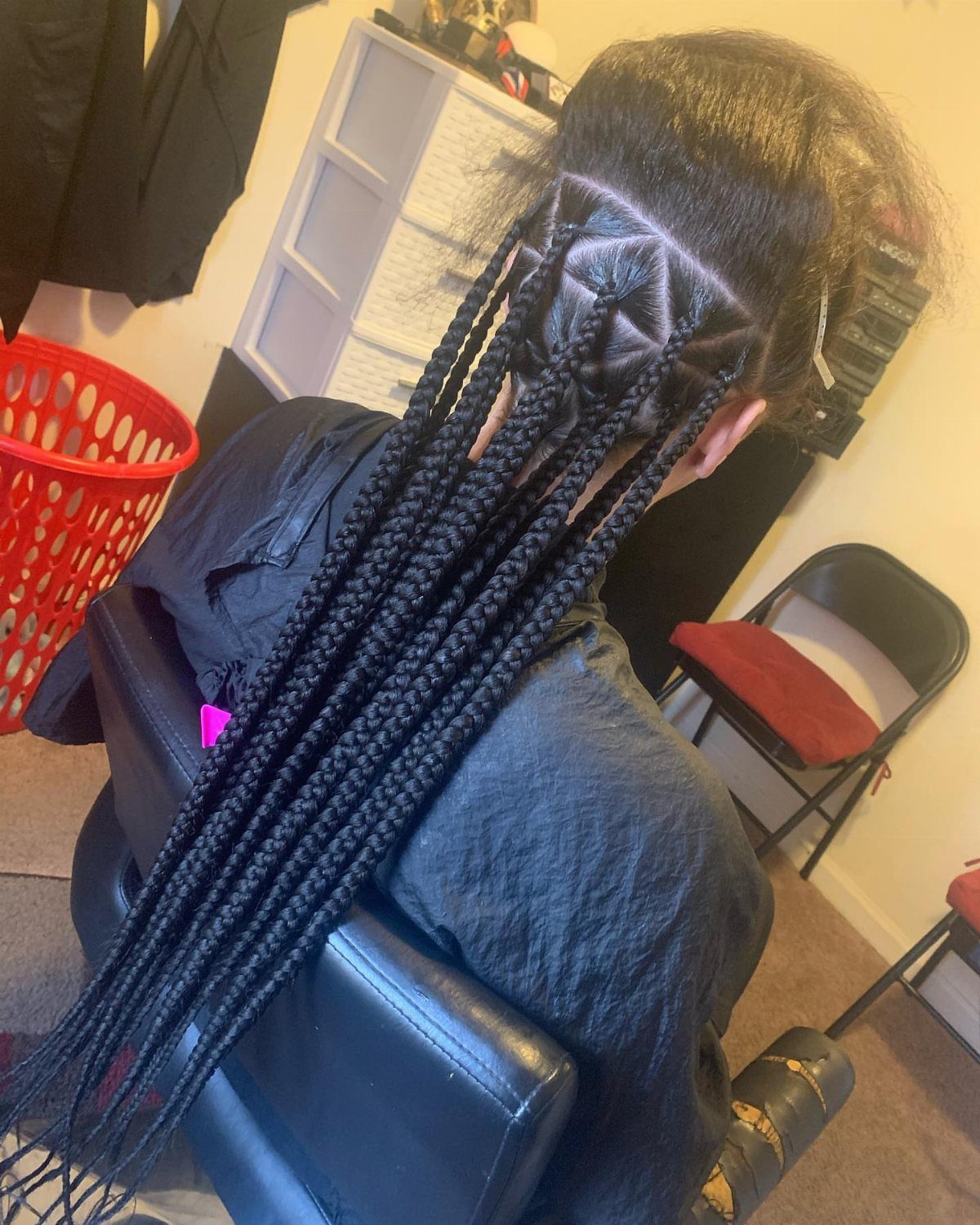
Each braid starts from a triangle-shaped section instead of the usual square. The pointed tip of each triangle creates a more visible geometric pattern on the scalp when the braids are pulled back or styled up.
The parting takes a little longer than standard box braids because you’re angling each section deliberately. Once they’re in, they wear the same way as box braids, just with a different scalp design showing through.
10. Box Braids
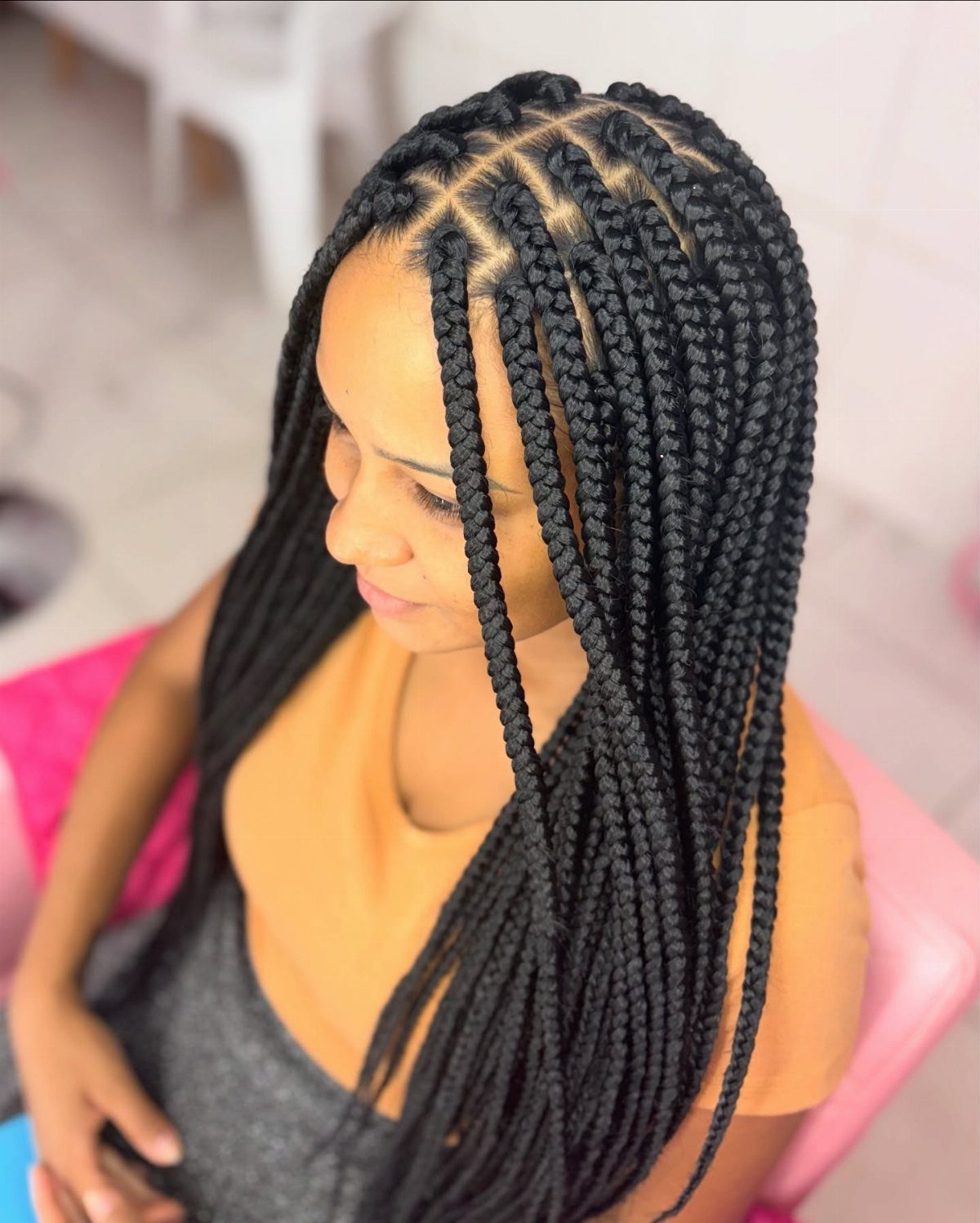
Individual three-strand braids, each one starting from a square section on the scalp. The square parting gives clean, even rows and keeps the braids from overlapping at the root.
Extensions are common, added at the base to give length or thickness. The size of each section determines how thick the braid is and how long the install takes.
They hold up if you maintain them, sleeping in a silk scarf and keeping your scalp moisturized between washes.
11. Knotless Braids
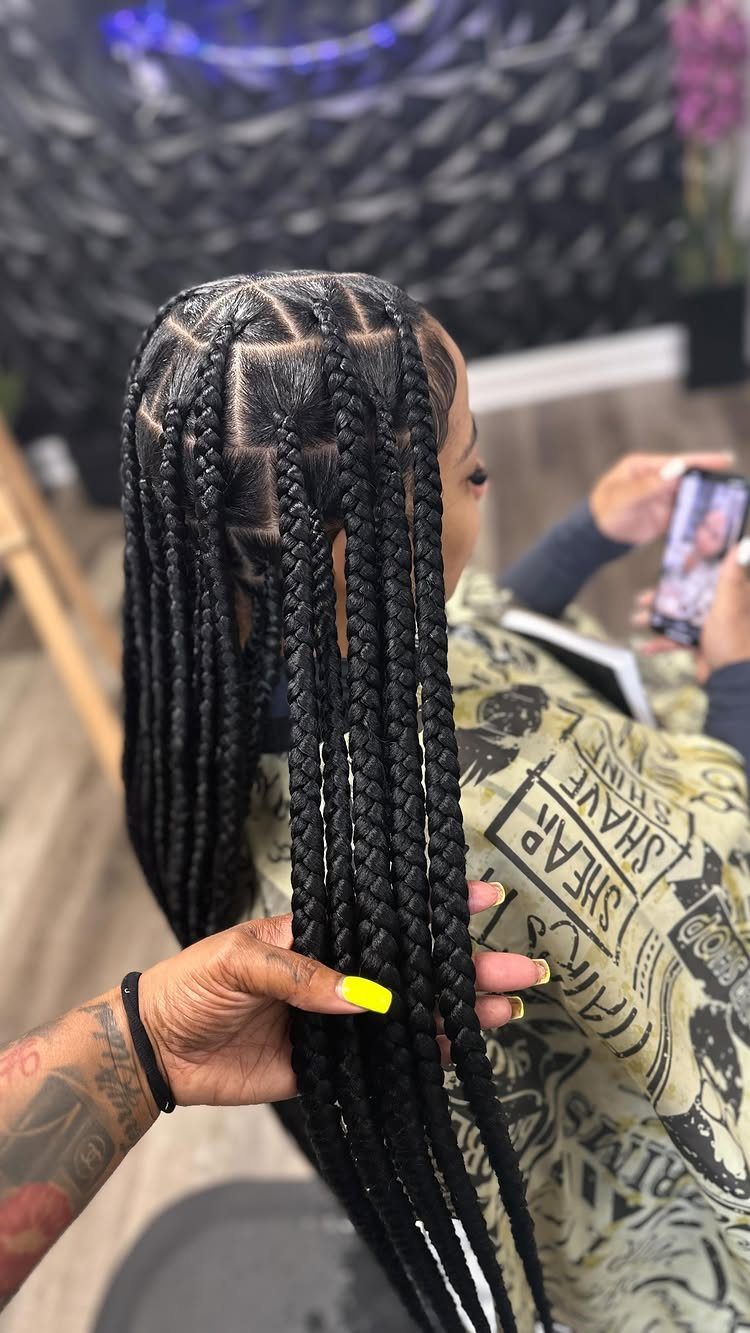
The extension hair is fed in gradually as the braid is built, rather than folded and knotted at the root. The result is a flatter, lighter start that puts less tension on the scalp.
This method takes longer to install than traditional box braids because the braider is adding small amounts of hair as they go. Less pulling at the hairline and a more natural taper from root to end.
They still last several weeks, and the lighter tension makes them easier on fine edges.
12. Fulani Braids
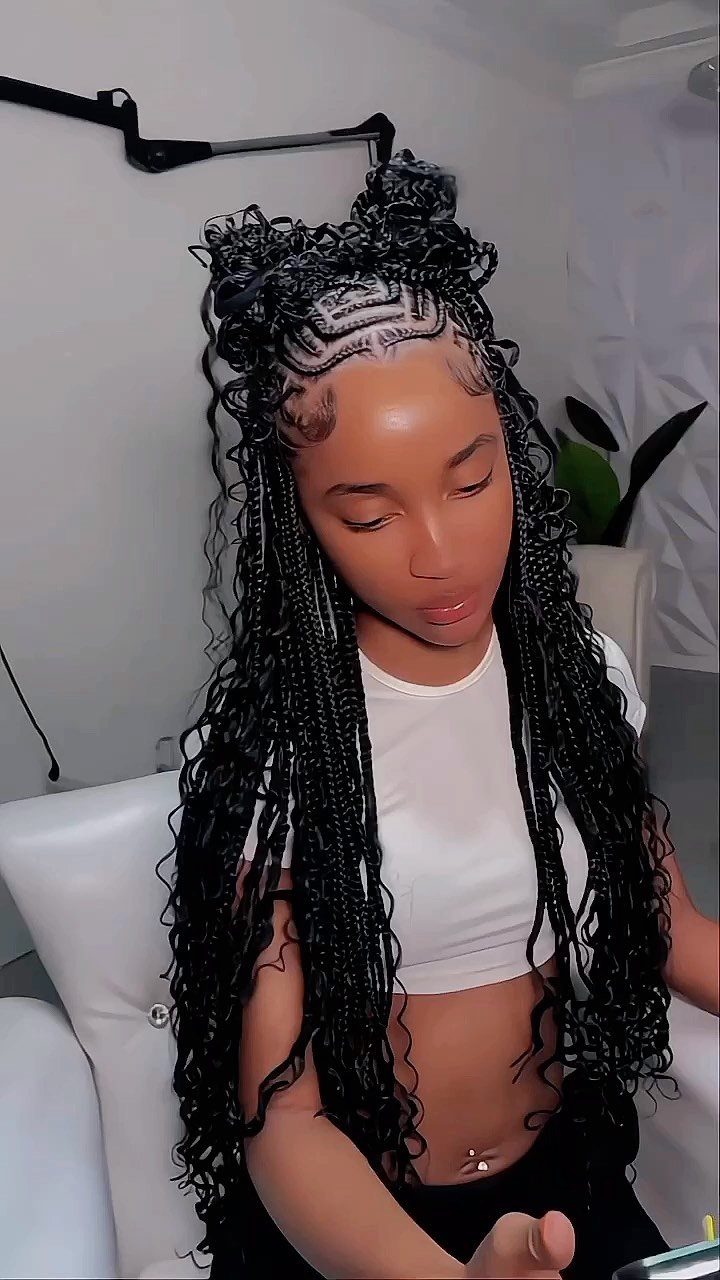
A mix of thin cornrows running along the scalp and individual braids hanging free, often with one or more braids running straight back from the center part.
Beads, cuffs or rings are sometimes added at the ends or along the length.
The cornrows can curve or angle depending on the pattern you choose, and the individual braids can be any thickness. The combination gives you a style that sits closer to the head in some areas and has movement in others.
13. Half-Up Half-Down Braids
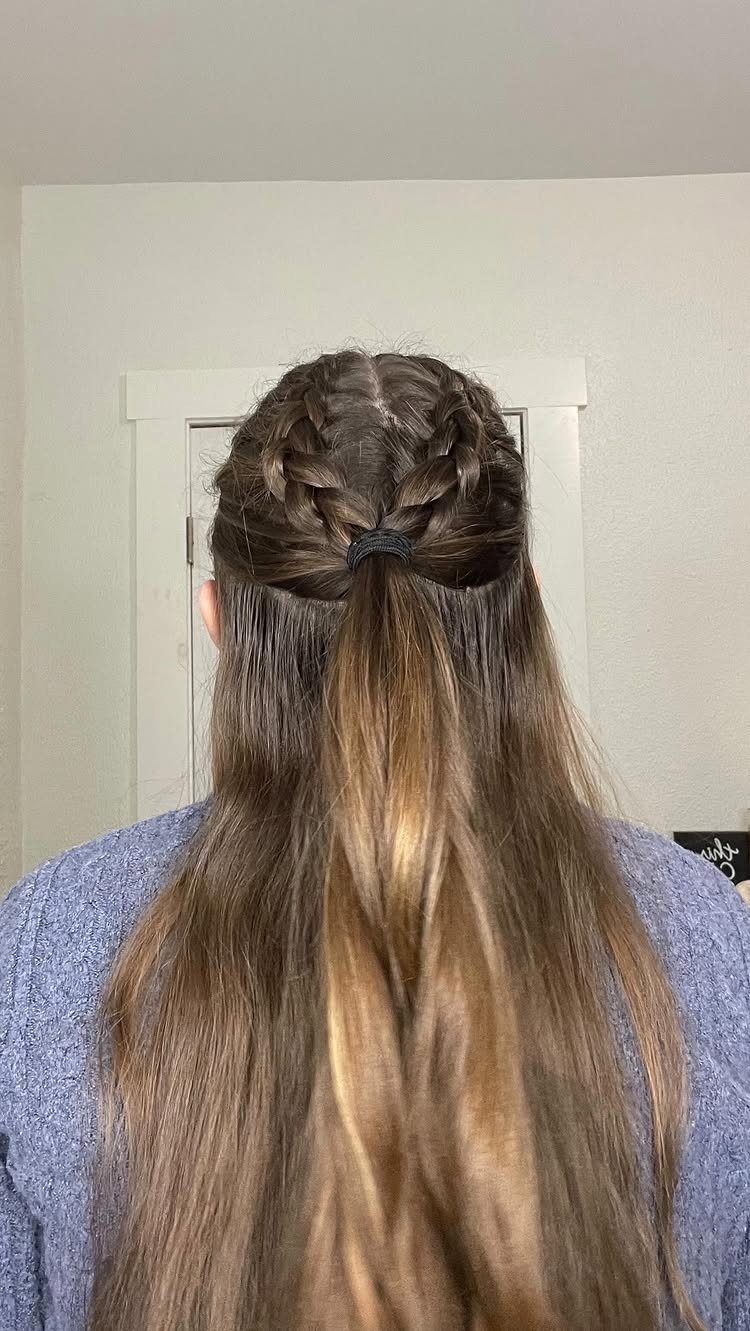
Hair at the crown is pulled back while the rest hangs loose. You can braid just the crown or take 2 sections from the temples and plait them before tying them together at the back.
This keeps hair off your face but leaves most of it down. If your braids are thick, pin them with a clip rather than a thin elastic so the hold stays secure through the day.
14. Mohawk Braids
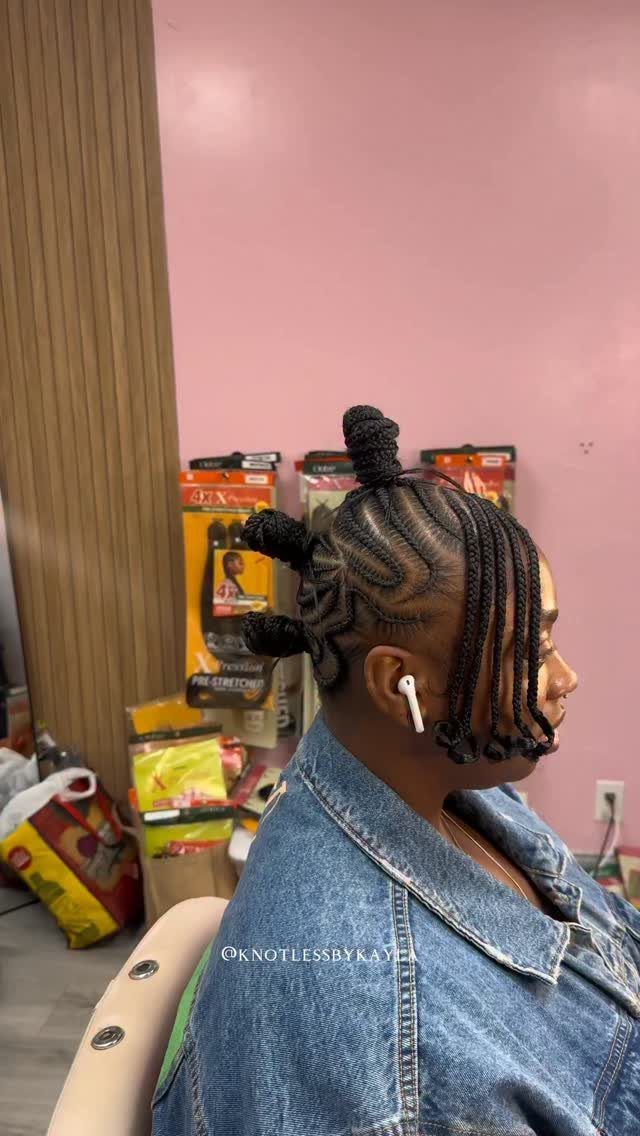
The sides are braided tight to the scalp, and the center section is left raised or styled into a row of braids standing upright. The height can run from front to back or stop midway down the crown.
The raised center holds best when the braids are thick enough to support their own weight. Pins or gel help keep the sides flat if they start to lift.
15. Kinky Twists
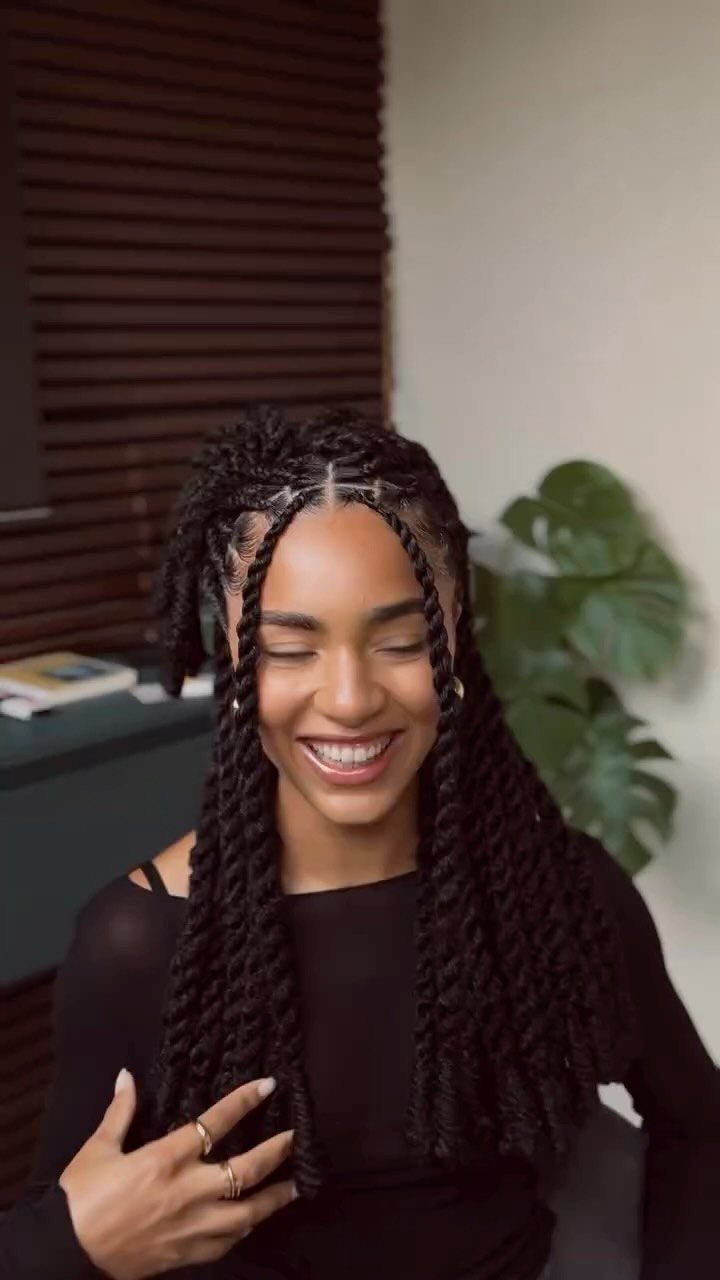
2 strands twisted together with extension hair that has a coarser, textured finish. The result looks closer to locs than smooth twists, with more body along the length.
The texture holds curl sets well if you wrap the ends overnight. These frizz sooner than Senegalese twists because of the rougher surface, but they look fuller from the start.
16. Lemonade Braids
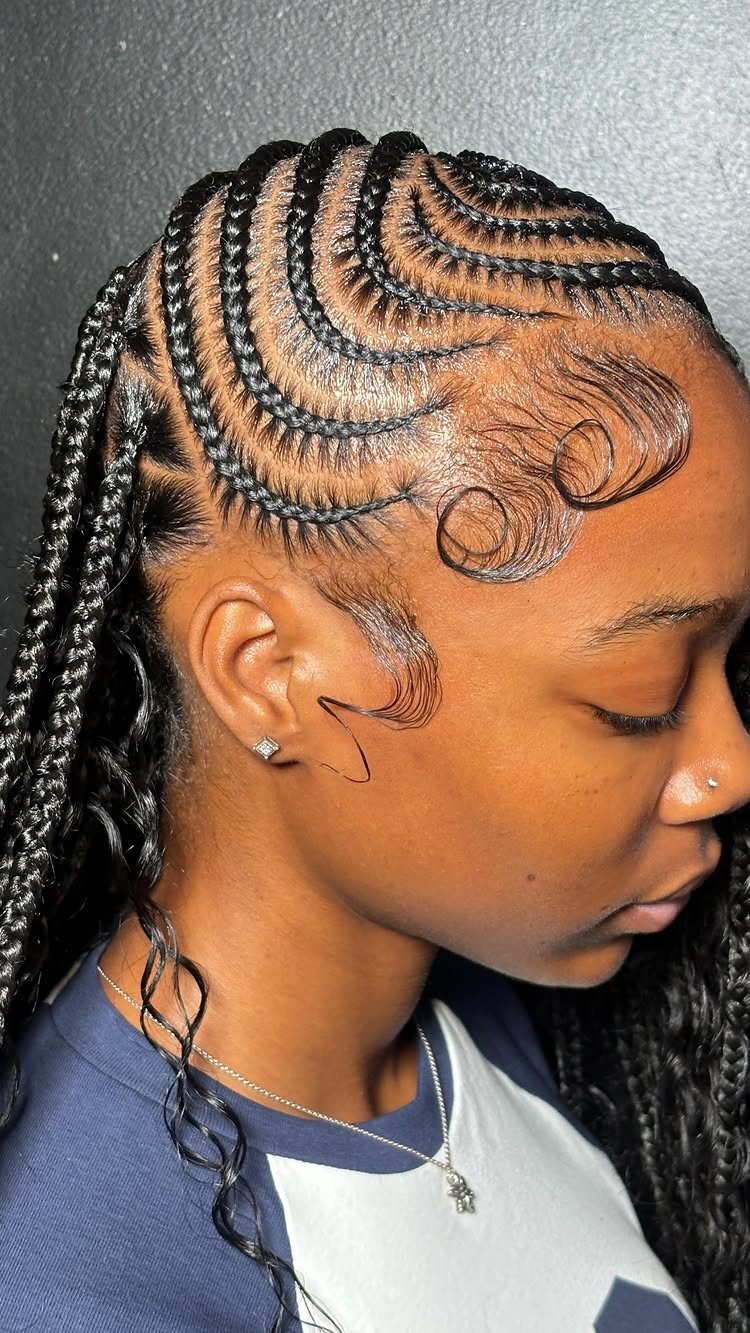
Cornrows swept to one side, with the braids resting along the shoulder rather than falling straight back. The asymmetry puts all the braids on one side of your face, which changes how your profile reads.
The sweep angle matters: too steep and they pull at the opposite temple, too shallow and they fall forward instead of sitting along your neck. A good braider adjusts the tension row by row so the curve looks smooth.
17. Crochet Braids
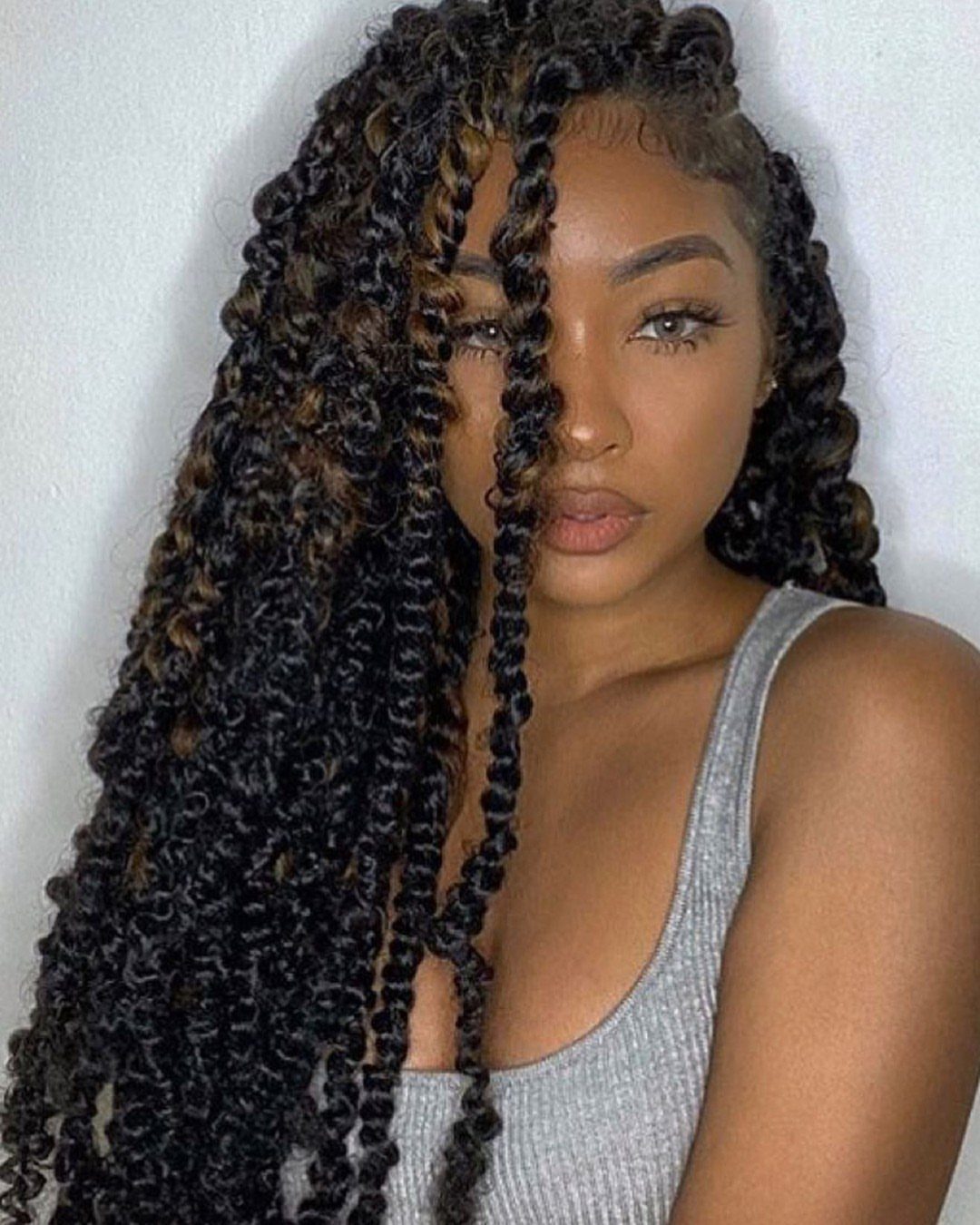
Pre-braided or twisted hair is looped through cornrows using a latch hook, so the install takes a few hours instead of a full day. The cornrows sit flat against your scalp, hidden under the hair you’ve crocheted in.
You can pick the texture: smooth twists, kinky curls, or wavy braids. The crochet method means you can take them out faster than traditional braids, and you’re not sitting for as long during the install.
18. Senegalese Twists
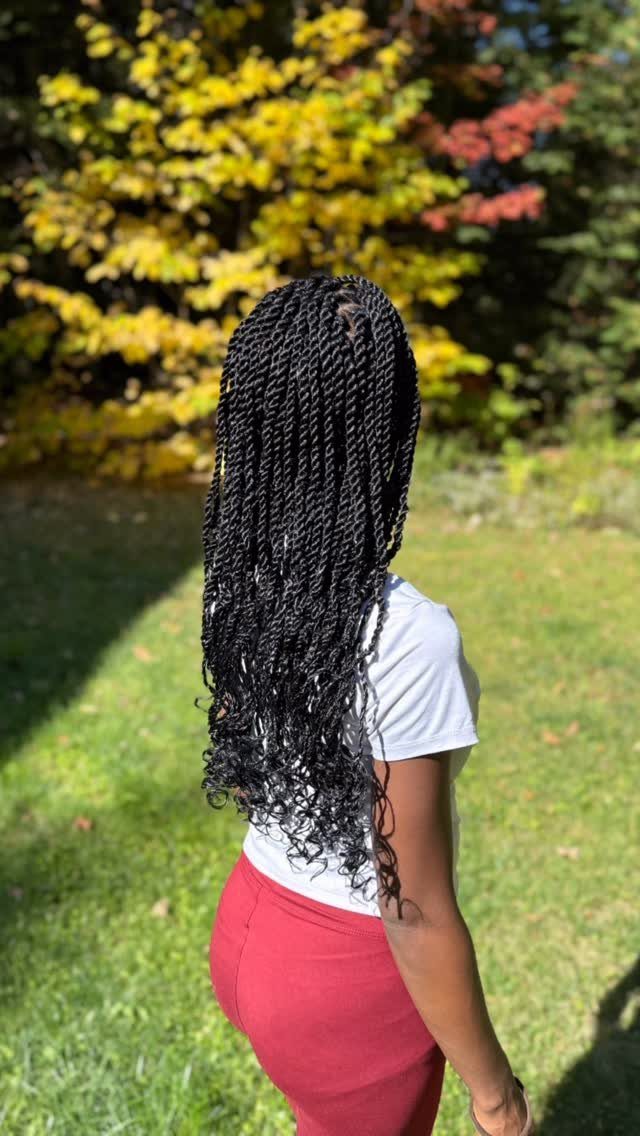
2 strands of extension hair wrapped tightly around each other, creating a smooth, rope-like twist. The wrapping technique makes them sleeker than kinky twists and less prone to frizz.
The ends are usually dipped in hot water to seal them, which keeps them from unraveling.
These are lighter on your scalp than box braids of the same length because the twist compresses the hair rather than dividing it into 3 sections.
19. Braids with Accessories
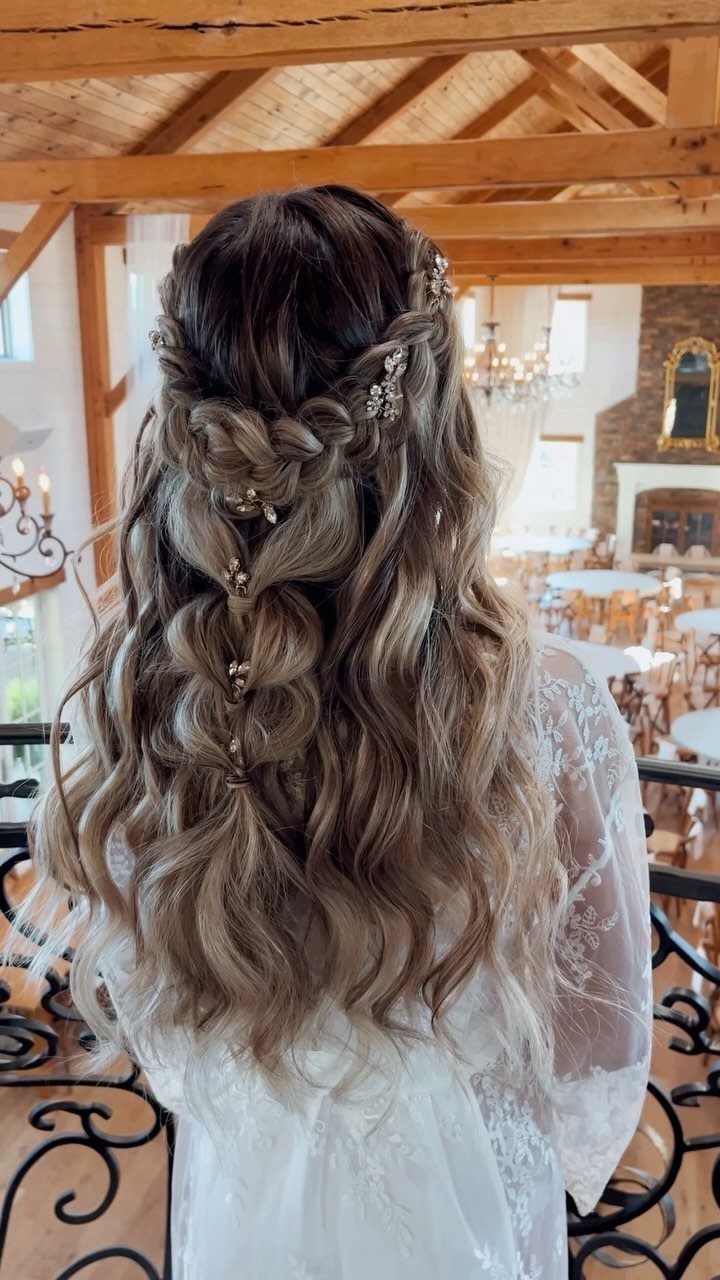
Add beads, cuffs, rings or thread along the length or at the ends of any braid style.
Metal cuffs slide on and stay put without tying, beads thread through if the braid is thin enough, and colored thread wraps around sections for a woven accent.
Placement matters: beads at the ends add weight and movement, cuffs mid-length break up long braids visually, and thread wrapped near the root adds color without extra bulk.
If you’re using metal accessories, match the finish across the head so it reads as one look rather than a grab bag.
20. Box Braids with Curly Ends
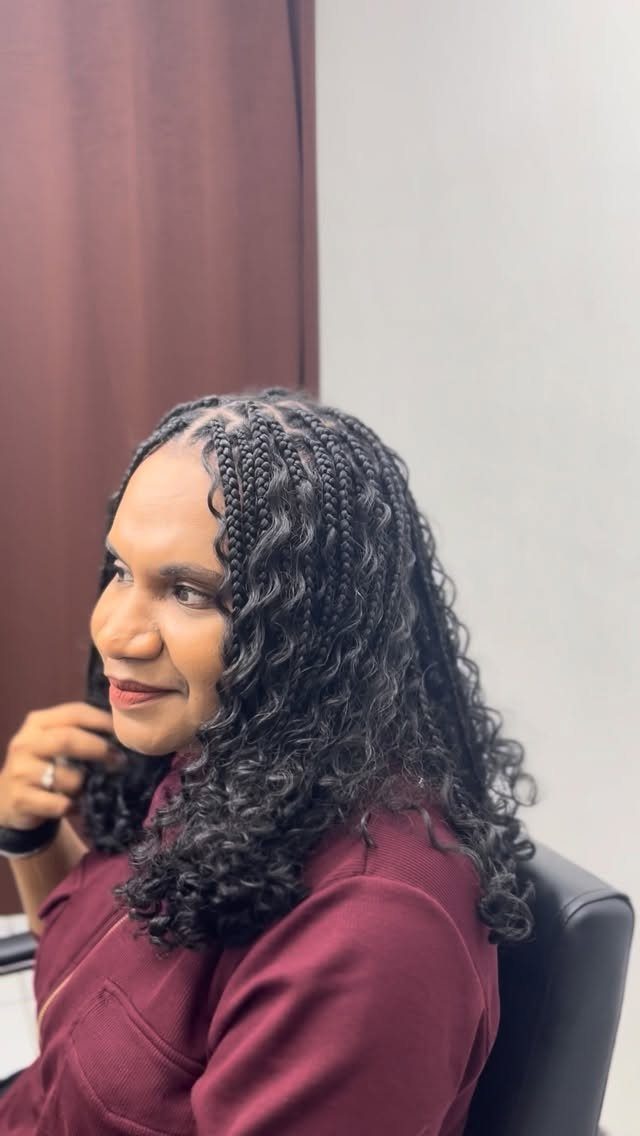
The braid runs smooth from root to mid-length, then switches to loose curls at the bottom. You can leave your own curls out at the ends or use curly extension hair to match the texture you want.
The transition point sits wherever you stop braiding, usually a few inches from the ends. The curl adds volume and softens the line where the braid ends.
Curly ends tangle faster than fully braided sections, so moisturizing them and separating the curls with your fingers every few days keeps them from matting together.
21. Havana Twists
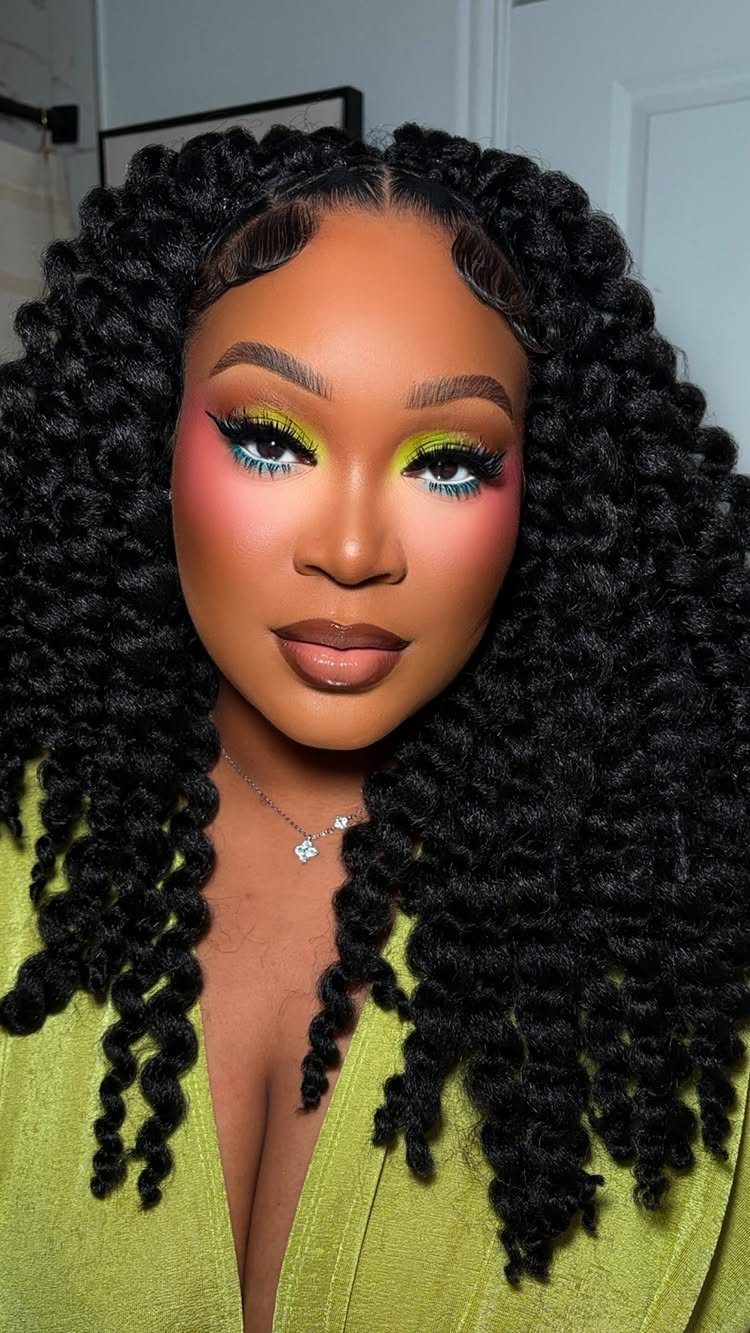
Thick, chunky twists made with Havana hair, which is coarser and fluffier than the hair used for Senegalese twists. The extra volume makes them look fuller right from the install.
The thickness means they take less time to put in than thinner twists, but they also weigh more on your scalp. If your edges are fine or you’re prone to tension headaches, these can pull more than medium-sized twists.
They frizz sooner because of the texture, but the fullness lasts even as they loosen.
22. Nubian Twists
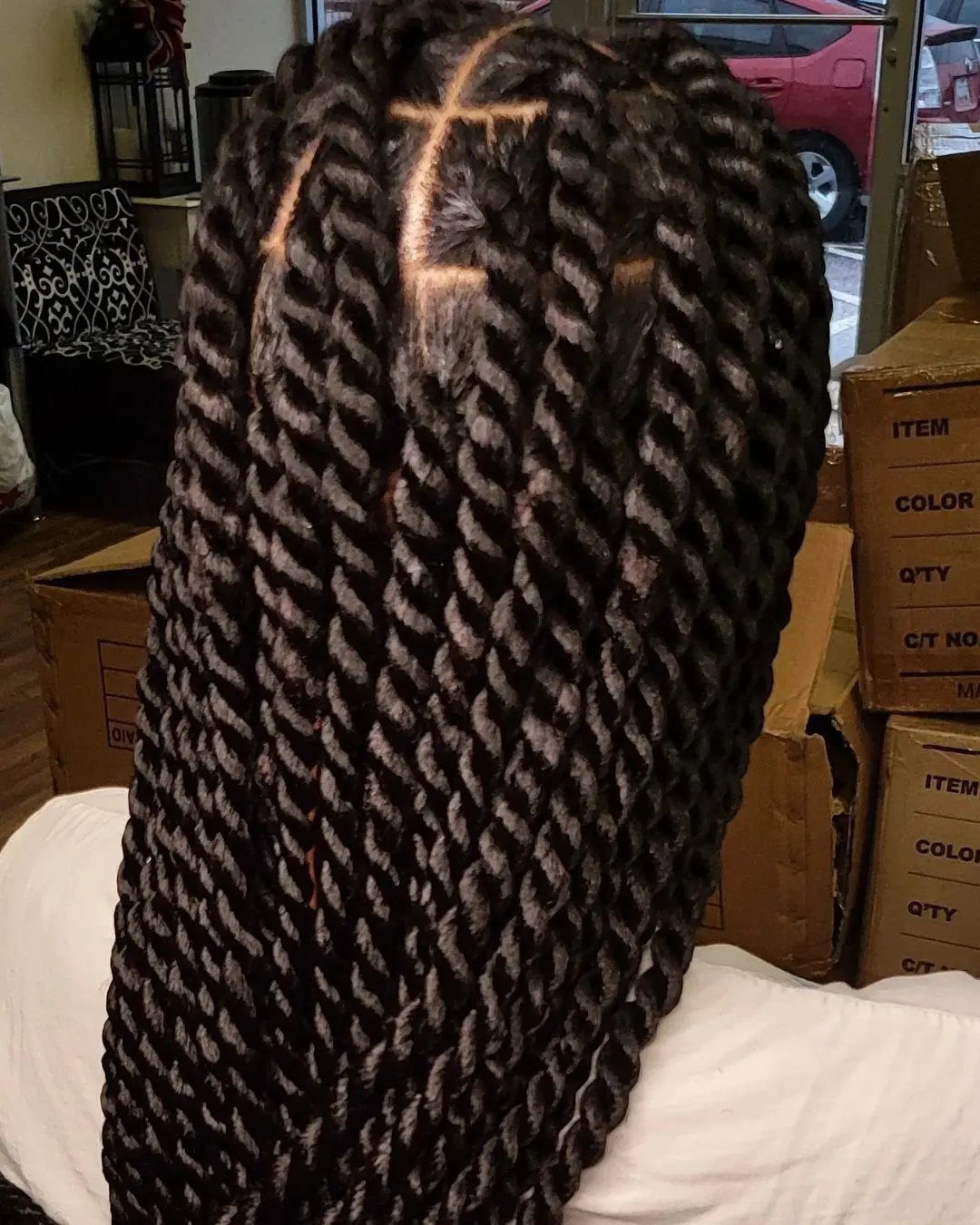
The kinky extension hair gives them a coiled, almost loc-like texture that’s tighter than a standard twist. The coils are tighter than Havana twists and the sections are usually thinner.
These are often worn shoulder-length or shorter, which keeps the weight manageable. The tighter coil holds its shape longer before frizzing, and the kinky texture blends well with natural 4b or 4c hair.
23. Faux Locs
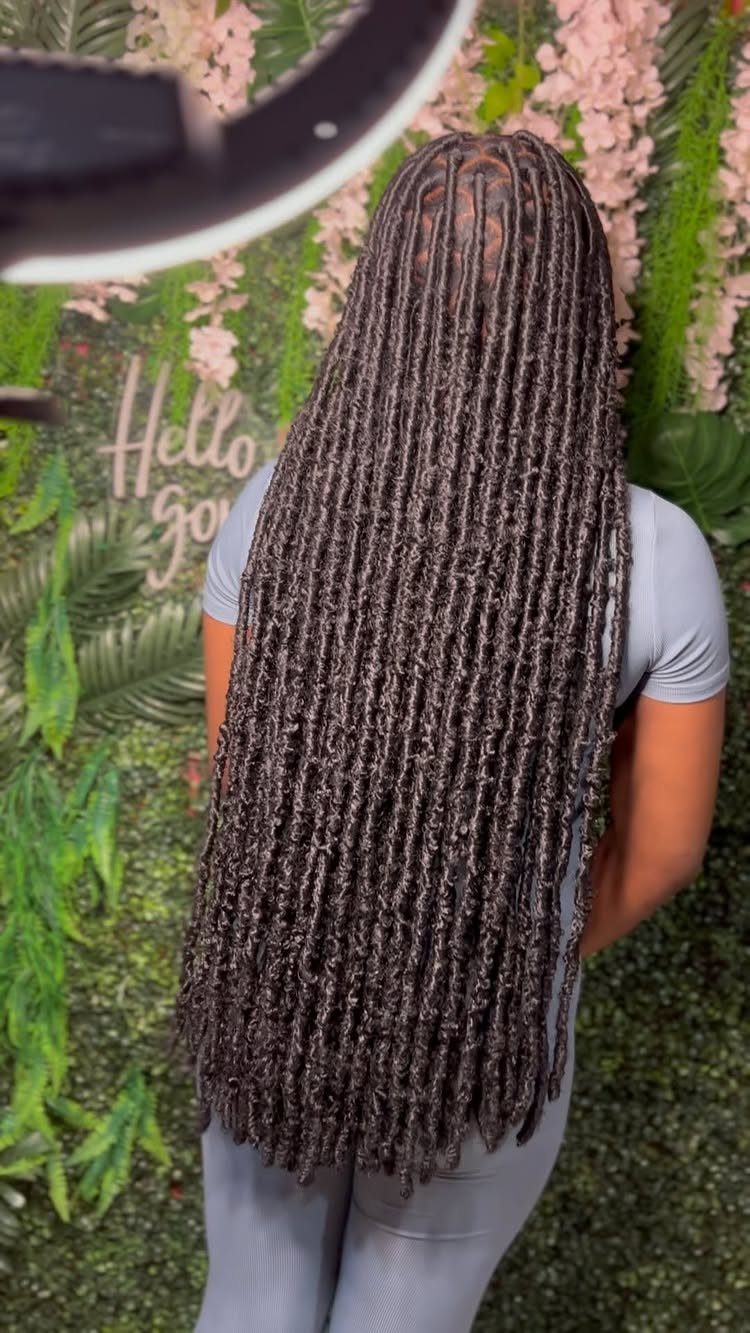
Extension hair wrapped or twisted around your natural hair to mimic the look of mature locs without the years of growth and maintenance. The texture can be smooth, distressed or somewhere in between, depending on the hair you choose.
The install takes a few hours, and they can stay in for several weeks with proper care.
You get the appearance of locs without committing to the process of actually growing them, which makes this a good option if you want to test the look or wear it temporarily.
24. Marley Twists
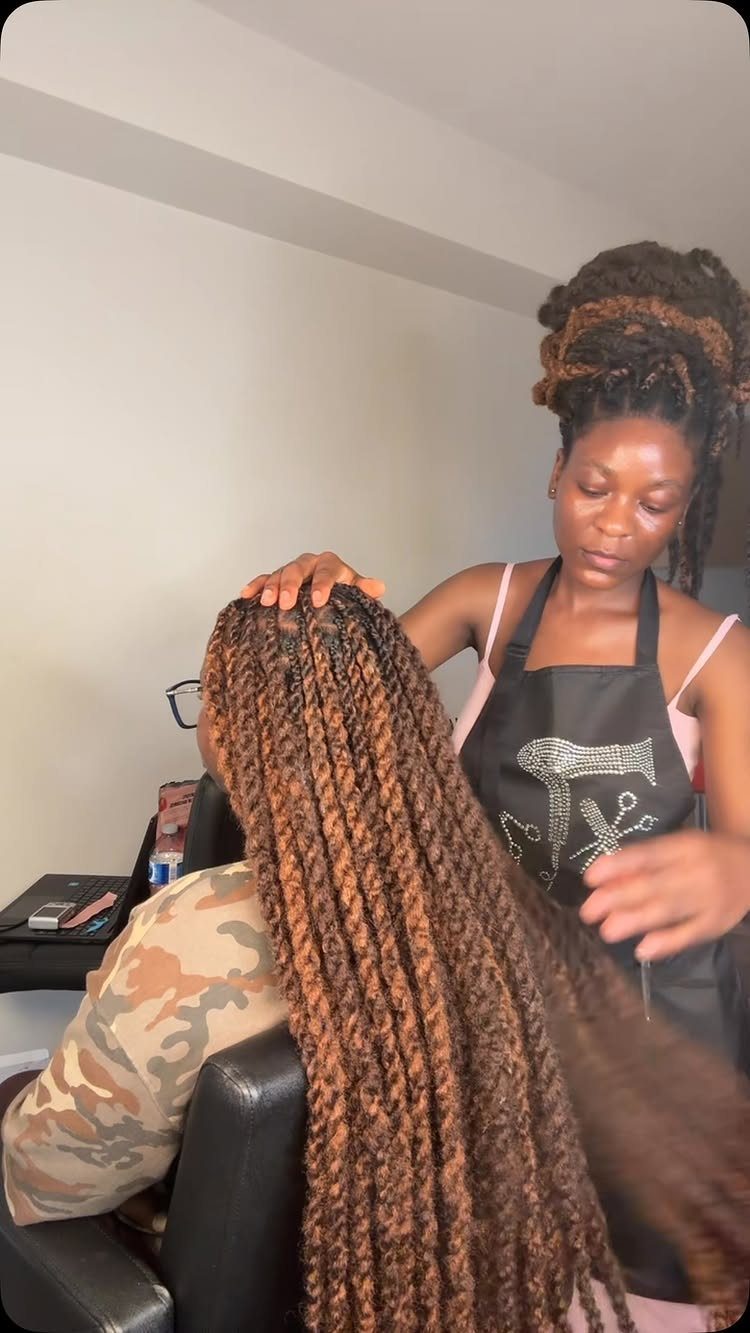
2 strands twisted with Marley hair, which has a rough, kinky texture that makes the twists look thick and textured, almost like young locs. The coarse finish gives them more body than Senegalese twists.
The texture holds up well and blends naturally with coarser hair types. The textured surface means they’ll frizz sooner than sleek twists, but you get fuller body from day one.
25. Snake Braids
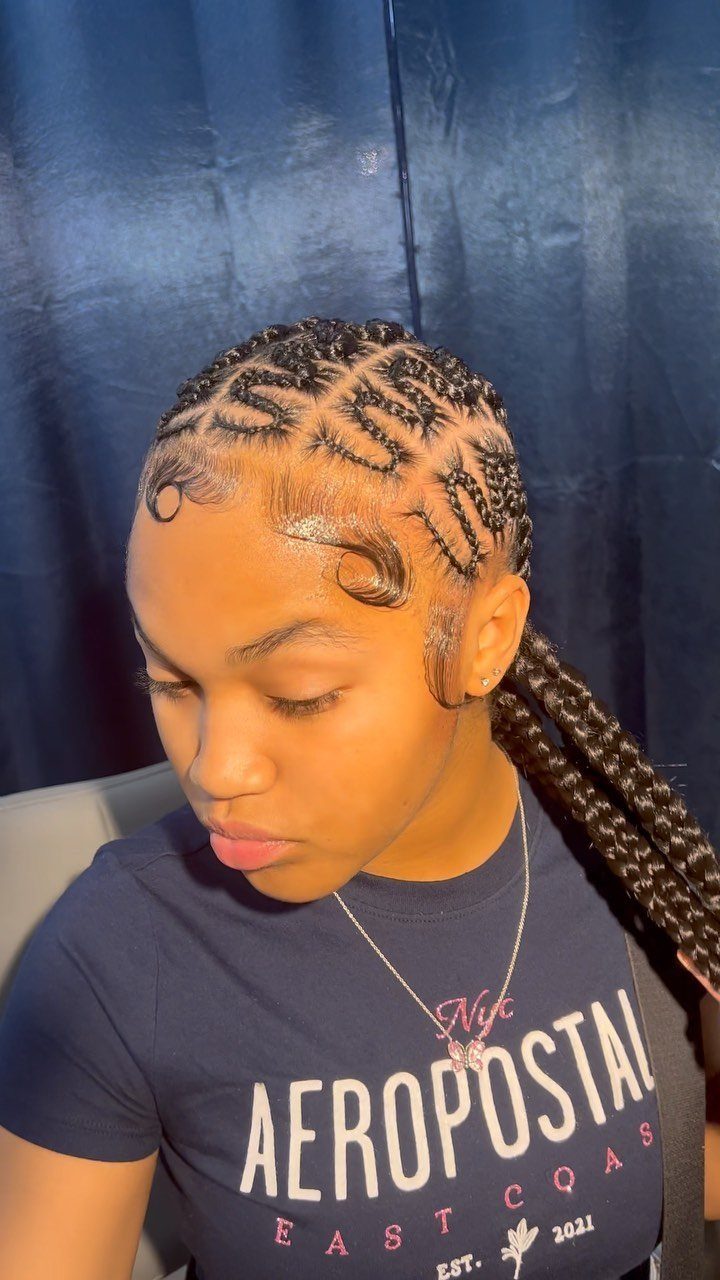
Cornrows curved into S-shapes or zigzags across the scalp, mimicking the body of a snake. You can send a single curve from forehead to nape or let several waves cross from side to side.
The tighter curves take longer to braid than straight cornrows because each turn requires the braider to adjust direction without loosening tension. Once they’re in, they sit flat and last as long as standard cornrows.
Edges need to be laid smooth so the pattern reads cleanly from root to end.
26. Ombre Box Braids
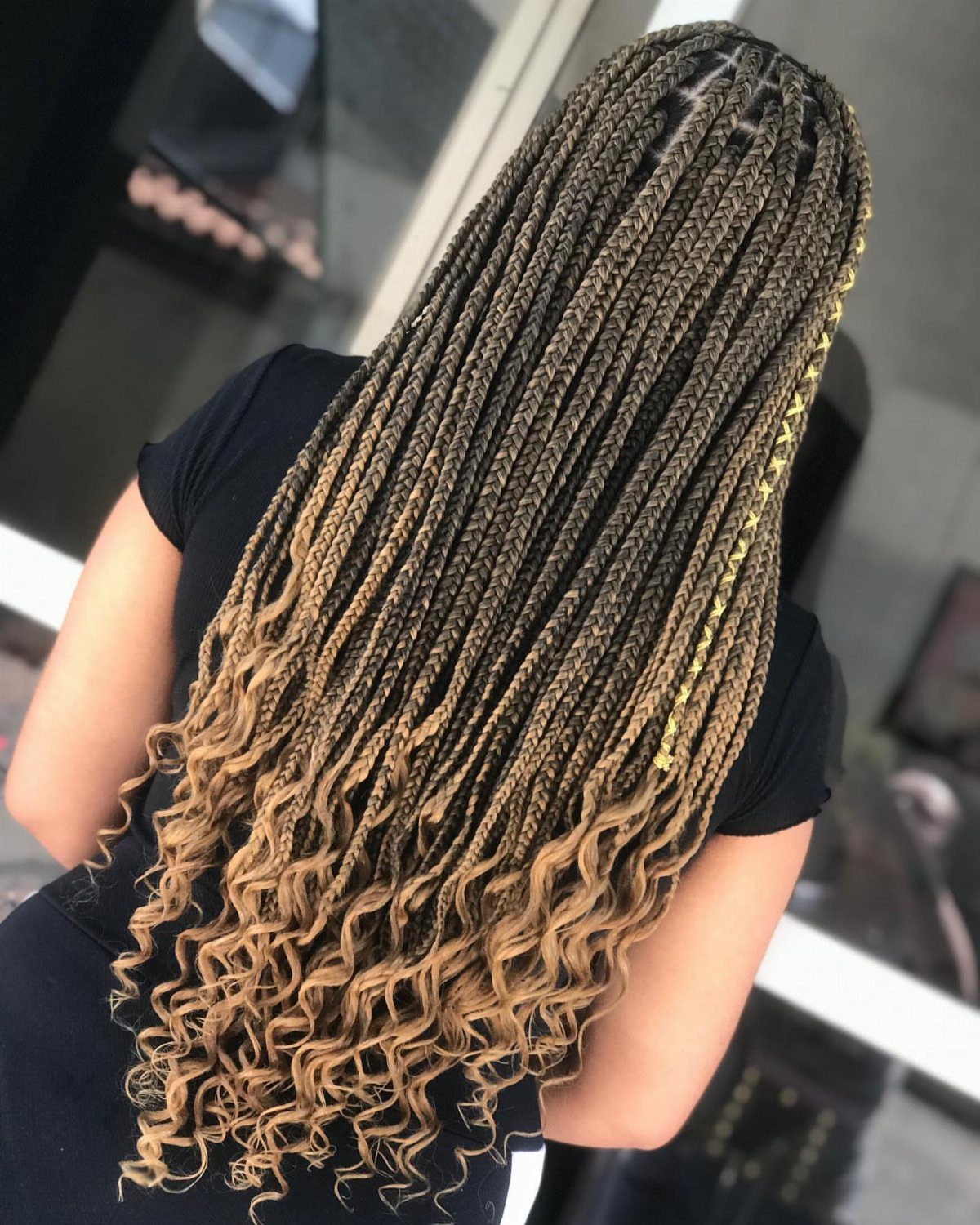
Box braids that shift from one color at the root to another midway down or at the ends. The gradient can be subtle, like dark brown fading to caramel, or high-contrast, like black to blonde.
You build the fade by switching extension colors as you braid or by choosing pre-colored ombre hair. Place the shift anywhere along the length, most often halfway down or closer to the tips.
The lighter ends show wear faster than darker ones, so plan to trim or redo them if you’re keeping the braids in for more than a month.
27. Box Braids with Scarf
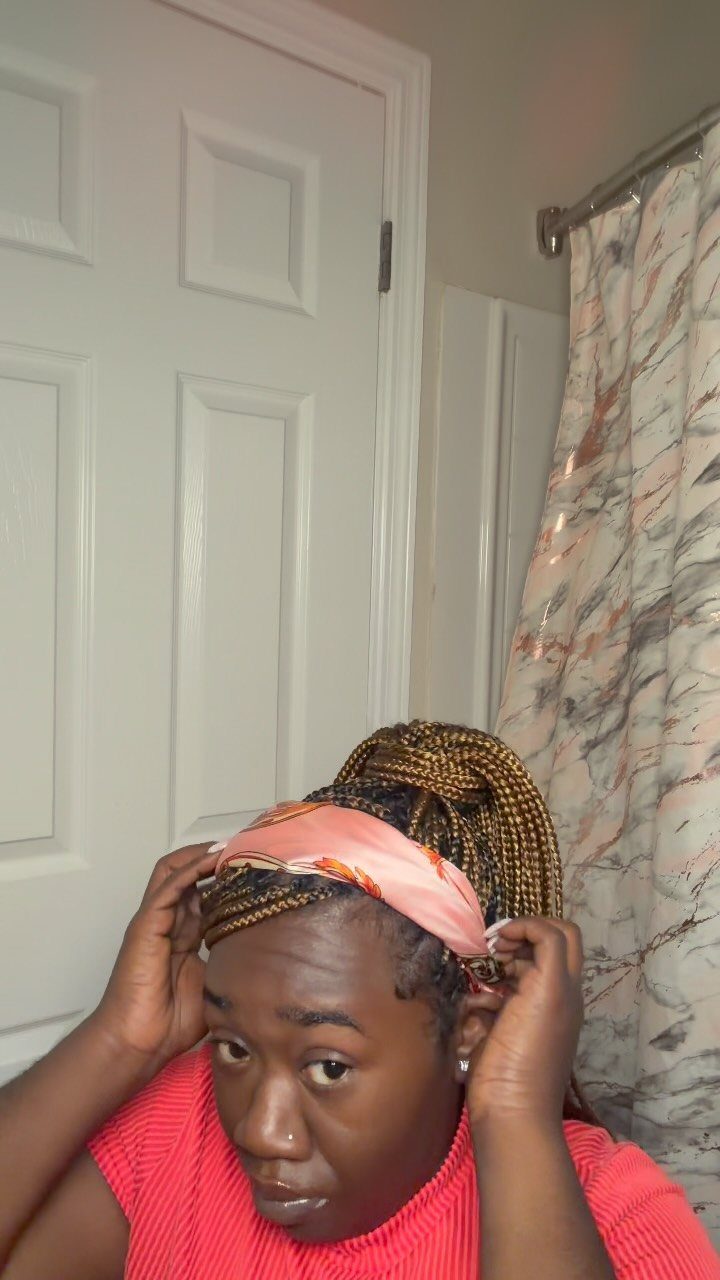
A scarf tied around the base of a ponytail or bun made from box braids, or wrapped along the length of the braids themselves.
Silk and satin are slick, so a scarf in either one can slip, and a cotton scarf with some texture usually grips a knot better.
You can tie it at the crown and let the ends hang, wrap it around a high bun, or weave it through the braids for a woven look.
The scarf adds color and covers the elastic if you’re pulling the braids up.
Installation Time and Duration
Installation time depends on the size and method. Installation time varies: Havana twists finish in a few hours, box braids take a long afternoon, and micro braids can eat up a full day.
Past that point, your roots start to lift and product builds up where you can’t reach it. Havana twists can stay in up to 8 weeks if you keep them moisturized.
Leaving braids in too long causes more problems than it prevents. If you’re planning back-to-back installs, factor in time between styles so your hair and scalp recover.
Scalp Care and Protective Styling
Braids should not hurt.
Keep your scalp moisturized while the braids are in. Use a light spray or oil a few times a week, something with coconut, jojoba or olive oil that penetrates without leaving buildup.
Wash your scalp with diluted shampoo or a spray cleanser, then add leave-in conditioner to keep everything comfortable.
Do not leave box braids in longer than 2 months. One recommendation is to take a two-week break between installs so your natural hair gets a rest.
Yes, some hair shedding after removing box-braid styles is totally normal. Boozer explains, “On average, you naturally shed up to 100 strands a day, but when your hair is braided, you don’t see that daily shedding.”
— Glamour
Choosing Braid Size and Hair
Medium-sized braids hold up longer and work well for updos, ponytails or anything that needs the braids to move independently.
Box braids suit thicker, coilier, coarser hair best.
If your hair is thin or your edges are weak, extensions can add too much tension. Research your stylist before booking, and treat and trim your hair before the install so it goes in clean and healthy.
Frequently Asked Questions
What are some good natural hair braid styles for ladies?
Box braids, knotless braids and cornrows are the safest starting points, and Havana twists work if you want something big and full.
Knotless braids feed extension hair in gradually, so they pull less on fine edges. Havana twists use coarse, fluffy hair for volume and can stay in up to 8 weeks with steady moisture.
What are some good hairstyles for medium box braids?
Medium box braids work in a ponytail, a bun, a half-up style or worn down, since they are sturdy enough to move on their own.
Curly ends, an ombre fade or a triangle part change the look without changing the braid size. Triangle parts take a little longer to install because each section is angled on purpose.
What are goddess braids?
Goddess braids are chunky cornrows, braided with the hair going under instead of over, and most stylists add extra hair and often curve them around the head in a halo.
The term has also become a catchall for big cornrow styles, typically with fewer than 10 braids. They differ from Ghana braids, which run smaller.
How much hair should I buy for goddess braids?
Plan on 1 pack of X-Pression or 2 packs of standard braiding hair if you want just 1 to 3 braids.
With 4 or more braids, plan on up to 3 packs. Thicker braids use more hair, so size matters.
What kind of braiding hair should I buy?
X-Pression and Latched & Hooked are 2 recommended brands, and regular Kanekalon also works. Test synthetic hair on a small patch of skin first, since some people react to it.
How long do box braids last?
Box braids last about 4 to 8 weeks with good care, and some sources stretch that to 10.
Keep them in no more than 2 months. Leave them in longer than that and your roots start to loosen while product buildup irritates your scalp.
What is the process like for getting box braids?
Your hair is washed, deep conditioned and detangled first.
It is then sectioned into square parts and braided with synthetic or natural extensions added in. Set aside several hours, since length and thickness change the time a lot.
What are the pros and cons of box braids?
They protect your hair and can be worn many ways, including down, in a ponytail, half-up or in a bun.
The downsides are a long install and the need for care at the hairline, where too much tension can cause breakage.