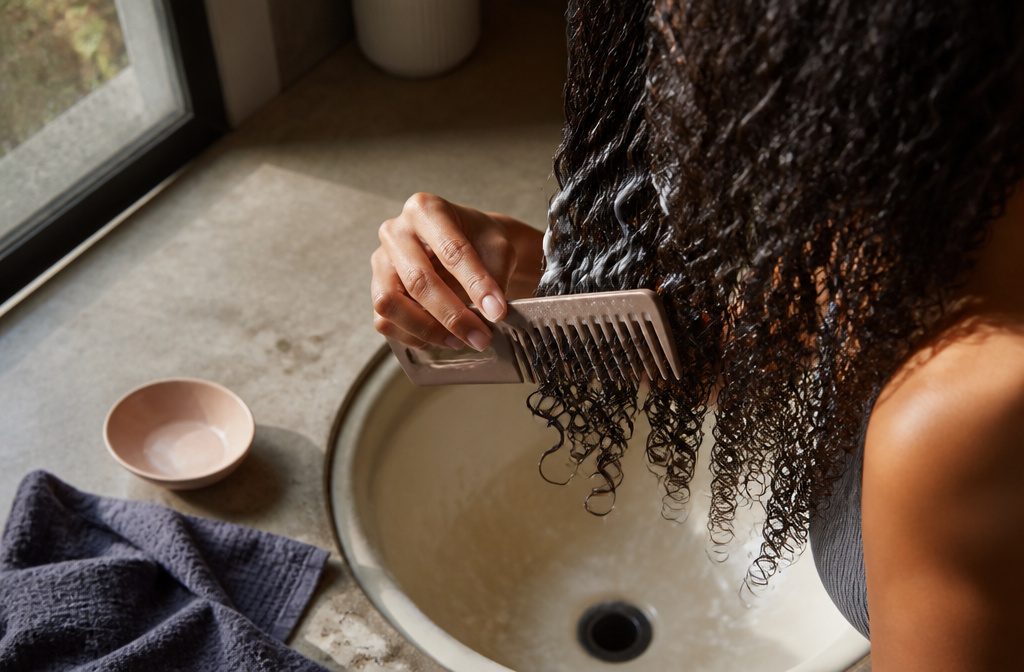
Detangling curly hair without breakage takes 15 minutes to an hour, working from the ends up in small sections with conditioner for slip.
Most people get it backward: they start at the roots, which pushes knots together and snaps strands. Wet hair breaks far more easily than dry, so stubborn tangles need more product and patience, never yanking.
1. Wet or Dry First
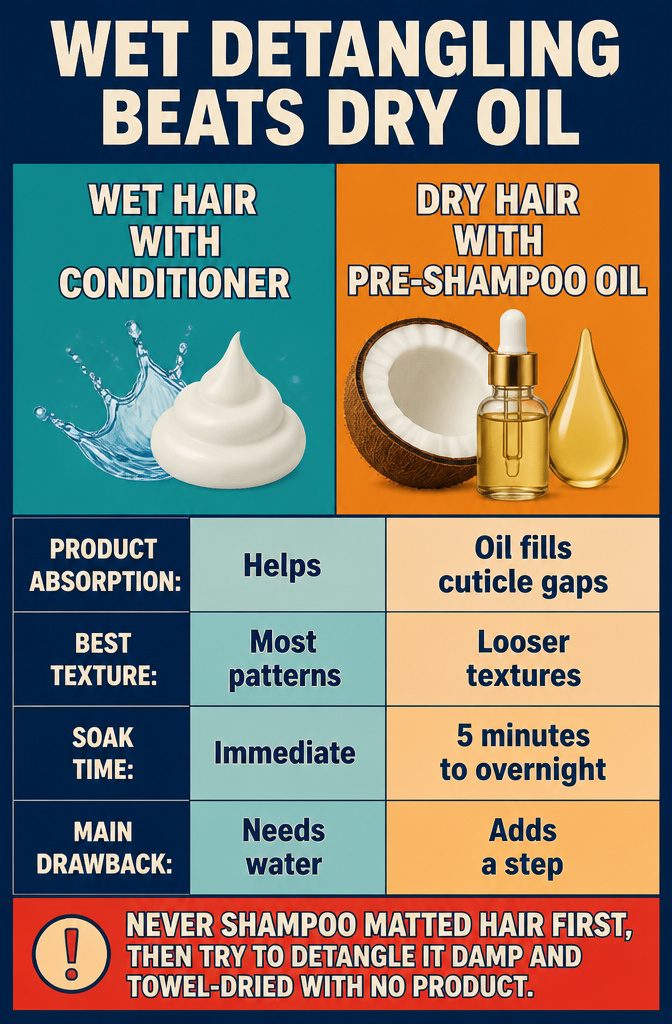
Wet hair with conditioner on it wins for most patterns. Water helps product absorb into the hair shaft, so knots release instead of snagging, and a spray bottle revives hair that has dried out.
The dry alternative is a pre-shampoo oil: a light coat of coconut-based oil, a gentle bottom-up detangle, then anywhere from 5 minutes to overnight of soak time.
Hair is stronger dry, and the oil fills gaps in the cuticle so shampoo is less harsh on it. Tight patterns and heavy buildup make it difficult, and it adds a step, so I’d save it for looser textures.
Never shampoo matted hair first, then try to detangle it damp and towel-dried with no product.
2. Add Slip
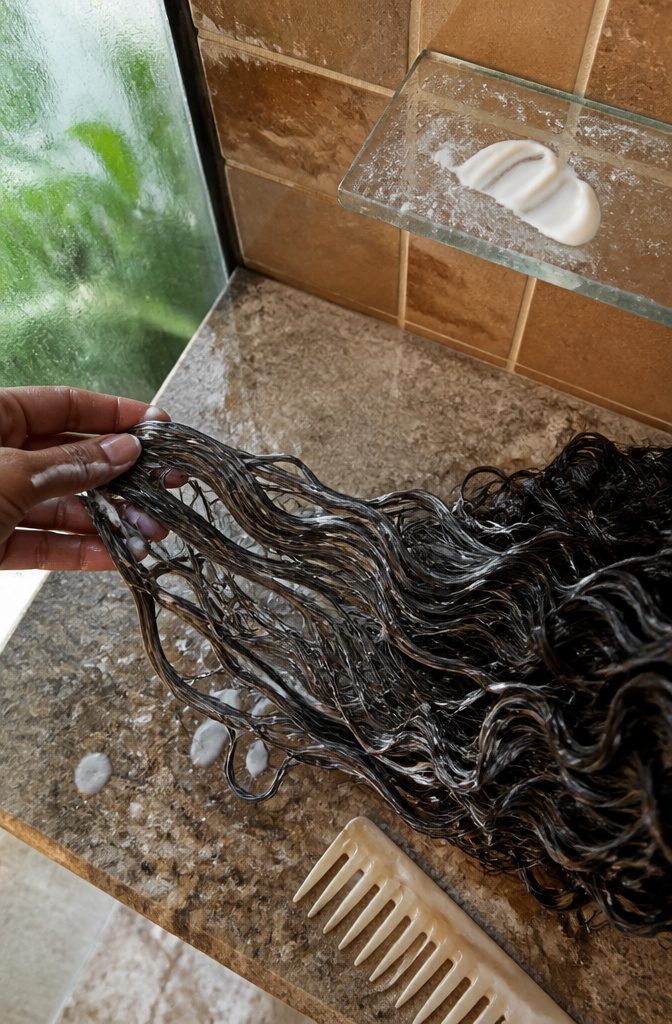
Anything that lets fingers or a comb glide counts as slip, and I’d stack more than one:
- Conditioner, applied generously, is the baseline. A detangling spray, leave-in, mask or curl primer can go on top of it or take its place.
- A small amount of oil also works. Go light.
- Cleanse with a sulfate-free, hydrating formula. Anything that leaves hair dry increases tangling, and a harsh one can leave strands matted by the end of the wash.
- For a dry pre-shampoo, coconut-based oil is my pick. Let it soak in for at least 5 minutes, or overnight if your schedule allows.
- Skip the oil step on very tight patterns or heavy product buildup. It’s harder to do well there.
3. Divide Into 4–8 Sections
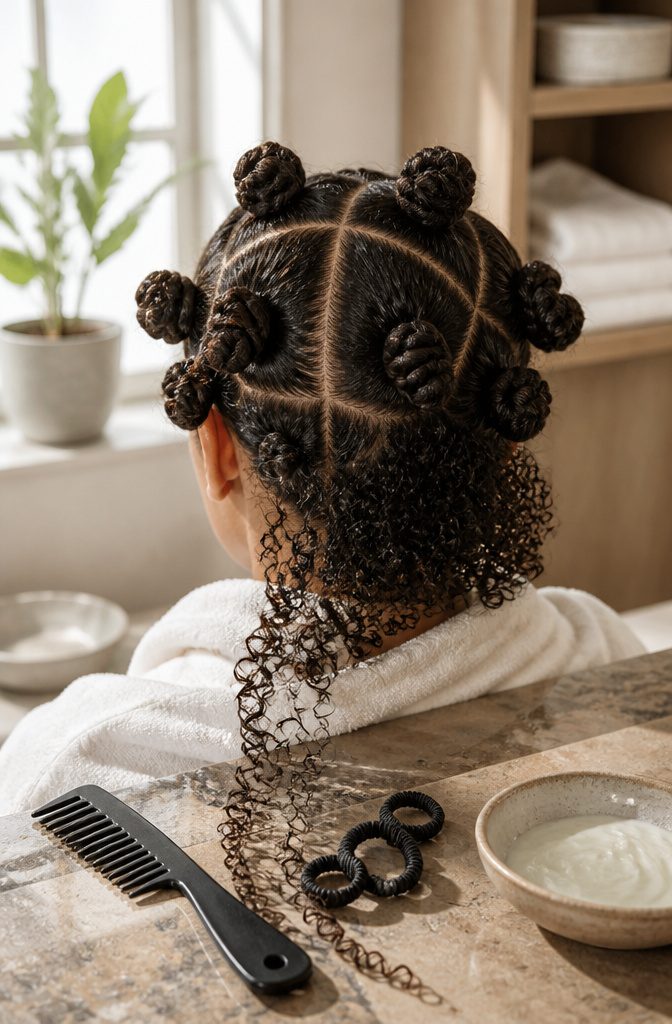
Tighter textures do best with 4–8 sections, and most heads land at 6–8 once the parts are medium-sized. I’d rather make one section too many than one too few, since a smaller section means fewer knots to fight at a time.
Part with a comb or your fingers, then twist or braid each section, or hold it with a clip or tie. Twisting also stretches the hair, which cuts shrinkage while you work.
Tackling the whole head at once causes the most breakage.
Finished hair drifts back into the unfinished hair and knots all over again. Work one section, secure it loosely, and move to the next.
4. Loosen Knots With Fingers
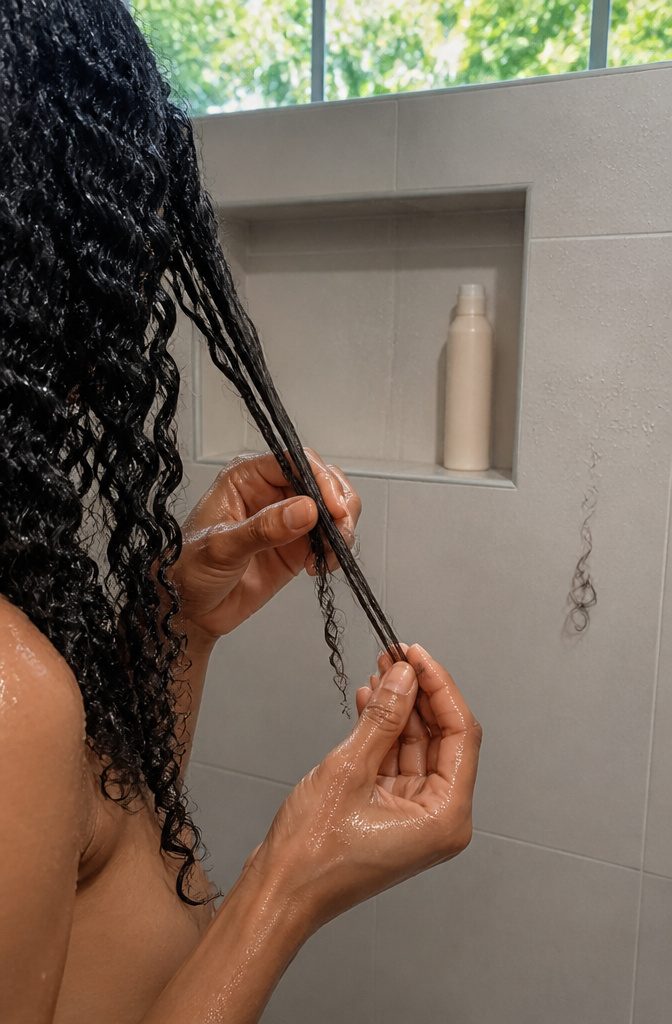
Finger-detangling comes before any brush or comb. With conditioner or leave-in on your hands, work from the bottom up.
When you hit a large knot, coat it and pull it apart gently into smaller pieces before a brush gets near it. Each tug should loosen a strand, not drag one.
Loose hairs shed as the knots come apart, so slide them out as they free up instead of letting them wrap back around the tangle.
The shower is a good place for this, since wet hair is easier to work through and your hands already have slip.
Wet hair is also at its weakest, which is why a stubborn knot punishes rushing.
Never rip or yank through it; one tangle becomes several snapped strands that way. Add more product and try again.
5. Pick the Right Tool
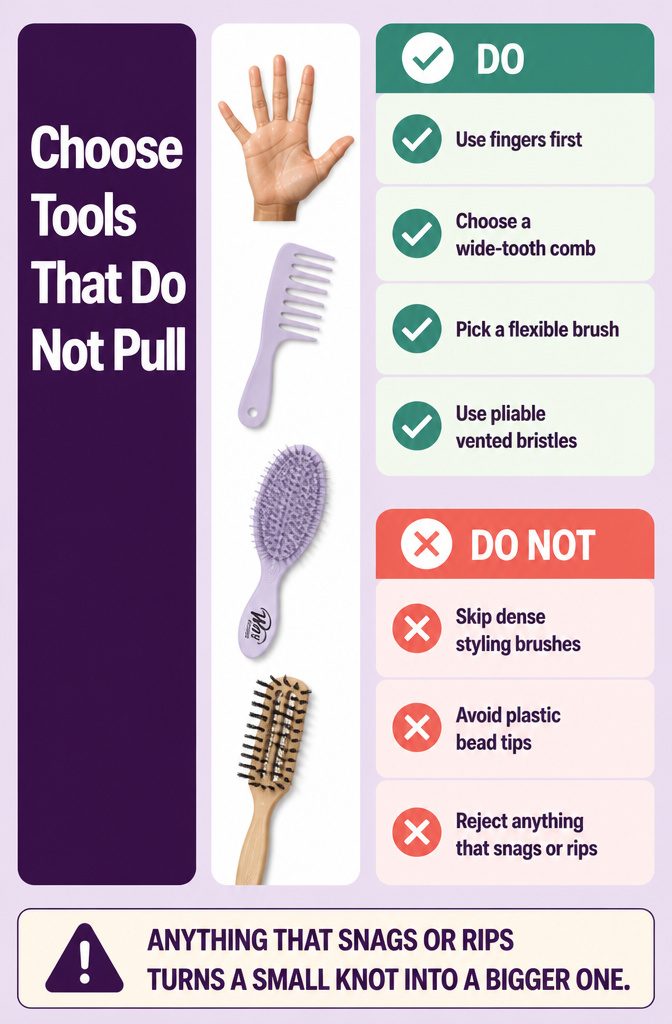
Four tools are worth considering, and I rank them by how little they pull:
- Fingers give the most control with the least damage, especially on wet hair in the shower.
- A wide-tooth comb is the gentlest option, and its spaced teeth also spread conditioner evenly.
- A flexible detangling brush works well. I’d pick the Wet Brush for wavy hair and the Felicia Leatherwood ($14) for curly and coily hair.
- A natural-bristle brush is fine if the bristles are pliable and vented.
Skip dense styling brushes like the Denman and the Bounce Curl EdgeLift for detangling, along with any brush with plastic beads on the bristle tips. Anything that snags or rips turns a small knot into a bigger one.
6. Start at the Ends
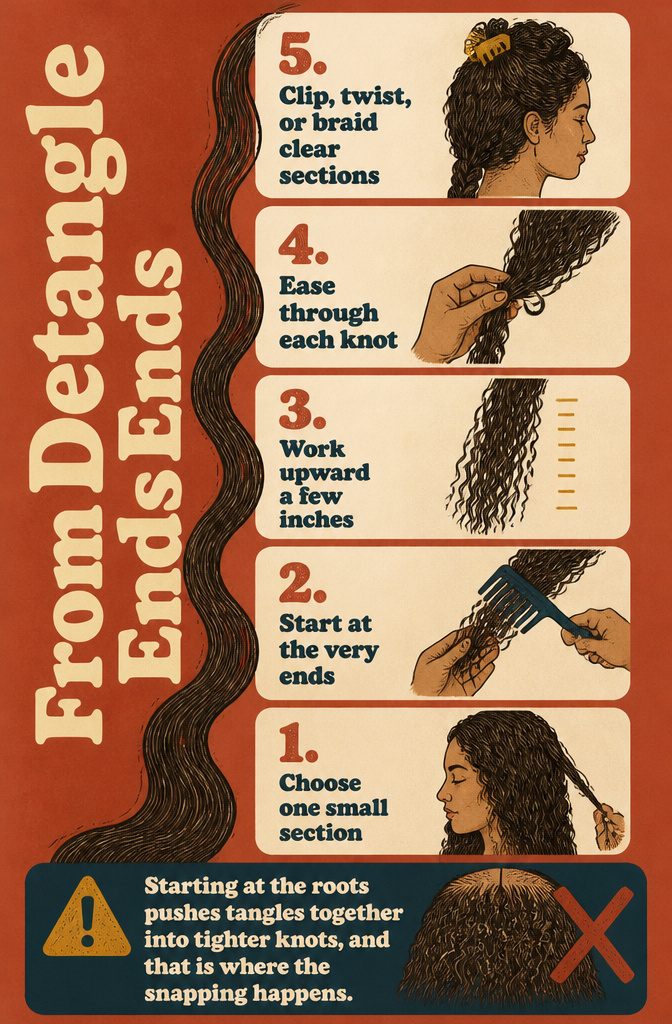
- Pick one small section and leave the rest of your hair alone.
- Start at the very ends with your fingers, a wide-tooth comb or a detangling brush. Use smooth, gentle strokes.
- Work up toward the roots a few inches at a time. Starting at the roots pushes tangles together into tighter knots, and that is where the snapping happens.
- Ease through each knot slowly. Wet hair breaks far more easily than dry.
- Once the section is clear, clip, twist or braid it out of the way, then start the next.
Allure sums up that last step well:
After you’ve managed to rid a portion of all the knots, twist or braid it.
— Allure
A finished section left loose will re-knot while you work on the rest.
7. Finish the Wash

After a pre-shampoo detangle, wet your hair with warm or cool water, never hot.
Work a hydrating, sulfate-free shampoo into the scalp, then condition and rinse. Harsh formulas strip natural oils, and the dryness they leave shows up as frizz and fresh tangles.
If you skipped the pre-shampoo step, the detangling happens in the shower instead.
Leave the conditioner or mask in and work out every knot before you rinse. I’d put this above any other rule in the wash: don’t wait until the conditioner is rinsed out and your hair is towel-dried to detangle.
Hair is weakest when wet, and without that slip the same knots snap instead of loosening.
8. Dry Without Retangling
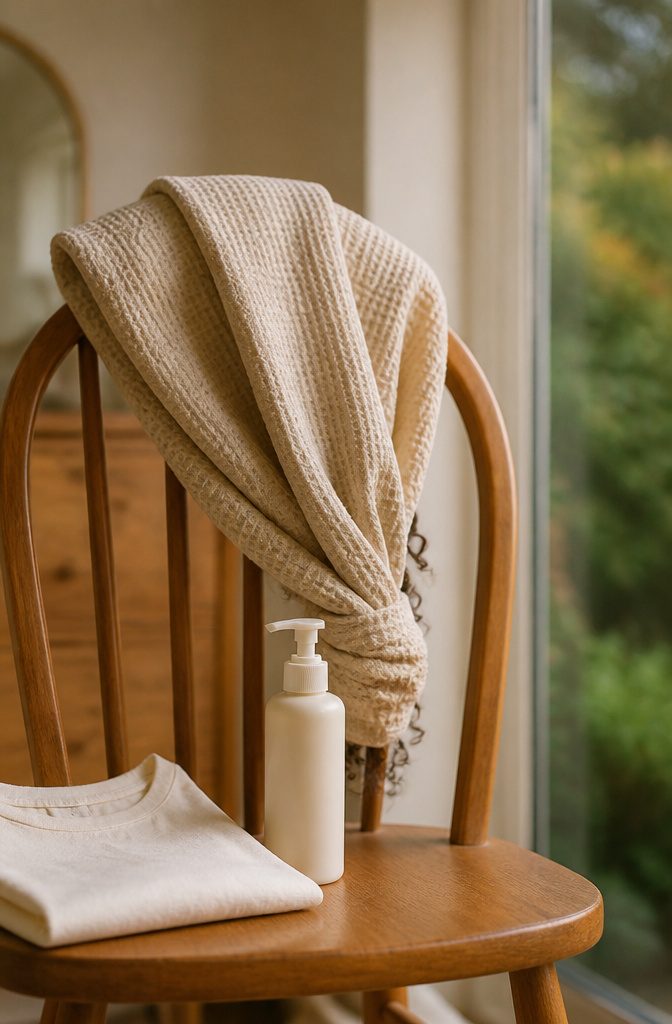
Before anything touches your towel, run your fingers through your hair at the roots to lift it off your scalp.
Then wrap or plop it in a flat-weave hair towel or a T-shirt, never a bath towel, and keep the wrap loose.
The Hair RePear Ultimate Hair Towel and the Curlsmith Microfiber Towel are the two I’d point you to. Rubbing, scrunching hard and twisting tight all add friction, and friction is what knots curls back up.
If tangles show up anyway, work in a leave-in conditioner or curl cream and finger detangle. A brush is fine only when the knots are minor, and I’d keep every stroke gentle.
9. Stay Tangle-Free Between Washes
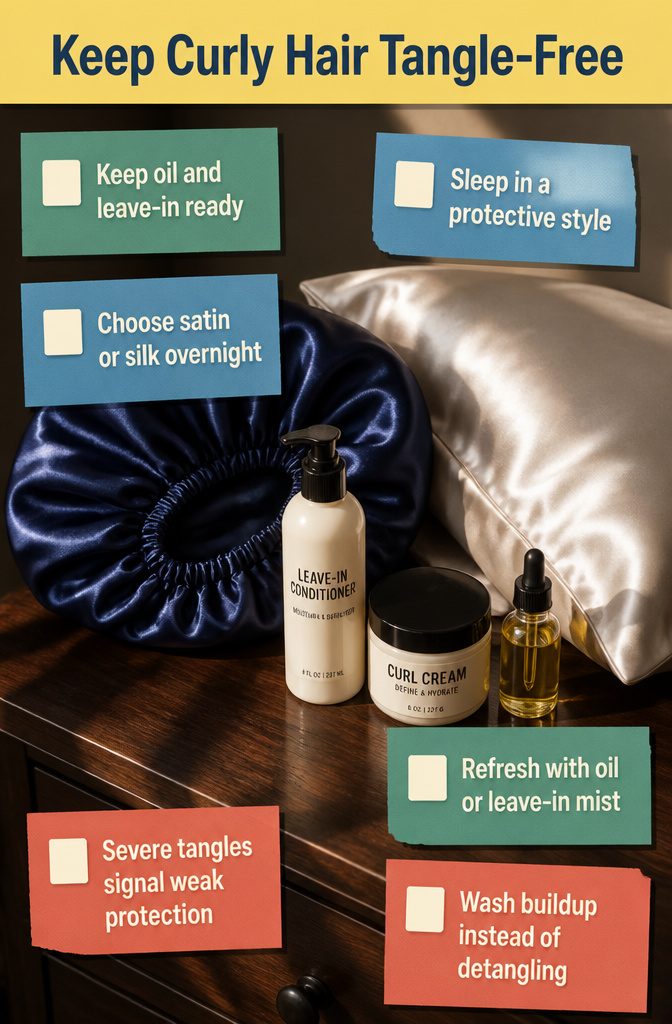
Tangles between washes come mostly from friction and dryness, so a few habits do the work.
- Oil and leave-in conditioner keep strands slick and moisturized until the next wash.
- A protective style shields hair from what knots it. Sleeping in one means fewer tangles at wake-up.
- Cotton creates friction and absorbs moisture overnight. A satin bonnet or silk pillowcase lets hair glide, and I’d wear the bonnet even with the pillowcase.
- On second-day or third-day hair, work knots out dry with a little oil or a light spritz of water-based leave-in mist. Or mist with water, wet your hands, and work in leave-in or curl cream.
- Severe refresh-day tangles usually mean weak overnight protection or too much friction.
- Don’t keep detangling damp hair that already has product buildup. Wash it instead.
Patience and Gentle Handling
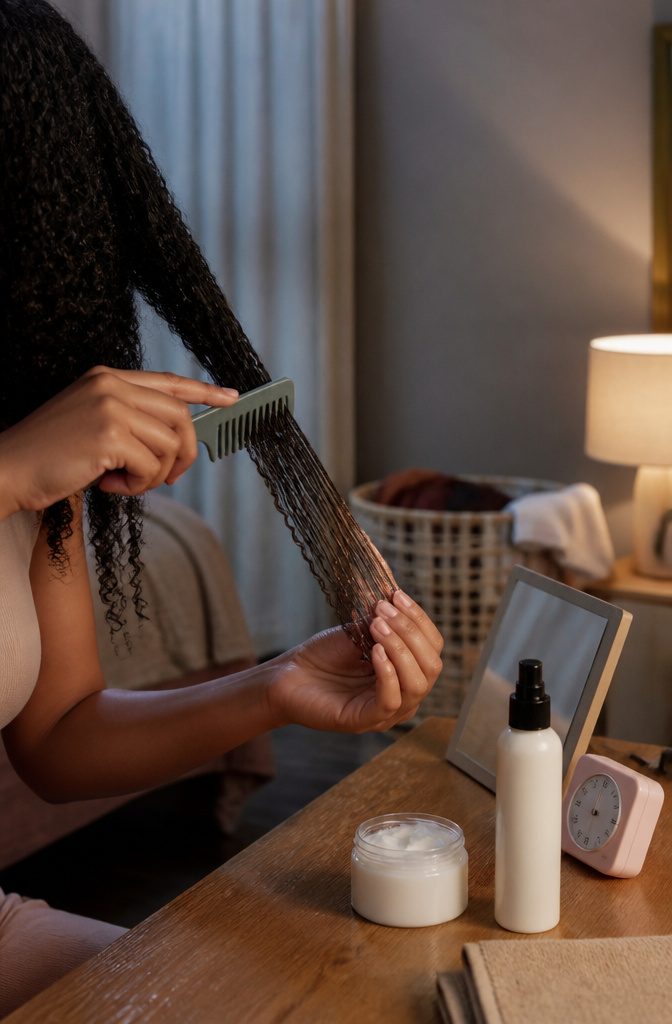
Set aside anywhere from 15 minutes to nearly an hour, depending on how thick and curly your hair is. If you hear hair snap, you’re moving too fast or pulling too hard.
Work in small pieces with smooth, downward strokes. Stubborn strands only give up their knots when you stay with them, and I’d take the longer session over a handful of broken ends.
Frequency matters as much as technique. Detangle at least once a week, and expect tightly coiled or 4c hair to need it every 3–4 days.
I’d tie it to every wash day, even when those come close together. Regular sessions keep knots small, which means less pulling and less breakage.
Detangling Tools and Products
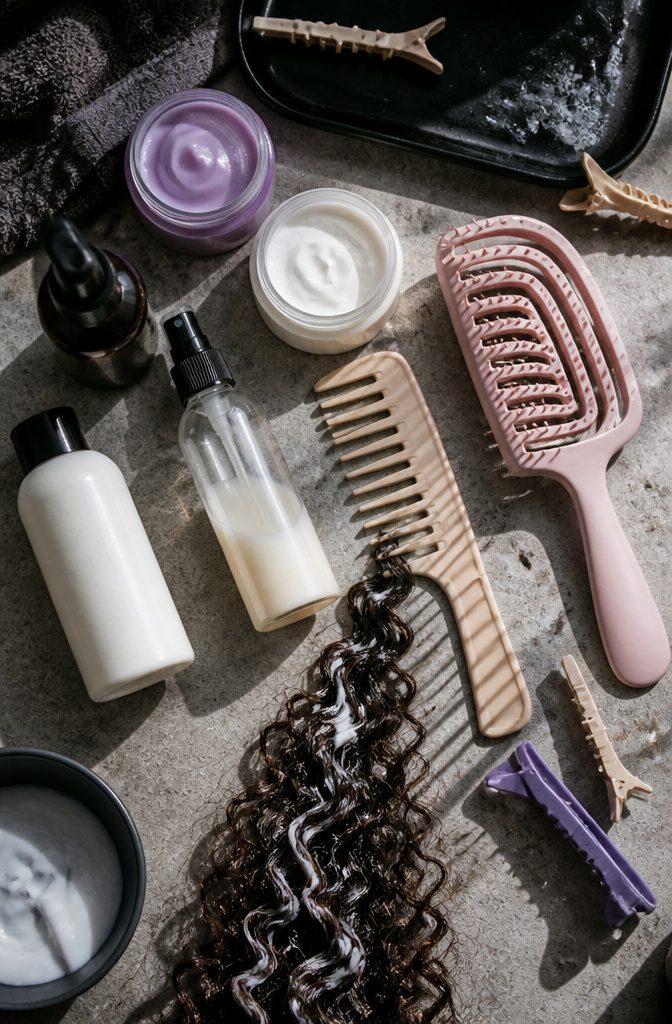
Slip beats brush. A leave-in with a milk or gel-cream texture does most of the work, and Camille Rose Fresh Curl Revitalizing Hair Smoother and The Mane Choice 4 Leaf Clover Leave-In Spray both cost $14.
Kinky-Curly Knot Today, Shea Moisture Detangler and TreLuxe Aloe Vera Curl Primer, which cuts detangling time 70 percent, are other options.
Choose a flexible brush, not a dense one.
Denman-style styling brushes spread product but snag knots. Prices for the rest:
| Item | Type | Price |
|---|---|---|
| Camille Rose Sweet Ginger Cleansing Rinse | Cleanser | $12 |
| Aveda Cherry Almond Bark Conditioner | Conditioner | $17 |
| Felicia Leatherwood Detangling Brush | Brush | $14 |
| Denman Be-Bop Massage Brush | Styling brush | $7.25 |
| Tangle Teezer Naturally Curly | Brush | n/a |
| Curl Keeper Flexy | Brush | n/a |
Preventing Breakage and Split Ends
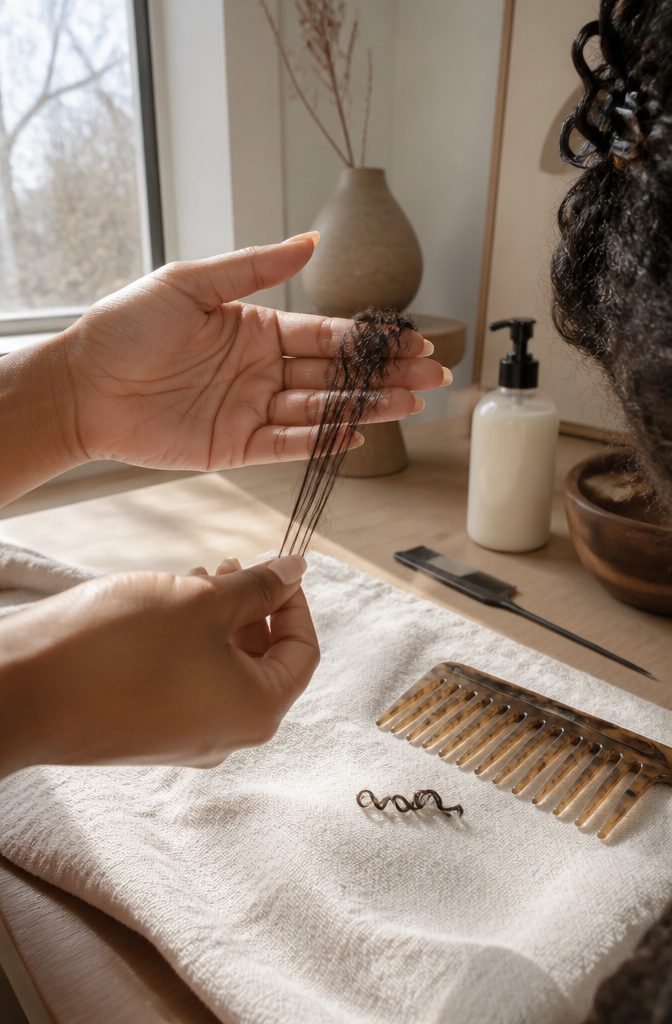
Rough handling shows up as split ends, frizz from short broken hairs, cuticle damage from friction, and hair that never seems to get longer.
Moisture, a wide-tooth comb or your fingers, small sections and working from the ends up to the roots counter all of it. Wet hair breaks more easily, so go slowly.
Split ends tangle more, so trimming ¼ to ½ inch every 6–10 weeks keeps them from splitting further up the shaft.
I’d trim a little more in winter, when cold, dry air increases splitting. A trim won’t slow growth.
Coils tend to run drier than looser patterns, so expect to test a few tools and methods before one feels right on your hair.
Frequently Asked Questions
What is the best way to detangle curly hair at home?
Work in 4–8 sections on wet hair that is coated in conditioner, using your fingers first and then a wide-tooth comb or flexible brush. Start at the ends and move up toward the roots a few inches at a time.
The conditioner gives your hands and tools slip, so knots loosen instead of snapping, and smaller sections mean fewer knots to deal with at once.
Should you detangle curly hair wet or dry?
Wet, with conditioner on it, works best for most curl patterns. Water helps product absorb into the hair shaft, so knots release instead of snagging.
Detangling dry with a pre-shampoo oil is an option for looser textures: coat hair with a coconut-based oil, detangle gently from the bottom up, and let it soak for 5 minutes to overnight.
Tight patterns and heavy buildup make that method harder.
How does conditioner detangle hair?
Conditioner adds slip, a slick coating that lets fingers or a comb glide over strands instead of catching on them.
Wet hair absorbs product better, so apply it generously right after wetting. A leave-in or detangling spray can go on top for extra glide.
What tools make it easier to detangle curly hair?
Fingers give you the most control with the least damage, and a wide-tooth comb is the gentlest option after that.
A flexible detangling brush also works: the Wet Brush suits wavy hair, and the Felicia Leatherwood ($14) suits curly and coily hair. Keep a spray bottle handy to rewet hair that has dried out.
What should you avoid when detangling curly hair?
Skip dense styling brushes such as the Denman and the Bounce Curl EdgeLift, along with any brush with plastic beads on the bristle tips.
Never begin at the roots, since that pushes tangles into tighter knots. Also avoid shampooing matted hair first or detangling it towel-dried with no product on it.
What is the best hair detangling spray?
Whichever you pick, judge it by how much slip it gives, because slip does more of the work than the brush does.
How often should you detangle curly hair?
Detangle at least once a week.
Tightly coiled or 4c hair may need it every 3–4 days. Tying it to every wash day keeps knots small, which means less pulling and less breakage.