Installation time separates the quick styles from the full-day commitments. Jumbo braids finish faster than micro braids that can run across 2 sessions, and the difference shows in how long you sit and how much time takedown demands weeks later.
The style you pick depends on how much maintenance you’re willing to do and whether you want something that comes out fast or lasts through weeks of wear.
1. Braided Ponytail
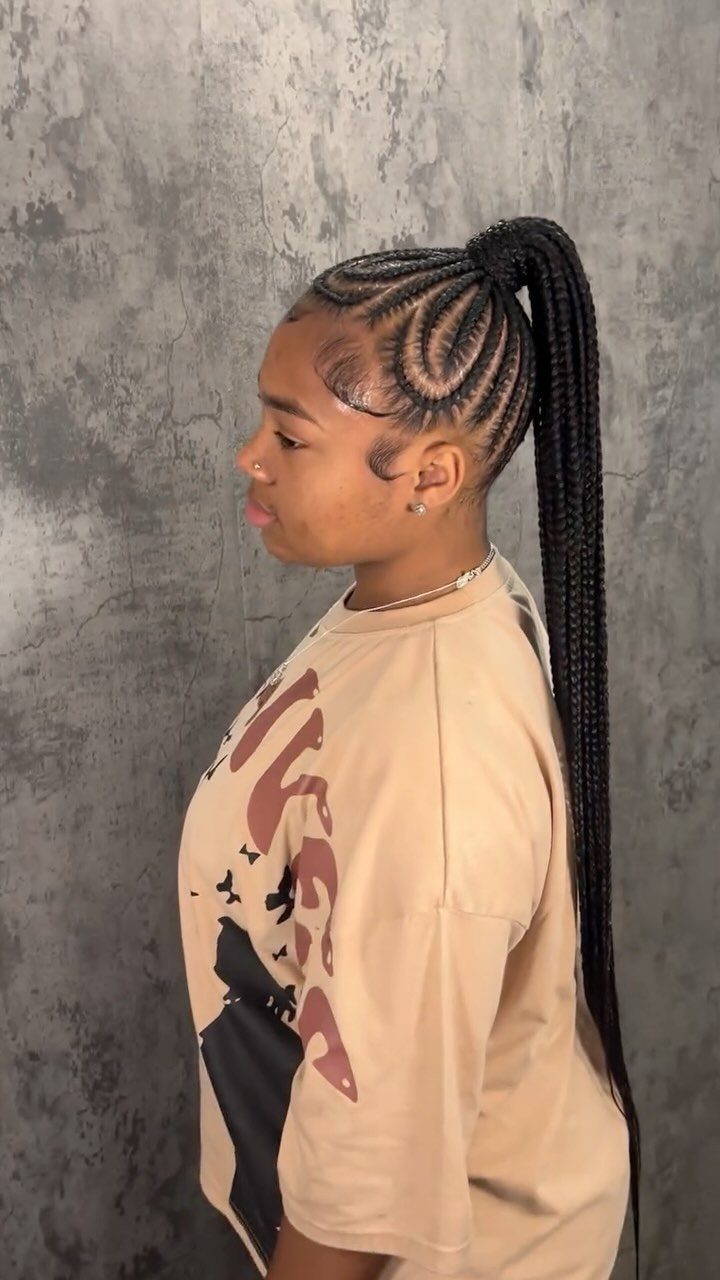
The braids are gathered into one ponytail, worn high, low, or swept to the side. This works whether the braids themselves are box braids, cornrows feeding into a tail, or knotless braids.
Placement changes the look.
A high ponytail reads sleek and athletic, a low one feels polished, and a side ponytail skews casual. If the braids are long, the ponytail falls past your shoulders and moves with you.
The style holds for weeks without adjustment, and you can wrap the base with a section of braid or leave it secured with a band.
2. Cornrows
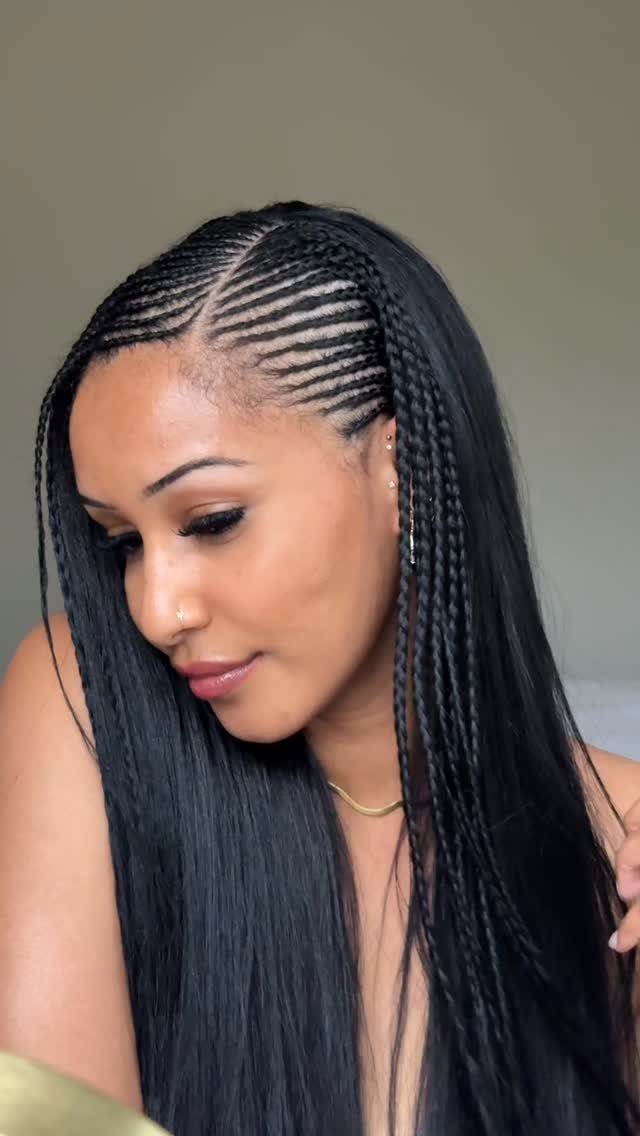
Cornrows sit flat in continuous rows, plaited tight from the hairline to the nape or crown. The pattern can run straight back, curve along the sides, or follow a geometric design.
Installation time depends on the number of rows and the level of detail. The style holds for weeks when you tie it at night and keep the scalp moisturized.
Tension matters.
Too tight and the hairline suffers; done right, cornrows feel secure without pulling. This is one of the lowest-maintenance braided styles you can choose.
3. Micro Braids
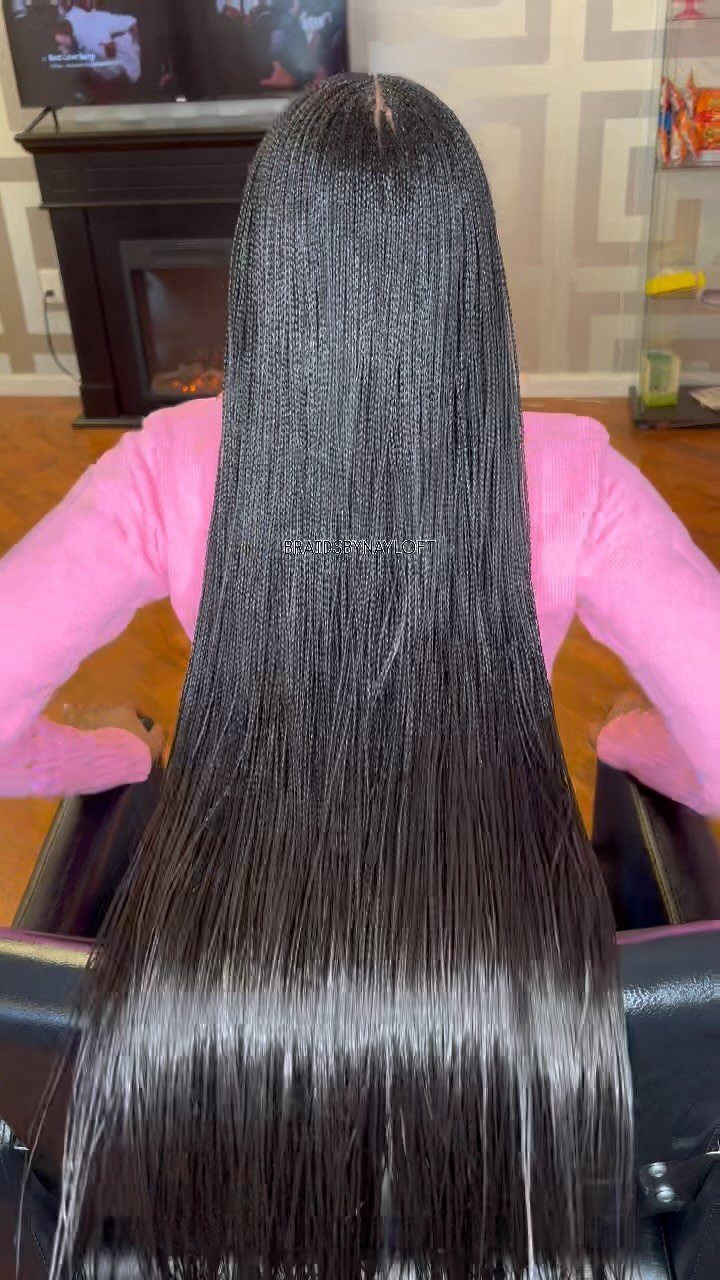
Micro braids are pencil-thin or finer, installed one small section at a time across the entire head. The result is dense, detailed, and lightweight when you gather it.
Installation runs long, sometimes across 2 sessions. Once in, the braids hold for weeks, and you can style them into ponytails, buns, or leave them loose.
What you give up is time.
Takedown also runs long, and rushing it can cause breakage. If you have the patience for the install, micro braids give you weeks of styling flexibility with no daily work.
4. Jumbo Braids
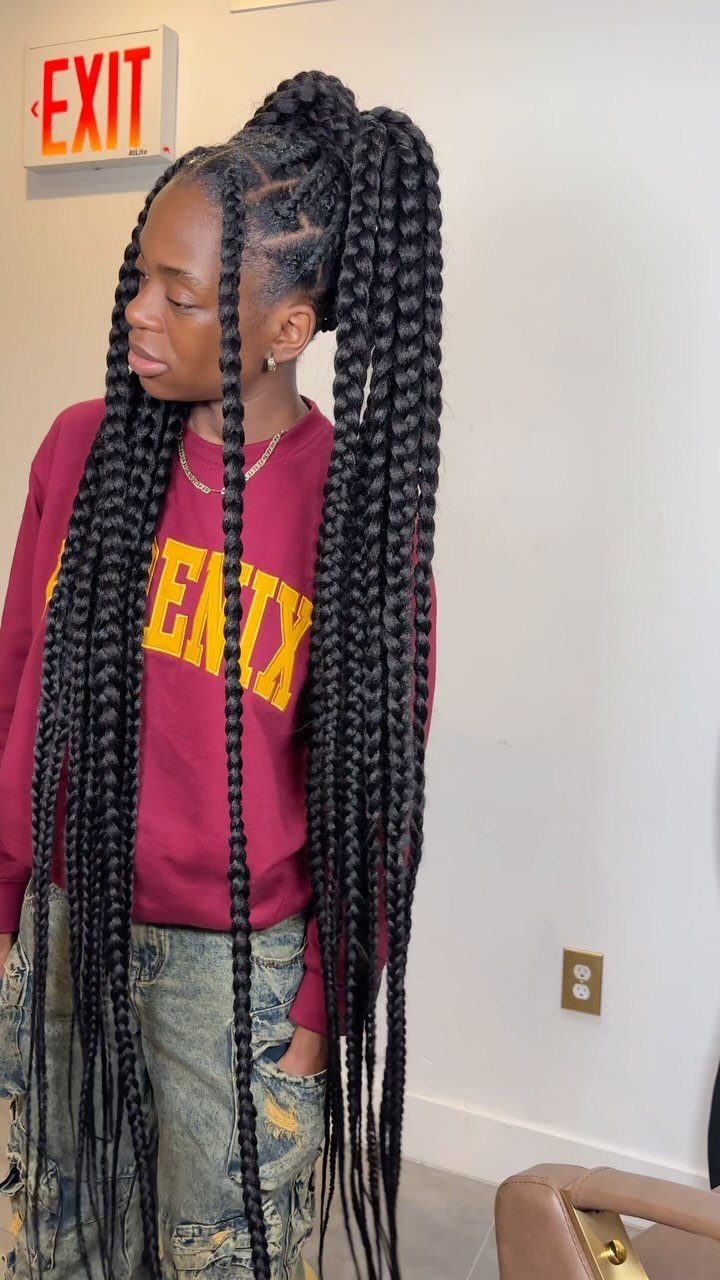
Jumbo braids are thick, bold, and quick to install compared to smaller braid sizes. Each braid runs wide, so a full head takes time depending on length and braid count.
The style holds for weeks. Because the braids are larger, they add visible weight and movement, and they’re easier to take down than micro braids.
This suits people who want a statement look without a full-day install. The thickness also means fewer individual braids to maintain at night, though you’ll still want a silk or satin scarf to protect the edges and keep frizz down.
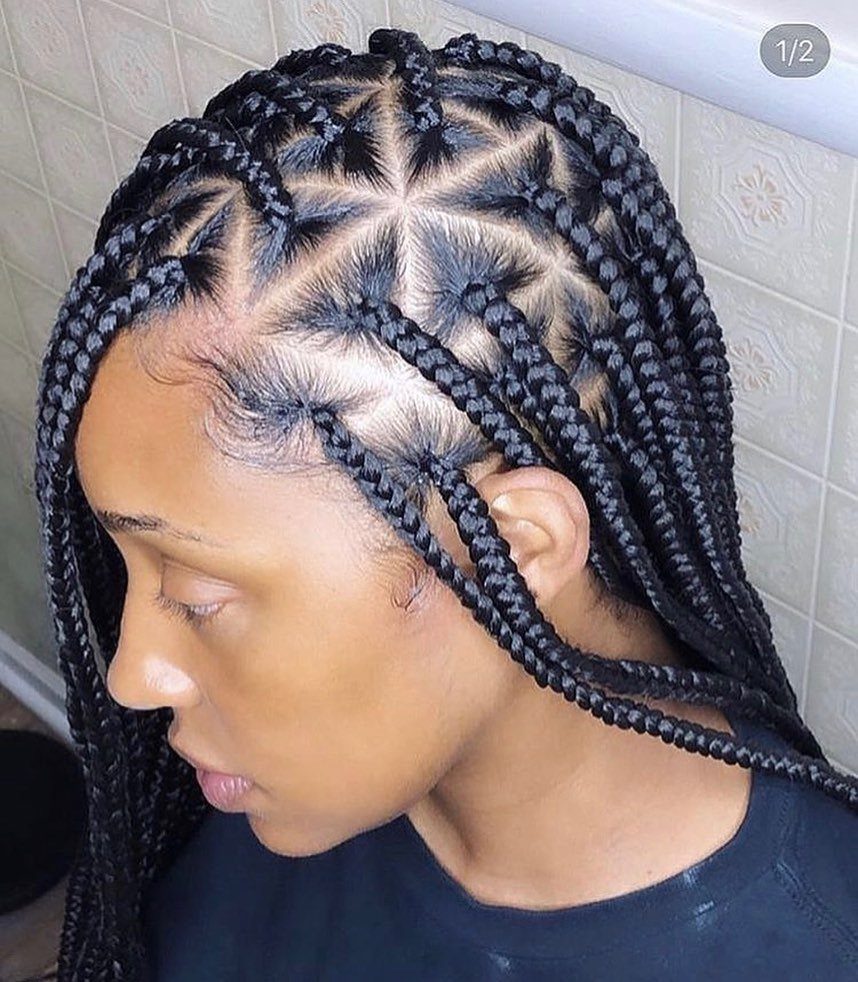
5. Triangle Part Braids
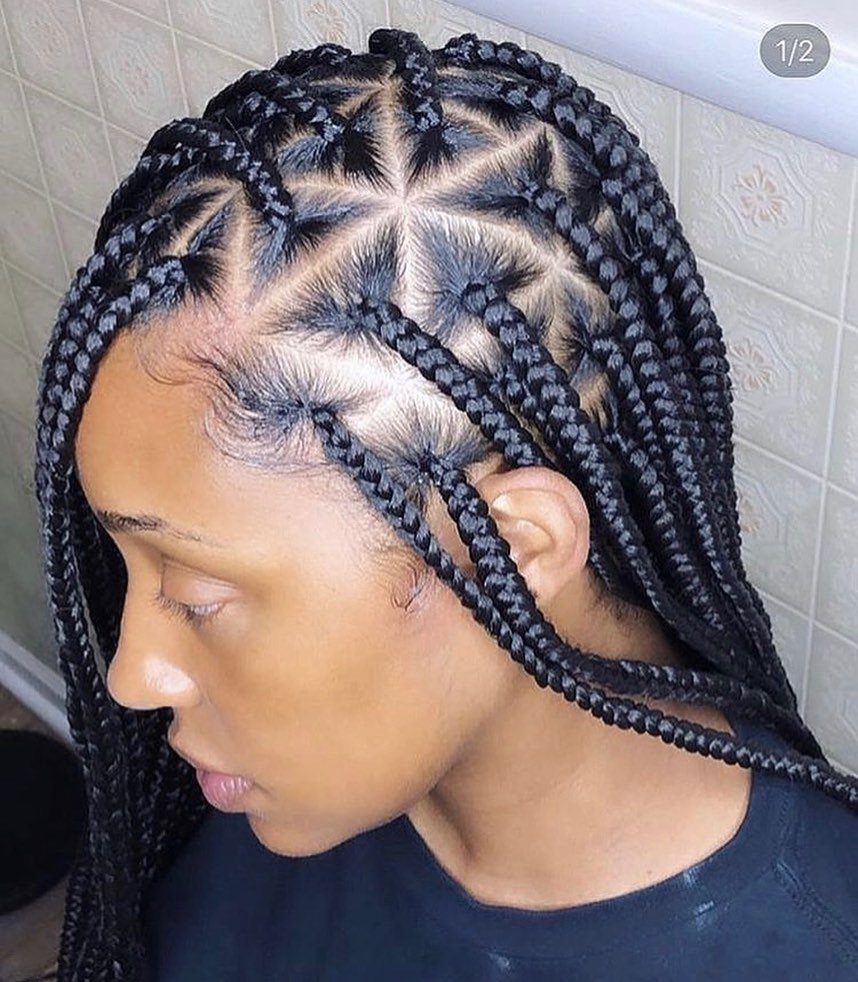
Triangle parts replace the standard square sections used in box braids. Each braid sits at the point of a triangle, which changes the way the braids fall and makes the parting itself part of the design.
The install takes about as long as box braids, depending on braid size and length. The style holds for weeks, and the geometric parting stays visible even when the braids are gathered or styled up.
Clean, precise parts make the difference here. The triangles can run uniform across the head or vary in size for a more custom look.
6. Half-Up Half-Down
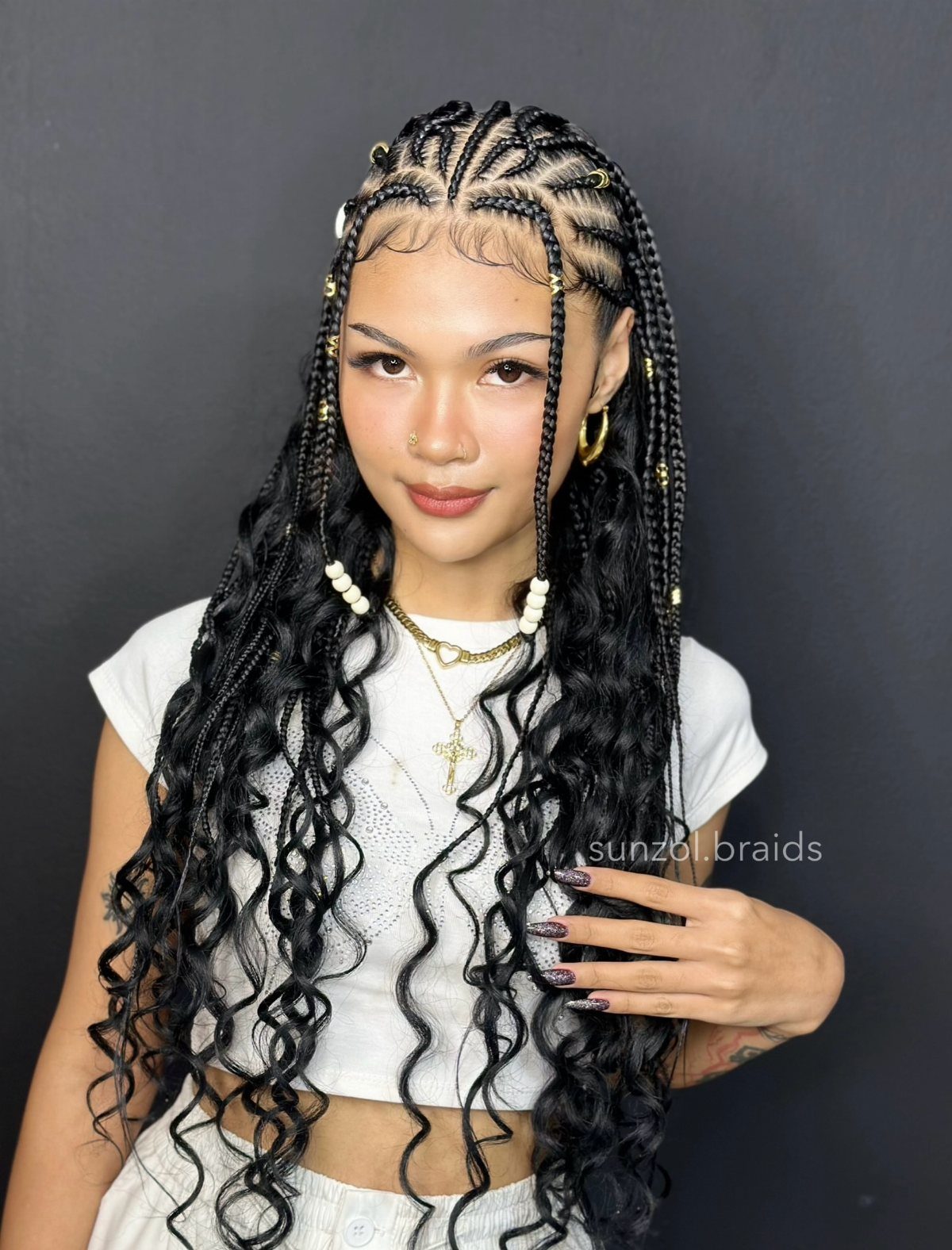
Half the braids are pulled back and secured at the crown, and the rest hang loose. This opens up the face and gives you two textures in one style.
You can tie the top into a ponytail, a bun, or twist it and pin it flat. The bottom stays free, so the look feels balanced between structure and movement.
This takes minutes to set up if the braids are already installed. It works with any braid size, and you can adjust how much hair you pull back depending on how much coverage or volume you want in the front.
7. Box Braid Bob
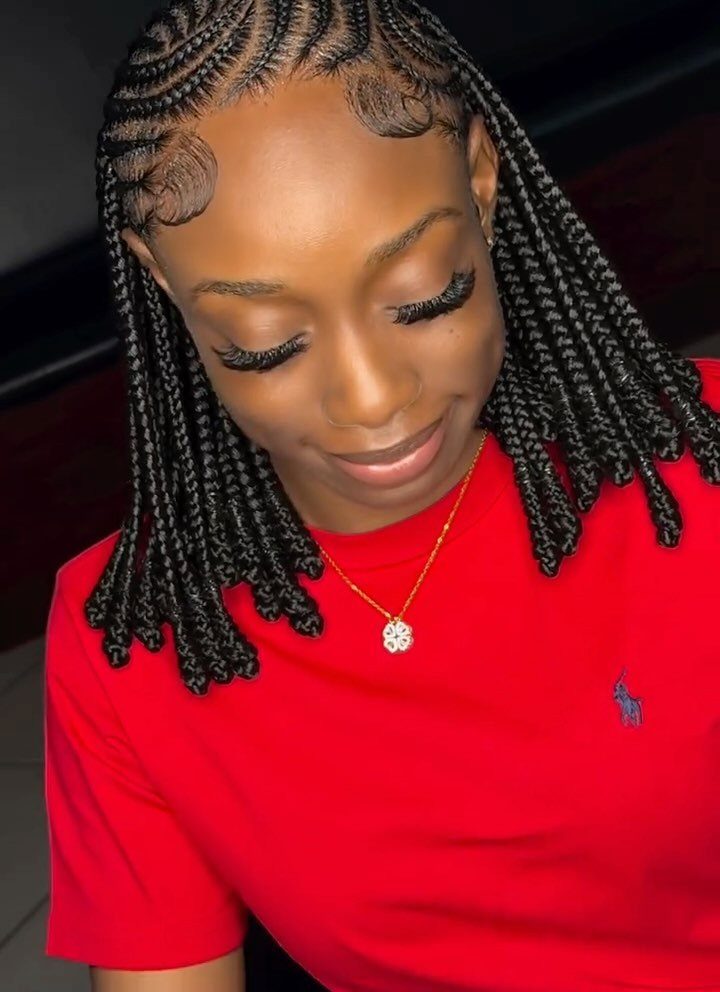
Box braids cut to chin or shoulder length, kept blunt or angled for sharper lines. The shorter length makes the style lighter and faster to dry than waist-length braids.
Bob length opens up styling options. You can tuck one side behind your ear, wear it sleek and center-parted, or add a middle part with volume at the crown.
Installation time runs shorter than long box braids because there’s less length to braid per section.
The style still holds for weeks, and the weight sits higher, which can feel more comfortable if you’re not used to long braids pulling on the scalp.
8. Knotless Braids
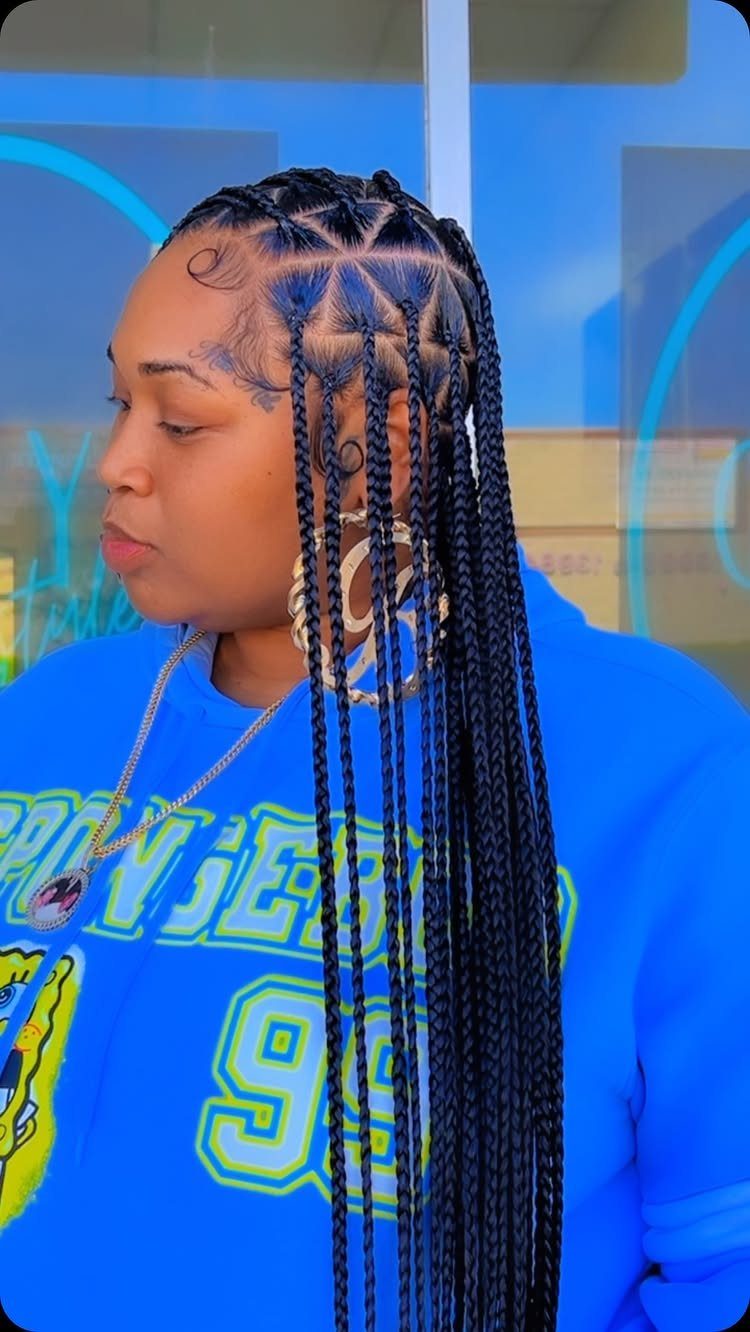
Hair is added in small sections as you braid, so the base stays flat against the scalp. The braid starts with your natural hair and builds thickness as it goes.
This method puts less tension on the scalp and hairline compared to traditional box braids, which makes it easier to wear for weeks without discomfort. The braids also lie flatter at the root and move more naturally.
Installation takes longer than standard box braids because the stylist adds hair incrementally. That lighter base means less tension along the hairline and at the roots.
9. Goddess Braids
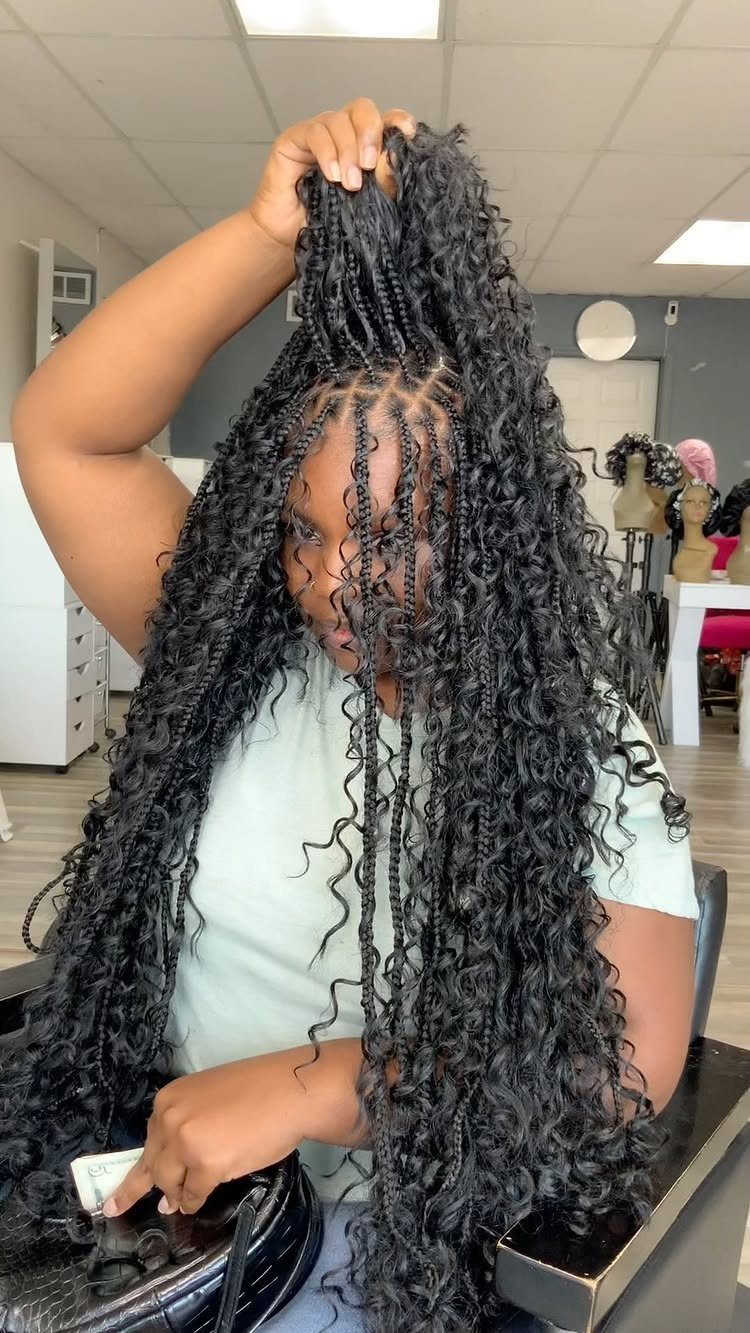
Thicker braids with sections of wavy or curly hair left loose at intervals or the ends. The loose pieces soften the look and add texture contrast.
The curls can be synthetic hair or your own texture left out. Either way, the mix of structured braid and free curl gives the style more movement than solid braids alone.
This sits between fully braided and fully loose, so it reads softer and works well for anyone after a feminine finish that still lasts weeks. Keep the loose sections moisturized so they don’t tangle with the braided parts.
10. Fulani Braids
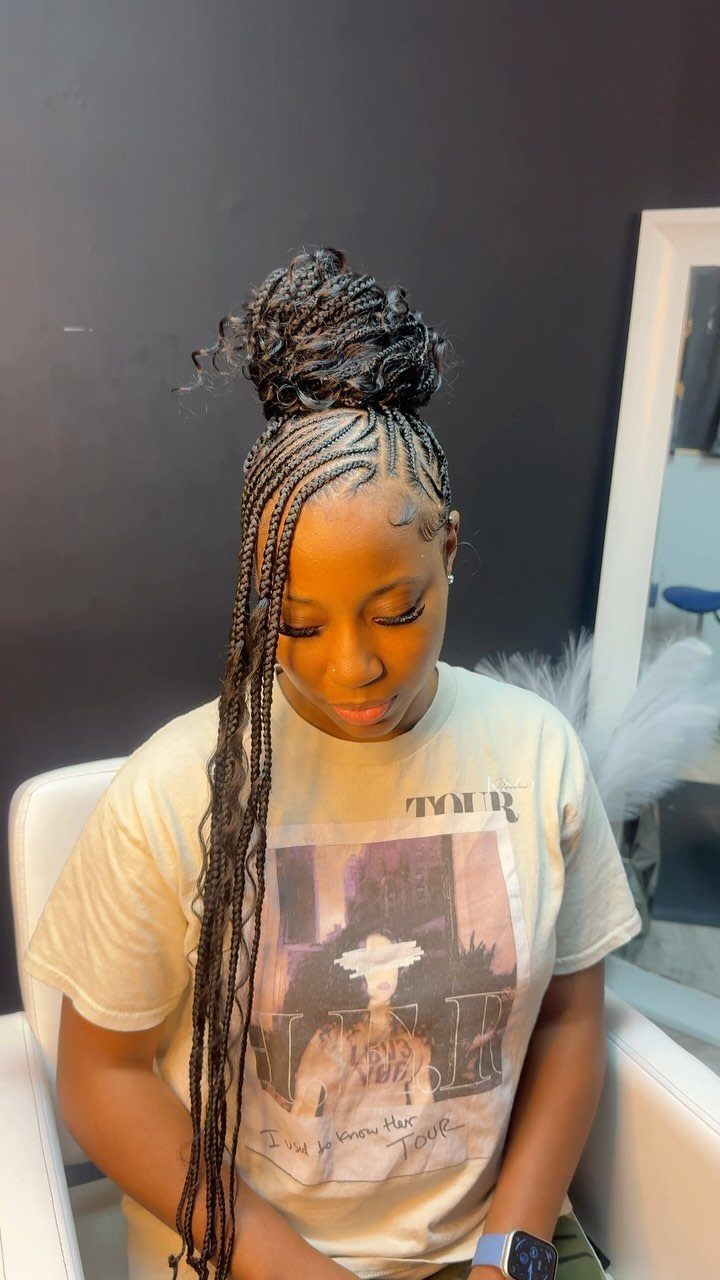
Cornrows at the front and sides feed into individual braids that hang loose, often with a center braid running front to back. The cornrow portion can include beads, cuffs, or wraps.
The pattern is rooted in West African tradition and typically features symmetry and clean parting. The combination of flat braids and hanging sections gives you structure at the scalp with length and movement through the rest.
11. Small Box Braids
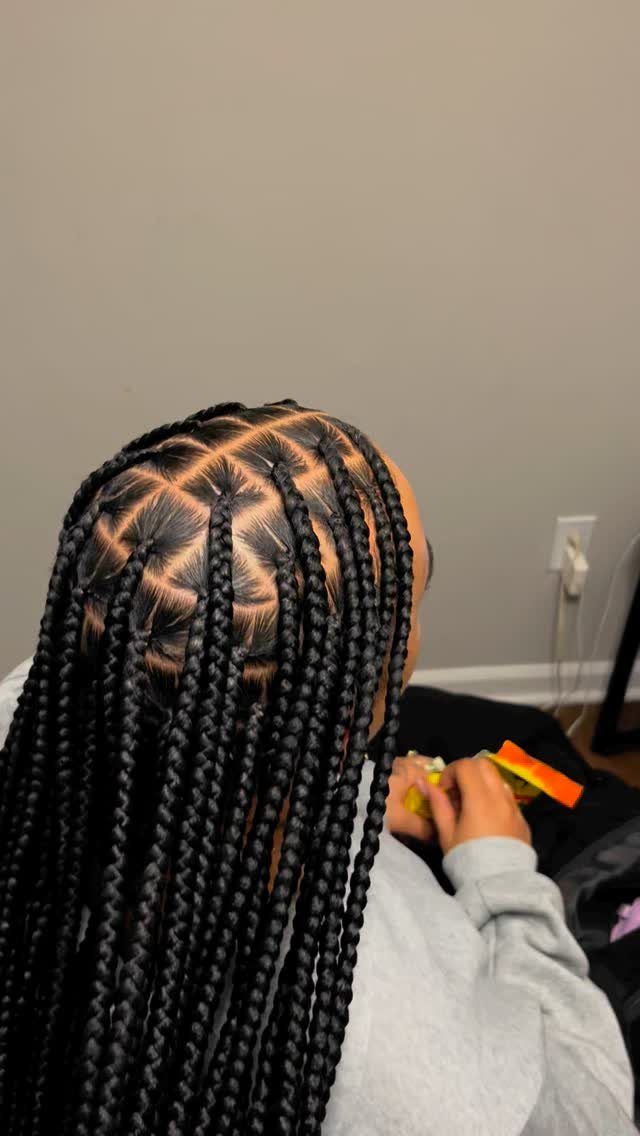
Individual box braids thinner than standard size, installed across the entire head. The smaller the braid, the more sections you’ll have and the longer the install takes.
Small braids give you more styling flexibility.
You can pull them into high buns, intricate updos, or ponytails without the bulk that comes with thicker braids. The thinner size also means the style keeps its structure longer and resists frizz better at the roots.
Takedown requires patience. Rushing through it increases the chance of breakage, so set aside time or work in sections over a few days.
12. Braids with Gold Beads
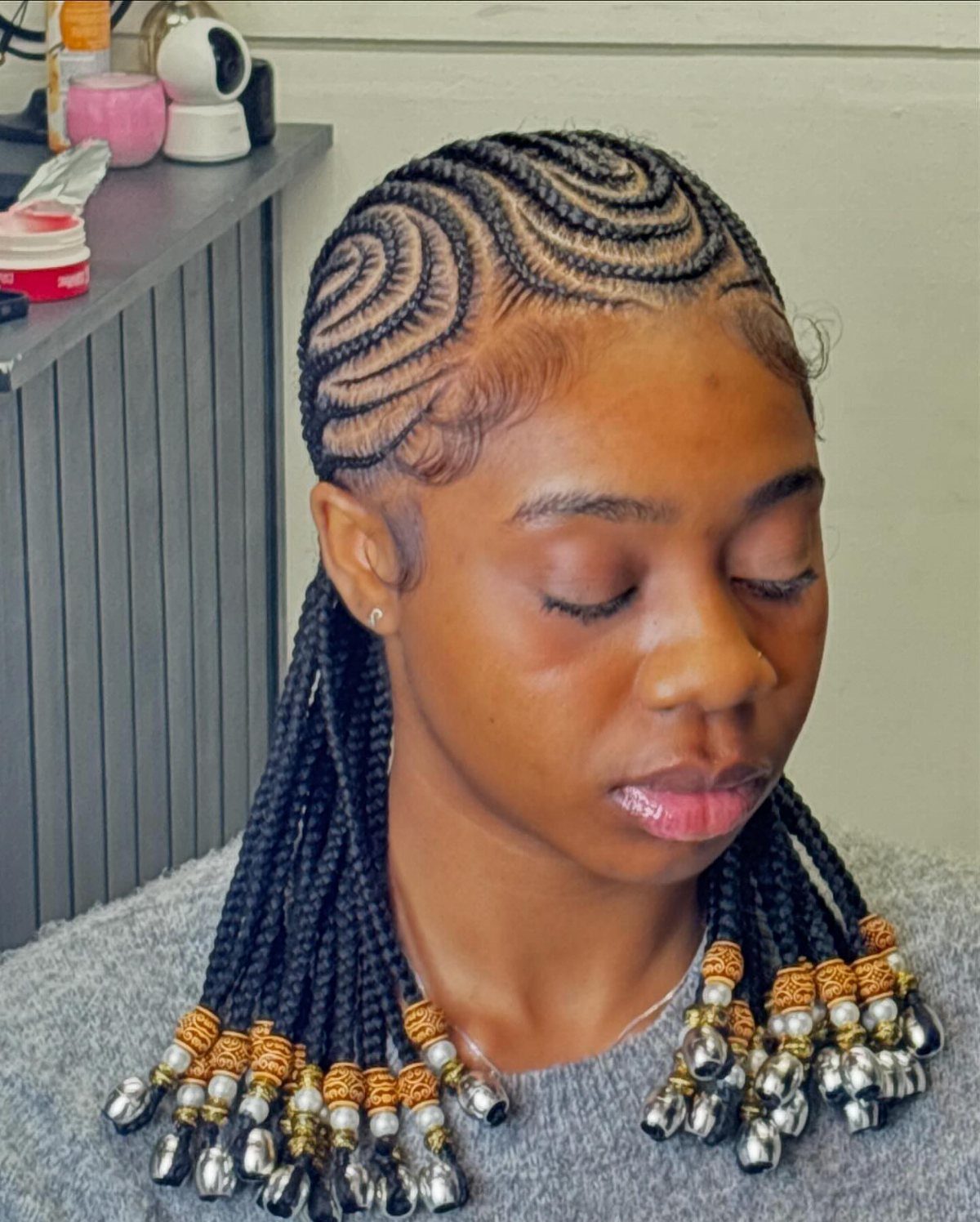
Metal or acrylic beads threaded onto braid ends or spaced along the length. Gold is common, but silver, copper, and colored beads all work depending on the look you want.
Beads add sound and movement. They also weight the ends slightly, which can help braids hang straighter if your hair texture causes them to curl or lift.
You can add beads during installation or thread them on afterward.
Cuffs and rings work the same way and clamp on without threading. If the beads are heavy or placed too close to the root, they can pull, so keep them toward the ends or mid-length for comfort.
13. Braided Top Knot
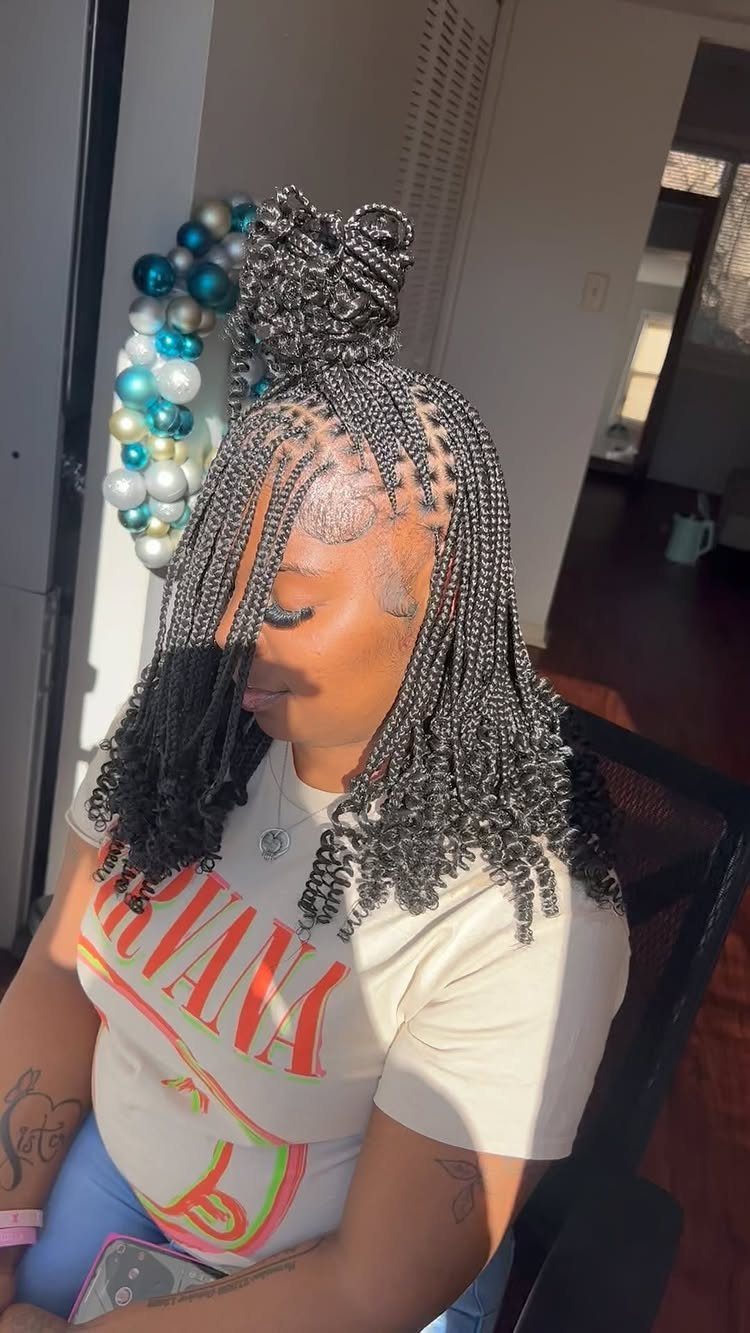
Braids are twisted and piled into a bun at the crown. The rest can hang loose or be wrapped into the knot itself.
This clears the neck and shoulders, which makes it practical for workouts, heat, or anything where the hair needs to be up and off. You can position the knot at the very top for height or slightly back for balance.
14. Side-Swept Braids
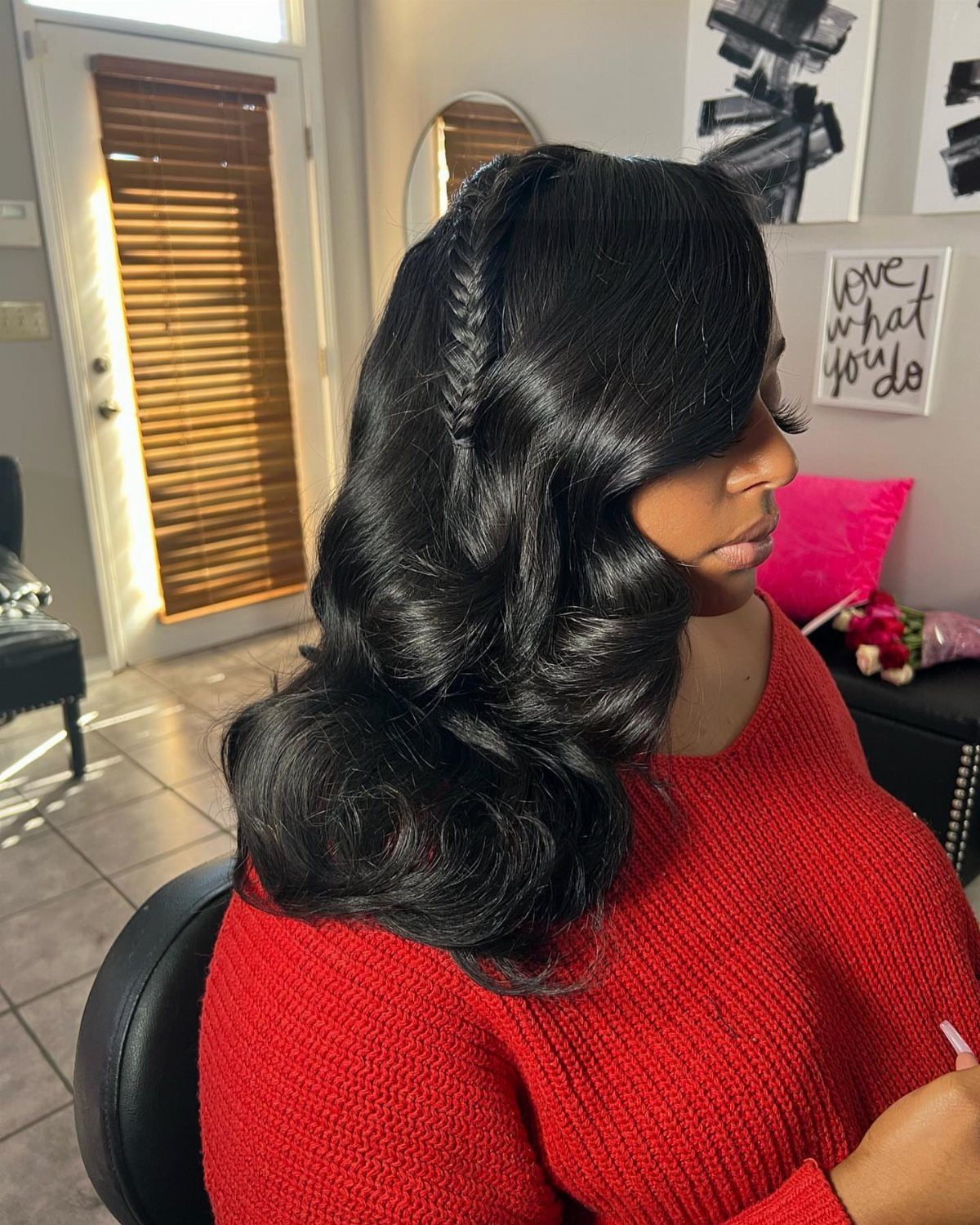
All the braids are combed or gathered to one side, draping over a shoulder or pinned along one temple. The opposite side stays bare or close to the scalp.
This changes the silhouette without re-braiding anything. You can sweep the braids loosely for softness or pin them flat along the side for a sleeker finish.
It works with any braid length and takes seconds to arrange. A few bobby pins keep it in place if the braids are heavy or if you need it to hold through the day.
15. Space Buns
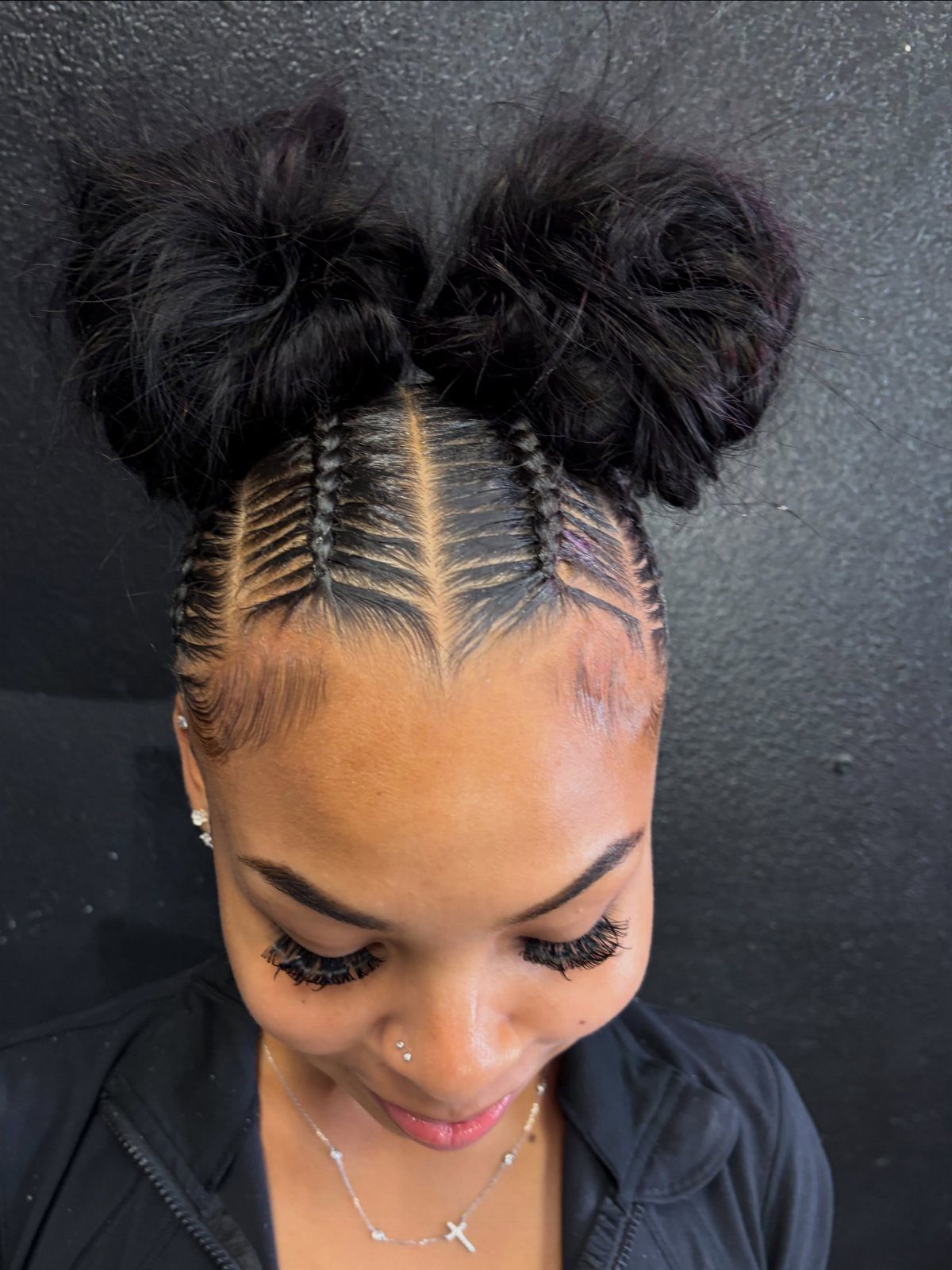
The braids split down the middle and wrap into 2 buns at the top of the head. The buns sit high and symmetrical, one on each side.
This reads playful and keeps the hair off your face and neck completely. The size of the buns depends on braid length and how tightly you coil them.
If the braids are box braids or knotless, you can twist each section before wrapping it into the bun for a tighter coil.
The style holds with elastic bands or pins, and you can position the buns closer to the center or wider apart depending on the look you want.
16. Braided Bun
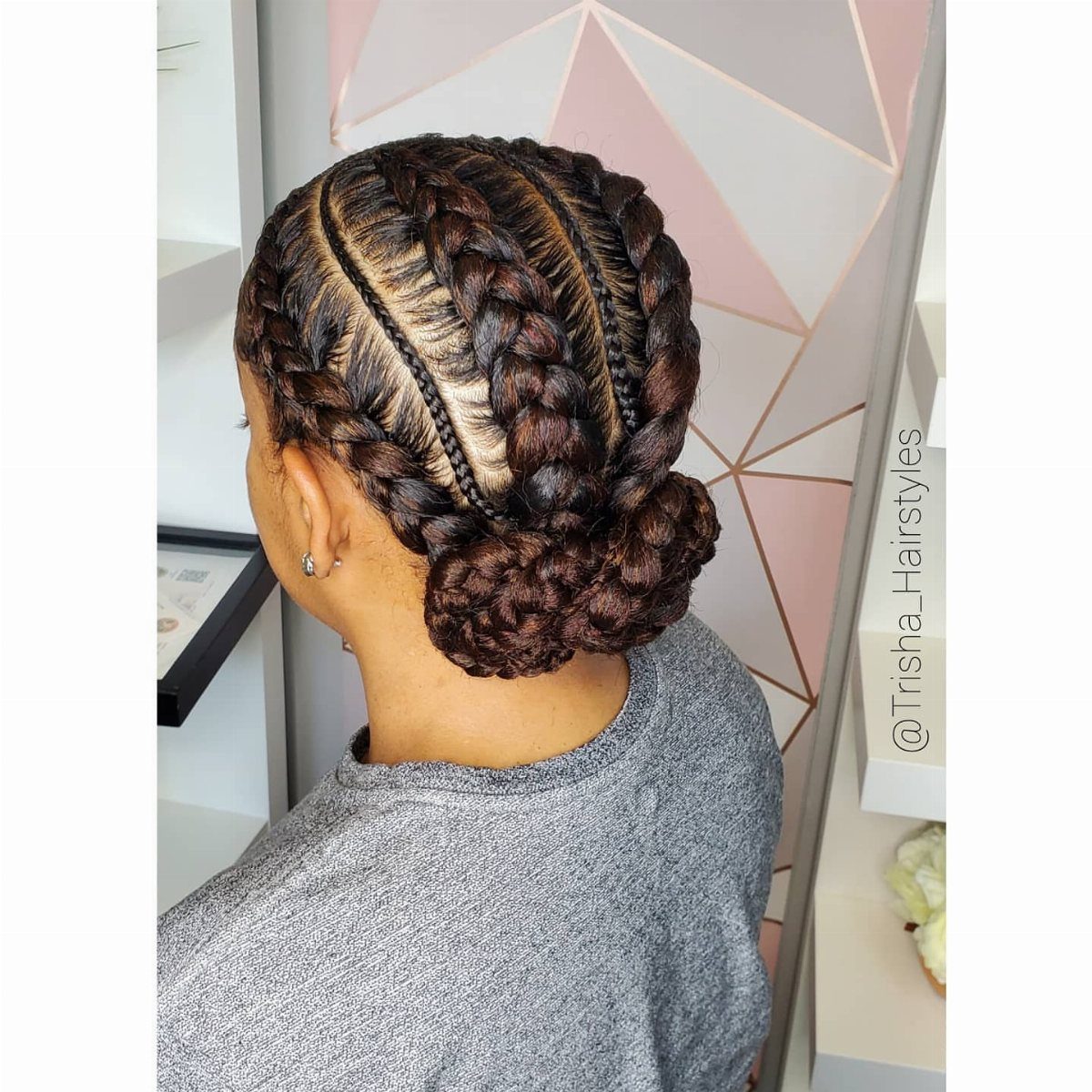
The braids collect at the back and coil into a single bun, low at the nape or higher at the crown. The bun can sit loose and textured or wrapped tight and smooth.
The result looks polished enough for work, weddings, or any occasion where neatness matters. If the braids are long, the bun carries weight, so securing it with multiple pins or a strong elastic helps it hold.
You can leave a few braids out around the face or tuck everything back. The bun takes a few minutes to arrange and stays put all day once pinned.
17. Stitch Braids
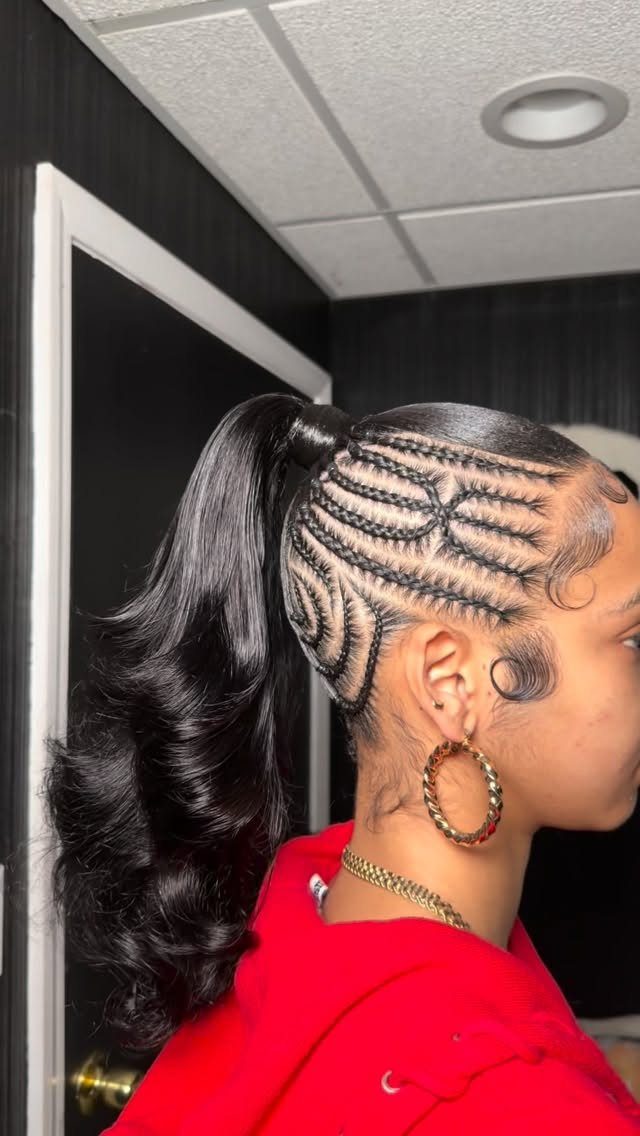
The parting runs in thin, horizontal lines that look stitched into the scalp. Each cornrow sits tight and precise, with the visible line of the part adding detail to the rows themselves.
This takes longer to install than standard cornrows because the parting has to stay clean and even.
The look depends on the stylist’s precision with the parting tool. Tension should stay firm without pulling at the hairline.
18. French Curl Braids
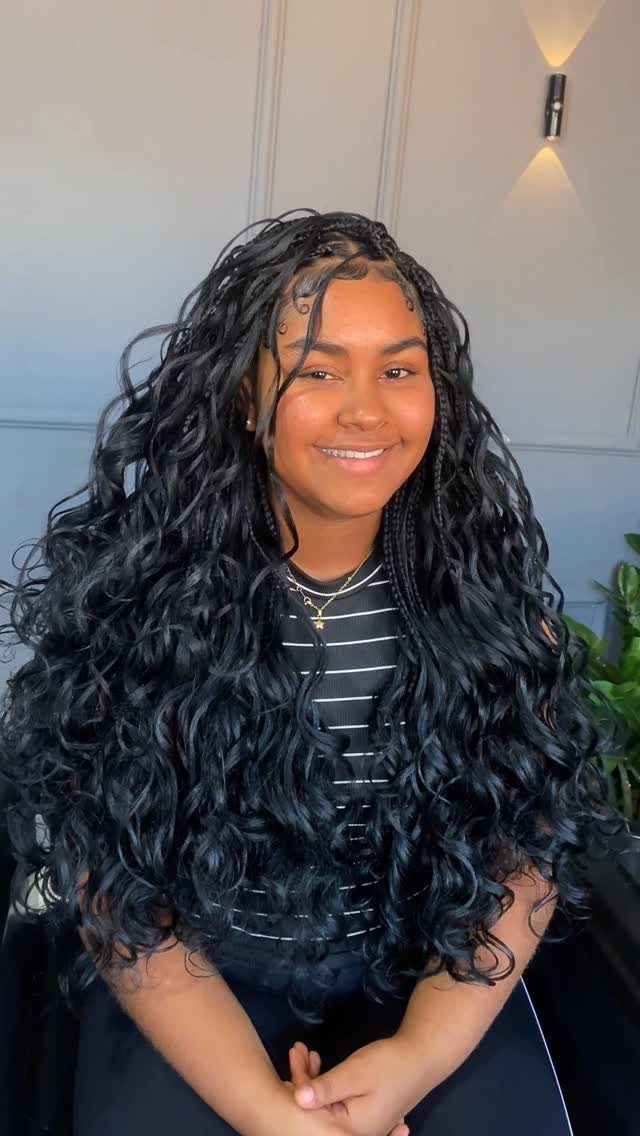
The braids run straight for most of the length, then open into loose curls at the ends. The curl pattern is usually added with synthetic hair that holds the shape without heat.
This gives you the structure of braids with softer, more textured ends. The curls add movement and volume at the bottom, and they hold their shape for weeks if you tie them at night.
The curl size and tightness can vary depending on the hair used during installation. Keep the curled ends moisturized so they stay soft and separated instead of tangling together.
19. Layered Braids
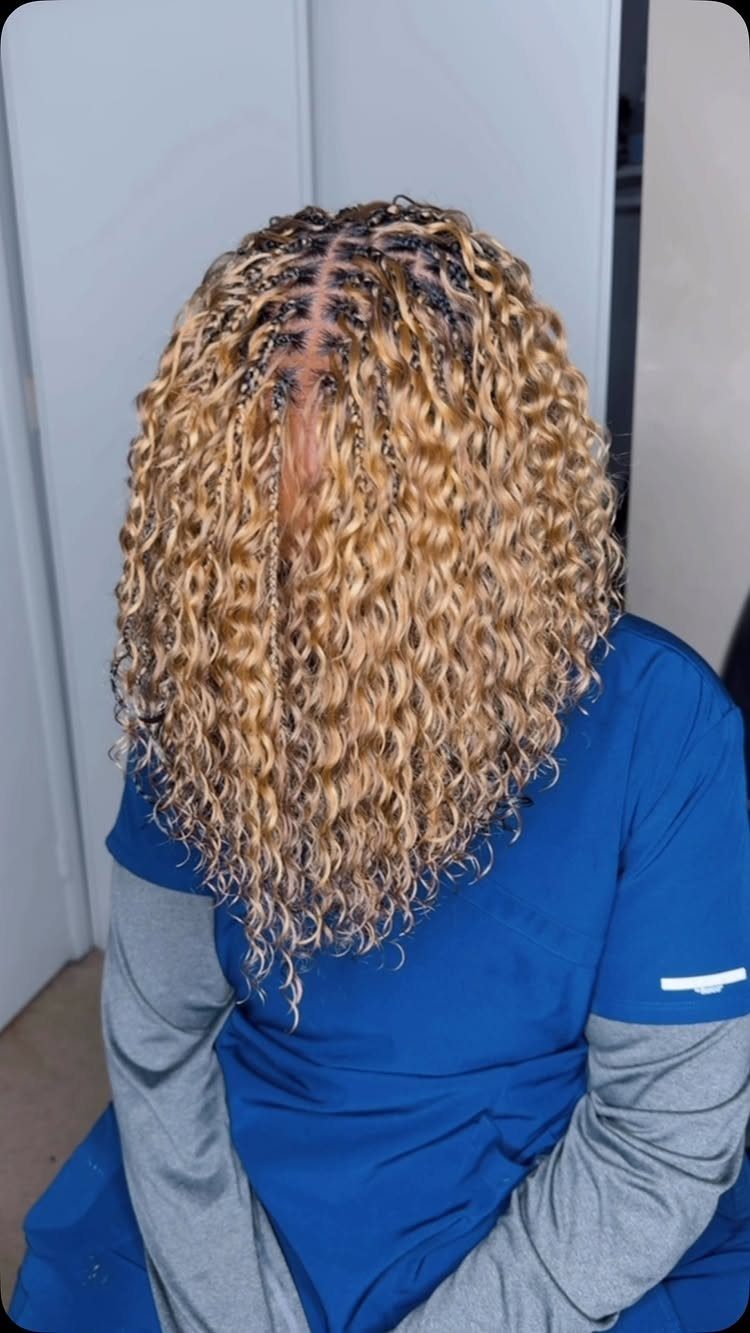
Braids cut to different lengths add shape instead of falling to one line. The layered ends create dimension and keep the style from looking too uniform.
Shorter pieces around the face can frame it, while longer sections in the back add fullness. The cut changes how the braids move and stack when gathered or worn loose.
This works if you want variation in the silhouette without giving up the length entirely. You can layer subtly or cut more dramatically depending on how much contrast you want between the shortest and longest sections.
20. Mid-Length Box Braids
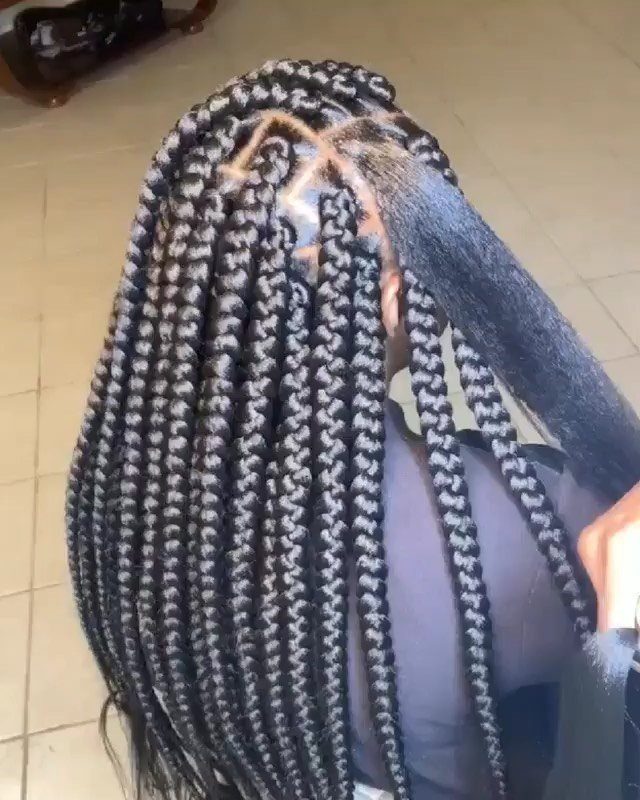
Box braids that end between the collarbone and mid-back sit in the middle ground: long enough to style up, short enough to dry faster than waist-length braids.
The weight stays manageable, and the length gives you options without the bulk. You can wear them loose, pull them into a ponytail, or wrap them into a bun.
Installation takes less time than longer braids because each section stops sooner. The style still holds for weeks, and the shorter length means less hair to maintain at night.
21. Box Braids with Loose Ends
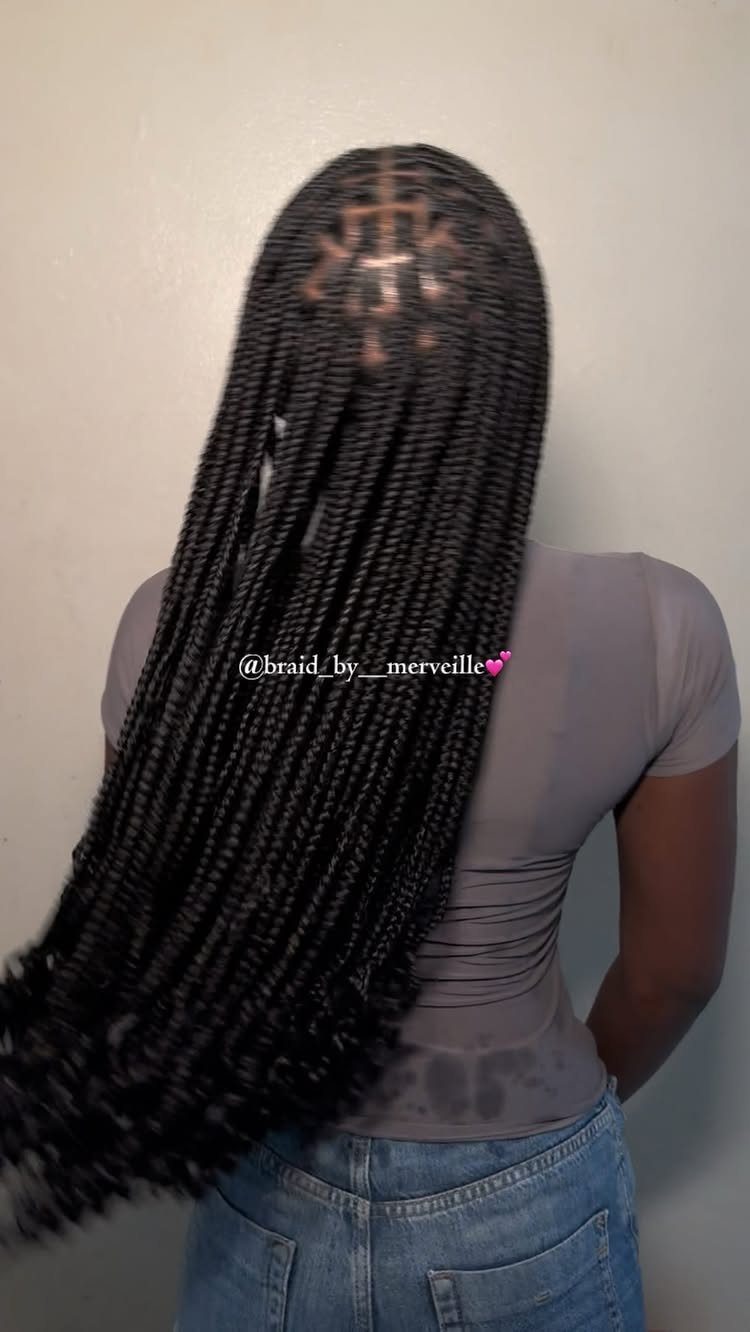
The transition happens wherever you stop braiding, and that point shapes the silhouette. The contrast between the tight sections and the free hair gives you texture and movement at the bottom.
The loose portion can wave naturally or hold curls if synthetic hair is used. Either way, the ends stay soft and add volume without the full weight of braiding all the way down.
The loose hair will frizz faster than the braided portion, so tying it at night helps it last.
22. Colored Braids
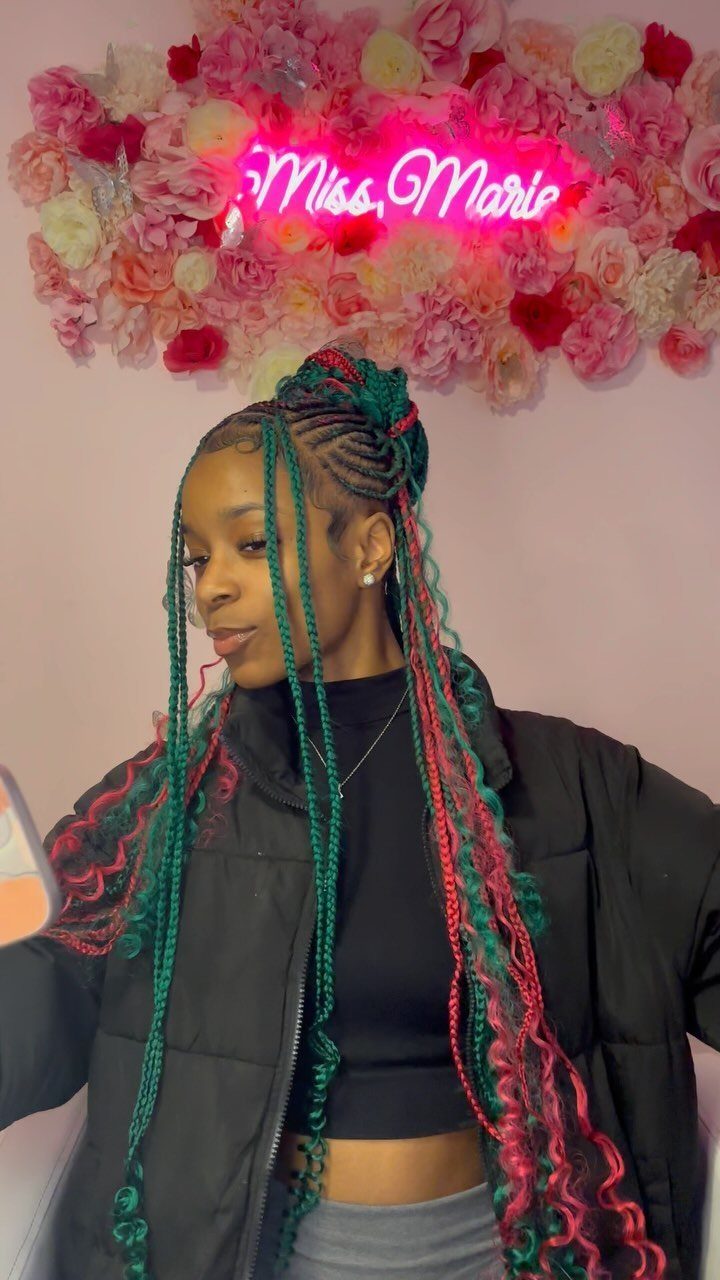
Synthetic hair in a different color is braided in with your natural hair, so the finished braids show streaks, ombré, or solid blocks of the new shade.
The color sits in the braid itself, not on your natural hair, so there’s no bleach or dye involved. You can go bright, pastel, or match a natural tone depending on the extension shade you choose.
The color lasts as long as the braids do. If you mix shades, the stylist alternates or blends them during installation to create the pattern you want.
23. Braided Bangs
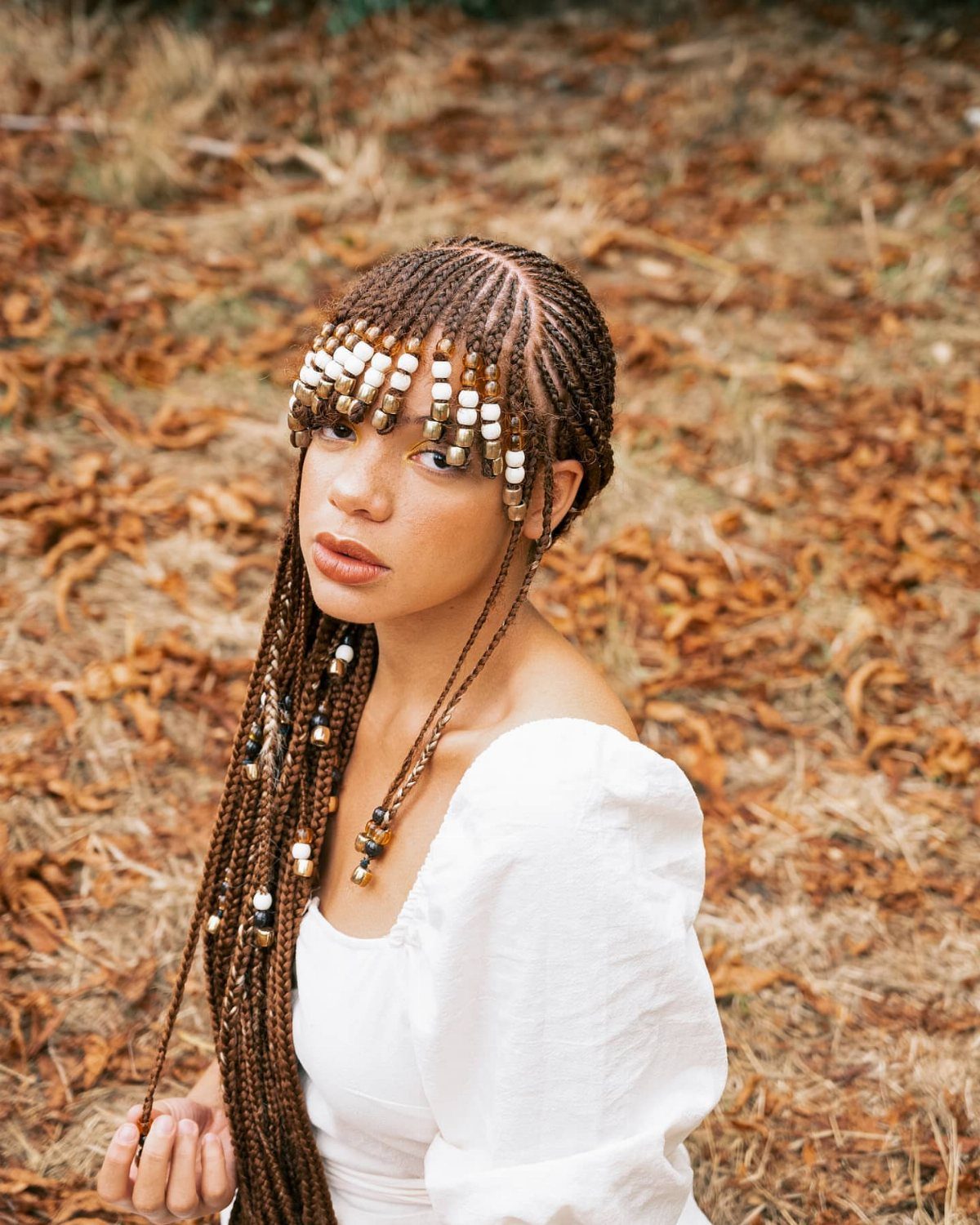
Short braids are laid flat across the forehead to mimic bangs, while the rest of the hair is braided or styled back. The braids sit horizontally or angled, depending on how much forehead you want to cover.
This frames the face without cutting your hair or committing to real bangs. The braided section stays flat and structured, and you can adjust how thick or thin the bang area looks by adding more or fewer braids.
The rest of the style can be box braids, cornrows, or another technique. The braided bangs work as an accent to whatever sits behind them.
24. Halo Braid
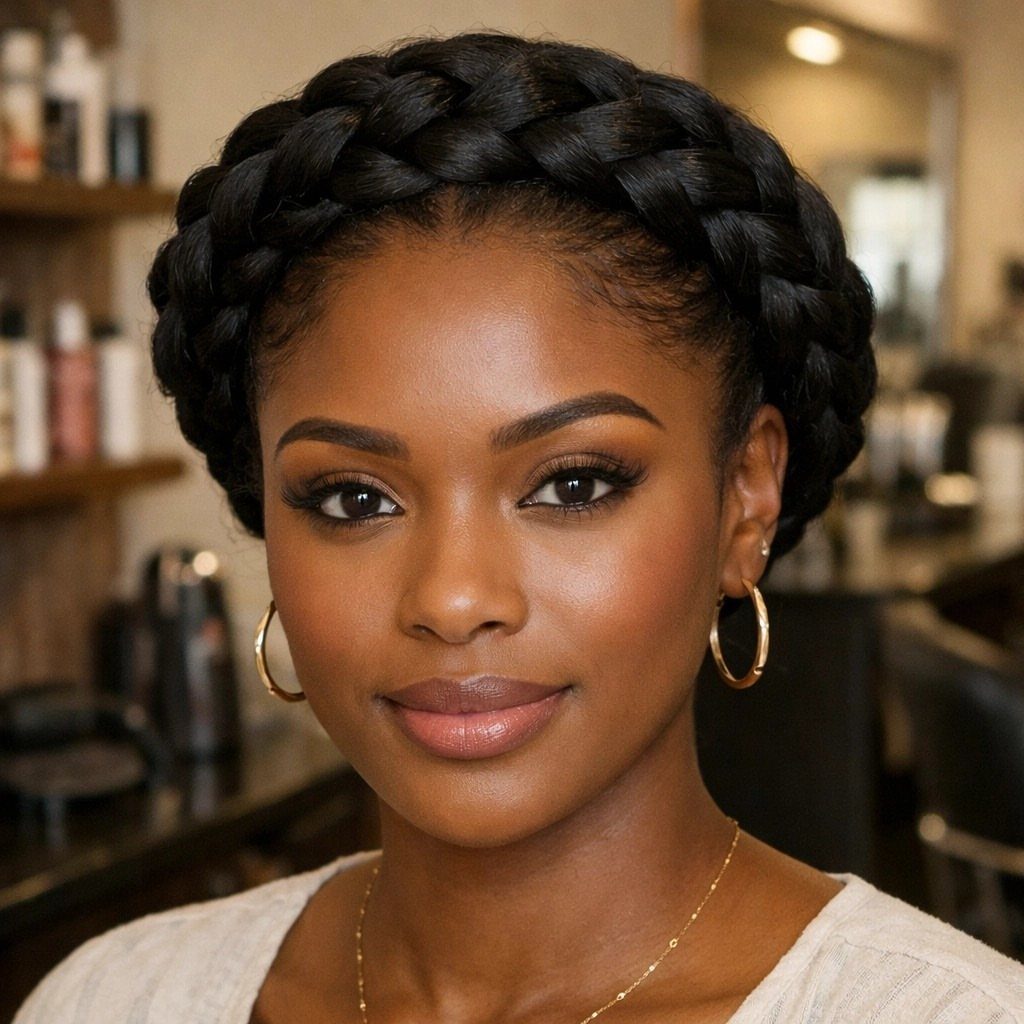
One thick braid wraps around the perimeter of the head, starting at one temple and circling back to meet itself. The braid sits flat against the scalp and creates a continuous ring.
This keeps all the hair tucked and off the face, and the circular shape gives it a polished, finished look.
The style works with natural hair or extensions added for length and thickness. Once pinned or tucked at the join, the halo holds all day.
25. Dutch Braids
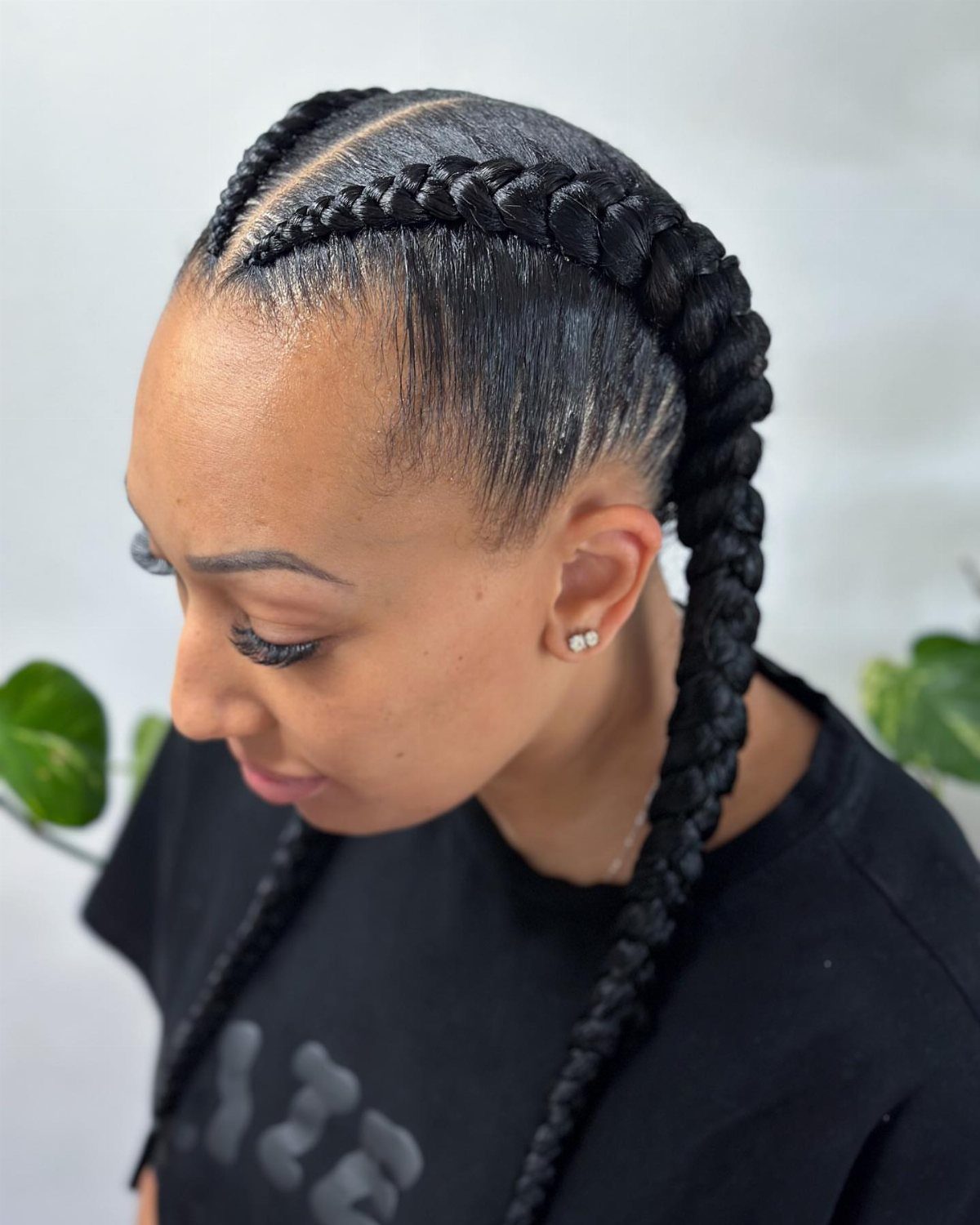
2 thick braids run straight back from a center part, sitting raised above the scalp. The raised texture gives the braids dimension instead of laying them flat.
Each section crosses under instead of over, which lifts the braid and makes the weave visible along the surface.
This clears the face and neck completely and holds through workouts, sleep, or long days. The braids stay secure without pins or elastics once tied at the ends.
26. Braided Pigtails
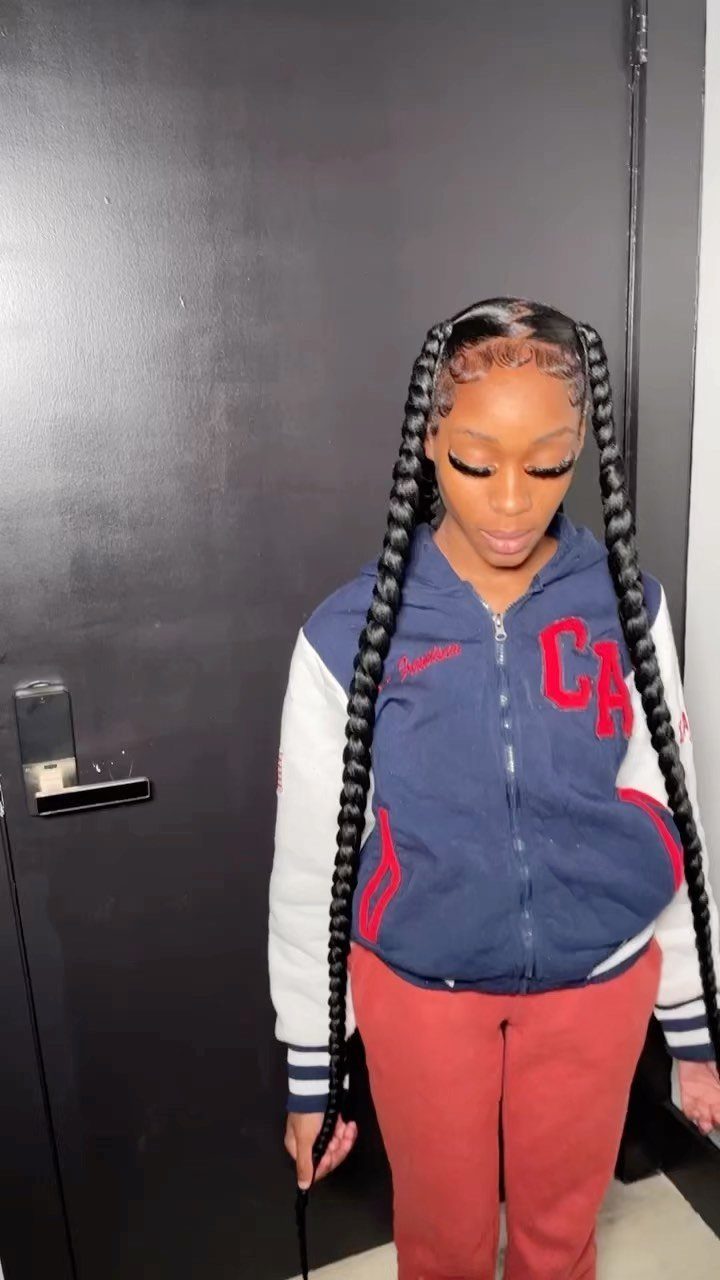
2 separate braids hang loose on either side, split down the middle. The braids can be box braids, cornrows fed into individuals, or any technique that divides the hair into 2 sections.
This keeps the hair off your back while letting it move freely at the sides.
The length and thickness of each braid depend on what you’re working with, and you can position the part high or low to shift where the braids fall.
The style takes no extra time if the braids are already in. You just divide and wear them down.
27. Braided Bubble Ponytail
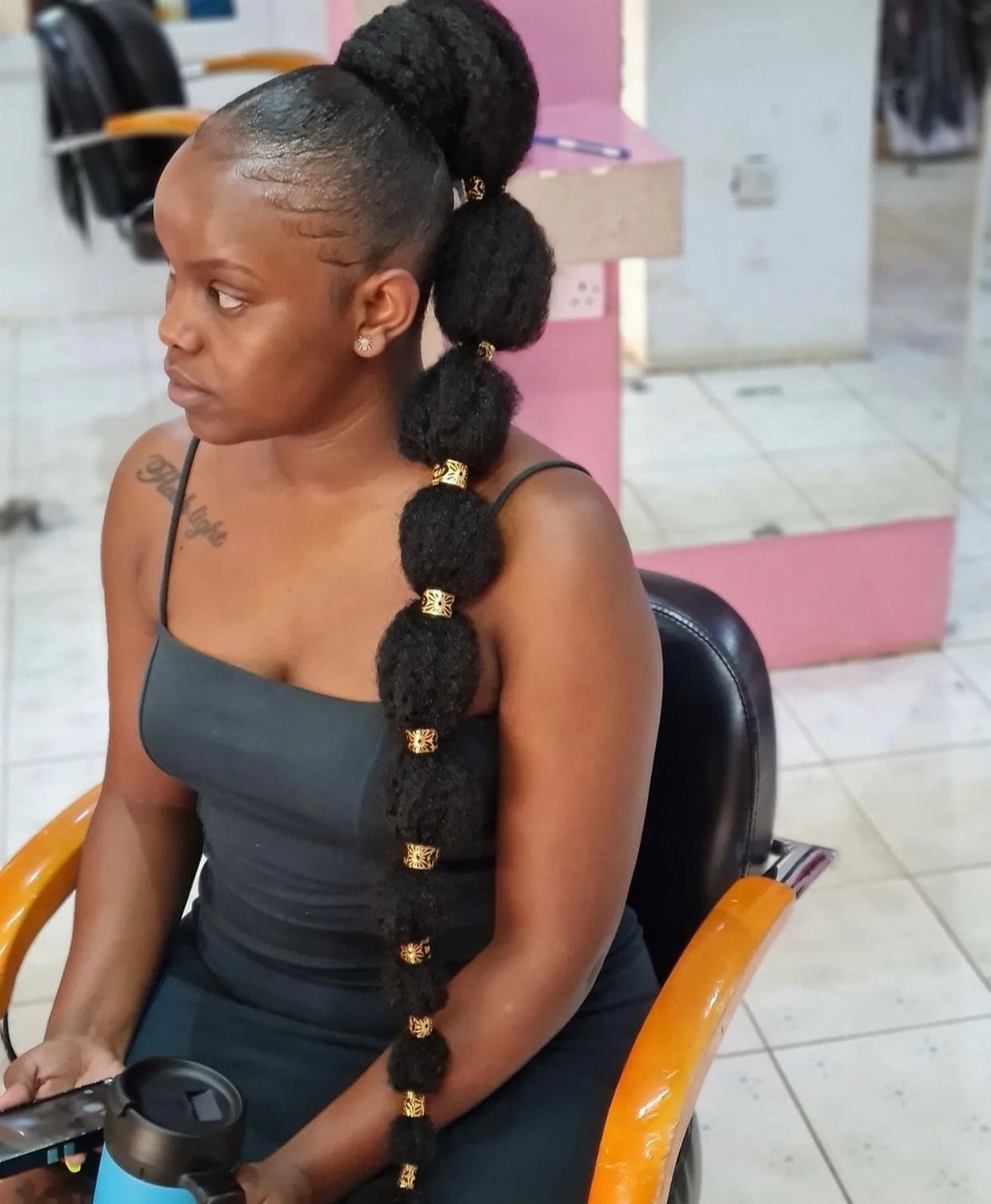
Elastics or bands are spaced evenly down a ponytail, and the hair between them is teased or pulled outward to form rounded sections. Each segment balloons slightly, creating a chain of bubbles from root to ends.
The bands can match the hair color or stand out with metal cuffs or beads. The spacing controls how many bubbles form and how pronounced each one looks.
This adds shape to a simple ponytail without rebraiding anything. The bubbles hold as long as the bands stay tight, and you can adjust the fullness by pulling more or less hair outward between each tie.
Installation and Wear Duration
Small and micro braids can run across multiple sessions, while larger styles finish in one sitting that still spans several hours depending on length and braid count.
Most box braids hold up for 4 to 8 weeks when you follow a cleaning routine and don’t push past the point where your roots start lifting.
After that, roots loosen and buildup starts affecting the scalp, so leaving them in longer than 8 weeks works against you.
Small braids take longer coming out than going in.
Yes, some hair shedding after removing box-braid styles is totally normal. Boozer explains, “On average, you naturally shed up to 100 strands a day, but when your hair is braided, you don’t see that daily shedding.”
— Glamour
Scalp and Hairline Protection
The install should never hurt, and you should not see bumps or feel pulling along the hairline.
Continuous tension over time weakens the edges, so if a style feels tight during or right after installation, speak up before the damage sets in.
Larger braids are not automatically lighter. The weight depends on how much extension hair goes into each braid and the type of fiber used, not just the width of the braid itself.
Give your hair a two-week break between installs. I give my scalp and edges a break between installs and load up on protein treatments so the hair comes back ready for the next round.
Some shedding when you take braids out is normal.
You shed up to 100 strands daily, but braids trap that hair instead of letting it fall. When you unbraid, you see weeks of accumulated shed hair at once.
Cleaning and Nighttime Care
Tie braids at night with a satin scarf or bonnet, or sleep on a satin pillowcase. This cuts down frizz and protects the edges while you move around.
Moisturize the scalp with a lightweight spray or oil, not heavy creams that sit on top and build up. A light mist goes further and keeps the scalp from drying out without weighing the braids down.
Cleanse gently every two to three weeks to remove sweat and buildup.
Rinse chlorine and salt water out as soon as you can after swimming, then let the braids air-dry or sit under a hooded dryer so they don’t hold moisture.
Damp braids left tied up can irritate the scalp or smell off, so let them air-dry completely before covering them again.
Frequently Asked Questions
How long do braids typically last?
Most braided styles hold for 3 to 4 weeks with proper care, though box braids can stretch to 4 to 8 weeks depending on texture and maintenance.
Past that point, tension loosens at the root and oil and product start to build up where you can’t reach.
Are box braids low-maintenance?
Yes. You can get them wet, spend the day at the pool, and hit the gym without much frizz, which is why they work so well when you’re staying active or traveling in humid weather.
You do need to keep the scalp clean and moisturized between washes or the style starts to feel heavy and itchy.
What helps box braids last longer?
Hydrate and cleanse the scalp with a lightweight spray a few times a week, and wash with diluted shampoo or a scalp cleanser every 2 to 3 weeks.
Follow with a leave-in conditioner to keep the braids looking fresh and prevent buildup. Products with coconut oil, jojoba oil, or olive oil work well for moisture.
What is the process like for getting box braids?
The hair is washed, deep-conditioned, and detangled, then sectioned into square parts that give the style its name. Hair is added in small amounts to each section and braided all the way down.
What are the pros and cons of box braids?
Box braids protect your hair and offer styling flexibility, so you can wear them down, in ponytails, half-up, or in buns.
The tradeoff: installation takes hours, and any style that pulls too hard at the front can stress the hairline if you’re not careful.
Is hair shedding normal after removing box braids?
Yes. Hair sheds constantly, around 100 strands a day, but braids hold it all in place until you take them down and it comes out in one session.
Excessive shedding can happen if the braids were installed too tight or handled roughly during removal.
Is it bad to wear box braids all the time?
Back-to-back installs can put consistent pull on the same spots, and over months that tension can thin the hairline.
Take at least 2 weeks off between sets and use that window for scalp massage, deep conditioning, and a protein treatment so the hair bounces back before the next install.
What are some good hairstyles for medium box braids?
Medium box braids work well in ponytails, buns, half-up styles, and worn loose. You can also add beads, cuffs, or color to change the look, or cut them to bob length for a lighter, more manageable shape.
The size gives you styling flexibility without the bulk of jumbo braids or the long install time of small ones.