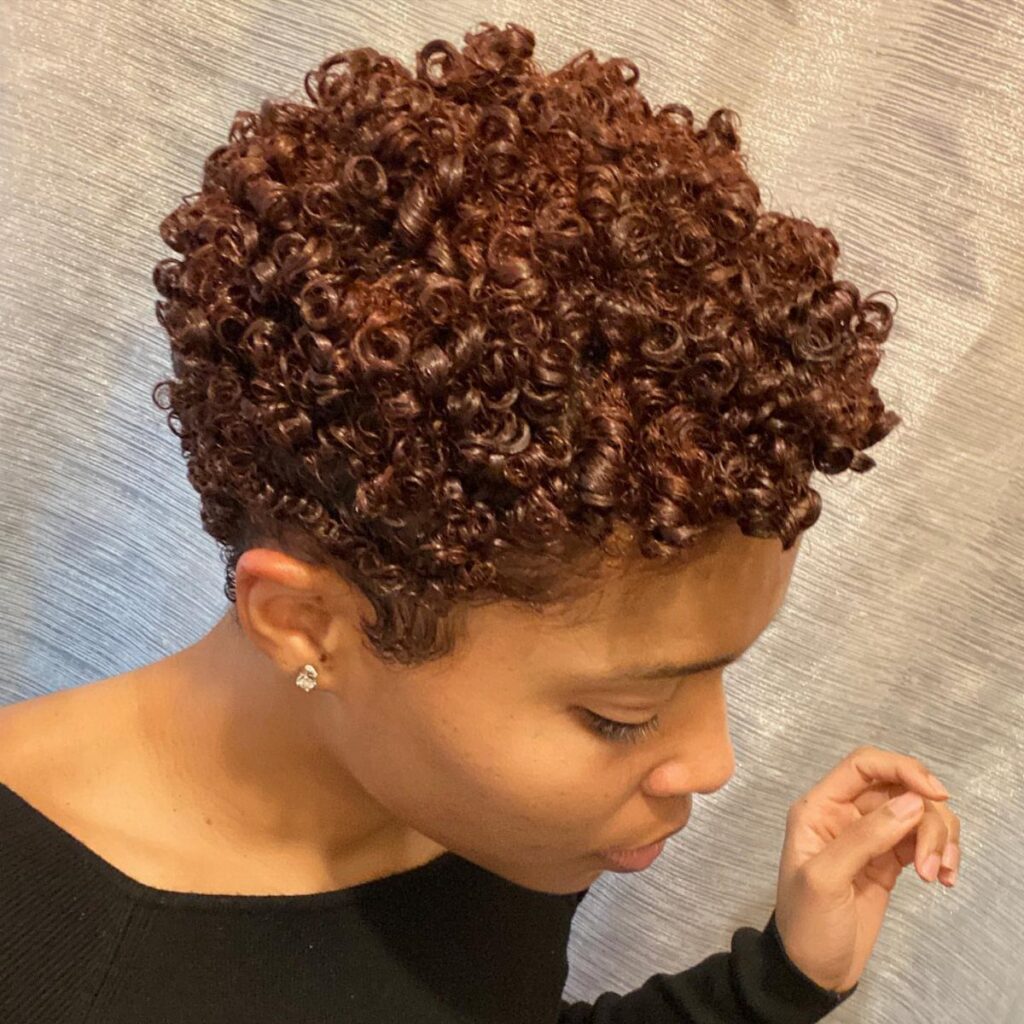
Your curl pattern decides which of these cuts will work, because tight coils (4a to 4c) hold a rounded afro or a mohawk strip, while looser 2a to 2c waves suit a beachy bob or a wavy pixie.
The range runs from a TWA that needs almost no styling to a finger-wave set that keeps you in the chair.
Shrinkage can undo any of them, so ask for the cut to be done dry or leave 1–2 inches of extra length if it’s done wet.
1. Curly Pixie
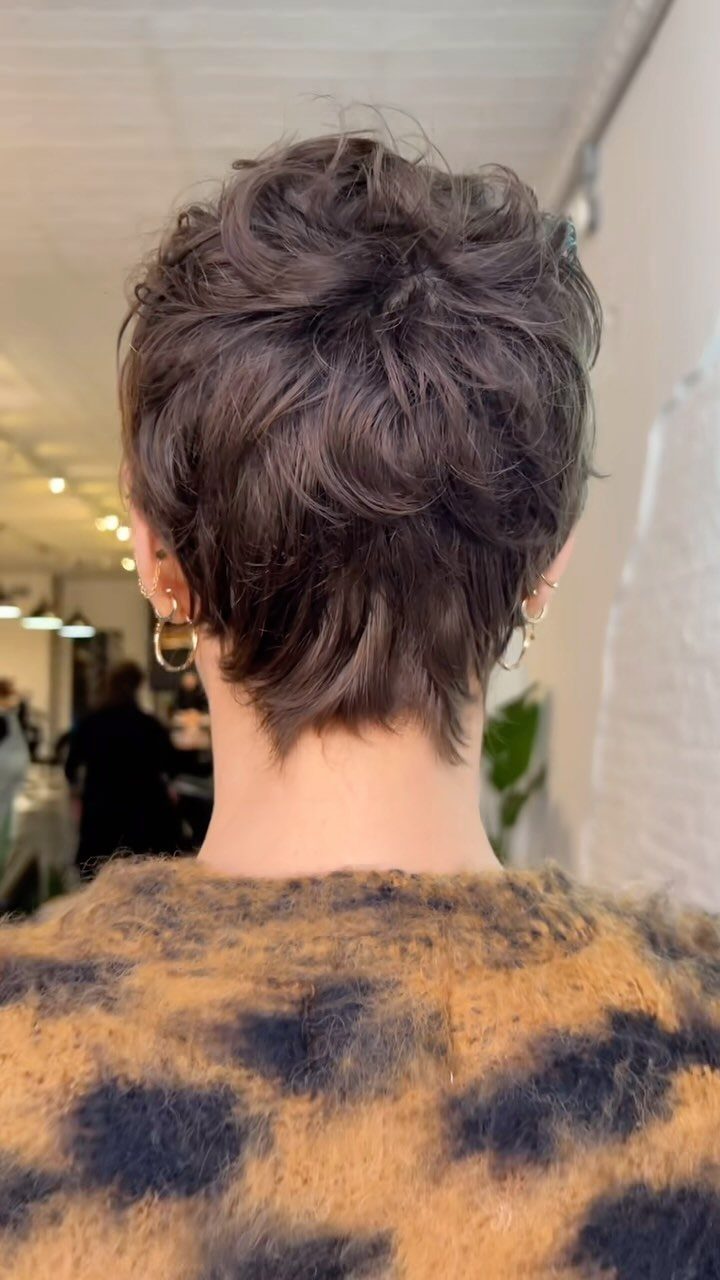
Layers cut close to the head let curls spring out in every direction without much weight holding them down. Ask for short, tapered sides and texture through the crown so the curls separate instead of clumping into one mass.
Styling takes about 5 minutes with a curl cream or mousse worked through damp hair, then air-dried or diffused. This cut grows out fast, and trims are what keep the shape clean and stop the curls from looking bottom-heavy.
2. Curly Pixie Bob
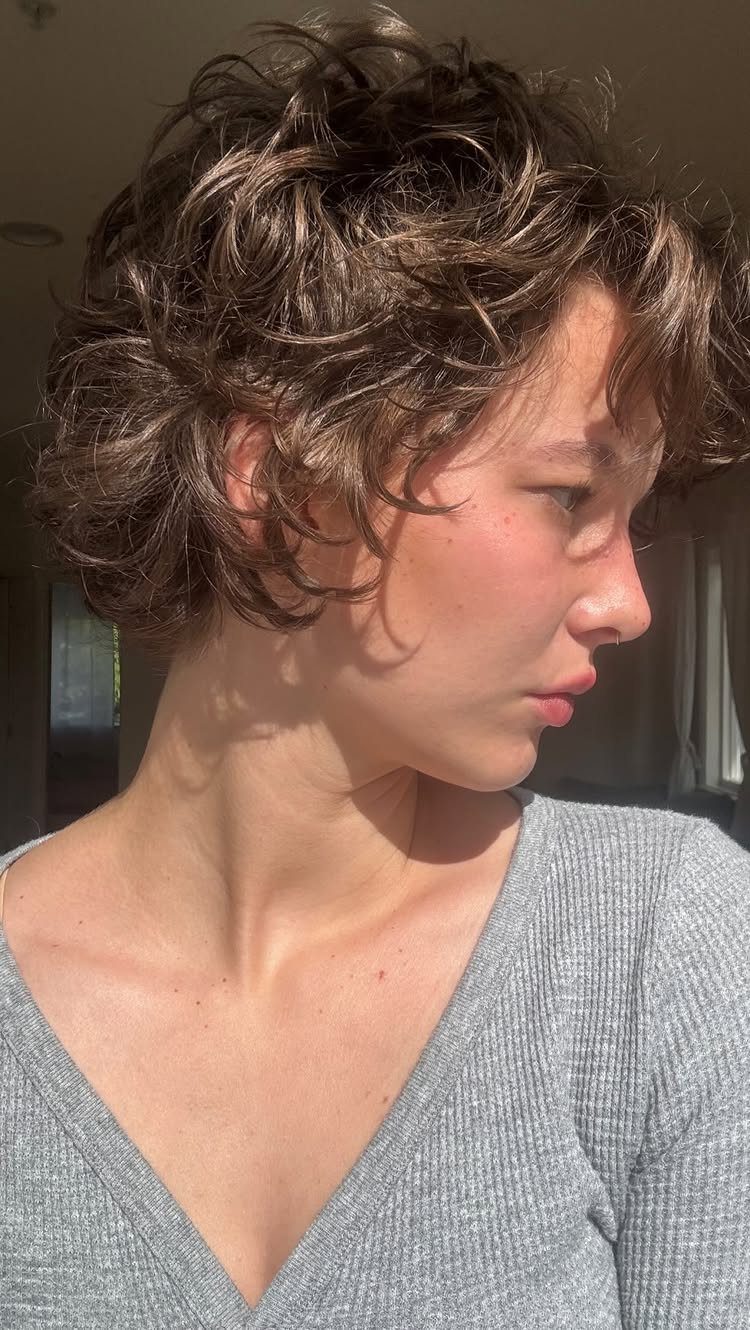
This one sits between a pixie and a bob, longer at the front and sides than a traditional pixie but still short enough to keep volume at the crown.
The extra length around the face softens the look without adding much styling time.
I like this for anyone who wants the ease of short hair but isn’t ready to go full pixie.
The curls frame the face and you can tuck one side behind the ear for asymmetry. A light leave-in is all this cut needs to define the curl.
3. Curly Shag
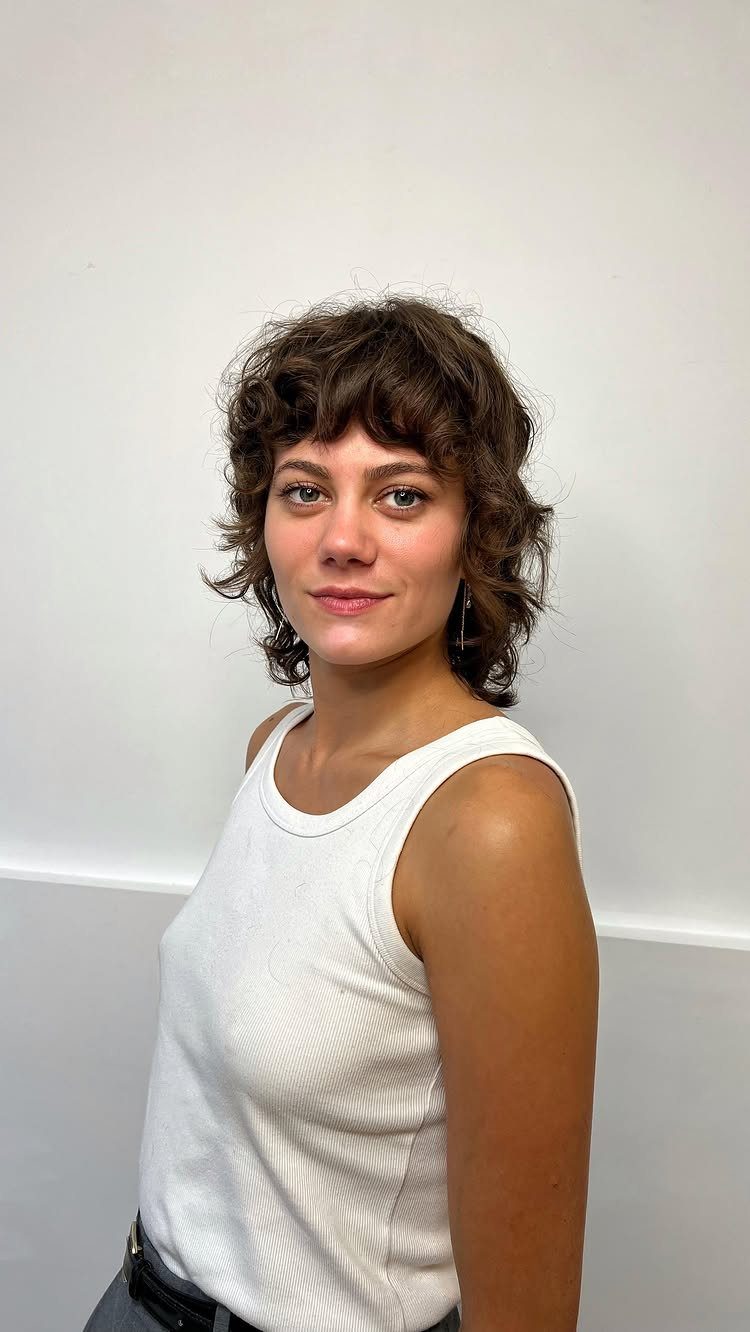
Choppy layers cut at different lengths give curls room to move and separate, so the whole cut looks lived-in and textured instead of uniform.
The fringe usually falls just above or at the eyebrows, and the back stays short enough to show the neck.
This cut works best on 2b to 3b curl patterns where the layers can create that tousled, undone look without too much frizz.
Finger-comb a styling cream through damp hair and let it air-dry. Skip the brush or you’ll lose the separation the layers are meant to give.
4. Tapered Curly Cut
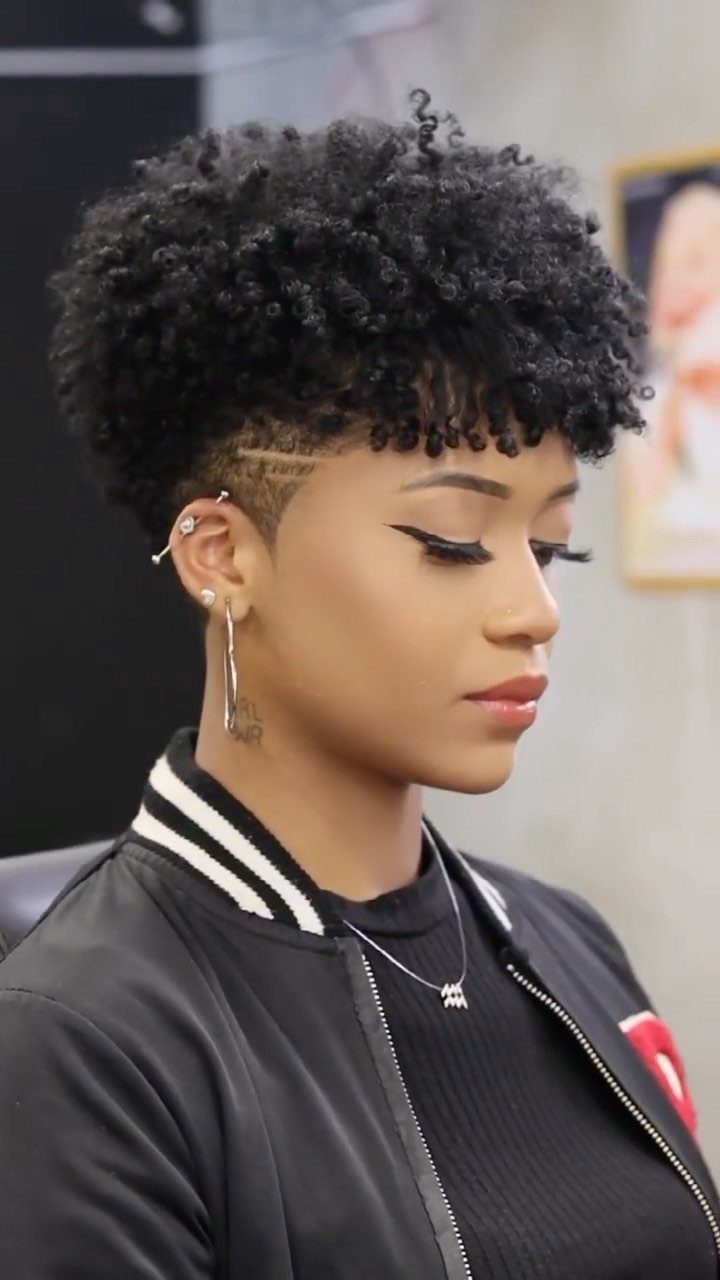
The taper can start high or low depending on how much contrast you want between the top and sides.
A high taper shows more scalp and makes the curls on top look denser; a low taper blends more gradually and keeps some length around the ears.
Volume sits at the crown where the curls are longest, and the short sides keep the silhouette narrow. This cut is low-maintenance if you’re comfortable with clippers at home; otherwise you’ll need salon touch-ups to keep the taper sharp.
5. Curly Bangs
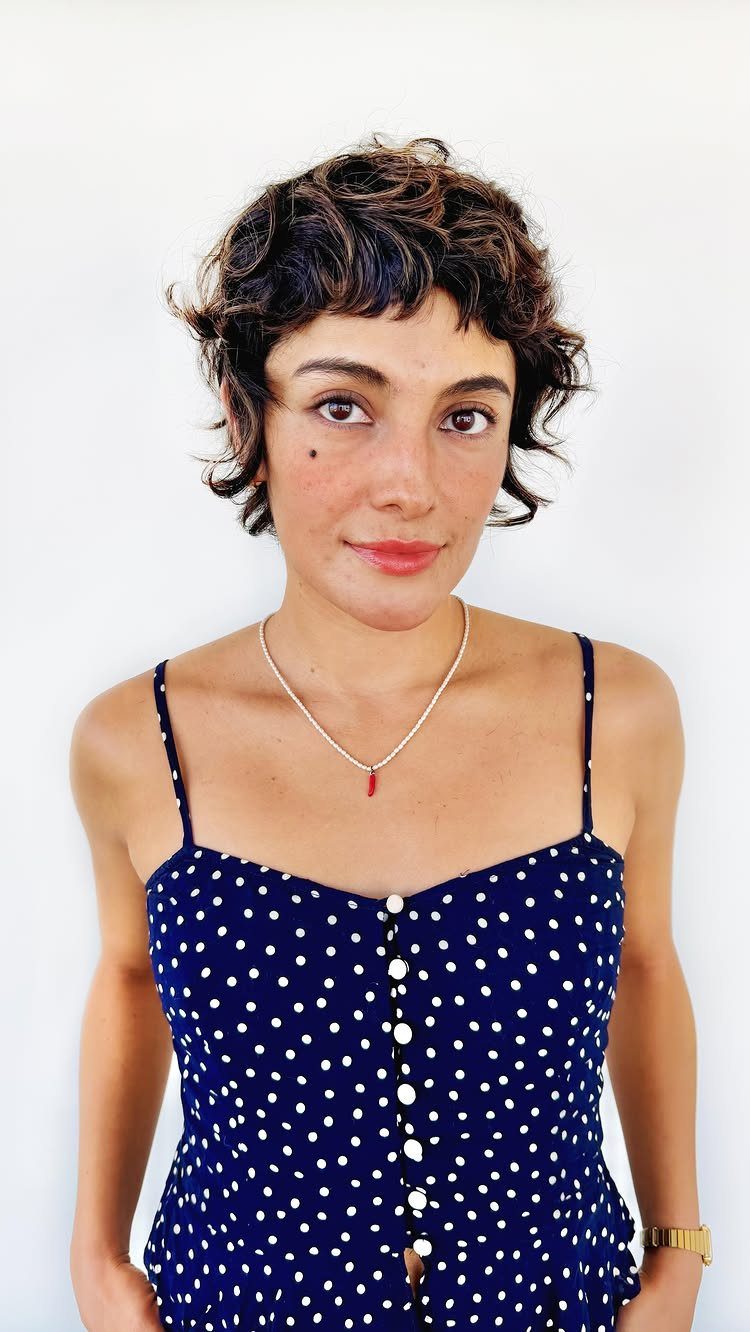
The fringe is cut to fall somewhere between the eyebrows and the lashes, and the curls bounce up from there depending on how tight your pattern is.
On 3a to 3c curls, the fringe will sit a little higher when dry than it looks wet, so your stylist should cut it slightly longer than you think you want.
Curly bangs need a spritz of water or curl spray each morning to bring the shape back, especially after you’ve slept on them.
Curls that shrink a lot are easier to judge dry, so ask for your bangs to be cut that way and you’ll both see where they really land.
6. Curly Afro
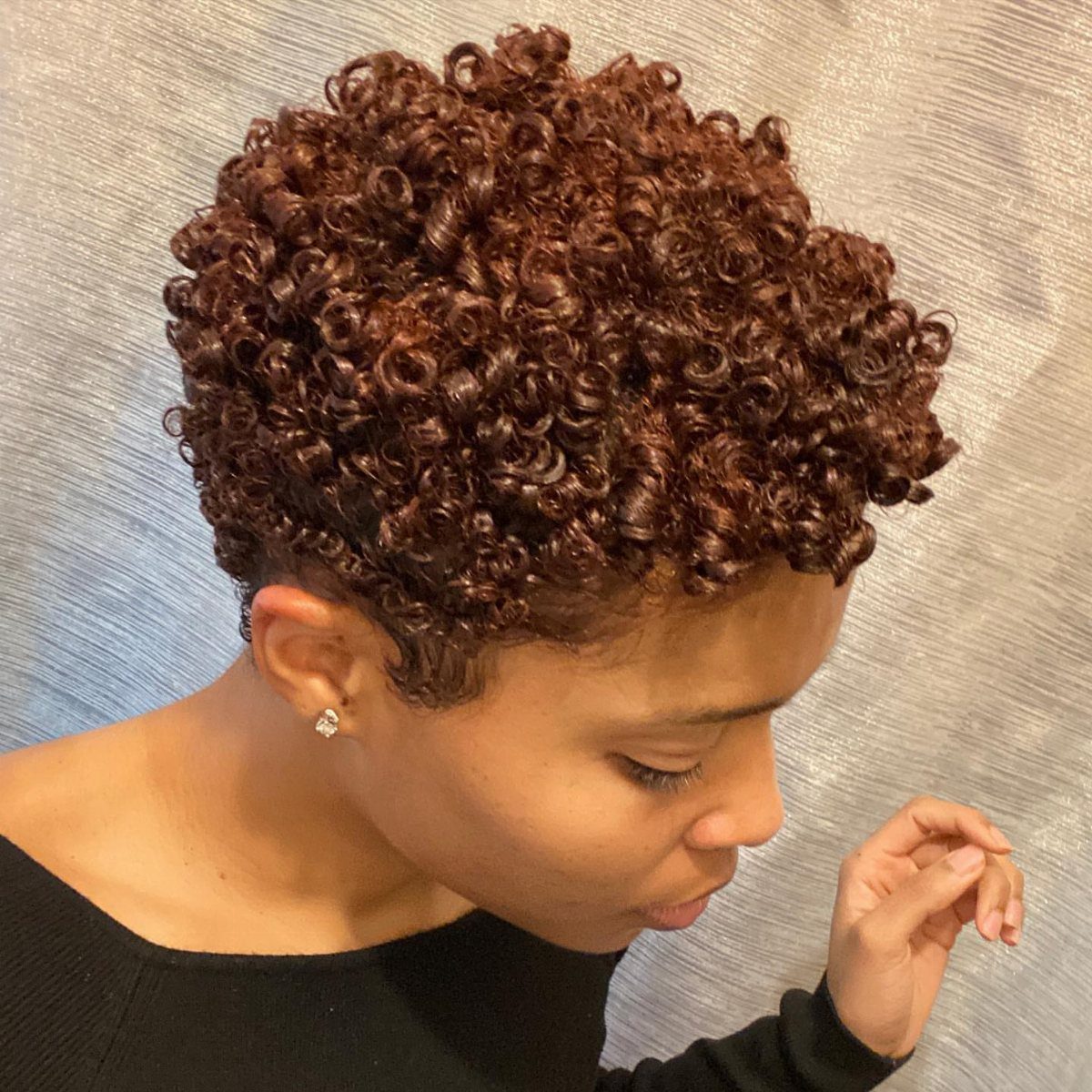
Dense coils form a rounded silhouette that grows outward instead of down. The shape holds naturally without much product, though a light oil or curl cream keeps the coils defined and the scalp moisturized.
This cut looks best on 4a to 4c patterns where the coils are tight enough to support the volume without drooping.
Growth is fast, so the shape changes every few weeks. Some people prefer to trim it themselves with clippers to keep the round shape, others let it grow and shape it with a pick.
7. Curly Undercut
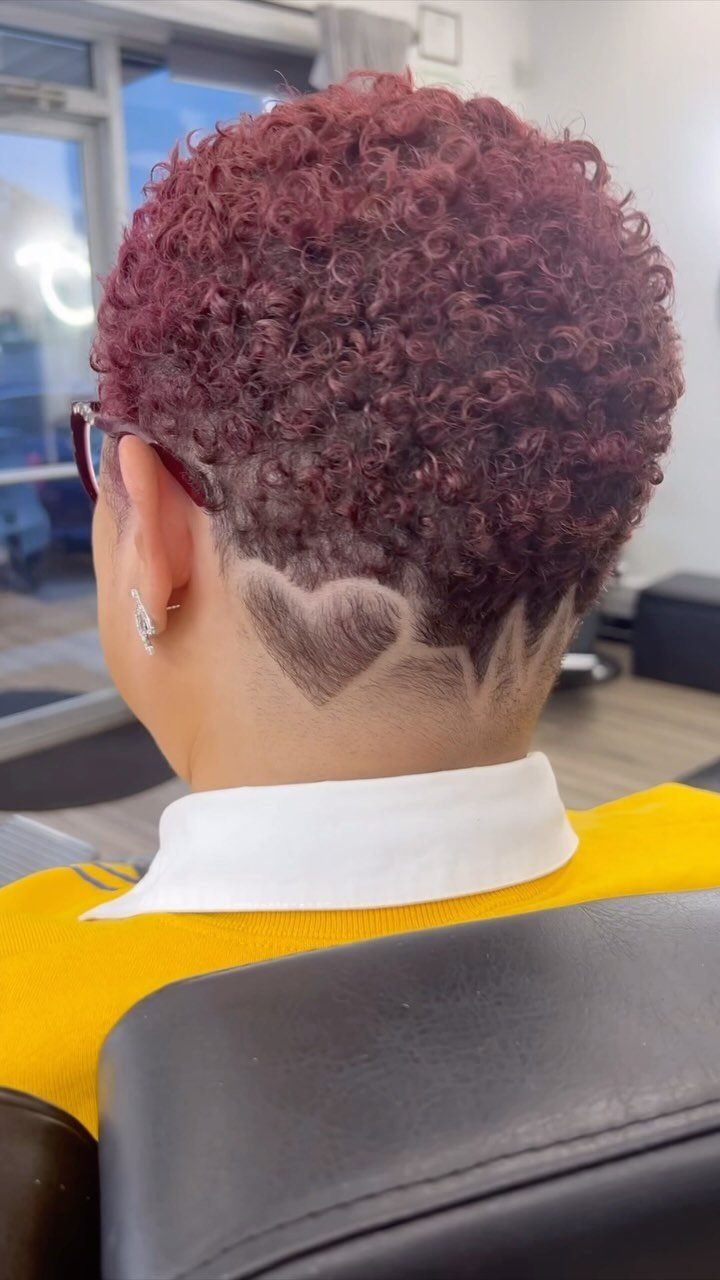
Longer curls on top sit against sides buzzed down close to the scalp, so the contrast does most of the work. Ask your stylist how short to take the sides, since that line sets how bold the cut reads.
The curly undercut is easy to hide with the curls down or show off when you pull them up, though it will need regular clipper touch-ups to stay crisp.
Contrary to popular belief, your options when you have short curly hair aren’t limited. In fact, working with a shorter length provides you with the opportunity to flex those creative styling muscles.
— Vogue
8. Wavy Pixie
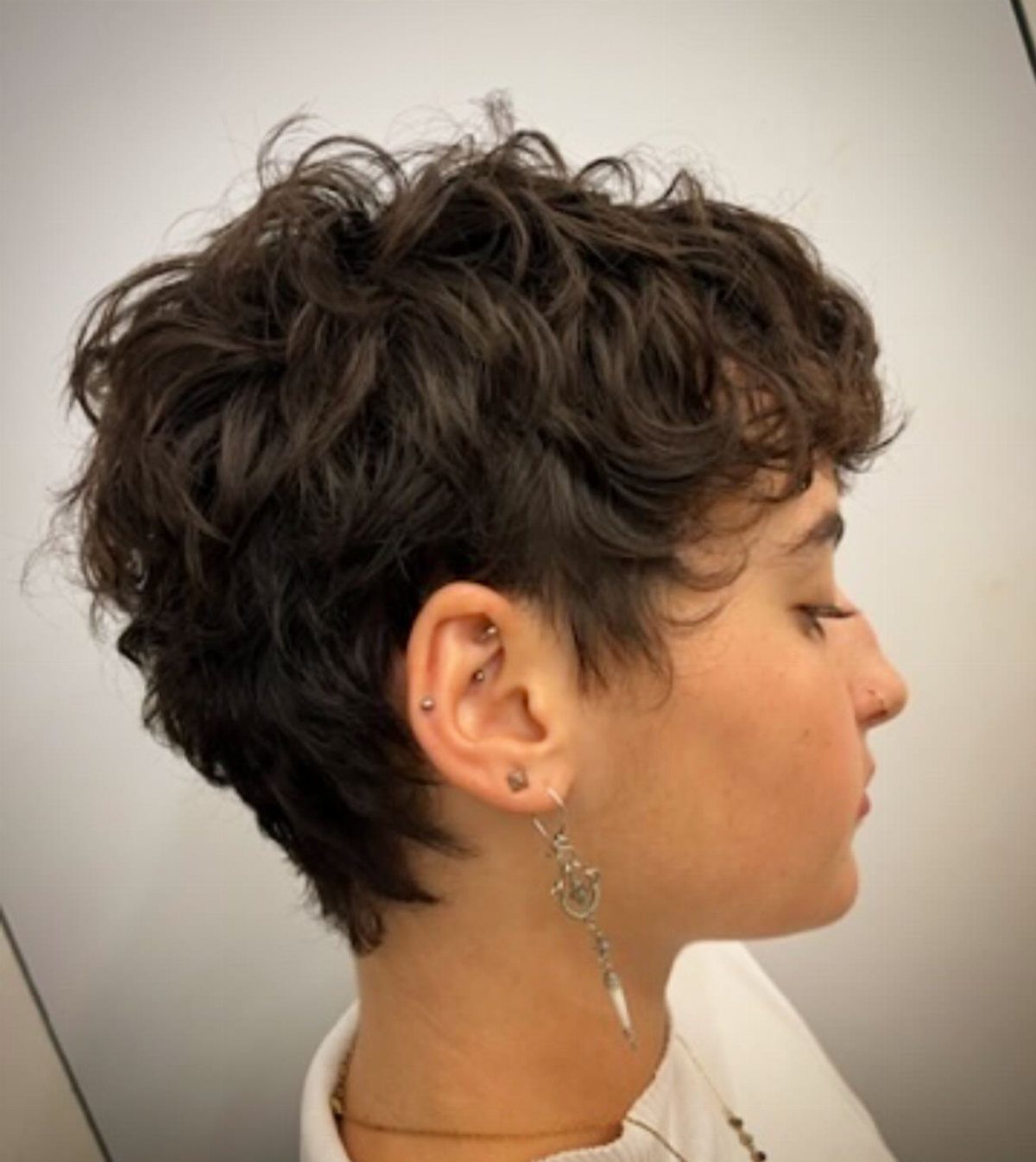
Soft waves on top, tapered sides and a closely cropped back: that combination keeps a pixie from looking flat on hair that isn’t tightly curled.
The tousled top is the part I’d ask for by name, with the length left a bit longer so the waves have room to bend.
Work a light mousse or texturizing cream through damp hair and scrunch. Then let it dry, or diffuse it for extra lift at the crown.
9. Curly Bob with Micro Bangs
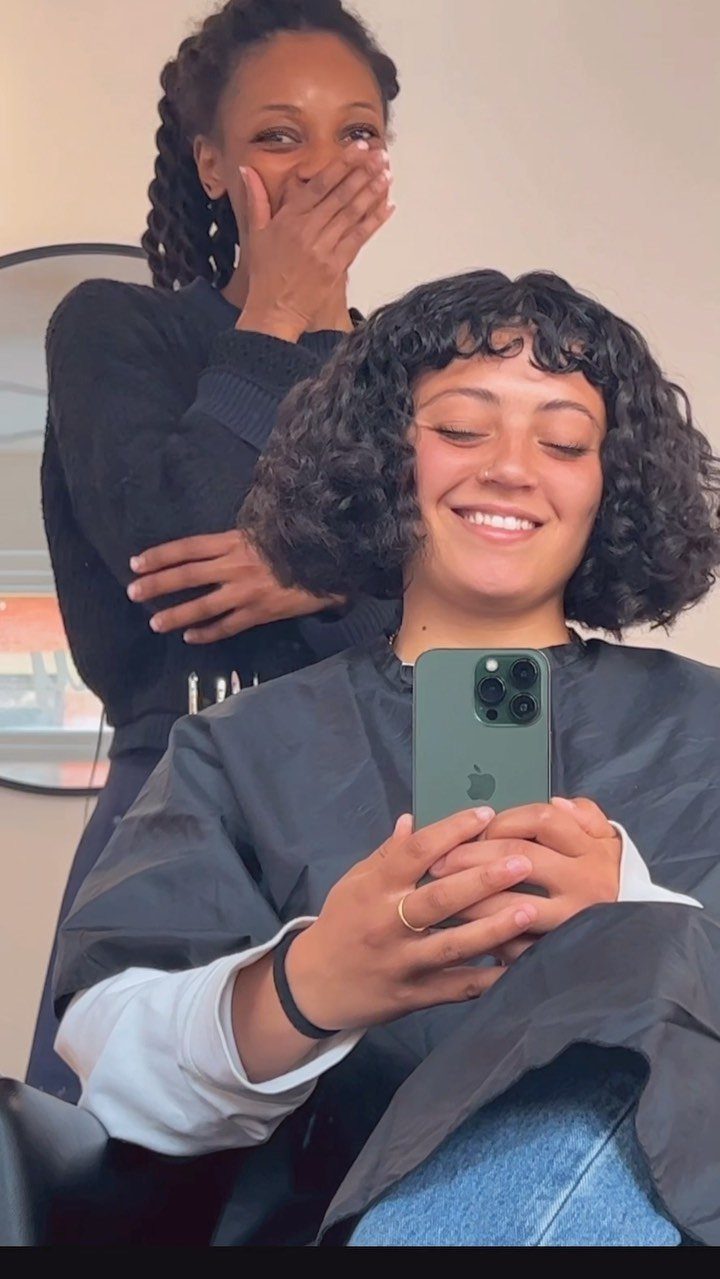
A bob and a micro fringe pull in opposite directions: one is soft and rounded, the other short and a little bold. Together they put the focus on your forehead and eyes.
Have the bangs cut dry, because curls spring up and a micro fringe leaves no room for error.
I’d also tell the stylist exactly where it should land, ideally with a photo, before any scissors come out. Expect more frequent bang trims than the bob needs.
10. Curly Ringlet Crop
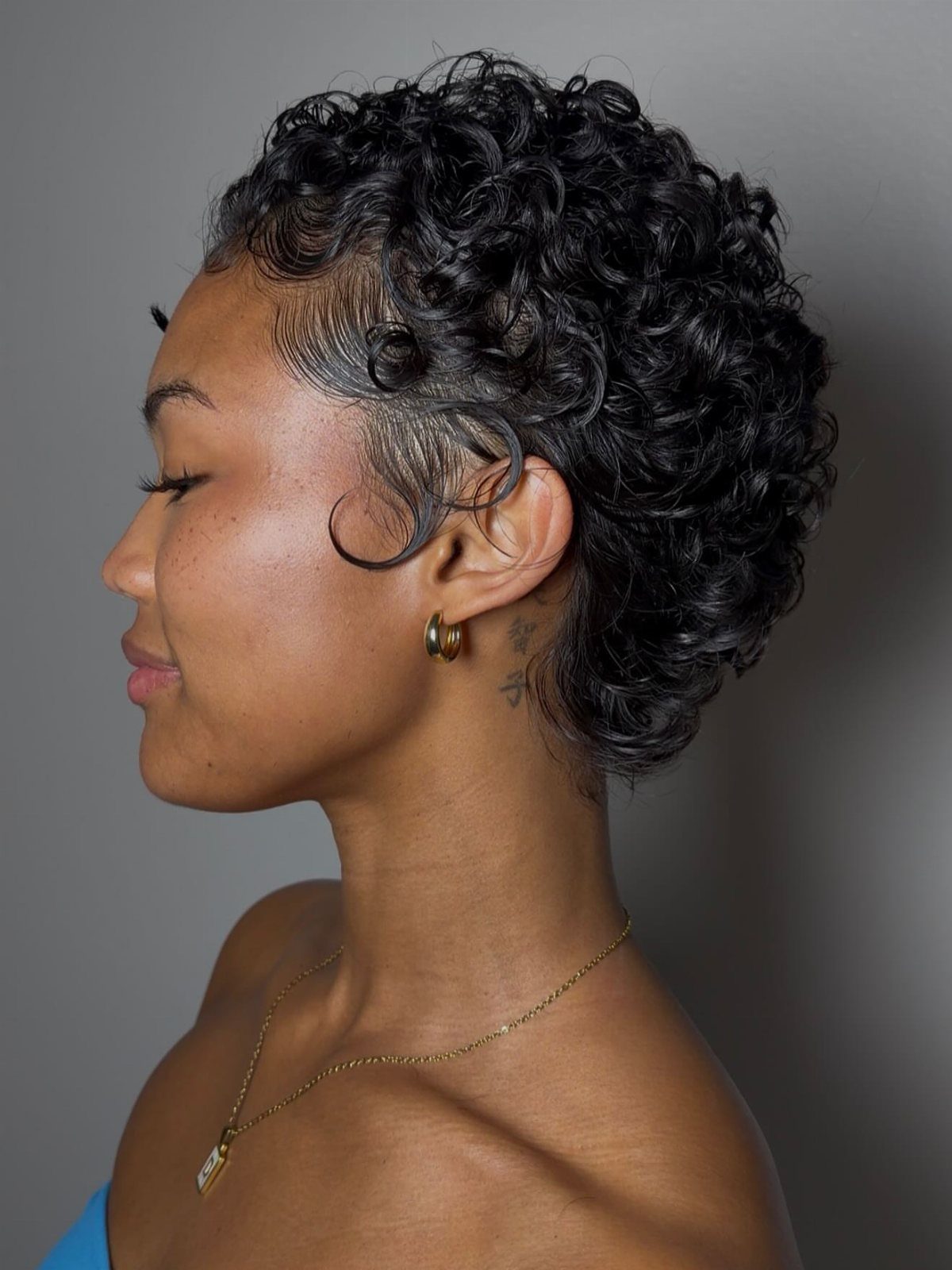
Every curl is cut to show its own spiral, and the whole shape stays short and close to the head. That makes definition the point of this crop, not length or volume.
Apply a curl cream or gel to soaking wet hair and scrunch upward to build the ringlets.
Then leave it alone while it dries, because touching it early breaks the clumps apart. A diffuser on low speeds up drying without scattering the curls.
11. Curly Mullet
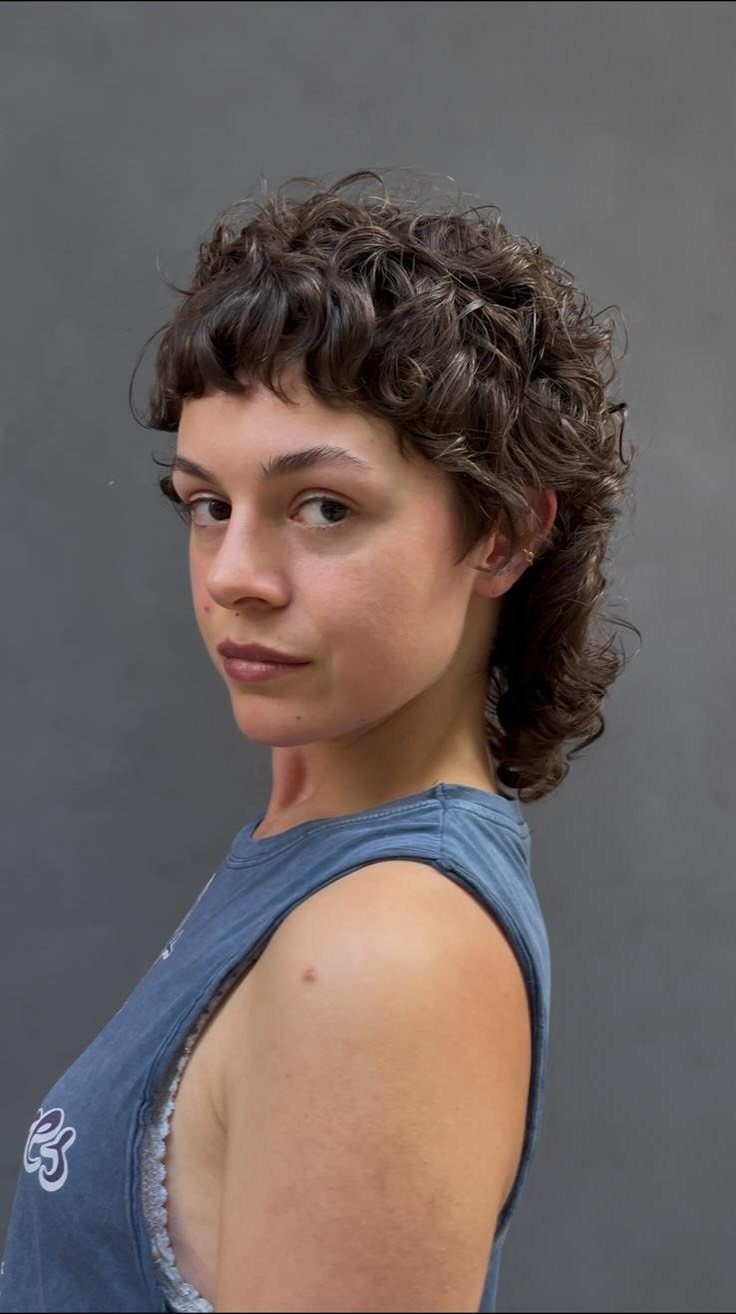
Short bangs and sides give way to longer curls at the back, and curls suit the mullet better than straight hair does, since the volume fills out the length.
The back can be a few inches past the nape or well past it, so decide how far you want it to go before you sit down.
Growing it out is easy, because the back just keeps getting longer. The shorter front sections need trimming to hold their shape.
12. Curly Mohawk
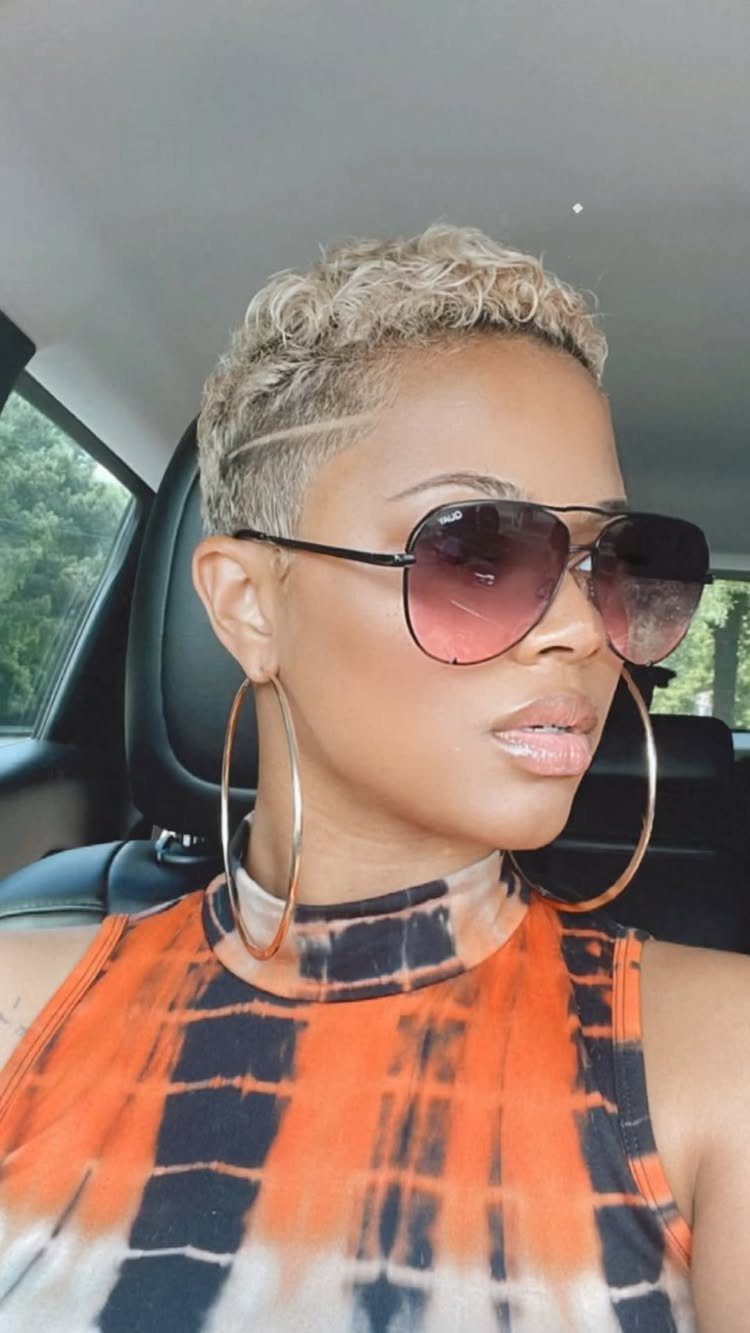
Curls stay longer along the center while the sides and back are cropped close, with a shaved line separating the two.
The strip of curls is what makes it a mohawk, so ask your stylist how wide to leave it for your face.
A gel or cream with hold keeps the top standing up.
A narrower strip looks sharper; a wider one feels softer and takes less effort to style. I’d lean wider if you’re new to short cuts.
13. Beachy Bob
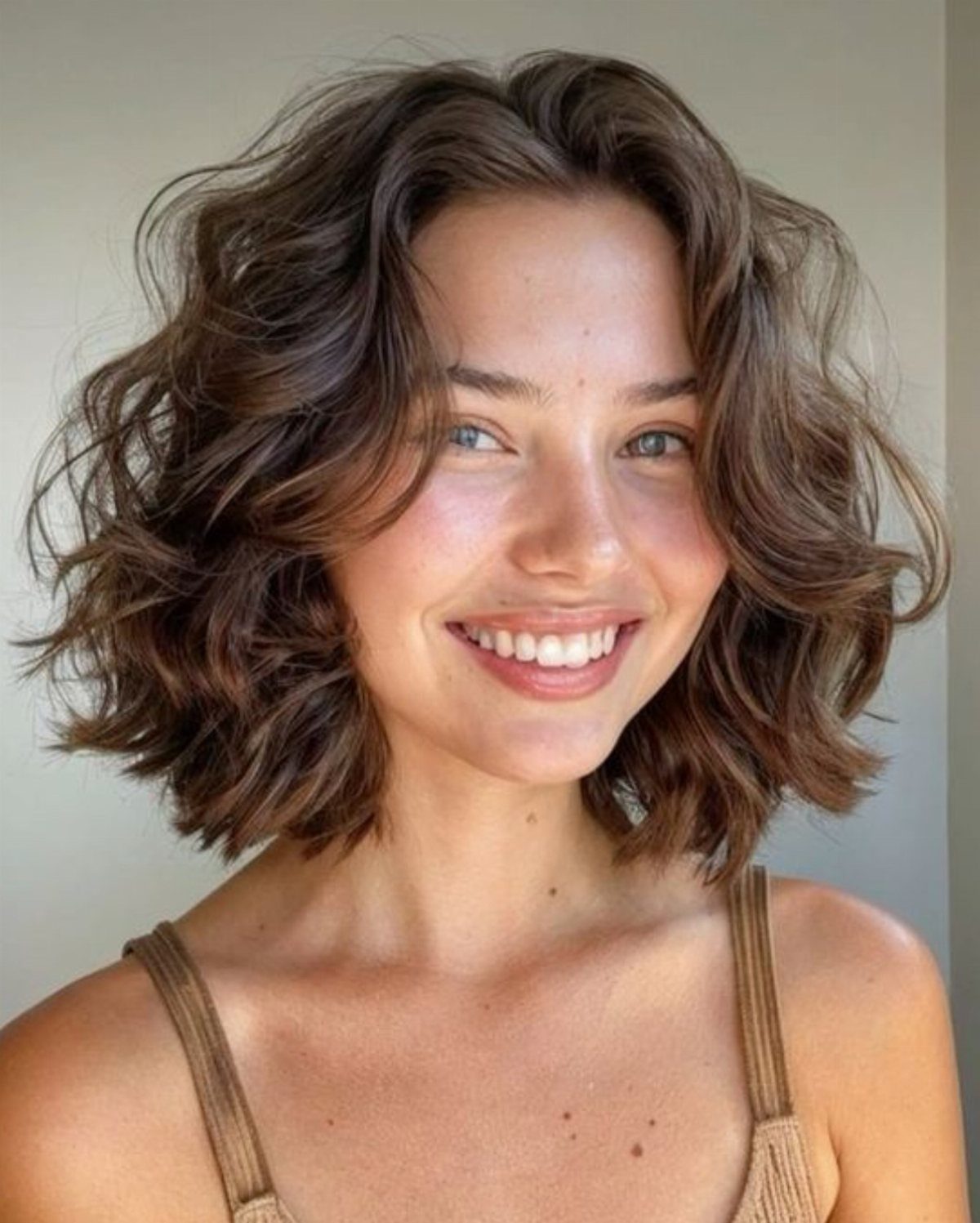
Loose, tousled bends instead of tight curls make this bob look like you just came in from the coast. The texture is soft and undone, with pieces falling in different directions rather than forming uniform waves.
Work a few spritzes of sea salt spray or a dab of lightweight texturizing cream into damp strands, and the bob settles into that easy, lived-in finish.
Scrunch it while it dries, then leave it alone. This cut works on 2a to 2c patterns where the wave is gentle enough to keep the bob from looking too structured.
14. Curly Bob
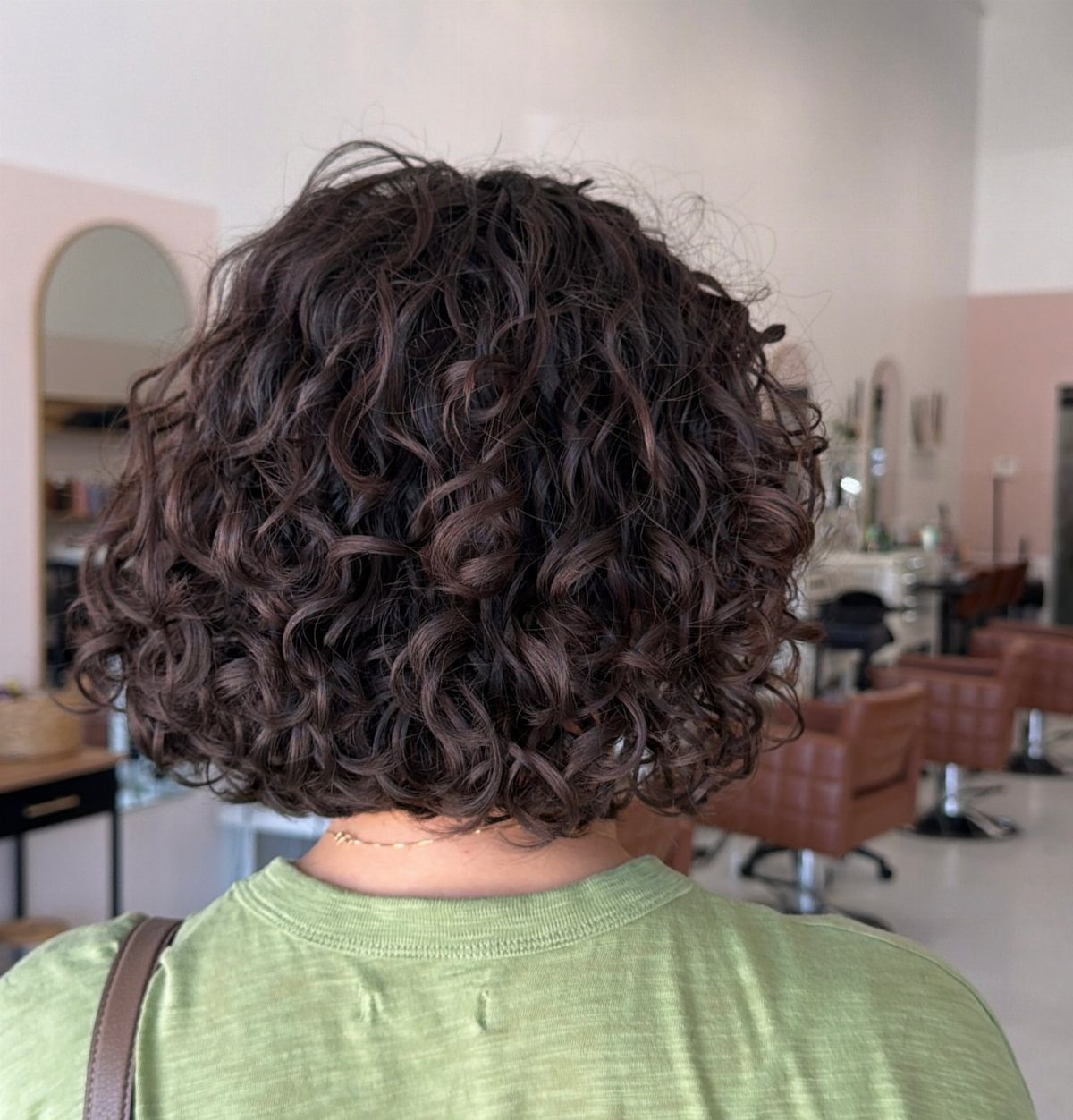
Cutting the layers to follow the spring of each curl builds a rounded shape that hugs the head without going flat.
The length stops somewhere between the jaw and the shoulders, and the curls spring out evenly around the sides and back.
Rake curl cream or gel through soaking wet hair and leave it to air-dry; a diffuser on low heat speeds things up on rushed mornings.
This bob needs regular trims to keep the shape balanced, since curls grow unevenly and can pull the silhouette off-center.
15. Curly Pompadour
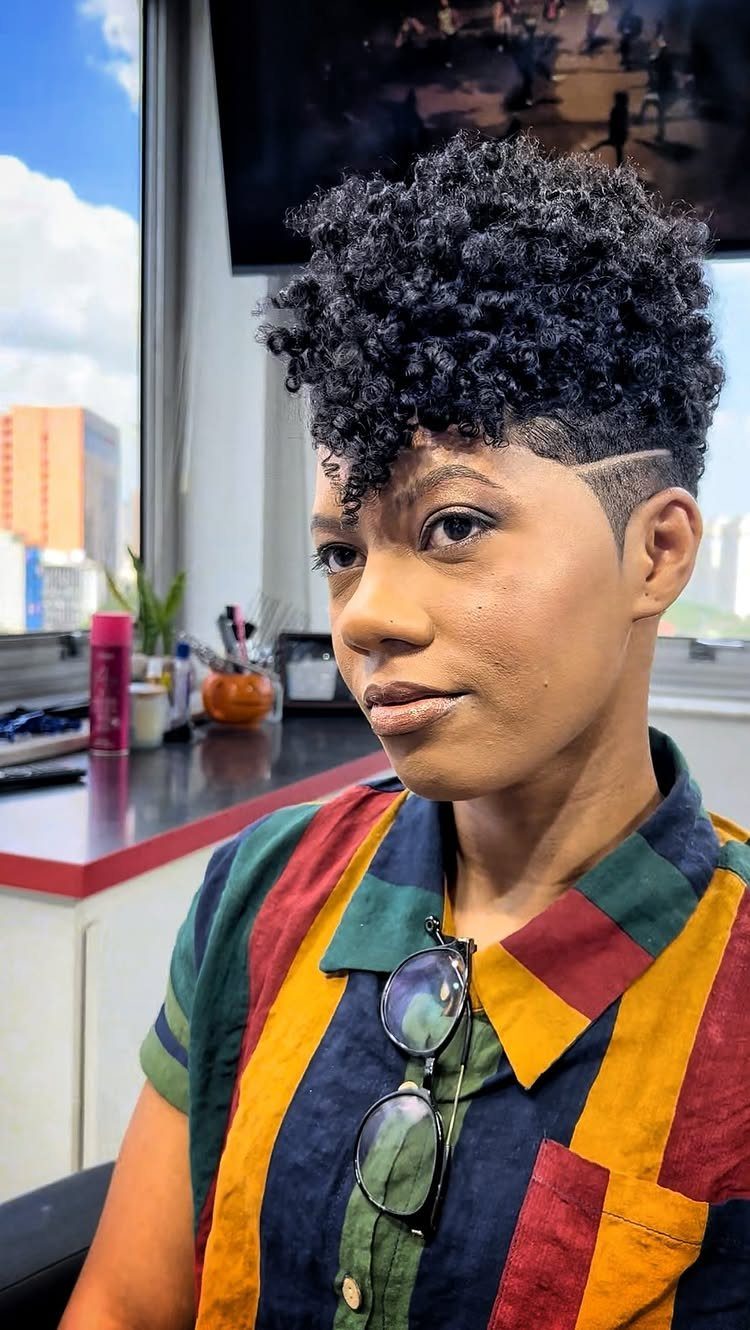
Height at the front is the defining feature here, with curls swept upward and back while the sides stay short or buzzed.
The contrast between the tall crown and the cropped sides makes the curls look fuller and draws attention to the face.
Use a gel or mousse with hold to lift the curls at the roots, then let them dry in place.
The sides need regular clipper work to keep the silhouette clean, but the curls on top can grow out without losing the shape.
16. Curly Fauxhawk
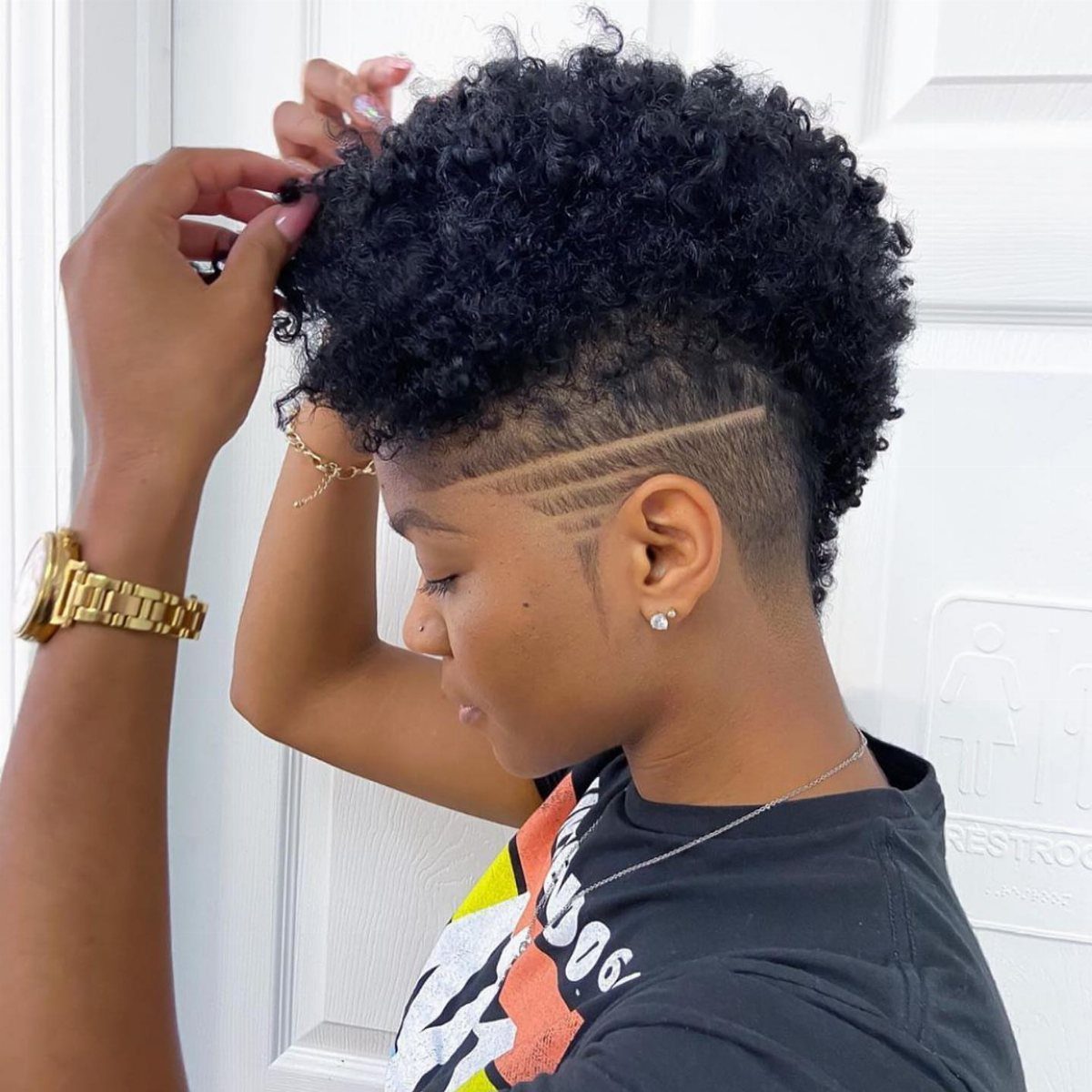
The center strip of curls stands higher than the sides, which are cut much shorter. That softer contrast keeps the cut from reading as severe while still giving the height and shape of a hawk.
A styling cream or gel keeps the curls lifted at the crown. This cut grows out more gradually than a full mohawk, so you can stretch the time between trims if the sides are clipped low rather than shaved.
17. Short Curly Fringe
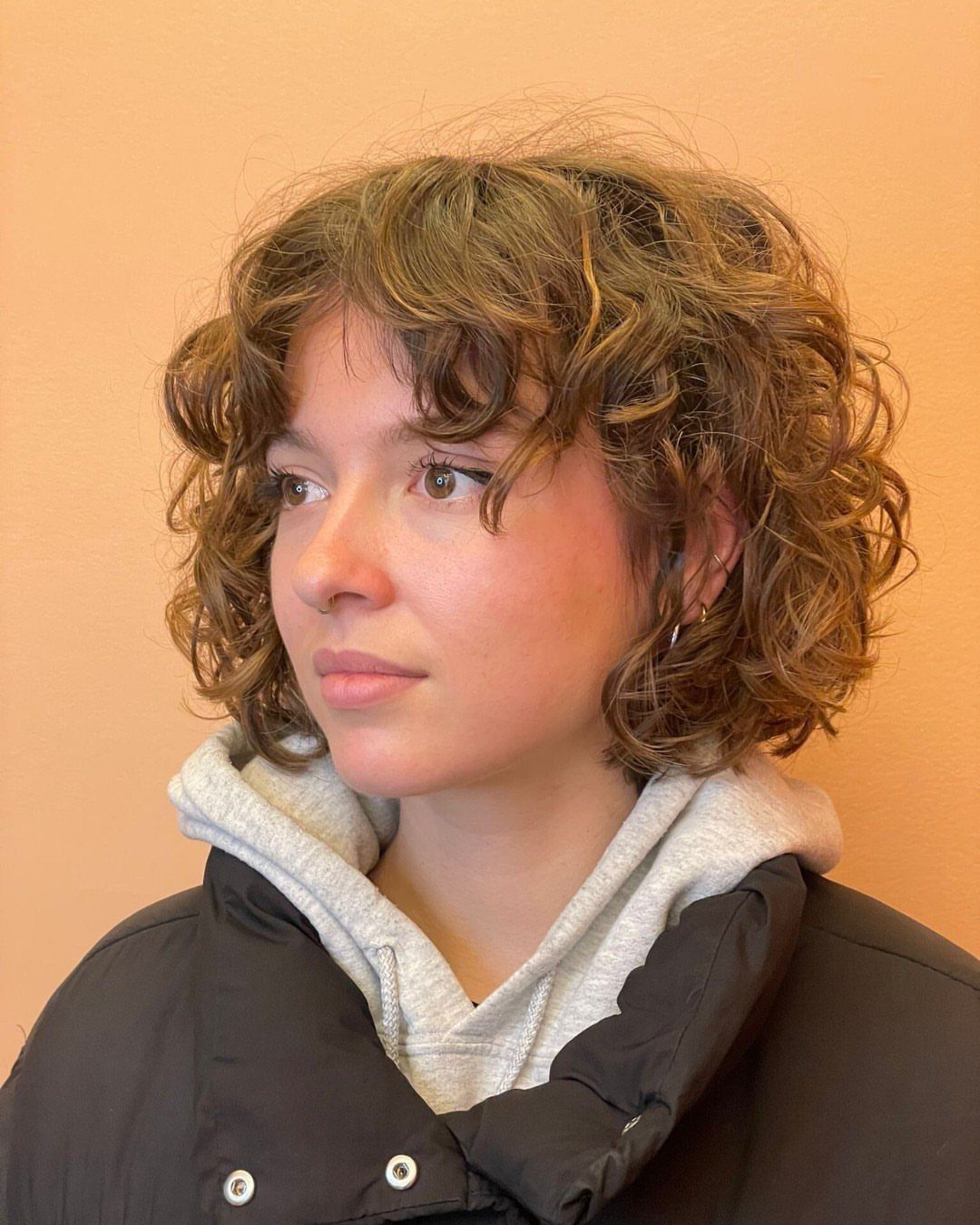
The fringe is cut short enough to sit above the brows, where the curls have room to spring up and show their texture. The length stays behind the fringe, which gives the crown and sides room to fill out.
Refresh the fringe with a curl spray or a bit of water each morning, since it flattens overnight.
This cut suits 3a to 4a patterns where the curls are tight enough to hold the fringe shape but not so tight that it shrinks up past the forehead.
18. Chin-Length Ringlet Bob
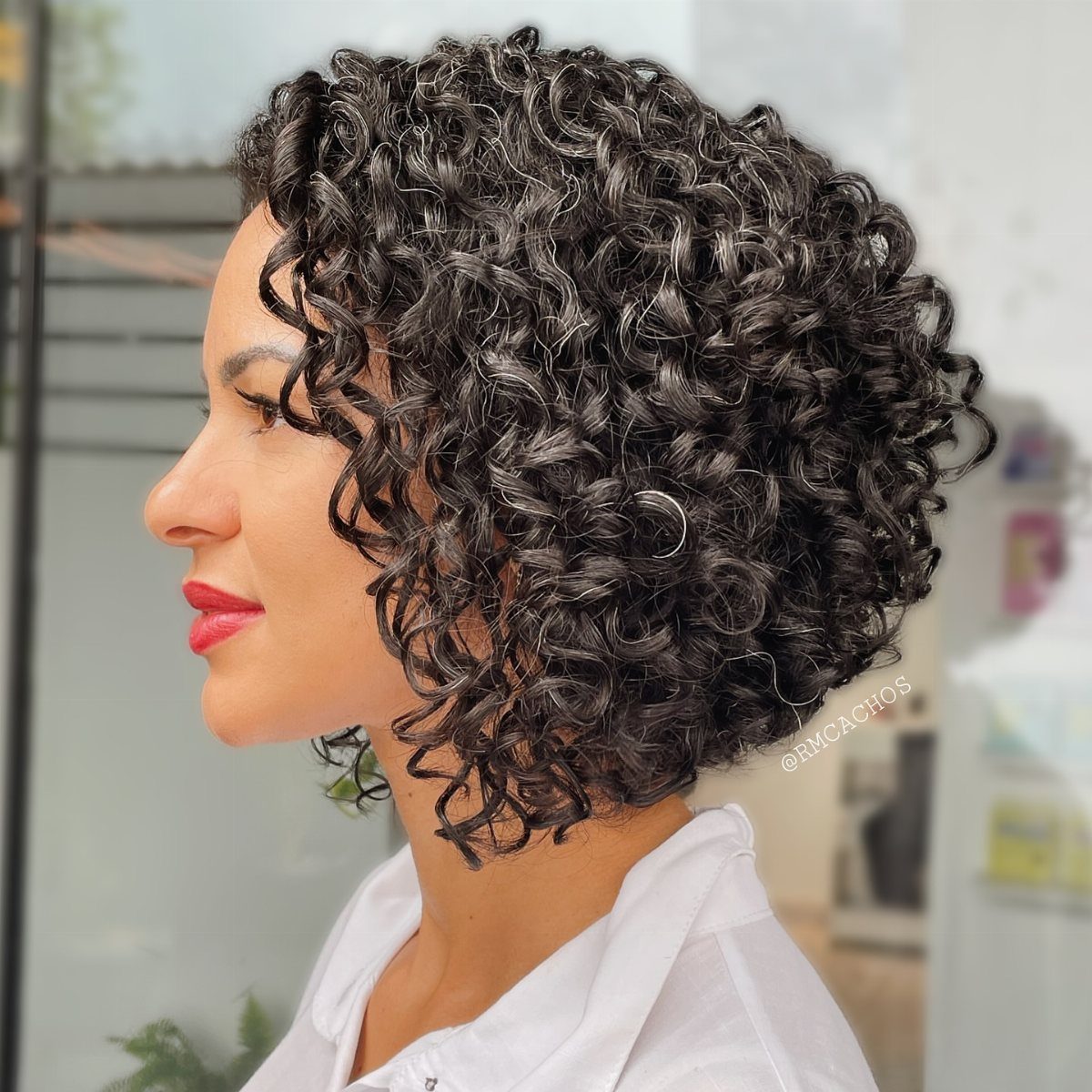
Each curl is cut to form its own defined ringlet, and the length lands right at the jawline.
The result is a bob that looks polished without being stiff, since the curls have enough room to spiral without weighing each other down.
Smooth gel or curl cream through each section while the hair is still dripping, then scrunch upward toward the scalp so the ringlets clump and hold their shape.
Let it dry completely before touching it again, or the definition falls apart. This cut works best on 3a to 3c patterns where the curl is loose enough to form a visible spiral.
19. TWA
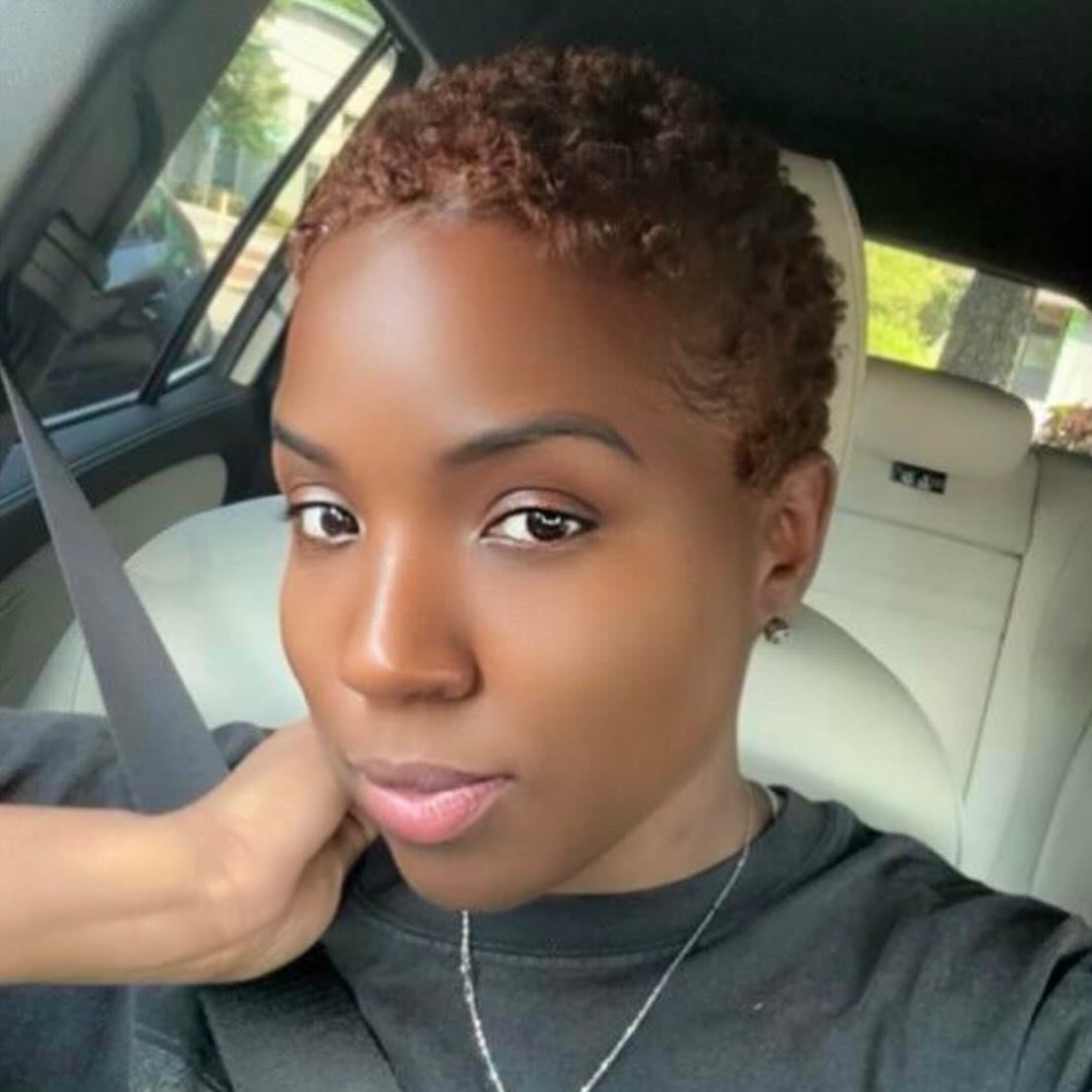
The teeny weenie afro is the shortest way to wear natural coils, and the tight, rounded shape needs almost no styling. A cut this close shows off your pattern and your face shape at once.
Keep the coils moisturized with a light oil or curl cream, since short hair dries out fast.
Lift the top with a pick if you want a little more roundness. I’d pick this one for the lowest morning effort on the list.
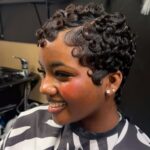
20. Finger Waves
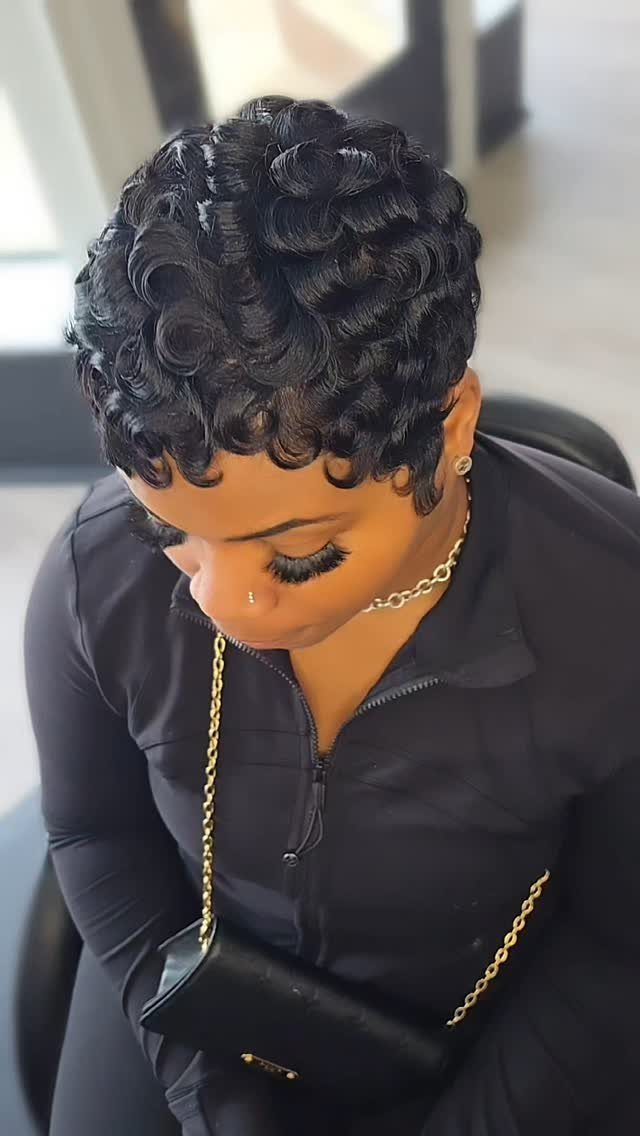
Finger waves are a retro pattern, and on short curls they read as sculpted rather than fluffy. Ask for them by name and bring a photo, because stylists shape them differently.
The waves are set into wet hair with gel and a comb, so expect to sit in the chair for the styling, not just the cut.
If you like a polished look and don’t mind a set, this one stands out from the looser curly styles here.
21. Slicked Sides & Curly Top
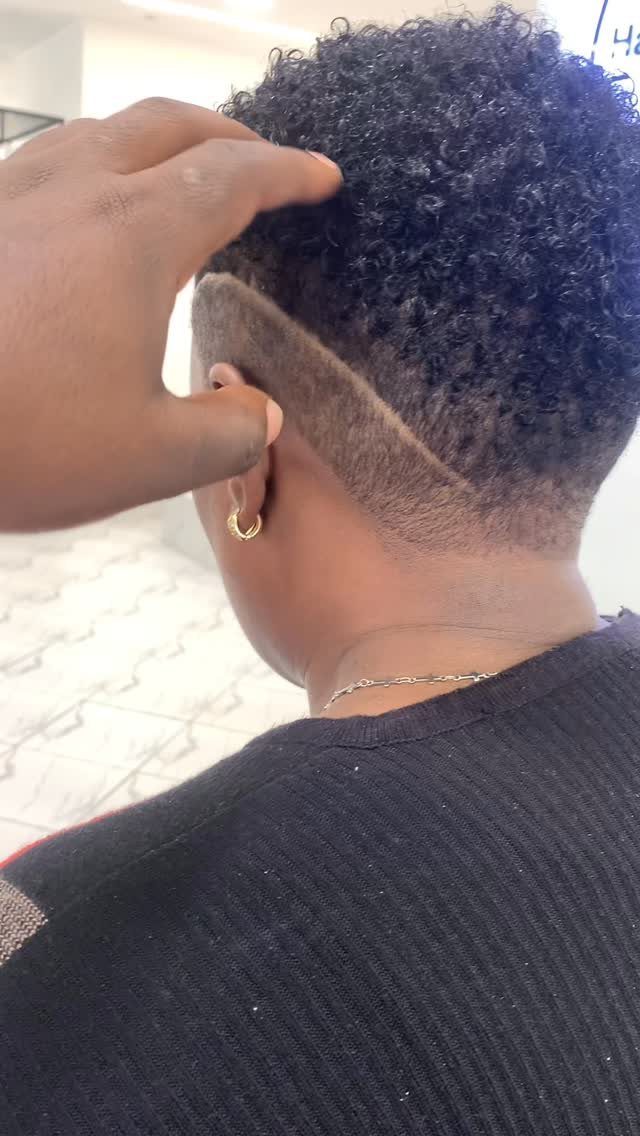
A diagonal part shaved into the side gives this cut its edge, and the slicked, tapered sides make the curls on top look even fuller. I love how sharp it looks next to soft curls.
A texturizer finishes this cut well, adding curl definition, softness and natural movement, so it’s worth asking your stylist about. Plan on regular clipper touch-ups, since the part and the taper only look good when they stay crisp.
22. Short and Voluminous
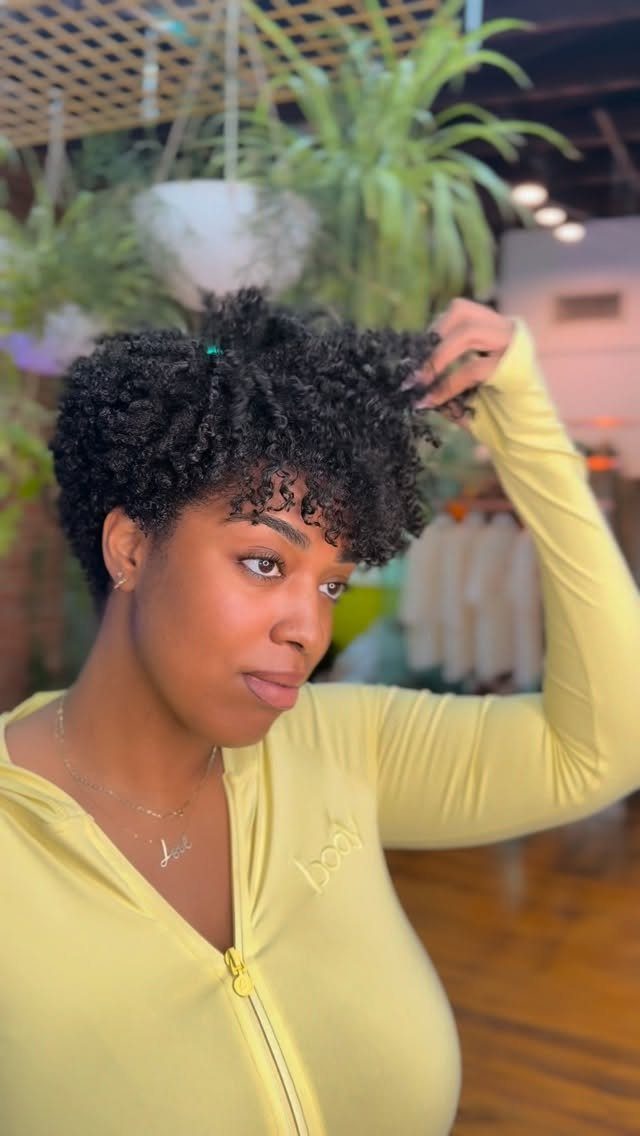
Jaw length is where a curly bob gets its volume: short enough that the curls spring outward, long enough to frame the face. This is my pick if you want fullness without a big commitment.
Ask for the shape to be cut around the curls, not flattened against the head. Curls shrink as they dry, so a bob that looks jaw-length wet may sit higher once it springs up.
23. Curly Wash and Go
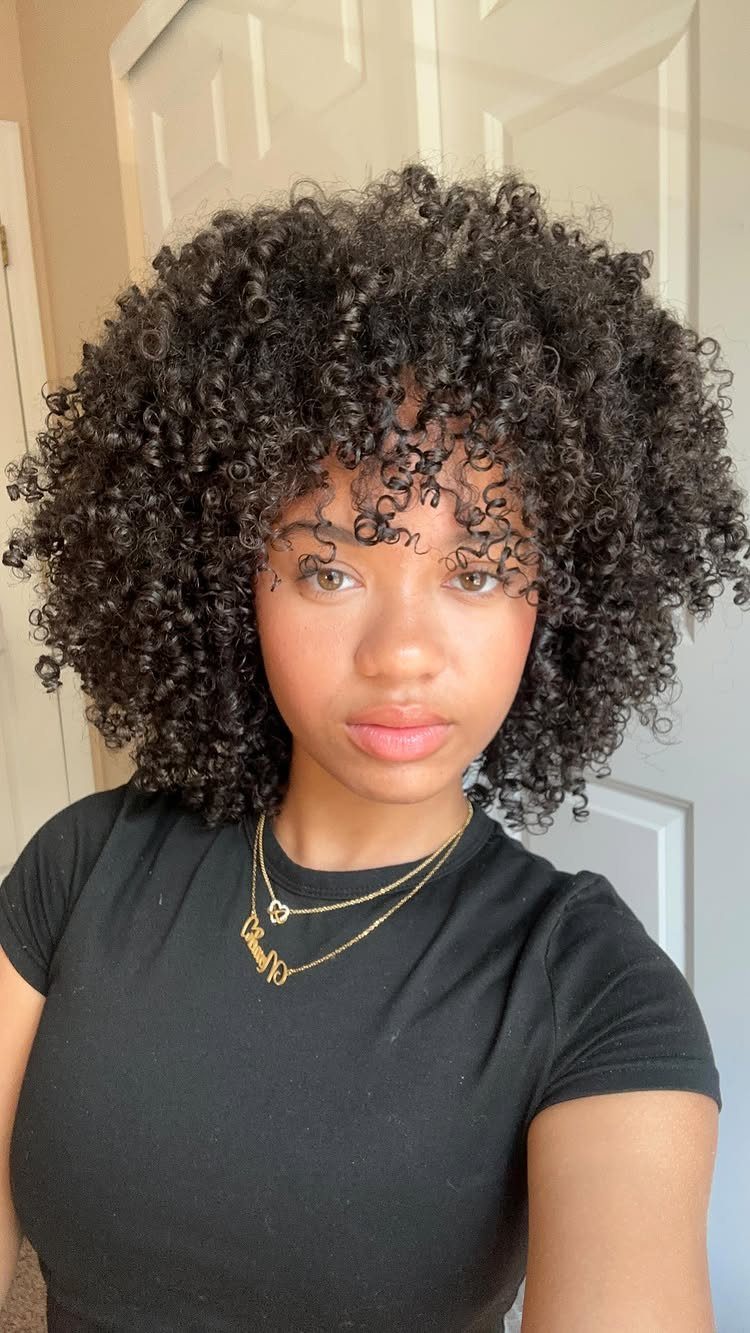
Wash day is nearly the whole routine here: natural curls are defined and left alone, with no irons, no pinning and no elaborate styling. That makes it the easiest short curly look to keep up.
Your cut does the heavy lifting, so choose a shape that suits your pattern before worrying about products. Short layers, with or without a fringe, let the curls clump and fall into place.
24. Wavy Shag with Fringe
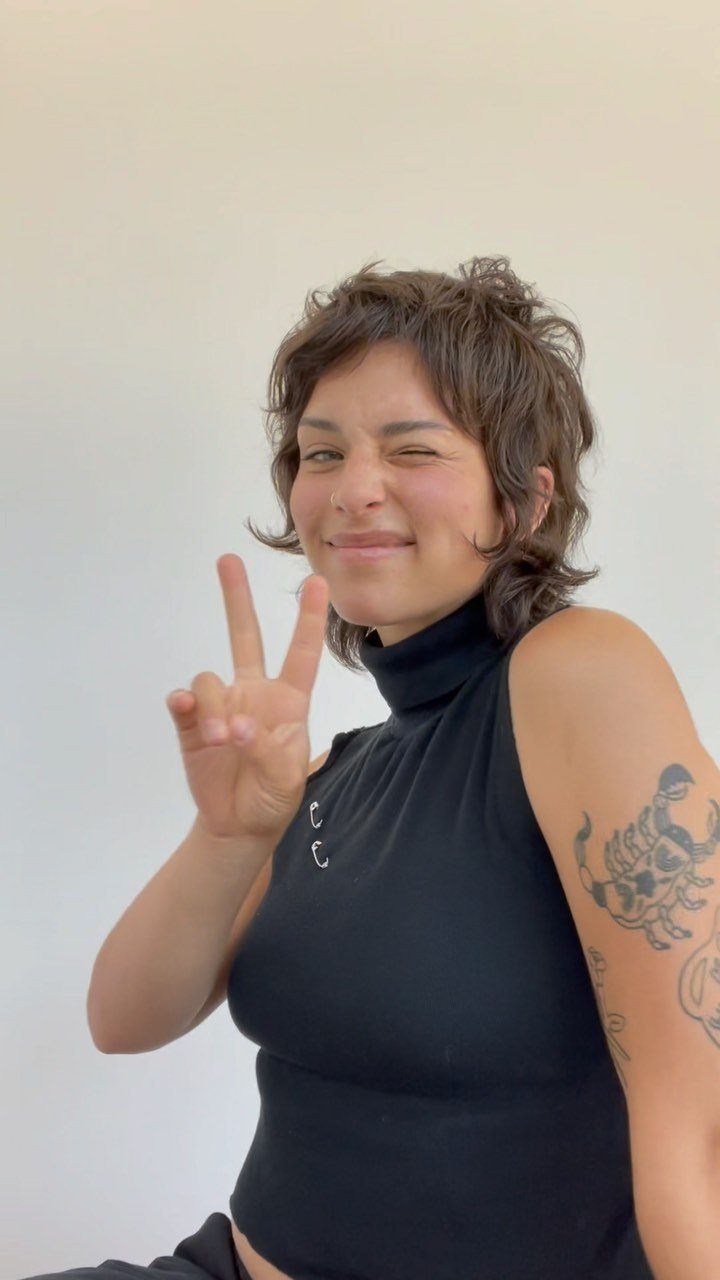
Heavy layers and a forehead fringe give a wavy shag its shaggy, lived-in outline. Waves are softer than curls, so the choppy ends stay loose instead of springing up.
Ask your stylist to cut the layers visibly short so the shape doesn’t fall flat.
A lightweight cream scrunched into damp hair, then air-dried, keeps the texture. The fringe grows into the layers as it lengthens, which makes this an easy cut to grow out.
25. Tapered Afro
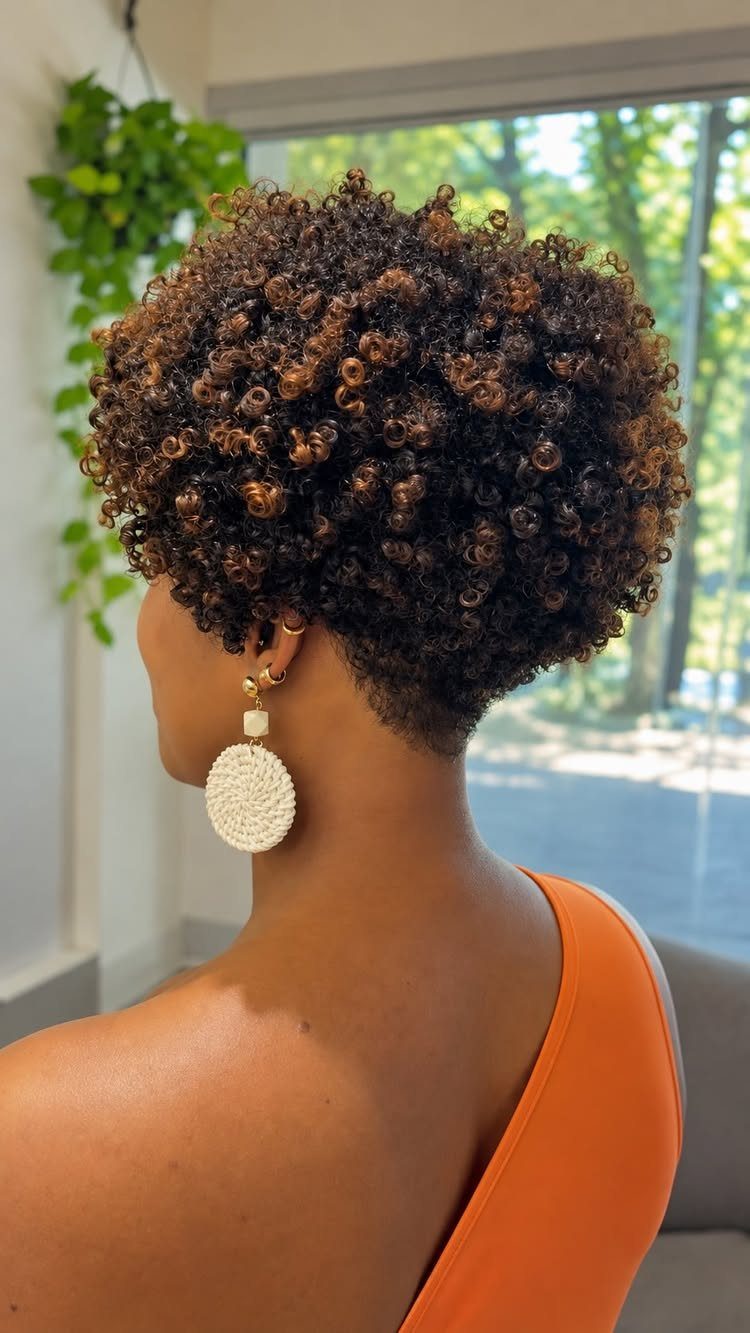
Shorter sides and a shorter nape sit under a fuller, rounder top, so the curls get the volume while the outline stays tidy.
The taper is what separates this from a standard curly afro: the nape and sides are cut close and graduate up into length on top, so the shape reads more defined and the back feels lighter.
Ask your stylist to blend the sides into the nape and leave the length on top.
A pick lifts the crown when it flattens, and a curl cream keeps the coils soft. Plan on trims to keep the taper clean.
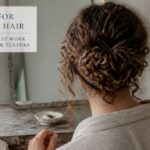
26. Short Curly Updo
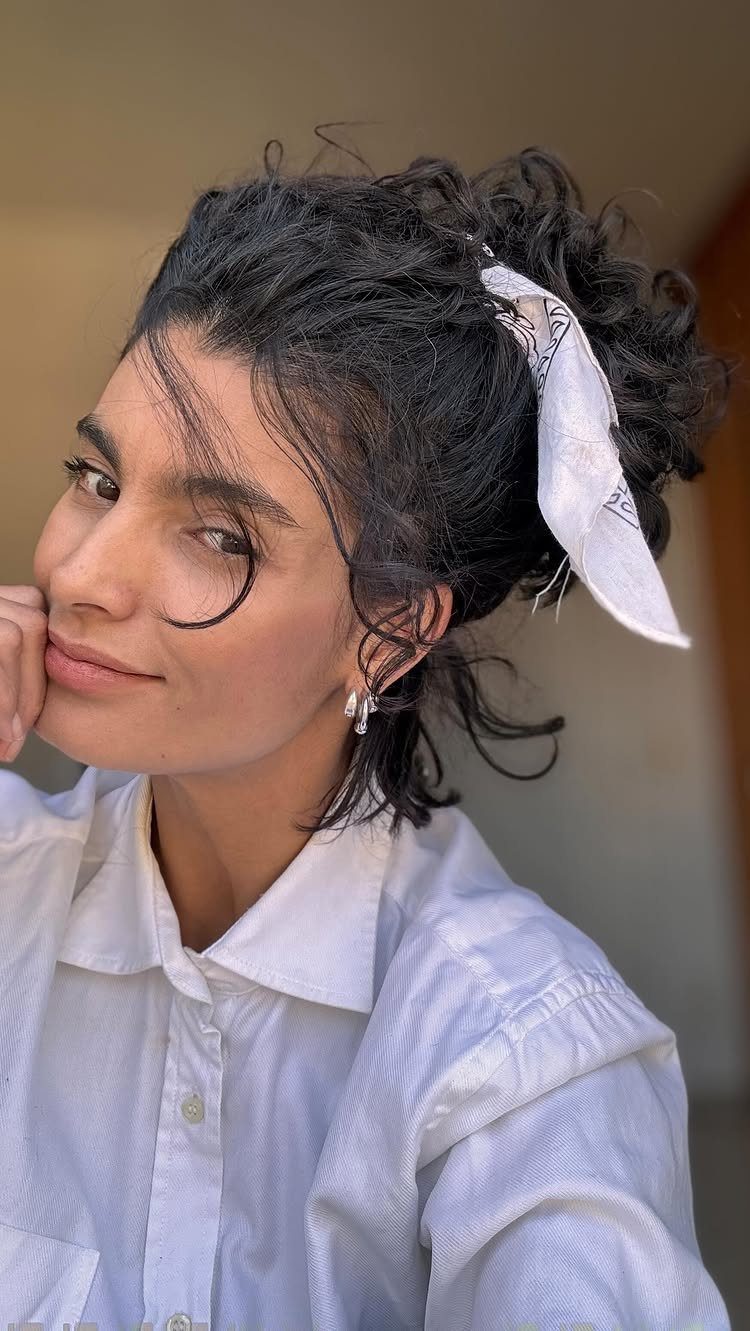
Pulling short curls up and back, then leaving a few loose as tendrils around the face, gives you a gathered style that still looks soft. A scarf wrapped over the top holds the shape and adds a finished touch.
Short hair resists staying put, so I’d pin the back first and let the front pieces fall on their own.
Tie the scarf last, over the pinned curls. A little curl cream on the loose strands keeps them from frizzing out of the look.
Dry Cutting and Shrinkage
Shrinkage decides how a short curly cut turns out, and most people never hear about it before the first appointment.
You have 2 ways to handle it. One is to ask for the cut to be done dry, so the stylist sees the true shape, avoids uneven shrinkage and steers clear of a triangular outline.
The other is to have it done wet and ask for the length to be left 1–2 inches longer than your target. If you want chin length, say that out loud.
Either way, tell the stylist the finished dry length you want before the scissors come out. Dry cutting is the safer pick if your pattern is tight or your curls vary from section to section.
Frequently Asked Questions
What haircut is best for short curly hair?
It depends on your curl pattern. A choppy-layered shag works best on 2b to 3b curls, a jaw-length bob cut curl by curl suits 3a to 3c, and a rounded curly afro or TWA suits 4a to 4c.
Pattern matters most because it decides how far the hair springs up and how well the shape holds.
What is the 2 inch short hair rule?
For a wet cut, tell your stylist to leave the hair longer than the length you actually want, because curls bounce up as they dry. Say the finished dry length you want before any cutting starts.
A dry cut lets the stylist see the real shape, which is why I’d pick it for tight curls or a head where the pattern changes from one section to the next.
Does face shape matter for short curly hair?
It matters, but volume matters more.
On a round face, I’d steer volume up instead of out: a tapered pixie or a curly pompadour with short sides adds height on top, since curls already widen a cut at its fullest point.
Face-framing layers or curtain bangs soften a square jaw, and an oval face suits almost any short curly cut.
What is my curl type?
The scale runs from 2A to 4C. Loose S-shaped waves fall under 2A and 2B, defined ringlets and bouncy spirals under 3A and 3B, and the tight coils and zig-zags of 3C through 4C shrink the most.
Know yours before you book, because the same cut behaves very differently across textures. A photo-based finder on NaturallyCurly.com uses the same scale if you’re unsure.
How much shorter will curly hair look after a cut?
Shrinkage can pull natural curls up by 10 to 75 percent of their true length, so a wet cut and the dry result can differ by several inches. Tighter coils lose the most.
Are layered cuts better for curly hair?
Usually, yes. Layers remove bulk and add bounce, and when they follow each curl’s natural formation they help the curls split into defined clusters.
If your curls are thick and lose definition when heavy, ask for layers throughout instead of only at the ends.