Some of these cuts ask for clipper touch-ups every 2 weeks to keep a fade sharp, while others hold their shape for 4 to 6 months with minimal fuss.
Pick based on how much time you want to spend in the salon chair, since a Tapered Cut or a Curly Top with Fade needs far more frequent visits than Natural Short Curls or a Short Afro.
Wet curls stretch, so a stylist working on damp hair can’t see where your pattern lands once it springs back, and the Cutting Curls Dry section near the end explains why that matters for every cut on this list.
1. Curly Pixie
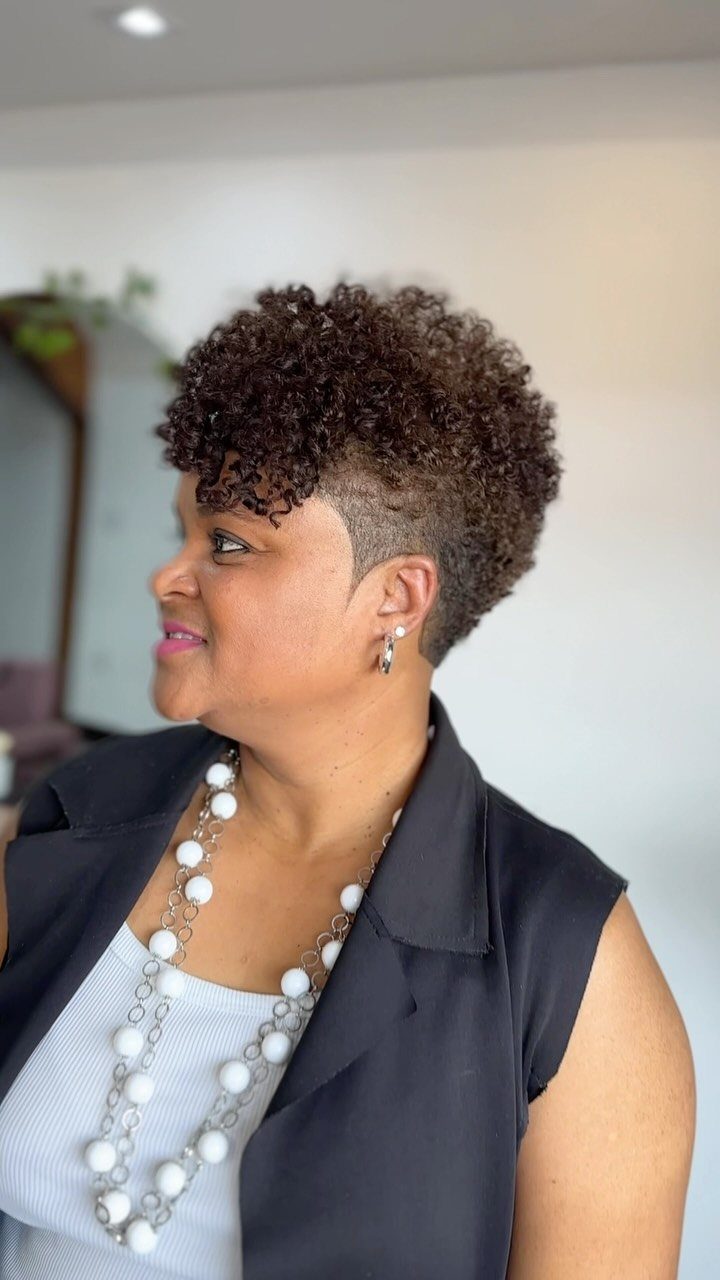
A pixie suits natural curls because the length stays short enough that the pattern shows up as texture, not weight.
Closely tapered sides keep the shape neat around the ears and nape, while the top holds its curl and a bit of height.
Ask for the sides to be tapered and the top left longer so the curls can spring. A stylist who cuts curly hair dry, one curl at a time, will give you the best result.
2. Curly Shag
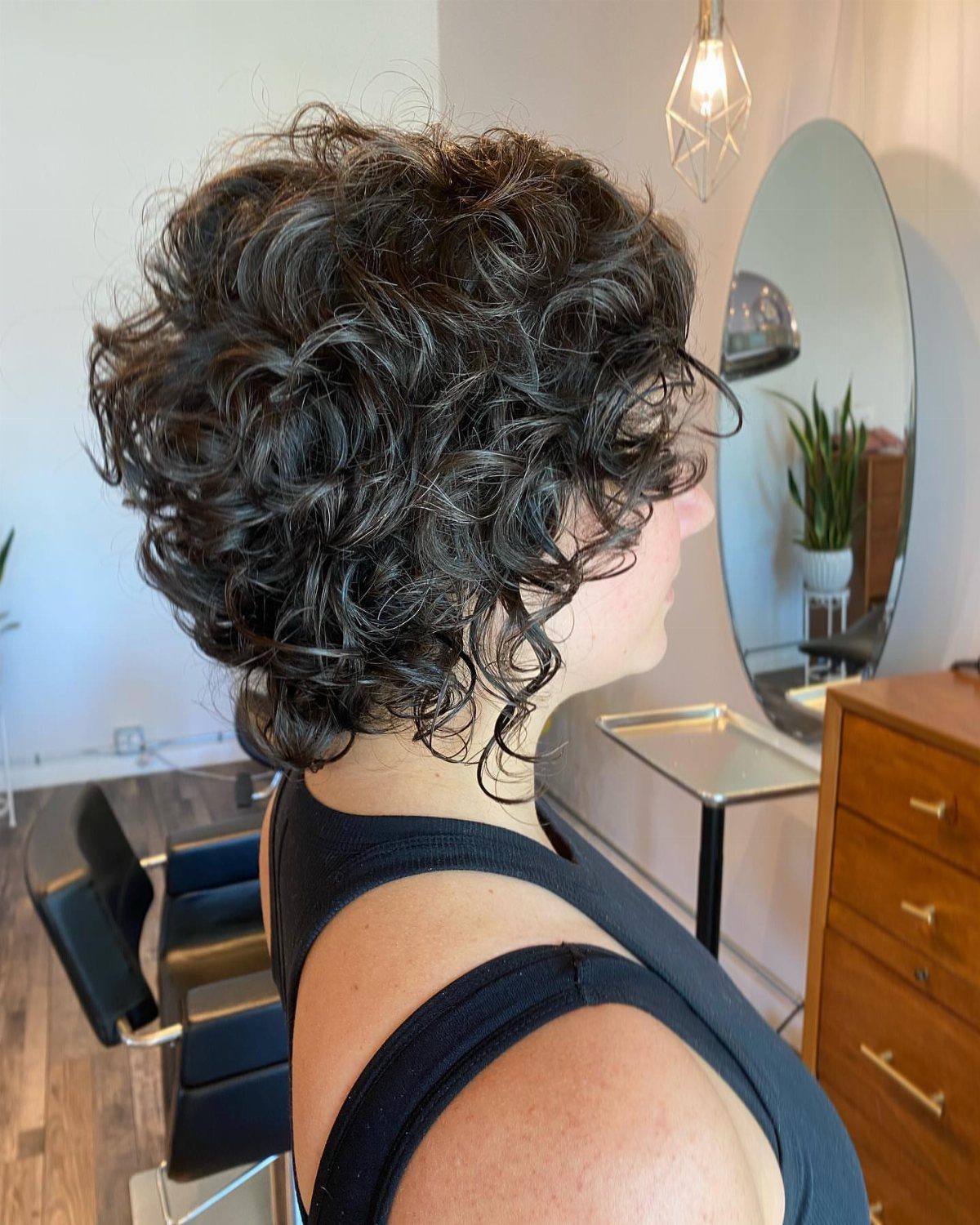
Layers are what make a curly shag work: shorter pieces sit around the face, longer ones fall behind, and the curls stack so they never collapse into one heavy shape. Dark curls show that layering clearly.
Bring a photo and ask for face-framing pieces plus internal layering, so the curls have room to move. I like this cut for anyone who wants volume without adding length.
A curl cream scrunched into damp hair keeps the layers defined instead of fluffy.
3. Faux Hawks
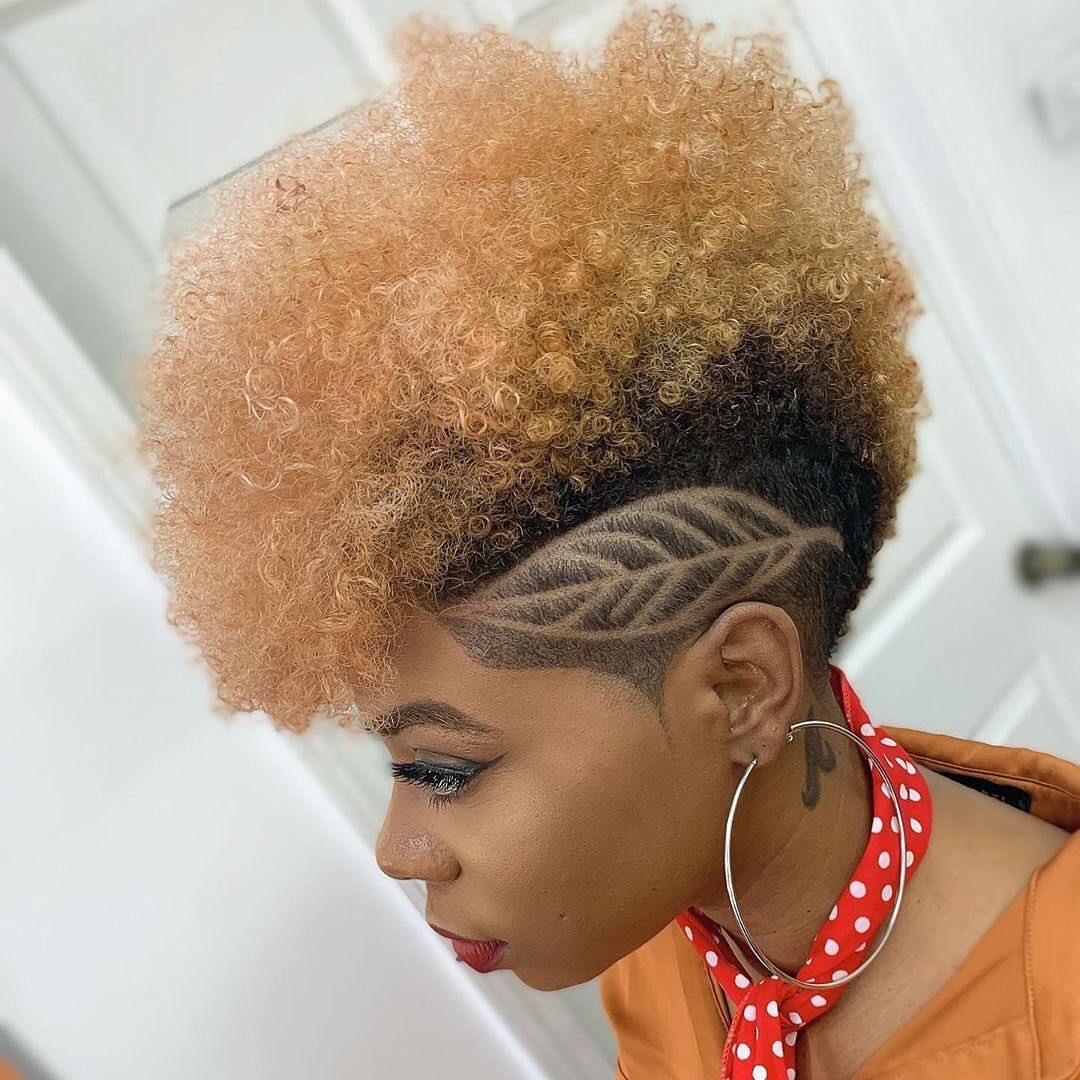
Tall curls rising above shorter sides give a faux hawk its lift, and the look needs no real mohawk commitment.
The center section stays long enough to stand up on its own, while the sides are cut closer to the head.
For a stylist, ask for a raised center with shorter sides, and mention how much of the sides you want cropped. A shaved pattern on one side is an optional extra, though it needs frequent touch-ups to stay sharp.
I would pick this over a full mohawk if you still want to wear your curls down on some days.
4. Curly Bob with Bangs
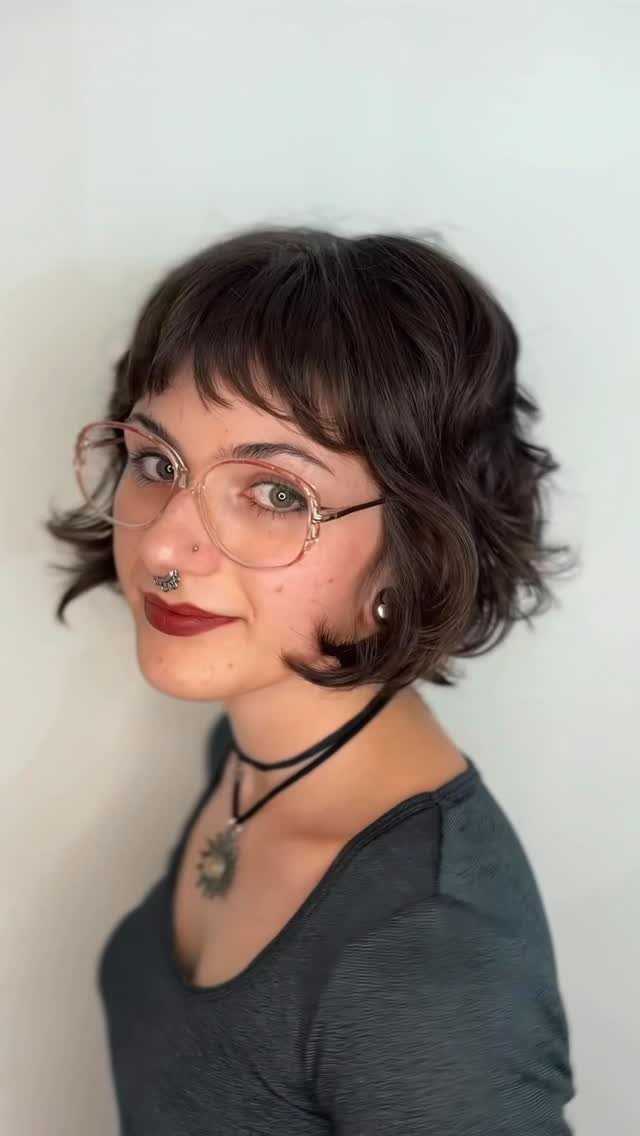
Bangs on a curly bob change the whole frame of the face, so the fringe deserves its own conversation with your stylist.
A wispy fringe sits lighter on curls than a thick, blunt one, which tends to shrink up and sit higher than you expect.
Ask for the fringe to be cut dry so you can see where the curl lands. Glasses work well with it, since a wispy fringe leaves the frames visible.
Bangs grow into your eyes faster than the bob loses its shape, so they need trimming more often than the rest of the cut.
5. Teeny Weenie Afro
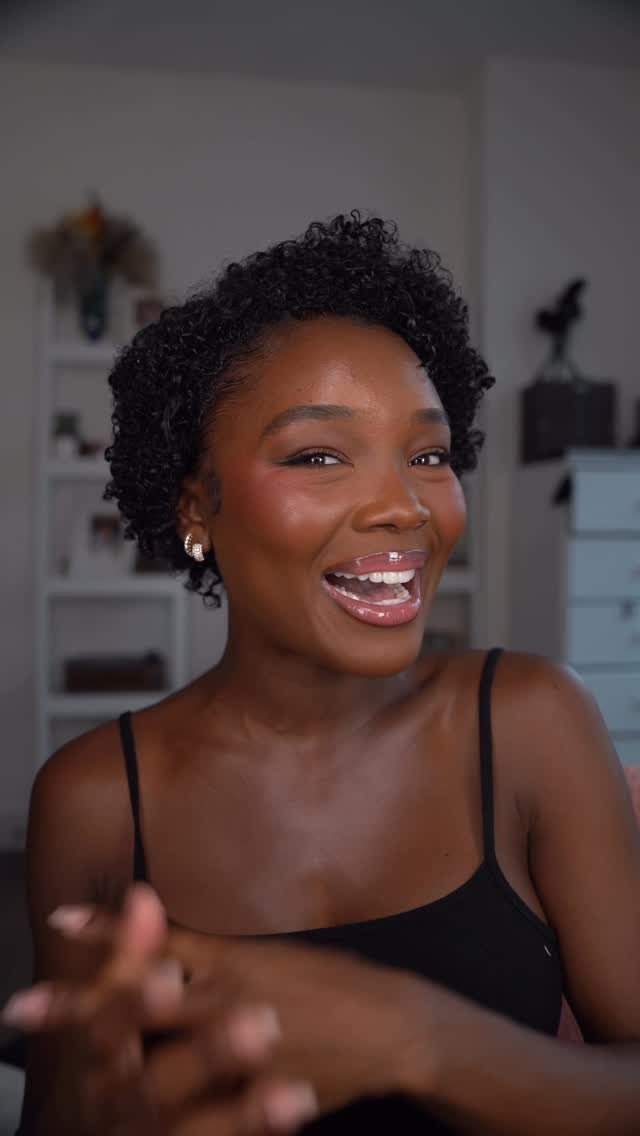
Ultra-short and tightly coiled, this crop is about as low-effort as natural hair gets. With so little length, the pattern does the work, and the main job is keeping the curls moisturized.
The creator of this look used a leave-in called 25 Miracle Milk, and a light leave-in is a smart pick here because heavy products weigh down short coils fast.
A barber or stylist can square off the whole outline for you, and the edges stay crisp only if you book that shaping again before it softens.
6. Curly Mohawk
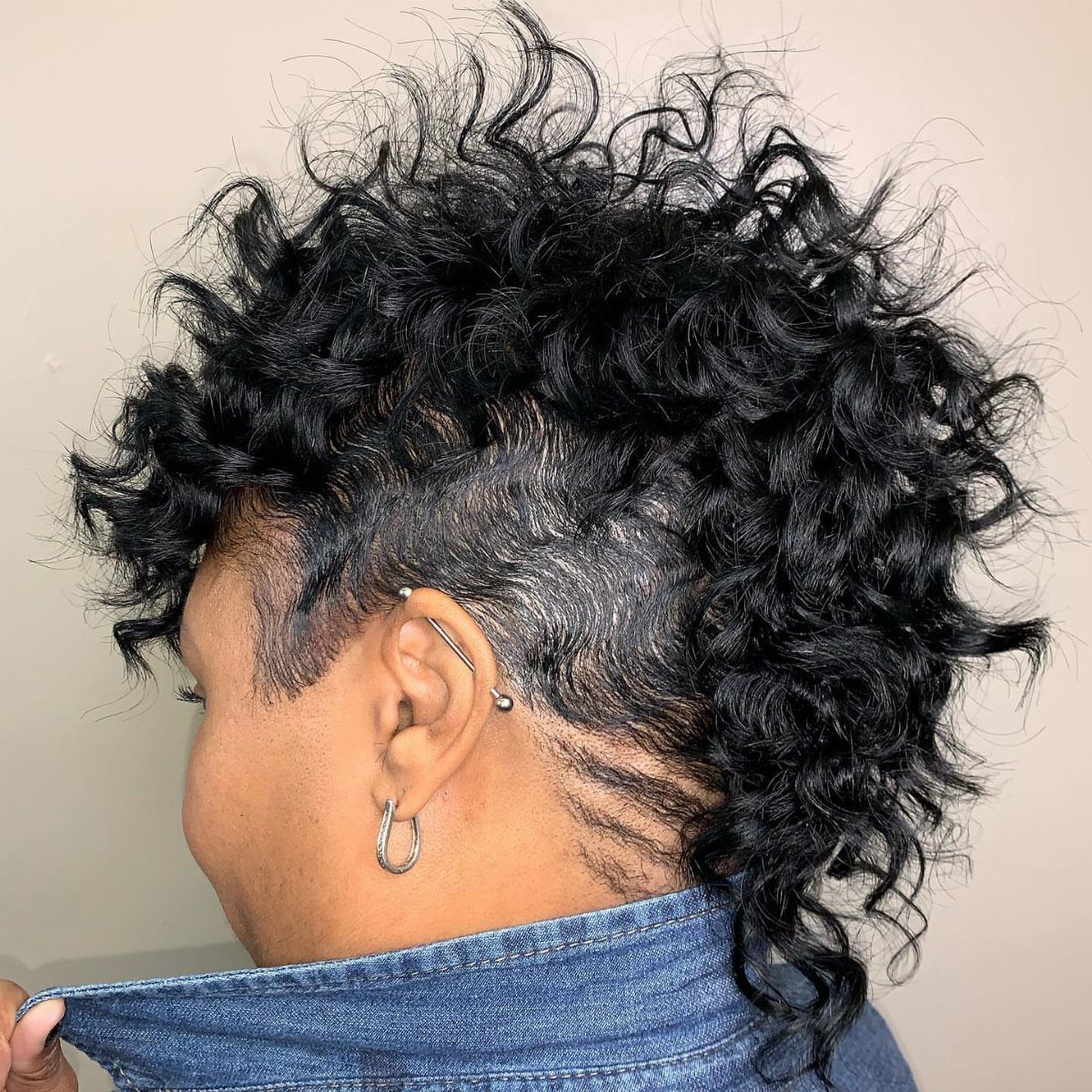
Most mohawks stop at the crown, but this one runs toward the nape, which gives the curls a long, bold line from front to back. Closely cropped sides push all the attention to the top, where the volume lives.
Ask for the sides cropped short and the center left long enough to hold its curl. I prefer this over a faux hawk when you want a stronger statement.
Keep the top moisturized, because long curls on a narrow strip dry out quickly. The sides need regular clipper touch-ups to stay clean.
7. Finger Waves
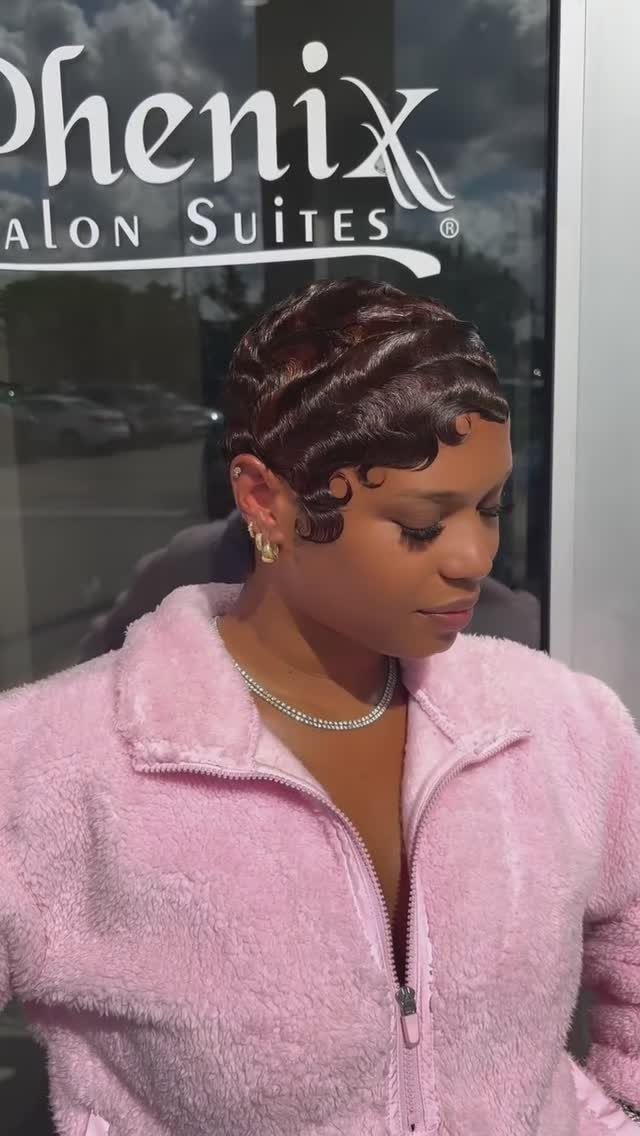
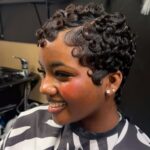
Smooth S-shaped waves are molded close to the head, a look borrowed straight from the early days of Hollywood glamour. The style sits flat and glossy, with each wave flowing into the next.
This one takes finger-wave gel and a comb to set, or you can ask a stylist to create the pattern wet and let it dry under a hood.
The waves hold their shape best on short hair, where there’s less weight pulling them down.
Expect to refresh the style every few days, since the waves soften once you touch or sleep on them.
Redway also loves this retro style for short curly hair. Similar to how pin curls are malleable, finger waves are easy to work with your short curls.
— Vogue
8. Short Afro
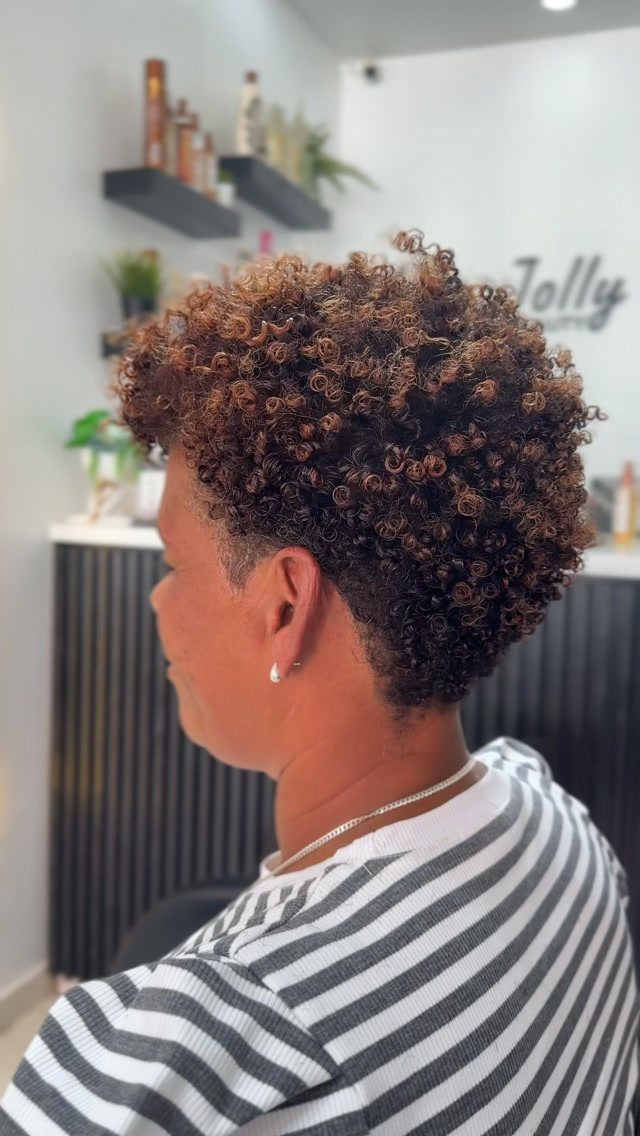
Rounded and full, a short afro holds its shape without losing the curl definition underneath. The outline stays soft, and the texture does all the talking.
A pick lifts the roots for volume, and a light oil keeps the curls from drying out.
The shape grows out evenly, so you can stretch time between trims if the rounded outline matters less to you than the texture itself.
9. Curly Lob
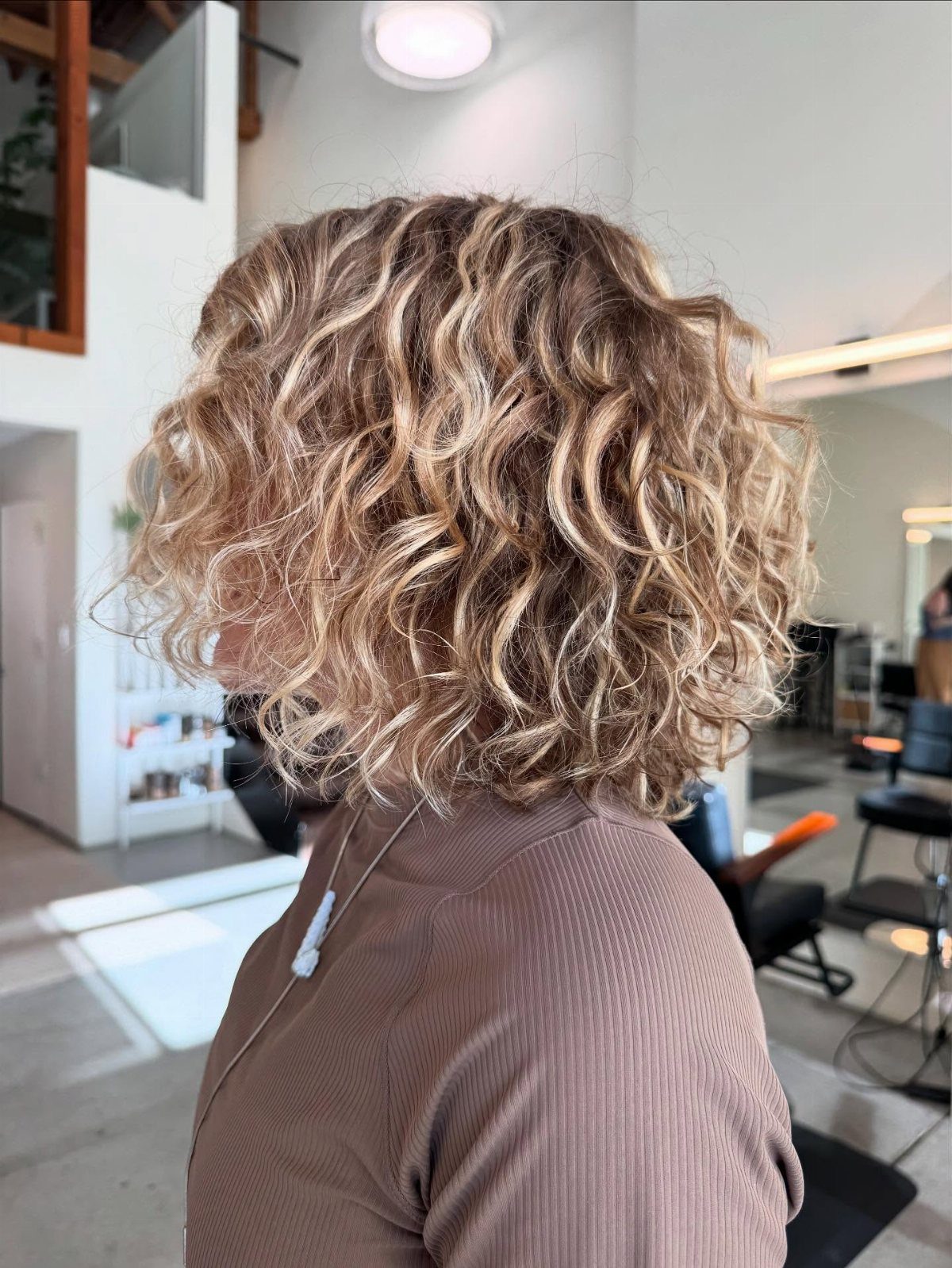
Longer than a bob but shorter than true shoulder length, a lob gives curls room to bounce without the weight that pulls them straight. Layers keep the shape from turning into a triangle.
Ask for length that hits between the chin and collarbone, with internal layers so the curls stack instead of clumping. Blonde highlights show off each ringlet, though the cut works just as well on one color.
This suits anyone who wants the ease of short hair but misses having enough length to pull back.
10. Tapered Cut
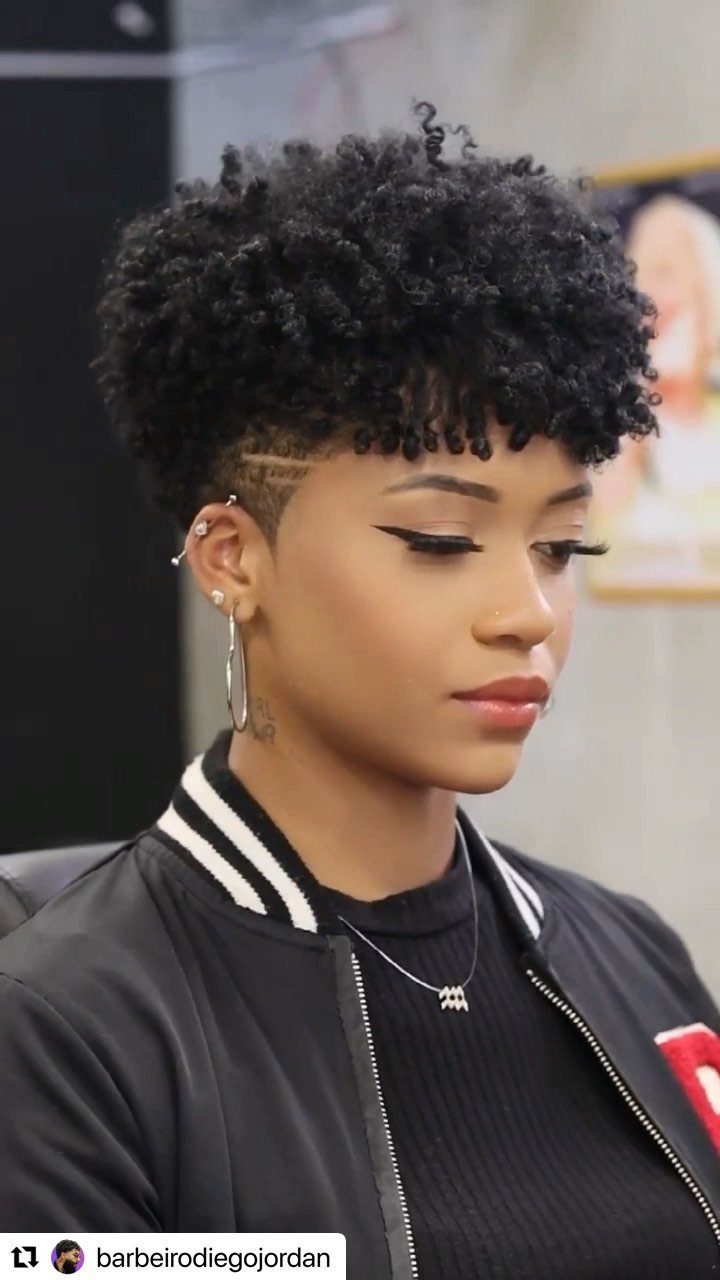
Short on the back and sides, longer and fuller on top, a taper keeps the curls where you want the volume. The close-cut perimeter stays clean for a few weeks, then softens as it grows.
Ask for a taper or fade on the sides and back, and specify how high you want the blend to go. A shaved line or design adds detail, though it needs regular barber touch-ups to stay sharp and visible.
The curly top needs moisture, since tapered sides leave less hair to hold in hydration.
11. Wash and Go
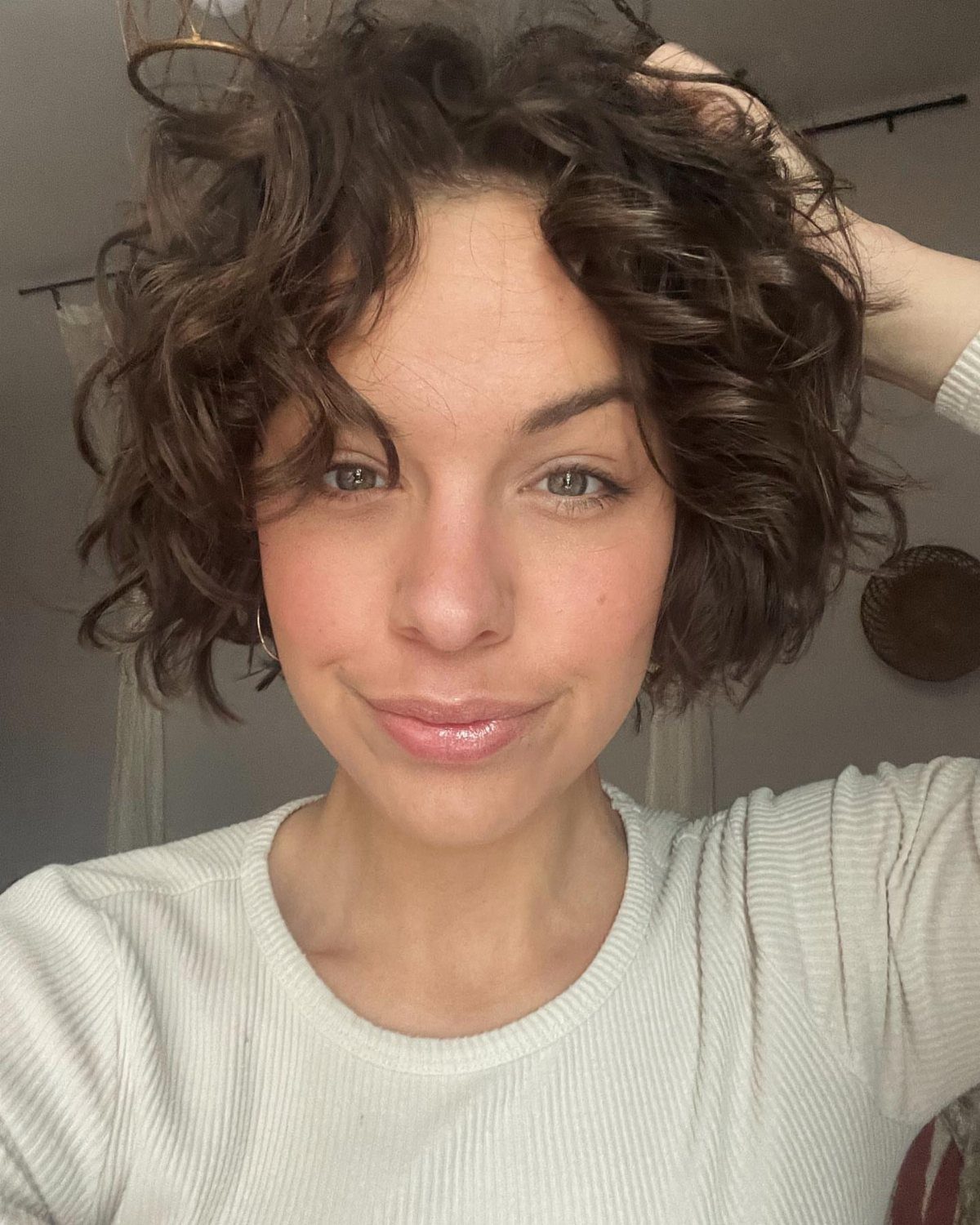
Curls worn as they dry, with no heat and no restyling. A wash and go is about letting the pattern show up on its own, with just enough product to stop frizz and hold the curl.
Apply a leave-in or curl cream to soaking wet hair, scrunch it in, then let it air-dry or diffuse on low. The less you touch it while it dries, the better the curls hold.
This works best on healthy, well-moisturized hair, since dry curls lose their shape fast. Of all the styles here, this one asks the least of you in the morning.
12. Cropped Ringlets
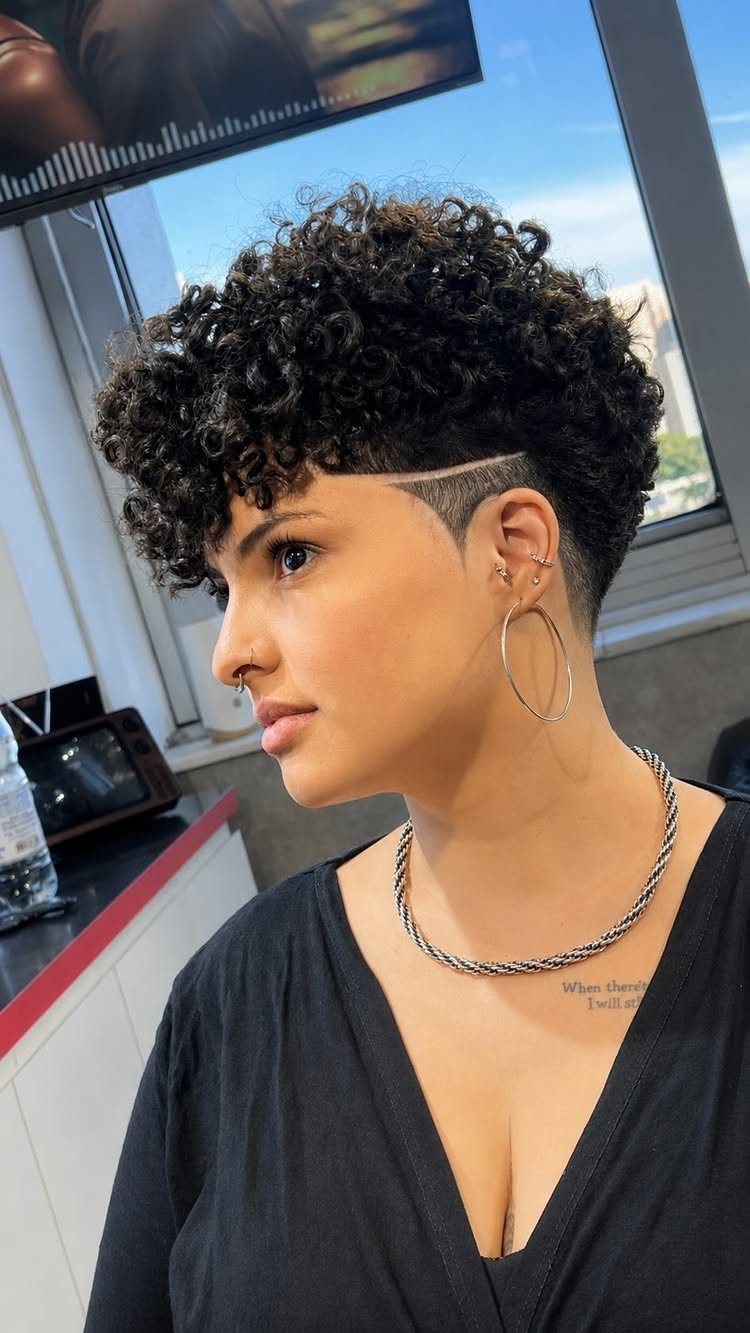
Tight, springy curls cut short enough to show each coil clearly. A tapered back and sides frame the ringlets on top, and a shaved line adds a small detail that stays sharp for about 2 weeks.
Ask for the sides and back tapered close, with enough length on top for the curls to form full rings. A stylist who cuts dry can see exactly where each ringlet sits.
A curl cream or gel on damp hair keeps the definition, and a satin pillowcase helps the ringlets hold their shape overnight.
13. Wavy Bob
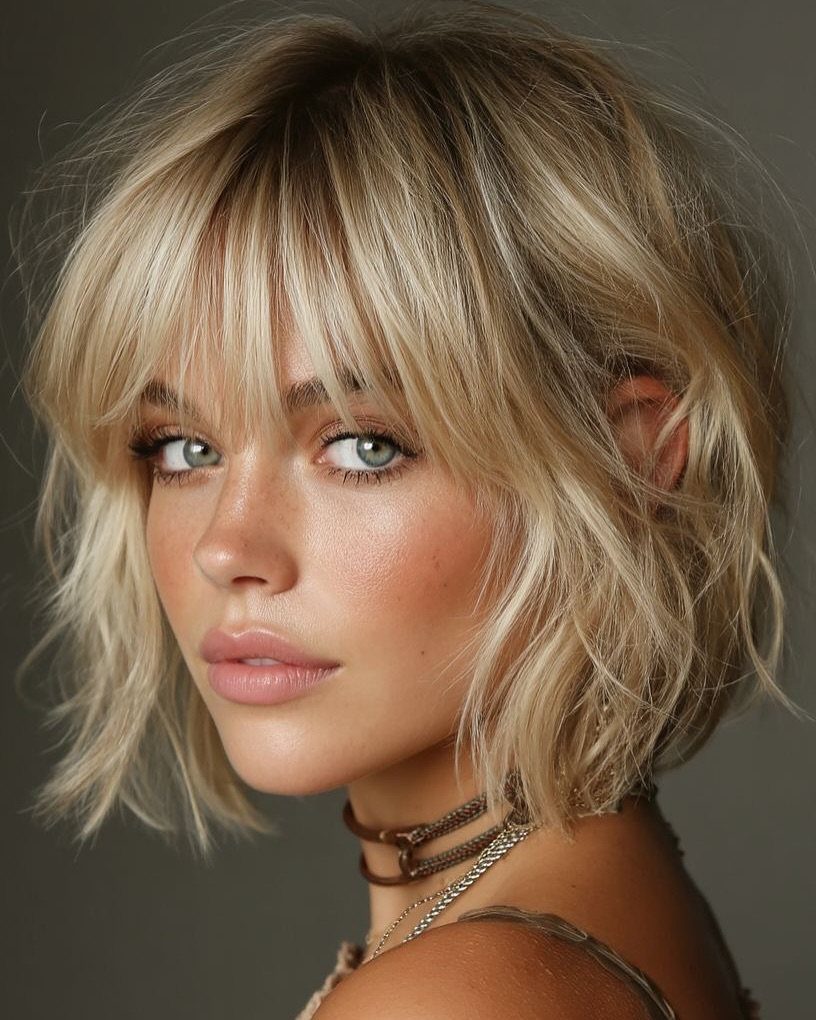
Loose, soft waves at chin length give this bob a relaxed shape that sits well away from tight coils. Wispy bangs keep the front light, so the cut reads easy rather than structured.
I like this for anyone with wavy hair who wants a short cut that dries without much fuss. Ask for the ends to stay slightly textured instead of blunt, so the waves can move.
14. Natural Short Curls
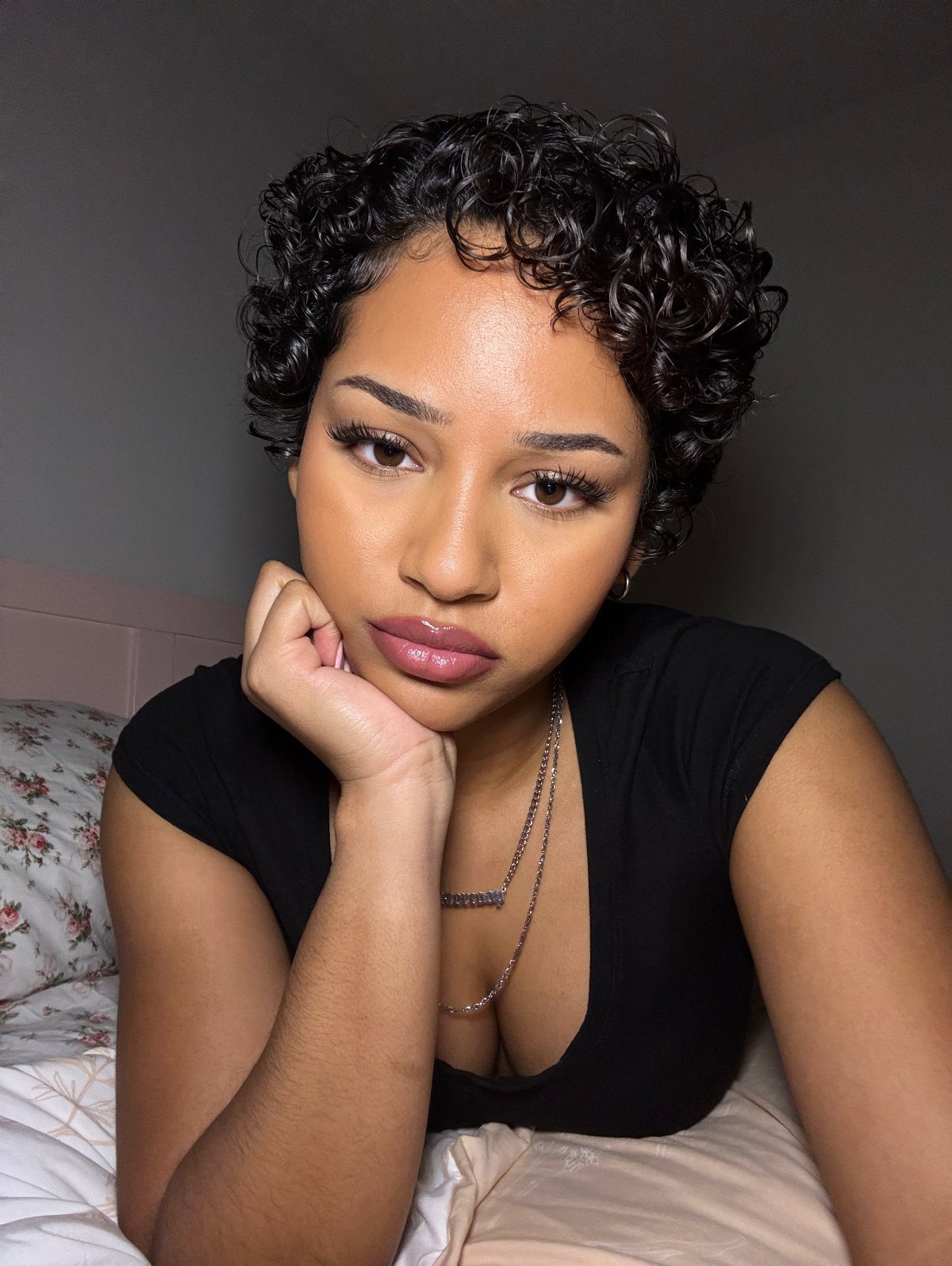
Fullness comes from the curl pattern itself here, which makes this rounded crop one of the simplest short looks to wear. Nothing is forced into shape; the cut just follows the natural outline of the hair.
Ask your stylist to shape it dry so the rounded outline matches where your curls land. Keep the crop even all around, and a light leave-in is enough to hold moisture.
15. Twist-Outs
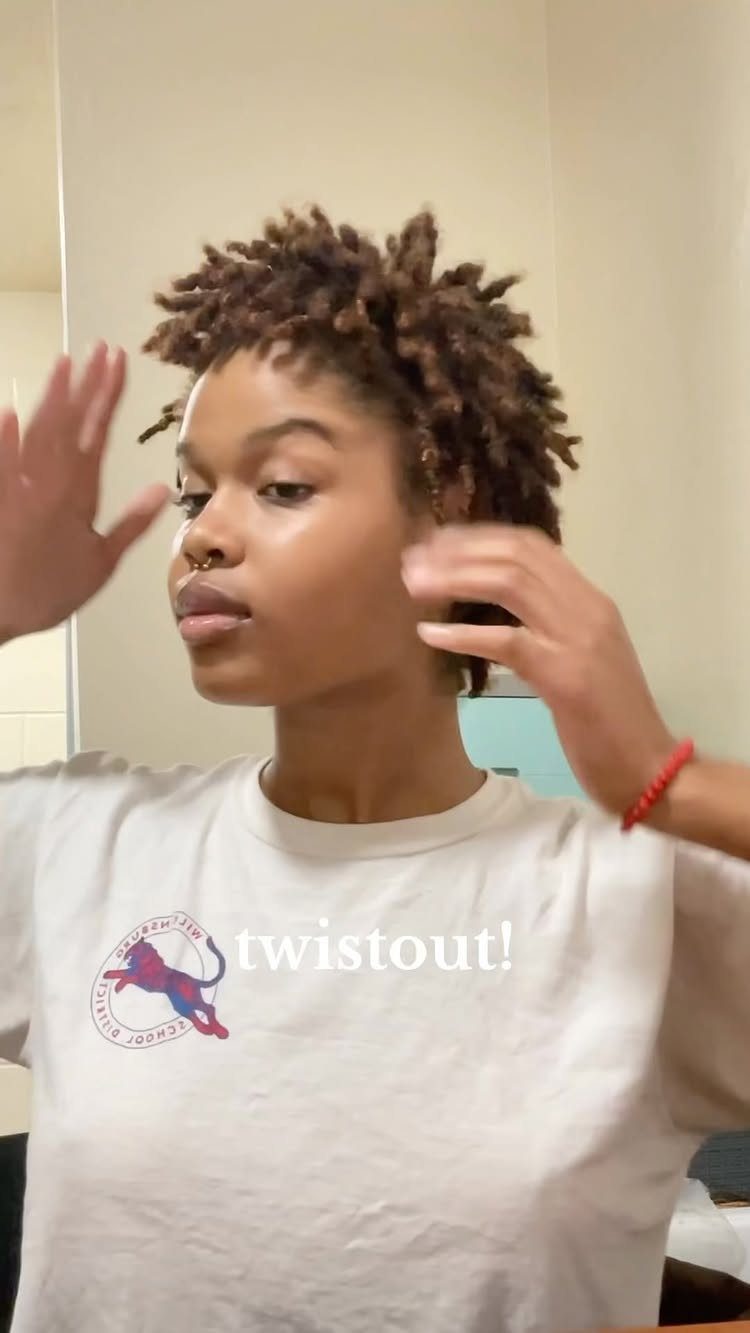
Small damp sections, twisted and left to dry, unravel into soft, defined curls. On short hair the result looks full and bouncy, with each curl clearly separate.
Twist in a curl cream or gel while the hair is still wet, then let it dry fully before you take the twists apart.
Rub a little oil on your fingers first to cut frizz. Smaller sections give tighter definition, and I would take that over larger ones if you have the patience.
16. Deep Side Part
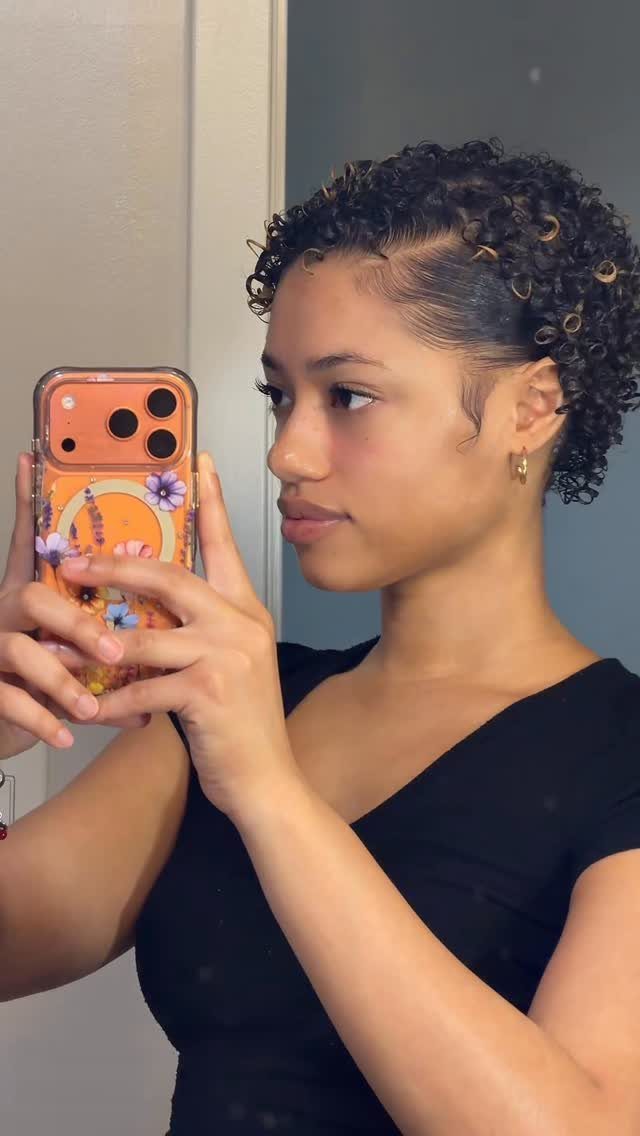
A deep side part moves all the volume to one side, so short curls look styled even when you did very little. Tucking or slicking the opposite side behind the ear keeps the shape clean and shows off the part.
Part your hair while it is damp, since dry curls resist a new direction. A small amount of gel keeps the tucked side in place without making it stiff.
17. Curly Cut with Highlights
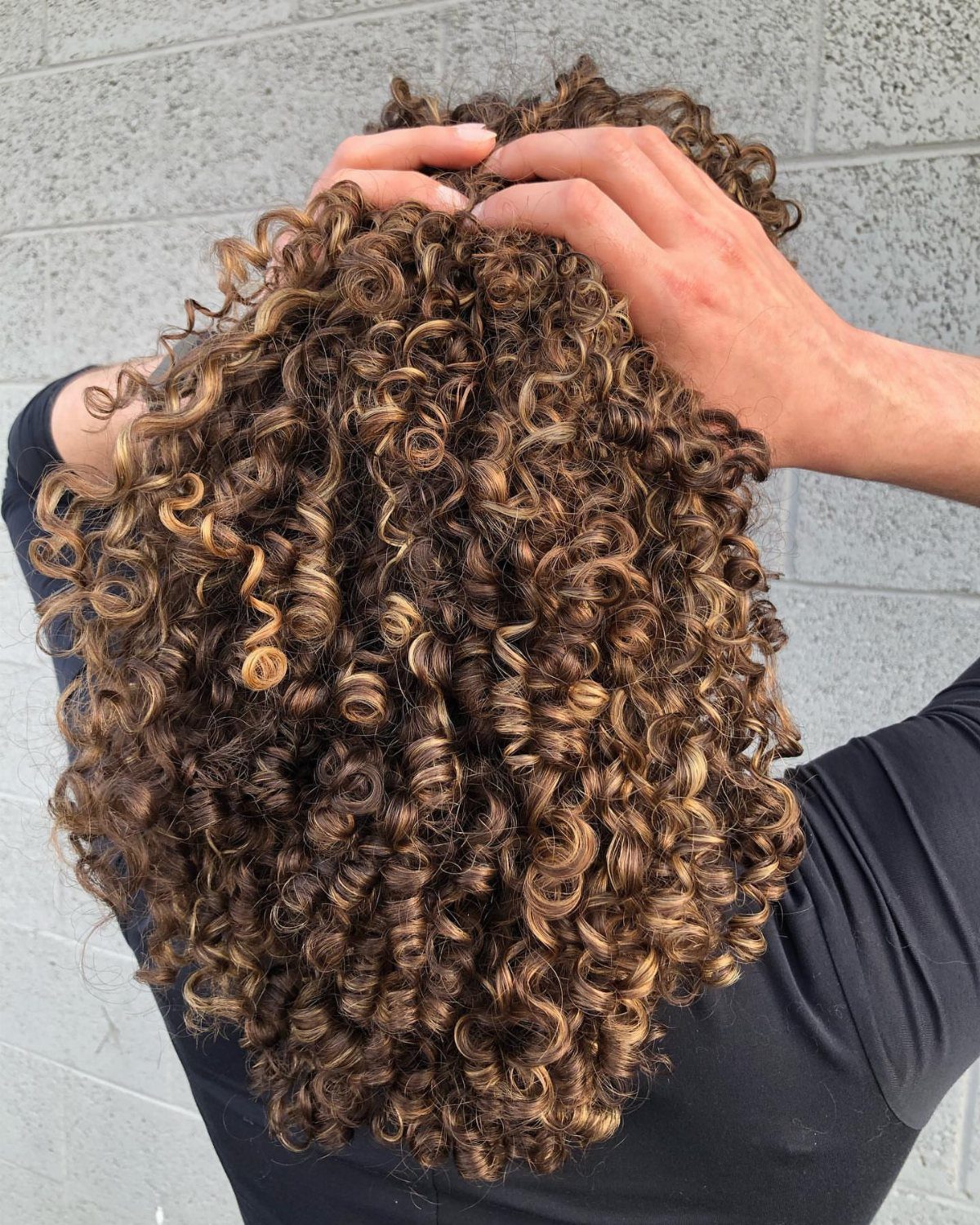
Golden highlights run through short brown curls here, and the mix of tones is what gives the cut depth from behind. More than one shade catches light at different points, so each curl looks separate.
Ask your colorist for two or three tones in the same warm family, placed through the curls rather than in thick stripes. Lightened hair dries out faster, so I would add a weekly deep conditioner.
18. Curly Bob
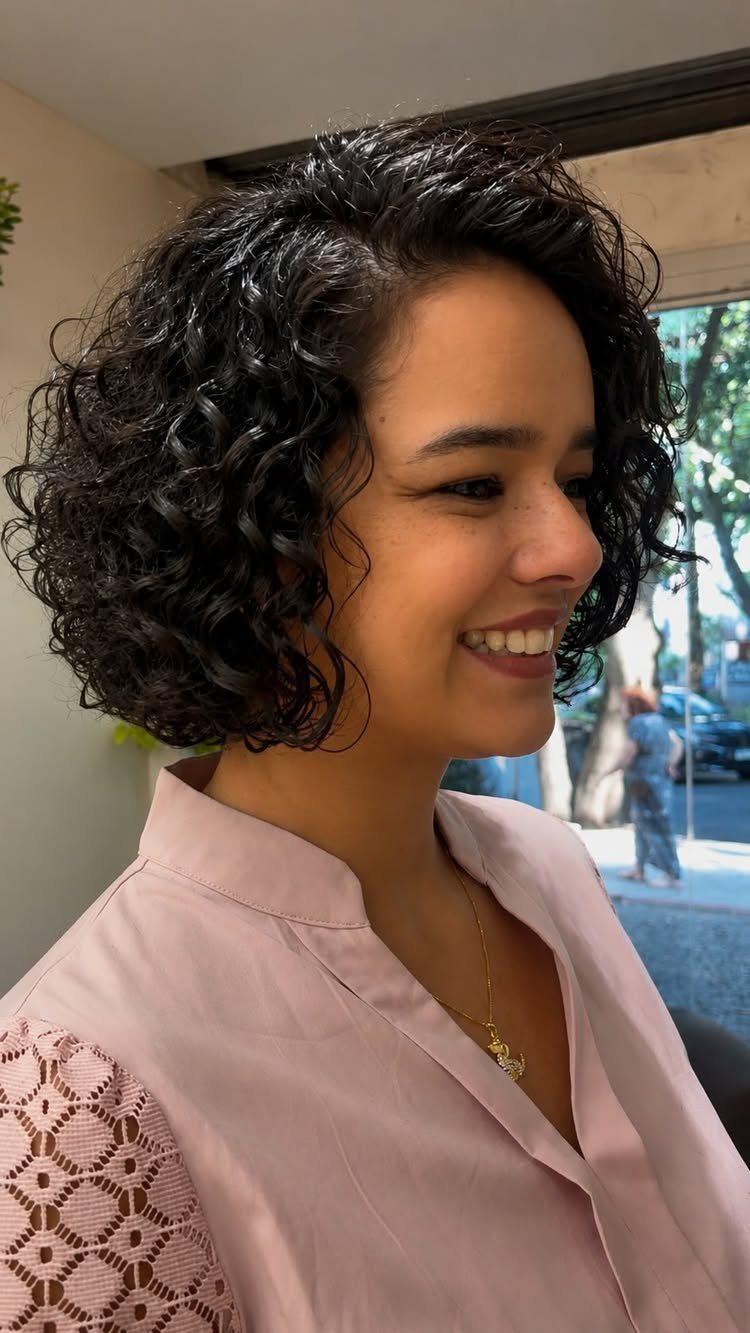
A rounded bob lets the natural curl do the shaping, with no heavy layering needed to add interest. The cut itself is simple, a rounded shape that sits at the jaw, so the curls do most of the styling work.
Ask for the cut to be done dry, so the length sits where your curls spring up instead of where they hang when wet.
Work a curl cream through wet or damp strands before you scrunch, and the ringlets clump instead of puffing out.
I would choose this over a straight-cut bob any day if your hair already curls.
19. Curly Mullet
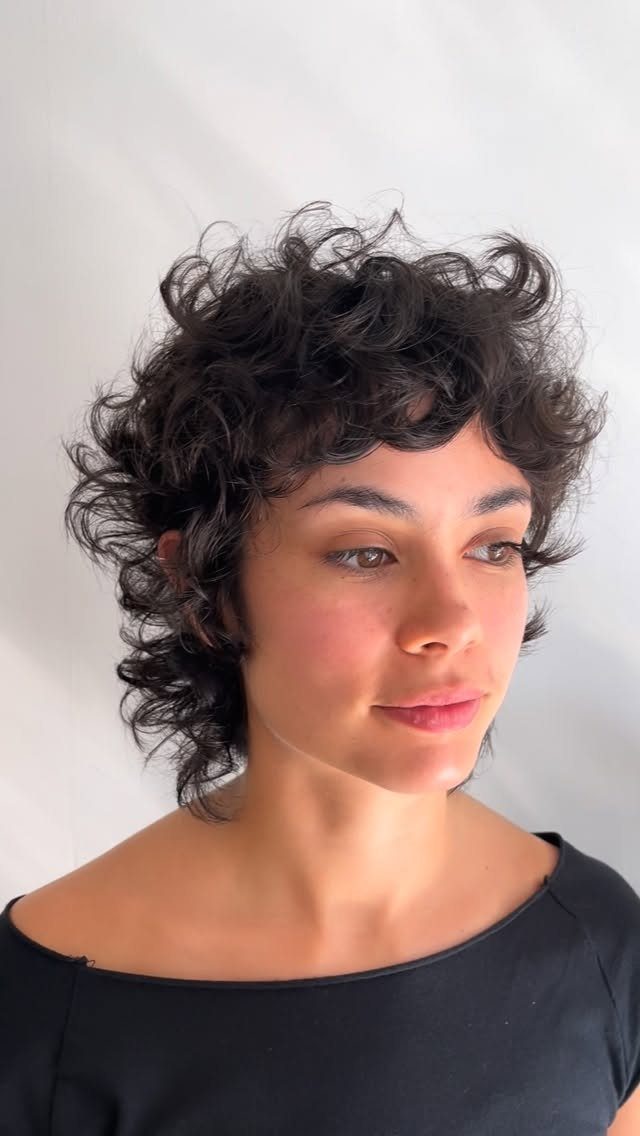
Short bangs up front and length left to fall at the back give a curly mullet its edge. The curls make it softer than the straight version, since the tousled texture blends the 2 lengths together.
Ask for the front and sides kept short, the back left long, and the layers cut dry so the curls show where they land.
A curly mullet suits the woman who wants a dramatic change but still wants some length left to play with.
20. Curly Pixie-Bob Hybrid
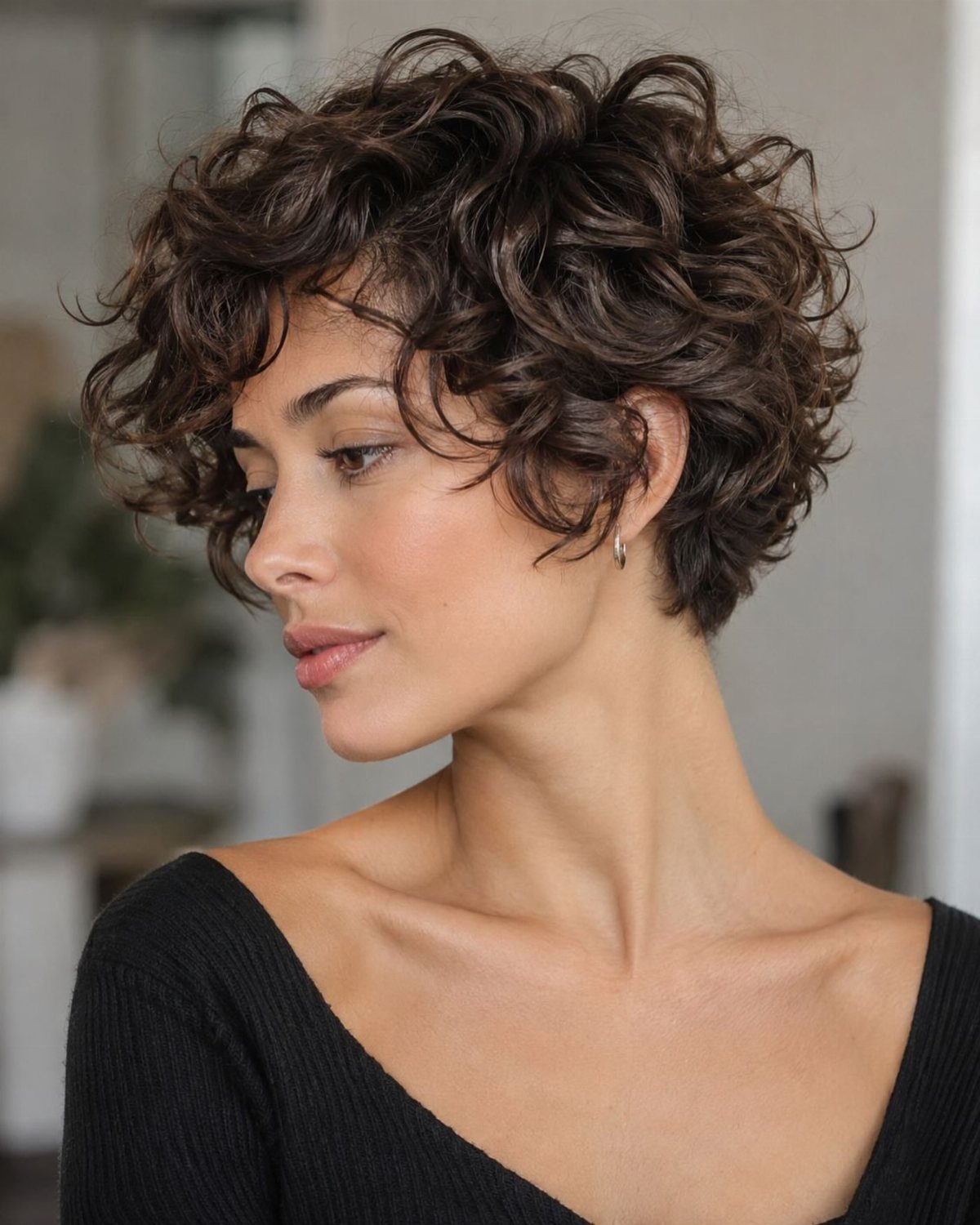
Sitting between a pixie and a bob, this cut keeps enough length for full, voluminous curls while staying short at the nape and around the ears. It reads as neat from the side and generous on top.
A dry cut lets the stylist see where each curl actually lands, so the rounded outline follows your pattern.
Work a small amount of lightweight cream through wet strands with a scrunch, and the lift stays soft instead of puffing out.
I like it for anyone stuck choosing between a pixie and a bob.
21. Copper Curls
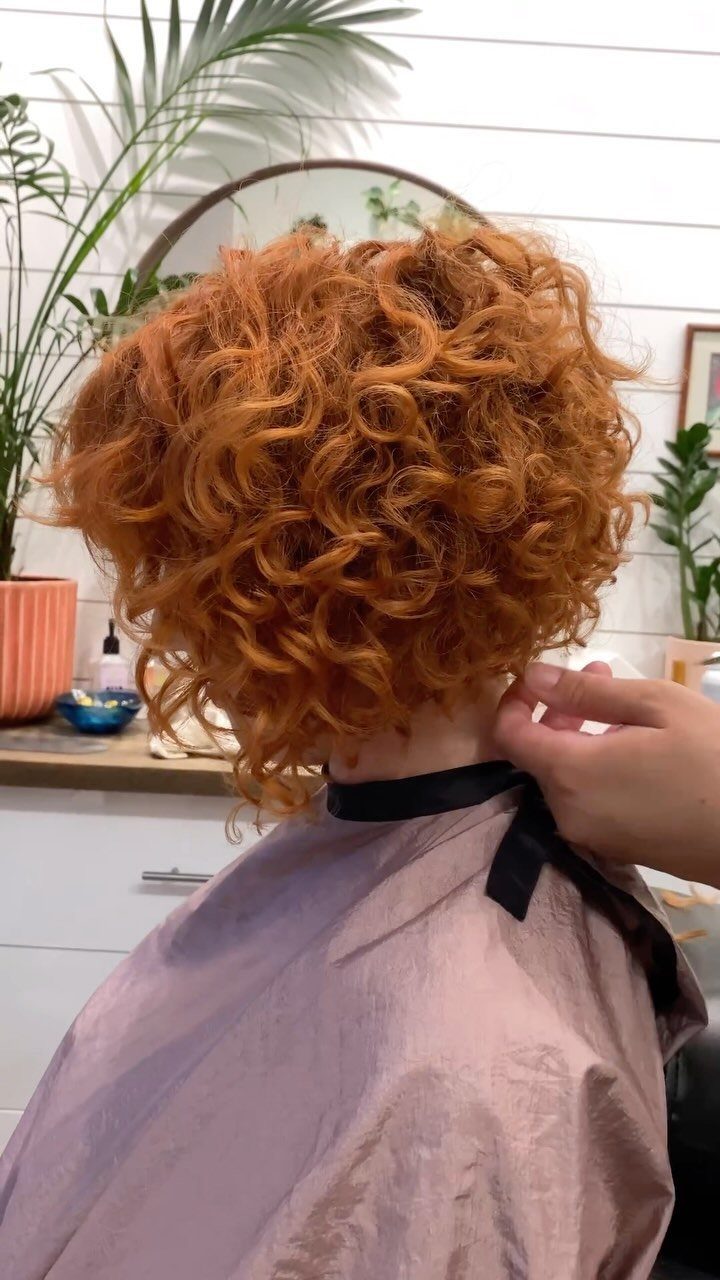
Copper turns tight, springy curls into the main event, because the warm shade catches light on every coil. Color this bright on short hair also grows out visibly, so plan on regular root touch-ups.
Book a colorist who works with curly hair regularly, and bring the photo so you both agree on the exact copper shade before any color goes on.
Bleach strips moisture from coils, which is why a deep conditioning mask once a week keeps the bounce from going limp.
Copper is my pick over a pale blonde if you want impact with less lifting.
22. Curly Top with Fade
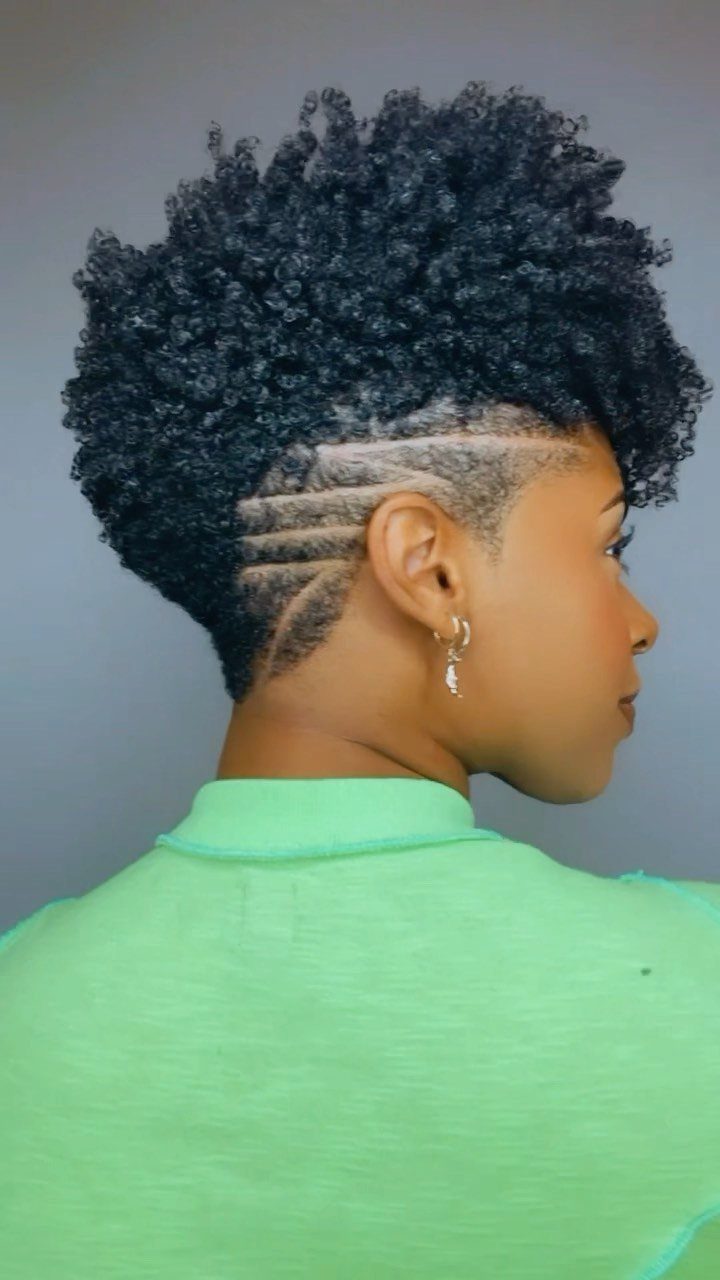
Dense, soft curls on top sit above sides faded close to the scalp, and the contrast is the whole look. Curved shaved lines at the sides add a design detail without touching the length up top.
Tell the barber where the fade should end, low near the ear or higher toward the temple, since that height changes the whole shape.
The creator of this cut sees her stylist every 4–6 months, though a sharp fade and crisp lines tend to need visits sooner than that.
With the sides cut close, all the moisture work falls on the top, so a leave-in conditioner there matters more than usual.
23. Frosted-Tip Curly Bob
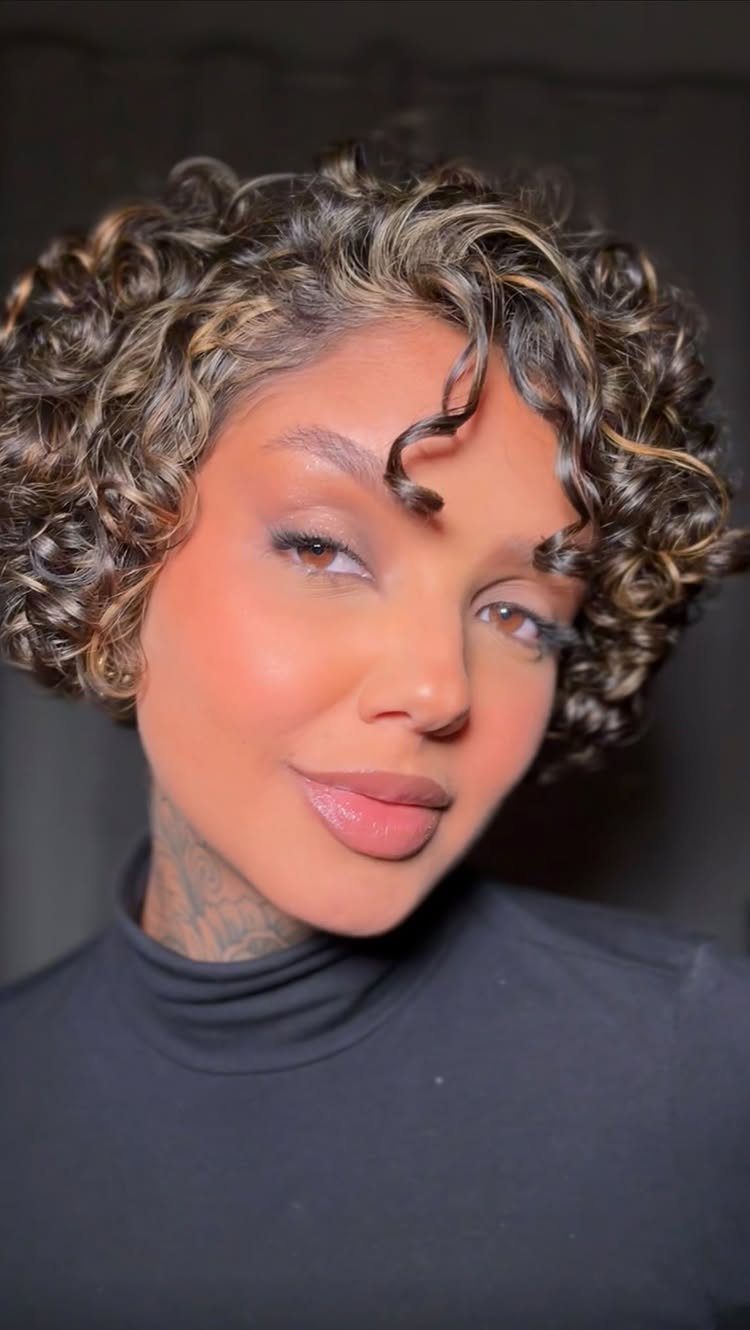
Dark roots melting into blonde-tipped curls give this bob a frosted finish, and the contrast makes each curl look separate. Because the roots stay natural, the grow-out is far gentler than an all-over blonde.
Ask your colorist to lighten only the ends of the curls, with the dark shade kept at the root. Bleached tips dry out first, so a deep conditioner and a light leave-in matter more here than on an uncolored bob.
I would take this over full highlights if you want color without constant root work.
24. Curly Pompadour
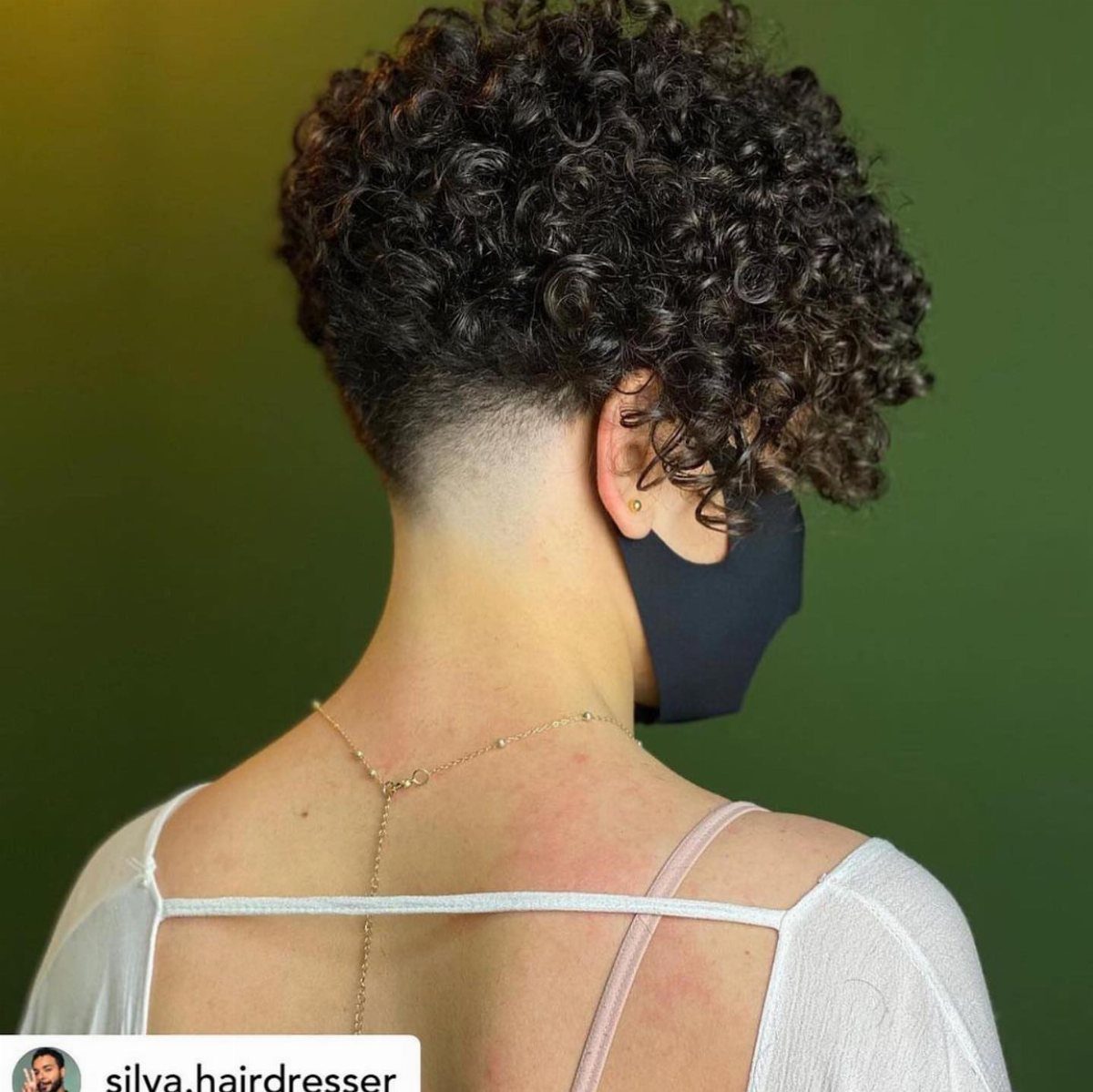
Length piled high on top and closely faded sides make a curly pompadour a retro shape with modern edges. Voluminous curls rise from the front and sweep back, while the undercut keeps the sides tight.
Short, tapered sides and back with at least 3 inches left on top give the front enough length to sweep upward. A pick or your fingers at the roots builds height, and a gel holds the shape without crushing the curl.
Expect clipper touch-ups on the sides to keep the contrast clean.
25. Curly Bowl Cut
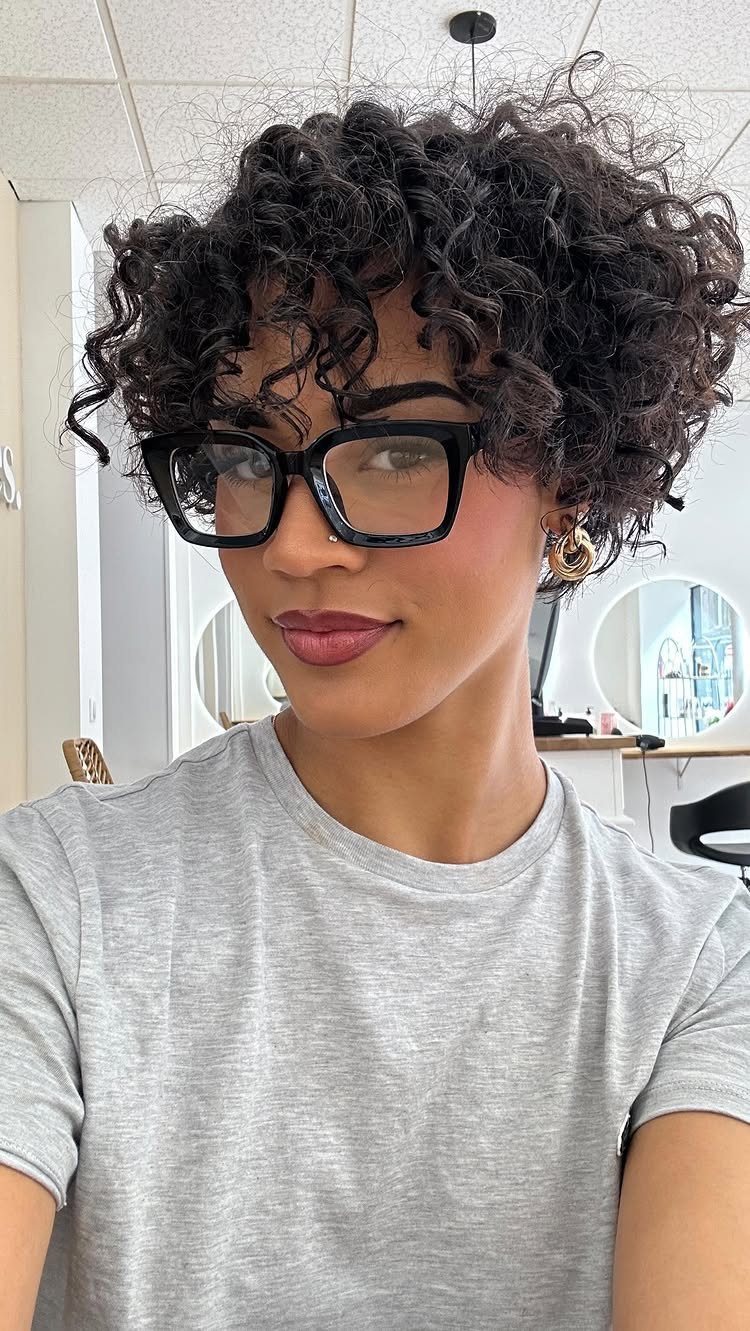
A bowl cut in curls reads rounded and soft, with the volume sitting evenly around the head instead of falling flat like the straight version. Short, dense curls make the outline look full without any extra styling.
A dry cut lets the stylist watch each curl spring into place, so the rounded outline follows your real pattern instead of a wet-hair guess.
Smooth a curl cream through damp strands and the clumps hold their shape as the bowl dries.
Bold frames sit well against this shape. I would pick it if you want a distinctive cut that asks little of you each morning.
26. Curly Wolf Cut
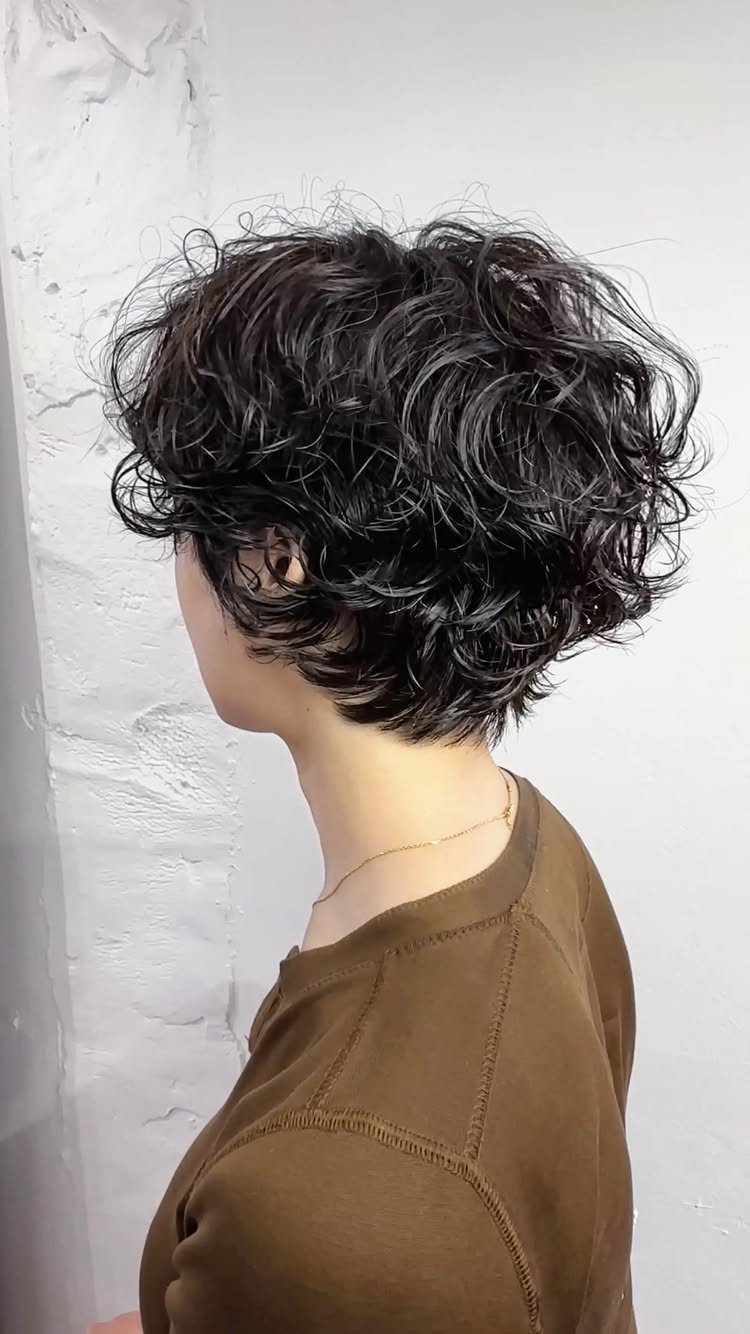
Short layers on top and shaggy length at the nape make the curly wolf cut a blend of mullet and shag.
Curls suit it well, because the layers stack into volume on their own and the nape stays loose and textured.
Layers carved on dry hair land where your curls actually fall, because shrinkage is already built in. Keep the nape longer than the crown if you want the mullet edge to show from the side.
Scrunch a light cream into damp curls and the choppy ends keep their definition instead of puffing into frizz. Shaggy cuts lose their outline as they grow, so plan on regular trims.
Choosing a Curl-skilled Stylist
Start with the stylist’s Instagram. Look for finished cuts on curls that match your pattern, whether that’s 3a or 4c, not just loose waves.
Then ask direct questions: how much experience they have with your curl type, which products they’d recommend, and how often the cut needs upkeep. Specific answers beat "it’s easy."
Build a mood board before you book. Pick 3 or 4 photos, say what you want to change, and talk through curl diameter, density and shrinkage.
I’d also skip anyone who talks about "taming" your curls.
Cutting Curls Dry
Wet curls are stretched, and they don’t all shrink by the same amount as they dry. A cut that looks even in the chair can end up too short or lopsided by the next morning.
Cutting curly hair dry also lets the stylist see where bulk builds at the nape and crown, and remove it before it turns into a puffed-out shelf.
Short cuts leave very little room to correct a mistake, so this matters more at pixie and crop lengths than it does on long hair.
Ask whether the stylist cuts dry before you book. Arrive with your hair in its natural pattern, not flat-ironed or stretched, so what they see is what you’ll wear.
Moisture and Wash Routine
You cut inches off but you still need just as much moisture, sometimes more. Cleanse gently with a sulfate-free shampoo and follow with a nourishing conditioner each week.
Every week or so I add a deep mask to keep things soft. A leave-in with bond-building benefits helps reinforce the curl, and a drop of serum or oil on top locks the moisture in.
Keep styling creams and foams lightweight, since heavy layers build up fast on short hair. Use a clarifying shampoo at least once a month to clear that buildup.
If you diffuse, stay on a gentle setting. At night, silk sleep protection, such as a pillowcase or scarf, cuts friction and keeps the curl pattern intact.