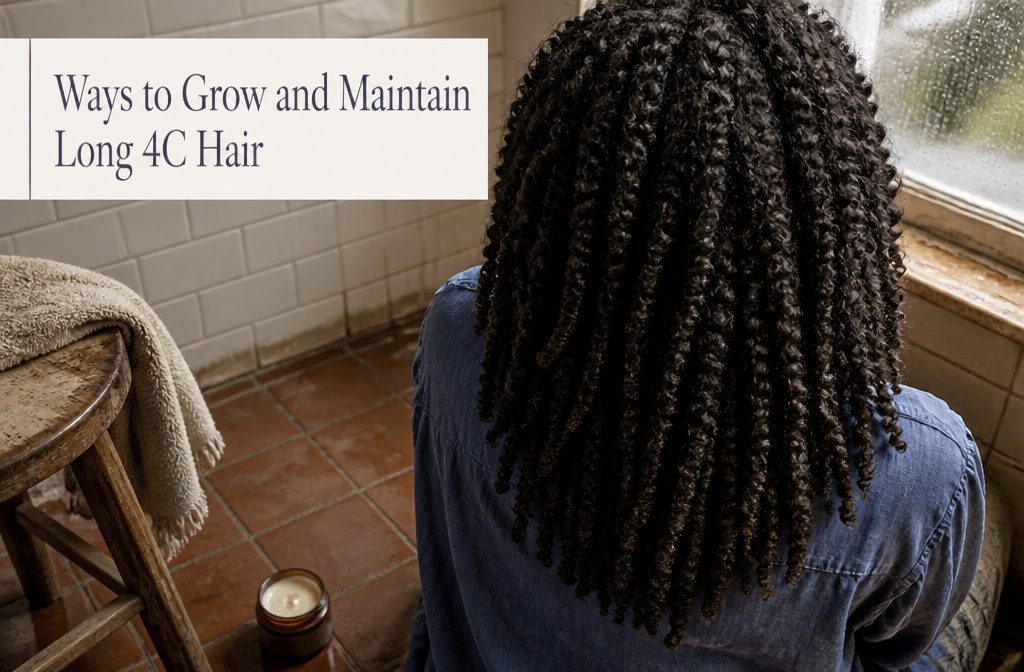
4C hair needs less cutting and more patience than the advice usually suggests.
Most routines focus on products and protective styles but skip the part where progress takes years, not months, and where forcing through a bad detangling session costs more length than skipping a trim ever would.
Deep conditioning once a week and keeping sulfates out of your shampoo matter, but they work only if you stop touching your hair between styles and give the routine time to show up in the mirror.
1. Be Patient With the Process

Patience applies three times in a 4C routine: learning how your hair behaves, doing the care, and keeping it up week after week. Most people only plan for the middle one.
When a detangling session turns frustrating, stop and put the comb down.
Pushing through knots while you’re annoyed is how length gets lost, and the session can wait until you’re calm. Good care may also cost you a weekend plan, and I think that trade is worth making.
Patience is a mindset that forms before any action, so check your mood before you touch your hair.
Women have grown long 4C hair in 5 years or less. The timeline is real, but it is counted in years, not months.
2. Care for Yourself and Your Scalp

Your hair is part of your body, so what you eat and how you move show up on your head.
Fatty fish like salmon or mackerel are an easy place to start, and regular exercise belongs in the same routine as good meals.
Massage your scalp gently with your fingertips. It helps release the oils long 4c hair depends on, and it lifts off dead skin cells, product residue and sweat that collect at the roots.
I’d tie it to wash day, when the buildup is already there to be rinsed away.
Skip the miracle fix for itching, flaking or thinning. Nothing sold in a jar replaces steady habits, and a scalp problem that sticks around is worth showing to a doctor or dermatologist.
3. Handle Hair Gently and Limit Manipulation
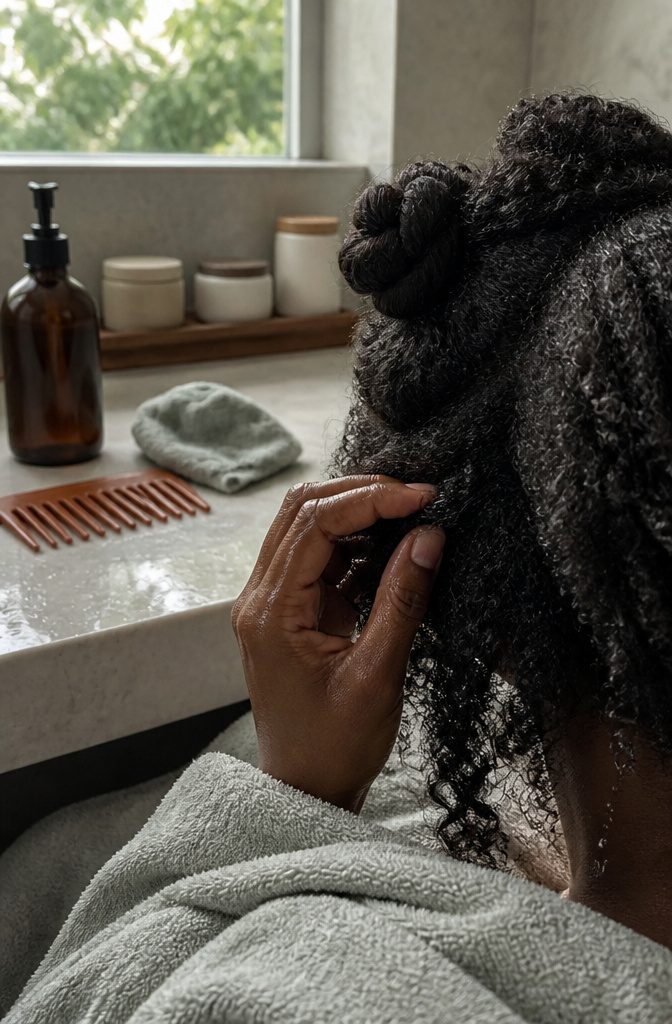
If your length looks the same every time you measure it, look at your hands first.
Constant restyling, tugging, separating and yanking at knots wears strands down, and so does time spent exposed to the elements. Leave long 4C hair alone as much as you can.
Fingers beat tools.
I’d use them to detangle and shape, and keep combs and heat for the days they earn their place. A brush on tangled hair will likely damage delicate strands.
Apply a detangling leave-in while the hair is damp, then loosen knots gently with a wide-toothed comb. Over-stretching hair also strains it, so for a stretch I’d pick Bantu knots, which work without heat and cut down on manipulation.
4. Moisturize Consistently
Moisturize Consistently
Tightly coiled 4C hair is prone to dryness because scalp oils have a harder time traveling down the hair shaft.
The tight coil pattern creates more twists and turns, so the natural sebum your scalp produces can’t slide down as easily as it does on straighter textures.
That makes daily moisture something you build into the routine, not something you save for wash day alone.
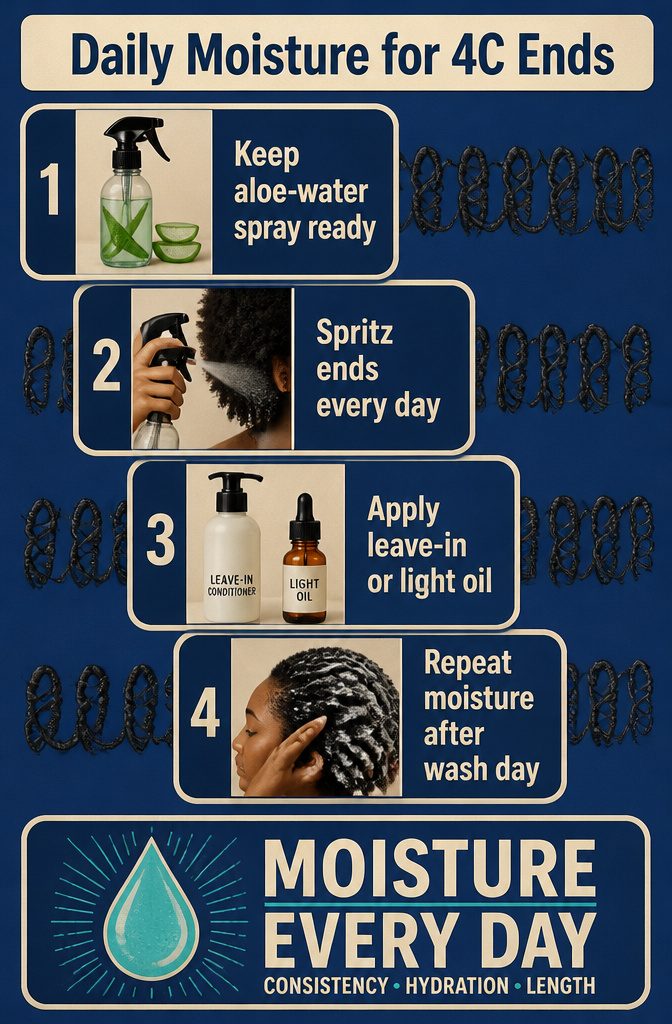
I keep a spray bottle of aloe vera juice mixed with water on hand and spritz my ends daily. The ends are the oldest part of the hair and dry out fastest, so they get first attention.
After spritzing, I seal in that moisture with a leave-in conditioner or a light oil. Moisturizing products matter on wash day and every day after, because 4C hair will shed moisture fast if you let it.
A good leave-in, a cream or a gel keeps the hydration from evaporating and prevents the dryness that leads to breakage. Without consistent moisture, length stalls.
5. Use Suitable Products and Avoid Harsh Ingredients
Sulfates and silicones are the two ingredients to drop first. Sulfates strip natural oils that coily hair already struggles to distribute from root to tip, and the result is brittle strands that snap under tension.
Silicones feel smooth at first but coat the shaft and build up fast, which blocks moisture from getting in and weighs curls down.
I look for formulas that skip both, especially in shampoo, since that’s where they do the most damage.
Washing your hair too frequently can strip your hair of protective oils, leaving it vulnerable to dryness and breakage.
That means choosing a gentle cleanser matters as much as how often you use it.
The L’Oréal Paris EverPure Sulfate-Free Moisture Shampoo and Conditioner work well when you need a straightforward hydrating pair, and the brand’s EverPure Sulfate-Free Curl line adds coconut oil if you want something built specifically for texture.
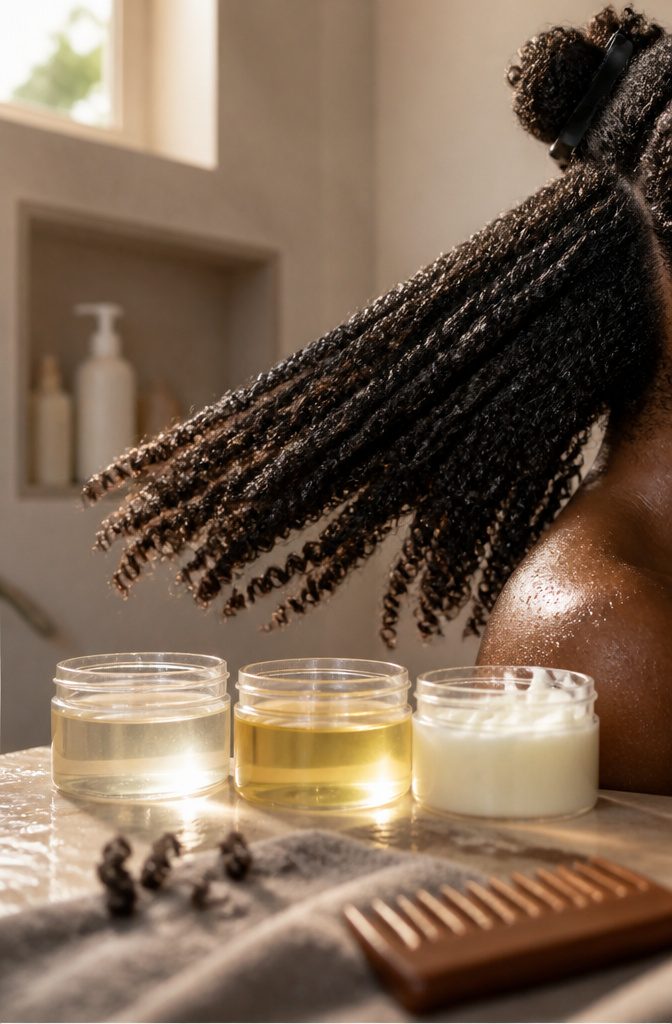
Layering matters once hair is clean. The LOC method applies liquid, then oil, then cream to seal everything in, and it tends to suit low-porosity hair that resists absorption.
High-porosity hair, which drinks up moisture but loses it just as fast, often does better with LCO: liquid, cream, then oil on top to lock it down.
6. Protect Hair From Heat and Through Styling Choices
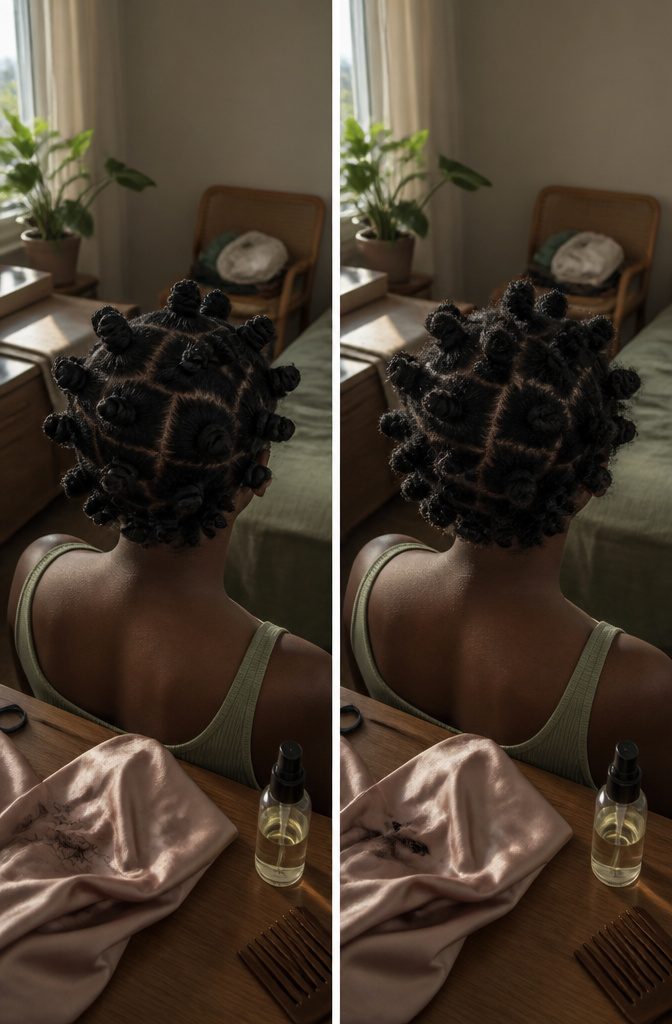
Heat styling can take 4C hair from healthy to brittle faster than most other textures, so use a moisturizing heat protectant whenever you blow dry or flat iron.
The protectant seals moisture into each strand and gives you a buffer against the direct contact that causes breakage.
Protective styles cut down on daily manipulation, which means less combing, less heat and less chance of snapping fragile ends.
Cornrows, box braids with knotless extensions to reduce scalp tension, Bantu knots, passion twists and micro locs (where you divide hair into one-inch sections) all give you a finished look you can wear for a few weeks at a time.
Bantu knots work especially well because they stretch the hair without heat and can stay in for up to two weeks or longer with proper care.
You’ll spend more time up front, but you get weeks of low-touch mornings in return.
7. Trim Split Ends Every 3 to 4 Months
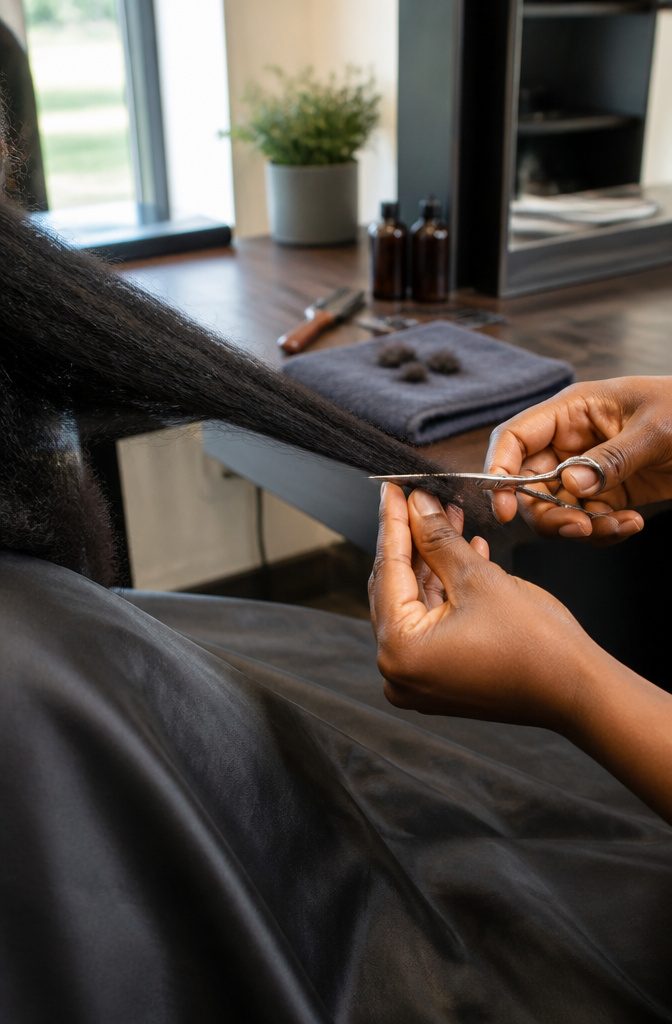
Split ends are rough, dry and break far more easily than healthy strands.
Left alone, they travel up the shaft and snap off length you spent months growing. Cutting them stops the damage before it spreads.
I know it sounds backward to cut hair you’re trying to keep, but a 1–2 inch trim every 3–4 months takes off far less than the breakage split ends would cause over the same stretch.
You trade a little length now for more length six months out.
If your hair is recovering from damage, you may need trims closer to every six weeks at first.
Once it feels smoother and holds moisture better, you can stretch the schedule back to three or four months and still stay ahead of splits.
What 4C Hair Is and Why It Needs Different Care
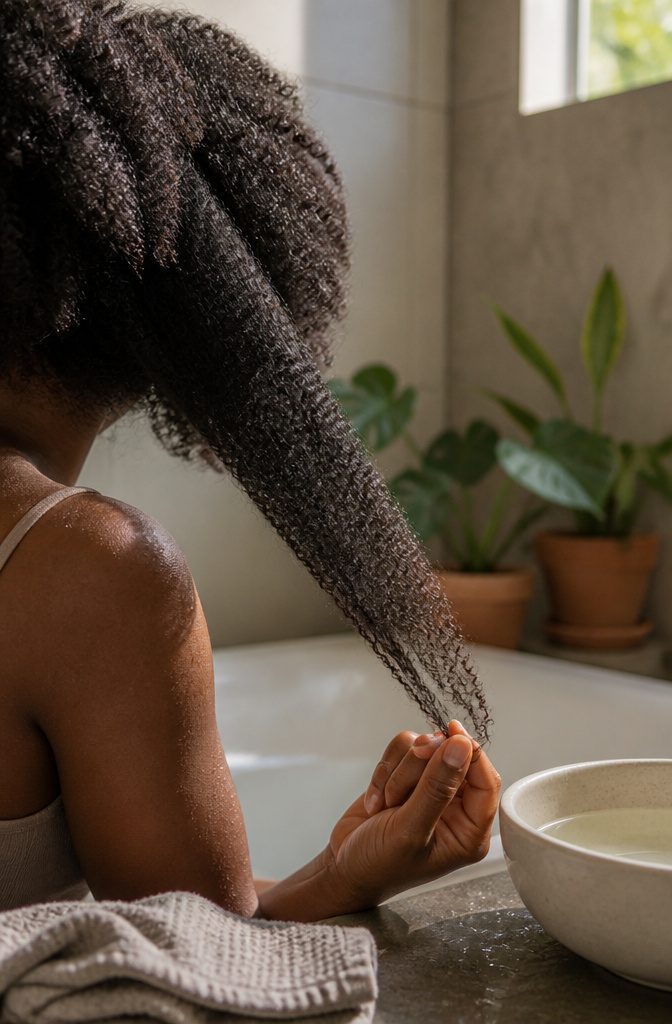
4C hair has tightly packed coils with a zigzag or Z pattern, roughly the diameter of a knitting needle. The coils are less defined than those in 4A and 4B hair, often giving a frizzy appearance even when healthy.
Hair typing systems are not scientific, and most people have 2–3 other curl types scattered throughout their hair, so there is no one-size-fits-all approach.
The tightly coiled structure creates a challenge that straight and wavy hair types do not face.
Natural oils from the scalp have a harder time traveling down the hair shaft in 4C hair, which leaves the mid-lengths and ends chronically dry.
This dryness makes the strands more fragile and prone to breakage, especially when the hair is manipulated or styled.
The strand itself also tends to be thinner than other hair types, adding to its delicacy. Maintaining length in 4C hair depends on addressing that dryness and protecting the coils from damage.
Deep Conditioning Once a Week
Deep Conditioning Once a Week
Consistent moisture separates 4C hair that retains length from hair that breaks before it reaches shoulder length.
Deep conditioning at least once a week keeps strands nourished, strengthens the structure, and improves elasticity enough to reduce breakage when you detangle or style.
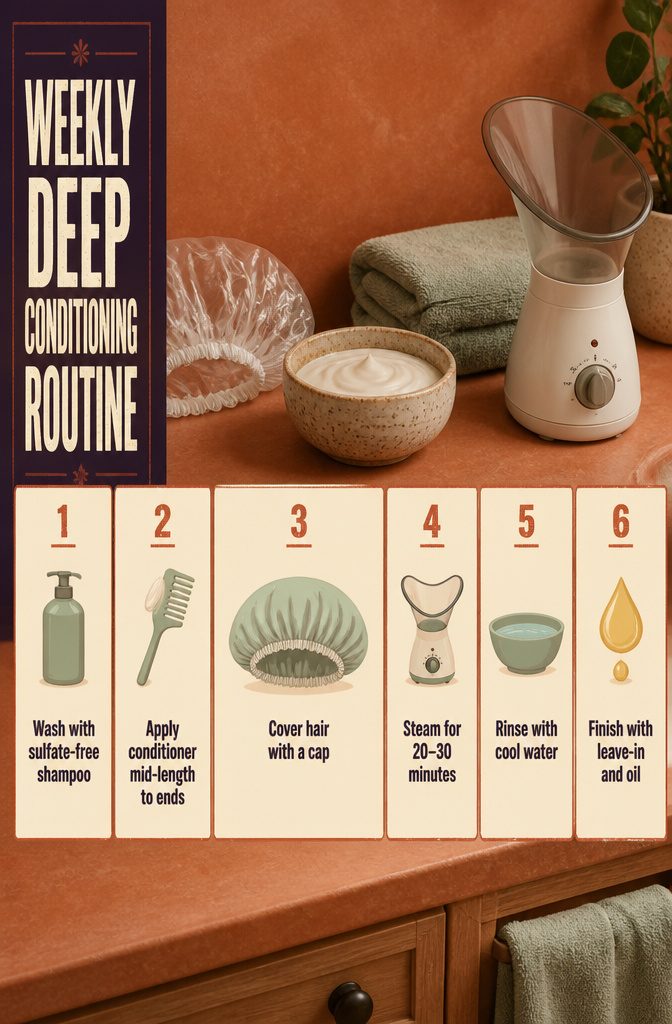
The treatment sequence is straightforward. Wash with a sulfate-free shampoo to clear buildup, then apply the deep conditioner from mid-length to ends, focusing on areas that feel dry.
Cover your hair with a cap and sit under a dryer or steamer for 20–30 minutes so the treatment penetrates the cuticle.
Rinse with cool water to seal everything in, follow with a leave-in conditioner, and finish with a lightweight oil or butter to lock in the moisture.
The L’Oréal Paris Elvive Total Repair 5 Power Restore Multi-Use Treatment delivers 91 grams of a repair concentrate with protein, and it works as a rinse-out mask, a co-wash between shampoos, or a styling treatment for lasting hydration.
Some people with heat or chemical damage may need to deep condition more often than weekly.
Others with well-maintained hair can stretch it longer. Listen to what your hair tells you.
Frequently Asked Questions
How long does it take to grow long 4C hair?
Women have grown long 4C hair in 5 years or less. The timeline is real but measured in years, not months, and depends on consistent care and patience throughout the process.
How often should you deep condition 4C hair?
Deep condition at least once a week to keep strands nourished and reduce breakage. People with heat or chemical damage may need to deep condition more often, while well-maintained hair can stretch it longer.
How often should you trim 4C hair?
Trim 1–2 inches every 3–4 months to remove split ends before they travel up the shaft and cause breakage. If your hair is recovering from damage, you may need trims every 6 weeks at first.
What is 4C hair?
4C hair has tightly packed coils with a zigzag or Z pattern, roughly the diameter of a knitting needle.
The coils are less defined than 4A and 4B hair, and natural oils struggle to travel down the shaft, leaving mid-lengths and ends dry.
Why is 4C hair so dry?
Scalp oils have a harder time traveling down the hair shaft in 4C hair because the tight coil pattern creates more twists and turns.
Natural sebum can’t slide down as easily as it does on straighter textures, leaving the hair prone to dryness.
What products should you avoid for 4C hair?
Avoid sulfates and silicones. Sulfates strip natural oils that coily hair already struggles to distribute, and silicones coat the shaft and block moisture from getting in while building up fast.
What are the best protective styles for 4C hair?
Cornrows, box braids with knotless extensions, Bantu knots, passion twists, and micro locs all reduce daily manipulation and give you a finished look for a few weeks at a time.
Bantu knots work especially well because they stretch hair without heat and can stay in for up to 2 weeks or longer.