Styles here run from a few small cornrows along one side with every curl left loose, to micro braids that cover the whole head and take a long appointment.
Some of these styles braid most of the scalp and others braid only a few sections, so the real choice is how much curl you want left out to show.
Locs show up too, dark brown at the roots and fading to copper-red at the curly ends.
1. French Curl Braids
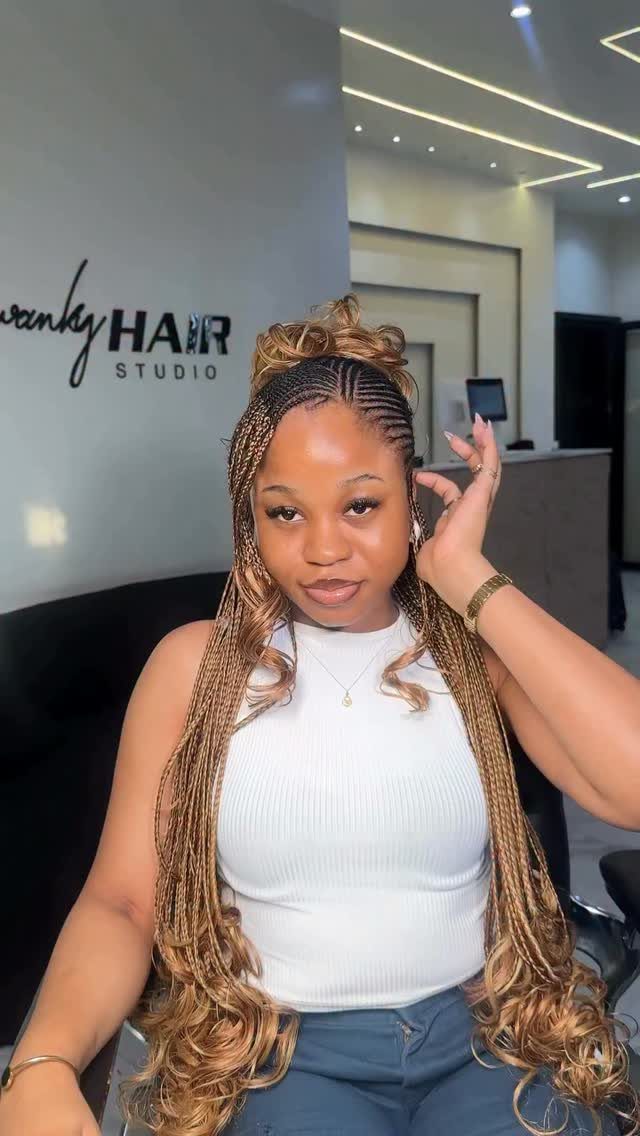
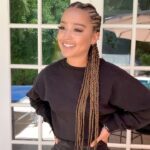
Straight braid at the top, loose spiral at the bottom: that contrast is what French curl braids are about. The braid sets the length, and the curled strands take over where it ends.
Ask for them by name and show a reference image, because "curly ends" can mean anything from a few wisps to a full spiral.
I’d pick the fuller curl, since it gives the long, brown braids more movement when you walk.
2. Braided High Bun
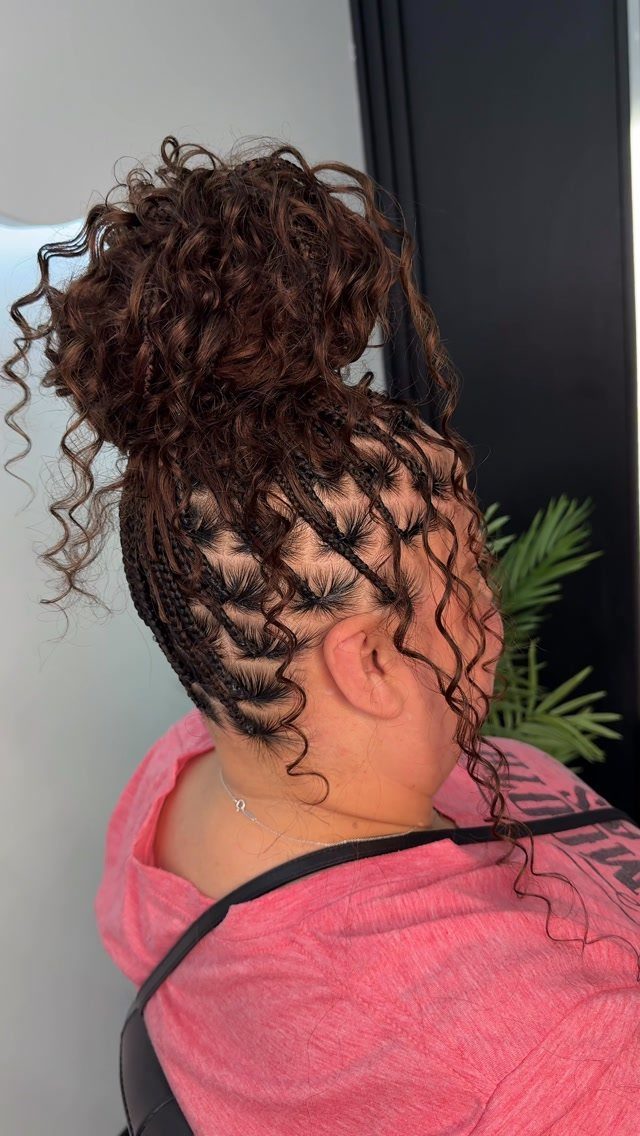
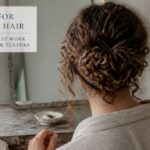
A high bun gathers every curl up and off the neck, and braiding it first gives the shape structure. Scalp braids in a pattern lead the eye up to the top, so the bun looks planned rather than pinned.
Leaving a few curls loose at the front softens the line of the bun and frames the face.
They soften the braided lines. If you wear this to a stylist, ask for the scalp pattern and the bun placement separately, since both change the look.
3. Braided Low Bun
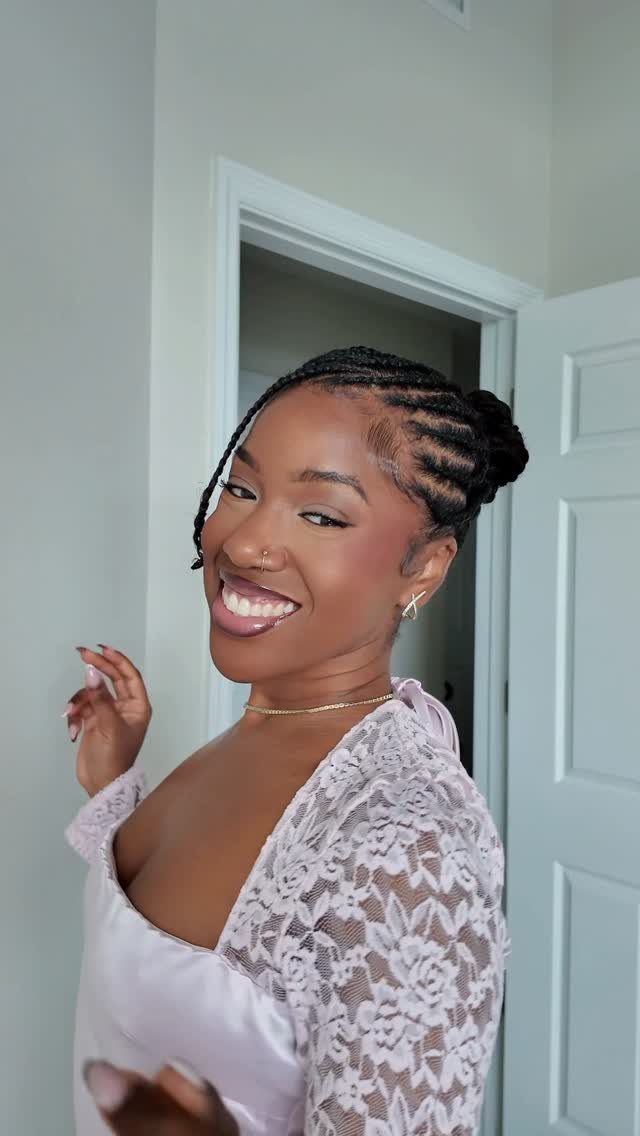
Cornrows running back along the scalp and pulled into one low bun make the tidiest braided updo I can think of. Sitting low, the bun stays out of the way of the braid lines instead of competing with them.
A low bun only reads as low if the braids point to it, so say exactly where it should land. A smile helps too, honestly.
4. Box Braids
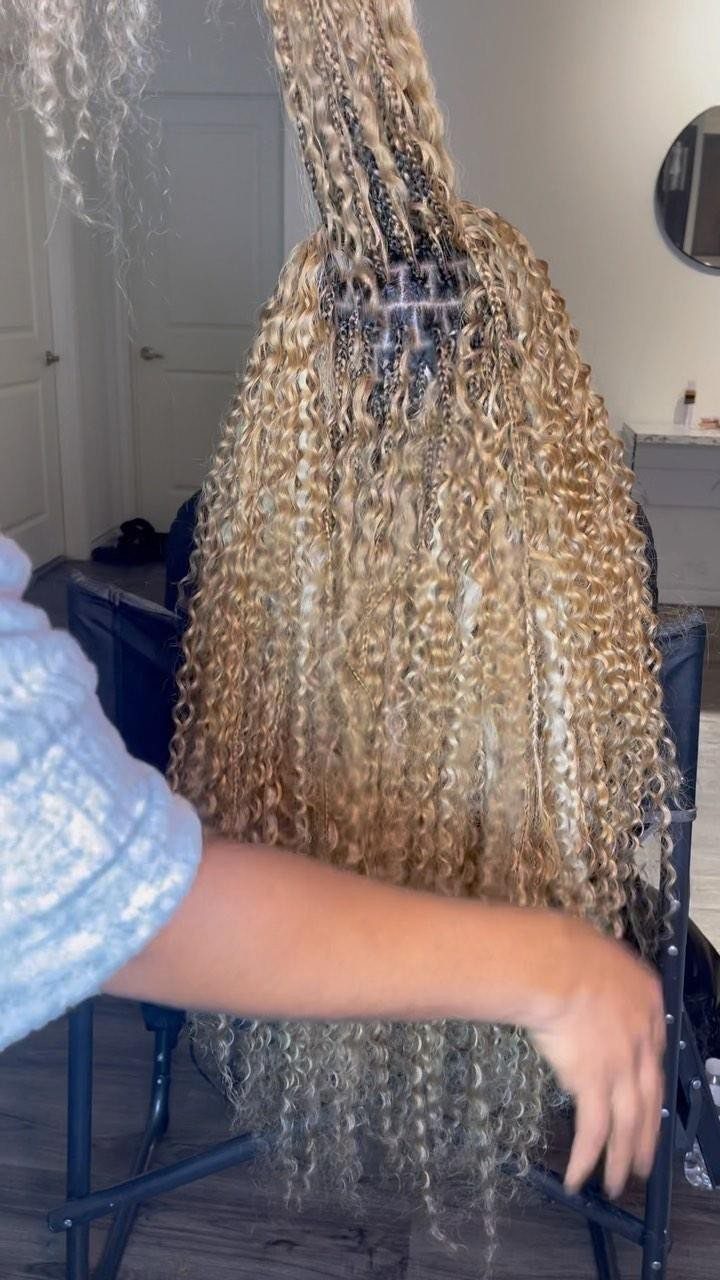
Box braids are the flexible option on this list: you choose the size of each box section and the length, then decide what happens at the ends.
Curled ends, like the long blonde ones here, soften the blunt finish a straight braid leaves behind.
Settle 3 things before the appointment: size, length, and how much curl. Smaller sections look finer, larger ones look bolder, and I’d match the curl volume to the length so the ends don’t look tacked on.
5. Cornrows with Curls
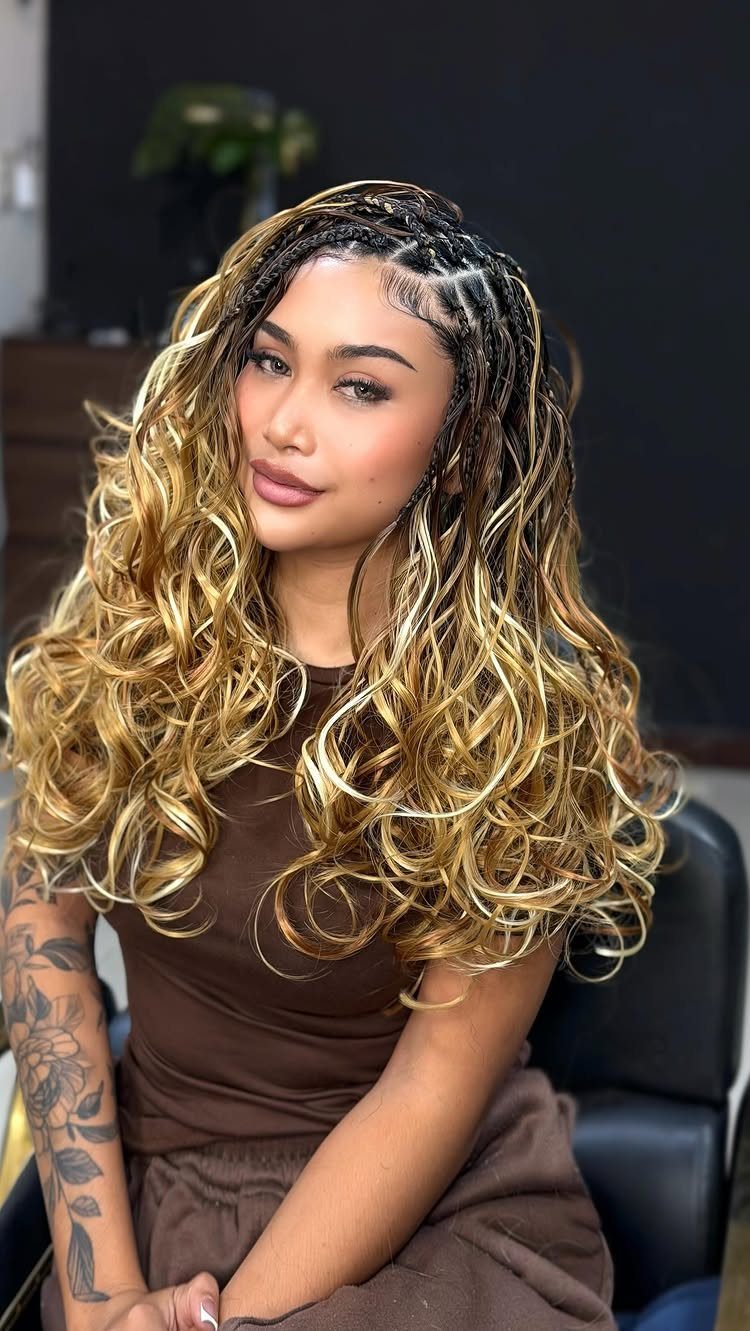
Cornrows keep a section of hair flat to the scalp, and the curls stay free around them. On long blonde curls, a few small side cornrows add definition without hiding the pattern underneath.
Decide how much of your head you want braided.
A small side section keeps the look mostly curly and easy to wear, while more rows shift it toward a braided style. I lean toward fewer rows, so the curls stay the main event.
6. Half-Up Half-Down Braids
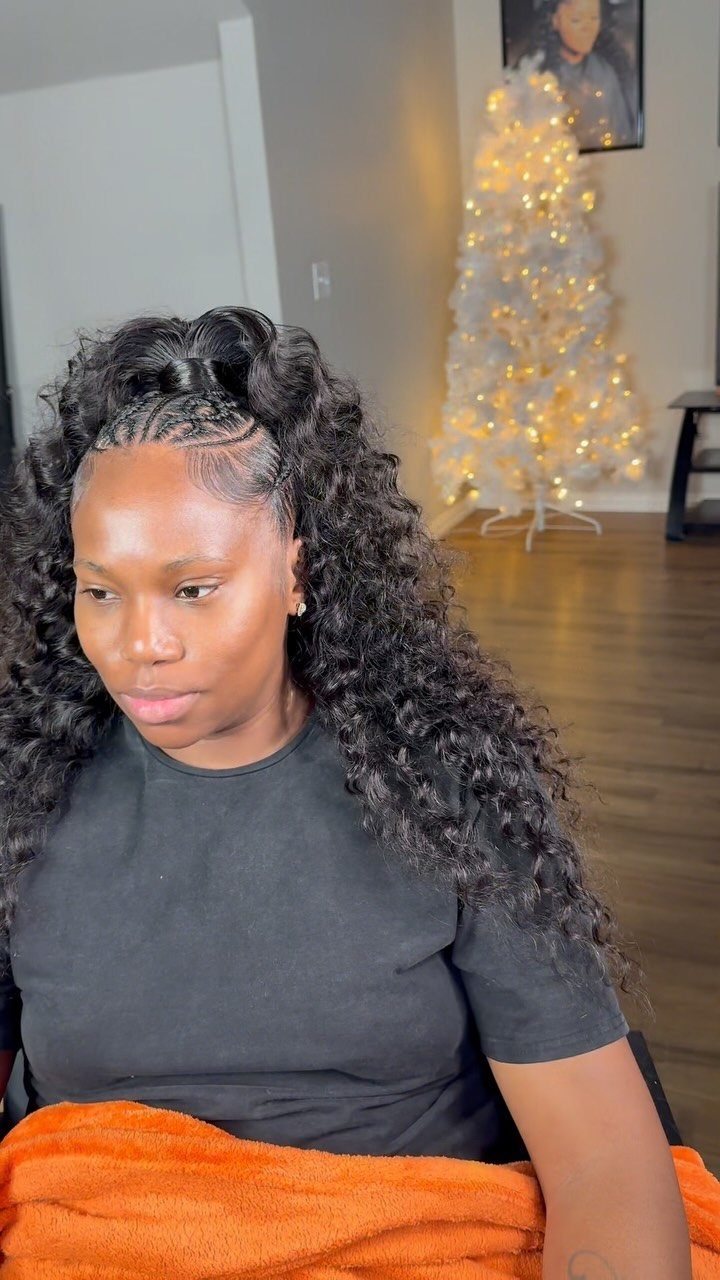
Braiding only the front section and leaving the rest down gives you a style that frames the face and still shows off every curl.
On long, black curls, the braid pulls hair back from the front while the length falls loose around the shoulders.
The braid should begin right at the front hairline, not a few inches back. This is a good pick if you want to show your curl pattern but dislike hair in your eyes.
7. Micro Braids
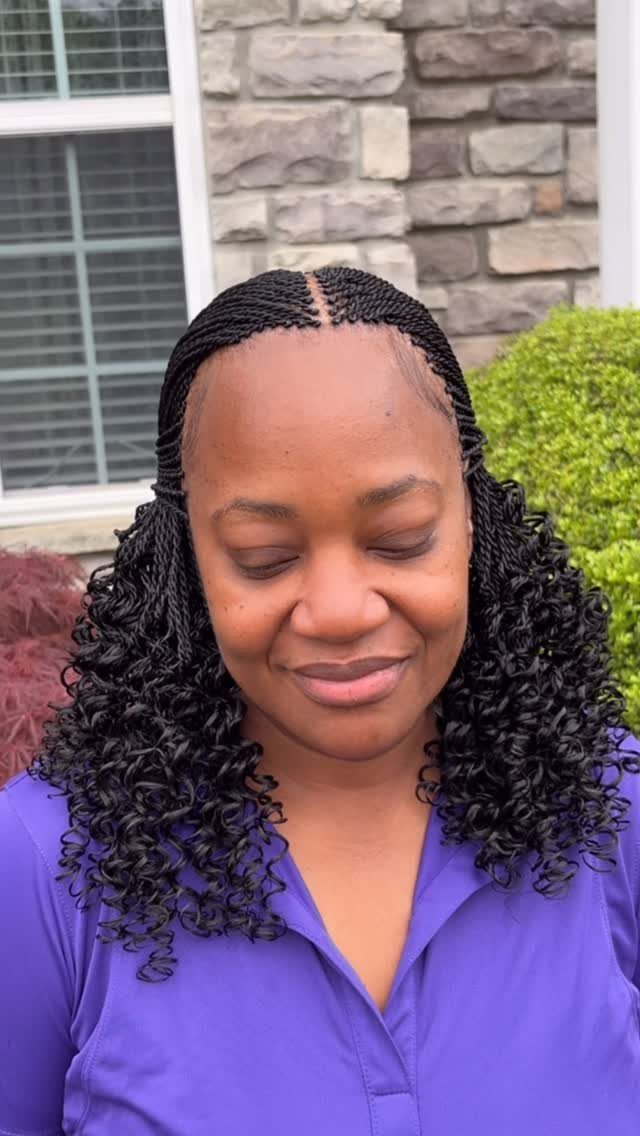
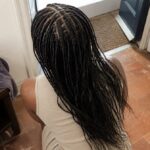
Micro braids are the finest sections you can braid, and on curly hair they make a dense, detailed texture that moves almost like loose hair. Here the braids sit close at the scalp and the ends fall into shoulder-length curls.
Expect a long appointment, because tiny sections mean a lot of them. I’d choose this if you value a polished, even look over a quick install.
8. Knotless Braids
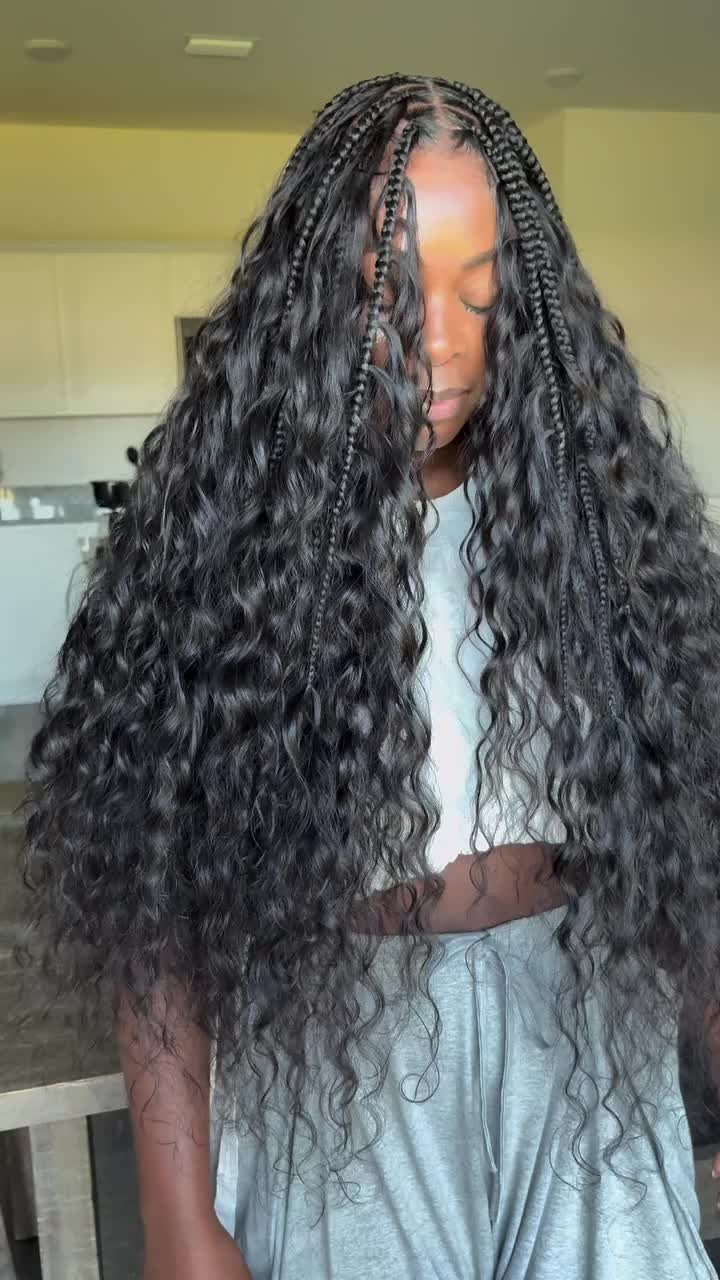
Knotless braids start with your own hair and add the extension gradually, so the root looks flat and natural instead of bulky.
Long black braids that melt into loose curls, as they do here, are my favorite take on knotless braids, since the shift from braid to curl leaves no hard line.
Ask for the curls to be blended into the braid, not stopped short. Ask to see how the ends will finish before the braiding starts.
9. Crown Braid
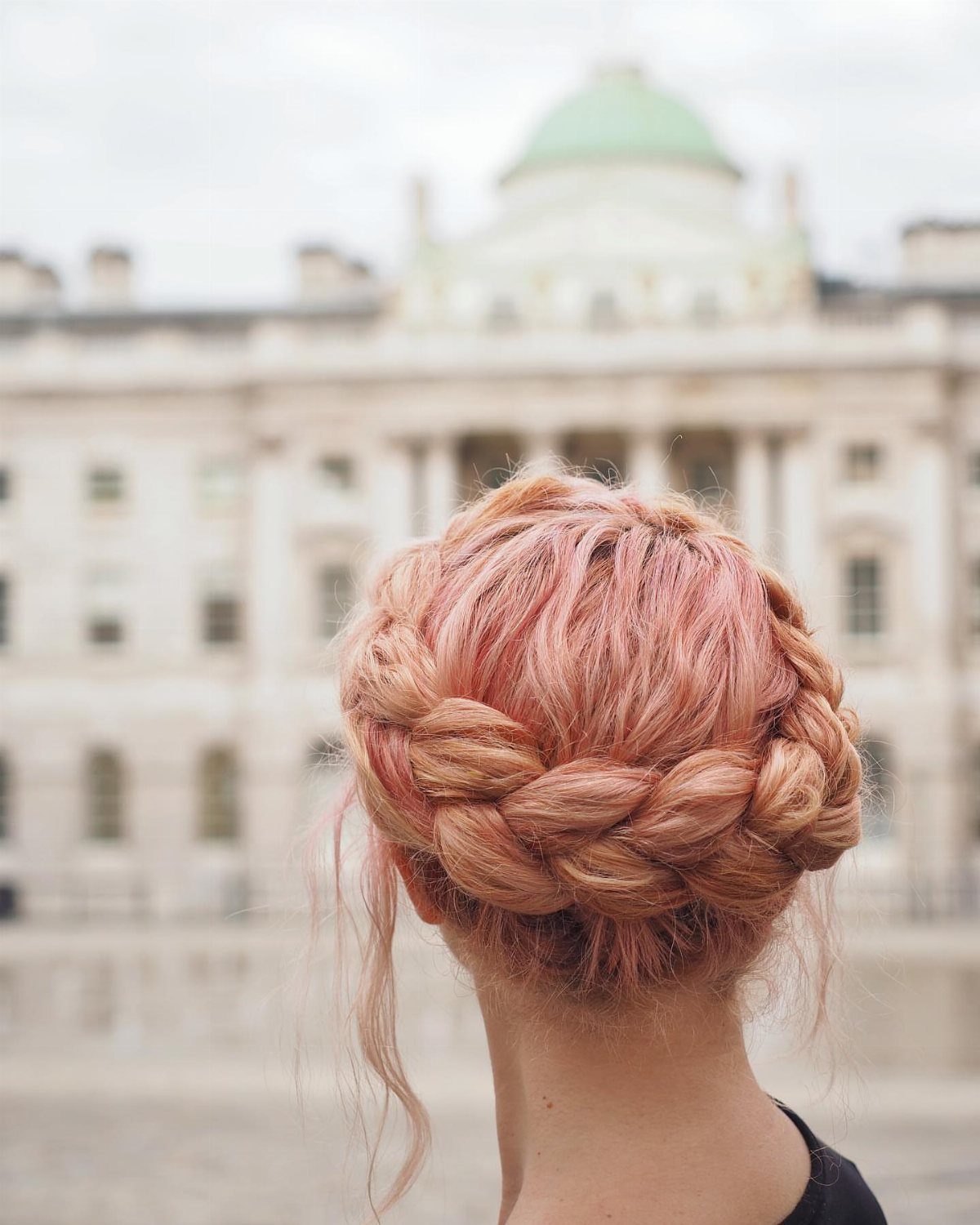
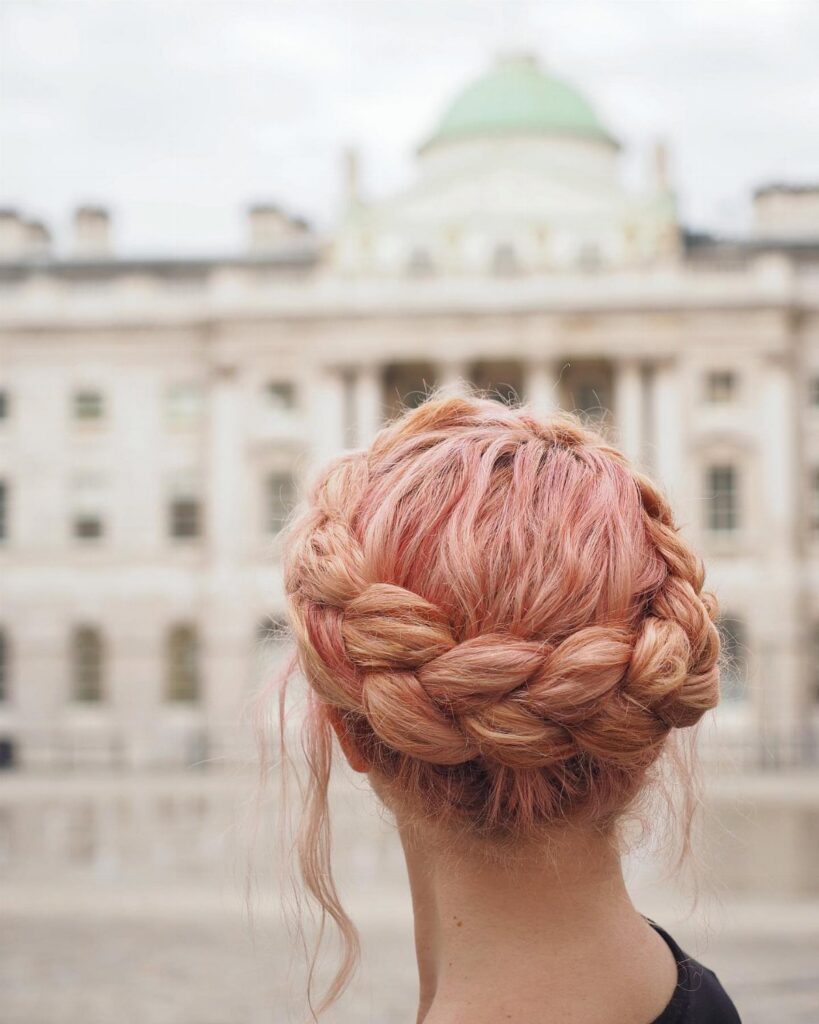
A crown braid circles the head like a halo, which puts the braid itself on display instead of hiding it in a ponytail or bun. Rose-pink hair makes the thick plait even easier to read from behind.
Because it frames the whole head, this is the one to try for an occasion when you want a finished look from every angle. I’d keep the braid thick and slightly loose so the pattern stays bold.
10. Bantu Knot Braids
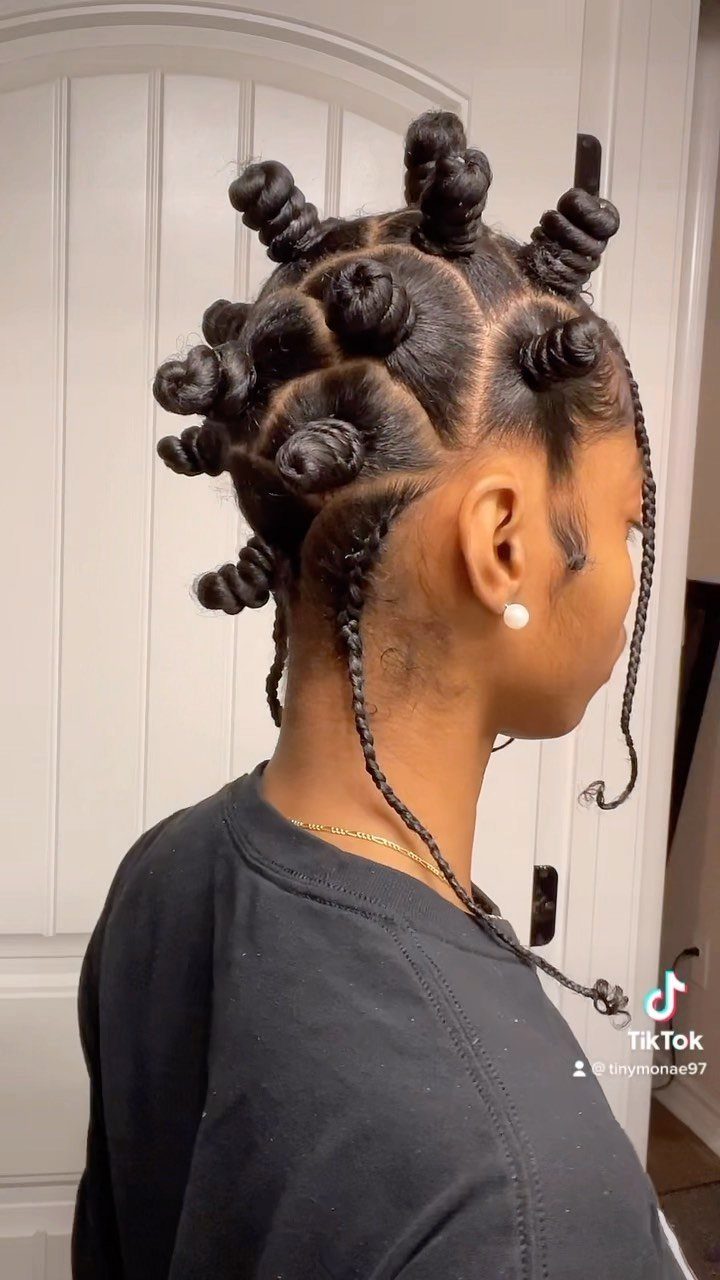
Bantu knot braids divide the hair into sections, twist each one into a coiled knot, and leave thin braids hanging down. The knots give the top a sculpted, patterned look, and the braids add length underneath.
My preference is evenly sized knots, since uneven ones throw off the pattern. Bring a reference photo so your stylist sees how many knots and how long the hanging braids should be.
11. Side Cornrows Hair Down
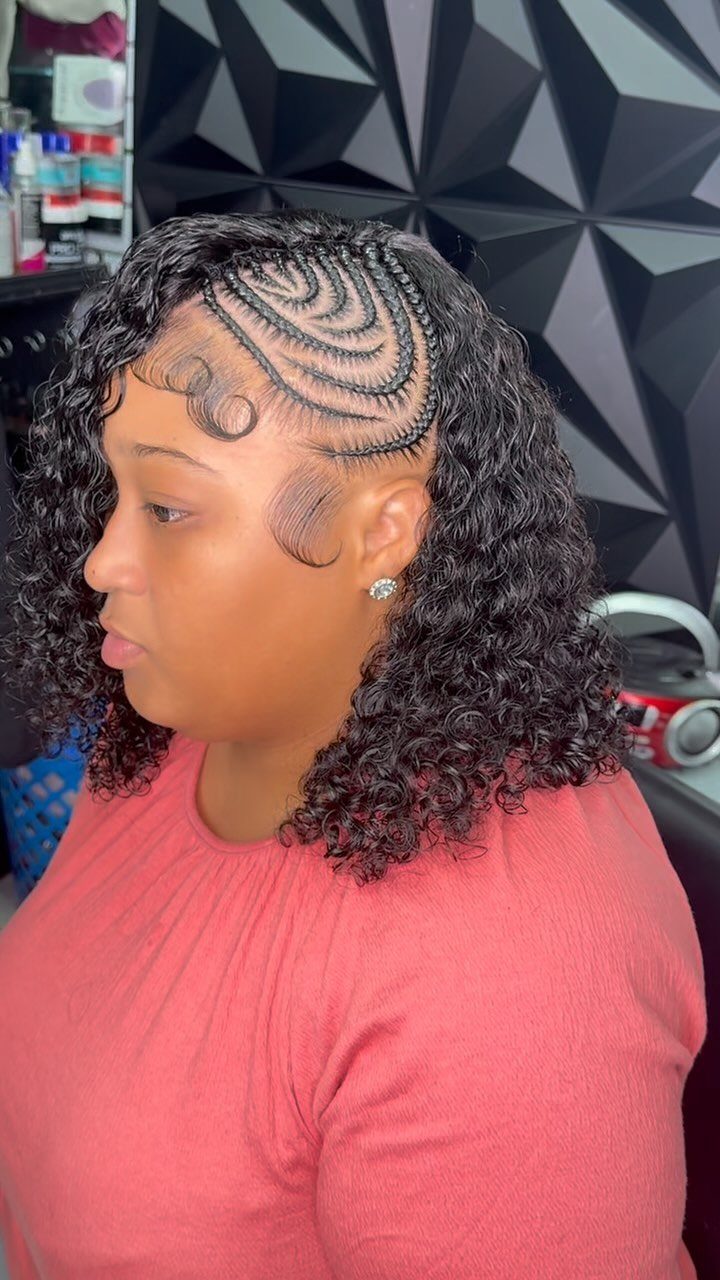
A few cornrows along one side pin back that section and leave the rest of the curls loose around the shoulders. It keeps hair off your face without taking away the volume that makes curls fun to wear.
I like this one for everyday because the braided part is small and the pattern stays the focus. Neat edges make the cornrows look finished, so mention them when you book.
12. Patterned Crown Cornrows
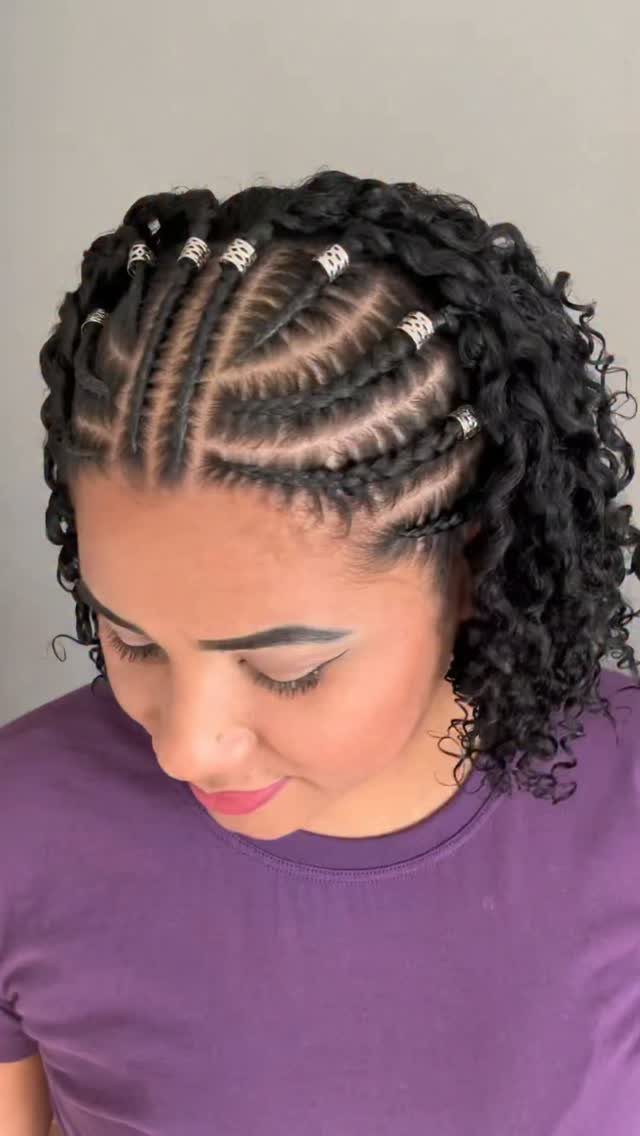
Patterned crown cornrows trace a design across the top of the head, then release into loose curls. Silver cuffs on the braids add a bright detail against dark hair.
Choose the pattern before the appointment, because the lines are what people notice first. I’d keep the design simple if the curls are long and full, so the 2 parts balance instead of competing.
13. Bohemian Braids
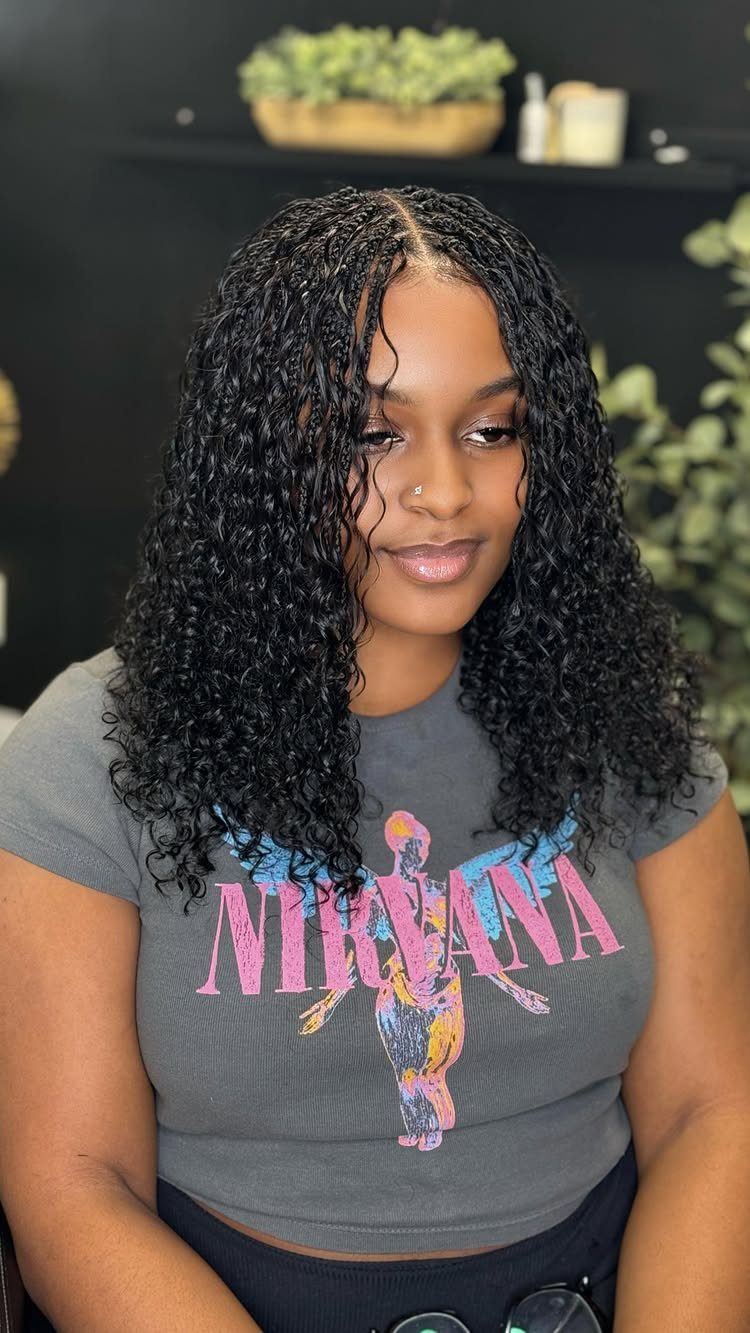
Knotless or box braids left long, with loose curly strands mixed in, give bohemian braids their relaxed, flowing finish. The braids stay dark and defined while the curls cascade around the shoulders.
Ask your stylist to leave out a few strands per braid so the curl looks scattered, not stopped short. I’d keep the effect loose and uneven, since a too-neat version loses the bohemian feel.
14. Braided Ponytail
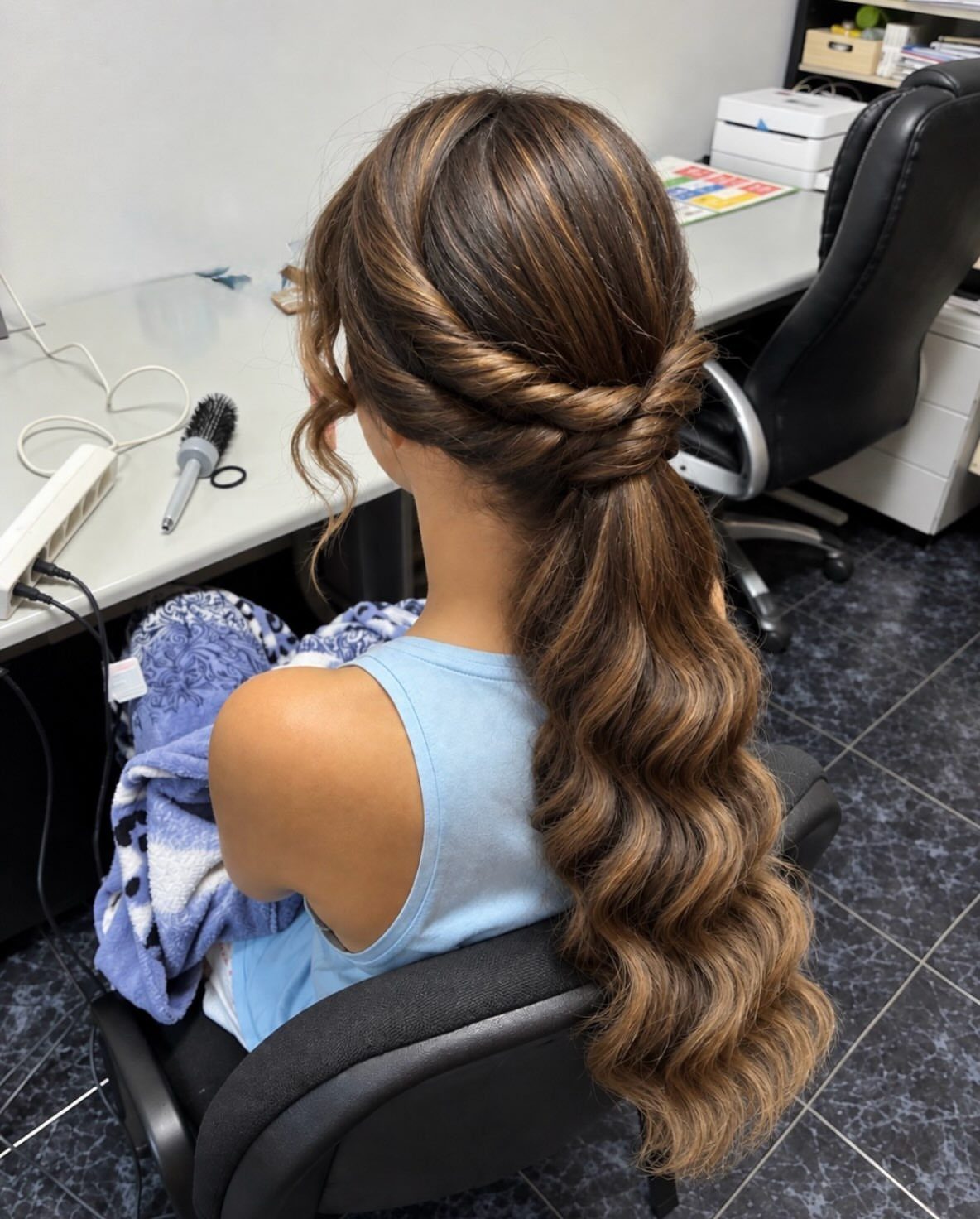
Gather the braids low at the nape and let long curls fall free below the tie. That contrast between a tight braided top and a loose curly length is what makes a braided ponytail more than a basic tie-back.
A low placement keeps the braids and curls in one clean line down the back.
Highlights in the hair, like the brown ones here, help the braid pattern read clearly. I’d ask for a ponytail wrapped at the base so the tie stays hidden.
15. Goddess Braids
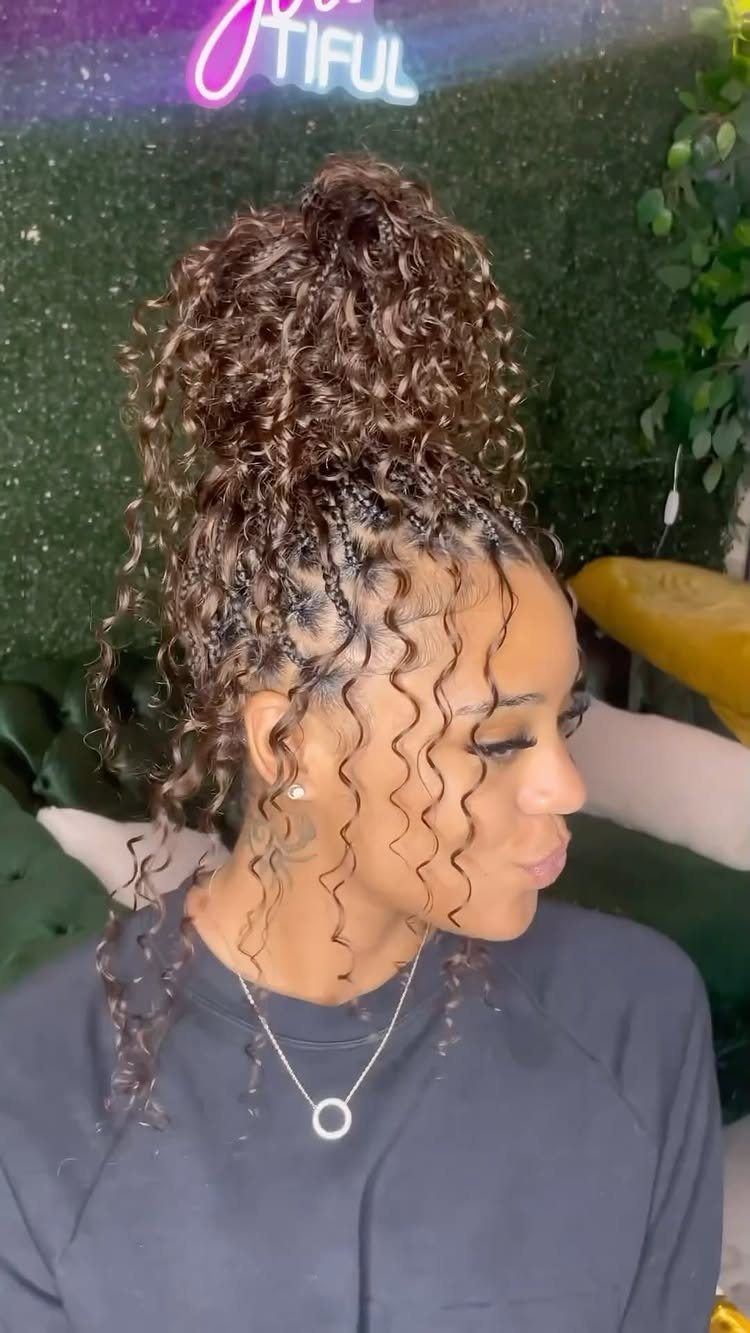
Goddess braids lie thick and raised on top of the scalp, so the braids themselves become the pattern. Gathered into a high bun, they lead straight up to a soft cluster of curls.
Tell your stylist whether you want the braids to run front to back or in a curve, because the direction decides where the bun sits.
I’d leave the bun full and slightly loose, since tight pulling flattens the curls that give it shape.
16. Fulani Braids
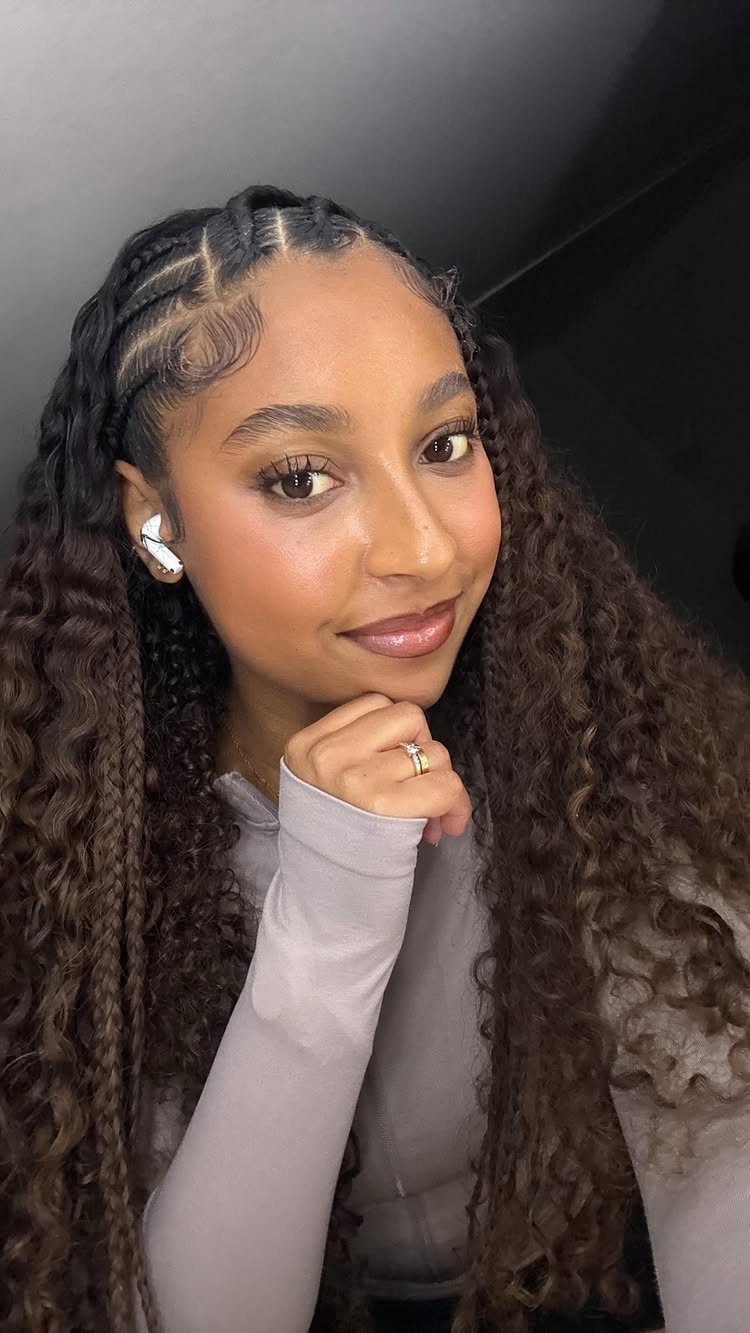
Fulani braids mix feed-in cornrows, box braids, and braids pulled forward into one patterned arrangement. Long curly braids at the back keep the pattern from looking stiff.
Show a reference photo when you book, because the cornrow layout at the front is what defines the style.
I’d pick a pattern with clear, even lines and let the curly lengths do the movement. Jewelry on the braids is an add-on you can choose, not a requirement.
17. Ombre Braids
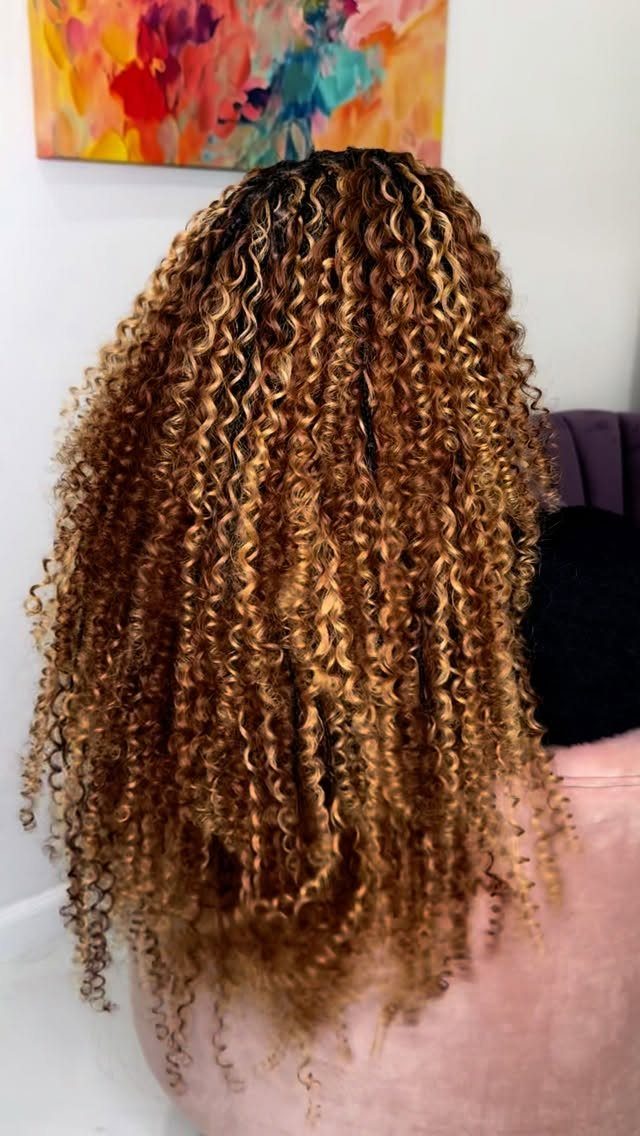
Ombre braids move from dark roots toward golden brown at the ends, so the color does the work that a pattern would do in other styles. Finishing in curls makes the lightest shade the softest part of the look.
Choose how gradual the shift should be before you book, since a slow blend looks natural and a sharp one looks bold. I’d go for the slow blend, which flatters long lengths best.
18. Fishtail Side Braid
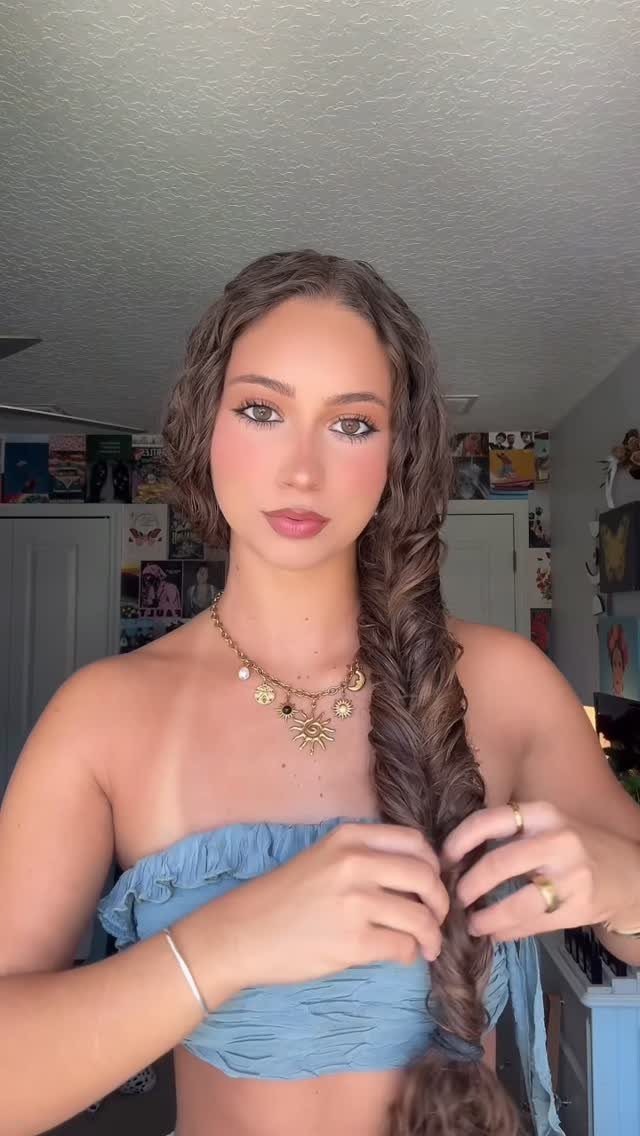
A fishtail braid worn over one shoulder pulls curls off the neck and keeps the braid’s woven texture in front. A few loose curls left at the face soften the line.
Fishtail looks best on hair that is long enough to weave through, so check your length first. I’d pull a few pieces out around the face after braiding, since they make the style feel relaxed instead of strict.
19. Long Braids Textured Ends
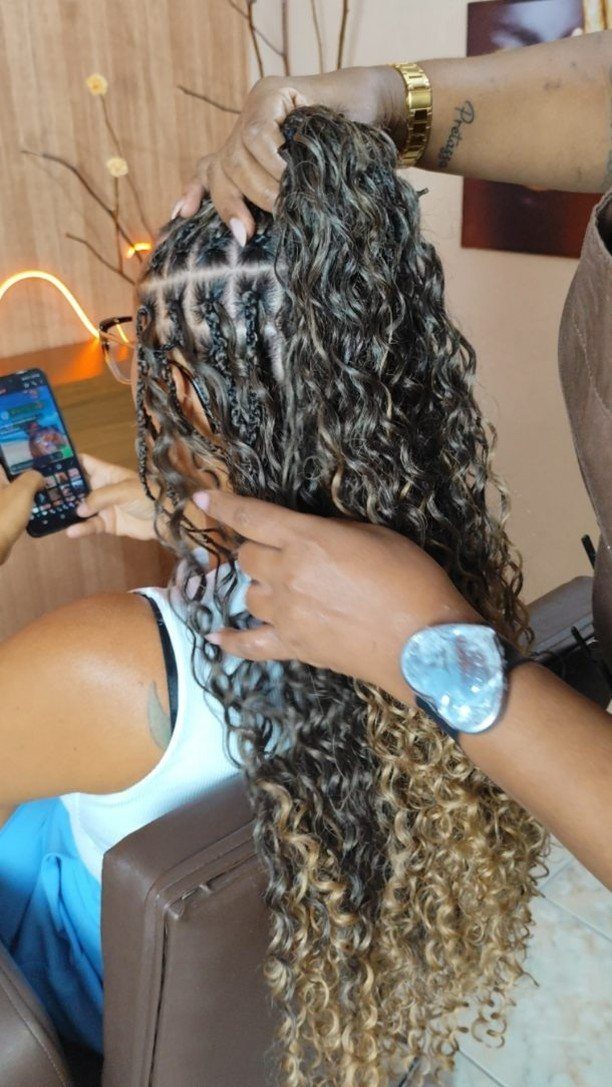
Braids that run long and then break into curls give you two textures in one head of hair.
I’d ask for the curl to start well below the shoulders, so the braid still gets its length. Bring a photo to the appointment, because "textured ends" is a loose phrase and your stylist may picture something different from you.
20. Criss-Cross Cornrows
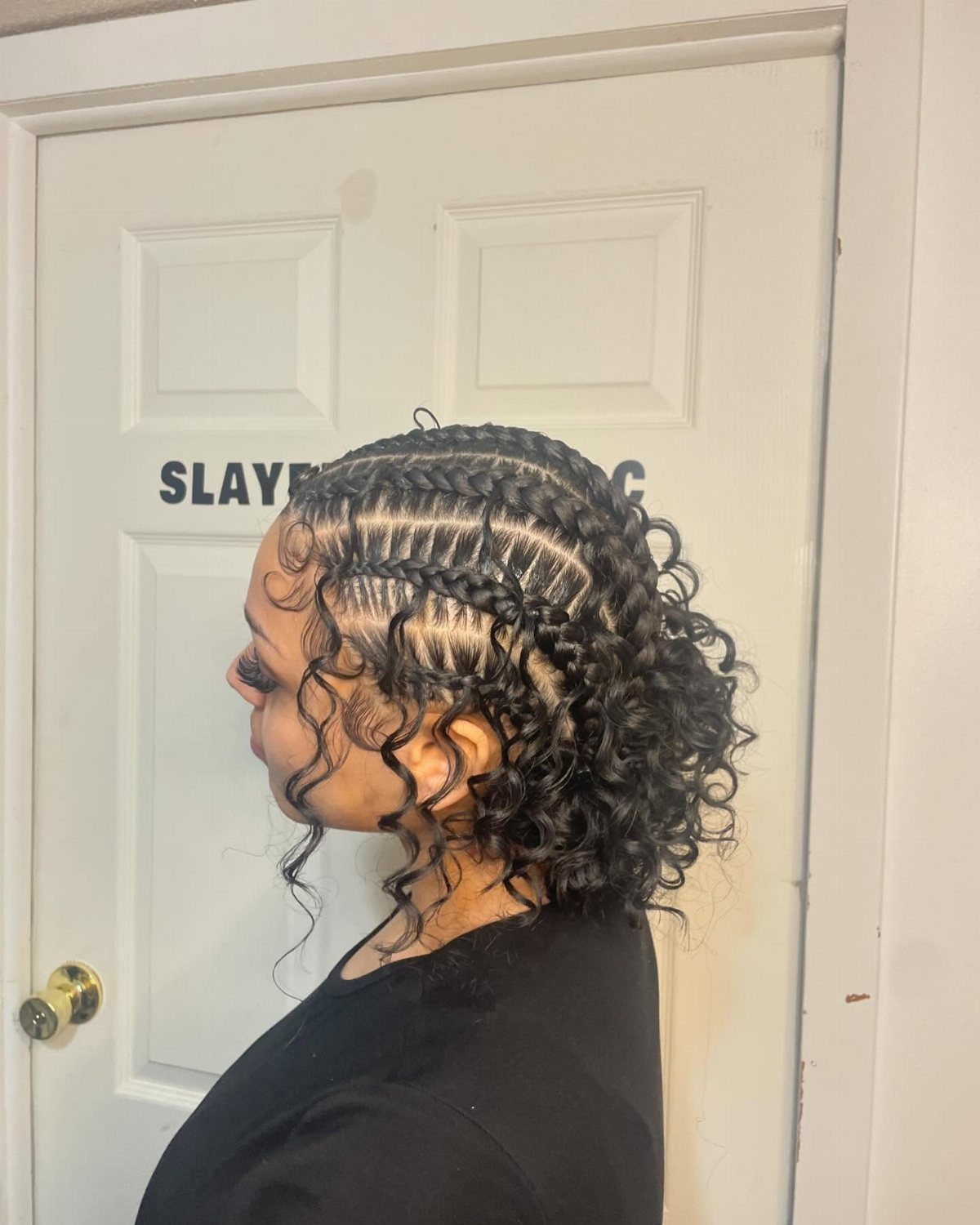
2 cornrow lines that cross over each other make a woven lattice on the scalp, and loose black curls around the sides and back keep that pattern from feeling stiff. The lattice is the part people will ask about.
Tell your stylist where the crossing should sit, since placement changes how busy the top looks. I’d keep the cornrows neat and sharp so the curls carry the softness, and the 2 read as a pair.
21. Tribal Braids Curly Bun
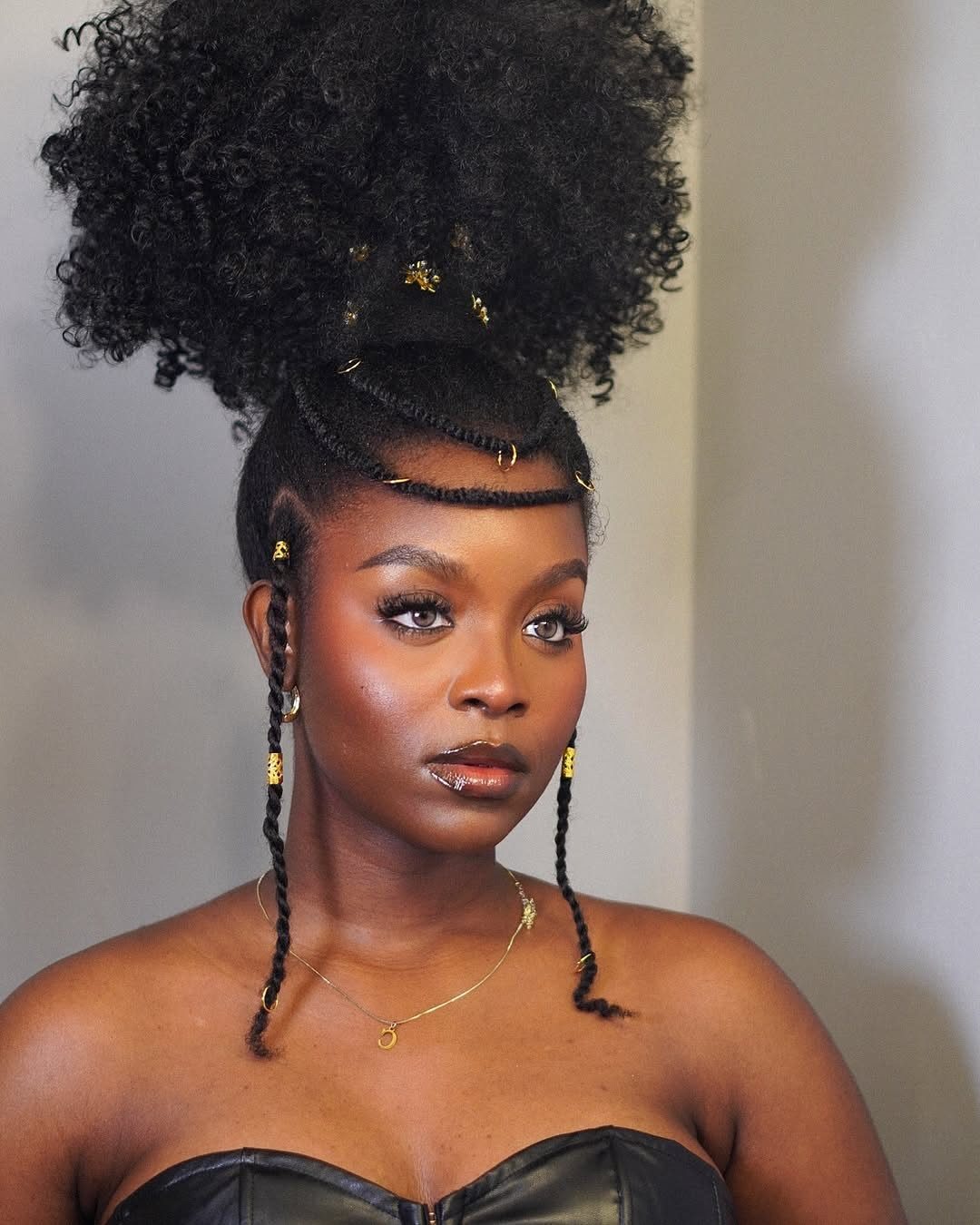
Tribal braids pulled up into one large curly bun put the braided pattern at the front and the volume on top. Gold jewelry in the bun gives it a finished, dressed-up look that suits an evening out.
Decide how full you want the bun before booking, because that sets how much curl gets left out of the braids. I’d go big and a little loose, since a tight bun squeezes the curls flat.
22. Colored Locs with Curls
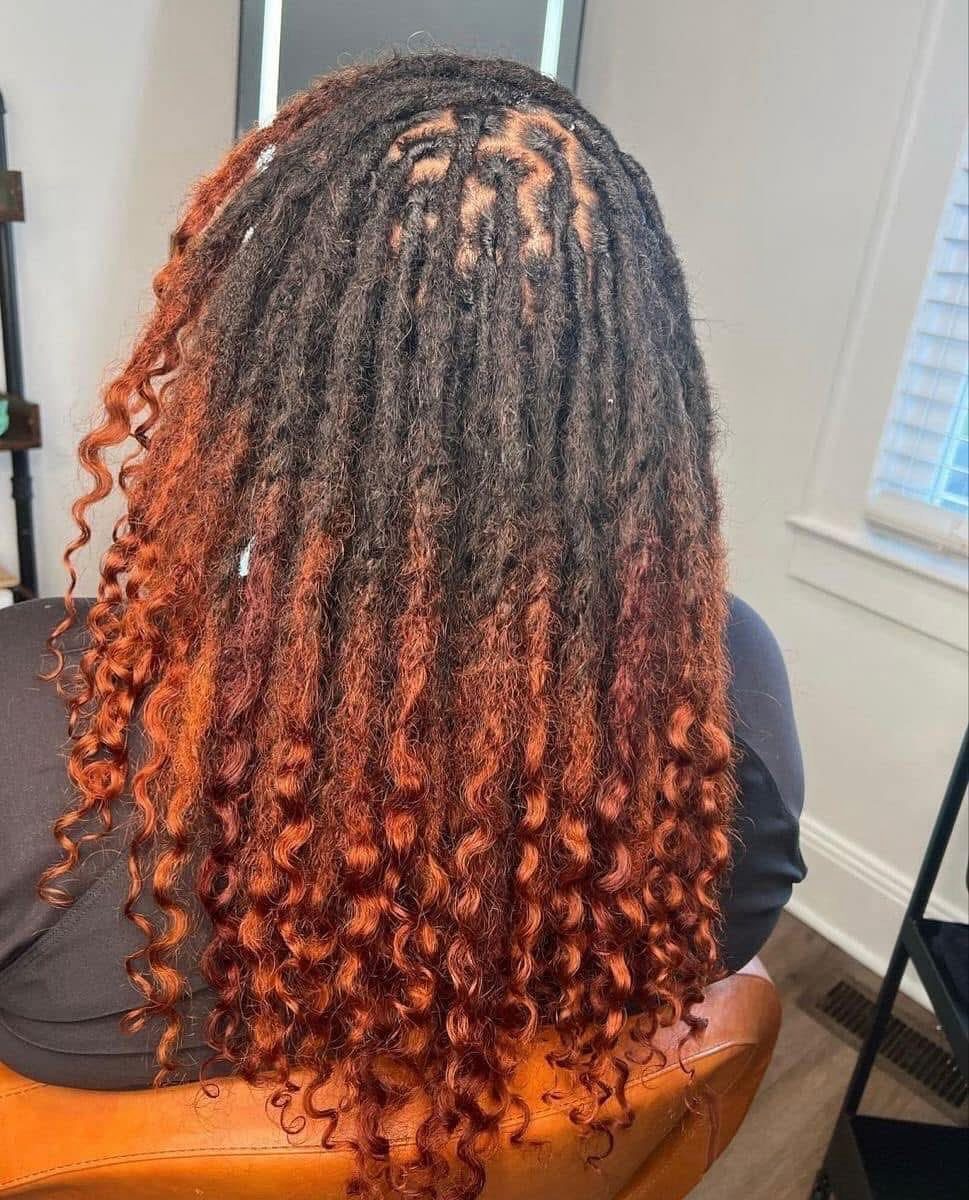
Locs usually stay straight and heavy, so ending them in curls adds a softer, romantic finish. Dark brown locs fading to copper-red curly ends make the color change do the styling, with no extra pattern needed.
Ask your stylist how the curl will be added and how far down it should start. Copper stands out against dark brown, and I’d choose it over a subtle shade if you want the ends noticed.
23. Medium-Length Braids with Curls
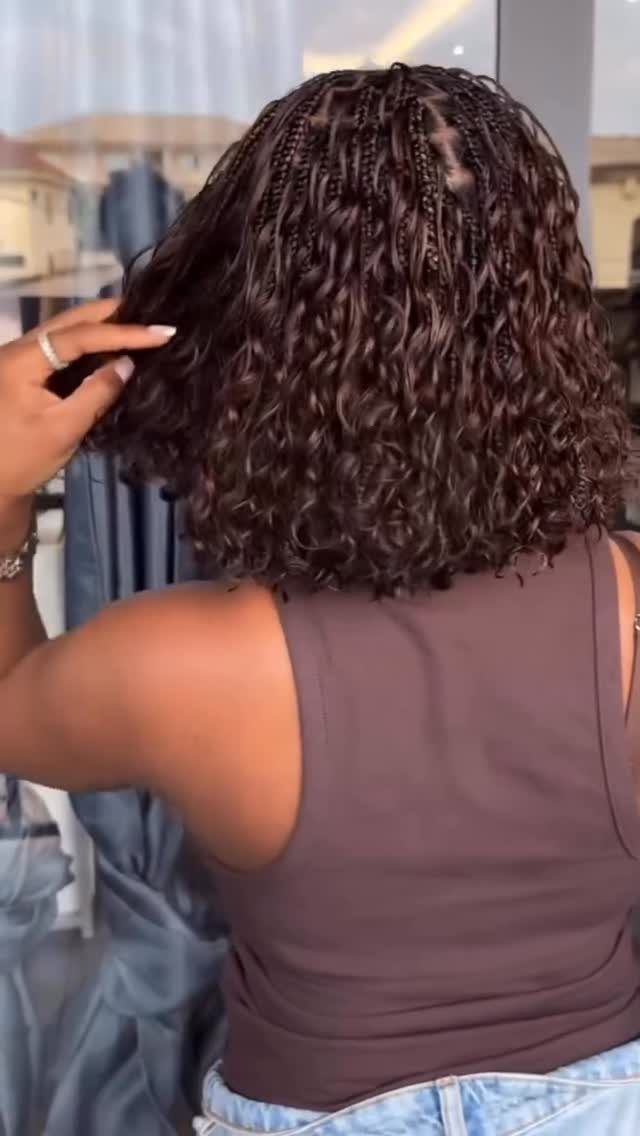
Many thin braids that stop around the shoulders and finish in curls make a neat, grown-up look, and I’d call it a strong pick for an office. The brown tone stays calm, and the curly ends add just enough movement.
Shoulder length is easier to manage than very long braids, since there’s less weight to carry through the day. Ask for even braid thickness so the whole back looks tidy.
24. Curly Bob Braids
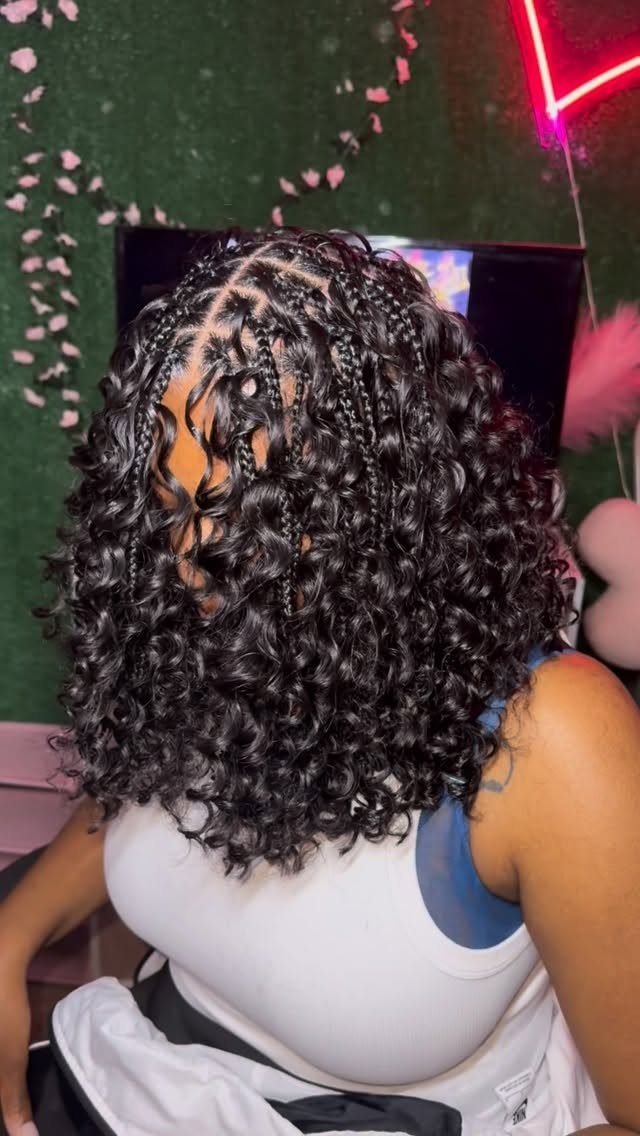
A bob-length braid style cuts the length to the shoulders and lets the ends curl, which keeps the weight low and the shape compact. Cornrows across the top lead into dark braids and curls at the back.
You can go 2 ways: curly-ended box braids cut to bob length, or cornrows on top with curls below. I prefer the cornrow version, since the flat top adds structure to the curly shape beneath.
25. Curly Pigtail Braids
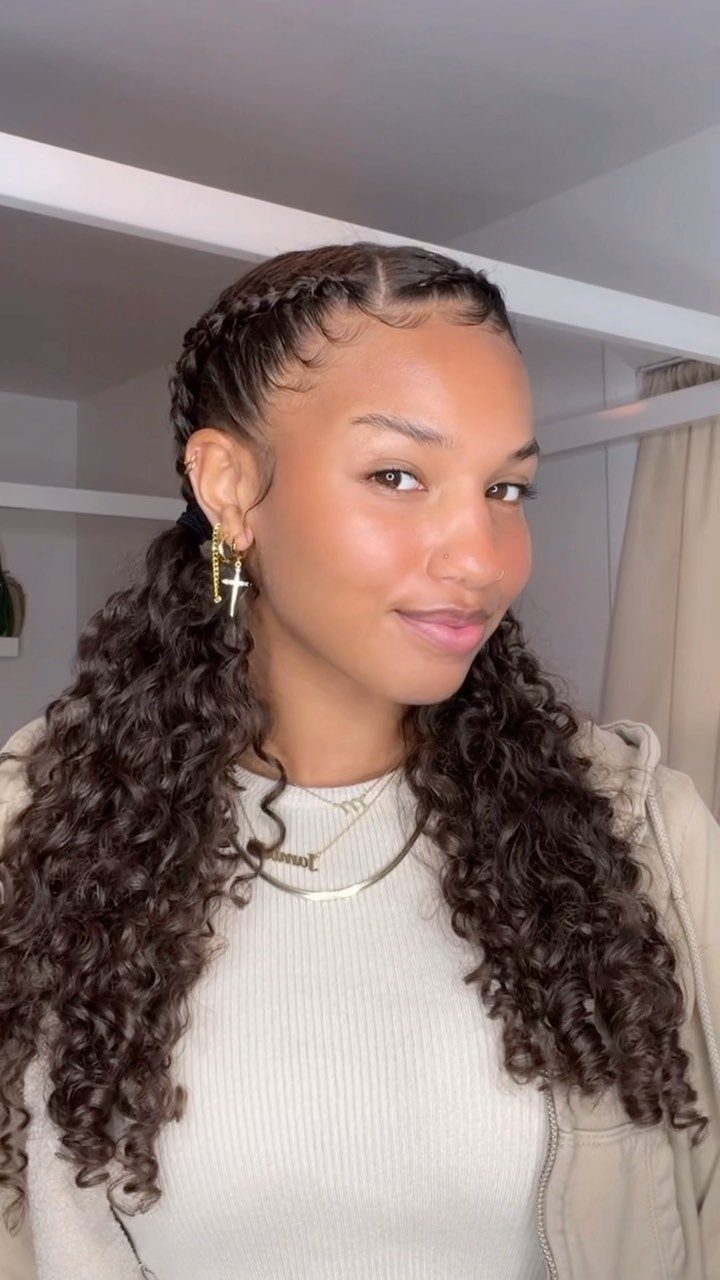
2 braids worn as pigtails, with curls left out to add texture. The braids start at the temples and release into long, loose curls that fall over the shoulders.
Part the hair down the center and braid each side loosely, so the curls stay soft instead of stretched flat.
I’d stop braiding before the ends and let the last few inches curl naturally, since that keeps the pigtails from looking too young or stiff.
26. Dutch-Braided Buns
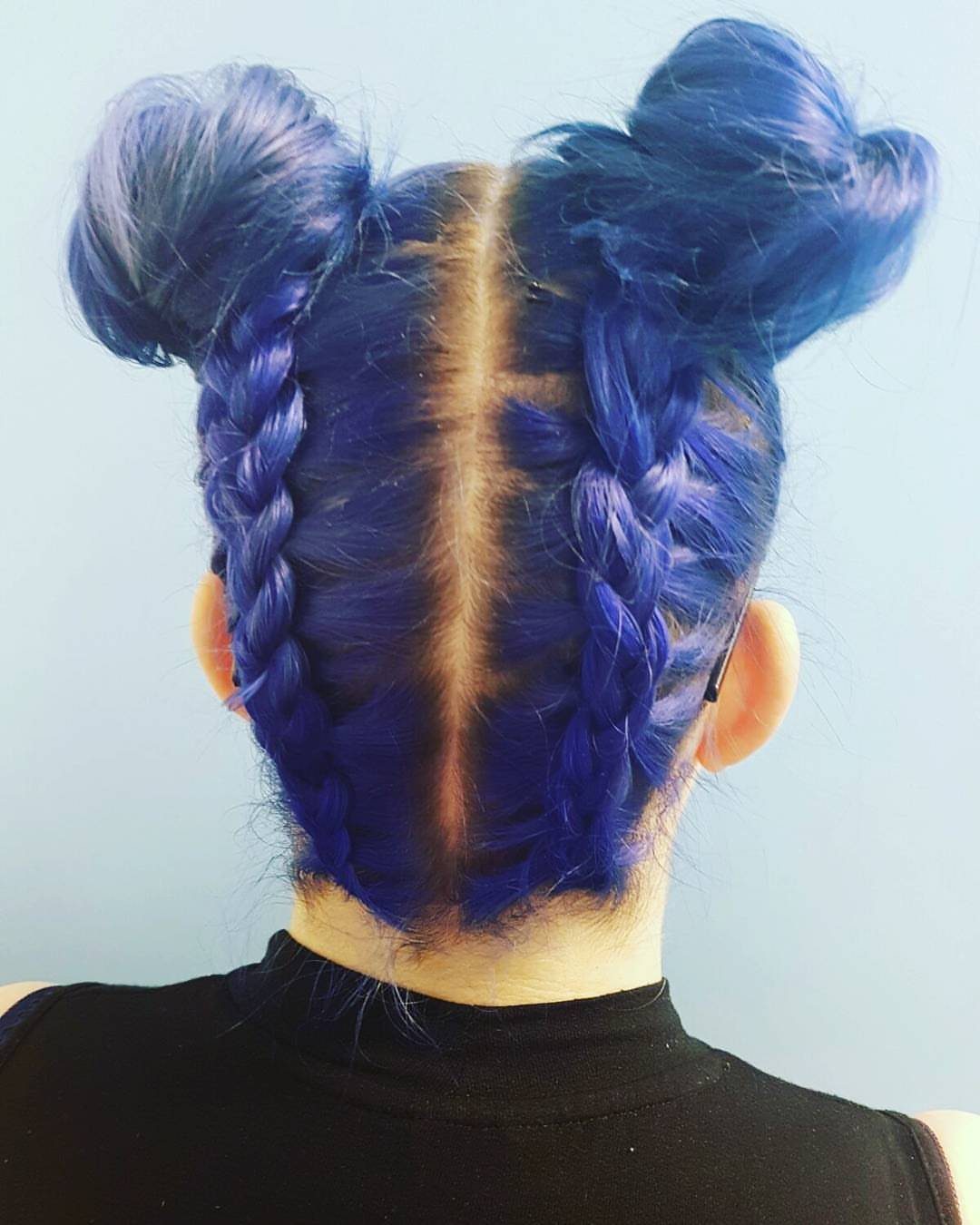
Dutch braids gathered into 2 high buns make an updo that holds curls off the neck. The braids sit raised on the scalp and the buns add height and volume at the top.
Start each braid at the front hairline and stop where the bun should sit, then twist the remaining length into a bun and pin it.
I’d go for even bun size, since lopsided ones throw off the balance. This one holds up through a long day.
27. Waterfall Braid
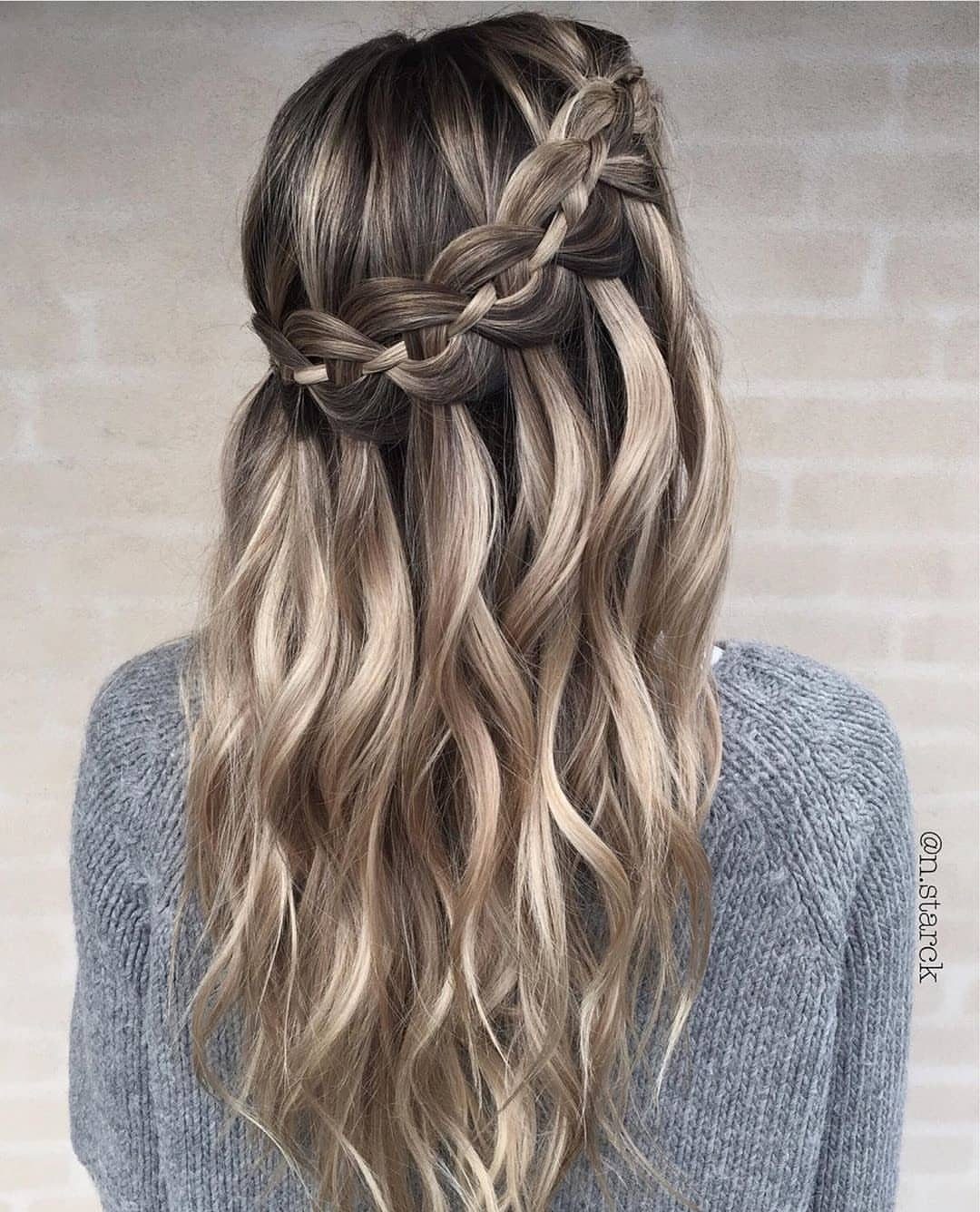
A waterfall braid crosses the back of the head near the crown, and the rest of the hair falls loose underneath.
Each section is braided once and then dropped, so the braid looks woven into the length instead of sitting on top of it.
This works best on hair long enough to show the dropped strands clearly. I’d keep the braid thin and tight, since a loose one loses the woven detail that makes it worth doing.
28. Braided Curly Mohawk
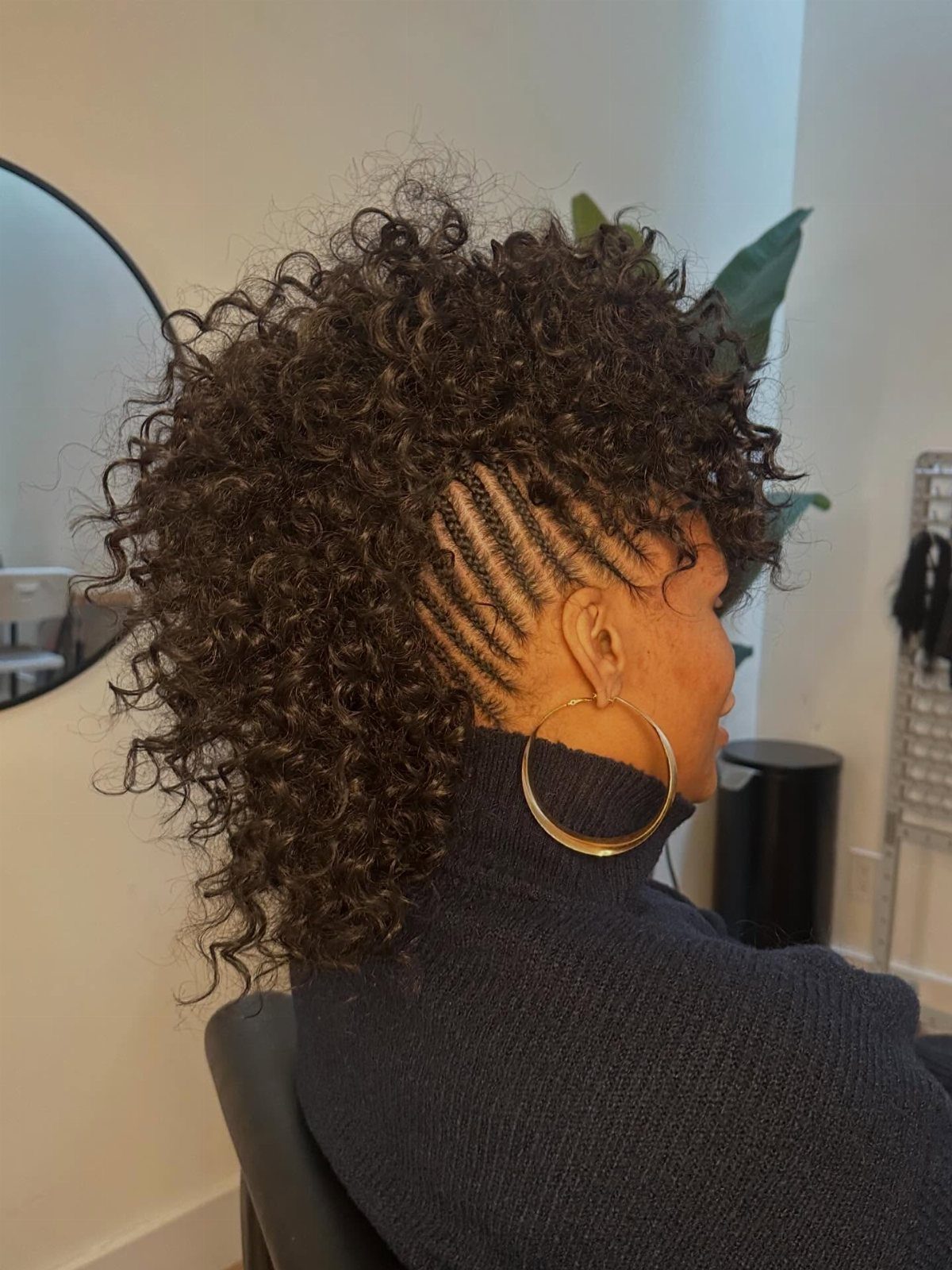
Cornrows along both temples hold curls in place down the middle of the head, which gives the mohawk its shape. The sides stay flat and the center stays full.
Ask your stylist how far back the cornrows should run, because that sets how wide the curly strip looks. I’d leave the curls high and loose at the top, since flattening them turns the mohawk into a regular ponytail.
29. Space Buns with Braids
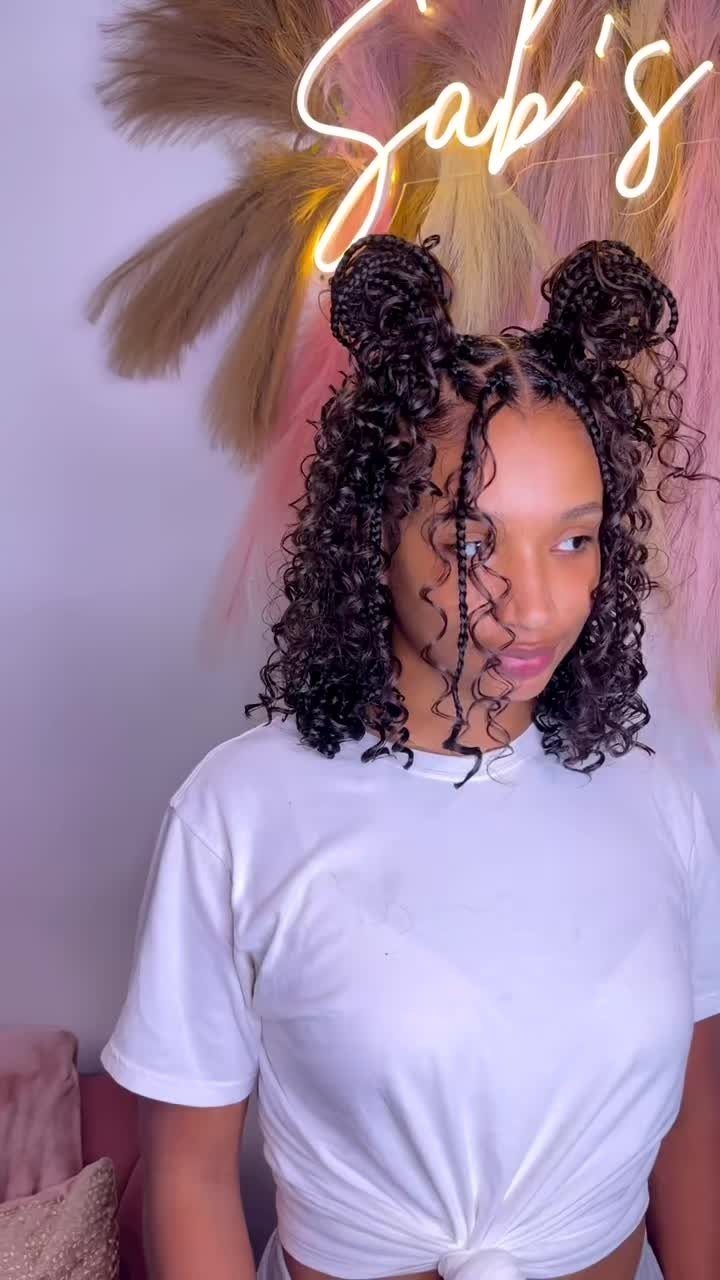
2 buns sit high on the head, and braids hold the sections before they twist into the buns.
Braid each section before wrapping it into a bun, so the buns have texture instead of sitting smooth.
I’d place them high and far apart, since close or low buns lose the space-bun shape. Pull a few curls loose at the hairline to keep it from feeling too tight.
30. Braided Bun and Bangs
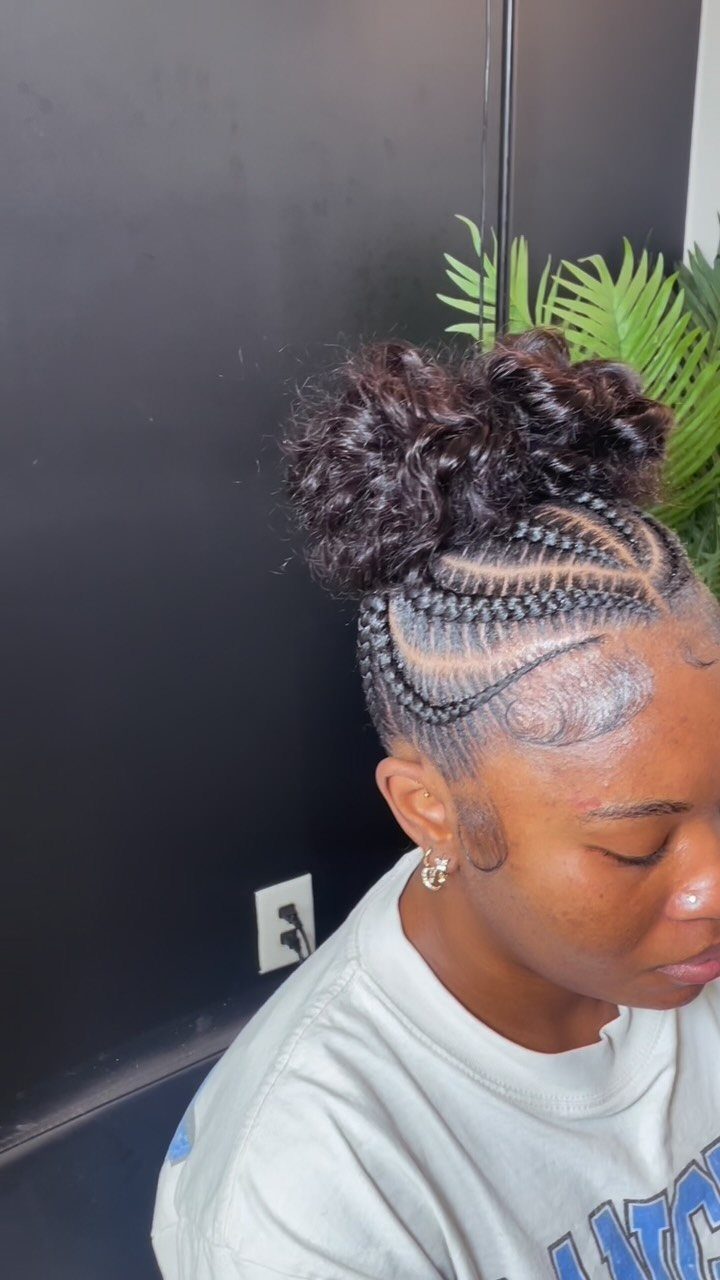
Cornrows gather into one large bun at the back, and small curls at the hairline frame the face. The bun sits high or low depending on where the cornrows end.
Tell your stylist whether the bangs should be left curly or braided into the cornrows, because that changes how much curl shows at the front.
I’d go curly, since the braided bun already gives the style its structure and the bangs add softness.
31. Braids with Curly Ends
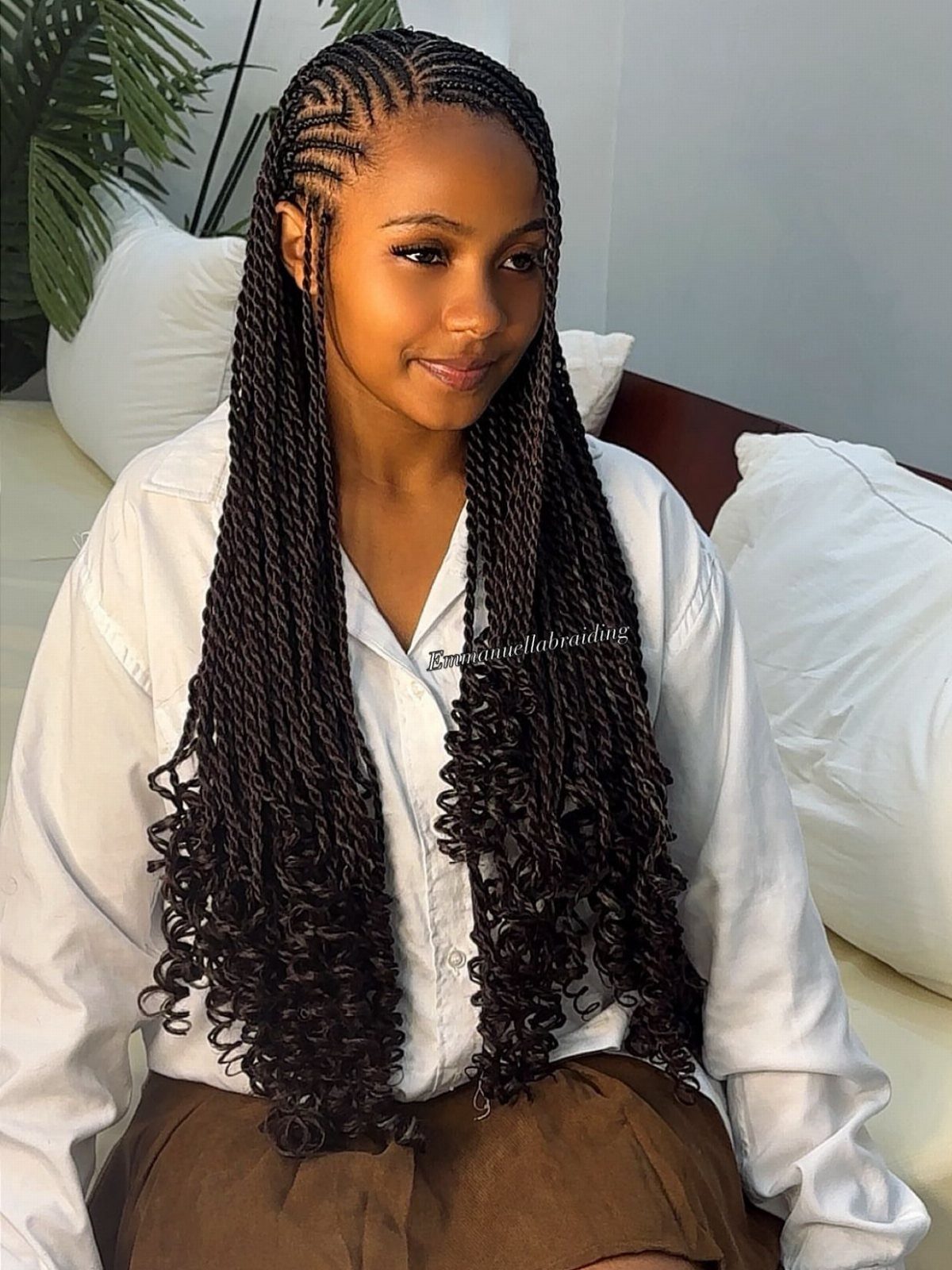
Long braids that stay smooth for most of their length and then open into curls give you a sharp line that softens at the bottom. The curls sit below the shoulders and add movement without taking over the whole look.
Ask your stylist to stop braiding a few inches from the ends so the curl has room to form.
The curls can be left natural or added with synthetic hair, depending on what you bring to the appointment. I’d go for a gradual release instead of a hard stop, since that keeps the shift from looking abrupt.
32. Kiss Curls with Braids
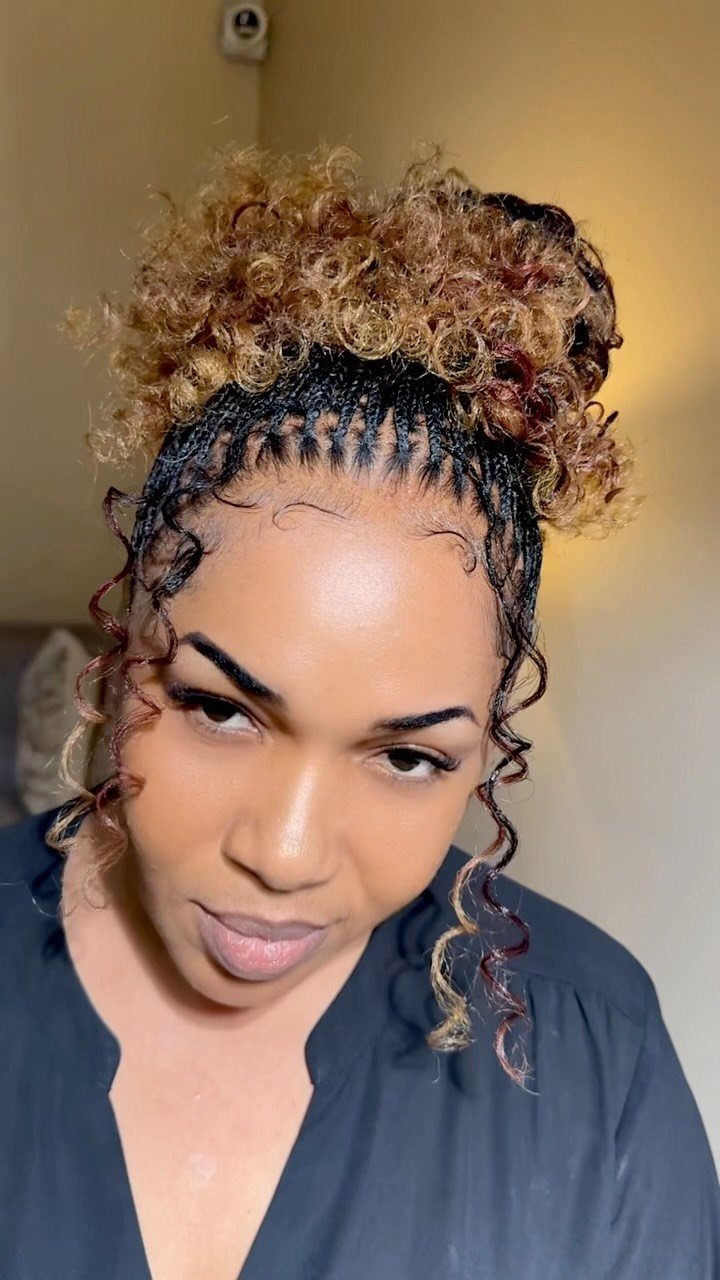
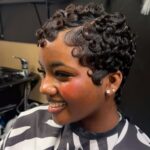
Short curls pressed flat against the cheek or temple add a vintage detail to a braided updo. The curls are shaped with gel or mousse and pinned or smoothed into place, so they hold their curve through the day.
Form the curl while the hair is damp, then let it dry before you lift the pin.
I’d place one or two per side, since more than that crowds the face. This one suits formal occasions, and the curls stay crisp if you set them with a light hold product instead of oil.
Braids Wear Time and Removal
I’d take braids out at 8 weeks or sooner. That’s the point where buildup, root matting and breakage start to outweigh the protection you’re getting.
If your edges are fragile or you added extensions, 6 weeks is safer. Tension builds slowly, and the longer you wait, the harder removal becomes.
If you wash your hair often or sweat through workouts, the braids may loosen or fray before 8 weeks.
That’s fine. Take them out when they stop looking clean or when the roots feel tight, whichever comes first.
Knowing your own hair type tells you whether you sit closer to 6 weeks or 8. I’d rather remove braids a week early than leave them in until damage starts.
If you work out often and sweat, your braids might not last as long. If you know your hair or edges are prone to natural hair breakage, try not to keep a braided style like box braids with added extensions in for longer than 6 weeks.
Protecting Hair and Scalp
If braids feel tight the day they go in, they’re too tight. Tension on the scalp and edges causes breakage over time, and a skilled install should feel secure without pulling.
For small cornrows or intricate patterns, book a stylist experienced in that work. Tiny sections mean more passes across the scalp, and uneven tension shows up faster in fine braiding.
Keep your scalp moisturized every day while the braids are in. Jojoba oil or a hydrating mist keeps the scalp from drying out, which reduces breakage and makes removal easier.
Wash braided hair every 2 weeks if you used extensions. Wash your scalp with shampoo or co-wash, rinse it clean, and follow with conditioner the same way you do when your hair is loose.
At night, wrap braids in a silk or satin scarf to prevent frizz and dehydration.
Frequently Asked Questions
What type of braid is best for curly hair?
My pick for curly hair is a knotless braid that finishes in loose curls.
The braid begins with your own hair, and extension hair feeds in a little at a time, so the root sits flat and no hard line shows where braid gives way to curl.
If you want more control over section size and length, box braids with curled ends are the next best choice.
What are braids with curly hair called?
The names vary by style.
French curl braids pair a straight plait on top with a loose spiral at the bottom; bohemian braids are knotless or box braids with curly strands woven through; and braids with curly ends just let go into curls below the braided section.
How should you prepare your hair for braids?
Cleanse and condition your scalp and hair, detangle every knot, then stretch your curls, most often with a blow-dryer.
Stretching gives you smoother, frizz-free braids that last longer, and detangling cuts down on breakage during the install. Deep conditioning before you braid sends your strands in with more moisture and strength.
How long should you let your hair breathe after braids?
Wait at least a week before putting in a fresh set. That gives your scalp a rest from tension and leaves time for a deep conditioning treatment to strengthen your natural hair.