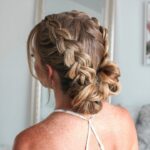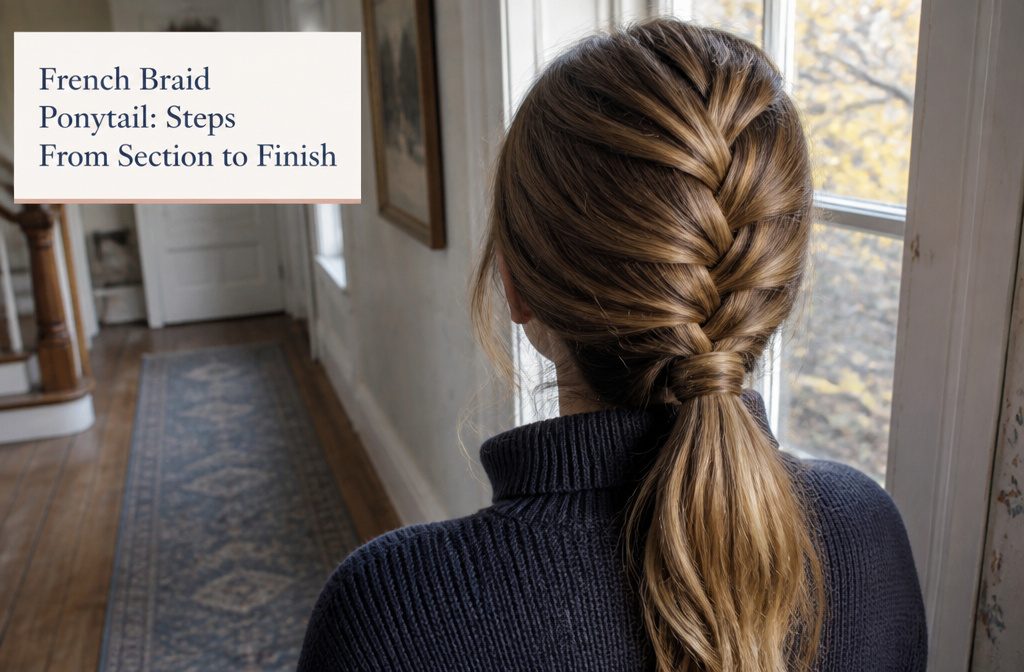
A french braid ponytail starts with a section from the temples to the crown, braids that section by adding hair each time a piece crosses to the middle, then gathers the rest of the hair into a ponytail at the base of the braid.
The braid itself can sit tight or loose, and the ponytail can finish three ways: wrapped, folded, or incorporated into a second braid.
1. Section the Hair From the Temples to the Crown
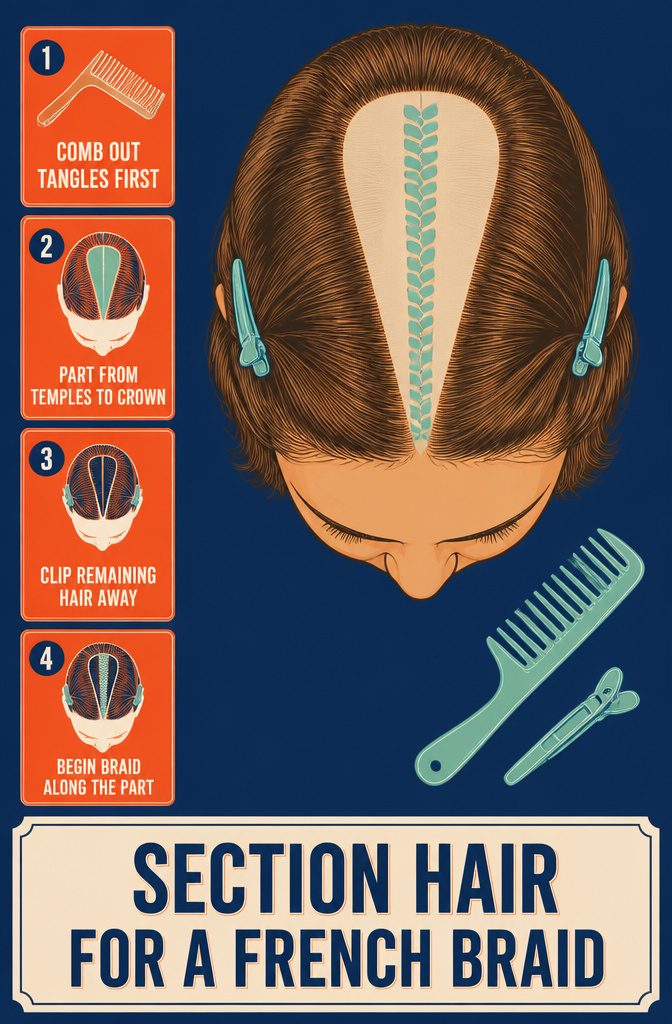
The French braid can start from three different spots depending on how much hair you want in it.
Most tutorials begin either at the corners of the forehead and work back toward the crown, at the temples and straight back, or behind each ear.
The temple-to-crown approach is the most common because it leaves the sides smooth and puts the braid exactly where a ponytail sits.
Don’t worry about making it look perfect — there’s a level of cool in leaving the look slightly unkempt.
— POPSUGAR
That messiness comes easier when you prep right. Use a wide-tooth comb to brush out tangles before you section anything.
Relatively dirty hair works better than freshly washed because it has more grip, and texturizing spray or dry shampoo adds the same friction if you need to start clean.
Once the section is parted out, clip the rest of the hair down and out of the way so you can braid without fighting loose pieces.
2. French-Braid by Adding Hair Each Time a Piece Crosses Into the Middle
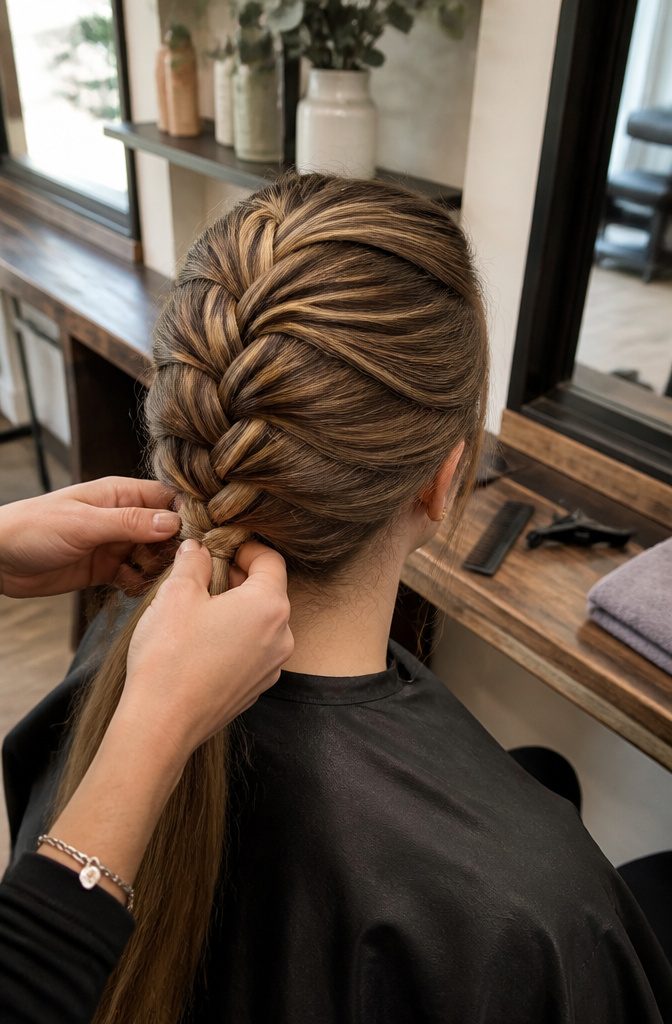
Pick up a thin section of hair from the side closest to where you started, add it to the strand you’re about to cross over, then pull it into the middle.
Repeat on the other side. Each time a piece moves to the center, you bring in fresh hair from that side.
This is what makes it a French braid rather than a regular three-strand plait: the braid grows wider as you work down, picking up more hair with every crossover.
Behind the ears, I grab sections about an inch wide so the braid stays clean without looking overly tight or geometric.
You can French braid this way, or flip it to a Dutch braid if you want the plait to sit on top of the surface instead of tucked in.
A rope braid or a simple three-strand also work if you prefer speed or a different texture.
Once you run out of loose hair to add, just braid the remaining length down to the ends and secure it with a clear elastic.
3. Gather the Remaining Hair Into a Ponytail and Secure It
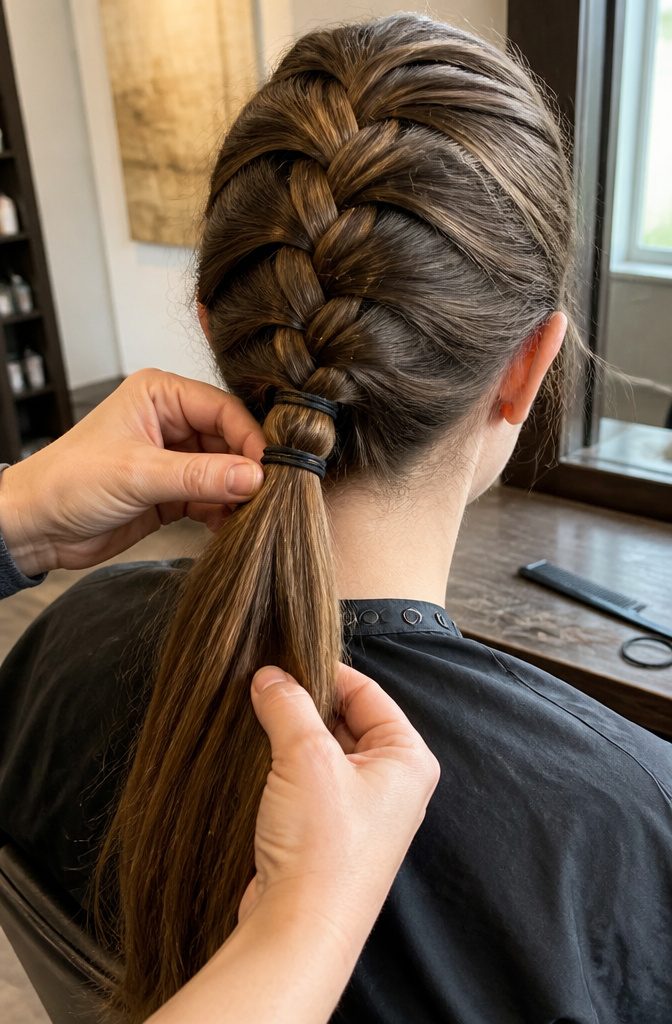
Once the braid ends, you have two choices. The first is to secure the braid with a clear elastic, leaving about an inch of hair beyond it, then gather everything else into a ponytail at the base of the braid.
Hold the braid close to where it stops, wrap a hair elastic around that spot to catch both the braid and the loose hair, and you’re done.
The second way flips the order: move the braid out of the way temporarily, pull the rest of the hair into a ponytail with a rubber band, then bring the braid back in and wrap both together. Either method works.
I lean toward the first because it feels more controlled when you’re holding tension on the braid itself, but the second makes it easier to get the ponytail exactly where you want it before the braid commits you to a height.
4. Finish With a Wrapped Elastic, Folded Braid, or Incorporated Braid
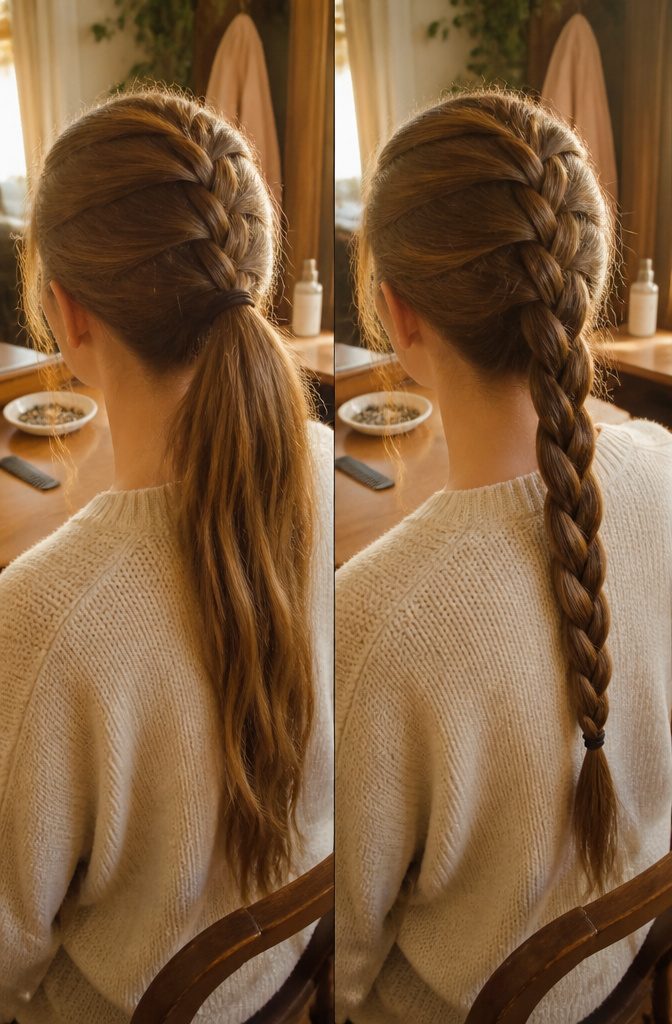
Once the braid is secured, you can finish the ponytail three ways. Wrap a small piece of hair around the elastic and pin it underneath to hide the band, which gives the cleanest look if you’re wearing the ponytail loose.
If you want something a little more polished, fold the braid upward and tuck the end where the elastic sits, twisting it toward the center of your head until the hair tie disappears, then secure the fold with bobby pins.
For longer hair, you may need to fold more than once.
The third option incorporates the braid into the ponytail itself: use the braided section as your middle strand and braid the rest of the ponytail down in three strands, securing the end with a second elastic.
If you prefer a casual finish, twist the ponytail and wrap it around itself to form a messy bun, then add another band to hold it.
30 Ways to Vary the Braid Placement, Width, and Finish
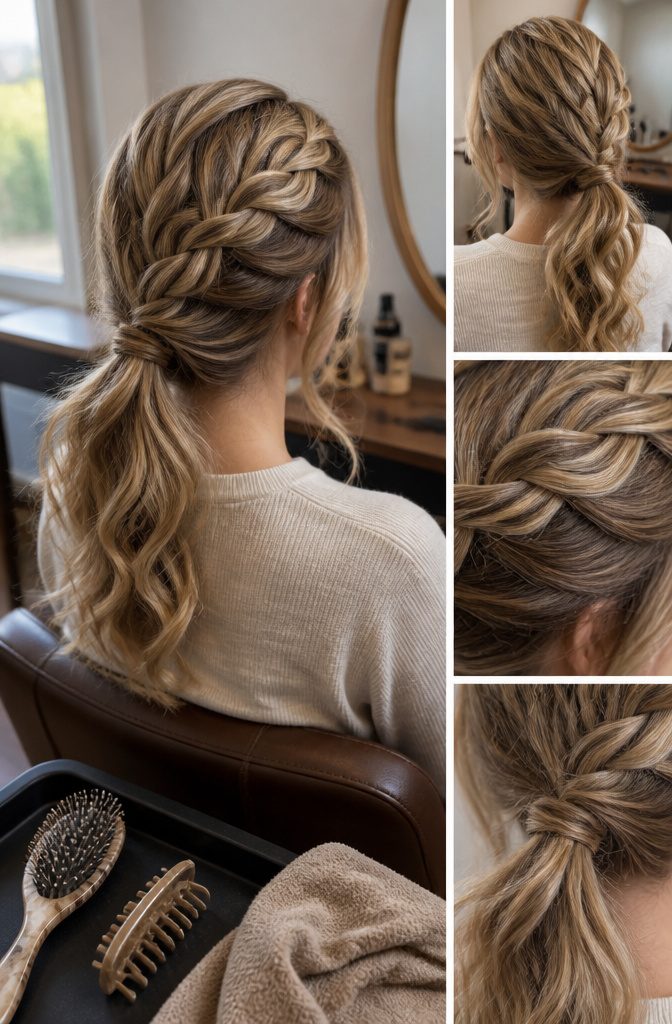
Once you have the mechanics down, placement and tension decide the look.
Therighthairstyles.com walks through thirty distinct French braid ponytail styles, built from the same basic technique but different in where the braid sits, how tight you pull, and what texture you bring before you start.
- High or low ponytail. A high pony reads athletic and polished. A low pony at the nape looks softer and more romantic.
- Side braid. Bring the braid along one side of your head instead of the center. A loose side braid with medium sections and easy waves feels full of romance.
- Double braids. Two French braids that meet at the back, or two that stop at the ears and tie together. The angle forms a V-shape from behind.
- Tight or loose tension. Tight gives you a sleek, controlled line. Loose softens the whole style and shows more texture.
- Waves or teasing for volume. Add waves beforehand if you want fullness. Teasing at the crown lifts the profile without changing the braid itself.
- Different braid types. Swap a French braid for a Dutch braid, fishtail, rope braid, or three-strand braid. Each one changes the pattern and the hold.
How Loose Tension and Texture Change the Look
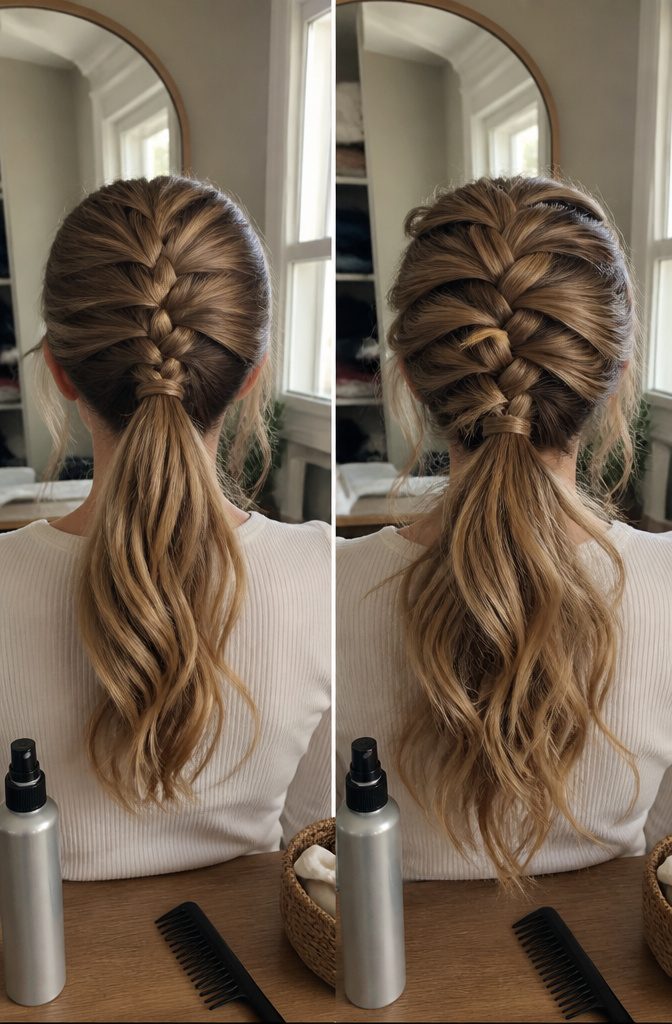
A loose braid reads as softer and more textured than one pulled tight from the start.
I like running my fingers back through the sections after the ponytail is secured, gently tugging at the sides to add width and break up any rigidity.
If you’re after something chunkier or deliberately messy, a Dutch braid loosens more dramatically than a standard French, and a few spritzes of texture spray before you start teasing gives the finished braid more grip to hold that undone shape.
Thick hair loosens on its own as the day goes on, so you can start with moderate tension and let gravity do the rest.
Adding waves before you braid changes the whole silhouette: the braid picks up bends and irregularities that make it look fuller without any tugging required.
If you finish the ponytail in a bun, keep it relaxed. A bun wound too tight undoes the casual effect the rest of the style was built around.
What the Style Works For, From Everyday Wear to Weddings
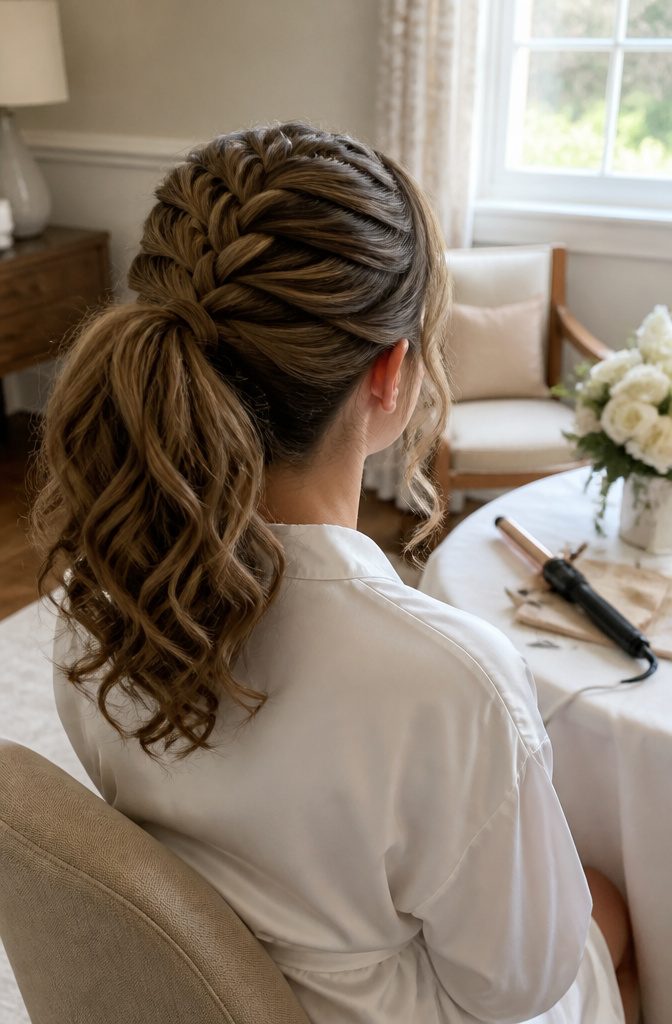
The French braid ponytail works when you need polish without the time a full updo demands.
It holds for work events and weddings just as well as it does for a weekend morning when you want the hair off your face but still want something that reads as intentional.
One source frames it as the perfect middle ground between too casual and too formal, and I think that lands: fancy enough for the office, grounded enough for errands.
For brides working with shoulder-length hair, the jumbo braid combined with loose curls gives you a full look without extensions.
The French braid sits high enough that the ponytail lands at the right level, which matters when you want structure that photographs well from multiple angles.
The style also replaces a standard bun when you want movement instead of something pinned tight and static.
Products That Give Grip and Hold: Bumble and Bumble Dryspun Finish at $36
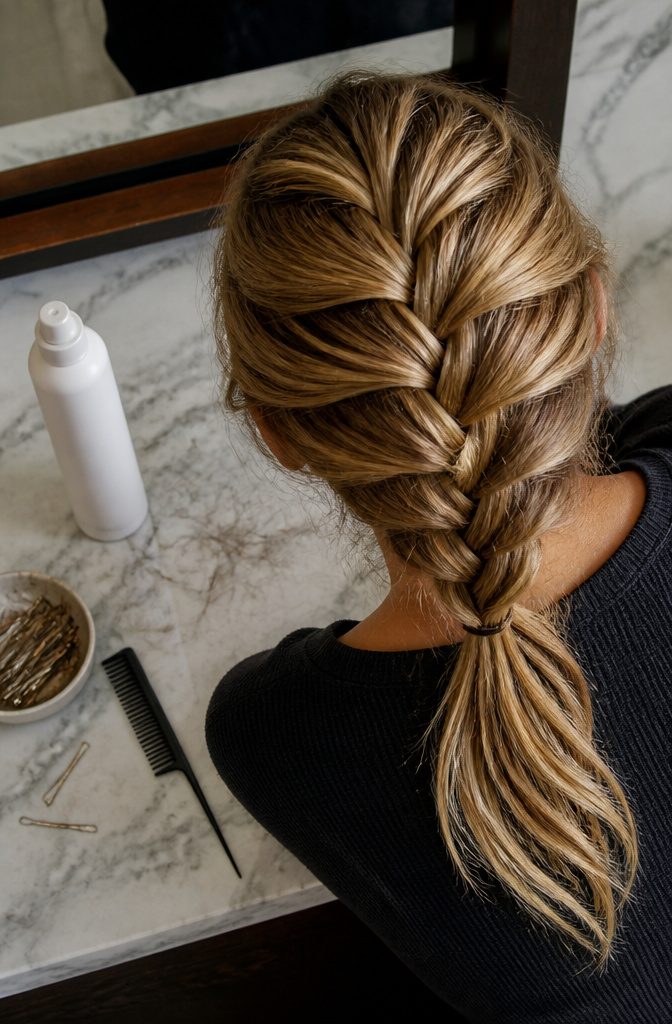
The right product depends on when you’re using it and what you need it to do. Here’s the lineup:
- Bumble and Bumble Dryspun Finish at $36 – A texturizing spray you spritz on after the braid is finished. Pull gently at the plaits to loosen them, then add a few passes of Dryspun to give the braid fullness and a slightly lived-in look. It adds grip without stiffness.
- Sea salt or texturizing spray – Use this before you start braiding if your hair is too slippery to hold a clean plait. Spray it at the roots and mid-lengths while the hair is damp or dry, then tease the back lightly for extra body.
- Pomade or wax – Work a small amount through each section as you braid if you want the surface smooth and every hair in place. This is the route for a polished, modern finish rather than soft texture.
- Dry shampoo – Another option for adding grit and hold mid-braid. A few spritzes give the hair enough tooth to grip itself.
- Hair spray – A light mist over the finished braid tames flyaways without making the style look lacquered.
- Hair pin – Secures the elastic or any loose ends at the base of the ponytail.
Frequently Asked Questions
What is a French braid ponytail?
A French braid ponytail starts with a French braid from the temples or crown that gathers hair as it works back, then transitions into a ponytail at the base.
The braid can be left as part of the ponytail, wrapped around the elastic, or braided into the rest of the hair.
It works for everything from work events to weddings because it holds well and reads as polished without the time a full updo requires.
What’s better, French or Dutch braid?
A French braid sits tucked into the surface of the hair, while a Dutch braid sits on top of it by crossing strands under instead of over.
Dutch braids loosen more dramatically and give a chunkier, more textured look. Pick French for a sleek line and Dutch for fullness and grip that holds an undone shape.
What is a Viking braid?
Viking braids are tight, close-to-the-scalp plaits that often run in multiples along the sides or back of the head, sometimes combined with shaved sections or an undercut.
They pull from historical and fantasy aesthetics rather than the soft, loose texture of a French braid ponytail. The technique is similar but the tension, placement, and styling intent are different.
What is a mermaid braid?
A mermaid braid is a loose, textured plait that cascades down the back with intentional pulls and waves to mimic an undone, beachy look.
It usually starts lower on the head than a French braid and prioritizes volume and softness over structure.
The French braid ponytail sits higher and works as a functional style that holds tension, while a mermaid braid is built for movement and fullness.