How long you can sit in the chair decides which of these is yours. Small braids, Fulani-style front cornrows and geometric parting add the most time, while medium and jumbo sizes finish sooner.
The range runs from bob-length sets to waist-length braids, in colors from brown to burgundy and bright blue, with curl patterns like loose deep wave or water wave at the ends.
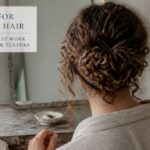
1. Half-Up, Half-Down Bun
This keeps the top half pulled up into a bun while the rest of the braids and curls hang loose.
A bun clears your face and neck while keeping every inch of length, and you can set it tight and sleek for a polished look or pull it loose and messy for something casual.
The curls at the ends stay visible, so the texture still shows through. If the bun starts to slip during the day, a second elastic or a few bobby pins will hold it longer.
2. Bob-Length Boho Braids
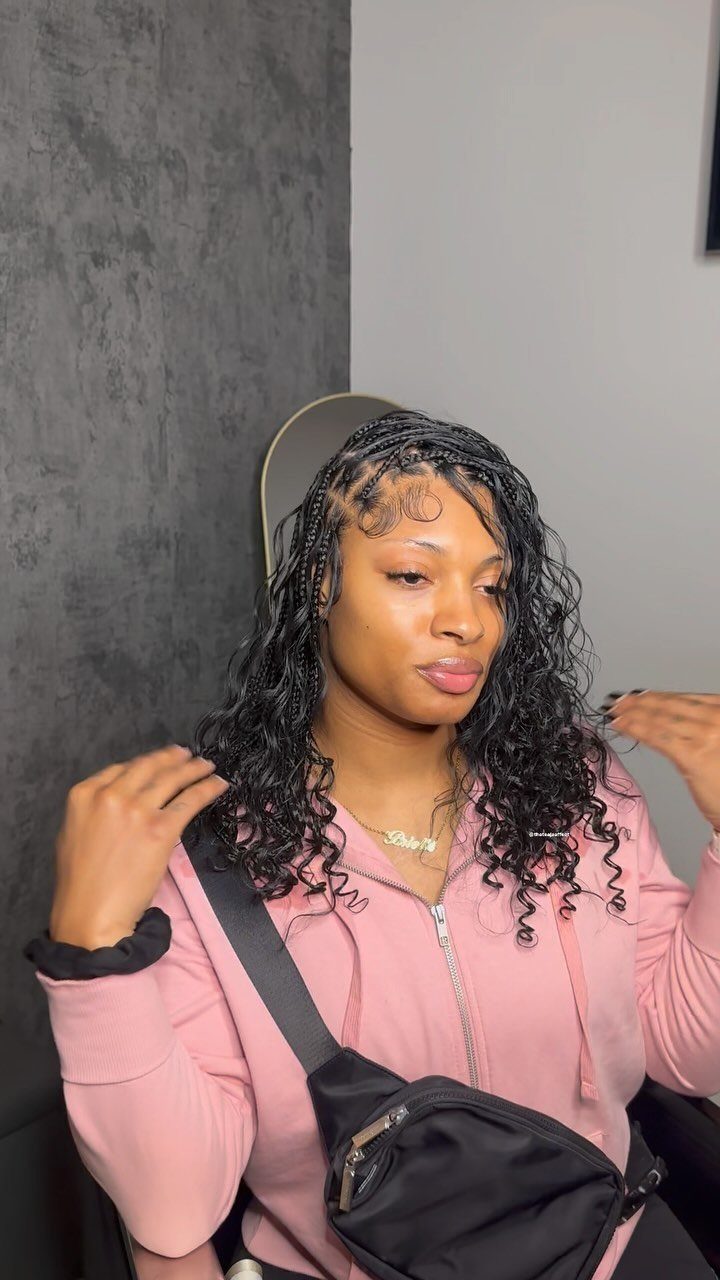
Braids that land at the chin or shoulders take less time to install and weigh less on your neck. Shorter braids also dry faster and stay neater longer because there’s less length to tangle or fray.
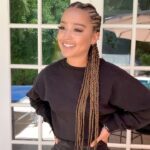
The curls at the ends still give movement, but the overall shape is cleaner and easier to manage day to day. At this length you get the boho look minus the heft of waist-length braids.
3. Loose Deep Wave Braids
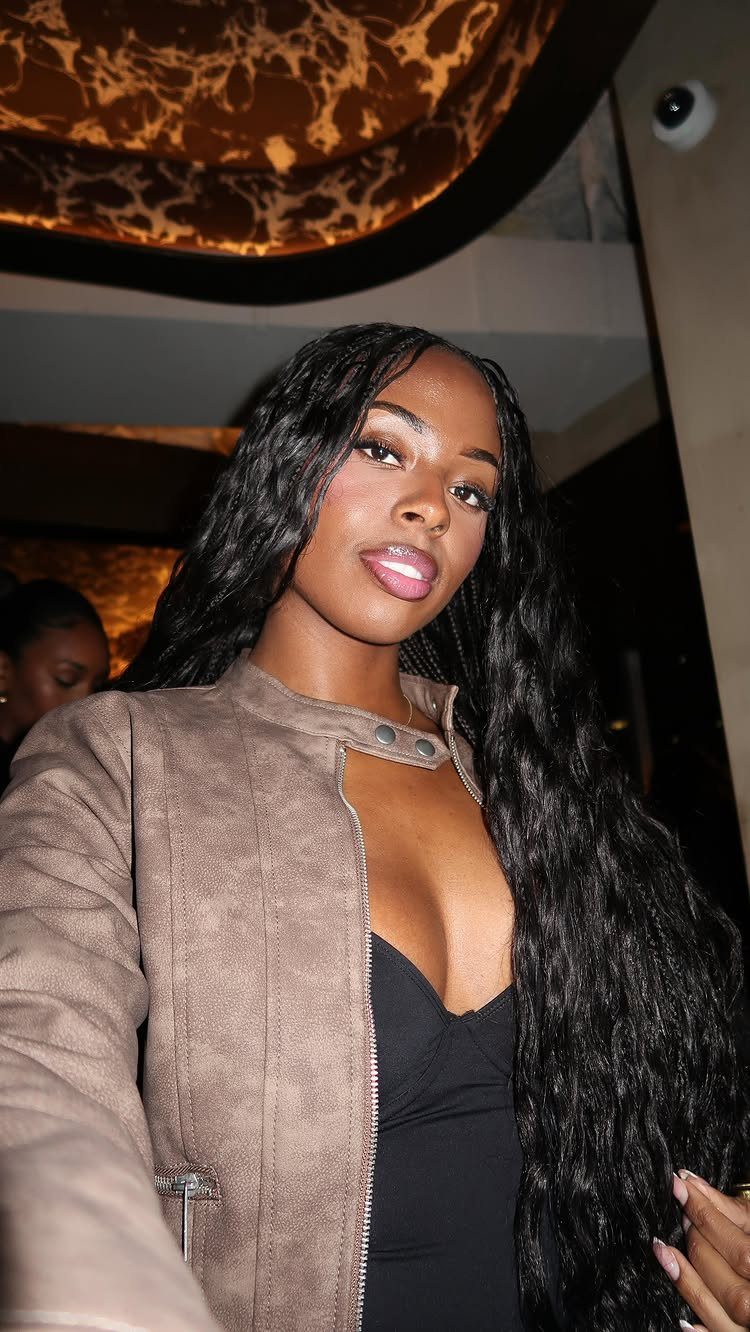
Loose Deep Wave adds visible texture and body, with none of the tight spiral you get from other curl patterns.
The waves sit softer and blend smoothly with the braided sections, so the transition from braid to curl feels more gradual.
This texture also tends to hold up longer because the looser pattern doesn’t tangle as easily as tighter curls. After 4 weeks, the waves still look intact, which means less touch-up work between washes.
4. Fulani Boho Braids
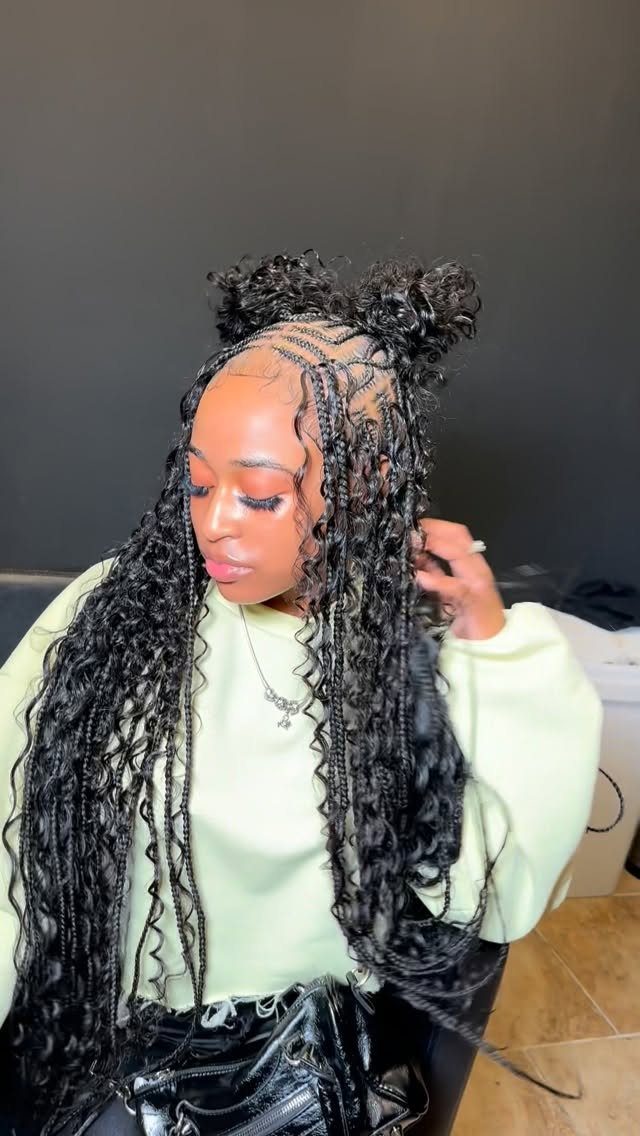
Fulani-inspired front braids bring patterned detail to the hairline, usually with thin cornrows that curve or run straight back before transitioning into the knotless braids.
The patterns frame your face and add structure up front, while the remaining braids hang loose with curls at the ends.
This look takes longer to install because of the front work, but the detail makes it stand out more than a simple center or side part.
5. Honey-Blonde Boho Braids
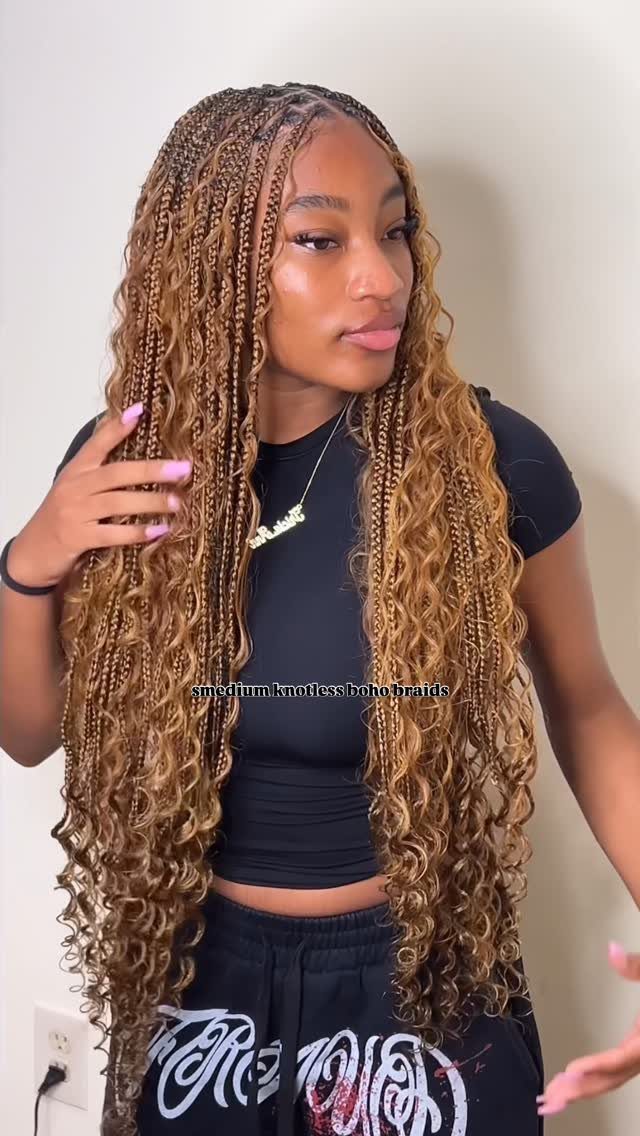
Honey blonde adds warmth and lifts the overall tone, especially against dark roots.
In natural light the color looks lighter, and the braids stand out more sharply against the curls. If you’re starting with dark hair, expect a longer color process or pre-colored extensions to get the honey tone without damage.
The color also shows dirt and product buildup faster than darker shades, so plan for more frequent washing or touch-ups.
6. Highlighted Boho Braids
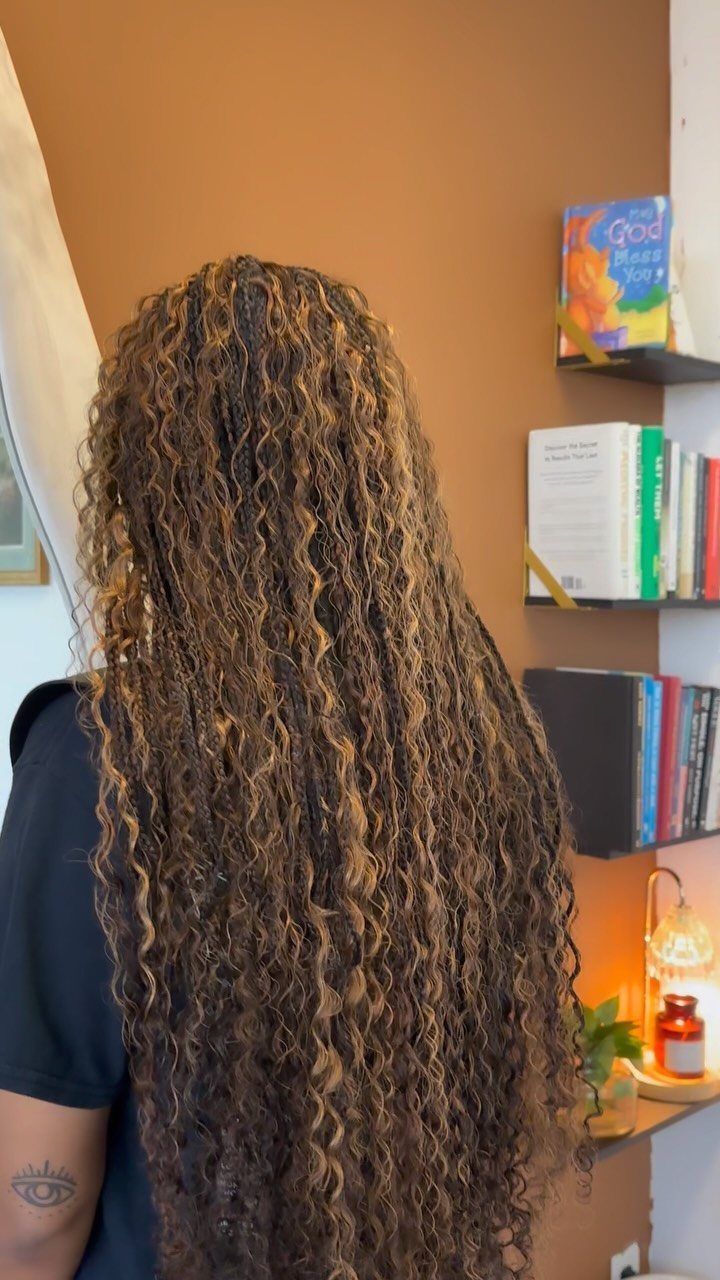
Highlights add dimension by mixing lighter and darker shades throughout the braids. The contrast keeps the style from looking flat, and the lighter pieces catch more light as you move.
You can go subtle with a few shades up or push it further with caramel or blonde tones against a brown base. The color placement doesn’t have to be even; scattered highlights look more natural than uniform stripes.
7. Curly Ends Boho Braids
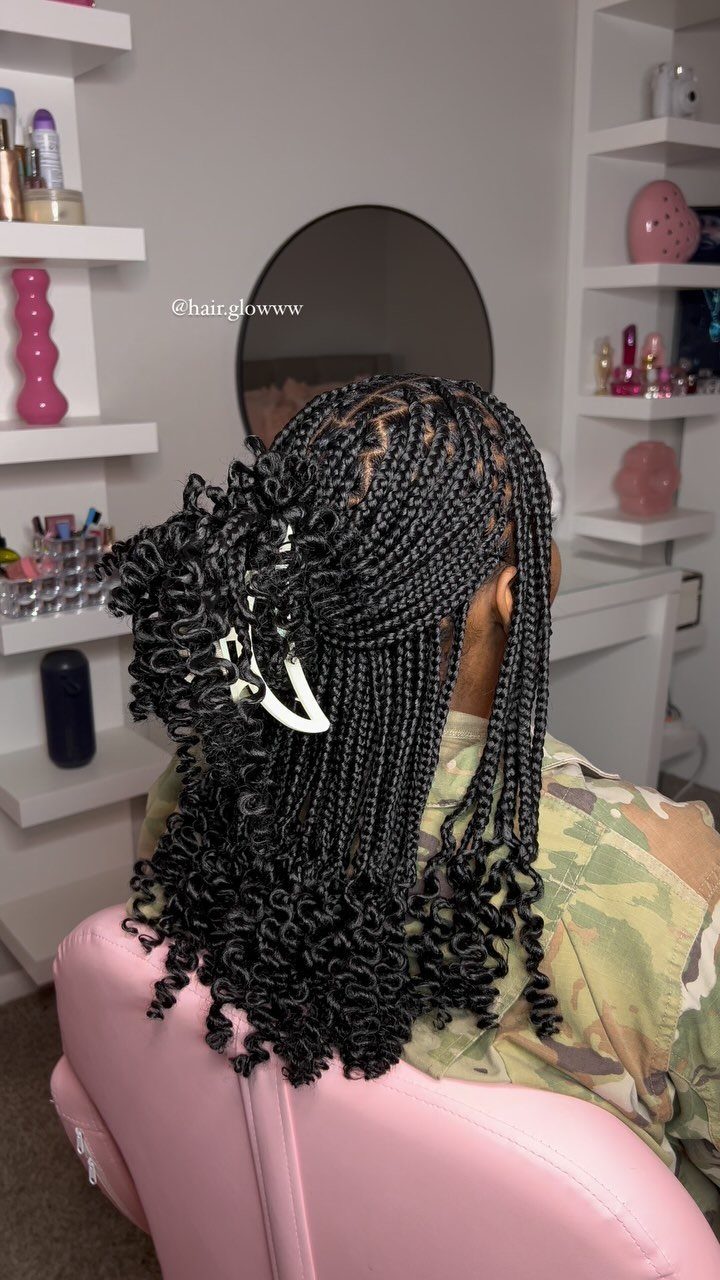
Ask your braider to leave the tips loose and curled instead of curling throughout, so the braid shows clean and the texture sits only at the bottom.
On long braids, that curl at the tips adds movement without adding bulk through the middle. I like it best for people who want a neat, defined braid and just a little softness at the finish.
Curl length is worth settling in advance, since short curls read very differently from long ones.
8. Brown Medium-Part Braids
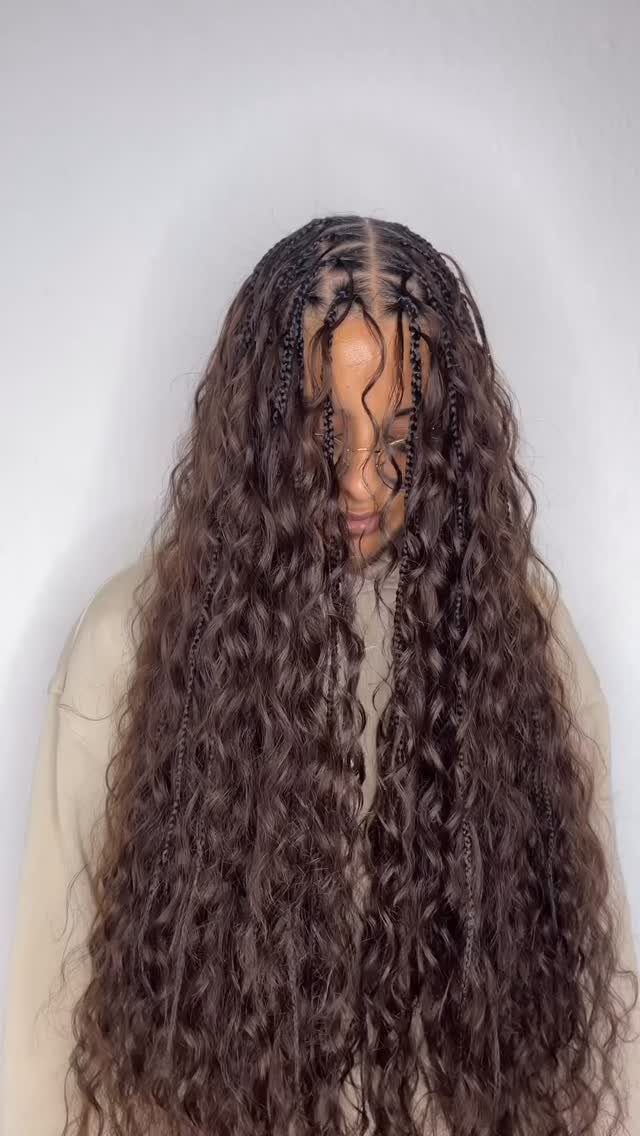
A medium part splits the hair down the center without any asymmetry. It frames the face evenly without the stark symmetry of a straight middle line, and it forgives a slightly off-center placement.
For brown braids, I would pick a shade close to your natural hair so the part line blends at the scalp. Bring a reference photo and point to the exact spot, since ‘medium’ means different things to different braiders.
The part also gives you a styling choice: sweep the braids to one side, or leave them split evenly over both shoulders.
9. Honey Blonde Side-Part Braids
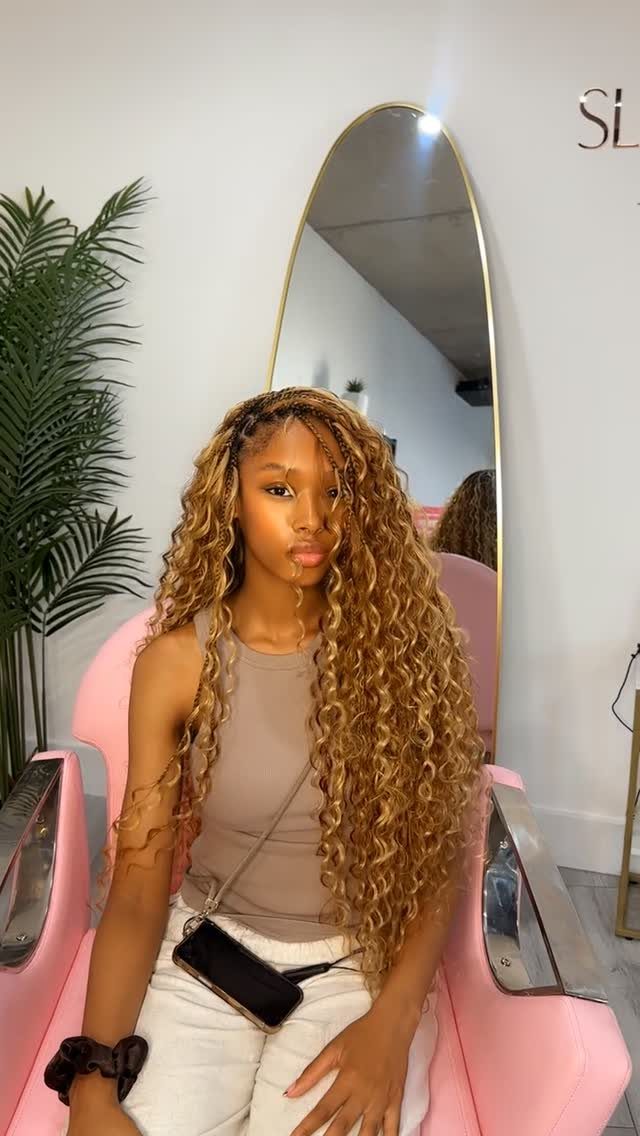
Honey blonde against a side part puts the color where the eye lands first. The deeper side of the part sweeps a heavy curtain of braids across the face, so the lighter tone gets the most visibility.
If you choose this, tell your braider which side you want, and pick the one you usually part your own hair on so the braids sit naturally.
Dark roots will show more along a side part, which gives the color some depth.
Honey tones pair well with warm skin, though I would hold a swatch next to your face before committing.
10. Brown Highlight Braids
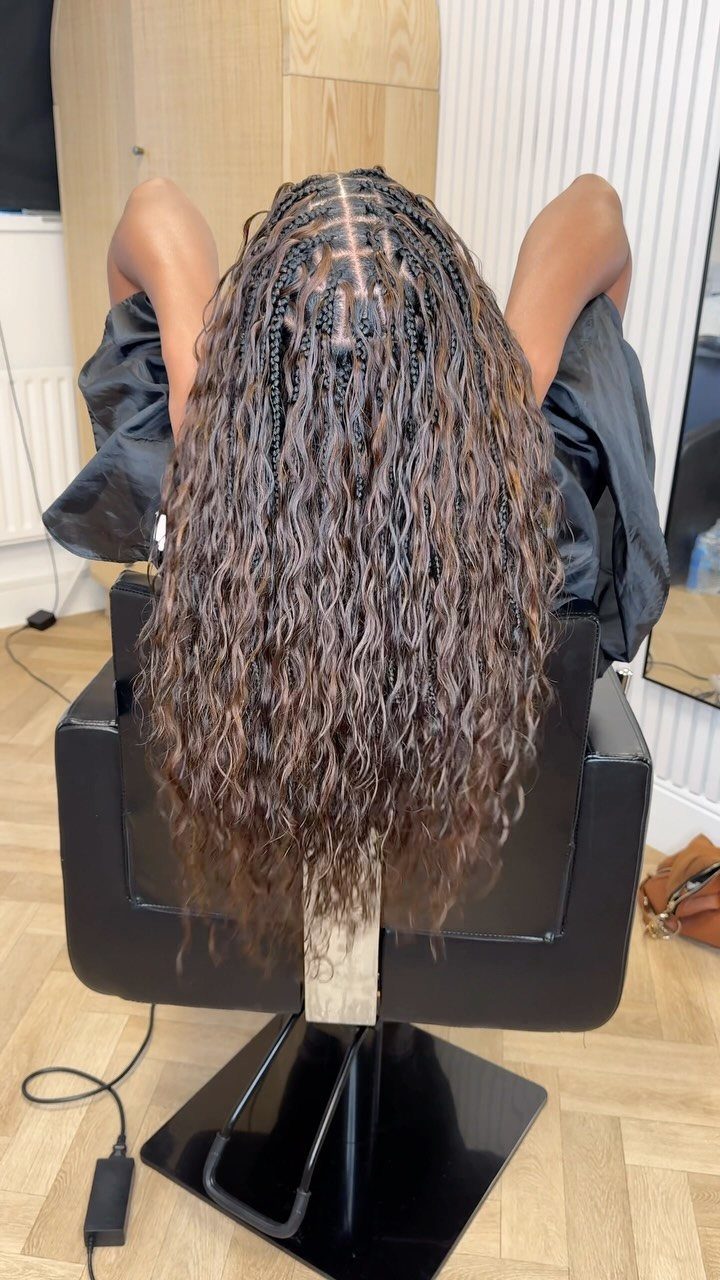
Brown highlights give dark braids a second tone without leaving the natural range. Where a solid black or brown can look flat in a photo, a few lighter pieces break it up and show off the curls at the ends.
Ask for the highlights to be scattered instead of grouped, so the color reads as sun-touched and not striped. A braider can mix the lighter extension hair into a few braids per section, which keeps the look subtle.
If you want more contrast, go one or two shades lighter than your base. Anything beyond that starts to look like a different style.
11. Small Boho Braids with Curls
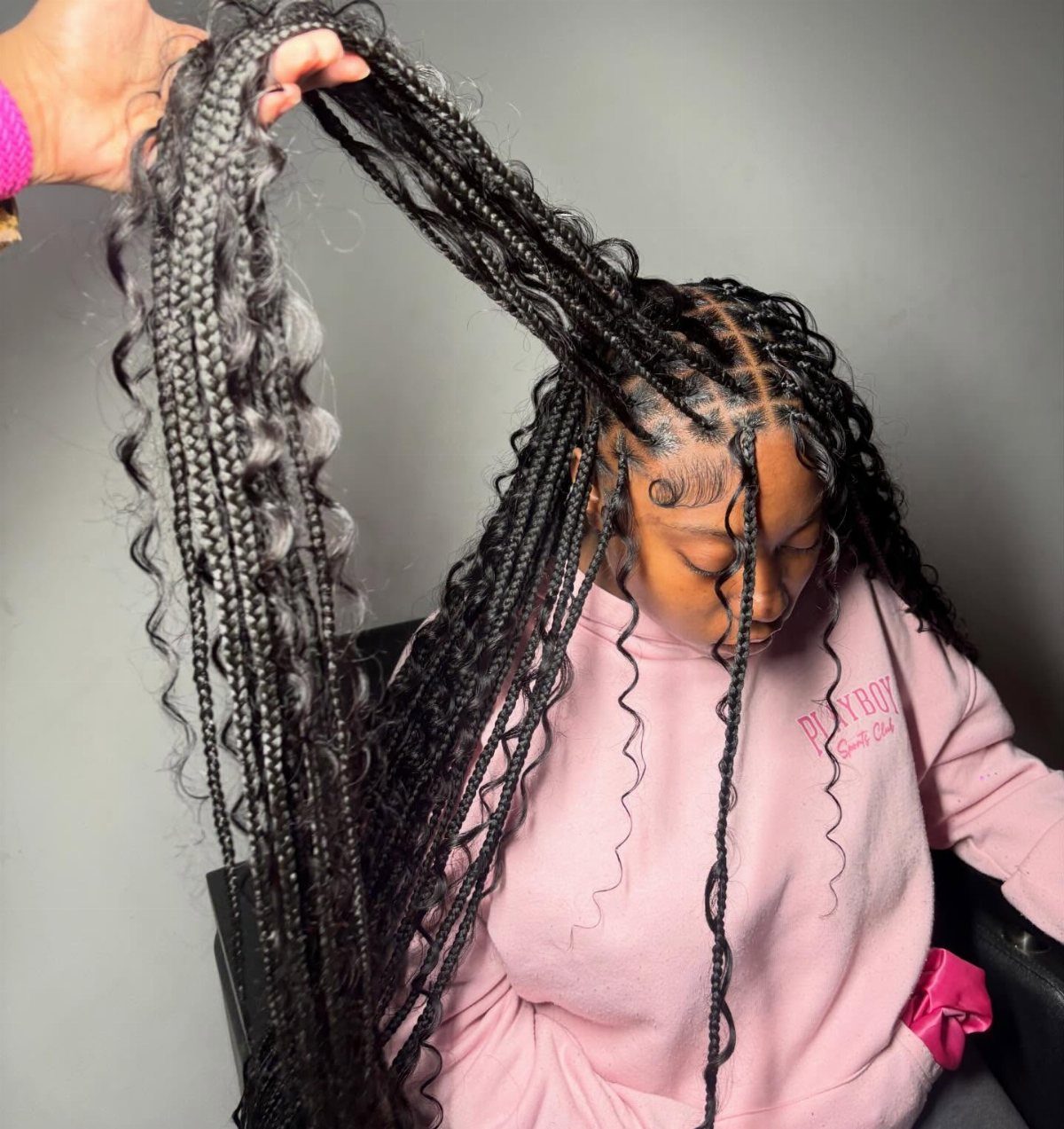
Smaller braids mean more of them, and more braids mean a fuller, denser look with plenty of curl at the ends. The sections are thin, so the style looks detailed up close and movement-heavy from a distance.
The cost is time.
More parts means a longer installation, so plan for a longer day in the chair than you would with medium or jumbo sizes. I would pick small braids if you like a precise, finished look and don’t mind the sitting.
Because the braids are lighter individually, they swing freely, and the curls show clearly.
12. Jumbo Boho Braids with Beads
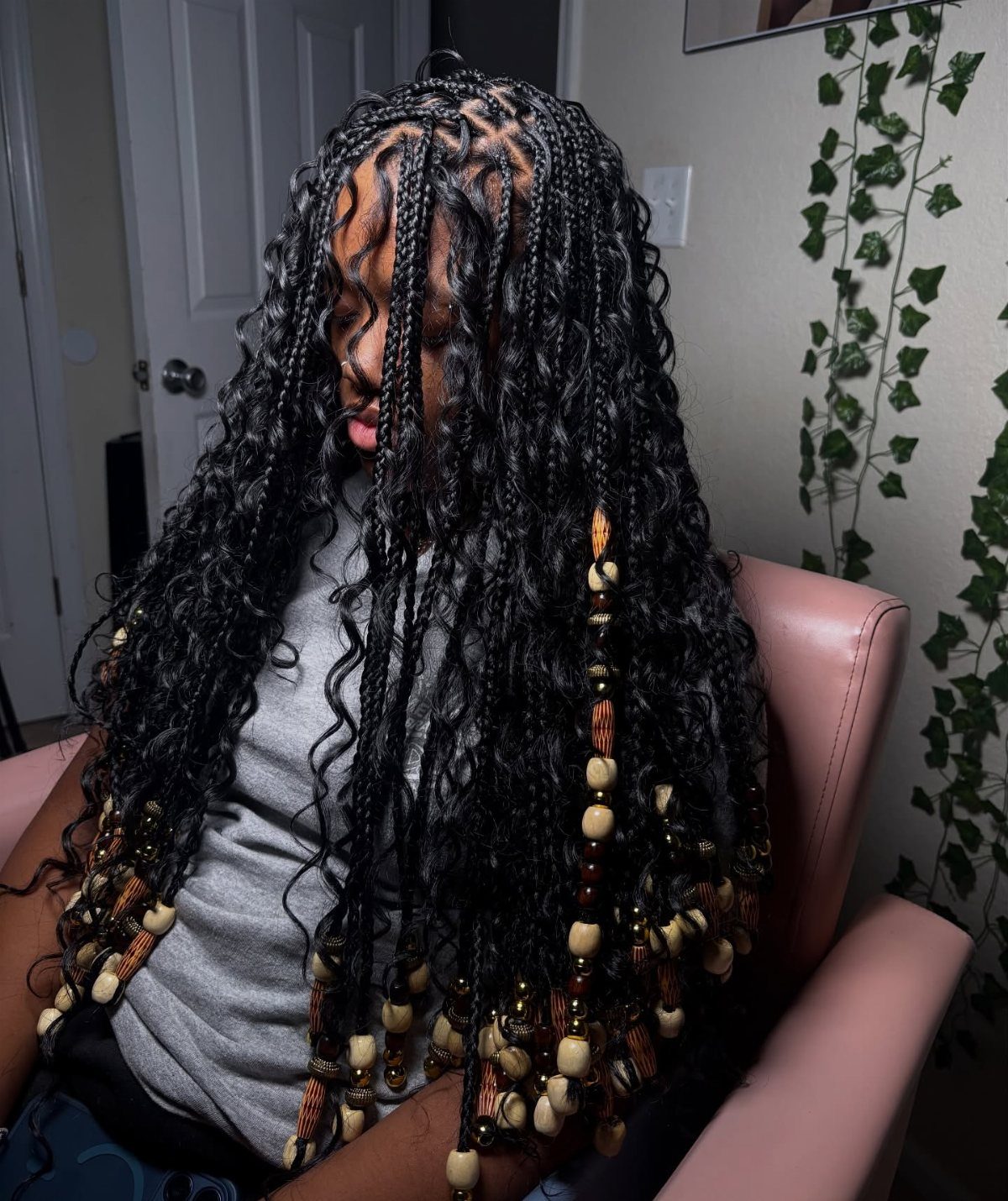
Jumbo braids are the opposite of the small version: fewer, thicker sections that make a bold statement and finish quickly. Wooden beads suit that scale well, since the thick braids give the beads room to sit without crowding.
Add the beads toward the ends, where the curls begin, so they stay visible and don’t weigh down the top. Choose beads with openings wide enough to slide over a full jumbo braid, and test a few before the appointment.
Keep in mind that jumbo braids carry more weight per section, so ask your braider how it will feel on your scalp.
13. Medium Boho Braids
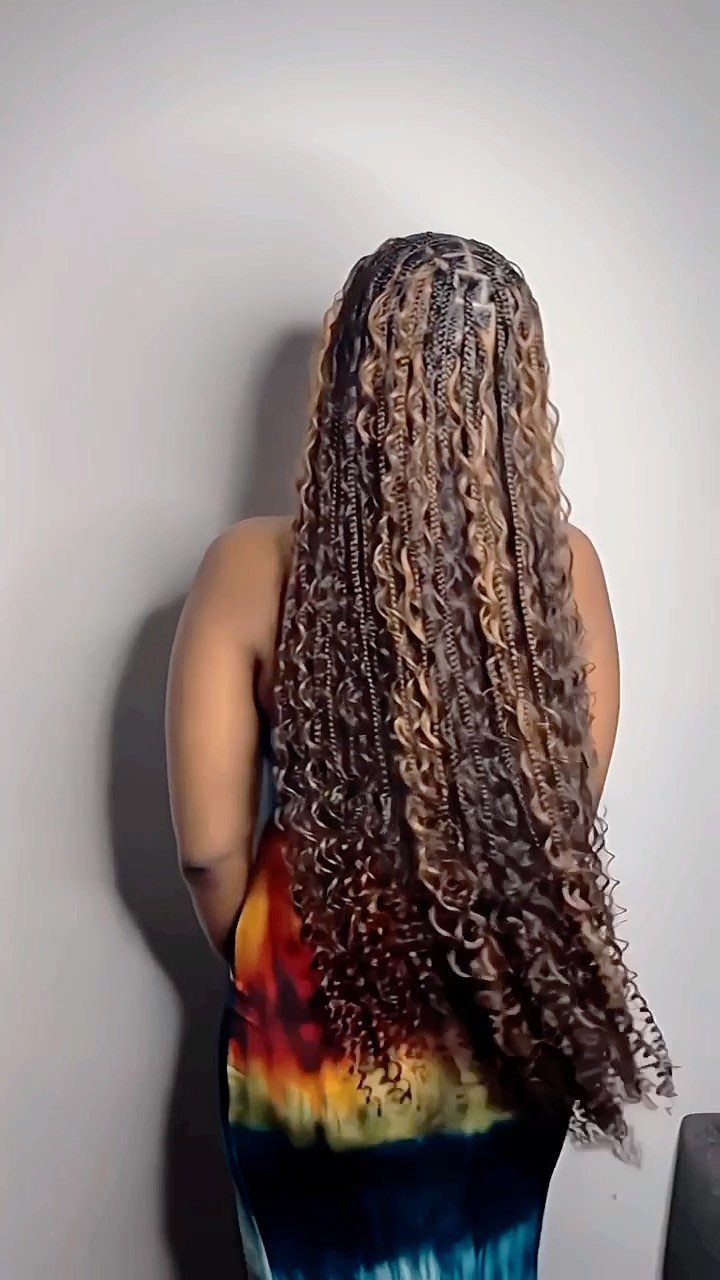
Medium braids sit in the middle on purpose: thick enough to look bold and finished, thin enough that the curls at the ends still read as detail.
Compared with the small version, they take fewer parts and a shorter day in the chair.
I would pick this size if you want a style that looks balanced from a distance and up close, without committing to the long sit that tiny braids ask for.
Mixing brown and blonde works well at medium width because each color gets enough room to show.
14. Shoulder-Length Boho Braids
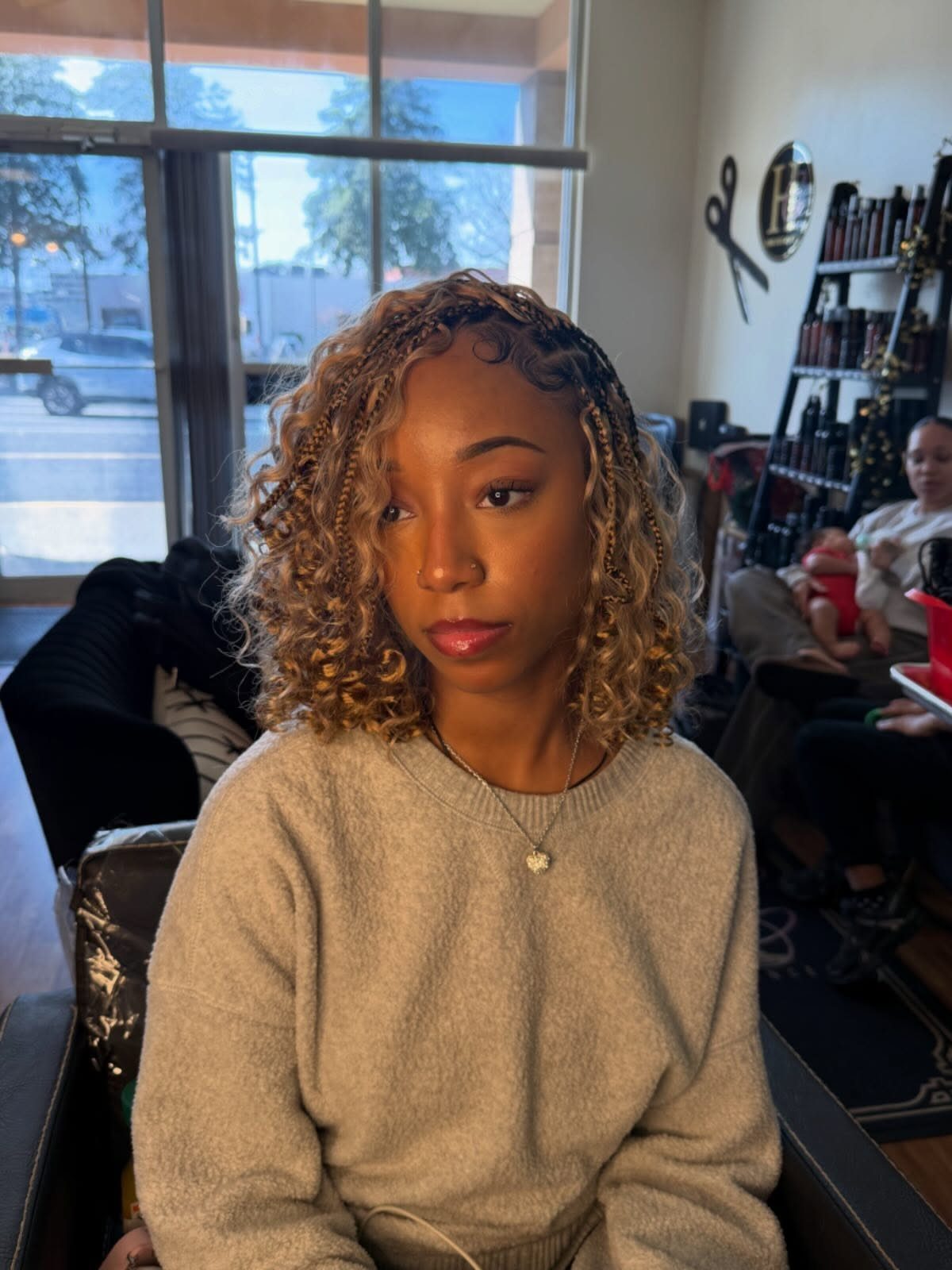
Ending at the shoulder, these braids move when you turn your head but never pile up on your back. The loose curls at the tips flip outward against the shoulders, which gives the style its bounce.
Length like this suits anyone who dislikes feeling pulled down by long braids. Ask your braider to cut the ends evenly before curling, so the curl line looks intentional and not ragged.
I like brown at this length because the curls stay easy to see.
15. Burgundy Boho Braids
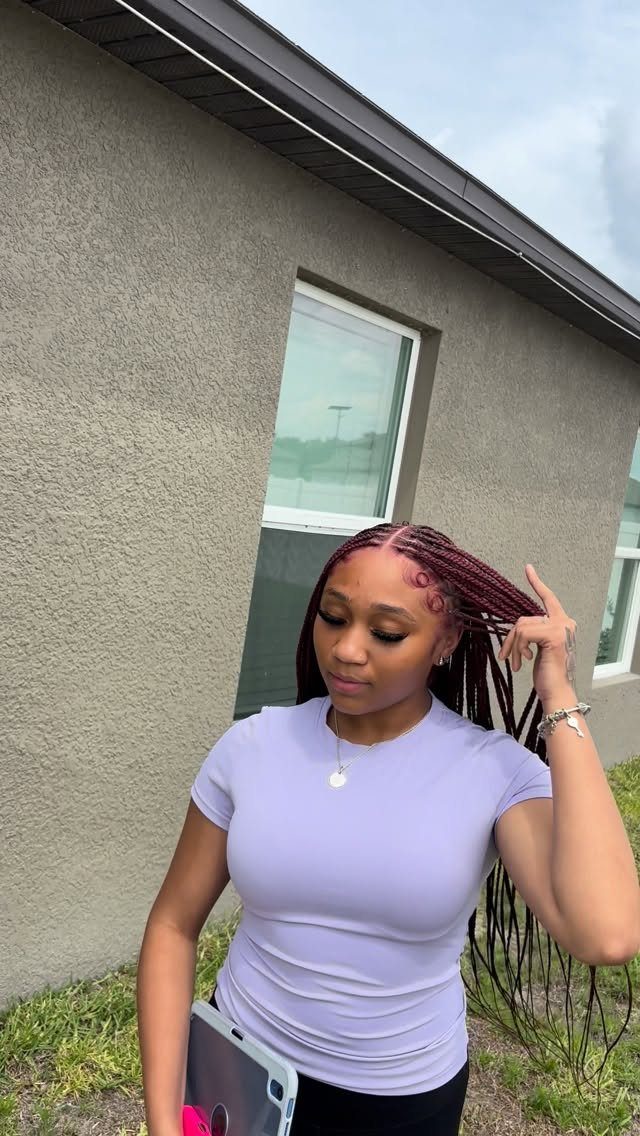
Burgundy reads as deep wine in shade and brighter red in direct light, which makes it a stronger choice than black or brown without going fully neon.
On long braids with loose curls, the color shows most in the curled strands.
Many braiders supply the hair for you, and some offer burgundy and red alongside natural shades and other colors on request. Ask before booking whether hair is included, so the price you hear is the price you pay.
I would pick burgundy if you want color but still want it to feel wearable.
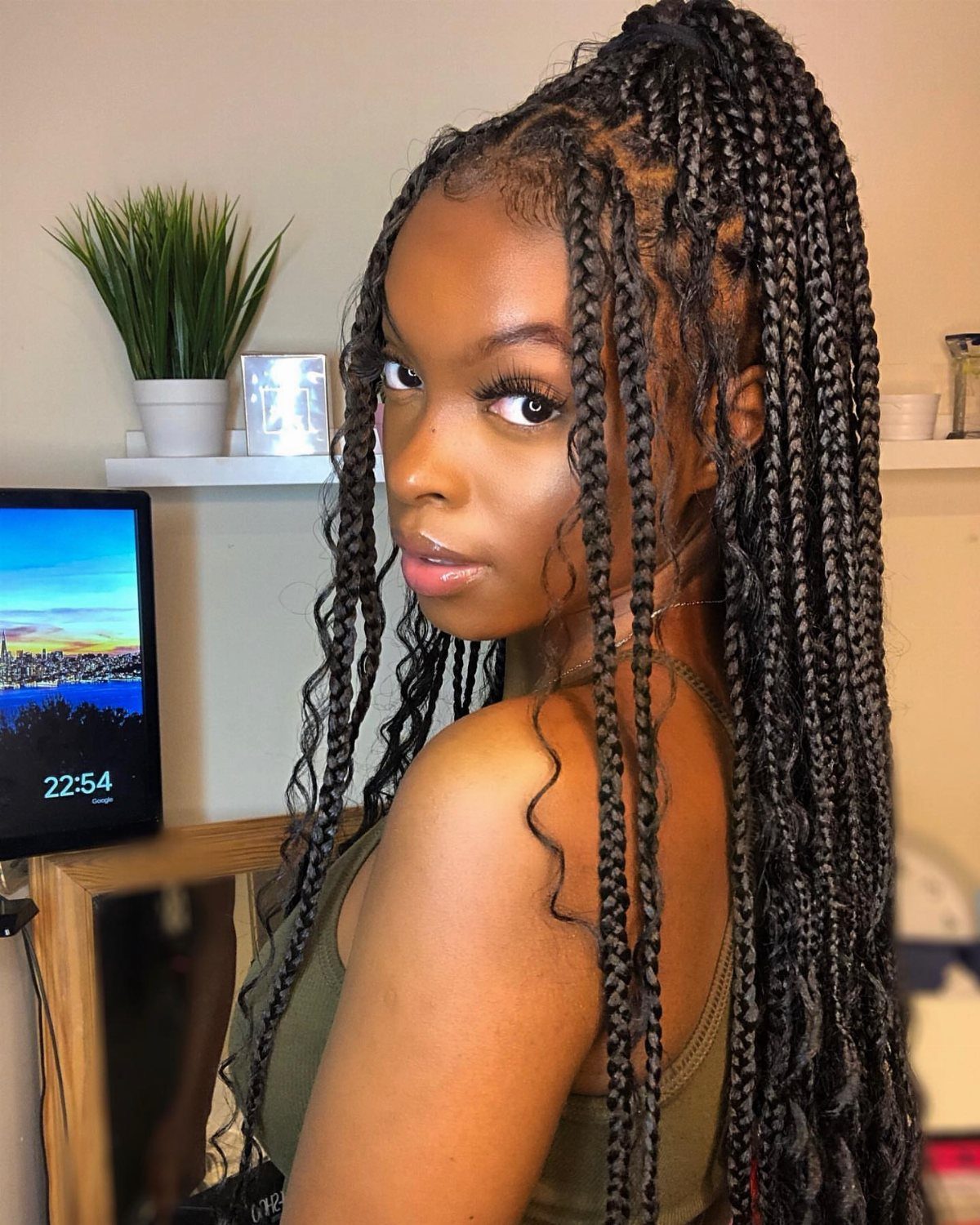
16. Boho High Ponytail
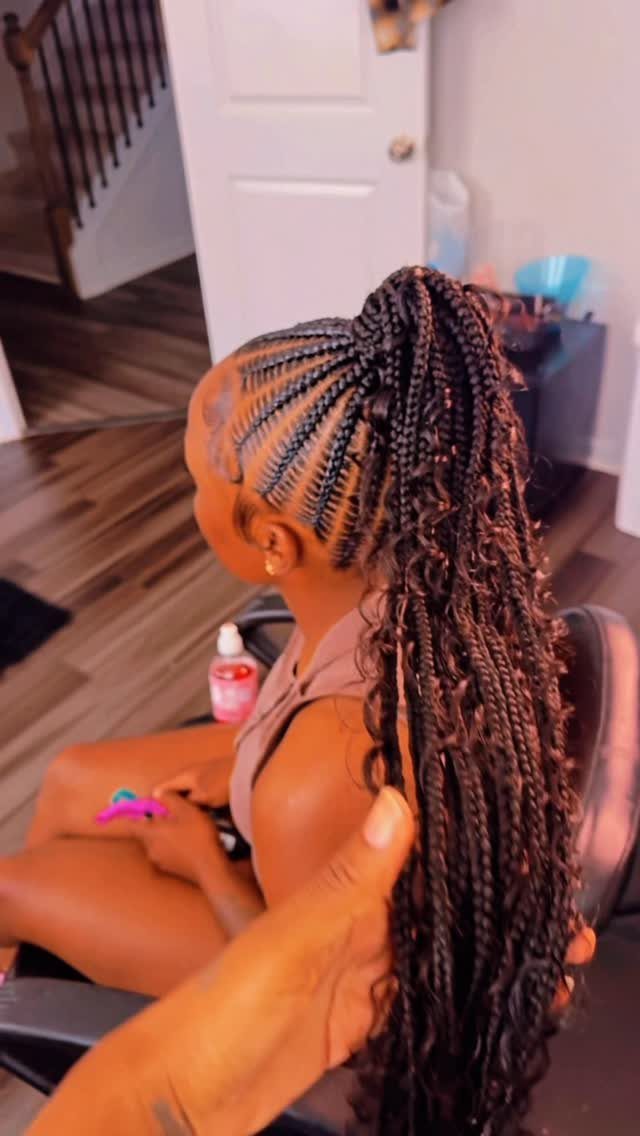
Gather the braids at the crown, and the weight lifts off your neck while the curly ends spill down your back as a single tail.
A high placement shows off the length of the braids better than a low ponytail does.
Ask your braider to start the ponytail with the braids pulled snug but not tight at the hairline. A wrap of extension hair or a smooth elastic hides the base.
I would choose this for hot days or workouts, since everything stays off your shoulders. A high ponytail pulls on the braids at the crown, so loosen it at night to protect your edges.
17. Ash Blonde Braids
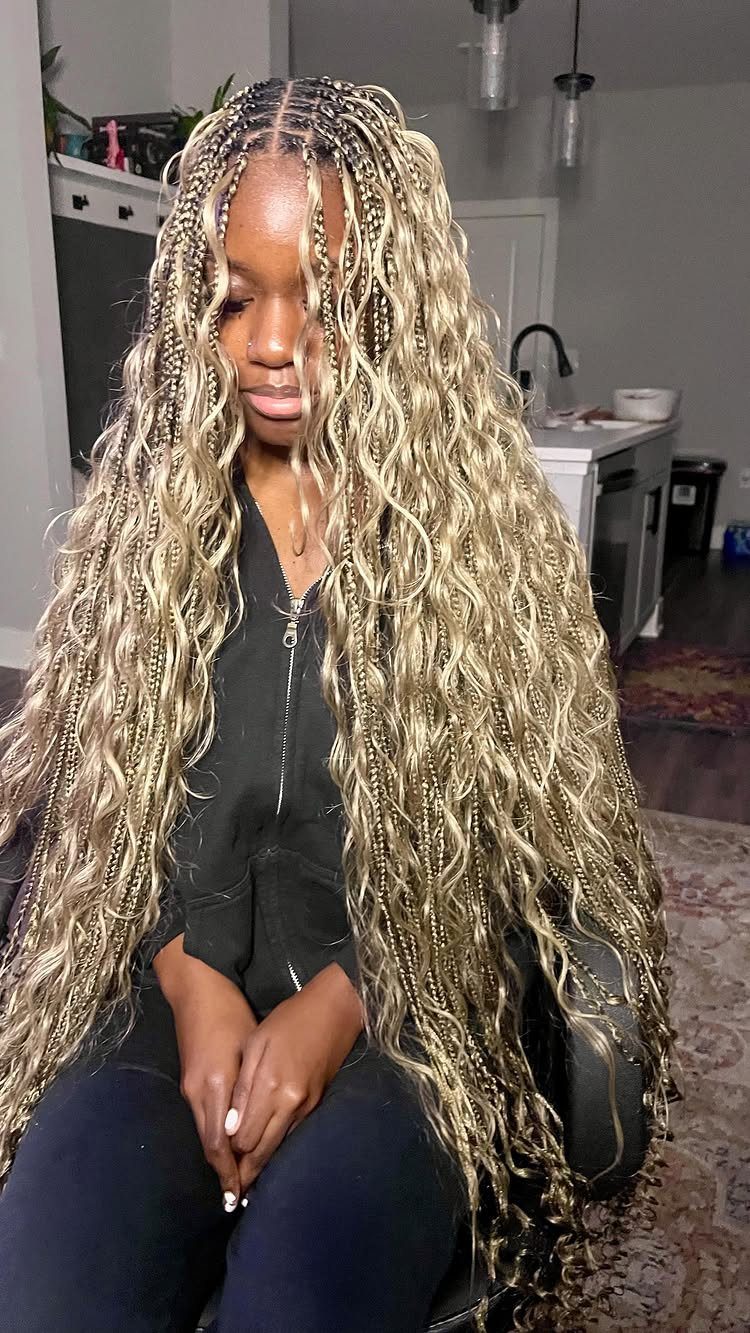
Ash blonde pulls cool and slightly gray, so it looks very different from golden or honey shades. Against loose waves, the color reads soft and silvery instead of bright.
Take a swatch to your appointment and hold it next to your face in daylight. Cool tones can look flat on some skin, and a quick check saves you from a color you regret after a long install.
If you want the shade without bleaching your own hair, ask your braider to use pre-colored extensions. I think ash blonde looks best on longer braids, where the color has room to show.
18. Classic Boho Knotless Braids
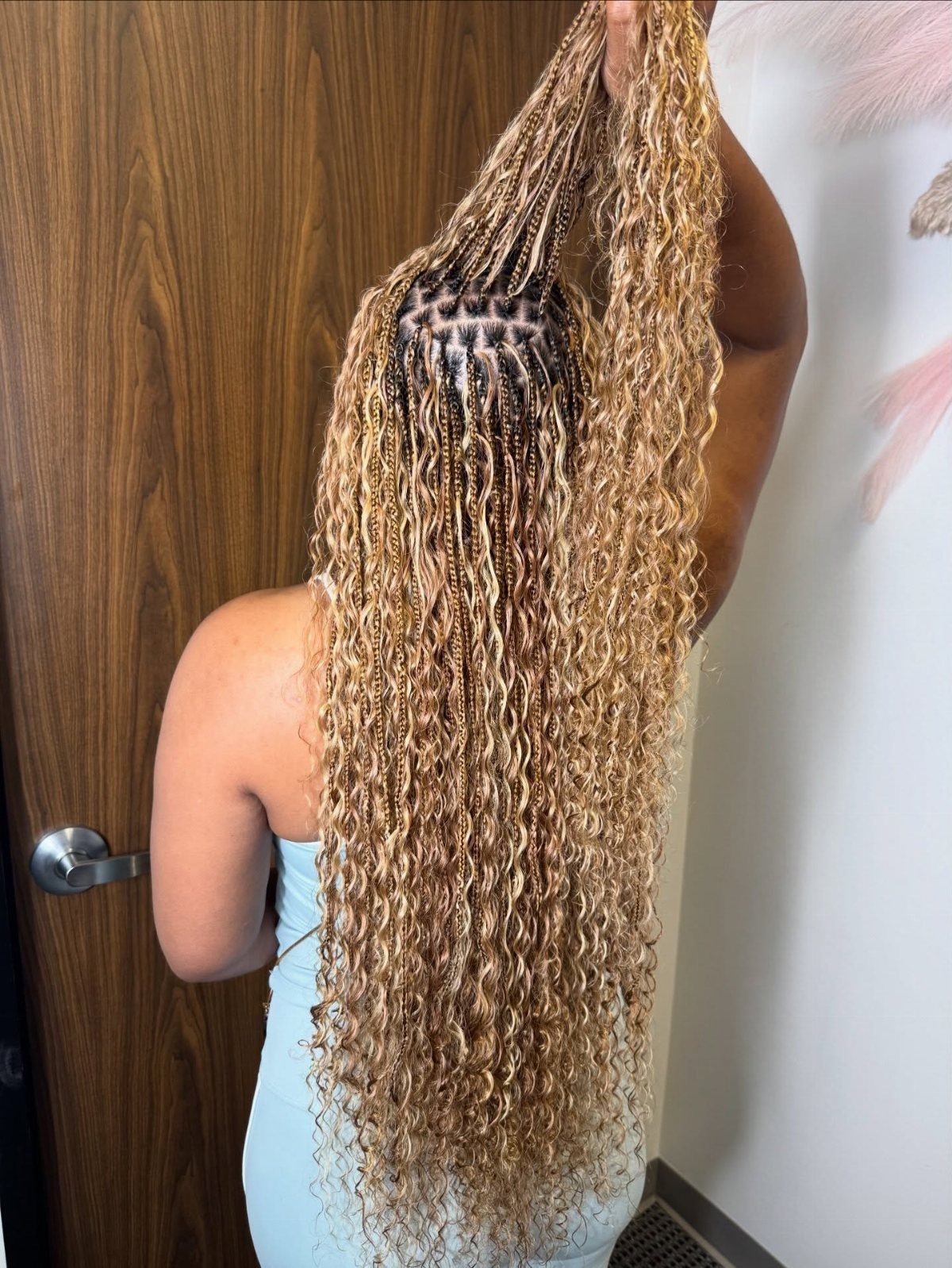
Classic here means medium-to-large knotless braids that start flat at the root and finish in loose curls. The result looks relaxed but tidy, and it works for work, errands and weekends without much changing.
Because the braids are on the larger side, the install goes faster than with small sizes, and the parts show clearly at the scalp.
Honey blonde adds warmth to classic knotless braids, though the same style looks just as good in brown or black.
If you only try one boho look, I would start with this one. It is the easiest to describe to a braider.
19. Water Wave Boho Braids
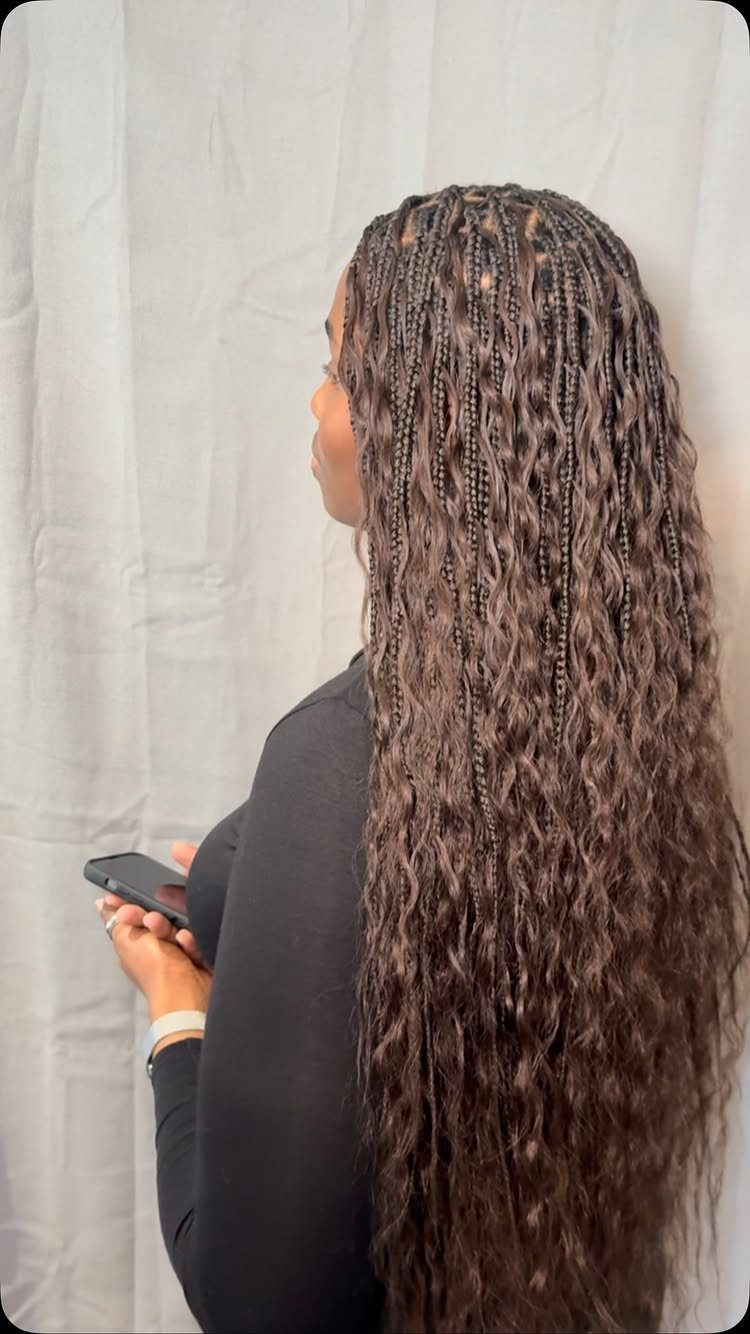
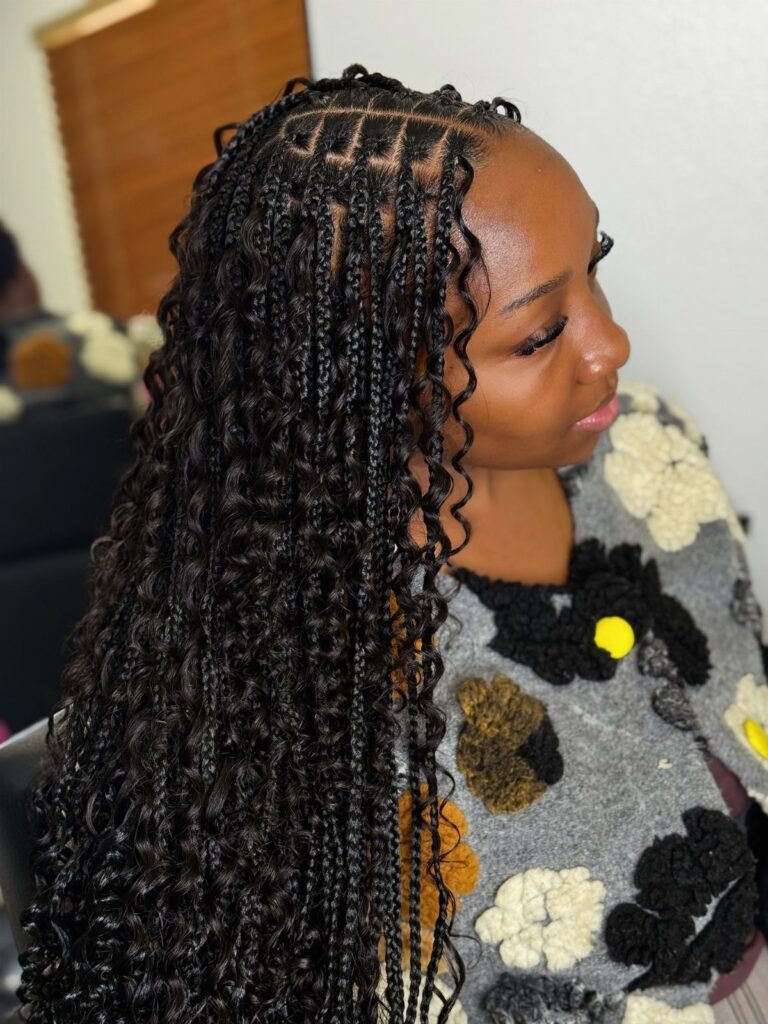
Water wave curls run in soft, flowing ripples along the lower braid, so the ends look layered instead of uniform. In profile, the long brown braids show that movement best.
Ask your braider for water wave extension hair on the ends, and say how far up the braid you want the waves to start. Starting lower keeps the braid neat; starting higher gives more flow.
I like this texture for anyone who finds tight curls too busy.
20. Deep Wave Boho Braids
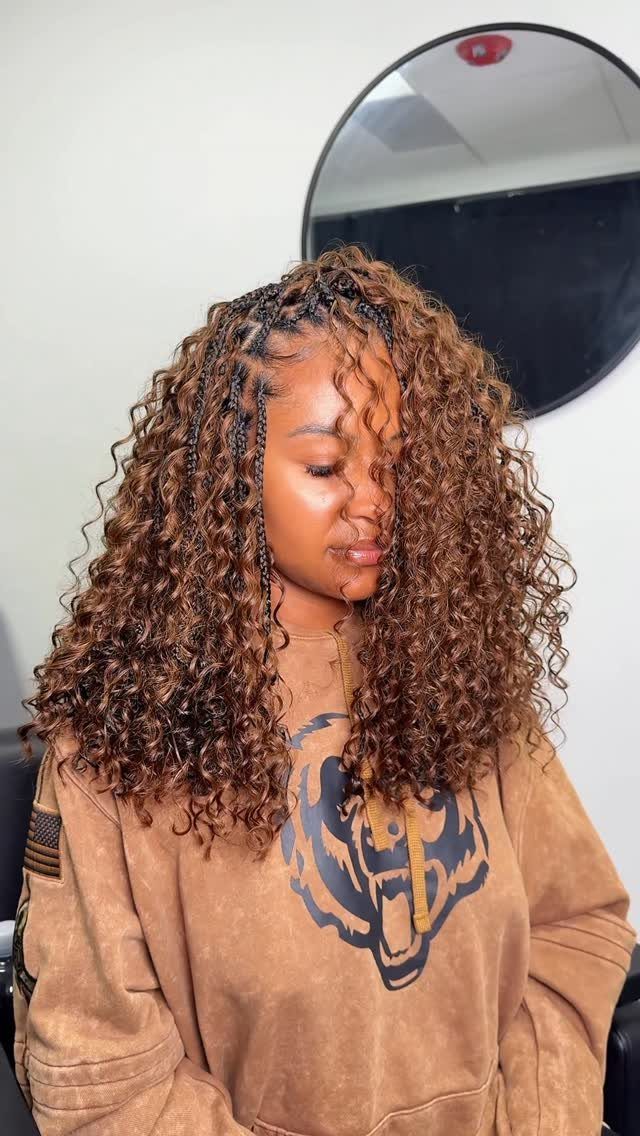
Deep wave gives the strongest curl definition in this group: each strand holds a clear, rounded wave, and the contrast with the flat braid above it is easy to see.
On long brown knotless braids, that contrast is the whole look.
Compared with water wave, the pattern is bolder and reads better in photos. Bring a reference picture and ask your braider to match the wave depth, since "deep" can mean different things from one braider to the next.
I would choose this over the softer waves if you want the curls noticed.
21. Brown Boho Braids
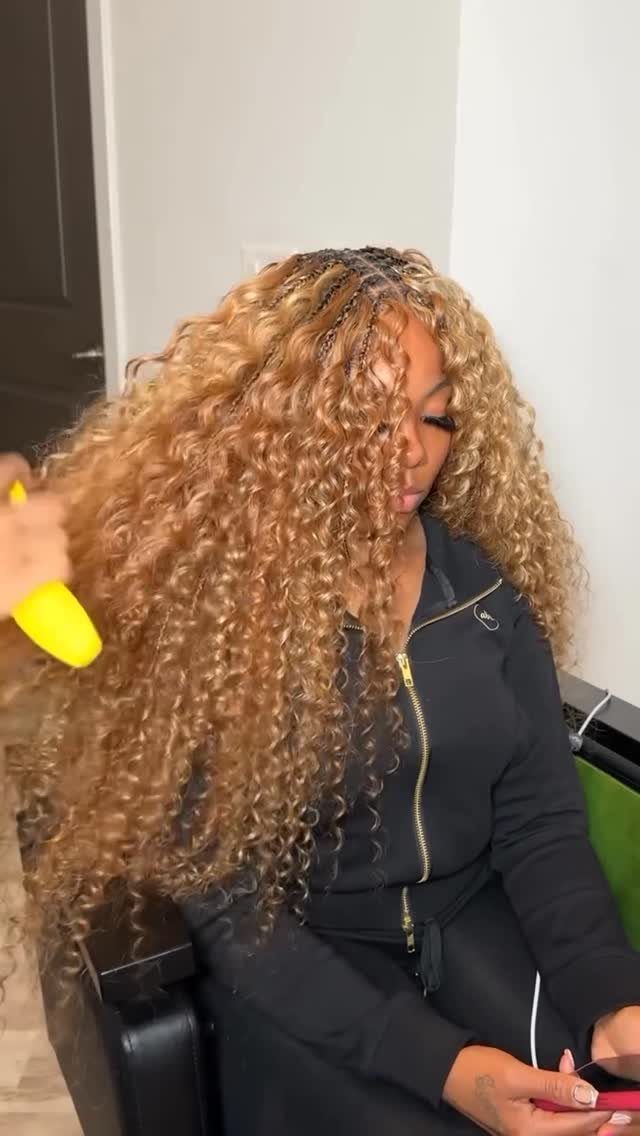
Brown reads as earthy and natural, which makes it one of the easiest colors to wear every day. With voluminous curls through the ends, the shade shows warm variation in the loose strands instead of looking flat.
Choose a brown close to your natural hair color so the roots blend and regrowth is less noticeable. If your skin tone leans cool, hold a swatch against your face in daylight before you book.
For a first boho set, I would pick brown over a bold color.
22. Synthetic Hair Boho Braids
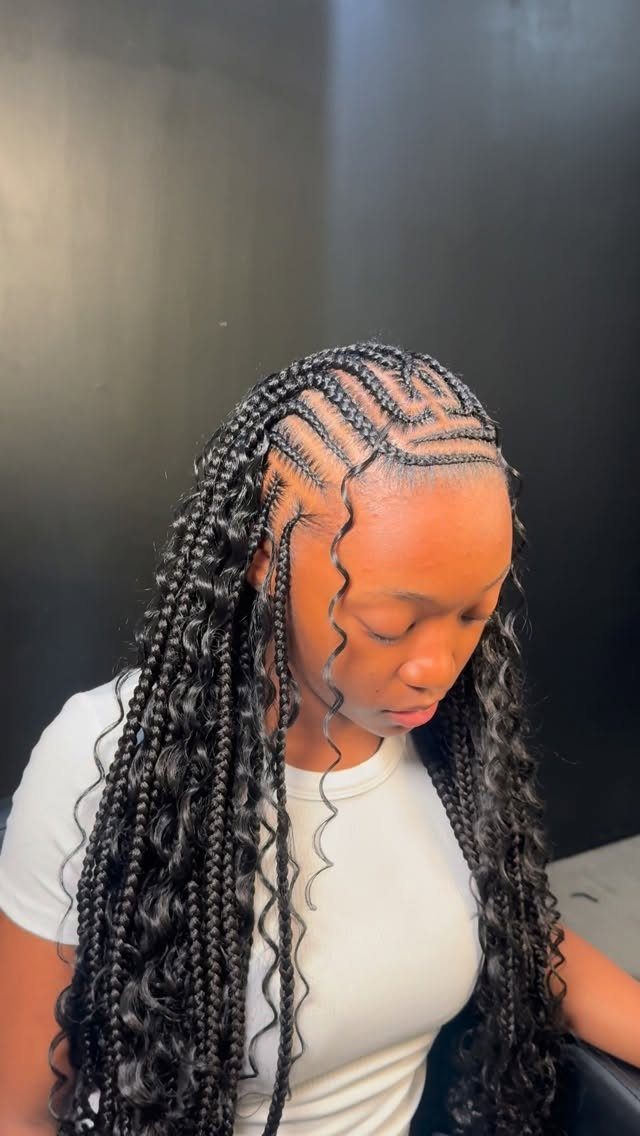
Synthetic hair is the budget route for boho braids, and it comes in a wide spread of colors and lengths, so you can match a reference photo closely.
Black synthetic hair takes the boho look well, especially with loose curly strands left out at the ends for a soft, wispy finish.
Cost is the main reason to choose it. Ask your braider which brand and length they recommend, and whether the hair is included in the price or you buy it yourself.
I would go synthetic if you plan to change color often.
23. Knotless Goddess Box Braids
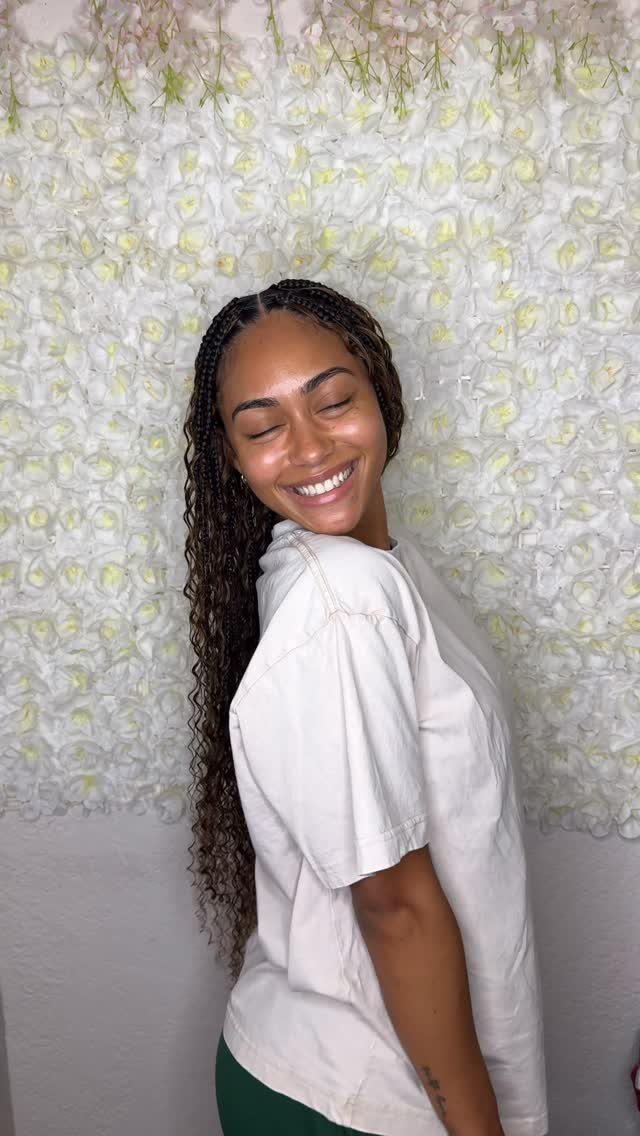
Goddess box braids are knotless braids finished with loose, wavy ends, which gives a plain braid a soft, romantic finish.
Tell your braider you want knotless parting at the root and wavy ends left free, and show a photo so the wave length matches what you picture.
I would pick this when you want the neatness of box braids without the stiff, blunt finish. Keep it in mind if full curls feel like too much.
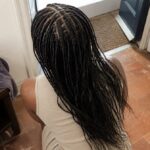
24. Boho Knotless Lemonade
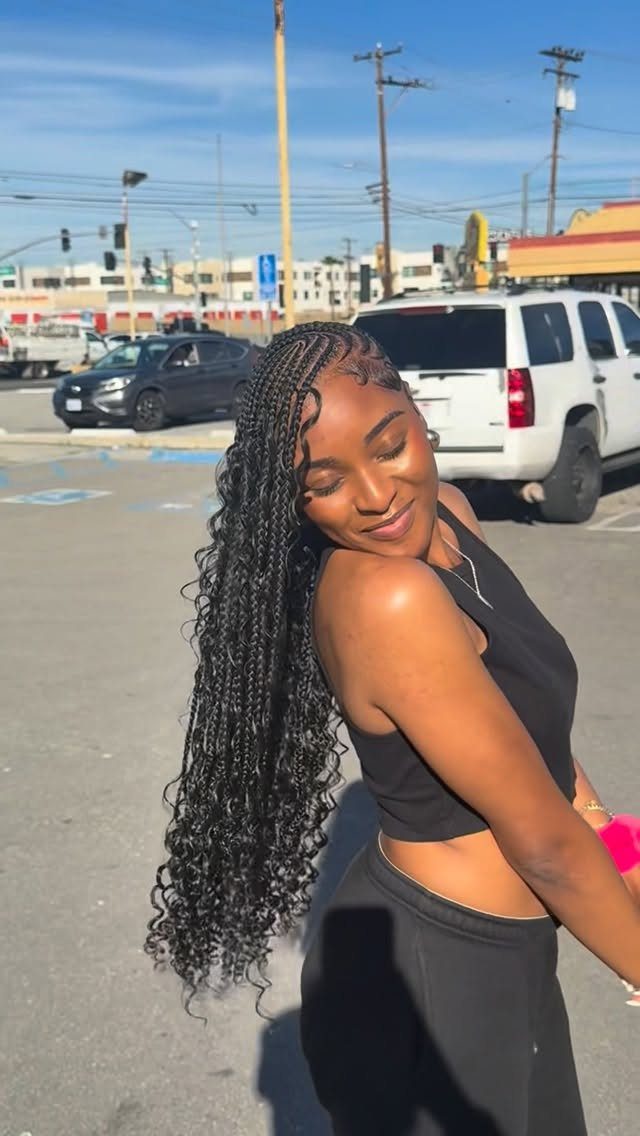
Lemonade braids sweep to one side, and here they pair with loose, wavy strands that soften the usual sleek, structured look. Long black braids swept across one shoulder show the style at its simplest.
Ask your braider to lay the braids in a clean side direction at the root, then leave the curls free at the ends. Choose the side you normally part toward so the sweep sits naturally.
I like this version for anyone who wants lemonade shape without the severe finish.
25. Snaky Cornrow Braids
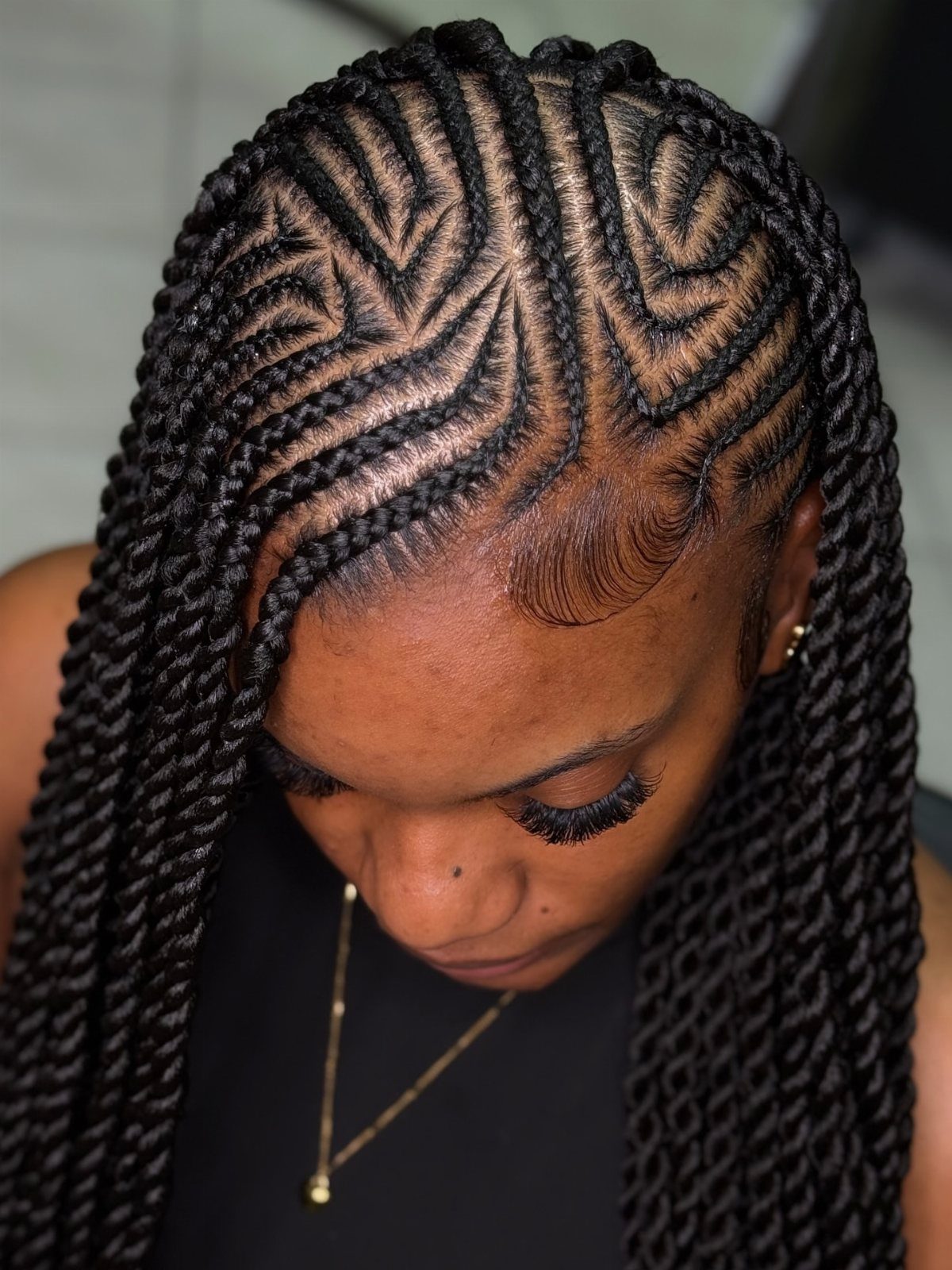
Curved cornrows across the top feed into long, free braids where the pattern ends. The snaky shape adds detail at the scalp, so the braids look planned instead of uniform.
Ask your braider to lay the cornrows in whatever pattern you want before switching to the free braids below. More curves take longer, so plan for the extra time.
This works if you want a finished look at the crown without covering the whole head in cornrows.
26. Geometric Pattern Box Braids
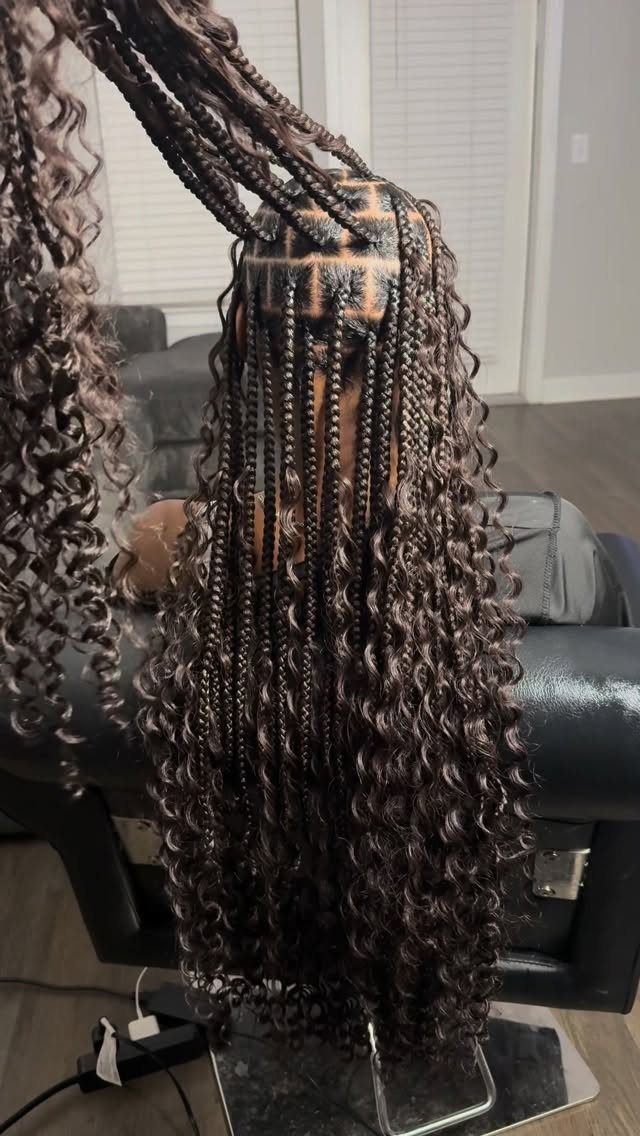
The scalp gets divided into geometric shapes instead of straight lines, so the parts form triangles, diamonds or zig-zags before the long braids begin. Lifting the braids reveals the pattern underneath.
Tell your braider which pattern you want and bring a reference photo, since geometric can mean a lot of things. The parting takes longer than straight sections, so expect more time in the chair.
I like this for anyone who wants the scalp to show as much detail as the braids.
27. Blonde Braids Dark Roots
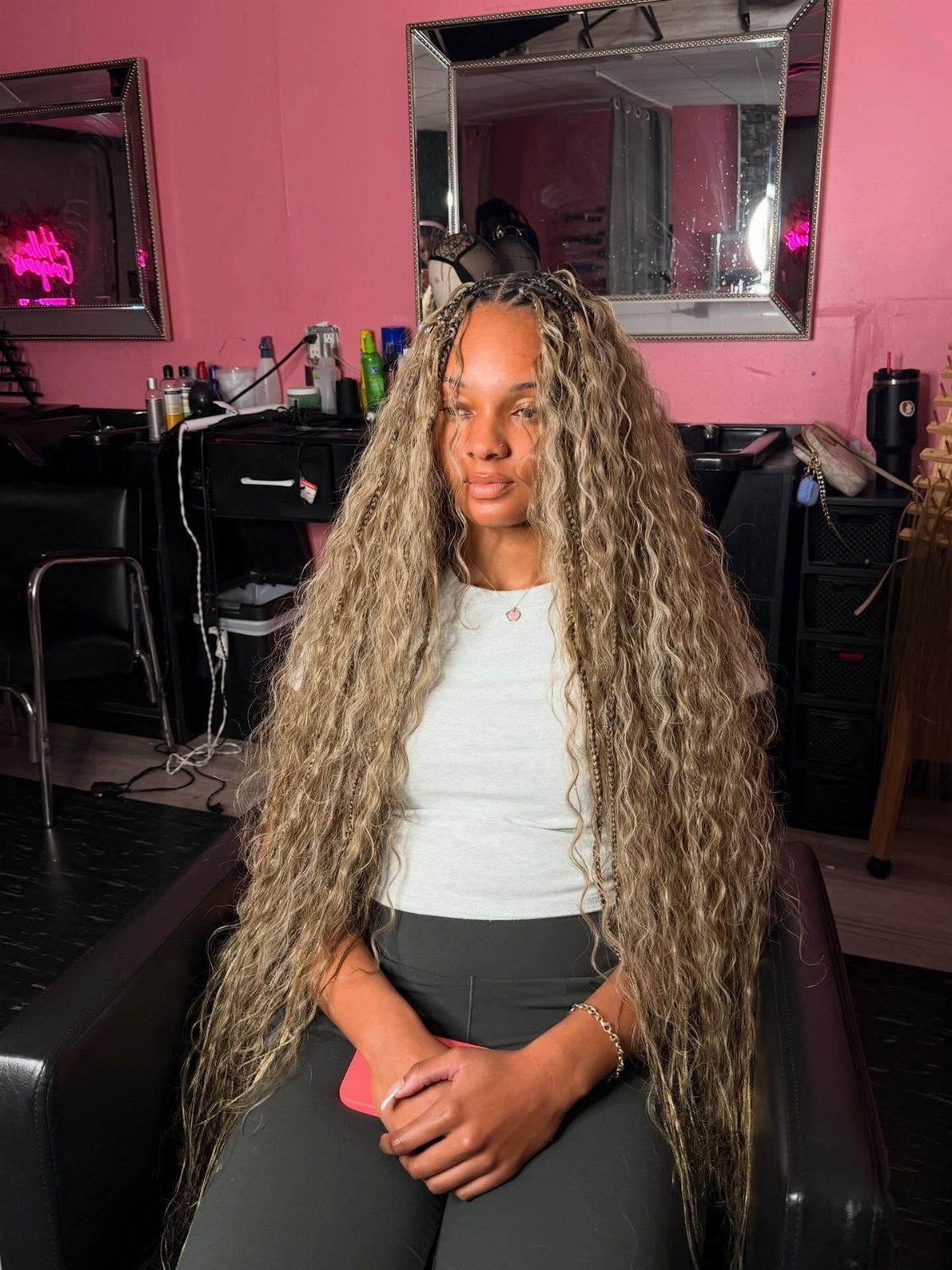
Leaving dark roots where blonde braids begin gives the color depth and makes regrowth less obvious. The contrast reads as intentional instead of something that needs touching up.
Ask your braider how far down you want the dark to run before the blonde starts. A short transition looks sharper; a longer one looks softer.
If you plan to keep blonde braids long-term, roots save you from redoing the whole set every time your hair grows.
28. Bohemian Box Braids
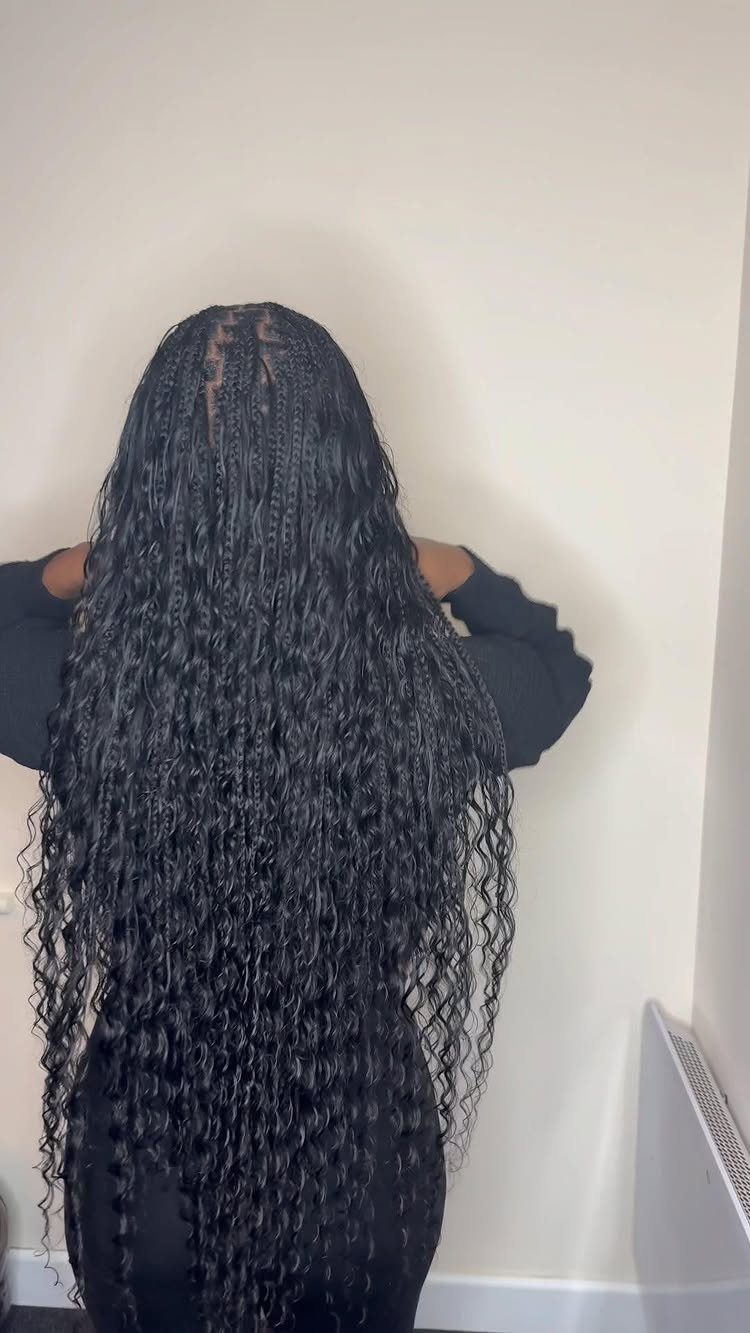
Box braids finish with loose, wavy ends instead of staying tight all the way down, which softens the usual structured look. The back view shows the contrast between the neat braids and the free strands clearly.
Ask for box parting at the scalp and tell your braider where you want the braids to stop and the waves to begin.
I would choose this for anyone who likes box braids but wants them to feel less severe.
29. Vibrant Blue Braids
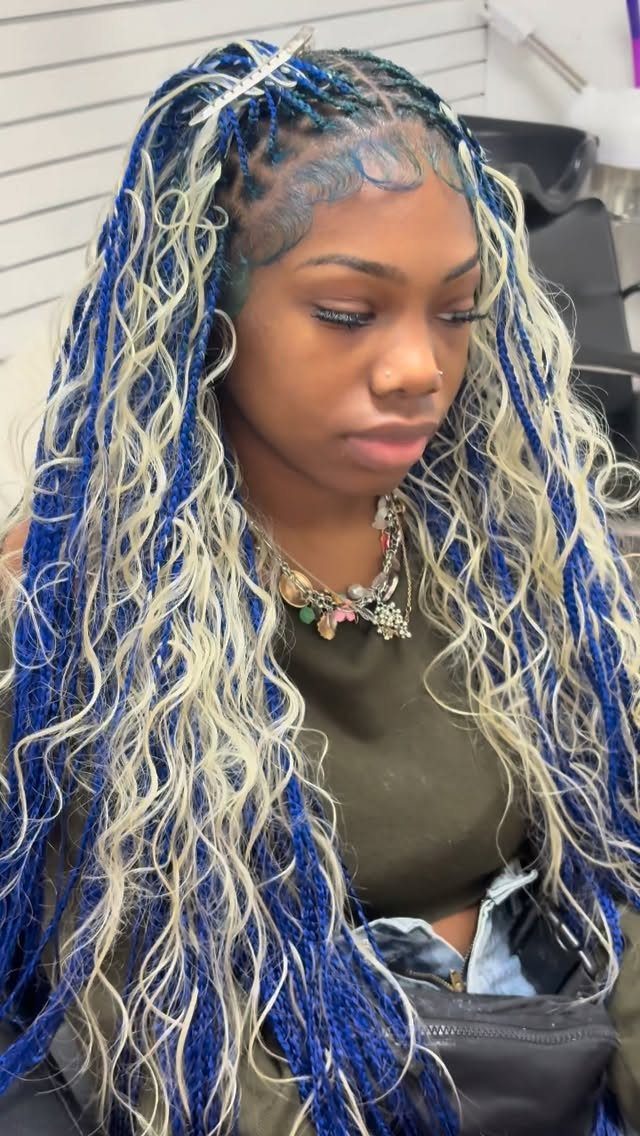
Bright blue stands out in any room, so pick this if you want your braids noticed. Mixed with pale blonde, the color reads bold but not harsh.
Vivid colors like this often require pre-colored synthetic hair, which keeps the shade even and strong.
I would go blue for a short-term look, since bright tones show wear faster than natural shades.
30. Side-Part Boho Locs
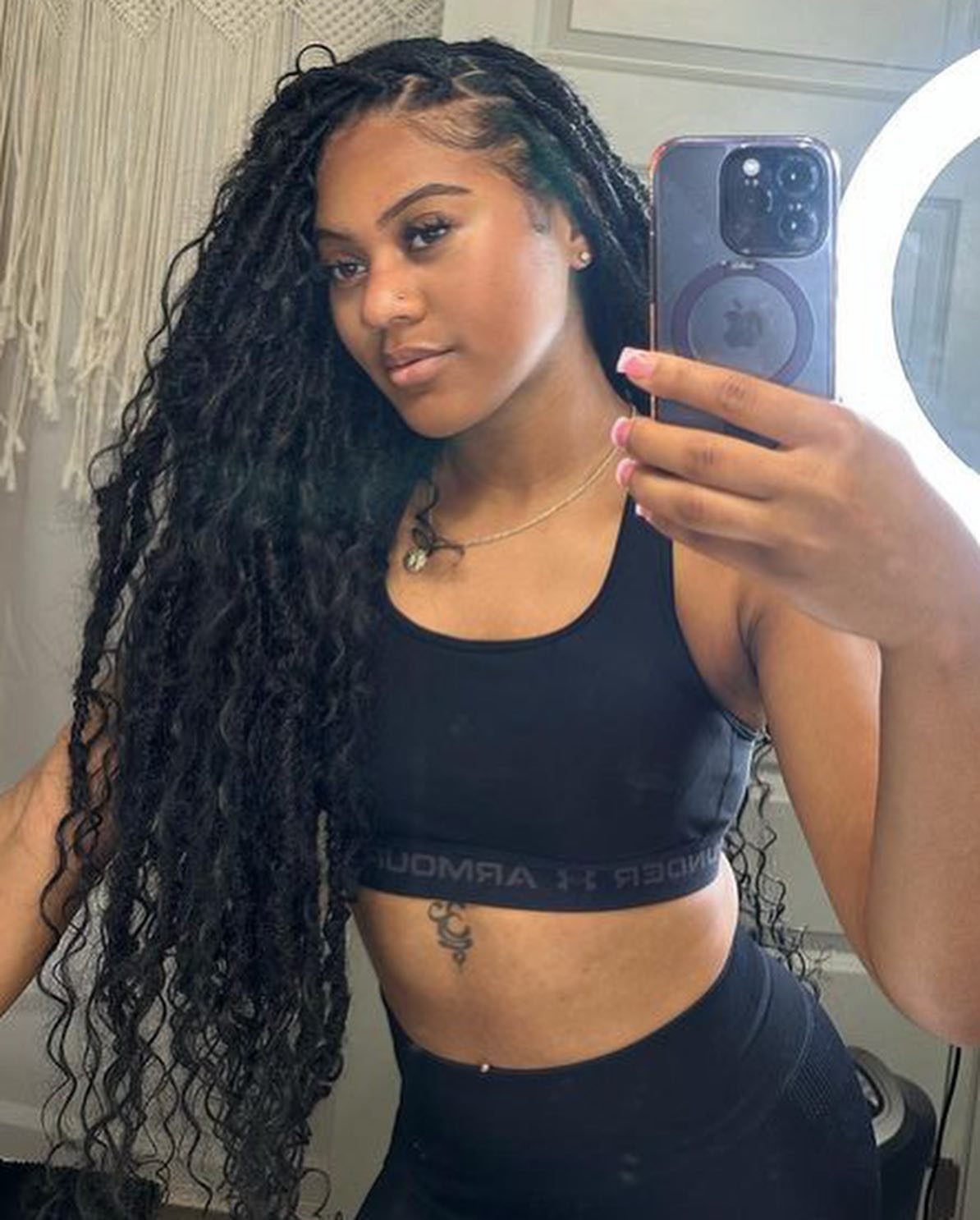
A deep side part sweeps textured locs across the face and stacks volume on one side, which frames your features and gives the locs dimension. The heavier side falls forward, so the style looks different from every angle.
Ask your braider or loctician to define the part cleanly at the scalp before finishing the locs.
31. Straight-Back Cornrow Ponytail
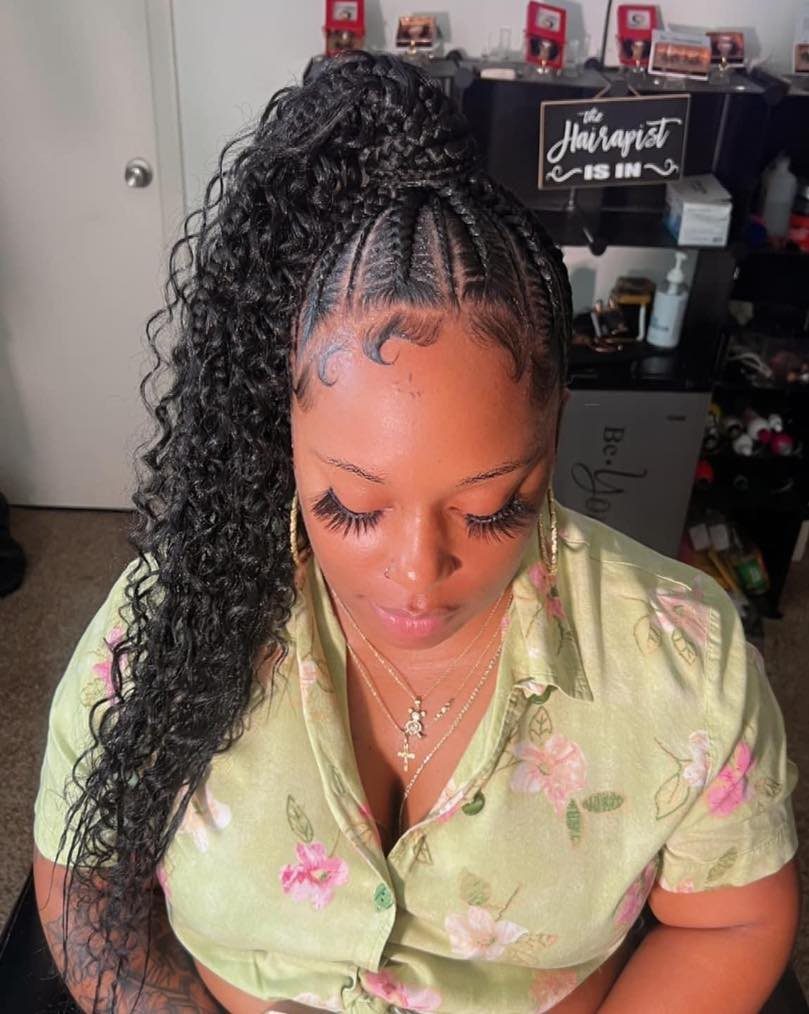
Straight-back cornrows run flat from the hairline to the crown, then hand off to a long ponytail of curly black extensions.
The sleek top and the loose curls below make a clear contrast, and the whole style stays off your neck.
Ask your braider to keep the rows evenly spaced and pointed the same direction so the lines look crisp. Say where you want the ponytail to start, since that spot sets the length of the curly tail.
If a full head of loose braids feels like too much, this is the version I’d pick, since the cornrows keep the front neat and polished.
Caring for Loose Curls
Loose curls are the first part of a boho set to go wrong, so check them often.
Use your fingers, not a brush, and gently pull apart any strands that have wrapped around each other. Work slowly so the curls don’t come out.
Knots are easiest to fix while they’re loose. Once they tighten, you’re pulling harder and losing more hair.
Before bed, bundle the braids loosely, then slip on a satin bonnet or scarf; a satin pillowcase works if you can’t keep a wrap on overnight. Less rubbing means less tangling.
For definition, a curl cream or mousse works well. Use a small amount and add more only if the curls need it, because too much product weighs them down and builds up near the roots.
If you wear a high ponytail, don’t do it every day. Constant pulling stresses the hairline.
Scalp and Braid Maintenance
Keep moisture light. A light leave-in or braid spray on the scalp and along the braids does the job, and the loose curly ends should get a mist, never a soak.
Done this way, the scalp stays clean and the braids hold their grip.
For buns and ponytails, soft scrunchies are the gentler choice.
Tension is where I’d be least willing to compromise.
If the braids feel too tight, say so right away, while the braider can still adjust them. If a style hurts, take it out; looking good isn’t worth the tension on your edges.
Take the braids down if you notice heavy buildup, painful tightness, heavy tangling or weak ends. Remove them gently and slowly, without yanking tangles apart.
Screenshot or save a photo of the set you love, then bring it to your next appointment so your stylist can match it.
Frequently Asked Questions
How long should knotless boho braids last?
Loose deep wave curls still look intact at the 4-week mark, since a looser pattern tangles less than tight curls.
Heavy buildup, a sore scalp from tight braids, thick tangles or thinning ends all mean the set comes down, even if your planned date is weeks away.
Are knotless braids better than regular braids?
For scalp comfort, yes. Knotless braids start with your own hair, and the braider feeds in extension hair a little at a time, so there’s no knot at the base.
That gives a flatter, more natural start at the scalp with less tension. They still aren’t automatically damage-free, so speak up if anything feels too tight.
What hair should I use for knotless braids?
Real human hair is a solid choice, sold either as loose bulk or already split into sections. Bulk lets the braider control exactly how much goes into each braid, while pre-sectioned hair cuts down prep time.
Budget is where synthetic hair wins, and its color and length range is wide enough that matching a saved photo is easy.
Before you put down a deposit, find out whether the braider’s quoted price covers the hair or whether you’re buying it yourself.
How do you do boho braids on natural hair?
Work on freshly washed, sectioned hair, and add the extension hair in small pieces as each braid lengthens. Leave selected curly pieces out of the braid for the boho finish.
Loose curls can frame the face, run along the full braid or sit only at the tips, so decide which with your braider ahead of time and show a photo.
Which boho knotless braid style should I choose?
Pick medium water wave braids for soft, versatile movement, or deep wave if you want the strongest curl definition and a bold look in photos.
Loose deep wave is gentler, blending gradually from braid to curl. Bob-length braids are lighter and quicker to maintain; if dramatic length is what you want, go extra-long and accept the added upkeep.
Can you do boho knotless braids at home?
Yes, but how hard it is depends on your braiding experience, section size, length and how many curls you add. Small sections mean many more braids and a much longer sit, while jumbo sections finish quickly.
Are boho knotless braids a protective style?
Less daily styling is a real benefit, but a set that’s too tight or too heavy can still harm your hair.
Reasonable tension, scalp care and gentle removal still matter. A high ponytail pulls on the braids at the crown, so loosen it at night to protect your edges.