The ideas here run from a curly pixie you scrunch and leave alone to bantu knots that need patience and a plan for how long the pattern will hold.
Whatever you pick, ask for it cut on dry hair, because curls spring up as they dry and a wet cut can land shorter than planned.
1. Curly Shag
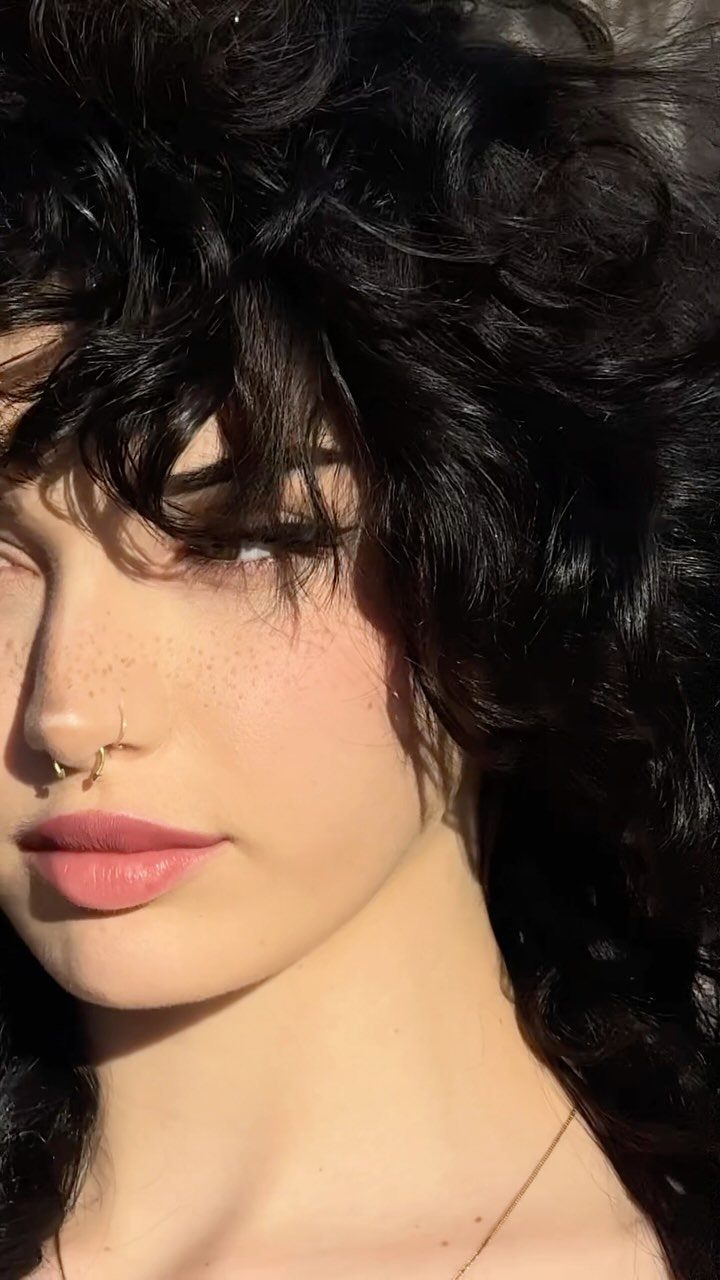
Layers cut to follow the curl pattern are what make a shag work, and the volume comes from the shape rather than from product.
Short pieces at the crown lift the curls and let them stack, while the wispy bangs sit on top and blend into the length around them.
I like this one best on dry, defined curls, since the layers show every ring. Ask the stylist to cut curl by curl, not combed straight, so the pieces land where they will actually spring up.
2. Curly Bob
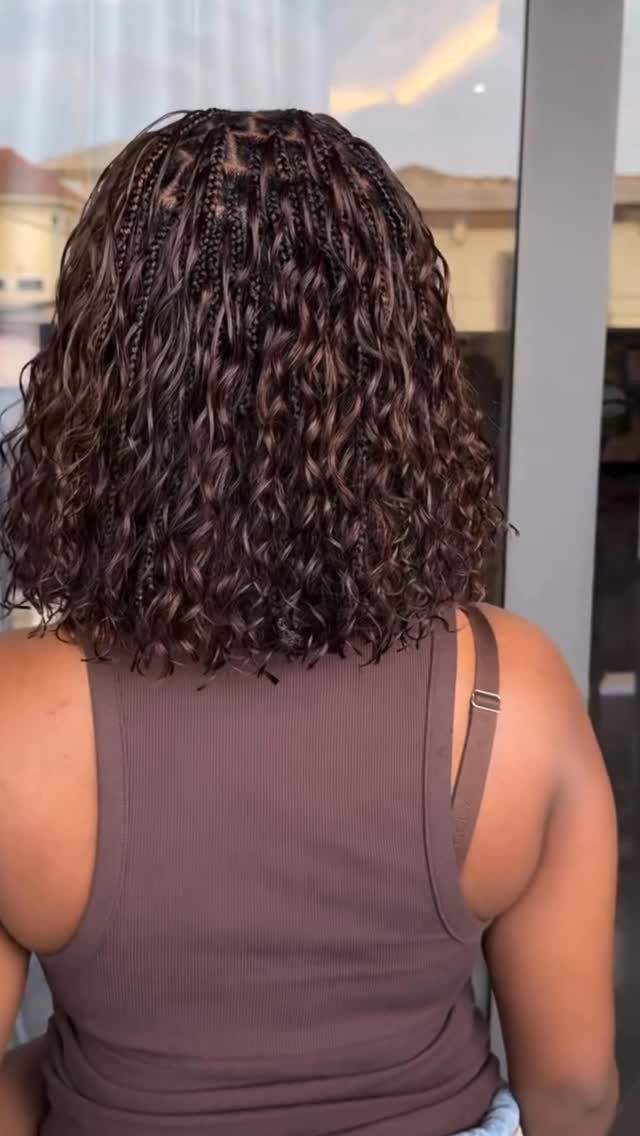
Shoulder length gives a curly bob its best trick: the curls bounce up and stay full instead of hanging down under their own weight.
The shape frames the face, so a stylist who cuts it dry or in the pattern’s natural shape will keep that fullness where you want it.
Small braids along the crown are an easy add-on if you want a little structure without changing the cut. I’d pick this over a longer length for anyone who wants volume with less to manage each morning.
3. Curly Bangs
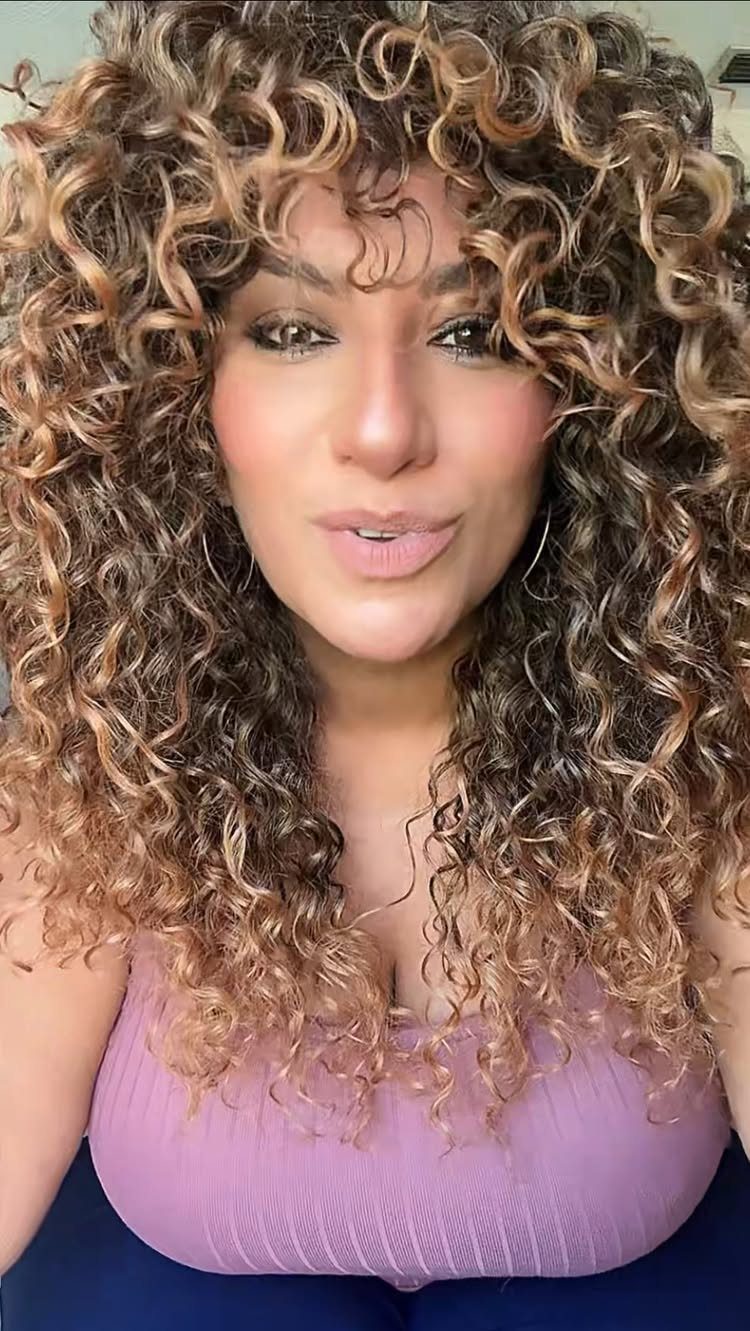
A fringe cut into curls behaves differently from straight bangs, and that is the appeal.
Curly bangs can coil tight or fall in a loose curtain, and either one blends into long curls so the front doesn’t look like a separate piece.
Bring a photo of the exact fringe shape you want, then ask for it to be cut dry.
Curls spring up once they dry, so a cut made on wet hair can end up shorter than planned. Soft highlights through the length also help the bangs read as part of the whole look.
4. Half-Up Half-Down
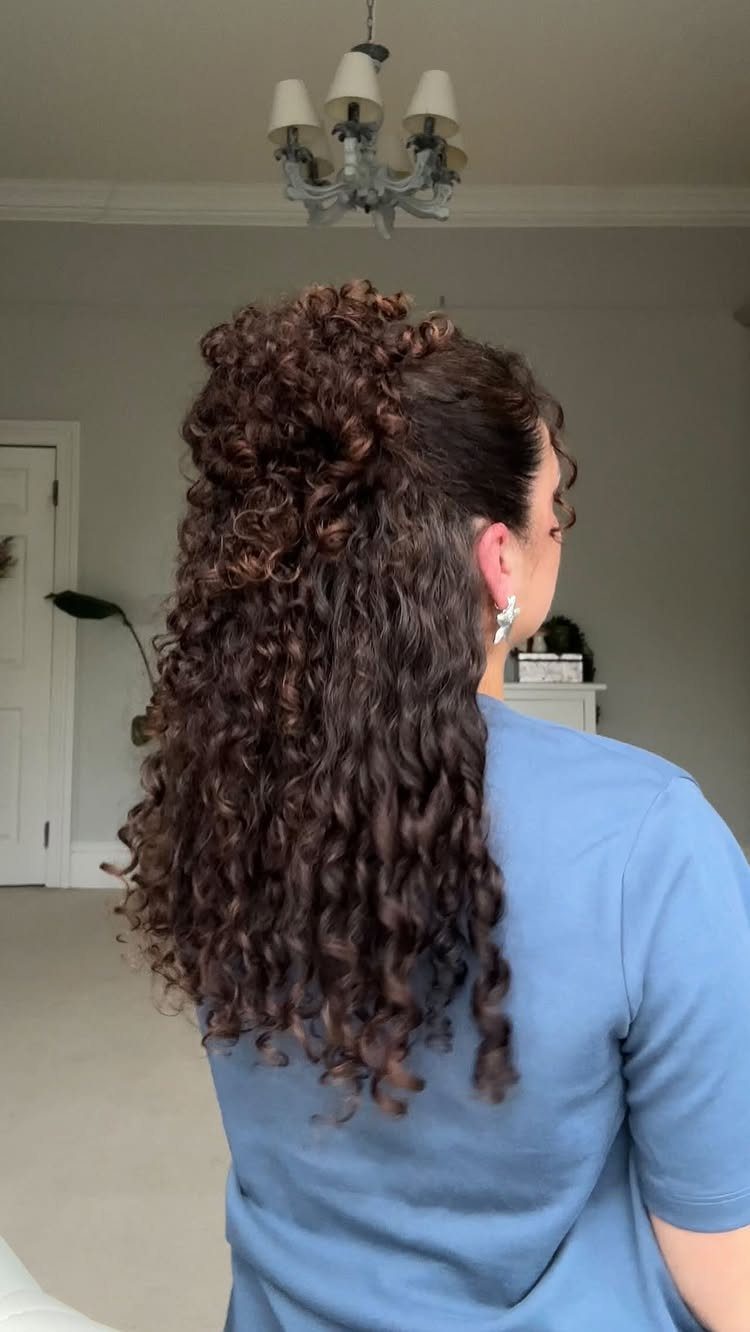
Gathering only the top section keeps curls off the face and leaves the rest loose, which makes half-up half-down the least fussy way to wear long hair. A clip or tie at the crown takes about a minute.
Pull the gathered section slightly loose afterward so the curls keep their volume instead of lying flat against the head. I’d choose this over a full updo on days when the curls are good but the face needs some room.
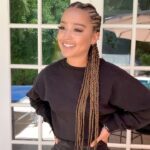
5. Braided Bob
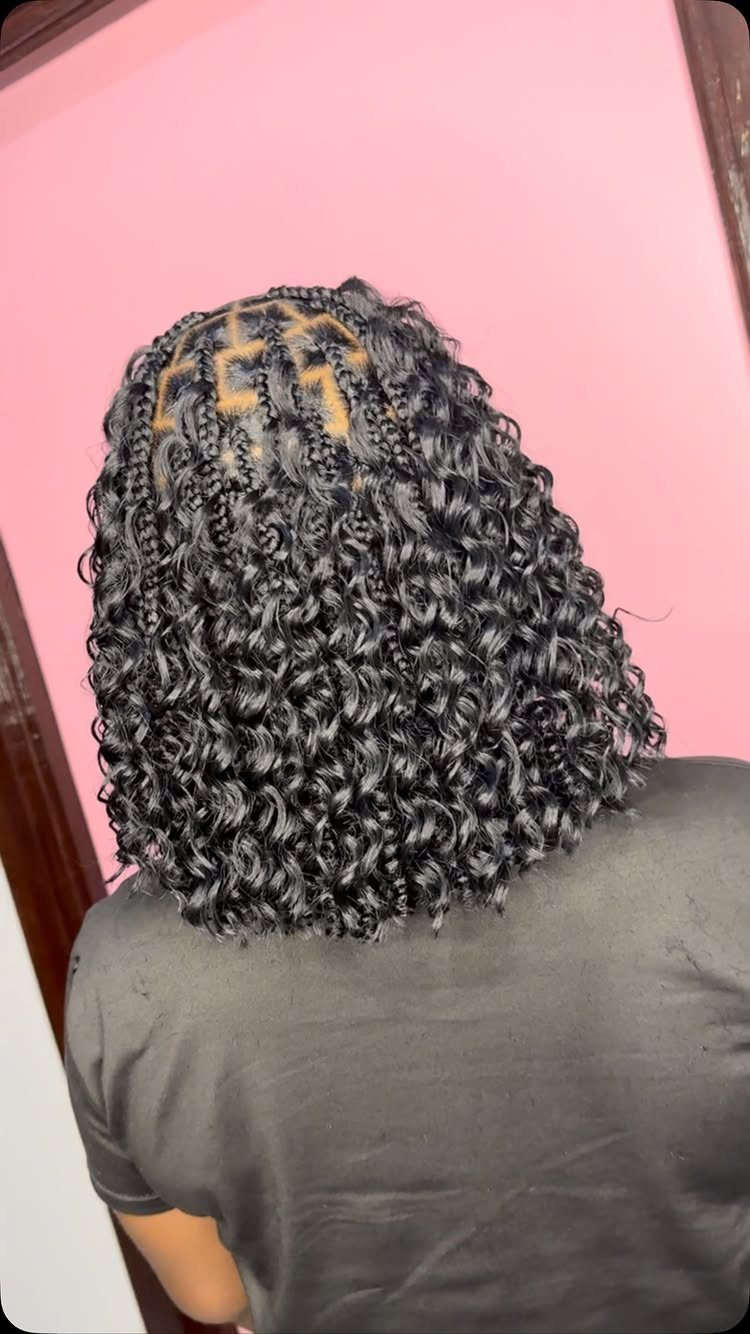
Braids set a bob apart because the pattern at the crown is geometric and sharp, while the ends stay soft and curly. That contrast is the whole look, and the shoulder-length shape keeps the weight light.
This is a salon-level style, so show your stylist a photo and ask how long the braided section will hold up.
Keep the braided part tidy and let the curly ends do the movement. It suits anyone who likes a bold design but doesn’t want to give up a short, easy length.
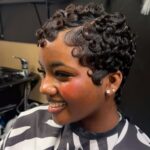
6. Curly Pixie
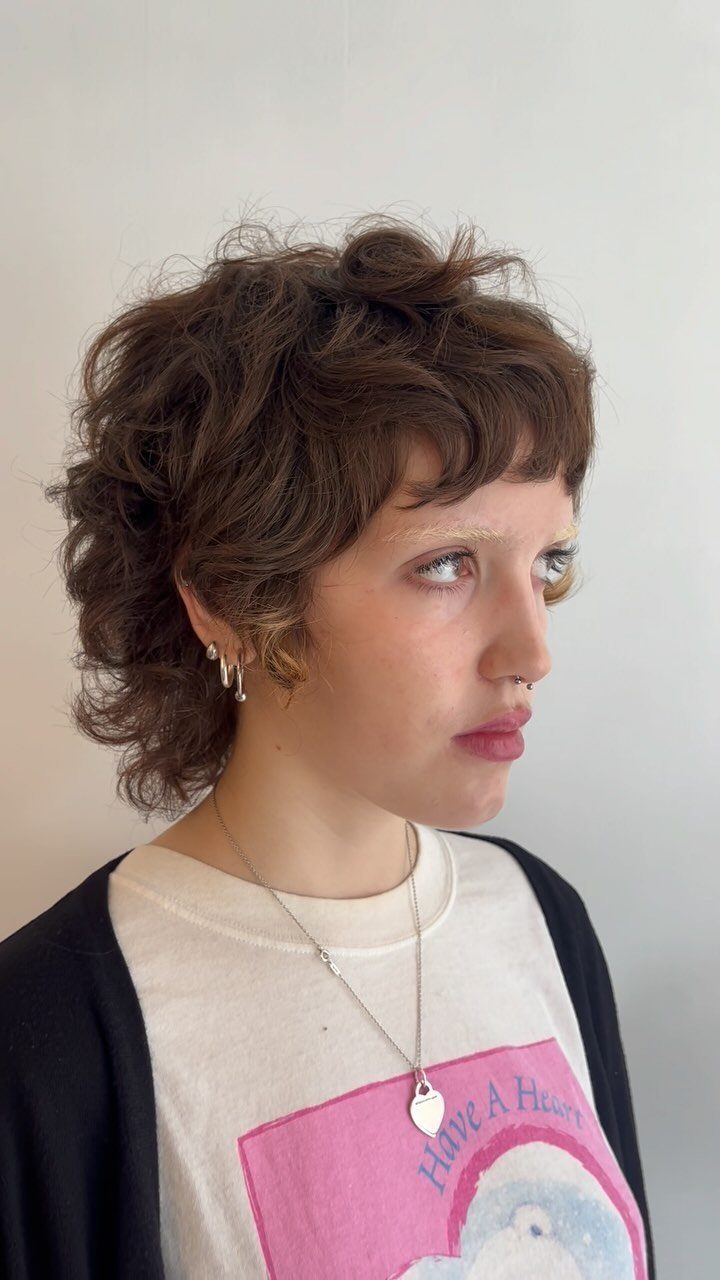
Short hair gives curls nowhere to hide, which is exactly why a curly pixie looks so good. Tousled layers around the face keep the shape soft, and the curls supply the movement without any styling.
Ask for layers that are cut to your curl pattern, so the top has lift and the sides don’t puff out.
I’d pick this for anyone who wants minimal morning effort: scrunch in product, let it dry, and the cut does the rest. Trims will be needed regularly to hold the shape.
7. Curly Layers
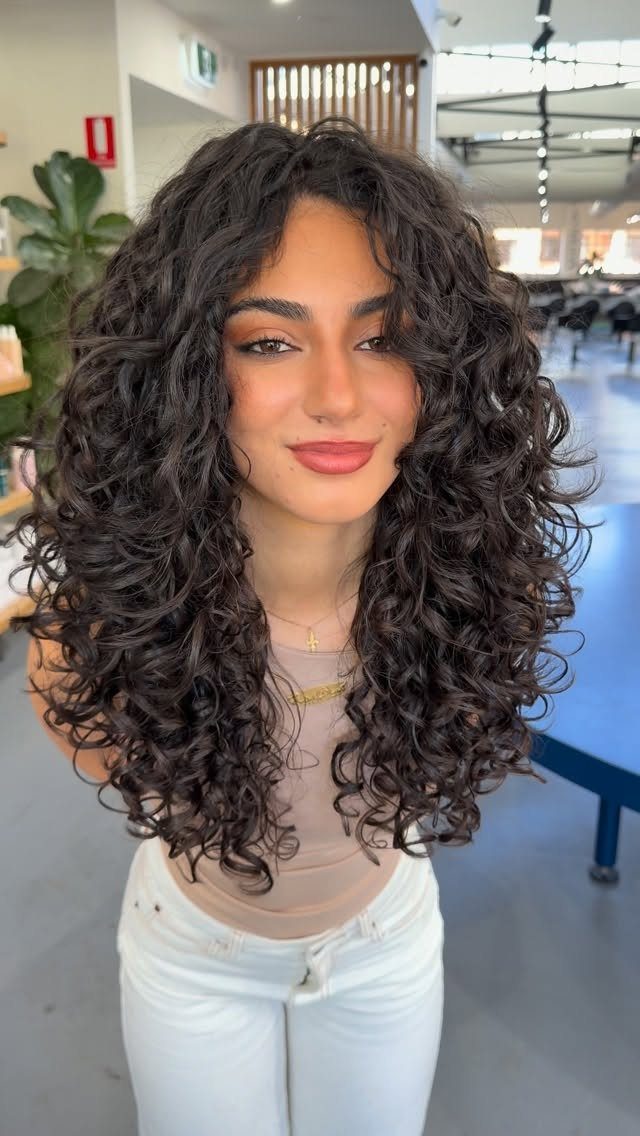
Cut in stacked sections, layers give long curls room to lift at the crown and separate along the lengths instead of collapsing into one heavy shape.
On dark, thick curls like these, lift at the crown is what layers are really for, since without it the weight pulls everything flat.
I’d ask for the layers to be cut on dry hair, one curl at a time, so the stylist can see where each ring will sit.
Ask for the shortest pieces to land above the shoulders if you want more volume. Length stays, but the weight comes off.
8. Curly Updo
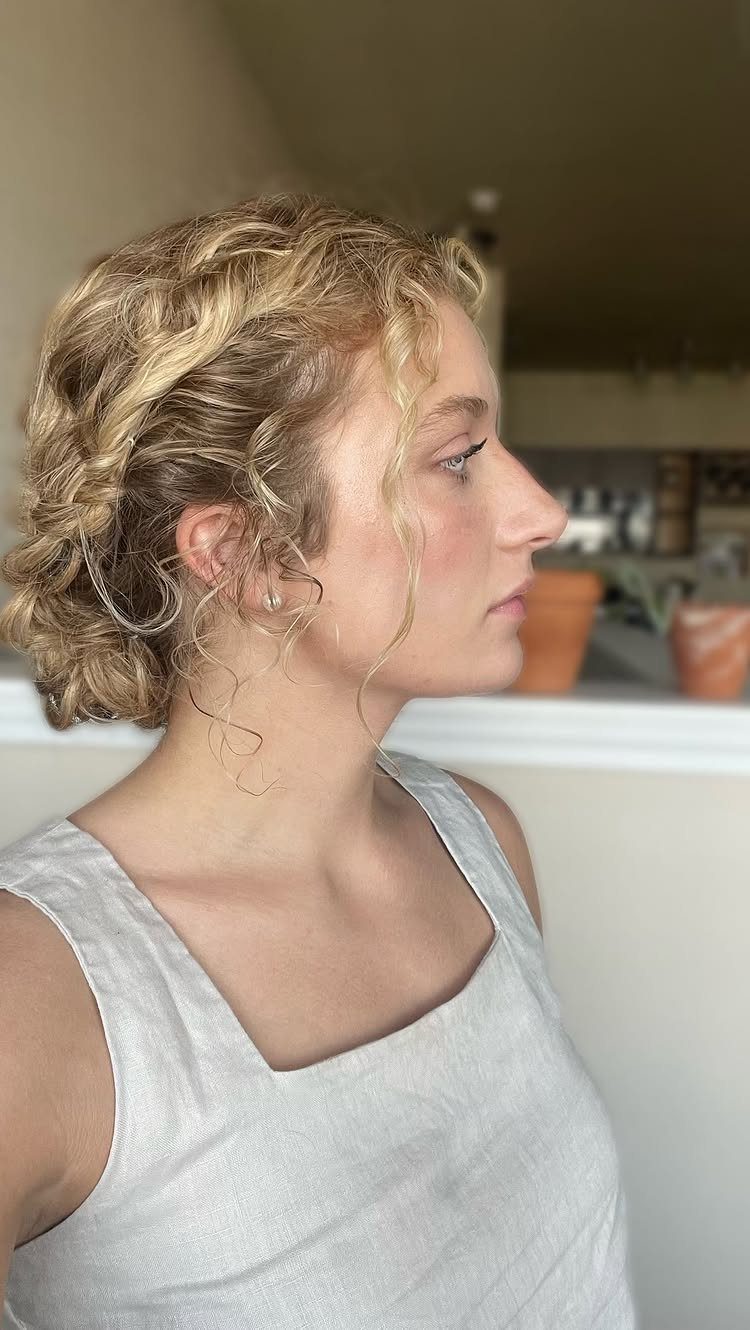
Loose tendrils left out around the face are what keep a curly updo from looking stiff. Gather the hair low at the back, pin it so the curls stay visible, then pull a few pieces free by hand.
Blonde curls like these hold a soft, casual shape, but the same method works dressed up: tighter pins, fewer loose pieces.
I’d choose this over a sleek bun for any event where you want hair off your neck without losing texture.
Pin from underneath so the curls cover the hardware.
9. Curly Ponytail
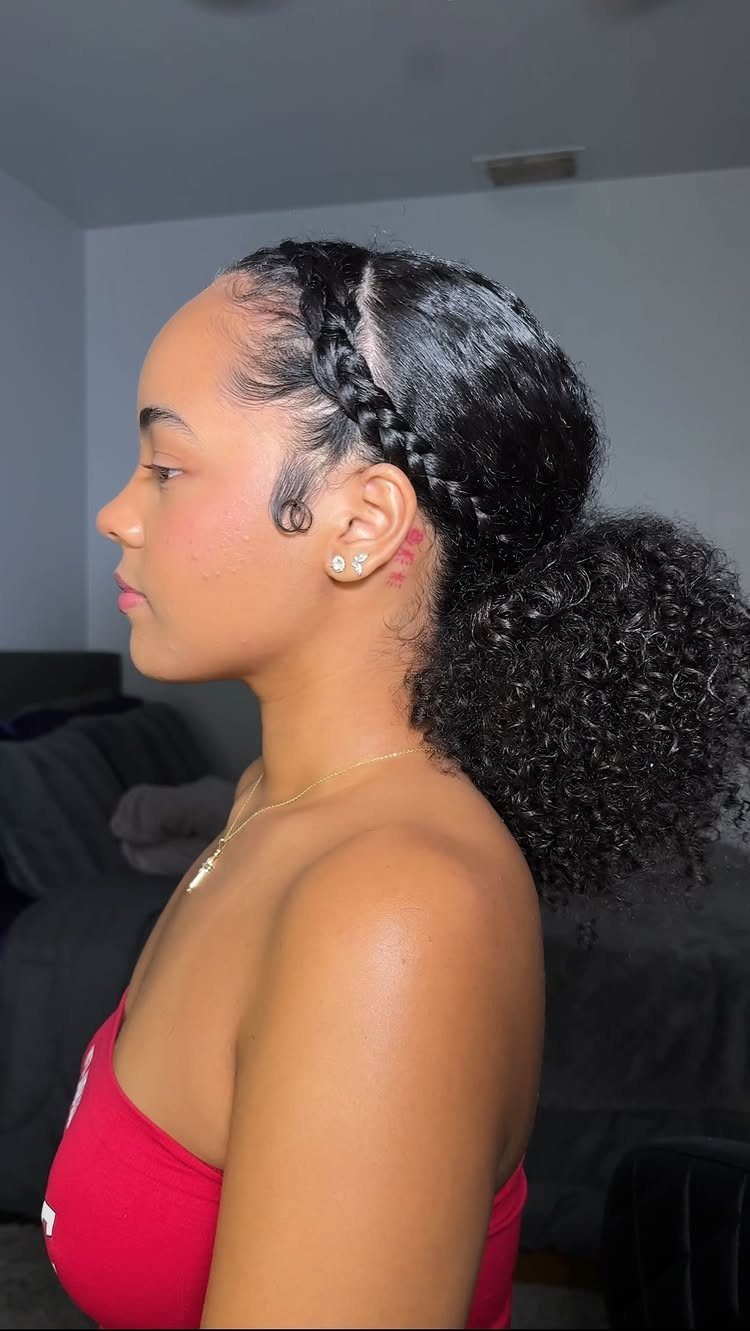
A braid running along the hairline gives a curly ponytail its edge and keeps the front hair secure while the curls stay free at the end.
Gather high, wrap the elastic snug, then fluff the ponytail with your fingers so the curls fan out.
I like this when a wash-and-go has settled and needs a reset.
Braiding the front takes a few minutes; the ponytail itself takes seconds. For a gentler hold, use a fabric-covered elastic.
10. Curly Highlights
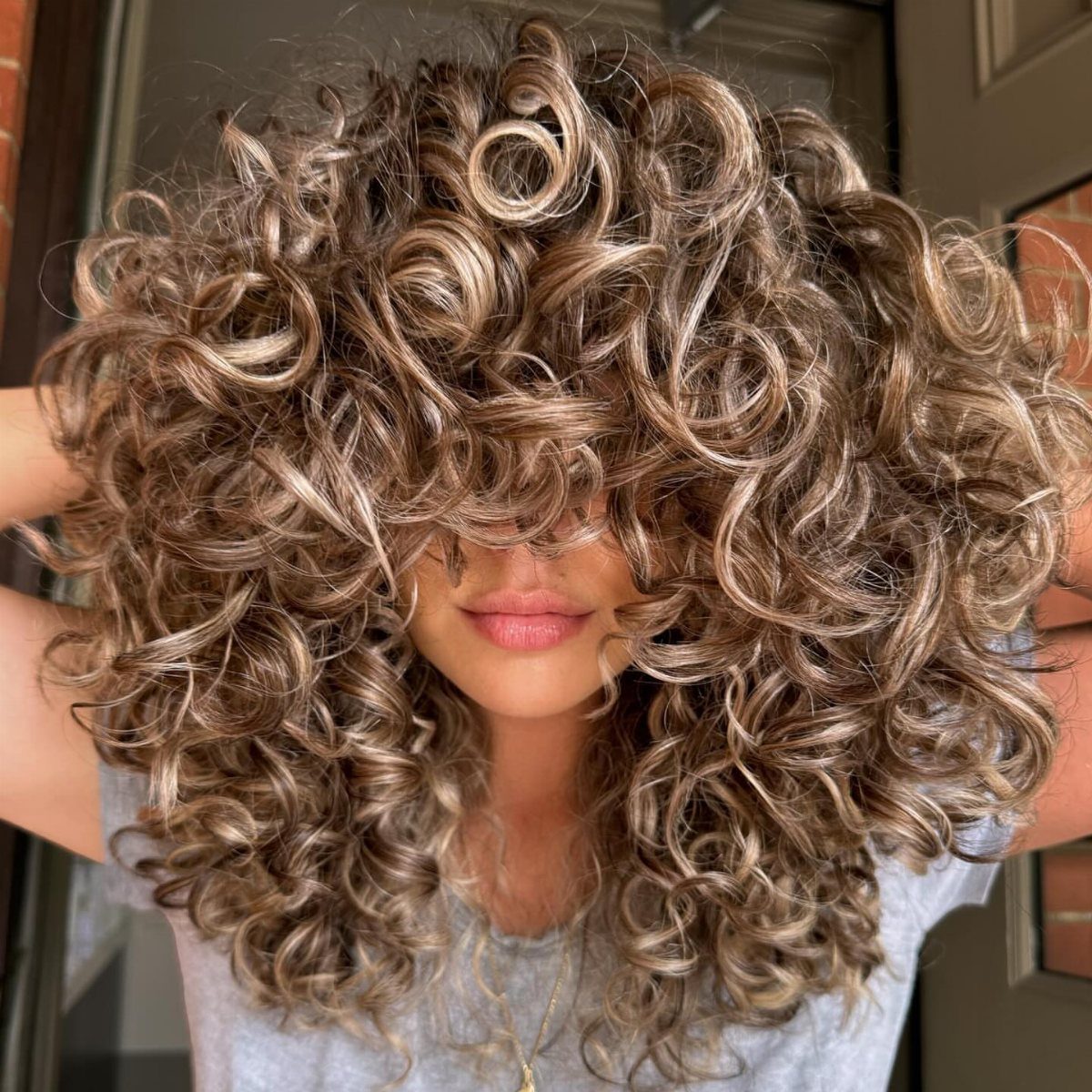
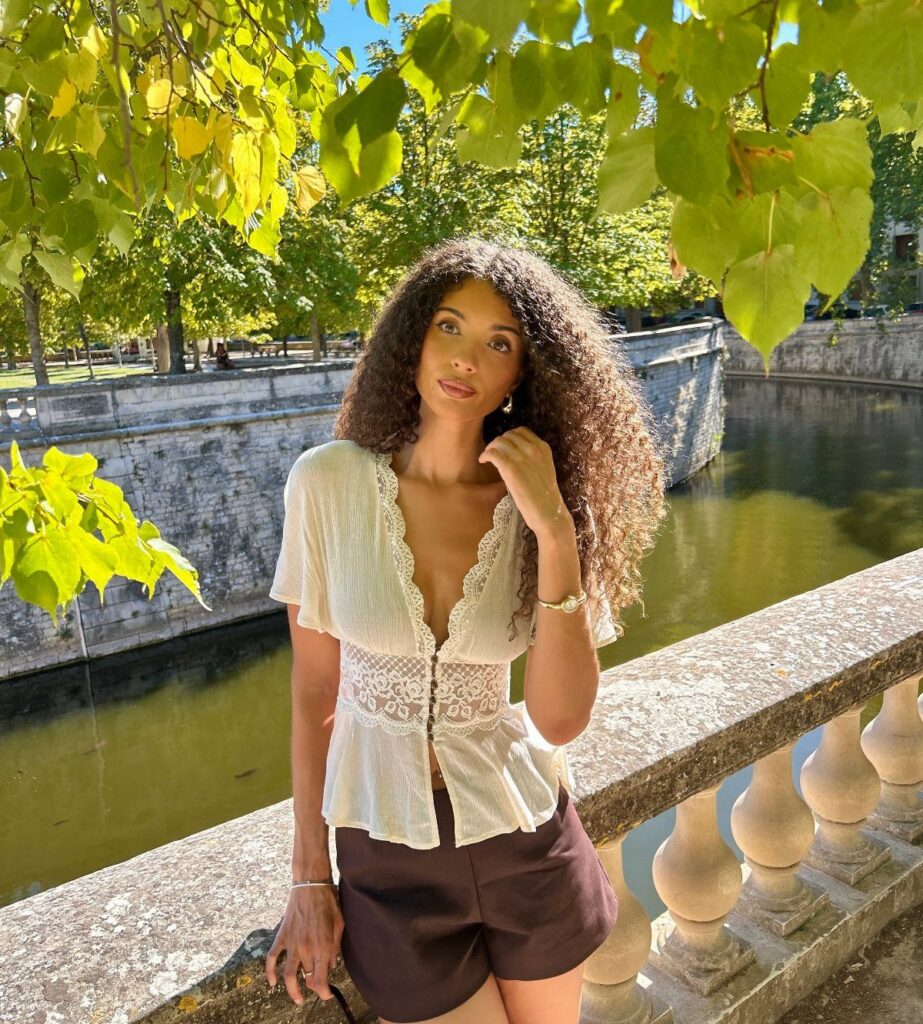
Caramel pieces woven through brown curls add brightness exactly where the curl turns, so each ring catches light and the pattern reads as deeper. Fine, soft highlights look more natural than thick stripes, which can flatten the curl.
Ask the colorist to place them by hand on dry, defined hair and to follow the curl’s direction.
Bring a photo, since a shade that looks warm on one person can read orange on another. Lightening is an upkeep commitment, and I’d plan on extra moisture for the lightened strands.
11. Bantu Knots
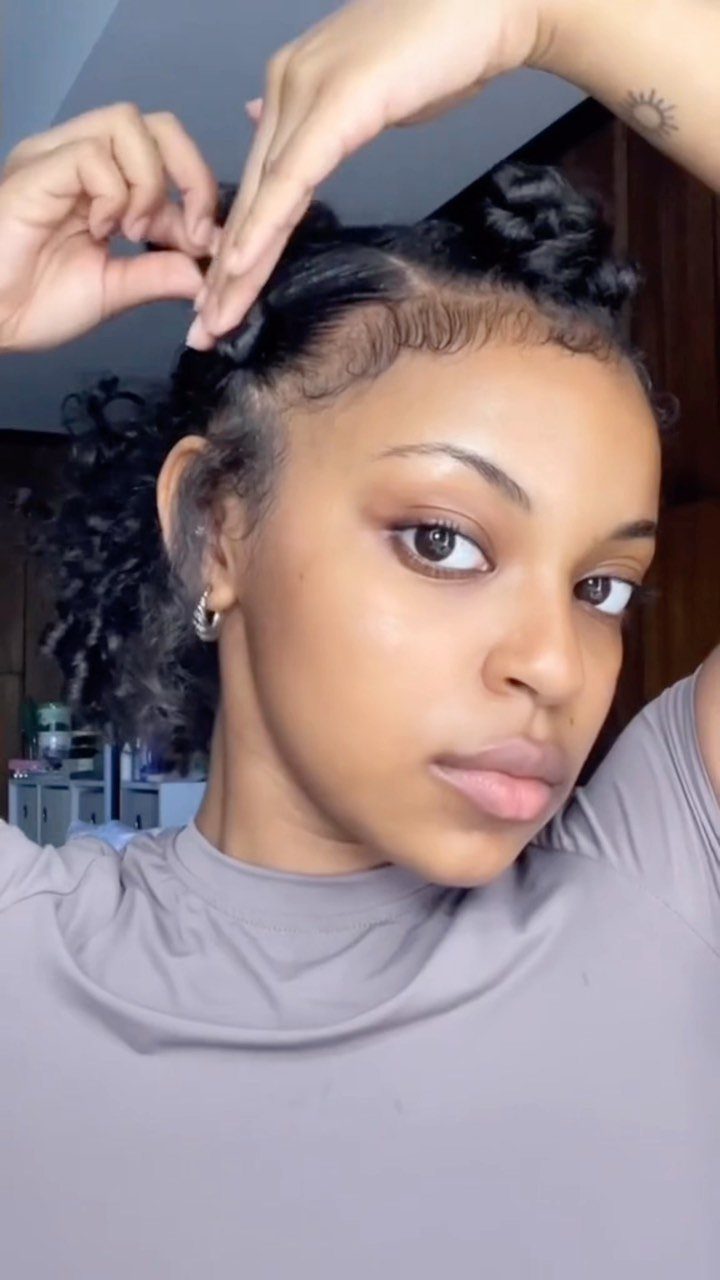
Each Bantu knot starts as a small section of hair, twisted tightly and wrapped around its own base until it sits flat against the scalp. Smaller sections give a neat, tight pattern; larger ones make bolder knots.
Start on damp, moisturized hair so the twists stay smooth and don’t fray.
I’d pick this as a protective style for days when you don’t want to style at all. Take the knots down later and you get defined, stretched curls, a bonus that makes it worth the sectioning time.
12. Long Curly Hair
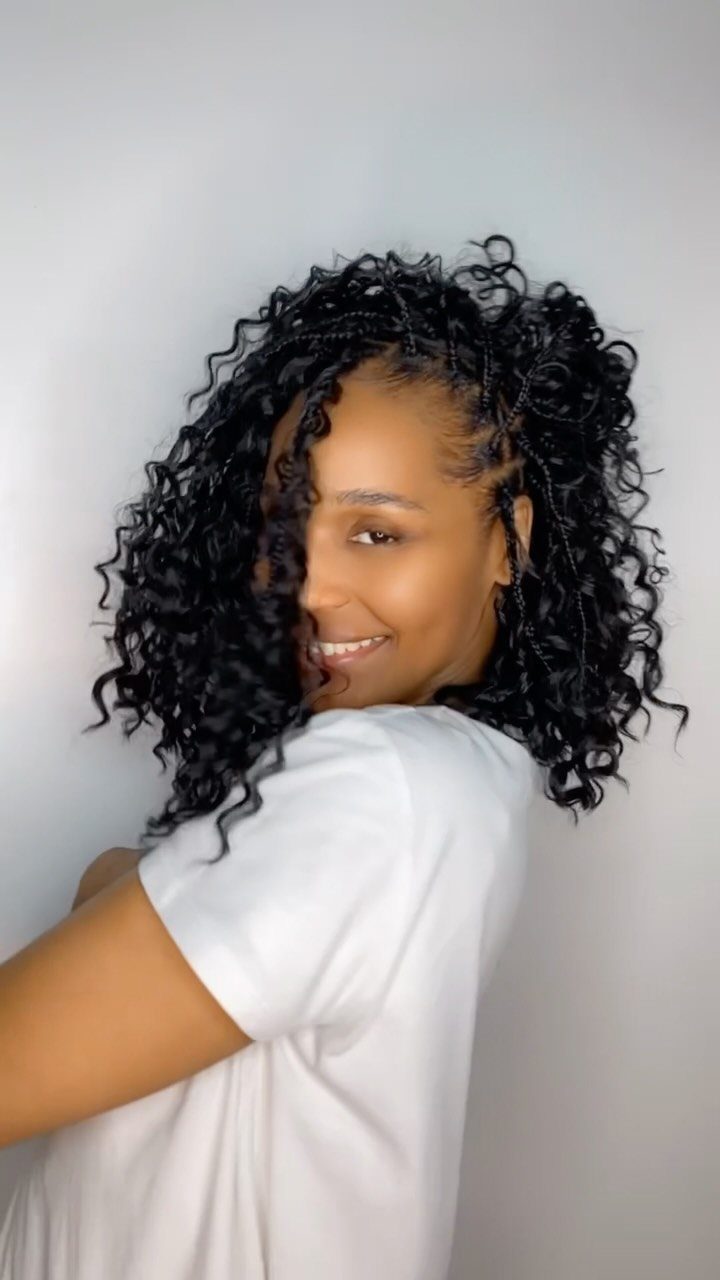
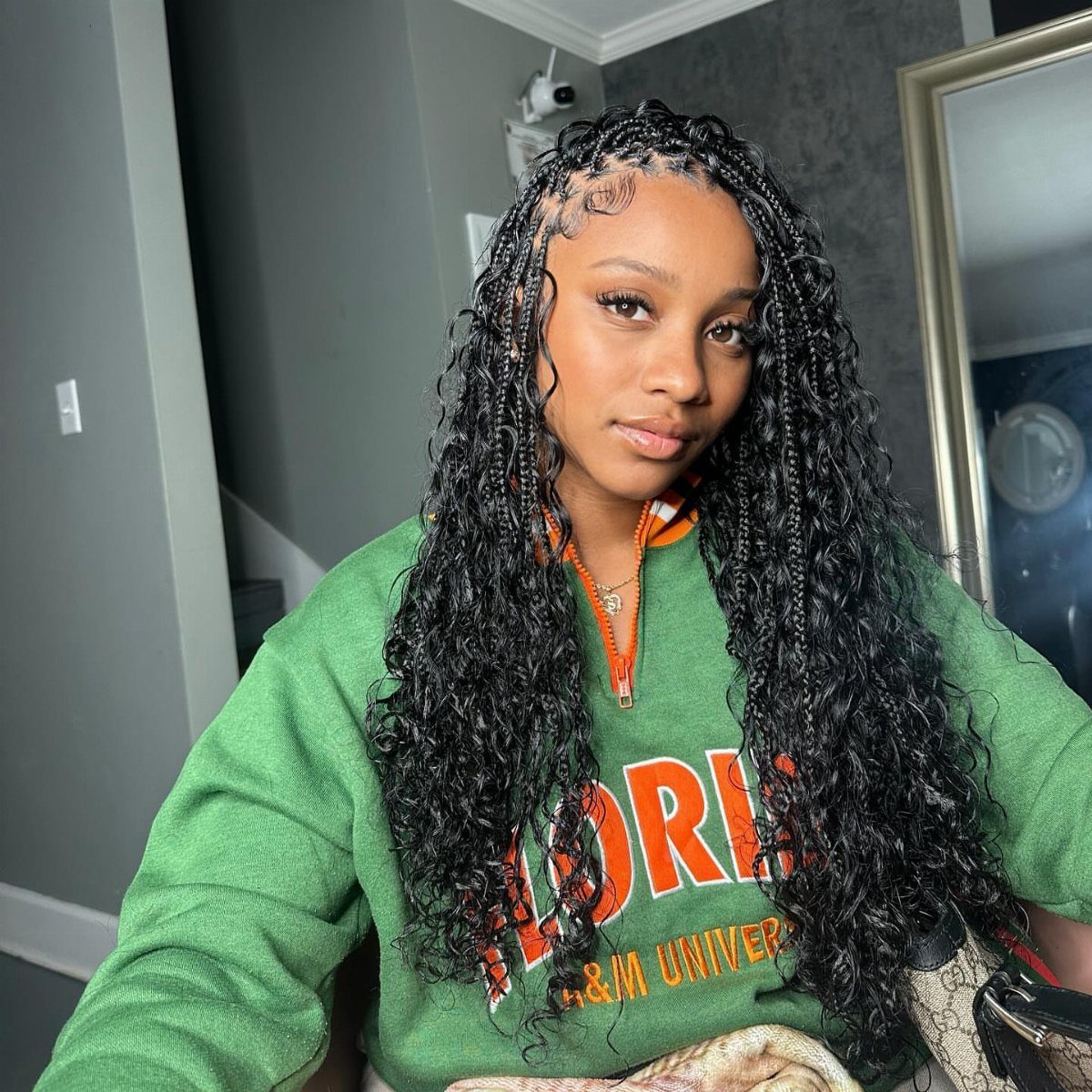
Length is a gift to curls only if the shape holds, and long black curls look best when the weight is distributed through the hair rather than hanging in one mass.
Layers help, and so do small braids woven in for contrast and a bit of structure.
I’d choose long hair for anyone who enjoys variety, since it can be worn loose, braided or pinned up. It does demand more detangling and more product per wash, so plan on extra time on wash day.
13. Curly Mullet
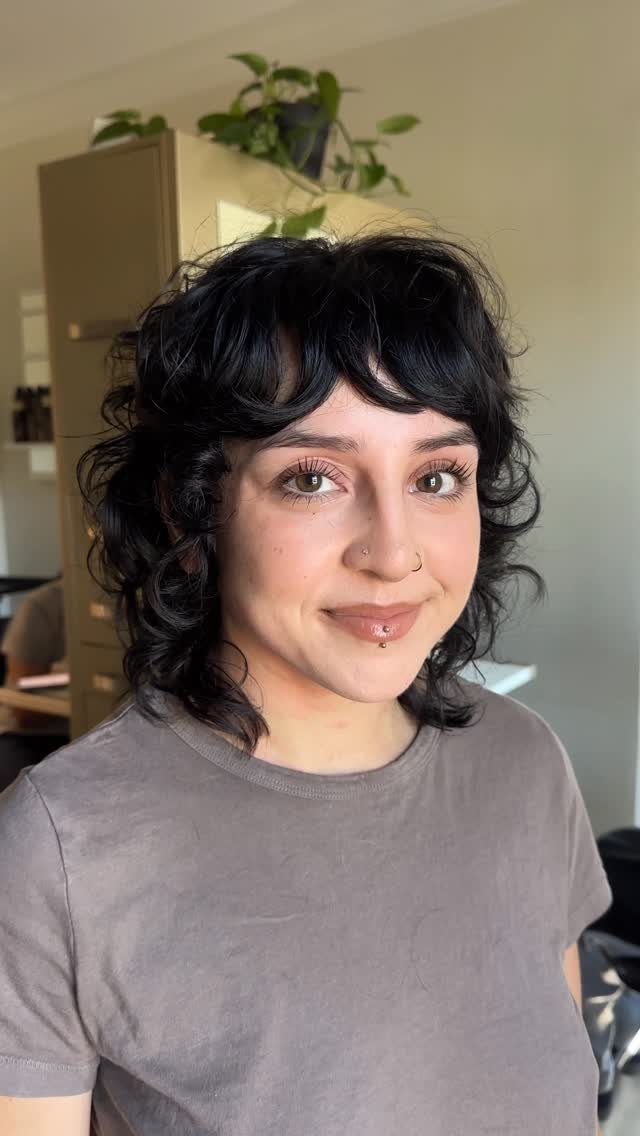
Short at the top and long at the back, a curly mullet lets the pattern do its work without fighting the shape.
The crown sits close with tight, defined curls, while the lengths below the ears bounce out and frame the face.
Ask for the front and sides to be cut short enough that the back stands out.
This suits anyone who wants a bold silhouette and doesn’t mind frequent trims to keep the proportions sharp. The curls need definition, so use a gel or cream on damp hair and let it air dry.
14. Asymmetrical Curly Bob
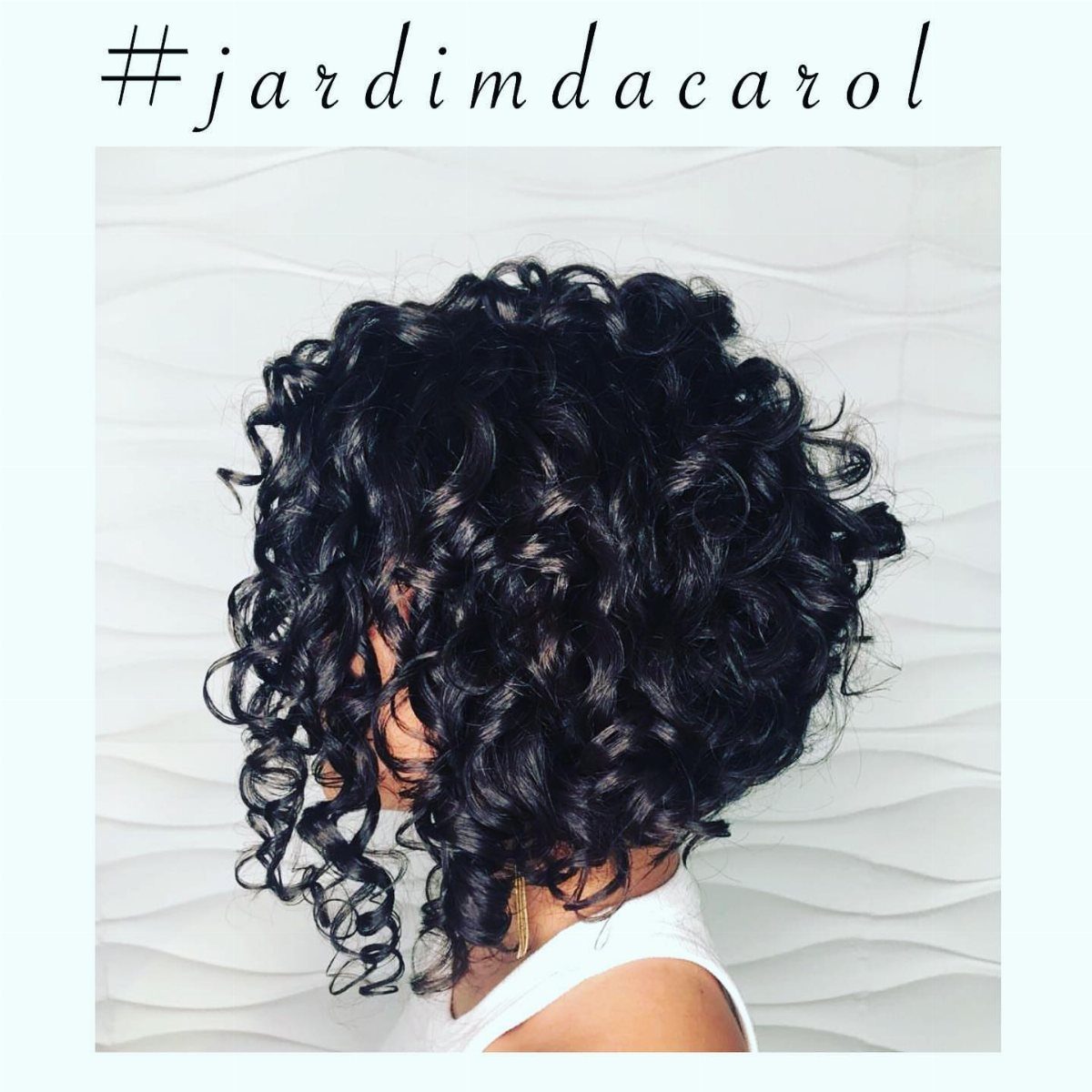
One side is longer than the other, and that asymmetry gives a bob its edge. The longer curls fall forward and frame the face on one side while the shorter side opens up the jawline.
This works best on shoulder-length or shorter curls, where the weight won’t drag the shape down.
Ask the stylist to cut it dry so the asymmetry lands where the curls actually sit. The asymmetry gives you all the polish of a bob with none of the predictability.
15. Curly Undercut Pompadour
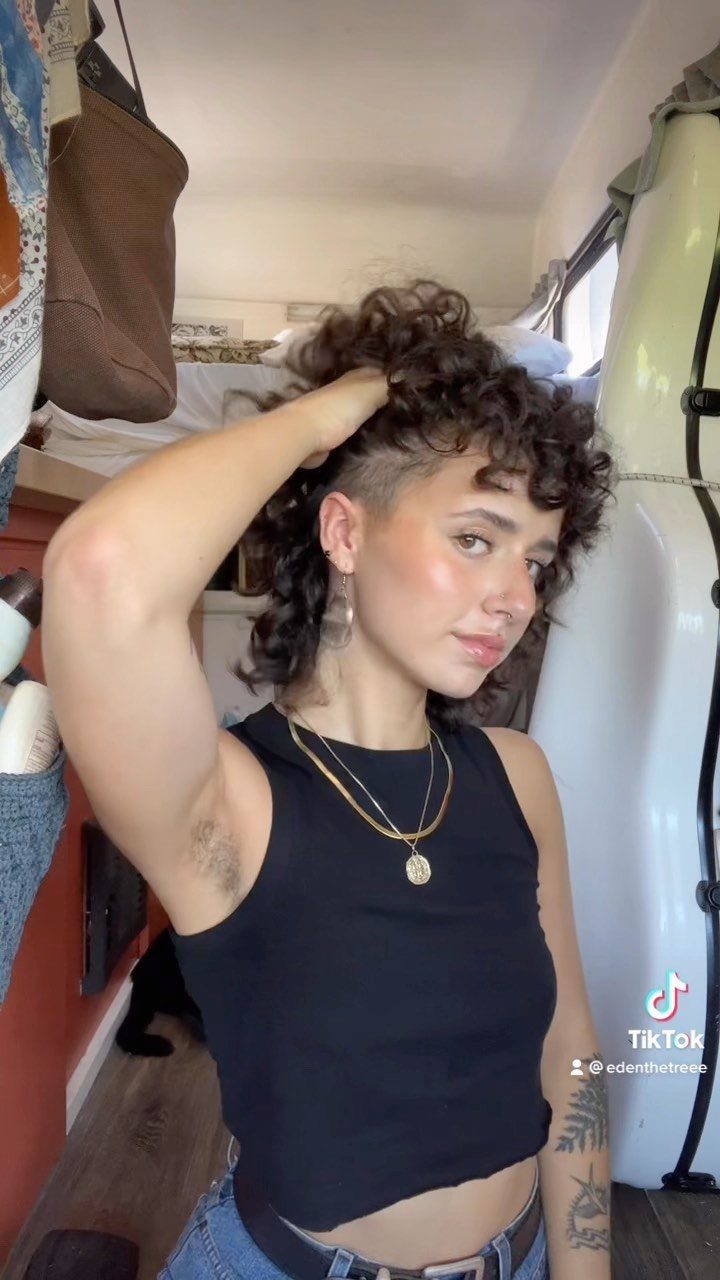
Volume at the top, nothing on the sides. A curly undercut pompadour keeps the sides and back trimmed close while the curls on top are left long, swept up and back to stand tall.
The undercut grows out fast, so plan on a trim every few weeks to keep the contrast.
Use a strong-hold gel or mousse to lift the curls at the crown, then finger-comb them back. You’ll need regular trims to keep the undercut sharp, but the impact is worth it.
16. Flower Updo
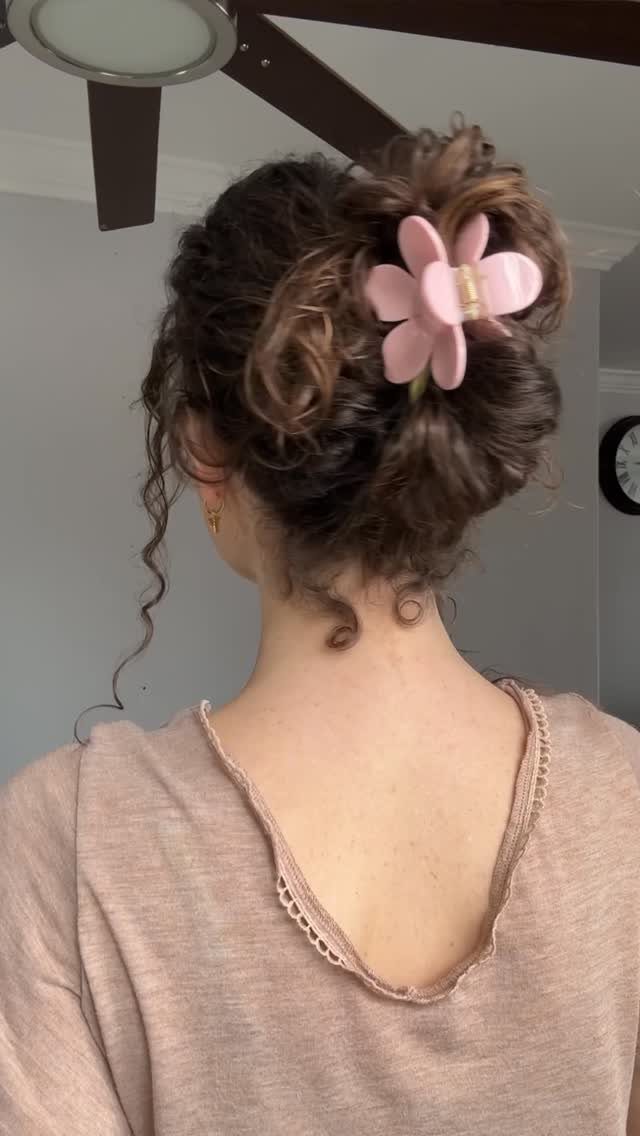
Gather the curls high, pin them loosely so they fan out at the crown, then clip a large flower into the base. The flower sits flat against the hair and holds the whole thing in place while adding color.
I like this for events where you want something dressed up but still soft.
Choose a flower clip that matches your outfit, and leave a few curls loose around the face. Pin the curls, tuck in the flower, and you’re done.
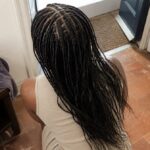
17. Long Dreadlocks with Curls
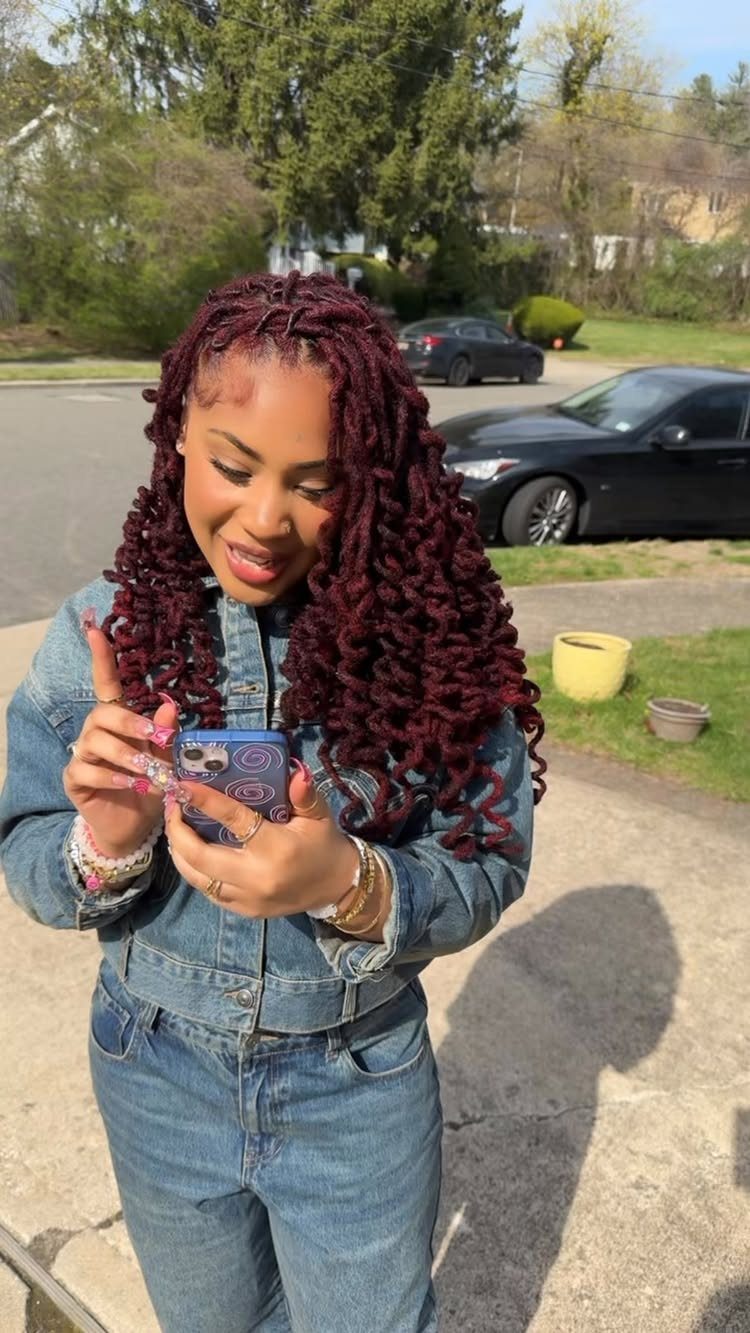
Locs give structure, curls give movement, and the combination is striking. Each dreadlock is smooth along its length, then curled at the ends with a curling iron or perm rods.
The curls sit at the ends of long locs, so this works best once the locs have grown past the shoulders.
Curl them on dry hair with a 1" barrel, or set them overnight on rods for a tighter pattern. I’d pick this for anyone who wants to dress up long locs without changing the base style.
18. Braid-Back Waves
2 narrow braids run from the temples to the crown, pulling the front sections back and leaving the rest of the curls loose. The braids keep hair off the face without a headband or pins.
Braid damp hair so the sections stay smooth, then let the curls dry loose.
This takes a few minutes and holds all day. I’d choose this over a full updo on days when the curls are good but the front needs to stay out of the way.
19. High Curly Bun
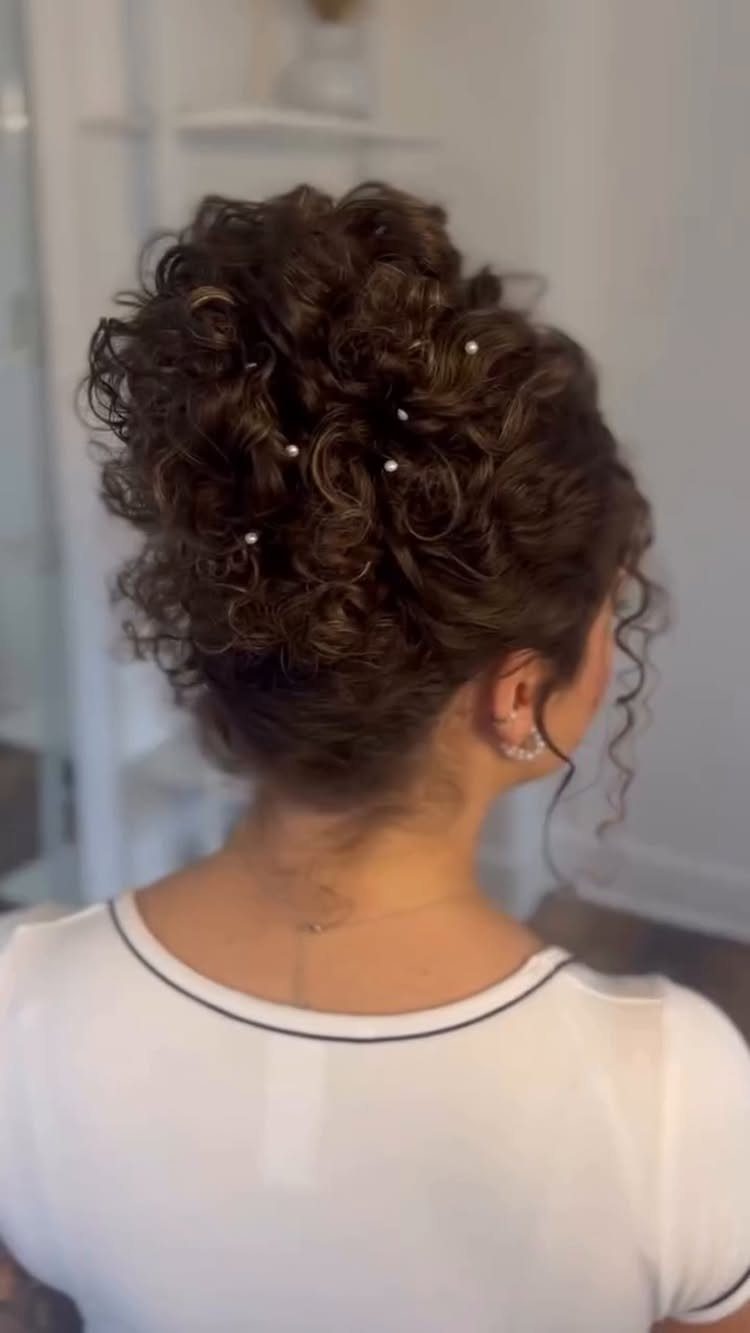
Piled loosely on top of the head, a high curly bun lets large curls stay big instead of being slicked into a tight knot.
Gather the hair high, twist it once around the base, and pin it so the curls sit on top.
Pull a few curls free by hand for a casual shape.
Small pearl pins, like the white ones in this look, add a little polish without any extra styling. I’d choose this on a day when the curls have settled and you want your neck clear.
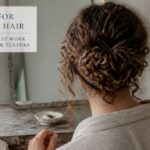
20. The Boho Bridal
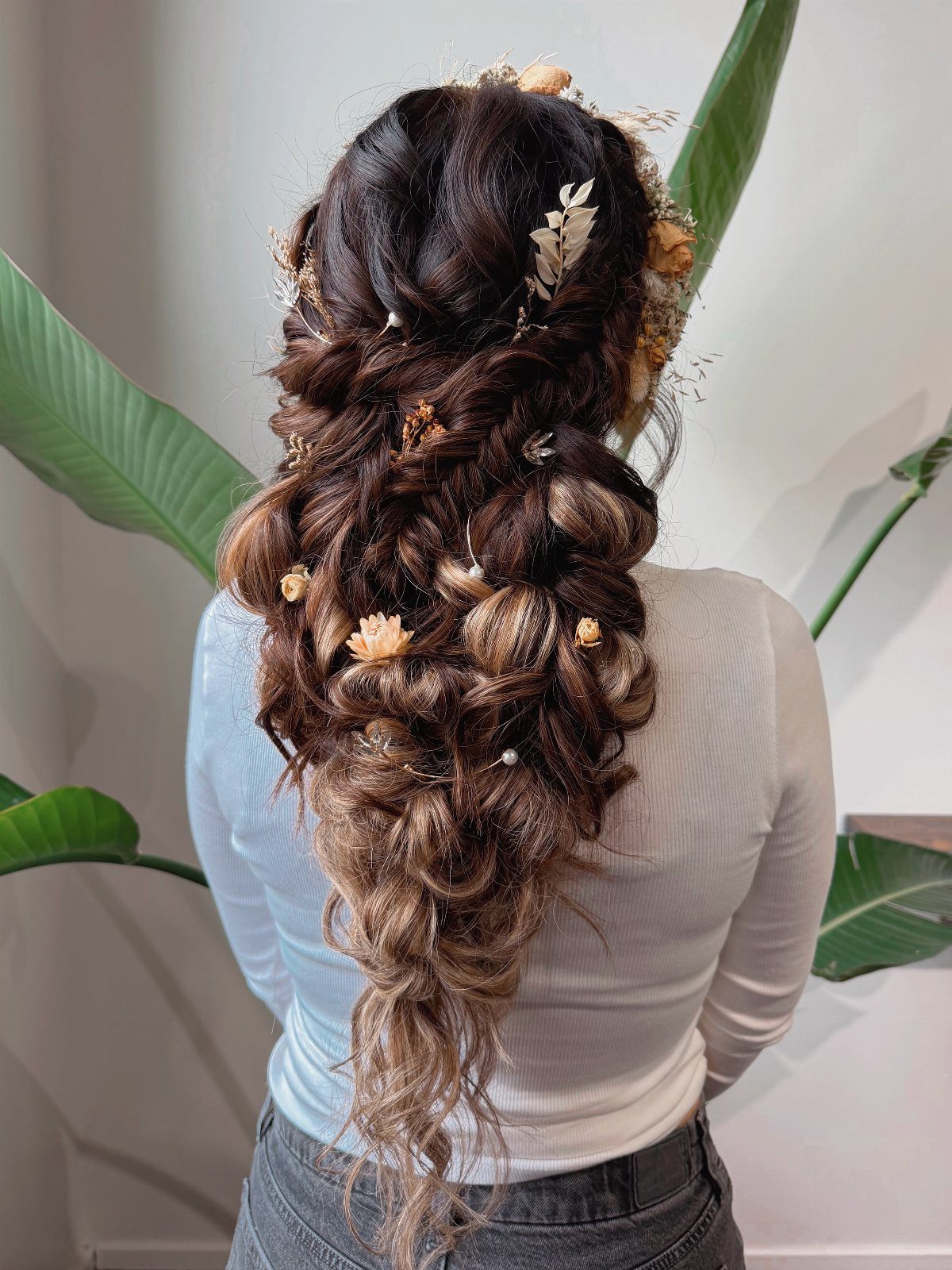
Loose curls or waves make the best base for a boho bridal braid, because the texture hides small gaps and gives the braid a soft, undone edge. Keep the braid long and relaxed, not pulled tight to the head.
Small flowers tucked along the braid and a gold leaf pin are enough decoration; more than that starts to weigh the style down.
I’d pick this for anyone who wants bridal hair that still looks like her own. Bring the accessories to the stylist so they can be placed before the day.
21. Messy Light-Tipped Curls
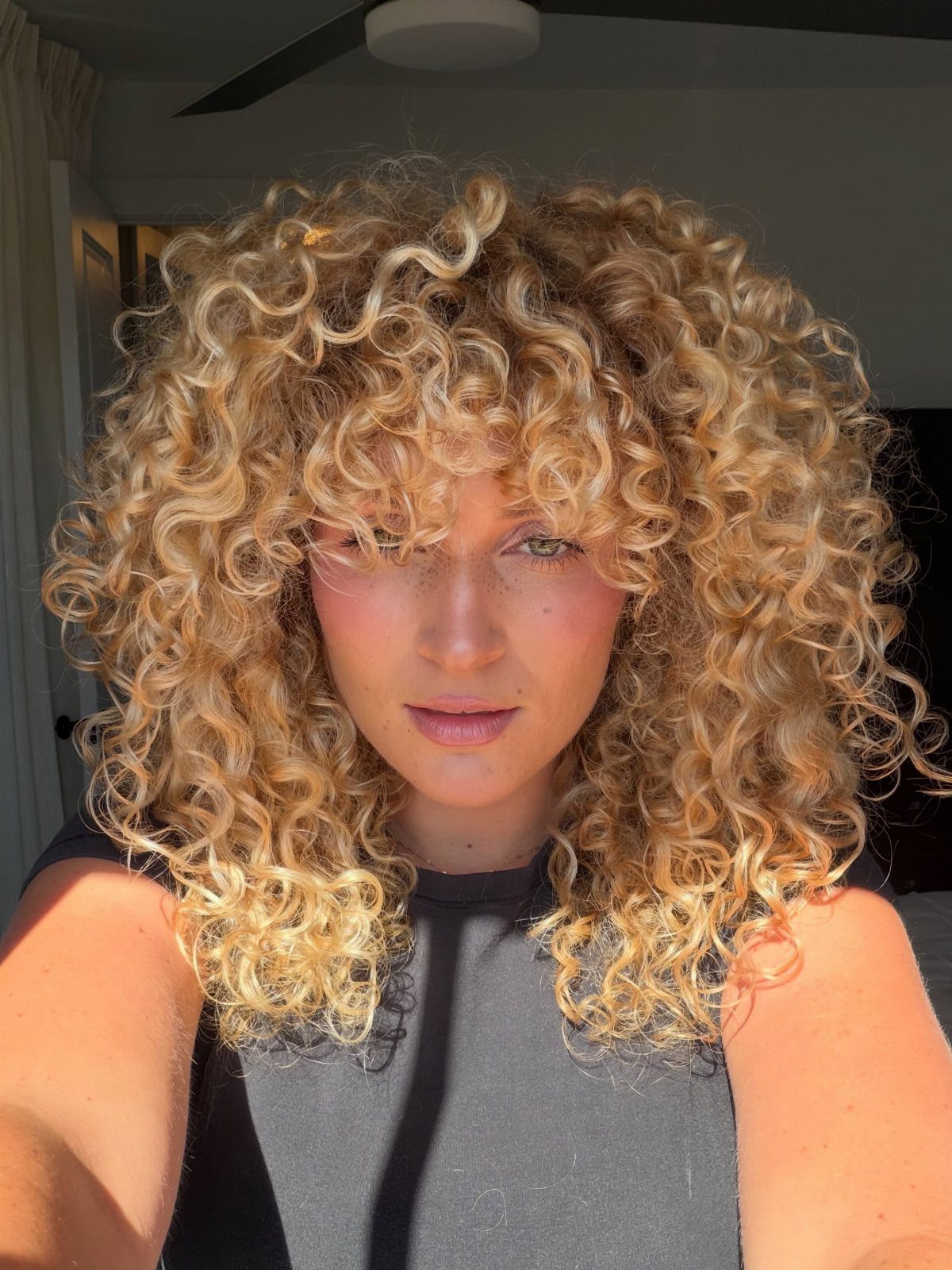
This style works as a low-effort wash-and-wear option: the curls dry loose and a little undone, and the color fades from your natural shade into a lighter tone at the ends.
Bangs add to the loose, voluminous shape and keep the front from feeling heavy.
Scrunch product into damp hair and let it dry without brushing, since combing would break up the curl clumps.
Lightened ends need more moisture than the roots, so I’d plan on a conditioner that stays in the hair. This suits anyone who prefers texture and volume over a neat finish.
22. Golden Shoulder Curls
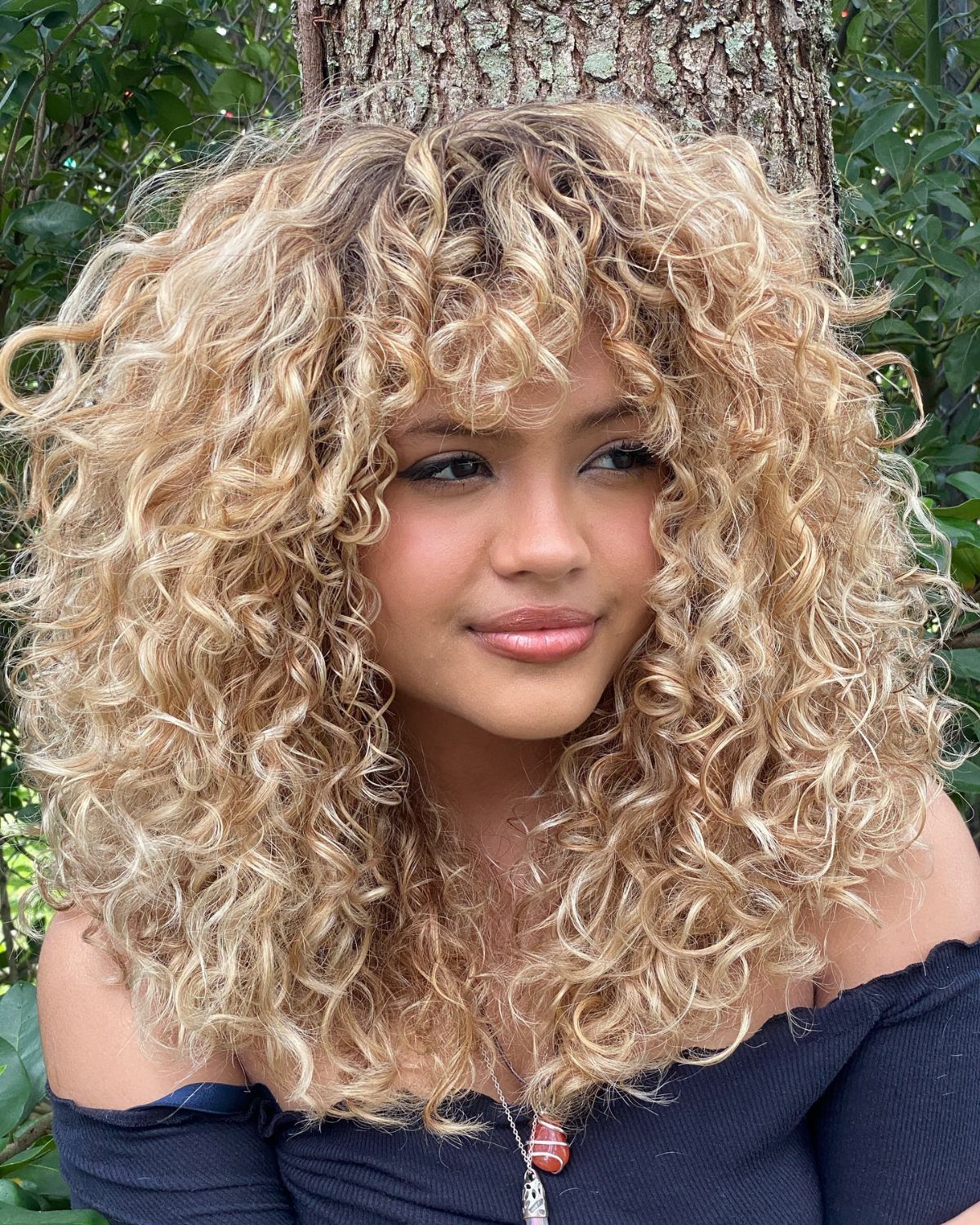
Golden color suits shoulder-length curls well, because the length is short enough for the shade to show through every ring instead of fading into one long stretch of hair. Bangs keep the volume framed around the face.
Ask the colorist for gold tones that stay warm and not brassy, and bring a photo so the shade matches what you picture.
Lightened curls need regular deep conditioning, and I’d budget for it before booking. The cut itself needs very little styling once the curls are defined.
Caring for Curls
Start with the products.
Shampoo, conditioner, leave-in and dry shampoo should all be made for curly hair, and none of them should be sold as anti-frizz. Frizz control and curl definition pull in different directions.
Moisture is the other half. A deep conditioner or hair mask on a regular schedule keeps curls nourished, and I’d treat it as routine rather than a rescue.
To dry curls with definition, I twist small sections, press them gently toward the scalp, then use a diffuser on low heat after working in a curl-defining cream.
If you blow-dry, keep the diffuser on a cooler setting and limit how often you use heat at all.
Keep trims on the calendar even while you grow toward mid-length or longer, because split ends travel up a curl fast and stall your length. A layered touch-up costs you no styling effort and the shape holds up better.
Curly hair can also carry mixed patterns across different sections of the head, so judge each area on its own before deciding how much product it needs.
Choosing a Curl-friendly Stylist
Before you book, call the salon and ask if the stylist cuts curly hair daily and if the shelves hold products made for curls.
If they don’t carry what you use, bring your own shampoo and stylers and tell the stylist about your routine.
Arrive with your natural curls. Skip the bun and the pins so the stylist can read your pattern before a single cut is made.
Bring a few inspiration photos. Pictures are the best protection against a result that looks nothing like what you pictured.
Talk through your hair type, texture, lifestyle and face shape, then settle on the cut together.
Say yes to layers in that talk, since they break up the weight of the curl and give you bounce and fullness without a heavy hand.
“With curly hair, period, shape is so important, a good cut. If you have looser curls, short cuts, and bobs are a good look,” Kim Kimble, celebrity hairstylist and founder of the Kim Kimble Hair Collection, tells Bazaar.
Matching Cuts to Face Shape
Face shape and curl type should both steer the cut. Lighter layers can flatter a round face, while long layers can lift a longer one.
Layers matter for nearly every length.
A cut with no shaping tends to sit wide at the bottom and look boxy, whether it’s cropped, shoulder-length or long. Ask for layers through the length to add lightness, volume and movement.
Texture changes the plan too.
Fine hair may do better with a blunt cut, or with layers placed to encourage lift and volume. Tell the stylist how fine or thick your strands are, since that decides which route works.
If you want a modern edge on a classic bob, eye-grazing curtain bangs paired with a center part and layers are one option to try.
Frequently Asked Questions
How can I enhance my natural curls?
Look for shampoo, conditioner and leave-in labeled for curls or texture, and avoid the anti-frizz aisle entirely.
After washing, rake curl cream through damp hair, scrunch each section up toward your roots, and let a diffuser finish the job on cool or low.
Book a trim every 10–12 weeks to cut off damage before it runs up the strand.
Which hairstyle is best for curly hair?
A layered cut is the safest base, because layers help at nearly every length.
Past that, the best shape depends on your curl pattern, texture and face shape: lighter layers flatter a round face, long layers lift a longer one, and fine hair often does better with a blunt cut or layers placed for lift.
Short hair suits a bob or a pixie, and shoulder length works with most curl patterns.
What’s my curl type?
Look at your hair when it’s dry and study the curls around your head, since different sections can have different patterns.
The numbers 2 through 4 separate wavy, coily and kinky hair, and the letters A through C describe the width of the pattern: A is the widest, B is medium and C is the tightest.
Knowing your type helps you pick products that suit it.
How do I care for curly hair?
Use curl-specific products, deep condition about once a week and keep regular trims on the calendar. Limit heat, and when you do diffuse, use a cooler setting.
Should short curly hair have layers?
Yes. A one-length short curl tends to balloon at the sides and look more pyramid than round.
The stylist should cut into dry curls one section at a time, because wet hair stretches and you won’t see where each piece actually sits until it dries.
What is the trend in curly hair in 2026?
Shaggy layered cuts have held their spot for several years, and medium length is the most common version.
Curly bangs, either tight coils or a loose curtain, sit right beside them. Soft, fine highlights placed along the curl’s direction are the usual color choice, and lightened strands need extra moisture.
Does curly hair get straighter with age?
It can, but it can also go the other way, so curl pattern may loosen or tighten over time.
Life events such as having children and menopause can change texture. Hair also thins with age, which lowers density and can relax the curl.