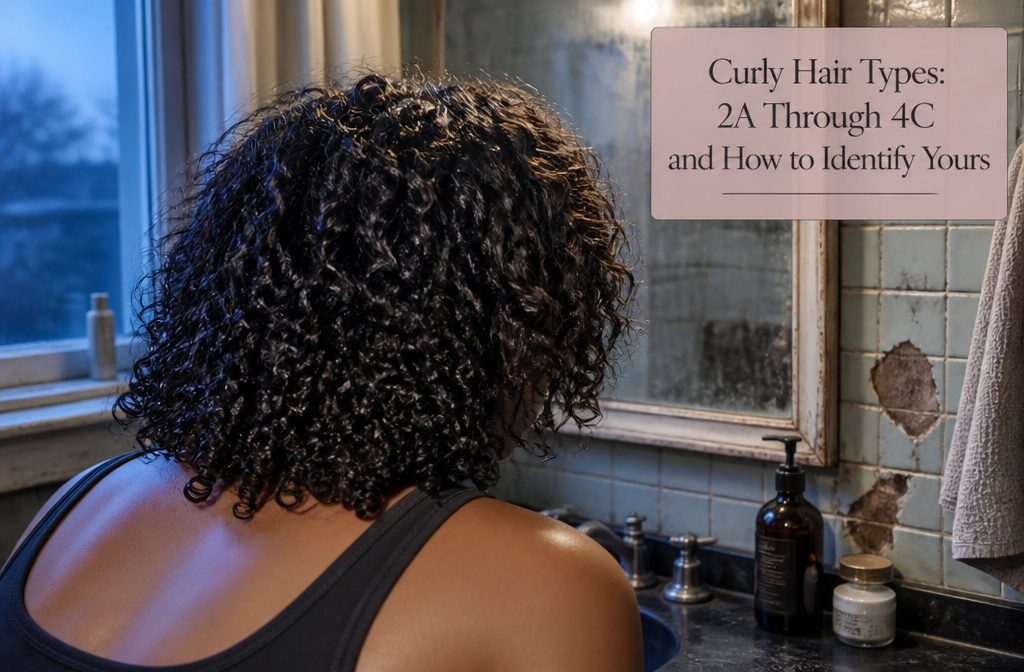
Curly hair types run from 2A wavy to 4C coily, sorted by how tightly the strand bends.
Most heads carry two patterns at once, which the system ignores, and Type 4 coils shrink so much when they dry that wet length and visible length can differ by 75%.
What the Curl-Typing System Tells You and What It Leaves Out
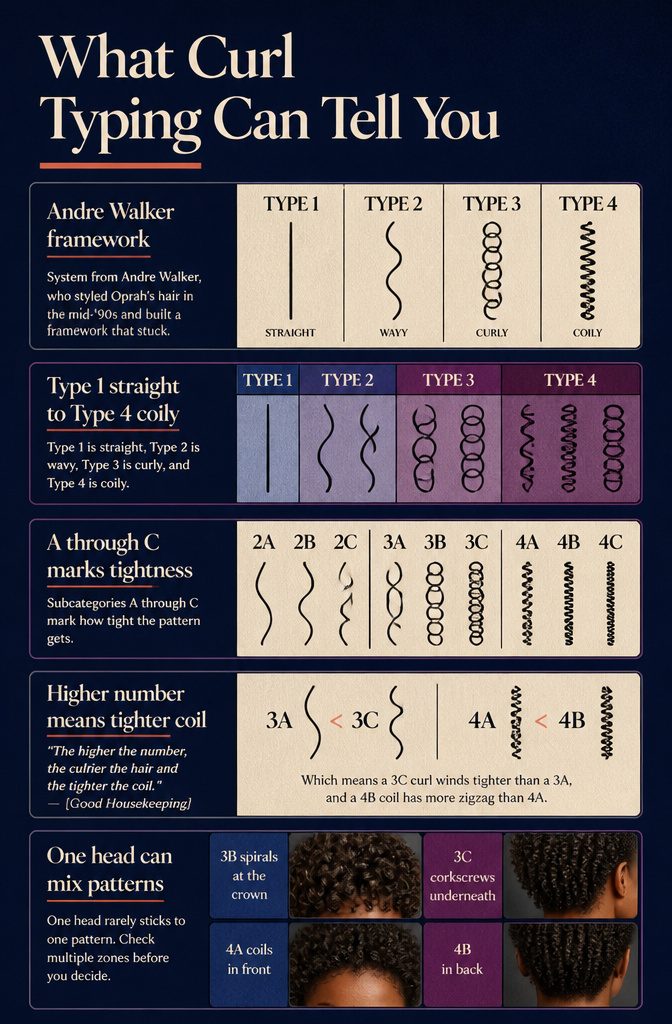
The system most people use to categorize curls comes from Andre Walker, who styled Oprah’s hair in the mid-’90s and built a framework that stuck.
Type 1 is straight, Type 2 is wavy, Type 3 is curly, and Type 4 is coily, with subcategories A through C marking how tight the pattern gets.
Type 2A starts with loose beach waves, 3B gives you defined ringlets, 4C delivers the tightest coils.
Scientists at L’Oréal refined the idea by measuring curl diameter and how much hair shrinks from wet to dry across thousands of subjects, but the four-type structure held.
The higher the number, the curlier the hair and the tighter the coil.
Which means a 3C curl winds tighter than a 3A, and a 4B coil has more zigzag than 4A.
Not everyone agrees that Type 1 belongs in a curl system at all, since straight hair behaves nothing like textured hair.
The bigger limit is that one head rarely sticks to one pattern. You can have 3B spirals at the crown and 3C corkscrews underneath, or 4A coils in front and 4B in back.
The system gives you a starting point for product shopping and routine planning, but I check multiple zones before I decide what I’m working with.
How I Identify My Pattern Without Products or Heat
How I Identify My Pattern Without Products or Heat
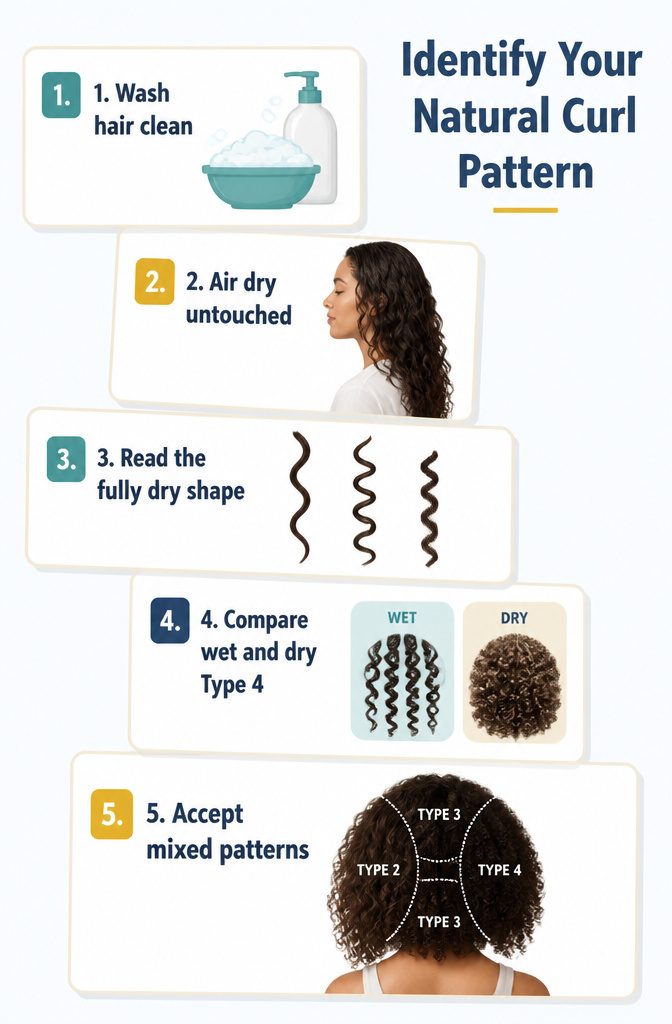
- Wash your hair clean. Start with freshly washed and conditioned hair, no styling products left in it. Look at what your hair does on its own, with nothing holding a shape and nothing adding slip.
- Let it air dry without touching it. Step away and let your hair dry on its own. Scrunching, twisting or running your fingers through it will change the pattern you’re trying to observe.
- Look for the shape when it’s fully dry. Type 2 forms an S-shaped wave, Type 3 shows distinct spirals or curls, and Type 4 creates tight coils or zigzag kinks. Compare what you see to the descriptions for each type and subcategory.
- Check both wet and dry if you have Type 4 hair. Type 4 curls shrink a lot as they dry, so look at the pattern while it’s still wet to see the actual coil shape.
- Accept that you may have two patterns on one head. This is normal. The top of your head is the closest match to your natural curl type, even if the sides or nape differ by one type up or down.
Type 2A: Slight Bends That Lie Close to the Head
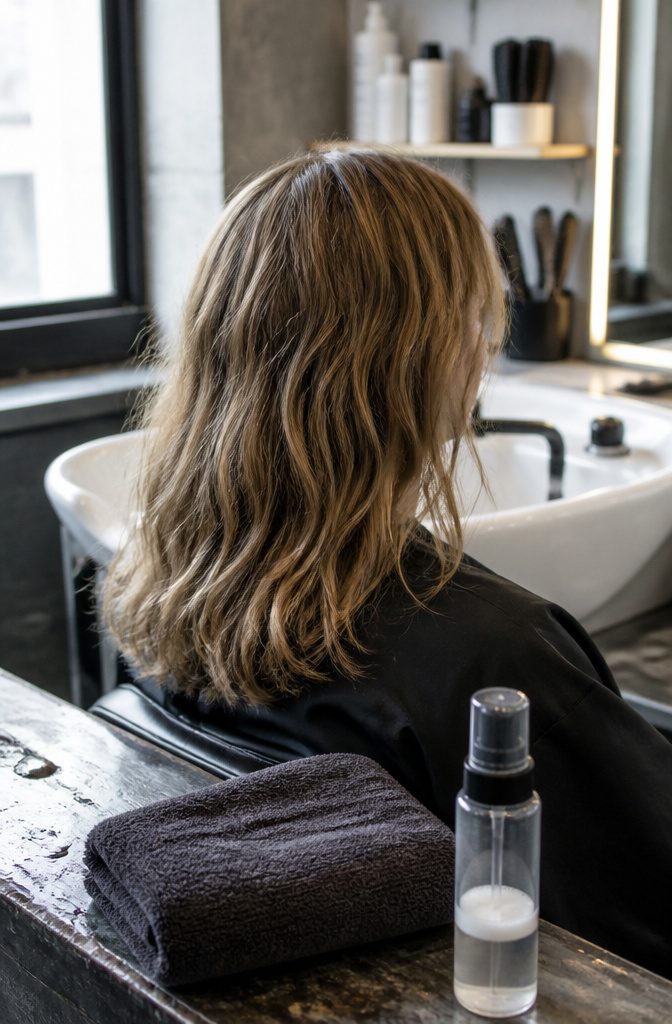
Type 2A: Slight Bends That Lie Close to the Head
Type 2A sits at the loosest end of the wave spectrum. The bends are barely visible S-shapes with plenty of body but little volume at the crown.
The hair grows mostly straight and picks up a handful of light curves along the length. You can straighten it without much effort, and it tends to lie close to the head rather than lift away.
Frizz depends on porosity. Most 2A hair sits in the medium to lower range unless heat or color has changed the structure.
I stick with hydrating shampoos and conditioners, especially on longer lengths, to keep frizz from taking over. Water-based mousses and gels give the best results without weighing down the wave.
A light leave-in conditioner helps, and adding a mask about twice a month keeps things soft. That frequency comes from guidance for 2B, which is close enough in texture to borrow from.
Type 2B: Defined S-Waves With More Body
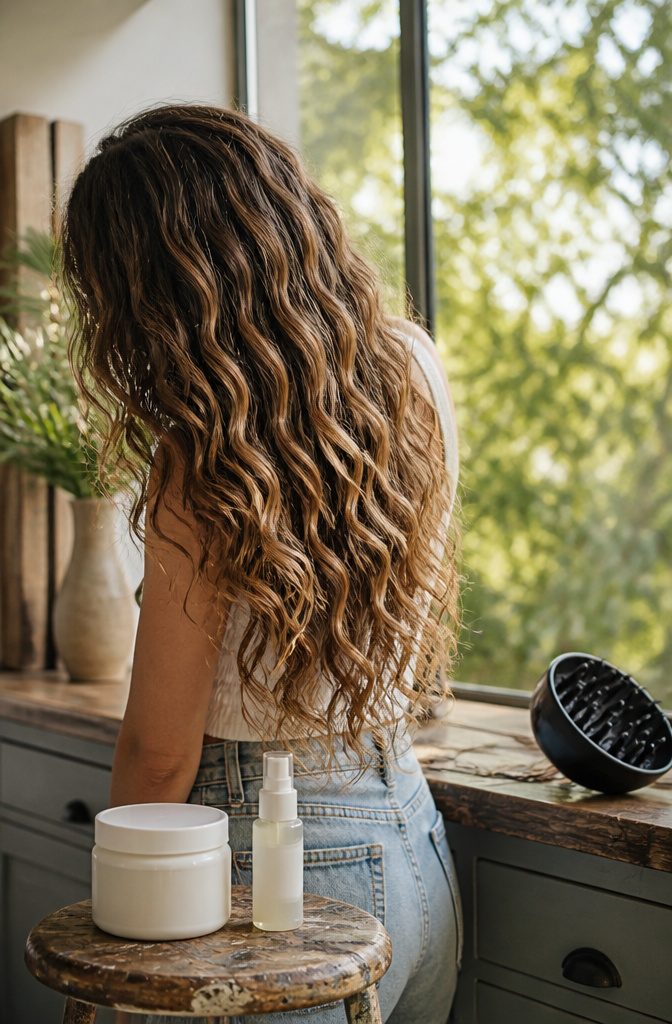
Type 2B sits between 2A and 2C, with more defined S-shaped waves that carry actual body. The pattern is closer to loose curls than 2A’s subtle bends, and the waves hold more volume without quite reaching 2C’s coarse, heavy texture.
You’ll see medium to large S-shapes forming at the crown and running down the length, often with a beachy feel.
This type picks up frizz more easily than 2A, so moisture matters. I recommend a mask about twice a month worked into your regular wash routine to keep the waves soft and uniform.
The same lightweight approach still applies—water-based lotions or creams give definition without flattening the pattern, and a light leave-in conditioner helps when humidity threatens to turn the waves fuzzy.
Skip anything heavy; 2B has enough natural texture that thick products kill the bounce instead of adding to it.
Type 2C: Deep Waves Bordering on Curls
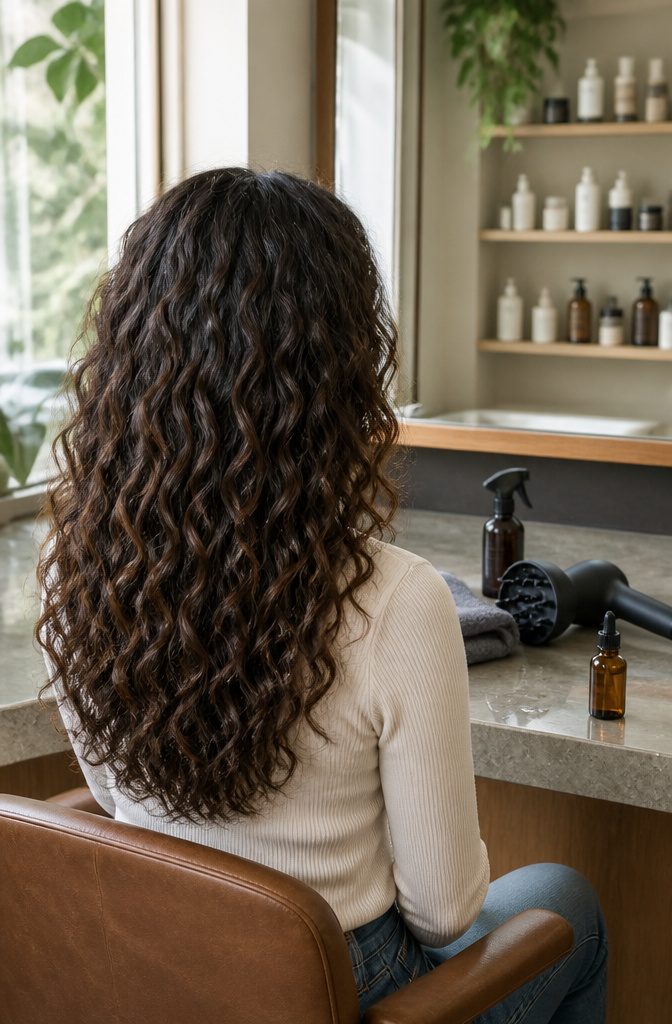
Type 2C is the deepest wave, with a strong S-shape that starts small to medium and stays an S as it grows. It never coils into a spring, and that missing spring is what keeps it out of Type 3.
Frizz hits 2C harder than 2A or 2B, so I put moisture ahead of volume. A mask about twice a month, plus a leave-in conditioner or serum, does more here than anything that lifts the roots.
Sea salt sprays and texturizers suit looser waves. For 2C, a curl-defining cream in a light layer smooths the cuticle and shapes the S. Heat damage shows up fast, especially on chemically treated hair, so I’d keep the blow-dryer low.
Type 3A: Loose Spirals About Sidewalk-Chalk Size
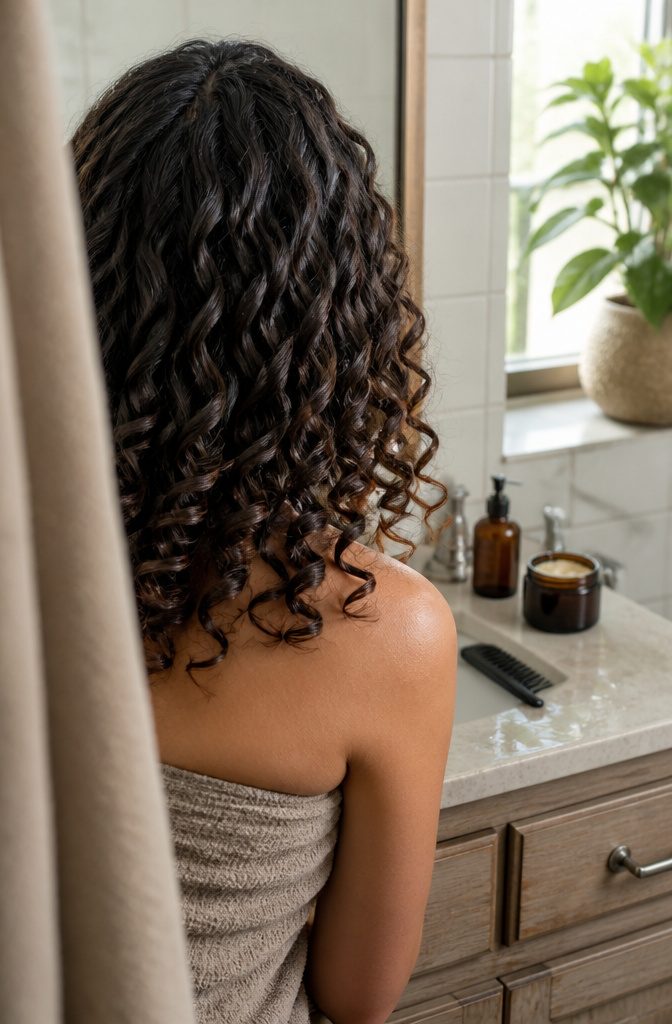
Type 3A curls form loose, large spirals about the size of sidewalk chalk or wide enough to wrap around a permanent marker.
The curl has a rounded S-shape, a natural sheen, and a tendency to frizz if moisture drops too low.
Shampoo every five to seven days at most. More frequent washing dries out the curl and leaves it dull.
Between wash days, reach for a mask or leave-in instead of standard conditioner to keep the spiral defined and soft. Start with moisture, follow with gentle cleansing, and finish with definition that holds without weighing the curl down.
If you straighten occasionally, you need extra heat protection to keep from damaging the curl pattern.
Use a product that locks in moisture while shielding from the iron. Type 3A can lose its shape permanently if heat strips too much protein or water from the strand.
Type 3B: Tighter Springy Curls the Width of a Sharpie
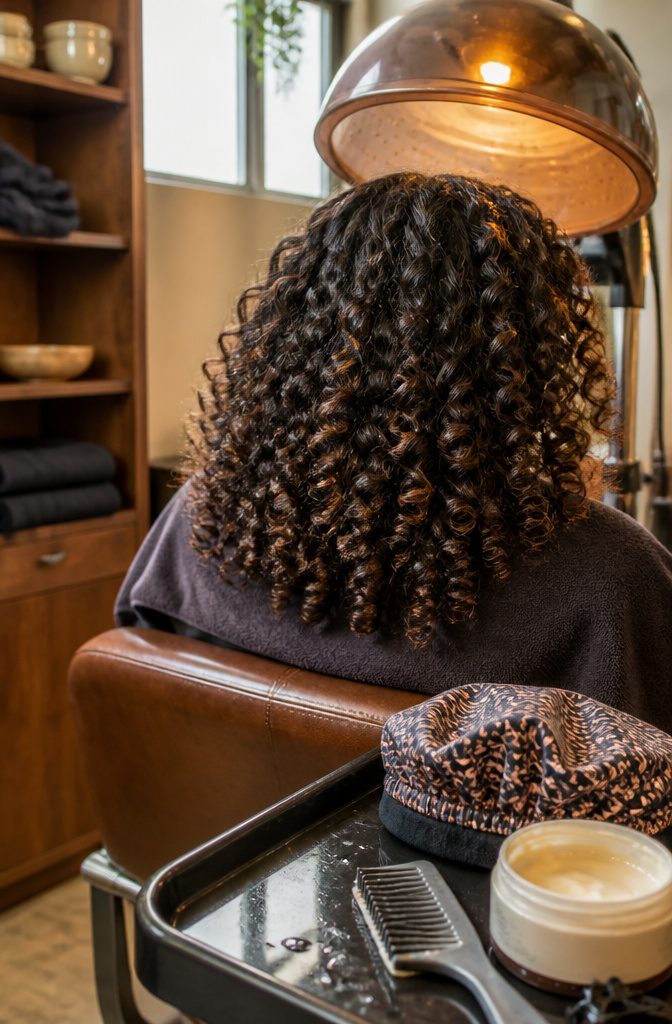
Type 3B curls are tight, springy ringlets about the width of a Sharpie marker, with plenty of body and a springback of 1–2 inches.
A pencil fits inside a curl, though the front of the head often runs looser. That density brings dryness and tangles, so wash weekly rather than more often and detangle gently while the hair is slick with conditioner.
Heat does the most damage here. Hard pressing and unprotected hot tools can leave 3B curls limp, frizzy, or permanently out of pattern, so use a heat protectant every time.
For moisture, leave a deep conditioner on for 20–30 minutes, with warmth from a microwavable cap, shower steam, or a bonnet dryer, then add a cream or butter to keep curls flexible.
Type 3C: Tight Corkscrews Around Pencil Width
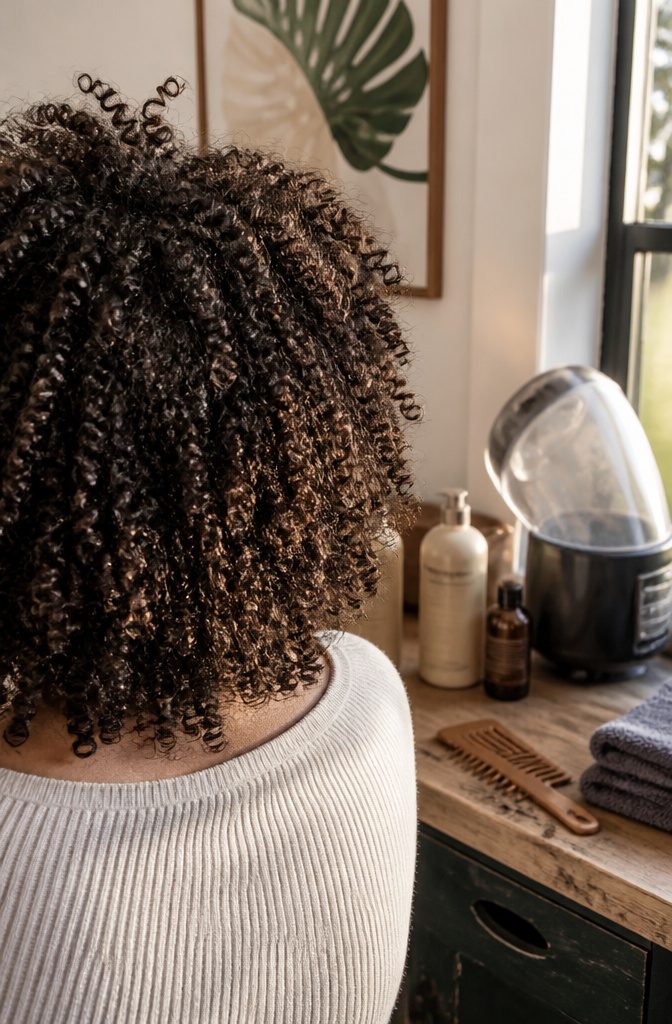
Type 3C is the curly-curly pattern: tight corkscrews about the width of a pencil, packed densely and starting right at the root.
Volume comes easily, and so do frizz and shrinkage, because strands this tightly wound spring up well short of their true length. A trim springs back too, and the hair tends to grow outward before it grows down.
Heat is where I’d be strictest.
3C is highly sensitive to heat damage, and a hard press can leave curls limp, frizzy or permanently looser. Use a heat protectant every time.
A hydrating mask or steamer helps high-porosity strands take in moisture. Pick a moisturizing, sulfate-free shampoo and conditioner, and detangle gently, because dry, knotted 3C snaps.
Type 4A: Defined Springy Coils the Size of a Crochet Needle
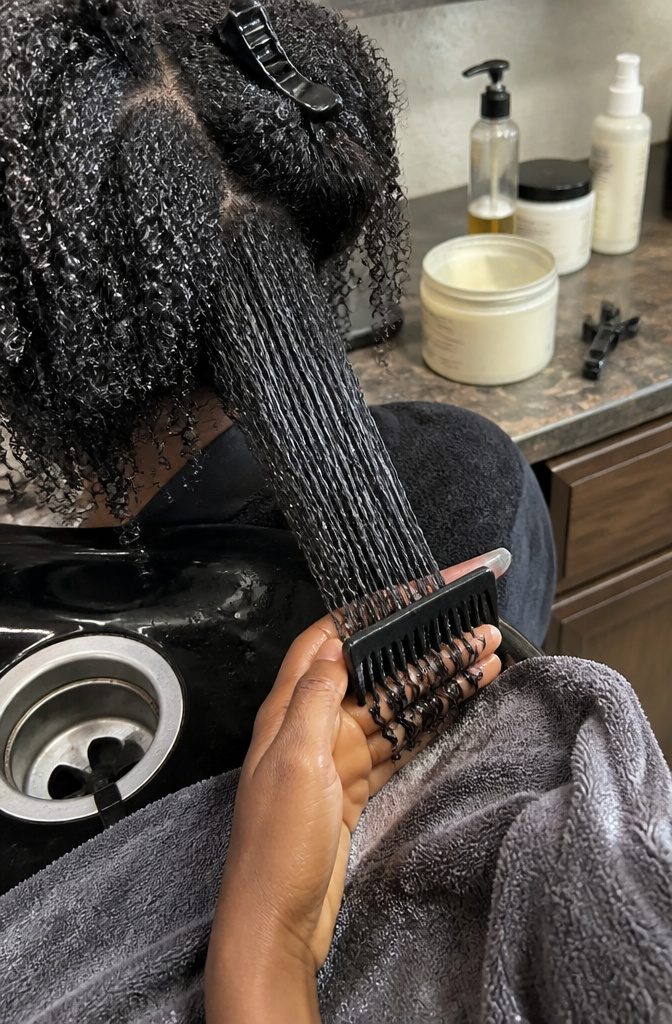
Type 4A coils are springy, well defined, and about the width of a crochet needle, with a lot of volume.
That structure is hard on a comb: Type 4 hair is 23 times harder to comb than Type 1 when wet and about 32 times harder when dry.
Detangle only when the hair is wet and slick with conditioner, using a detangling comb from the tips up toward the root.
Straight hair carries more natural moisture than coily hair, so 4A needs it added back often. I’d deep condition regularly and layer leave-in, oil, then cream (the LOC method) between washes.
Growth makes gentle handling matter more. Type 1 grows around 5.69 inches a year, versus 3.6 inches for Type 4, so length lost to breakage is slow to return.
Type 4B: Zigzag Coils With Less Definition
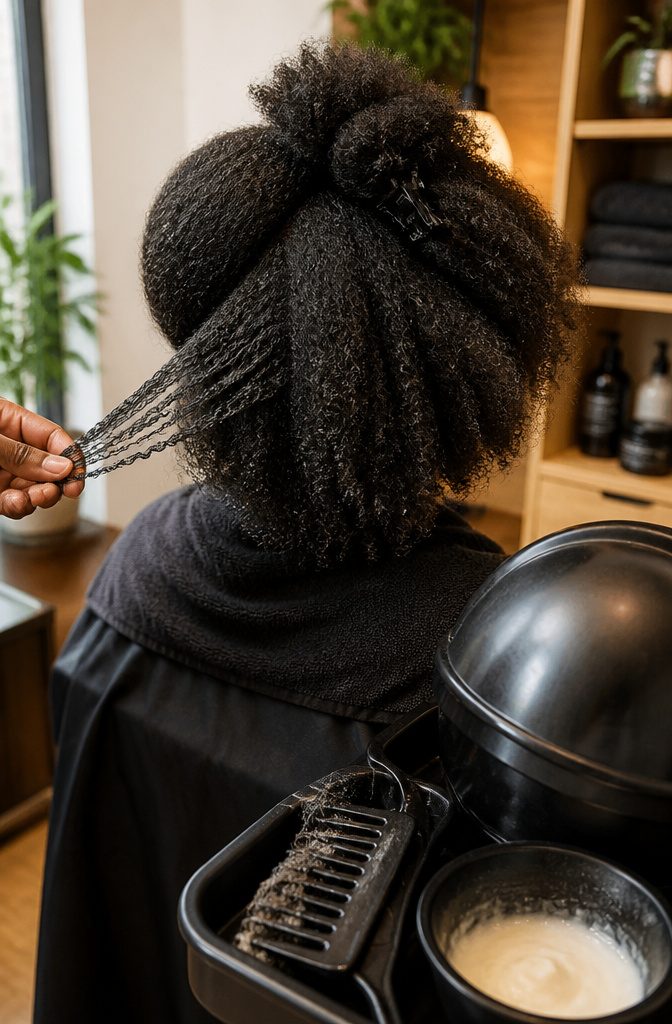
4B bends in sharp zigzags rather than rounded curls, and it looks softer and fluffier than 4A because the definition is lower.
Stretch a strand and the Z shape shows. That shape is especially prone to dryness, and the hair is fragile, highly porous and quick to break.
Shampoo 2–3 times a week, depending on how active you are, with a gentle formula that won’t strip moisture.
4B is most vulnerable when wet, so condition well before you style. A deep conditioner left on for 20–30 minutes under a heat cap helps, and the LOC method adds hydration and elasticity.
I put protective styles high on the list for 4B, because less daily handling means fewer chances for breakage.
Type 4C: The Tightest Coils With Up to 75% Shrinkage
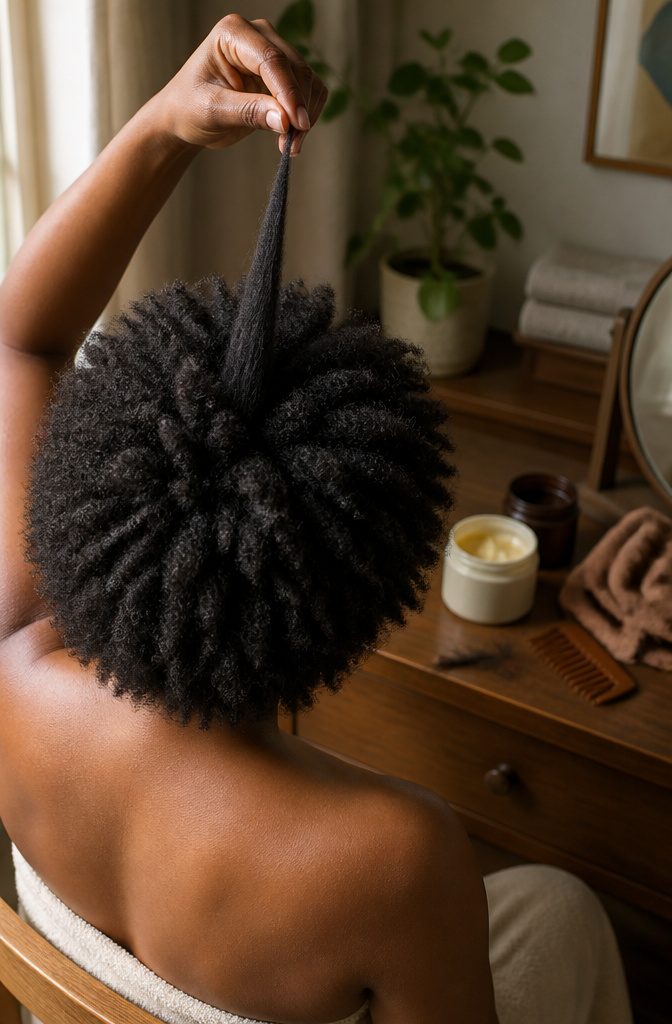
4C coils wrap so tightly around themselves that the zigzag often stays hidden until you stretch a strand, and there is little to no drop to the curl.
Shrinkage runs up to 75%, so stretched length and visible length can differ enormously. Structure explains the fragility: straight hair has about six to 10 cuticle layers throughout, while coily hair has only a couple inside the crimp and six to 10 outside.
I treat deep conditioning and frequent moisture as the baseline, not a bonus, with butter-rich products, heavier pomades and gels, and the LOC method.
Blow-outs and flat irons invite snapping, so I’d skip them and lean on protective styles with slow, gentle detangling.
Matching Moisture, Weight, and Routine to Your Pattern
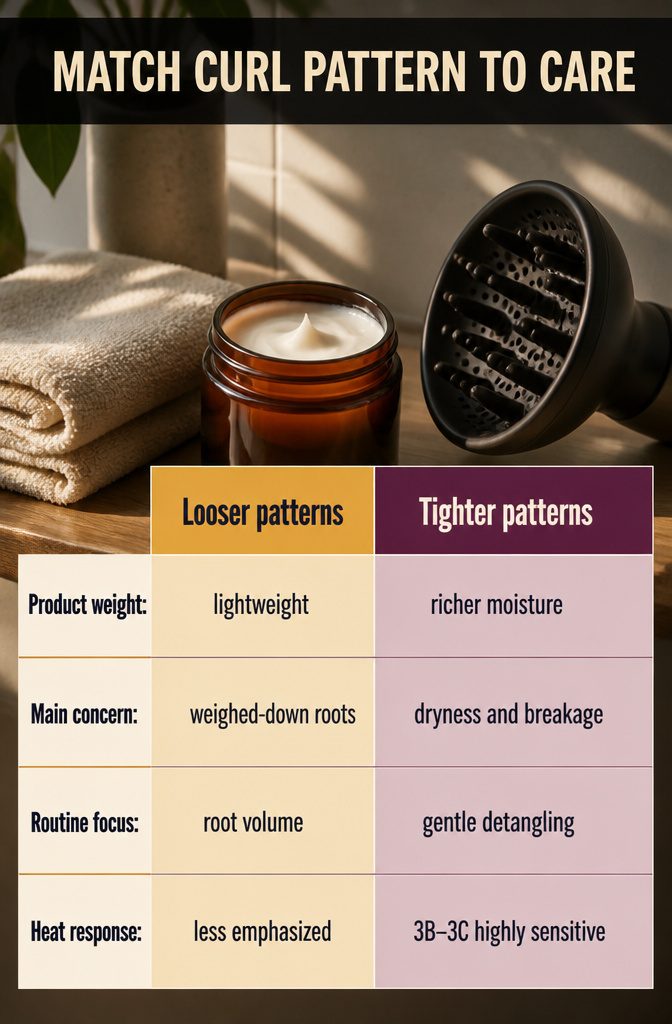
Looser patterns, 2A through 2C, weigh down easily under heavy creams, so lightweight products and root volume matter most.
Tighter patterns need the opposite. Types 4B and 4C are prone to dryness, breakage and shrinkage, and without moisture and gentle detangling the hair can snap mid-style.
The LOC method (leave-in, oil, cream, in that order) is one way to hold moisture in, and protective styles keep the strands intact between washes.
Heat is the quieter risk. 3B and 3C curls are highly sensitive to heat damage, so I’d skip hard pressing and use a heat protectant every time; without one, the pattern can loosen permanently.
High-porosity hair takes in humectants more easily after a hydrating mask or steam.
Why Follicle Shape and Hair Structure Form Different Curl Patterns
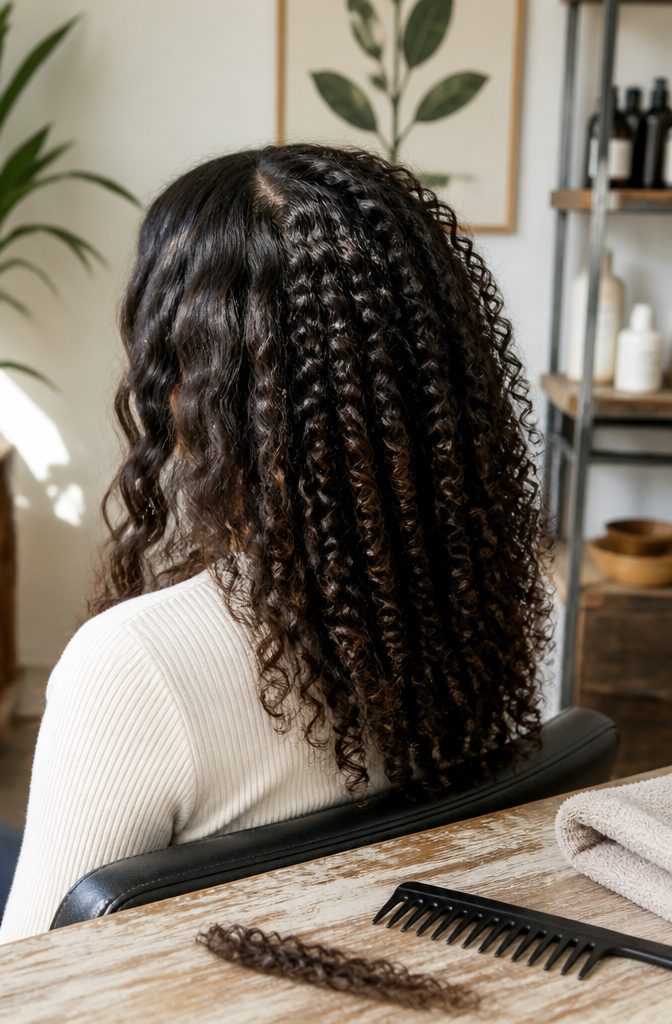
Round follicles produce straight hair.
Oval and twisted oval follicles produce waves and curls, and the hair leaves them at a sharper angle, so straight hair lies flatter on the head. Your DNA decides which follicle shape you get.
Inside the strand, hair is mostly cysteine, a sulfur-containing amino acid. In straight hair the cysteine groups sit too far apart to interact; in curly hair they sit closer and bond, adding tension to the fiber.
The more curved the follicle, the more compacted the cysteine and the curlier the hair. Strands also differ from one another, so one head can show two curl types.
Frequently Asked Questions
Why does knowing your curl type matter?
Knowing your curl type helps you match products, routines, and styling choices to your hair’s pattern, porosity, weight, and moisture needs.
Type 2 waves weigh down under heavy creams, while Type 4 coils need rich moisture and gentle detangling to prevent breakage. Using the wrong approach for your pattern can lead to frizz, dryness, or curls that fall flat.
How do I identify my curl pattern?
Wash your hair clean, let it air dry without touching it, and look at the shape when it’s fully dry.
Type 2 forms S-shaped waves, Type 3 shows distinct spirals, and Type 4 creates tight coils or zigzag kinks. Compare what you see to the descriptions for each type and subcategory, and check multiple zones since one head can have two patterns.
Why is my hair curly?
Round follicles produce straight hair, while oval and twisted oval follicles produce curls.
The more curved the follicle, the more compacted the cysteine and the curlier the hair. Your DNA decides which follicle shape you get, and strands differ from one another, so one head can show two curl types.
How should I determine the best products for my curl type?
Consider curl type together with porosity, elasticity, curl variance, and how your hair absorbs or holds moisture.
High-porosity hair takes in humectants more easily after a hydrating mask or steam, while low-porosity hair needs heavier creams that can penetrate the cuticle.
Loose waves need lightweight products for volume, while tight coils need butter-rich formulas to lock in moisture.
How can I get more volume in my curls?
Type 2 waves benefit from lightweight mousses and gels that lift at the roots without weighing down the pattern.
For Type 3 and 4 curls, volume comes naturally from the tight coil structure, so focus on moisture and definition rather than added lift. A diffuser attachment on your dryer can dry curls gently while scrunching to keep them separated and full.
What’s the rarest type of curly hair?
Type 4C is the tightest and most fragile curl pattern, with up to 75% shrinkage and only a couple of cuticle layers inside the crimp versus 6 to 10 outside.
It requires deep conditioning and frequent moisture as the baseline, not a bonus. The structure makes it less common and more demanding to care for than looser types.
How to style curly hair when dry?
Dry curly hair is fragile and prone to frizz, so refresh with a water-based spray or leave-in conditioner rather than restyling from scratch.
For Types 3B, 3C, and 4, detangle only when wet and slick with conditioner to avoid breakage. Protective styles reduce daily handling and keep the pattern intact between washes.