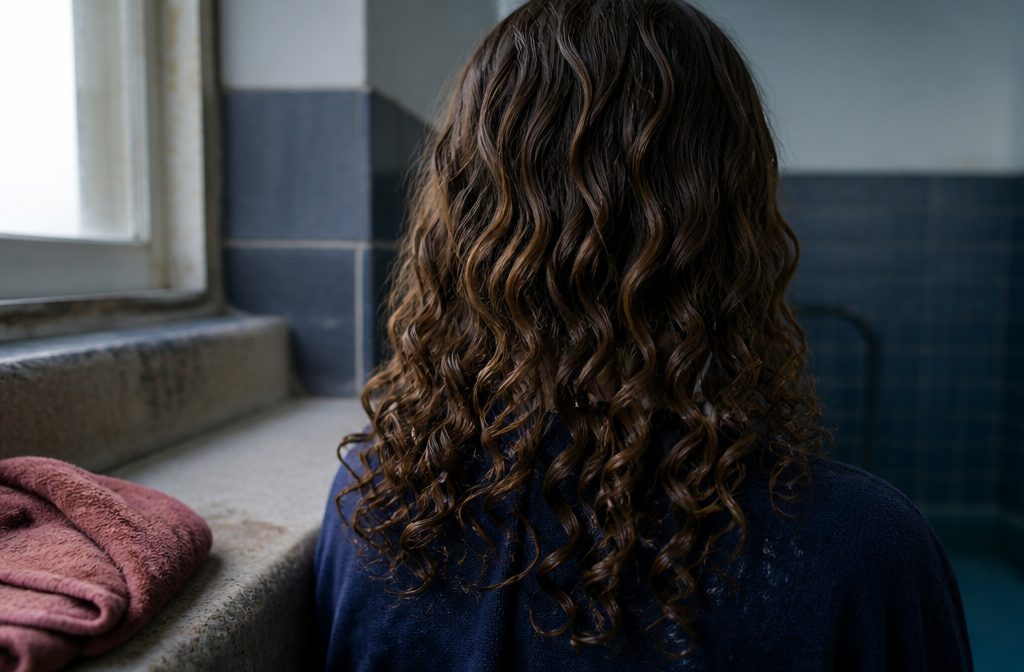
If your hair bends in an S but never wraps around itself, it’s wavy; if it coils into spirals, even loose ones, it’s curly.
Wet hair misleads, since Type 2A can look straight under the shower until it dries. Shrinkage is the better check: wavy hair hangs near its true length, while curly hair can drop 30–50% or more.
1. Wavy Hair Forms S Bends, Curly Hair Forms Spirals
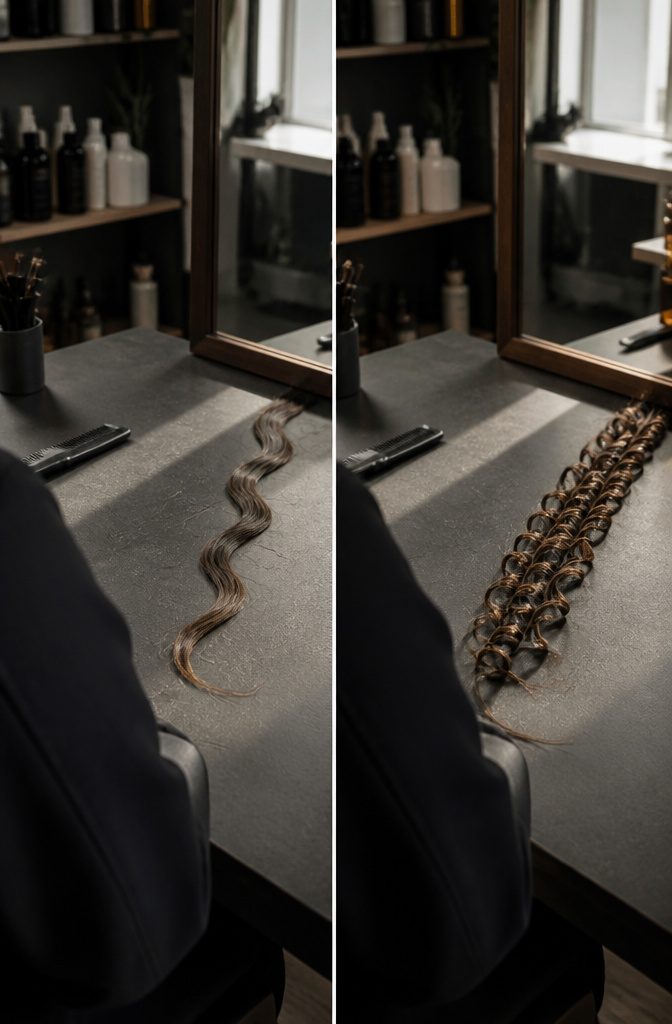
Wavy hair is Type 2 and traces a loose S-shaped bend.
Curly hair is Type 3 and coils into spirals, ringlets or corkscrews. Even the loosest curls loop in a way waves don’t, and a very defined wave can pass for a loose curl.
One line from Good Housekeeping draws the boundary better than I can:
Wavy hair differs from curly hair in its inability to form swirls or twists that wrap around themselves.
Look at a single dry strand in good light. If it bends but never wraps around itself, it is wavy, however pronounced the ripple.
2. Check Where the Pattern Starts
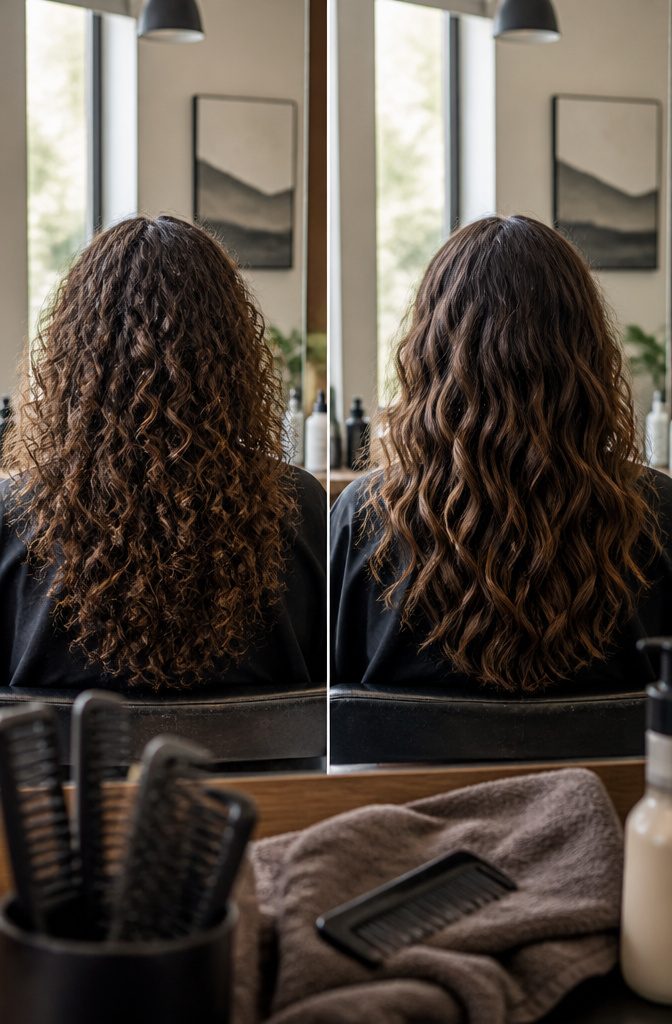
Look at where the curl actually begins. Curly hair holds its pattern from the roots all the way down, creating volume right at the scalp and maintaining that structure through the ends.
The spirals start immediately and stay consistent. Wavy hair takes a different path: it tends to lie flatter or straighter near the roots and builds into more defined bends toward the mid-lengths and ends.
That root-to-tip difference explains why curly hair gives natural fullness without effort, while wavy hair can look a little flat at the crown even when the lower half has plenty of movement.
If you part your hair and check the first two inches near your scalp, curly hair shows loops or spirals right away. Wavy hair shows smoother texture that gradually shifts into S-bends as you move down the strand.
3. Compare Texture and Shrinkage
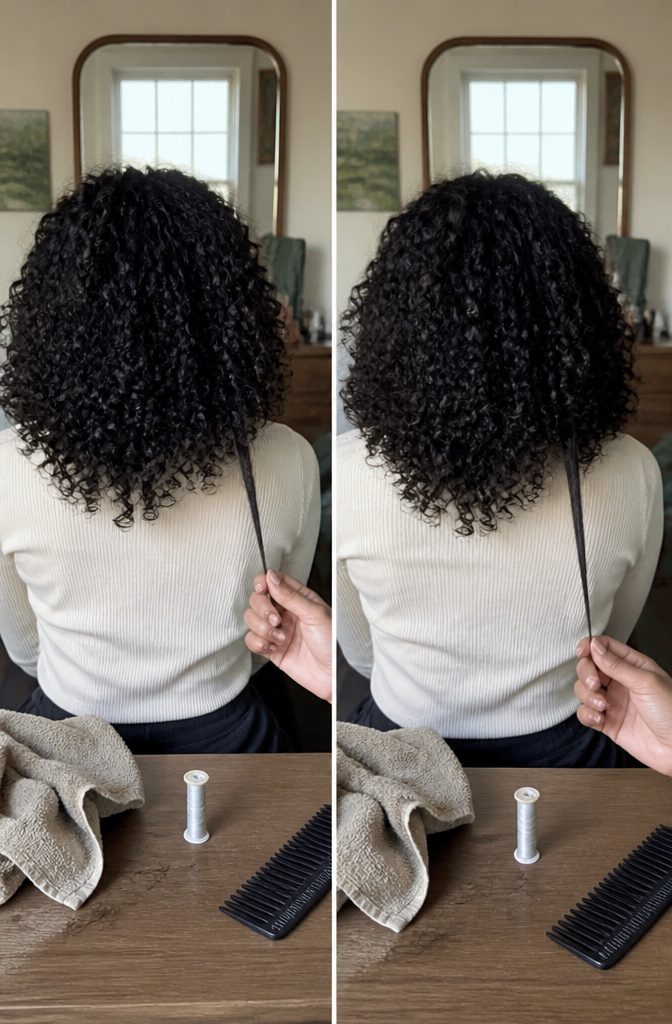
Wavy hair is commonly fine to medium, while curly hair runs medium to coarse.
A medium strand is about as wide as sewing thread and a thick one is wider, so lay a single strand next to a piece of thread for a quick check.
Shrinkage is the louder clue.
Wavy hair hangs close to its true length, so 20 inches measured looks like about 20 inches. Curly hair springs up: apparent length can drop 30–50% or more, and a 20-inch stretch may land at shoulder length.
I trust that gap more than the strand check, so if your hair looks much shorter dry than stretched, it leans curly.
4. Watch How It Behaves Wet and Dry
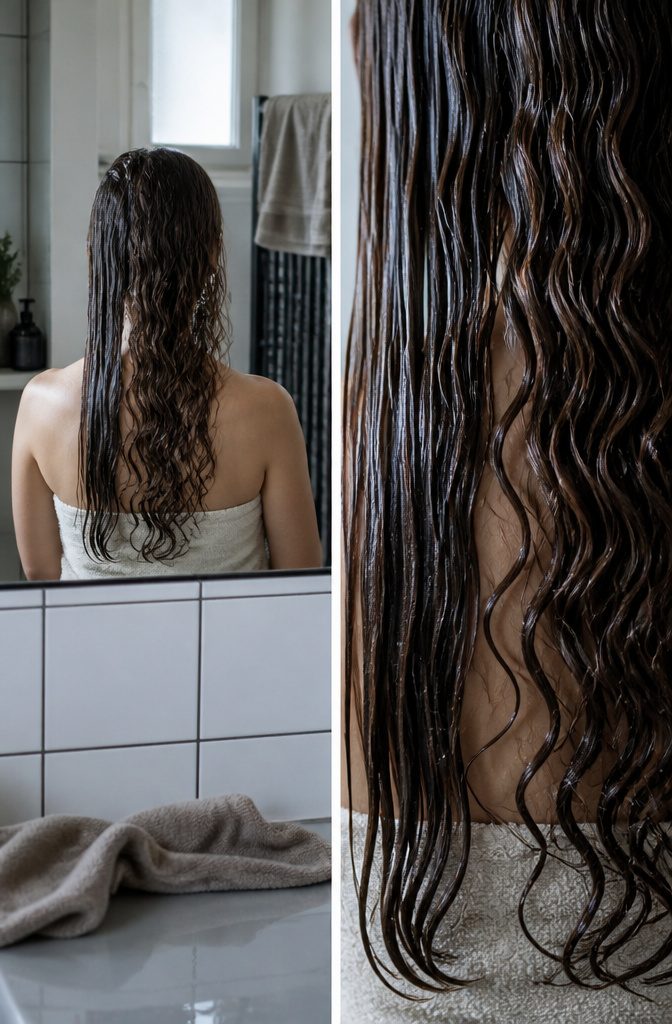
Soaking wet is the most honest moment for wavy hair, and also the most misleading one.
Type 2A in particular can look completely straight under the shower stream, with the waves only appearing as the strands dry. If you rinse, glance in the mirror and decide you’re straight-haired, you’ve judged too early.
Curly hair gives itself away sooner.
The spiral stays visible when wet, though the weight of water stretches it a little. As it dries, the curls tighten and the whole head can look much shorter than it did dripping.
So watch the same strands from soaking wet to fully dry: waves that appear late point to wavy, and curls that were there all along and then shrink point to curly.
5. Test How Easily It Changes Shape
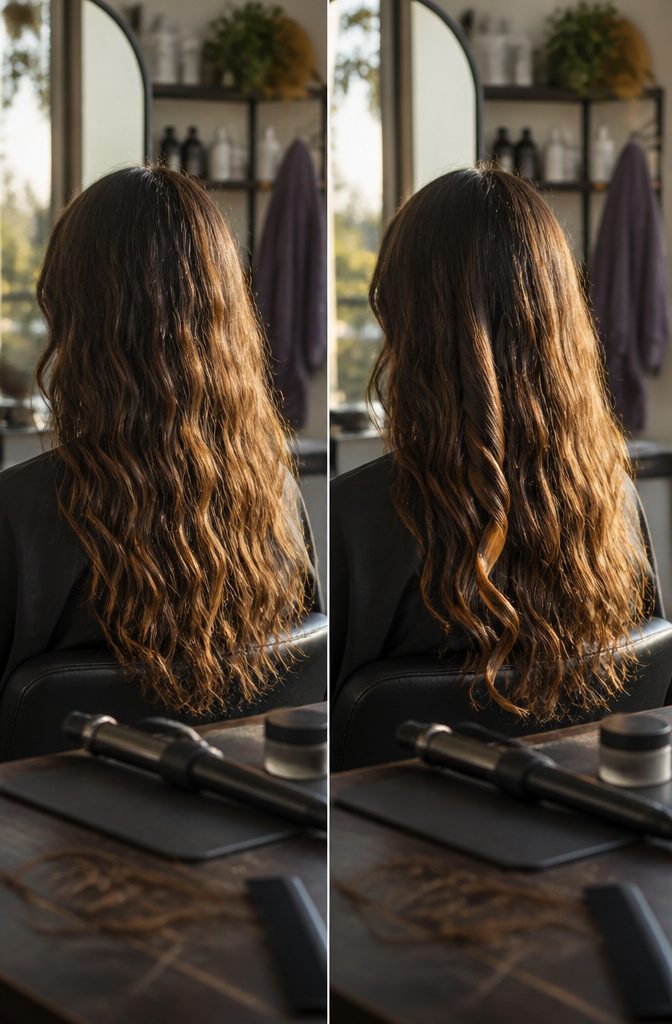
Try straightening your hair with a flat iron or enhancing your waves with a curl cream.
If the style holds through the day and survives a little moisture, you likely have wavy hair. Wavy hair changes shape more willingly and accepts temporary styling without much fight.
You can pull it straight with moderate heat, add curls with an iron, or coax the natural S-bend into something more defined with light texturizing products. After washing, it bounces back to its baseline pattern.
Curly hair resists that kind of flexibility.
It takes more heat, more time, and heavier product to straighten, and the results rarely last. Humidity brings the spirals right back.
Even a little moisture in the air can undo hours of work because curly hair remembers its natural shape. The tighter the curl, the faster it reverts.
I find that curly hair does not love being straightened in the first place, and trying to force it into a different pattern usually means fighting the texture instead of working with it.
6. Compare Moisture Needs and Product Weight
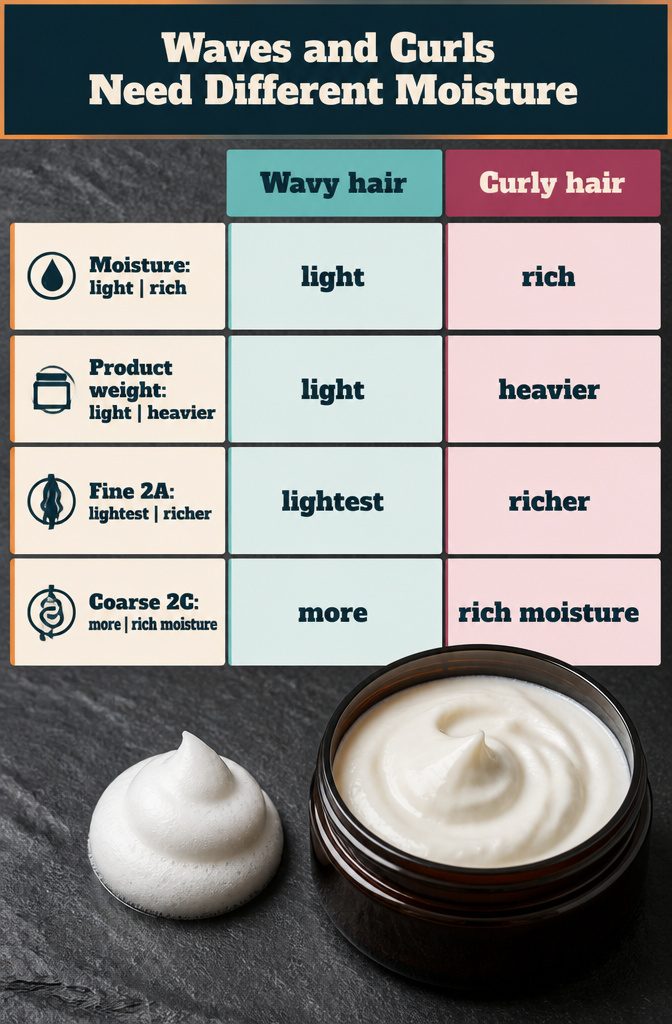
Wavy hair loses its movement under weight. Mousse, a light cream or a sea salt spray adds texture, while a heavy butter or too much conditioner leaves waves limp, flat at the scalp and a little greasy.
Fine 2A strands want the lightest touch. Thicker, coarser 2C hair can handle more moisture and heavier products.
Curly hair runs the other way. Oil travels slowly down a spiral, so it ends up drier and frizzier, and it needs richer moisture, a curl-defining cream and regular deep conditioning, plus a leave-in for daily hydration.
Products also get trapped in the curves, so I’d scrunch or use praying hands to spread them evenly instead of just raking them through.
7. Use a Strand Test When You Are Not Sure
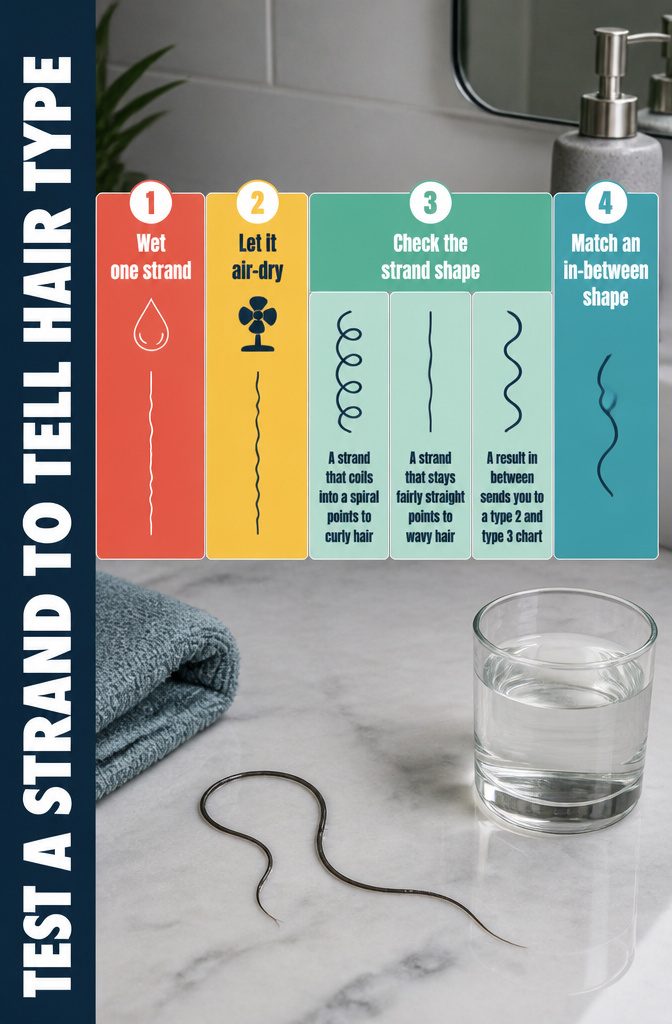
Wrap a single strand around your finger. A strand that coils into a spiral points to curly hair, and one that stays fairly straight points to wavy hair.
A result in between sends you to a type 2 and type 3 chart, where you can match the shape to a more specific category.
Run the test on freshly washed, air-dried hair, and pluck a strand while it is wet so you can watch it dry with no brush or heat bending the result.
Test more than one strand, since a lone strand can mislead. Note your porosity too: high-porosity hair absorbs moisture fast and loses it just as fast.
Type 2A Through 2C: Loose to Thick Waves
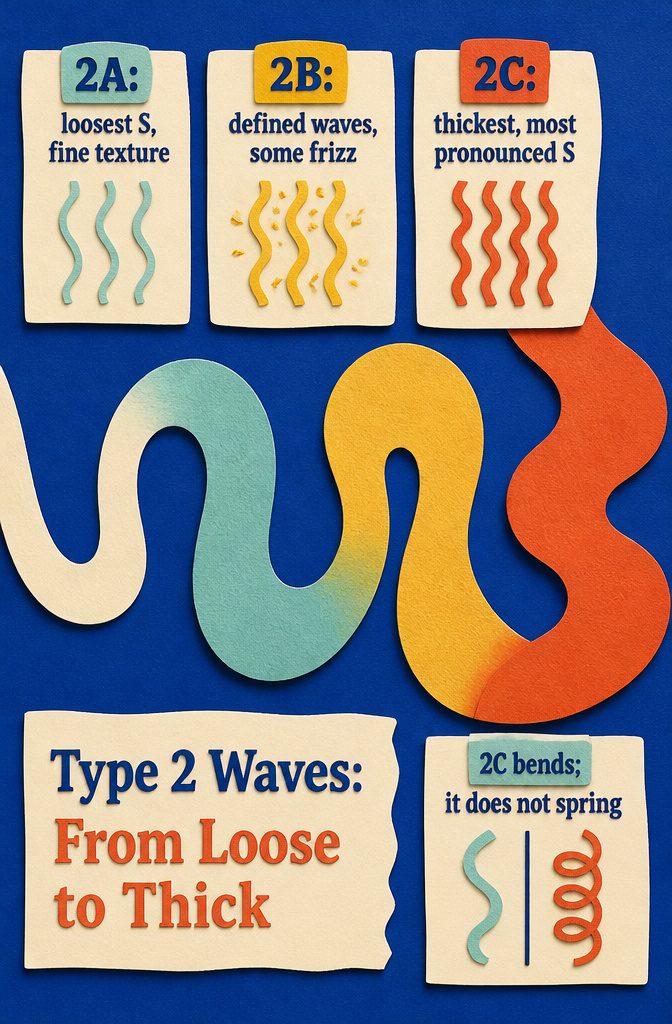
Type 2 sits between straight and curly, and the subtypes separate by how much the S bend shows:
- 2A is the loosest S pattern, often straighter at the roots, with a fine texture. Heat tools straighten or curl it easily. Skip heavy creams, which flatten it; an airy, water-based foam adds body without the weight.
- 2B has more defined waves and a bit of frizz.
- 2C is the thickest, most pronounced wave. The S shapes run small to medium, and this is the most frizz-prone of the three. A leave-in conditioner or serum holds volume without the puff.
- 2C borders on curly, but it does not form springs. That is the line I use: S bends mean wavy, spirals mean curly.
Type 3A Through 3C: Sidewalk Chalk to Pencil Width
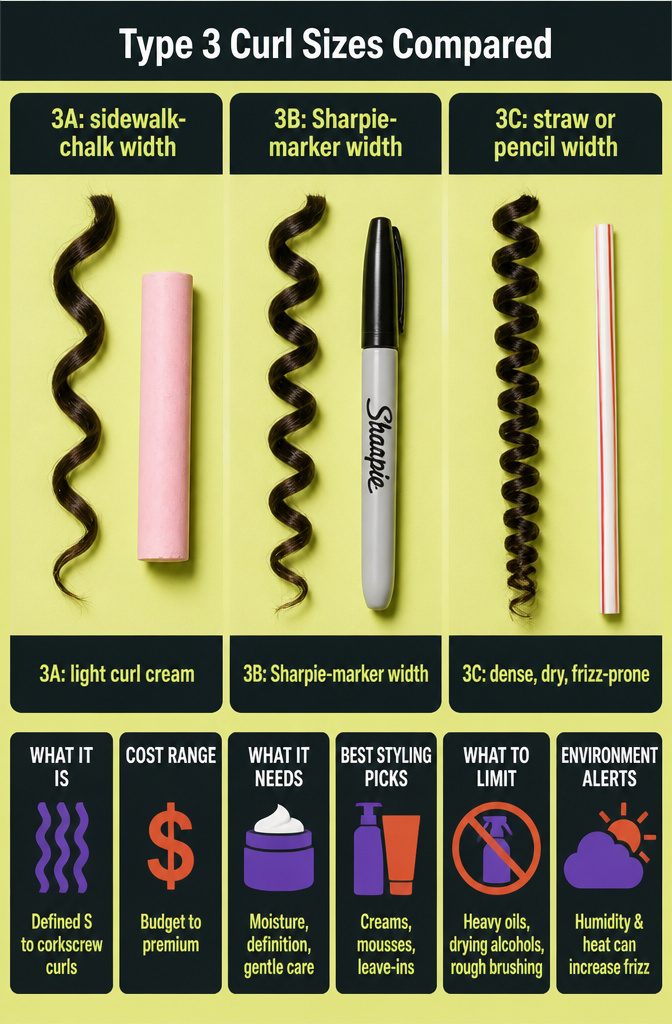
Each Type 3 subtype matches a common household object, which makes the sizes easy to check against your own strands:
- 3A: Loose, loopy curls about the width of sidewalk chalk. They roll down from the crown, usually feel soft rather than coarse, and spring back with minimal styling. A light curl cream is enough.
- 3B: Tighter, bouncier curls about the width of a Sharpie marker. If your curls are clearly snugger than chalk but not corkscrews, this is the stop.
- 3C: Dense corkscrews about the circumference of a straw or pencil. They dry out and frizz easily, so I’d pick a thick, hydrating mousse or cream over anything light.
Wavy Routines: Light Products and Gentle Handling
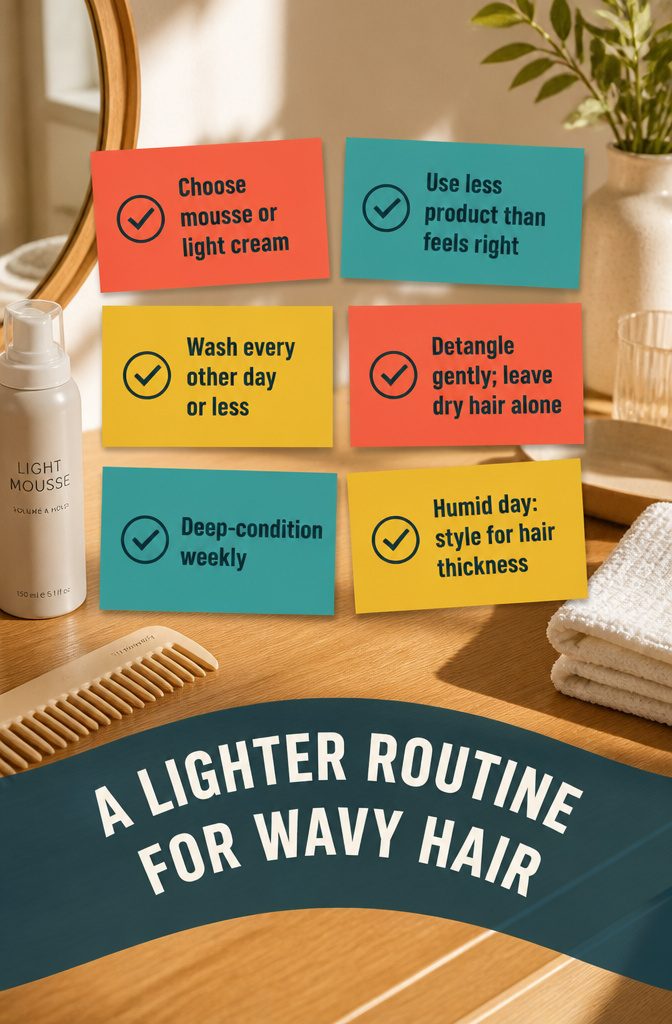
Wavy hair does best with a light touch, and these are the moves I’d make:
- Reach for mousse, a light cream or a sea salt spray. Heavy products and over-conditioning flatten waves and leave them limp.
- Apply less product than feels right. Fine 2A waves want mousse; thicker 2C waves can take richer formulas.
- Wash every other day or every few days. A little natural oil often looks better than squeaky clean.
- Detangle gently, then leave it alone. Brushing or touching dry hair brings frizz and breakage.
- Use a deep conditioner or hydrating mask once a week, since ends dry out first.
- On humid days, fine hair gets a light styling product; thick hair can handle a gel or serum.
Curly Routines: Hydration, Definition and Protection
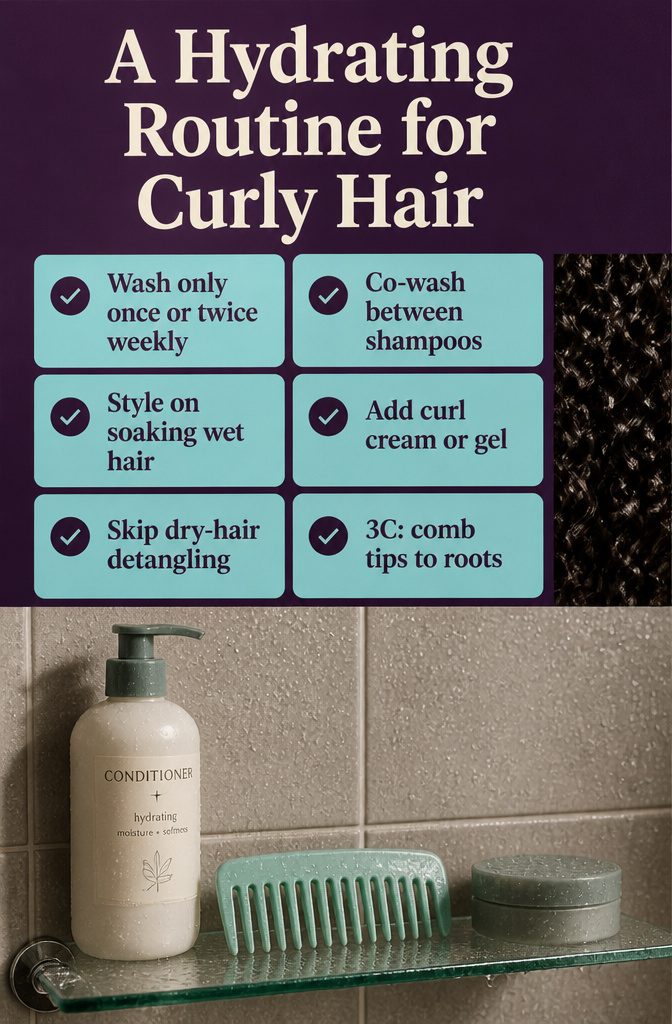
Curly hair dries out faster than wavy hair and frizzes more easily, so these steps all aim at moisture and definition:
- Wash less often. Some curly heads need a shampoo only once or twice a week.
- Co-wash in between. A cleansing conditioner cleans and conditions in one step.
- Style on soaking wet hair, then add a curl cream or gel. Gel holds 3C curls in place and cuts frizz.
- Pick a leave-in that hydrates without coating or weighing the curls down.
- Skip detangling on dry hair.
- For Type 3C, work a detangling comb from tip to root, not root to tip, to reduce damage.
Frequently Asked Questions
What is the difference between wavy and curly hair?
Wavy hair is Type 2 and bends in a loose S shape without ever looping around itself.
Curly hair is Type 3 and coils into spirals, ringlets or corkscrews. Curly hair also keeps its pattern from the roots down, while wavy hair tends to lie flatter near the scalp.
How can I tell if I have curly or wavy hair?
Wrap a single strand of freshly washed, air-dried hair around your finger. If it coils into a spiral, your hair is curly; if it stays fairly straight, it is wavy.
Shrinkage backs this up: wavy hair hangs close to its true length, while curly hair can look 30–50% or more shorter than when stretched.
Is my hair wavy or curly, or just frizzy?
Frizz alone doesn’t tell you the type. It comes from strands that aren’t clumping, waving or forming ringlets with their neighbors, so judge the pattern instead: S bends mean wavy and spirals mean curly.
Watch the same hair from soaking wet to fully dry, since waves often show up late while curls are visible from the start.
Why is my hair curly?
Mostly genetics, since curl type is inherited. Straight hair grows from a round follicle, while wavy and curly hair grow from oval ones, and the flatter the oval, the tighter the curl.
Curly hair also has more cysteine bonds along the shaft, and more bonds mean curlier hair.
How do I style frizzy wavy hair?
Use less product than feels right, and keep it light: mousse, a light cream or a sea salt spray. Heavy products and too much conditioner flatten waves.
Thicker 2C waves can take a leave-in conditioner or serum, and a weekly deep conditioner helps because the ends dry out first. Avoid brushing or touching dry hair, which adds frizz.