A 3a wave and a 4b coil don’t take layers the same way, and once dry, curls can pull up 30–50 percent shorter than they looked wet.
The list runs from Messy Bun and Pineapple-Style Protective Curls, which you can do at home, to Curly Bangs, dry cutting, Long Curly Balayage and vivid color that call for regular salon visits.
I would begin with Dry Cutting and Shrinkage to see how far your own hair pulls up, then pick the style whose upkeep fits the time you actually have.
1. Voluminous Curls with Rounded Layers
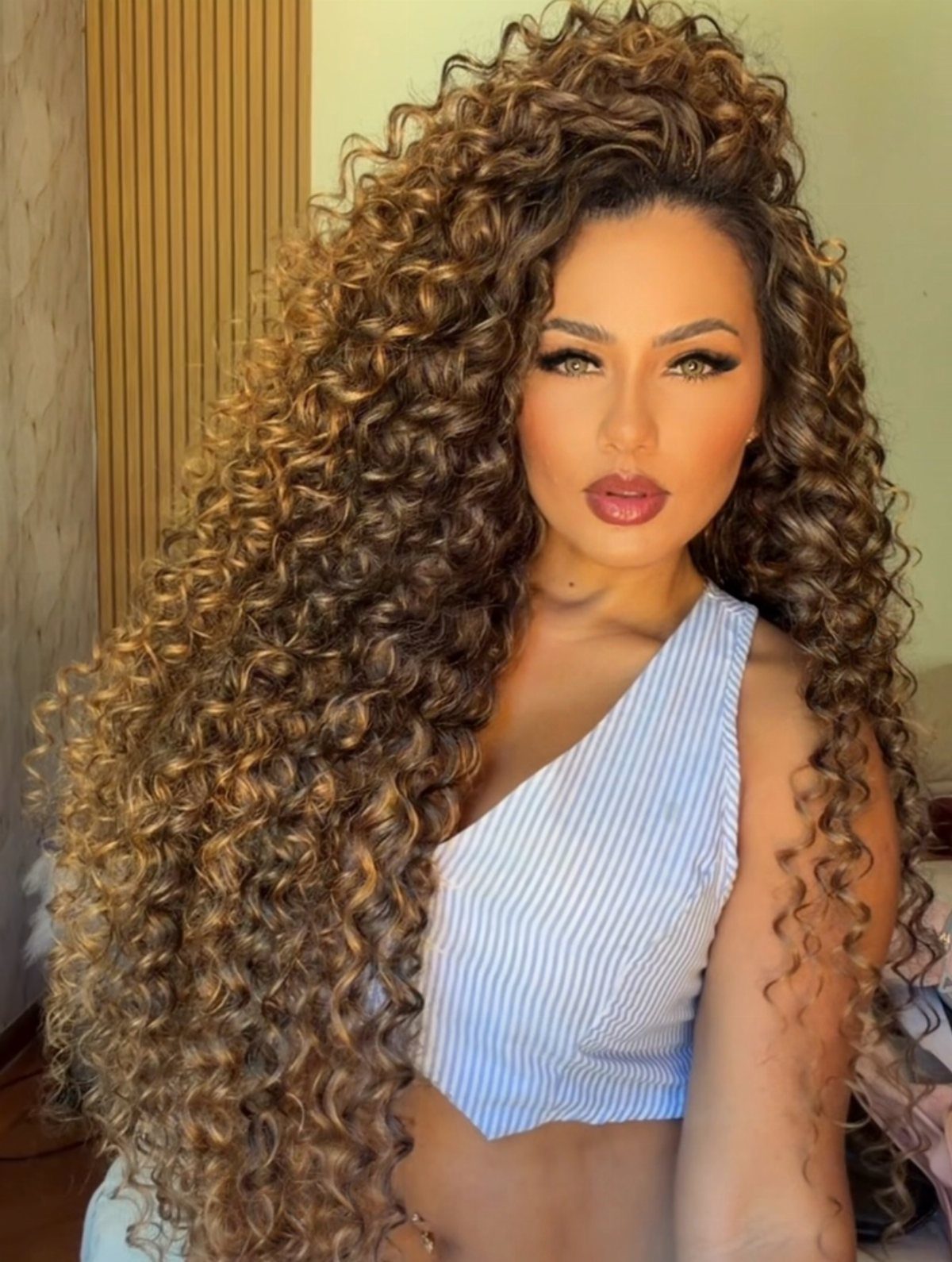
Volume like this comes from shape more than product. Rounded layers let the curls stack and lift instead of hanging straight down, and the honey highlights make each curl read separately.
I would ask a stylist for rounded layers cut on dry hair, so the curls are shaped where they actually spring up.
Fine or low-density hair may look thinner with this much layering, so ask how much weight stays at the ends.
2. Face-Framing Layers
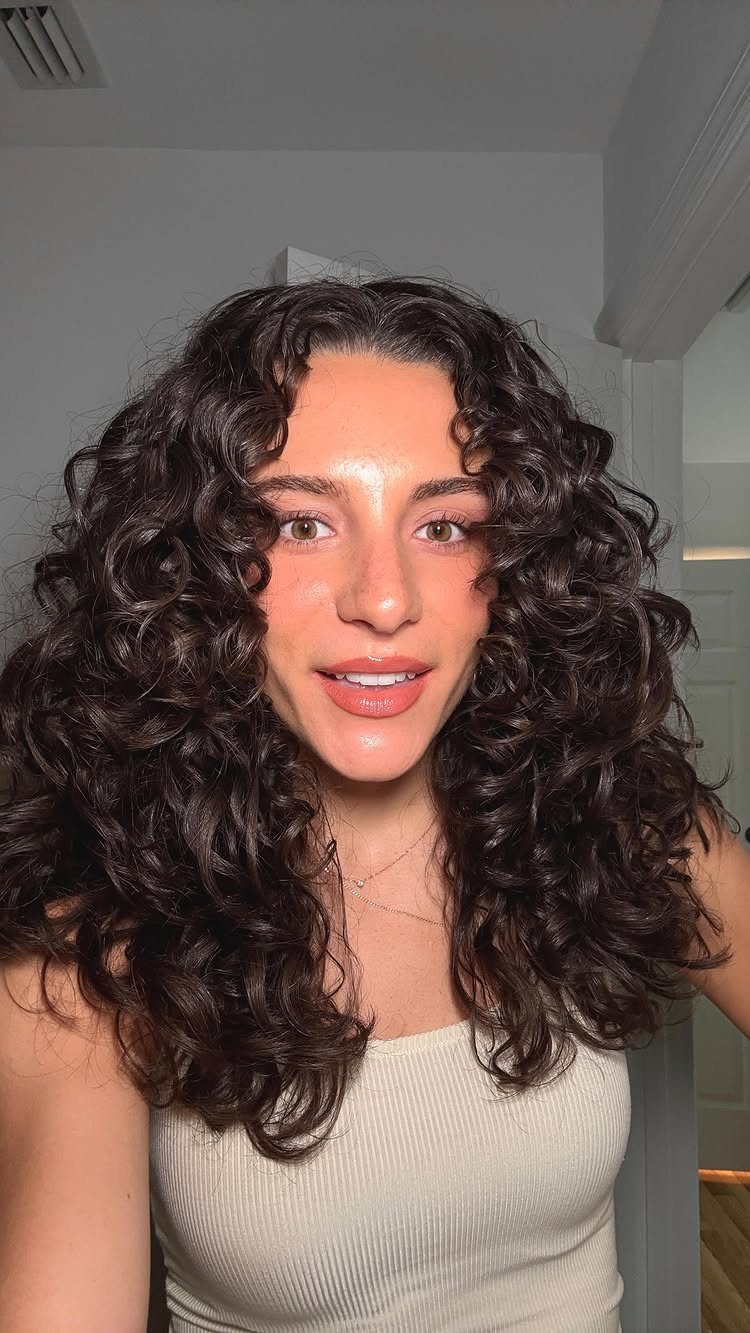
Shorter pieces around the cheeks and jaw do the work here: they pull the eye to your face and soften the outline of long, dark curls.
Tell your stylist where you want the shortest piece to land, such as cheekbone or chin, because that spot becomes the focus. Curls bounce up once cut, so ask for them a little longer than you think you want.
Face-framing layers are the easiest of these cuts to ask for by name.
3. Messy Bun
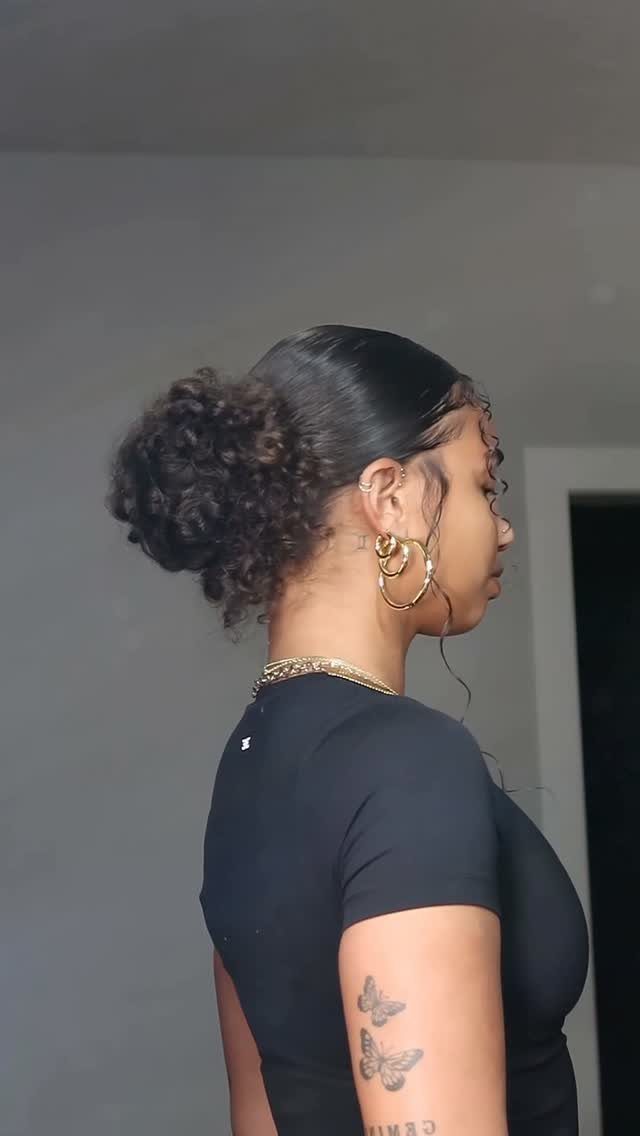
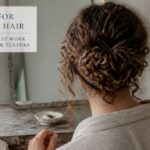
Gather a high ponytail, twist the curls around its base, and pin the bun loosely so it sits full instead of tight. Then tug a few tendrils free at the temples and nape.
I like this for second-day curls, since the looseness hides frizz and needs no precision. Pins hold curly hair better than a smooth elastic alone, so use both.
It takes about a minute, which makes it a solid morning fallback.
4. Long Curly Layers
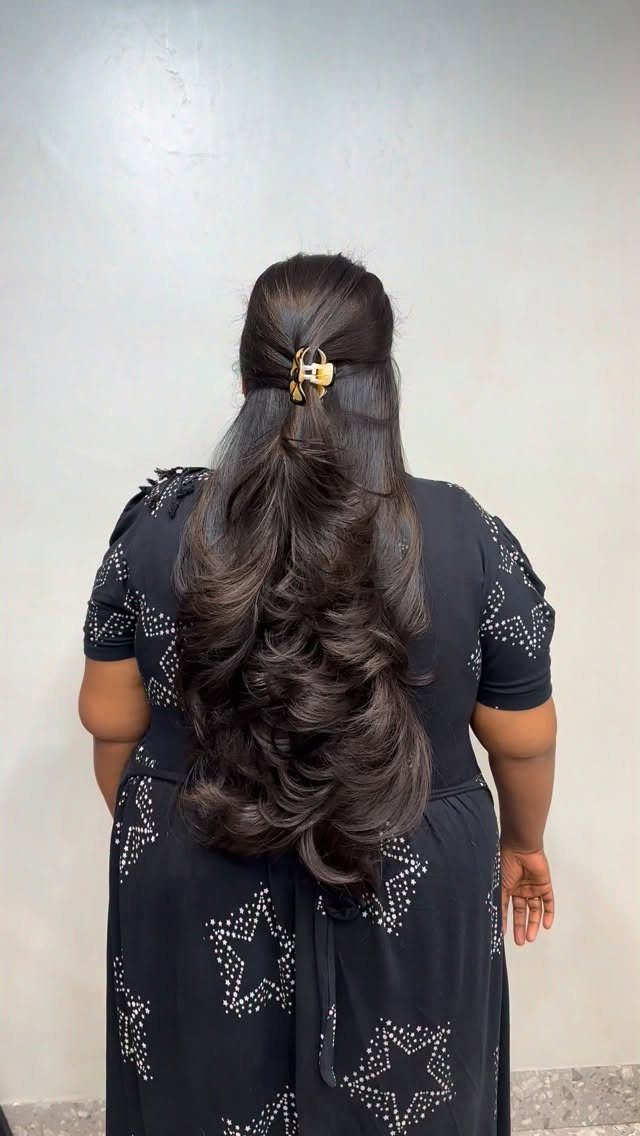
Long layers keep your length while giving each curl room to move. Cut in the right places, they stop the bottom from going heavy and triangular, a common problem with long curly hair.
Ask for layers that start well below the chin so the weight stays in the ends. A stylist who cuts curls dry will place them more accurately.
A clip at the crown pulls hair off the neck without flattening the pattern.
5. Curly Bangs
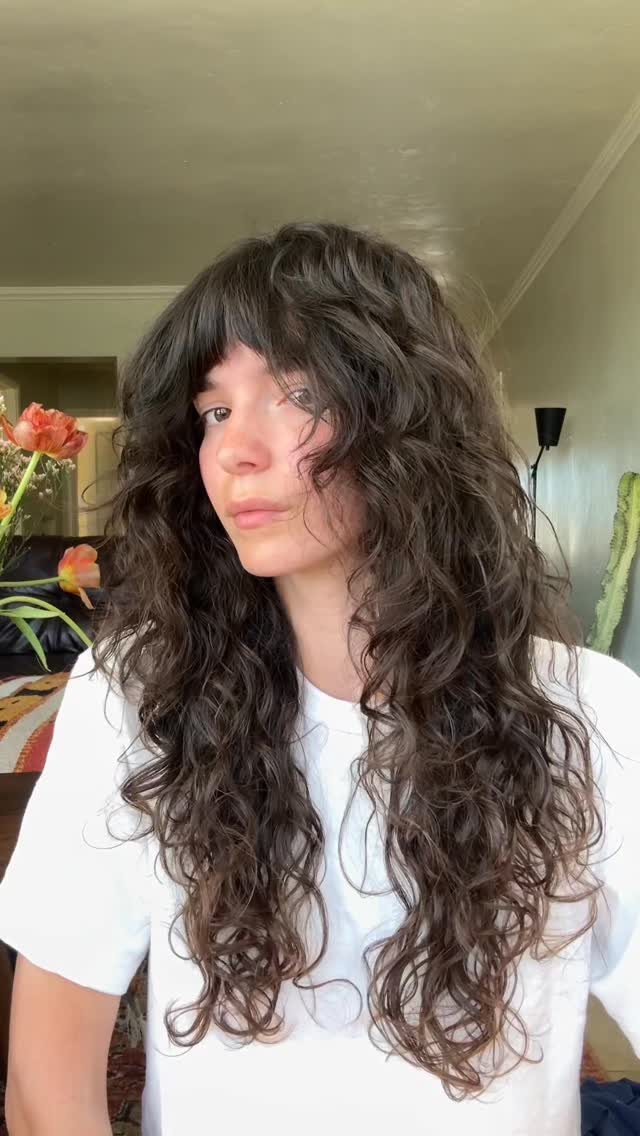
A curly fringe works differently from straight bangs: it springs up once dry, so it sits shorter than it was cut. Ask your stylist to cut it longer than you want it to land.
I would pick this only if you accept some daily upkeep. Bangs need their own wash-and-style attention, and growing them out takes patience through the awkward in-between length.
On long curls, the contrast between the short, bouncy fringe and the length behind it is what makes the look.
6. Curly Ponytail
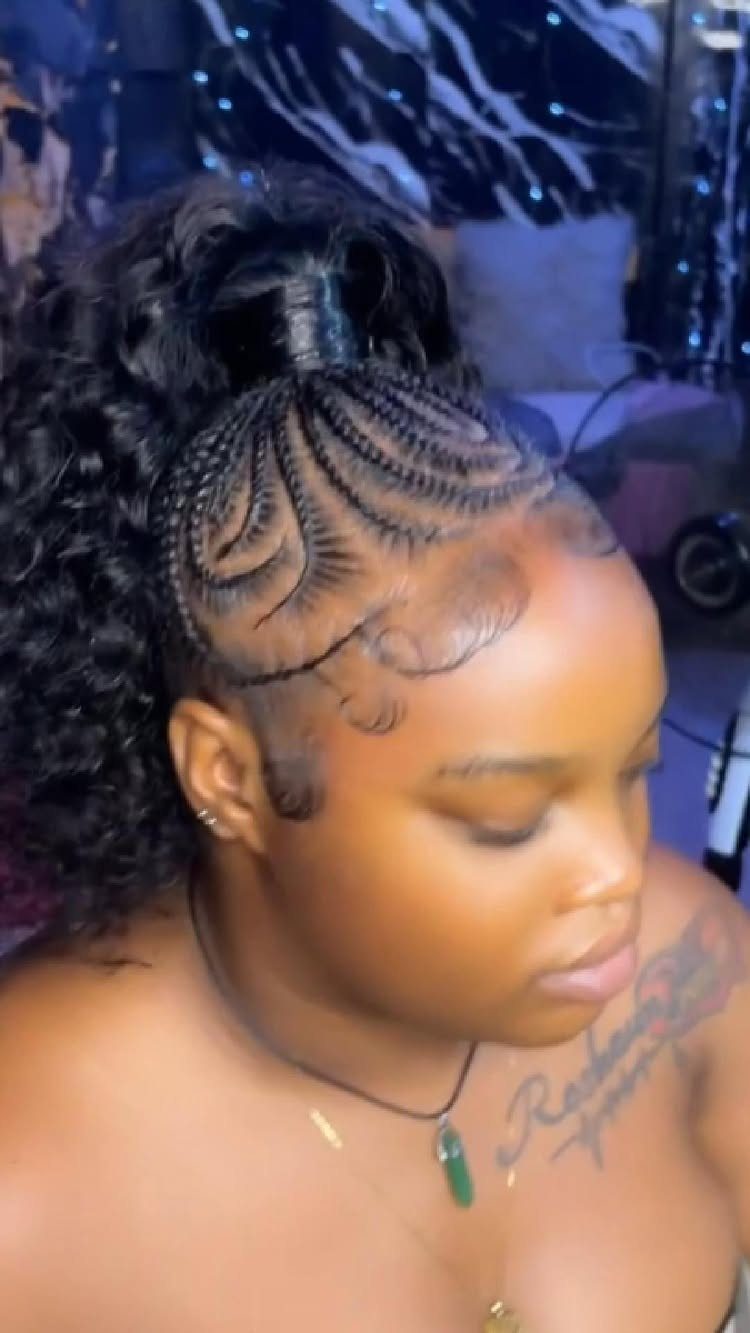
Placement decides the mood. A high ponytail looks sleek and lifted, and a low one feels softer and relaxed; both keep curls off the neck and shoulders.
For a high version, gather at the crown and leave the curls loose from the tie so the pattern stays visible. Braided scalp work, if you want it, gives a clean base, and styled baby hairs finish the edges.
I lean toward high for volume. Low is easier on days when your hair has stretched out.
7. Long Curly Balayage
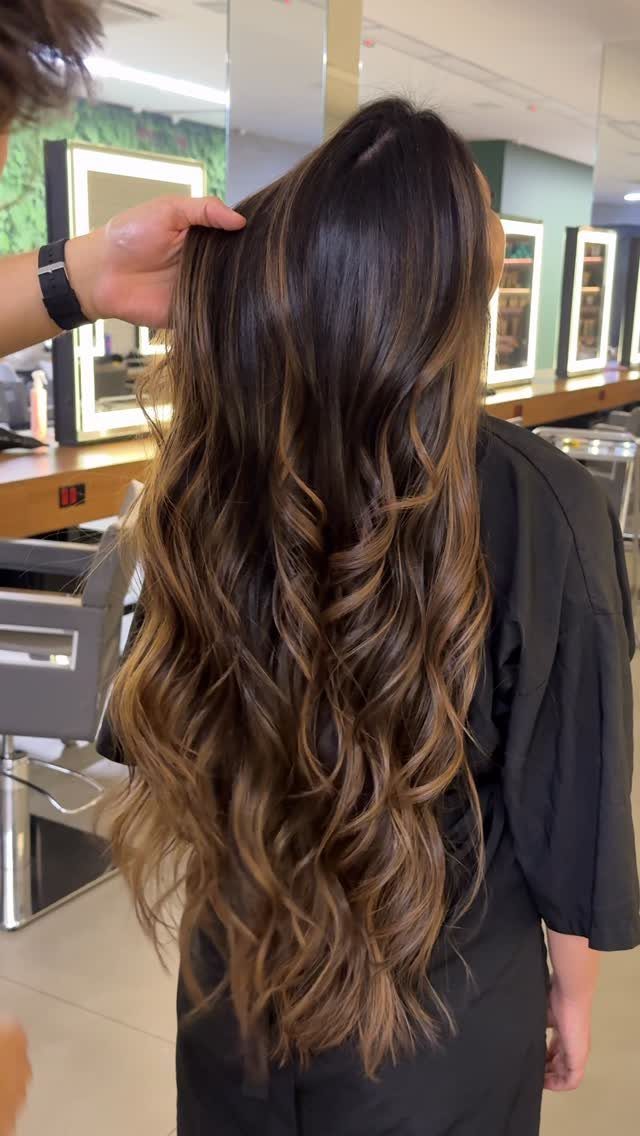
Balayage is painted on by hand, so the lighter brown deepens toward the ends instead of starting at a hard line. On curls that gradient shows up curl by curl, which is why it looks sun-kissed rather than striped.
Ask for balayage by name and bring a photo with your own curl pattern in it. Painting on dry, styled curls lets the colorist place the light where each curl falls.
Lightening can dry out the ends, so plan on extra moisture.
8. Long Curls with Curtain Bangs
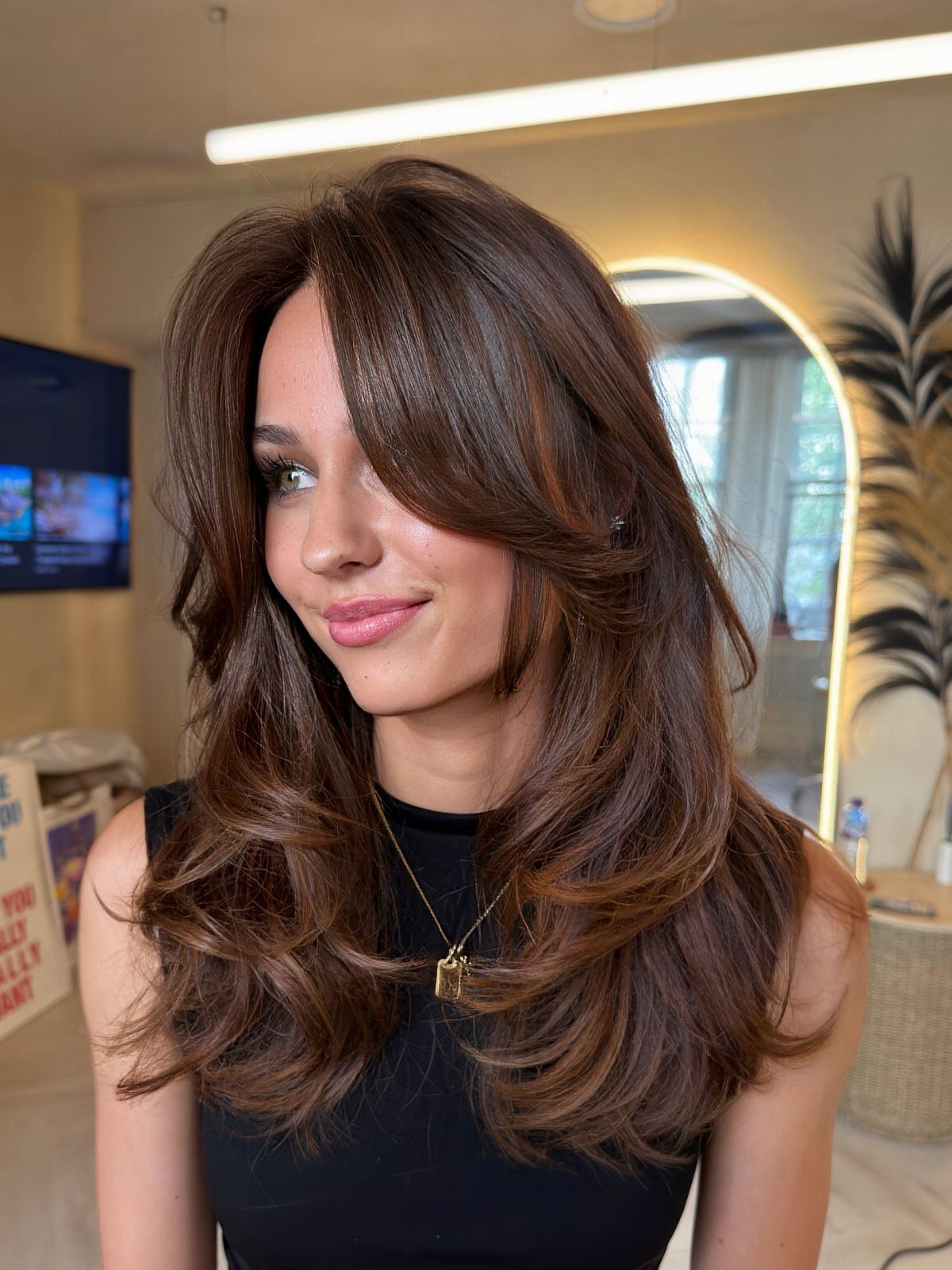
Curtain bangs part down the middle and sweep to each side, so they fall into the length instead of ending in a blunt line. With curls, that blend is the whole appeal.
Ask for them long, since curl pulls the hair up once it dries. A dry cut is what I’d ask for, since the stylist can watch each curl spring up and shrink before any length comes off.
They suit anyone who wants a fringe without committing to a short one, and they grow out more easily than blunt bangs.
9. Long Curly Blonde
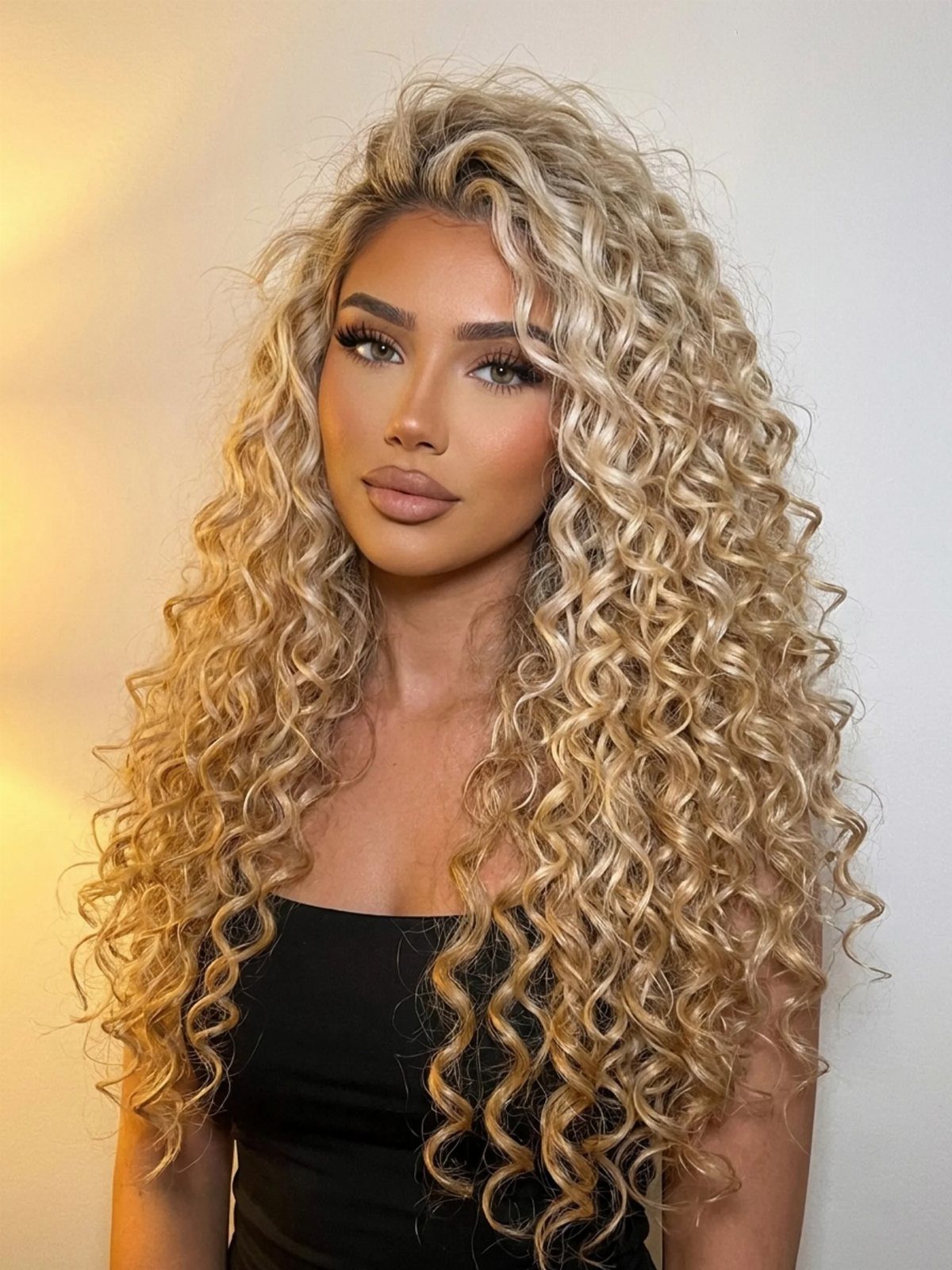
Blonde on long curls brings contrast and volume at once, because light color makes every ring of the pattern easy to see. It is a bold choice, and I like it most when the curls are full and well defined.
Going blonde lifts the hair, and lifted hair needs more moisture and gentler handling. Expect regular salon visits to keep the shade even as roots grow in.
Bring photos of the exact tone you want, whether buttery, pale or golden.
10. Long Curly Brunette
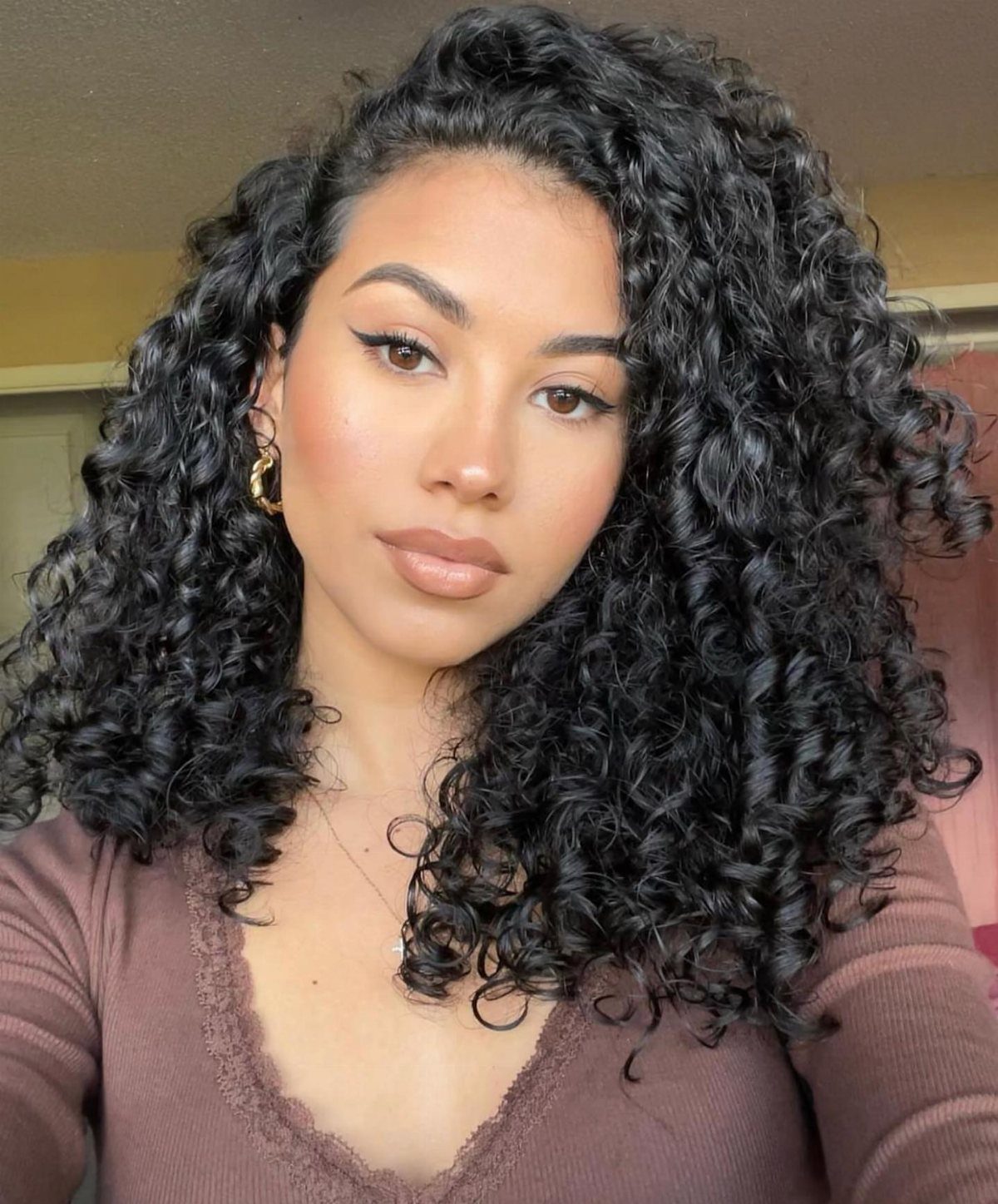
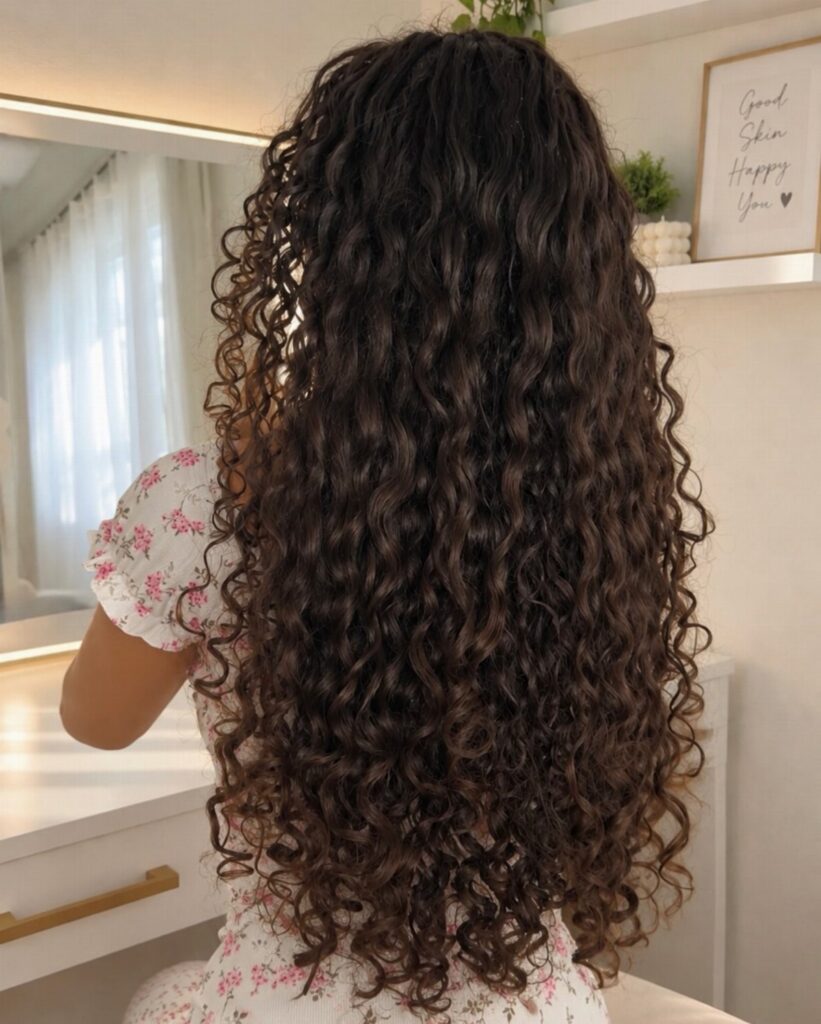
Deep brown, close to espresso, is the lowest-maintenance color for long curls, because regrowth blends in and there is no toning to keep up.
It gives long curls a rich, even tone, and the shine shows off the shape of each curl.
Because the color sits close to dark natural hair, roots are far less obvious than with lighter shades. That makes it easy to live with if you dislike frequent salon trips.
Ask your colorist for a gloss to boost shine. Flat, dull brown is the risk, so keep the ends conditioned.
11. Long Curly Side Sweep
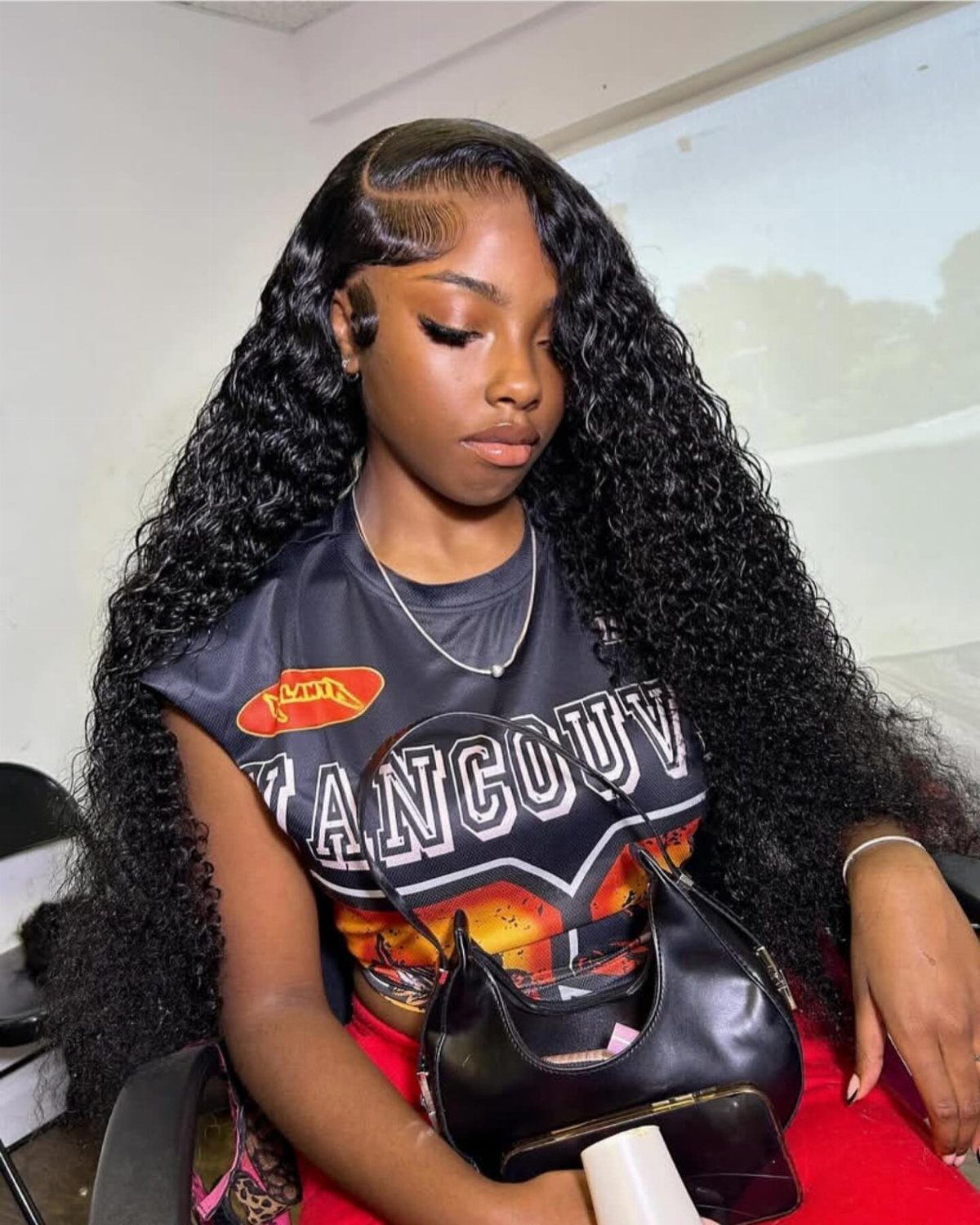
A slightly off-center part sends the curls across one side, which gives very long hair a dramatic, lopsided fullness. I find it more relaxed than a strict middle part.
Part your hair when it is damp and fingers are enough; a comb can break up the pattern. Move the part a little further off center to change how much volume lands on top.
Natural curls do the rest, so the style takes almost no effort in the morning.
12. Long Curly Braided Pony
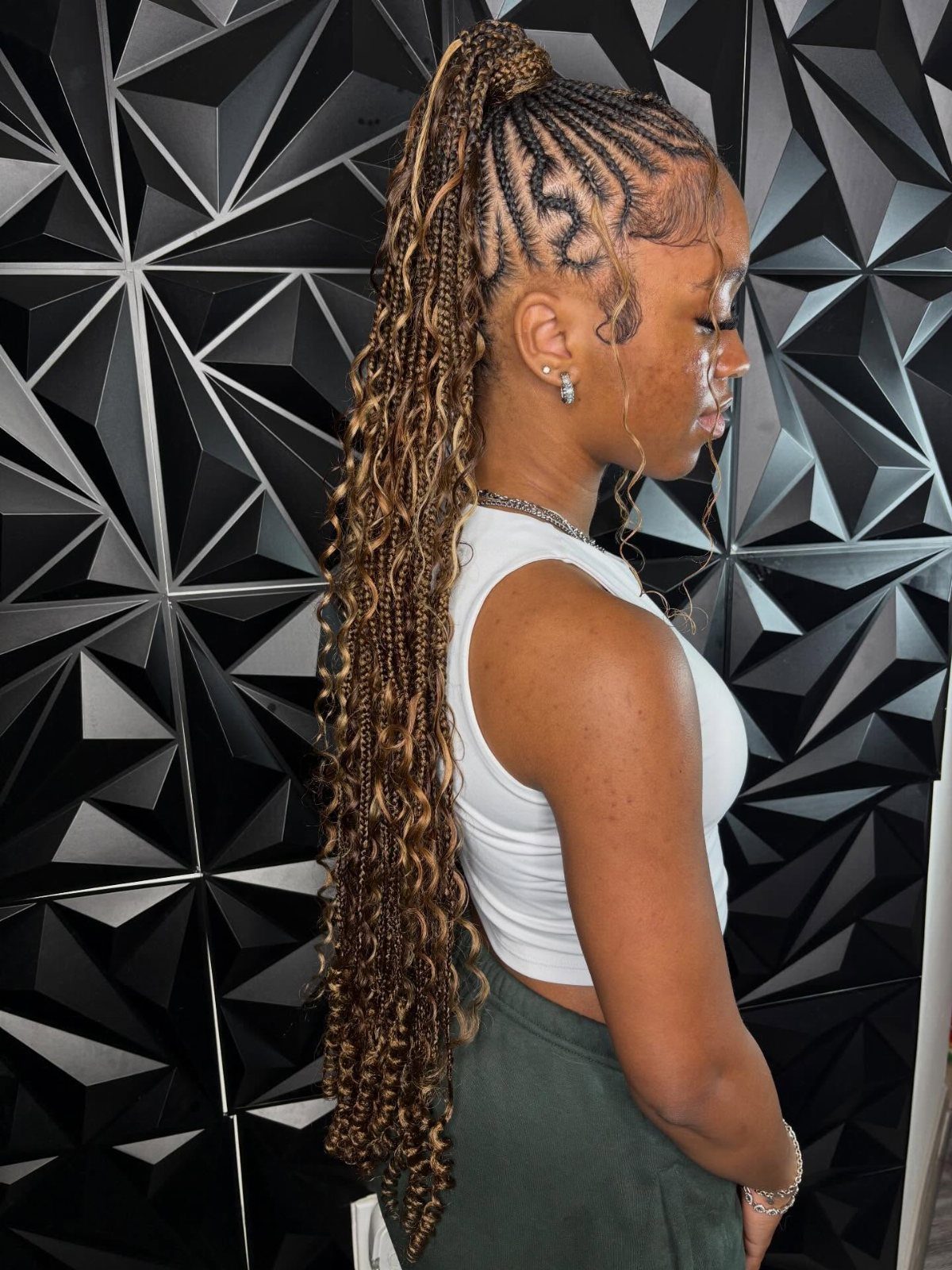
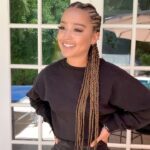
Scalp braids run along the head and feed into a high ponytail, so the length stays neat and the curls show only in the tail. The look is clean and sleek.
I would pick this when you want hair off your neck for a long day. Ask a braider to keep the braids snug but not painfully tight, since pulling at the hairline causes damage.
Brush the ponytail out gently with your fingers or a wide-tooth comb. Plan on extra time for the braiding.
13. Beach Waves
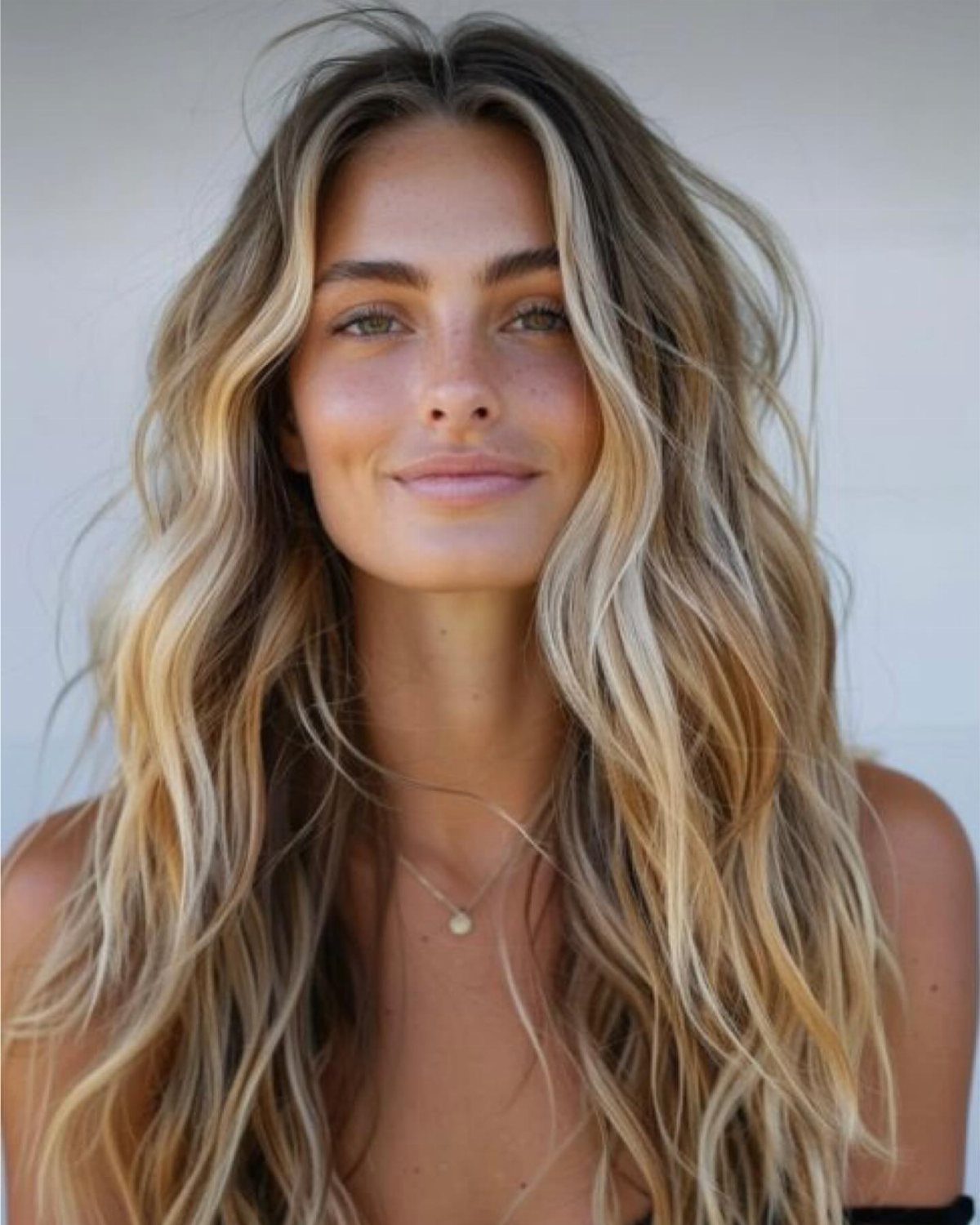
Beach waves on this blonde read as loose bends, not defined ringlets, which is why they suit anyone who wants texture without a tight curl. The darker roots help, since they make the style look grown-in instead of freshly done.
A middle part keeps it symmetrical; a deep side part pushes more volume to one side. I would try both and keep whichever sits better on your crown.
14. Long Curls with Highlights
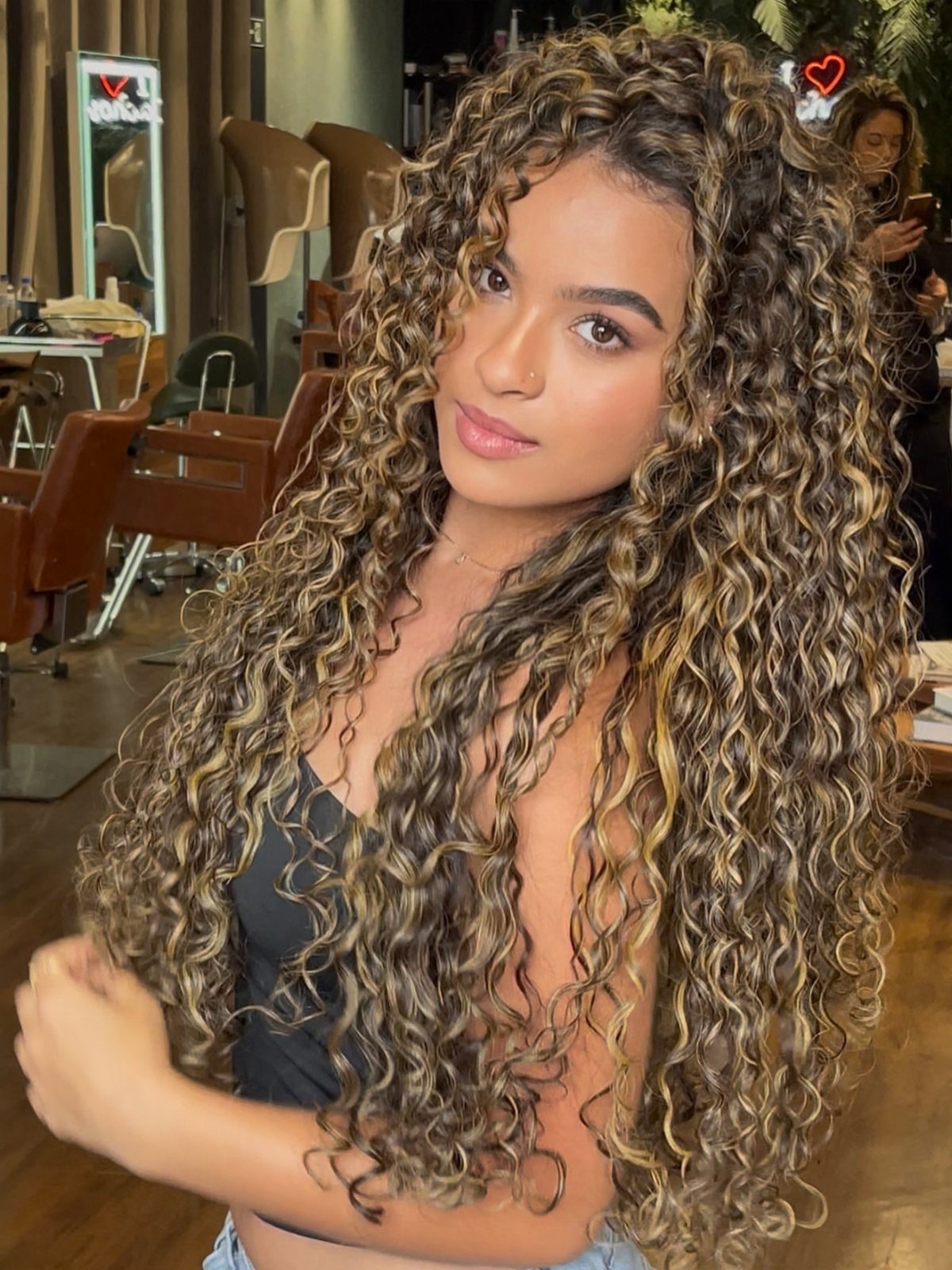
Highlights give long dark curls dimension, so each curl shows light and shadow instead of one flat shade. Caramel is a soft step up from brown, and it stays close enough to the base that regrowth is gentle.
Ask for the lighter pieces to be placed around the curls you want to stand out, and bring a photo that shows your own pattern.
Bleach and lightener open up the hair cuff, so highlighted curls dry out faster than virgin ones, and a weekly deep conditioning mask is worth building into your wash day.
15. Curly Half-Up Style
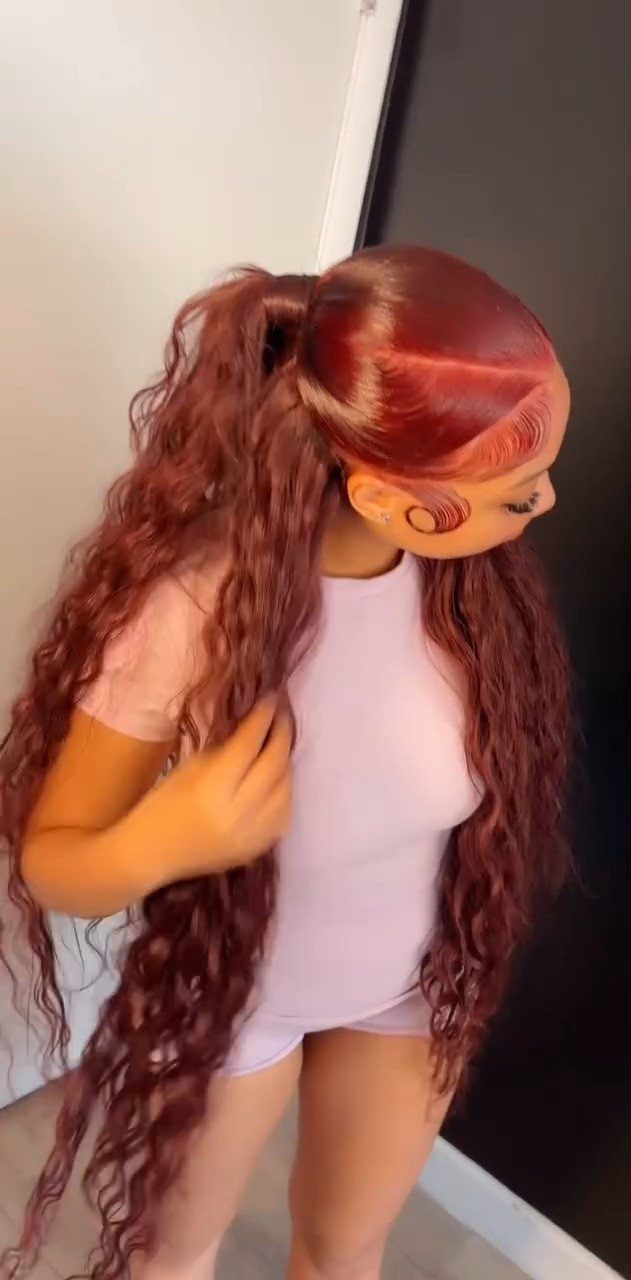
Pin or tie back the top section and leave the rest loose. That keeps curls off your face while the length still falls over your shoulders.
Gather from the crown for lift, or lower for a softer shape. A clip or a few pins hold curls better than a slick elastic, and a little looseness at the front looks natural.
I like this for days when you want something polished in about a minute.
16. Curly Side Part
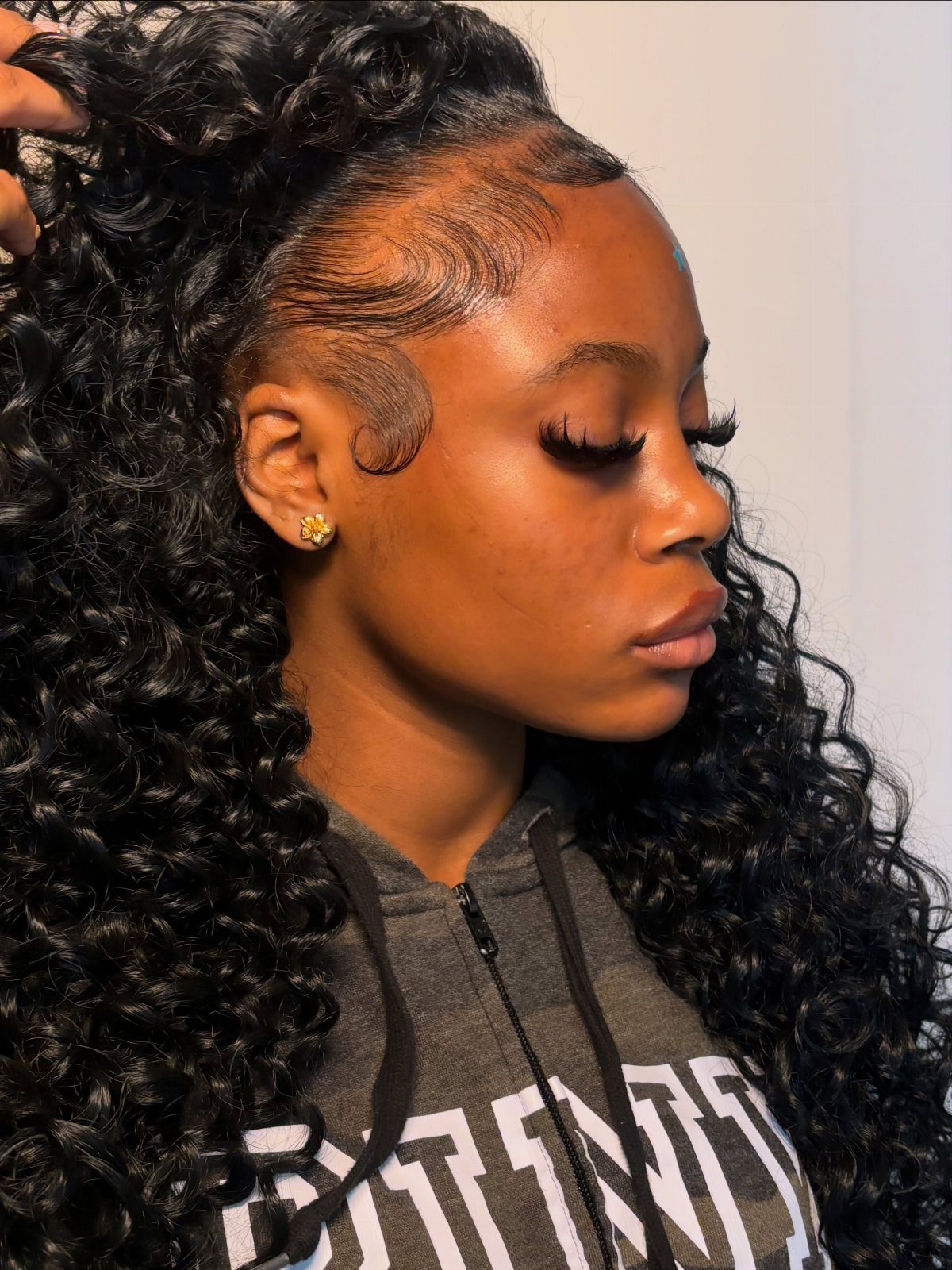
A deep side part sweeps the curls to one side and lifts the roots on the other, so the top gets height instead of lying flat.
Part on damp hair with your fingers, then let the curls dry in place so the shape holds.
Moving the part further over adds more lift. Laid edges give a clean finish, but they take a little extra time with a soft brush.
I find it more dramatic than a middle part and easier to style than it looks.
One of the best things about curly hair is that it has the grit to hold a style in place, with next to no touch-ups required.
— Vogue
17. Long Curly Middle Part
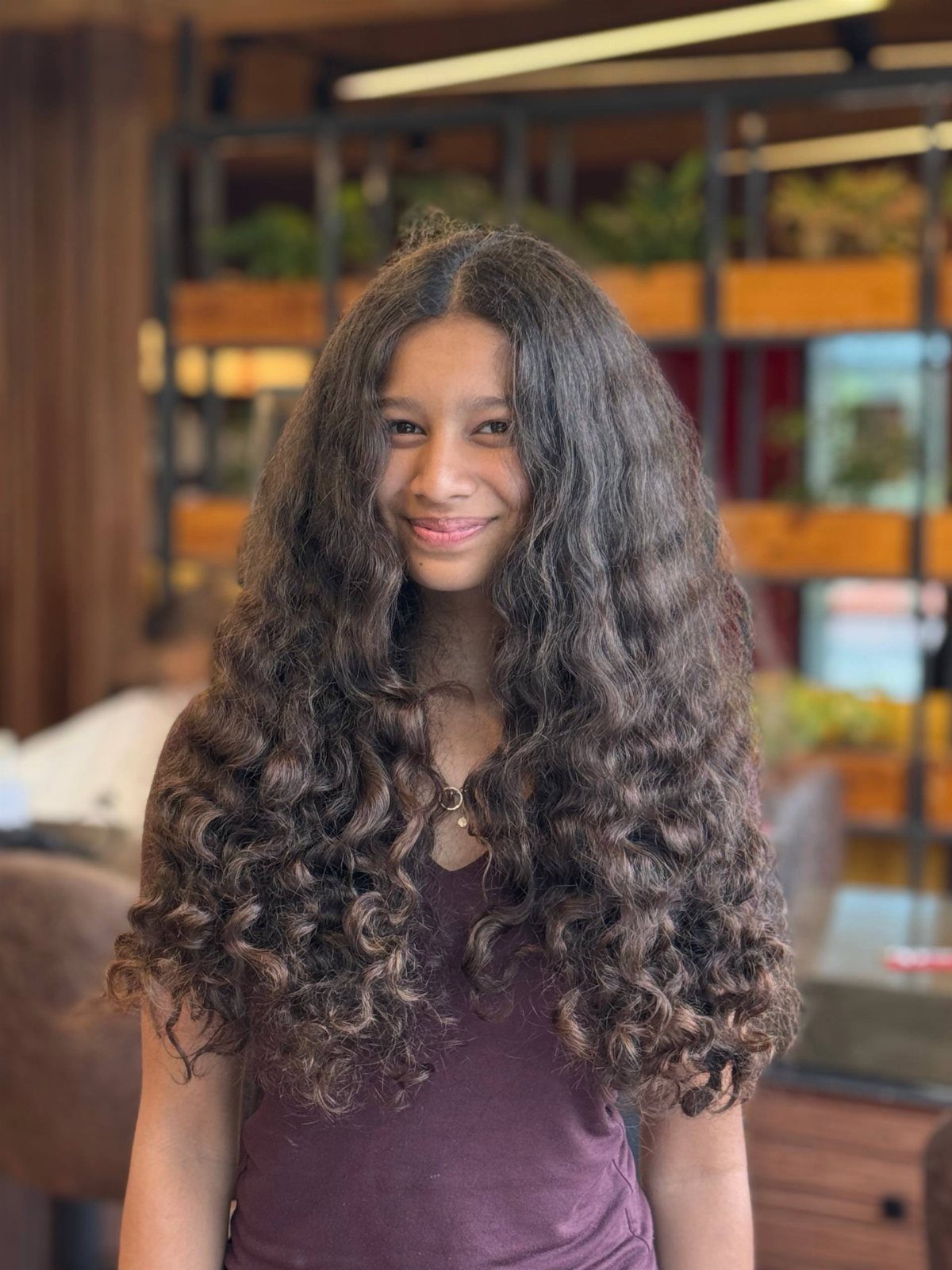
Curls fall evenly on both sides with a center part, so the face is framed in balance. It is the simplest part to wear on long hair, and the shape stays the same from morning to night.
Find the line from the middle of your forehead and part with your fingers on damp hair. Symmetry shows any uneven side, so shape each side the same way as it dries.
18. Pineapple-Style Protective Curls
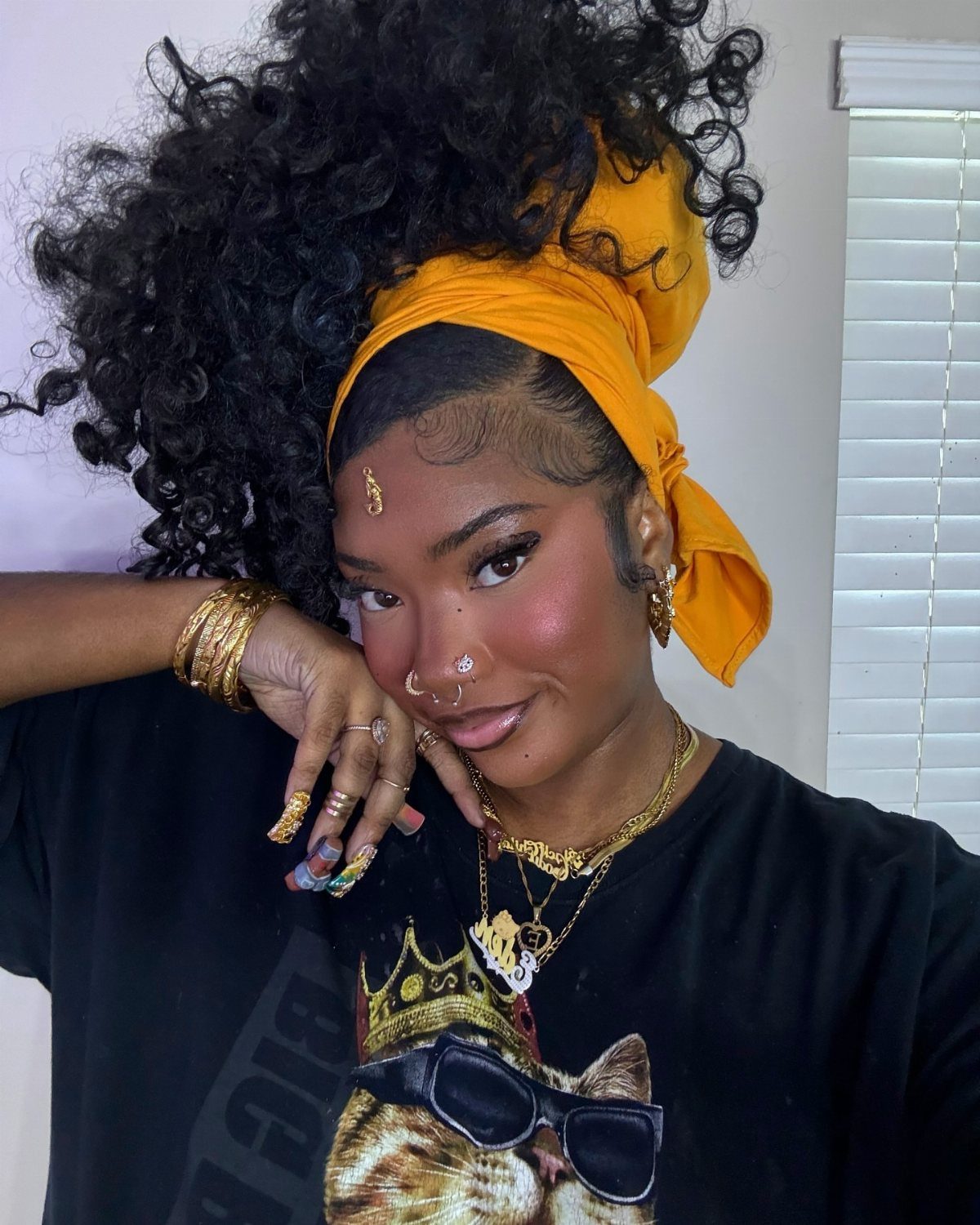
Gather your curls high on the crown and wrap a scarf or head wrap around the base. This pineapple style keeps the pattern off your neck and shoulders, so the curls don’t get crushed or flattened.
Use a soft covering instead of a tight elastic, which can leave dents and pull at the strands. I like a loose gather: it holds the shape without tension.
It works for a day out or for sleeping, and you can pull it loose in the morning.
19. Big Bouncy Blowout Curls
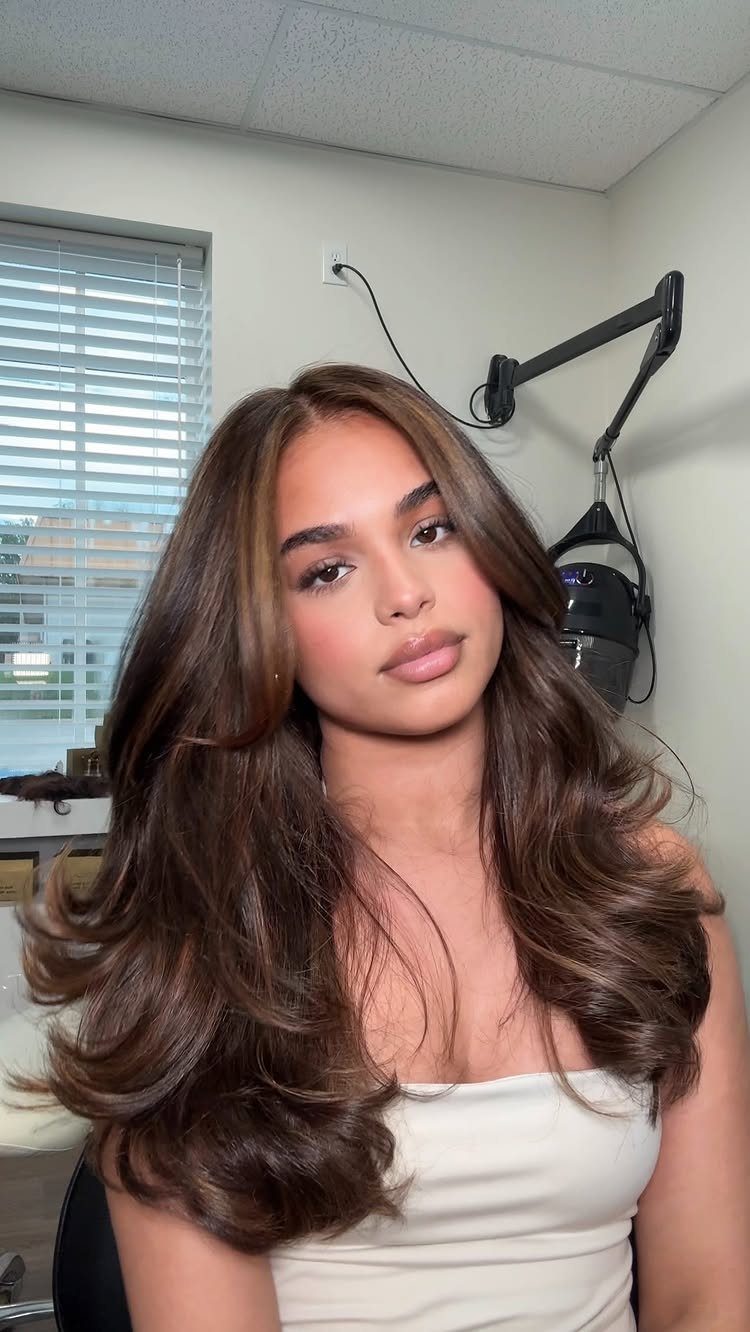
A blowout stretches the curl into big, loose bounces that fall in soft waves from the crown to the ends. The brown here stays rich and even, so the volume and layers carry the look.
I would ask a stylist for a blowout with a round brush, then request layers so the curls have room to lift.
Expect the shape to relax over a day or two, and to look softer each time you wear it.
Fine hair may need a little more lift at the roots to keep it full.
20. Long Curly Vivid Color
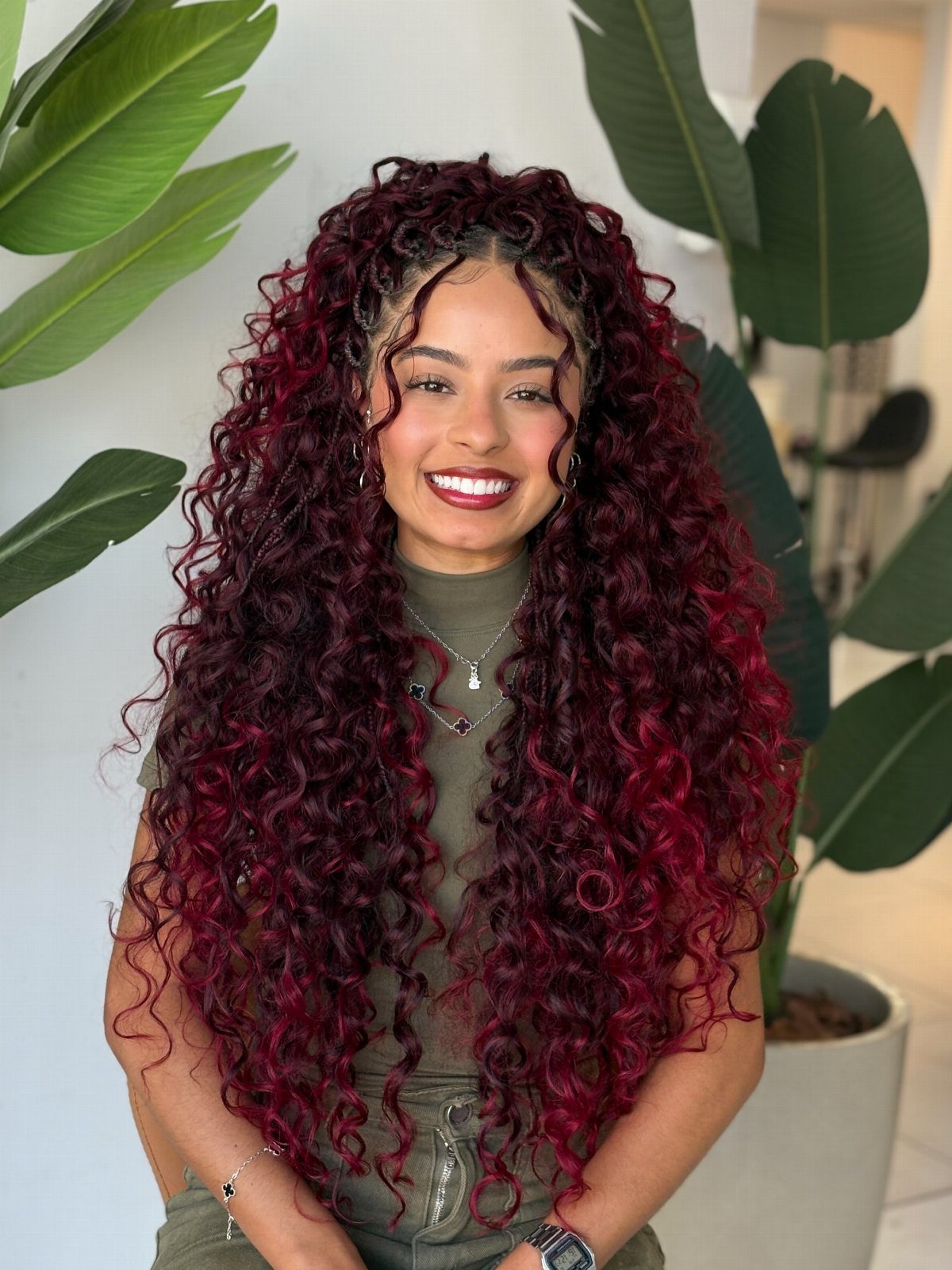
Vivid color turns long curls into a saturated, deep shade, and a rich burgundy-red like this one gives every curl a glossy, jewel-like look. Curls catch light along each coil, so the color seems to deepen where the hair bends.
Bring a photo of the exact shade, since reds range from cherry to wine. I would pick this if you enjoy a bold change, and plan on regular salon visits to keep the tone from fading.
Color-treated curls like extra moisture, so keep a conditioning mask in your routine.
21. Long Curly Copper
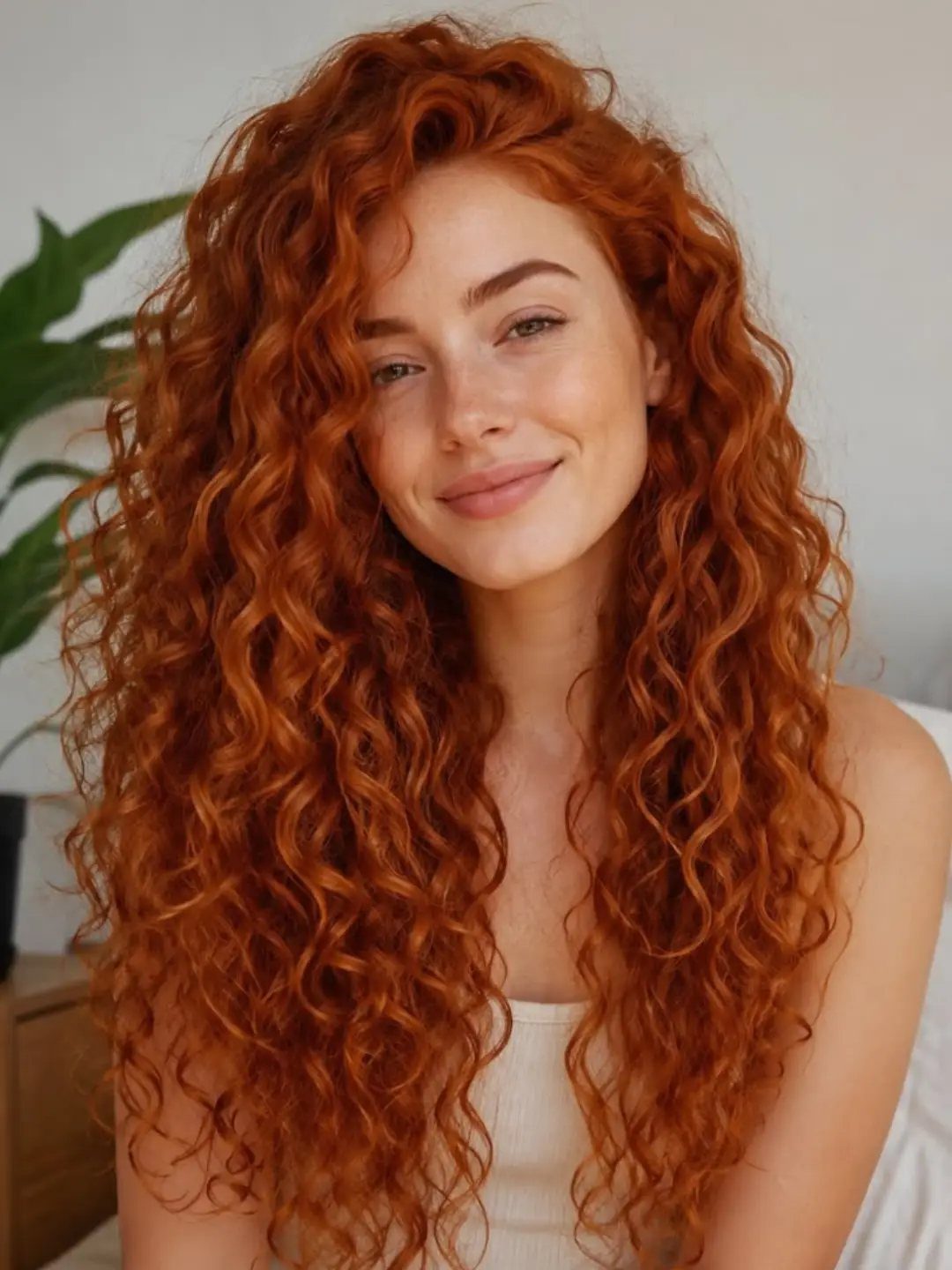
Copper brings a warm red-orange glow to long curls, and full, springy curls make the shade look dimensional because the color shifts from curl to curl. It flatters warm skin tones and looks bright without feeling harsh.
Copper is easy to name at the salon, but a photo on curls like yours shows the stylist how the shade will read in your pattern.
Red tones tend to fade faster than other shades, so I would plan for touch-ups and a gentle, color-safe shampoo.
If you want less upkeep, a deeper auburn is the softer step.
Dry Cutting and Shrinkage
Depending on how tight your curl pattern runs, you can lose anywhere from 30 to 50 percent of the length once it dries.
A cut made on wet, stretched hair can land several inches shorter once the curls spring back, so if you ask for mid-back length wet, you may end up with something noticeably shorter once dry.
Curl-by-curl cutting goes further: the stylist shapes individual curls instead of working in broad sections. It takes longer and costs more, but the results are more precise and evenly distributed.
Choosing and Requesting a Cut
A 3a wave takes layering that sits completely different from what a 4b coil needs, and your stylist has to see your actual pattern to know where those layers go.
Tell your stylist what length you want, what shape appeals to you, and how much time you spend styling each morning. Mention anything that affects your hair’s condition: color history, chemical treatments, how often you wash.
Fine curly or coily hair may suit a wet cut instead. Ask your stylist which method they lean toward and what they base that choice on.
Long curly hair cut to one length always ends up triangular: all the volume sits at the bottom and the crown goes flat. Long layers fix that.
Frequently Asked Questions
What haircut is best for long curly hair?
For long curls, I go with layers that begin well below the chin and get cut dry, so each curl is shaped where it will actually sit.
They keep your length but move weight out of the bottom, so the hair doesn’t settle into a triangle with a flat crown. A dry cut lets the stylist see where each curl springs up and place the layers accurately.
Why is long curly hair so attractive?
Long curls bring natural volume, movement and personality. Lighter shades also help, because they let you see every loop of the pattern, and balayage or copper reads differently from one curl to the next as the strands twist.
What are the top trends for curly hair in 2026?
Right now the look is full, natural-shaped curls with real volume, cut dry one curl at a time, styled to a soft hold with no crunch, and colored with depth: balayage, lived-in highlights or rich copper.
Curls bend light at every turn, so color shows more depth on them than it does on straight hair.
Does curly hair make you look older or younger?
Long curly hair tends to read younger.
Its natural volume can hide thinning areas, and the length and fullness draw attention away from age spots and wrinkles. Highlights brighten the complexion, and sweeping the hair diagonally instead of using a straight part gives a fresher look.
How do you find the right curly hairstyle for you?
Save reference photos first, then book a stylist who works with curly and coily hair, and talk through face shape, texture, curl pattern and how much upkeep you will actually keep up with.
Pattern matters a lot: a 3a wave needs layering placed differently from a 4b coil.
How do you ask your hairdresser for a curly hairstyle?
Say what length and shape you’re after, how many minutes you give styling in the morning, and show photos of curls like yours. Your stylist also needs to hear about past color, relaxers or perms, and your wash schedule.
Dry curls can pull up 30–50 percent shorter than they look stretched, so request extra length, and ask whether the cut happens dry or wet: dry works for thick hair, while fine curly or coily hair can do better wet.
How often should you get your curly hair cut?
Plan on a trim every 8–12 weeks to keep the ends healthy and the shape from going soft and shapeless.
Curls split and snap more easily than straight hair, so skipping trims lets damage travel up the strand. While growing your hair out you can stretch the gap a little, but keep trimming so damage doesn’t travel up the strand.