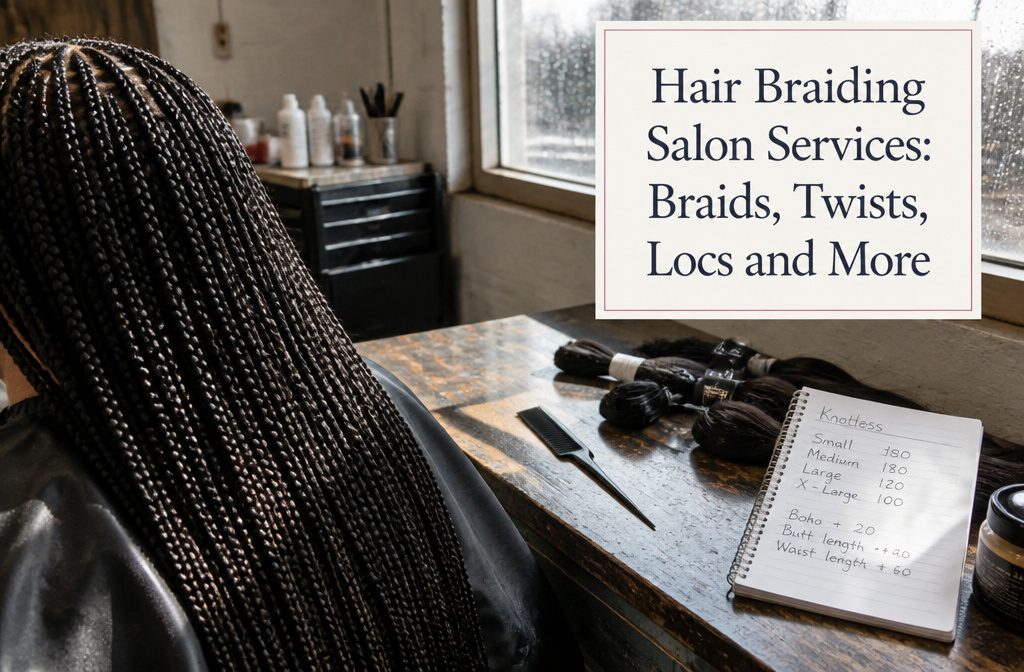
Braids, twists, locs and sew-ins are the services a hair braiding salon sells, priced by style, size and length.
Size moves the price more than length: at waist length, small knotless runs $300 and medium $180, a $120 difference. Many salons don’t print jumbo prices, so text a photo for a quote.
Knotless Braids
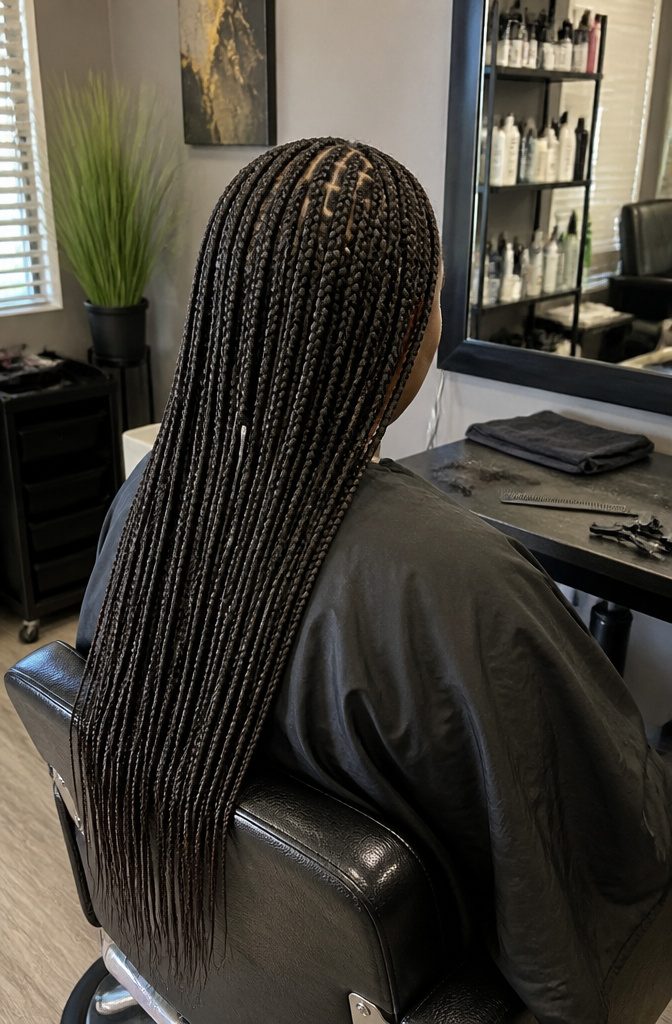
Size moves the price more than length does. At waist length, small knotless runs $300, smedium $260 and medium $180, so going from small to medium saves $120 at the same length.
Small spans $230 at shoulder to $350 at top butt. Medium starts at $180 at waist and tops out at $300 under butt.
Smedium covers the widest range, from $200 at shoulder to $450 at mid thigh. Large is offered too.
I’d pick smedium for most people: the parts are finer than medium, and it costs less than small at every length they share. House of Braid lists Small/Medium Knottless at $1,000.00, with no length attached.
That is more than double the priciest smedium above. Prices can change, so text a photo for anything unlisted.
Box and Single Braids
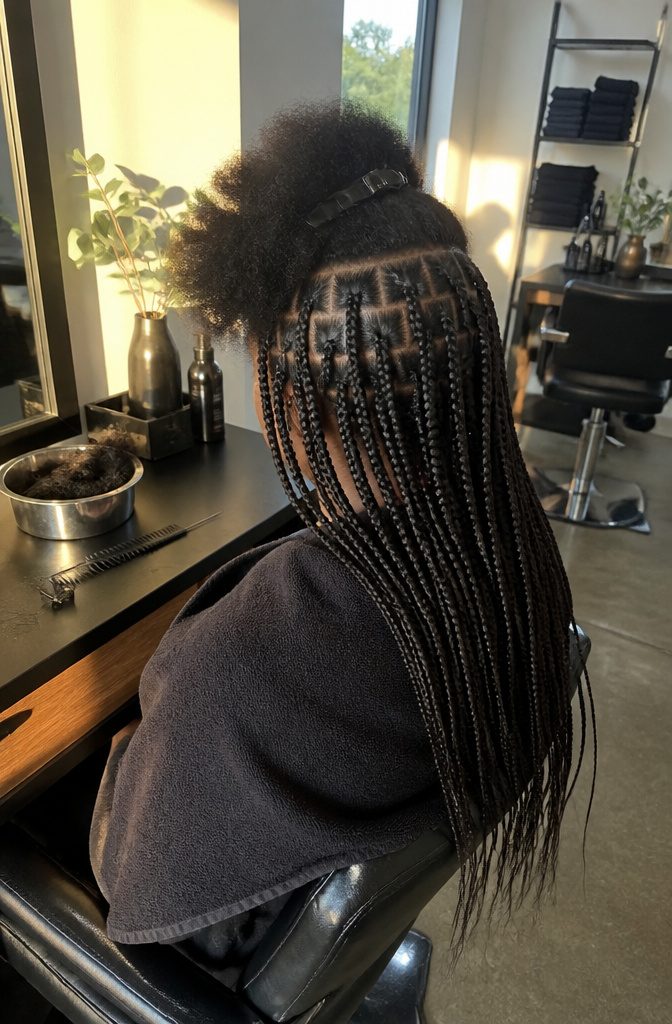
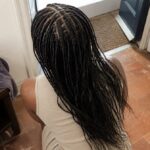
Box braids are individual braids, installed with or without extensions, so natural hair alone works if you want no added fiber.
Single braids are the smaller version, and with no distinct parting between them they look fuller on the head. Kanekalon is the synthetic fiber most braiders use.
Clear at least half your day. Grace & Glam quotes 4–6 hours for single braids and will double up braiders to get you out in good time.
Micro braids go smaller still, sit tight to the scalp, and can stay in for months. I’d pick them over single braids only when months of wear matter more to you than anything else.
Boho and Goddess Braids
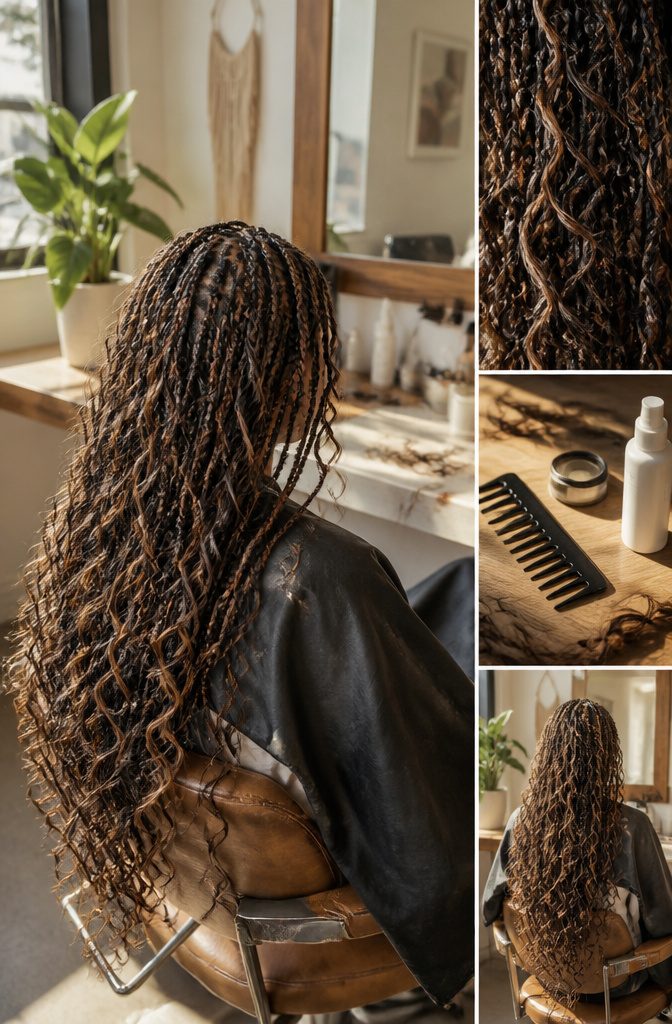
Goddess braids mix a braided base with loose curls, using human hair or synthetic curls, for a fuller, more textured finish.
House of Braid lists Goddess Braids at $800.00, which is $200 under its Small/Medium Knotless at $1,000.00. A knotless install is all clean parts and uniform lines from root to tip.
Goddess braids trade that polish for movement: curls spill out of the braids along the length or at the ends, so the style reads soft and voluminous rather than sleek.
I’d choose them when you want volume and a relaxed shape. Stay with knotless if you want a neat look that asks little of you, since loose curls need more care to stay defined.
French Curl Braids
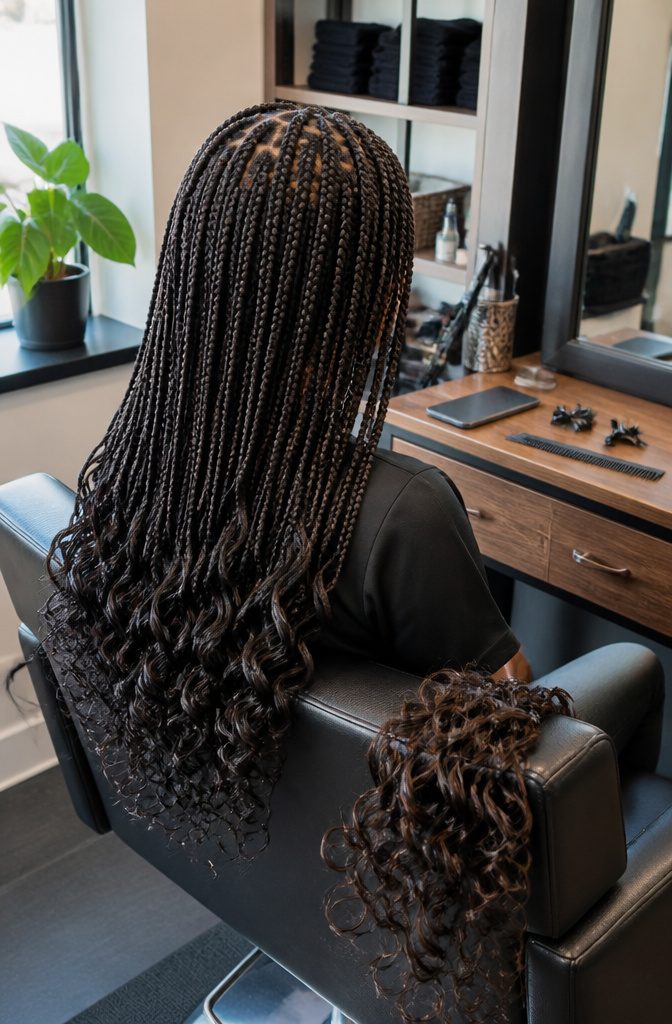
French curl braids are installed with French Curl Hair, and a hair braiding salon that offers them, like Natural Look, sells them in four sizes: large, medium, smedium and small.
They’re listed right beside knotless and box braids, so you can compare all three on one menu before you book.
Smedium sits between medium and small, and it’s where I’d start if you’re unsure. It avoids the bulky look of large braids and the longer time in the chair that small ones usually mean.
Length comes in several options too. Choose size and length separately, and bring your saved photo so the stylist can match both instead of guessing from one.
Jumbo Braids
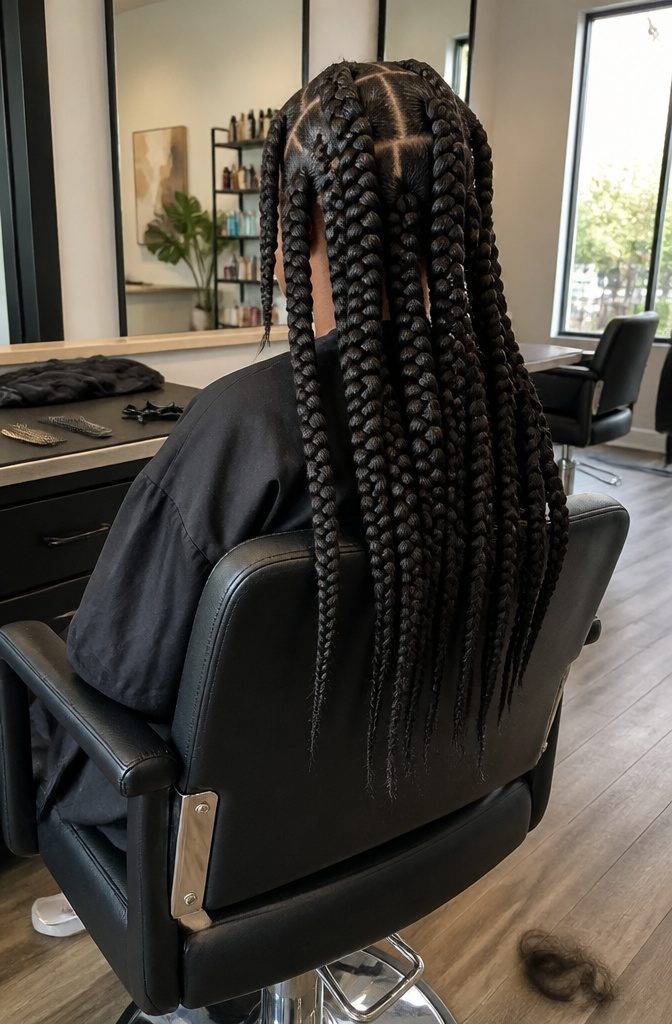
Jumbo braids are offered at midback, waist and lower-back lengths, and length moves the price more than most people expect.
On one salon’s list, medium knotless braids run $180 at waist length and climb to $300 under the butt, so a few extra inches can cost real money.
Jumbo is a different size from what that list prices, and many salons don’t print it. Text a photo of the exact style and call for a quote before you book.
I’d pick midback for a first jumbo set. It shows off the chunky, bold parts without paying for the extra length that makes up most of the price jump on any list.
ZK Braids
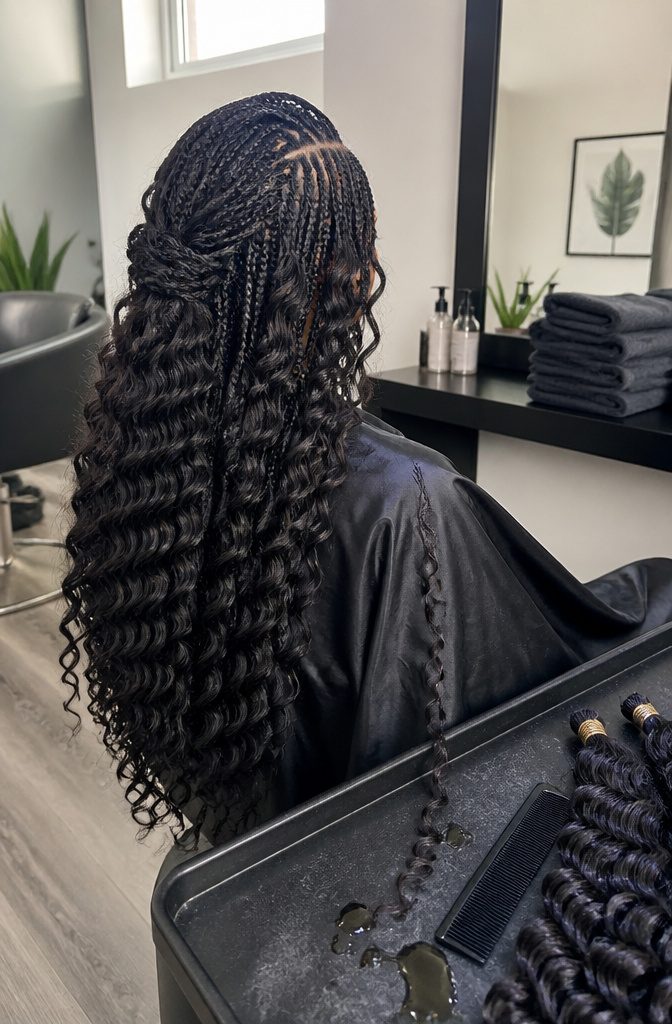
ZK braids add twelve to eighteen inches of deep wave, loose wave or body wave curl that flows well past shoulder length and sits closer to mid-back on most people.
The curl pattern reads as movement rather than tight coil, so the style skews softer than box braids or passion twists and pairs well with side parts and half-up styles.
Stylists typically need around four to six hours to install depending on how thick your natural hair is and how many braids you want, and the added length means more weight than knotless styles that stop at collarbone.
Most salons charge between $180 and $280 for the service plus hair, and you bring the curl bundles with you or the stylist sources them at pickup cost.
The waves hold their shape through six to eight weeks if you wrap at night and keep oil on the lengths.
Bora Bora Braids
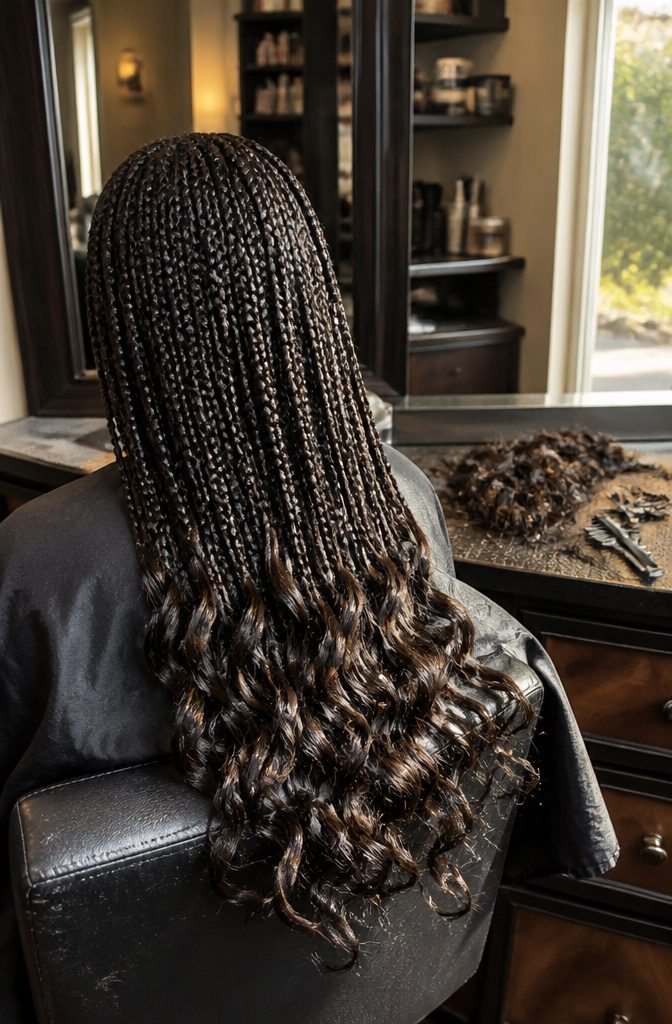
Bora Bora braids are medium-size braids that end in loose curls, and the first decision is the curl pattern: deep wave, loose wave or body wave.
Deep wave gives the most defined ripple, loose wave relaxes it, and body wave is the softest, closer to a gentle bend than a curl.
I’d choose body wave for a soft, everyday look and deep wave when you want the curls to read clearly in photos.
Bow Salon in Boston lists a 100% human-hair version, called Pick & Drop Bora Bora Braids. That’s worth asking about at any salon if you’d rather have real hair in the curls than synthetic.
Boho Bob Braids
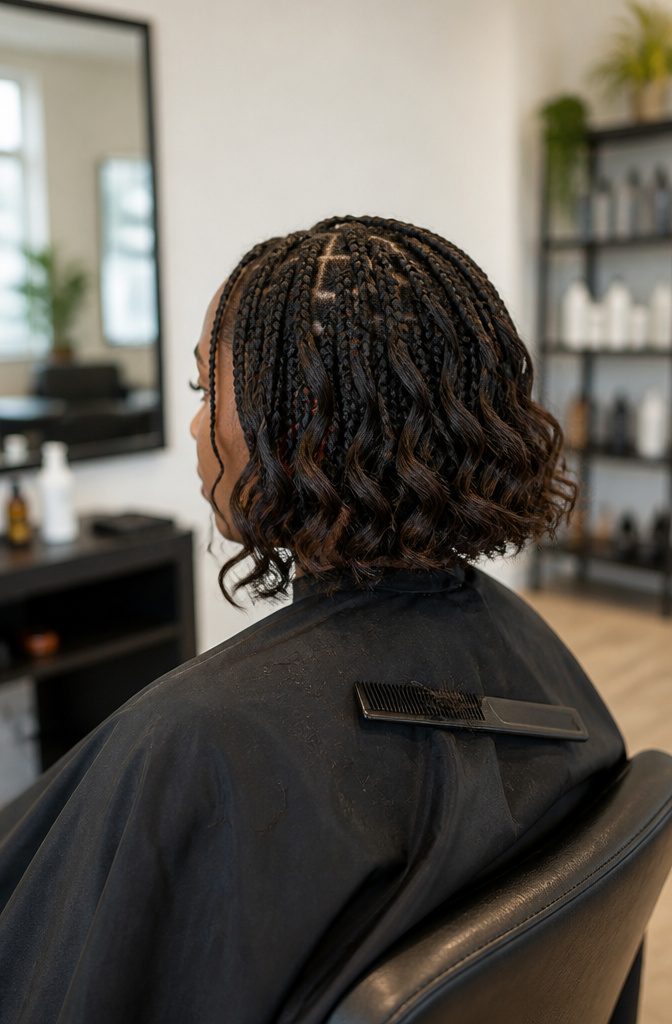
A bob trims the boho look down to its curls.
Human-hair curl braids keep the loose, wavy ends, but at chin or jaw length there is far less hair hanging off each braid, so the style sits lighter on the scalp and dries faster after a wash.
Curl also springs up as it dries, so ask the braider to cut a touch longer than where you want it to land.
For anyone who hates a heavy head, I would pick the bob over the long version. The shorter shape frames the jaw and cheekbones instead of covering them, which suits round and square faces especially.
You give up range, though: high ponytails and updos are mostly off the table. Bring a photo to your hair braiding salon that shows the exact length line you want.
Miracle Knots
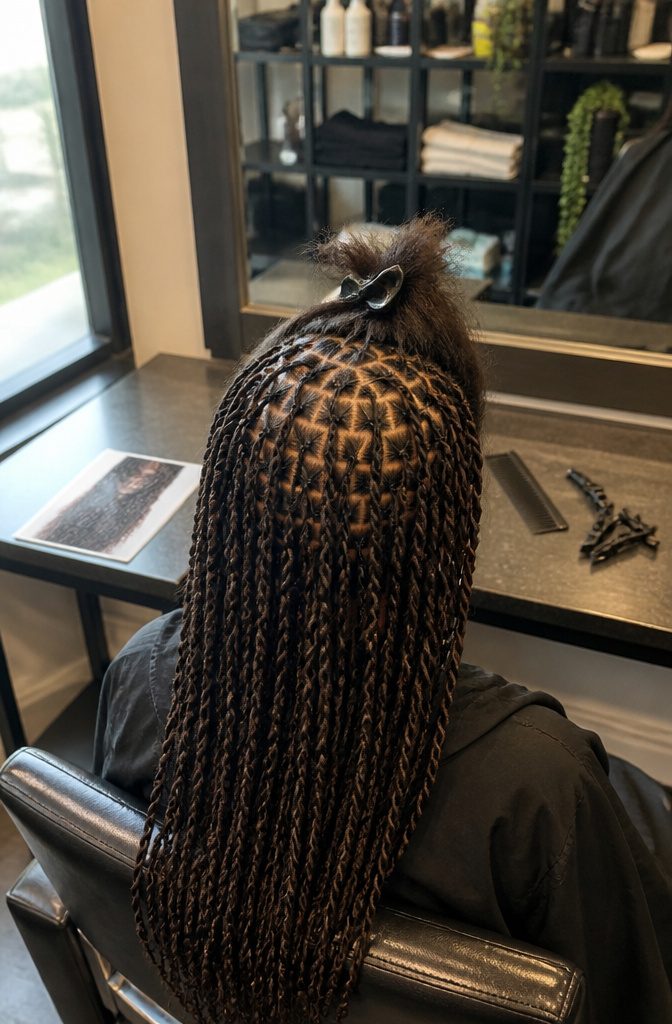
Miracle knots come in three sizes: large, medium and smedium, the in-between size that splits the difference.
Every size is offered in varying lengths, so you are really making two choices: how big the knots are and how long the style hangs.
Some salons list the style as Fulani miracle knots, which is the name to search or ask for.
If you can’t decide between large and medium, I’d start with smedium.
It keeps you from committing to either extreme before you’ve seen the look on yourself. When you bring a saved photo, say the size and length out loud, because a picture alone doesn’t tell a stylist which size you want.
Passion Twists
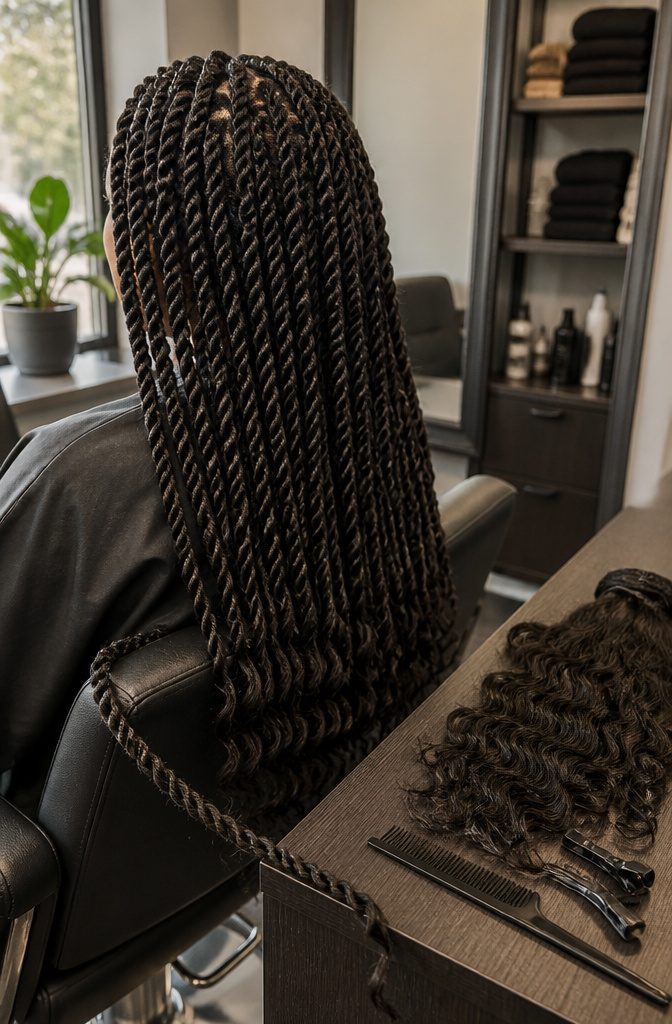
Passion twists and spring twists are the same style under two names, so a salon menu listing both is likely describing one service. Bring the photo you saved and point at it; that settles things faster than the label does.
The technique is a two-strand twist done with wavy extension hair instead of straight. That wave separates it from a classic Senegalese twist: the ends loosen and curl, and the finish reads boho and textured rather than sleek.
The style sits between Senegalese twists and goddess locs, borrowing from both. I’d pick it over a straight-hair twist whenever the softer, less uniform look is the goal.
Senegalese Twists
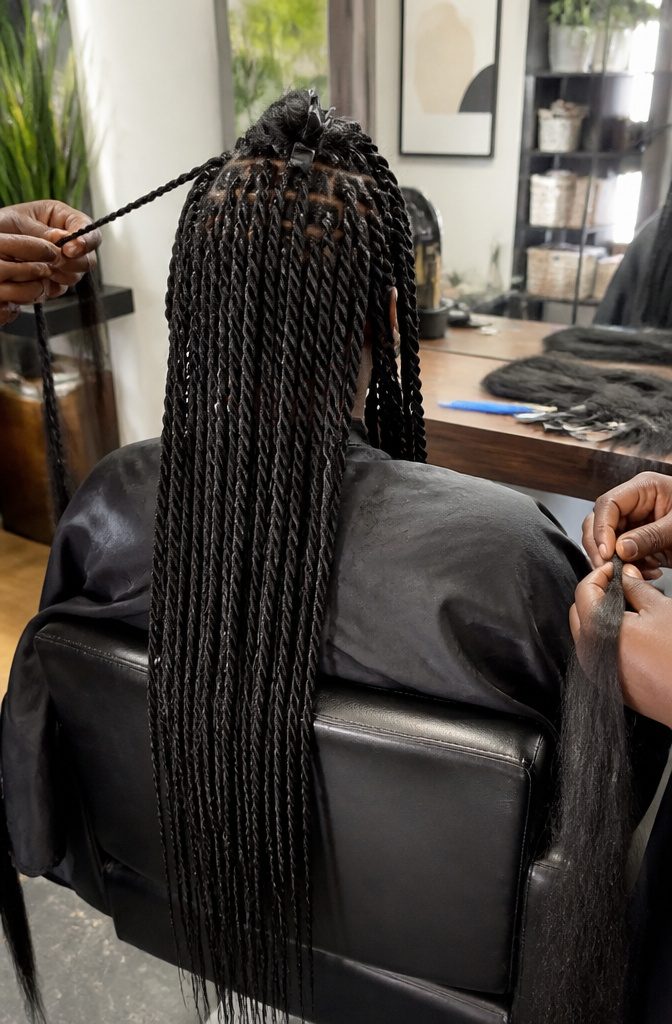
Senegalese twists, often called rope twists, start with braiding hair wrapped around the root of your natural hair. The wrapped strands are then two-strand twisted from the scalp down to the ends.
Because the extension hair is anchored at the root, the whole length is one continuous twist, and I’d ask any stylist to show how they begin that wrap before I sat down.
Length and timing are where this style surprises people. One customer reported waist-length Senegalese twists for $220, finished in three hours, with two stylists working on her head at once.
Two people twisting at the same time is what makes that pace realistic, so ask whether a hair braiding salon doubles up before you block out a whole day.
Human-Hair Twists
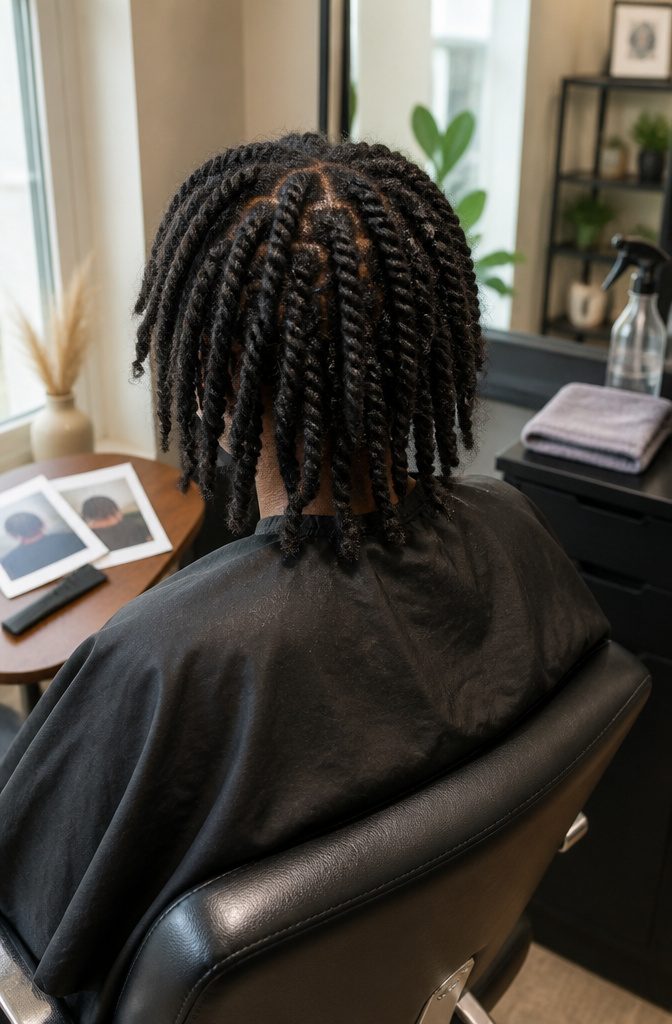
Human-hair twists have no fixed size or length, because the stylist builds them around what grows from your scalp. Short natural hair usually calls for smaller, shorter twists, since the ends need enough length to stay anchored.
Longer hair can carry bigger sections and a longer finish. The result depends on your own hair, so a Pinterest photo shows a direction, not a promise.
At a hair braiding salon, I’d bring two or three saved looks and ask what your length can realistically hold before any sectioning starts.
If the stylist says your hair is too short for the exact size in the photo, take that seriously. A slightly different size that stays put beats the pictured one slipping out in a week.
Kinky Twists
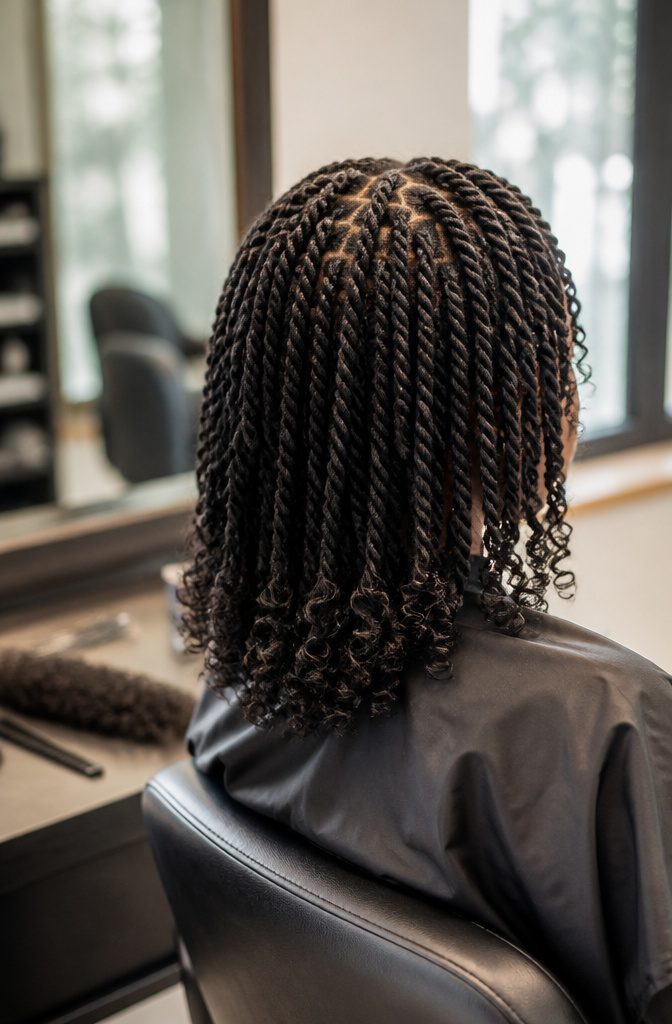
Kinky twists are two-strand twists that generally fall at the shoulders with curled ends. That puts them on the shorter side of what a hair braiding salon offers, and the curled tips are what give the style its bounce.
Length is the first thing that separates them from Marley twists, and the installation process is the second, so the two are not interchangeable services.
If your saved photo shows twists grazing the shoulders with curly tips, ask for kinky twists by name and bring the picture.
I’d choose them over longer twist styles when I want something that stops at the shoulders and doesn’t hang down my back.
Spring Twists
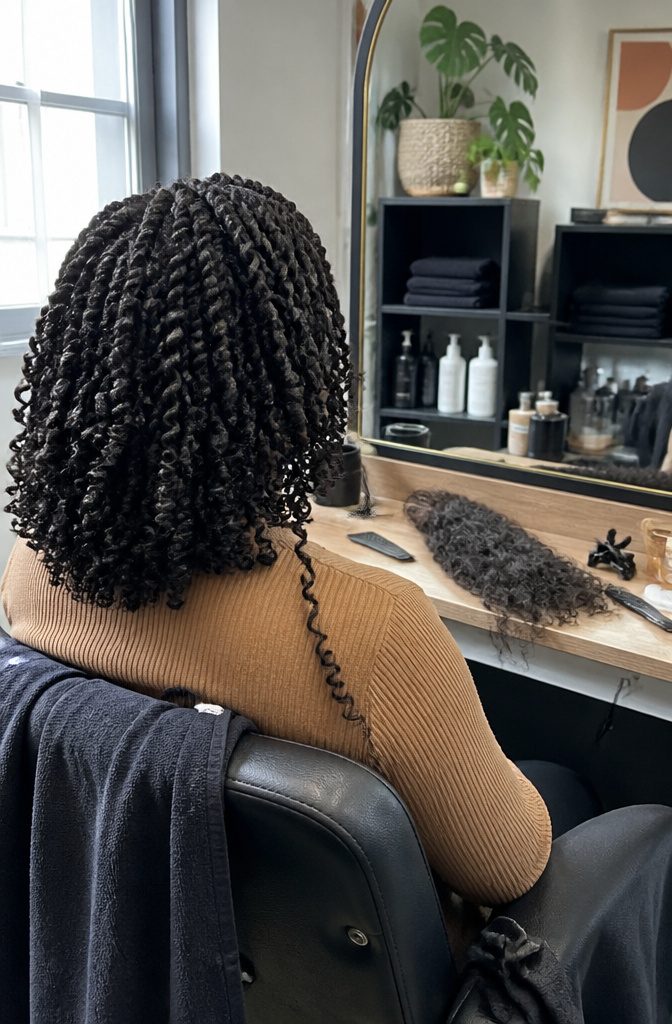
Spring twists get their look from the extension hair. It is coily, or a thick wavy pattern, and it has to be separated into pieces before the install, because it won’t twist cleanly straight from the pack.
Twisted up, that texture gives the springy, bouncy finish that smoother extension hair can’t.
I’d choose spring twists over other twist styles whenever I want bounce as the defining feature of the look.
Ask your braider for coily or thick wavy extension hair by name, since the texture, not the twisting itself, is what separates this style from its neighbors.
It is also a natural protective style, so your own hair stays tucked away while the twists wear.
Cornrows
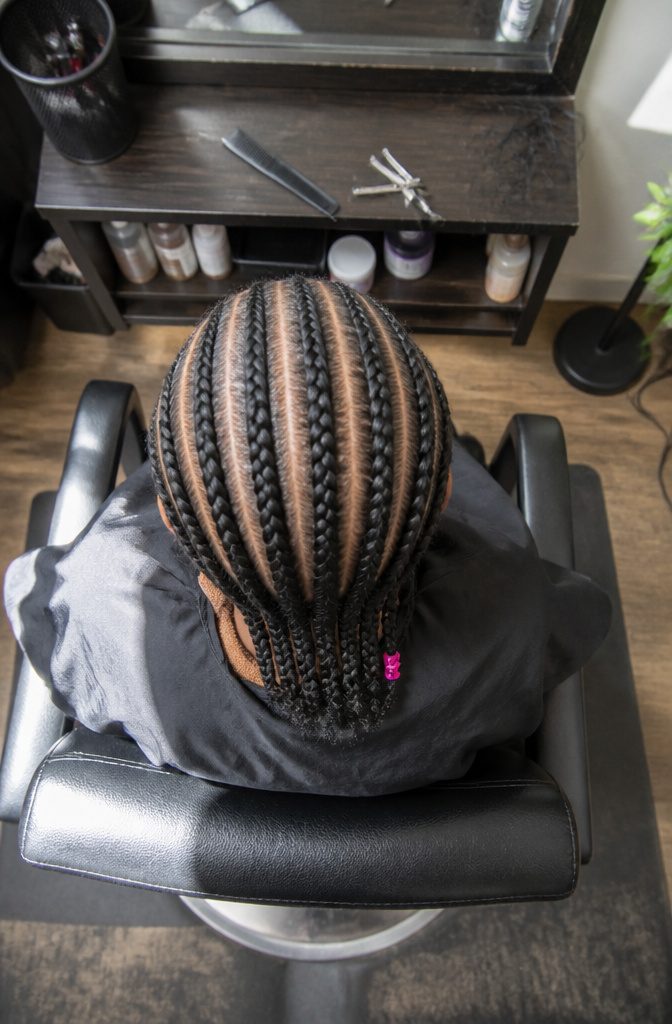
Cornrows, also called canerows, are braided very close to the scalp in one continuous raised row.
The stylist works with an underhand, upward motion, gathering hair as the braid travels so it sits on top of the scalp instead of dropping away from it. A free-hanging braid starts at the root and swings loose.
A cornrow stays anchored from the first stitch to the last, which is why you can see the scalp lines and the braid reads as a ridge rather than a rope.
They count as a protective style for curly hair, since the hair is tucked down and left alone, which supports easy, restorative growth.
For anyone who wants a low-fuss growth stretch, I would book cornrows ahead of loose braids in a hair braiding salon.
Feed-In Cornrows
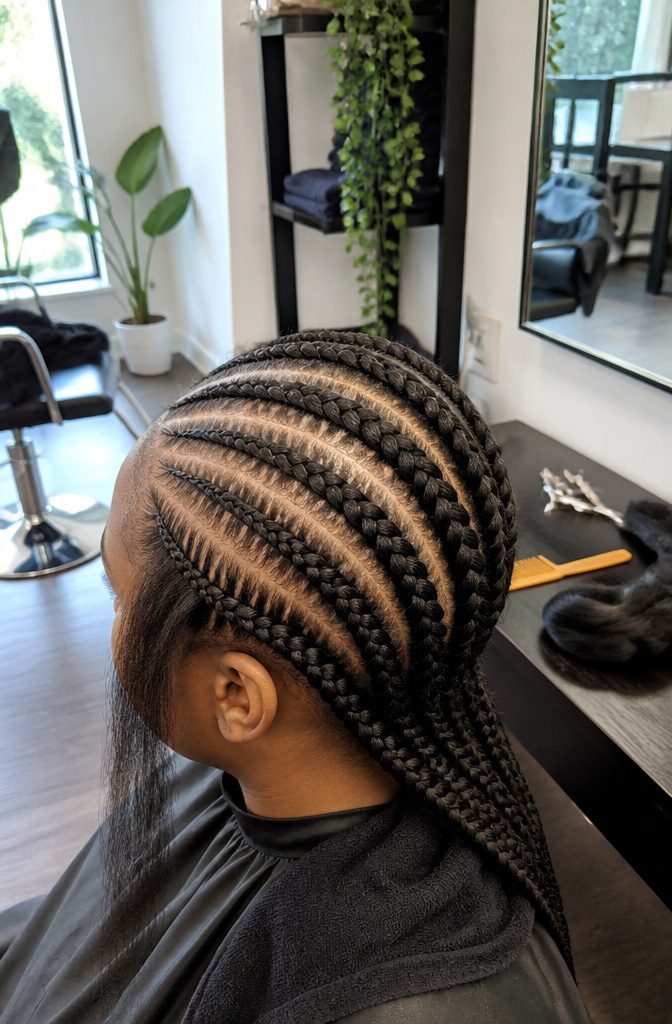
Feed-in cornrows add synthetic hair gradually, working it in with your natural hair beyond the start of the hairline. Standard cornrows begin each braid with a knot that mixes your hair with the synthetic hair at once.
That knot is the visible difference. A feed-in braid has no abrupt starting point, so the root reads as full, natural hair rather than an extension attached at the front.
I’d choose feed-in whenever the braids sit at the hairline, because the natural look is the whole reason to pick this technique.
At a hair braiding salon, ask for feed-in or feeding braids by name, since plain "cornrows" can mean the knotted start.
Fulani Braids
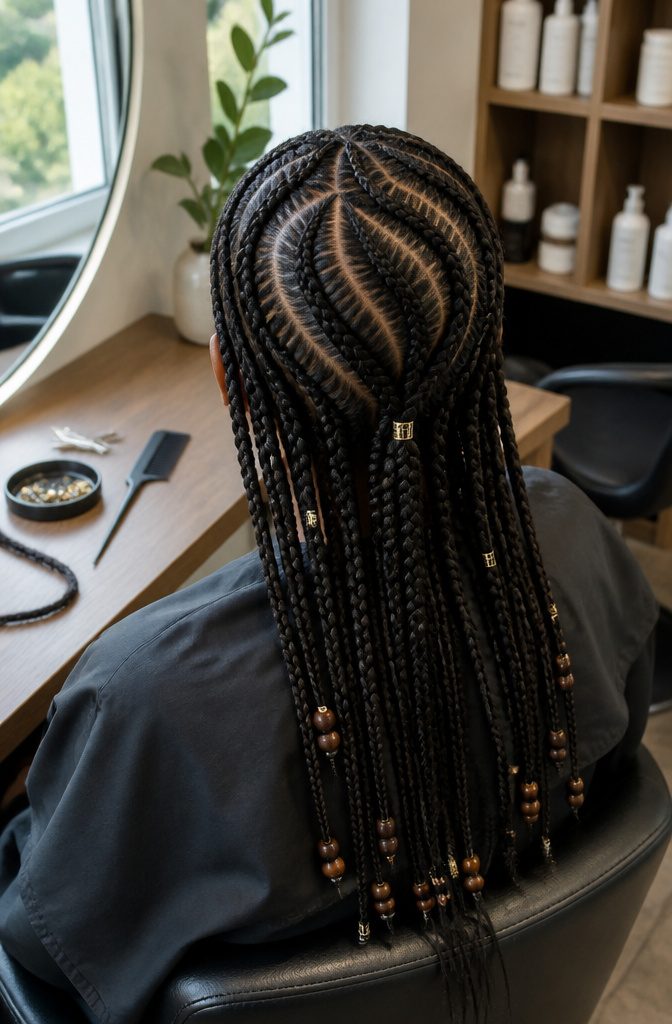
Fulani braids come in large, medium and small sizes, and size sets the whole look. Large braids read bold and graphic, with fewer, thicker lines across the head.
Small braids give a finer, more detailed pattern, but expect a longer day in the chair. I’d point most people to medium, which keeps the pattern clear without feeling heavy.
Length is a separate choice, and a hair braiding salon will usually offer several. Shorter lengths keep weight off your edges and are easier to sleep on.
Longer ones swing more and show off any beads or cuffs you add. Bring a photo that shows both the size and the length you want, because the two together decide how the finished style looks.
Crochet Braids
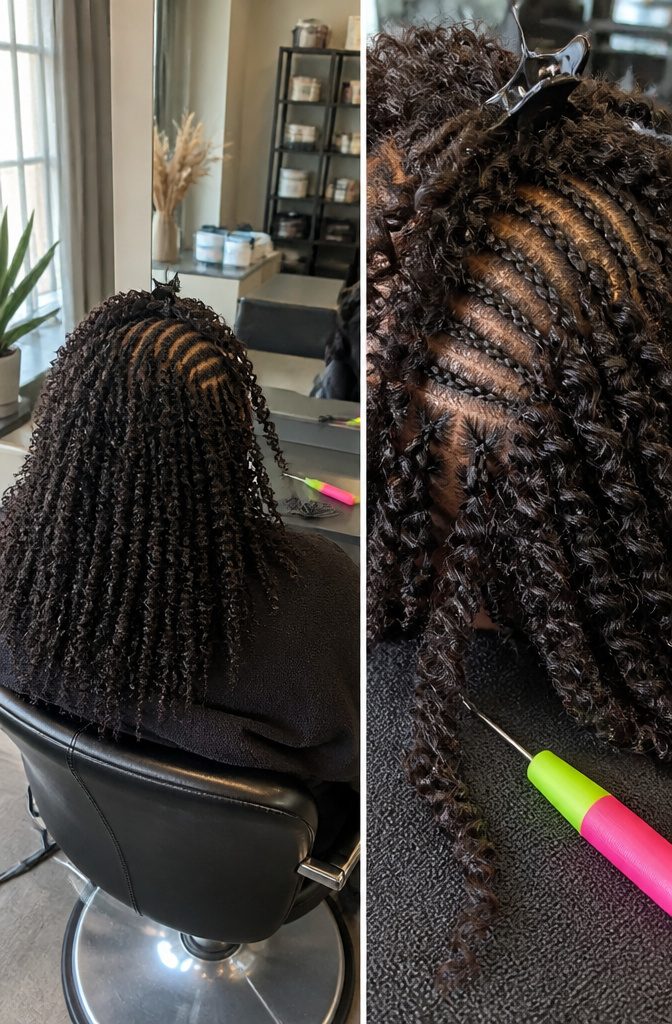
Crochet braids are made by looping synthetic hair extensions through a braided base of your natural hair with a latch hook or a crochet hook. That tool is why the style is also called latch hook braids.
It’s a hybrid of traditional braiding and weaving, and I think of it as closer to a weave, since the extensions are hooked onto the base rather than plaited into it.
When you call a hair braiding salon, ask for it by both names. A service menu may list one and not the other, and you don’t want to book the wrong appointment because of a label.
Crochet With Loose Hair
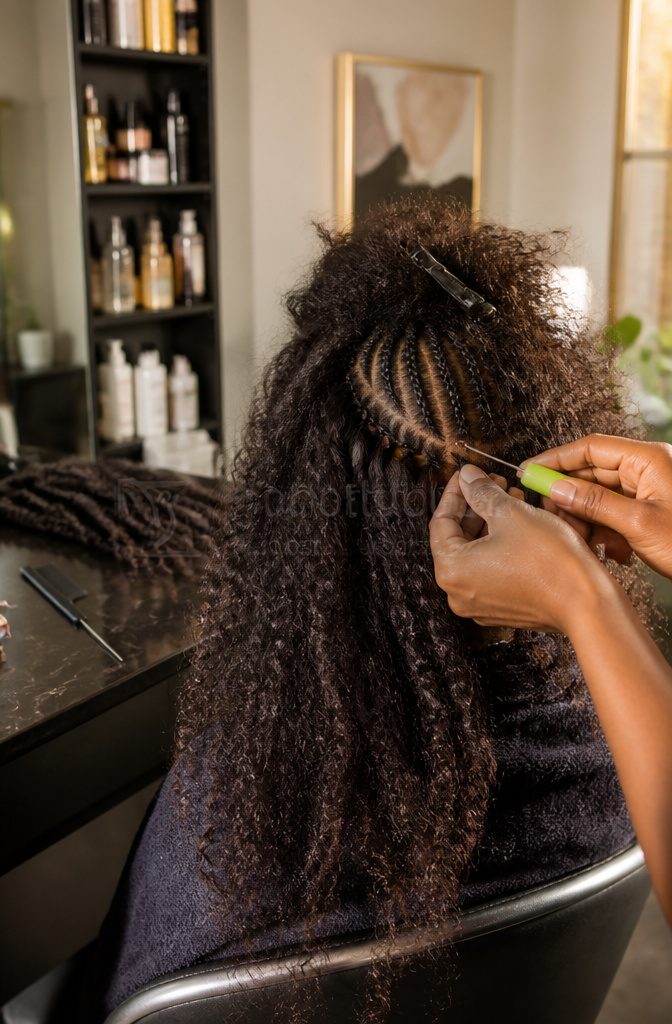
Loose-hair crochet starts with your own hair braided into a base pattern.
The stylist then loops loose hair onto that base with a crochet hook, section by section. Because the hair arrives unstyled, the stylist decides the fullness, the texture and how the pieces blend with your natural hair.
That control is the reason I’d pick this over a pre-made set if you want a result that looks like hair growing from your scalp.
The cost is chair time, since every section is attached by hand. Ask whether the loose hair is included or whether you bring it, because that changes both what you buy and how you book.
Crochet With Pre-Styled Hair
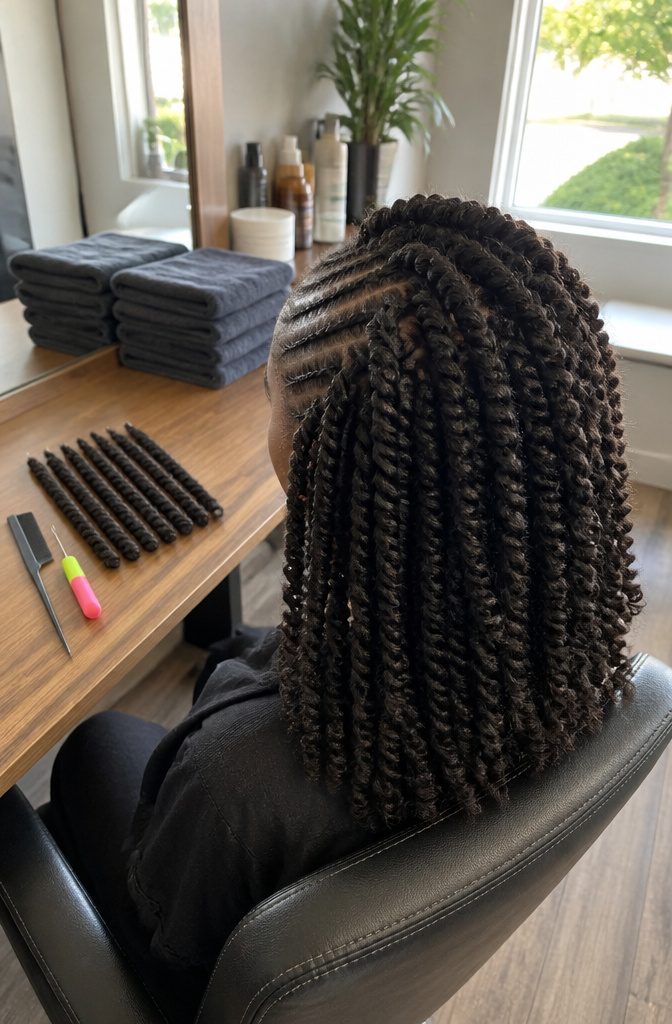
Pre-styled crochet uses braids, twists or locs that are already made, so the stylist loops finished pieces onto a cornrowed base instead of building each one on your head.
That moves most of the work out of the chair. Loose hair is the opposite: the pattern forms on you, and the stylist decides every part size as they go.
With pre-styled pieces, the length, thickness and end shape are fixed before you sit down, so ask to see the exact pieces first.
I’d choose this route for twists and faux locs when sitting time is the problem. For custom parting or a softer, blended root, loose hair wins.
Individual Crochet Locs
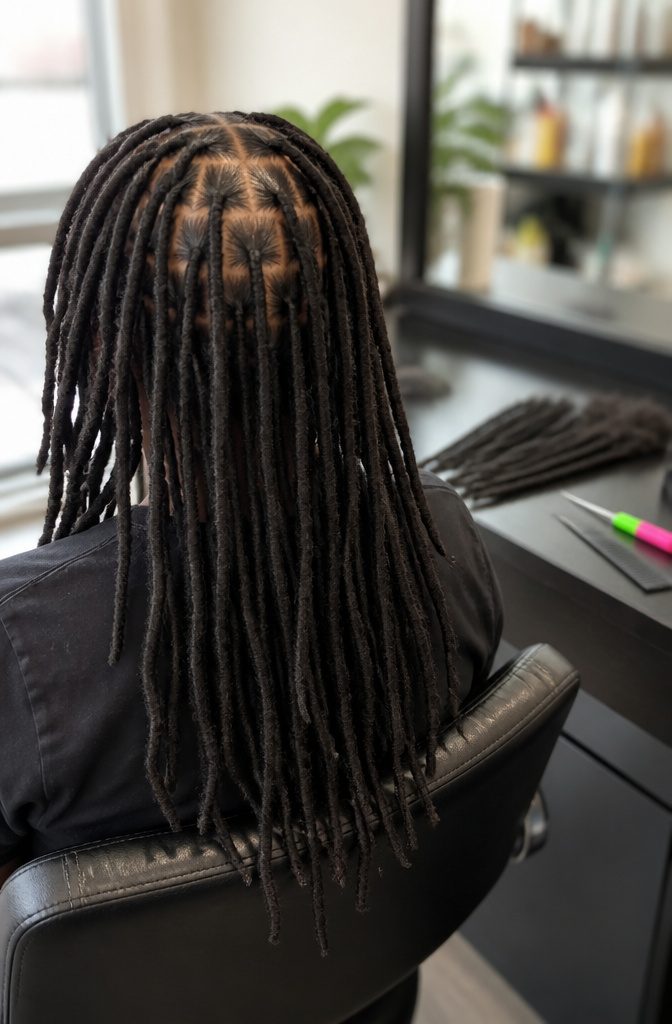
Pre-loc’d hair is the shortcut here: each loc arrives finished, and the stylist uses a latch hook to loop it through an individual braided base on your own hair.
Chair time goes mostly to braiding your natural hair and hooking on each piece, not to wrapping or twisting.
Base size decides how the style hangs. Smaller bases lie flatter at the root, while larger ones can show through, so ask to see the parting pattern before the first loc goes on.
I’d pick this over locs built on site when you want the result to match the photo you saved, since every loc is already set.
Ask whether the salon supplies the locs or expects you to bring them, because that changes both the booking and the bill.
Sister Locks
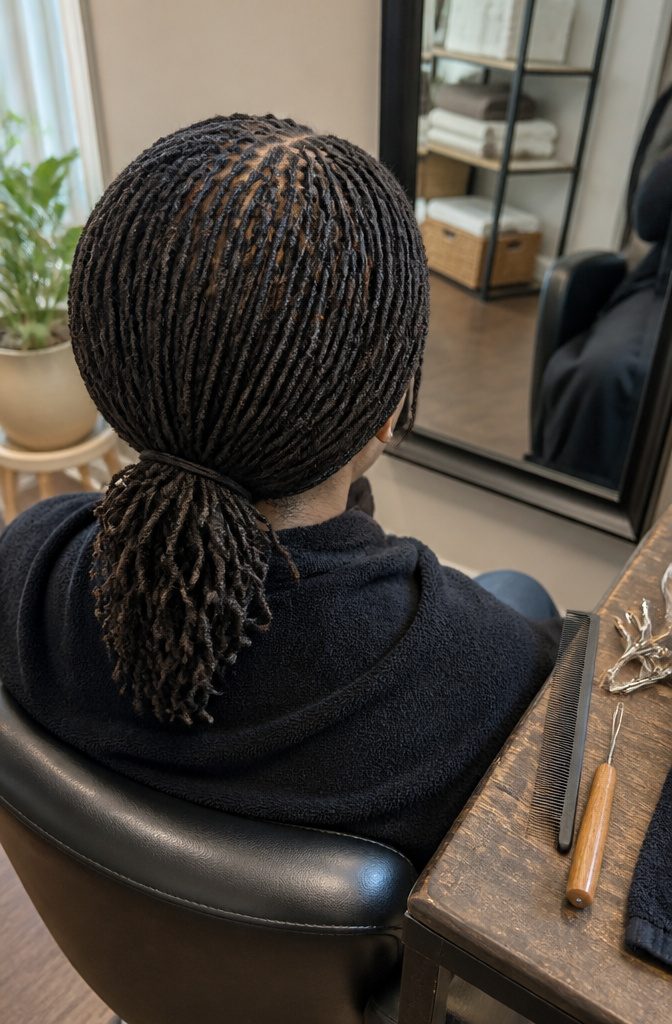
Sister locks are tiny, uniform locks installed using an interlocking technique rather than palm rolling or strand twisting. You create each lock with a specialized tool that pulls the hair through itself to form the lock structure.
The tool method delivers a neater, more consistent result at a smaller size than traditional locs, which means more versatility in styling once they mature.
The installation process takes longer than standard locs because each lock is smaller and requires precision with the tool.
Once they’re in, sister locks give you the option to wear them loose, pulled back, twisted up or styled much like loose natural hair.
I find the tradeoff works if you want locs that don’t announce themselves from across the room and you’re willing to sit for the install.
Faux Locs
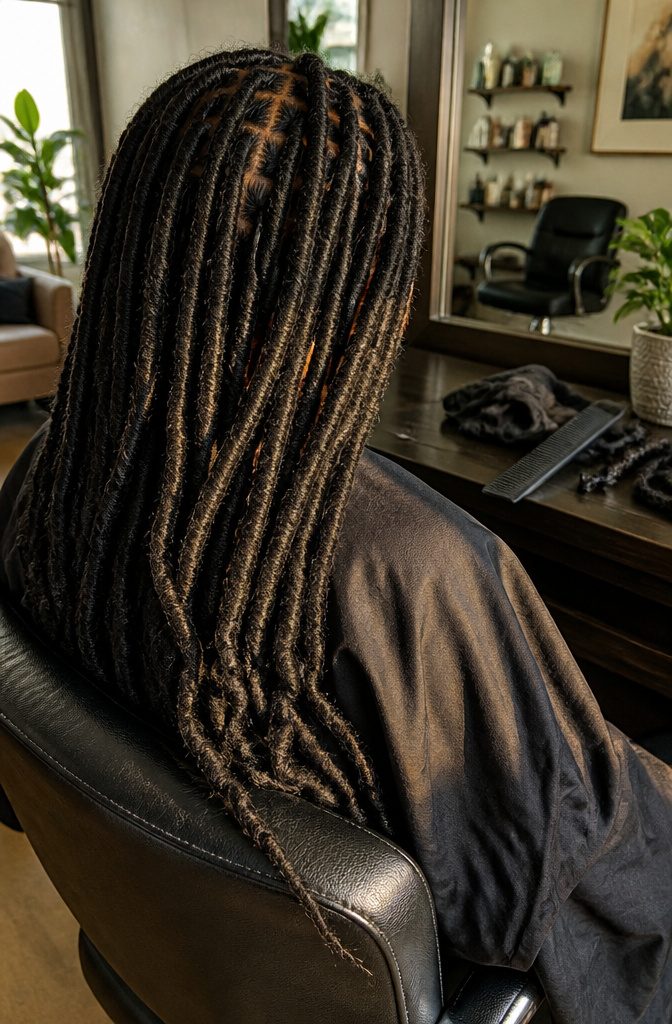
Faux locs are loc extensions: the locs are added hair, not the hair growing from your head. That gives you the look of dreadlocks without permanently locking your own hair, which is the clearest advantage over real locs.
Nothing gets backcombed to the point of no return, so if you tire of the style, your natural texture is still there underneath.
For anyone who loves the look but isn’t ready to commit, I’d start here.
Real locs reward patience. Faux locs let you find out whether the style fits your life before you decide.
Gel Twists
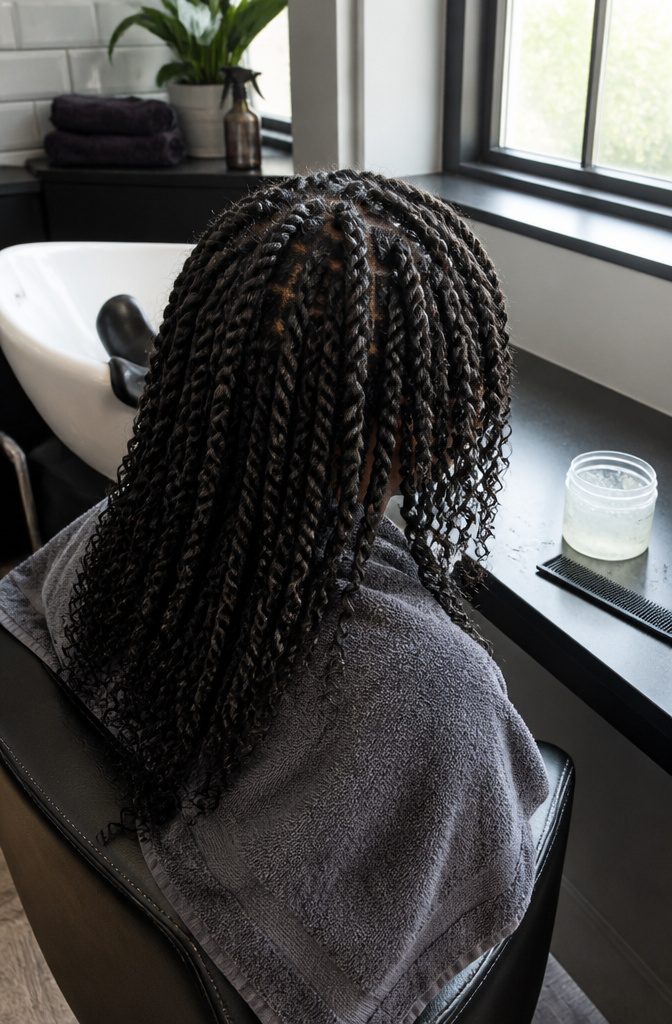
Gel twists, also called single-strand twists, are done on hair that was just shampooed and conditioned and is still damp.
Book the appointment for a wash day, or ask whether the salon will wash first, because twisting on dry or day-old hair works against the style.
Each strand gets very little handling, which is why I rate this as one of the gentler options on a braiding menu.
Plan on up to 1–3 weeks of wear.
That makes it a short-term style, best for an event, a vacation or a trial run before a longer install. If you want a look that holds past three weeks, choose something else.
Natural-Hair Individual Braids
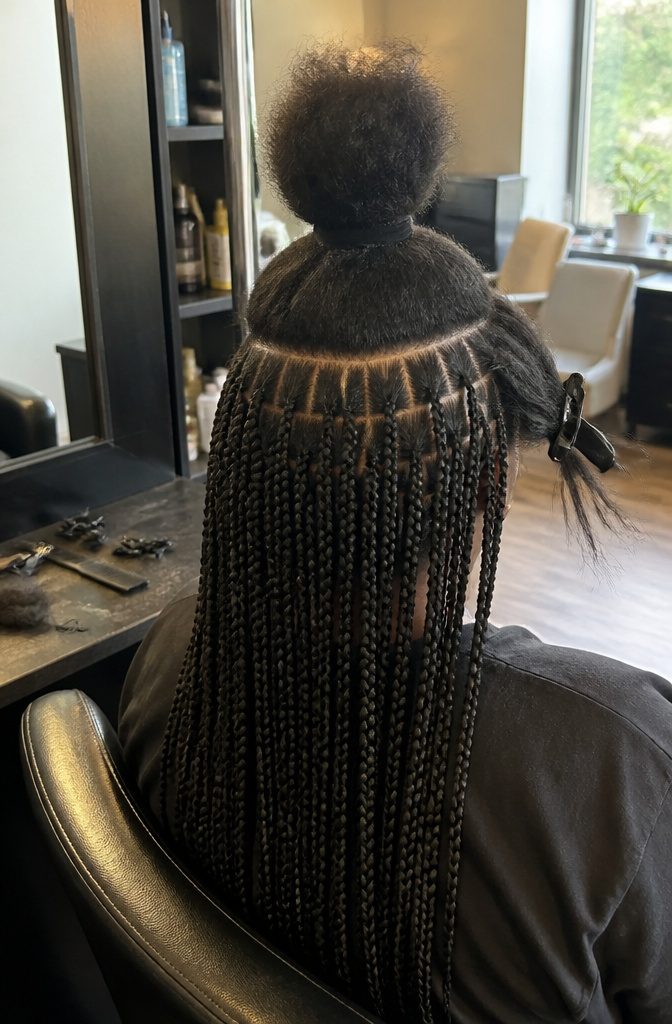
Individual braids don’t require added hair.
Box braids can be installed on natural hair alone, so every braid is made from your own strands. Ask a hair braiding salon whether it offers a natural-hair install, since many menus assume extensions by default.
Smaller single braids show no distinct parting, which makes the style look fuller.
On natural hair, that fullness depends on your own density. I’d choose this route if your hair is thick enough to fill each braid and you want to skip synthetic hair, which is typically Kanekalon for box braids.
If your hair is fine or thin, ask the braider before booking whether it will hold a braid on its own.
Natural-Hair Twists
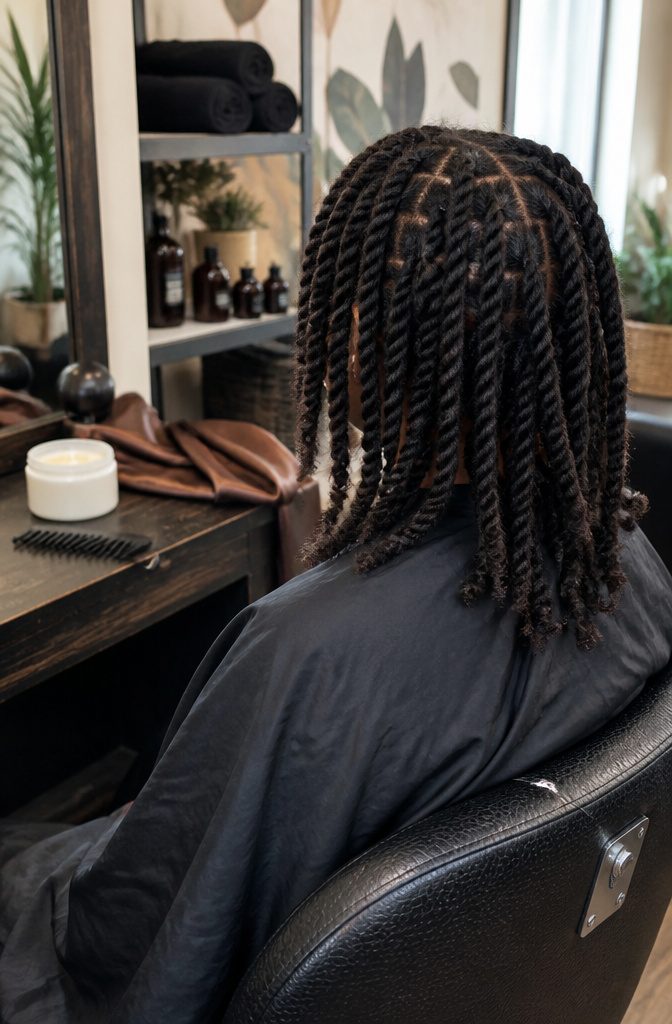
Natural-hair twists use only your own hair: two strands wrapped around each other from root to end, with no extension hair added.
That keeps them lighter on the scalp than most braided styles, and the finished length is whatever your hair gives you after shrinkage.
Stylists generally start on clean, detangled, moisturized hair, so arriving with it already stretched or blow-dried can save chair time.
I’d choose them over extension twists if low tension matters most, and skip them if you want added length or a style that lasts for weeks.
Natural twists frizz and loosen sooner than extension styles, so plan on a shorter wear time and a satin scarf at night.
Braid Down
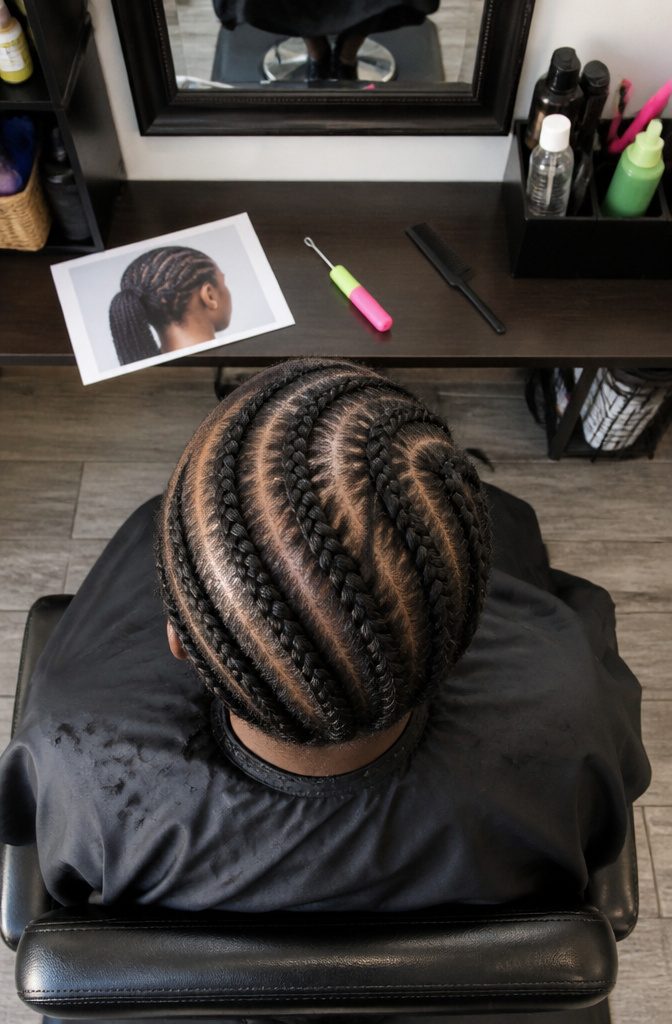
A braid down is the foundation layer: your natural hair is braided flat against the scalp so a second style has something to grip.
Crochet work is the usual reason to book one, since the hair gets looped onto those braids rather than onto bare strands.
The pattern matters more than most people expect. Parts that suit a side sweep won’t suit a middle-part look, so tell your stylist what goes on top before the first braid starts, and bring the photo.
I’d push back on any base that feels tight.
It should sit snug, not sharp, because tension at this stage is what turns into soreness days later. Arrive with hair washed and detangled.
Dreadlocks
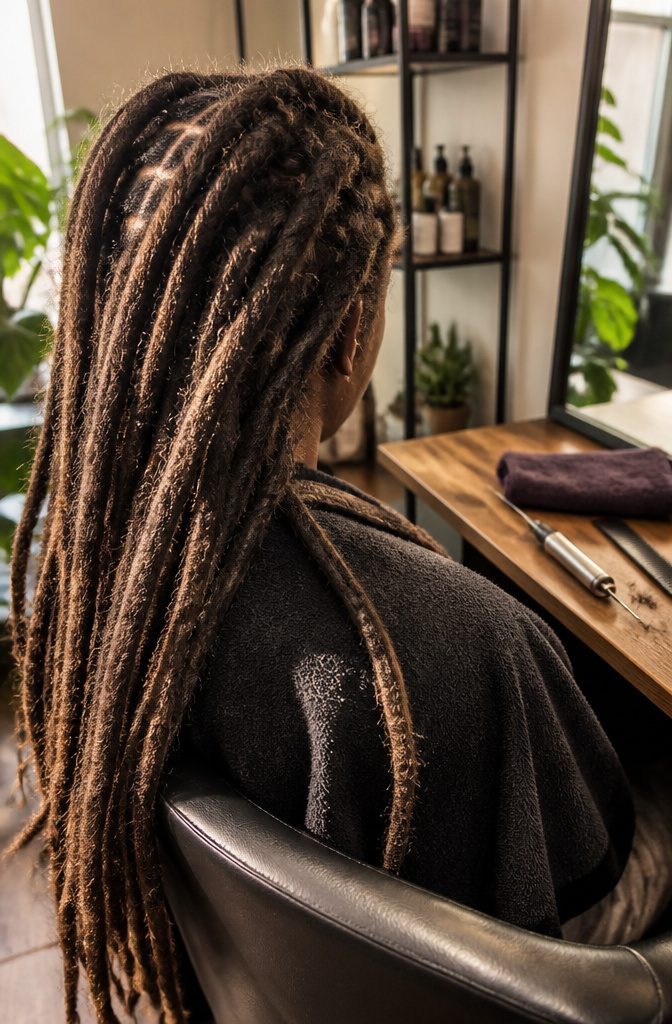
Dreadlocks are the one service on a hair braiding salon menu made from your own hair, which sets them apart from the braiding, coloring and extension work around them.
Locs form through backcombing, strand twisting or palm rolling, and backcombing takes you close to a point of no return, since you can’t take it out like a set of braids.
Faux locs use extensions instead of your own hair, so they work as a low-risk trial.
Sister locks are tiny locs formed with an interlocking tool rather than twisting or rolling. I’d book true locs only when you’re sure; if you’re just curious, start with faux.
Sew-In Application
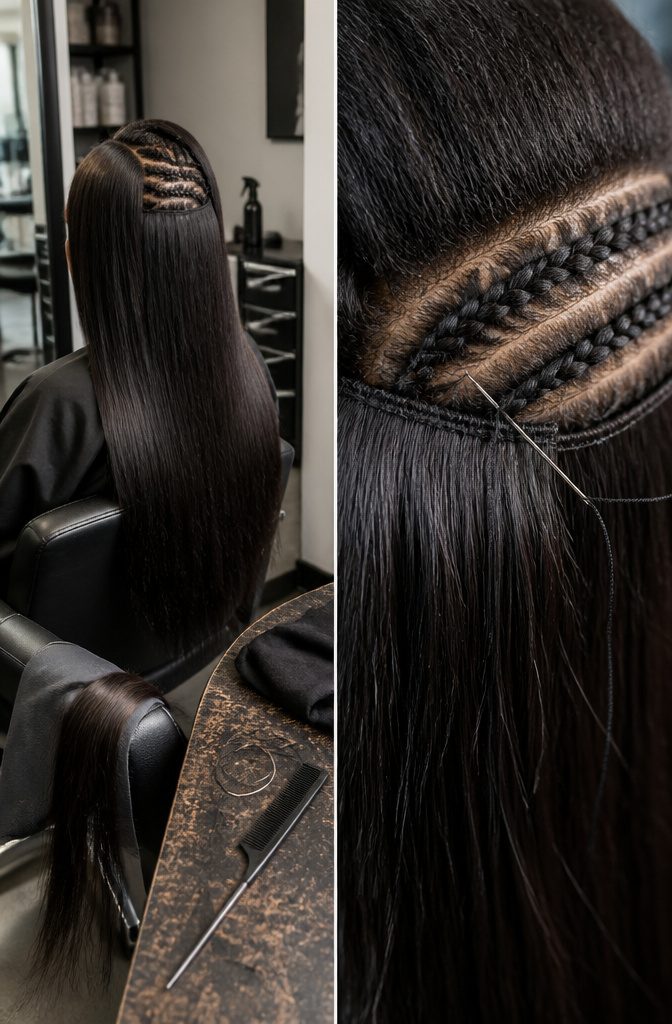
A sew-in starts with your natural hair braided flat to the scalp in cornrows, and wefts of extension hair are then stitched onto those braids with a needle and thread.
The braid pattern decides how the finished hair lies, so bring a photo and ask the stylist to match the part and the direction. For fragile edges I’d pick a sew-in over glue, since no adhesive touches the hairline.
Tension is where a sew-in goes wrong. Speak up the moment the base feels tight, while the stylist can still loosen it.
A hair braiding salon that installs sew-ins also offers takedown, and I’d book it with the same shop so the thread gets cut away from your own hair.
Extension Application
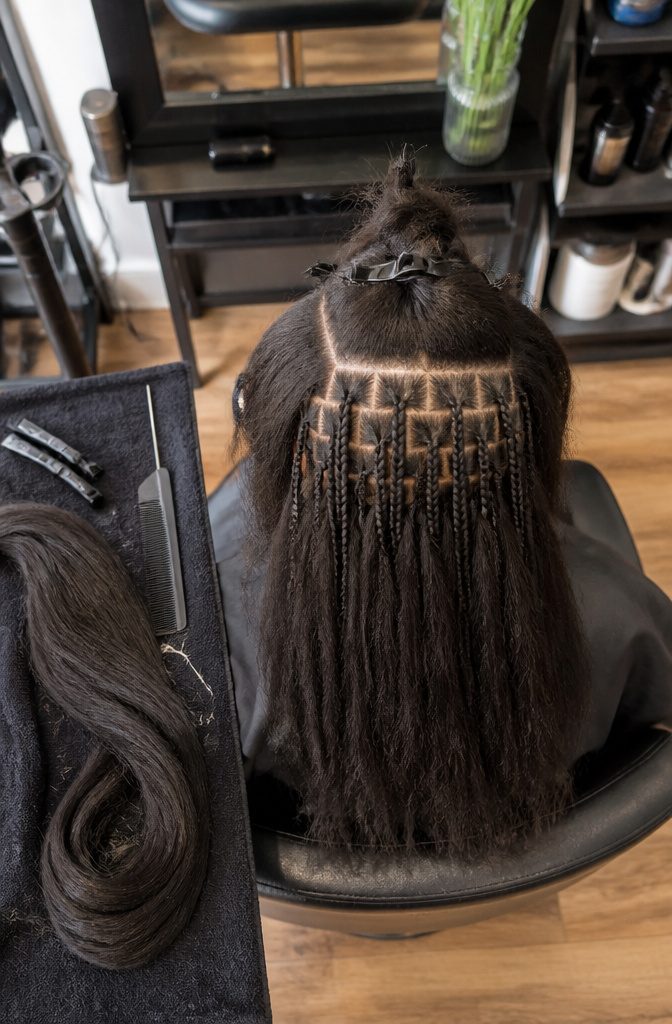
Extension hair is worked into your own hair in sections, so the style is only as even as the parting and tension at the start. Whether that hair comes with the service varies.
At Grace & Glam, some prices include it, and others leave you to buy it. The shop carries one brand, Xpression hair, sold in the store, so for any service that doesn’t include hair, that’s what you’ll be purchasing.
I’d settle this before the appointment, not in the chair.
Look at the service listing, then ask whether hair is part of the price. If it isn’t, plan to pick up the Xpression hair at the shop.
Everyday Hairstyling
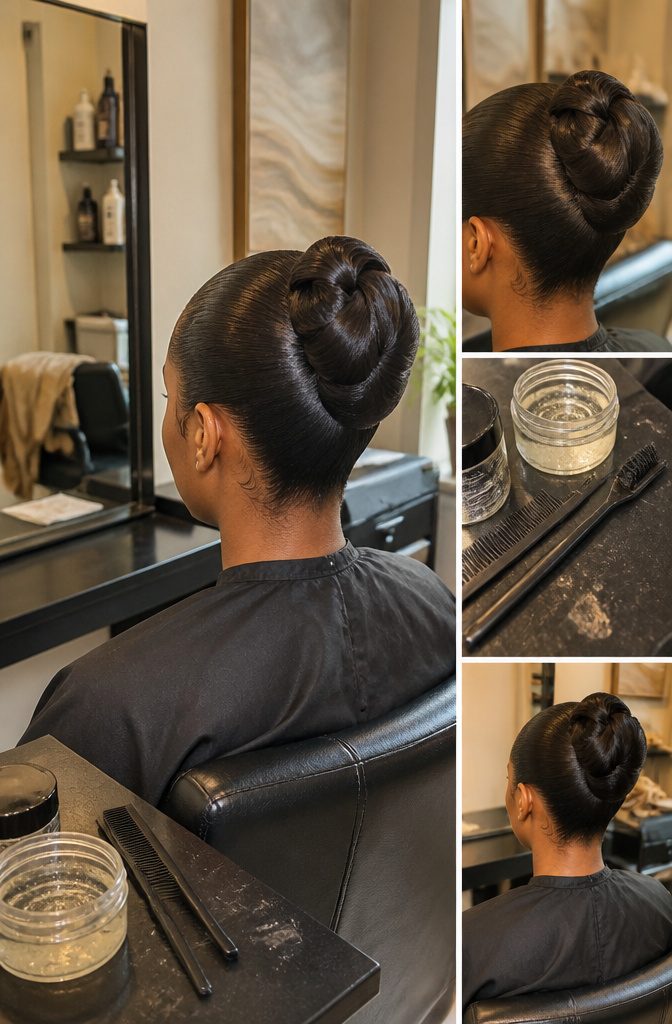
Everyday styles are the budget end of the menu. A Sleek Spike Bun is $120, Space Buns are $170, Slick is $180, and Smooth is $200.
Mr. Suave runs $100, and Innocent is the low end at $60. Ponytail Twist appears at both $150 and $200, so ask which version you’re booking.
Slick styles live or die on the gel. House of Braid’s Styling Gel is $32.00 and is made for slick-back updos and edges, with castor oil, tea tree oil, aloe vera, moringa oil and jojoba oil.
I like that it promises a soft finish, since stiff, flaky edges are the usual complaint with gel. It’s the one to keep at home for touch-ups between visits.
Takedown Services
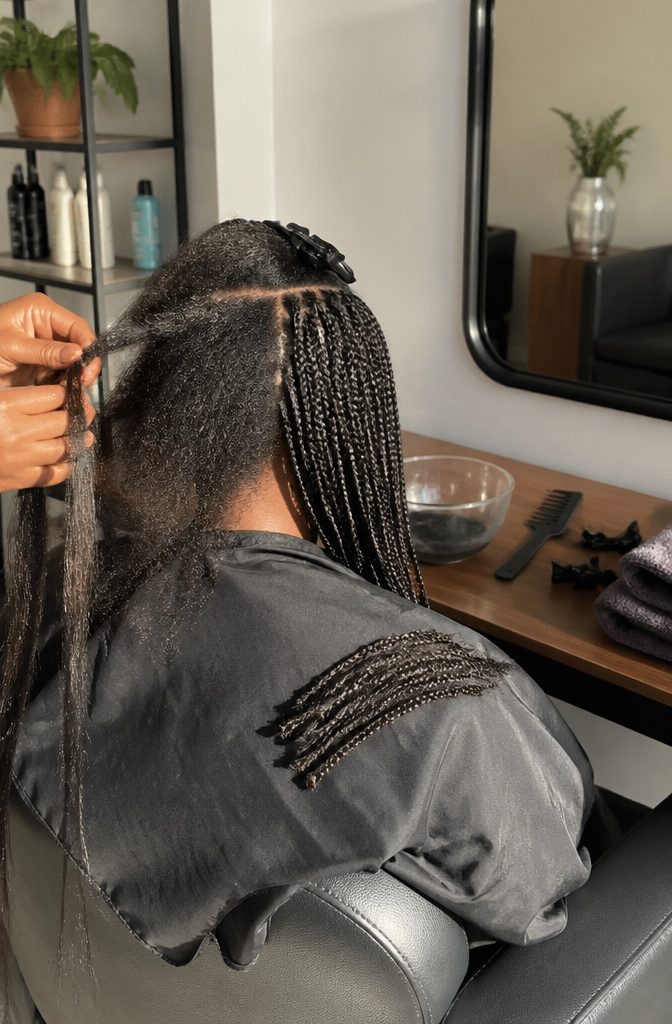
A takedown appointment covers more than braids. Here is what a salon will typically remove:
- Braids
- Sew-ins
- Crochet styles
- Faux locs
- Comb-out of natural locs, which works on your own hair rather than added extensions
The list usually ends with "and more," so if your style isn’t named, ask before you book. I’d say which style you’re wearing when you call, since a sew-in and a head of faux locs are very different removals.
Wash, Condition and Blow-Dry
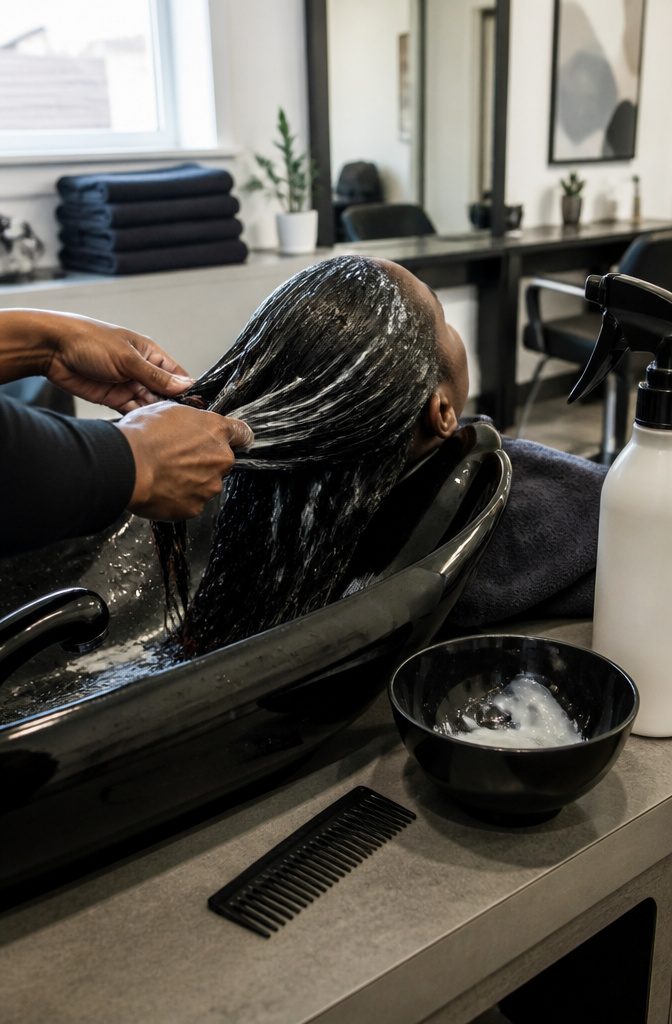
Shampoo has one job here: it cleans the scalp and lifts off excess oil. Conditioning is where the service earns its price.
A deep conditioning treatment works on the cuticle, helping its scale-like cells lie flat, so hair looks smoother and shinier. It also adds moisture and restores fullness to each strand.
I would not skip that step. Once a style goes in, you can’t reach the hair underneath for a long time, so moisture has to go in first.
Book the wash, conditioning and blow-dry as one appointment, since salons list it that way, and let the blow-dry finish the service so the hair is dry and ready for the next step.
Makeup and Lash Extensions
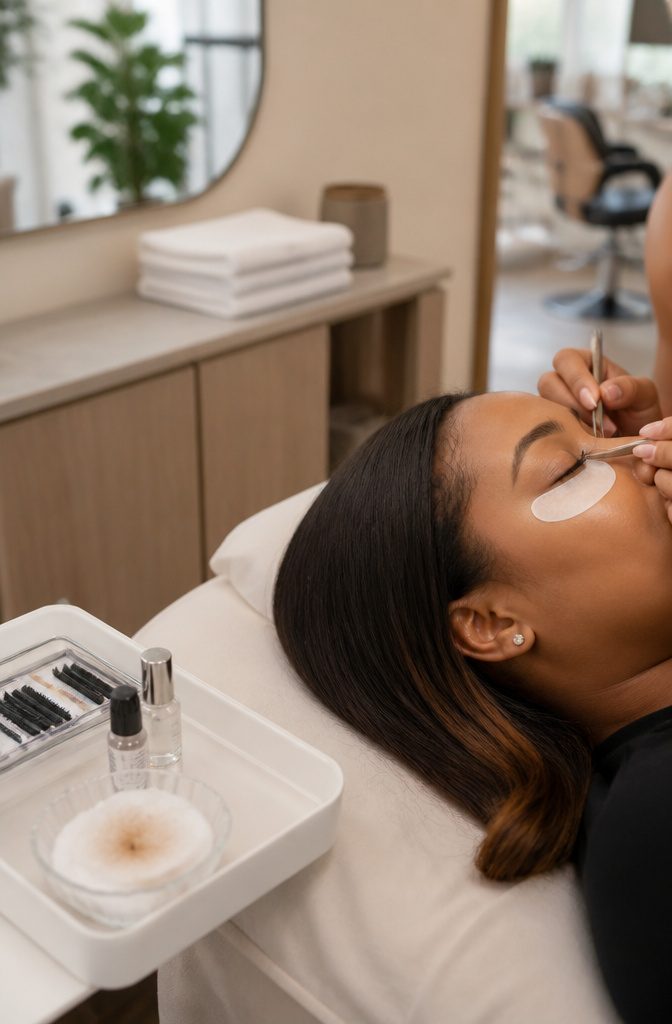
Bow Salon opened in 2019 with Juliera, who grew up braiding hair and turned that skill into a full-service beauty business.
Beyond braids and locs, the salon offers makeup application and lash extensions, which means you can walk out with a fresh protective style and a finished face in one appointment.
The team uses sanitized tools and safe products, and every service is handled by licensed experts who keep up with current beauty trends.
I appreciate salons that treat sanitation as a baseline rather than a selling point, but it matters more when you are working around the eyes or applying color near the lash line.
The combination of braiding and makeup services makes Bow Salon practical for anyone prepping for an event or simply consolidating their beauty routine into fewer stops.
Coloring and Relaxing
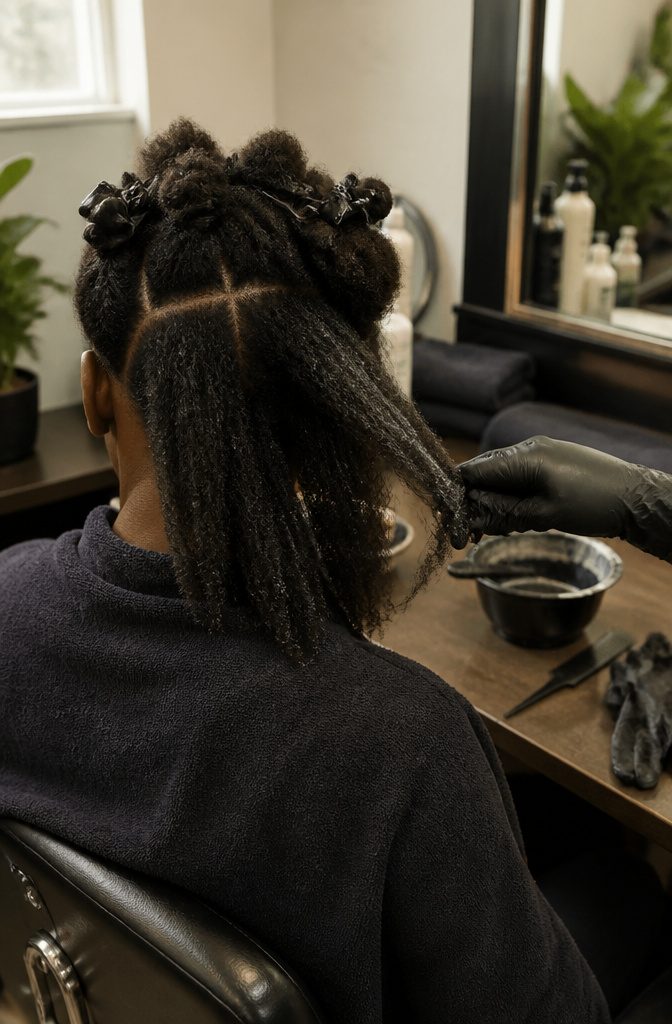
Glamour Braids & Weaves in Anchorage lists hair coloring and relaxing alongside its braiding services, so one appointment can cover both.
For shades, relaxer types and what each visit includes, call (907) 272-4299. I’d rather send you to the salon than guess at details it hasn’t confirmed.
Order matters more than most clients expect. Color and relaxer belong before the braids go in, never underneath them, because chemicals can’t be applied evenly to hair that is already installed.
Freshly processed hair is also at its weakest, so give it a rest before a tight protective style.
Scalp tenderness and breakage are the usual price of rushing. If a long-wear style is the plan, say so when you book so the stylist can space the services.
Choosing Size, Length and Texture
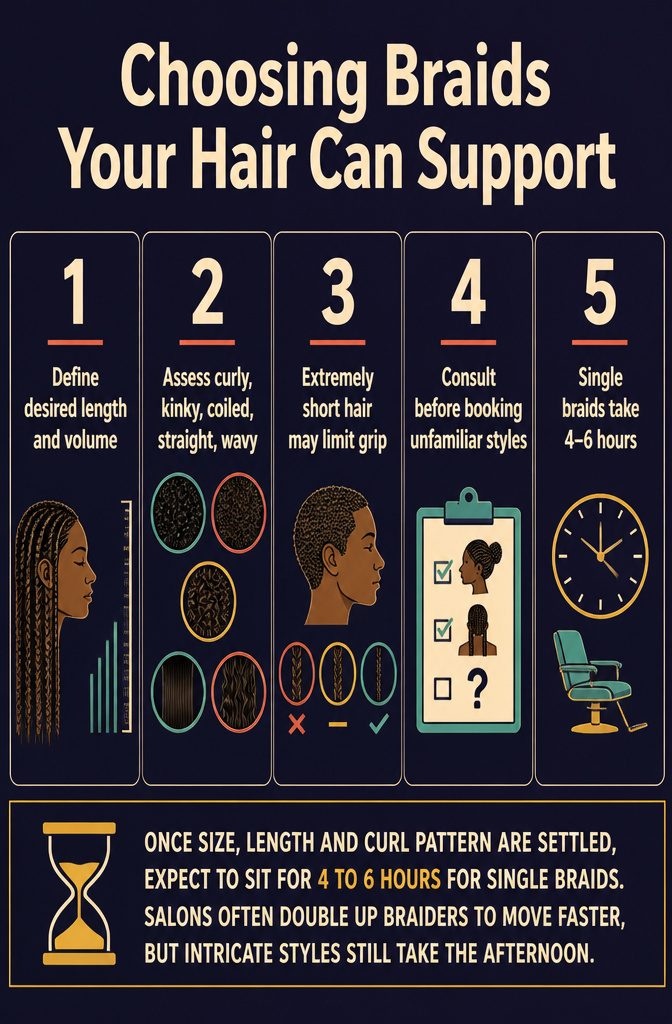
Walk into a consultation and the first questions are yours to answer: what you’re after, how you wear your hair now, and how much length or volume you want to add.
Stylists trained to work with curly, kinky, coiled, straight and wavy textures assess what your natural hair can support and which braid or twist style will hold without pulling.
If your hair sits extremely short, grip depends on the specific braid you want. Grace & Glam recommends an in-store consultation before you book, so you know whether the style you’re picturing will actually work.
Once size, length and curl pattern are settled, expect to sit for 4 to 6 hours for single braids. Salons often double up braiders to move faster, but intricate styles still take the afternoon.
Pricing and Hair Costs
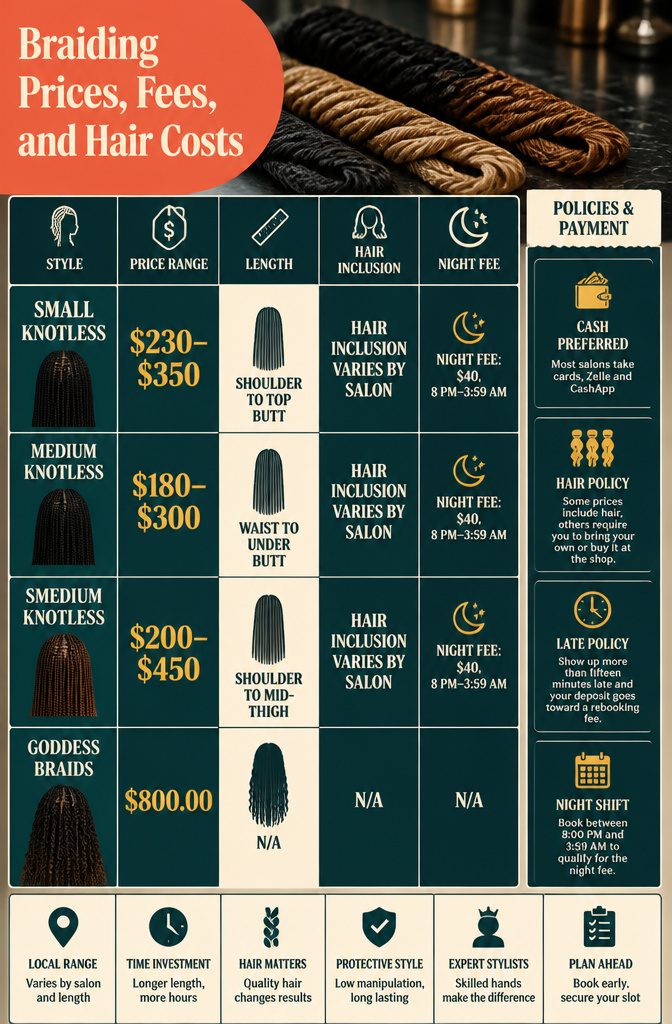
Knotless prices at Nadine’s start at $180 for medium braids at waist length and climb to $450 for smedium knotless at mid-thigh.
Small knotless run $230 to $350 depending on length. House of Braid lists small/medium knotless at $1,000.00 and goddess braids at $800.00.
Senegalese twists come in around $220. If you book between 8:00 PM and 3:59 AM, expect a $40 night-shift fee.
Some prices include hair, others require you to bring your own or buy it at the shop.
Cash is preferred, but most salons take cards, Zelle and CashApp. Show up more than fifteen minutes late and your deposit goes toward a rebooking fee.
| Style | Price Range | Hair Included | Night Fee |
|---|---|---|---|
| Small knotless (shoulder to top butt) | $230–$350 | Varies by salon | $40 (8 PM–3:59 AM) |
| Medium knotless (waist to under butt) | $180–$300 | Varies by salon | $40 (8 PM–3:59 AM) |
| Smedium knotless (shoulder to mid-thigh) | $200–$450 | Varies by salon | $40 (8 PM–3:59 AM) |
| Goddess braids | $800.00 | n/a | n/a |
Booking and Salon Hours
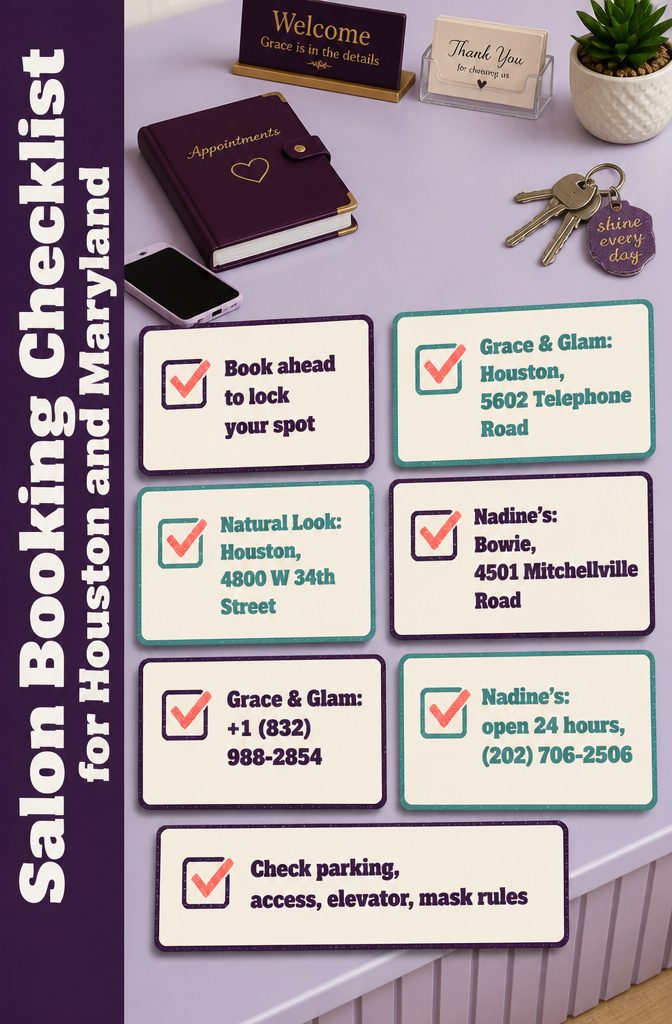
Most salons take walk-ins, but booking ahead locks in your spot. Here’s how to reach the main Houston and Maryland locations and what the hours look like:
- Grace & Glam Hair Braiding at 5602 Telephone Road, Houston: Monday through Thursday 9:00 AM to 9:00 PM, Friday and Saturday 8:00 AM to 9:00 PM, Sunday 11:00 AM to 7:00 PM. Early mornings available by appointment with a deposit. Call +1 (832) 988-2854.
- Natural Look at 4800 W 34th Street, Houston.
- Nadine’s Hair Braiding at 4501 Mitchellville Road, Bowie, Maryland: open 24 hours at (202) 706-2506. Long and small braids are limited to Monday through Thursday during summer only.
Free parking, wheelchair access and elevator service appear at some locations like Debby Hair Braiding. Denver and Aurora salons require masks.
Frequently Asked Questions
How much does hair braiding usually cost?
Small knotless braids at waist length run $300, while medium knotless at the same length cost $180, so size moves the price more than length.
Senegalese twists can run $220 for waist length when two stylists work at once, and goddess braids list at $800. Pricing varies by style, size and length, so text a photo for an exact quote.
Does the price include the hair?
Some services include hair in the price, while others require you to purchase it separately.
Grace & Glam carries Xpression hair in store for services that don’t include it. Ask before booking so you know what to bring.
How many hours does it take?
Single braids take 4 to 6 hours, and waist-length Senegalese twists can finish in 3 hours with two stylists working at once.
Chair time depends on the style, the length and whether the salon doubles up braiders. Gel twists are faster but only last 1 to 3 weeks.
Can you grip extremely short hair?
Most salons can grip short hair, but whether it holds the braid you want depends on the style.
Short natural hair suits smaller, shorter twists since the ends need length to stay anchored. Book a consultation before paying for any service so you know what your hair can hold.
What is the best braiding hair to buy?
Kanekalon is the synthetic fiber most braiders use for box braids and single braids.
For French curl braids, ask for French Curl Hair in the size you want, and for spring twists, specify coily or thick wavy extension hair since the texture gives the bounce.
Some salons carry Xpression hair in store, so check what they stock before you shop elsewhere.