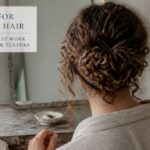
The length ranges from a cropped pixie that air-dries in minutes to shoulder-grazing lobs and long layered waves past your shoulders.
If your natural texture is wavy and you want something that works with it instead of fighting it, most of these grow out without an awkward midpoint.
Face-framing layers that start at cheekbone level show up in the money-piece cut, the long wolf cut, and several of the shags and bobs because they soften angles and work with length you already have.
1. Curtain Bangs
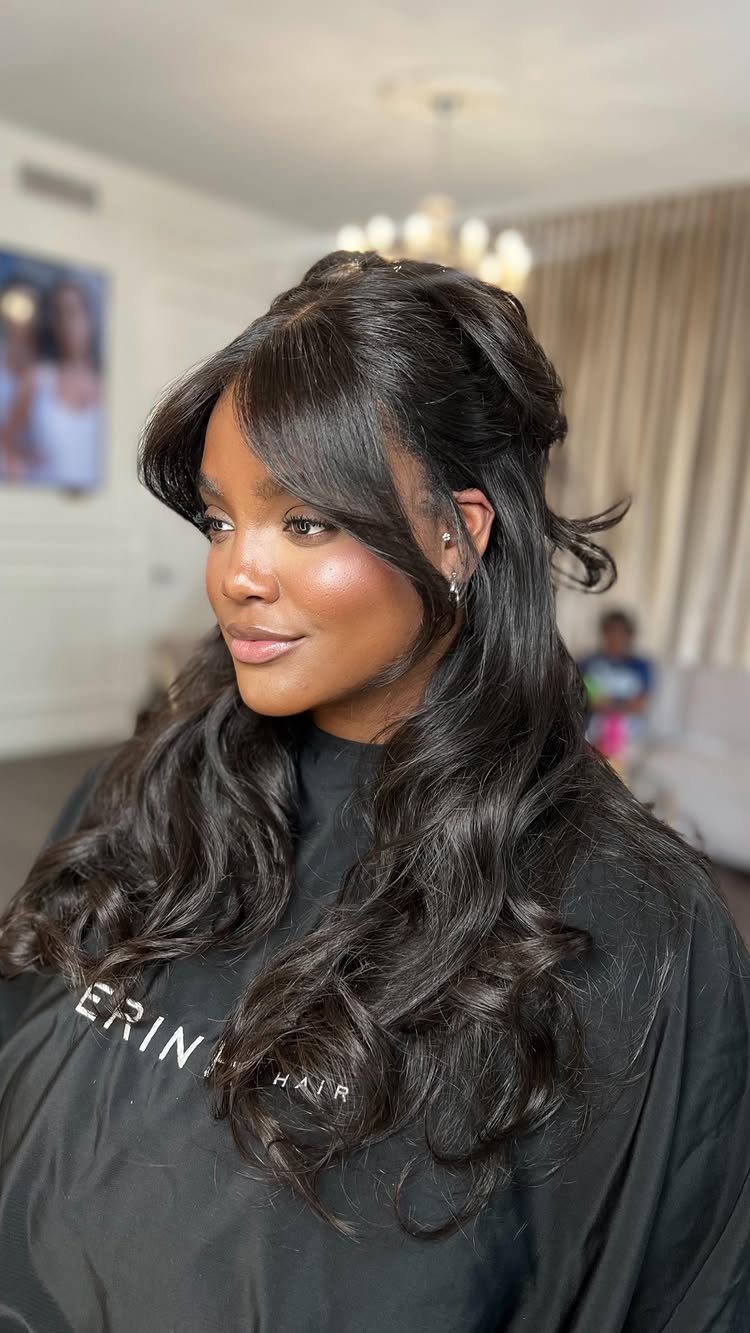
Bangs that split down the center or sweep to both sides give you the opening without the curtain.
The cut is longer at the edges than at the part, so it softens angles and can grow out without an obvious midpoint.
If you already have wavy texture, these blend right in.
Ask for face-framing length that sits at cheekbone level or just below, tapering into the longer hair. Style by directing the bangs outward as they dry, or pin them back to clear your face.
2. Choppy Layers
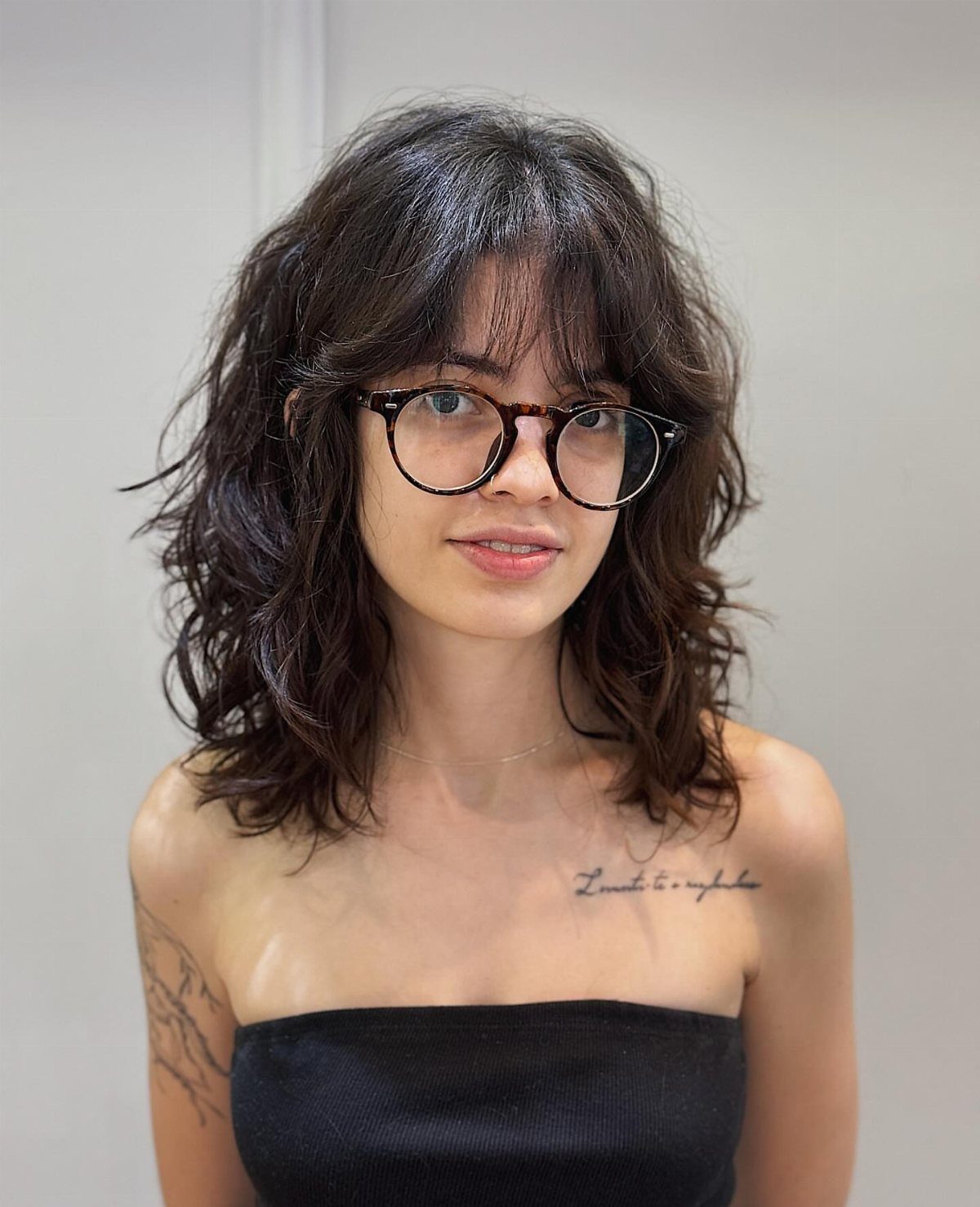
Layers cut at different lengths give wavy hair more movement than a blunt edge does. The uneven ends separate as they dry, so you get texture without much effort.
A shoulder-length cut or longer gives the layers room to cascade. Shorter hair can look choppy in a way that reads more punk than romantic, which might be exactly what you want.
Styling takes a diffuser or air-drying with a light product. The less you brush it out, the more definition stays in.
3. Beachy Waves
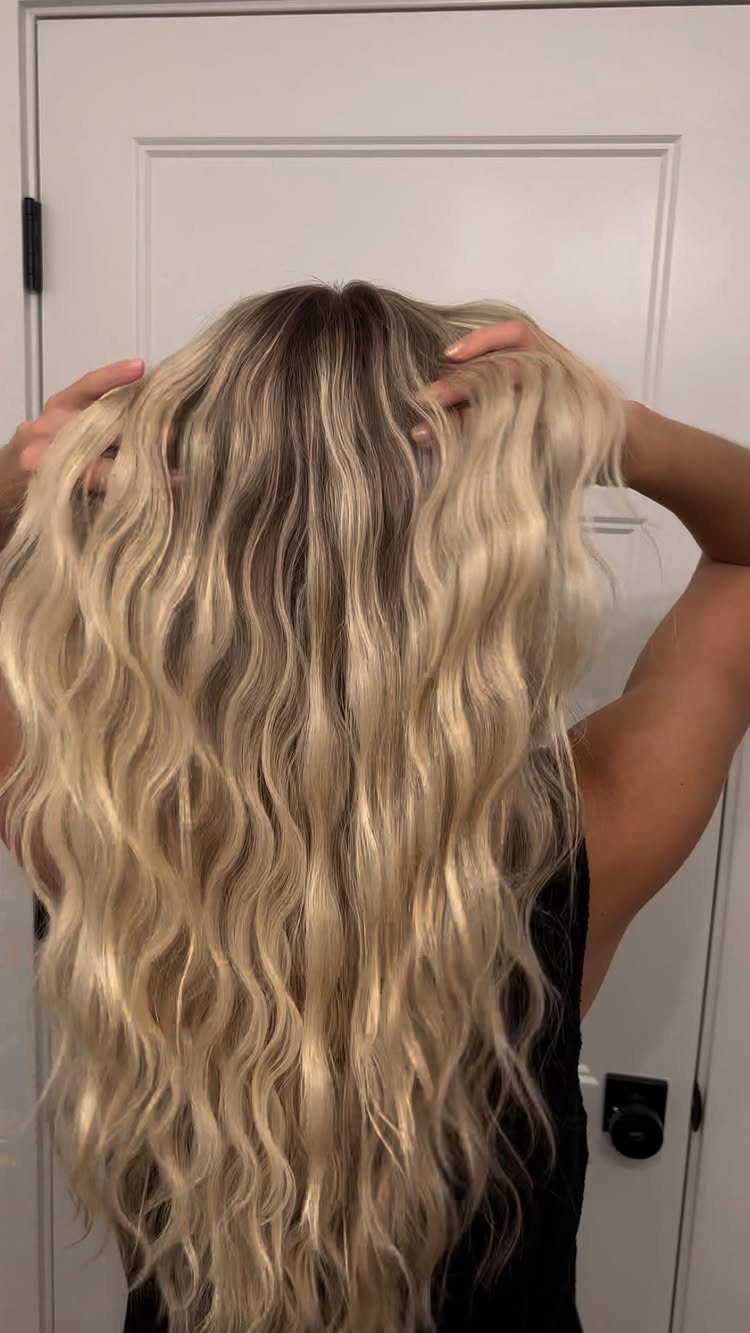
Waves that look like they happened naturally, with a slight tousle and no obvious curl pattern. The finish is soft, not set.
Salt spray or texturizing spray gives the grit that holds the wave without stiffness.
Scrunch as it dries, either in the air or under a diffuser on low. If you use a curling iron, wrap loose sections around the barrel without clamping, then shake them out immediately.
Skip the brush. Fingers keep the separation and let the wave stay loose.
4. Choppy Chin-Length Bob
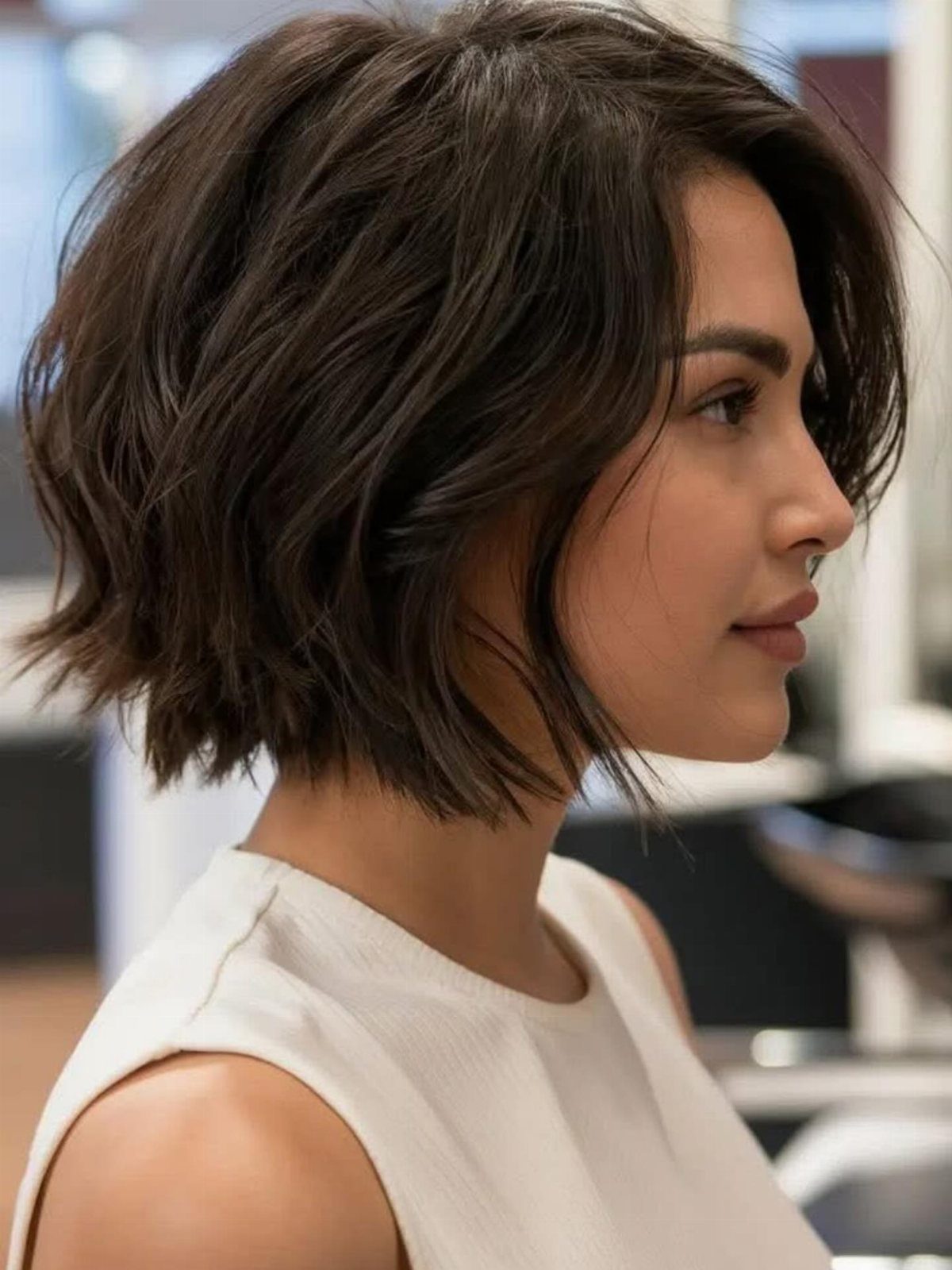
A bob that hits at the chin and uses choppy layers to keep the shape from looking too clean. Wavy texture makes the layers move, so the cut has dimension even when you do nothing to it.
This length works on most face shapes because it sits right at the jawline, where it can either soften or sharpen depending on how you part it.
Style with a diffuser or a round brush for more lift at the root.
The grow-out is easier than a blunt bob because the layers hide the line.
5. Curly Shag with Wavy Fringe
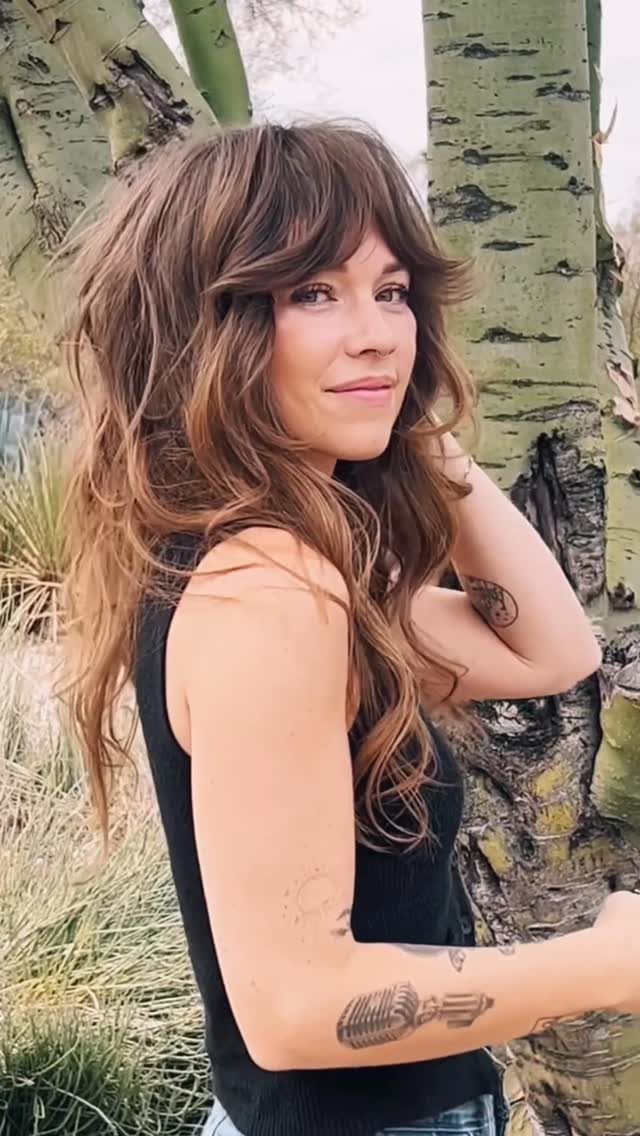
A shag cut with enough layers to let curls and waves do their own thing, plus fringe that can stay loose instead of being blown straight.
The bangs are longer and wispier than a full curtain bang, so they blend into the layers around them.
This cut needs regular trims so the shape doesn’t turn into a triangle. If you have a mix of curl patterns, the fringe will probably wave while the rest curls tighter, which is the point.
Scrunch with mousse or cream and let it dry without touching it.
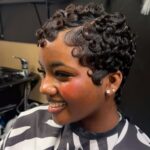
6. Pixie
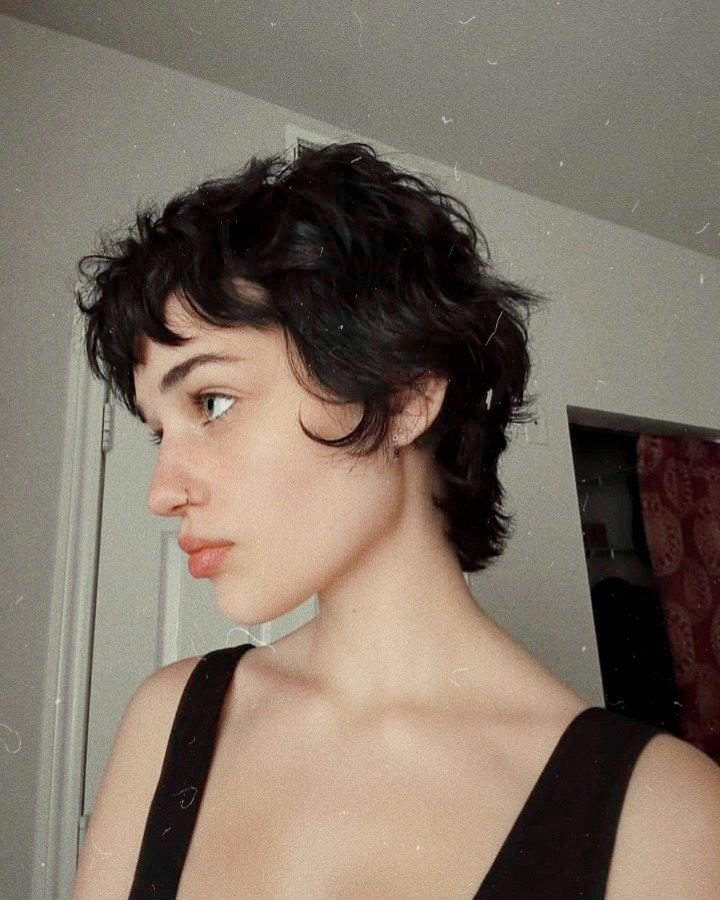
A cropped cut that lets natural waves add volume and movement without any styling. The length is short enough that it dries fast and stays in place with just a little product.
If your waves tend to frizz, this cut gives you less hair to manage.
A nickel-sized amount of cream or light oil smooths the fringe and keeps the texture soft. Air-drying works, or you can diffuse if you need to leave sooner.
It grows out quickly, so plan for frequent trims to hold the shape.
7. Large Loose Waves
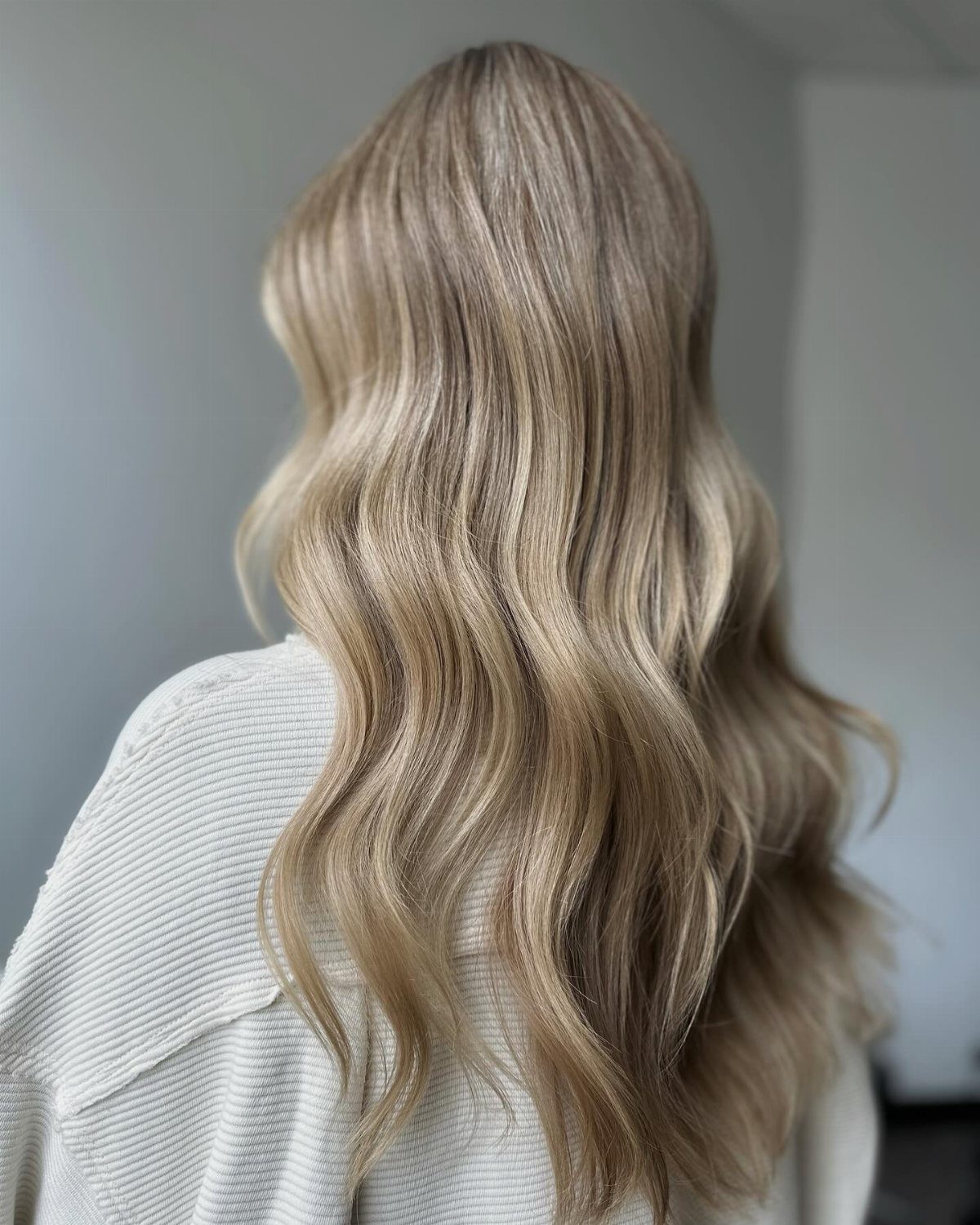
Waves with width to them, spaced out enough that each section has its own arc.
A wide barrel gets you there, or you can wrap sections around a flat iron and pull slowly. Leave the ends out for a more relaxed look.
If your hair already has wave, a round brush and a diffuser can stretch it into this shape. Let it cool before you touch it.
8. Neck-Grazing Wavy Lob
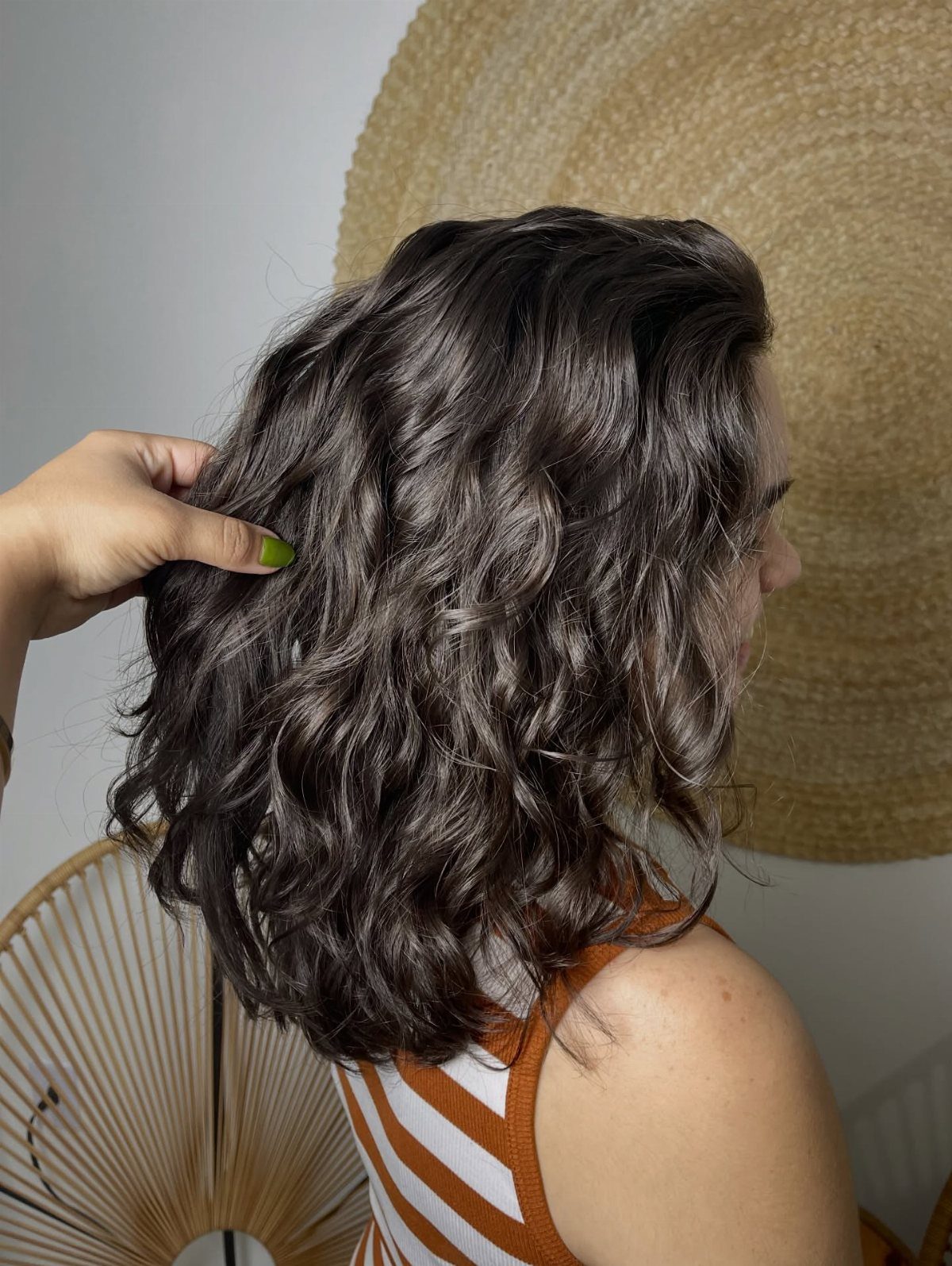
A lob that stops right at the nape, short enough to clear your shoulders but long enough to tuck behind your ears. Wavy texture keeps it from sitting flat.
This length works if you want something low-effort that still reads polished. A little cream smooths frizz without weighing down the wave.
It grows out into a longer lob without looking awkward in between.
9. Front-Dipped Asymmetrical Bob
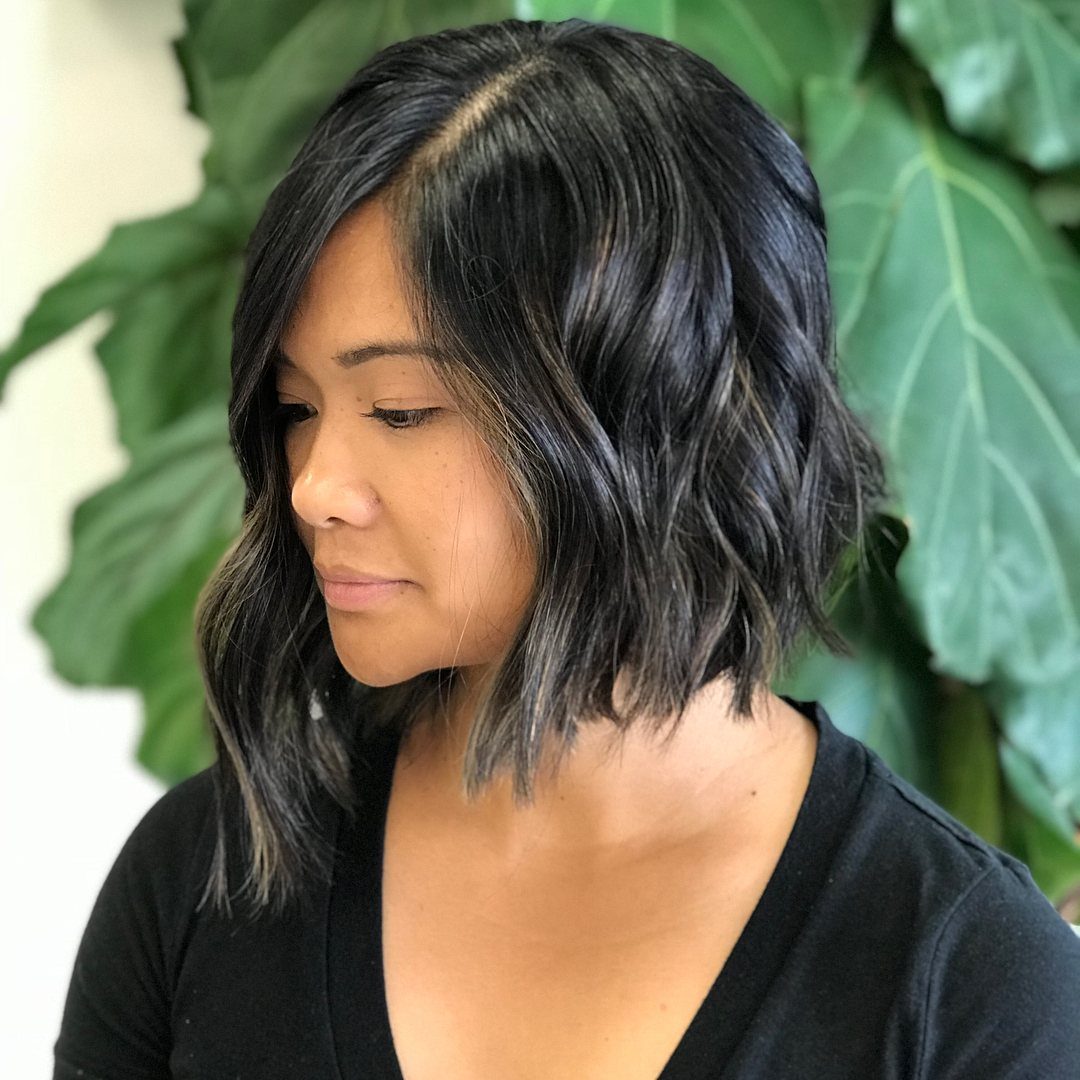
Longer pieces in front that angle down past your chin, while the back stays shorter. The asymmetry gives you structure without a blunt line.
Wavy hair makes the slope less severe, so it softens instead of sharpening your face. Style with a flat brush to smooth the front if you want more polish, or leave it loose.
The back needs regular trims to keep the length difference visible.
10. Shaggy Lob
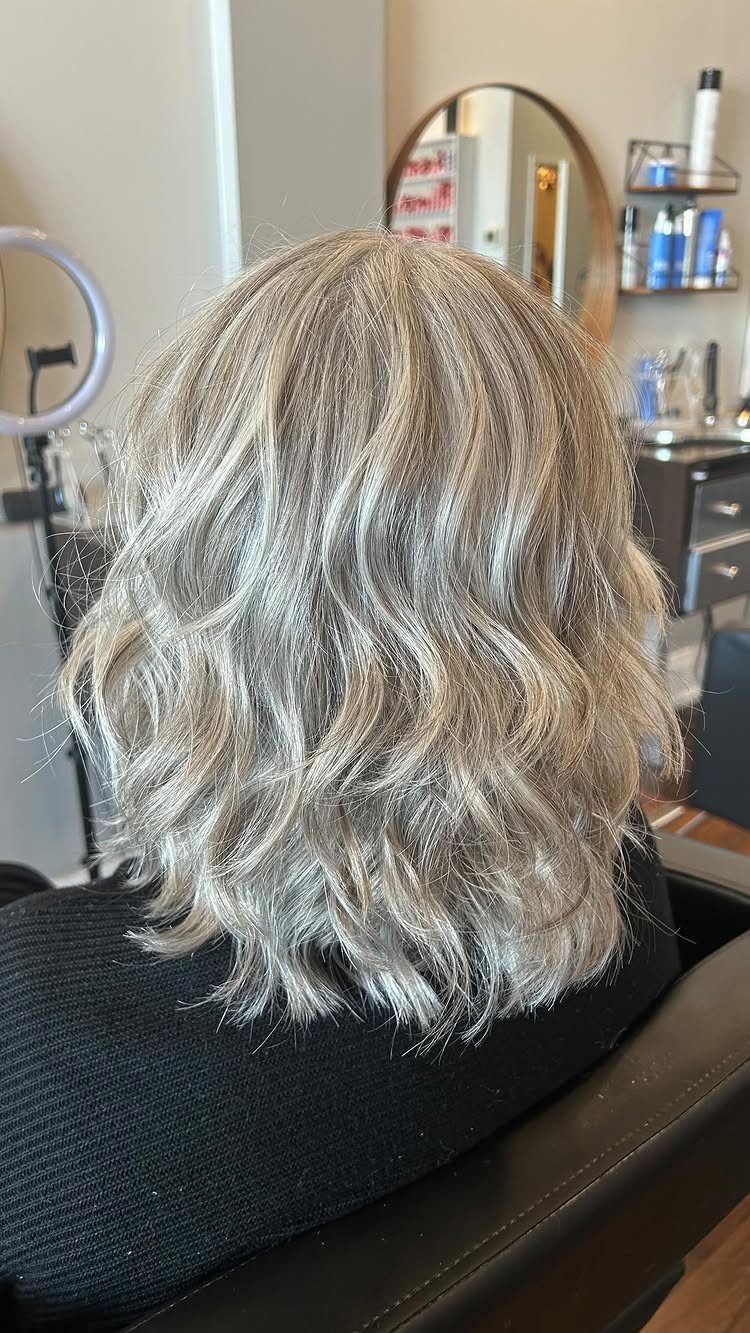
Layers cut with enough irregularity that the shape looks lived-in from the start. The length sits at the shoulders, so you can still pull it back if you need to.
Wavy texture fills in the layers and gives you volume without teasing. Air-dry with a texturizing spray, or scrunch with mousse if you want more hold.
This cut hides a lot, which makes it easier to stretch time between washes.
11. Medium-Length Waves with French-Girl-Style Bangs
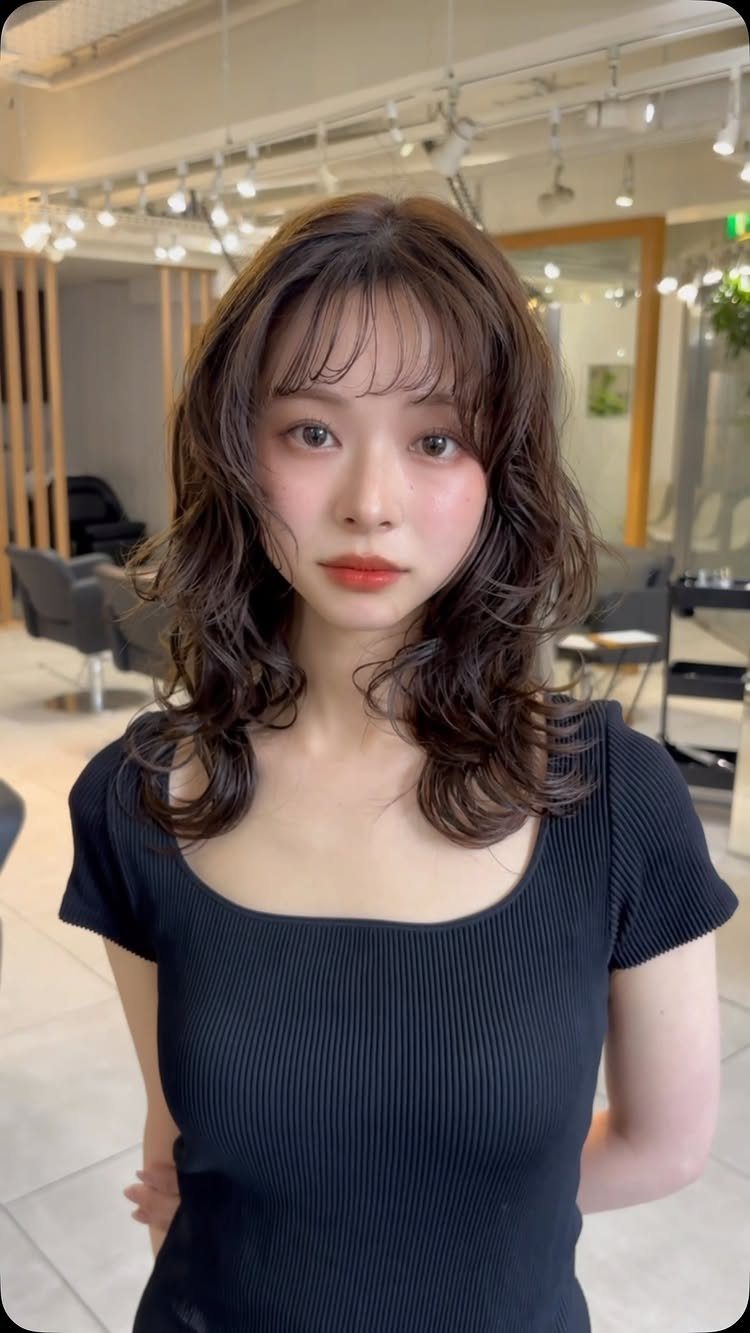
Waves that hit somewhere between your collarbone and shoulders, with bangs that stay long and wispy instead of blunt. The bangs blend into the layers around your face.
The waves give the bangs something to disappear into, so they don’t sit as a separate element.
Scrunch while damp and let it dry on its own.
12. Bouncy S-Shaped Waves
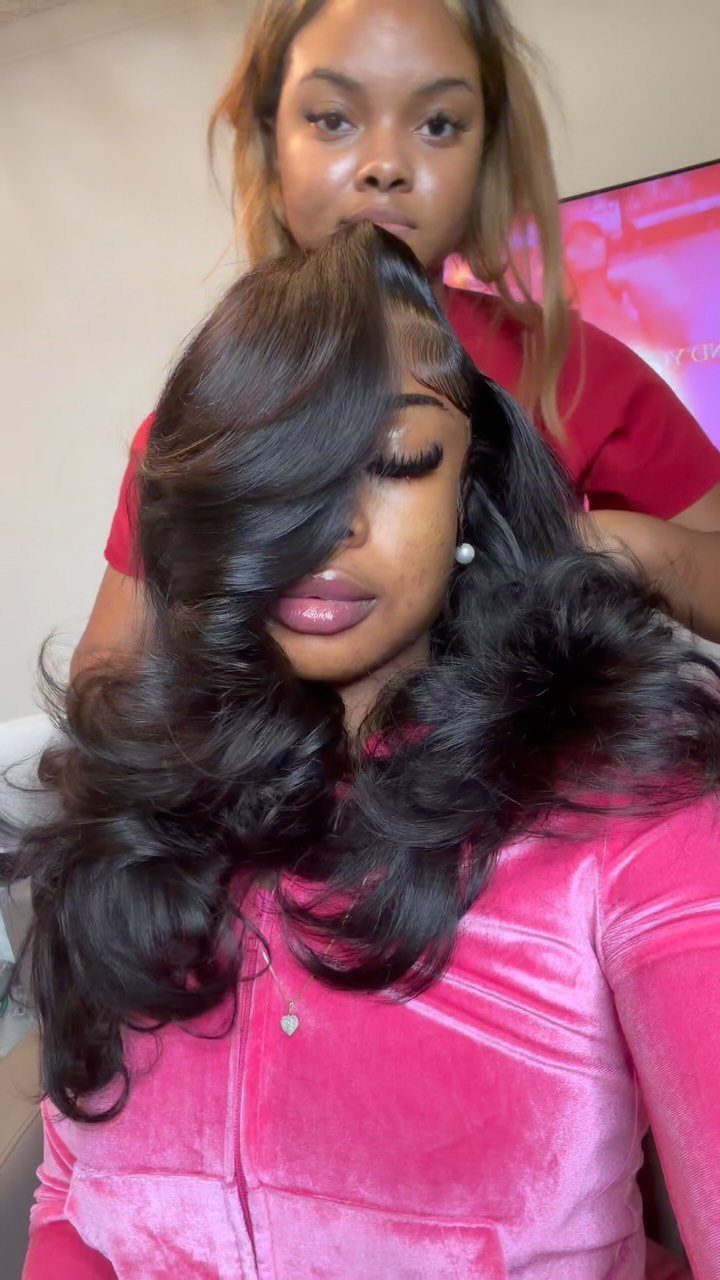
Waves that curve back and forth in a loose S pattern, with enough volume at the root to keep them from falling flat. It bends without going stiff or crunchy.
An iron or wand lets you decide how wide each bend sits.
Wrap sections away from your face, then brush through lightly once everything cools. The brushing turns curls into waves and shows off color variation.
Finish with a light spray to hold it without stiffness.
The key is to switch directions with every curl so they don’t fall into a single pattern, says hairstylist Matt Fugate. (That’s another type of wave: More on that in a minute.)
— Allure
13. Tousled Ponytail
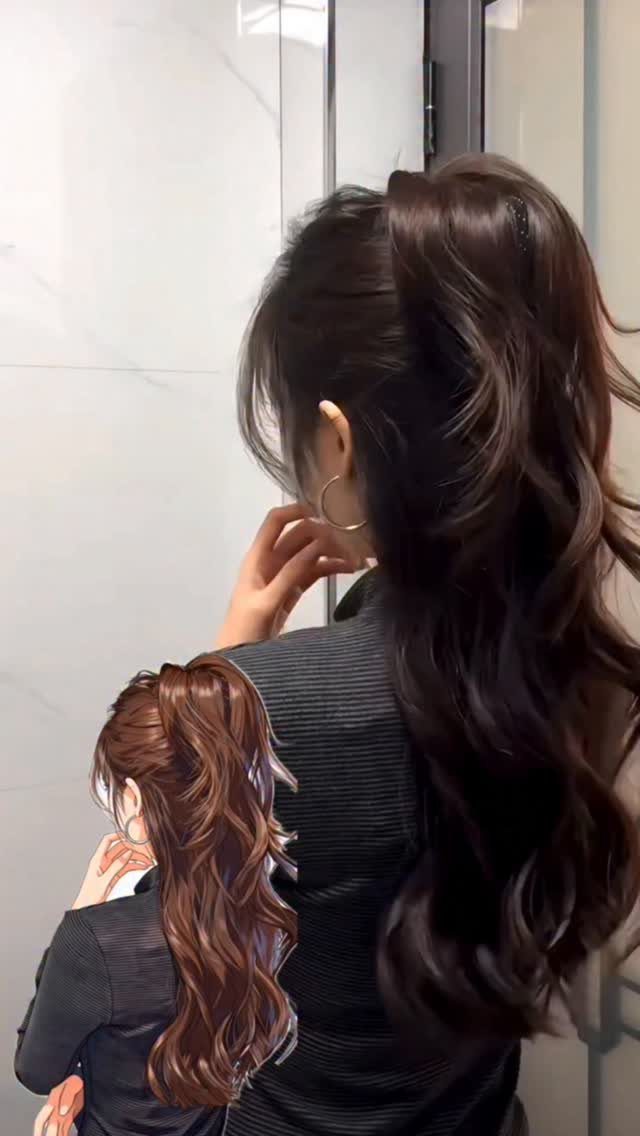
Pull your hair back high enough that it clears your shoulders, then loosen the waves at the crown so they lift instead of pulling flat. Leave a few pieces out around your face if you want softness.
The waves add volume without teasing, and the height keeps the ponytail from weighing itself down. A texturizing spray before you tie it gives the hair more grip.
This holds better on second-day hair than freshly washed.
14. Long Layers
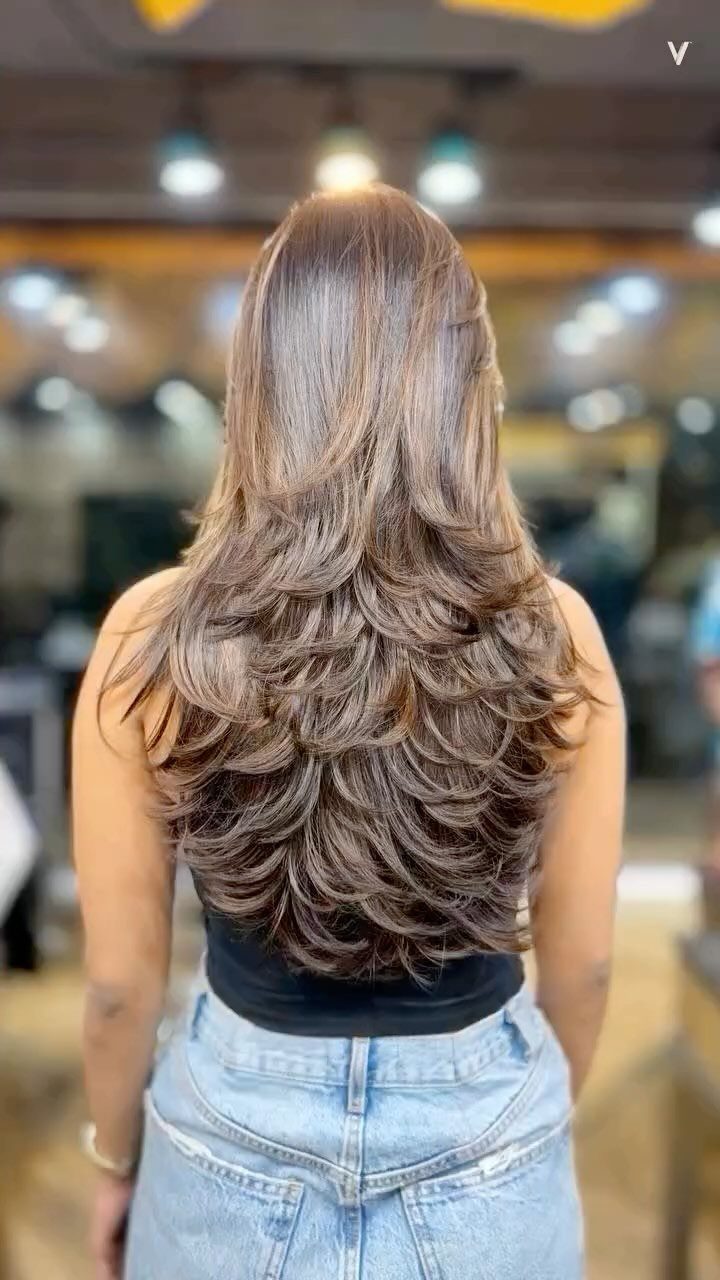
Layers that start below your shoulders and cascade down let you keep your length while adding shape. The hair moves in sections instead of hanging as one piece.
Ask for layers that begin mid-back or lower if you want the effect without losing much length. Wavy texture makes the layers more visible because they separate as they dry.
Air-dry or diffuse, and skip the flat iron. The wave is what shows the layering.
15. Face-Framing Money-Piece Layers
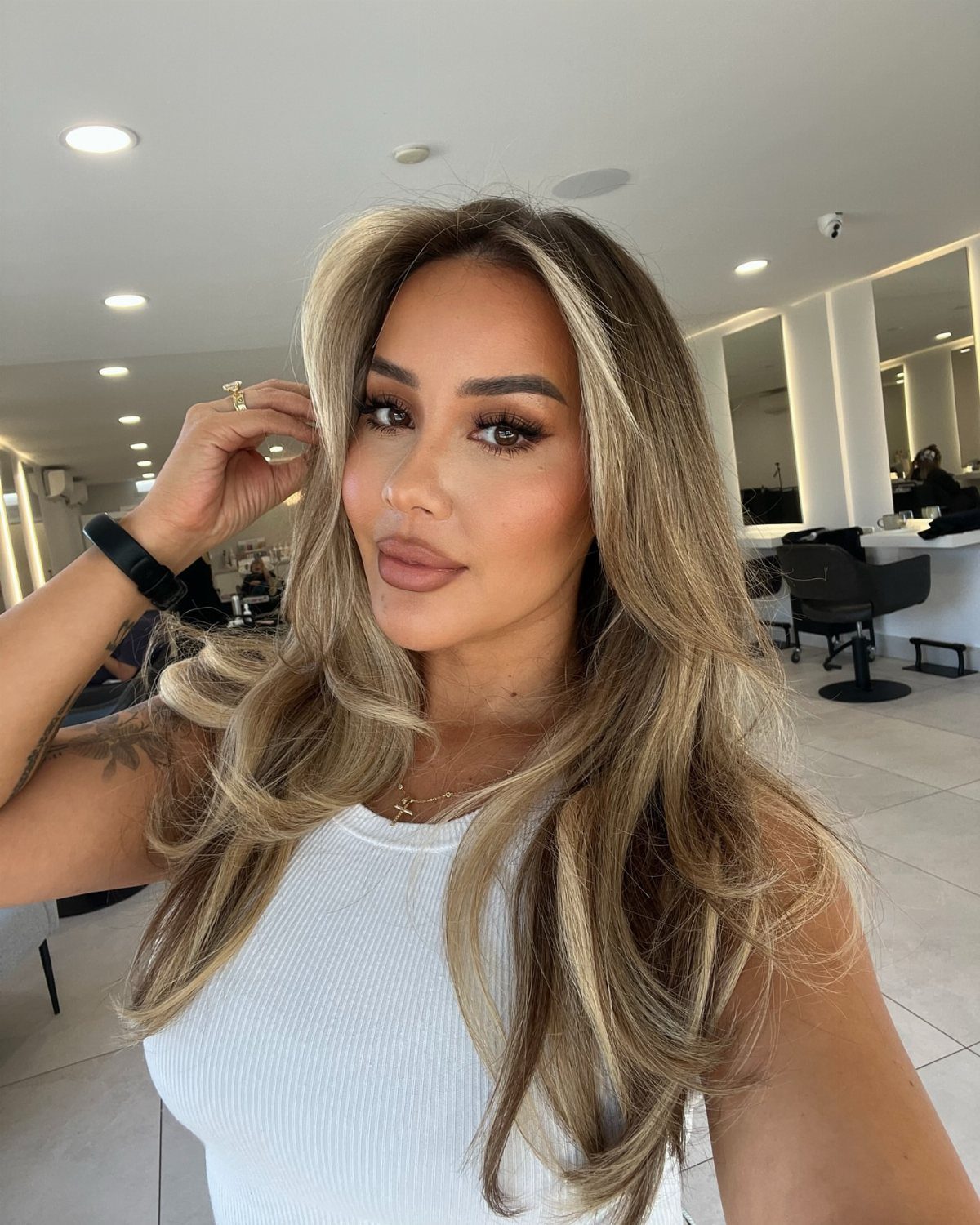
Shorter layers around your face that sit at cheekbone or chin level, cut to frame and soften angles. The rest stays longer, so you get contrast without committing to a full shag.
Wavy hair gives these layers movement, and they blend into the length without a hard line. If you have highlights or balayage, the layers catch the light and show off the color.
Style by scrunching with mousse or letting it air-dry.
16. High Half-Up Ponytail
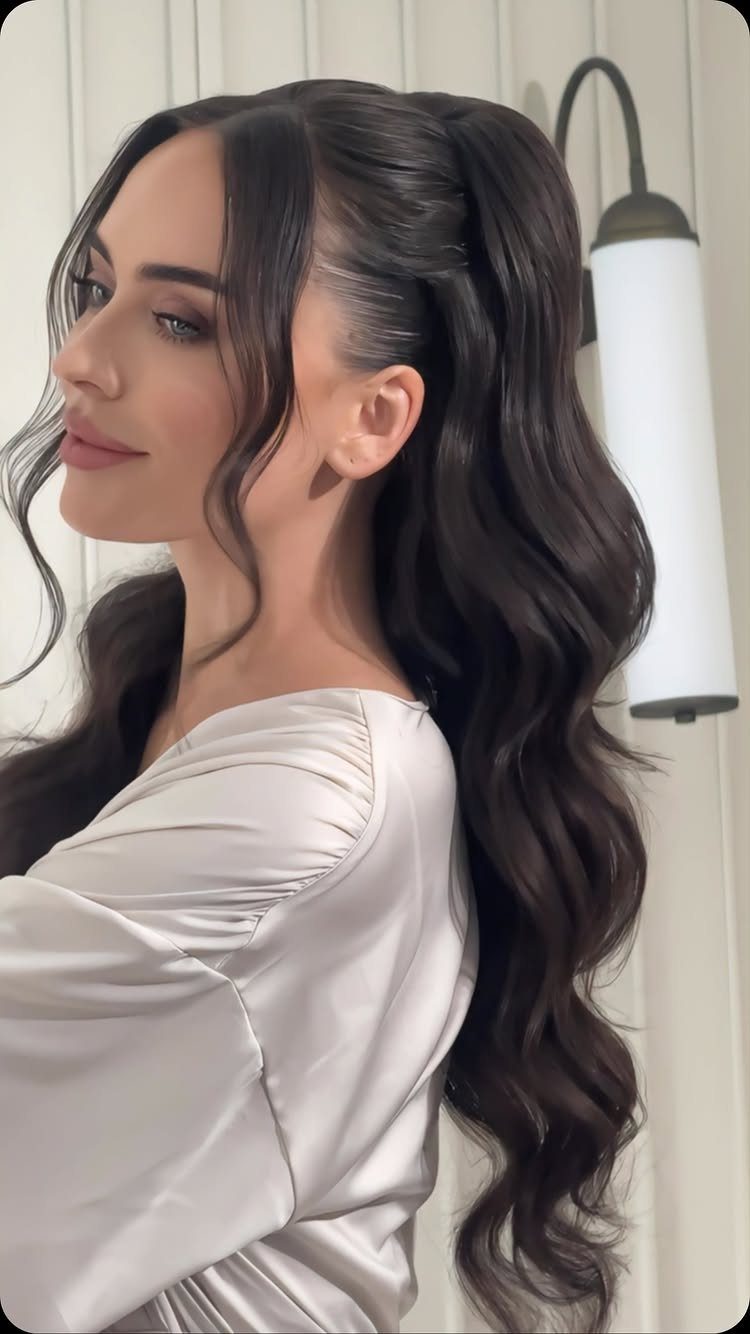
Tie the top section back while the rest stays down. The ponytail sits high enough to lift the crown, and the waves below it keep moving.
This clears your face without pulling all your hair up, and it works when you need something fast. A small elastic holds it without much tension, so you don’t flatten the wave at the root.
Leave a tendril or two loose in front if you want it softer.
17. Long Wolf Cut
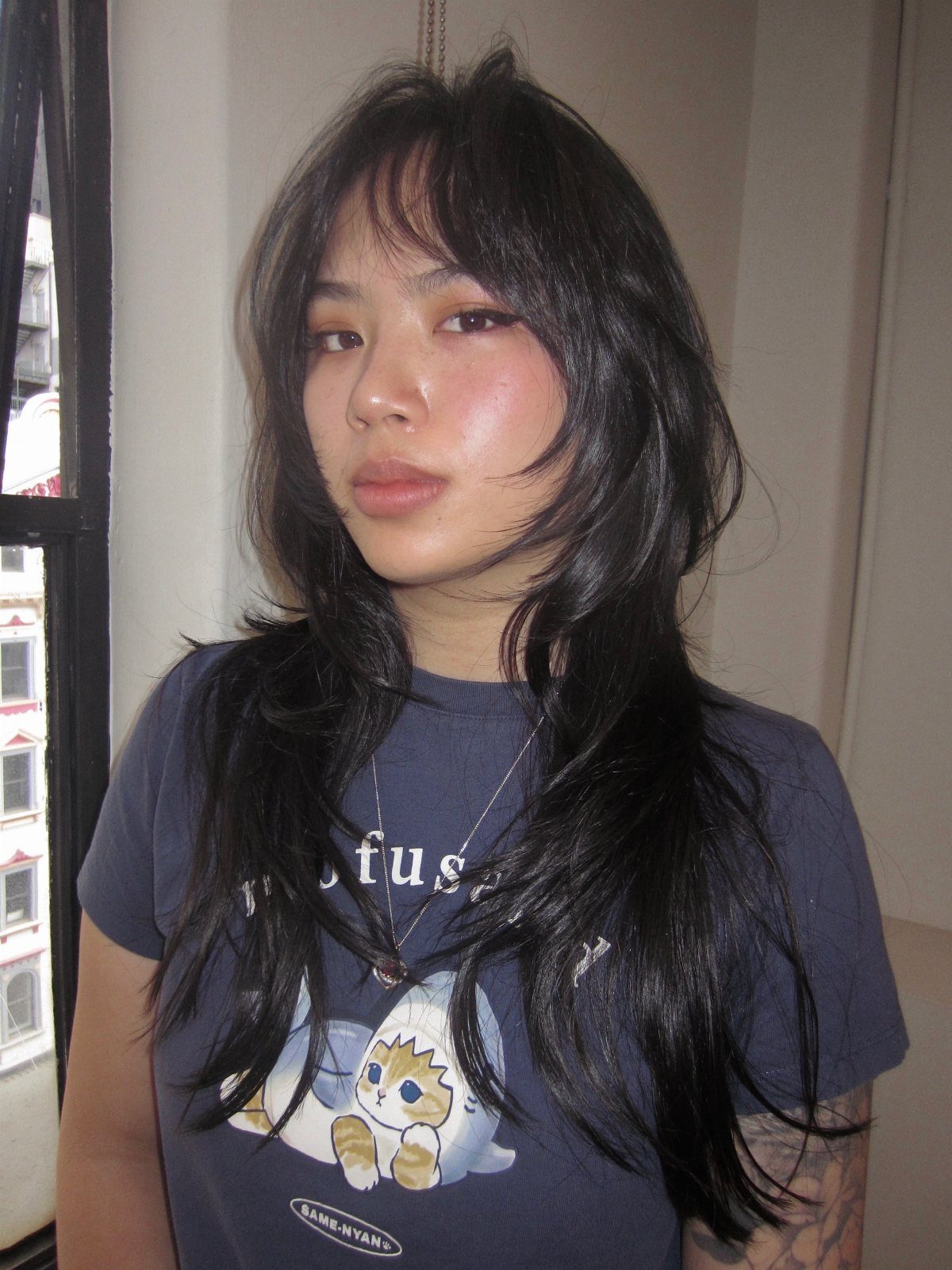
Choppy layers that start at the crown and taper down, giving you the shaggy shape of a wolf cut without losing your length. The layers around your face are shorter, and the back stays longer.
The wave bridges the layered sections so the whole thing reads as one shape. This grows out more forgivingly than a short wolf cut because the length in back hides the grow-out line.
18. Long Blonde Wavy Hair
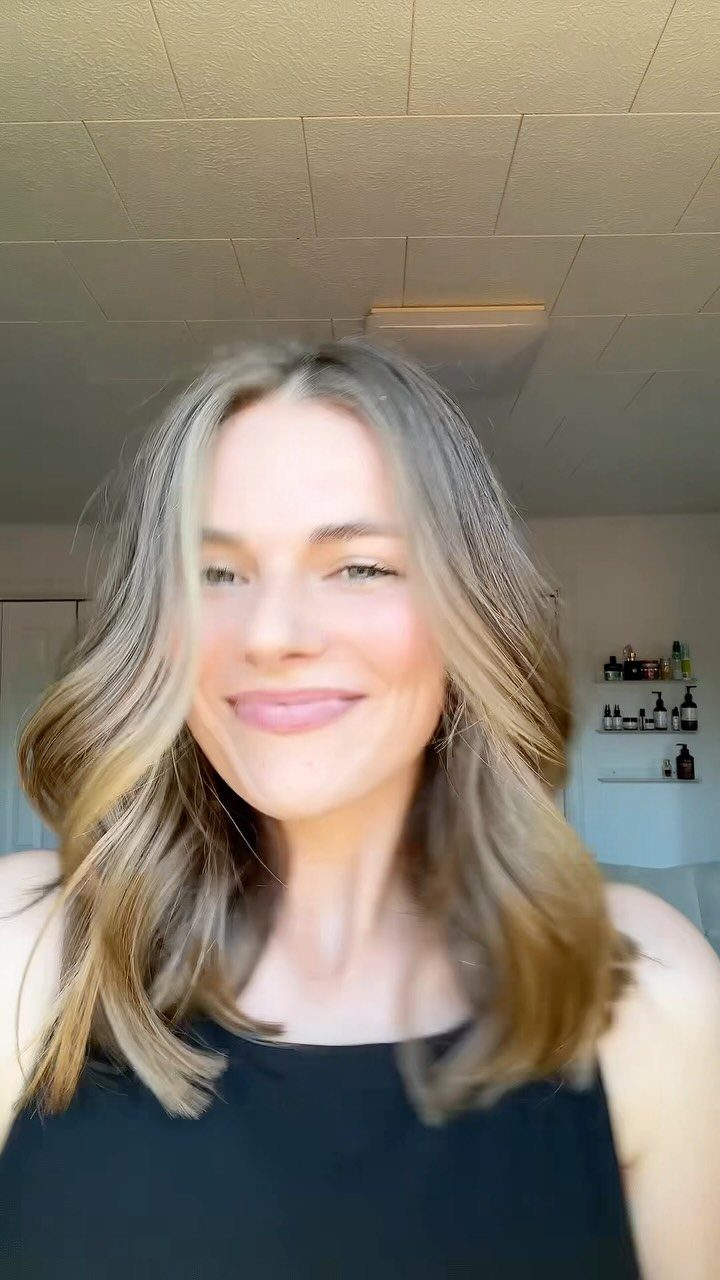
Waves that run the full length, styled to stay loose and voluminous instead of falling flat. The color lightens the look, and the wave keeps it from sitting heavy.
If you want the bend to begin exactly at cheekbone level, reach for the iron; if you’re working with natural movement, scrunch product through and diffuse. Leave the roots smooth and let the wave begin a few inches down.
A light oil on the ends keeps them from drying out.
19. Shoulder-Length Wavy Bob with Short Layers
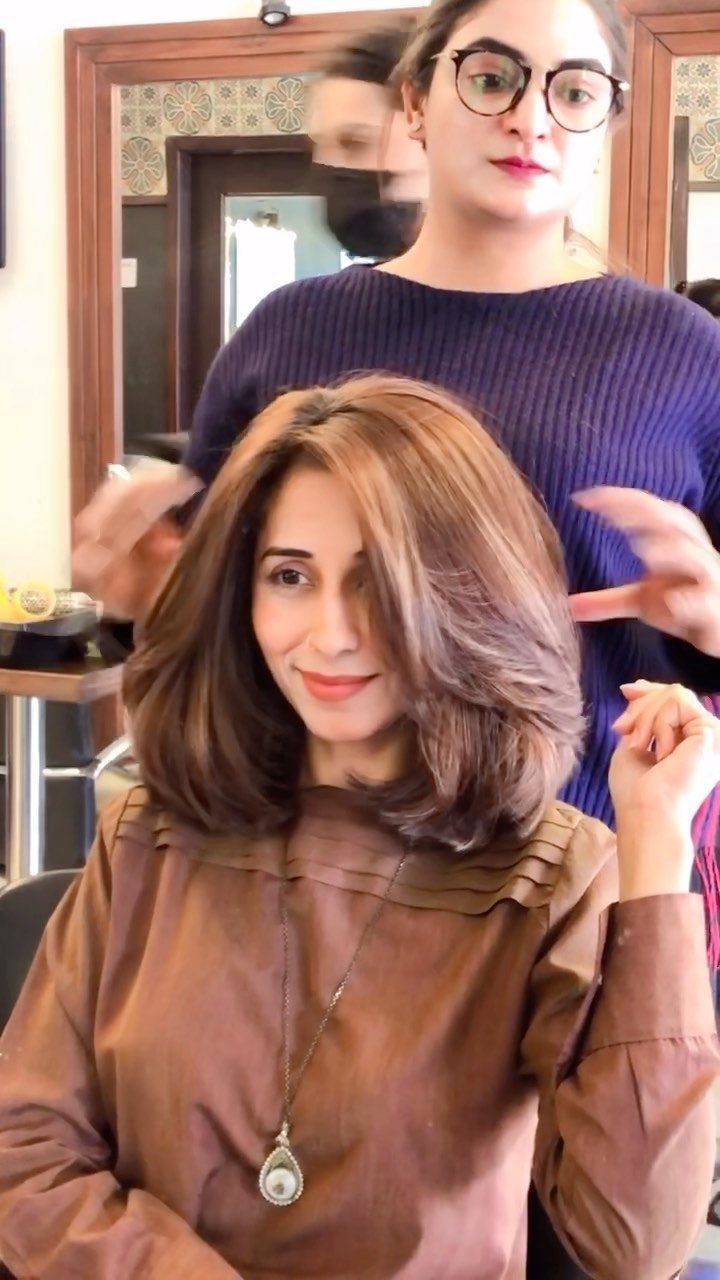
Layers cut shorter than the bob’s length let the waves stack and move instead of sitting in one piece. The layering starts higher up, so you get volume without losing the shoulder-grazing length.
This cut holds shape even when you air-dry it. If you want polish, a round brush at the roots adds lift without flattening the wave.
20. Long Wavy Hair with Bangs
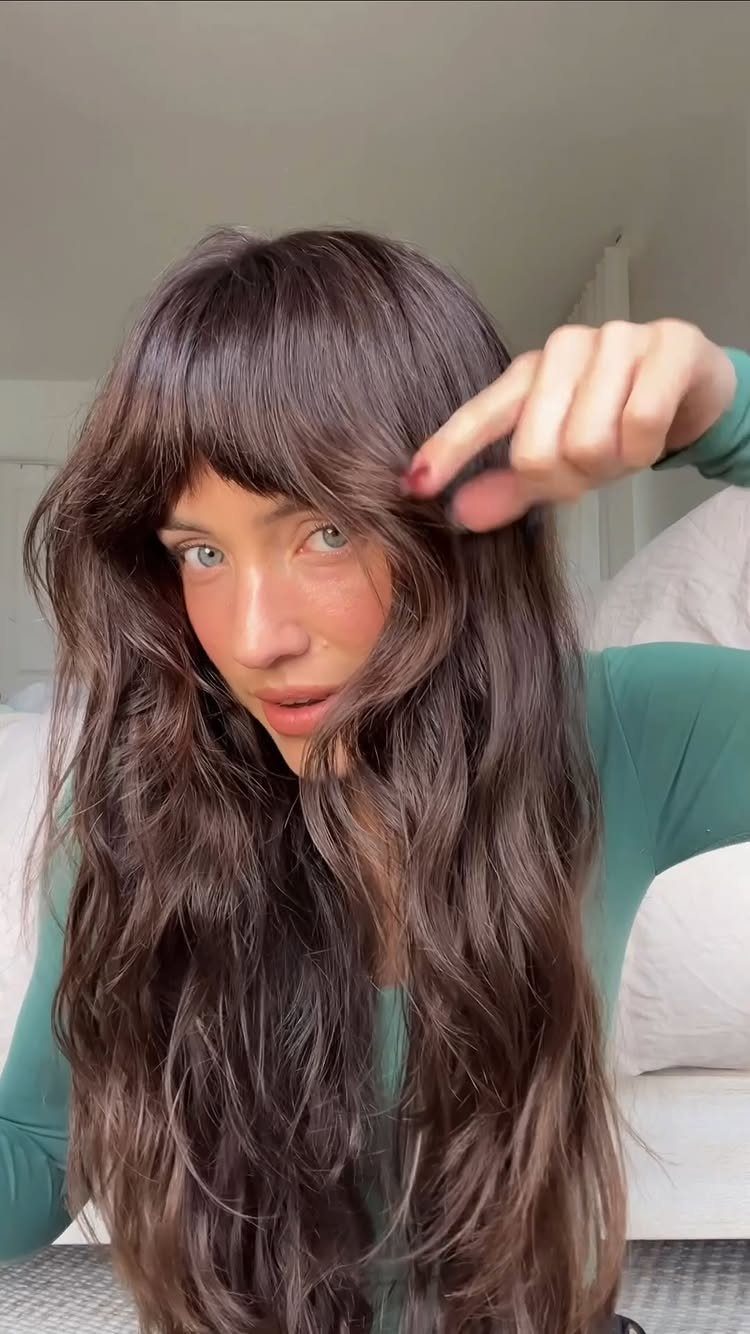
Full bangs that sit at brow level, paired with length that runs past your shoulders. The bangs frame your face while the rest stays long and wavy.
Ask for bangs that are dense enough to cover your forehead but not so thick they sit heavy. Wavy texture in the length balances the weight of the bangs.
Blow the bangs forward with a round brush, or pin them to the side when you want them out of the way. The length air-dries fine.
21. Vintage Curls with Ribbons
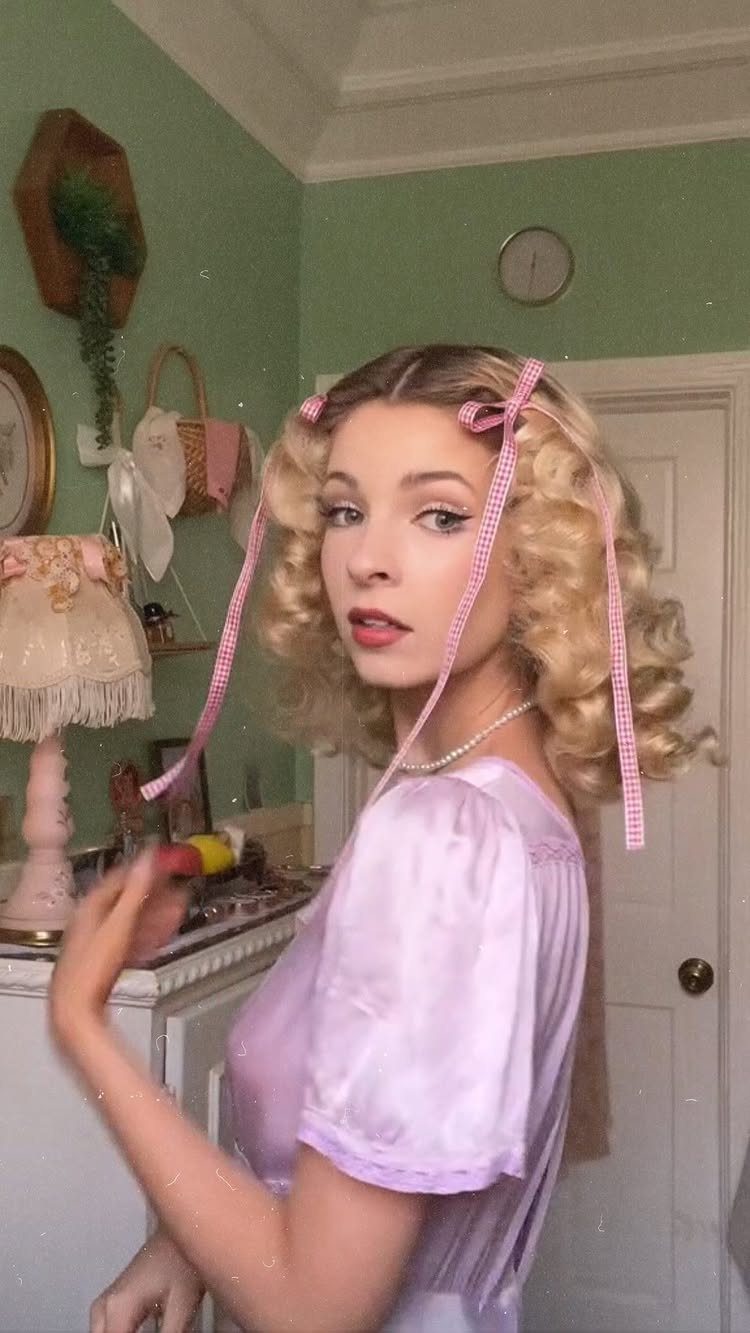
Curls styled with enough structure that they hold a rounded shape, finished with ribbons clipped in at the crown or woven through sections. The look is retro without reading costume.
Set the curls with an iron or hot rollers, then brush through once they cool. The ribbons go in after styling, so you can move them around or skip them entirely.
Works for an event or a styled shoot. Takes time to set, but it looks polished.
22. Old Hollywood Waves
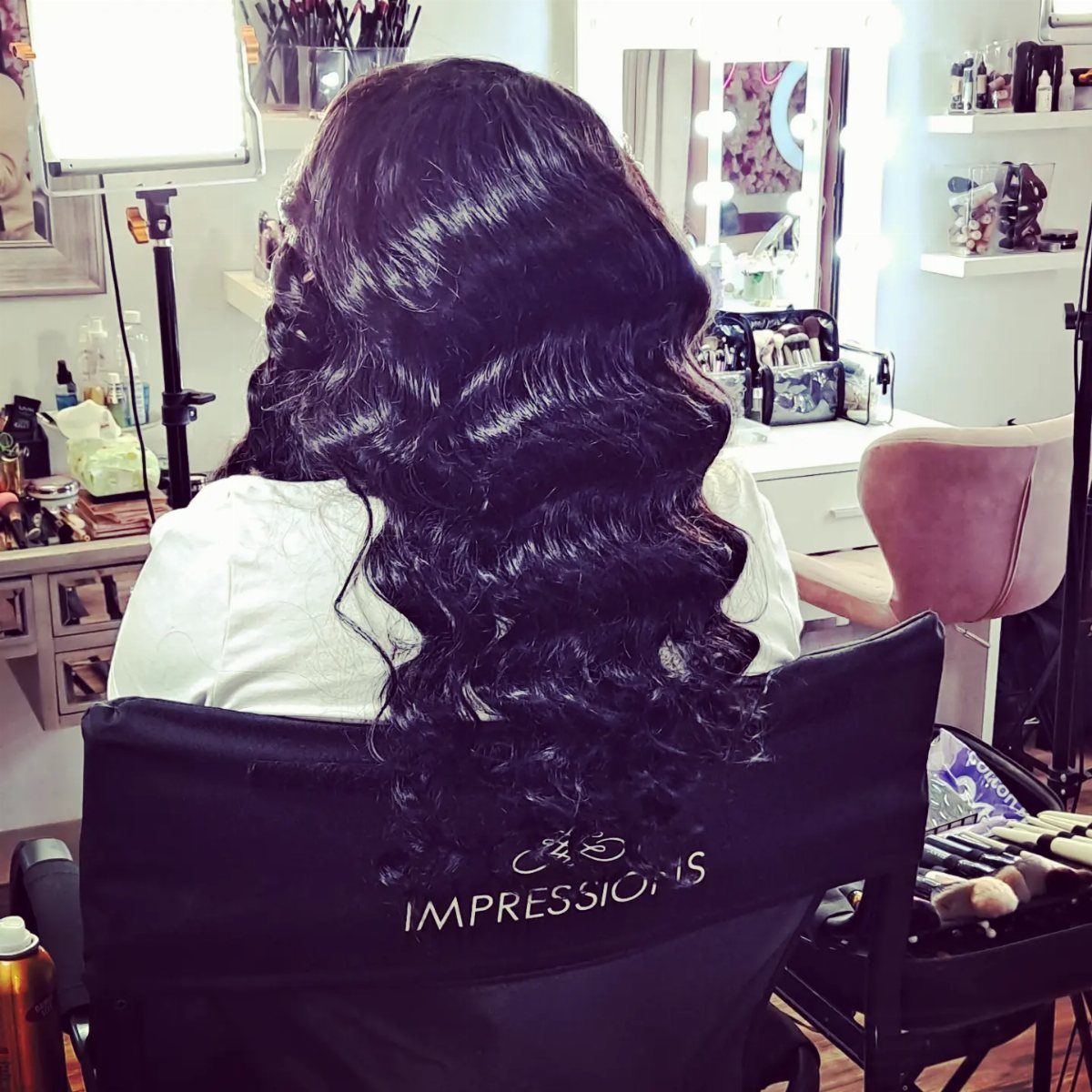
Waves shaped into smooth, glossy arcs that curve back and forth in a defined pattern. The finish is formal, not loose or tousled.
Set with a medium-barrel iron, wrapping each section in the same direction and pinning it while it cools.
Once everything is cold, brush through with a paddle brush to merge the curls into waves. Finish with a shine spray or serum.
23. Mullet
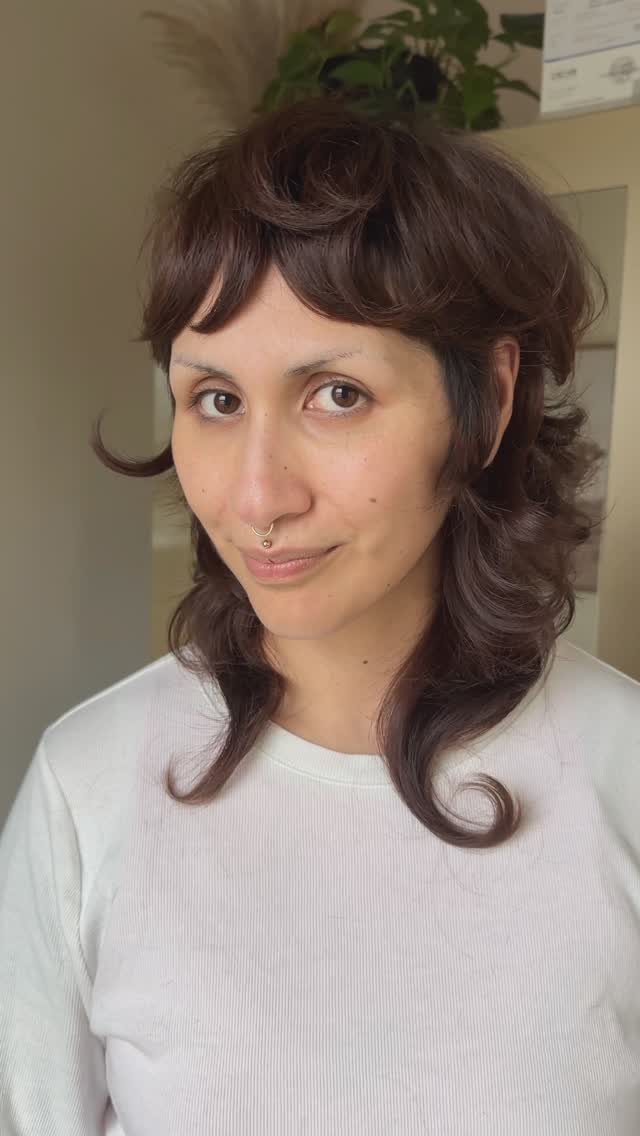
Short on top and in front, longer in back.
The front pieces sit at cheekbone or chin level, while the back falls past your shoulders.
If your waves are loose, the length in back softens the contrast. Tighter waves make it more textured.
24. Butterfly Cut
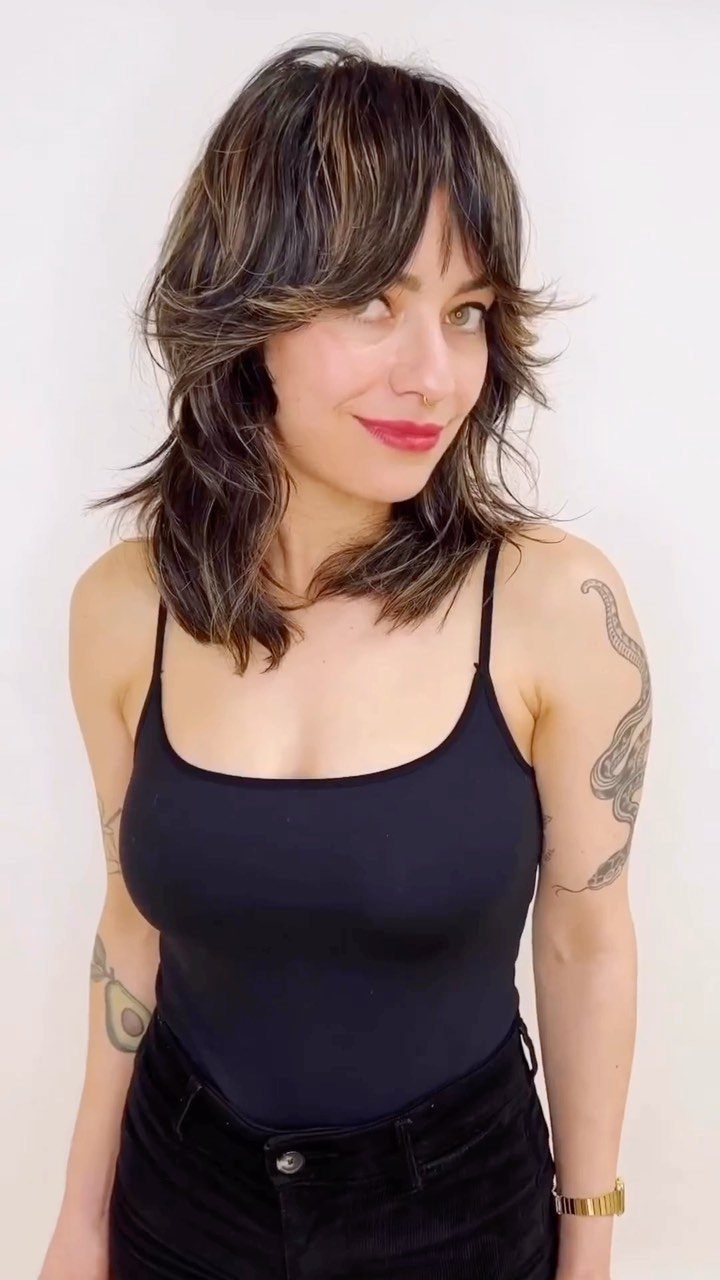
Layers cut in a cascading shape that fans out from the crown, with shorter pieces around your face and longer ends below. The cut has volume at the top and tapers as it goes down.
Ask for face-framing pieces that start at your cheekbones and blend into the length.
The layers do the work.
Frequently Asked Questions
What are some good ideas for wavy haircuts?
Choppy layers give movement, curtain bangs frame your face without weight, and a shaggy lob keeps things low-effort but textured.
For shorter cuts, a pixie lets waves add volume while drying fast, and a chin-length bob with choppy layers holds shape even when air-dried.
Longer options include cascading layers that start mid-back or a wolf cut that tapers from crown to ends.
Is my hair 2A or 2B or 2C?
2A is loose and tousled with minimal bend, 2B has S-shaped waves through the lengths while roots stay relatively straight, and 2C shows tighter S-shaped waves that begin at the roots.
The tighter the S and the closer it sits to your scalp, the higher the number.
How to wash wavy hair?
Wavy hair produces more scalp oil than curlier types, so it needs washing more often. Condition every time, clarify every 4 to 5 washes to remove buildup that flattens roots, and deep-condition about every other week if your hair isn’t very dry.