Short braids end anywhere from chin to shoulder, which cuts installation time to 3 to 6 hours and keeps the weight light enough that you can sleep on your side the first night without your scalp aching.
The choice comes down to whether you want the braids worked flat against your scalp, like straight-back cornrows or a crown braid, or hanging free so you can tie them up or let them fall around your face.
Box braids and passion twists hang loose so you can pull them into a top knot or let them swing, while straight-back cornrows and a crown braid lie flat and stay put.
1. Braided Bob
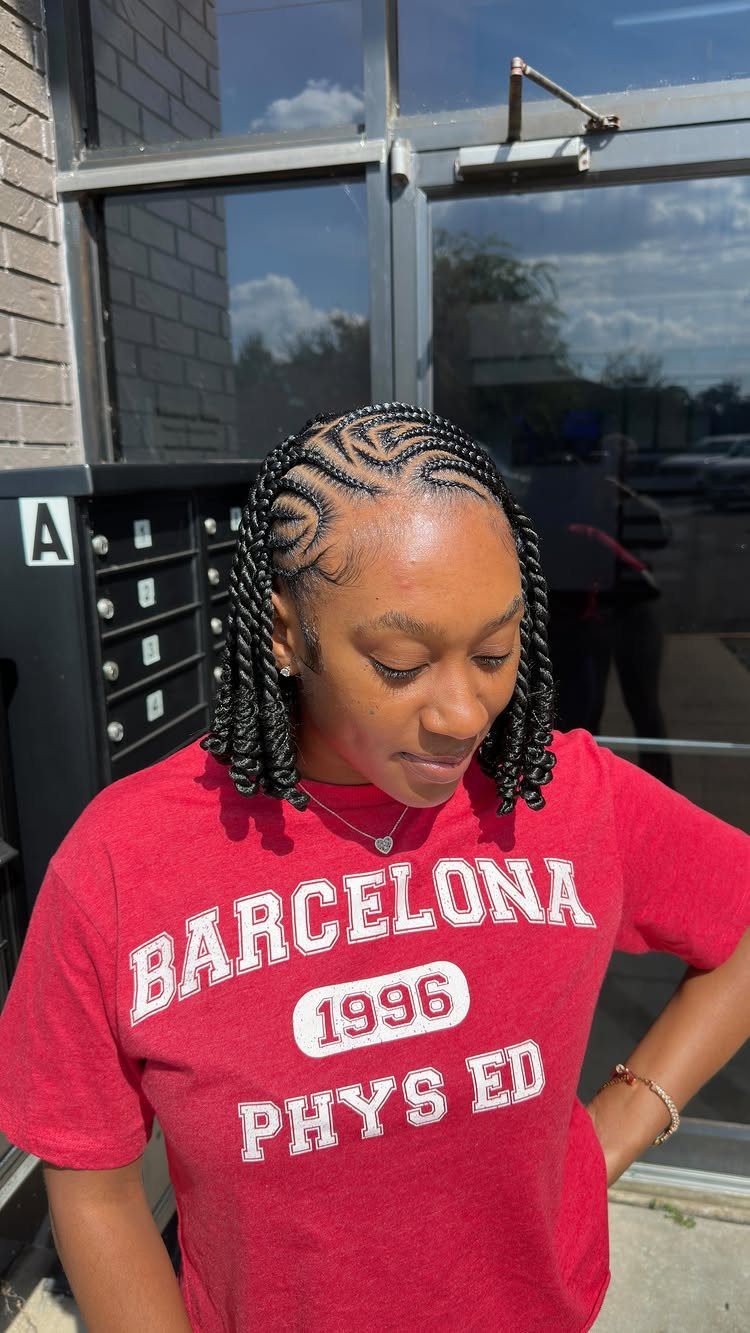
A bob cut worked in short braids that curve into the same blunt edge you’d see in a straight bob.
The braids follow the shape of the head, ending at chin or jaw level, which gives you a clean silhouette without the length that takes hours to install or pulls on your scalp overnight.
This sits right between loose hair and waist-length braids.
You can still do most of what longer braids allow (updos, half-ups, tucking behind the ears) but mornings are faster and the style lasts about as long without looking stretched or frizzy at the roots.
"Short braid looks are fun and perfect for the summer," says braider Theola Carbon.
— AOL
2. Straight-Back Cornrows
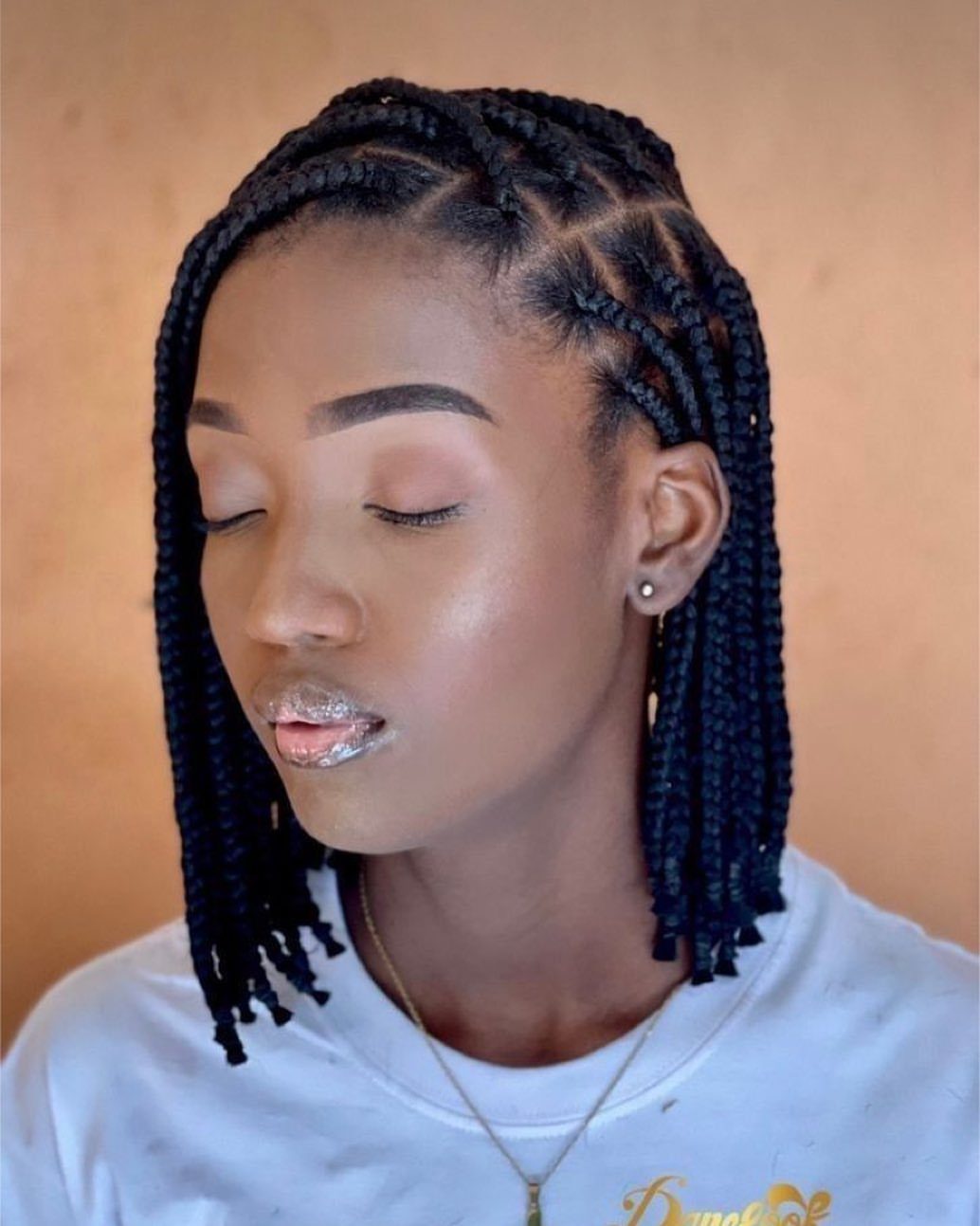
Braids that run straight back from the hairline to the nape, parted in narrow rows and worked flat to the scalp.
Some versions branch into curved or zigzag parts, but the technique stays the same: each braid lies close, creating a low profile that works under hats, helmets or headwraps.
Installation time depends on how many rows you put in.
The tighter the braid, the longer it holds, but I pull back if it feels sore during the first night. With proper tension, the roots lift slowly enough that you can leave them until they need redoing.
3. Crown Braid
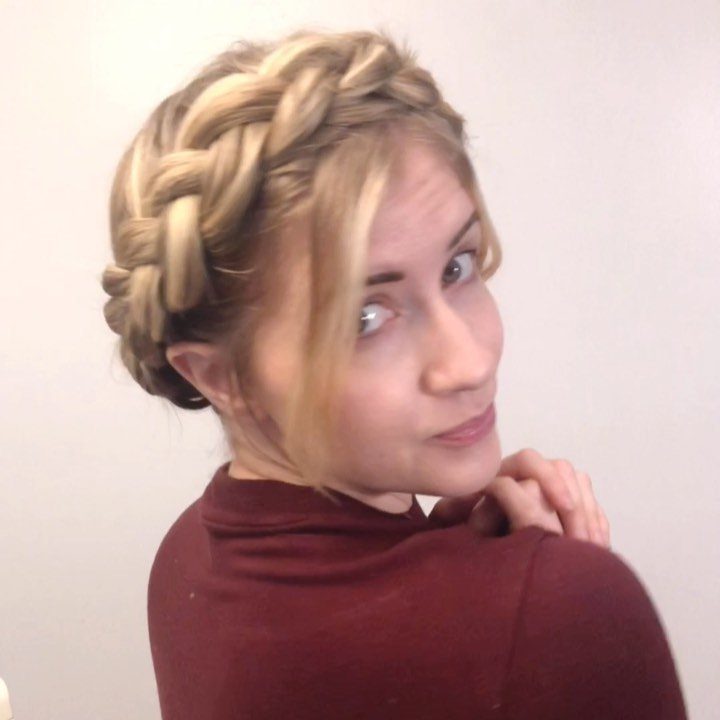
One or two braids wrapped around the perimeter of your head so the plait sits like a band from front to back.
It works best if you have enough length to make the loop meet, though pinning a second short braid to fill the gap is an option when you don’t.
Blonde or highlighted hair shows every crossing clearly, so if you’re still learning the over-under pattern, this is where practice pays off.
Secure the ends behind your ear or at the nape with a small elastic that matches your hair color, and check the back with a second mirror before you leave the house.
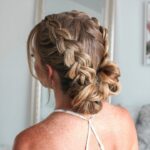
4. Paired Dutch Braids
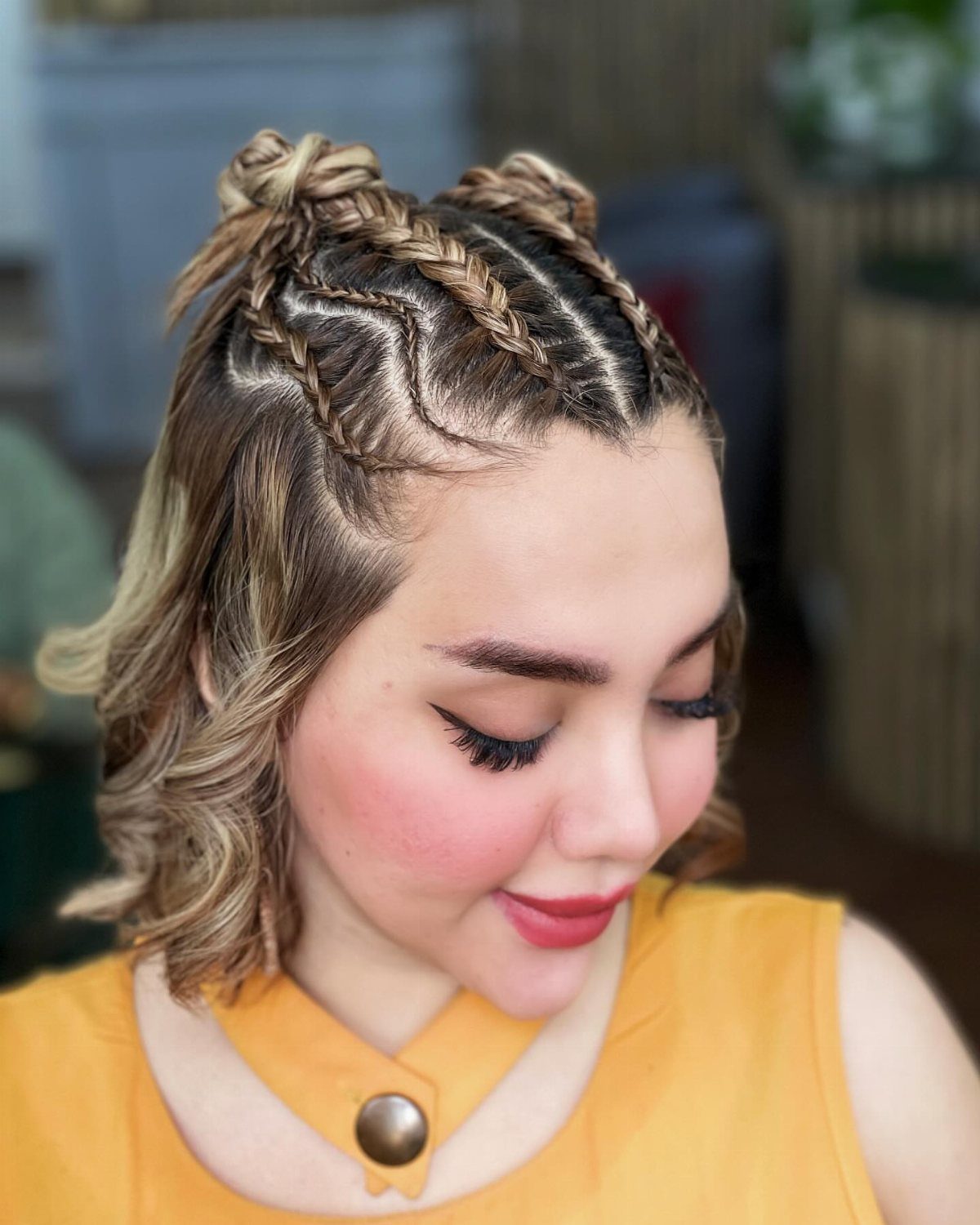
Dutch braids sit on top of the hair instead of sinking into it, which makes them puff out and look fuller than a French braid.
Two side-by-side plaits that start at the front and run to the back give you symmetry, and you can stop halfway down, tie them off, and leave the rest loose if your hair is short.
Short hair means the braids don’t hang, so pin the ends into small buns or knots to keep them secure.
If your hair is layered, expect a few pieces to escape near the nape. A light gel or edge control smooths those before you start braiding.
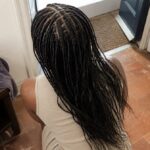
5. Box Braids
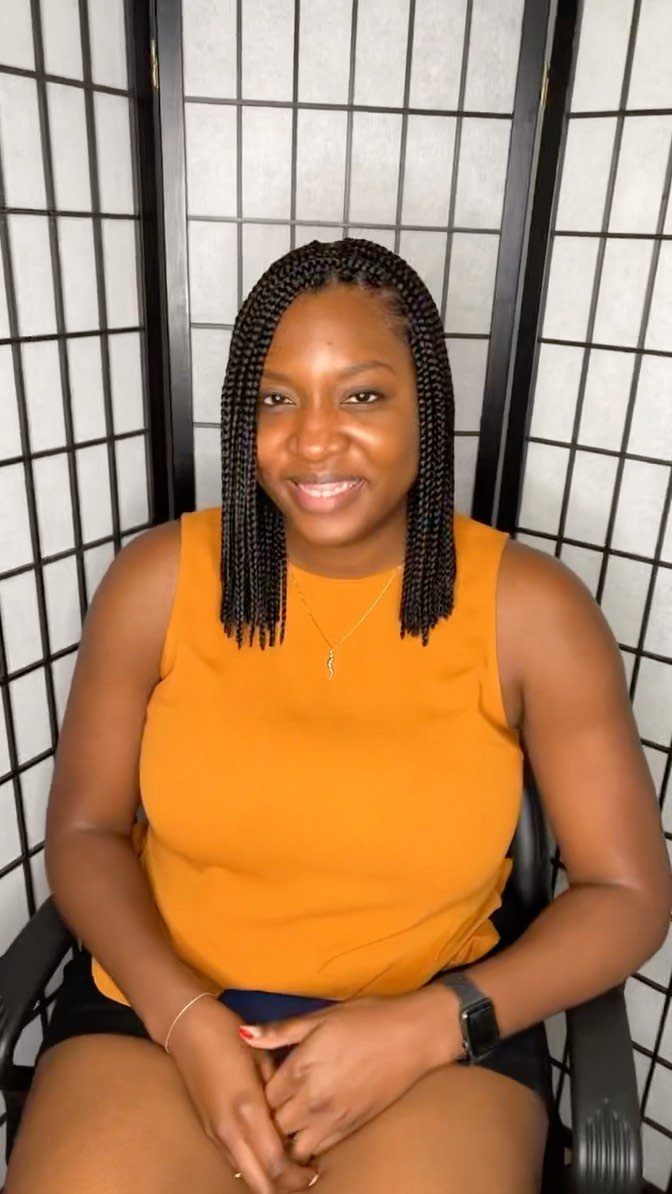
Single braids divided by square or rectangular parts that run in rows from front to back.
Each braid hangs free, which lets you part them however you want, gather them into a ponytail, or trim the ends into a bob shape for a shorter look.
Extensions add length and thickness, though some people braid their natural hair on its own if it’s long enough.
The parts are what take time, so if you’re doing this at home, work in front of a mirror with a rattail comb and sectioning clips.
Box braids at bob length weigh less than waist-length ones and dry faster after washing.
6. Headband Braid
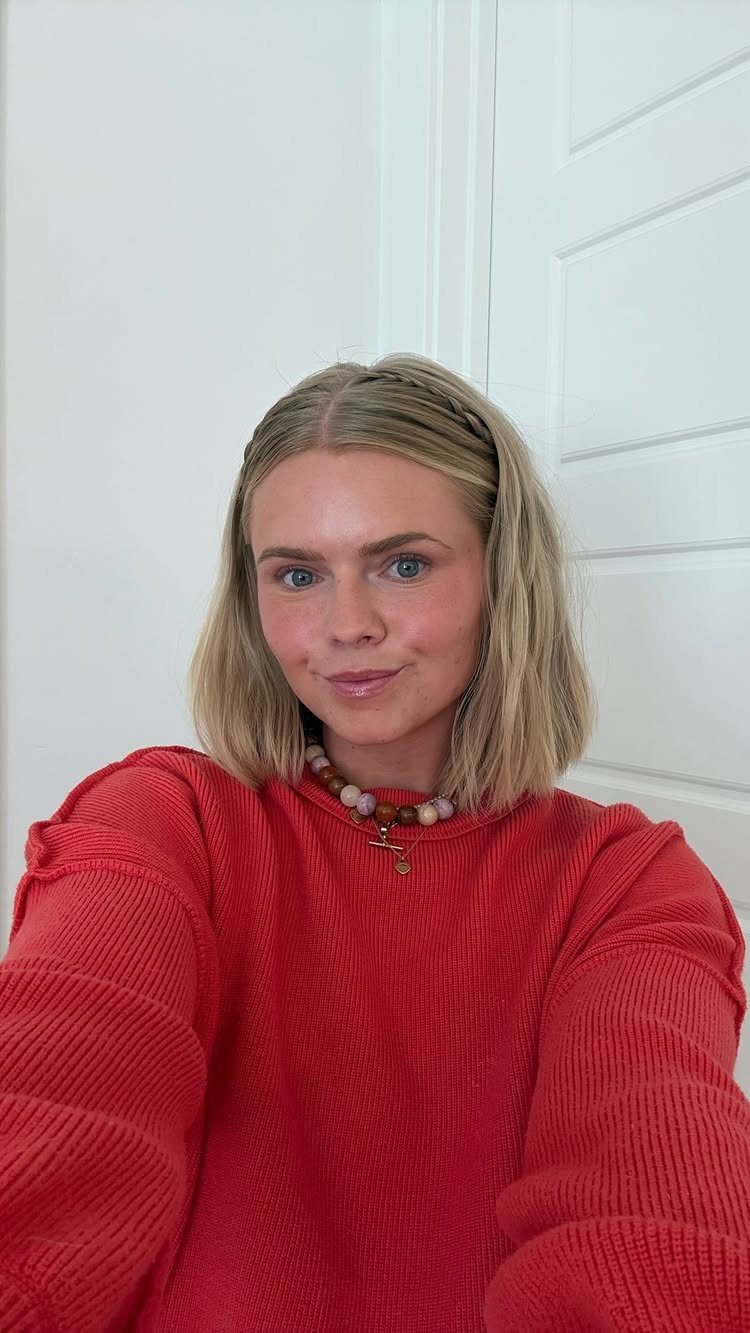
A single braid that runs from one side of your head to the other, crossing over the top like a fabric headband. It sits about an inch back from your hairline, and your hair stays loose beneath it.
This works on shoulder-length or longer hair, since you need enough to braid across and pin at the opposite temple. If your hair is fine, tease the braid gently after you finish so it looks a little thicker.
Bobby pins that match your hair color hold the ends flat, and if you tuck them under the braid itself, they disappear completely.
7. Mini Knotless Braids
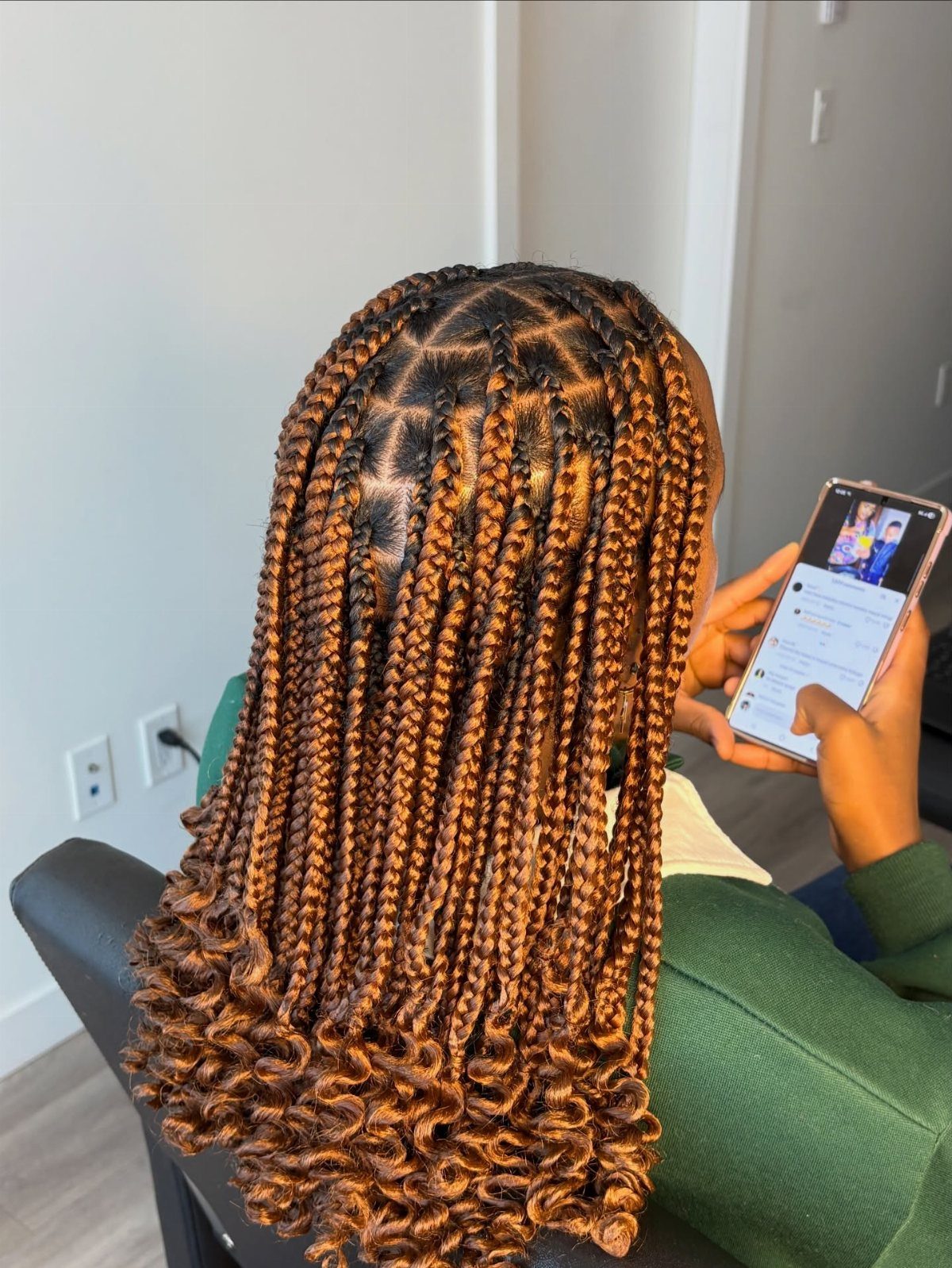
Thinner box braids that sit lighter, with the knotless method feeding hair in gradually instead of locking a knot at the root.
That gives you less tension on the scalp and a softer hairline, which matters if you wear braids back to back.
The curled ends happen when you dip synthetic hair in hot water after braiding, then wrap it around a rod. If you skip that step, the ends stay straight and blend into whatever texture you started with.
8. Chunky Box Braids
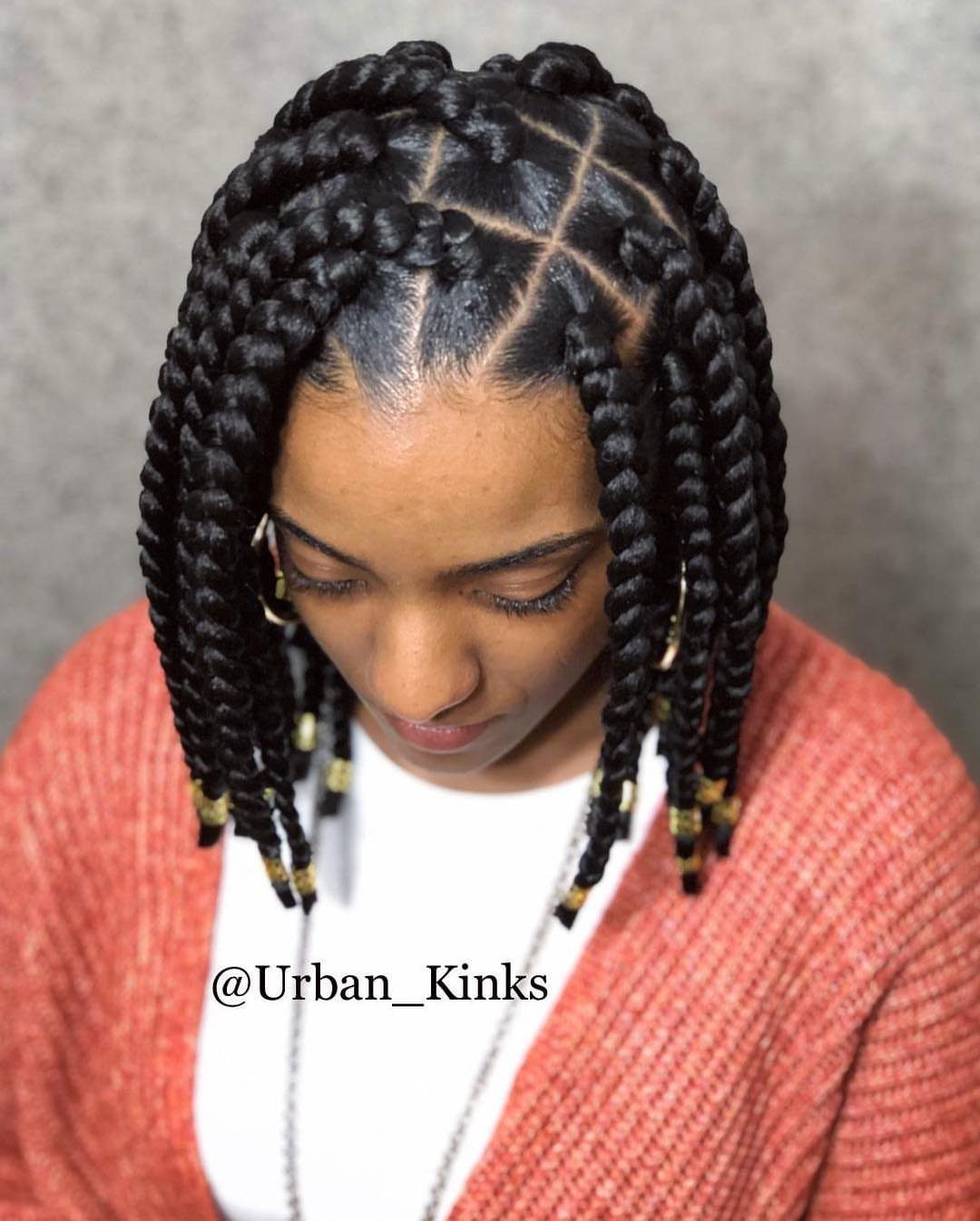
Box braids made thicker than usual so each one takes up more scalp space and the whole head finishes faster.
At short length, the thickness stands out instead of weighing the style down, and metal cuffs slide onto each braid without slipping off the way they would on finer plaits.
The square parts still matter. If the sections drift into uneven shapes, the thickness makes that more obvious, so measure with a comb before you start each braid.
9. Beaded Braid Ends
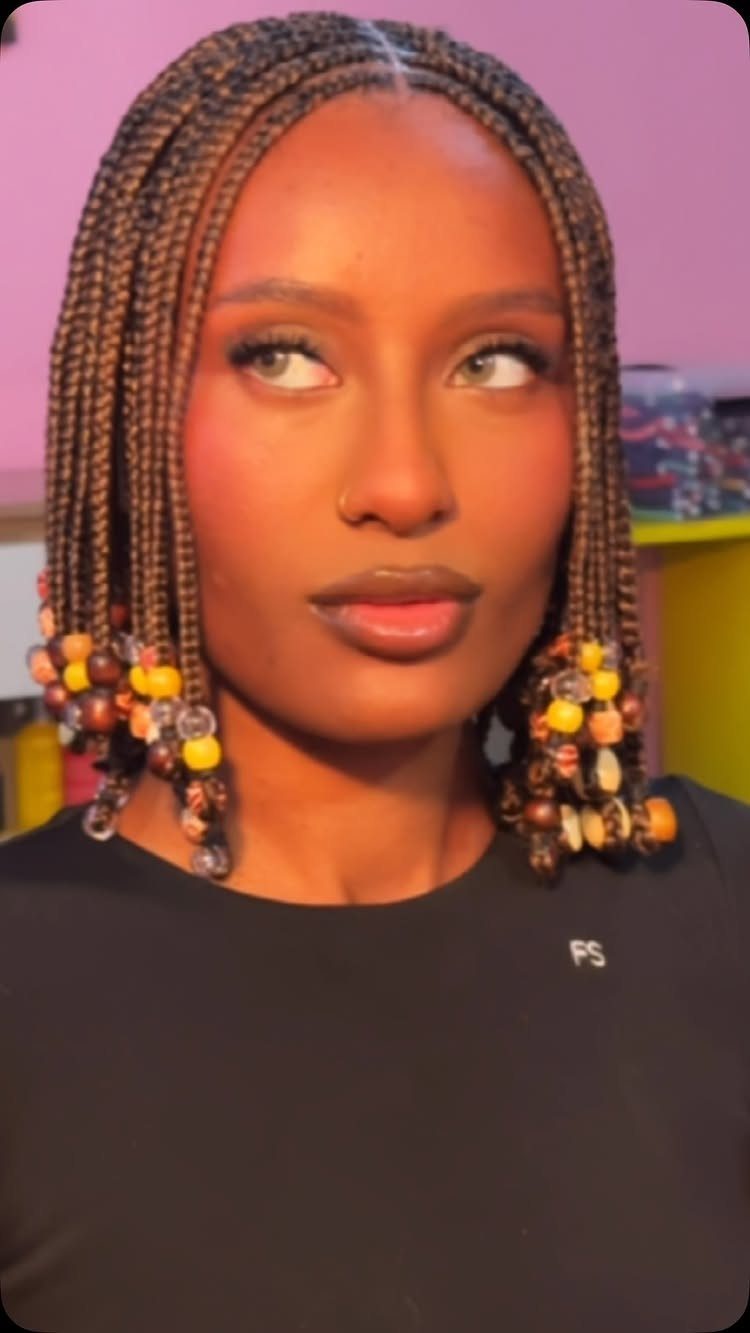
Any braid style where you thread beads onto the ends after the plaits are done. Pony beads in mixed colors give you a playful look, while wooden or clear beads sit quieter if that’s what you want.
The bead slides on easier if you fold the braid tip and push both sides through the opening at once. Secure the very end with a small elastic first so the braid doesn’t unravel while you’re threading.
10. Wooden Beaded Bangs
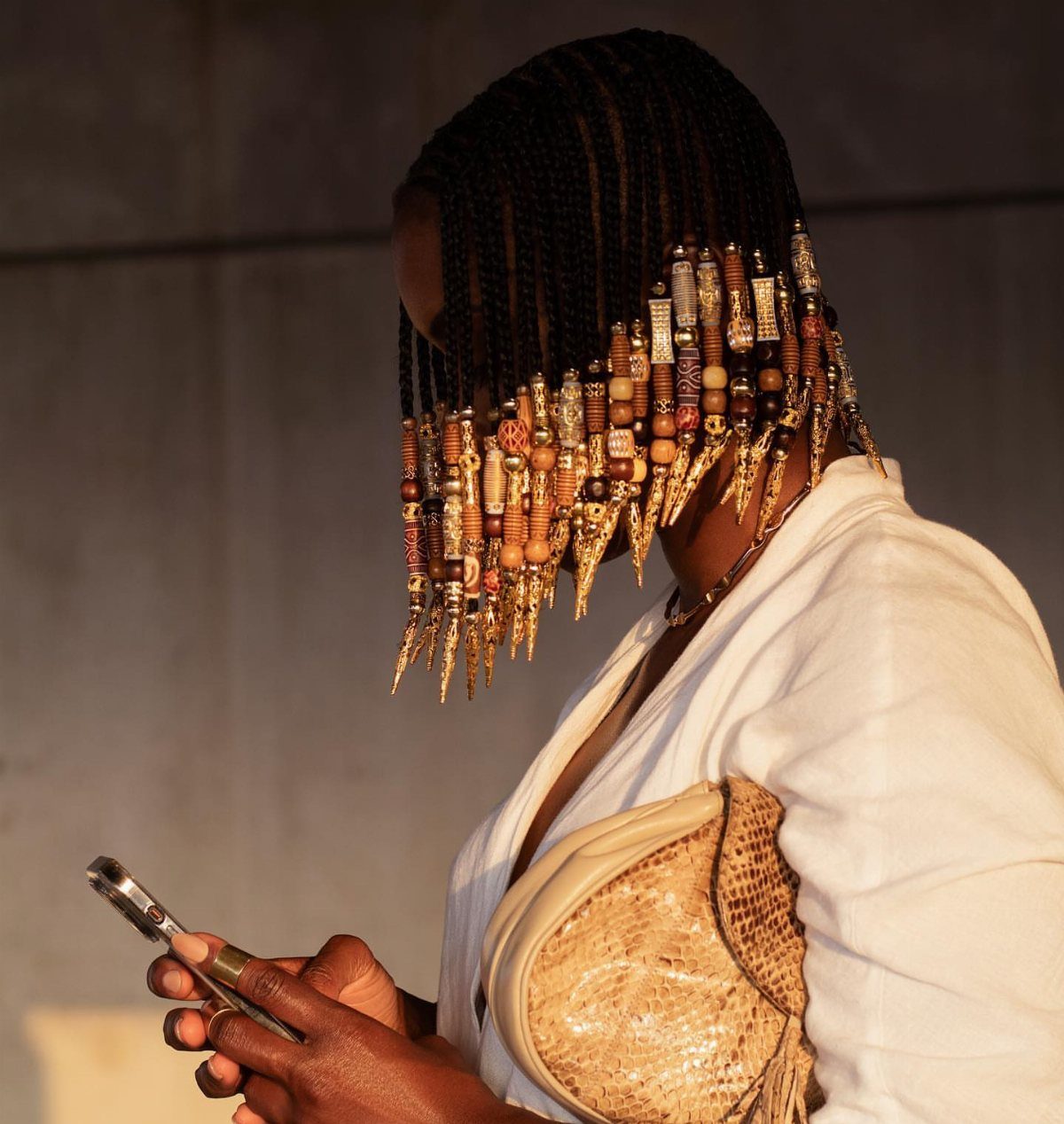
Short braids at the front, each strung with several wooden beads so they hang over your forehead like bangs.
The weight of the beads keeps them in place, and you can brush them across your forehead or let them fall straight depending on the day.
Gold rings or cuffs between the beads add contrast. If the beads click when you move, that’s normal, and some people like the sound.
11. Cornrows and Two-Strand Twists
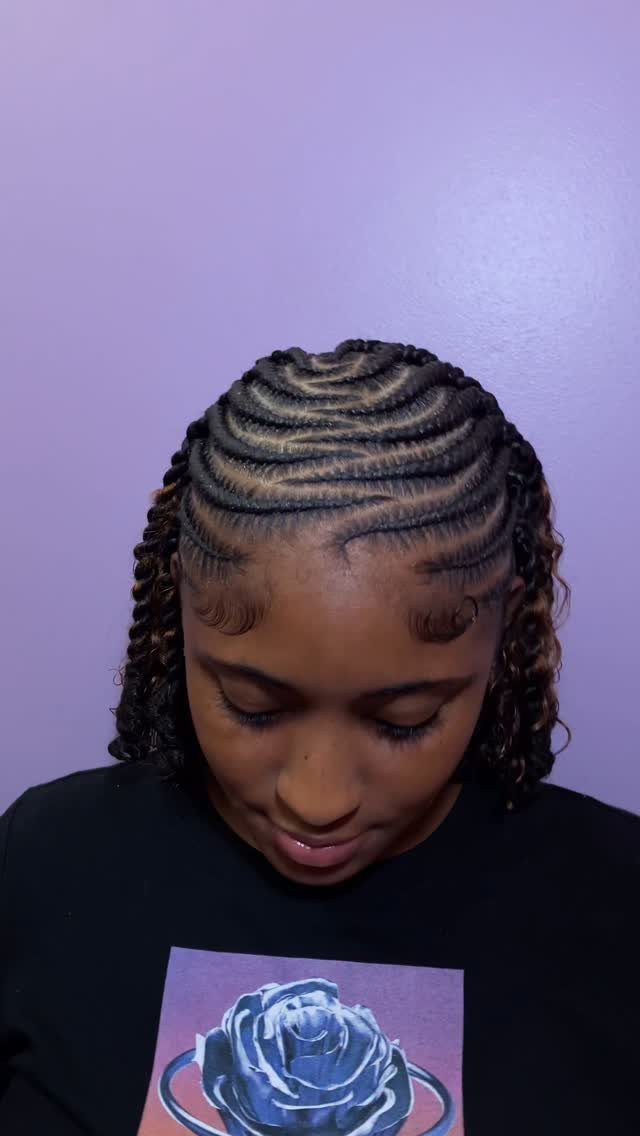
Cornrows across the top or crown, meeting two-strand twists that hang loose at the sides and back. The combination breaks up the flatness of all-over cornrows while keeping the front smooth and off your face.
Two-strand twists install faster than single braids, so if time is short, this split gives you detail where it shows and speed everywhere else. The twists unravel more easily than braids, so tie the ends or dip them to hold.
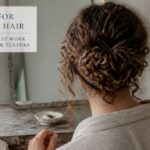
12. Passion Twists Updo
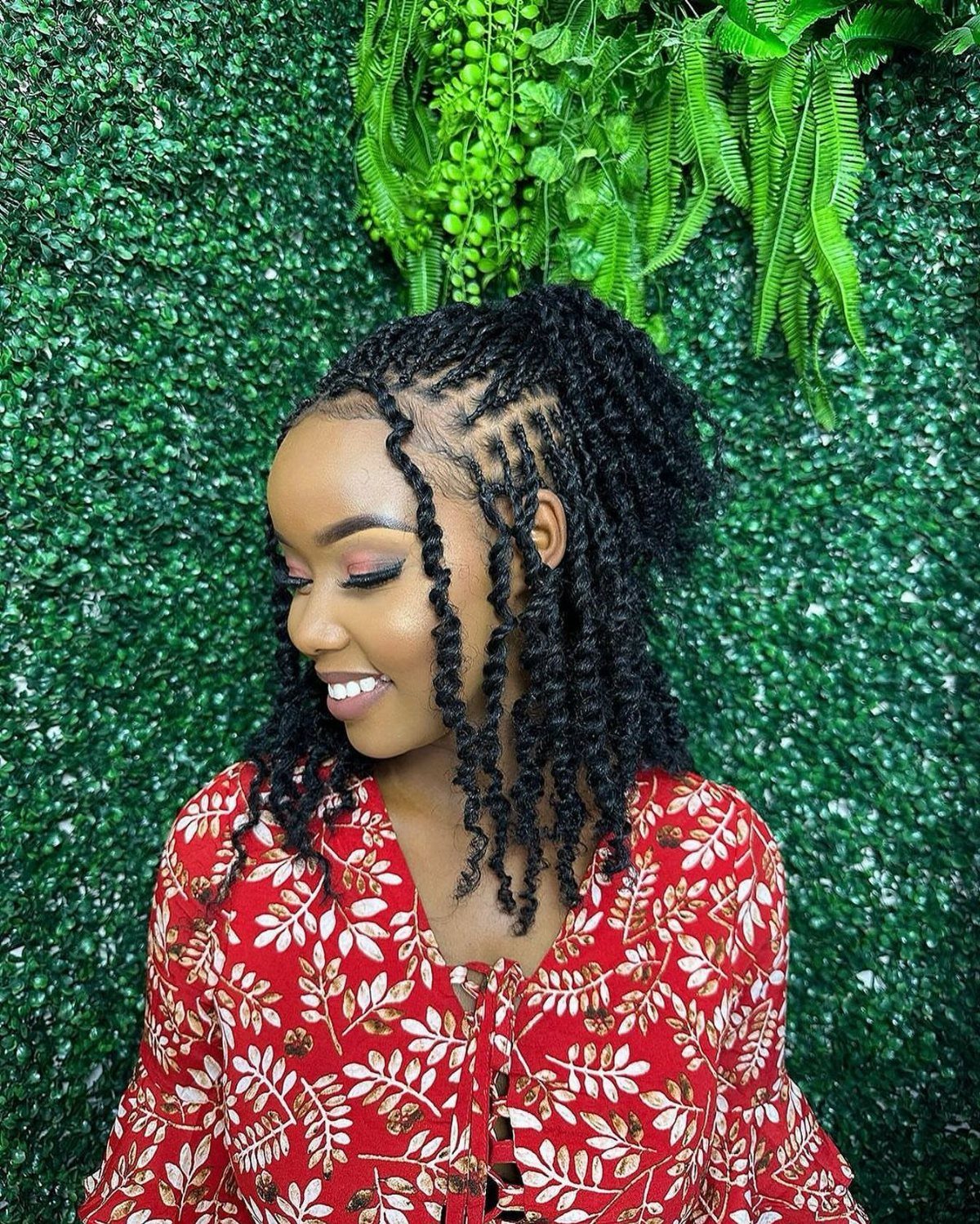
Twists made with a textured synthetic hair that curls and coils instead of lying smooth, gathered at the crown or nape into a loose bun or knot.
The texture gives the style volume even when the twists are short, and pulling them up keeps them off your neck.
If you leave a few twists down around your face, they frame without adding time to your morning routine. The updo holds with a single elastic, no pins required.
13. Triangle Box Braids
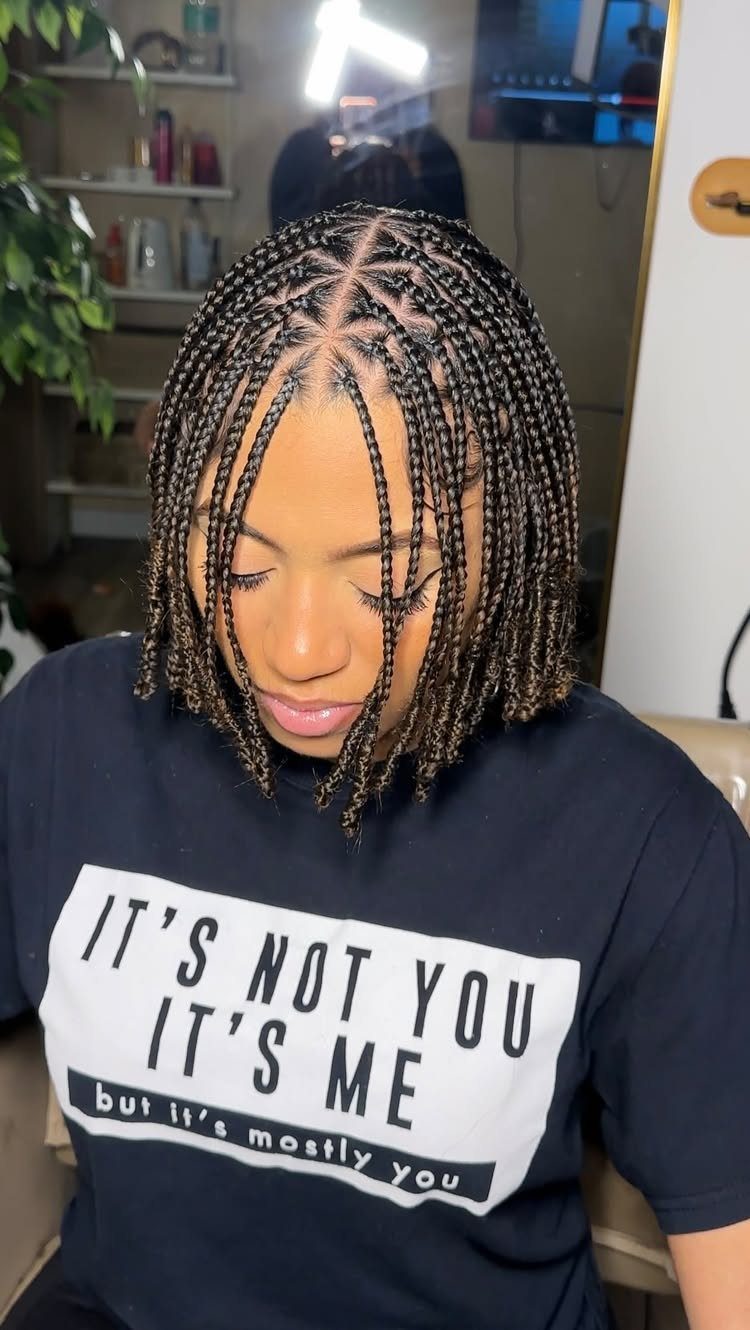
Parts shaped into triangles, circles, diamonds or zigzags instead of the usual square grid. The pattern shows clearest when your hair is pulled back or styled up, since the scalp is what carries the design.
Triangle parts take a little longer to measure than straight lines, so if you’re sectioning at home, mark the points with a rattail comb before you start each braid. The braids themselves install the same way box braids do.
14. Half-Up Top Knot
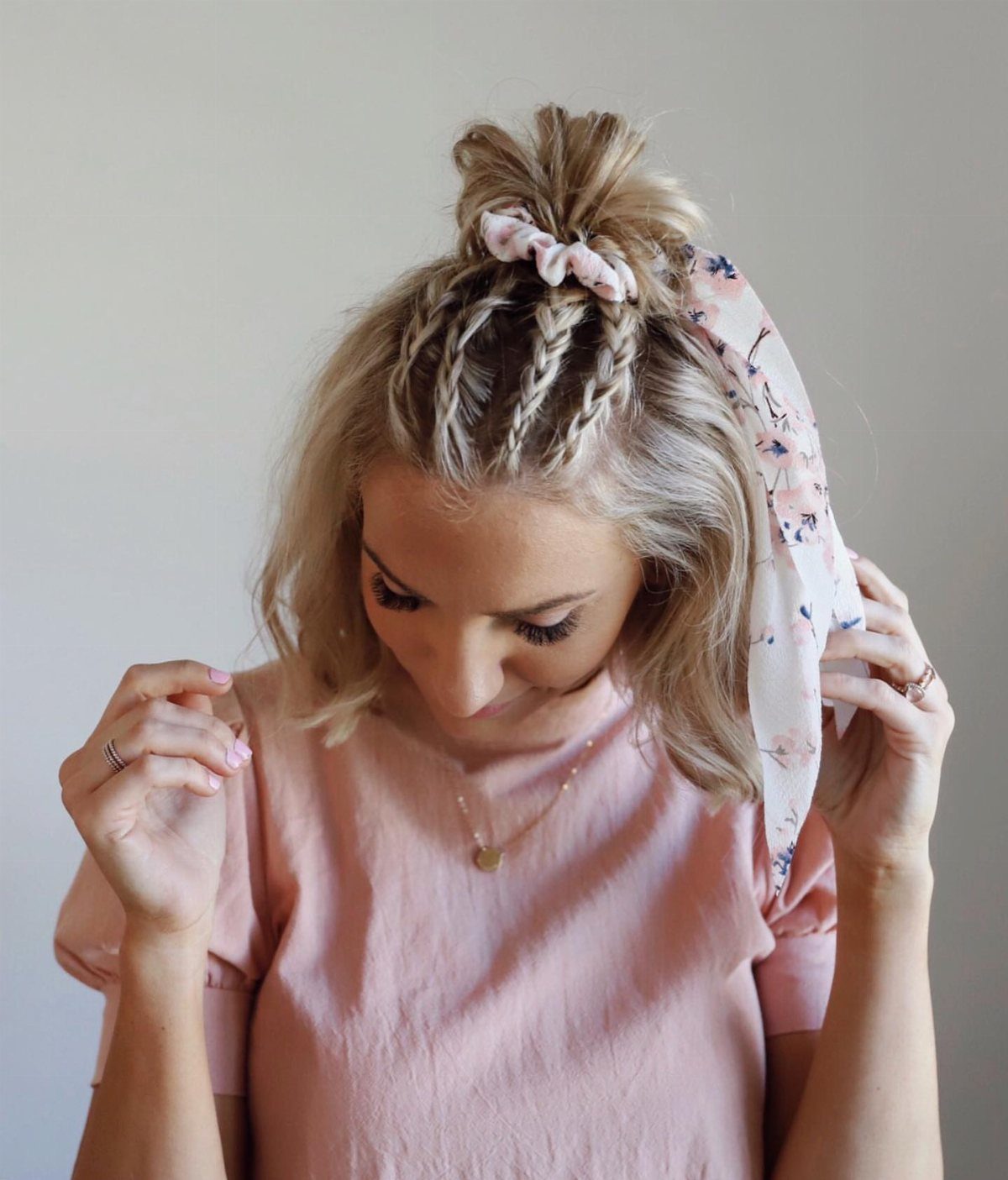
Gather braids from the crown area into a knot and leave the rest down.
The knot sits high enough to clear your collar but low enough that it doesn’t tip forward, and you can wrap it tight or leave it loose depending on how much volume you want.
Short braids mean the knot stays small, so for more presence, pull a few pieces out gently after you tie it off.
One elastic holds it, and you can slide the knot forward or back to adjust where it sits on your head.
15. Fishtail Half-Up Braids
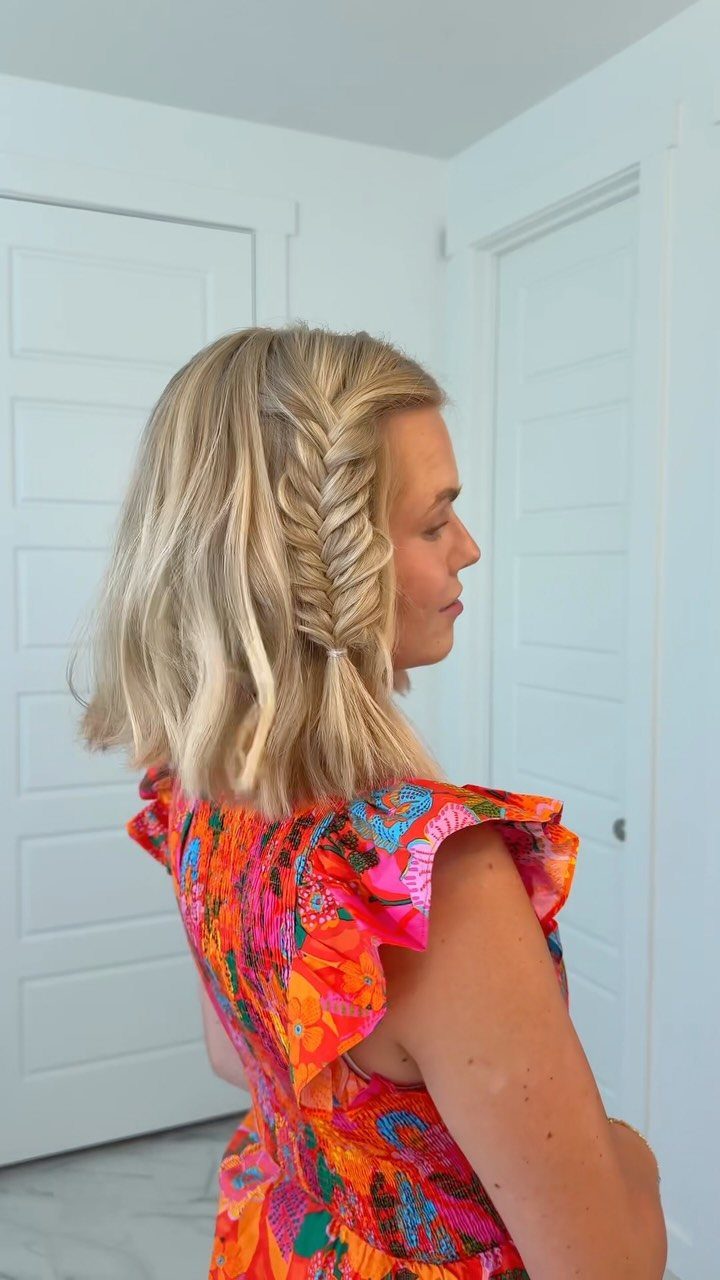
A fishtail braid pulls thin sections from each side and crosses them over, which makes the plait look woven instead of chunked like a three-strand braid.
In a half-up style, you gather hair from the temples back, braid it, and leave the rest loose.
Fishtail braids fluff out easily if you tug the edges after you finish, which is where the volume comes from. Fine or straight hair benefits most from that step, since the texture doesn’t bulk the braid on its own.
16. Box Twist Braids
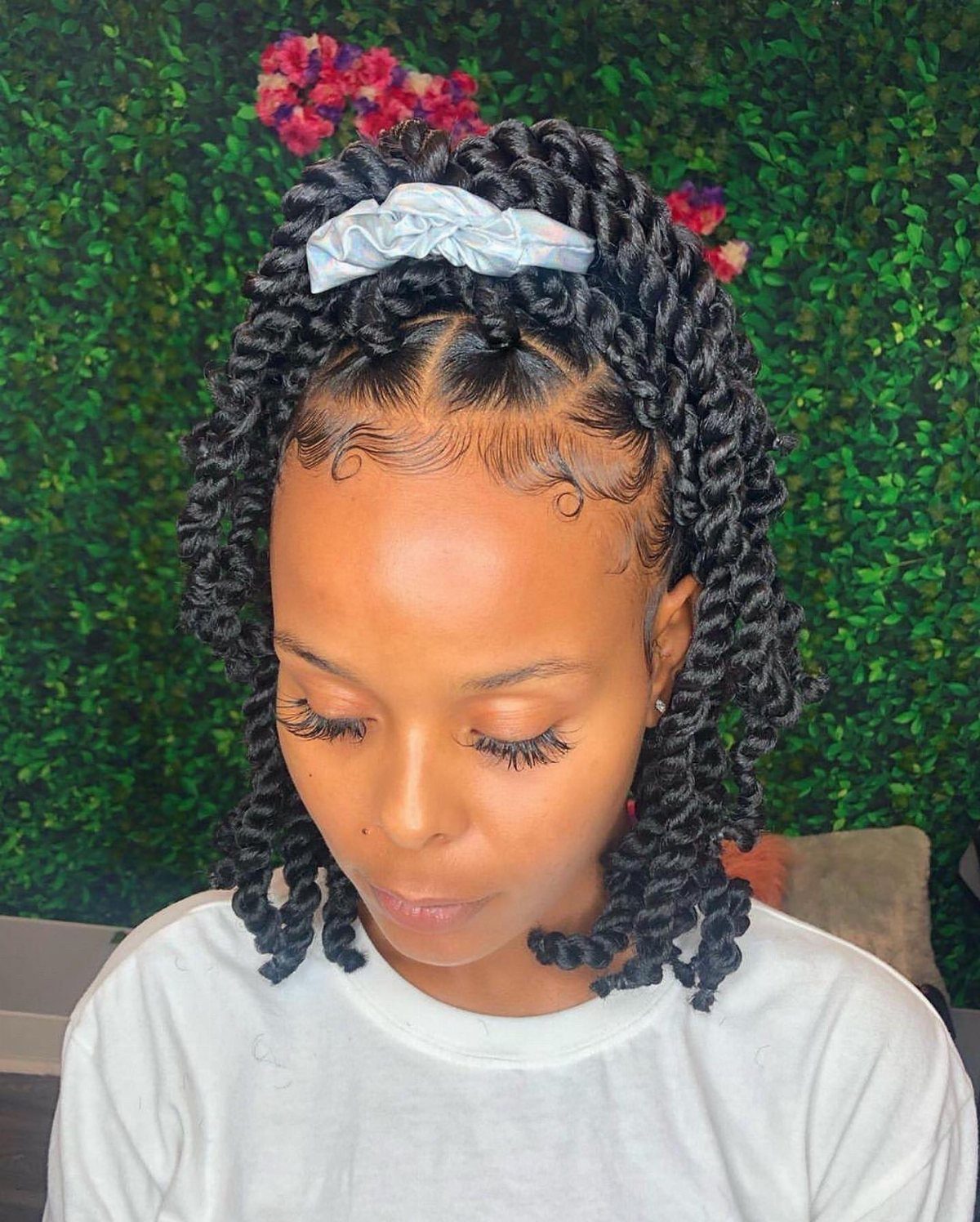
Two-strand twists installed in box parts and cut to shoulder length so the ends hang evenly. The twist texture gives you more grip than a smooth braid, which means accessories like bows or clips stay put without sliding down.
If the ends start to unravel, dip them in hot water briefly to seal. The bob length keeps the twists light enough that they don’t pull at the scalp overnight.
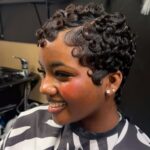
17. Braided Pixie Cut
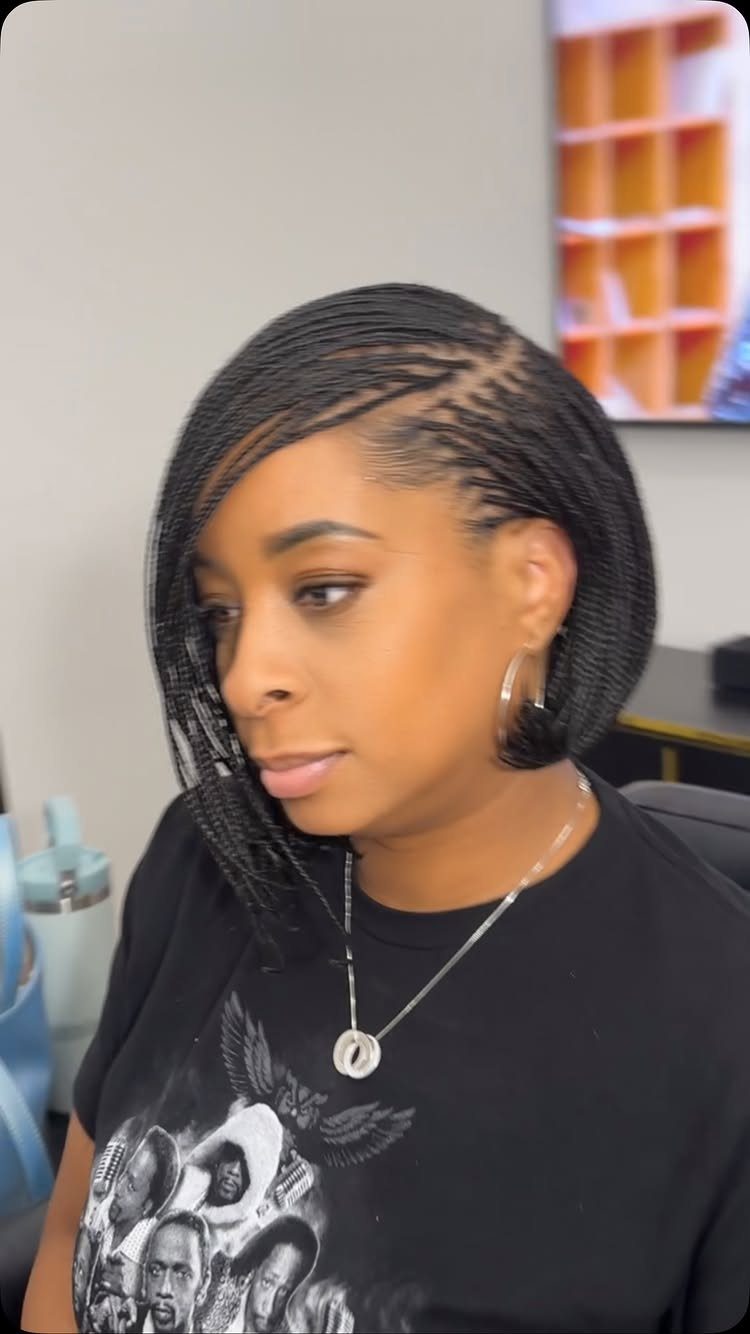
Pixie-length hair with the crown and forward portion left longer and worked into small braids that sweep across or back.
The braids add pattern where a standard pixie would sit flat, and you can angle them diagonally or pin them off-center for asymmetry.
Short sides keep the focus on the braided top, so ask your stylist to taper or fade the perimeter for that contrast.
The braids themselves last a few weeks, and you can redo them at home once you know the parts.
Refreshing and Protecting Braids
Silk or satin pillowcases reduce friction while you sleep, which keeps braids smooth and stops flyaways from forming overnight. A satin bonnet does the same job if you prefer full coverage.
Refresh spray brings moisture back between wash days without soaking the braids.
Hold the bottle 6 inches away and mist lightly, then let it air dry. If edges look dry or feel tight, a small amount of oil or edge control softens the hairline without buildup.
The reduced weight also makes them easier to maintain if you wear braids back to back through the year.
Braids installed too tight cause soreness and can damage the hairline.
If it hurts the first night, the tension is too high. Protective styles work only when the scalp stays comfortable, and 6 to 8 weeks is the usual limit before roots need attention or the style should come out.
Frequently Asked Questions
What are some good natural hair braid styles for ladies?
Box braids, knotless braids, cornrows, crown braids, Dutch braids, and triangle-parted braids all work well on natural hair.
Each offers a different balance of installation time, weight, and versatility, so pick based on how long you want to spend in the chair and whether you prefer braids that hang or lie flat to the scalp.
What are some cool and easy hairstyles for short hair?
Half-up top knots, headband braids, paired Dutch braids, and straight-back cornrows install quickly and work on bob-length or shorter hair. If you want something faster, a single fishtail braid or crown braid gives you detail without covering your whole head.
How can I style my short box braids?
Pull them into a half-up knot, trim the ends into a bob shape, or add beads or cuffs for contrast.
Thicker box braids at short length stand out more than fine ones, and triangle or diamond parts add pattern when you pull the braids back.
Will any braid work on short hair?
Almost any braid adapts to short hair if you have at least 3 to 4 inches of length. Extensions give you the length you need for styles that circle the head or reach the shoulders.
What’s the minimum hair length needed for braiding?
Typically 3 to 4 inches without extensions. Below that, most braiding techniques won’t hold, though crochet styles or other methods that don’t rely on your natural length can work.
Do braids damage short hair?
Braids protect your hair when installed at comfortable tension and removed within 6 to 8 weeks. Tension, duration and dry hair cause the damage, not the braid itself.
How long do braids last on short hair?
Protective styles like box braids and cornrows last 4 to 8 weeks, the same as they do on long hair. Single braids you wear for the day come out before bed and get redone the next morning.
Can I work out with braids on short hair?
Yes. Cornrows and Dutch braids hold up especially well during workouts since they lie flat and don’t shift.
What’s the easiest braid for someone new to braiding short hair?
A French braid or Dutch braid in one plait down the back is the simplest place to start because you’re working with the basic three-strand method and no added hair.
An hour or two in front of a mirror will get you through the learning curve.
Can I add color to short braids?
Yes.
Synthetic hair in any color you want gets braided in with box braids or knotless braids, so you can wear pink, blue, copper or anything else. You get the color without bleach or dye touching your own hair.