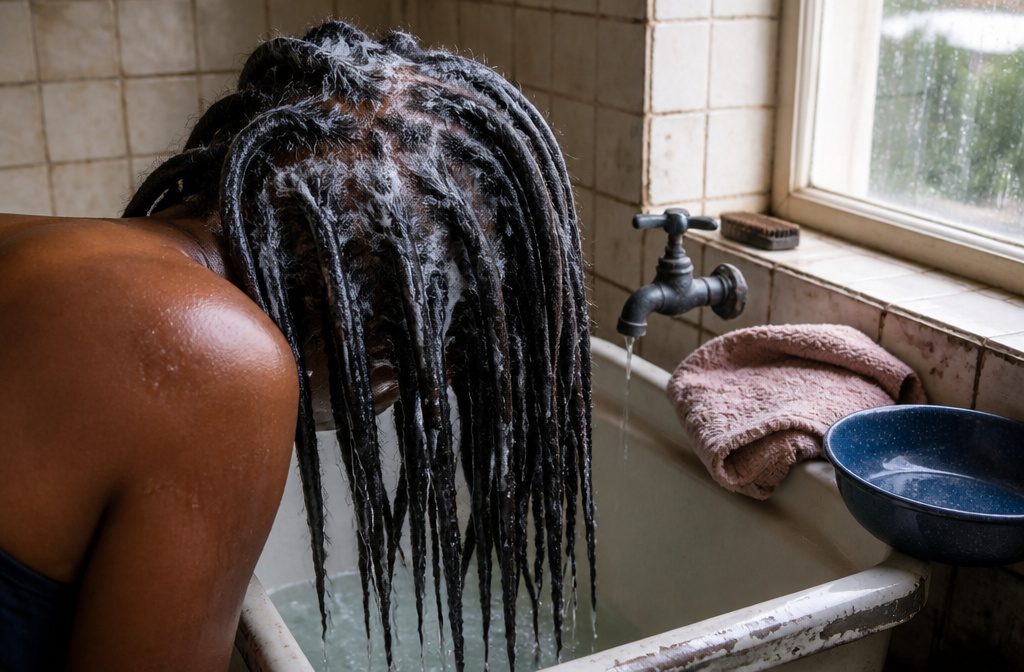
Washing dreads without buildup takes residue-free shampoo, multiple lathers, and full drying that can stretch into hours.
Most people miss the scalp between the locks, where dead skin and sebum settle into the roots and trap moisture that turns into mildew if the hair stays damp overnight.
Once your locks firm up, you can wash every 1–2 weeks, but new dreads need three weeks between washes or the knots come apart before they set.
1. Choose When to Wash
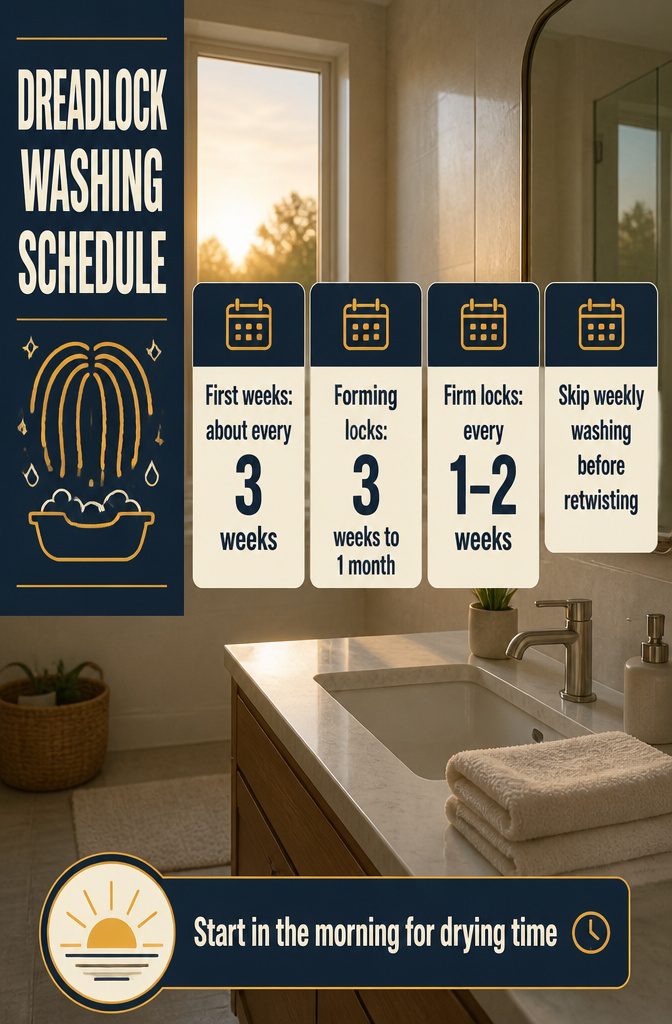
Your locks’ stage sets the schedule. In the first weeks, about every 3 weeks gives the hair time to set and shows the new growth.
While the locks are still forming, 3 weeks to a month is fine, and afro-textured hair is rarely as oily as people assume unless it’s loaded with gel or wax.
Once they feel firm, every 2 weeks works, and most people land on every 1–2 weeks depending on scalp type, lifestyle and how much they sweat. I’d skip weekly washing unless you’re retwisting right after.
Start early in the day. Washing and drying take hours, and a morning start leaves your locks nearly dry by bedtime.
2. Wet the Locks
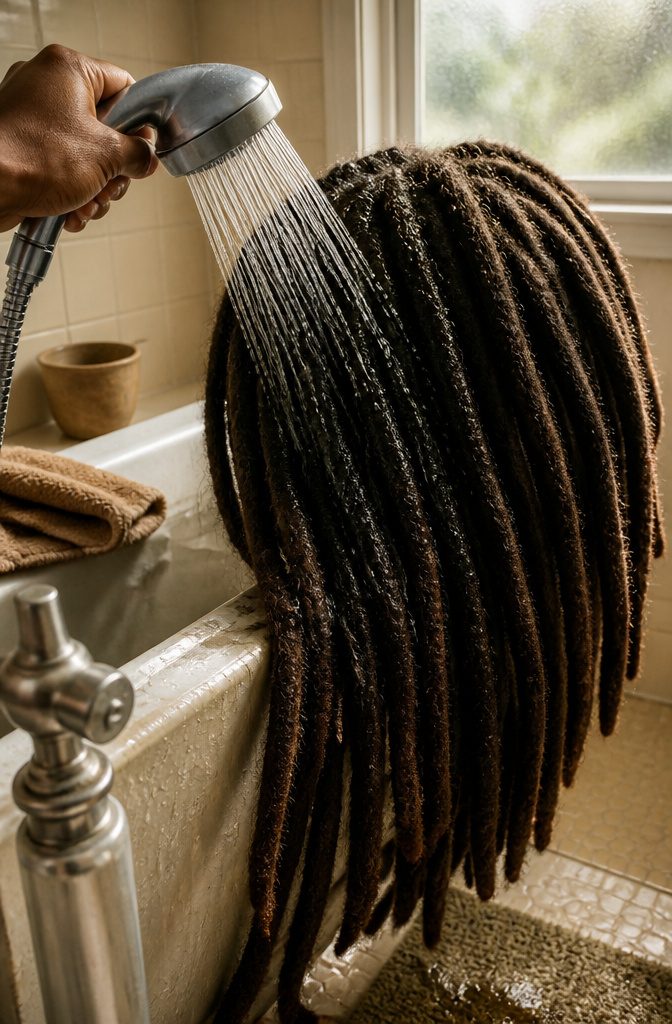
Start with warm water, never hot. Run it over your locks until they’re damp, not dripping: a fully soaked lock is harder for shampoo to work into, and you’ll end up using more product to get the same lather.
Keep the water moving and stop before every lock is saturated.
If you have a tub, I’d sit in it.
Washing locks takes a while, and sitting keeps your arms and shoulders from tiring before you reach the scalp. A standing shower works, but it’s the setup that wears you out first, especially with long or thick locks.
3. Lather the Shampoo
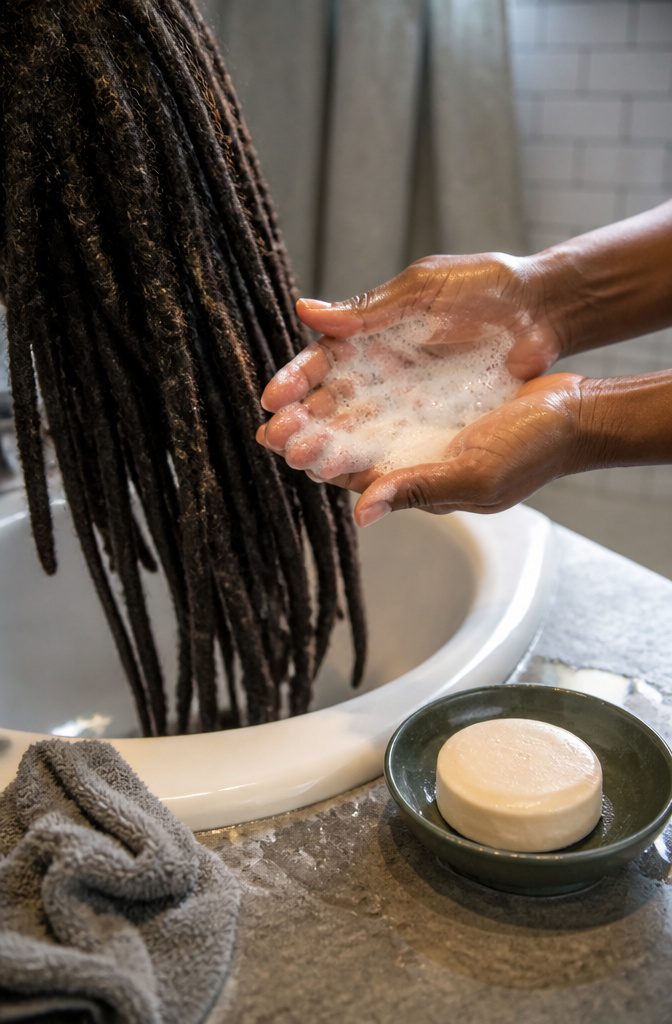
Work a small amount of shampoo in your palms until it foams before it touches your hair. Pre-foaming spreads the soap evenly through dense locks instead of dumping a concentrated blob on one spot.
If the foam thins out midway, add another small portion. A big pour is harder to rinse and can leave the residue you’re trying to wash out.
With a solid bar, rub it between wet hands until you have a rich lather, then press that lather into the locks rather than scrubbing the bar across them.
One lather is rarely enough.
The first pass lifts surface oil and product, and later passes reach what’s left. I’d rather see two or three light lathers than one heavy one.
4. Clean the Scalp and Roots
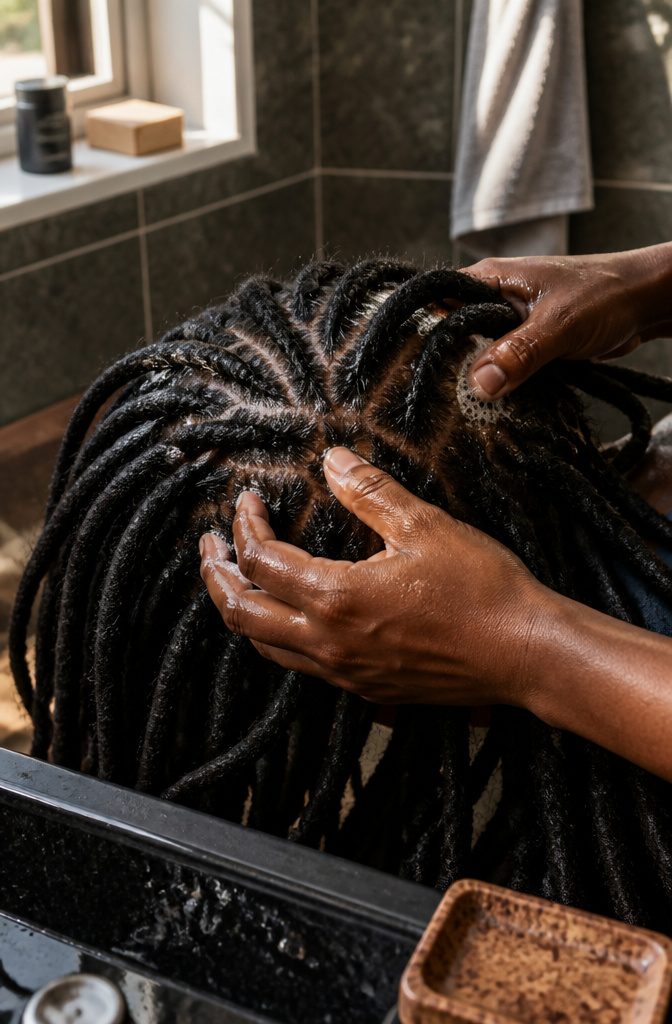
The scalp is where buildup starts, and missing it means dead skin, sebum and product residue settle into the roots.
I work shampoo directly onto the scalp first before I think about the length of the locs. Use your fingertips to scrub in small circles between each lock, reaching the skin rather than just wetting the surface.
The pressure matters more than the motion: firm enough to lift buildup, light enough that you are not yanking at the roots or disturbing the lock structure.
Roots take the longest to dry and trap the most oil, so they need more attention than the rest of the loc.
I spend about twice as long on the first two inches as I do on mid-lengths, making sure shampoo reaches the base where the hair anchors.
If your scalp feels slick or itchy between washes, you probably need another pass through the roots with clean water and more lather.
5. Rinse Thoroughly
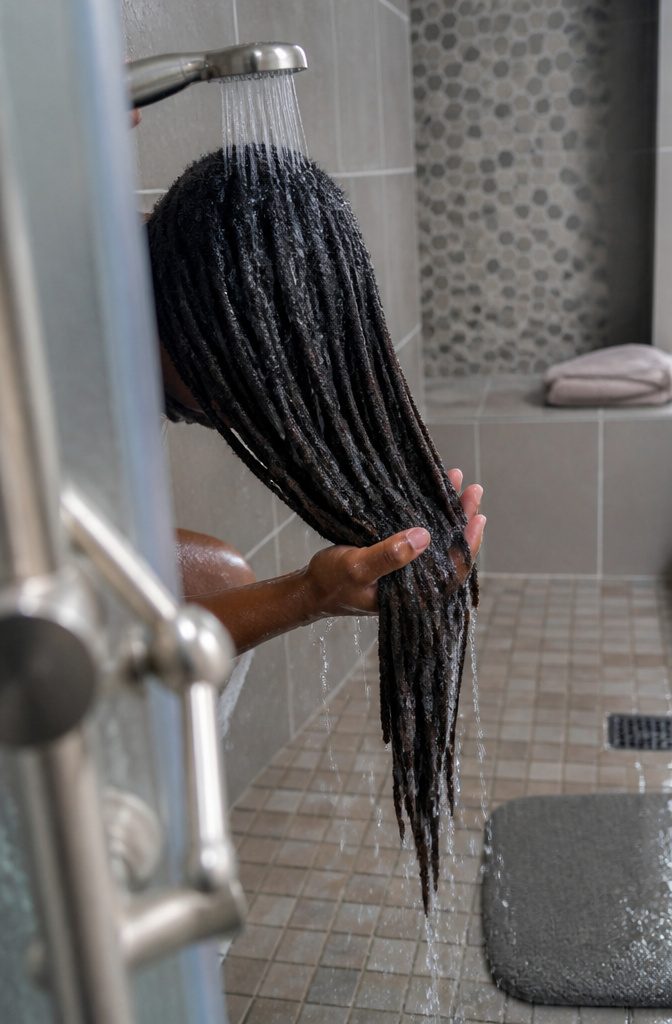
Leave the shampoo on for 1–2 minutes before you rinse.
Then let the water run through the locks while you gently squeeze the lather through them. The squeezing helps work out any buildup that settled deeper in the dread, and water alone won’t reach it without the help.
Make sure all the shampoo residue is gone before you stop. Any film left behind builds up over time and makes the next wash harder.
If you want to be thorough, you can touch up each lock individually with a small amount of extra shampoo, but I skip this unless something feels off.
It adds time, and the loose hair at the surface can frizz when you work it too much.
If that happens, it settles once everything dries, but it’s easier to avoid in the first place by keeping the rinse quick and even.
6. Remove Excess Water and Dry Fully
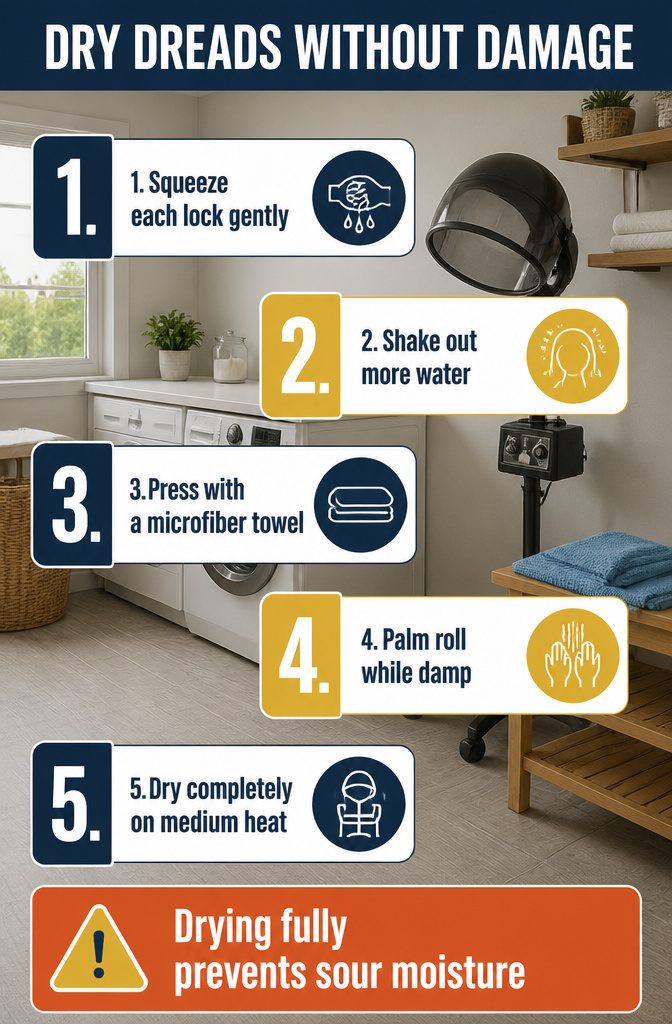
After rinsing, squeeze water out of each lock gently with your hands while still in the shower, then shake your head to release more. Press the locks between a towel rather than rubbing them.
A microfiber towel pulls more water than a standard cotton one, and a towel turban makes it easier to let fabric do the work while you move on to other things.
Palm rolling while the hair is still damp can push additional water toward the surface where the towel picks it up.
If you have a hooded dryer, set the fan on high with medium heat and let the locks sit under it until completely dry.
A regular blow dryer with a diffuser hood attachment works the same way, just takes longer. Use low heat if that is all your dryer offers.
Drying fully is not optional. Moisture trapped inside a lock turns sour within a day or two, and mold can start if damp locks stay bundled in a tam or tied up for hours.
Pull out any beads, cuffs or bands before drying because the hair underneath stays wet longer and mildew develops where air cannot reach.
Extensions add thickness and can take twice as long to dry all the way through, so plan the extra time or start earlier in the day.
7. Repeat When Needed
Frequency differs by stage and hair or scalp condition, and no single schedule applies to everyone. If you just started your locs, washing every three weeks lets the hair set without unraveling the early knots.
Once the locs begin to firm up, you can move to every two weeks. Fully mature locs tolerate washing every other day or every second day, and many people stick with that schedule for the life of the dreads.
If your locs get dusty or your scalp itches before your next planned wash, go ahead and wash early.
A little extra loose hair to palm roll in afterward is no big deal. The real goal is keeping the scalp clean and the locs dry, and waiting too long when you feel the need defeats both.
Washing New Dreads
Freshly installed locks need at least a week before the first wash. The knots are still delicate, and hitting them with shampoo too soon can undo the early matting work before anything has had a chance to settle.
When you do start washing, pick a schedule and hold it: every three days or every four days through the first month.
The consistency matters more than the interval. It lets your scalp adjust and gives the dreads a predictable rhythm to tighten around.
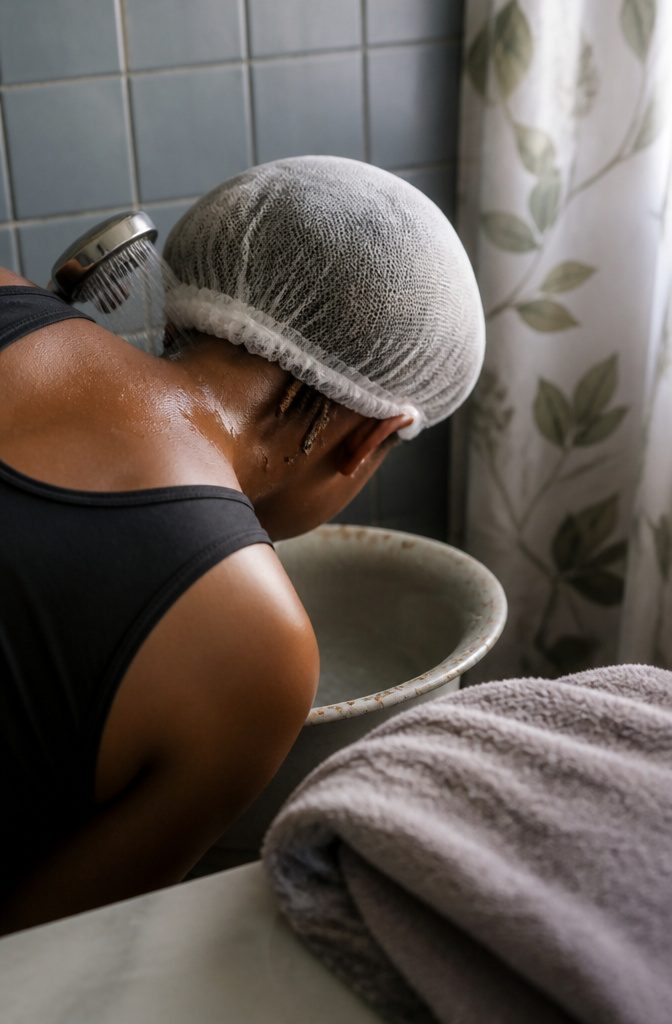
A washing cap during the first month keeps new locks from falling apart under the spray. You lather through the cap, rinse, and the dreads stay bundled together while you clean the scalp.
If you already have rubber bands at the roots and tips, the cap is less necessary. The bands do enough to hold everything in place.
Pat the locks dry, never rub.
Squeezing them with a towel over your hand pulls the water out without pulling the knots apart. Keep them loose while they dry and make sure they are fully dry before tying them up or covering them.
Damp locks left wrapped can mildew, and once that starts you are smelling it for weeks or cutting the whole thing short.
Choosing Residue-Free Shampoo
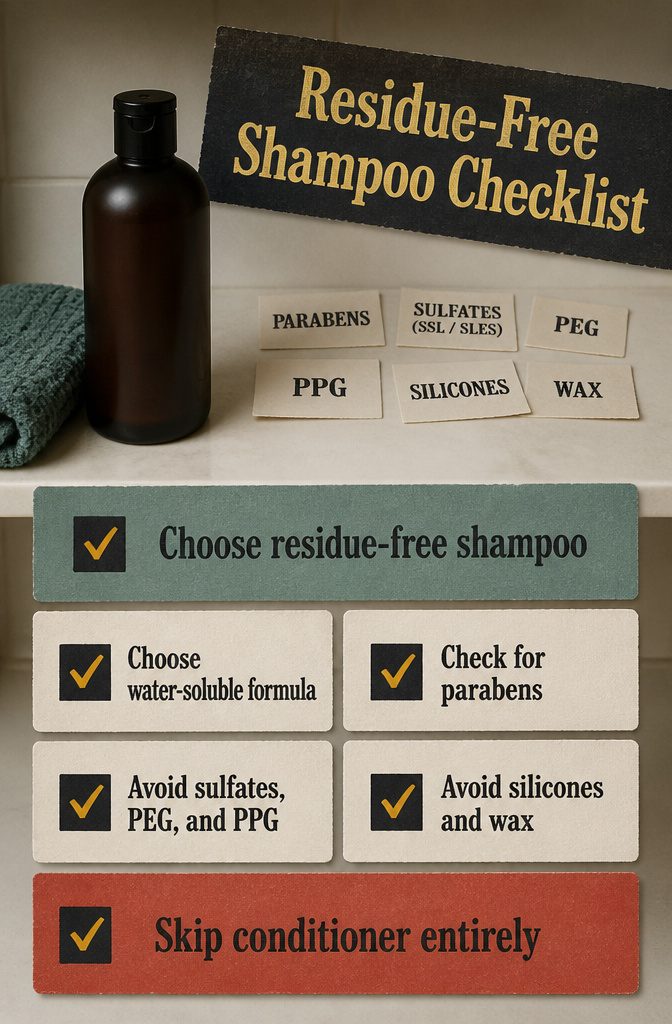
The shampoo you pick decides whether your locs stay clean or trap a layer of film that won’t wash out.
Residue-free, water-soluble shampoo is the only kind that belongs on dreads. Anything that leaves a coating will build up inside the loc over time, and once it’s there it interferes with the locking process and holds onto lint and dirt.
Check the ingredients before you buy. Avoid parabens, sulfates like SSL or SLES, PEG, PPG, silicone products, and wax.
All of those either coat the hair or leave residue even after rinsing. Dreadlock shampoo from a trusted source is already formulated without them, but reading the label yourself confirms nothing slipped through.
Skip conditioner entirely.
Products with oils, waxes, or knot-fighting agents work against what you’re trying to do. They smooth the hair and loosen the structure, exactly the opposite of what a loc needs to tighten and mature.
Deep Clean With Baking Soda and Vinegar
Deep Clean With Baking Soda and Vinegar
This is not a routine wash.
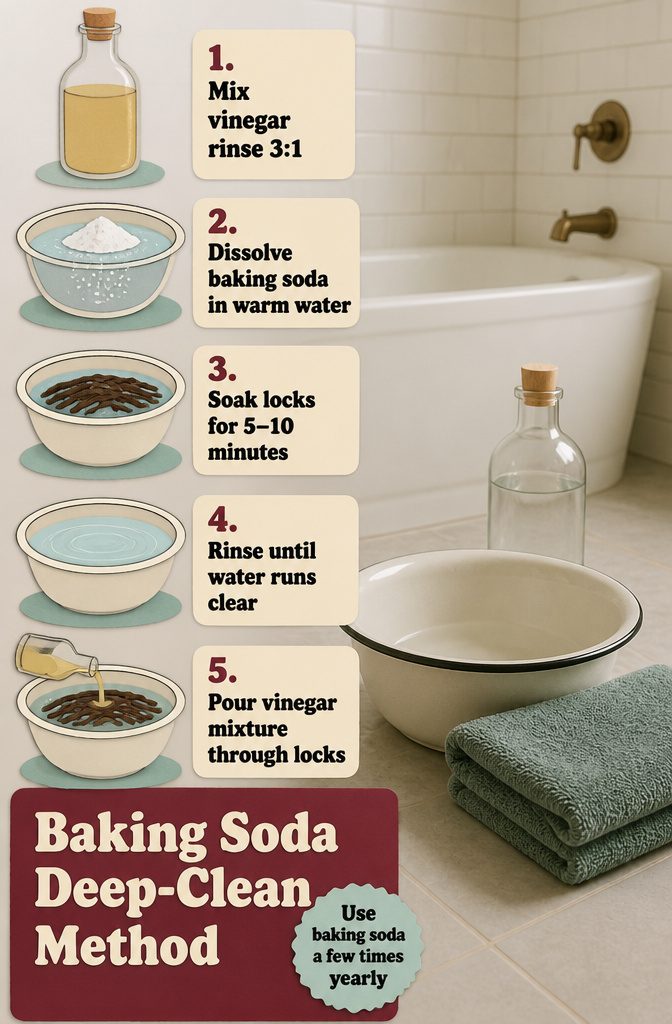
I save the baking soda soak for a few times a year at most, when the locks need a reset beyond what shampoo can do. Used more often, baking soda dries the scalp and makes hair brittle.
- Prepare the vinegar rinse. Mix water and apple cider vinegar in a 3:1 ratio in a large bottle and set it aside.
- Dissolve the baking soda. In a bathtub or basin, dissolve about three-quarters of a box of baking soda in a few inches of warm water. You can add essential oils or a tablespoon of lemon juice to cut odors.
- Soak the locks. Submerge your dreads for 5–10 minutes, working the mixture up to the roots. If you need a deeper clean, go longer than 10 minutes. Pouring the mixture over your head works in a pinch, but soaking gives better coverage.
- Rinse with cool water until the water runs clear.
- Pour the vinegar mixture through the locks. This balances the pH after the baking soda. Rinse it out or let it dry in.
Alternatives Between Washes
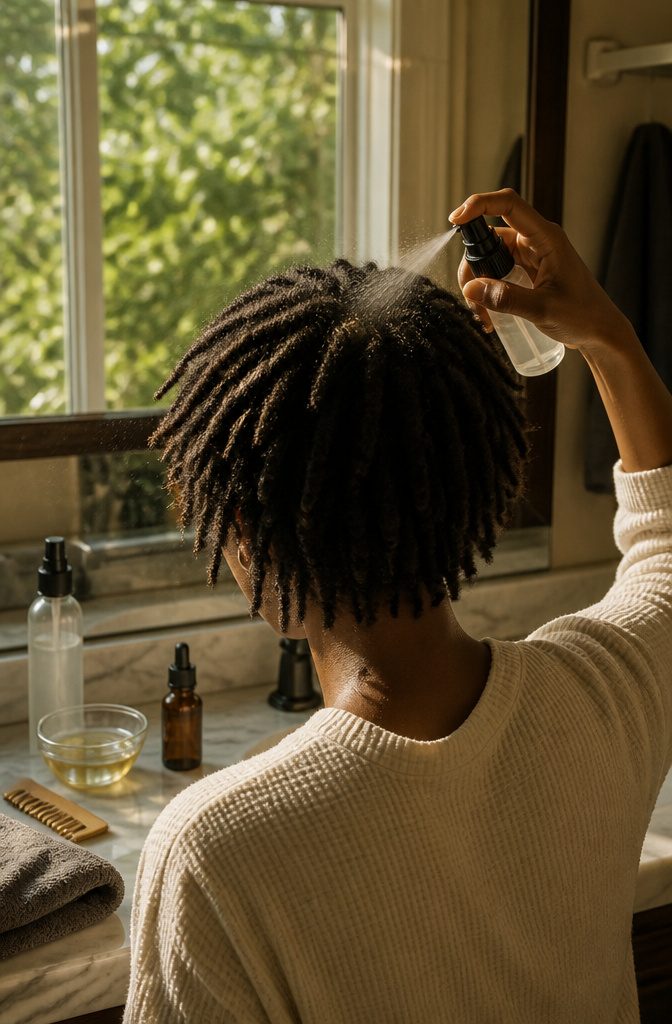
Standard dry shampoos are out.
Most contain starches or powders that lodge inside the locks and build up over time, exactly what you are trying to avoid. A residue-free cleansing spray or a dreadlock-specific dry shampoo extends the gap between washes without leaving anything behind.
Dollylocks Cleansing Spray is the example I see most often: it removes excess oil from the scalp and gives you the clean feeling without water.
Witch hazel is another option for itchiness or when the locks feel dirty before your next scheduled wash, particularly if your hair is short, softer in texture, or you interlock.
Between washes you can also reach for hydration products like Raw Roots Hydrating Oil, Dollylocks Conditioning Oil, or Dollylocks Refreshing Spray to keep the scalp comfortable and the locks from drying out.
Managing Frizz After Washing
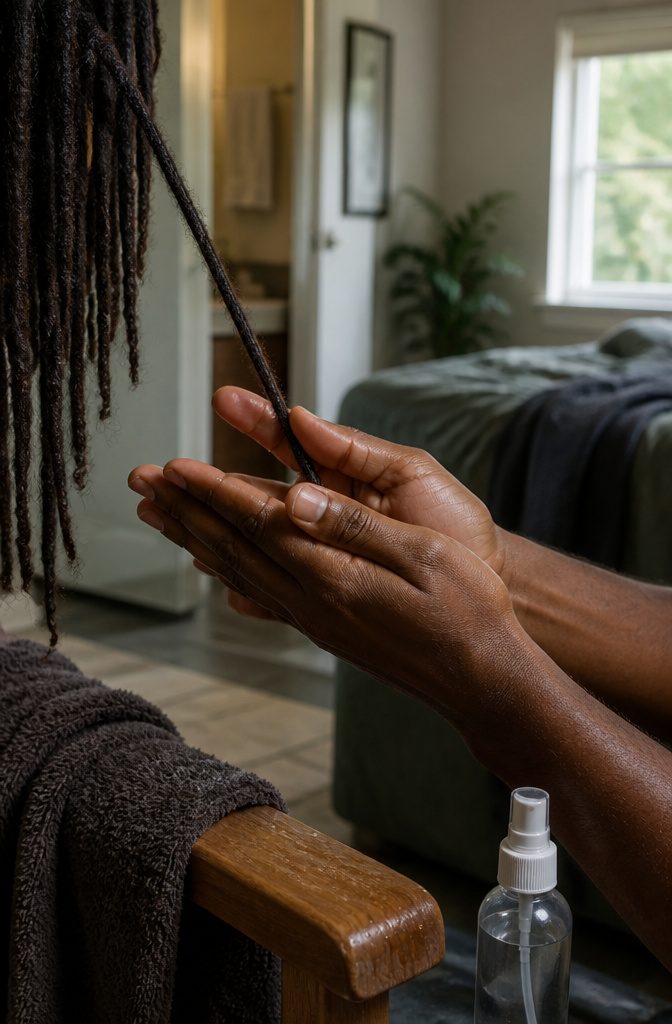
Right after a wash is the best moment to palm roll, because the locks are damp and pliable.
Set one lock between your palms and roll it back and forth, working up and down so the whole length gets attention, not just the middle. You can roll dry-handed or with a little natural tightening gel.
For frizz and flyaways that keep escaping, I’d reach for a tightening gel or spray applied straight to the lock. Dollylocks makes both a Tightening Gel and a Tightening Spray.
The spray is the easier pick for a fluffy post-wash head, since you can mist it on and roll without handling much product. One customer calls it her saving grace for exactly that fluffiness.
Frequently Asked Questions
How often should I wash my dreadlocks?
Most people wash every 1–2 weeks once locks are firm, depending on scalp type and activity level.
New locks need about 3 weeks between washes to let the hair set, while mature locks can handle more frequent washing. If your scalp itches or your locks feel dirty before the next scheduled wash, go ahead and wash early.
What’s the best shampoo for dreads?
Use residue-free, water-soluble shampoo without parabens, sulfates, silicones, PEG, PPG, or wax.
These ingredients leave a coating that traps dirt and interferes with the locking process. Dreadlock shampoo from a trusted source is already formulated without them, but reading the label yourself confirms nothing slipped through.
Can I use regular shampoo on my dreadlocks?
Only if it’s residue-free and water-soluble.
Many regular shampoos contain silicones, sulfates, or waxes that coat the hair and cause buildup inside the lock over time. Check the ingredients before you buy, and avoid anything that leaves a film after rinsing.
Can I use dry shampoo on dreadlocks?
Standard dry shampoo is not recommended because most contain starches and powders that lodge inside the locks and build up over time. A residue-free cleansing spray or dreadlock-specific dry shampoo extends the gap between washes without leaving anything behind.
Is it okay to wash new dreadlocks?
Yes, but wait at least a week after installation before the first wash so the knots have time to settle. When you do start, wash every 3 weeks to let the hair set without unraveling the early matting work.
Pat the locks dry and make sure they’re fully dry before tying them up or covering them, since damp locks left wrapped can mildew.
Why do my dreads smell even after washing?
Moisture trapped inside a lock turns sour within a day or two, and mold can start if damp locks stay bundled for hours.
Squeeze water out of each lock after rinsing, then use a towel or hooded dryer to remove all moisture. Pull out beads, cuffs, or bands before drying because the hair underneath stays wet longer.
How to deep clean your dreadlocks?
Soak your locks in warm water with about three-quarters of a box of baking soda dissolved in it for 5–10 minutes, working the mixture up to the roots.
Rinse with cool water until it runs clear, then pour a 3:1 water-to-apple-cider-vinegar mixture through the locks to balance the pH.
Save this for a few times a year at most, since baking soda dries the scalp and makes hair brittle when used too often.
What is the fastest way to dry dreadlocks?
Use a hooded dryer with the fan on high and medium heat, and let the locks sit under it until completely dry. A regular blow dryer with a diffuser hood attachment works the same way but takes longer.
Squeeze water out of each lock with your hands first, then press them between a microfiber towel to pull more water before you start drying.