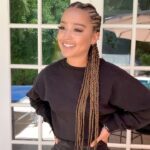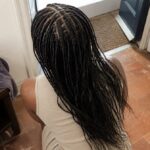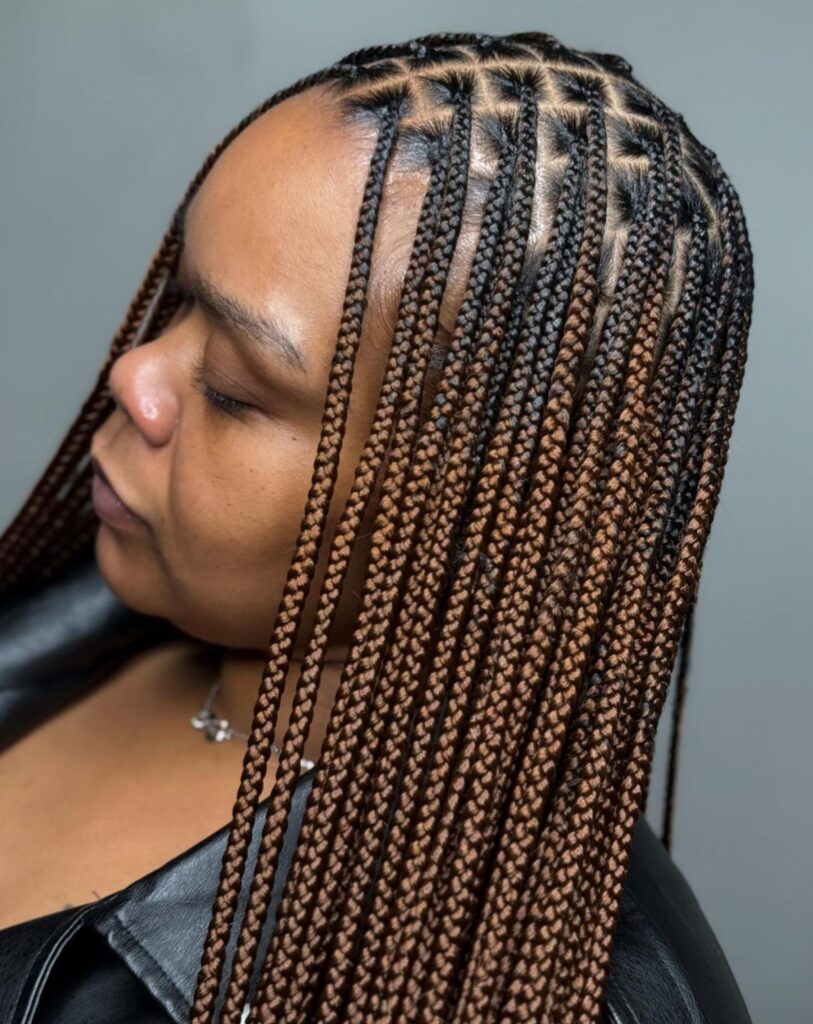
Small knotless braids installed at shoulder length give you low-tension scalp protection and styling flexibility without the weight or chair time that comes with longer lengths.
Extra-small sections can keep you in the chair most of a day, while shoulder-length braids with standard small sections take less time but still give you dozens of styling options.
1. Small Blonde Braids
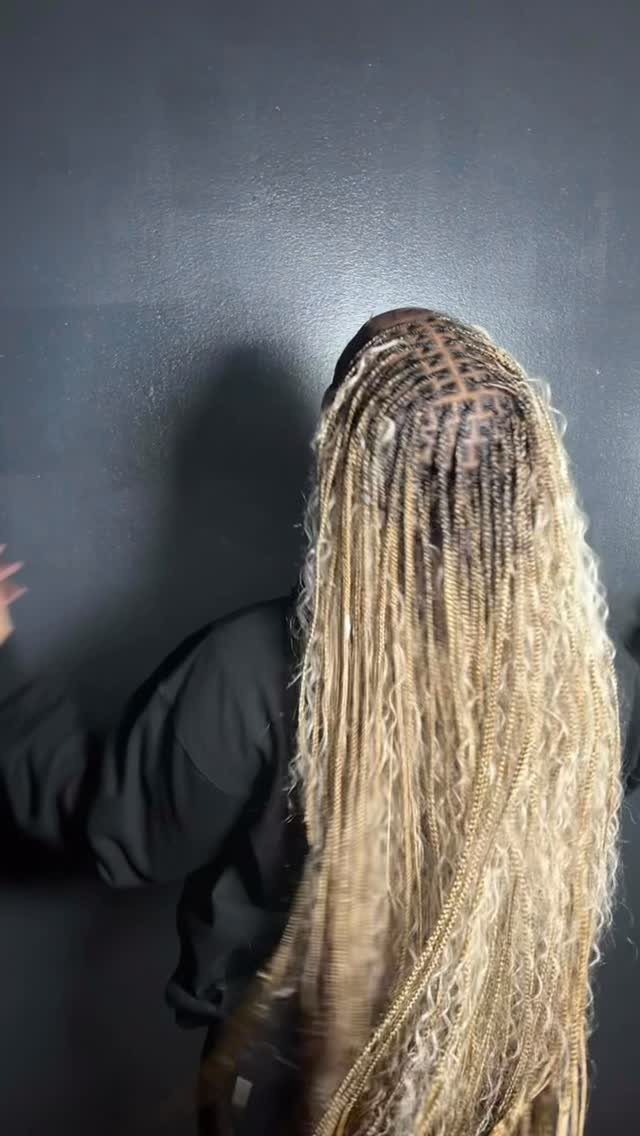
Blonde shades give small knotless braids a softer, sun-lit edge that stands out against darker roots or natural regrowth. The contrast reads high drama when the blonde is platinum or icy, warmer when it leans honey or butter.
This length keeps the weight manageable and lets you wear them down without extra strain on the scalp. For a bold color shift, pick a blonde shade close to what you’re after so you aren’t chasing upkeep.
2. Small Goddess Braids
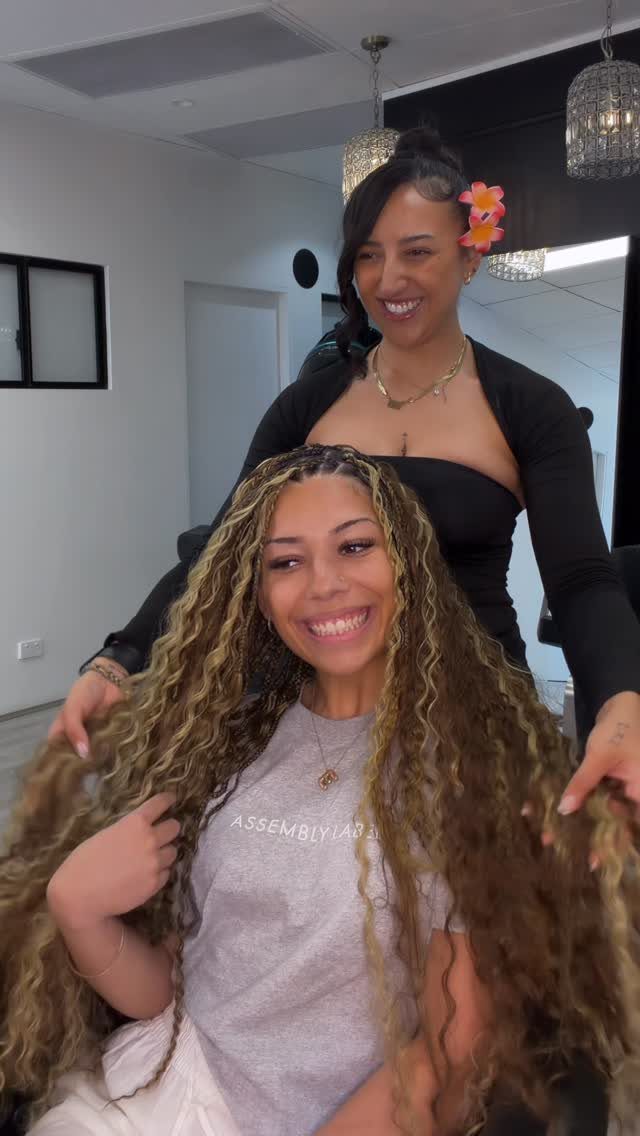
Small knotless braids with loose, wavy ends split the difference between a sleek protective style and soft, romantic volume. The braid portion gives you the low-tension scalp you want, while the unbraided waves add movement and bounce.
Ask your braider to leave the last few inches loose, then set them on flexi rods or perm rods overnight for definition.
The waves loosen over time, so refresh them with a light curl cream and a quick twist if they start to go flat. This one works best on longer lengths where the loose section has room to move.
3. Small Brown Braids
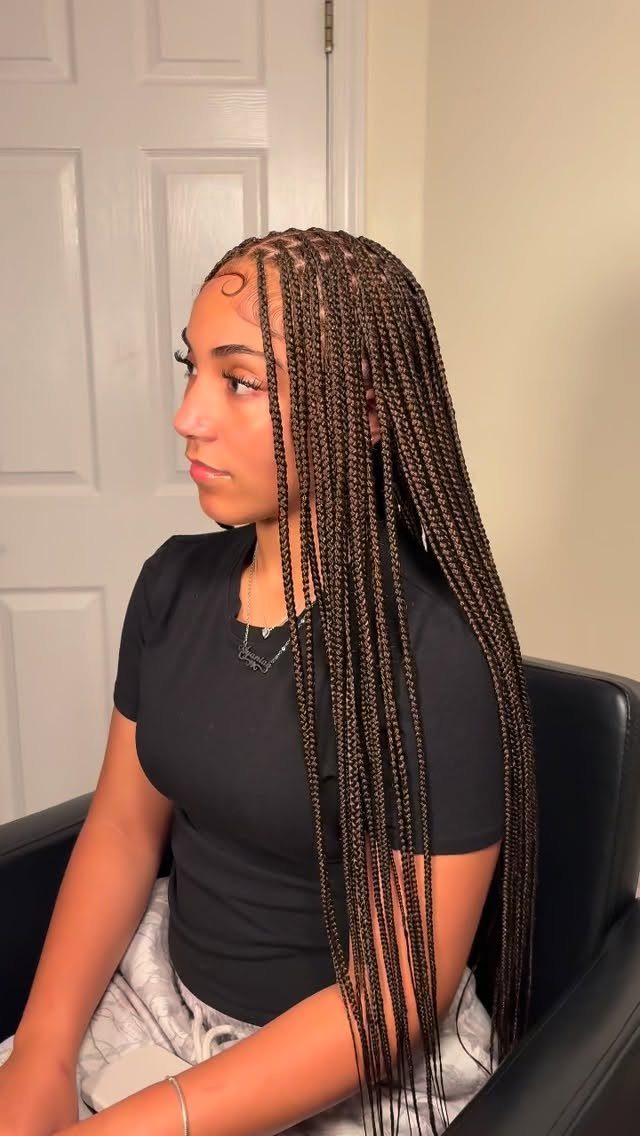
Brown braids in shades from espresso to chestnut read natural and low-key, which makes them a solid choice for the protection and versatility of small knotless braids without the upkeep that comes with bright color.
The look stays polished with minimal touch-ups, and regrowth blends more easily than it does with blonde or red. If you’re wearing them long, the color keeps the focus on the texture and parting instead of demanding extra maintenance.
4. Small Knotless Braids High Ponytail
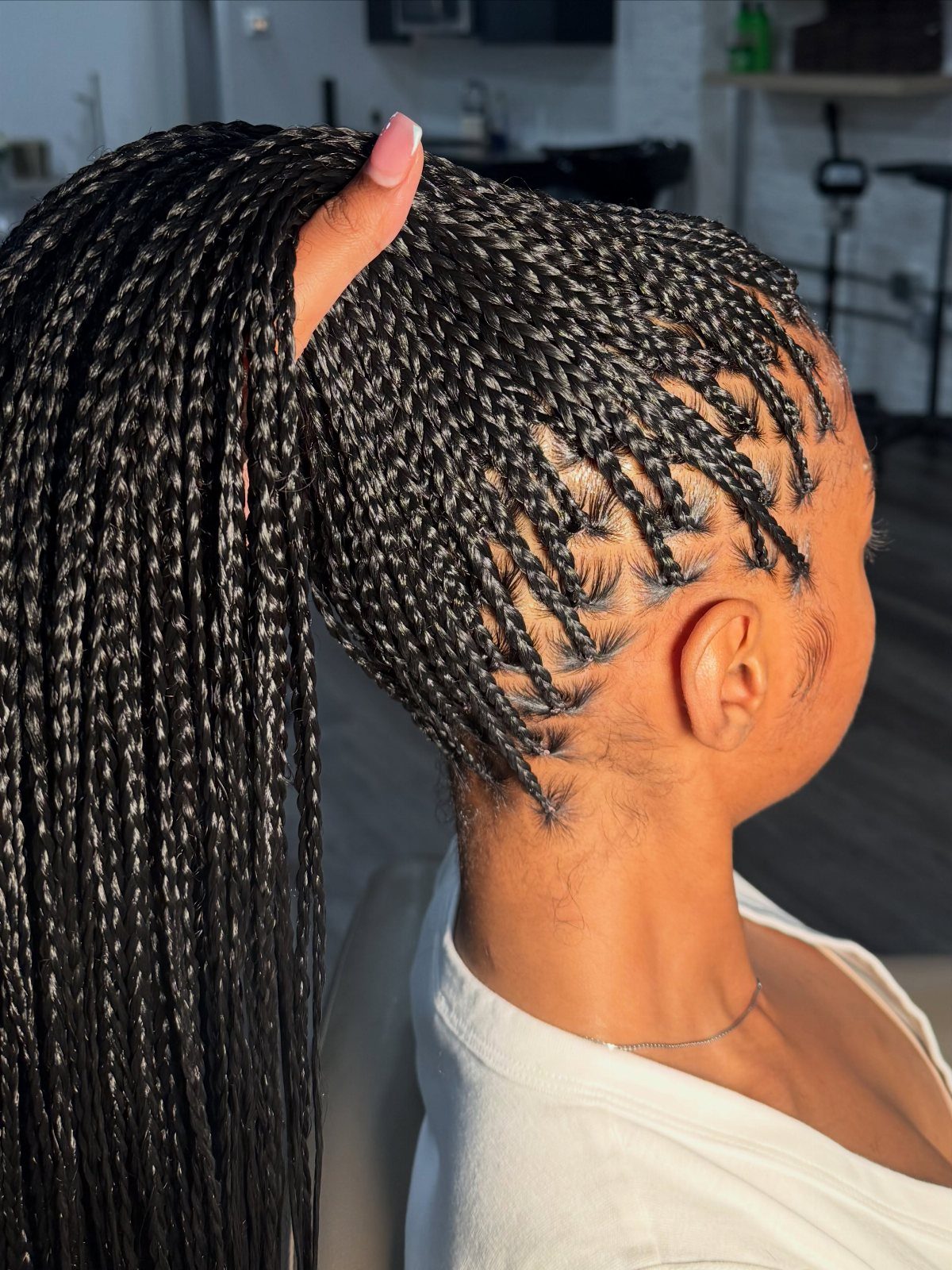
Gathering small braids into a high ponytail clears your face and neck while keeping the scalp tension low.
The height depends on where you anchor the tie, but a ponytail at the crown or higher gives you that sleek, pulled-together look that works for work or a night out.
Use a soft hair tie or a silk scrunchie to avoid snagging the braids. The small knotless braids high ponytail works best when the braids are fresh and the edges are still clean.
5. Small Braids with Beads
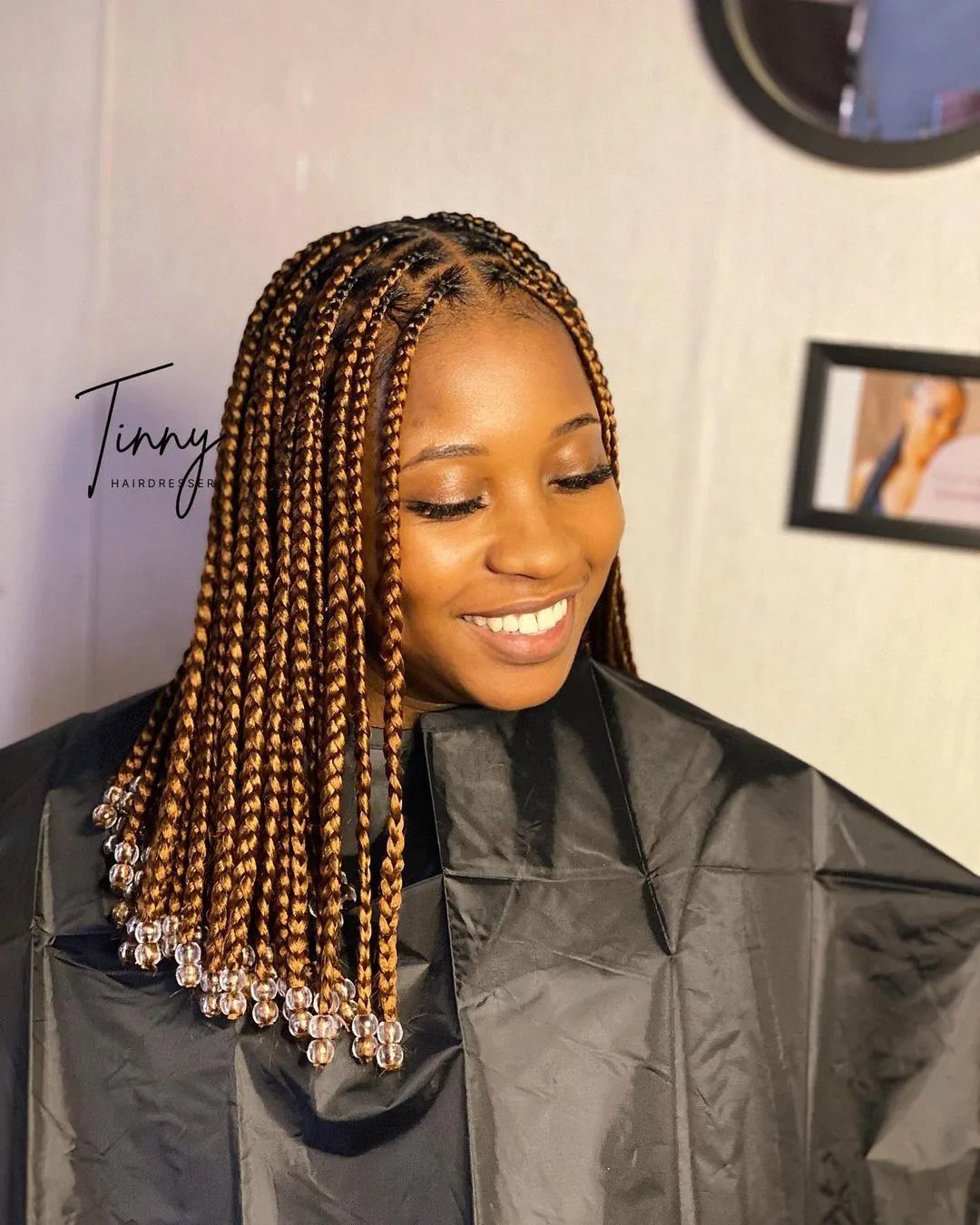
Beads at the ends add weight, sound and a polished finish that moves when you do. Clear beads let the color of the braids show through, while metal or wooden beads bring in contrast and a bit more presence.
Thread them on before sealing the ends, or slide them over a small elastic for easy swapping later.
Beads can make the braids feel heavier, so if your scalp is sensitive, stick to lightweight acrylic or a few scattered accents instead of beading every single braid.
6. Small Knotless Braids Bob
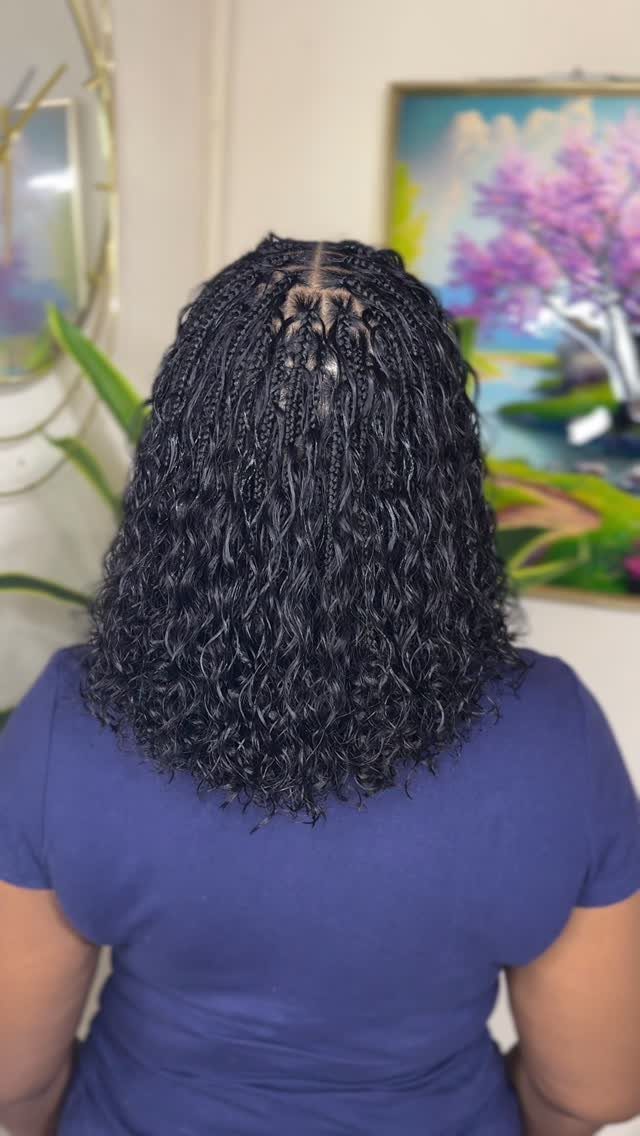
Stopping the braids at shoulder length or shorter gives you a bob shape that feels lighter and easier to manage than waist-length braids. The shorter length also cuts down on installation time.
This length works well if you want the knotless method but don’t want the weight or the long morning routine.
You can still pull them into a low bun or tuck them behind your ears, and the curly ends add softness without extra bulk.
7. Small Knotless Braids Pigtails
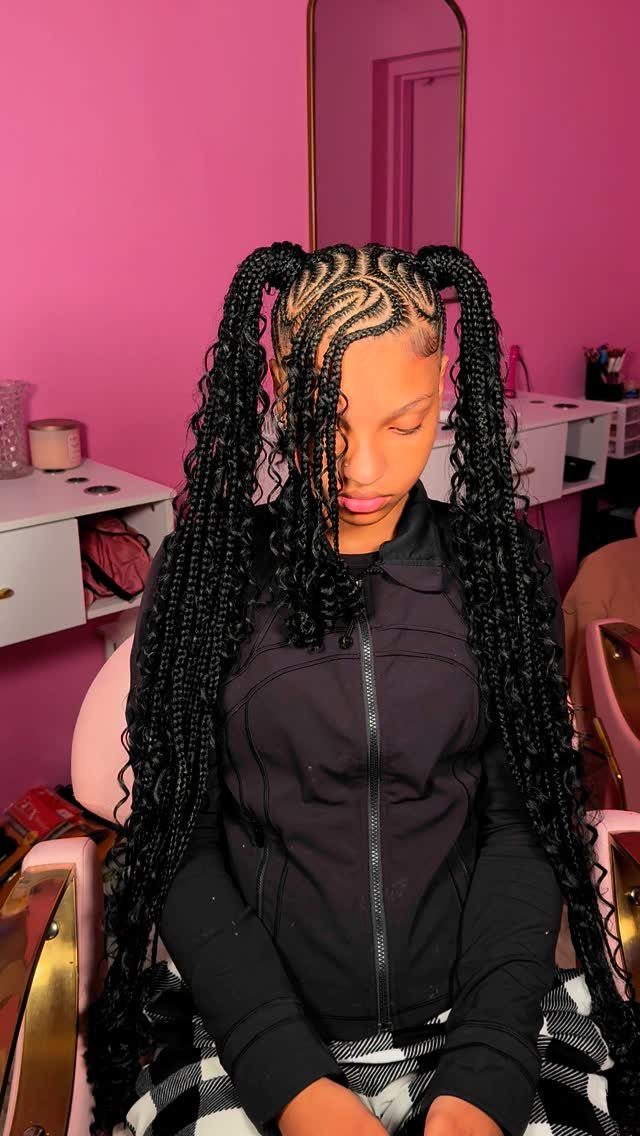
Splitting the braids into two low or mid-height sections gives you a playful, balanced look that keeps hair off your shoulders. The style works whether you tie them at ear level or lower near the nape.
Secure each section with a coated elastic or a ribbon to avoid snagging. Pigtails suit long braids especially well since the length adds movement, and you can leave the ends straight or curl them for extra texture.
8. Small Braids with a Side Part
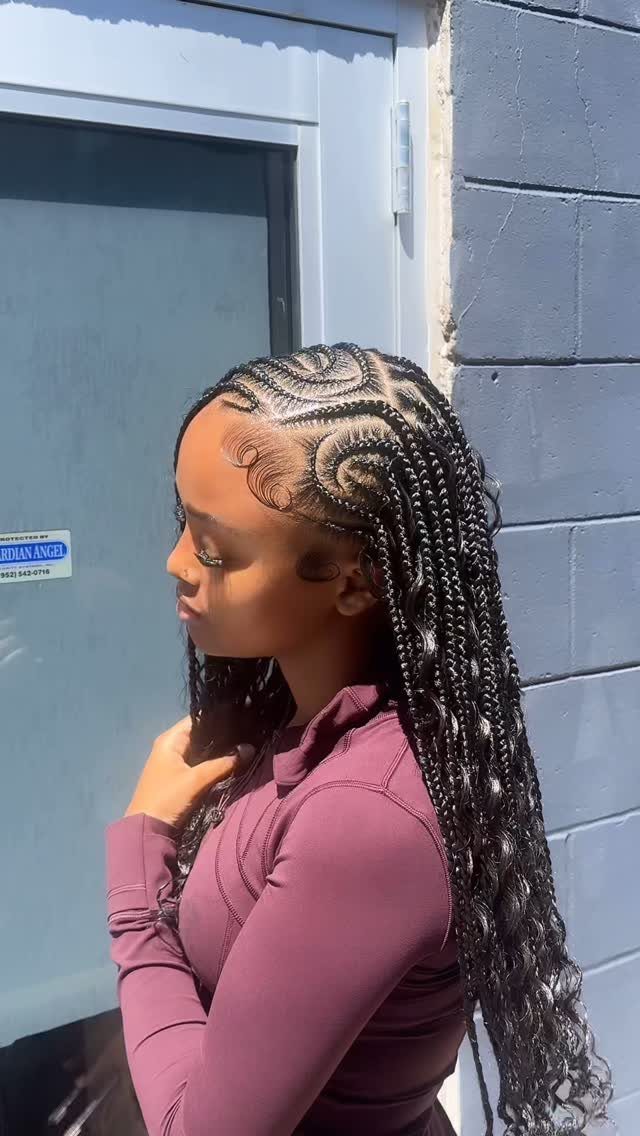
Parting the braids off-center shifts the weight and creates asymmetry that frames one side of your face more than the other.
The part can sit anywhere from just left or right of center to a deep sweep that clears one temple entirely.
Ask your braider to set the part line during installation so it stays crisp. A side part flatters most face shapes and gives you more styling options when you pull the braids back or tuck one side behind your ear.
9. Small Braids with Curly Ends
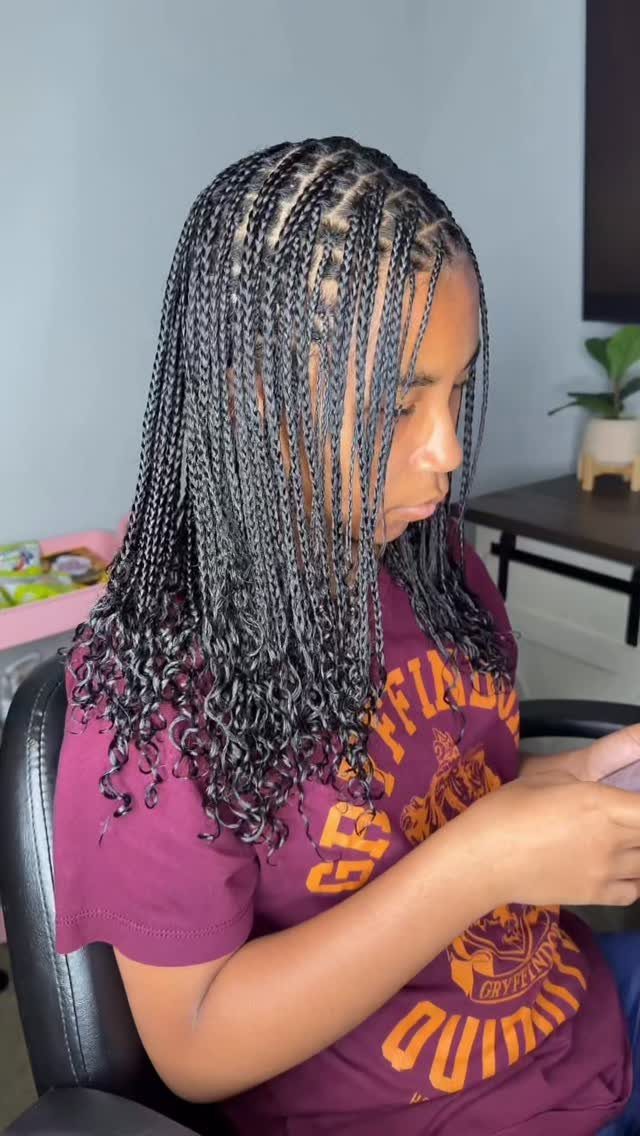
Leaving the ends unbraided and setting them on rods or rollers gives you defined curls that soften the rigid line of the braids. The curls add volume at the ends and a softer finish than blunt-cut or heat-sealed tips.
Set the loose hair on flexi rods or perm rods, dip the ends in hot water briefly, then let them dry completely before removing the rods.
The curls relax after a few days, so refresh them with a light spritz and retwist if needed.
10. Small Ombre Braids
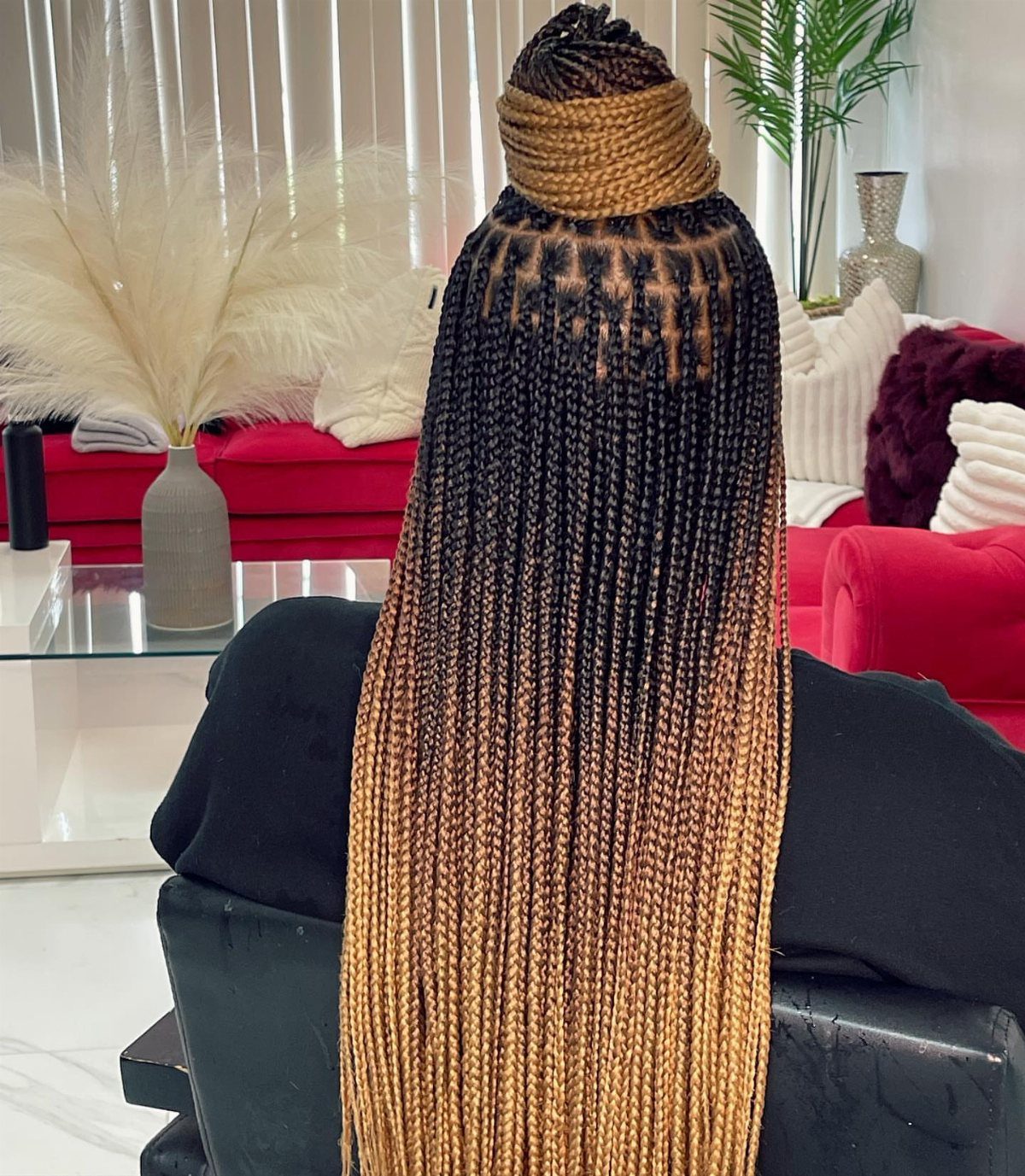
A gradual color shift from dark roots to lighter ends brings dimension without the high-contrast line of two-tone braids. The transition reads subtle when the shades are close, more dramatic when the difference is several levels.
Choose pre-stretched braiding hair that already blends the colors, or have your braider mix 2 shades by hand as they work down each braid.
11. Small Half-up Bun
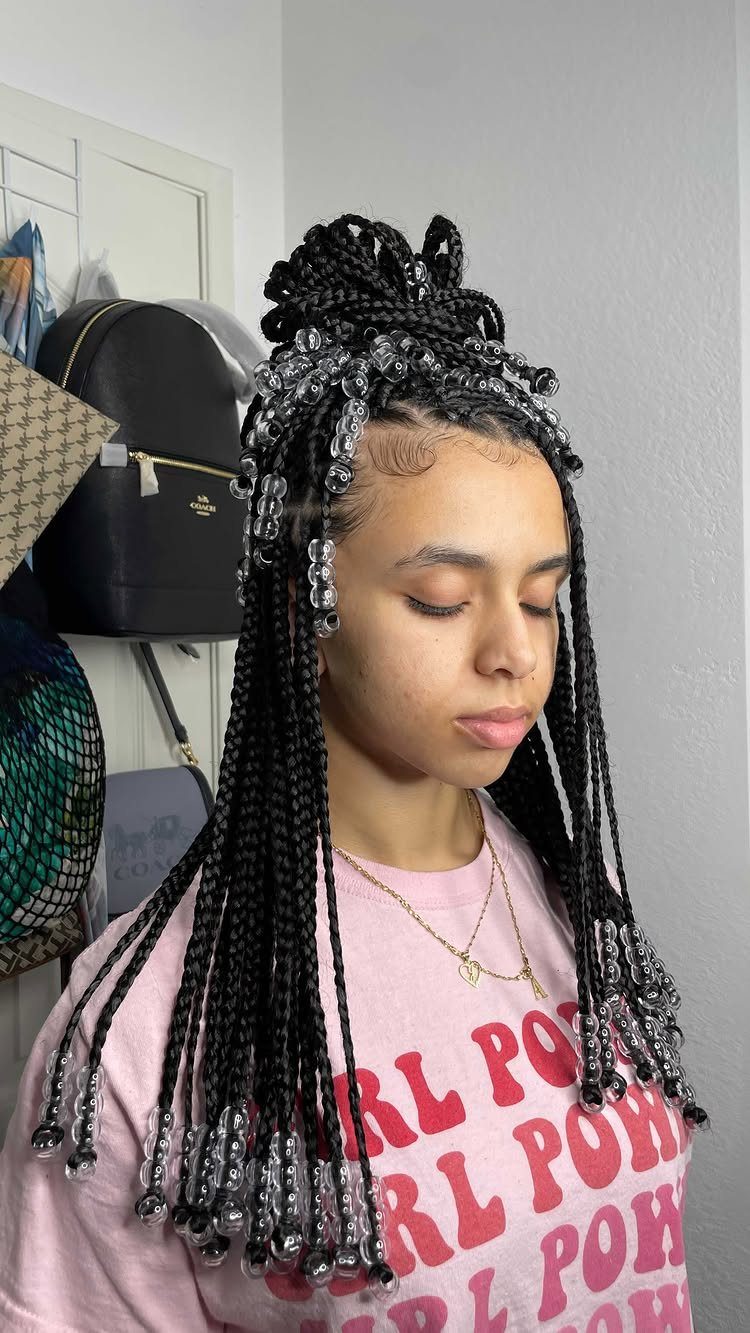
Gathering the top section into a bun while leaving the rest loose gives you height and shape without committing to a full updo.
The bun can sit at the crown for a high topknot or lower for a more relaxed look.
Use a hair tie that matches your braid color and wrap a few braids over it to hide the elastic.
This style clears your face and neck while keeping most of the length free, and it holds up through a full day without needing adjustment.
12. Small Knotless Space Buns
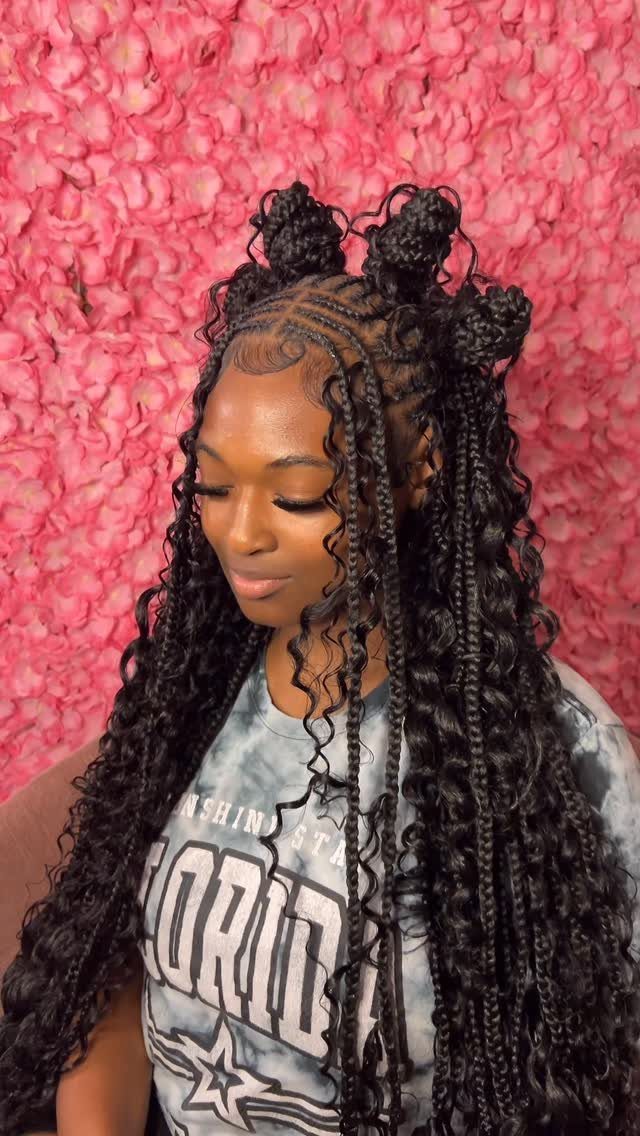
Dividing the braids into 2 high buns creates symmetry and lifts the weight off your neck and shoulders. The buns can be tight and compact or loose and messy, depending on how much you twist and tuck.
Part the braids down the middle, gather each side into a ponytail at the crown or higher, then coil the braids into a bun and secure with pins or another elastic.
Space buns work best on medium to long lengths where you have enough braid to wrap without pulling too tight.
13. Long Small Knotless Braids
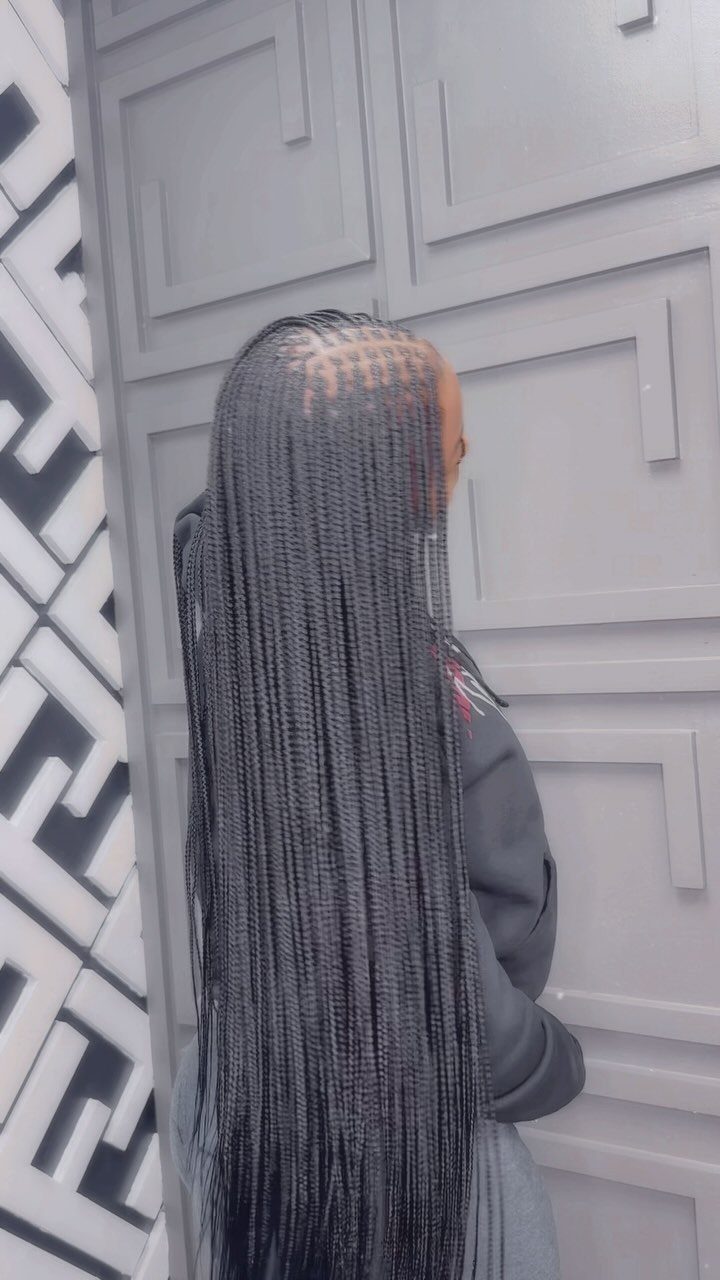
Braids that fall past your waist or hips give you maximum length and styling range, though the weight adds up fast.
Small knotless braids at this length take longer to install, and the time varies based on your braider’s speed and how thick your natural hair is.
The length lets you experiment with high ponytails, low buns and wrapped styles without losing much drop. If your neck or scalp is sensitive, plan to sleep with a satin bonnet or scarf to keep the weight from pulling overnight.
14. Small Knotless Braids with Zigzag Parting
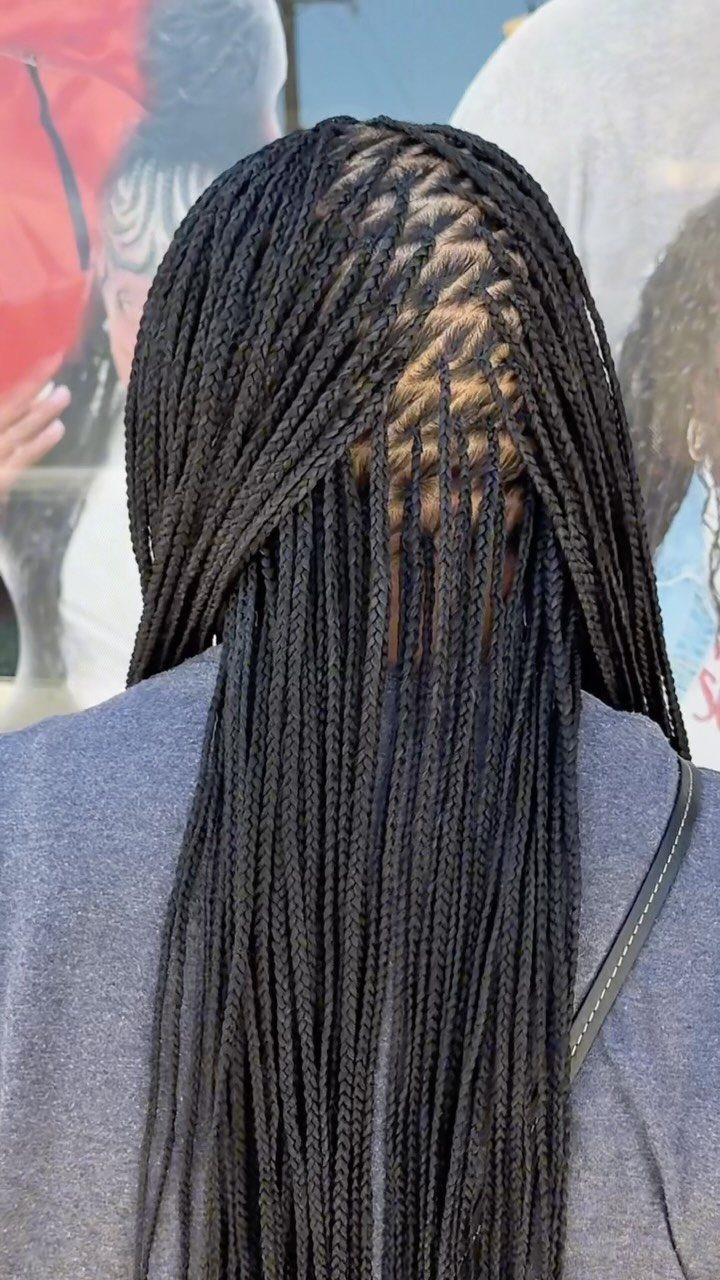
A zigzag part breaks up the straight grid of traditional box braids and adds visual interest across the scalp. The pattern can run front to back, side to side or in several directions depending on what your braider maps out.
This parting style takes a bit more time up front since each section has to be measured and angled, but the result holds up as long as the braids do.
Zigzag parts work especially well when you wear the braids down or in a high ponytail where the scalp is visible.
15. Knotless Box Braids
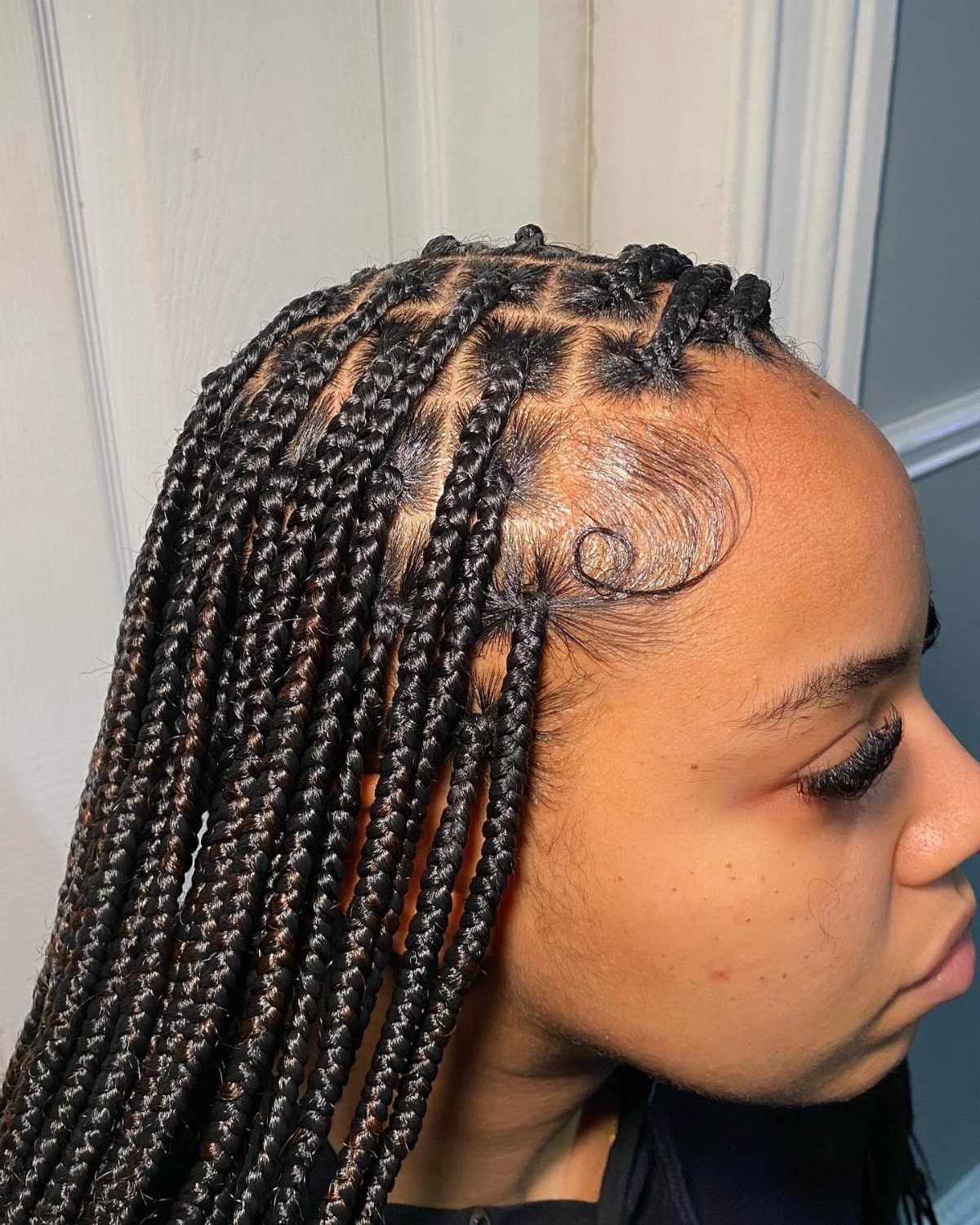
Box braids get their name from the square or rectangular sections that define each braid at the root.
The knotless method keeps the start smooth and gradual, so you get the clean, structured grid without the tension that traditional box braids can bring.
Square parting reads crisp and symmetrical, which makes regrowth easier to track when it’s time for a touch-up. This is the baseline style most braiders work from, and it translates well to any length or thickness.
In a nutshell, they’re different from traditional box braids due to the way the added hair is fed in, which places less tension on your hair.
— Un-Ruly
16. Small Knotless Braids Updo
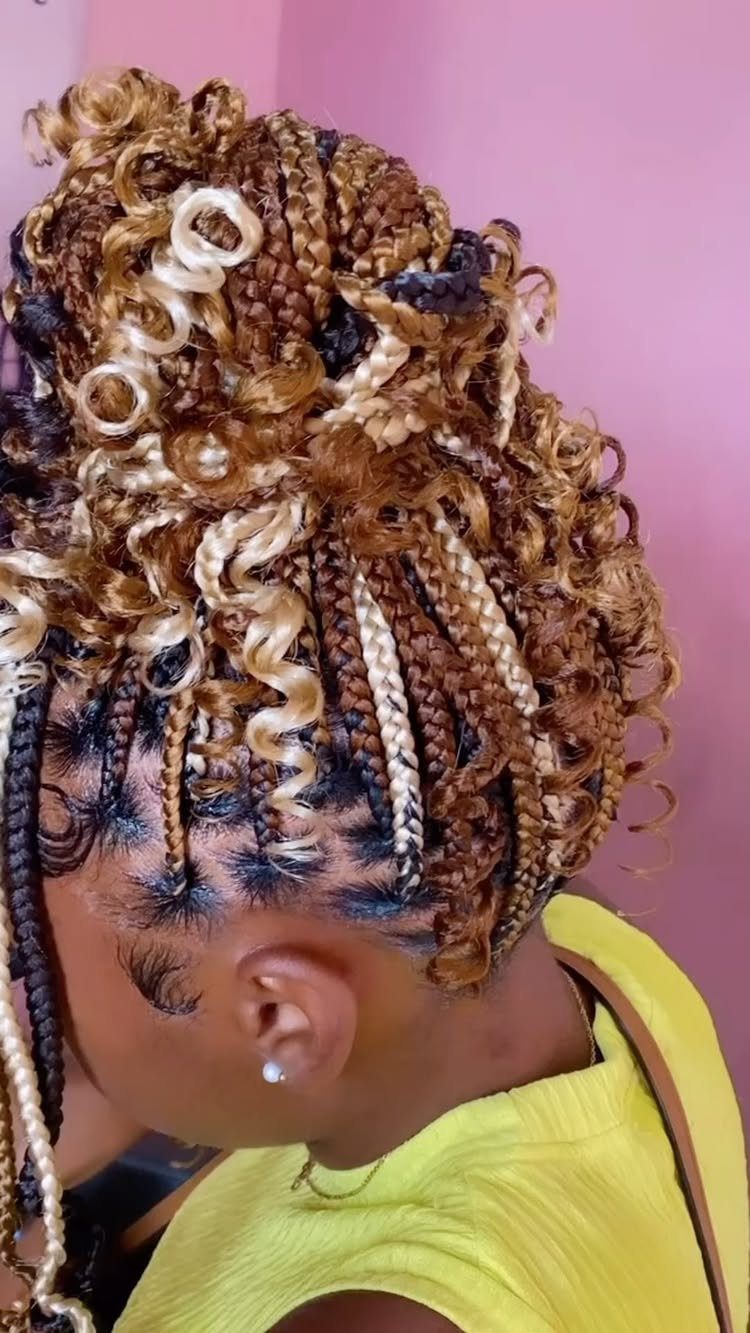
Pinning the braids up clears your neck and shoulders while giving you height and shape that works for formal events or a dressed-up day.
When the braids end in curls, I like pulling a few loose at the crown instead of pinning everything back.
Use bobby pins or U-pins that match the braid color, and tuck the ends under so the pins don’t show. An updo holds longer when the braids are fresh and the scalp isn’t producing much oil yet.
17. Small Triangle-part Braids
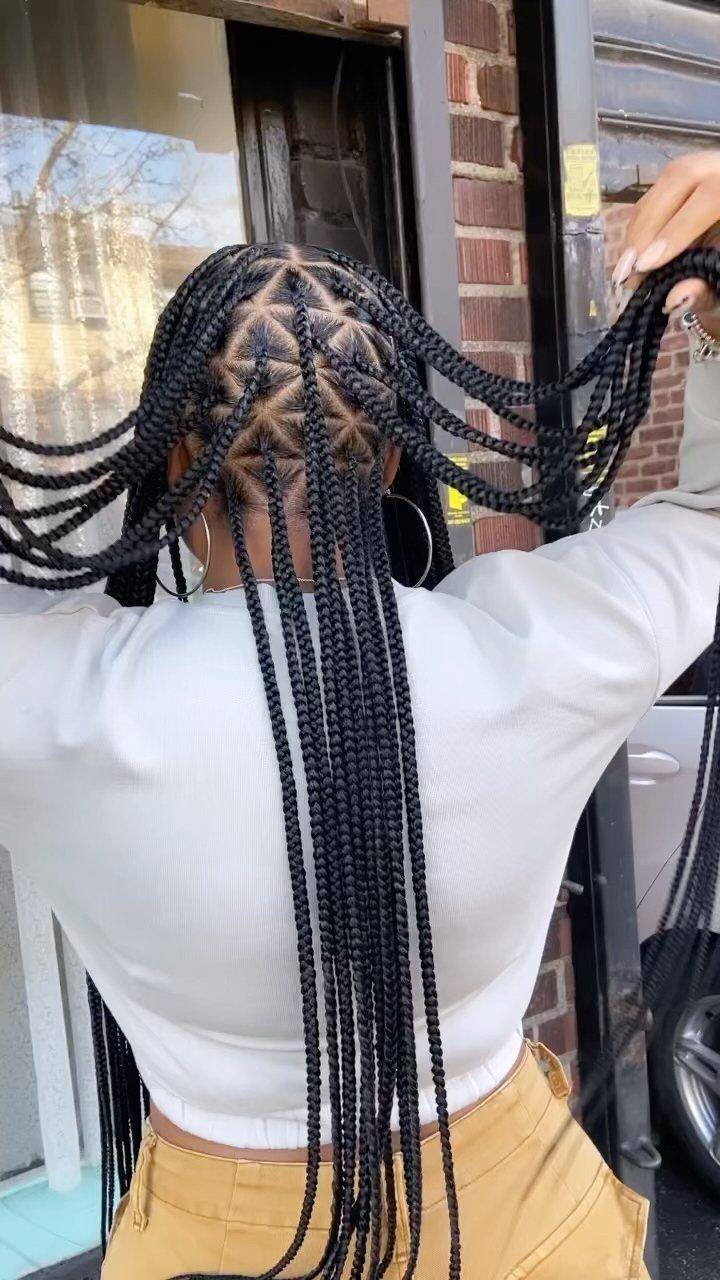
Triangle sections across the scalp create a pattern that alternates direction and adds dimension when the braids are worn loose. The triangular base also distributes tension more evenly than square sections, which some people find more comfortable.
Ask your braider to work in triangles from the start so each braid sits at the center of its section.
The pattern shows best when the braids are pulled back or worn in a high style where the scalp is visible, and it grows out more gradually than a straight grid.
18. Small Fulani Braids
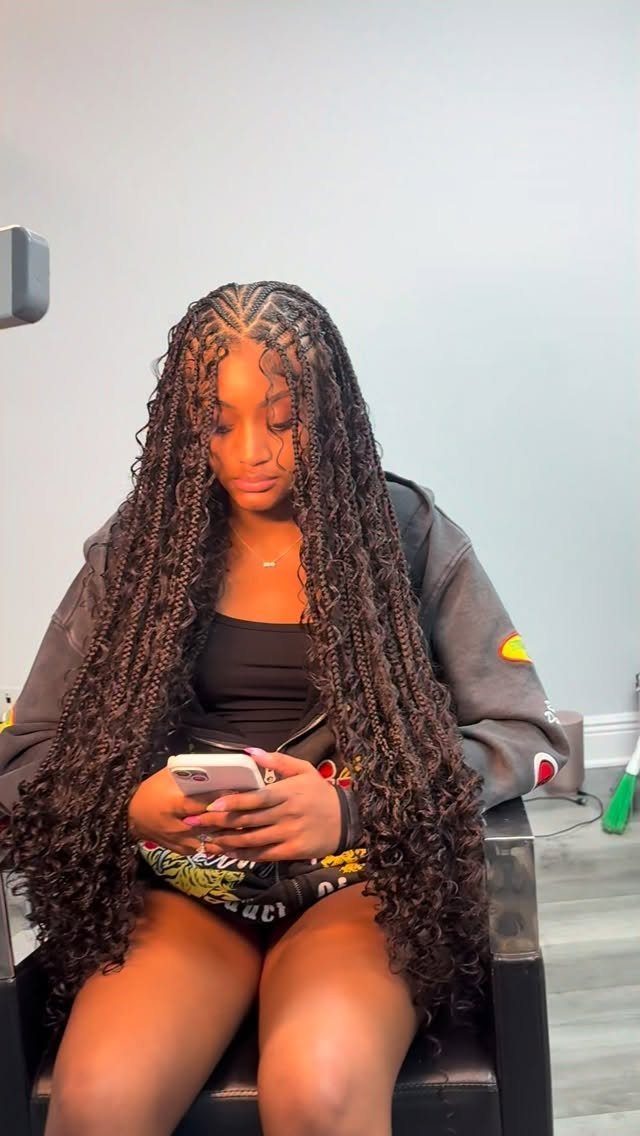
Fulani braids traditionally feature thin cornrows along the scalp with loose braids or twists at the sides and back, often accented with beads or cuffs.
The small knotless version keeps the cornrow portion light and the feed-in gradual, so the style holds without pulling.
The front braids usually run straight back or curve along the hairline, while the loose braids at the sides frame the face.
This style takes longer than standard box braids because of the cornrow detail, but the finished look is distinctive and less common than an all-over braid pattern.
19. Extra-small Knotless Braids
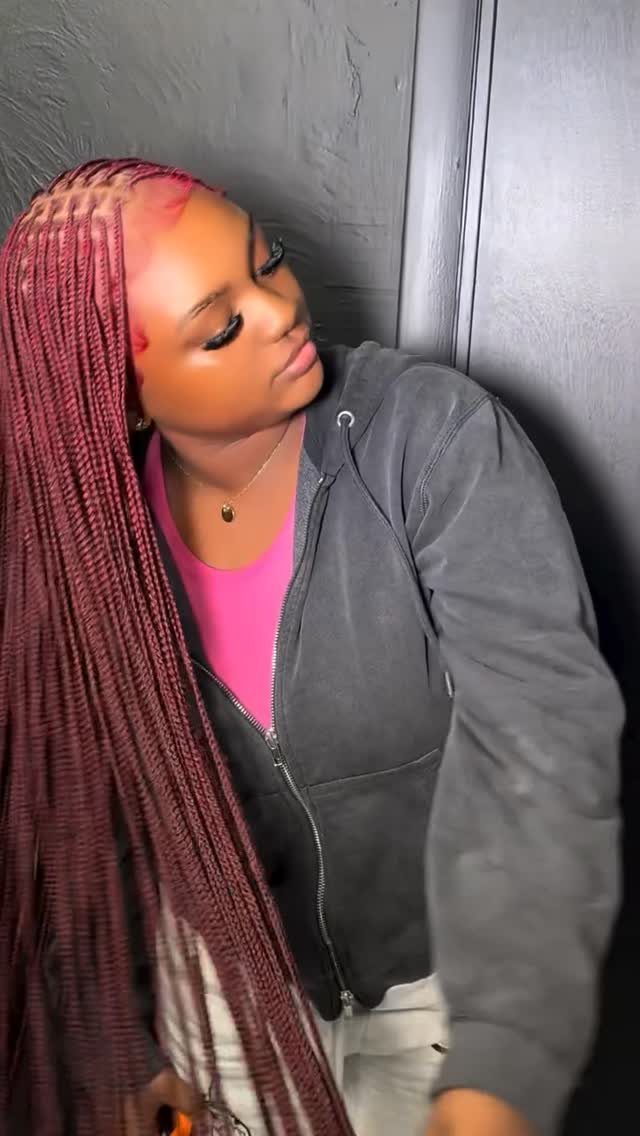
Extra-small sections take longer to install but produce the finest, most detailed finish you can get with knotless braids. Each braid is pencil-thin or smaller, which means more of them across the scalp and more time in the chair.
You get texture that looks fine and detailed, with more swing than you’d see in chunky braids. Expect to sit for most of a day, longer if your hair is dense or falls past your shoulders.
The braids are lightweight individually, but the sheer number of them adds up, so this works best if your scalp handles weight comfortably.
20. Shoulder-length Small Braids
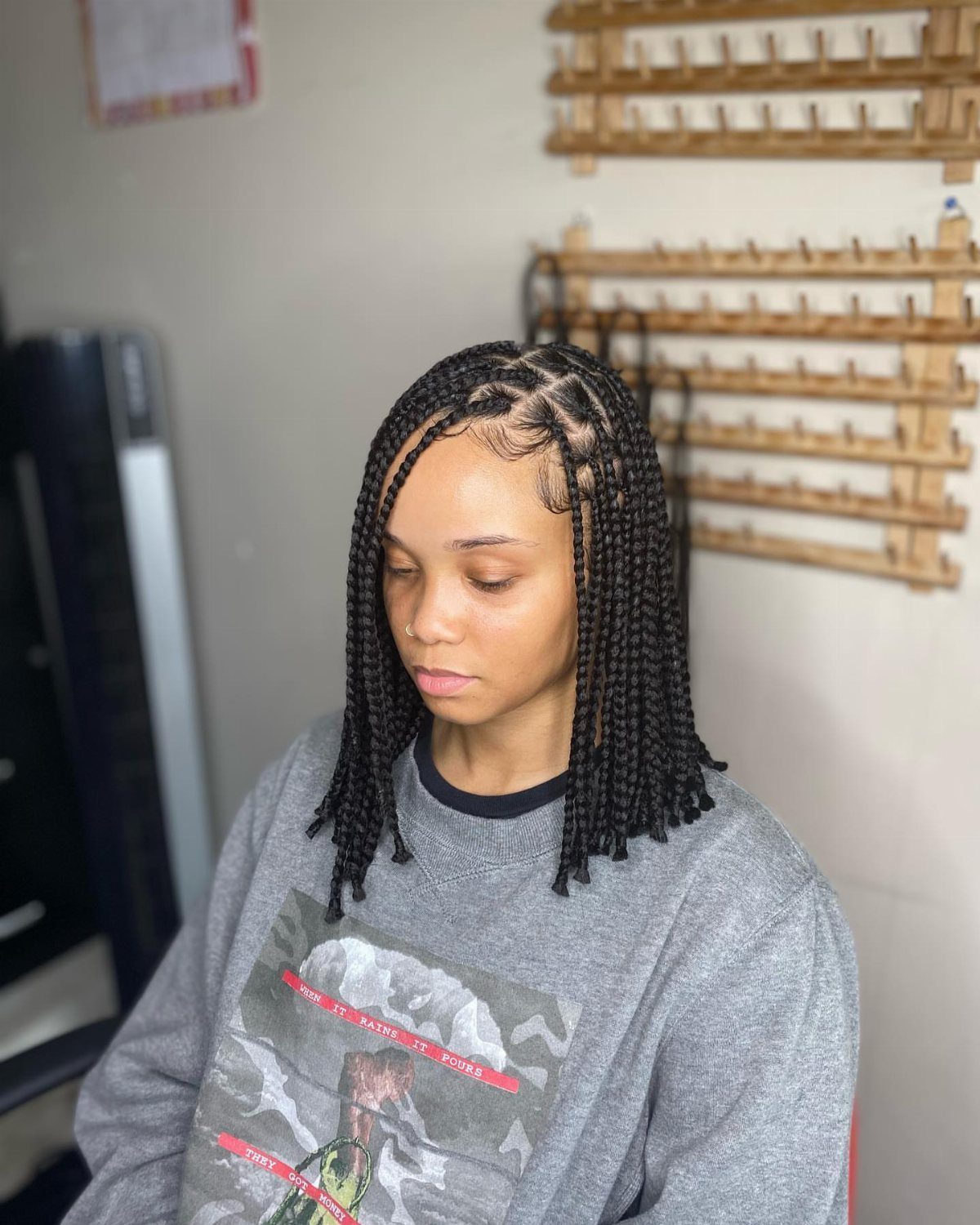
Shoulder length balances the protective benefits of small knotless braids with a shorter, more manageable cut. Installation time drops compared to waist-length braids, and the reduced weight makes daily wear easier on your neck and scalp.
This length tucks into buns and low ponytails without dragging, and you still get enough length to style. Regrowth shows faster on shorter braids, so plan to take them down or refresh edges before they start to look grown out.
21. Small Brown Braids with Highlights
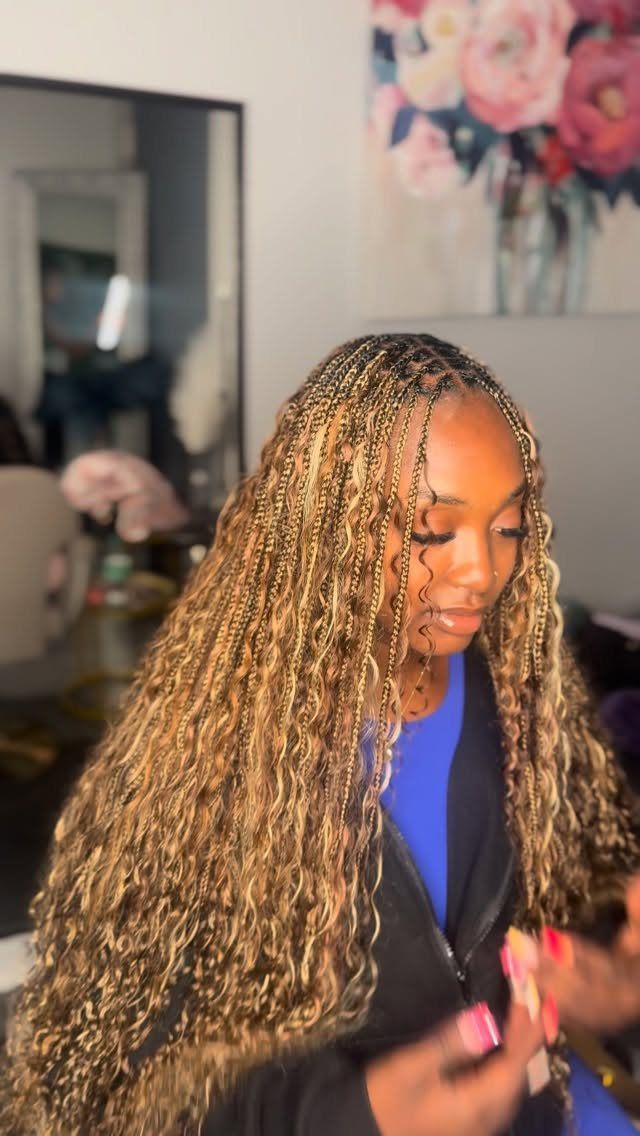
Lighter strands woven through brown braids add dimension without committing to an all-over color change.
The highlights can sit at the ends only or run the full length, and they show best when the base color is a few shades darker.
Blend 2 colors of braiding hair during installation, or use pre-highlighted extensions if your braider carries them.
The contrast softens as the braids settle, so pick highlights a shade or two lighter than what you think you want for the clearest definition.
22. Small Knotless Braids with Heart
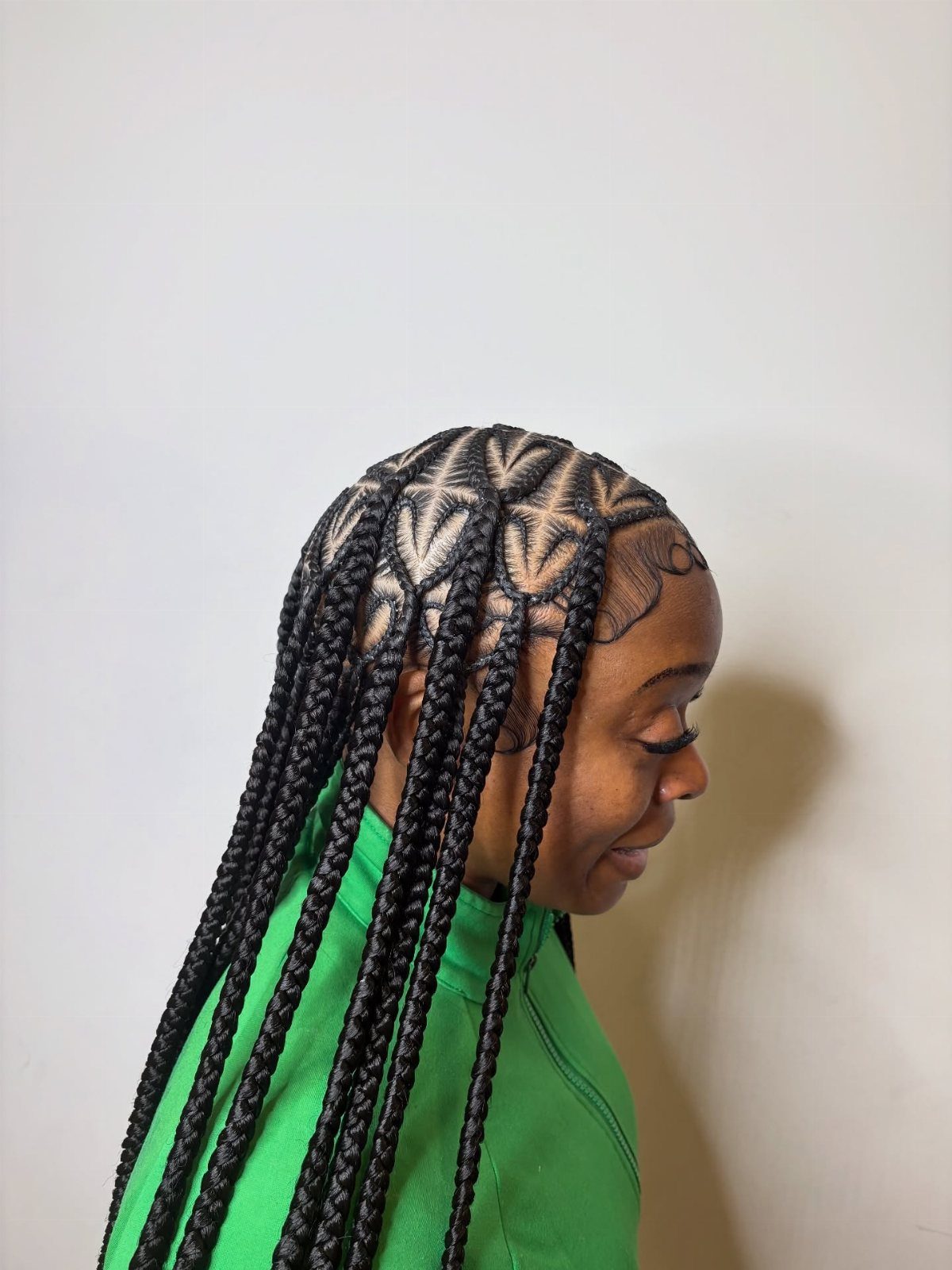
A heart outlined in scalp parting across the crown or at the nape adds a shaped detail that shows when you wear the braids down or pulled up.
Your braider sections the design first, then braids around it to hold the shape.
As regrowth comes in, the outline softens, so this is a detail that reads best in the first few weeks. Request the placement and size when you book so your braider can plan the grid accordingly.
23. Small Knotless Braids with Ribbon
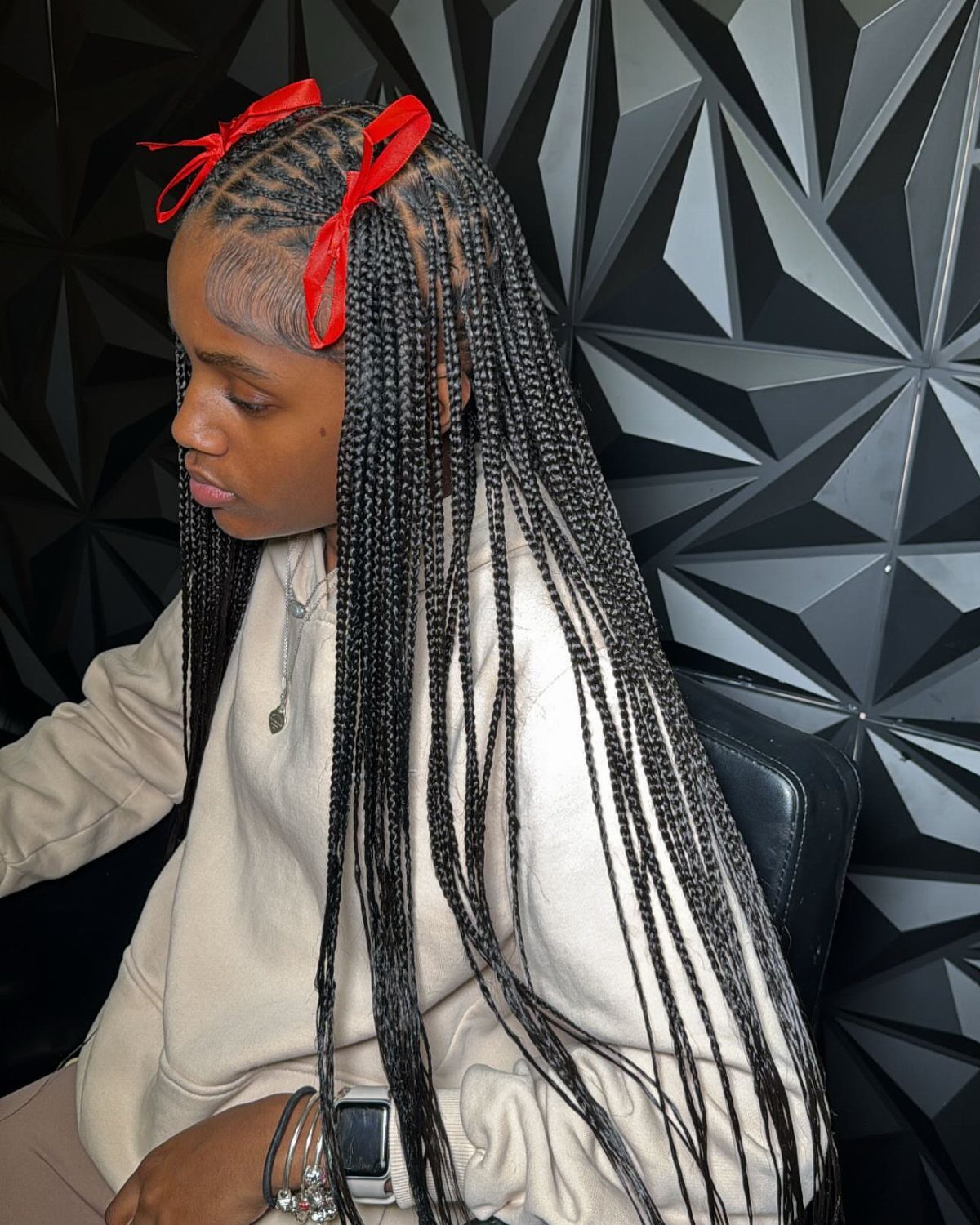
Threading ribbon through a few braids or tying bows at the ends adds color and a finished accent that you can swap out or remove whenever the mood changes.
Satin or grosgrain ribbon holds knots better than slippery polyester, and a narrow ribbon slips through braids without bulk.
Tie the ribbon at the base, weave it down the length or loop it at the ends, then trim the tails to match.
Ribbon shows wear faster than the braids themselves, so replace it when the edges fray or the color fades.
24. Layered Small Knotless Braids
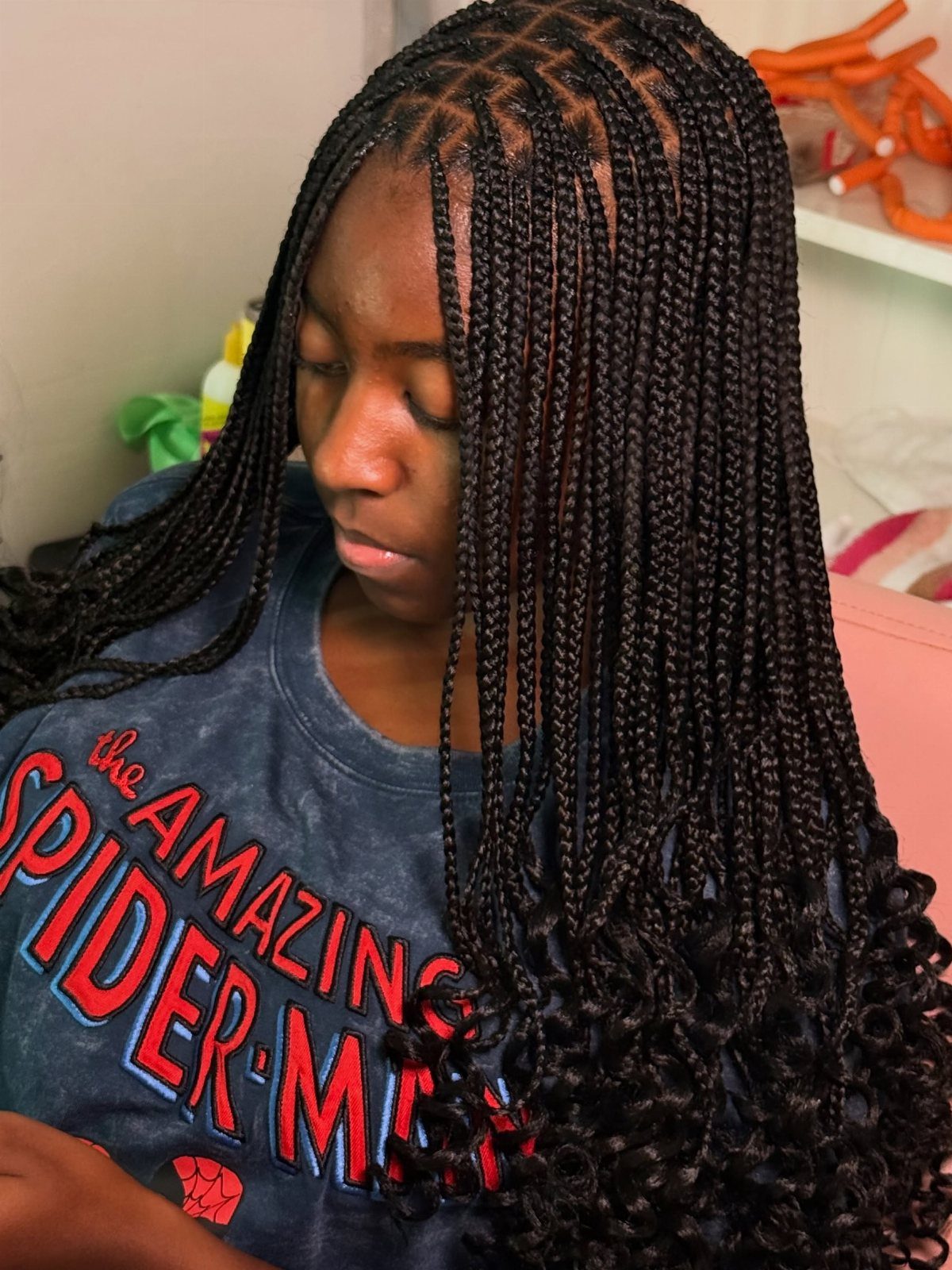
Cutting the braids at varying lengths creates soft, staggered layers that add movement and shape without the blunt line of one-length braids.
The shortest layer can sit at the shoulders while the longest falls mid-back or lower, and the difference between them determines how much graduation you see.
Ask your braider to install the braids at staggered lengths so each layer falls where you want it. Layers work especially well with curly ends, where the different lengths give you volume that tapers naturally.
25. Small Butterfly Braids
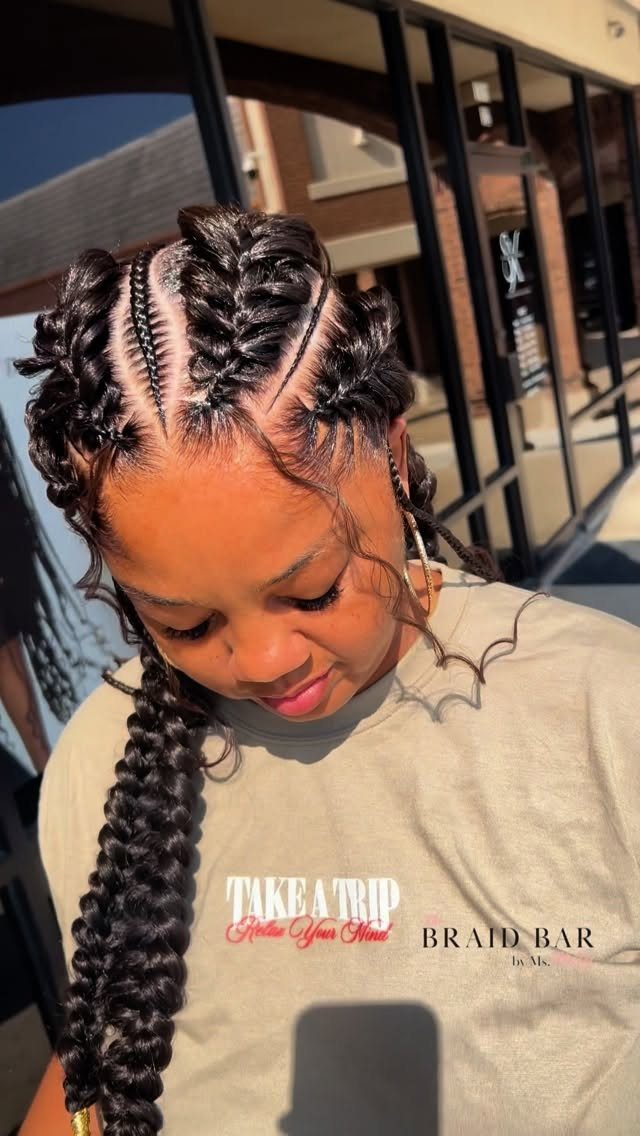
Butterfly braids loop and cascade across the scalp in a pattern that stacks folded sections instead of letting every braid hang straight down.
The loops create texture and dimension at the crown and sides, with some braids left loose at the ends or gathered into a side sweep.
This style takes longer than standard knotless braids because your braider has to plan the loop placement and secure each fold as they go.
The finished look reads intricate and sculptural, and it works best when you want a style that’s already dressed up without needing pins or accessories.
26. No-Knots Mini Plaits
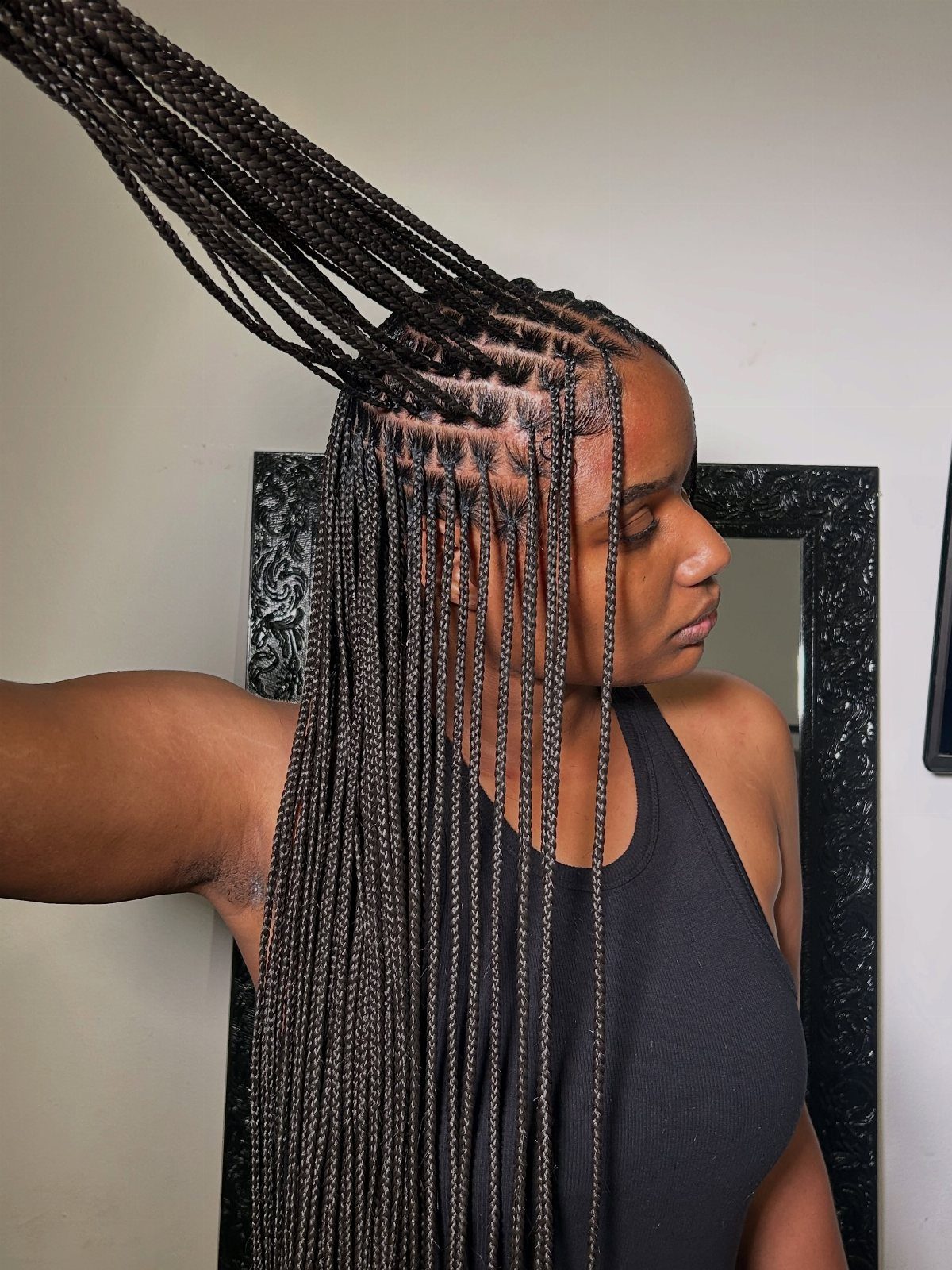
Mini plaits is another name for small knotless braids. The term emphasizes the size and the knotless start, but the technique and the finished look are the same as any small knotless braid done with square or rectangular sections.
If you see this listed on a booking form or menu, expect the same installation time and cost as small knotless braids.
27. Small Red Braids
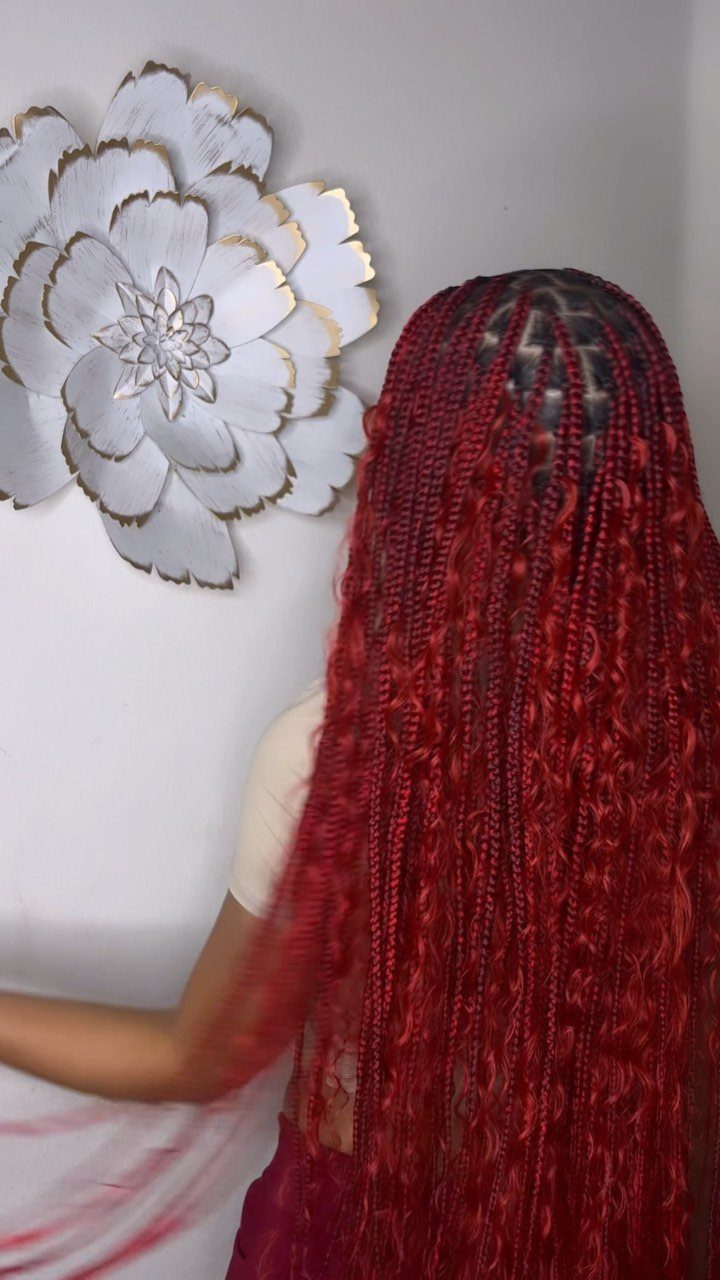
Red or burgundy braiding hair shifts the color entirely without lightening your natural hair first. The shade reads warm and bold, and it shows best against darker skin tones where the contrast is clear.
Choose a red that suits your undertones.
True red leans bright and cool, while burgundy and wine shades sit deeper and warmer. The color holds through the life of the braids, though sun exposure can fade it slightly over time.
28. Small Black Knotless Braids
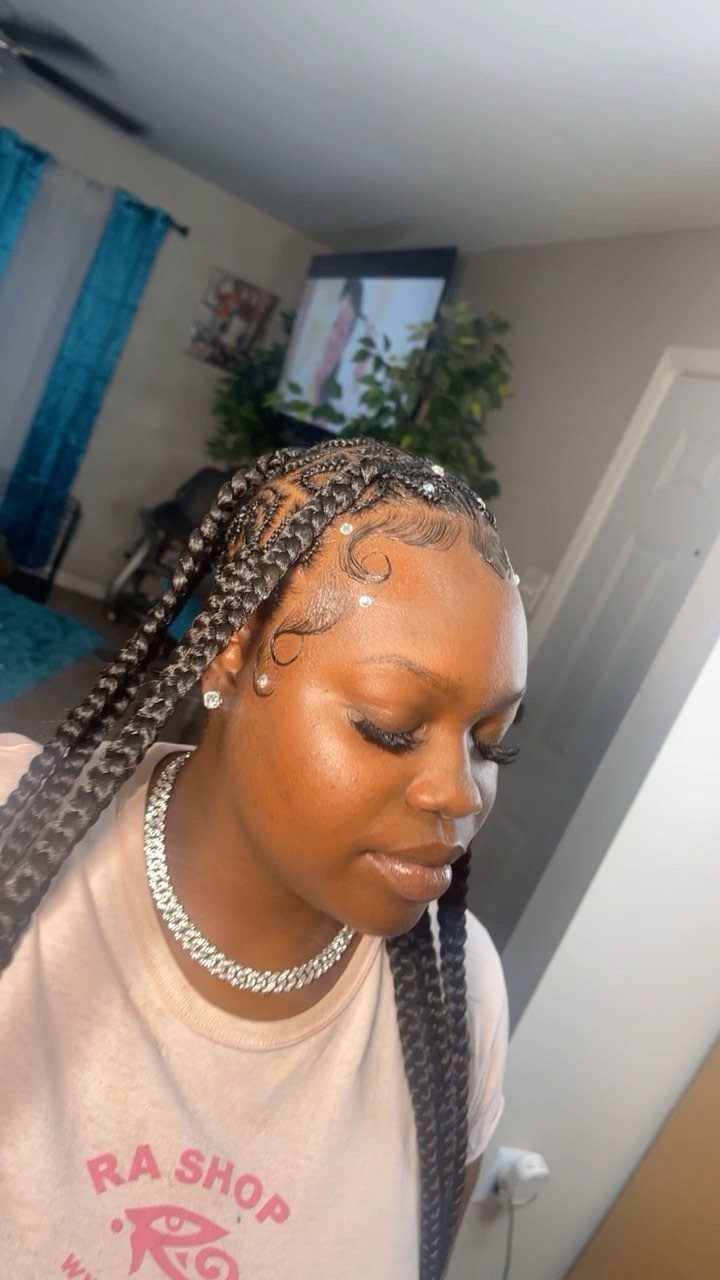
Black braids match most natural hair tones and read clean and classic without the contrast of added color.
The knotless start keeps the scalp smooth, and the small sections give you fine, detailed texture that works with any face shape or length.
This is the most common choice for knotless braids, and it’s also the easiest to match if you need to add hair or refresh edges later.
Black braiding hair comes in several shades, so bring a sample or ask your braider to match your natural color at the consultation.
29. Small Knotless Braids with Flowers
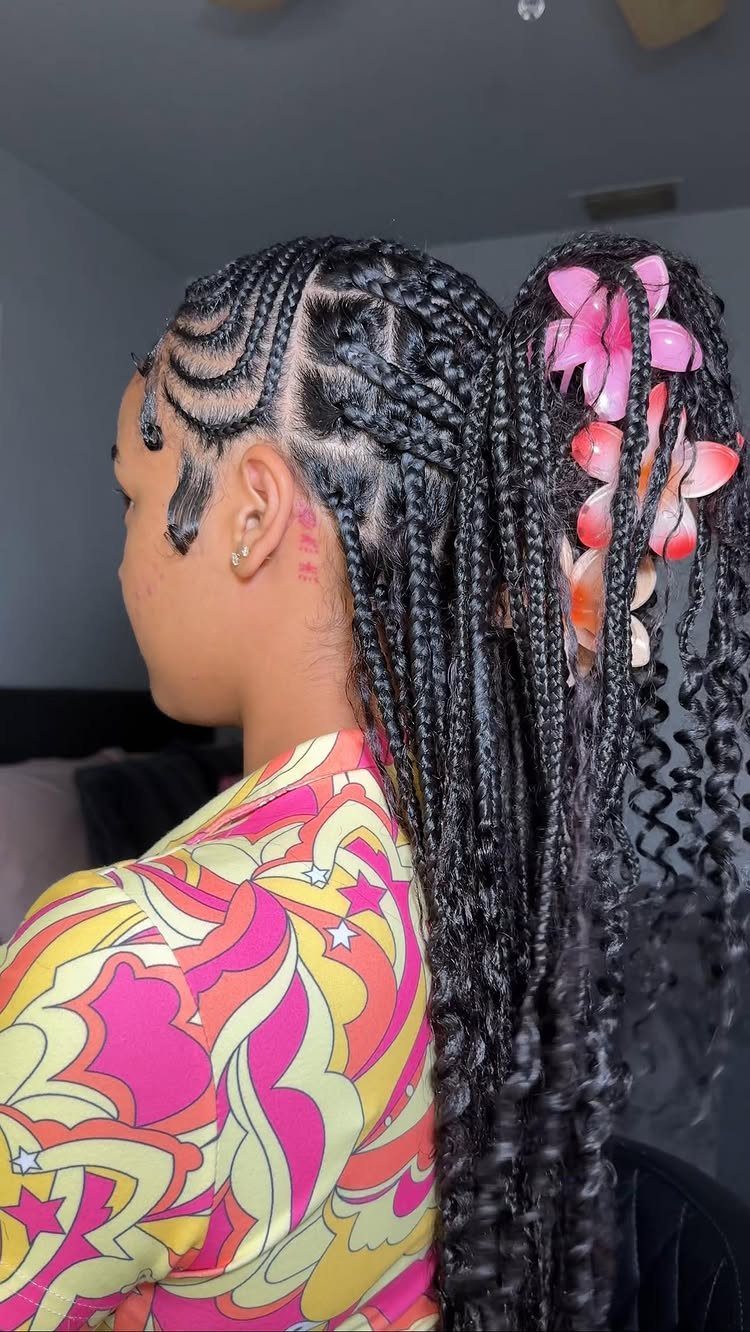
Clipping silk or plastic flowers into the braids adds a soft, decorative accent that you can remove or reposition whenever you want.
The flowers can sit at the crown, along one side or scattered throughout, and they come in sizes from small buds to statement blooms.
Use clips with flat backs so they sit flush against the braids without sliding. When petals start to look tired or lose their shape, pull them and clip in fresh ones.
30. Small Braids with Peekaboo Highlights
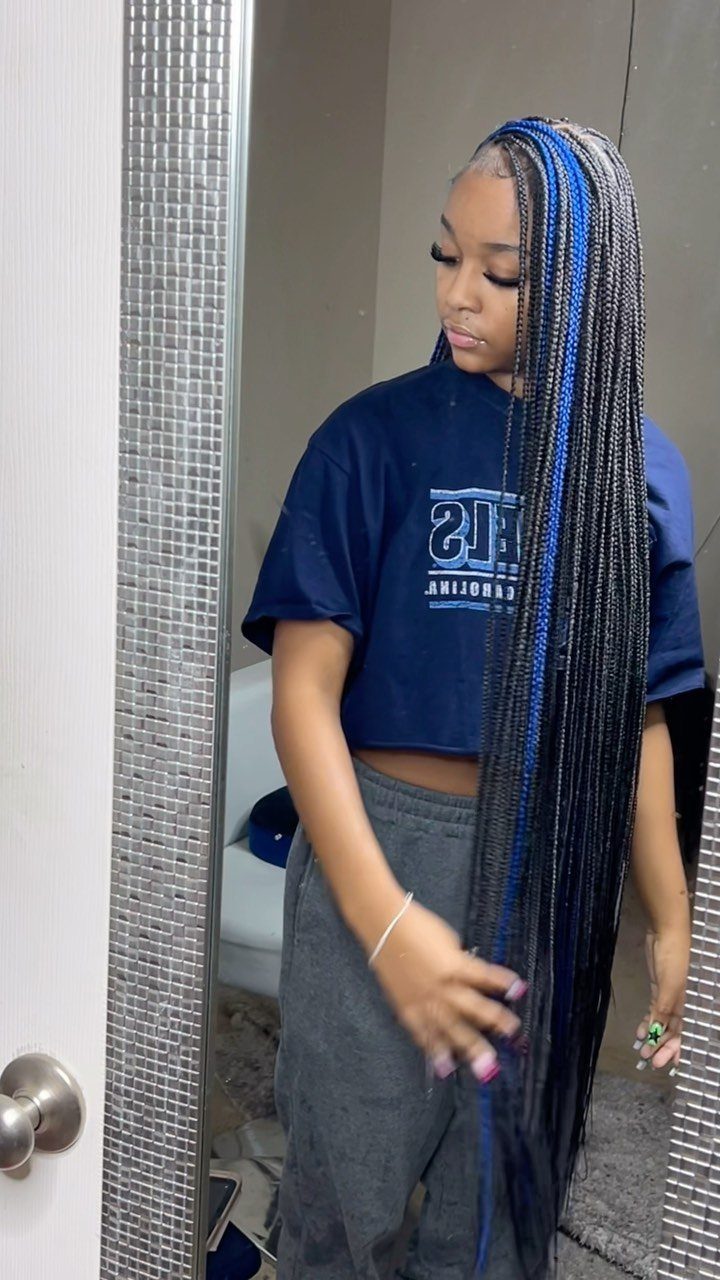
Peekaboo highlights sit underneath the top layer of braids, so the color only shows when you pull sections up or tuck hair behind your ear.
The hidden placement lets you keep a natural look most of the time while still having color ready when you style the braids differently.
Ask your braider to place the highlighted braids in the underlayer at the nape or sides, or stripe them through specific sections if you want the color to peek through when the braids move.
31. Small Knotless Halo Braid
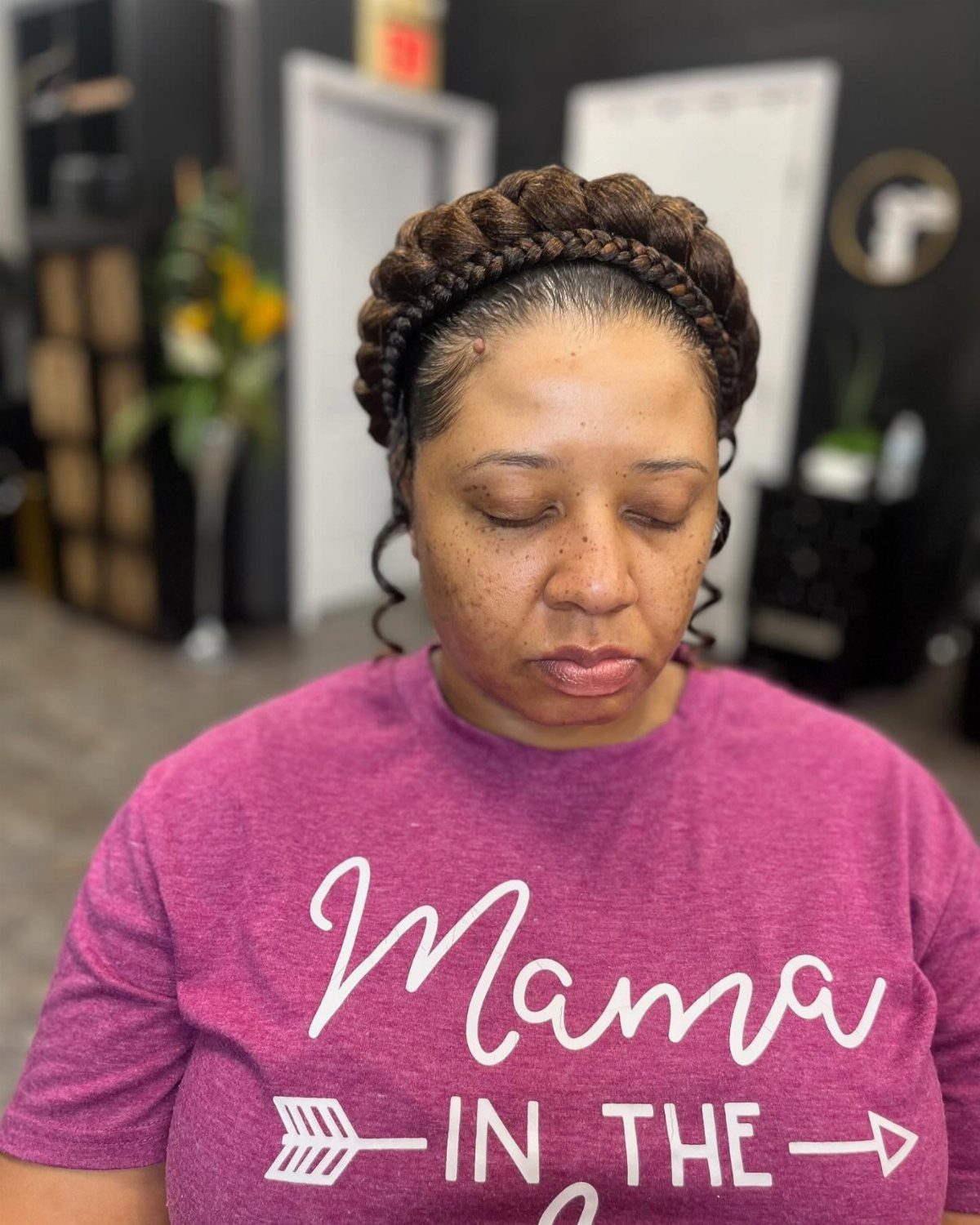
Wrapping the braids around your head in a crown creates an updo that sits elevated and keeps hair off your face completely.
The halo holds best when the braids are fresh and uniform in thickness, so each section stacks neatly without gaps.
Pin the braids as you wrap them, tucking the ends under the crown so they stay hidden.
This style works for formal occasions or anytime you want structure without heat, and it holds longer than loose styles because the pins and tension keep everything in place.
32. Small Knotless Braid Mohawk
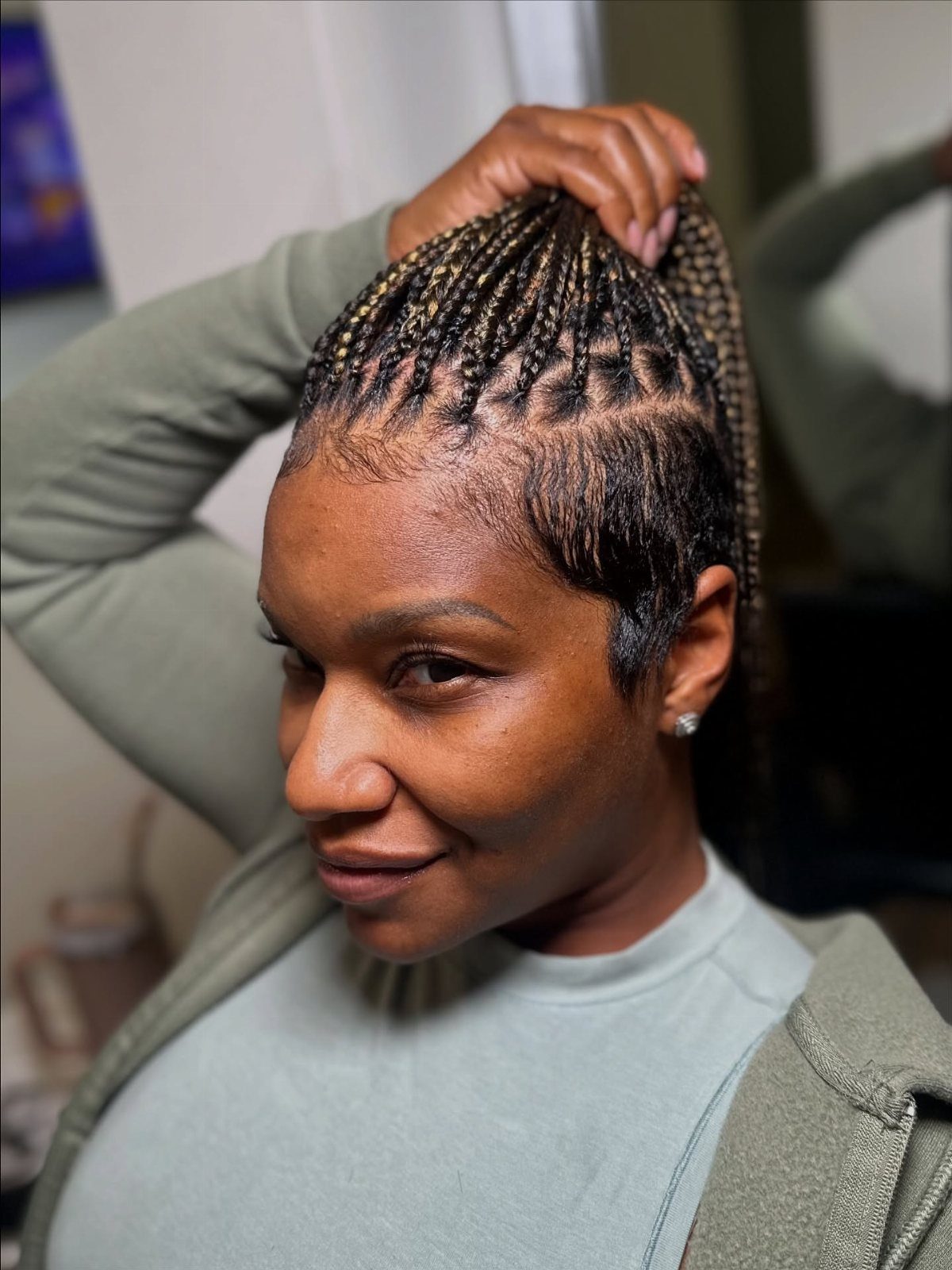
Sweeping the braids up into a center strip with the sides shaved or slicked flat gives you a mohawk silhouette that reads bold and sculptural.
The braids can stand tall at the crown or slope back gradually, and the contrast between the textured center and the clean sides makes the shape sharp.
This style requires commitment if you’re cutting the sides short, or regular maintenance if you’re shaving them.
Pin or gel the side sections down if you want the mohawk shape without cutting, though the look won’t hold as cleanly through the day.
Knotless Technique and Tension
The feed-in method starts each braid with a small section of your own hair at the root, then adds extension hair in stages as the braid moves down.
That gradual build also makes the top of each braid thinner and less visible against the scalp, so the style reads more natural from the front and part lines.
Small sections amplify that effect since each braid carries less bulk overall.
If your scalp is sensitive or you’ve had trouble with tight styles before, the knotless approach reduces pulling at the root.
If your hair is fine, small braids give you density without looking sparse, just make sure the extensions themselves are thin enough that your roots can support them comfortably.
At-home Braid Upkeep
I oil my scalp weekly to stop flaking and keep the skin under the braids from getting tight and itchy.
A light oil works better than heavy cream since you can’t scrub the scalp the way you would with loose hair.
Sleep in a satin bonnet or tie a silk scarf over the braids to prevent frizz and matting where the braids rub against cotton pillowcases. The smoother fabric keeps the surface neat longer.
When flyaways start lifting at the roots, smooth them down with a light setting mousse, then tie a scarf over the section for 20 minutes while it sets.
You can wash the braids if the scalp feels itchy or dirty, but avoid vigorous scrubbing and make sure they dry completely before tying them up or going to bed.
Frequently Asked Questions
Do small knotless braids last longer?
Small knotless braids typically last 4 to 6 weeks, about the same as other knotless sizes. The lifespan depends more on how well you maintain them and protect them at night than on the size itself.
Smaller sections can feel lighter and cause less scalp strain, which may make them more comfortable to wear through their full lifespan.
Which braid is the best for knotless?
Box braids with square or rectangular parting work best for knotless because the grid is clean, symmetrical and easy to replicate across the whole scalp.
Triangle parting distributes tension more evenly and some people find it more comfortable, but box sections remain the standard for a reason.