Medium box braids run from shoulder-length sets that keep tension and chair time low to long, beaded, blonde or patterned versions that add weight, color and hours.
Your scalp and hairline decide which one you should ask for: a tender scalp or thin edges point to shorter lengths or knotless parts, while a sturdy hairline can carry length and extra detail.
Block out most of a workday for the appointment, since medium box braids usually take 4–6 hours to install, and expect them to look good for about a month and a half at most.
1. Long Medium Box Braids
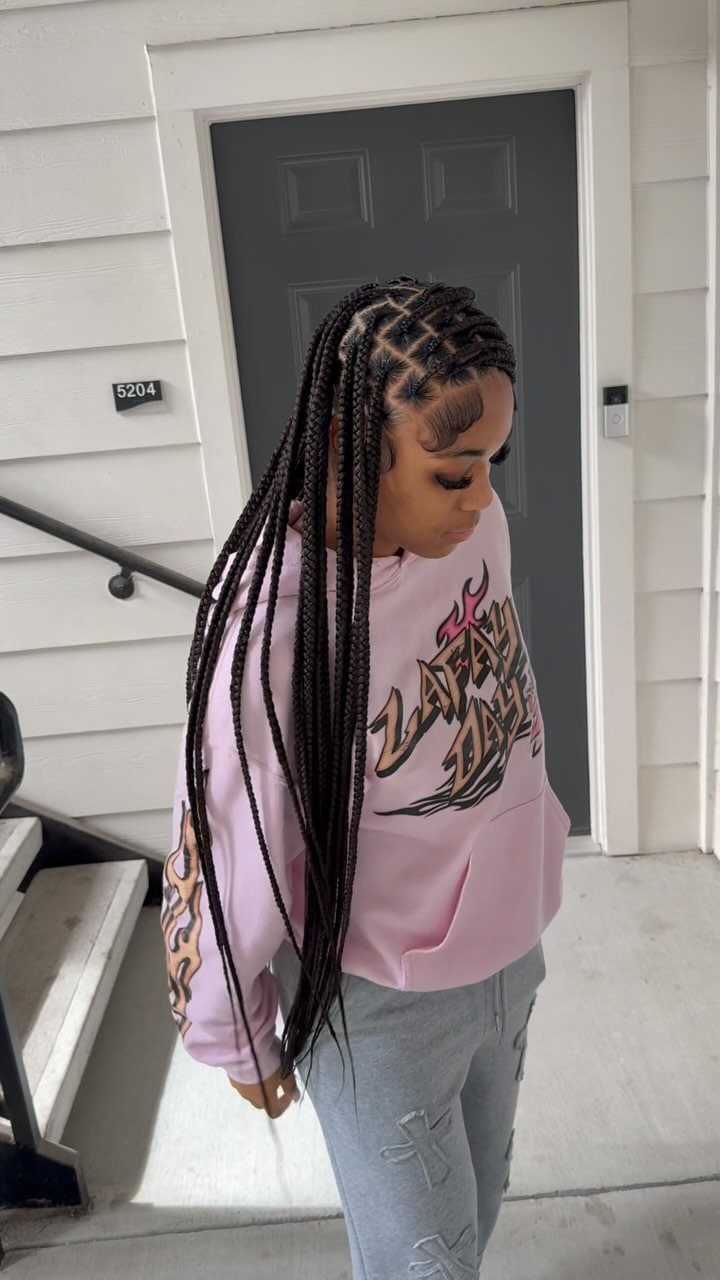
Long medium box braids hit mid-back or lower and give you the full classic look without the bulk of jumbo braids. The length means more styling options: high buns, ponytails, half-up styles, or worn loose.
I like this length for someone who wants a long-lasting protective style and doesn’t mind the extra weight.
Longer braids take more time to install, and they pull more at the crown if the sections are too tight or too heavy. Ask your braider to keep tension light at the root, especially across the front edges and temples.
2. Shoulder-Length Medium Box Braids
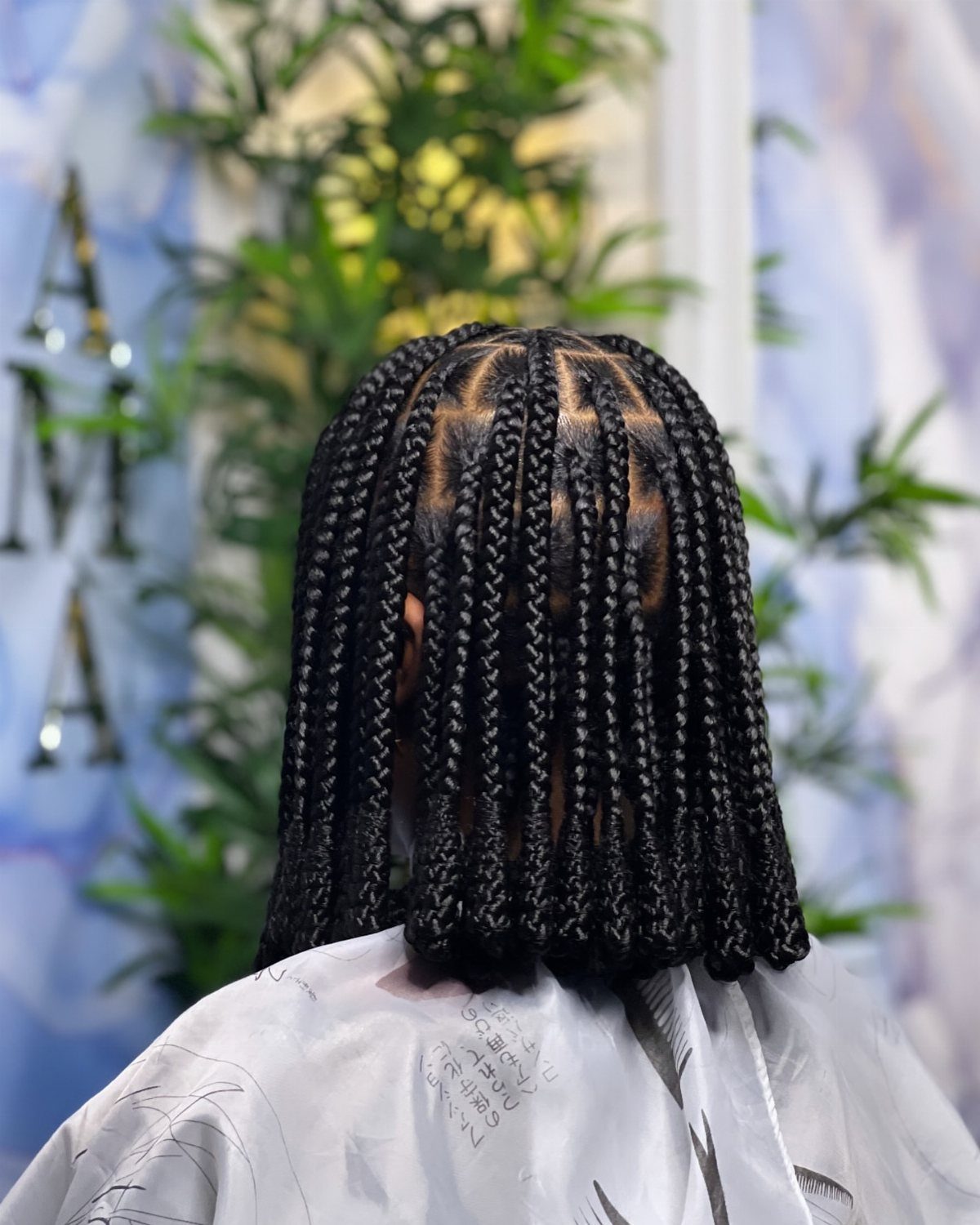
Shoulder-length medium box braids stop right at or just past the collarbone. This length is lighter, faster to install, and easier to manage day to day than longer versions.
If you’re new to box braids or have a tender scalp, this is a good starting point.
The shorter length means less tension and less time in the chair. You still get all the styling flexibility, ponytails and buns included, without the weight of long braids.
3. Medium Box Braids with Beads
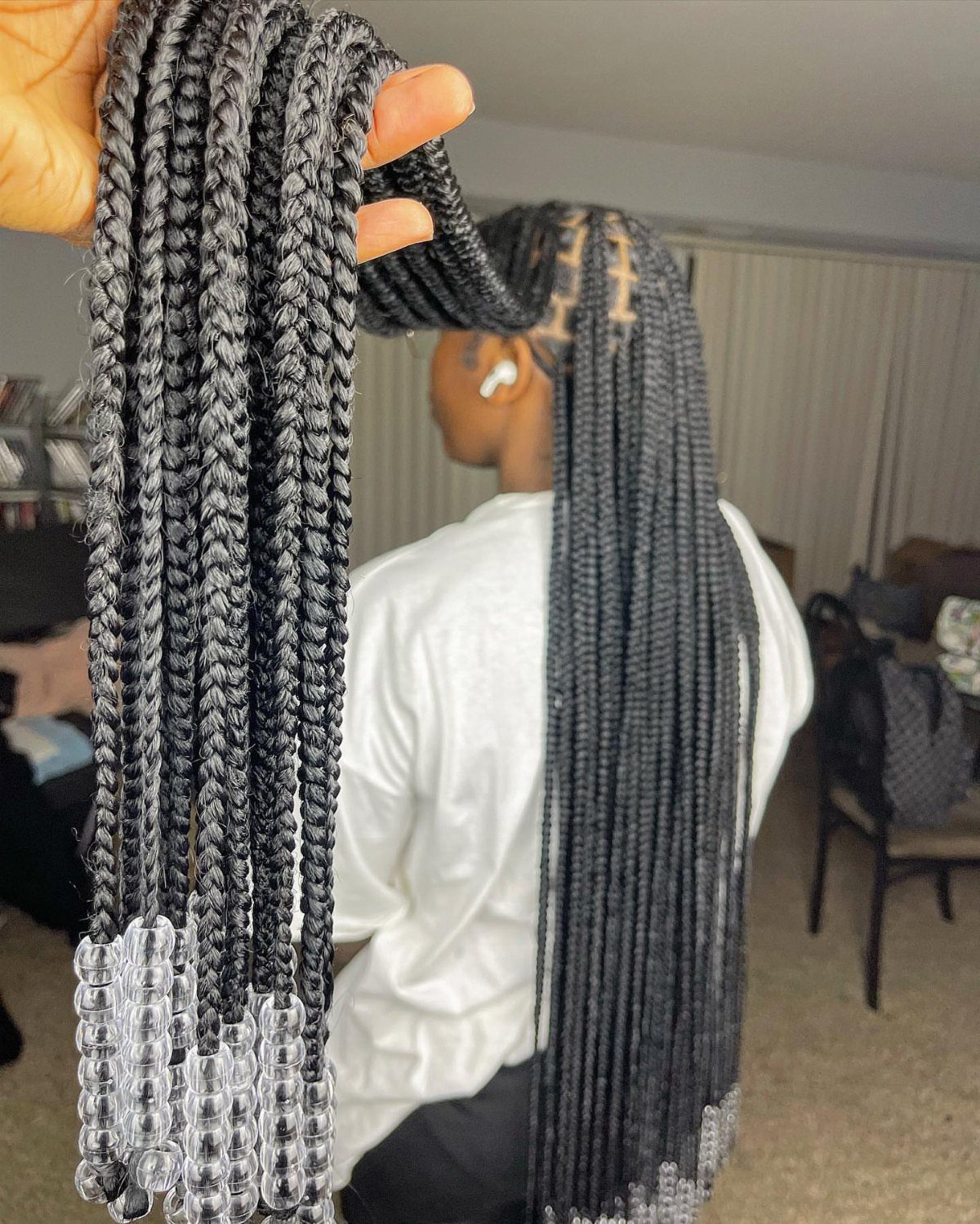
Beads add color, texture, and sound to medium box braids. You can load them onto individual braids or cluster them at the ends, and they come in wood, metal, glass, or acrylic.
Clear beads let the braid color show through, while metal cuffs or wooden beads add contrast. I like beads because they’re easy to swap out or remove if you get tired of them.
Thread them on after you dip or seal the ends, and use a small rubber band or a tight knot to hold them in place.
4. Medium Knotless Braids
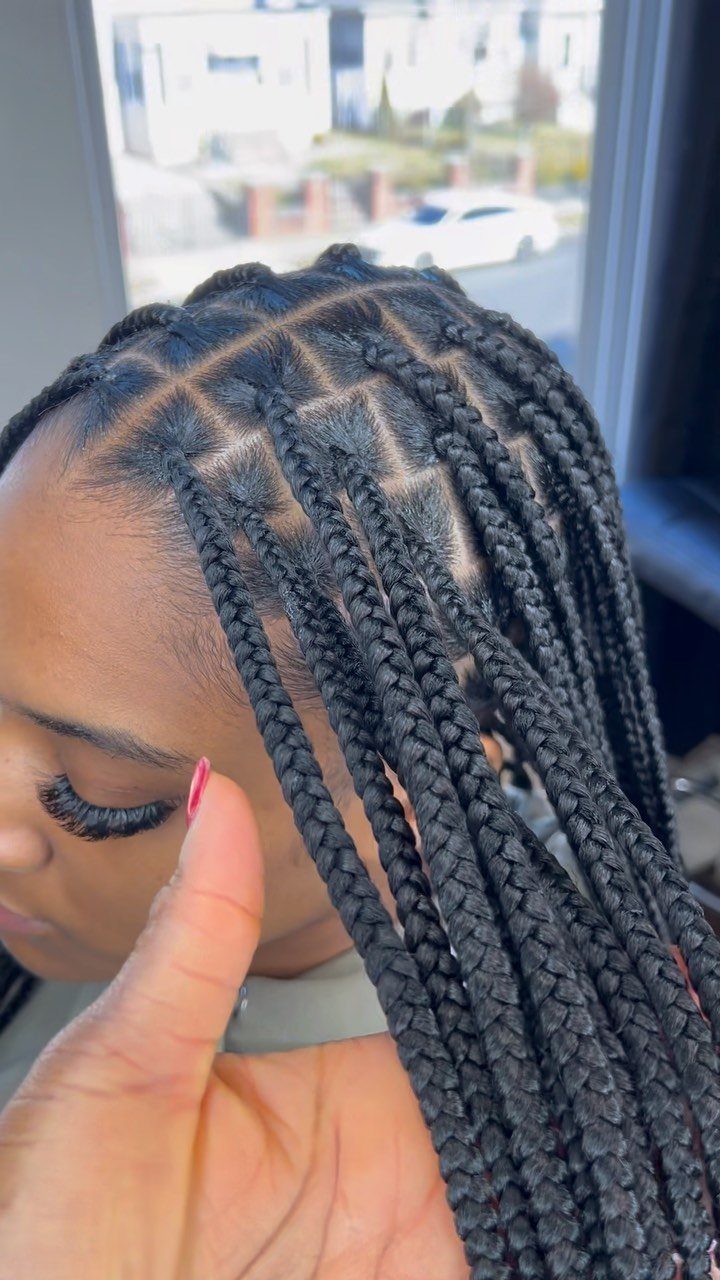
Knotless braids start with your natural hair at the root and gradually feed in extensions as the braid continues down. There’s no bulky knot at the base, so the scalp stays flat and tension is lighter from the start.
This technique takes longer to install than traditional box braids, but you get less pulling and a more natural look at the root.
Knotless braids are gentler on the hairline and edges, which makes them a better choice if you’ve had thinning or breakage before.
5. Medium Box Braids with Curly Ends
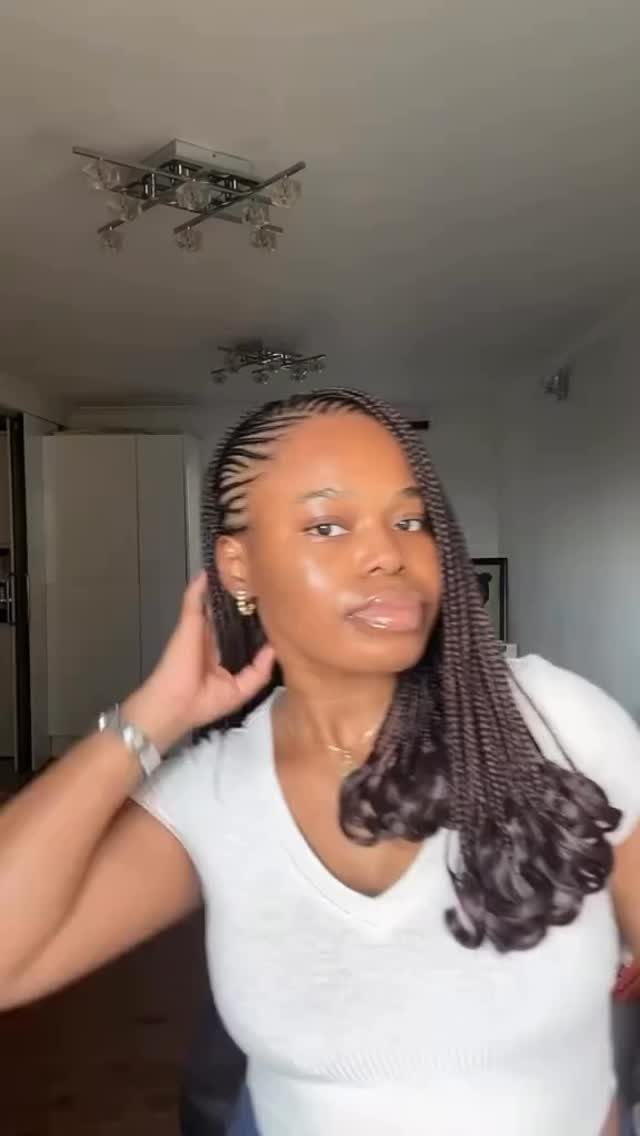
Box braids with curly ends combine the structure of a braided scalp with loose, bouncy ends. The curls soften the look and add movement without the weight of leaving all the hair in braids down to the tip.
You can curl the ends with perm rods, flexi rods, or by dipping them in hot water and setting them on rollers overnight.
I prefer perm rods for tighter curls and flexi rods for a looser wave. The curls loosen over time, so plan to refresh them every week or two to keep them looking full.
6. Medium Box Braids High Ponytail
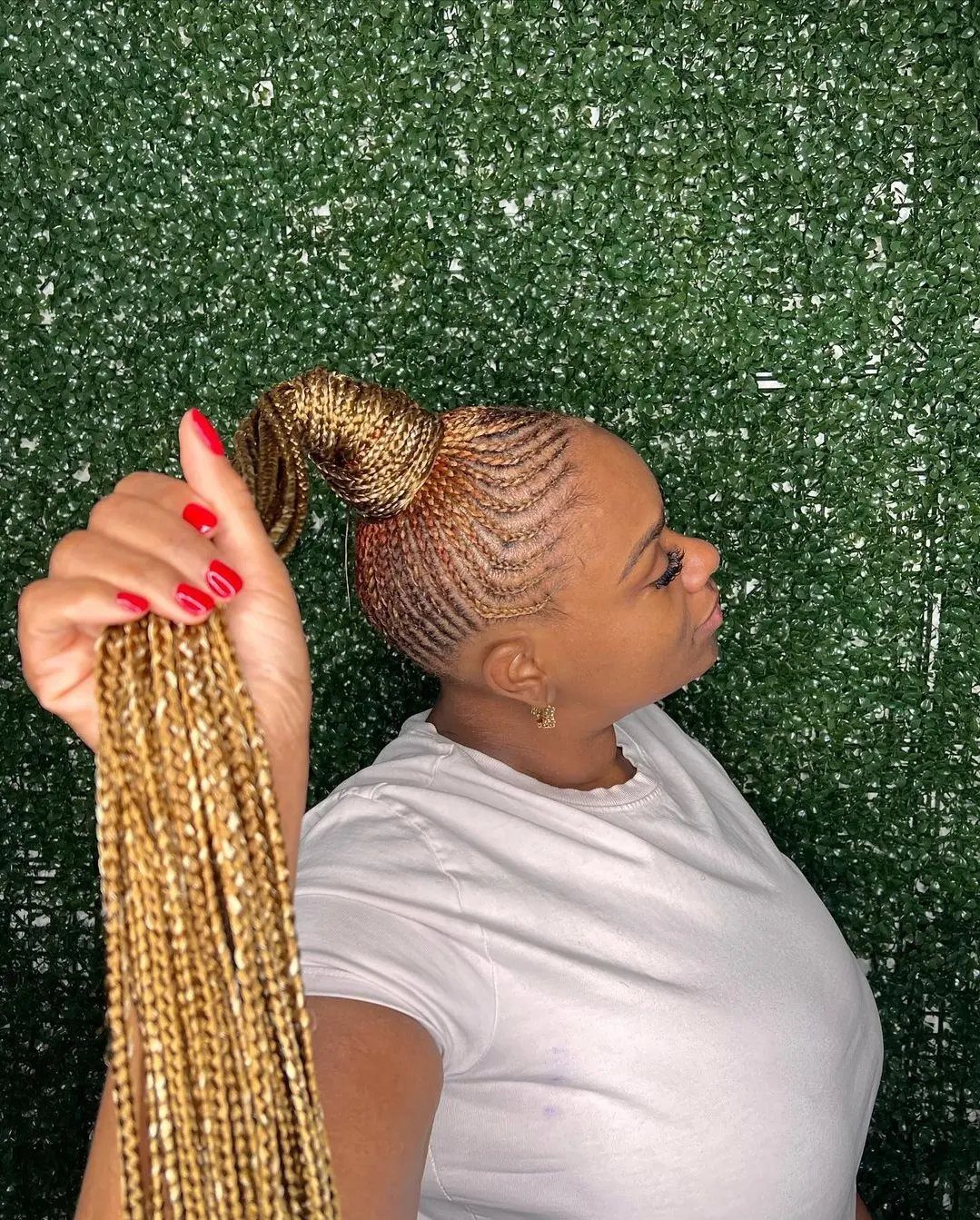
A high ponytail pulls all the braids up and back, showing off the scalp pattern and keeping hair off your neck.
This style works best when the braids are installed with a slight angle toward the crown, which makes gathering them into a ponytail easier and less bulky.
Use a fabric hair tie or a soft elastic to avoid snagging the braids, and wrap one braid around the base to hide the tie.
If the ponytail feels heavy, pin it up into a bun for part of the day or sleep with it down to give your scalp a break.
7. Boho Medium Box Braids
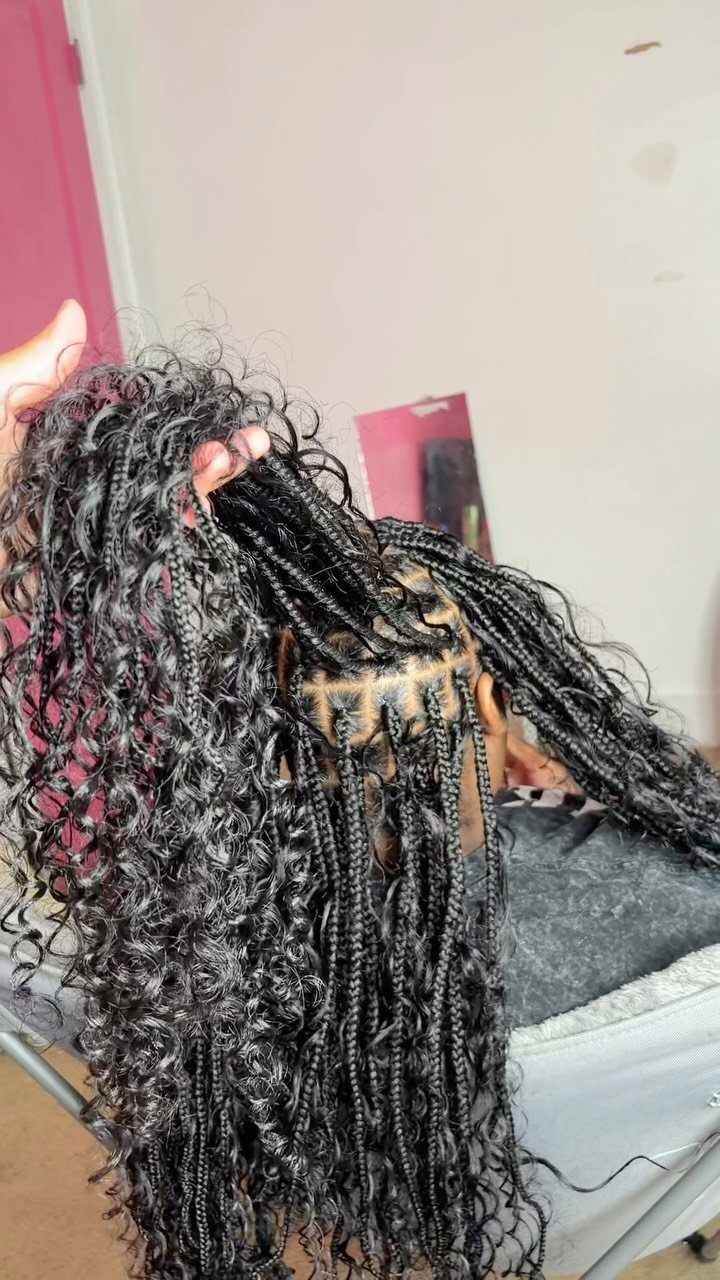
Loose curls at the ends soften the whole look and add movement you don’t get from blunt ends. The braid stays neat at the scalp, and the movement starts lower down.
Ask your stylist for curly ends in the same shade as the braid so the transition looks natural.
This works especially well if straight braids feel too severe on you. Curls tend to loosen between washes, so a quick refresh keeps them looking full.
8. Medium Box Braids with Cuffs
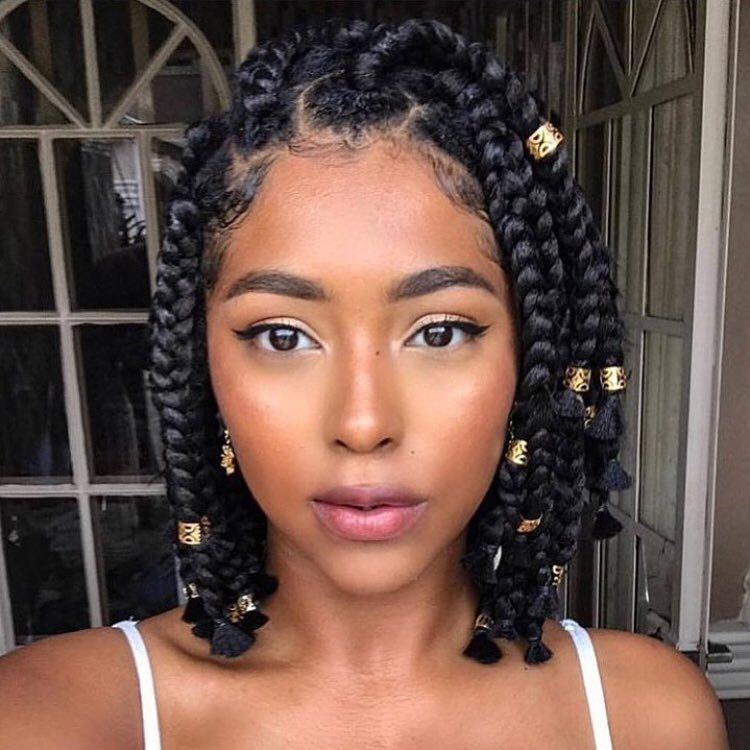
Black braids give the metal a strong contrast, so a few cuffs read as jewelry rather than clutter.
I’d space them unevenly, a few braids with one cuff and a few with none, so the look doesn’t turn heavy.
Slide each cuff on after the braid is finished and pinch it closed. Cuffs are easy to remove, so you can wear them for a week and go bare after.
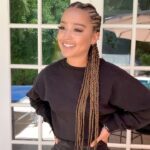
9. Medium Brown Box Braids
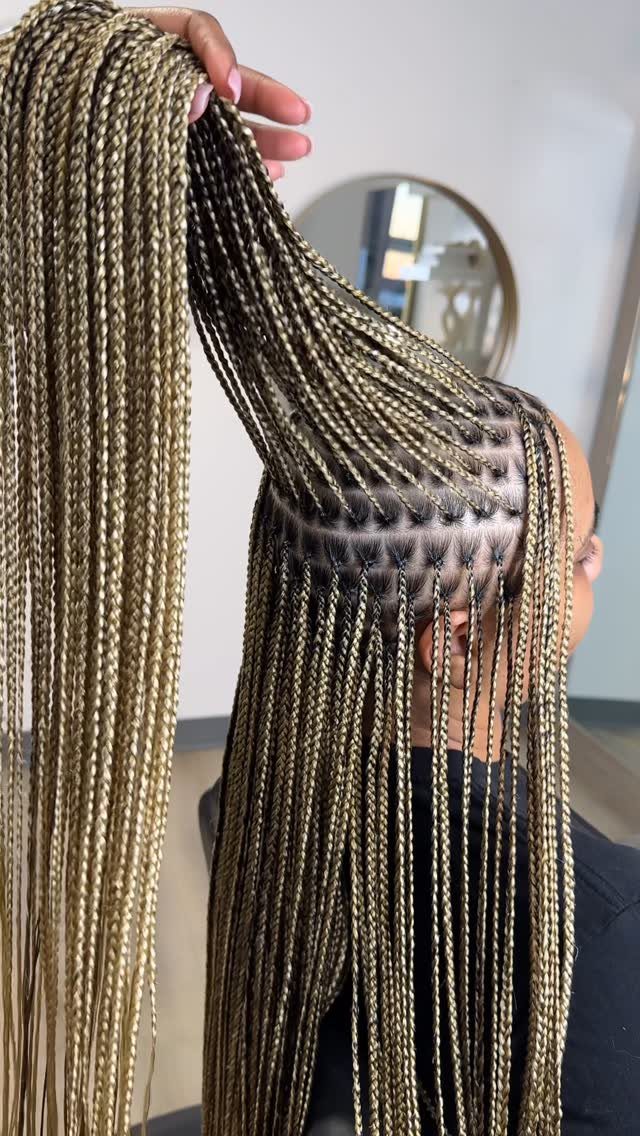
Brown braids with honey-blonde pieces give flat black a little depth. The lighter strands catch light along the length, which makes the whole set look dimensional.
If you’re nervous about going fully blonde, this is the version I’d pick.
Ask for the lighter shade mixed into a few braids rather than every one. Show your braider a saved image so they can pull the exact tone you want.
10. Honey Blonde Braids with Curls
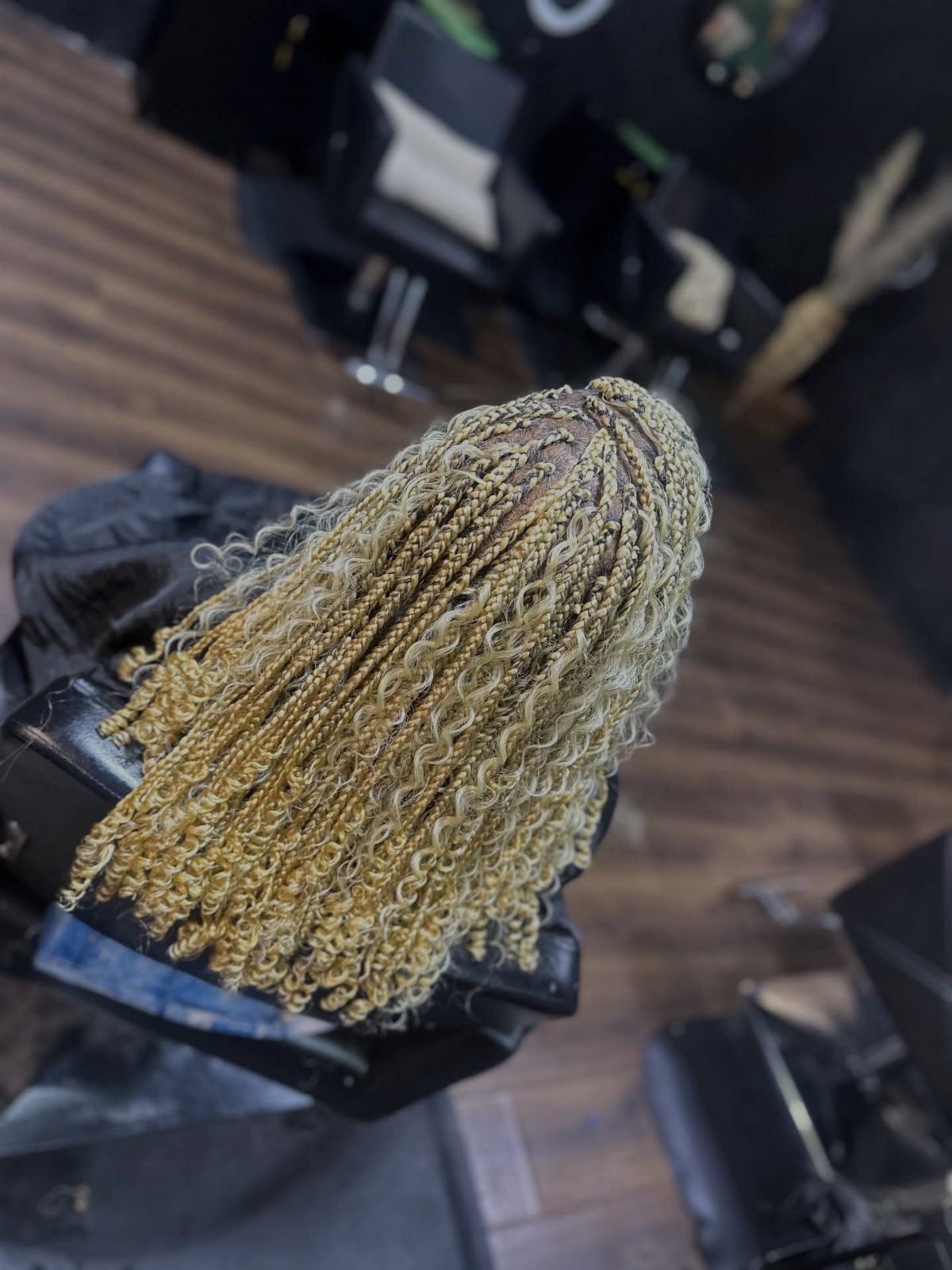
Honey-blonde braids that end in curls are bright, soft, and warm against most skin tones. The color does the talking, and the curls keep it from looking severe.
Plan on a full day in the chair, since color-matched curly ends add steps to a standard install.
I’d choose this for a special season or event rather than a quick refresh. Ask your braider which shade of blonde will look best next to your skin.
11. Medium Box Braids Bun
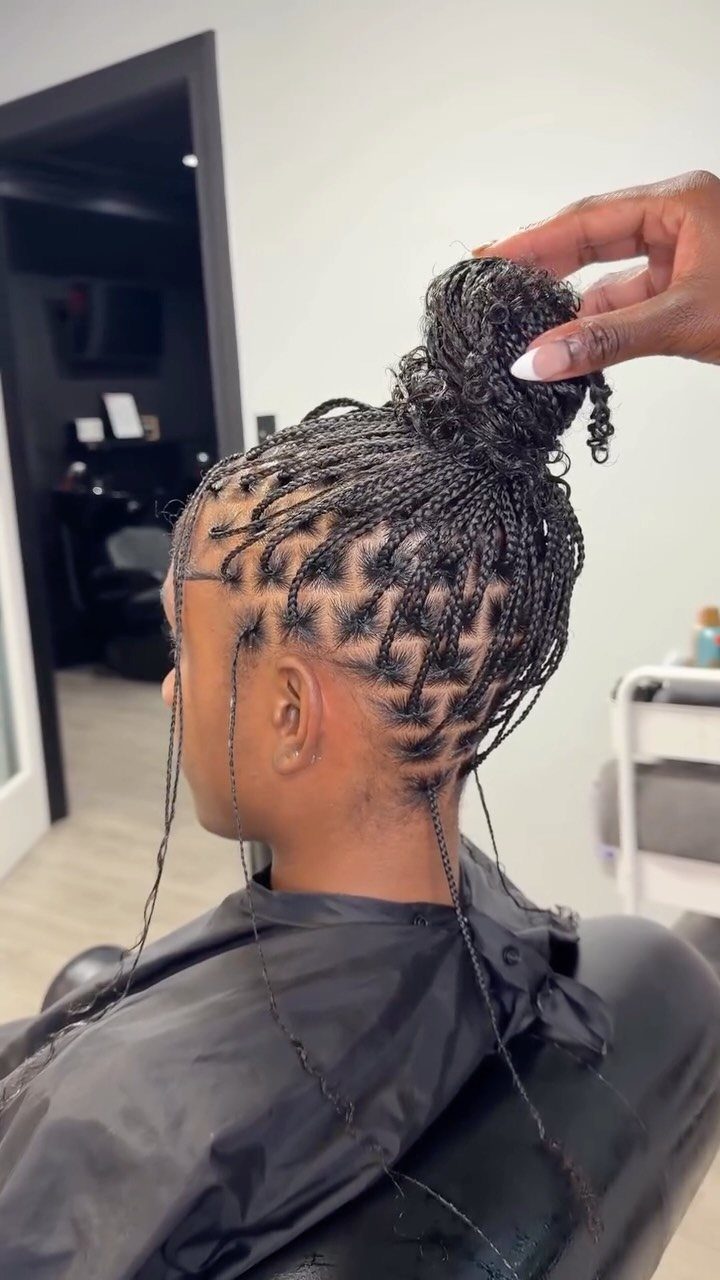
Gathering medium box braids into a bun keeps them off your neck and looks finished in minutes. A high bun, set near the crown, is the easiest to place.
Twist the braids loosely around the base and pin them as you go.
I’d skip a tight elastic, since heavy braids pull at the roots. If the bun feels weighty by afternoon, let it down for a while.
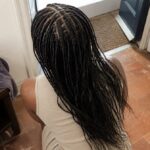
12. Middle-Part Medium Box Braids
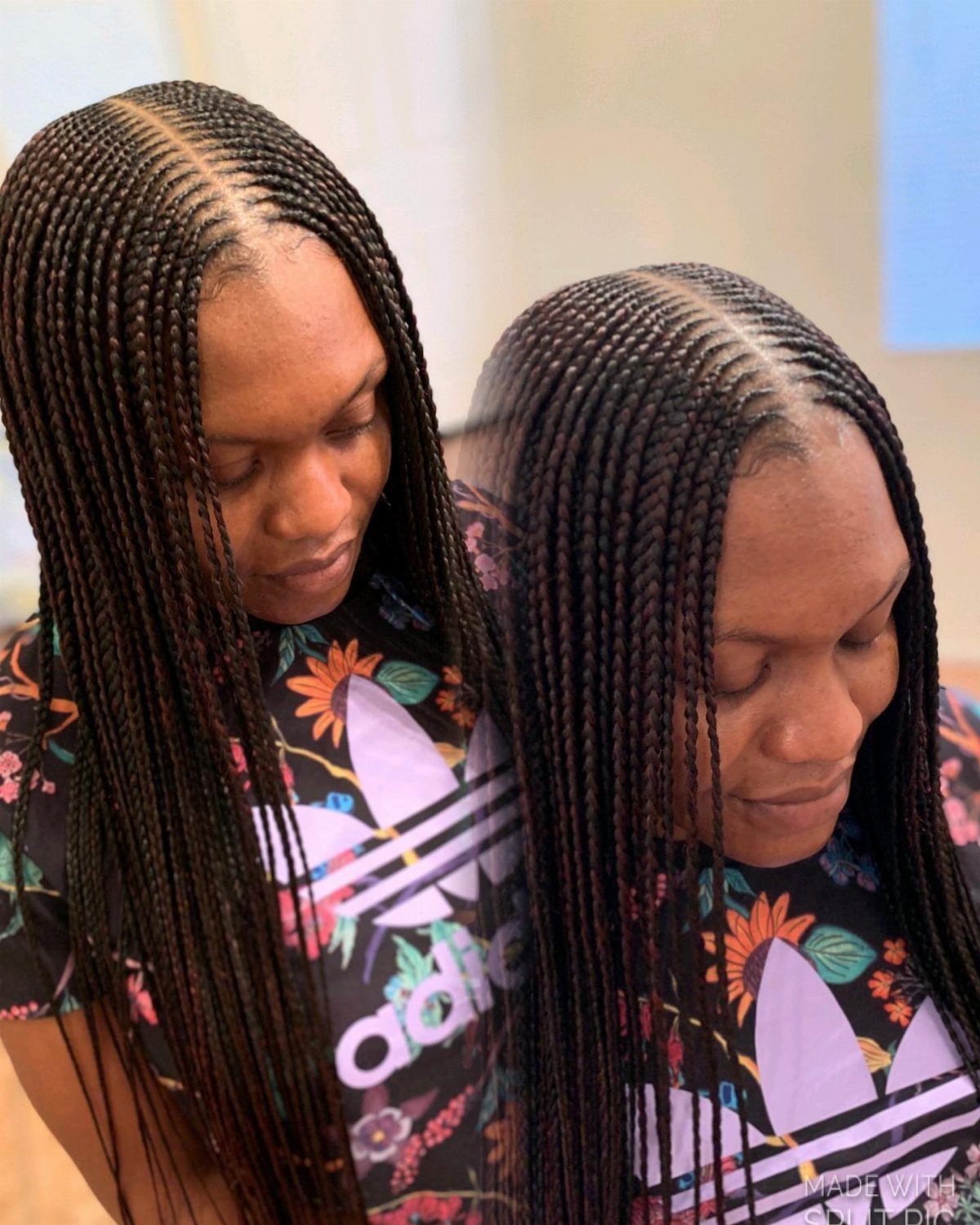
A center part frames the face cleanly and keeps long, dark braids from looking too heavy on one side. Both sides fall evenly, and the straight line down the scalp becomes the focus.
It suits most face shapes, so it’s a safe request.
Ask your braider to draw the part first and keep it crisp. If you ever want a change, the braids can be swept to one side without redoing anything.
13. Ombre Medium Box Braids
Dark roots that melt into warm brown lengths make the ombre version look grown-in on day one. Regrowth at the scalp blends with the color instead of showing a line.
I’d ask for a long, gradual shift rather than a sharp break halfway down.
Bring a saved photo so your braider can match the exact brown. This lands between natural and full blonde, so it reads warmer without the upkeep.
14. Medium Box Braids with Baby Hair
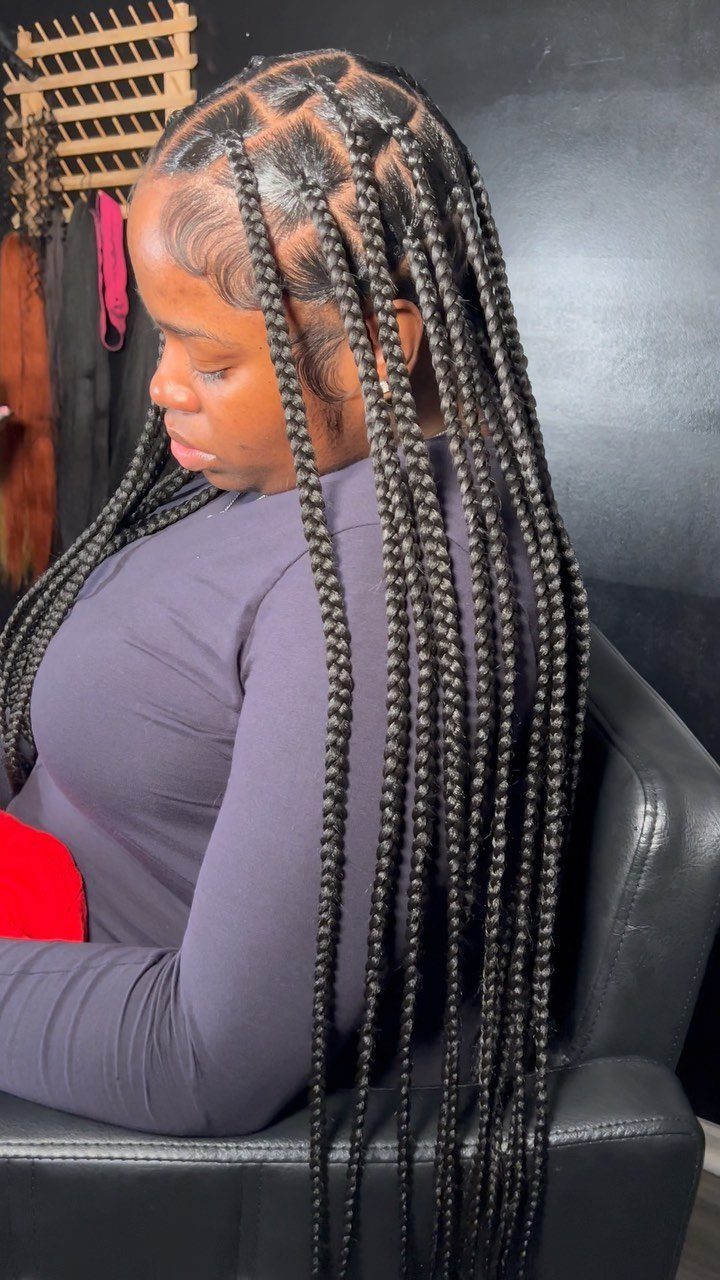
Neatly styled baby hair is what turns a plain set of braids into a finished look. Soft, shaped edges sit against the braided parts and bring attention to your cheekbones.
Ask your braider to leave a little fine hair out along the hairline when installing, and keep that tension light.
Lay the edges at home with a soft brush. Keep the shaping gentle so the hairline isn’t pulled or overworked.
15. Layered Medium Box Braids
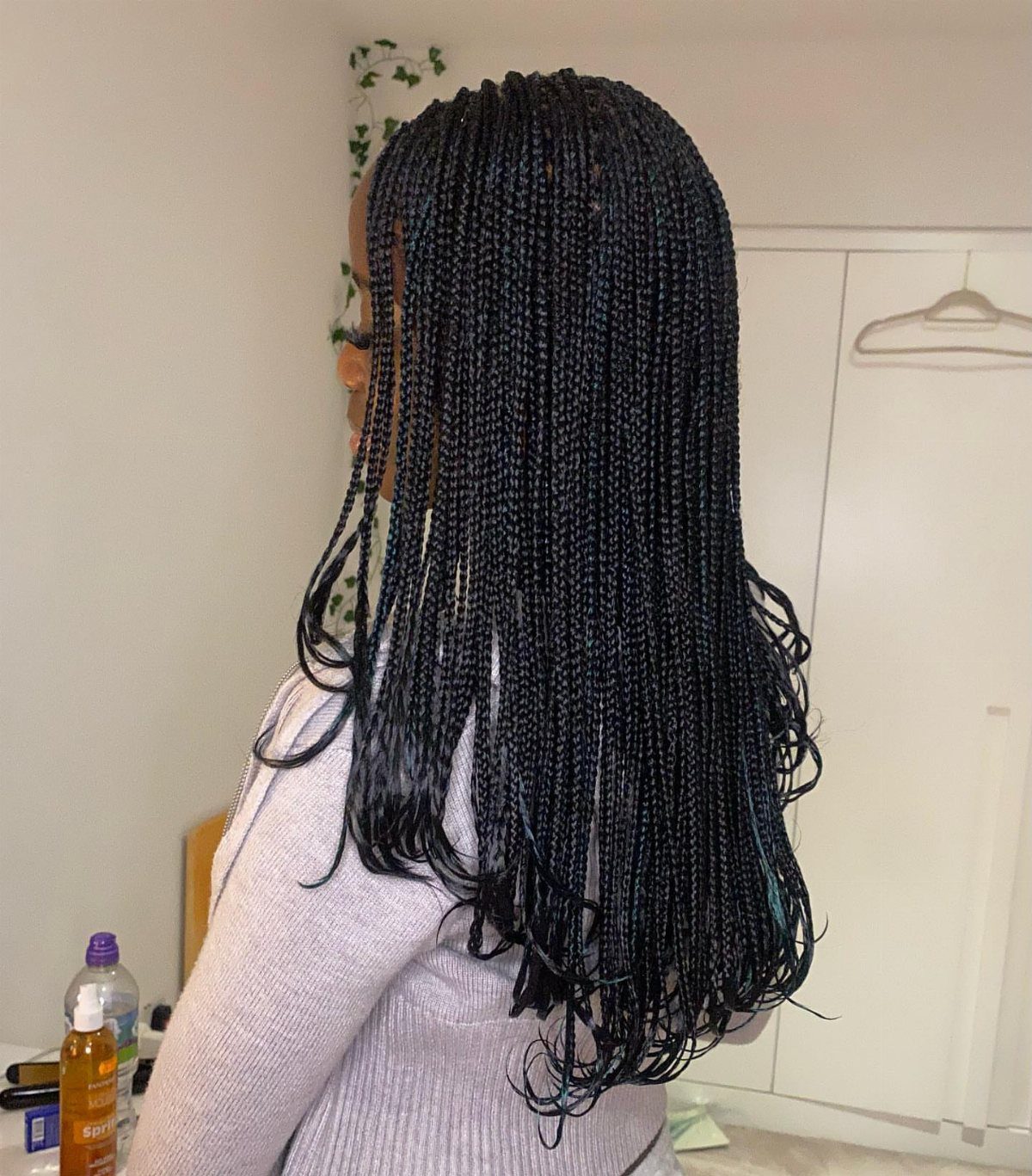
Braiding with staggered lengths of extension hair gives the set shape, so the ends fall in steps instead of one blunt line. Loose wavy ends add to the movement.
I like this on long braids, where a flat hem can look heavy.
Tell your braider how much shorter the top layers should sit, and show a photo. Layers are harder to put into a bun or ponytail, so decide how you’ll wear them first.
16. Goddess Braids
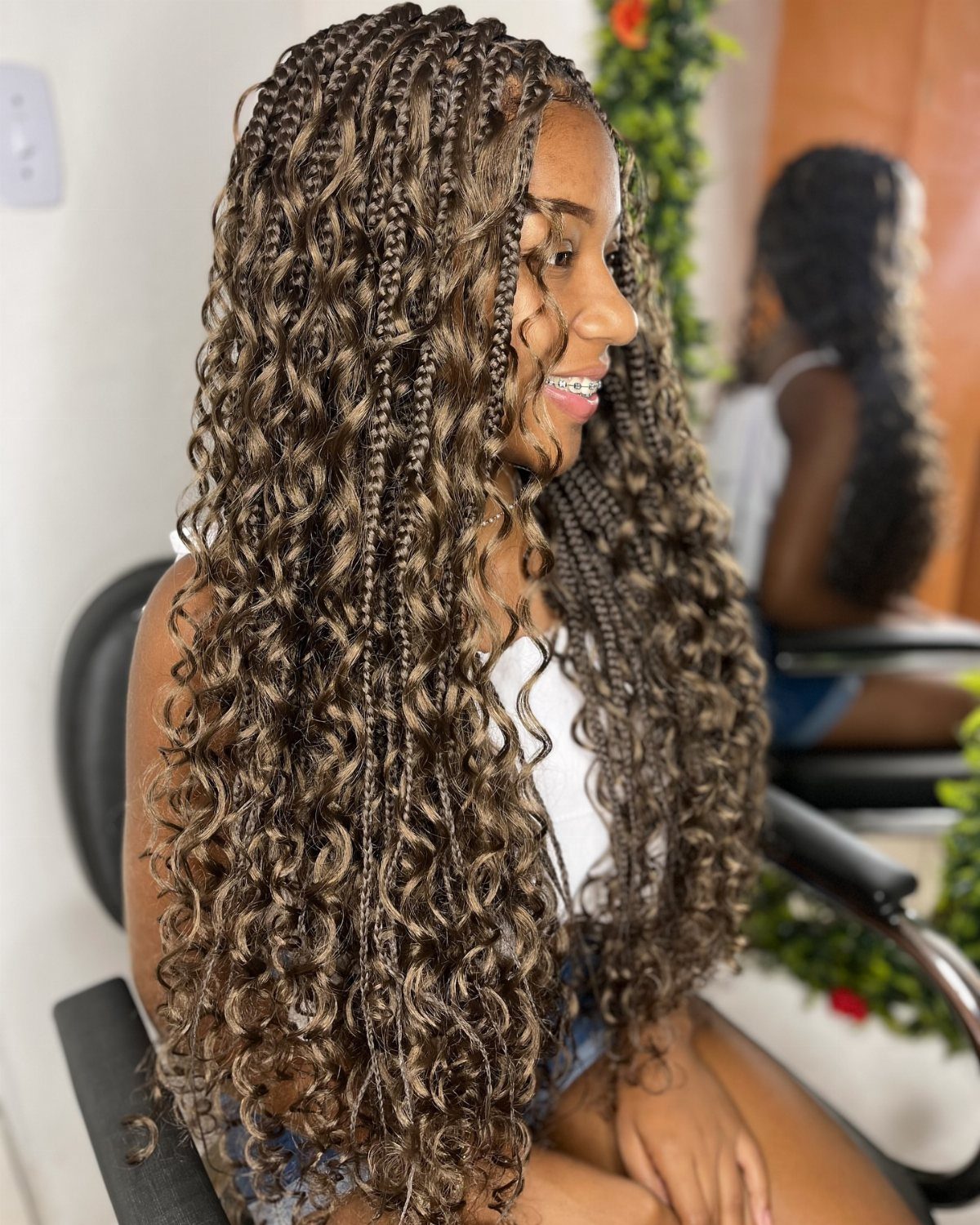
Goddess braids run thicker than standard medium braids, and that extra width reads as bold and regal. Curly ends loosen the formality and keep long brown lengths from reading too severe.
Because the braids are bigger, there are fewer of them, so ask your braider how many to plan for.
Choose this for drama that still moves and doesn’t feel rigid. Check the weight with your braider before committing to the full length.
17. Ash-Blonde Braids with Dark Roots
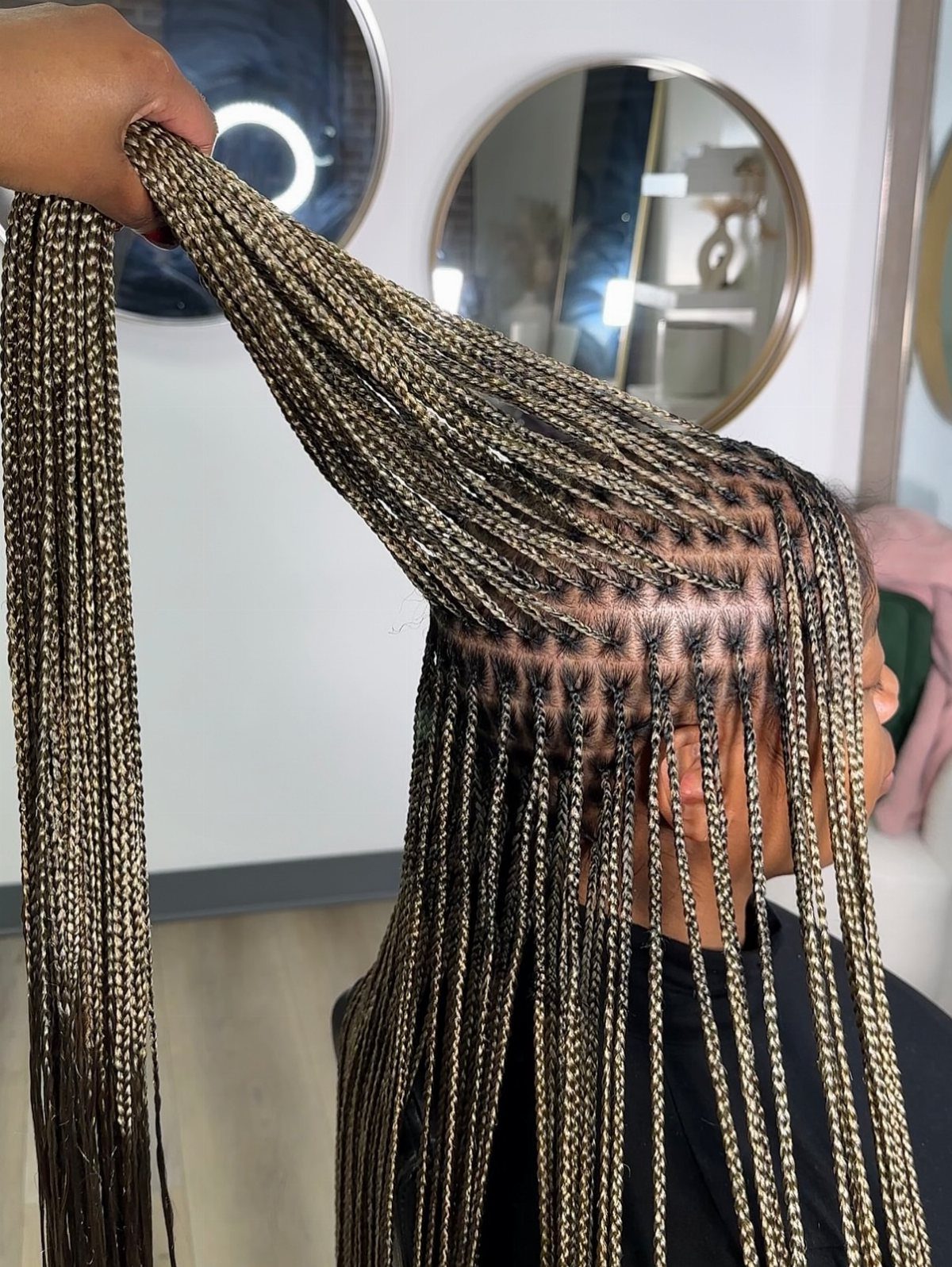
Ash-blonde lengths against dark roots give a strong, cool-toned contrast. The dark base keeps the look grounded as the braids settle in.
Ask for the ash shade by name and bring a photo, since blondes can drift warm or yellow. I’d keep the roots dark so regrowth doesn’t stand out.
18. Sun-Kissed Blonde Braids
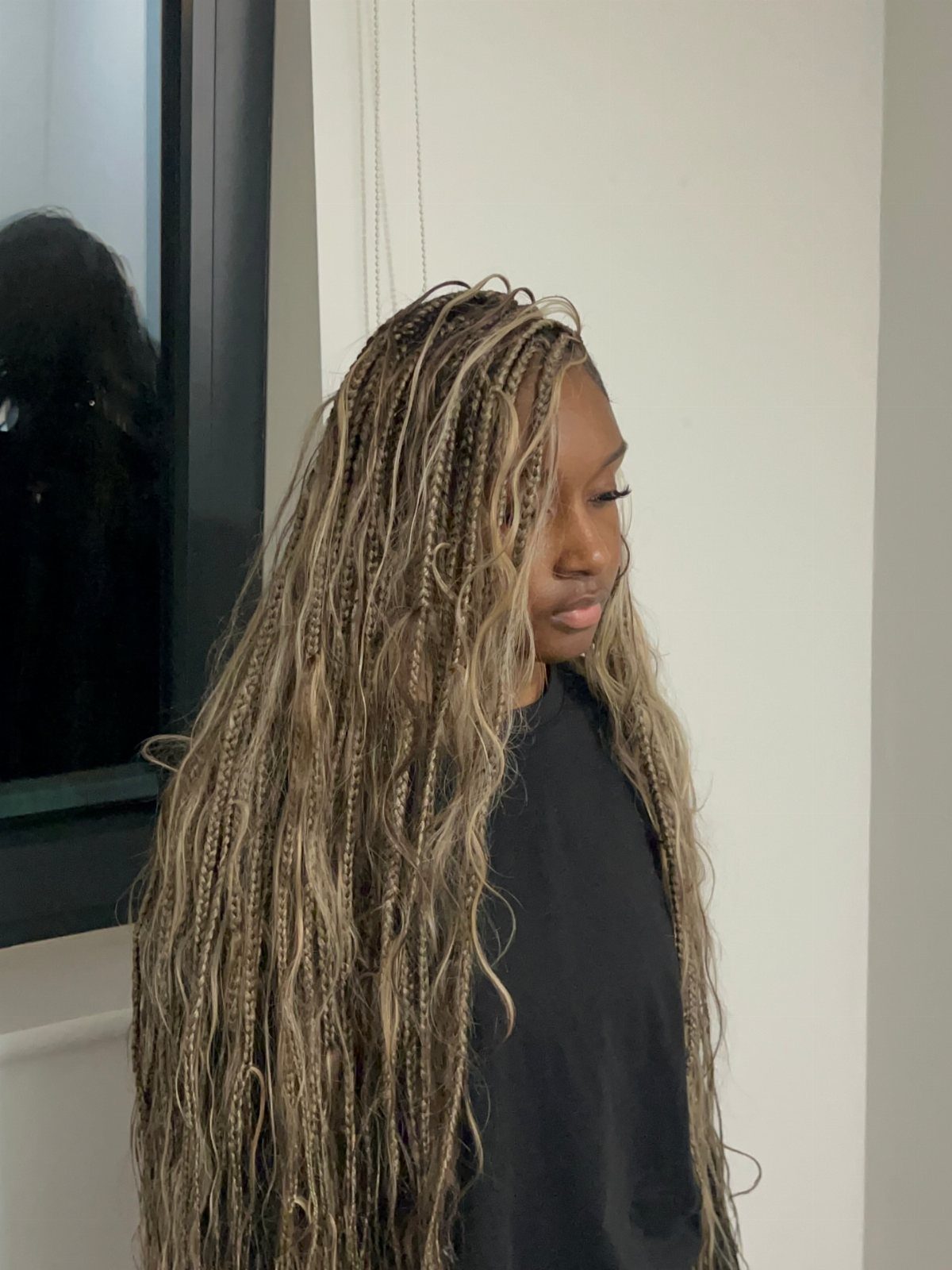
A bright blonde mixed with brown gives medium box braids a warm, summery finish. Dark roots keep it from looking flat.
If you want the sun-kissed effect, ask for blonde blended through a share of the braids, not every one. I’d choose this for warm months, when lighter color suits the season.
19. Updo with Blonde Highlights
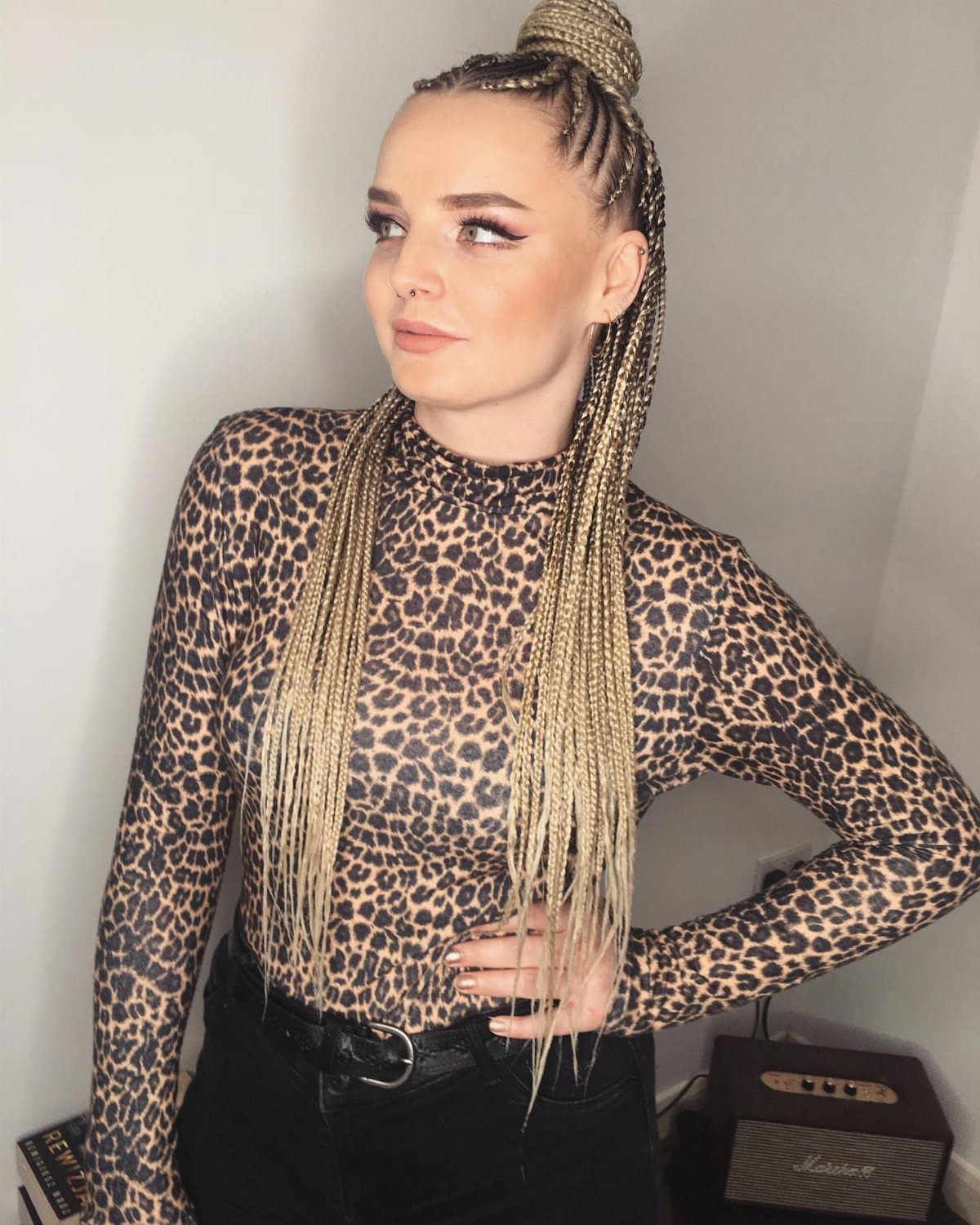
Blonde highlights woven through dark braids give a high bun some contrast without changing the whole color. The bun sits at the crown, and the highlights catch light as the braids wrap around the base.
This is a quick way to add dimension if you already have highlighted braids installed.
Pin the bun loosely so it doesn’t pull at the scalp all day, and wrap one braid around the tie to hide it. Let it down at night if the weight feels like too much.
20. Criss-Cross Medium Box Braids
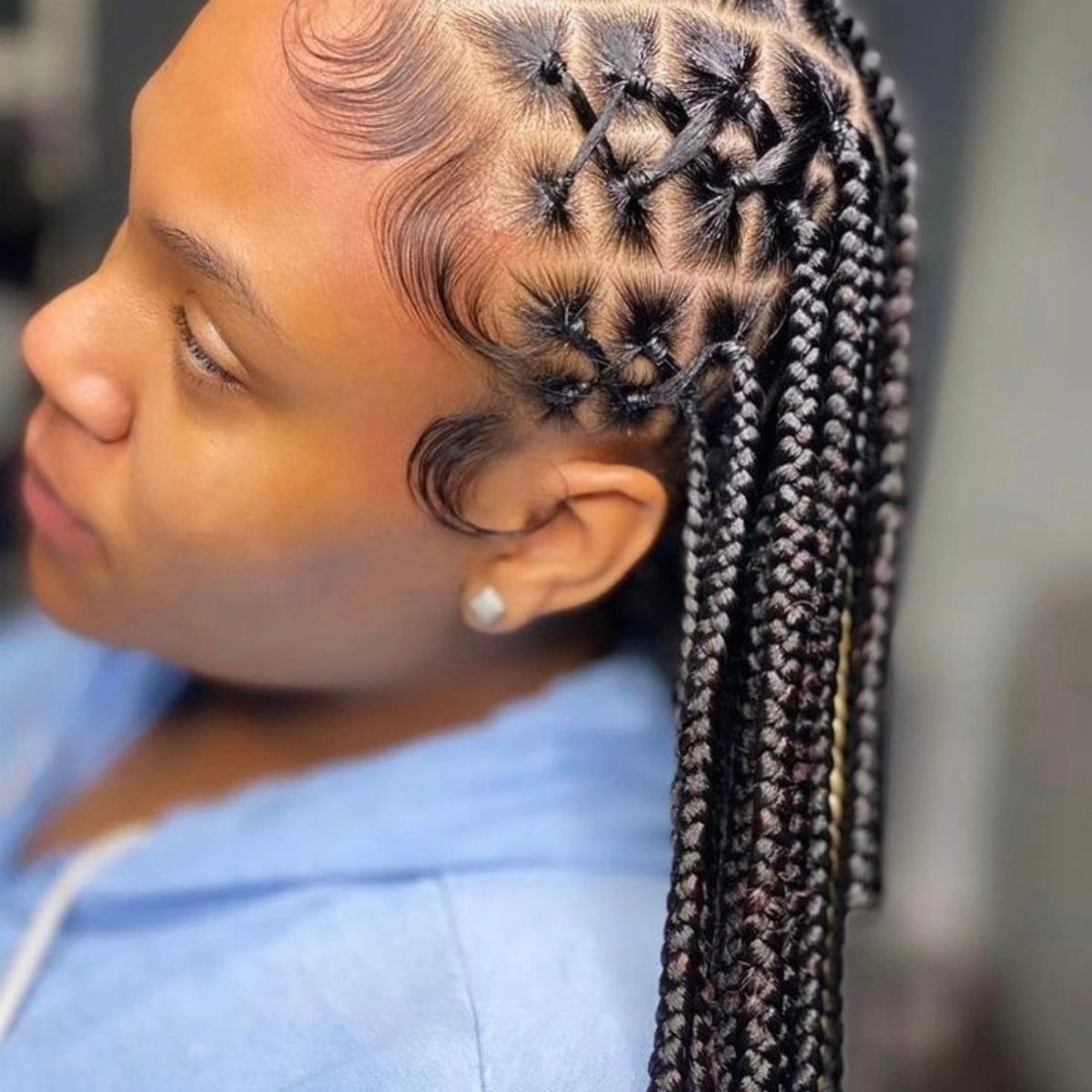
Box braids crossed over each other at the scalp form a lattice pattern that shows when the hair is swept to one side. The rest of the braids hang long and loose.
Ask your braider to criss-cross a few sections near the temple or along the part line before continuing the braids down.
This takes extra time but adds detail where it shows most. Keep baby hairs shaped along the hairline to frame the pattern.
21. Medium Tribal Box Braids
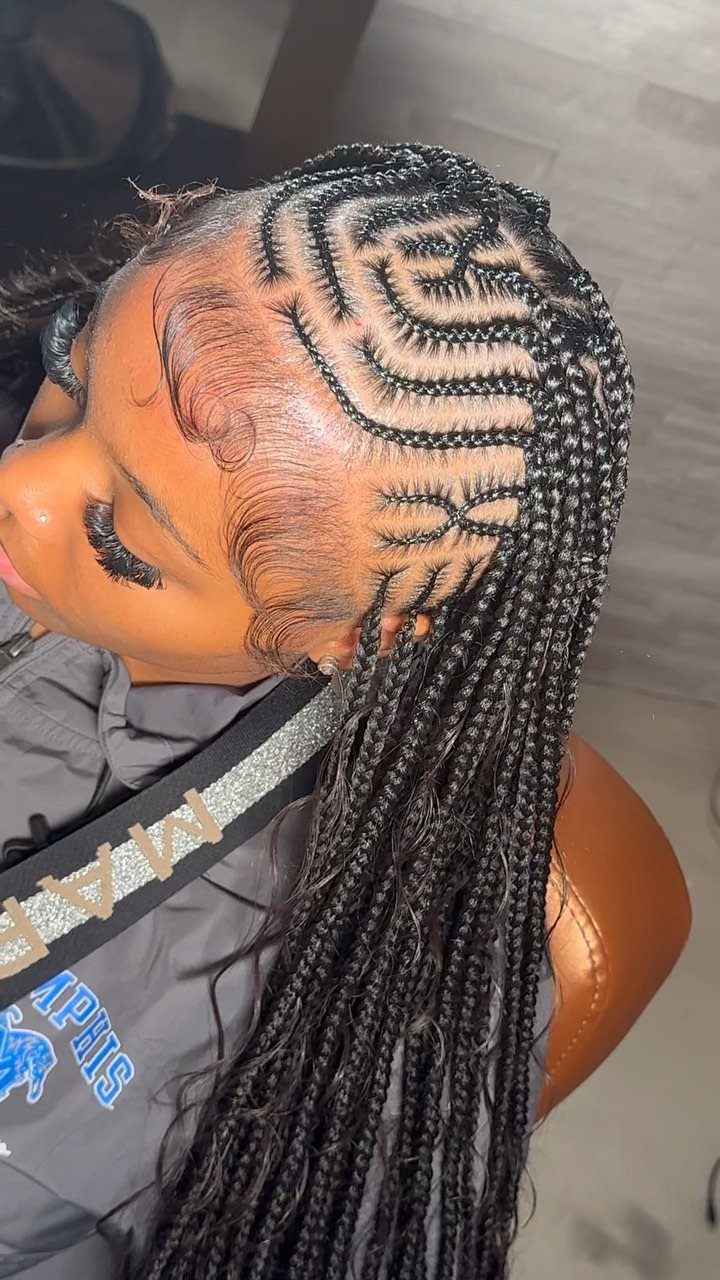
Tribal box braids start with curved cornrow sections at the scalp, then drop into individual box braids. The curves add shape and break up the grid.
This style takes longer to install than straight parts, since each cornrow has to be mapped and braided before the box braids begin.
I like it for the scalp detail, which gives you something to show in updos or side-swept styles. Ask your braider to plan the pattern before starting, and bring a reference photo if you want a specific shape.
22. Curved Cornrow Accent Braids
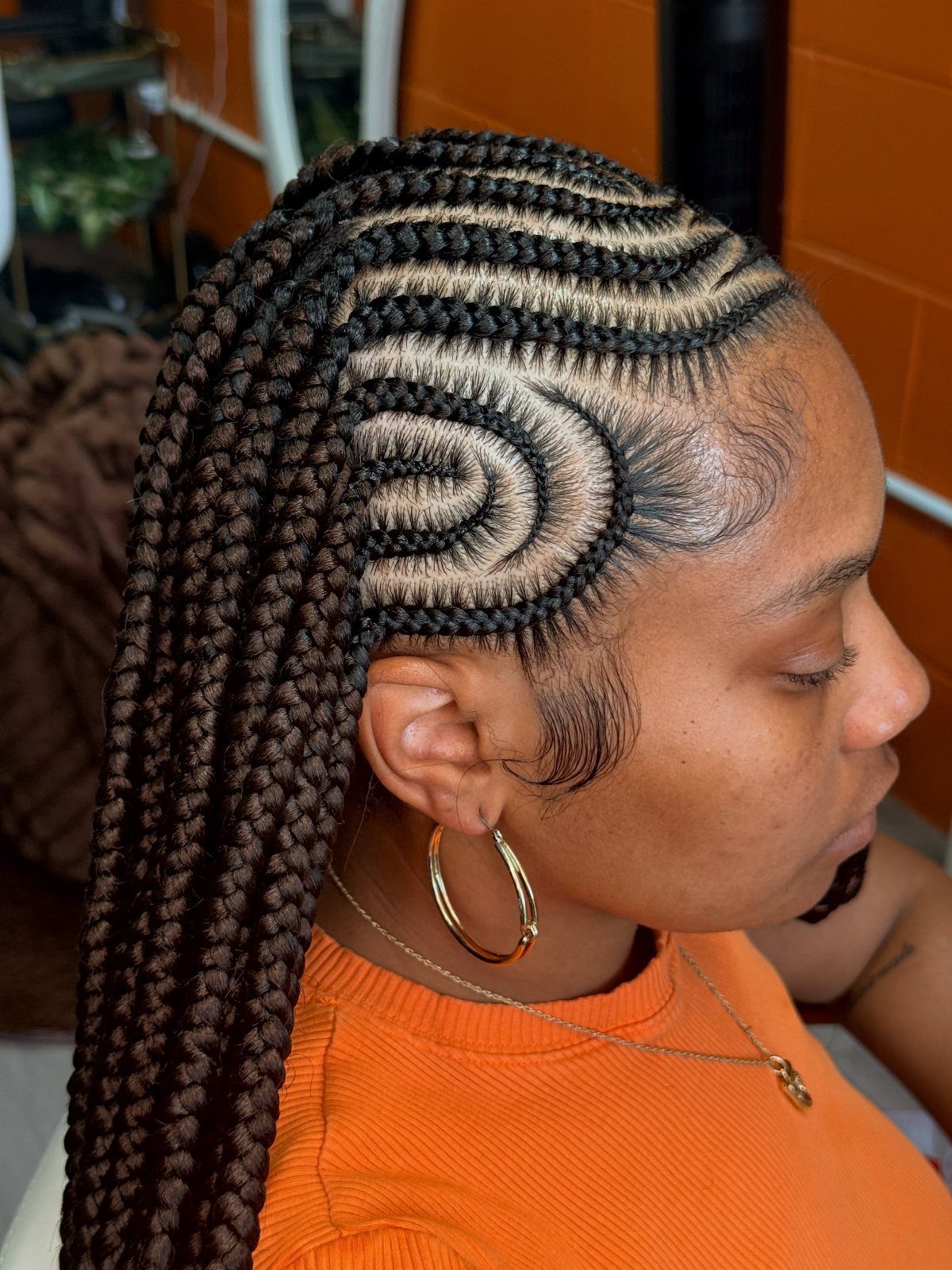
Curved cornrows along the side lead into long box braids that fall past the shoulders. The cornrows add a soft arc that follows the head shape, and the box braids keep the length.
This mix works well if you want some scalp detail without covering the whole head in cornrows.
The curved sections take more time than straight parts, so plan for a longer install. Wear the braids down or swept to one side to show the cornrow pattern.
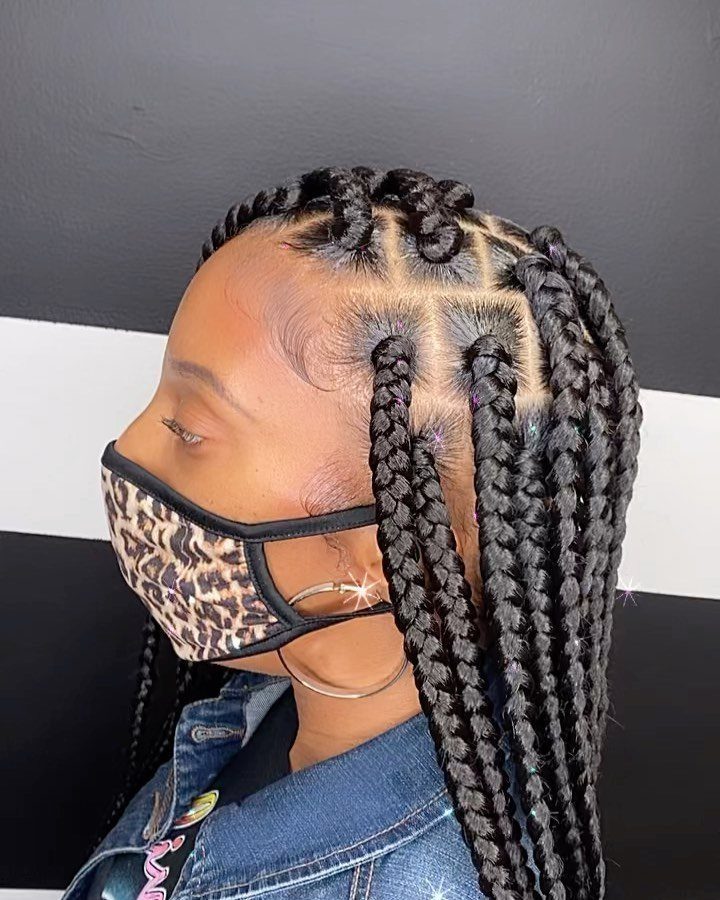
23. Triangular-Part Box Braids
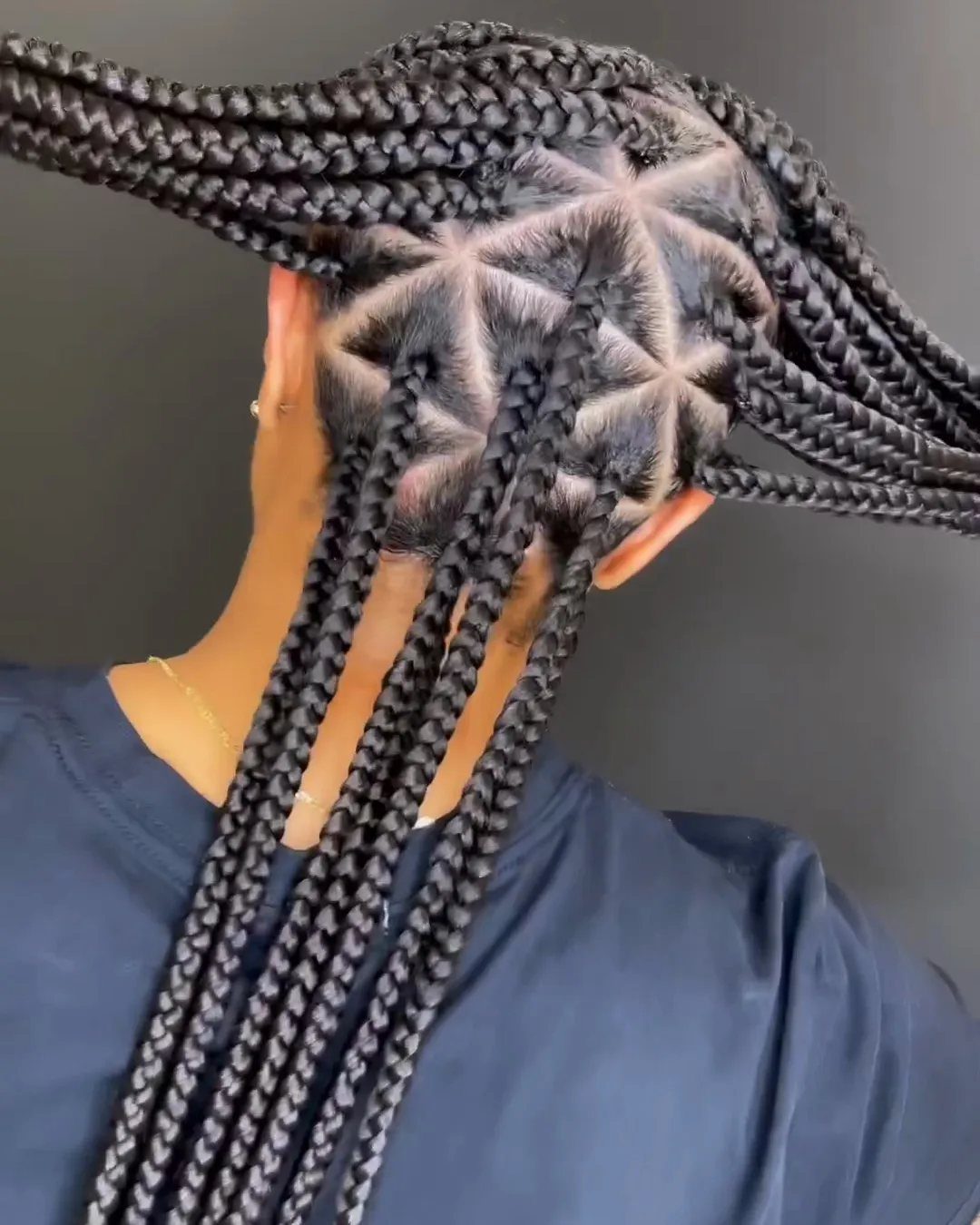
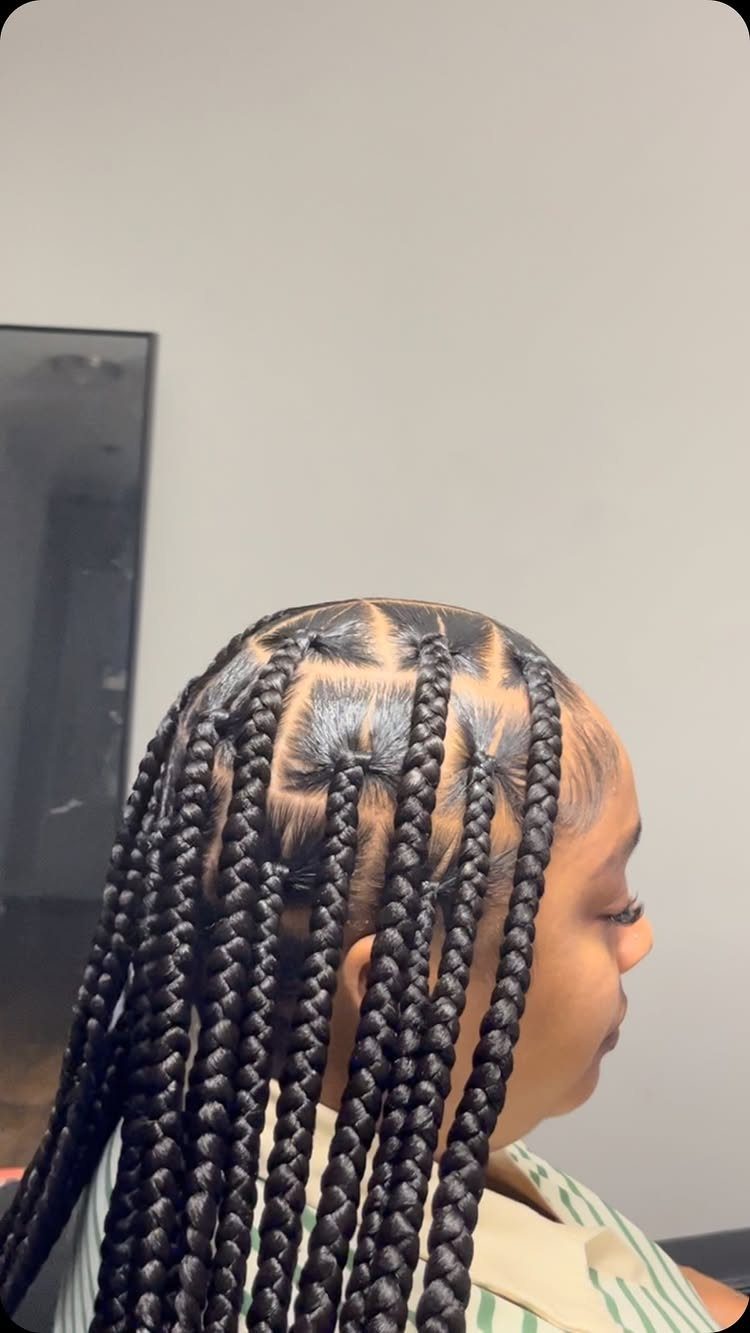
Triangular sections at the scalp give box braids a geometric look that shows from behind. Each braid starts from a three-sided part instead of a square, and the pattern stays visible as long as the braids are in.
Triangular parts take more precision and time to map, so expect the install to run longer than standard box braids.
I like this for someone who wants a clean, structured look without changing the braid thickness or length. Ask your braider to keep the triangles uniform so the pattern reads clearly.
Choosing Medium Braid Size
Medium braids land in the middle of the size range: roughly pencil-width, bulkier than micro or small braids and far slimmer than the jumbo kind.
That middle ground gives you a full, clean look with some scalp showing between parts, and it stays practical for everyday life.
For a look people notice without it taking over your whole face, medium is the size I’d pick.
Size is also about weight.
Medium braids don’t drag at the scalp the way thick ones can, so they suit most people. If you can’t decide between two sizes, ask your braider to show you a section at each one before parting the whole head.
Installation Time and Durability
Plan on 4–6 hours in the chair for medium braids. For comparison, micro braids run 8–12 hours and jumbo about 2–3, so medium lands in the middle on time.
Expect the set to last 4–6 weeks.
Some sources stretch that to 8 weeks, but I’d treat 6 as the limit for traditional braids. Past that, new growth tangles at the root and the braids put more strain on your hair.
To get the full stretch from a set:
- At night, a satin bonnet or scarf keeps friction off the braids and cuts down on frizz at the roots.
- A light spray made for braids keeps the scalp from drying out and itching, and a few spritzes a few times a week is plenty.
- Skip heavy products that build up.
- When buildup shows up, wash the scalp gently with diluted shampoo on your fingertips, and skip scrubbing the braids themselves.
- Keep edges gentle and tension-free.
Book the removal appointment or block out time for it before you leave the chair.
Frequently Asked Questions
How long to keep medium box braids in?
Four to 6 weeks is the window for traditional braids, and week 6 is where I draw the line.
Pushing to 8 weeks is common advice, yet by then the regrowth at your roots has started to knot and the braids pull on your scalp.
What are some popular hair styles with box braids?
High ponytails, buns, half-up styles, and wearing the braids loose are the most common.
You can also add beads, cuffs, or curly ends, or try a center part, layers, or criss-cross patterns at the scalp. Longer braids give you the most options for updos.
What is the easiest braid for beginners?
For a first set, I’d pick a shoulder-length medium box braid.
Less length puts less tension on your scalp, adds less weight, and shortens the appointment, and ponytails and buns still work. If you have a tender scalp, knotless braids are gentler at the root.
What are medium traditional box braids?
Extensions get braided down with your own hair, one square-parted section at a time, which makes this a protective style.
The "medium" label describes each braid’s thickness, about the width of a pencil. That size looks full, shows some scalp between parts, and stays practical day to day.
Can medium box braids help protect natural hair?
Yes, as long as they are installed with light tension.
They cut down on daily manipulation and heat styling. Braids pulled too tight at the edges and temples can cause breakage instead, so speak up in the chair.
Are medium box braids heavy?
Usually not; length and the amount of extension hair in each braid set the weight far more than the size of the braid does. Medium braids are lighter than jumbo, though very long sets can still pull at the crown.