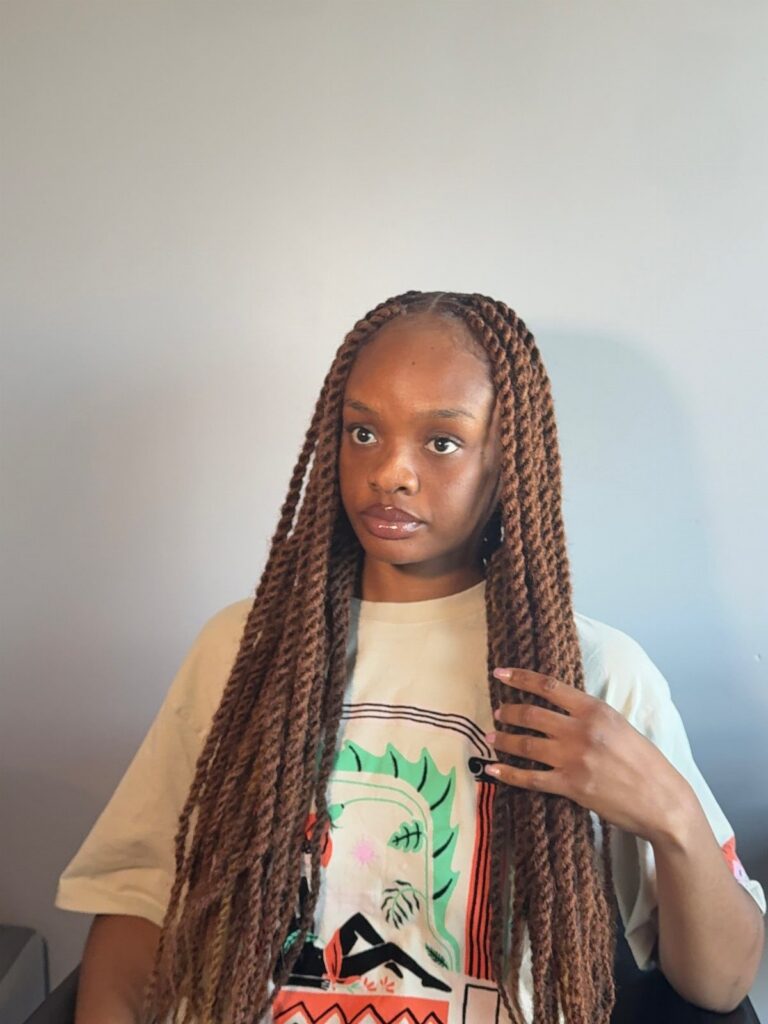
Marley twists last 6 to 8 weeks and take anywhere from a few hours for jumbo sections to a full day for small, dense twists.
The width of each section decides install time, weight on your scalp and how the finished style photographs.
Jumbo twists use the fewest sections and finish fastest, while small twists take longer but hold styles better because each one is lighter.
1. Marley Twist Side Ponytail
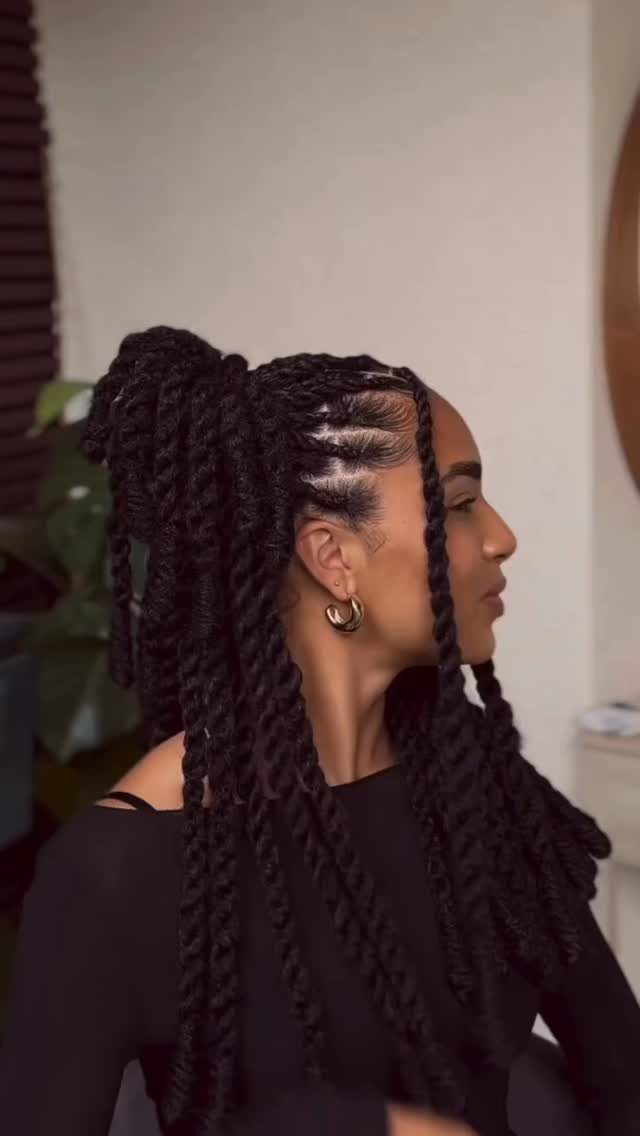
The ponytail sits off to one side, usually near the nape or just behind the ear, instead of centered down the back.
Pull all the twists toward one shoulder and secure with a fabric-covered elastic or a claw clip. The gathered side shows off the twist texture, and the asymmetry keeps it casual.
If your twists are waist-length or longer, the ponytail can feel heavy on one side. Tuck a small coil elastic under the tie to add grip without tugging.
2. Extra-Long Marley Twists
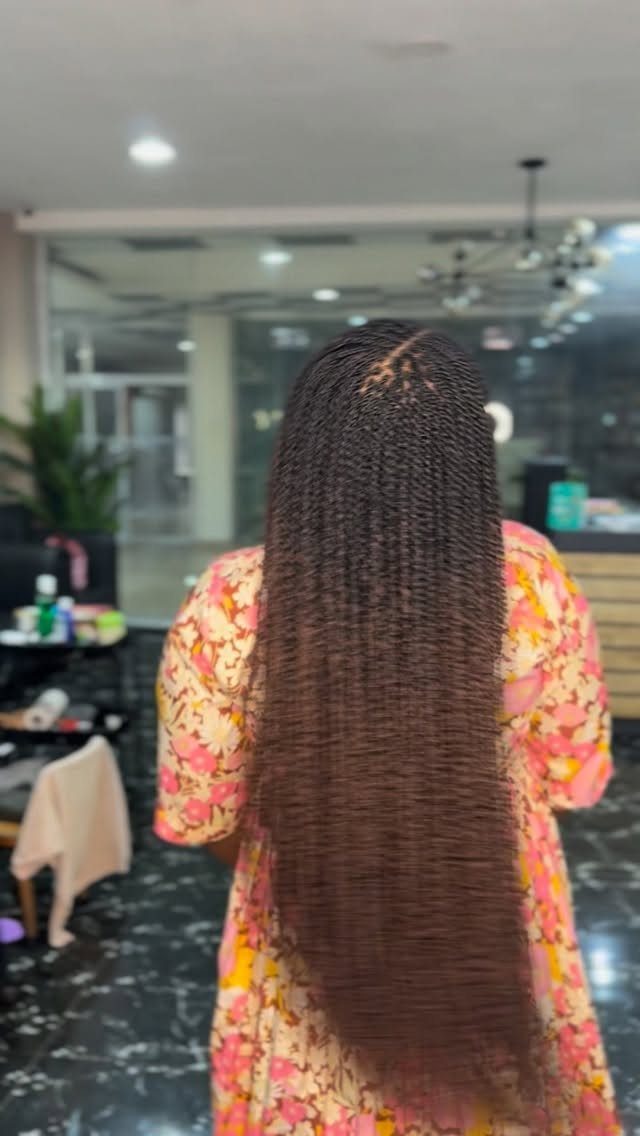
Hip-length twists sit somewhere between classic and statement. They move when you walk, and you feel the weight.
Marley hair comes in different pack lengths, so pick based on how long you want the finished twist.
For twists that fall below the waist, most braiders add extra packs to double the hair and add density. Install time depends on how many twists you put in and how fast your braider works.
Sleeping in a bonnet keeps friction low. The longer the twist, the more likely it is to tangle at the ends after a month, so many people trim a half-inch off around week 5.
3. Marley Twist Half-Updo
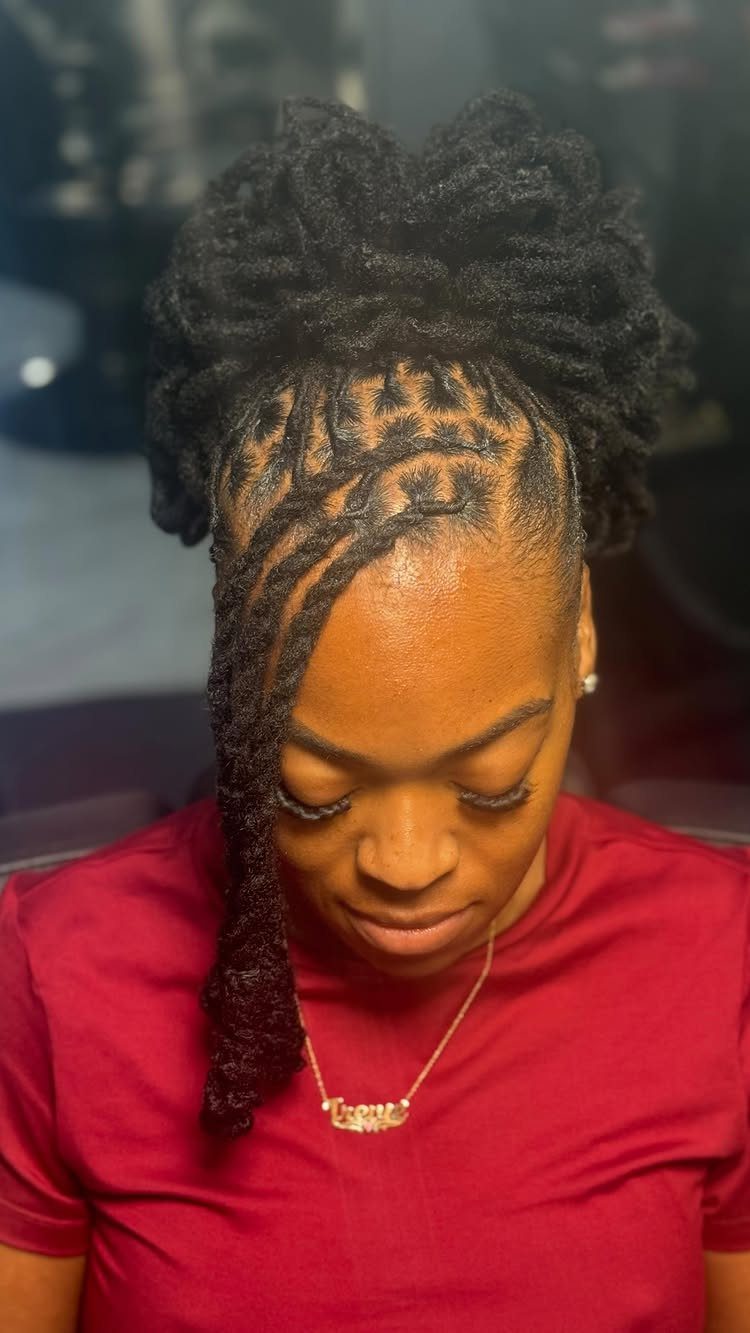
A horizontal gathered section across the crown pulls the twists into a high half-up bun. The ends stay loose and fall forward or to the side.
Gather the top third of the twists into a loose bundle, twist the bundle once, then fold it over itself and pin the fold flat against the back of the head.
Two or three bobby pins at the fold hold it.
One or two twists can hang in front of the ear for a softer frame. The style takes about 2 minutes once the twists are in.
4. Marley Twist Bun
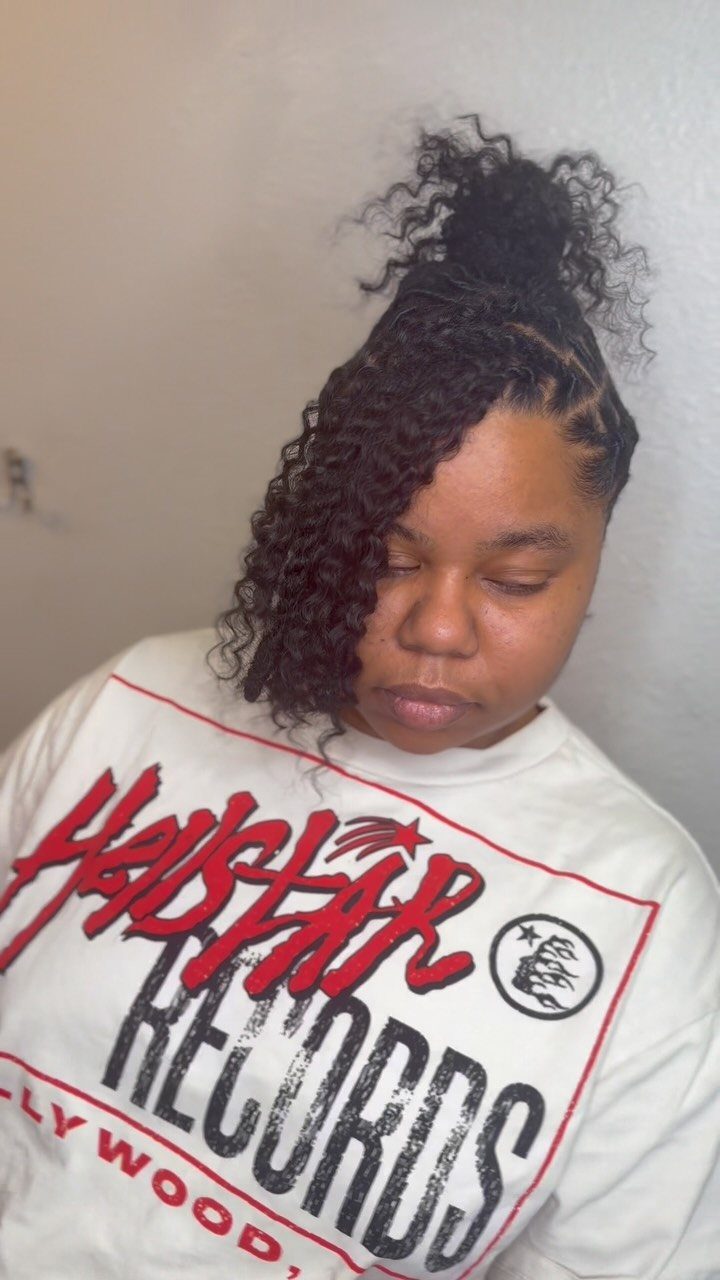
The twists are gathered into a high bun with a rounded, stacked silhouette that sits near the crown.
Smooth all the twists into a high ponytail, then wrap the length around the base in a coil, tucking the ends under as you go.
Pin the coil in place with large bobby pins, spacing them around the bun so the weight sits evenly.
A few loose twists can be left out at the front and swept to one side. The bun works best when the twists are shoulder-length or longer, so there is enough hair to wrap.
5. Chunky Twist Ponytail
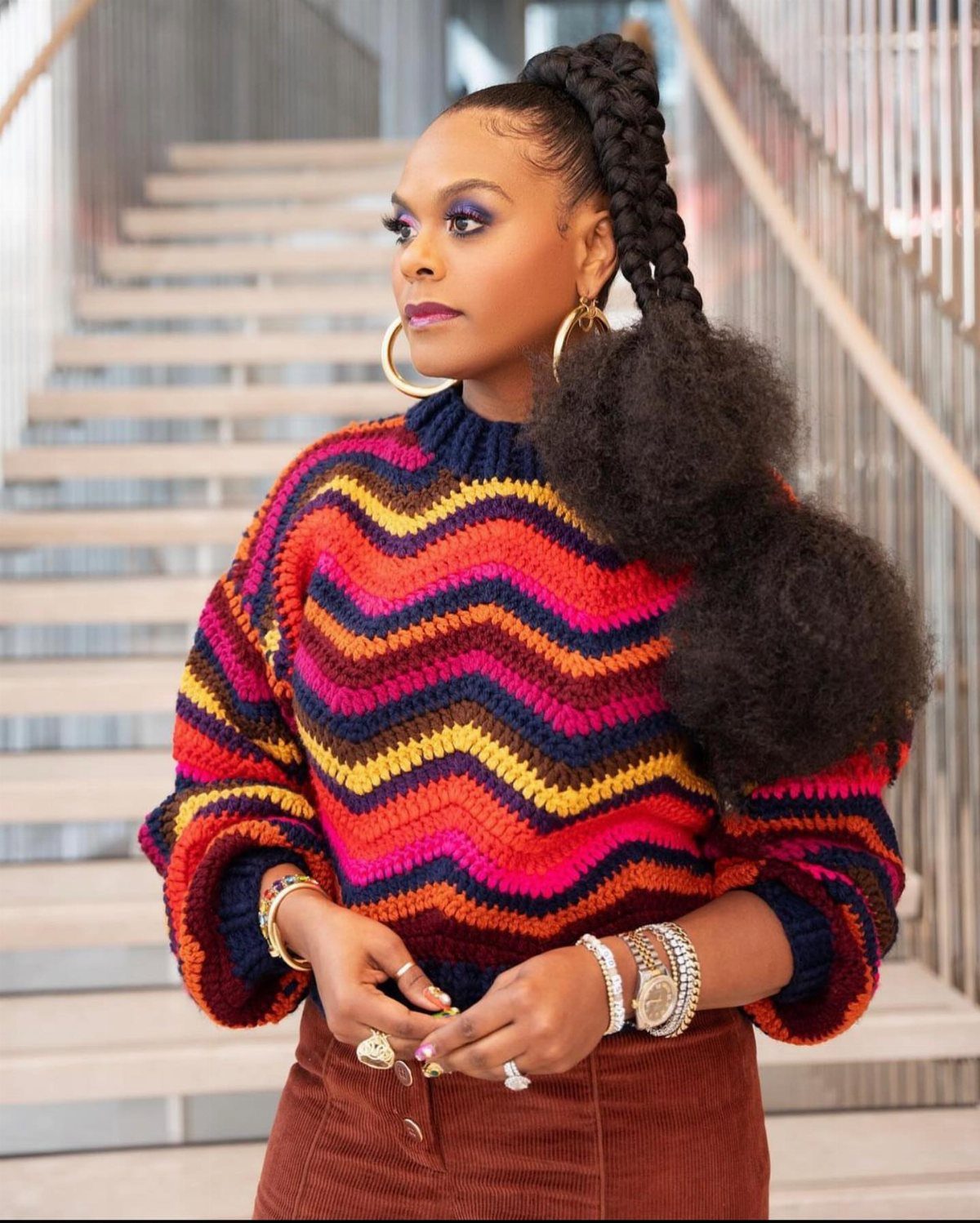
Chunky twists and locs are gathered into a high ponytail with loose, textured ends that fluff outward.
The thickness comes from using wider sections when installing the twists. Each section is chunky at the root, which cuts install time but gives a fuller, rounder ponytail.
The ends are left unraveled or lightly picked for volume.
A fabric elastic holds the gather without snagging, and the ponytail sits at the crown or just behind it. The style lasts several weeks if you wrap at night and keep oil on the twists.
6. Extra Long Style with Beads
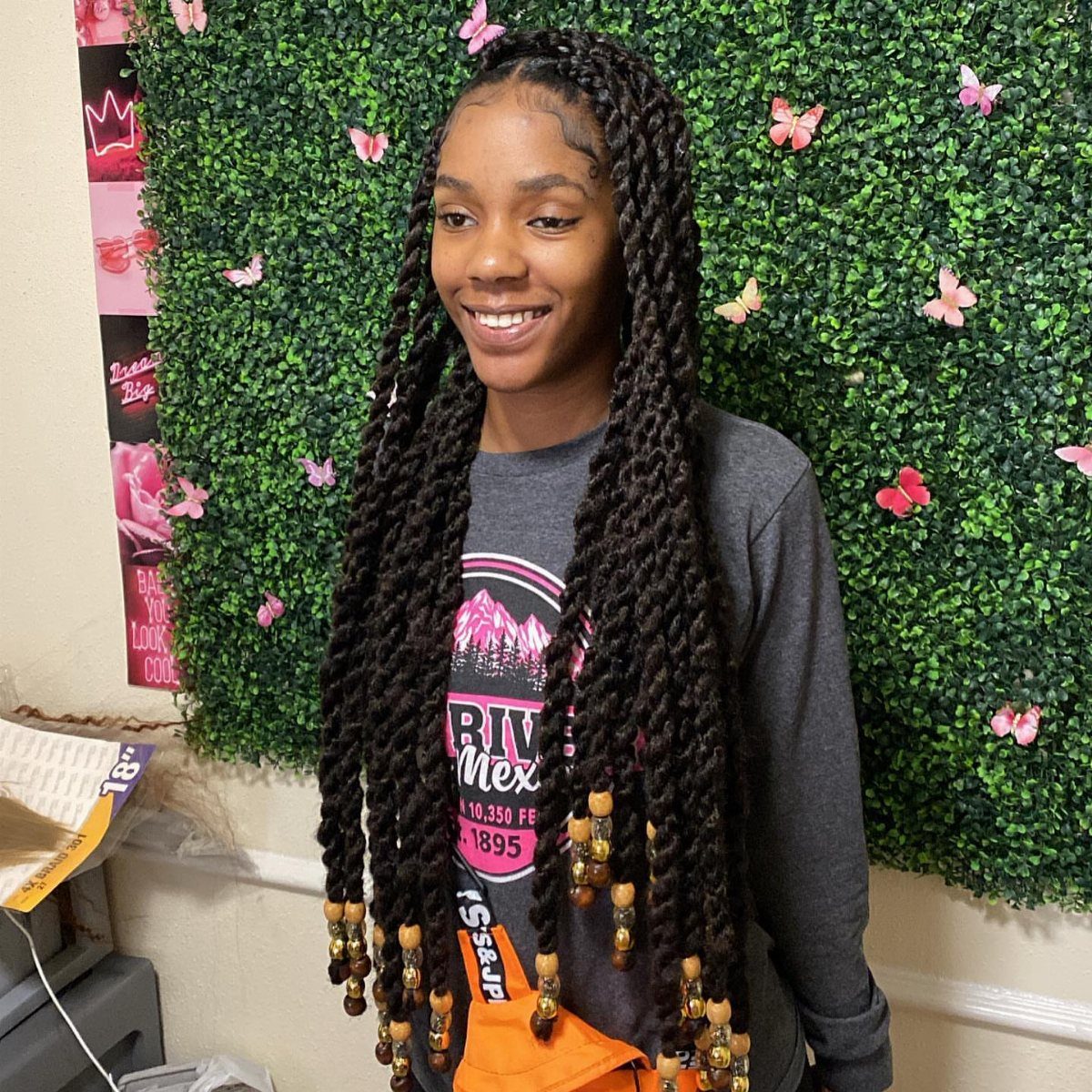
Gold or wooden beads are threaded onto individual twists, usually spaced a few inches apart from mid-length to the ends.
Beads with a hole wide enough for the twist slide on easily.
Most people add a few beads per twist, focusing on the front and side sections where they catch the light. A small crochet hook can help pull the twist through if the bead opening is snug.
The beads click when you move. If they slide down over time, a small elastic wrapped once around the twist just below the bead keeps it in place.
7. Marley Twist Side Part
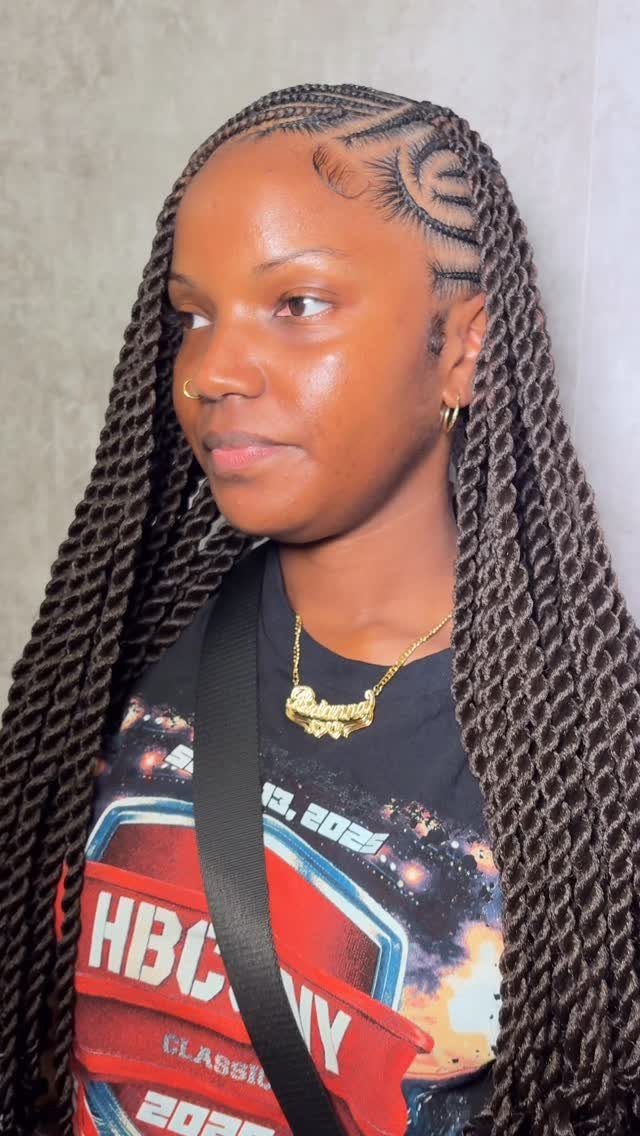
The part sits low on one side, close to the temple, and most of the twists fall across the opposite shoulder.
Jumbo twists make the part line more visible because each section is wider, so the scalp shows in a clean diagonal. Part while the hair is damp if you can, before twisting begins, so the angle sets.
The asymmetry works best when the twists have room to drape forward. If they end above the shoulder, the side part still shows but the sweep is shorter.
8. Medium Length Marley Twists
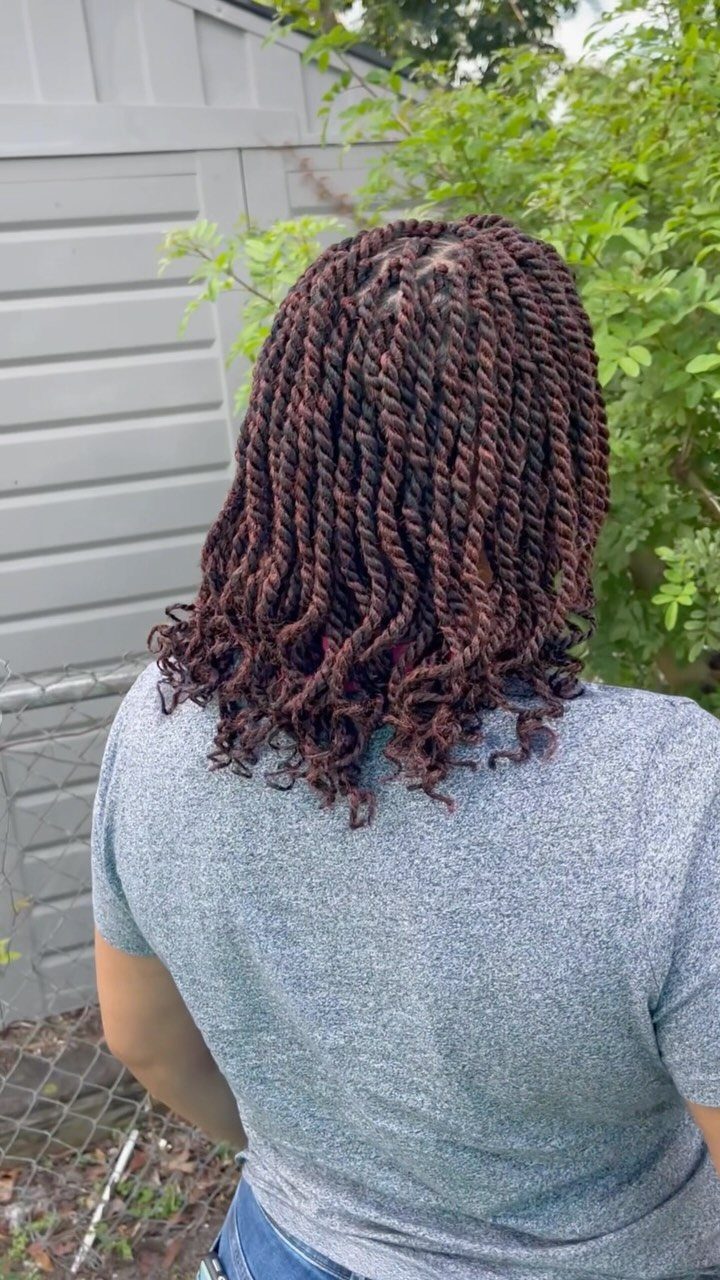
The ends stop a few inches below the shoulder, which keeps the weight manageable and the install faster than hip-length twists.
The shorter length also means fewer packs of Marley hair.
Sleeping is easier because the twists don’t tangle as much at night, and they dry faster after washing.
9. Marley Twists with Braided Roots
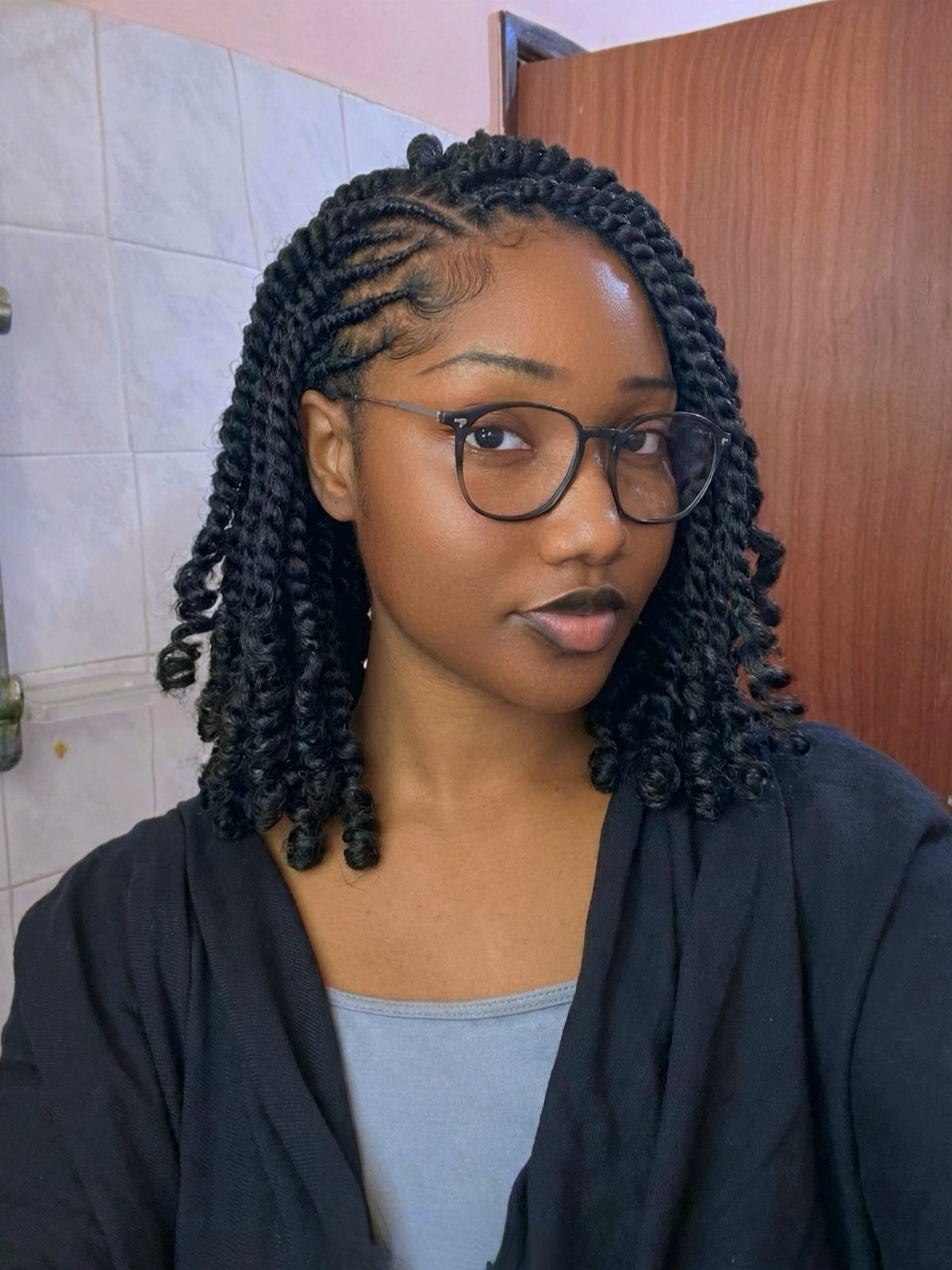
The first inch or two at the root is braided flat against the scalp before switching to a two-strand twist for the rest of the length.
Braiding the root adds grip and keeps the twist from loosening near the scalp, which can happen when you start twisting right at the base. The braid also gives a flatter, sleeker look at the crown.
After the braided section, the hair transitions into a standard two-strand twist. The switch happens where the braid ends, and most braiders keep the transition tight so it doesn’t unravel.
10. Small Twists
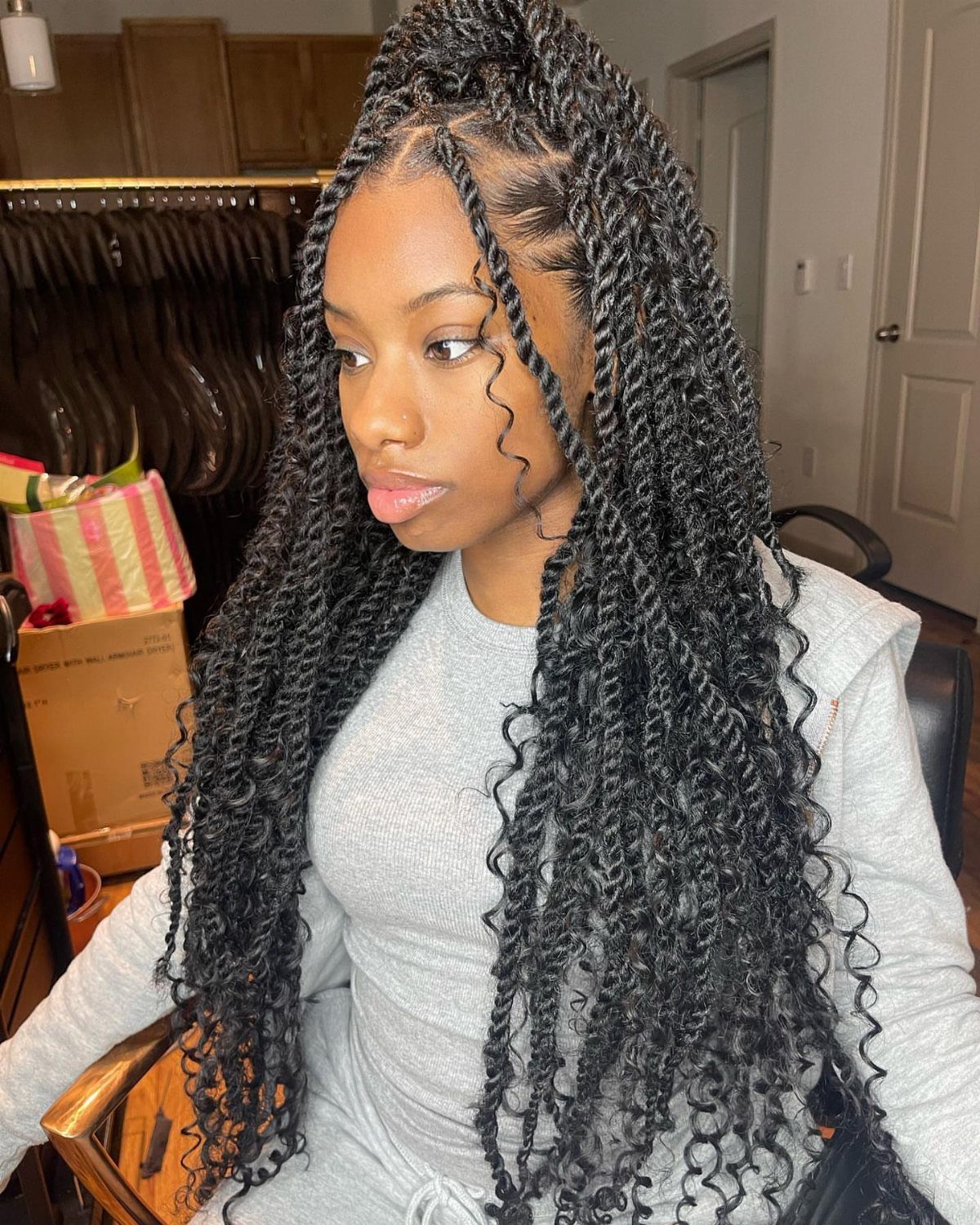
Each twist is thinner, made from smaller sections of hair, which means more twists overall and a finer, denser look.
Small twists take longer to install because the sections are narrower and there are more of them. The upside is they last longer and hold styles better because the individual twists are lighter.
Pulling a few twists from the front and pinning them back opens up the face. The ends can be dipped in hot water to seal or left loose.
11. Boho Marley Twists
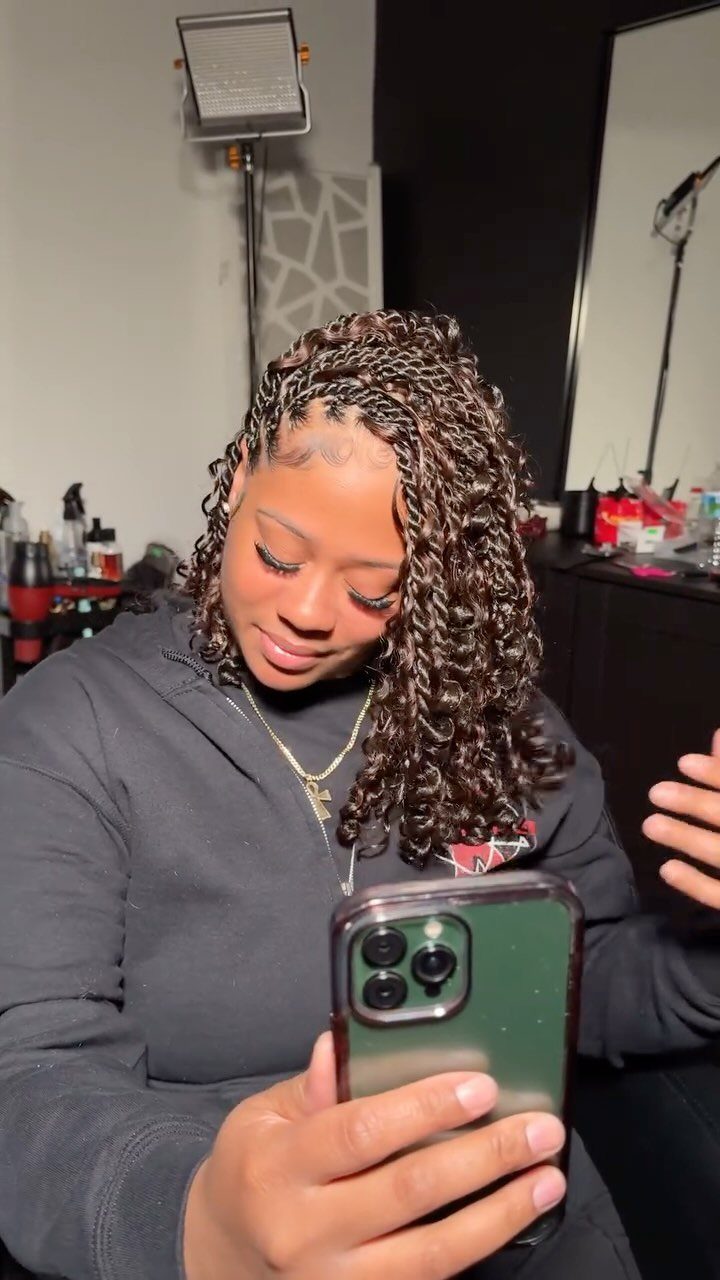
Loose, curly ends and a textured finish at the roots give the twists a softer, more casual look than the sleek, uniform finish of traditional Marley twists.
The texture comes from leaving some natural hair out at the ends or adding human hair for curl. Frizz is part of the look, so the roots don’t need to be re-twisted as often.
Install is faster because precision matters less. The style works for summer because the loose ends move and don’t sit heavy on the neck.
One of the best things about Marley twists is that they look better the longer you leave them in. Zoë Kravitz’s hairstyle for the 2015 InStyle Awards is proof that you don’t have to have every hair slicked down for the style to work.
12. Long Bob
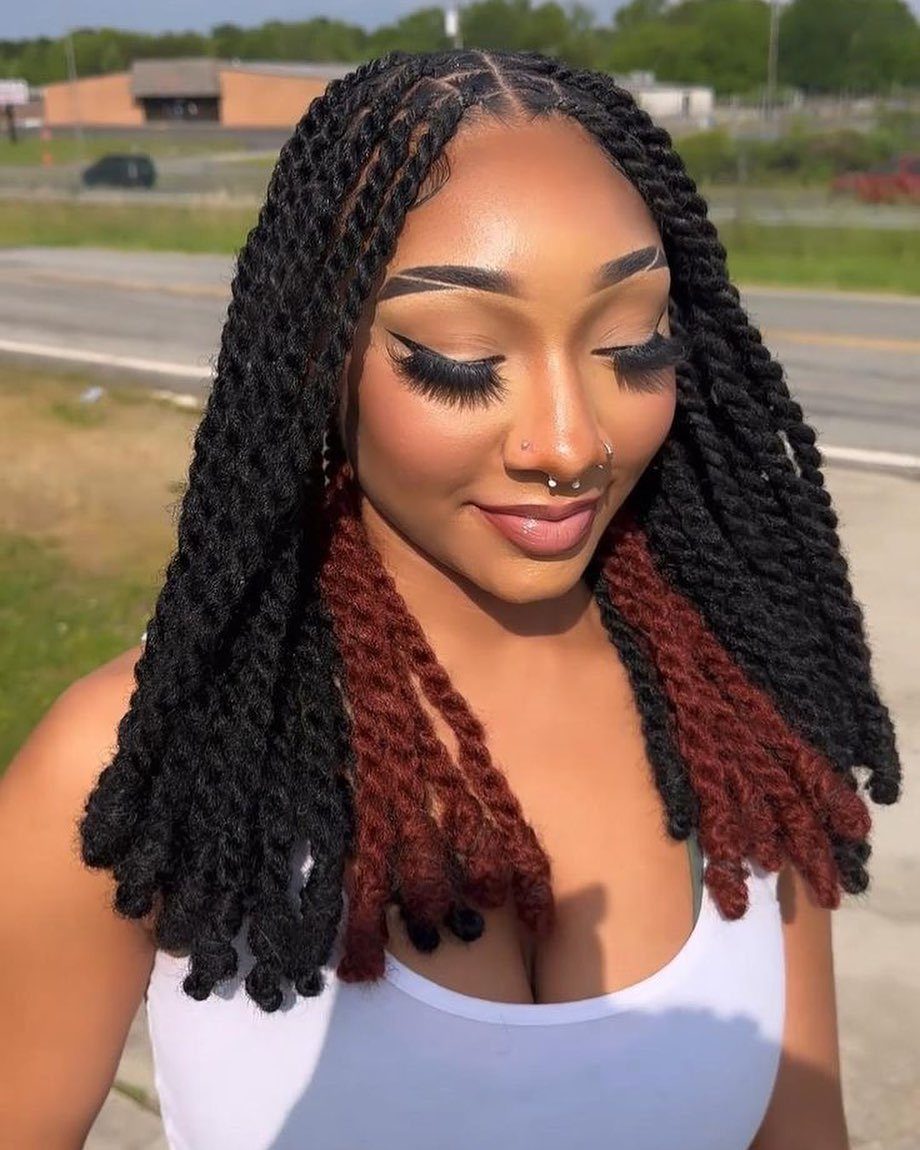
The twists stop at collarbone length, which gives the shape and swing of a bob without the commitment of cutting natural hair.
A long bob in Marley twists takes less time to install than waist-length twists. Fewer packs of hair are needed, often 3 to 4, and the shorter length means less weight on the scalp.
The ends can be trimmed straight across for a blunt edge or left slightly uneven for a lived-in finish. The style grows out gracefully because the length stays manageable.
13. Chunky Shoulder-Length Twists
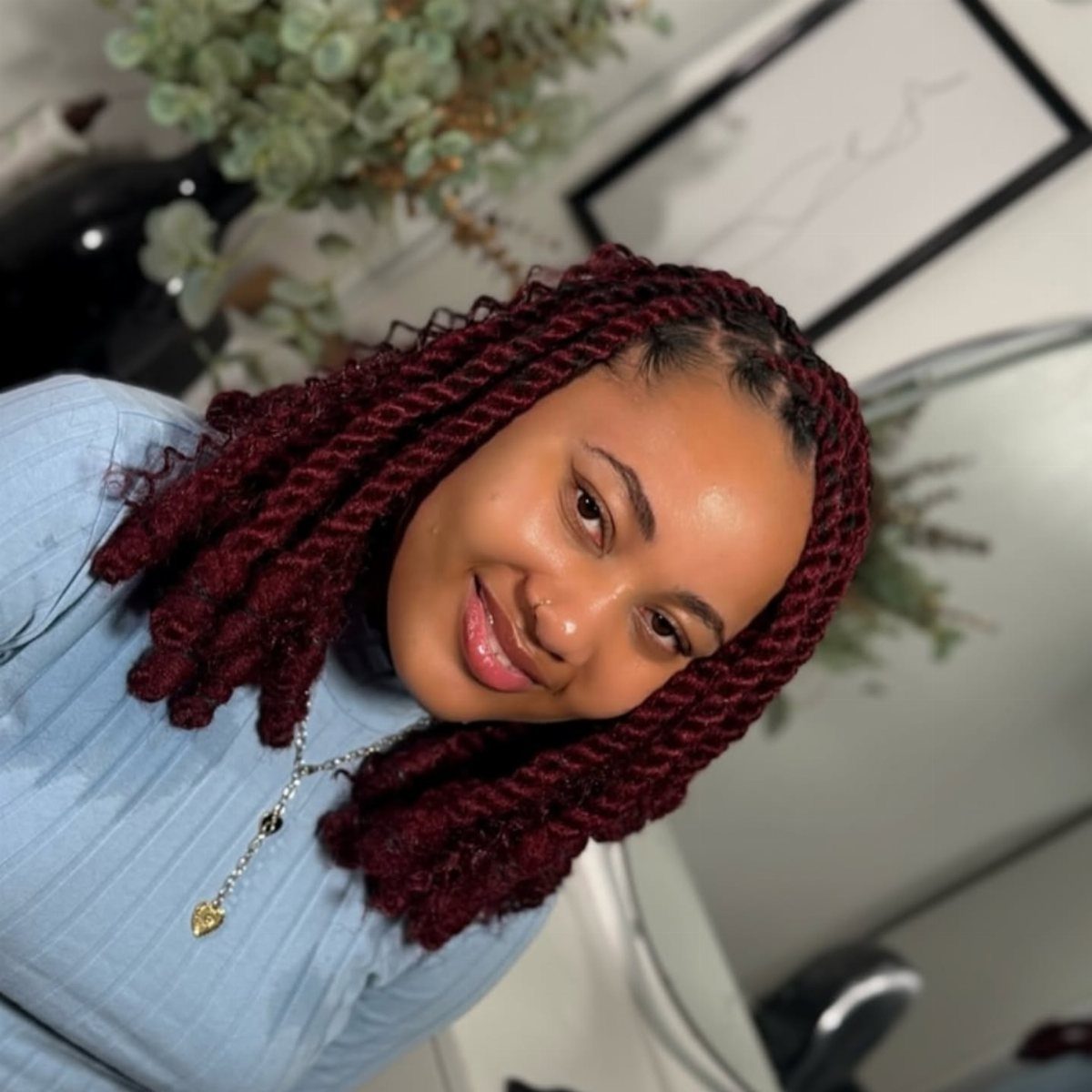
Chunky shoulder-length twists stop just below the collarbone and use wider sections at the root, which makes each twist thicker and the overall look fuller.
The width cuts install time because fewer twists are needed. Most braiders finish in several hours, depending on how many rows are put in.
The length keeps the weight comfortable and makes styling easier. A high bun, side part or half-up style takes minutes, and the twists don’t tangle as much at night as longer ones do.
14. Two-Tone Twists
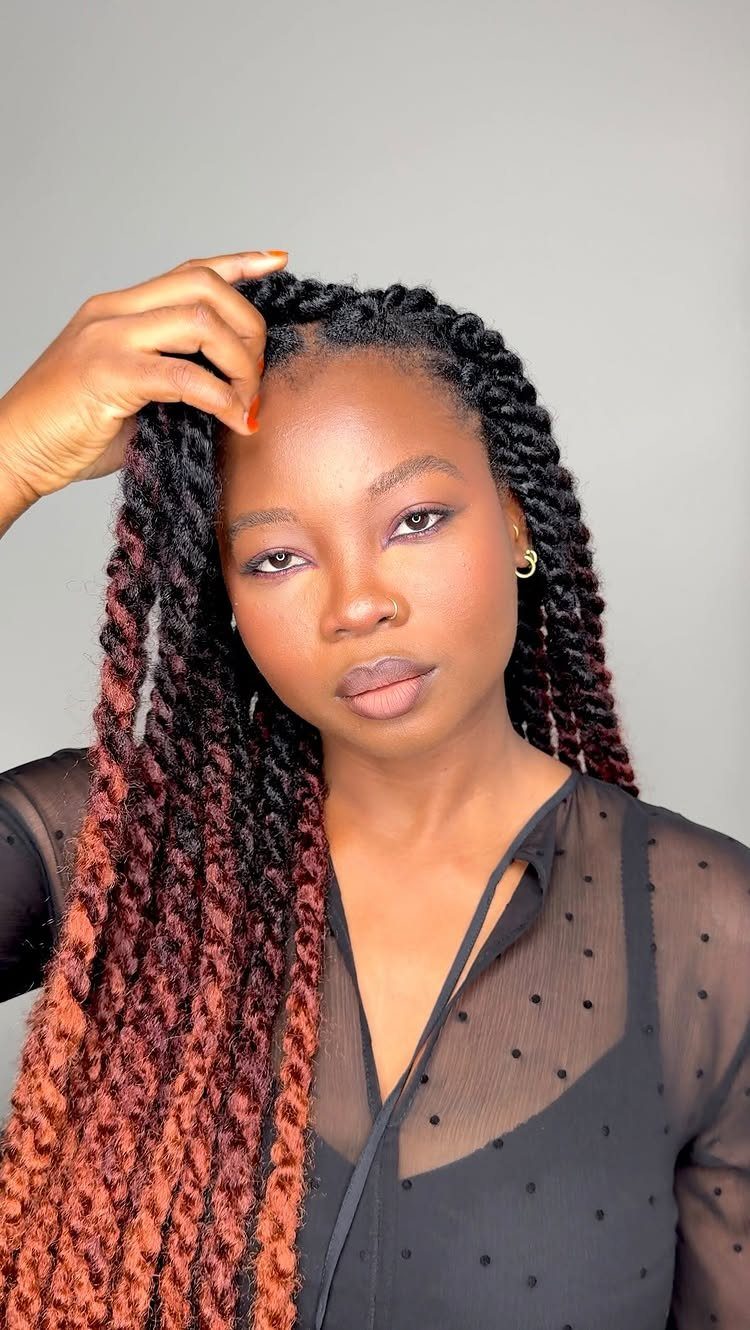
Each twist blends 2 colors of Marley hair, often a dark base paired with a warmer or lighter tone.
The colors twist together as the hair is installed, so both shades show along the length. Black and copper, brown and burgundy, or dark brown and honey are common pairs.
Buy one pack of each color for even distribution. For a base that reads darker, use more of one color than the other.
15. Bohemian Bob
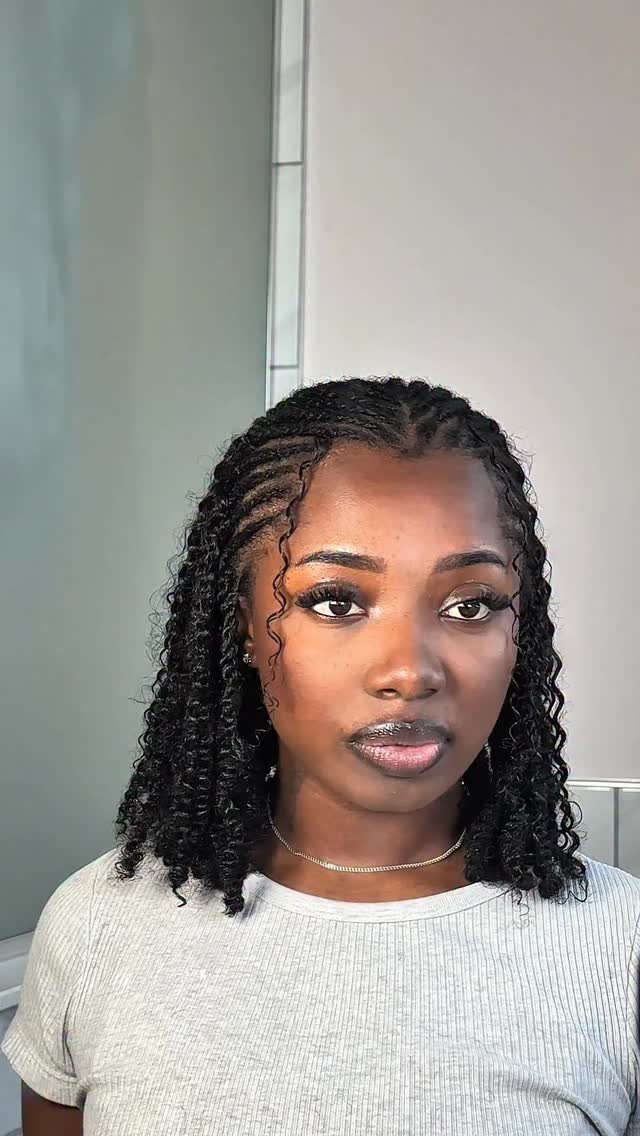
Bob-length twists with loose, curly ends that fluff out instead of lying flat give a softer, less uniform finish than traditional Marley twists.
The frizz and texture are intentional, so the roots don’t need to be as precise during install.
A side part or a few twists pinned back opens up the face without pulling the curls tight.
16. Triangle Partings
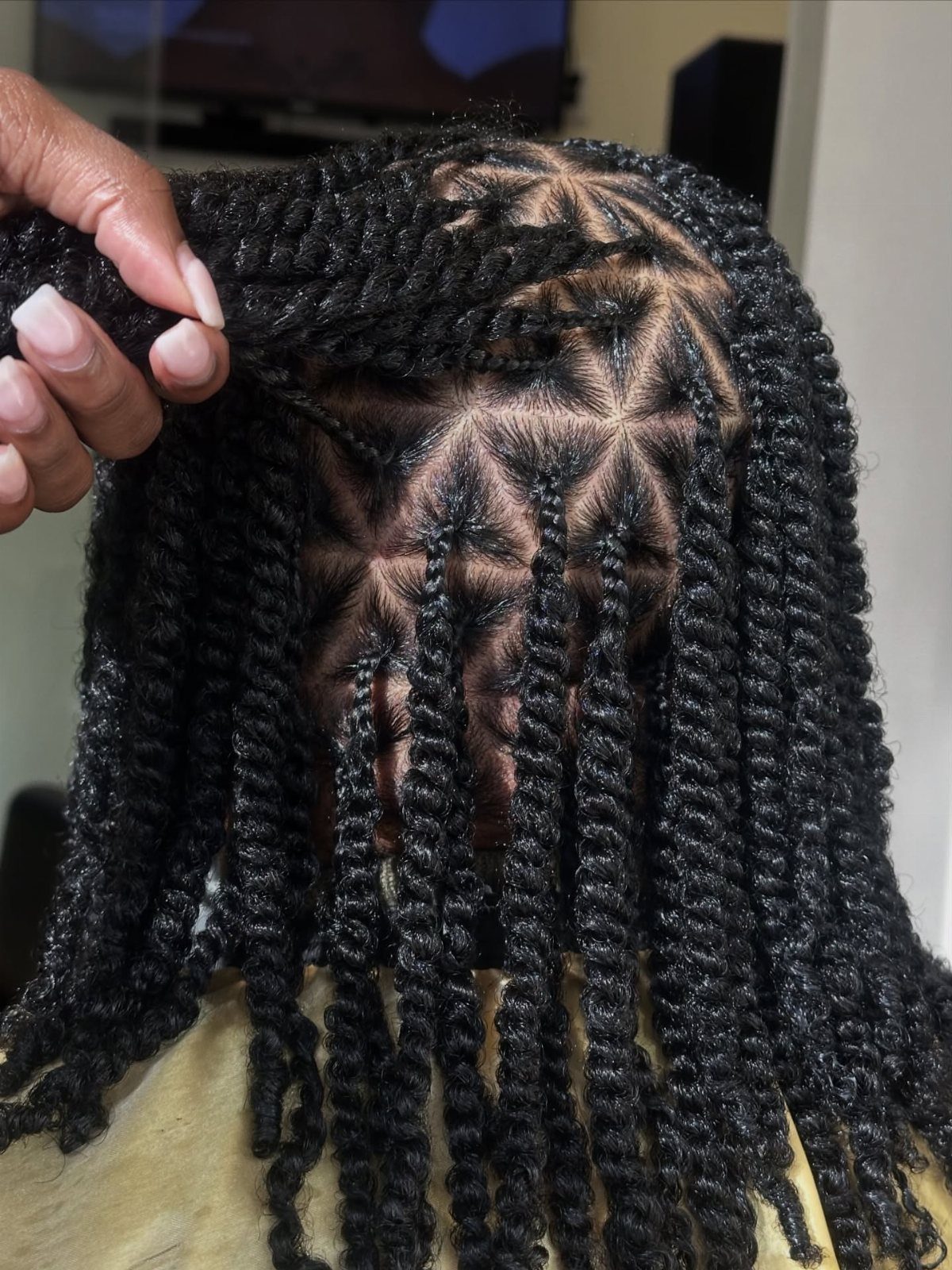
Sections are parted into triangles before the twists are installed, which creates a geometric pattern on the scalp.
The triangles can point in different directions or all face the same way. The cleaner the part, the more the pattern shows, so most braiders use a rattail comb and part on dry hair.
Triangle sections hold tension better than square ones because the shape tapers at the tip, which can help the twist stay tight longer. The pattern is most visible at the crown and near the hairline.
17. Sleek at the Roots
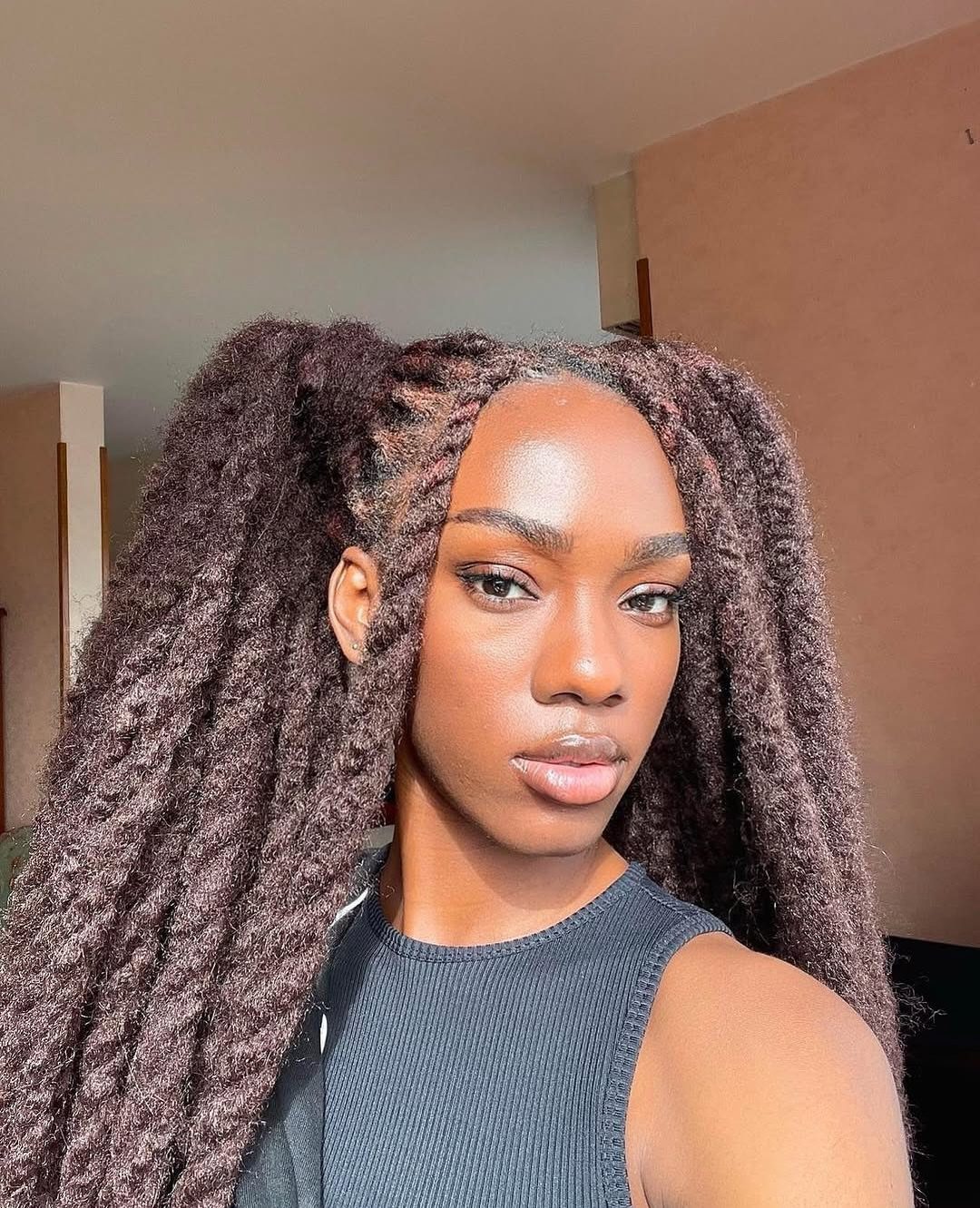
Twists that start tight and smooth near the scalp, then fluff into a softer, fuller texture toward the ends.
The sleekness at the root comes from using less hair in the first few inches and keeping the tension even.
Once the twist reaches ear level, more hair is fed in or the tension is eased, which lets the twist expand.
Gel or edge control smooths the roots during install. The sleek base and soft body make the twists look fuller without adding weight at the scalp.
18. Curly Ends
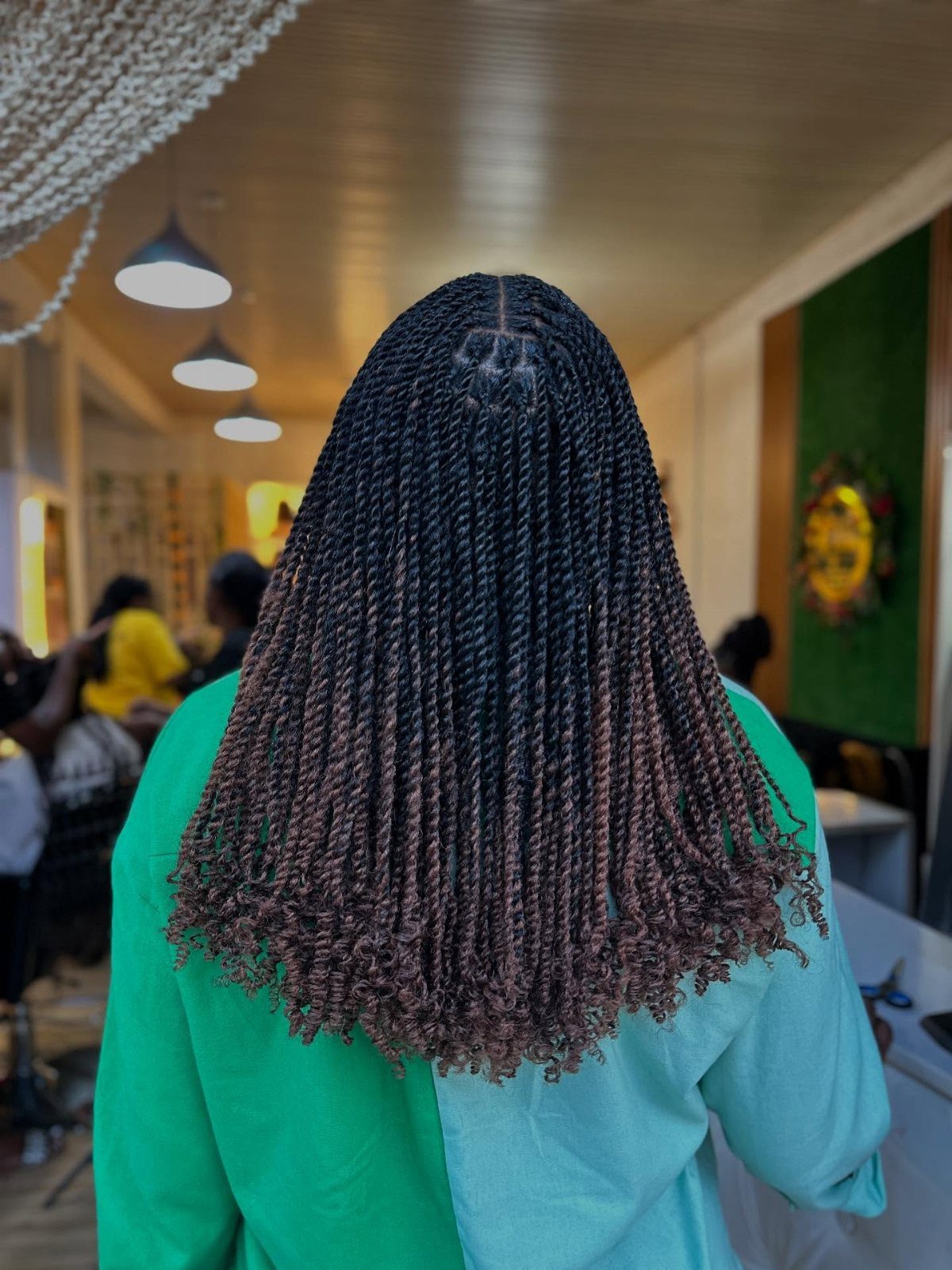
Tight ringlets form at the tips of each twist, giving a finished, polished look instead of blunt or tapered ends.
The curls are set by dipping the ends in hot water for a few seconds, just until the shape locks. A small rod or perm rod can be wrapped around the tip first for a tighter coil.
The curls bounce when you move and catch light, which adds dimension. If the curls loosen after a few weeks, re-dipping the ends in hot water resets them.
19. Long Large Twists
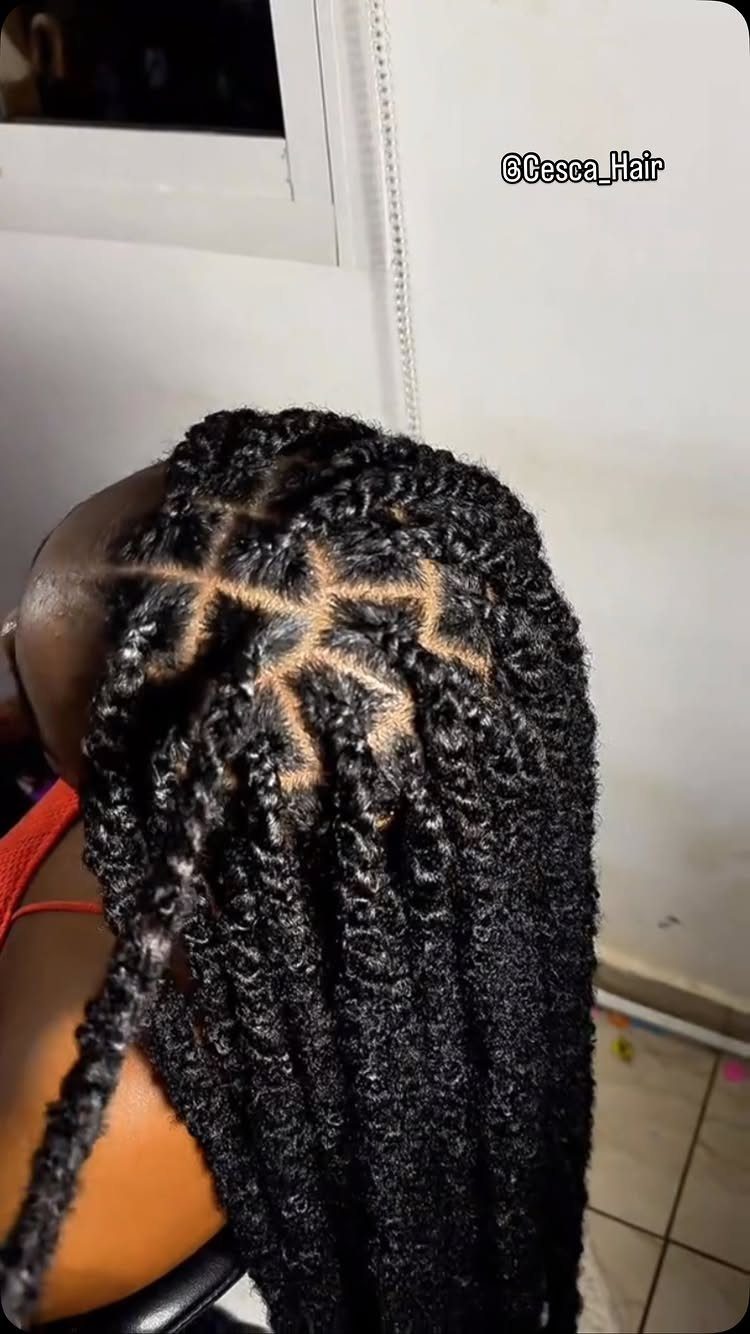
Large twists and length both read as statement pieces, and putting them together doubles down. Each twist takes up more space, so the overall shape is fuller and the movement is bolder.
The width means fewer twists total, which can cut install time by several hours compared to medium or small twists.
The length adds weight, so most people sleep in a bonnet to protect the ends and keep the twists from matting overnight.
A side part or high ponytail shows off the thickness and lets the length fall cleanly.
20. Chocolate Brown Chunky Twists
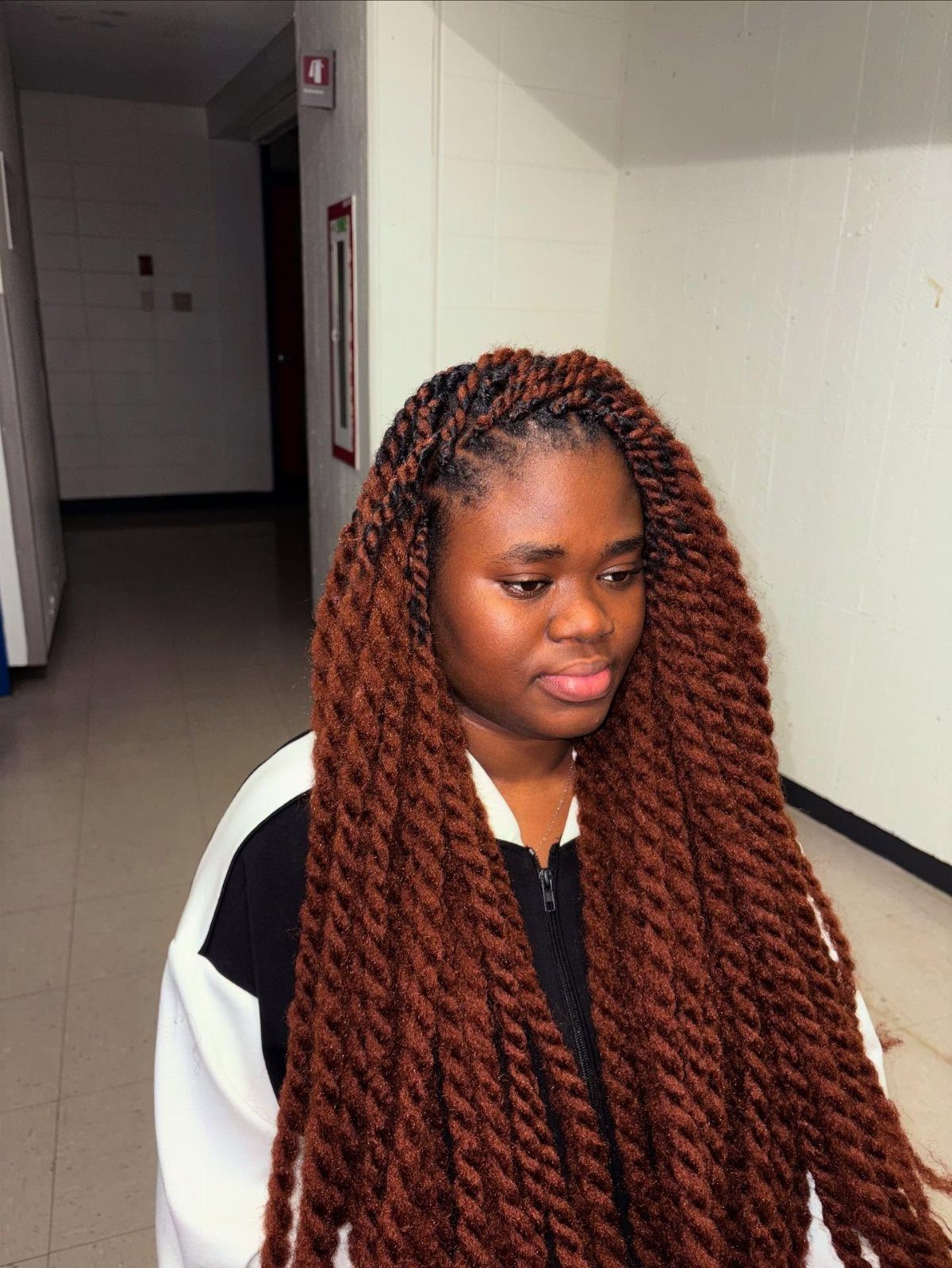
A warm chocolate-brown tone softens the look without going red or burgundy. The color reads natural and pairs well with most skin tones.
Chunky sections make each twist thicker, which gives the style volume and cuts install time. The brown tone is widely stocked in Marley hair, so finding a match is straightforward.
The color shows dimension in sunlight, which brings out the texture of the twist. If you want a subtler shift from black, chocolate brown is the middle step.
21. Jumbo Marley Twists
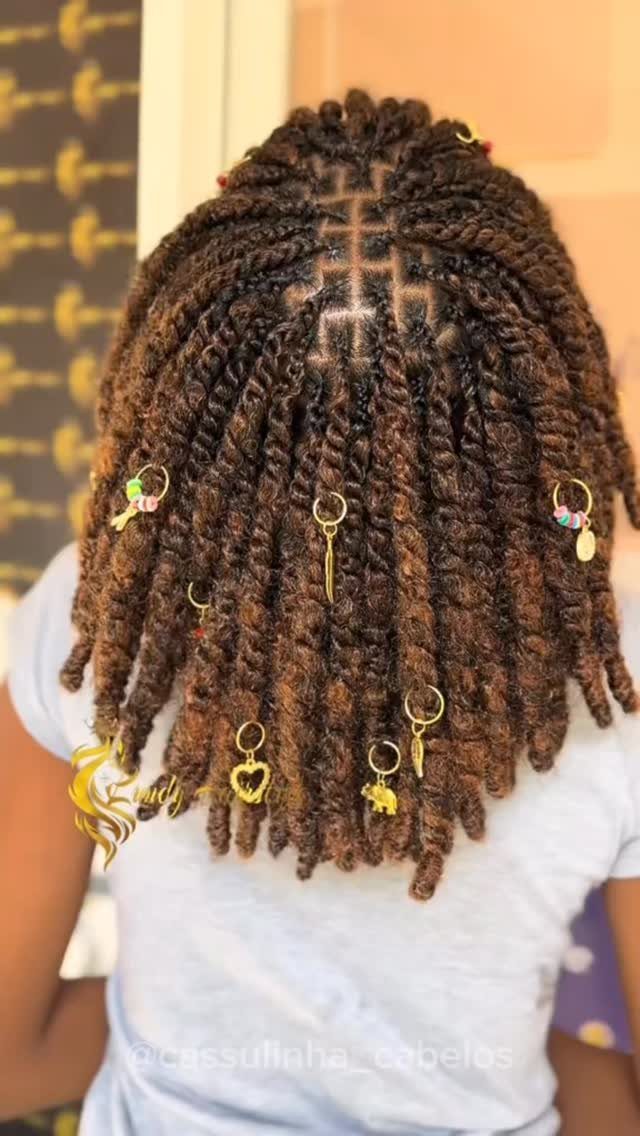
Jumbo twists use the widest sections, so each twist is thick from root to tip and the overall look is bold and full.
Fewer twists mean faster install, often finishing in a few hours. The thickness also means less Marley hair is needed per twist, though the large sections require careful tension at the root to keep the twist from slipping.
Gold rings or charms can be threaded onto individual twists for accent. The size makes jumbo twists a standout style, and the weight is lighter than it looks because there are fewer twists pulling on the scalp.
22. Medium Marley Twists
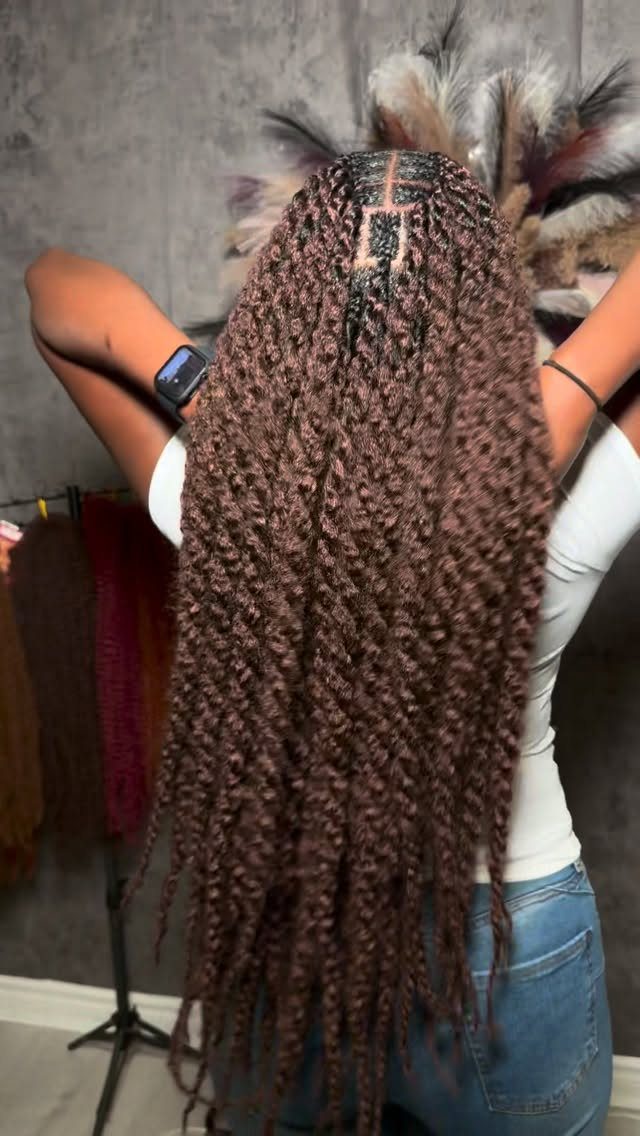
Medium twists sit between small and chunky, which balances install time with density. Each twist is visible on its own but not so thick that the style reads as sparse.
The size gives flexibility in styling. Twists can be gathered into a ponytail, bun or half-up without the bulk of jumbo twists or the time commitment of small ones.
The width holds up well over several weeks and re-twisting the roots extends wear time without a full reinstall.
23. Blond Marley Twists
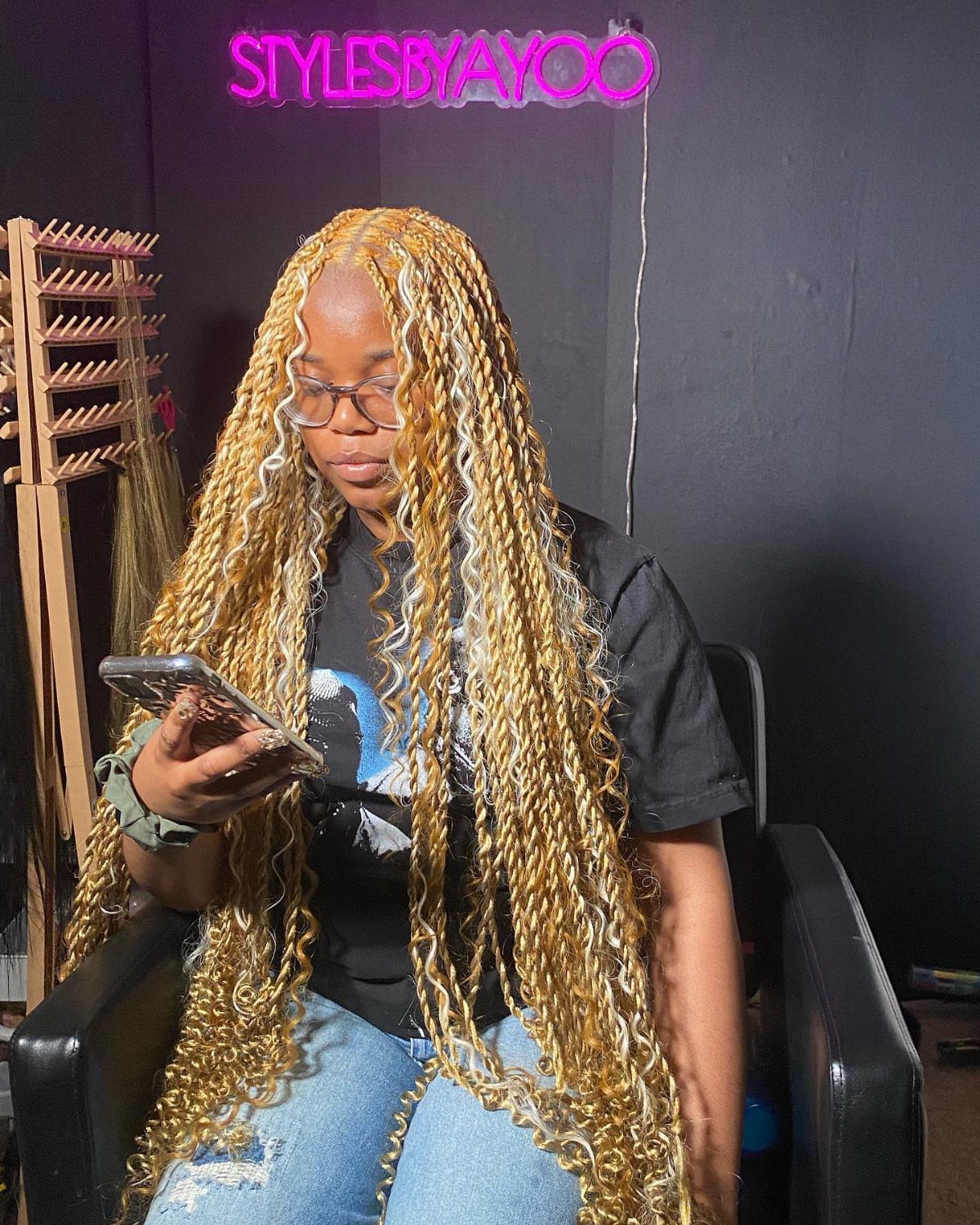
Bright blond Marley hair gives high contrast without bleach or permanent dye. The color is the focal point, so the style stays simple and lets the blond do the work.
Blond extensions work best when the natural hair is dark, because the contrast makes the twists stand out. The color doesn’t fade the way bleached hair does, so the blond stays consistent for the full wear period.
If you want warmth, honey or golden blond tones are softer than platinum. The bright finish catches light and photographs well.
24. Freeform Parts
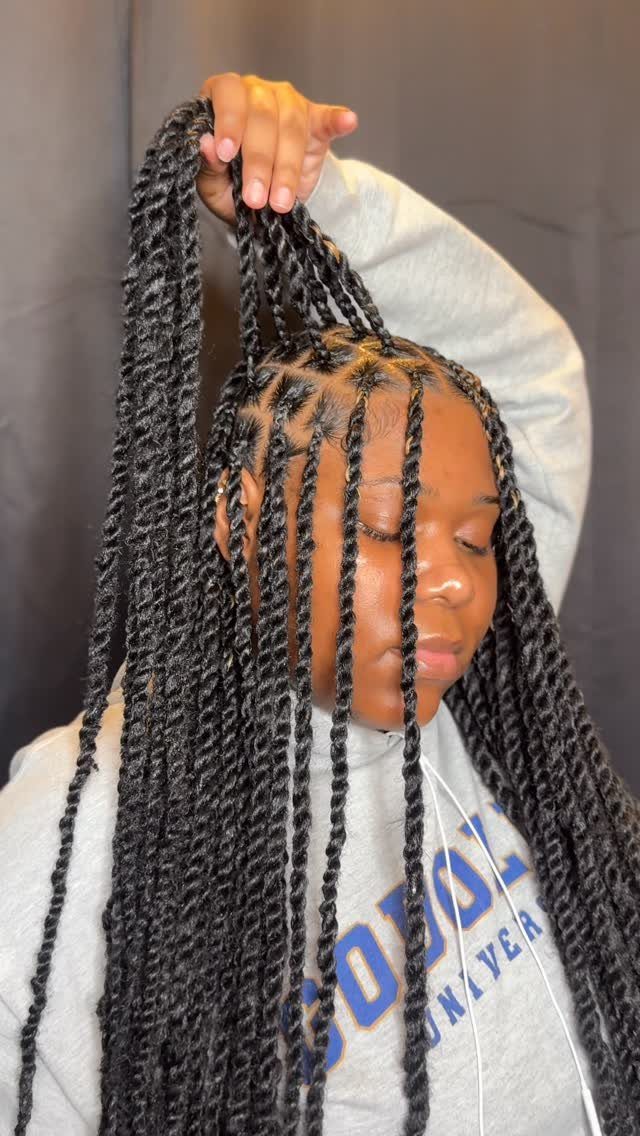
Sections are parted without repeating one shape or following a grid, so the pattern on the scalp is irregular and less geometric than triangle or square parts.
You skip the measured sections and move faster. Some sections might be wide, others narrow, and the angles shift as the braider moves across the head.
The varied parts give the twists a more relaxed, organic look at the roots.
If you prefer structure, stick with uniform triangles or squares, but freeform works when you want the focus on the twists themselves rather than the part lines.
25. Red Marley Twists
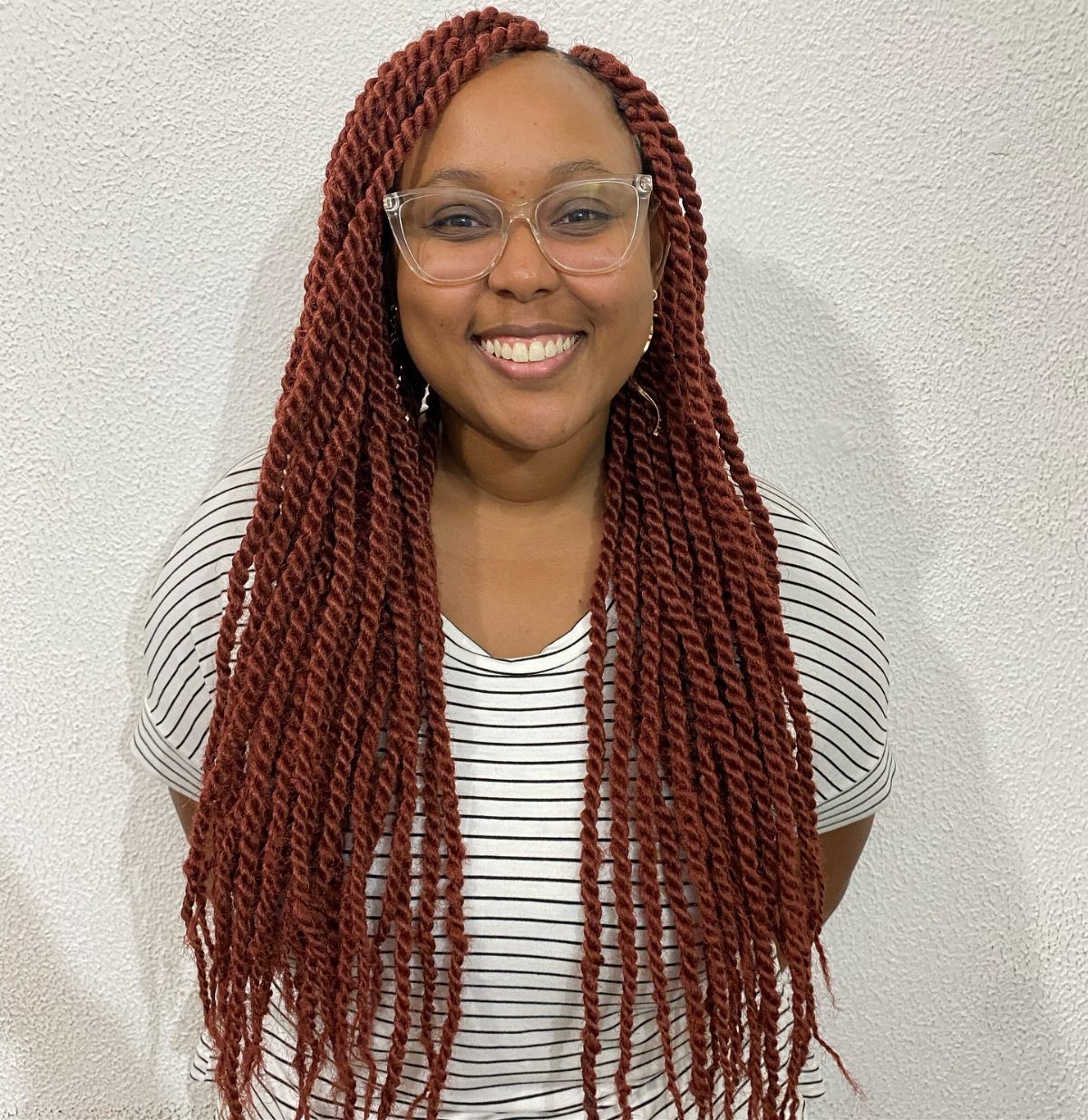
Deep red extensions shift the entire look without permanent color. The red reads as a full commitment to the shade, so the twists stay the centerpiece and other styling choices can be minimal.
Red Marley hair is stocked in most beauty supply stores, often in shades ranging from burgundy to bright cherry. The color stays consistent through the full wear period because the extension itself holds the tone.
A side part or pulled-back section shows off the color at the roots. The red photographs with high contrast and stands out in natural light.
26. Marley Twists with Hair Charms
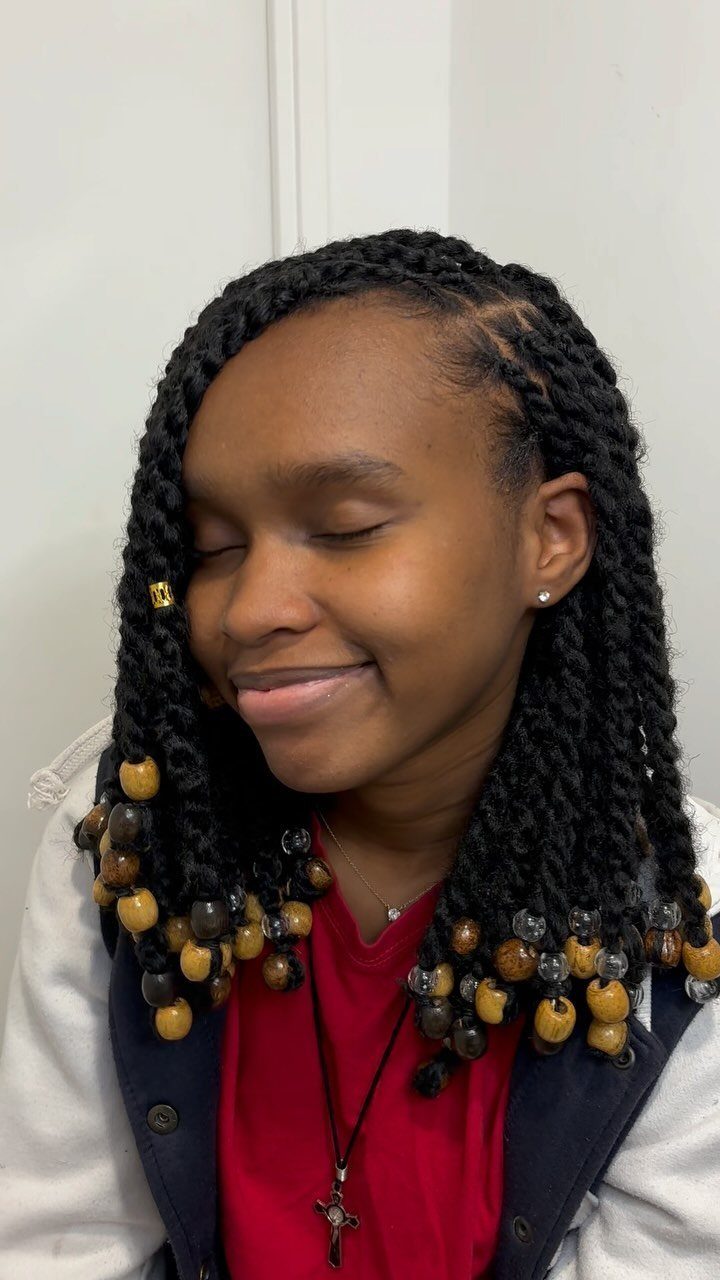
Metal or acrylic charms slide onto individual twists and stay in place without glue or ties. The charms catch light and add detail without changing the twist itself.
Gold rings, amber beads or clear cuffs work well because they contrast with the hair. Charms can be clustered near the face or scattered through the length.
Most charms have an open side that snaps or slides closed around the twist.
If a charm is too loose, move it to a thicker section. The charms come off without damaging the twist, so switching them out takes seconds.
Definition and Extension Texture
The fiber holds a coil that matches type-four texture, so the braid sits among your own hair instead of announcing itself as synthetic.
The synthetic fiber holds the twist shape without heat and adds density without weight.
You’ll also hear them called kinky twists, after the coiled fiber rather than the method. The terms overlap, and both describe the same two-strand method with the same fiber type.
Wear Time and Maintenance
Marley twists last 6 to 8 weeks if you keep them clean and protect them at night. Wear time depends on how often you wash, how much tension was used during install, and how much your natural hair grows underneath.
A silk pillowcase works if you skip the bonnet, but wrapping the hair holds the shape better.
Wash while the twists are in to remove buildup from scalp oil and product. A diluted shampoo in a spray bottle or applicator bottle lets you reach the scalp without disturbing the twists.
Keep your scalp comfortable by misting the parts with diluted leave-in or a mix of water and light oil. Keeping twists past 8 weeks increases the chance of matting and makes removal harder.
Frequently Asked Questions
What hair is best for a Marley twist?
Marley hair, a thick synthetic fiber with a kinky coil that mimics type-four texture, works best because it blends with natural hair instead of sitting apart from it.
How much does Marley twist hair cost?
You can pick up Marley hair at most beauty supply stores. For shoulder-length twists you’ll need 3 to 4 packs, and longer or thicker styles may require 6 to 8 packs depending on the twist size and how much hair you use per section.
What’s the difference between a Marley and Senegalese twist?
Marley twists use coarse, kinky Marley hair that mimics natural texture, while Senegalese twists use Kanekalon hair for a smoother, shinier finish. Senegalese twists are also smaller and look more polished, closer to relaxed hair than natural coils.