A 3A curl is a loose, springy ringlet about the width of a marker or 2 fingers, sitting between the bend of a 2C wave and the tighter corkscrew of 3B, and it keeps its form with very little help.
The single thing that decides which routine or style works is whether your curls need weight lifted off or moisture locked in, and porosity tells you that before curl type does.
A pineapple ponytail before bed keeps ringlets from flattening overnight, diffuser drying cuts air-dry time in half, and a lob between the chin and collarbone keeps length from pulling the spiral straight.
1. Loose Bouncy Curls
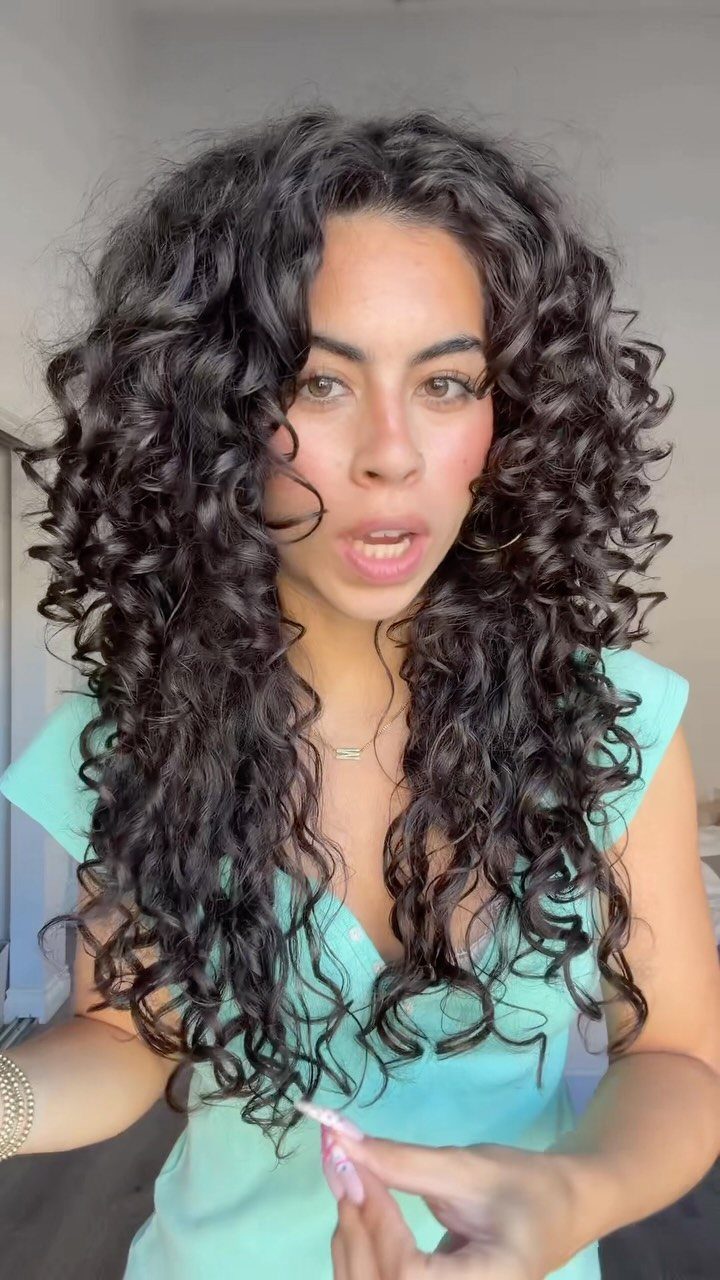
This is what 3A curls do when they’re left to their own devices: loose spirals that wrap around a marker or 2 fingers wide, with bounce that starts midshaft instead of at the root.
The pattern reads as ringlets with space between them, not a coily or tight spring. Getting this shape means products that clump curls without weighing them down: a gel or mousse that holds the spiral but leaves it soft.
Air drying works when you have time. If you’re rushing, a diffuser keeps the shape while cutting dry time in half.
2. Pineapple Ponytail
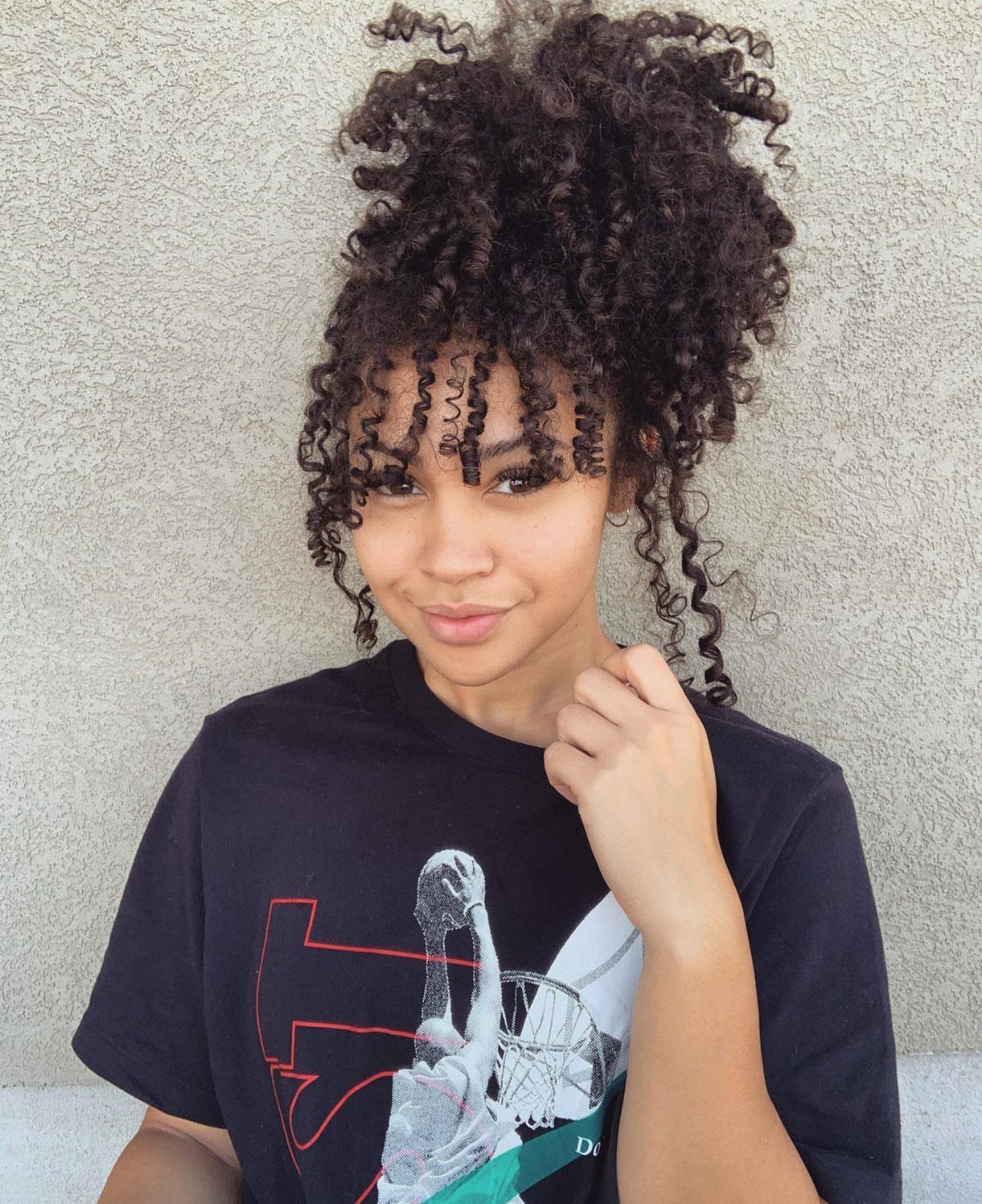
Gather your curls into a loose, high ponytail before bed, and the weight of your head won’t flatten them overnight.
The name comes from the shape: curls fountain out from a single point on top, like the leaves of a pineapple.
Use a silk or satin scrunchie so the elastic doesn’t leave a crease. Pull hair through only halfway on the last loop, leaving the ends tucked in a loose bun if length allows.
In the morning, flip your head forward, shake out the ponytail, and the curls fall back with most of their definition intact.
3. Diffuser Drying
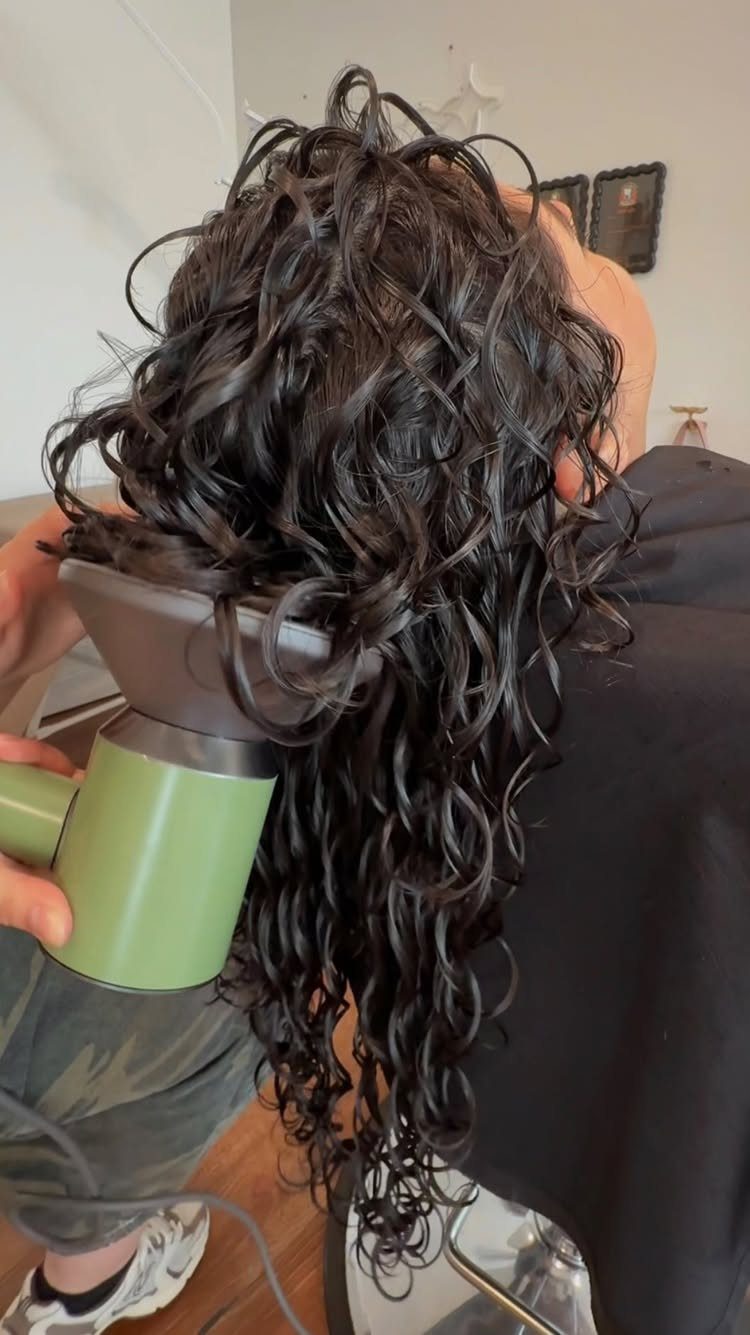
A diffuser spreads heat over a wider area and lifts curls up into the bowl instead of blowing them apart.
Cup a section of wet hair in the diffuser, hold it against your scalp until the roots feel warm, then release and move to the next section.
Keep the dryer on low or medium heat. High heat dries faster but leaves more frizz.
This method speeds up air-dry time and locks in the curl pattern set by your gel or cream while it’s still wet.
4. Short Curls with Scarf
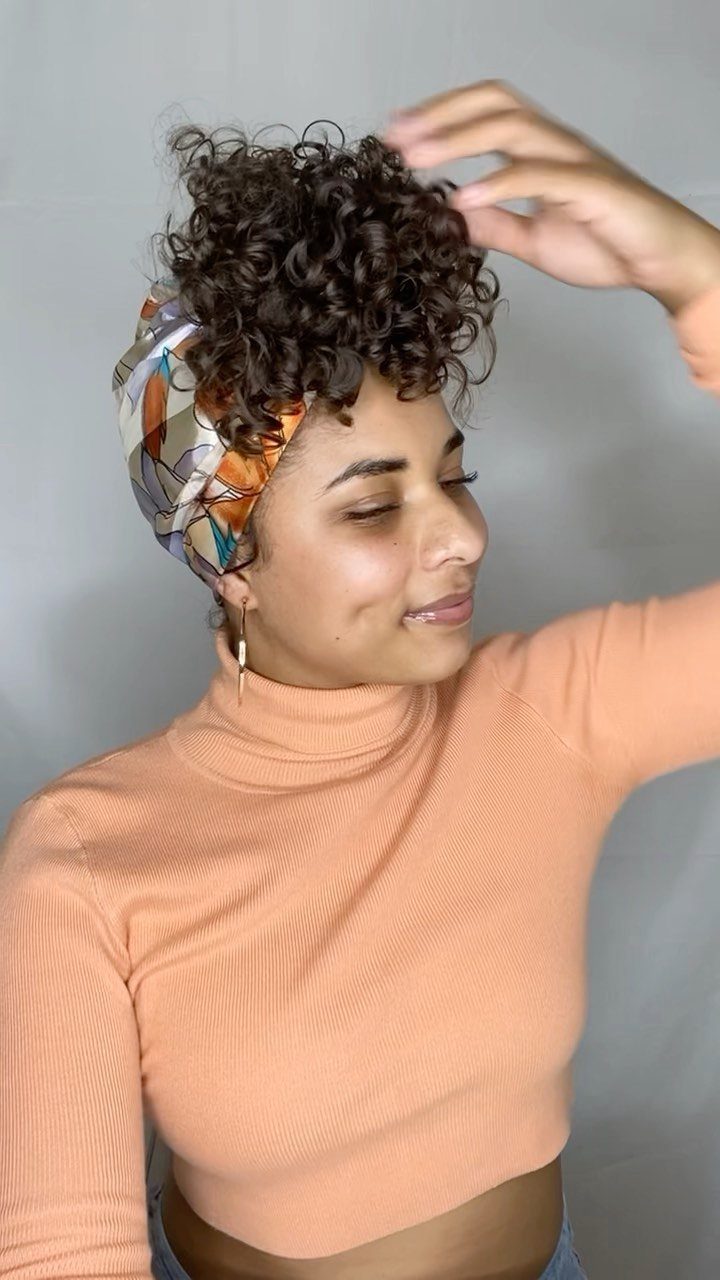
Short 3A curls hug the scalp, so adding height at the crown opens up the shape.
A patterned scarf wrapped around the hairline and tied at the top pushes volume upward and gives the face a border without covering the curls.
This works for a finished look in a hurry. The scarf hides roots that need washing or a hairline that’s grown out, and it holds curls off your forehead in humid weather.
Pick a scarf wide enough to cover from the forehead to behind the ears in one wrap.
5. Long Curls with Headband
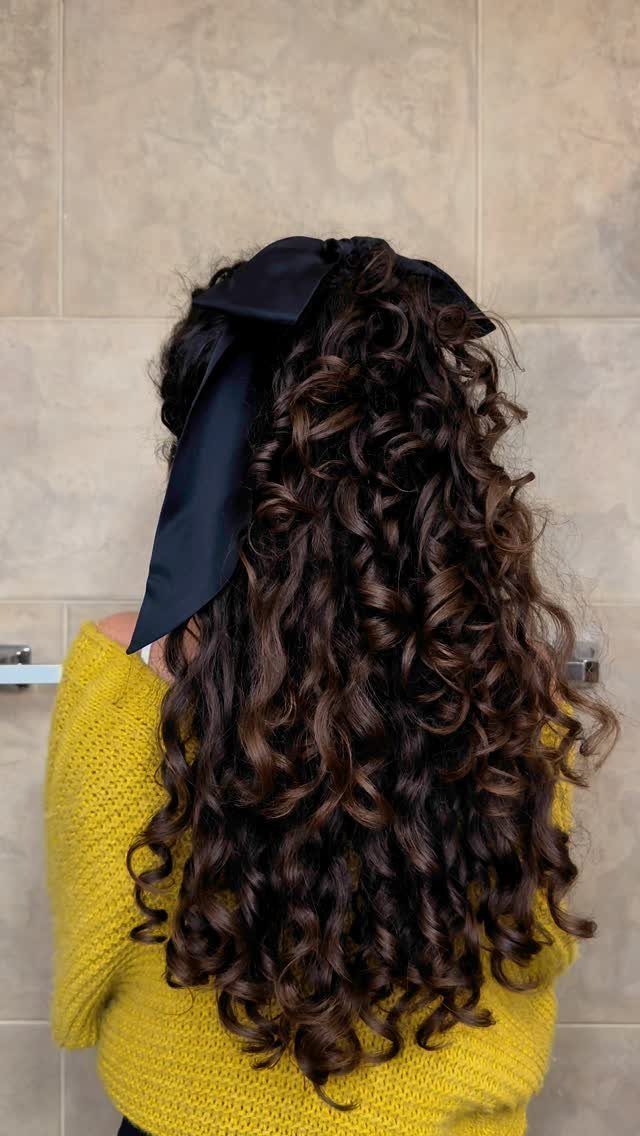
A wide fabric headband sits an inch or two back from the hairline and holds hair away from the face without flattening the curl pattern underneath.
This works when your curls are behaving but your roots are not, or when you need a quick reset between washes.
The width matters: narrow headbands dig in and leave a dent, while a band that’s 2 to 3 inches wide distributes pressure and stays put through the day.
Long 3A curls fall over the back without tangling in the band. Choose a color that contrasts with your hair so the accessory reads as part of the look, not an afterthought.
6. Curly Bangs
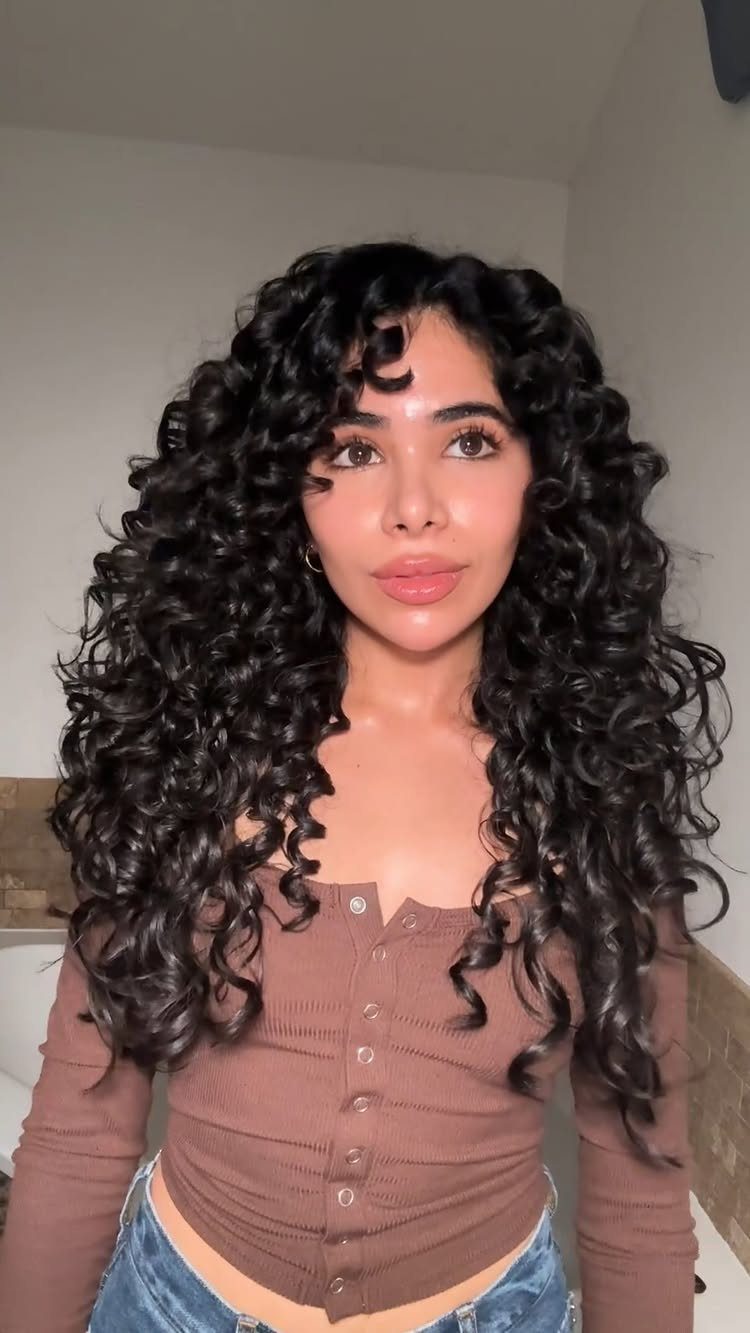
Bangs on 3A curls need enough length to spiral once or twice before they reach the brow, which usually means cutting them longer than their landing spot.
Dry curls shrink up, and a blunt cut at eyebrow length will spring back to mid-forehead.
Ask for a dry cut so your stylist can see how each ringlet falls. Bangs should blend into the curls framing your face, not sit as a separate shelf across your forehead.
Between cuts, pin them back or twist them into your other layers on days they won’t cooperate.
7. Half-Up Curly Hair
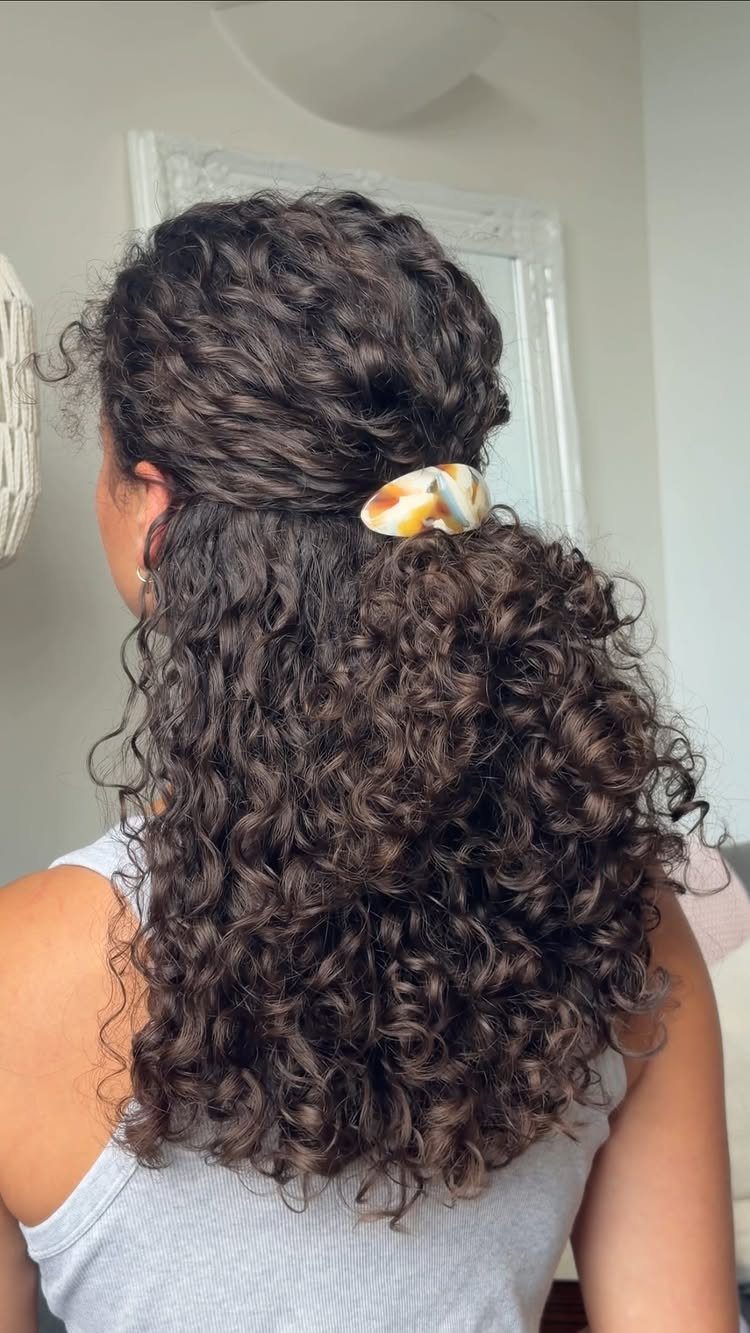
Clipping the top half back leaves length and movement down your back while keeping curls off your face. This suits 3A curls that have enough body to hold a clip without sliding out by lunch.
A claw clip or wide barrette grabs more hair than a bobby pin and spreads the grip so individual ringlets don’t crease.
Gather from temple to temple, twist once if the hair is thick, then clip at the crown or just below it.
The bottom half stays loose and shows the full curl pattern.
8. Highlighted Curly Lob
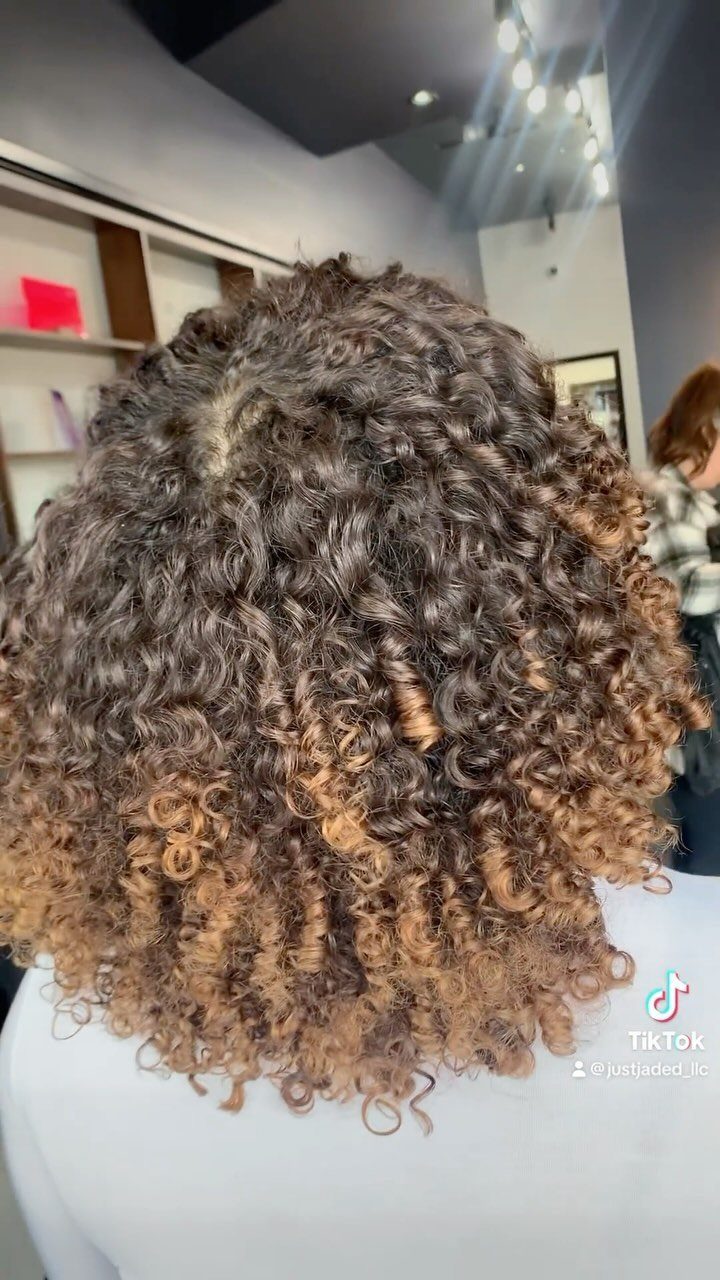
Color at the ends draws the eye down the length of the curl and shows off the spiral. A lob cuts curls between the chin and collarbone, short enough that the shape doesn’t pull itself straight under its own weight.
Caramel tones lift brown hair without bleach damage that roughens the cuticle. Ask for balayage or a melt so the transition reads as one shade flowing into another, not a stripe where the color starts.
Refresh the ends regularly as the curl grows out.
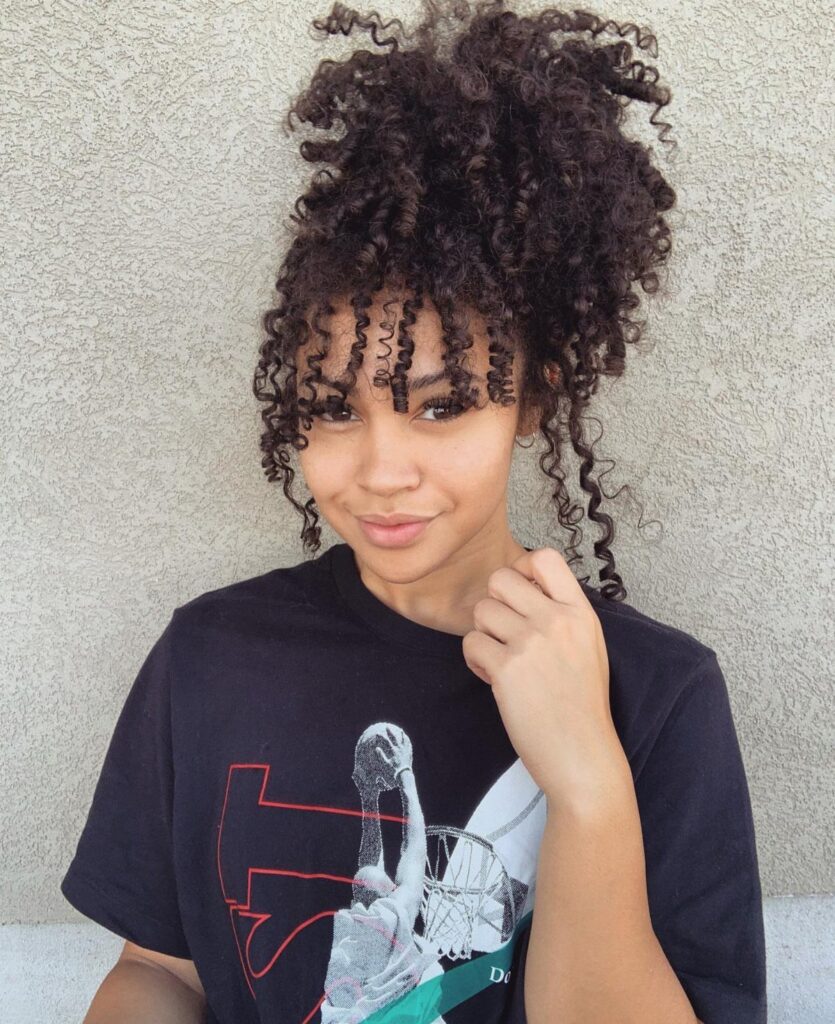
9. Curly High Puff
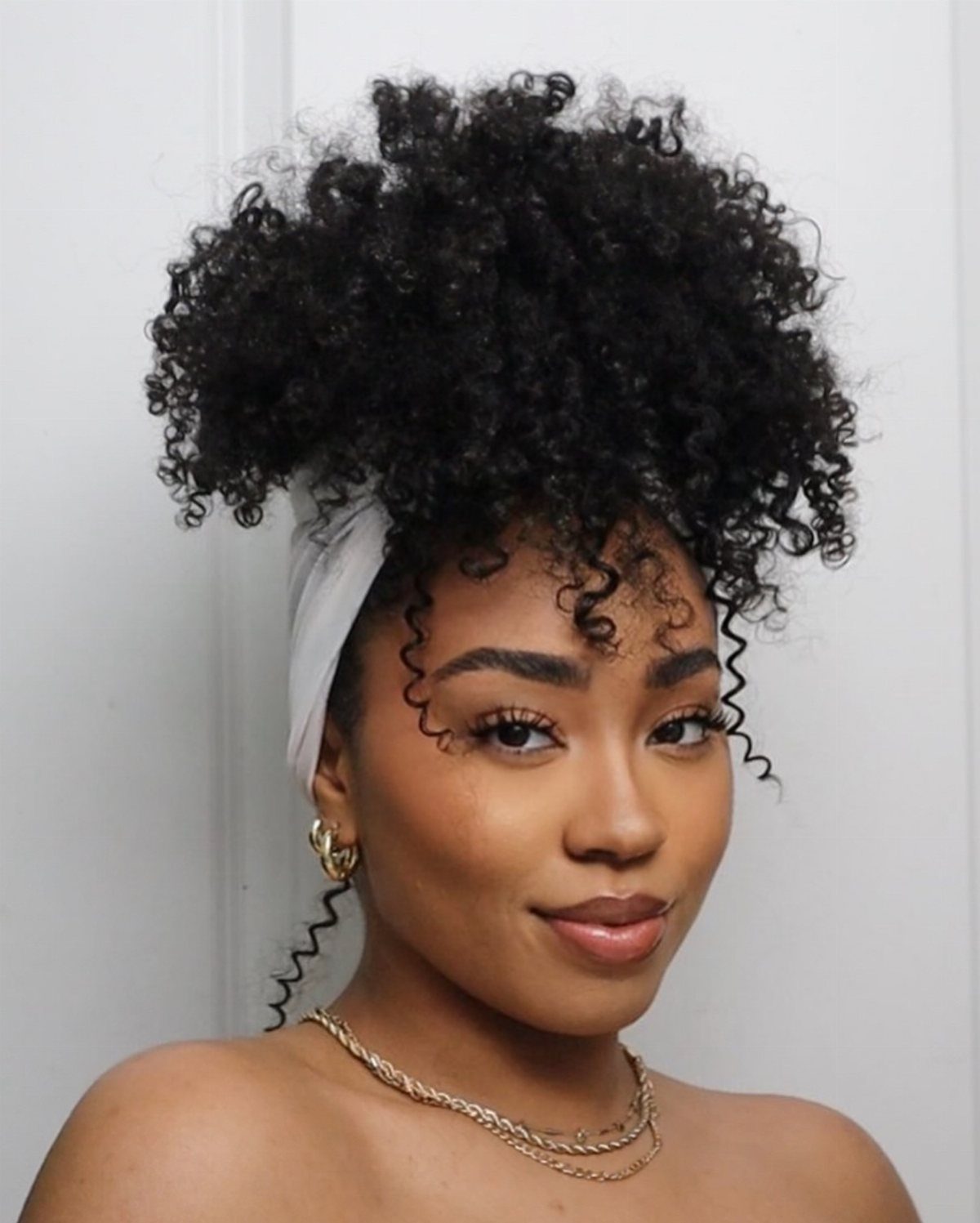
Gather curls into a high ponytail but skip pulling the ends all the way through on the last loop.
The result is a rounded puff of curls that sits on top of your head, with ringlets left out around the hairline for framing.
A headband pushes the accessory further and covers the elastic. Tilt the puff slightly forward if your curls are heavy so the shape doesn’t flatten against your scalp by afternoon.
This works when second-day curls still have definition but the roots need a lift.
10. Wet Curl Definition
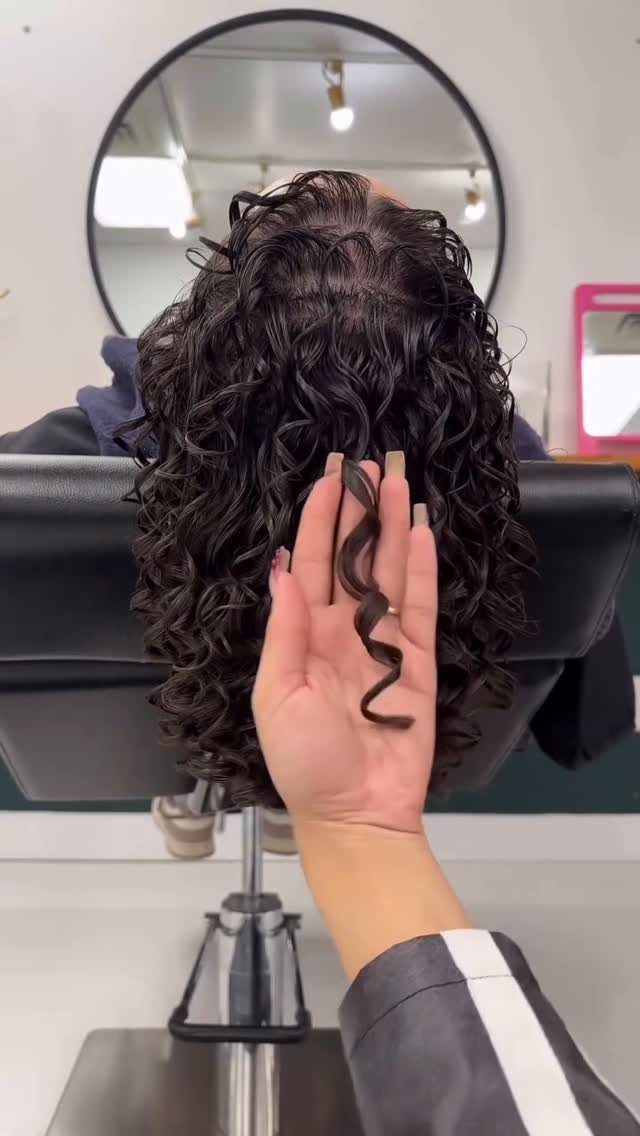
Wet hair can read differently from dry, since the weight of the water may pull a curl into a loose S-wave until it dries and the pattern settles.
Applying gel or mousse to soaking-wet curls, then scrunching each section, locks in that spiral while water is still coating the strand.
The shine comes from product and moisture, not oil. Once the hair dries completely, scrunch again to break the gel cast and soften the curls without losing their shape.
This method gives the most definition but takes the longest to dry.
3A Curl Identification
Think of a spiral wound around a fat piece of chalk, loose enough to swing but tight enough that you spot the curl from across the room.
If you’re looking at wet hair, the curl may flatten into an S-wave until it dries, which is why you check on a normal day with nothing in it.
3A sits between 2C and 3B. A 2C wave stretches longer before it bends and tends to go limp by afternoon.
A 3B curl coils tighter, packs in closer, and shrinks more as it dries. 3A holds its shape without much coaxing, shines without extra product, and carries less frizz than the tighter patterns next to it.
Humidity, heat damage, and dryness all shift what the curl looks like, so you’re reading the pattern your hair makes on its own, not what it does under stress.
Porosity Affects Product Choice
Porosity tells you whether the cuticle lets moisture in and holds it there, and I’d choose products by porosity before I’d choose by curl type.
Low porosity holds the cuticle closed, which means product sits on the surface and weighs everything down.
High porosity opens the cuticle wide.
Moisture rushes in during the wash and evaporates by the next day, leaving the hair thirsty again. Richer moisturizers hold moisture longer and keep the strand from turning rough.
A porosity quiz points you to your type in a few questions, and it’s worth doing before you buy another bottle. Products made for straight hair often skip the moisture a type 3 curl needs.
Frequently Asked Questions
What are the characteristics of type 3A hair curls?
3A curls are loose, springy spirals about the width of sidewalk chalk, usually on fine-to-medium strands with natural volume.
They shine without much product and keep their shape with little coaxing. They can still frizz in humidity and lose definition by day two, and heavy products weigh them down.
Can you have both 2c and 3A curls?
Yes, it is possible, since curl pattern can vary across one head. Since 2C and 3A can look nearly the same, I judge each section on clean, dry hair with no product in it.
A 2C strand runs fairly straight before it bends into an S, while a 3A strand curls into a true spiral closer to the scalp.
What are the best shampoo and conditioners for 3A curly hair?
Pick sulfate-free, moisturizing formulas, applied mainly from the mid-lengths to the ends, and choose by porosity before curl type.
Low porosity hair does best with light products in small amounts, because a heavy cream just sits on the strand and pulls the curl down.
High porosity hair loses moisture fast, so a richer cream or butter helps it stay hydrated longer. Shampoos and conditioners made for straight hair tend to leave out the moisture that 3A curls depend on.
What oil is best for 3A hair?
It depends on porosity. High porosity hair does well with thicker oils like coconut and olive, while low porosity hair suits lightweight oils like argan and almond.
Take a porosity quiz first, since a heavy oil on low porosity hair just sits on top and weighs the curls down.
How do you avoid frizz and maintain curl definition?
Use hydrating, alcohol-free, curl-specific products, and avoid touching or brushing curls while they dry. A pineapple ponytail at night also keeps most of the definition by morning.
How do you maintain soft, bouncy curls without crunch?
Work gel or mousse in while the curls are still dripping, scrunch upward, then leave them alone until they dry.
When the hair is completely dry, scrunch it once more to crack the gel cast; that leaves soft curls with the spiral intact. A lightweight product with flexible hold leaves less crunch to begin with.
How to take care of 3A type hair?
Keep a simple cleanse, condition and style routine, with extra moisture and a weekly deep conditioner. If you diffuse, use low or medium heat, and protect curls overnight with silk or satin.