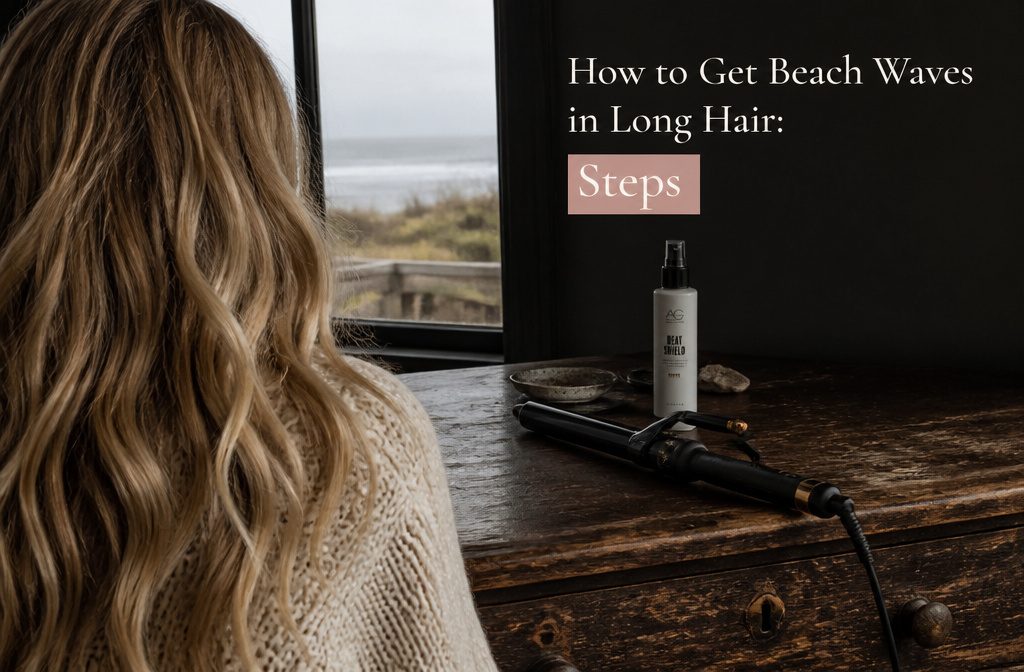
Loose, lived-in waves on long hair take a 1-inch curling iron, heat protectant and 1-inch sections.
The stage that undoes them is cooling: a curl pulled while still warm is gone by lunch, so leave each one alone until it feels completely cool.
1. Prep and Heat Protection
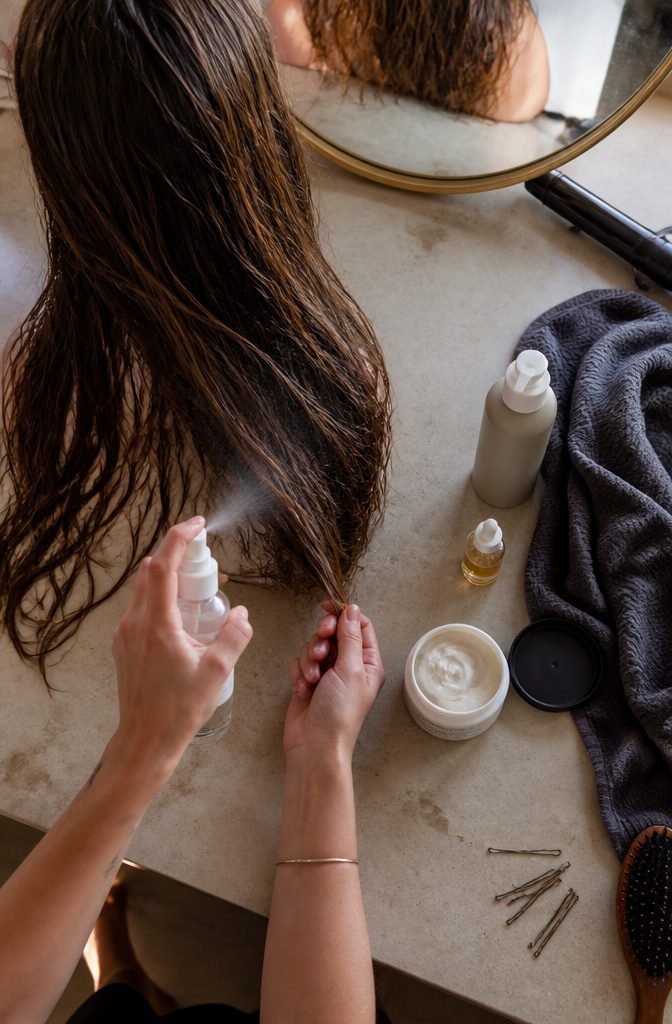
Heated methods start with clean, dry hair; heatless ones start towel-dried, blotted with a microfiber towel rather than rubbed or twisted. Products go on in this order:
- Heat protectant goes on first, a few spritzes before any tool touches your hair. Thick hair does better sectioned, with each layer sprayed.
- Leave-in conditioner or a little oil on the ends comes next, to smooth texture.
- Mousse goes on damp hair, root to ends. A golf-ball-sized amount covers shoulder-length hair, and I’d add more for long hair. L’Oréal Paris Advanced Hairstyle Boost It Volume Inject Mousse is designed for up to 24 hours of volume.
- ghd Curl Hold Spray waits for the finish, once the waves are formed.
2. Choose a Technique
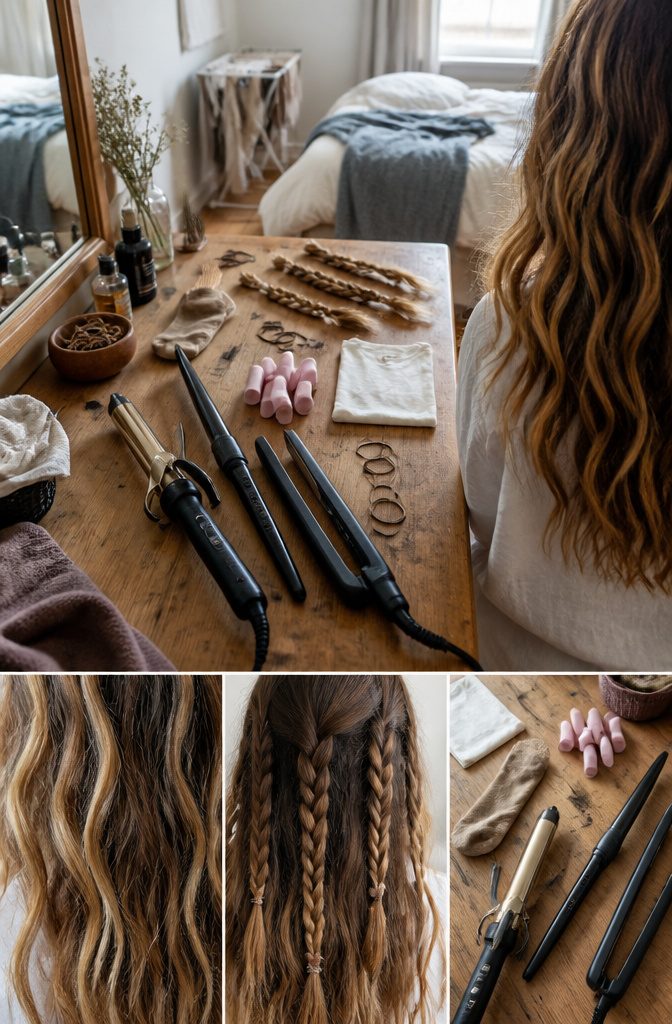
Nine routes get you there, and I’d reach for the iron first.
- Curling iron: a 1-inch barrel lets you control the result. Bigger sections give softer waves, smaller ones more definition. This is my first pick for long hair.
- Flat iron: the same technique once you know it, and nothing new to buy if you own one.
- Curling wand: more defined waves. Keep hair on it for 10 seconds at most.
- Overnight braids: 7–8 sections on hair about 75% dry, with no heat.
- Sock bun: cut the toe off a sock and wrap a high ponytail around it. It gives bigger, bouncier waves than braids.
- Heatless rollers: foam or fabric, and no styling skill needed.
- Plopping with scrunching: wrap hair in a cotton t-shirt or microfiber towel for 10–20 minutes. It suits hair that already waves.
3. Work in 1-Inch Sections
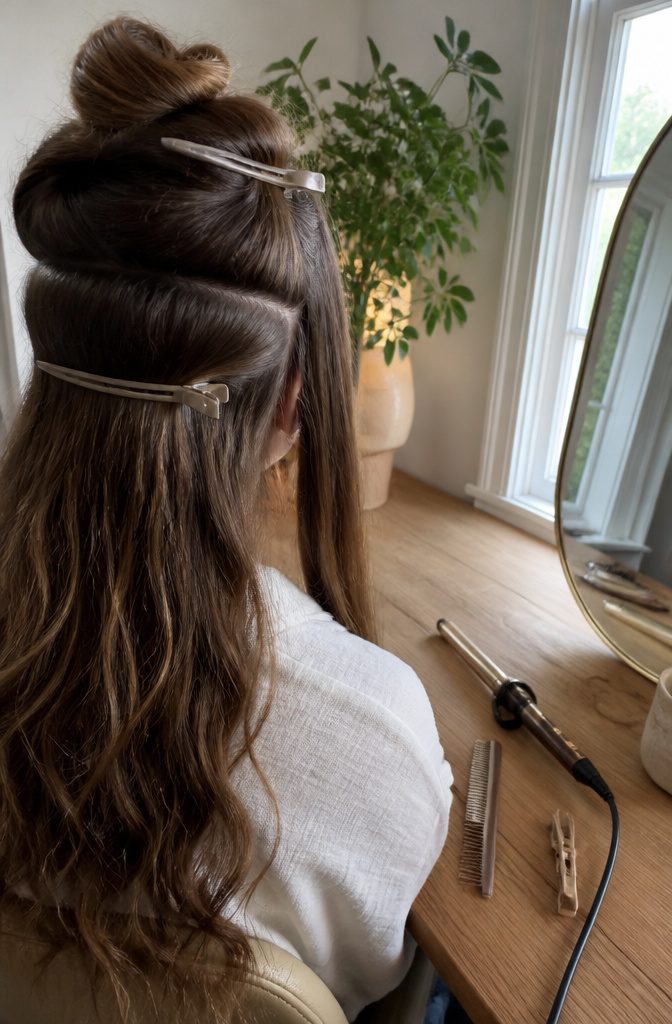
Thick hair needs 2–3 horizontal layers before any wave goes in; thinner hair may get by with 2. Clip the upper layers out of the way, work the bottom layer first, then let down the next one.
Within each layer, take 1-inch sections, starting with the hair nearest your ear. Bigger pieces give softer, less defined waves, and smaller pieces give more definition, so adjust to the look you want.
For heatless overnight braids, split damp hair into 7–8 sections instead. I’m firm about the layers: they keep every piece getting the same attention, so one side doesn’t end up wavy and the other limp.
4. Create the Wave
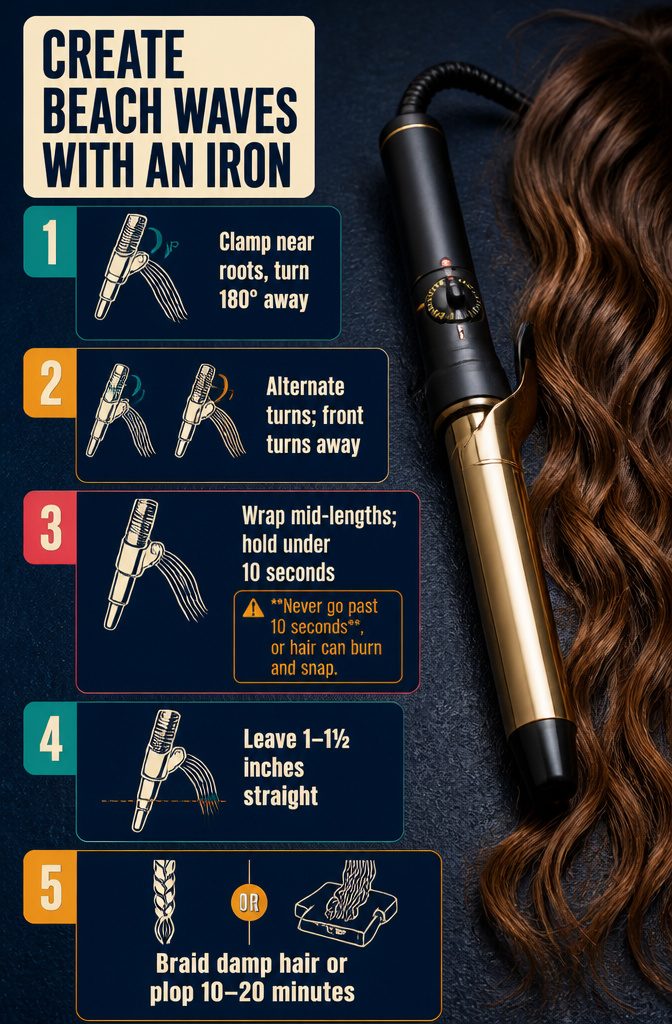
- Clamp a small section near the root and turn the iron 180° away from your face. Glide down slowly, keeping the twist.
- Alternate the turn direction on each new section. On the front two sections, turn away from your face both times so the waves open the face.
- With a wand, wrap mid-length to ends and hold a few seconds. Never go past 10 seconds, or hair can burn and snap.
- Leave the bottom 1–1½ inches out of the wrap, or keep the clamp closed and pull the iron straight down. The straight ends read as beachy, not curled.
- For no heat, braid, twist or roll damp hair. You can also scrunch in product and plop with a cotton t-shirt for 10–20 minutes.
5. Let Curls Cool Completely
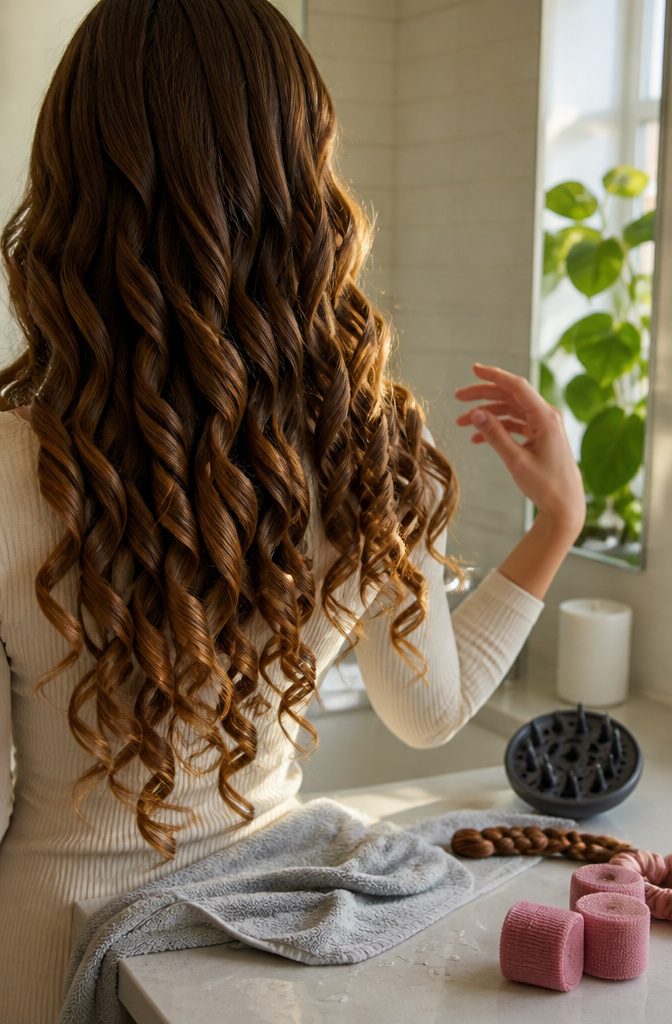
Heat-made curls set as they cool, so don’t touch them until they feel completely cool. Pulling at a warm curl is how waves disappear by lunch.
Heatless methods follow the same rule: braids, buns and rollers stay in until the hair is dry. Overnight braids work best with this timing:
It’s best to do this when your hair is 75% dry to help ensure the waves will last all day long, and you won’t wake up to wet or matted strands.
Braid at 75% dry and sleep finishes the job.
For natural waves, air-dry, or diffuse on low heat and low speed, lifting cupped sections toward your scalp. More heat won’t speed up the setting.
6. Loosen and Finish
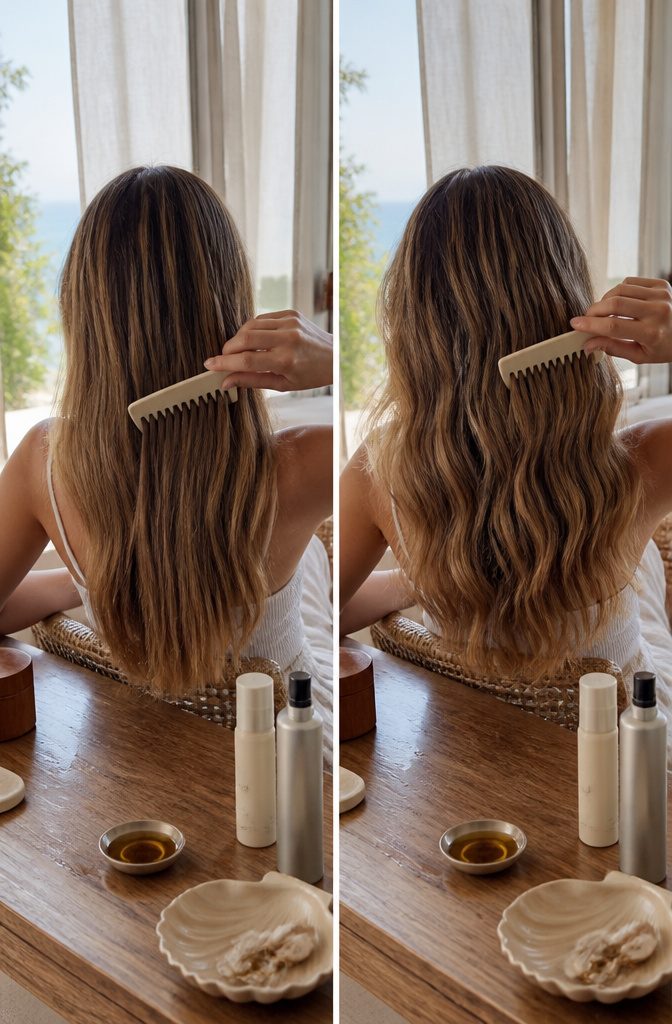
Straight from the iron or out of a braid, a curl is still too defined to read as a beach wave.
Break it up one section at a time with a wide-tooth comb or your fingers, and keep going until you have loose waves rather than defined curls.
Go gentler on hair that struggles to hold a curl, and finger through the roots for volume.
Braid-outs and twist-outs get the same treatment, and Reddit posters with curls suggest a finer-tooth comb. Shake it out.
Add texture spray where the hair looks too neat. Warm a few drops of oil, such as Mirah Hair Oil, in your palm, smooth it over the ends, then mist hairspray to hold.
7. Keep Waves Overnight
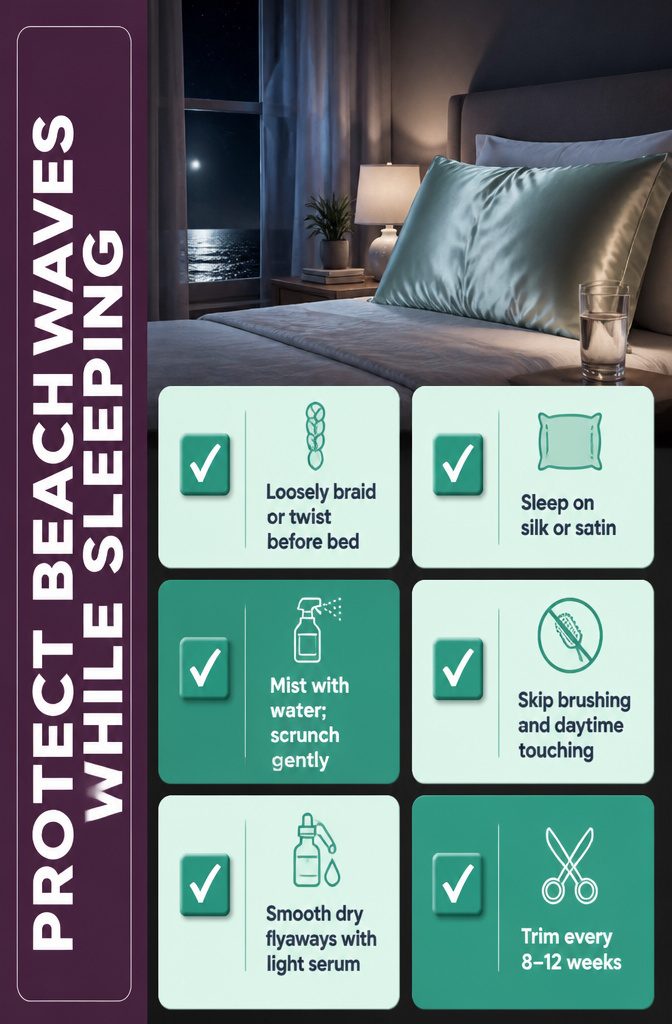
Long waves hold up better when the night is planned for them:
- Loosely braid your hair or twist it into a bun before bed to preserve the wave pattern.
- Sleep on a silk or satin pillowcase. Less friction means less frizz.
- In the morning, mist with water and scrunch gently rather than adding more product, which can weigh waves down.
- Skip brushing and touching during the day. Both break up the wave and raise frizz.
- Smooth flyaways with a light oil or serum on dry hair, one small amount at a time.
- Trim every 8–12 weeks to head off split ends. Waves can stretch toward 12, since the texture hides minor imperfections.
Straight, Wavy, or Curly Hair
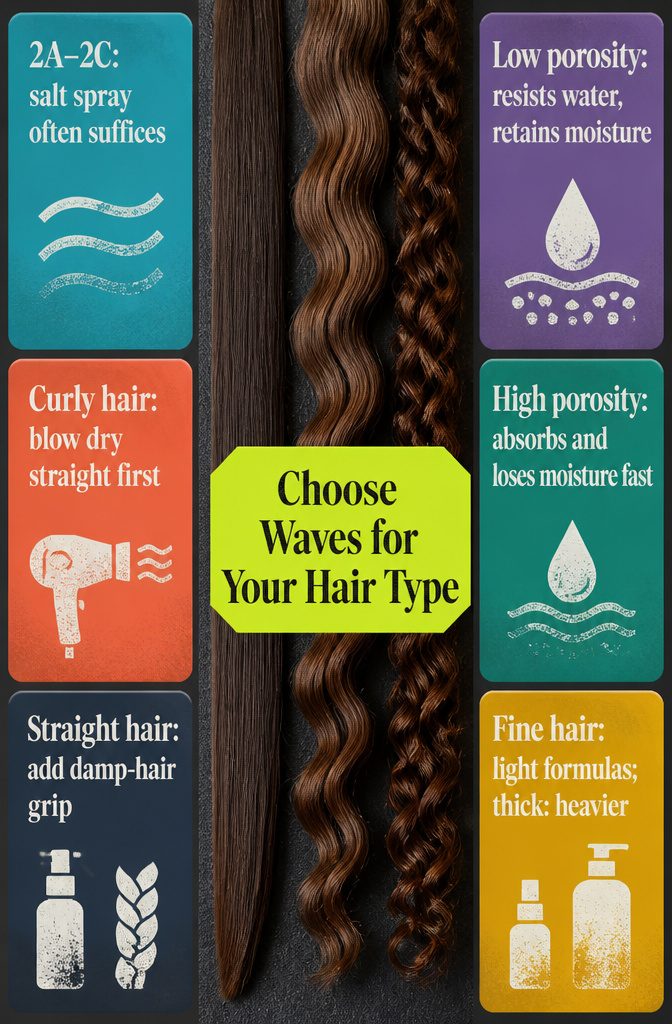
Hair in the 2A–2C range already has the bend, so a sea salt spray on damp hair, tousled in with your fingertips, is usually enough.
Curly hair goes the other way: blow dry it straight first, then build the waves.
Straight hair needs grip, so work a texturizing product into damp hair, braid it wet or use the twist method, and add salt spray for hold.
Low porosity hair repels water at first but keeps moisture once it takes it in.
High porosity hair drinks up product fast and loses moisture fast. Fine hair wants light formulas, while thick hair can handle heavier ones.
Match Products to Hair
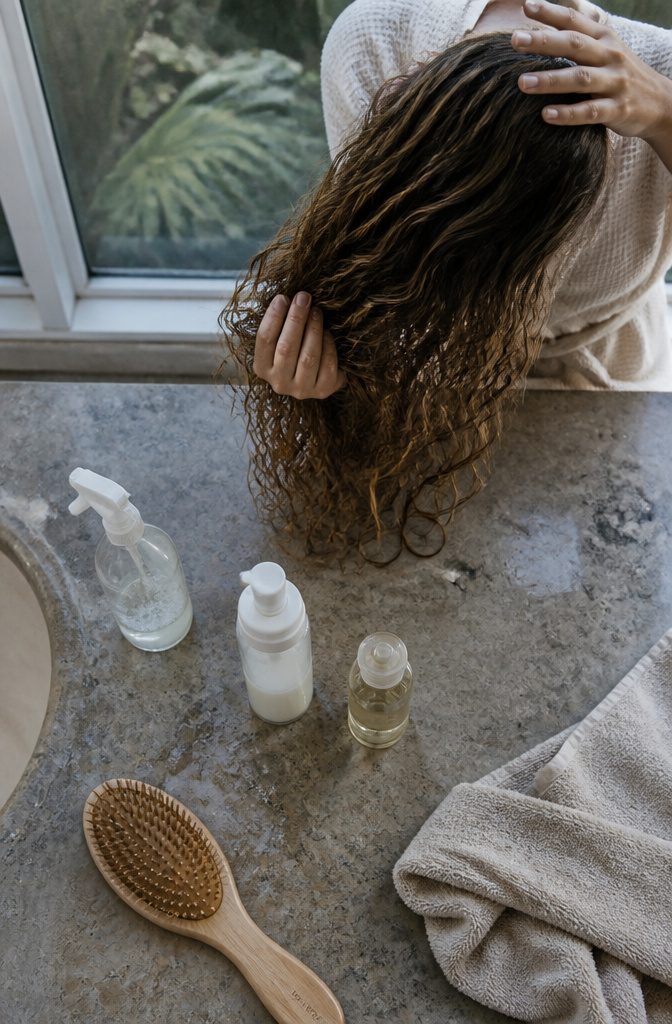
Fine hair goes limp under heavy product, and thick hair swallows light formulas. Match the weight first: lighter formulas for fine hair, heavier ones for thick.
High porosity hair drinks up product quickly but loses moisture fast, so it tolerates richer products better than low porosity hair, which tends to repel them at first.
My pairings for long lengths:
| Product | Best for | What it does |
|---|---|---|
| Sea salt spray | Oily hair | Adds texture and grit |
| Texturizing mousse | Dry hair | n/a |
| Lightweight oil or serum | Frizz | Use sparingly |
Salt spray is the low-effort pick. Spray it on damp hair and tousle with your fingertips, no tools required.
Wave Size and Barrel Choice
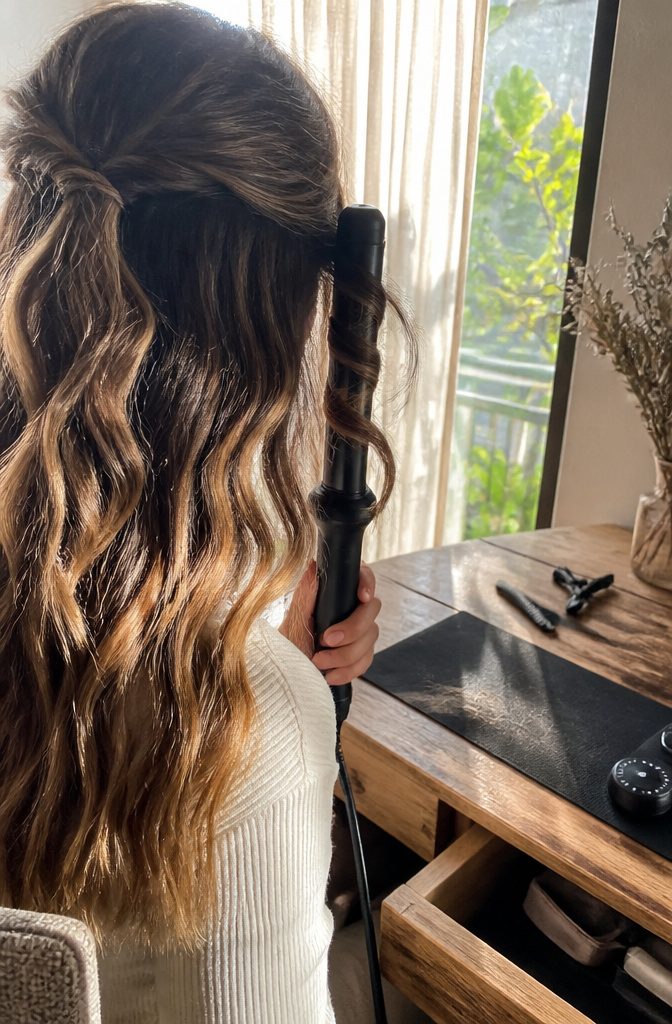
A 1-inch barrel suits long hair, and the loose look comes less from the iron than from how much hair you hand it.
Bigger sections give softer, less defined waves, while smaller ones tighten the pattern, so pick the size by how much definition you want.
Leave the bottom 1–1½ inches of each section out of the wrap, then pull the closed iron straight down so the ends relax.
Uneven sections and straighter ends are what keep the result lived-in, because perfect uniformity is what makes waves read as curls. A T3 with 5 temperature options is an investment, but it lets you match heat to your hair.
Cuts That Carry Long Waves
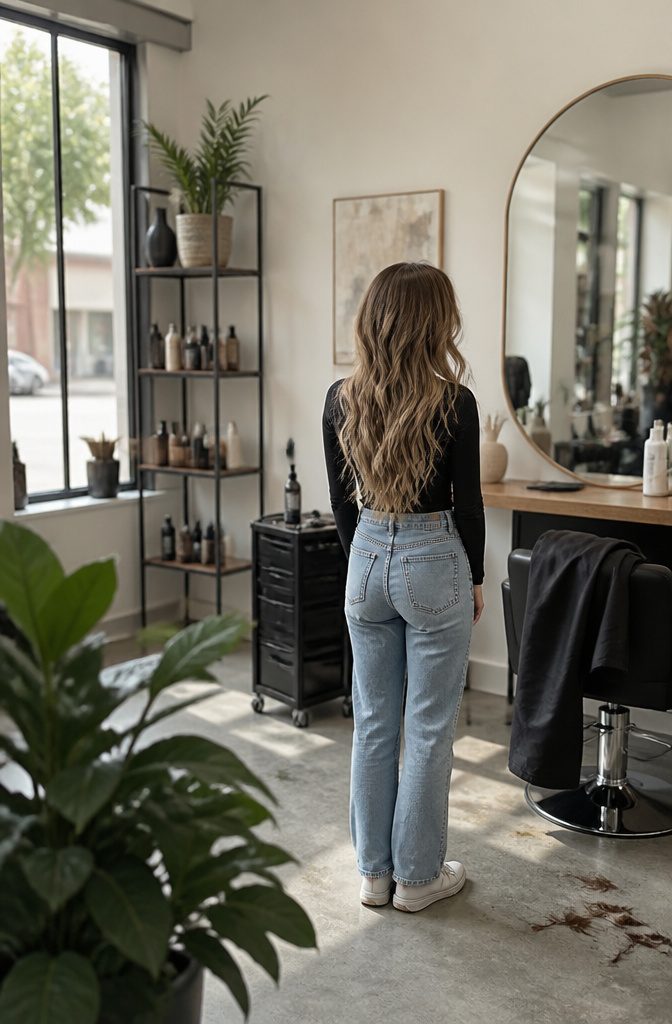
Length alone can flatten waves.
The weight of long hair drags the pattern straight from the roots down, and a blunt cut leaves bends limp and stretched. Layers remove weight while keeping the length, and I’d book them before buying another styling product.
Face-framing layers and a modern shag are the two cuts I’d ask for by name.
Both add movement and bring out the natural wave pattern. A shag variation is the better pick if your hair is thick, since it takes out bulk without costing you length.
Face shape changes how the layers should sit. Oval faces carry almost any wavy style.
Round faces do better with layers that add height. Square faces look best with soft waves that smooth angular features.
Frequently Asked Questions
How do you get beach waves in long hair?
Use a 1-inch barrel curling iron on 1-inch sections, and work in 2–3 layers if your hair is thick. Alternate the turn direction on each section, and leave the bottom 1–1½ inches out of the wrap so the ends stay relaxed.
Let every curl cool completely, then break them up with your fingers or a wide-tooth comb until they read as loose waves.
Are beach waves still in style?
Yes. The look became especially popular with influencers and celebrities in the 2010s, but L’Oréal Paris describes it as a timeless classic rather than a passing trend.
How do I get beach waves without heat?
Braid damp hair in 7–8 sections when it’s about 75% dry and sleep in the braids, so they finish drying overnight.
A sock bun gives bigger, bouncier waves, and foam or fabric rollers work without any styling skill. If your hair already has some wave, scrunch in product and plop it in a cotton t-shirt or microfiber towel for 10–20 minutes.
What are the best products for long hair beach waves?
Sea salt spray is the easiest pick: spray it on damp hair and tousle with your fingertips.
Texturizing mousse adds hold, and a lightweight oil or serum calms frizz in small amounts. Curl cream and pomade also work, and the weight should match your hair: lighter formulas for fine hair, heavier ones for thick.
Which hair types work for beach waves, and can straight hair get them?
Beach waves work on straight, wavy, curly, fine and thick hair, with a different approach for each.
Straight hair needs grip, so work a texturizing product into damp hair, braid it wet or use the twist method, and add salt spray for hold.
Wavy hair usually needs only salt spray, while curly hair should be blow dried straight first.
What is the best haircut for long wavy hair?
Layers are the best choice because they remove weight while keeping your length.
Face-framing layers and a modern shag are the two cuts to ask for by name, since both add movement and bring out the natural wave pattern. A shag variation suits thick hair especially well.
Which face shape suits wavy hair best?
Wavy hair suits most face shapes. Oval faces carry almost any wavy style, round faces do better with layers that add height, and square faces look best with soft waves that smooth angular features.
How often should I trim long wavy hair?
Trim every 8–12 weeks to head off split ends. You can stretch toward 12 weeks with waves, because the texture hides minor imperfections.