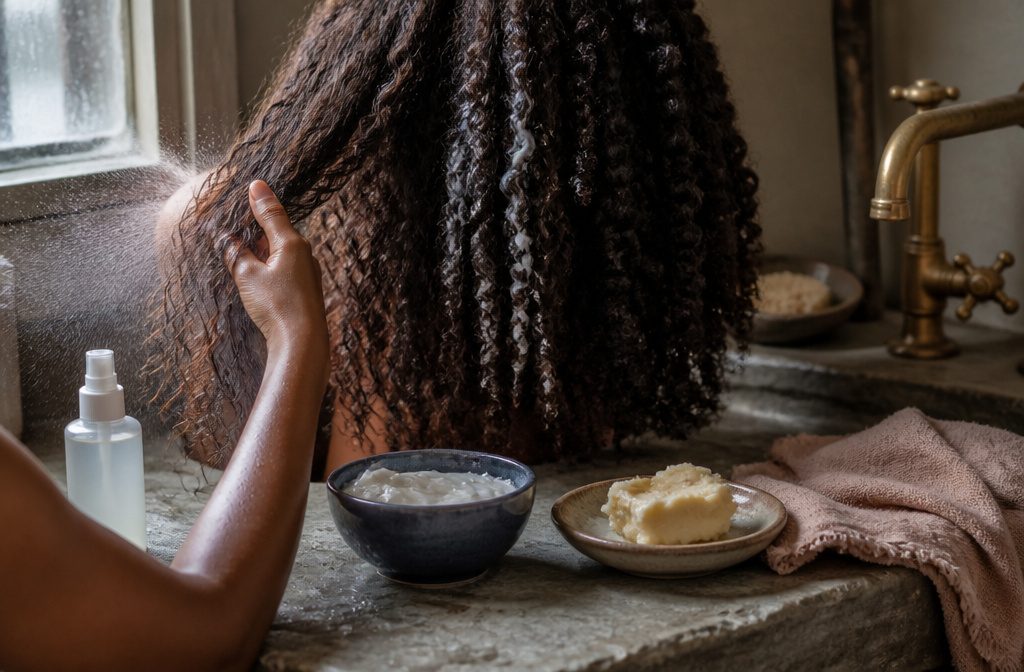
A routine matched to your curl pattern, from wavy 3a to kinky 4c, keeps curls hydrated and defined, because each pattern needs a different product weight.
It can’t change the pattern itself, though: a 3b stays a 3b, and persistent itching, shedding or thinning calls for a dermatologist, not another shampoo.
1. Know Your Curl Pattern
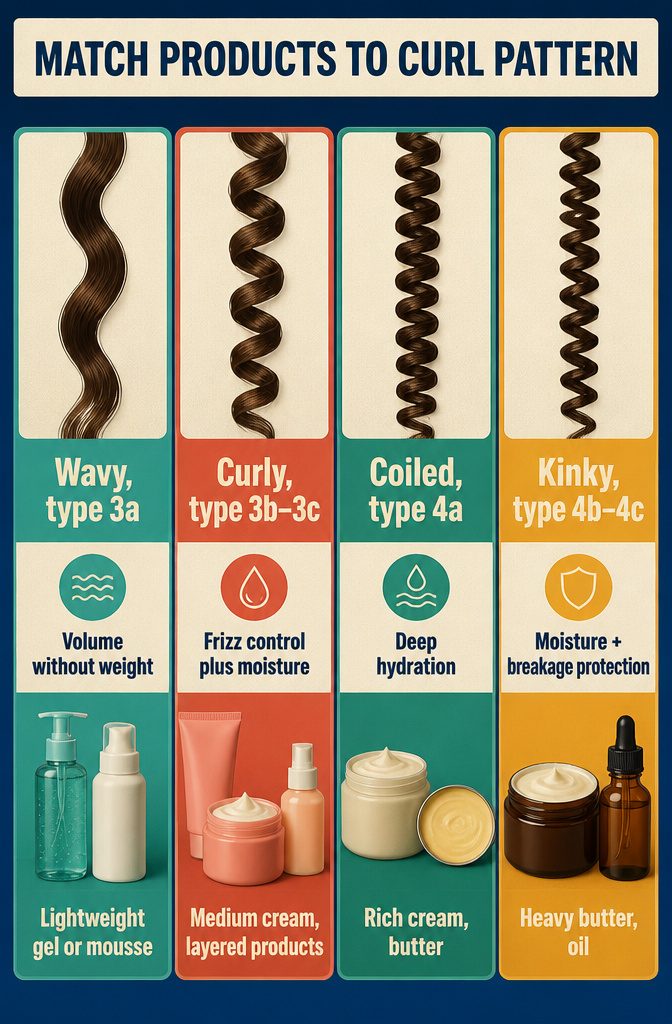
The four patterns most routines reference are wavy (type 3a), curly (type 3b–3c), coiled (type 4a) and kinky (type 4b–4c). Each one needs different product weight, and that choice affects everything from cleanser to leave-in.
Wavy hair sits closest to straight and goes limp under heavy cream. Curly hair frizzes more easily and often needs layered moisture.
Coiled hair is tight enough to fit a pencil inside a single coil and needs serious hydration. Kinky hair is the driest of the four and the most prone to breakage, so it wants the richest formulas.
| Pattern | Texture | Main need | Product weight |
|---|---|---|---|
| Wavy | Loose S-wave | Volume without weight | Lightweight gel or mousse |
| Curly | Defined spirals | Frizz control + moisture | Medium cream, layered products |
| Coiled | Tight corkscrew | Deep hydration | Rich cream, butter |
| Kinky | Zigzag, minimal clump | Moisture + breakage protection | Heavy butter, oil |
2. Shampoo the Scalp
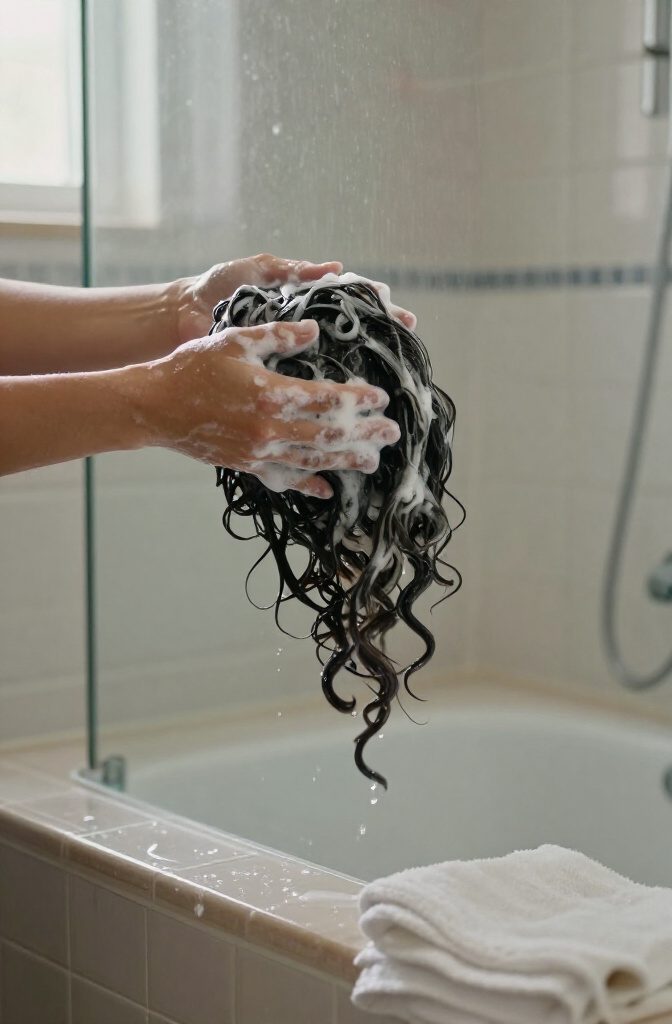
Shampoo your scalp once or twice a week instead of swapping every wash for a co-wash. Lather the shampoo in your palms first, which spreads the surfactants more evenly, then massage it into wet roots with your fingertips.
Keep the product on the scalp. As you rinse, the suds run down the lengths and clean them without any scrubbing through the curls, which is where tangles and frizz start.
If your hair feels squeaky and tight afterward, the detergent is too strong.
Sulfates are harsh cleansers, and a sulfate-free shampoo is the simple fix for dry curls. I’d make that switch before washing less often.
3. Condition and Detangle
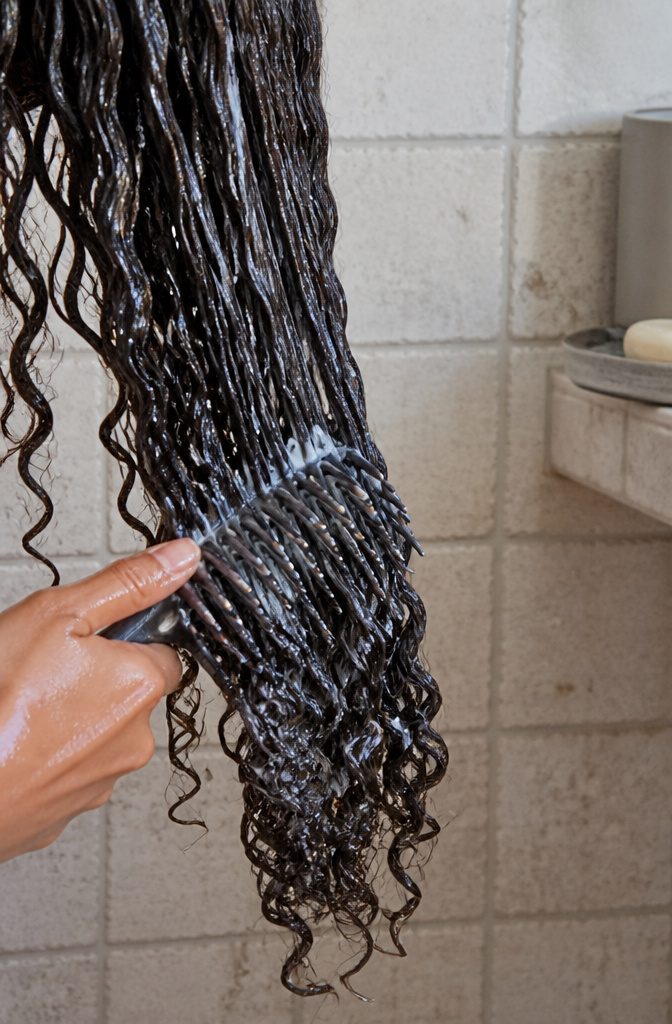
After you rinse out the shampoo, apply conditioner from mid-length down to the ends and detangle right there in the shower while your hair is saturated with water.
The conditioner makes every strand slippery, which means less snagging and far less breakage than you would get running a brush through dry curls.
I use a generous amount of conditioner and work it through with my fingers, then reach for a brush with long silicone bristles to gently separate any tangles that formed during washing.
You can also squish the conditioner into sections of your hair, pressing it in repeatedly to help it coat every strand.
Once you have worked through all the tangles, rinse out most of the conditioner but leave a little behind so your hair still feels slightly slick when you step out.
4. Style Wet Hair
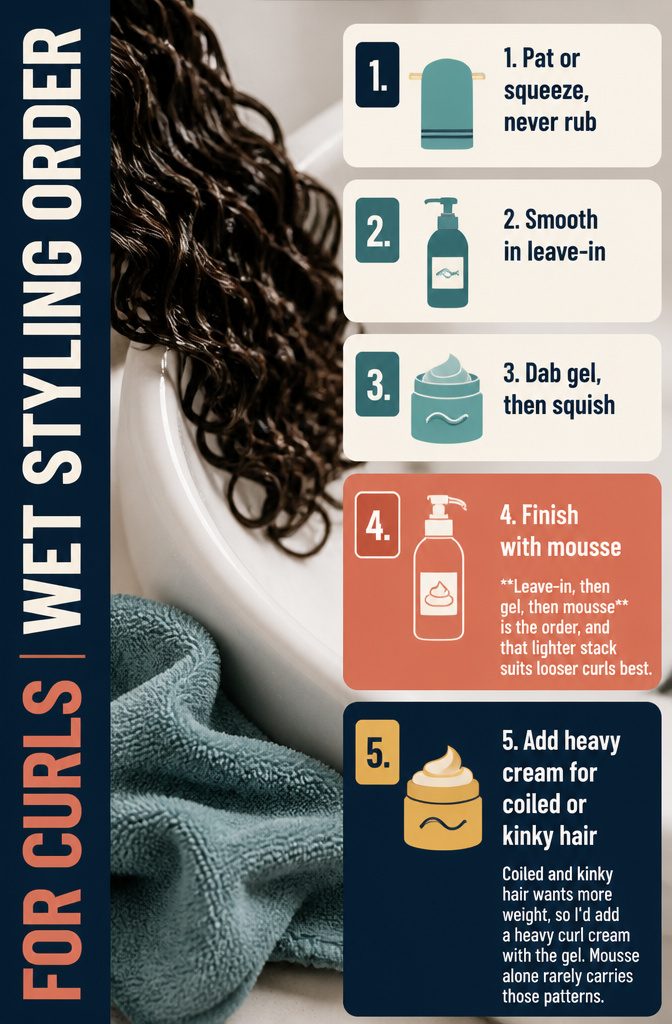
- Drape a microfiber towel or an old cotton T-shirt over your hair and pat or squeeze out the water. Rubbing creates friction and breaks up the clumps you just conditioned.
- Smooth leave-in conditioner through while hair is still wet or damp.
- Dab curling gel on with your fingertips, then squish it in, keeping larger sections of curls together. Pulling on curls straightens them.
- Finish with mousse for hold. Leave-in, then gel, then mousse is the order, and that lighter stack suits looser curls best.
- Coiled and kinky hair wants more weight, so I’d add a heavy curl cream with the gel. Mousse alone rarely carries those patterns.
5. Scrunch In the Product
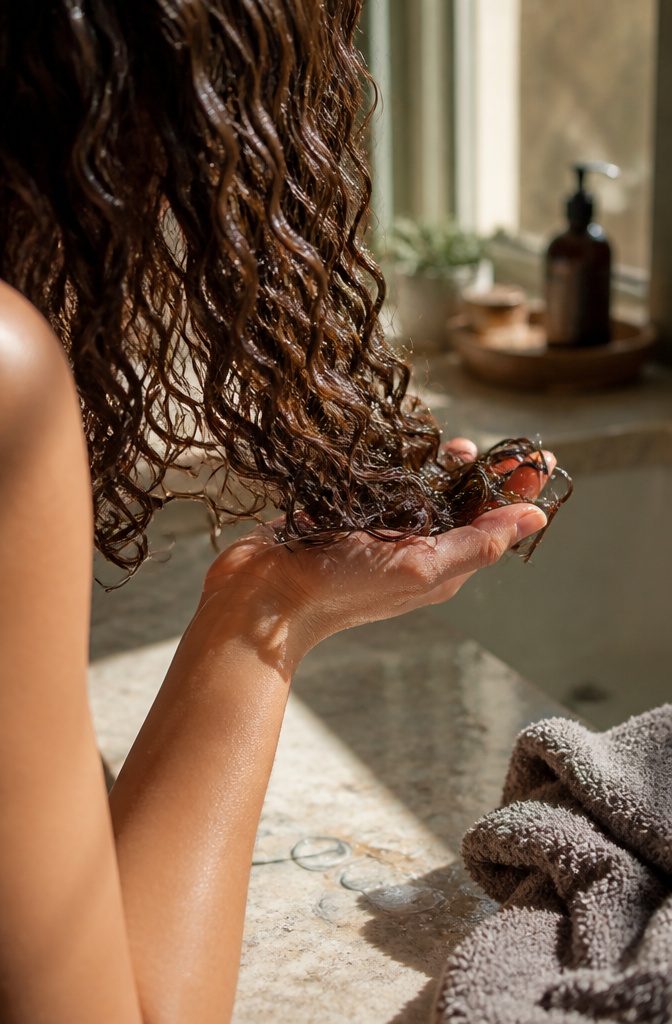
Rake the product through with your fingers, keeping it off the scalp. Then cup a section of ends in your palm and scrunch up toward the roots.
Squish without pulling, because tugging on a curl stretches it and straightens the pattern. The upward scrunch pushes strands together into clumps, and those clumps are what preserve your shape as the hair dries.
Once the hair is fully dry, the gel will feel hard. Scrunch those sections with a microfiber towel to soften them.
This gives a natural look instead of a wet, glossy shine, so skip it only if you like the gloss. Some Reddit posters rub a little hair oil between their palms and scrunch out the crunch that way.
6. Dry Without Crushing Curls
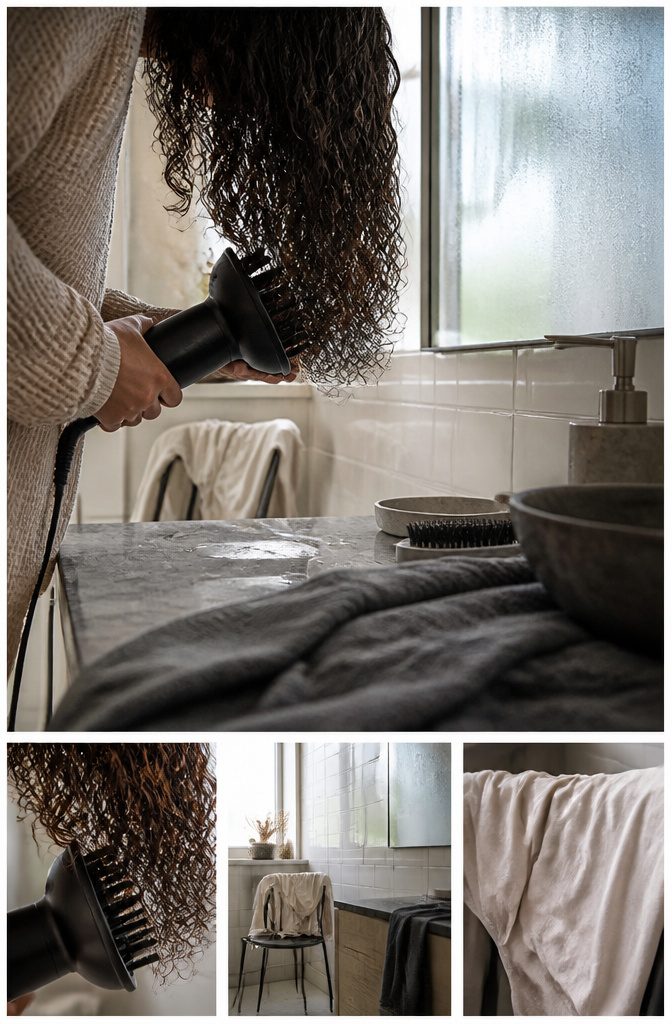
Once most of the water is out, you pick between three routes based on how much time you have and how much volume you want.
- Air-dry for minimum frizz. Let curls dry completely on their own. This takes the longest but keeps the cuticle smooth and the curl pattern intact.
- Plop in a cotton T-shirt for 10 to 20 minutes. Drape an old T-shirt or microfiber towel over your hair, squeeze gently to absorb water, then wrap it up and let it sit. Cotton is softer than terry cloth and won’t rough up the cuticle the way a regular towel does.
- Diffuse with high speed and low heat for volume. Flip sections into the diffuser bowl, scrunch them in for 10 seconds each, then move to the next section. The high fan speed lifts the roots without the frizz that comes from too much heat.
Whatever method you use, squeeze and pat rather than rub. Rubbing or using rough fabric breaks up the curl clumps you just worked to form and causes frizz and breakage in one pass.
7. Protect Curls Overnight
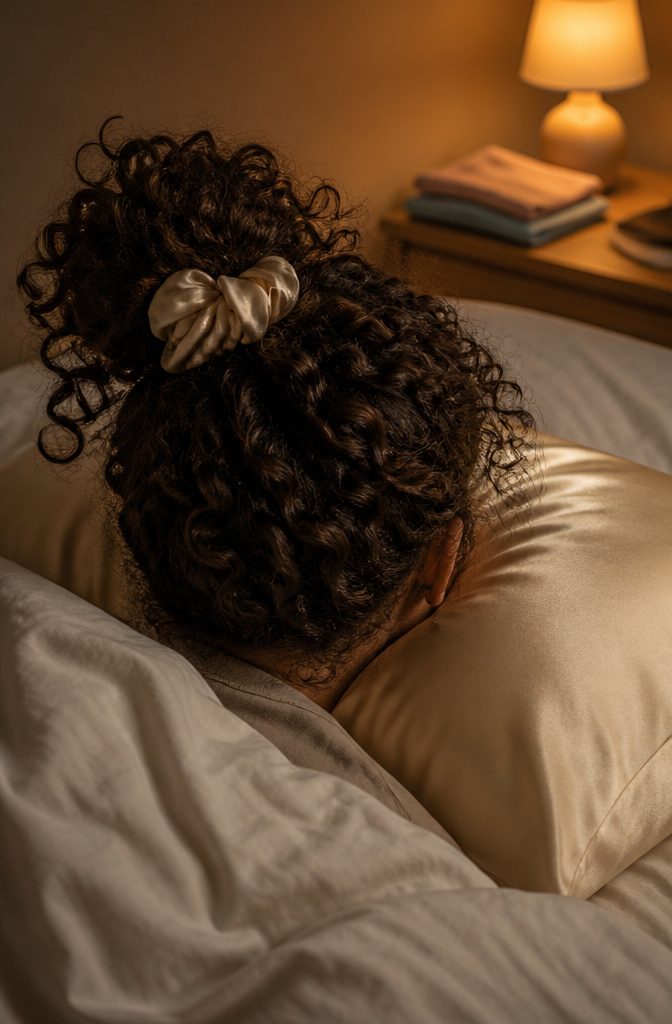
The friction between your pillowcase and your hair is what flattens curl overnight and leaves you with frizz by morning.
Cotton grabs the cuticle with every turn, and curls that took twenty minutes to define end up matted on one side by 6 a.m.
Gather hair into a loose pineapple using a single loop of a silk scrunchie, high enough that curls stay off your shoulders but loose enough that you’re not pulling tension through the roots.
Sleep on a silk or satin pillowcase, or pull on a silk bonnet if you move around a lot at night.
Silk and satin both let hair glide instead of catching, so you wake up with the shape you went to bed with.
The pineapple keeps length from getting crushed under your shoulders, and the single loop means no dents or kinks where the scrunchie sat. If your curls are short enough that a pineapple doesn’t work, the bonnet alone does the job.
8. Refresh Between Washes
Refresh Between Washes
A spritz bottle becomes useful around day two.
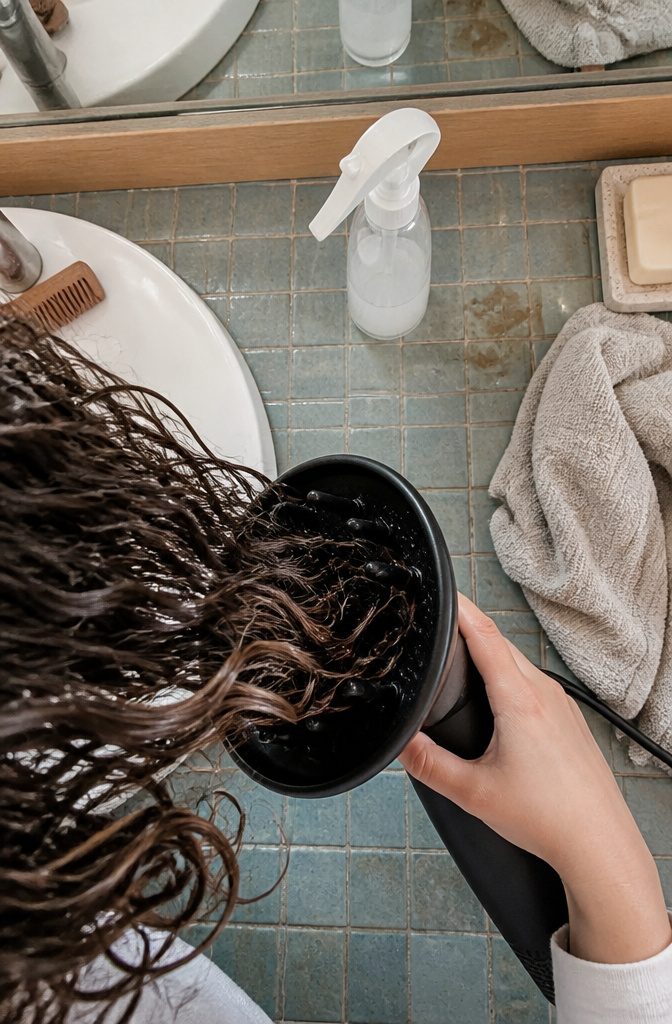
I mix water with a pump of the same gel I used on wash day and a pump of cream, shake it until it looks smooth, then mist the curls until they feel damp but not soaked.
The gel brings back hold, the cream softens any crunch that formed overnight, and the water reactivates both so they can do their job again.
The diffuser comes back out at this point. Cup each section into the bowl and warm it on low until the surface dries, which usually takes three to five minutes per side.
That heat sets the curl again and keeps the shape from drooping by midday. Skip the diffuser and you get volume with no definition, which works for some looks but defeats the point of refreshing in the first place.
This holds shape through day three without rewashing, and the routine takes less time than starting over.
Detox, Low-Poo or Co-Wash
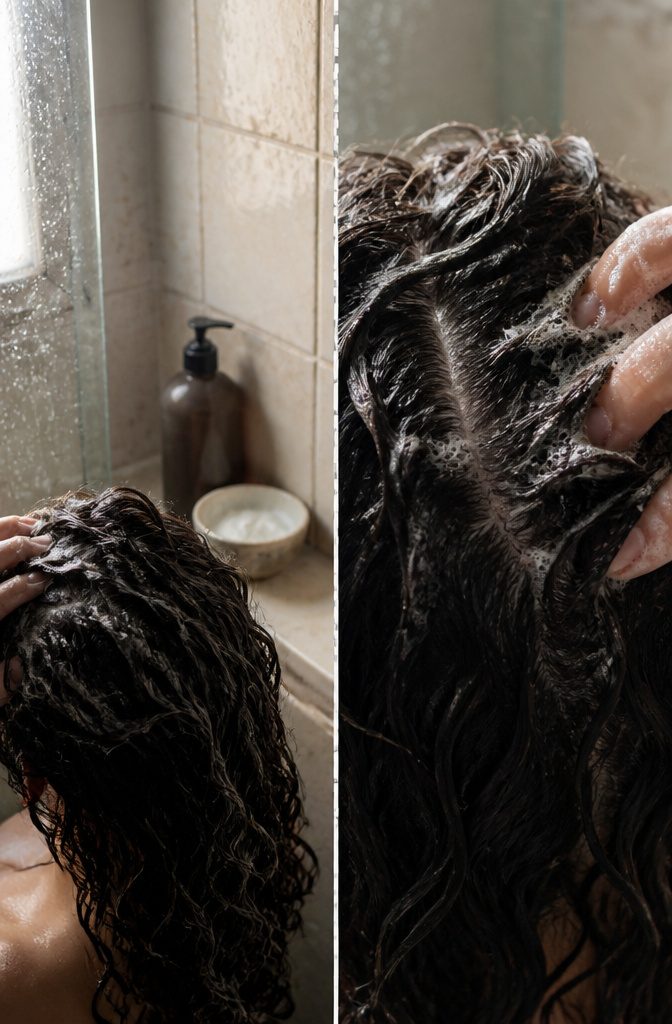
Once a month, detox shampoo resets your scalp by lifting dirt, oil and dead skin that regular washing leaves behind.
Squeeze a good amount into your palm, lather it there first, then massage it through your scalp and let it sit for 3–5 minutes. Rinse and repeat.
The second pass will lather more because the first already lifted most of the buildup. The lathering agents form micelles, small balls that trap debris, so the standing time matters.
Between resets, reach for low-poo or co-wash every time you deliberately wet your hair in the shower. Low-poo means shampoo without sulfates or using regular shampoo less often.
Co-wash is using conditioner as your cleanser, and it works well for plenty of people. Either way, massage it into your scalp and use your fingernails to scrub away buildup.
This method works especially well after sweat or oil from workouts or a long day, but frequent use can let product build up over time if you skip the monthly detox.
Deep Conditioning Weekly
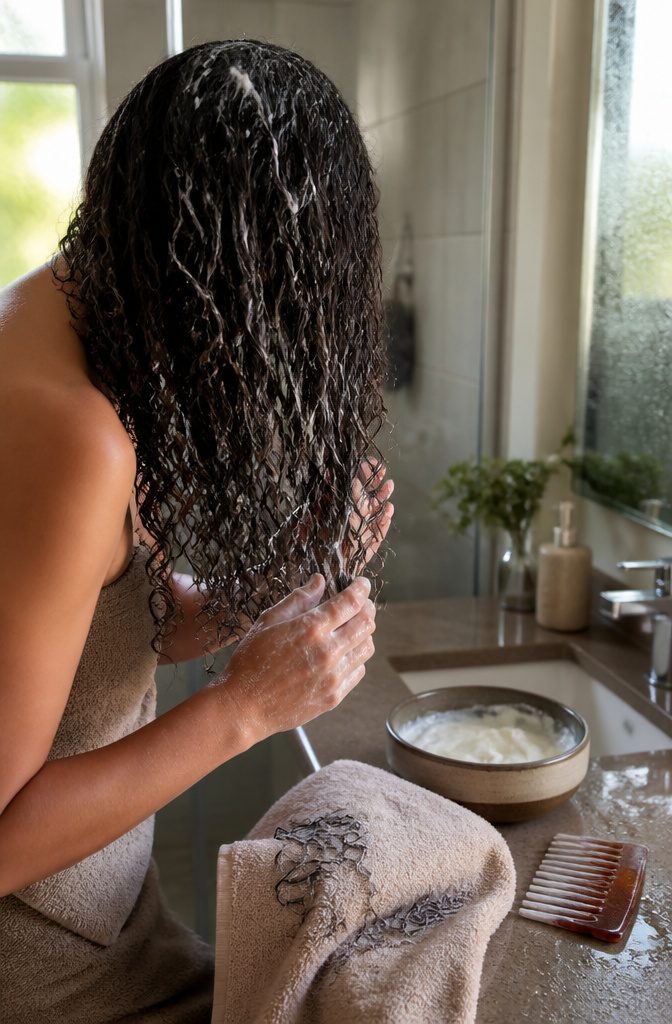
After shampooing, apply a deep conditioning mask once or twice a week to the mid-lengths and ends. Leave it on damp hair for 5–10 minutes, then rinse.
Keep it off the scalp entirely. The Deep Conditioning Hair Mask from Cherie Strands ($26.99) contains macadamia oil, bamboo extract and hyaluronic acid.
This is the step people skip when they are rushed, and it is the one dry curls notice most.
Ingredients like honey extract, cetyl alcohol and behentrimonium chloride lock moisture into the shaft. The ritual is simple: shampoo, mask, rinse.
If your ends still feel brittle between wash days, add the leave-in ($23.99) to damp hair before styling. You do not rinse that one out.
Daily Scalp Serum
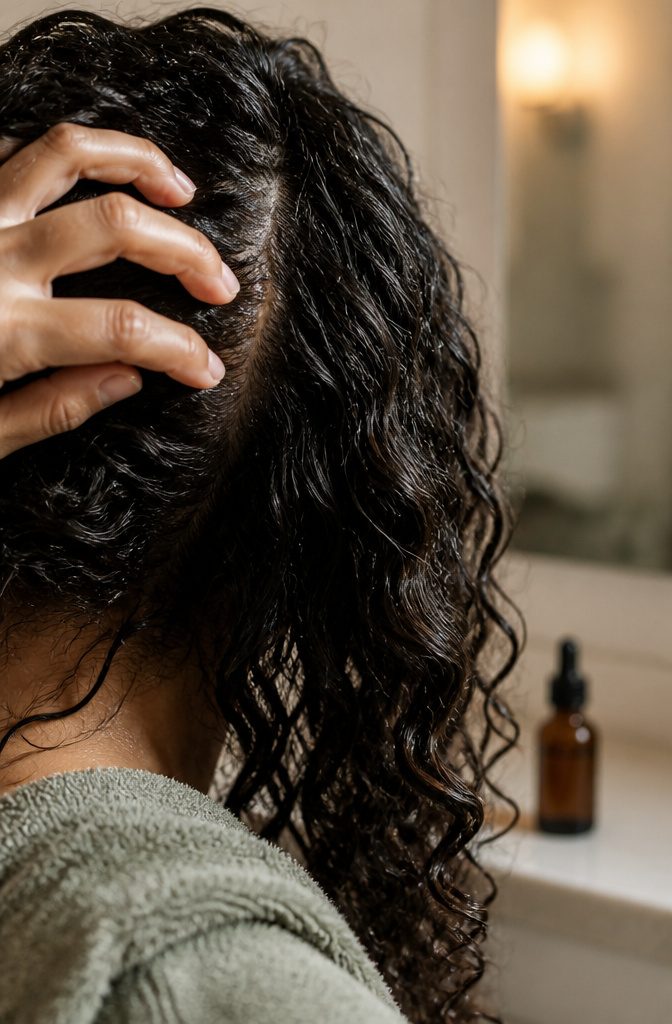
The scalp is skin, and most curl routines skip right over it.
After you shower, massage a few drops of scalp serum directly into the scalp and leave it on. You can do this in the morning, the evening, or both.
The Revitalize Scalp Serum runs $38.99 and contains caffeine, rosemary and Italian propolis. It is never rinsed out.
Think of it as daily scalp care, not a regrowth treatment. Curls start at the root, and a healthy scalp makes a difference in how hair behaves from wash to wash.
A serum keeps the skin calm and conditioned without weighing down the curl at the root the way a heavy oil would.
Products to Skip
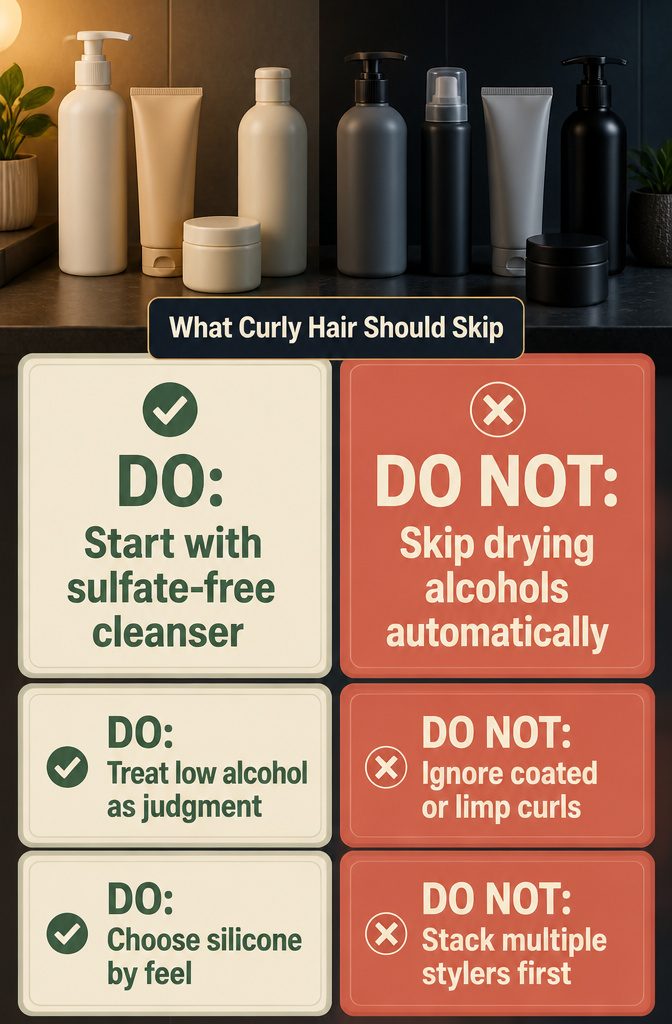
Dull, frizzy curls usually trace back to the cleanser, not a missing gel, so the skip list has an order.
- Sulfates are the one exclusion I’d call essential. A harsh cleanser is a common cause of dull, frizzy curls, and once it’s fixed, many stylers become optional.
- Drying alcohols come next. I’d skip them on most patterns, but a product that lists one low on the label is a judgment call, not a dealbreaker.
- Silicones are the most preference-driven of the three. Skip them if your curls feel coated or limp between washes.
- Heavy products and stacked stylers weigh curls down. Too much leaves them greasy or stiff, so start with one styler and add a second only if the first isn’t enough.
Where Curly Girl Came From
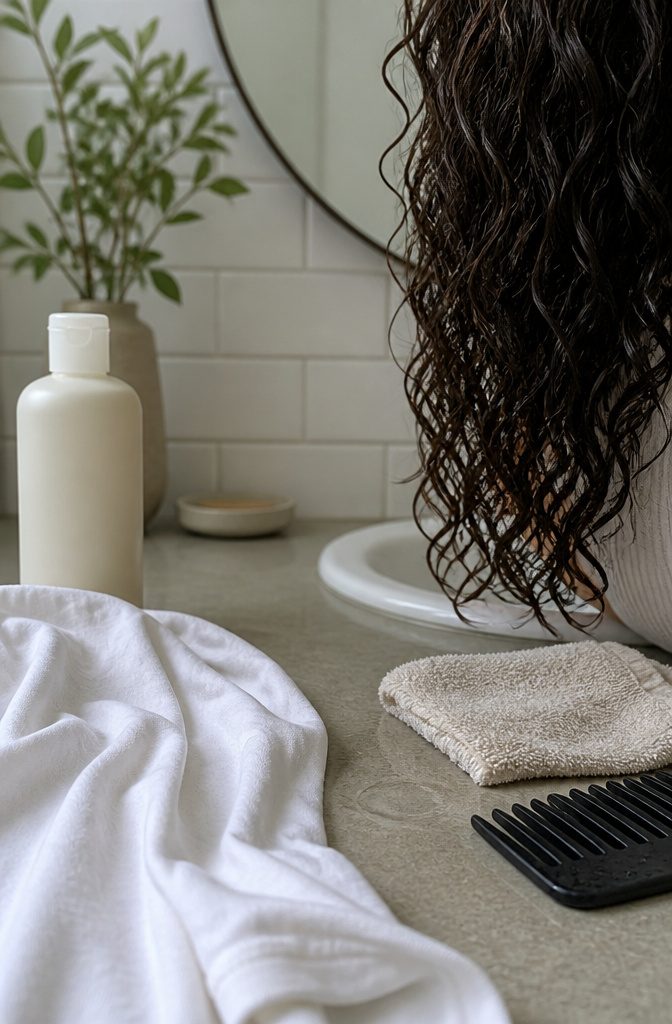
Lorraine Massey, a British-born stylist, published Curly Girl: The Handbook in 2010, a step-by-step guide to natural curls that told readers to drop sulfate shampoos, terrycloth towels and silicones.
That is why the routine below leans on a sulfate-free cleanser, a microfiber towel or cotton T-shirt, and silicone-free styling products. The rough, looped weave of terrycloth creates frizz as curls dry, which is reason enough to switch.
I part ways with the method on one point: skipping shampoo entirely.
Co-washing alone leaves oil and product on the scalp, and that weighs curls down. Shampoo the scalp once or twice a week, keep the lather off the lengths, and the rest of the rules still hold.
When to See a Dermatologist
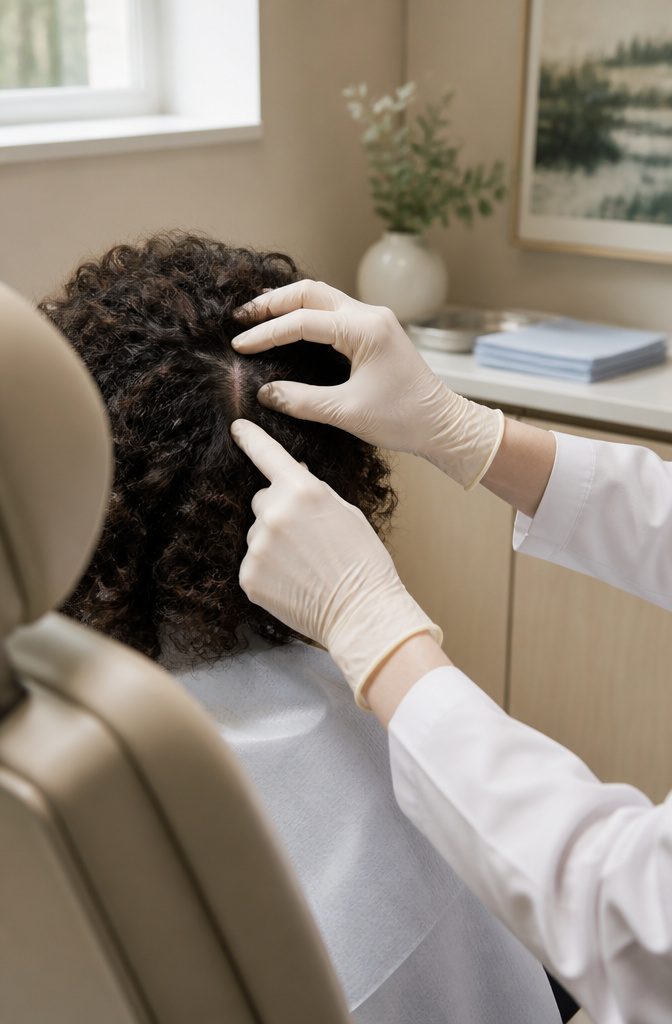
Stop using any product that makes your scalp burn, itch or sting, however much you paid for it. Irritation is the product telling you it doesn’t suit you, and finishing the bottle won’t change that.
If the itching, shedding or thinning sticks around after you’ve dropped the culprit, see a dermatologist for persistent itching, shedding or thinning rather than buying another shampoo.
A routine improves hydration, slip and manageability, and that is the extent of it.
It can’t treat a medical problem, and it won’t change your curl pattern, so a 3b stays a 3b however good your regimen gets. I’d rather you hear that now than spend months chasing a result no product can deliver.
Frequently Asked Questions
What is the best routine for curly hair?
Shampoo the scalp 1–2 times a week with a sulfate-free formula, then condition and detangle from mid-length to ends while you’re still in the shower.
Add a deep conditioning mask 1–2 times a week, style wet hair with leave-in, gel and mousse, and massage a few drops of scalp serum in after showering. At night, a silk pillowcase or bonnet protects the shape.
How often should I use a deep conditioning mask on curly hair?
Use it 1–2 times a week, right after shampooing.
Apply it to damp hair from the mid-lengths to the ends, leave it on for 5–10 minutes, then rinse, and keep it off the scalp. Dry curls notice this step more than any other, so it’s the one to avoid skipping.
Do I rinse out leave-in conditioner and scalp serum?
No, both stay in.
Leave-in goes on damp hair before you style. For the serum, massage a few drops into your scalp after showering, in the morning, the evening or both.
Is this routine suitable for all curl types?
Yes, as long as you adjust the product weight to your pattern.
Wavy hair does best with a lightweight gel or mousse, while coiled and kinky hair wants rich creams and butters. The routine improves hydration and manageability, but it won’t change your curl pattern.
Does curly hair need more care?
Usually it needs more moisture, and the tighter the pattern, the more it needs.
Curly hair frizzes easily and often wants layered products, coiled hair needs deep hydration, and kinky hair is the driest and most prone to breakage. Wavy hair is the exception, since heavy creams tend to weigh it down.