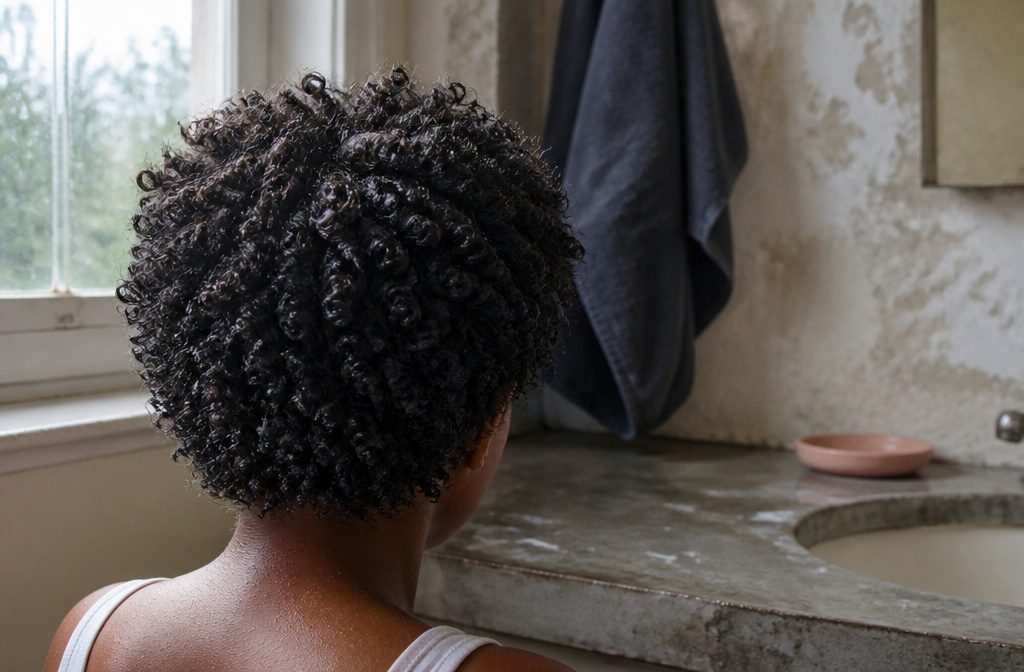
A curly hair fro is an afro styled with defined curl pattern rather than blown out to full soft volume.
The shape depends on how much moisture you lock in daily: oils don’t travel down coiled hair on their own, so curls flatten and lose definition fast without leave-in conditioner or cream applied every morning.
The tightest coil patterns hold 3–6 inches of length while staying compact at the scalp.
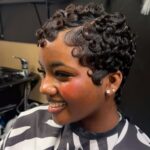
Tiny Coil Afro
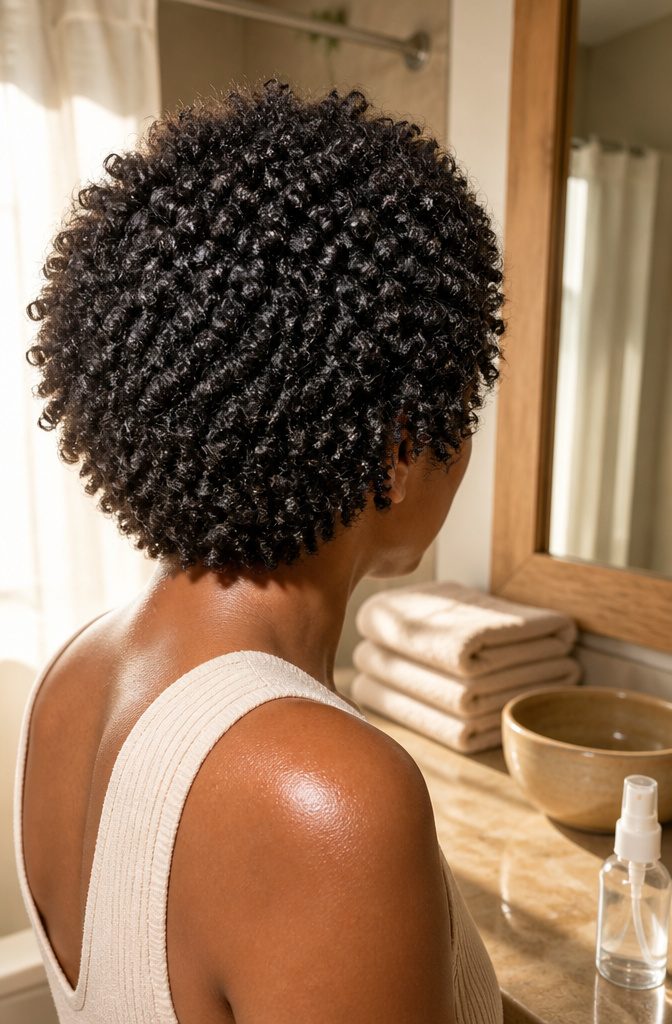
A head of tight, tiny coils with a banged front sits between a fun, flirty ‘fro and bouncy, carefree curls.
The small coil pattern is what separates it from the looser look that follows: the curl stays compact, so the finish reads as convincingly natural rather than soft and swingy.
It frames the face, brings out your best features, and looks good in practically any color, which is a lot to ask of one style.
I’d choose it for a moisturized finish with low maintenance. If you want a ‘fro that looks full of life without a lot of fuss, the tiny coil is the one I’d pick first.
3C Curly Fro
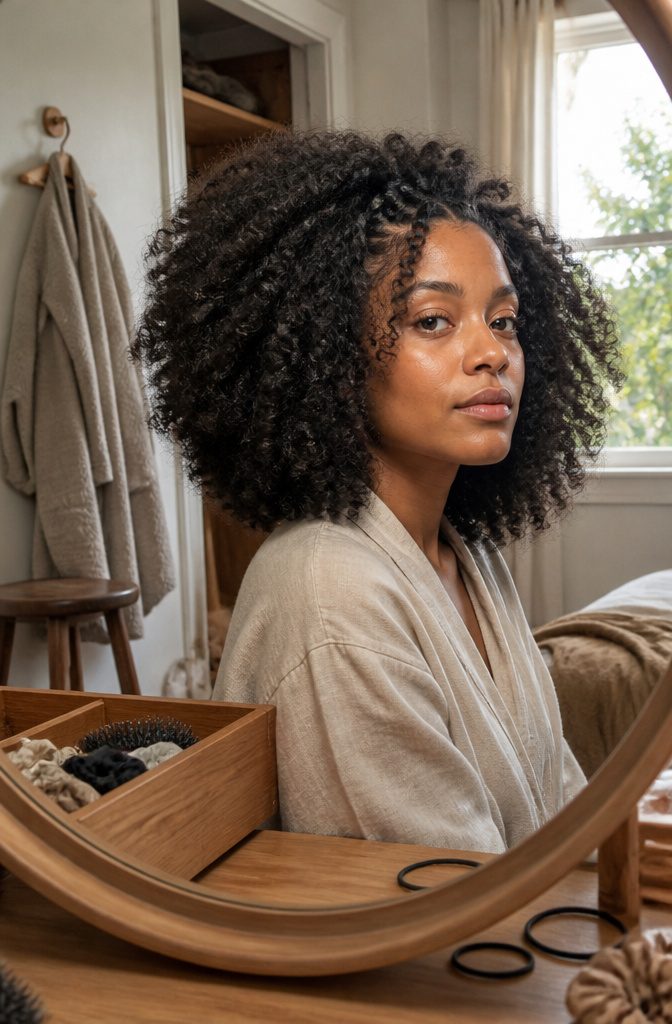
A 3C fro worn as a blowout has longer, looser coils than the tighter 4C texture, and the shape flows outward rather than holding close to the scalp.
The coils catch more light and move more freely when you turn your head.
I’ve seen this styled with three or four braids placed at the front hairline while the rest of the 3C texture stays loose, which keeps the volume but adds a little structure where the hair meets the face.
The braids can be thin or medium weight, and they frame the forehead without flattening the silhouette. The 3C texture blows out more easily than tighter patterns, so the finished fro reads soft and rounded rather than dense.
It’s a shape that works well if your coils are already stretching toward the looser end of the type-four spectrum.
How a Curly Fro Is Shaped
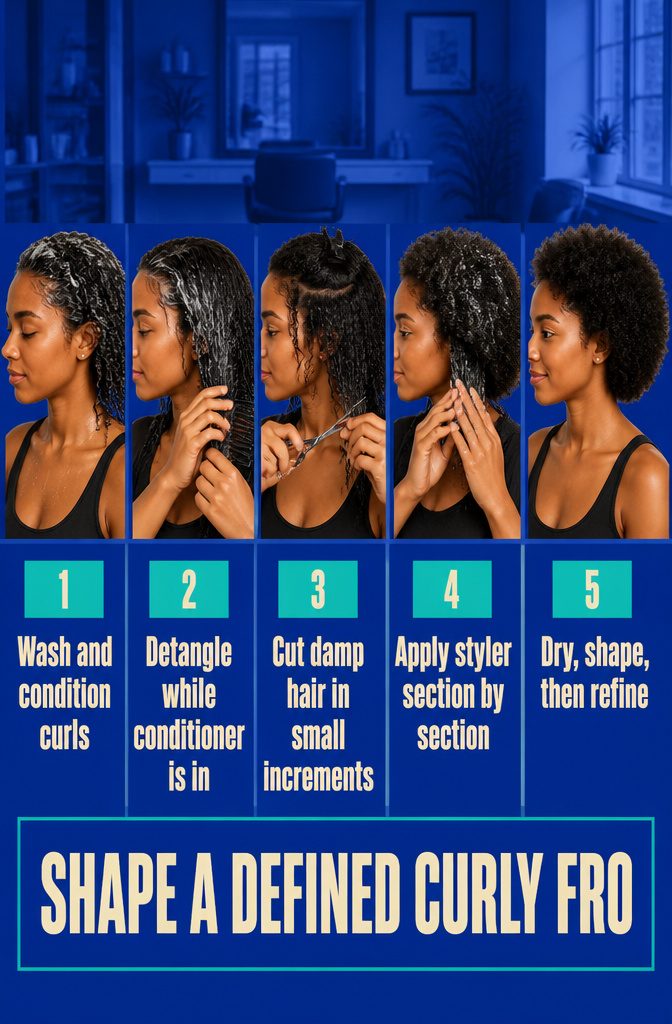
A curly fro gets the same cut as a traditional afro: even length, shaped to follow how the curls fall. Definition comes from product and method, not the cut.
Aim for 3–6 inches on patterns from 3A through 4B. Oval, diamond and heart-shaped faces wear it best.
- Wash with a sulfate-free cleanser, then a moisturizing conditioner.
- Detangle with fingers or a wide-tooth comb while the conditioner is in.
- Cut on damp, hanging hair in small increments.
- Work in curl cream, gel or mousse section by section.
- Use a curl sponge on 1–3 inch fros.
- Diffuse on low heat or air dry, scrunching upward.
- Line up the hairline with a trimmer.
- Check the dry shape and make light corrections.
Moisture and Definition
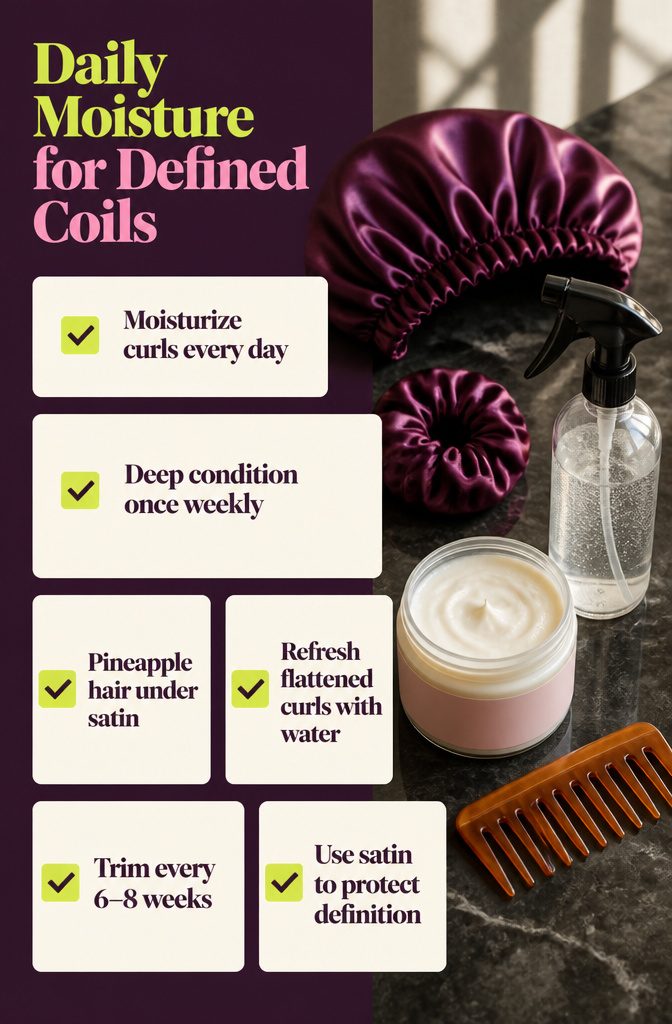
Curls stay soft and defined when you treat them like the coil pattern they are: oils from the scalp struggle to travel down the shaft, so moisture has to be added daily and protected overnight.
- Apply a leave-in conditioner or curl cream every day. Curly hair dries out faster than straight hair, and daily moisture keeps curls elastic and defined.
- Deep condition once a week. A hydrating deep conditioner or hair mask keeps the hair strong and the curl pattern sharp.
- Use the pineapple method at night. Gather the hair loosely on top with a satin scrunchie and cover with a satin bonnet to hold definition while you sleep.
- Refresh flattened curls in the morning. A spray bottle with water and a small amount of conditioner, scrunched in, brings curls back without a full wash.
- Trim every 6–8 weeks. Split ends disrupt the curl pattern, so regular trims keep the shape clean.
Headbands and scarves change the silhouette without heat or product, and they hold edges flat when the fro sits high.
Frequently Asked Questions
How do I get a curly fro?
Wash with a sulfate-free cleanser and moisturizing conditioner, then detangle on damp hair.
Work curl cream, gel or mousse through in sections, use a curl sponge on lengths 1–3 inches, then diffuse on low heat or air dry while scrunching upward. Line up the hairline with a trimmer once dry.
What is a curly afro called?
It’s called a curly fro or curly afro. The style emphasizes defined curls and coils instead of the smooth, picked-out volume of a traditional afro, and it became popular during the natural hair movement of the 2010s.
What does a curly afro look like?
A curly afro shows visible curl definition and texture throughout instead of a uniform round shape.
The coils stay separated and defined, giving the style a textured, natural appearance that follows the hair’s own curl pattern rather than being combed into a smooth silhouette.
What are the best products for curly afro hair?
Use a sulfate-free shampoo, moisturizing conditioner and a leave-in conditioner or curl cream applied daily. Add curl-defining gel or mousse when styling, and deep condition once a week to keep curls elastic and the pattern sharp.