French braids work tight to the scalp for a polished look or looser for texture, and you can wear them single, doubled, wrapped into a crown, or gathered into an updo depending on how much time you have and where the braid needs to sit.
The choice comes down to your hair length and how much structure you want: shorter lengths and layered cuts hold better in styles that pin the braid at the crown or nape, while long one-length hair can carry a single braid straight down, swept to one side, or woven into a low ponytail or chignon.
Double braids divide the weight and make the work faster on thick hair, and a fishtail weave lies flatter than a classic three-strand if you want texture without bulk.
1. Side French Braid
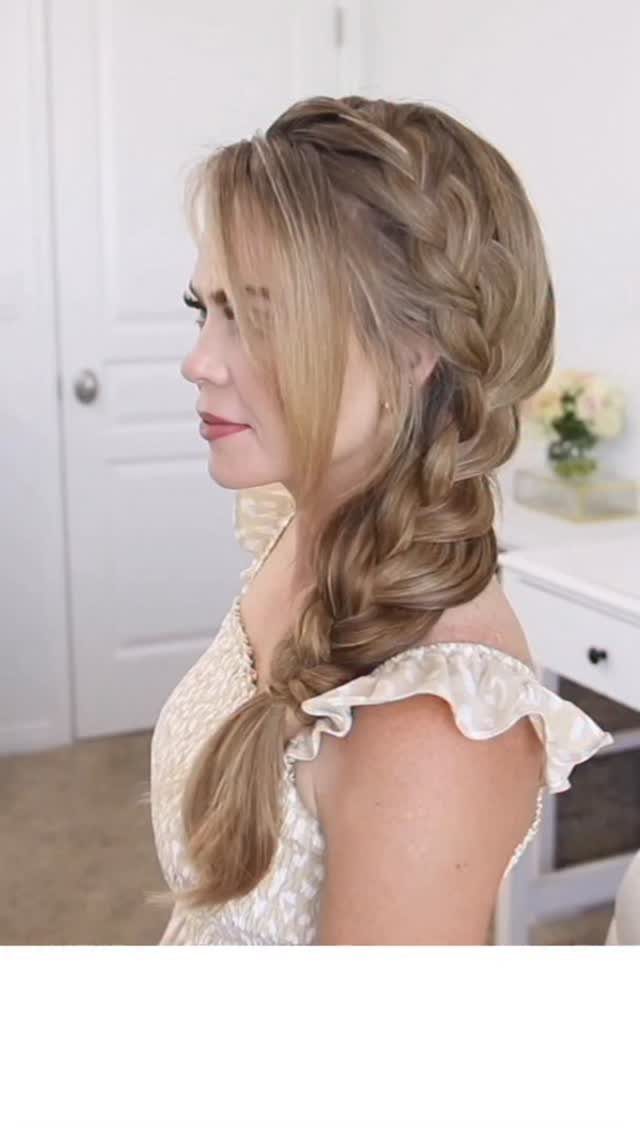
A French braid started from the crown and swept over one shoulder instead of running straight down the back.
You can braid tight to the scalp for polish or keep it looser for texture, and leaving a few strands free near the temples softens the line.
This version suits long hair especially well because the braid sits visible from the front and shows off the length without all the weight hanging behind you.
2. French Fishtail Braid
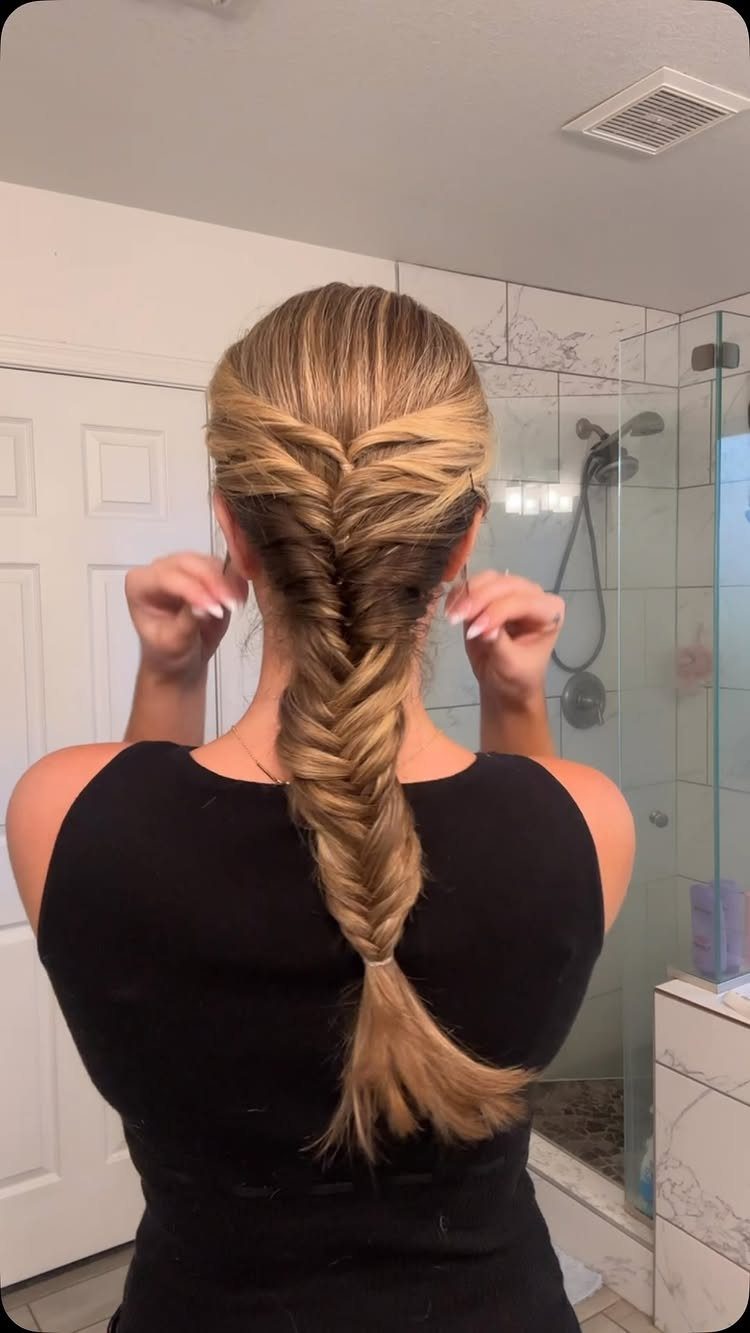
You start this one by French braiding from the crown, then switch to fishtail technique once you’re past the occipital bone, or you can fishtail the whole thing and just pick up new sections as you go.
The fishtail portion lies flatter than a three-strand braid, which keeps the texture visible even on fine hair.
It takes longer than a regular French braid because you’re working with smaller pieces, but you get that intricate woven look all the way down.
3. Double French Braids
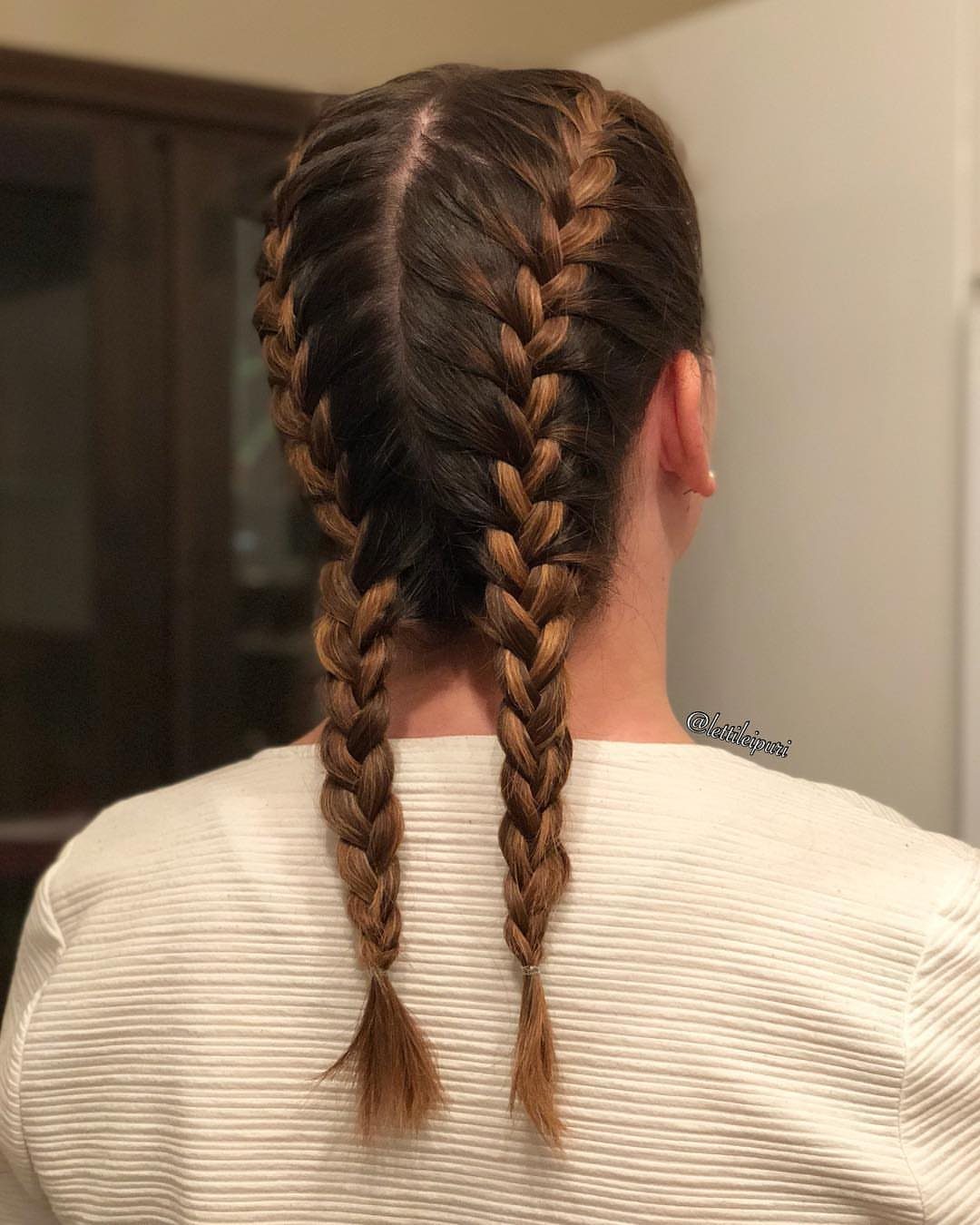
2 French braids running parallel from a center part down the back.
They work on any length past the shoulders and hold through a full day better than a single braid because the hair is divided and secured on both sides.
You can braid them tight for a clean athletic look or pull them apart slightly after securing the ends for more volume and a softer finish.
4. French Braid Updo
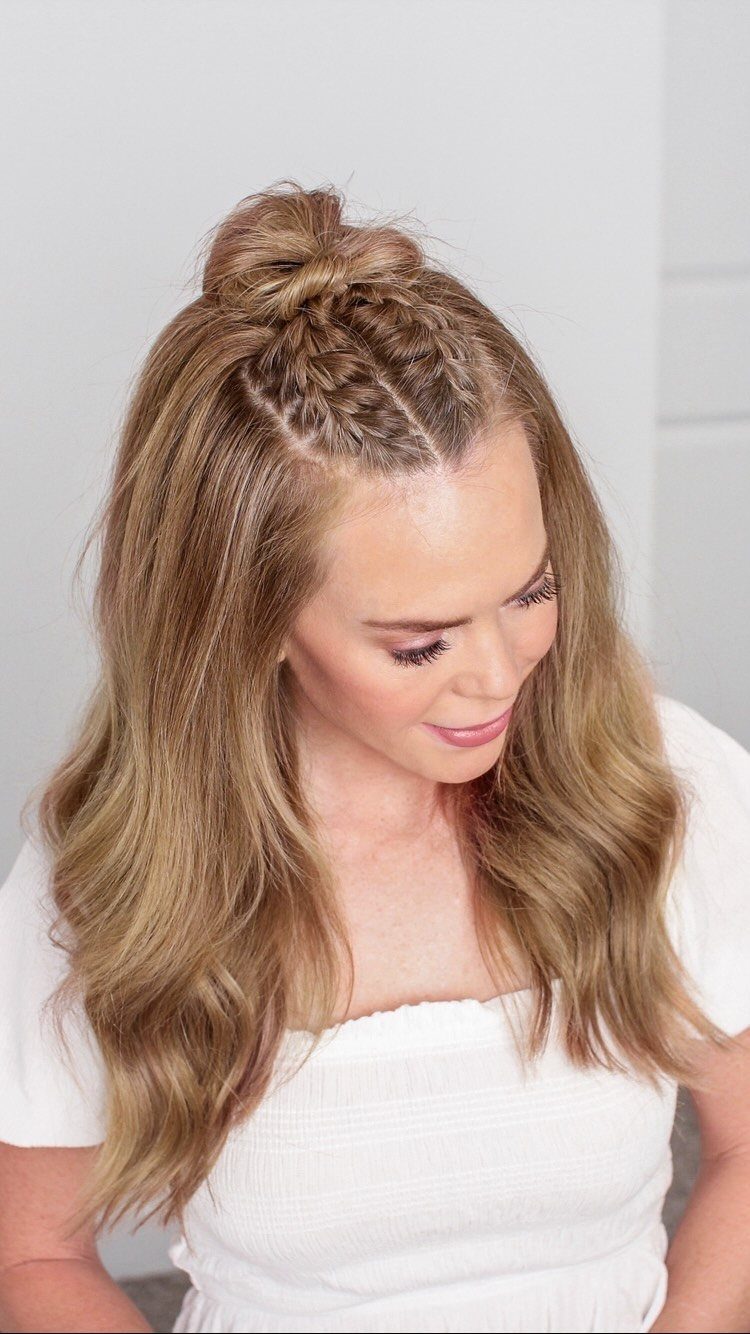
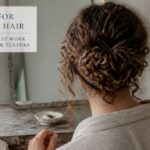
A French braid gathered at the nape or crown and pinned into a bun instead of left hanging.
The braid gives you structure and grip, so the updo holds without a lot of pins or product, and it keeps shorter layers contained better than a plain bun would.
You can coil the braid into a low chignon for something formal or twist it into a topknot for a casual version. Either way, the braid adds texture where a sleek updo might look flat.
5. French Braid Crown
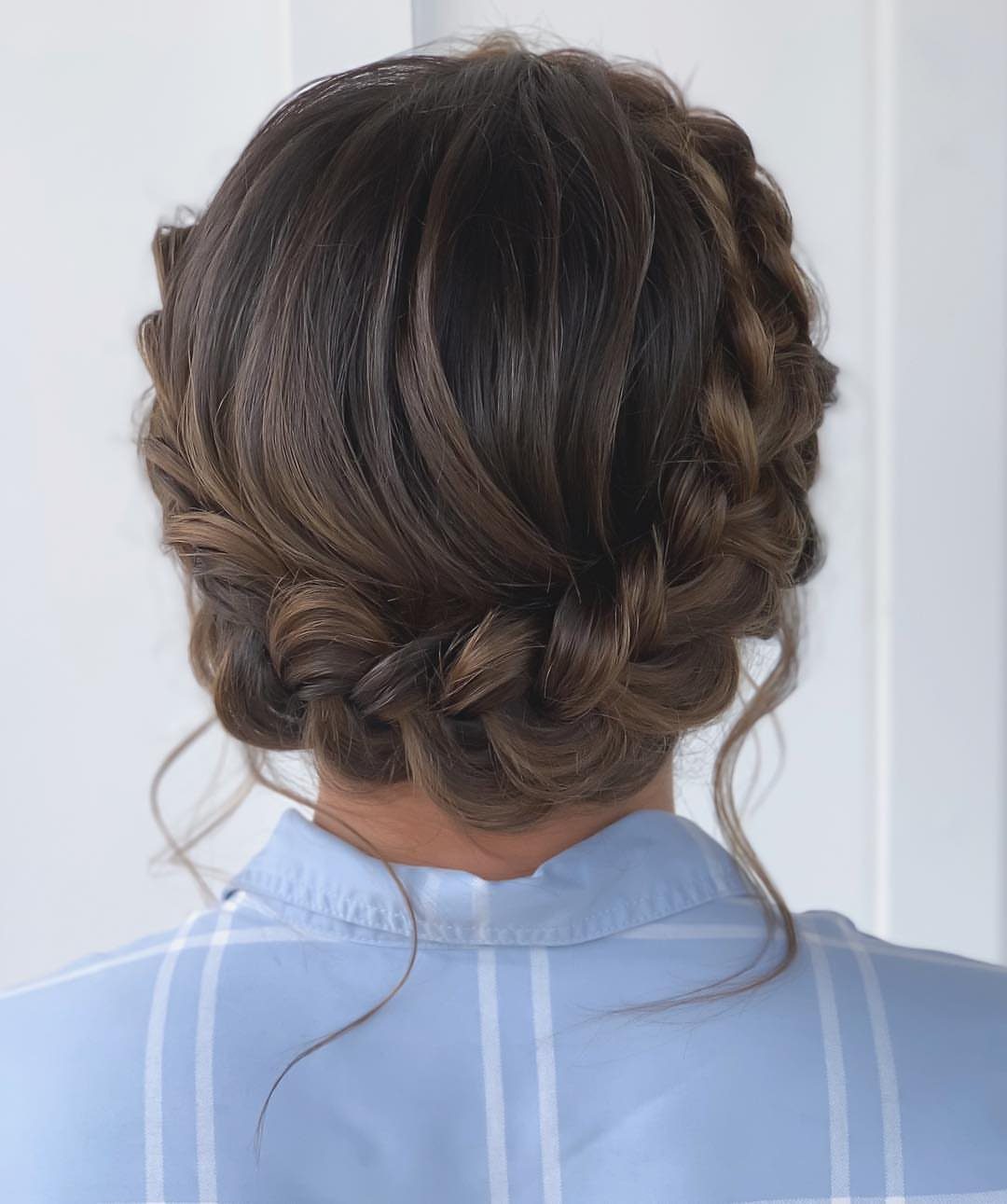
You braid along the hairline from ear to ear, wrapping the braid around your head like a headband, then pin the ends under or tuck them into a low bun.
The braid frames your face and keeps flyaways off your forehead, which is why this works so well for formal events or outdoor days when you want everything controlled.
It suits medium to long hair best because you need enough length to reach all the way around.
6. French Braid Ponytail
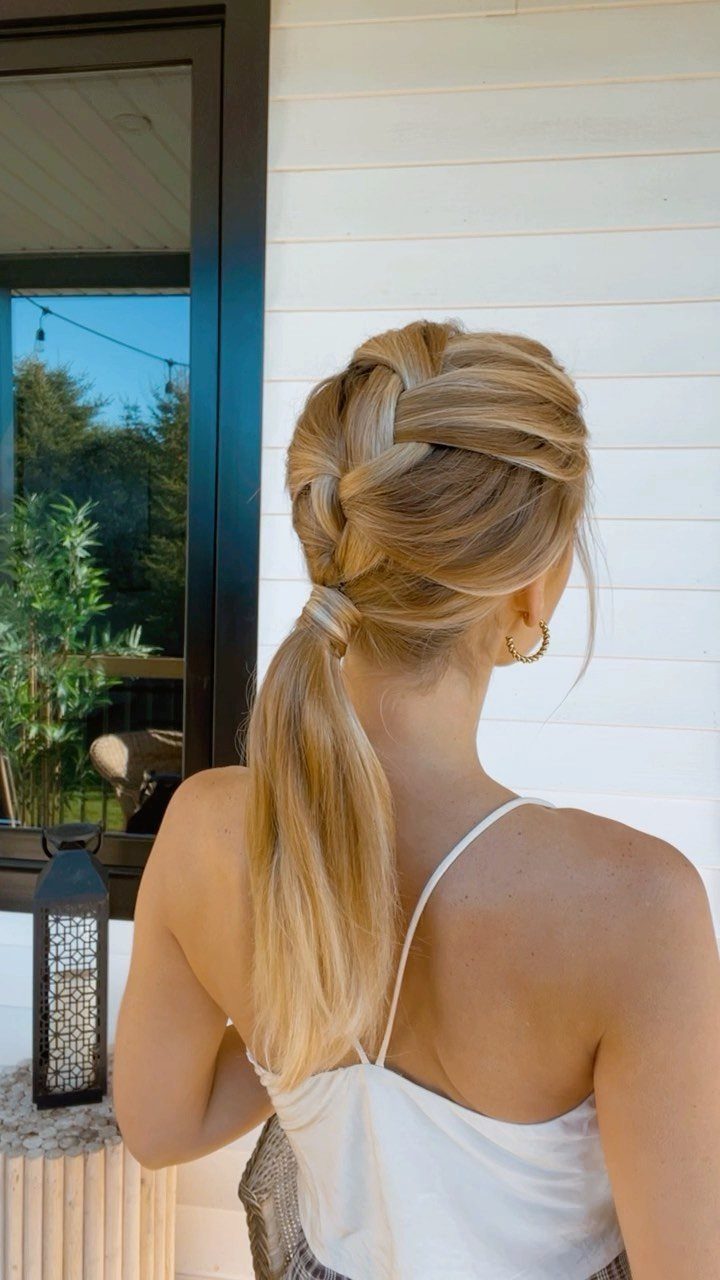
Part horizontally across the middle of your head to separate top from bottom. French braid the top section back, then gather everything into a ponytail at the crown or nape and secure it with an elastic.
The braid keeps volume at the crown and stops the ponytail from sagging, which is useful if your hair is heavy or slippery. You can leave the ponytail smooth or curl it for more texture.
7. Half-Up French Braid
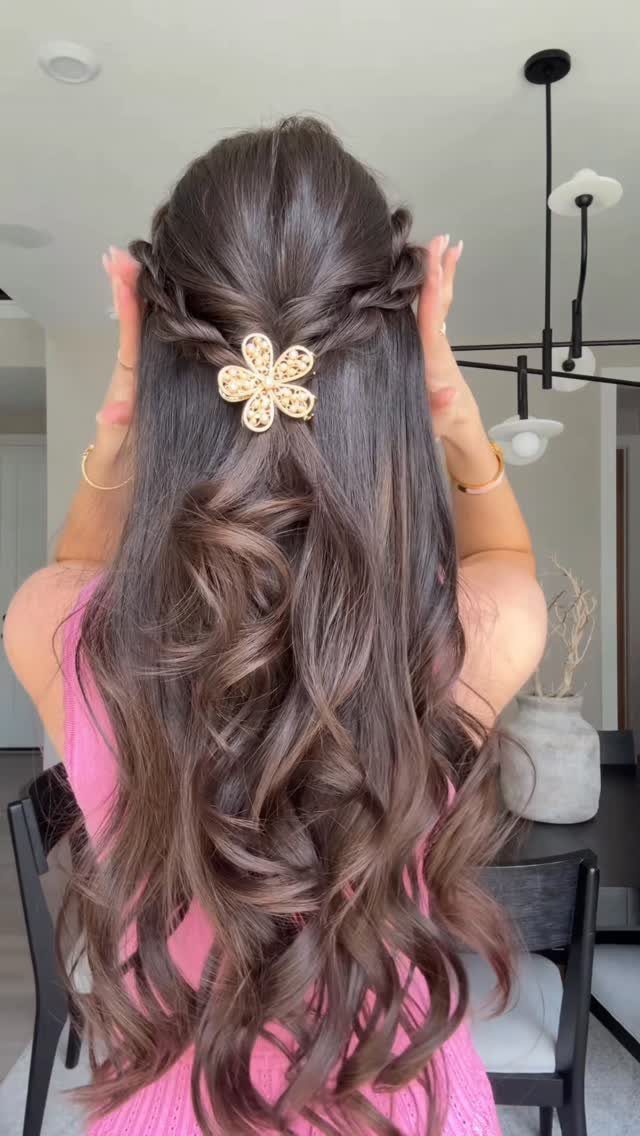
Braid from the crown back, picking up sections from the sides as you go, then secure the braid with an elastic and let the rest hang loose.
The braid pulls hair away from your face but leaves length visible, which works when you want your curls or waves on display but still need the top controlled.
You can stop the braid wherever feels right for your face shape and hair thickness.
8. French Waterfall Braid
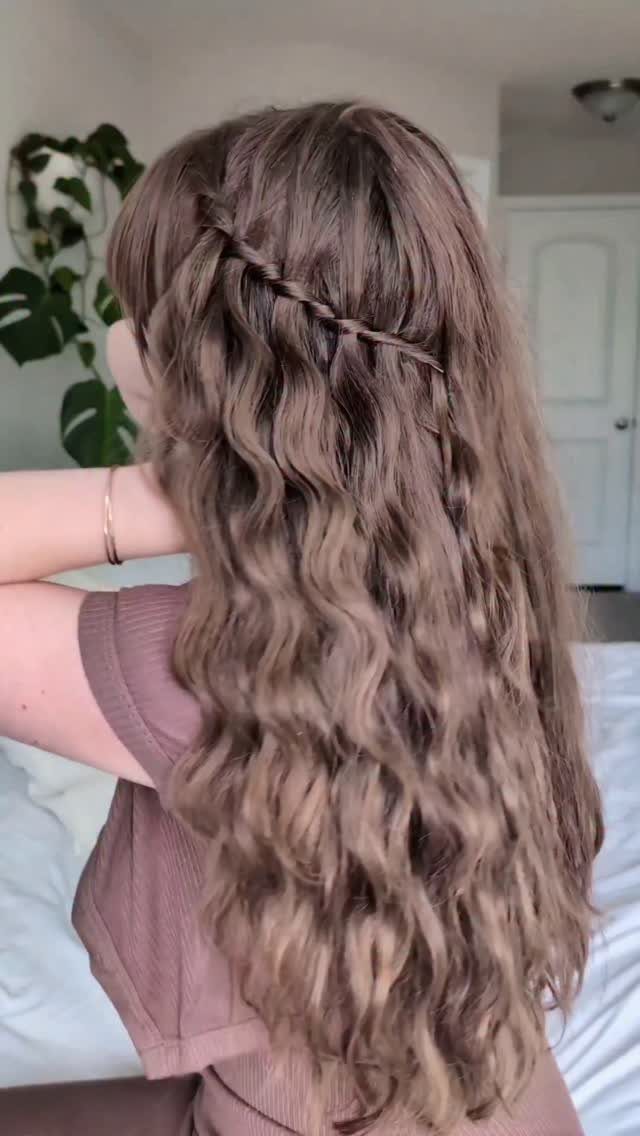
This one runs horizontally around your head, usually from one temple toward the back, and each time you add a new section you drop the previous strand instead of carrying it through.
Those dropped pieces fall down through the braid and mix with the loose hair below.
The braid stays visible but doesn’t gather all your hair, so you get structure at the crown with length still flowing. It takes practice because you’re releasing strands as you braid, but once the rhythm clicks it moves quickly.
9. Curly French Braid
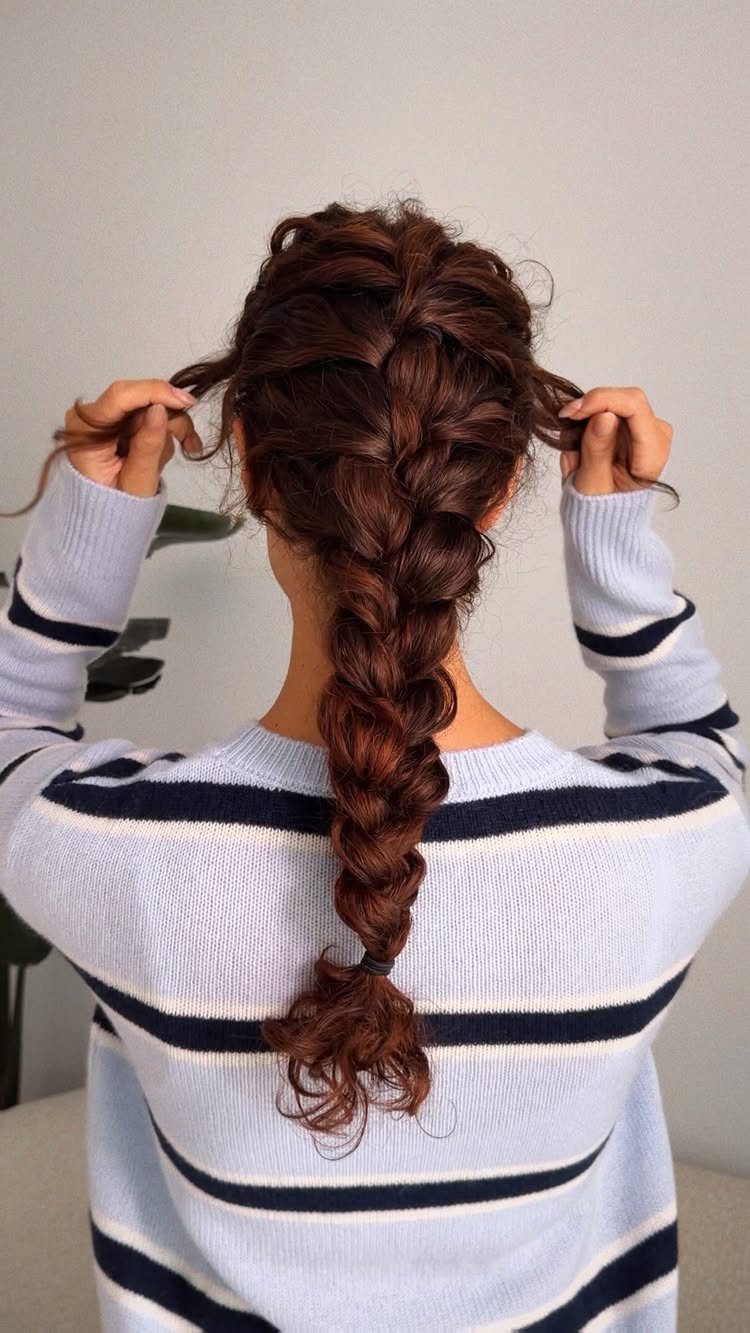
You braid the curls as they are instead of straightening first, which means the braid looks fuller and more textured than it would on smooth hair.
Curly hair grips itself, so the braid holds without much tension and you can keep it loose.
The curl pattern shows through the weave, which gives you that chunky, lived-in look. If your curls tangle easily, run a leave-in conditioner through before you start.
10. Long Side Pony
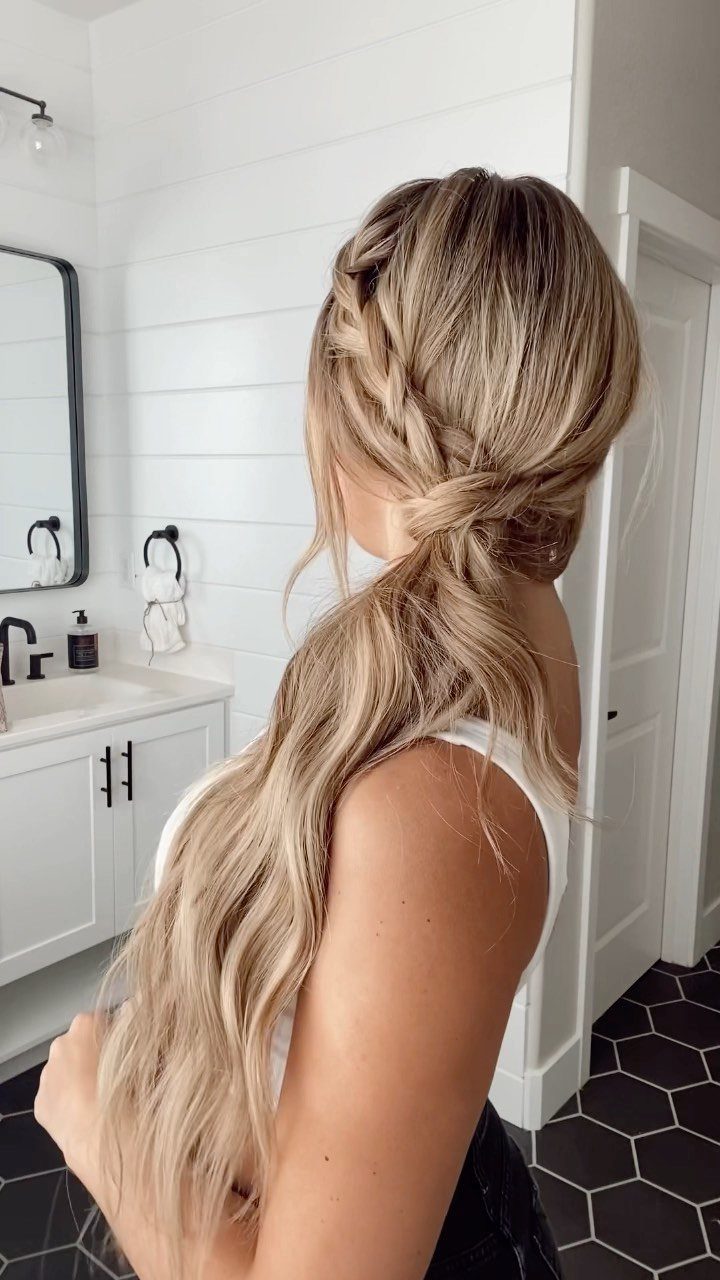
Start at one temple and braid diagonally across the back toward the opposite ear, then pull everything into a side ponytail at that point.
The braid wraps across the back, so you get texture where a plain side ponytail would just be smooth. This version shows off long hair from an angle and keeps everything off your neck.
11. Sculptural Crown of Braids
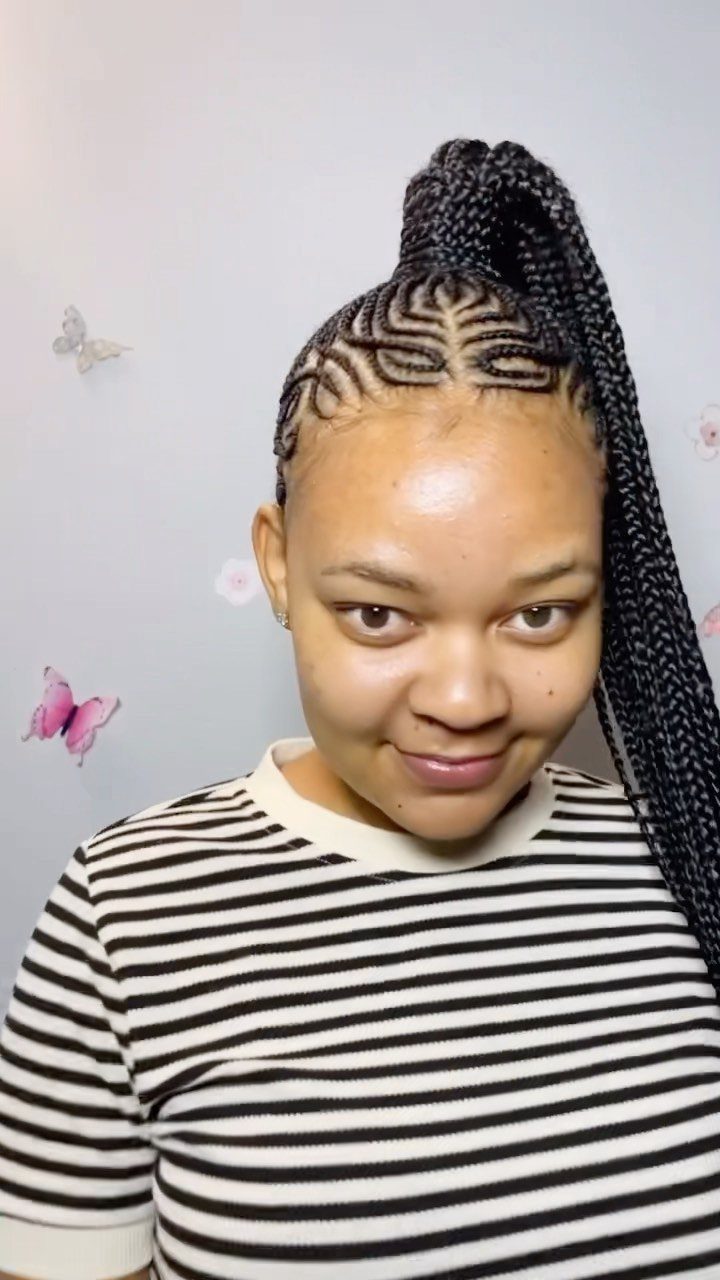
Multiple small braids woven tight from different directions and gathered at the crown into one high ponytail. The braids cross and layer over each other, so the crown looks deliberate and geometric instead of loose.
You need enough time to map out where each braid starts and where it meets the others, and this holds best on hair with some texture or product to grip. The finished look reads formal or editorial.
12. Diagonal Chignon
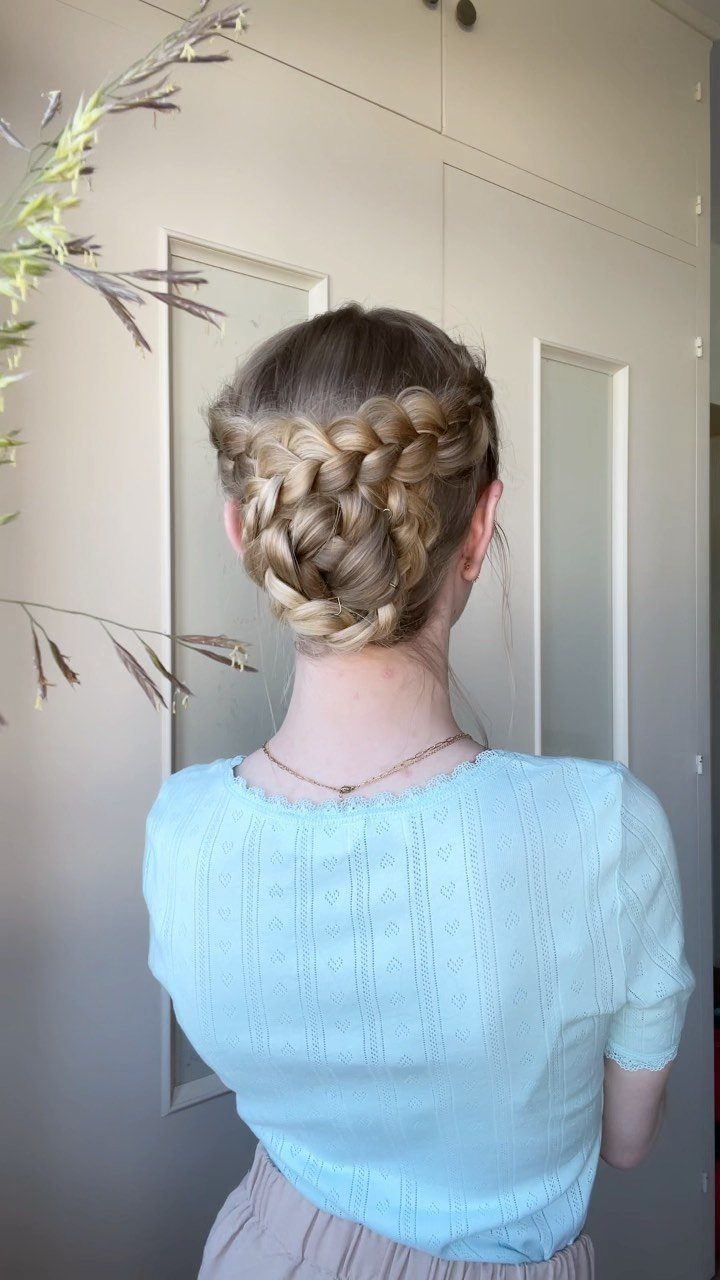
French braid from one side of your head diagonally down toward the opposite shoulder, then coil the end of the braid into a low bun and pin it at the nape.
The diagonal line gives you asymmetry without looking unfinished, and the braid keeps the bun anchored so it doesn’t sag. This suits medium to long hair and works when you want something formal that still has movement.
13. Thick Pigtail Plaits
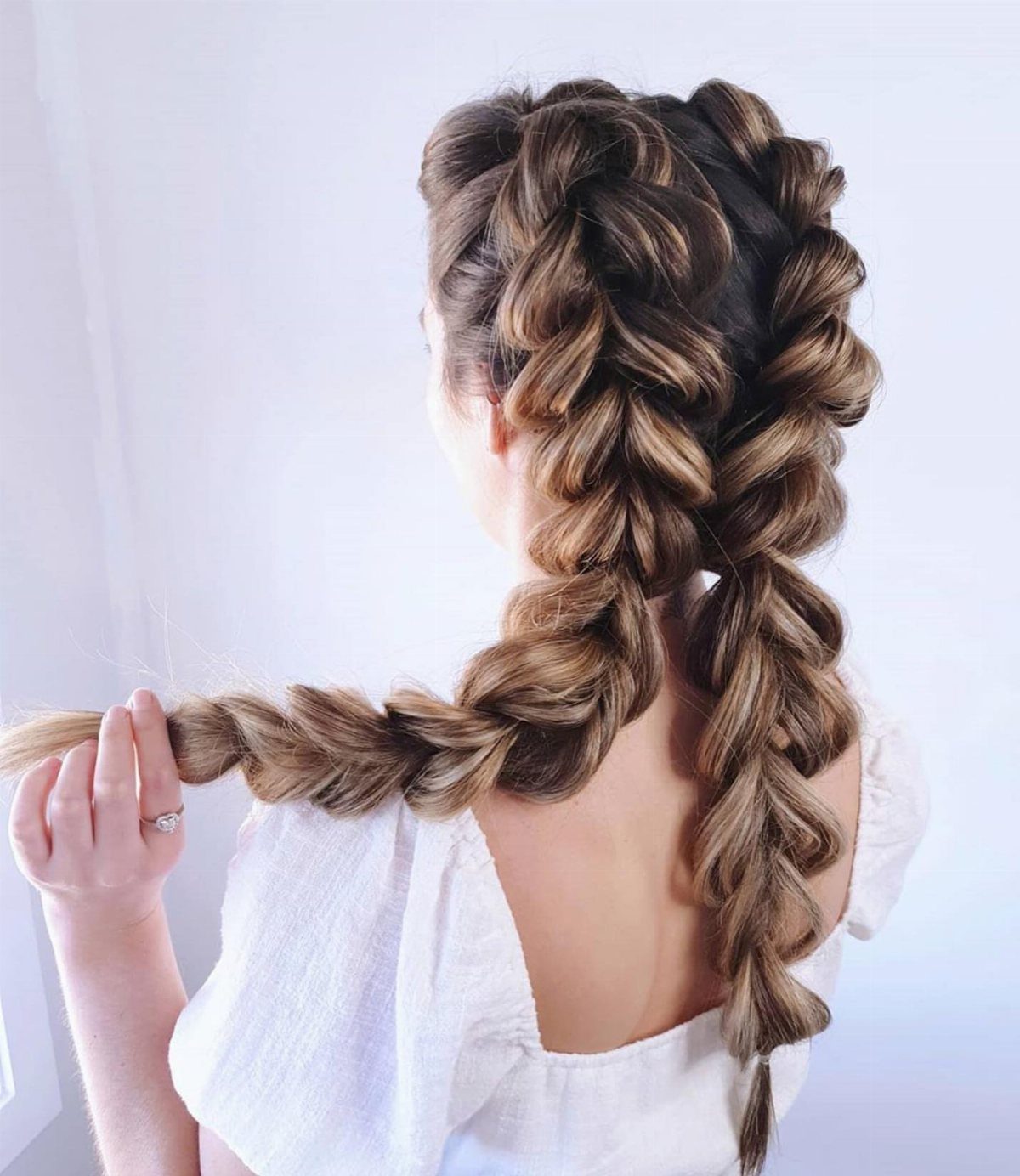
2 French braids worn low and pulled apart after securing to double their width.
The looser weave makes them look fuller than tight plaits would, which suits medium to thick hair especially well because the bulk reads as texture instead of weight.
You can braid straight down from a center part or angle them slightly outward for more volume at the ends. Pancaking the sections as you go gives you that chunky, lived-in finish without waiting until the braid is done.
14. French Braid Headband
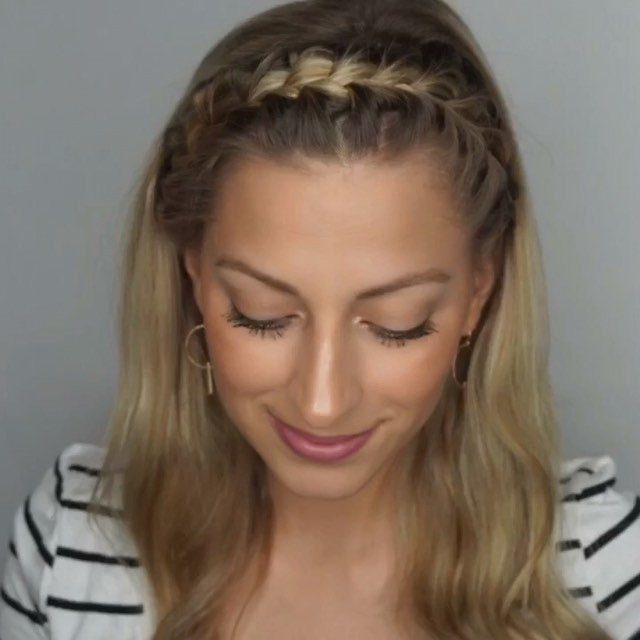
Braid a narrow section along your hairline from one temple across the top of your head, stopping at the other temple or continuing around to the back, then pin the ends. Your length flows free below it.
This keeps flyaways off your forehead without pulling everything back, and it works on any length past your shoulders. You can braid tight for a clean line or loosen it slightly for more texture against your loose hair.
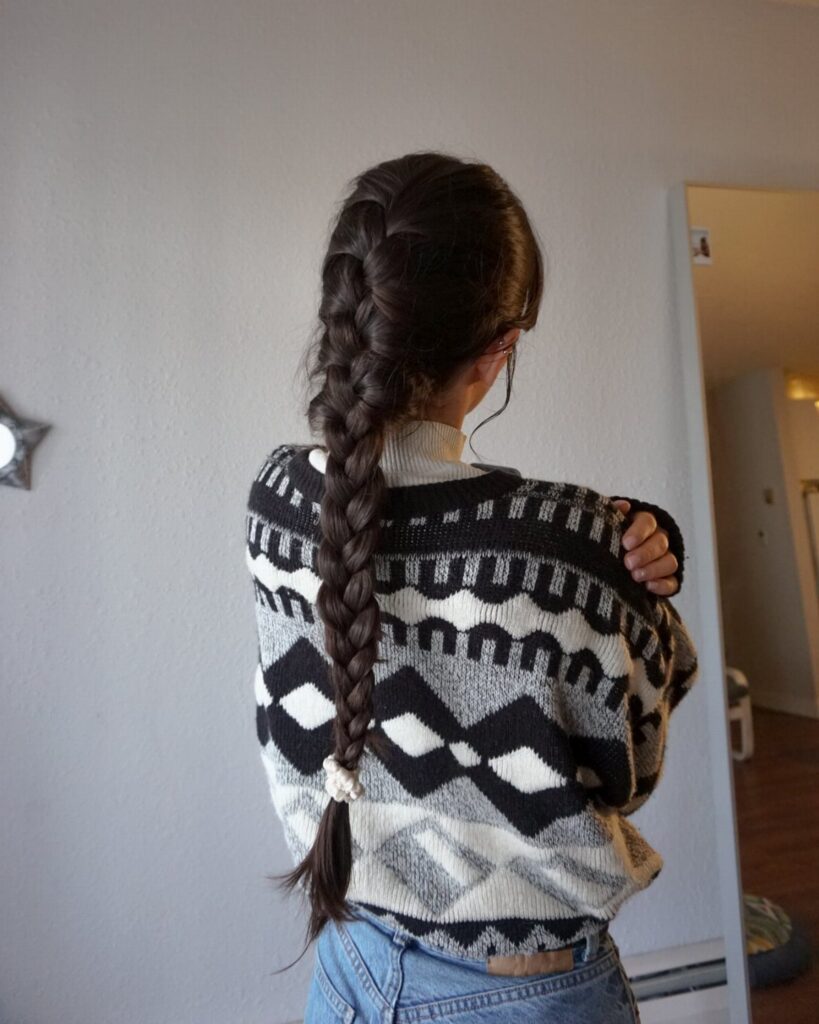
15. Single French Braid
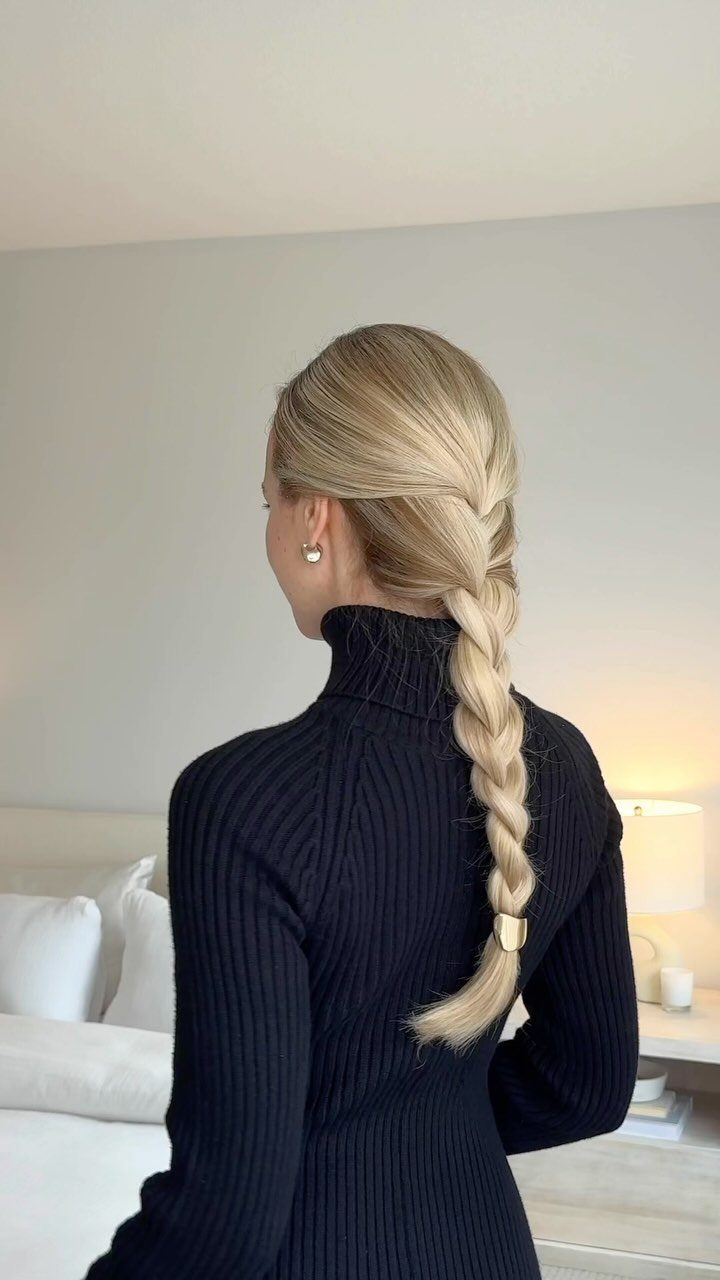
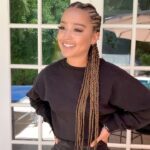
One French braid started at the crown and braided straight down the center of your head, the way most people learn it first.
It sits flat against your scalp and shows the weave clearly from behind, which makes it read polished without much effort.
This version suits any length past your shoulders and holds through a full day. If your hair is layered, a bit of product or a quick mist of water before you start keeps the shorter pieces from slipping out.
16. French Braids Into Curls
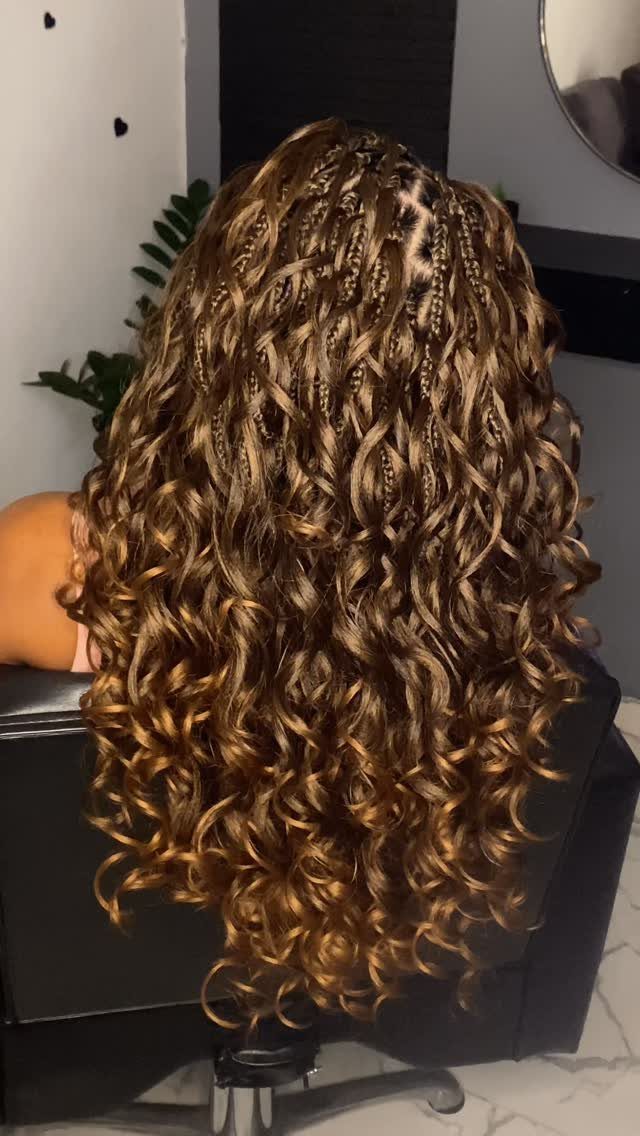
French braid a few narrow sections at the crown, then leave the rest loose and curled.
The braids add structure where a full head of curls might feel too soft, and they keep the crown smooth so the curls stay the focus.
This works especially well on long curly hair or if you’re adding extensions because the braids anchor everything and stop the top from looking flat. You can braid symmetrically or scatter them across one side for asymmetry.
French Braid Technique
The difference between a French braid and a Dutch braid comes down to which way the strands cross. Dutch braids cross underneath, which lifts the braid outward and makes it sit on top of your hair instead.
Start at the crown with 3 even sections.
Cross the right strand over the middle, then the left strand over the new middle. Each time you cross, pick up a thin section from the side and add it to the strand before you cross it over.
Keep the new sections the same thickness all the way down, and hold even tension in your hands so one side doesn’t pull tighter than the other.
A bit of mousse or texture spray before you start gives your hair grip, which helps the braid hold and makes it easier to control fine or slippery hair.
Braid gurus will argue the nuances of a true French braid, the biggest being that it’s not a Dutch braid.
— ELLE
Choosing a Style for Hair
French braids adapt to most hair types, but length and layering change which styles hold best.
Thick hair can feel heavy to braid in one pass.
Splitting it into 2 braids divides the weight and makes the work faster. Fine hair benefits from looser braiding or pancaking afterward because it adds width where a tight braid might look thin.
Short layers slip out more easily than one-length hair.
Grip and Short Layers
Light mousse or texture spray applied before you start gives the hair grip so the braid holds without extra tension.
If layers are popping out as you braid, a small amount of pomade, gel, or molding cream smoothed over those sections keeps them flat against your head.
Finish with hairspray if you need the braid to last through a full day or through activity. A light mist over the finished braid seals the surface and stops flyaways from lifting.
Gently tug each loop outward to widen the weave, working from the bottom up so the tension stays even.
Frequently Asked Questions
Which is easier, French or Dutch braid?
French braids are easier for most people because the strands cross over the middle, which keeps your hands in a more natural position.
What is a French braid?
The braid starts at the crown with 3 strands, and you pull in a little hair from each side with every pass.
The added sections join the weave as you go, which keeps the braid flat against your head rather than sitting free.
What is the prettiest type of braid?
The French braid updo and the French fishtail braid both rank high for polish and texture.
The updo suits formal events because the braid structure holds the bun without a lot of pins, and the fishtail shows intricate weaving that reads clearly even on fine hair.