Curly bangs run from wispy cuts that let individual ringlets show through to full blunt lines that sit heavy across the forehead, and the right one depends on your curl diameter and whether you want coverage or definition.
Tighter curls, 3b to 4c, give blunt bangs clean structure because each coil springs back close to the root, while looser waves do better with curtain styles that sweep longer at the sides.
1. Wispy Curly Bangs
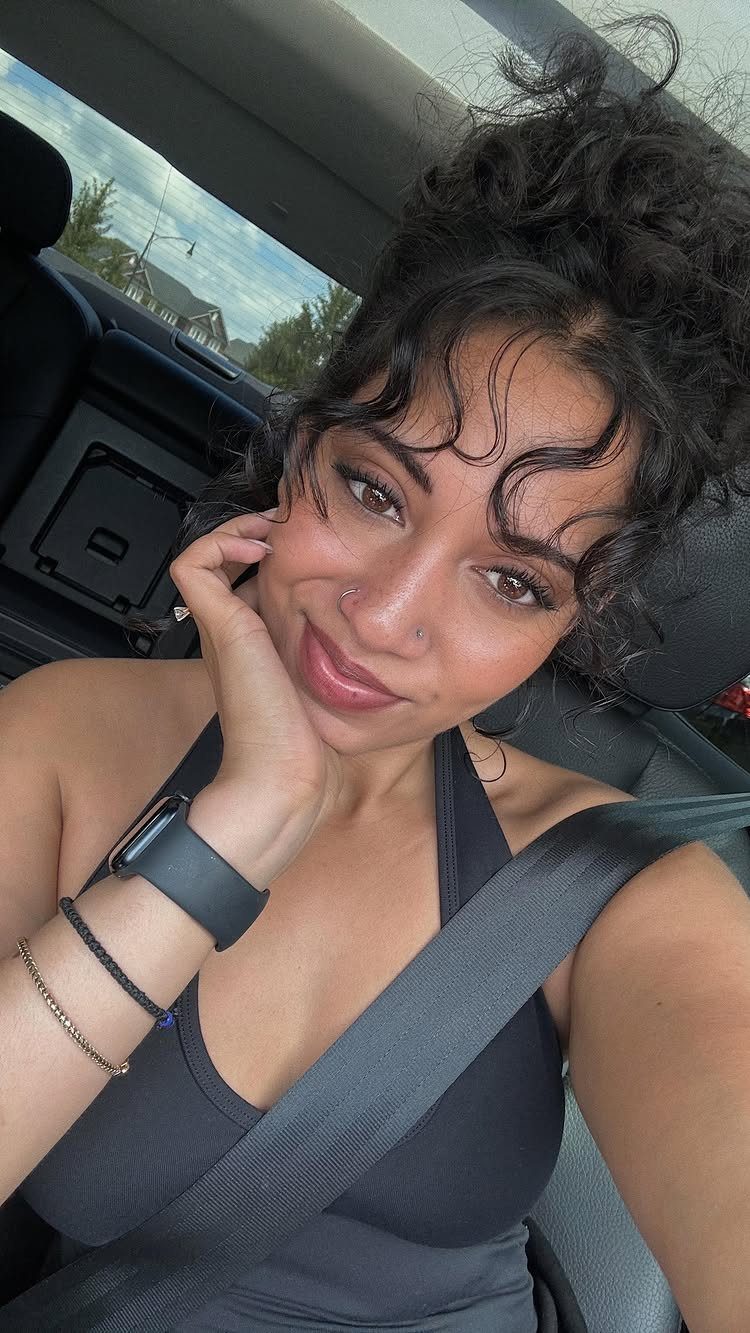
Wispy curly bangs are cut thin enough that the individual coils stay visible instead of merging into one solid line. The result feels soft and modern, lighter than a full fringe but still enough to frame your face.
Ask for point-cutting or razor texturing at the ends so each curl separates cleanly. If your stylist uses shears straight across, the fringe can look bulky once it dries.
At home, finger-coil the bangs while damp and let them air-dry, or diffuse on low.
Scrunching pulls them too tight. A light curl cream holds the pattern without adding weight.
2. Curly Curtain Bangs
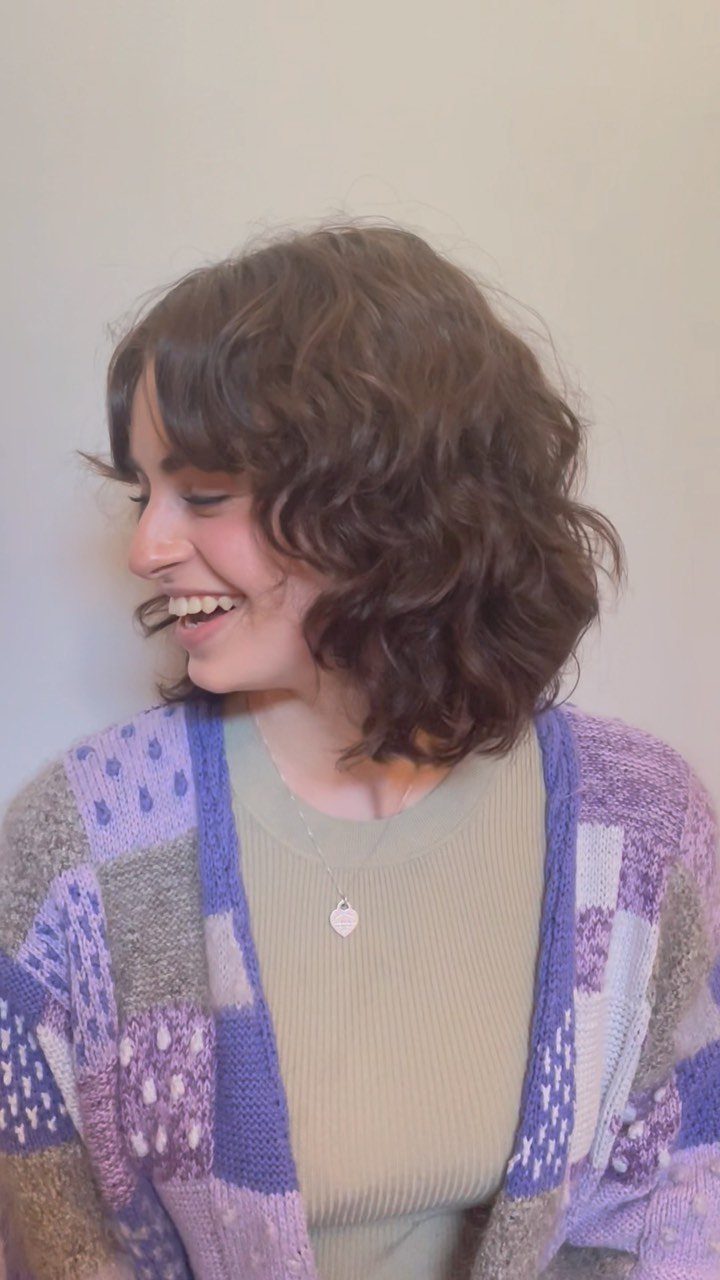
Curtain bangs part in the center and angle longer toward the temples, creating an open frame around your eyes. The shape works across curl patterns because it follows the natural fall of your hair rather than fighting it.
Cut dry so your stylist can see how much length the curl will take up. Most curtain bangs sit around cheekbone level when dry, shorter in the middle and blending into your layers at the sides.
3. Full Curly Fringe
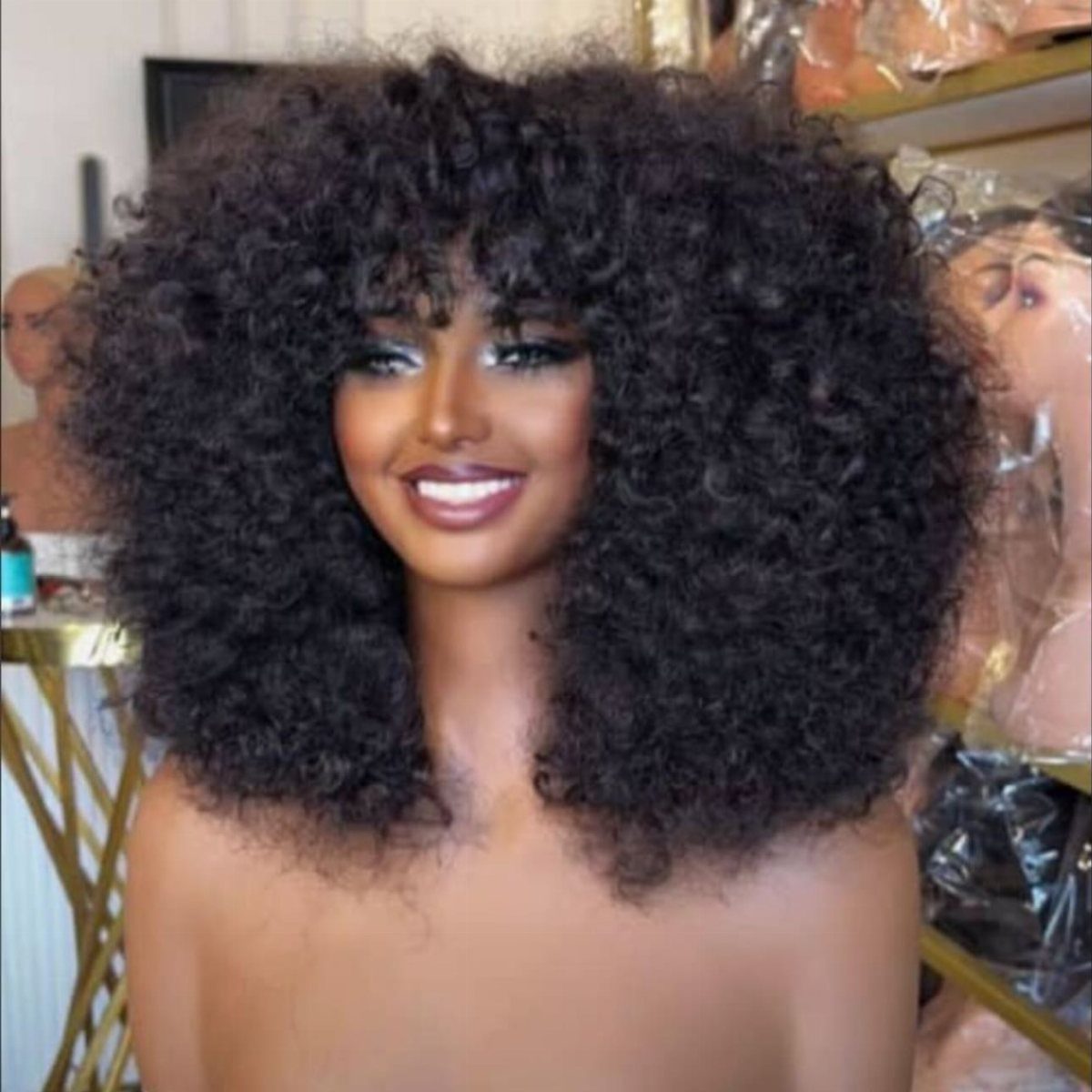
A full fringe covers the forehead from temple to temple with no gaps or thinned sections. The weight creates a bold horizontal line that balances a longer face or draws attention upward when paired with volume at the crown.
This cut demands more maintenance than wispy or curtain styles.
4. Voluminous Curly Updo
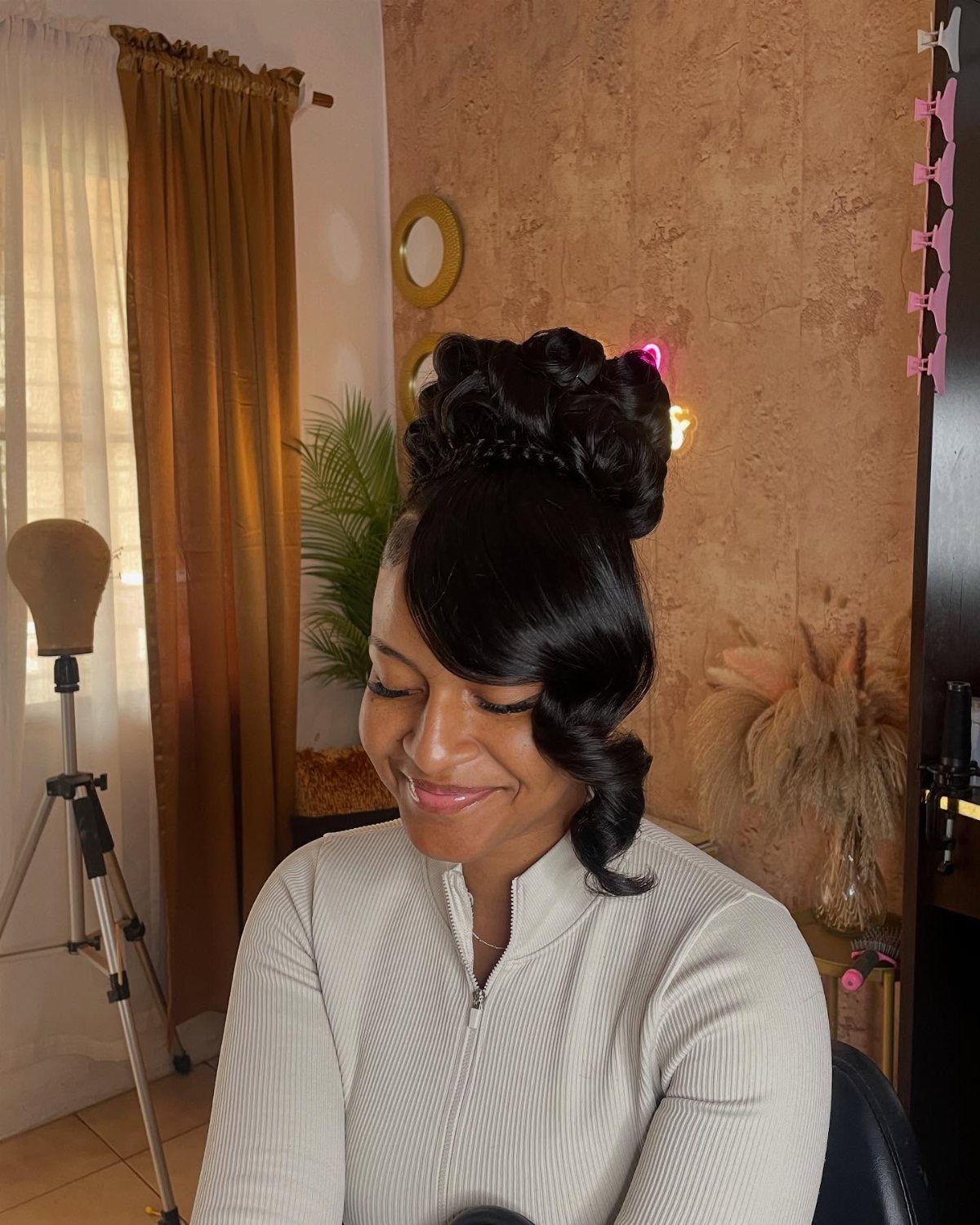
A high updo pulls the bulk of your curls to the crown and secures them in a rounded, voluminous shape, then leaves a few ringlets loose around your face to soften the line.
The structured updo set against loose face-framing curls keeps the look from feeling too formal.
Bobby pins alone often slide out of curly hair. Use spin pins or U-pins instead, and anchor them through the base of the bun rather than skimming the surface.
5. Blunt Curly Bangs
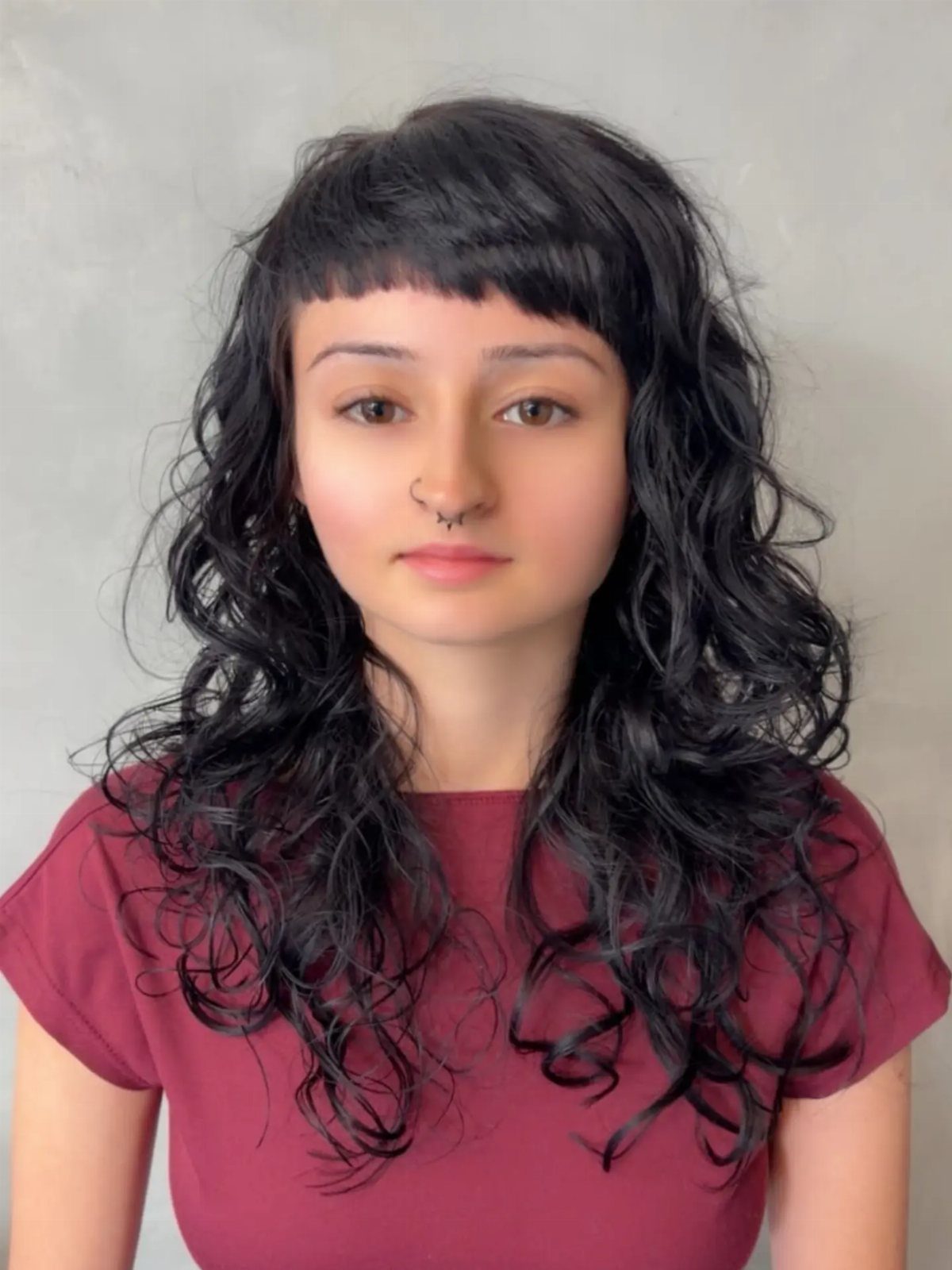
Blunt curly bangs are cut straight across at one length, usually just above the brows or at the lash line. The clean edge stands out against textured lengths, so this fringe reads graphic and intentional.
The cut looks sharpest on tighter curl patterns, 3b through 4c, where the coils hold their shape without falling flat. Looser waves tend to separate and lose the solid line a blunt fringe needs.
Curly hair shrinks as it dries, so an extra quarter inch of growth shows up faster than it would on straight bangs.
6. Medium Curly Bob
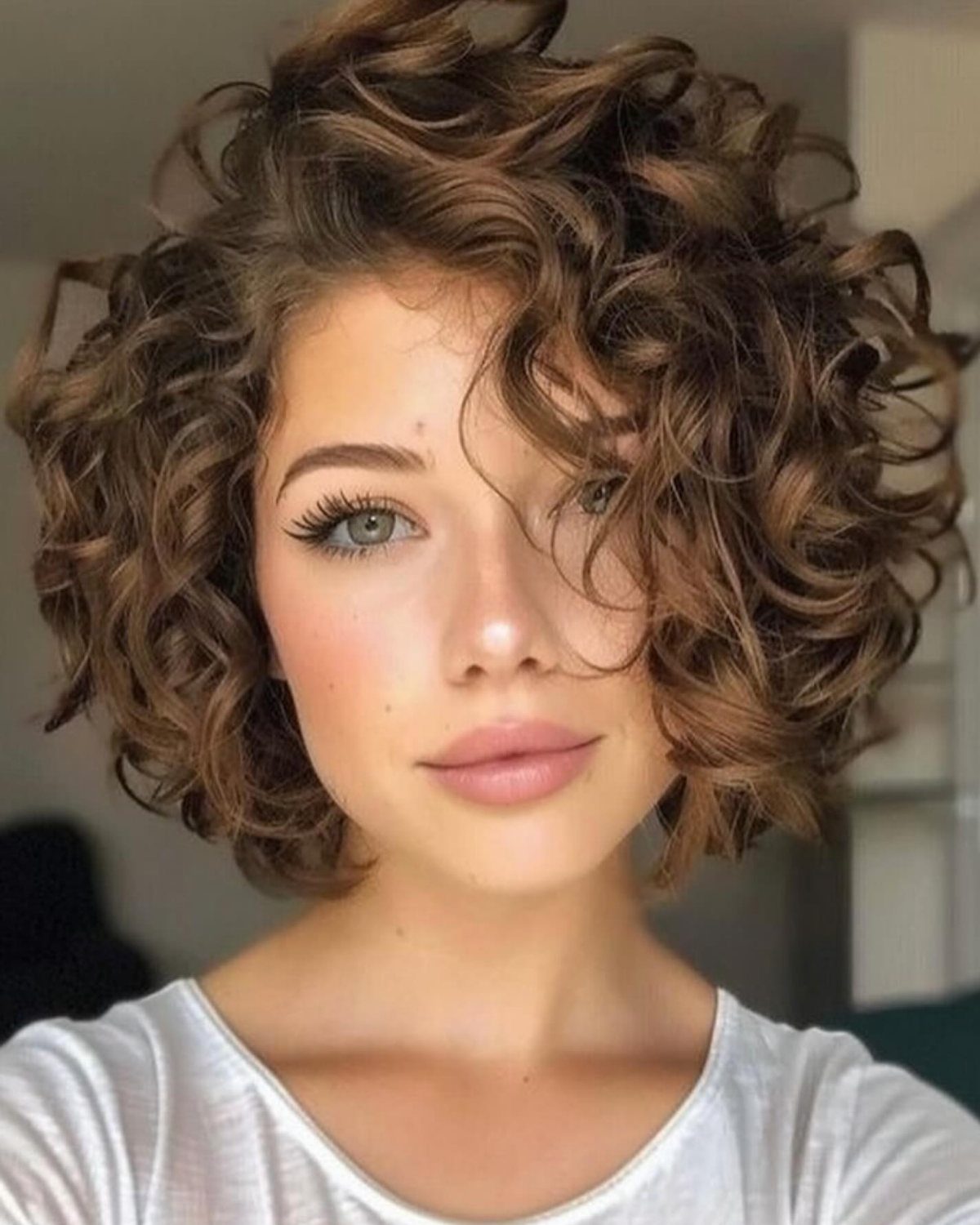
A curly bob cut at chin length keeps the shape rounded and full, and when paired with curtain bangs, the fringe splits softly at the forehead while the bob swings just below the jawline.
The combination shortens styling time because there is less length to dry and define.
Ask for the bob to be cut dry so your stylist can see the natural curl pattern and adjust each section to match. Wet cutting often leaves uneven length once curls dry and coil.
7. Shaggy Wispy Bangs

Shaggy layers paired with wispy bangs give you a cut that moves as you do. The bangs sit feather-light at the forehead, thinned so they separate into individual curls, while the longer layers behind them fall in loose, uneven lengths.
The shag works across most curl patterns, 2c through 4a, because the layers remove weight without creating harsh lines.
If you have fine curls, the fringe can lose definition by midday. A light mousse applied at the roots keeps the lift without making the bangs crunchy.
8. Defined Ringlet Bangs
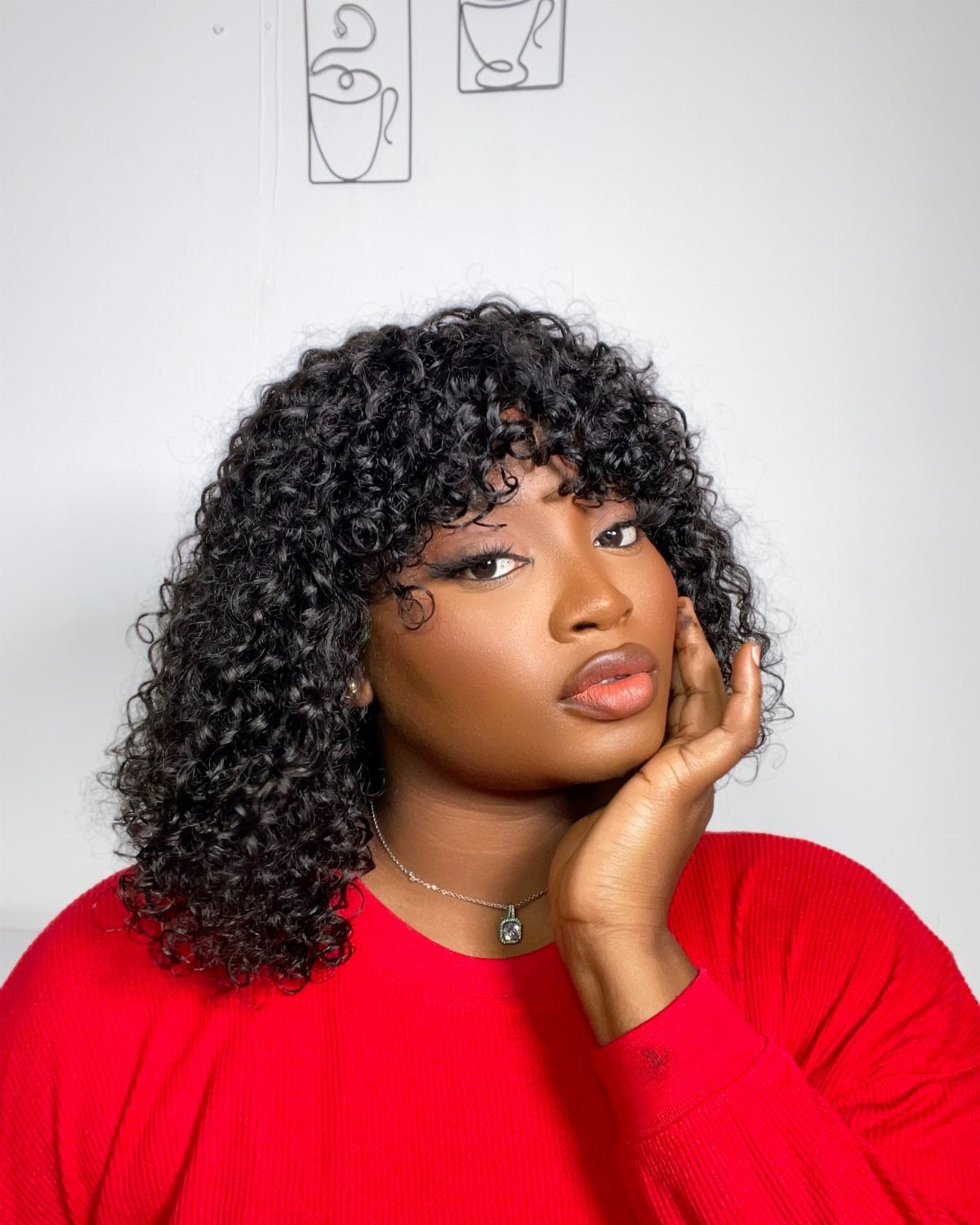
Ringlet bangs form tight, distinct spirals that sit across the forehead and blend gradually into longer lengths around your face.
Each curl holds its own shape instead of clumping into a solid fringe, so the line reads soft and defined at the same time.
This cut looks best on 3a through 3c curl patterns, where ringlets form naturally and hold without much help.
Looser waves often need a curling iron to match the definition, and tighter coils spring too short for the ringlet shape to show.
Apply a defining gel while the bangs are soaking wet, then air-dry or diffuse on low. Touching them while damp pulls the ringlets apart.
9. 4A Coily Micro Bangs
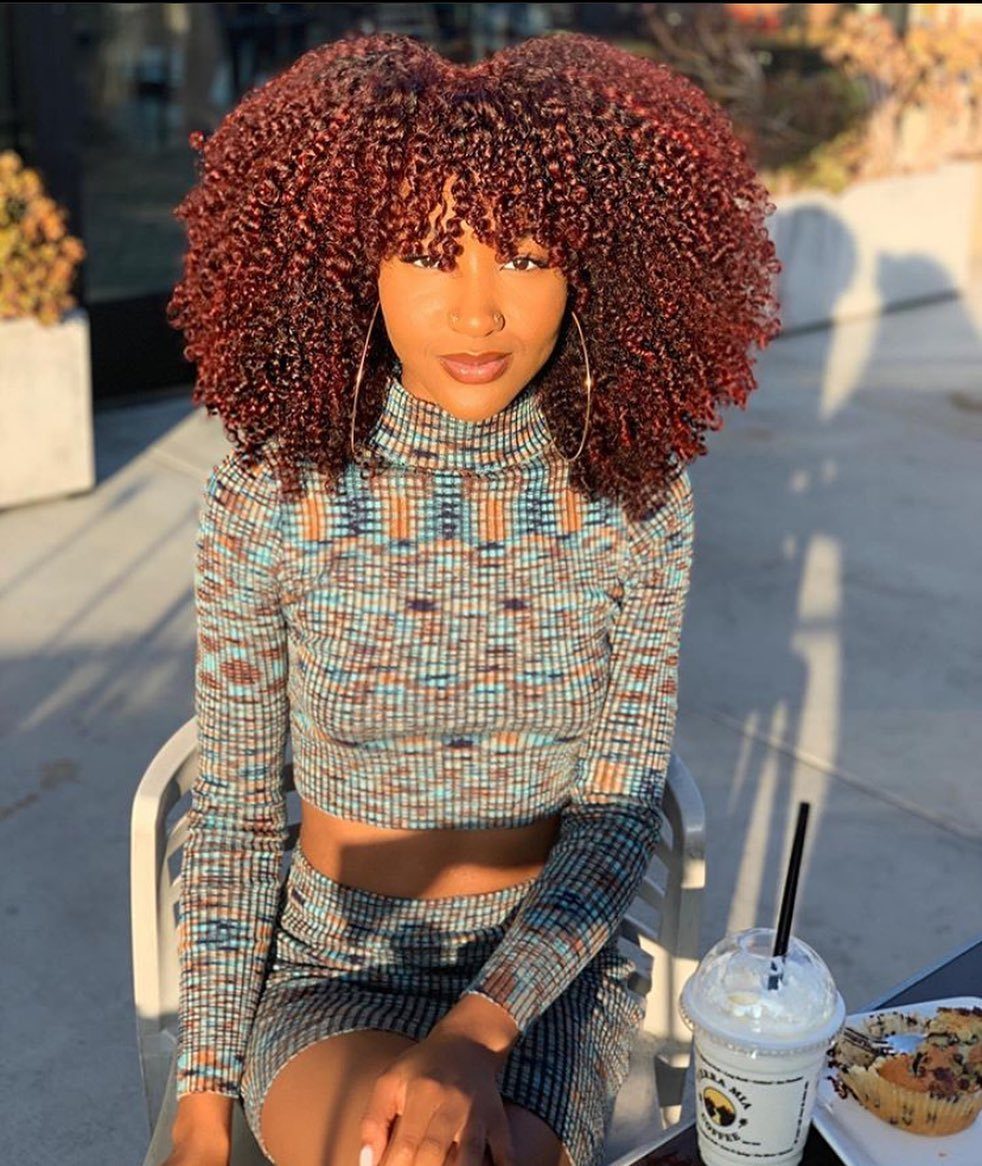
Micro bangs on 4a coils sit just above the brows, cut short enough that the coil pattern creates texture instead of length. The fringe adds structure to medium-length hair without covering the forehead completely.
Ask your stylist to cut dry so the coils sit at the right length when they shrink.
A leave-in conditioner smooths the bangs without weighing them down. Finger-coil each section after applying product, then let them set.
10. Curtain Bangs with Bob
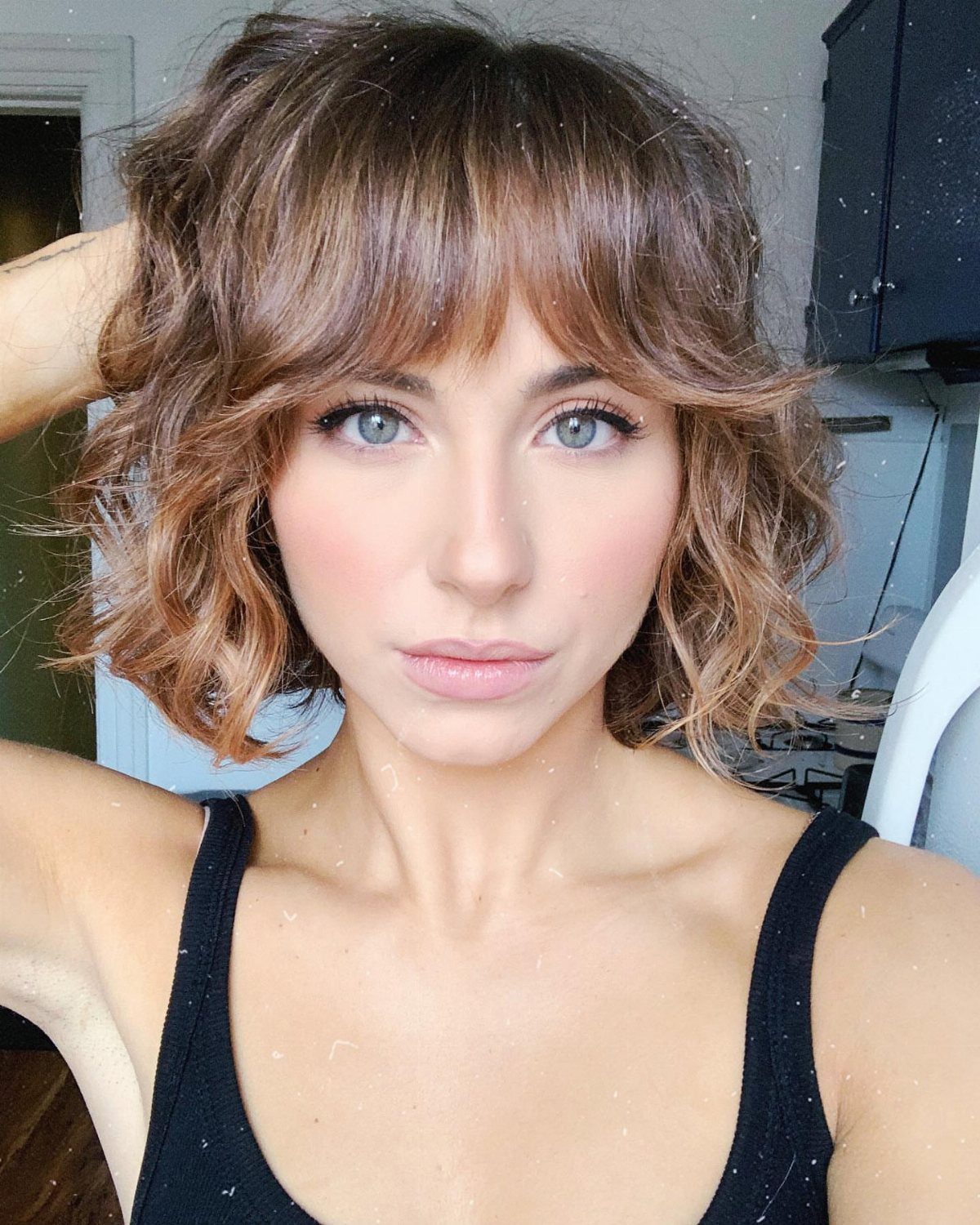
The curtain bang splits at the center and angles longer toward the ears, softening the clean line of a curly bob. The fringe opens the face while the bob keeps the volume compact and easy to dry.
Cut the bob dry so your stylist can match the natural curl pattern, then add the bangs the same way so the length stays predictable.
If the bangs are cut dry, they often spring shorter than intended once you move or shake your head.
Scrunch once, then leave them alone.
11. Curtain Bangs with Shag
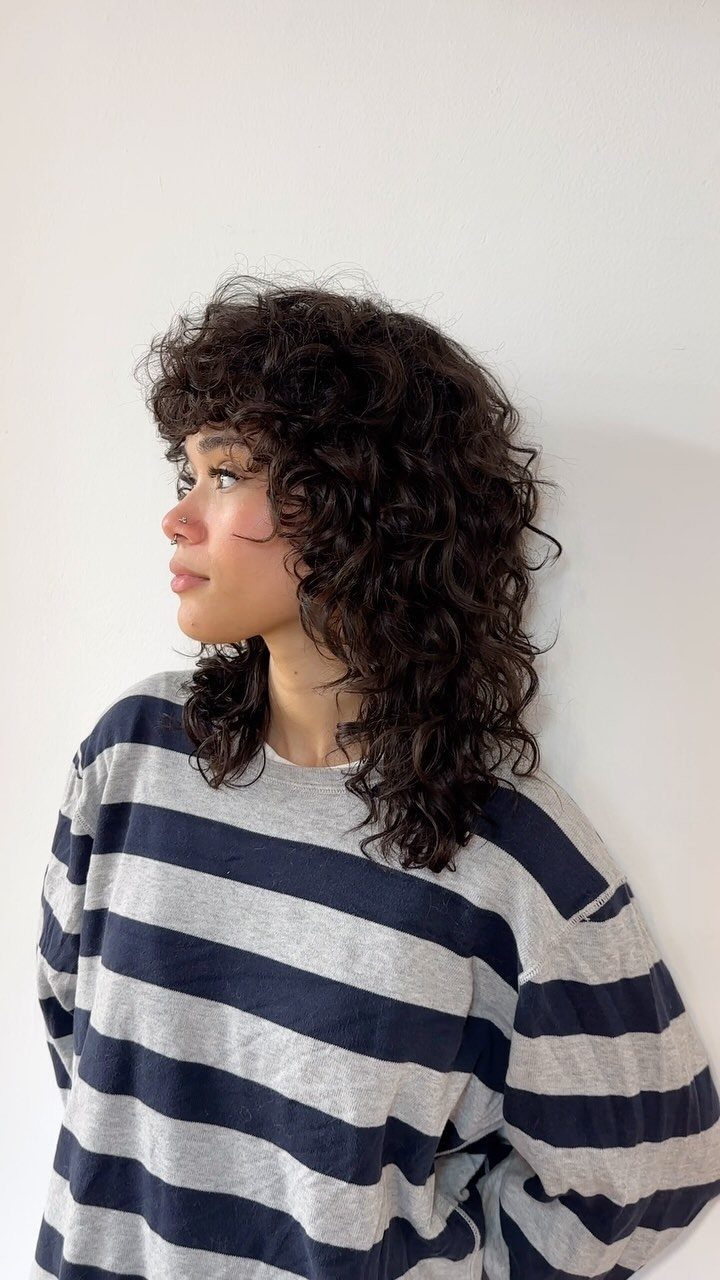
Curtain bangs inside a shag blend right into the longer layers, so the fringe feels like part of the movement rather than a separate piece. The shag’s uneven lengths keep everything light, and the center part opens up your face.
The cut suits 2c through 3b curl patterns, where the layers create lift without losing the wave. Tighter coils can look uneven as the shag grows out, so expect regular trims.
Diffuse upside down to add volume at the crown, then flip and finger-comb the bangs to center them.
12. 4C Kinky
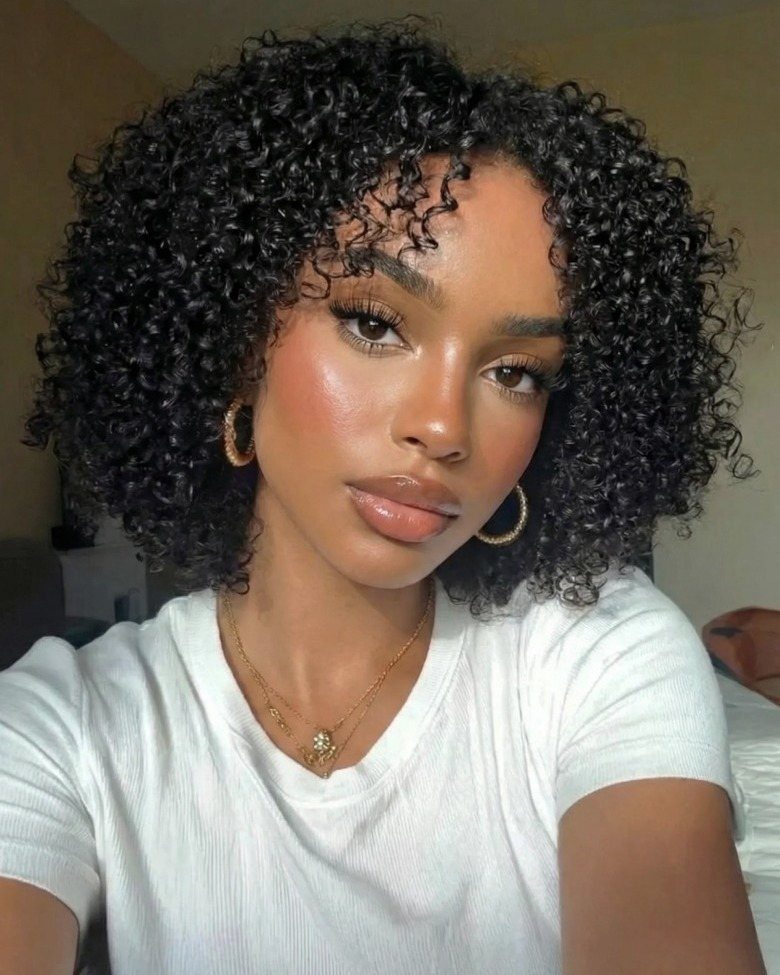
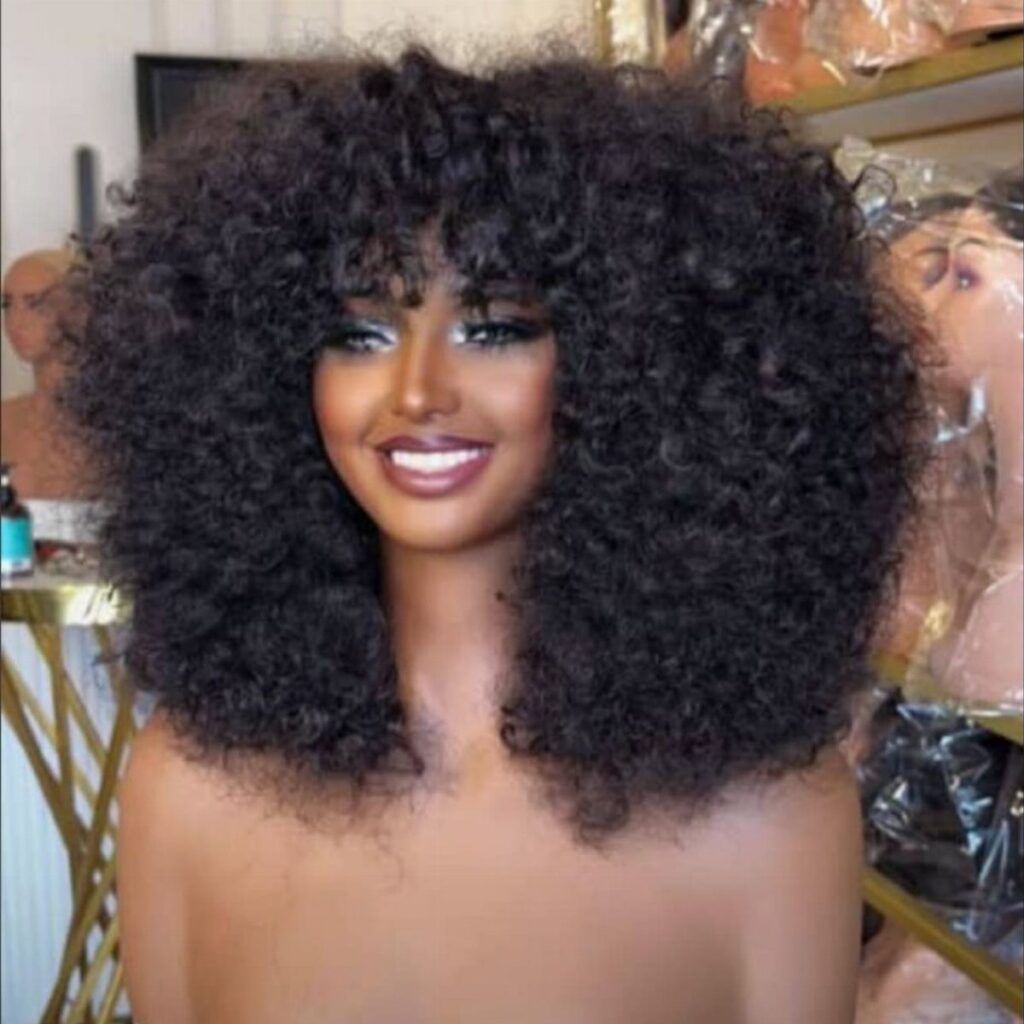
Bangs cut at eyebrow level on 4c hair create a dense, sculpted fringe that holds its shape without falling flat. The coils pack close together, so the line reads bold and intentional rather than soft or wispy.
This cut needs regular moisture to keep the bangs from drying out.
4c coils shrink fast, and even a quarter inch of growth changes how the fringe sits.
13. Face-Framing Layers
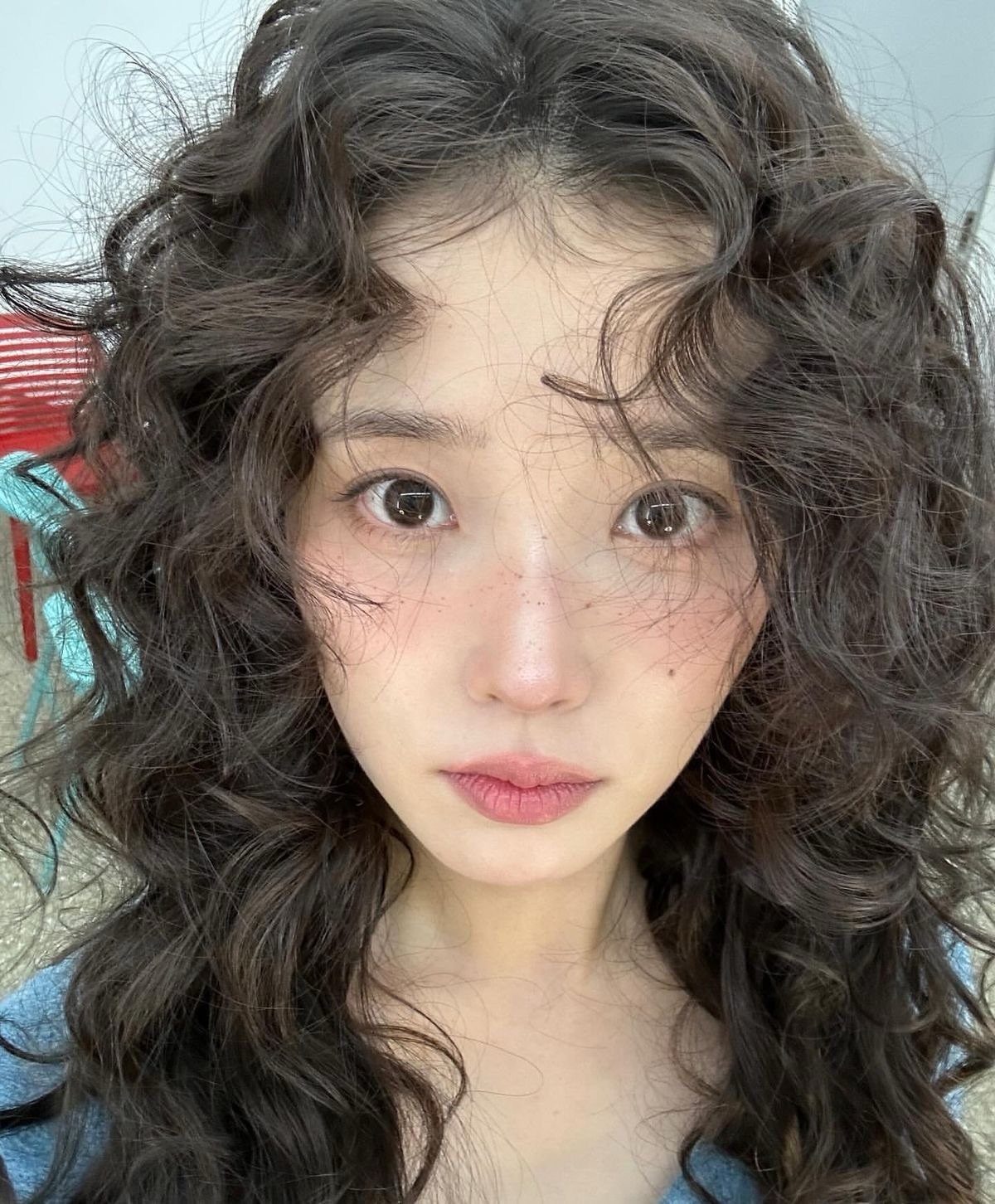
Face-framing layers cut shorter at the front and gradually lengthening toward the back give the appearance of bangs without committing to a true fringe.
The layers start around cheekbone or chin level, then cascade into longer lengths behind them, opening the face while keeping your full length intact.
This approach works when you want the framing effect of bangs but prefer to keep the option of pulling everything back. The shorter pieces can be tucked behind your ears or blended into a ponytail.
Apply curl cream to the front sections first while they’re wet, then finger-coil each one before diffusing. The layers need more definition than the rest of your hair to hold their shape and avoid blending in.
14. Layered Curly Bangs
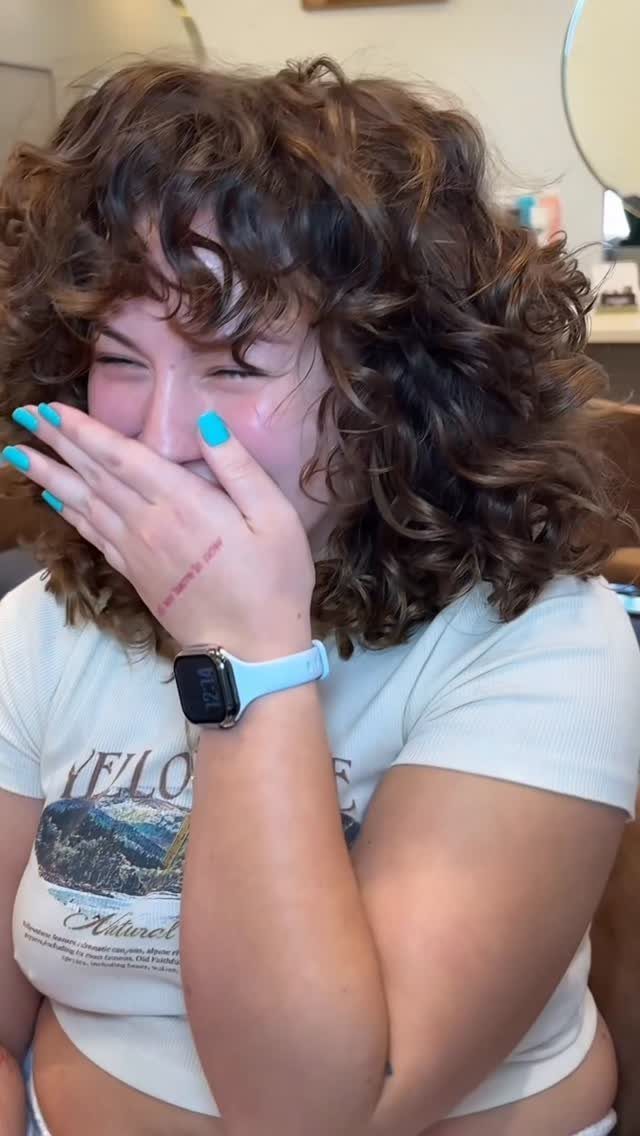
Layered bangs are cut at multiple lengths instead of one solid line, so the fringe cascades softly across your forehead and blends into the curls behind it.
The varied lengths keep the bangs from sitting heavy and let each curl move independently.
Ask for the layers to be cut dry so your stylist can see where each coil naturally falls. Cutting wet can leave gaps once the curls shrink and separate.
This fringe suits medium to high density hair, where the layers create movement without exposing too much forehead. Fine hair can look sparse once layered.
A light gel or mousse holds the curl pattern without weighing down the shorter pieces. Scrunch once, then let them dry undisturbed.
Bangs don’t have to be blunt. In fact, layered bangs ensure Alanna Arrington’s bouncy curls don’t take over her face.
15. Choppy Curly Bangs
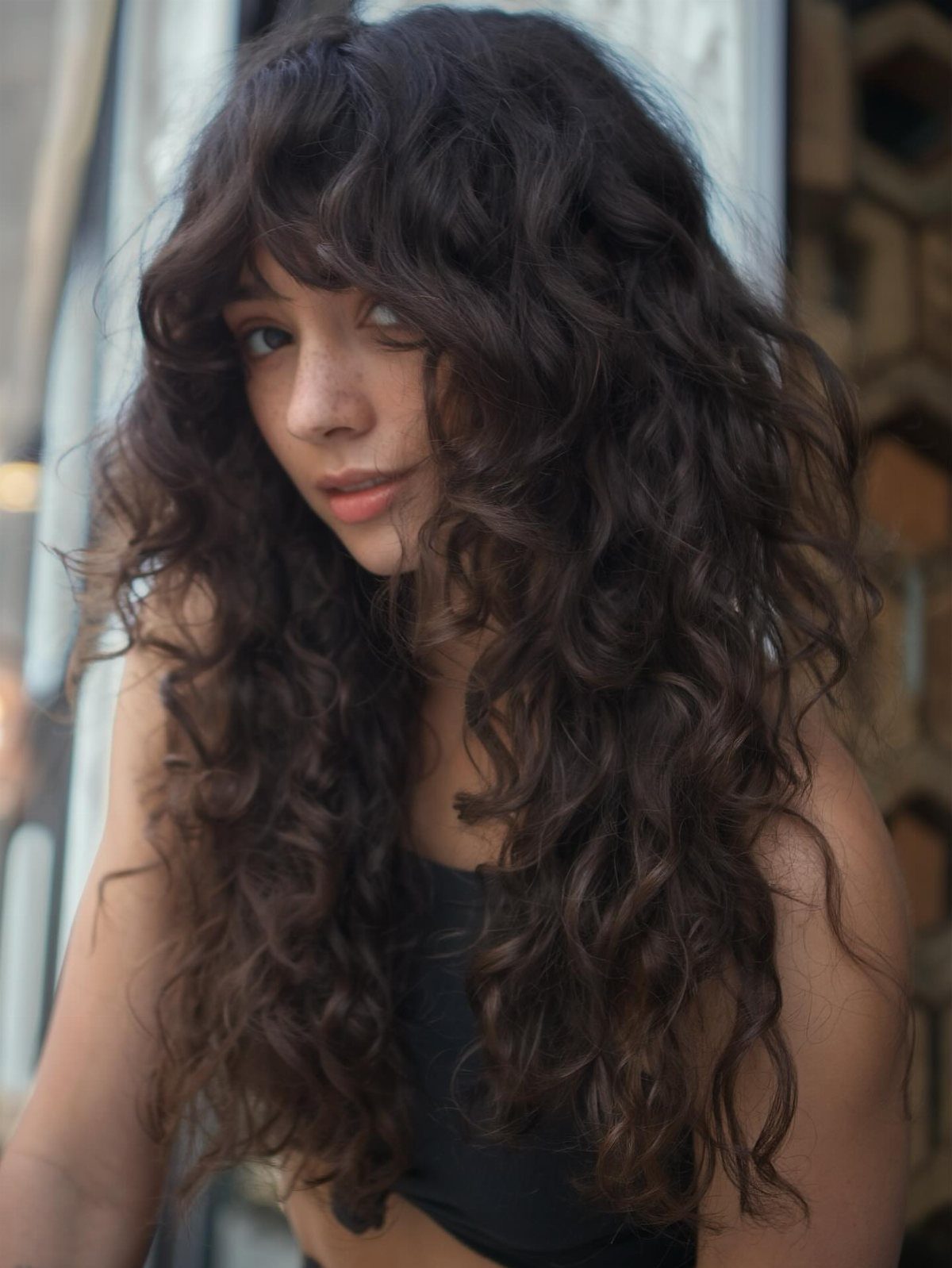
Choppy bangs are cut with intentional unevenness, creating a fringe where some pieces sit shorter and others fall longer. The jagged edge adds texture and keeps the look casual rather than polished.
The cut pairs well with longer, loose curls because the contrast between the rough fringe and flowing lengths reads deliberate. If your whole head is choppy, the bangs lose their punch.
Point-cutting or a razor gives the uneven texture you want. Blunt shears create a softer, more controlled result, which misses the point here.
At home, scrunch the bangs with a small amount of curl cream and let them dry naturally. Diffusing can flatten the choppy pieces and make them look too uniform.
16. Short Curly Bangs
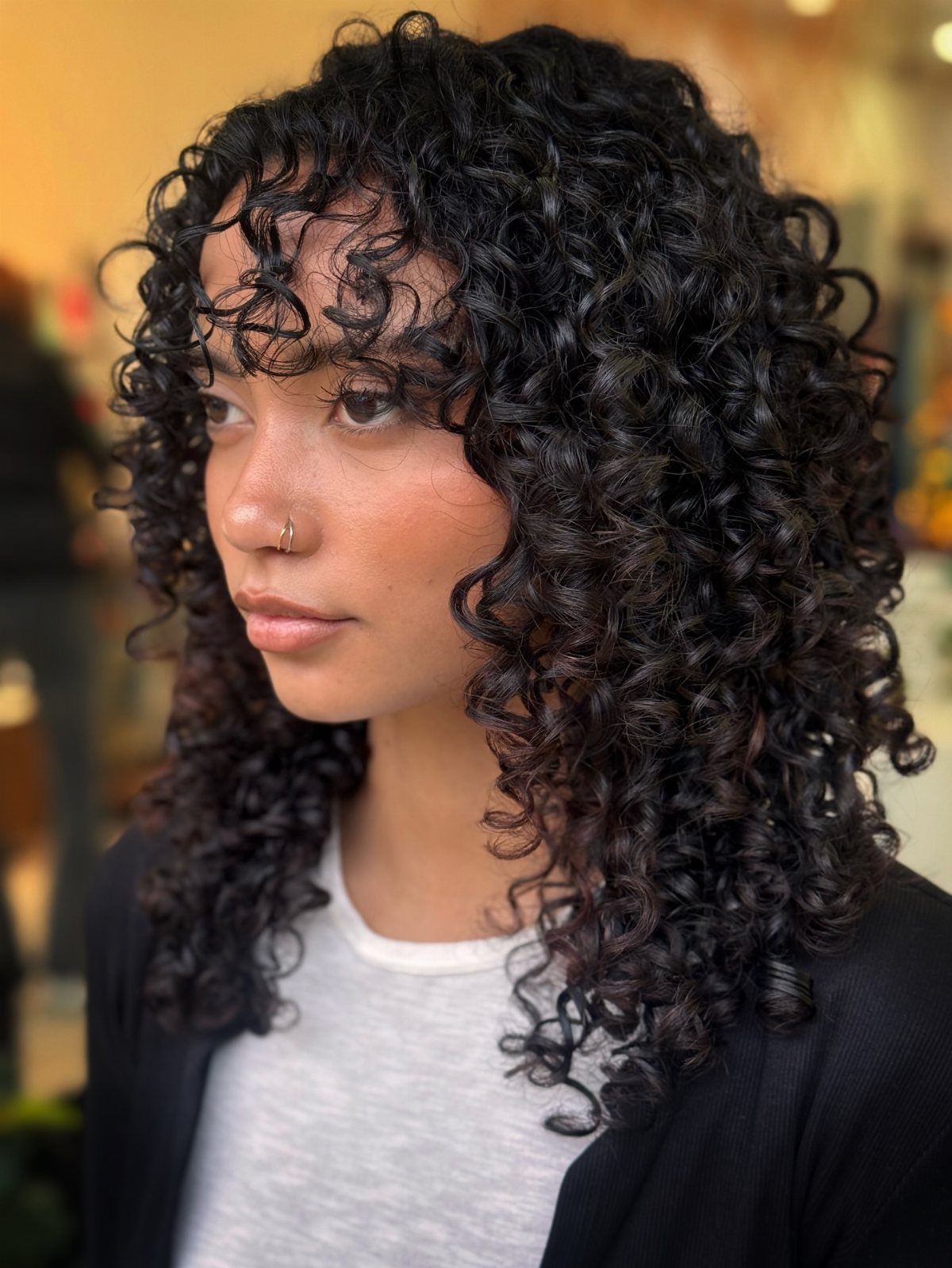
Short bangs on curly hair sit well above the brows, creating a compact fringe that frames the upper face without covering the forehead.
The curl pattern keeps the line textured, so even though the bangs are short, they never look severe.
This cut works across most curl types, but tighter patterns, 3c through 4c, hold the shape better because the coils spring close to the scalp.
Tighter coils hold their spring better and give short bangs the lift they need to stay off your forehead.
Shrinkage matters here more than anywhere else. A stylist who cuts short bangs wet will often leave them too short once they dry and coil up.
A quick spritz of water and a rice-grain dot of gel smoothed through with your fingers will bring them back without a full wash.
17. Parted Curly Bangs
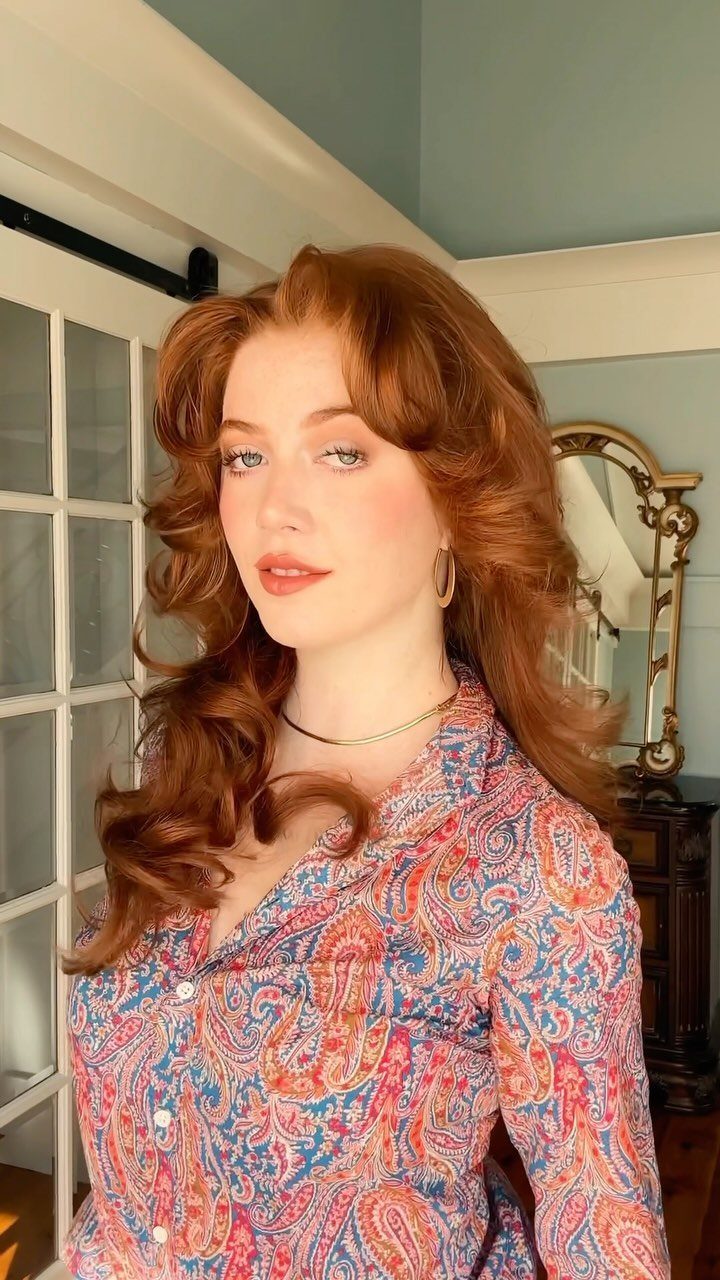
Parted bangs split near the center and angle outward, creating two soft sections that frame your face instead of one solid fringe. The part keeps the forehead visible while the curls add volume on either side, balancing width and height.
This style suits round or heart-shaped faces because the vertical part elongates and the side volume adds structure. Oval faces can pull it off too, but long faces risk looking stretched.
The part does not need to sit exactly center. A slightly off-center part usually sits better than dead-middle, especially if your hair already wants to break that way.
A defining cream applied while wet keeps each curl separated and prevents the sections from clumping together.
Dry Cutting and Shrinkage
A wet cut leaves your stylist guessing where each curl will land once it dries and coils back up.
Cutting while the hair is dry shows the real shape, so the fringe sits where you want it instead of springing an inch shorter the moment you leave the chair.
Others cut entirely wet and let you see the result once it dries.
That can work if they understand shrinkage and adjust for it. Before they pick up the shears, I ask what they’re doing about shrinkage.
Trim timing depends on length. Blunt bangs that sit above the brow grow out fast; plan on a trim every month.
Curtain bangs and longer layered styles stretch to 6 weeks between appointments, and their extra length makes them easier to tuck behind your ears or pin back while you grow them out.
Styling and Refresh Routine
Bangs sit against your face all day, so they pick up oil and lose definition faster than the rest of your hair. A full wash every time is overkill.
If you are diffusing, use a diffuser attachment that dries without disrupting the curl.
Choosing a Curly Specialist
Bring a reference photo, then explain how the cut needs to change to fit your curl pattern and routine.
Tell your stylist whether you air-dry or diffuse, if you ever straighten, where the shortest pieces should land when dry, and how much time you will spend styling each morning.
A stylist trained in curly cutting knows how to shape bangs in their natural state and account for shrinkage. At the appointment, ask how they will adapt the photo to your curls before they pick up the shears.
A curly specialist should also send you home with product recommendations and styling steps that match what you will actually do, not what looks good in the chair.
Frequently Asked Questions
Can people with curly hair get curtain bangs?
Yes. Curtain bangs adapt to natural curl patterns, including coils and tight spirals, when cut to follow the hair’s natural fall.
The center part and angled sides work across curl types because the shape moves with your texture instead of forcing a straight-hair silhouette.
A stylist who understands shrinkage can adjust the length so the fringe lands where you want it once dry.
Are bangs in or out for 2026?
In 2026, curtain bangs are still everywhere, and stylists are cutting them to fit each person’s face instead of copying one template.
The emphasis has shifted toward fringe that fits your curl pattern and routine, not a single look copied across every texture.
How hard are curly bangs to maintain?
How much upkeep you’re signing up for depends on which style you pick and how short you go. The longer styles are easier to tuck or pin back as they grow, so the grow-out phase feels less awkward.
Should curly curtain bangs be cut dry?
Cutting dry shows your stylist exactly where each spring will settle after it shrinks, so the length is right when you walk out.
Some stylists combine wet and dry cutting, which can work if they understand how much the hair will coil up. Before they start cutting, ask what they do about shrinkage.
How often do curtain bangs need trimming?
Shorter curtain bangs need a trim every 4 to 8 weeks, but longer ones can go months because they just blend into your layers as they grow. The built-in grow-out makes curtain bangs one of the most forgiving fringe styles.